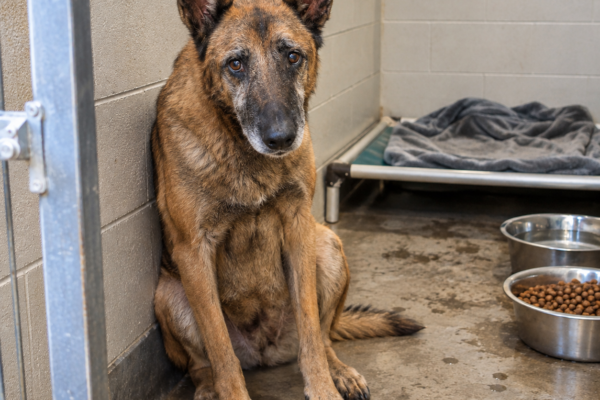
An Exhausted Dog Wandered the Streets Looking for Her Owner—Then We Learned Why She Had Been Left Behind
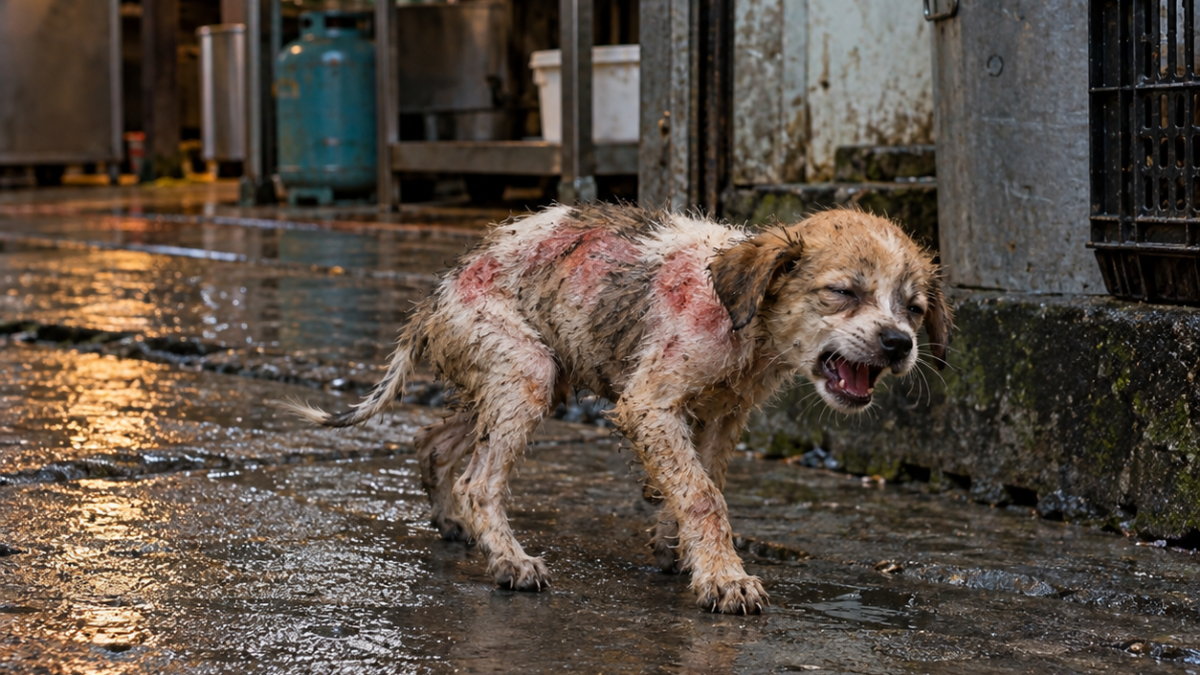
When the veterinarian told us that Yulduz had osteomyelitis, I finally had an explanation for the limping.
The diagnosis did not make the situation easier, but it made the pain visible in a way I could understand.
There was a reason she had suddenly struggled to walk.
There was a reason standing had become difficult.
There was a reason a dog who had already been dealing with eye discharge, ear problems, fatigue, pneumonia, and repeated medical care now looked as though every step demanded a decision from her.
Osteomyelitis was causing pain.
And unlike something that could be treated in a few days and forgotten, this would require a long course of care.
I remember standing there thinking about everything that had happened since the first time I saw her on the street.
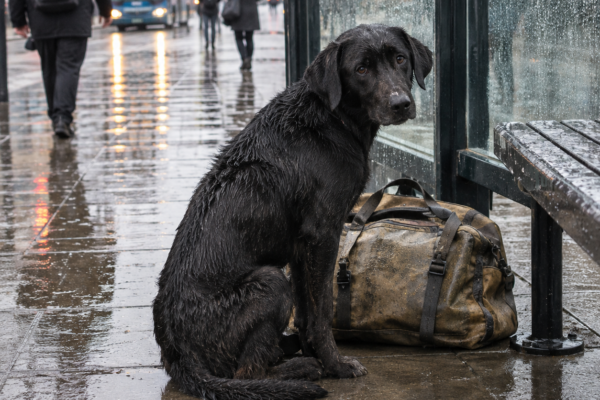
At the beginning, she had simply looked like somebody’s dog.
The collar had shaped my entire understanding of her.
A collar means belonging.
At least, that is what we want it to mean.
It means someone once chose the dog.
Someone once put that collar around her neck.
Someone knew her habits, her sleeping place, the sound of her footsteps.
Someone had seen her grow older.
I had looked at that collar and assumed it was evidence that she had a home waiting for her.
Instead, it became one of the saddest details in her story.
The collar belonged to a life she was still attached to even after the people from that life had already let go.
I did not understand her former owner.
The more I learned about Yulduz’s condition, the less I understood.
They knew she was sick.
They knew treatment would take time.
They knew she was an old dog.
And they knew what could happen if no one found her after she was left outside.
That was the part I could not stop thinking about.
What if nobody had noticed her?
What if I had walked past?
What if the person who first saw her had assumed the collar meant she would simply find her own way home?
What if her fatigue had become worse while she was still wandering?
What if the pneumonia had progressed?
What if the ear infection had continued untreated?
What if the pain in her bones had become so severe that she could no longer stand?
Those questions had no useful answers.
Yulduz was with us now.
That was the fact that mattered.
But knowing the truth about why she had been left made it difficult not to imagine how vulnerable she had been.
She had not been wandering because no one knew she existed.
She had been wandering because someone who knew her had chosen not to continue taking care of her.
There is a difference.
And once I understood it, I could not go back to thinking of her as simply lost.
The word “lost” contains hope.
If a dog is lost, perhaps someone is searching.
Perhaps a door is still open.
Perhaps there is a person driving through neighborhoods, calling her name, checking shelters, asking strangers whether they have seen her.
Abandonment carries another kind of silence.
The dog may still be searching.
The human has already stopped.
Yulduz had not received that information.
She could not.
She remained attached to a person who had already decided not to come back for her.
That thought hurt almost as much as the medical diagnoses.
Maybe more.
Because medicine at least gave us something to do.
There were doctor’s instructions.
There were antibiotics.
There was the fourteen-day course of treatment at home.
There were things to clean.
Symptoms to watch.
Changes to report.
There was a plan.
But what treatment do you give a dog who still seems to remember someone who intentionally left her?
There is no tablet for that.
No injection.
No laboratory number that tells you when the wound has closed.
You cannot explain the truth in words and expect an old dog to understand.
You cannot sit beside her and say, “They knew you were sick. They did not want to pay for treatment. They chose to leave.”
Even if she understood the sounds, what good would that knowledge do?
So we did the only thing available to us.
We stayed.
At first, staying did not seem like much.
It felt almost passive compared with everything happening medically.
Doctors were identifying problems.
Medication was being given.
Her ears needed attention.
Her pneumonia required antibiotics.
Then the osteomyelitis demanded long treatment.
Those were measurable interventions.
Staying had no measurement.
But I slowly began to understand that staying was exactly what Yulduz needed from us emotionally.
Her former owner had shown her that people could disappear when care became difficult.
We could not erase that lesson.
We could only give her another one.
Some people stay even when care is difficult.
The first fourteen days of treatment at home had already begun teaching us that.
Those days were not dramatic.
There was no single moment where everything changed.
There was repetition.
Medication.
Observation.
Cleaning.
Rest.
Short periods of movement.
Checking her eyes.
Watching her ears.
Paying attention to her energy.
The same tasks over and over.
That repetition mattered.
When an animal is ill, people sometimes focus on the moment treatment begins or the moment recovery becomes visible.
But much of care happens between those two points.
It happens in the ordinary middle.
The days when you cannot yet tell whether enough improvement has occurred.
The days when you still worry.
The days when you repeat the same action because the doctor told you to continue.
Yulduz lived through that middle with us.
Some mornings she looked tired before we had done much at all.
The fatigue had been one of the first signs that something was wrong.
When I initially walked with her, I noticed how quickly she became exhausted.
A healthy dog might have wanted to keep going.
Yulduz’s body seemed to tell her to stop long before I expected.
After the pneumonia and leukocytosis were identified and antibiotics became part of her treatment, that fatigue had context.
She had been carrying illness while walking the streets.
Her body had been working against infection at the same time she was trying to survive outside.
That realization changed the way I remembered those first walks.
What I had initially interpreted as simple tiredness was not simple at all.
She had been asking her body for more than it could comfortably give.
And no one who saw her from a distance would necessarily have known.
That is one of the frightening things about sick animals.
They cannot explain where it hurts.
Sometimes they continue moving until the body finally makes the problem impossible to ignore.
Yulduz had continued.
She walked.
She searched.
She carried that collar.
She probably looked, at first glance, like a dog who would eventually turn down the right street and reach home.
But she was sick.
Her ears hurt.
Her eyes watered.
Her lungs needed treatment.
Her energy disappeared quickly.
Then her bones began hurting badly enough that she limped.
The signs were accumulating.
I wished the person who abandoned her could have seen what we were seeing.
Then I realized they may already have known enough.
That was what troubled me most.
According to what we learned, the reason she had been left was that her owner did not want to treat her.
Not because they did not know she needed help.
Because they did not want to continue.
I tried to understand.
Medical care can be difficult.
Long treatment can be exhausting.
Older dogs can require more attention.
There can be uncertainty, expense, repeated appointments, and days when progress seems very slow.
I understood those realities.
But then I looked at Yulduz.
She had not chosen to become sick.
She had not chosen to become old.
Her body had changed.
That should have made her more dependent on the people who knew her, not less worthy of them.
I wondered whether they felt guilty.
That question stayed with me for a long time.
Did they think about her after leaving?
Did they wonder whether anyone stopped?
Did they remember the way she looked at them?
Did they ever ask themselves whether she was hungry or cold or frightened?
I had no answers.
And eventually, I realized answers would not help Yulduz anyway.
She was not waiting for an apology.
At least, not in any way I could know.
She was waiting for something more basic.
Security.
The first stage of giving her that security was medical.
Her body had to hurt less.
The osteomyelitis treatment took time.
There were no shortcuts.
I had already learned not to expect one simple intervention to resolve everything.
The ear infection had needed its own care.
The Malassezia yeast had needed attention.
The pneumonia had required antibiotics.
Now the pain in her bones demanded patience.
At first, I watched her every time she tried to stand.
The movement looked cautious.
She seemed to calculate whether putting weight down would hurt.
When a dog hesitates before something as basic as standing, you become aware of how much we take movement for granted.
Standing should be automatic.
Walking should be ordinary.
For Yulduz, both had become tests.
I wanted to help her without making her feel incapable.
So I stayed near.
I watched.
I encouraged her.
There were days when encouragement was all we could give one another.
I was tired too.
Not in the same way Yulduz was.
My body was not carrying her infections or bone pain.
But emotionally, the repeated problems began wearing on me.
We had thought we were rescuing a lost dog.
Then we were treating one illness.
Then another.
Then we learned the truth about the owner.
Then the limping began.
Then came osteomyelitis.
At some point I asked myself, when would we have a normal life?
The question escaped from exhaustion.
I did not mean that I regretted helping her.
I meant that I wanted Yulduz to wake up without another problem waiting.
I wanted to take her for a walk without measuring every step.
I wanted to see her ears comfortable.
I wanted her eyes clear of tears.
I wanted breathing and energy to stop feeling like medical observations.
I wanted her to stand up simply because she wanted to go somewhere.
The longing for normality was really a longing for relief.
For both of us.
But recovery does not obey that longing.
It moves at its own pace.
So we encouraged each other to keep trying.
Some days I spoke to Yulduz softly while she rested.
The words were mostly for me.
She could hear my voice, of course, but I did not imagine she understood the meaning of every sentence.
What mattered was tone.
Presence.
Consistency.
I told her we were trying.
I told her she was doing well.
I told her we would keep going.
Perhaps those words became part of the sound of safety.
Perhaps they were simply sounds coming from someone who remained nearby.
Either way, she listened.
And I stayed.
The treatment began working.
The pain gradually decreased.
Then came a moment I had been waiting for.
Yulduz stood.
It was not spectacular.
No music.
No dramatic crowd.
Just an old dog putting her body underneath herself and rising.
But because I knew how much pain had made that movement difficult, seeing her stand felt enormous.
She did not suddenly become young.
The osteomyelitis did not vanish in a second.
Her other medical problems were not erased.
But pain had decreased enough for her to do something her body had recently resisted.
Stand.
I watched her balance.
I watched the way she carried herself.
And I felt relief move through me.
There are moments when progress becomes visible after a long stretch of uncertainty.
This was one of them.
For days, treatment had been something we believed in because the doctor told us to continue.
Now I could see evidence.
Yulduz could stand.
That changed my mood immediately.
Not because I thought everything was over.
I had learned that lesson already.
Every time I assumed the difficulties had stopped, another one seemed to appear.
So I did not call her cured.
I did not imagine a perfect future.
I simply let myself be happy about the step in front of me.
She could stand.
That was enough for that day.
As the pain eased, movement became easier.
And as movement became easier, another part of Yulduz came back.
Her interest in life.
Pain narrows an animal’s world.
When each step hurts, the world becomes a series of decisions about what is worth moving toward.
When breathing is difficult, energy becomes precious.
When ears are inflamed, even ordinary sensations can be irritating.
When the body is fighting infection, play is not a priority.
Treatment slowly gave Yulduz room for something beyond survival.
At first, that room was small.
A little more comfort.
A little more willingness to move.
A little more interest in the people around her.
Then, over time, I began noticing emotional changes too.
She had not forgotten her owner.
That was obvious to me.
I had once thought that perhaps enough time would simply make the old attachment disappear.
It did not.
Yulduz was an old dog.
She had history before us.
A routine before us.
A person before us.
Whatever that relationship had meant to her, she still carried it.
She slept poorly.
She often looked sad.
There were moments when she seemed to be waiting.
That was the hardest part.
She did not know she had been intentionally left behind.
From her perspective, perhaps the separation still needed an explanation.
Perhaps the person might return.
Perhaps the familiar life might resume.
I could not know exactly what she thought.
I was careful not to put human sentences inside her head.
But her behavior was clear enough.
She was not emotionally settled.
Physical treatment had begun improving her body.
Her heart, in the emotional sense, was still hurting.
And unlike osteomyelitis, there was no medical name we needed to give that pain.
We could see it in the way she rested badly.
In the sadness that appeared without warning.
In the distance she sometimes seemed to place between herself and the present.
I knew time alone would not be enough.
Time passes whether care exists or not.
What heals attachment wounds is what fills the time.
So we filled it with presence.
I spent time beside her without always asking anything.
That became important.
Not every interaction had to be medicine.
Not every touch had to examine something.
Not every walk had to test her stamina.
Sometimes I sat close.
Sometimes she rested.
Sometimes nothing happened.
Those uneventful moments became part of our connection.
When a dog has been abandoned after becoming medically difficult, I think consistency matters more than grand gestures.
One person can offer affection once.
That may be comforting.
But returning tomorrow says something different.
Returning the day after tomorrow says more.
Staying through fourteen days of treatment.
Staying through antibiotics.
Staying after another diagnosis.
Staying while she limps.
Staying when she sleeps badly.
Staying when she is sad.
That repetition creates a pattern.
Yulduz began learning our pattern.
We stayed.
Even when there were difficult things waiting for me.
Even when treatment took longer than I wanted.
Even when I was tired.
I stayed.
The wound in her heart, if I can call it that, did not close quickly.
I did not expect it to.
She had been old enough to know her former life well.
Forgetting was never the goal.
I did not need Yulduz to erase the owner from her memory in order to love us.
That would have been unfair.
We do not ask people to forget everyone who hurt them before accepting new kindness.
Why would I demand that from a dog?
Instead, I hoped she could add something new.
Not replacement.
Addition.
The memory of someone who left could exist beside the experience of people who stayed.
The sadness could exist beside comfort.
The past could exist beside the present.
Over time, that is exactly what seemed to happen.
Yulduz became more open.
She allowed people closer.
Her expression changed.
She began engaging more easily.
There were fewer moments when she seemed completely withdrawn into whatever memory or feeling had made her sad.
The transformation was gradual enough that I almost missed it while it was happening.
Then one day I realized I was looking at a dog who was genuinely happier.
Not healed in the sense that everything from before had disappeared.
Happier.
That was enough.
Her relationship with people became warmer.
She seemed less suspicious.
More willing to interact.
I began to see curiosity where I had once seen only caution.
I began to see interest where exhaustion had once dominated.
And then came snow.
Yulduz loved playing in it.
The first time I watched her react with that kind of excitement, I felt something inside me loosen.
There is something special about an old dog becoming playful.
Age does not disappear.
History does not disappear.
Medical problems do not disappear.
But for a few moments, joy pushes itself to the front.
Yulduz moved through the snow with an energy I had not imagined when I first watched her tire during ordinary walks.
She seemed like a child.
That was the comparison that came naturally to me.
A child discovering something delightful.
No complicated thoughts.
No visible concern about the past.
Just snow.
Movement.
Play.
I watched her and smiled.
The dog who once became exhausted so quickly was now moving faster.
She could run more strongly.
She was not tiring the way she once had.
That change meant more to me than any dramatic image could have.
At the beginning, fatigue had been one of the clues that something was wrong.
Now increased stamina was one of the signs that treatment and care were giving her a better daily life.
She could run.
Not endlessly.
Not as though she had become a young dog again.
But better.
Faster.
With more energy.
That was real progress.
And perhaps the best part was that she used that progress for joy.
Not simply to walk from one necessary place to another.
To play.
I thought about the long chain of events that had made those few seconds possible.
The moment she was noticed on the street.
The decision to take her in.
The first observations about her eyes and ears.
The diagnosis of Malassezia.
The fourteen days of home treatment.
The antibiotics for pneumonia.
The constant monitoring.
The discovery that she had not actually been lost.
The painful truth about why she had been abandoned.
The sudden limping.
The veterinary visit.
The osteomyelitis diagnosis.
The long treatment.
The days when standing hurt.
The moment pain began to decrease.
Then time.
Presence.
Connection.
All of those things sat behind one old dog playing in snow.
That is why ordinary happiness can feel so large.
You know what it cost to reach it.
Yulduz did not know the story in the same way I did.
She did not count medical diagnoses.
She did not measure our effort.
She did not know how many times I had worried.
She simply experienced the result.
Her body hurt less.
Breathing and energy were better managed.
She could move.
She could play.
People around her were safe.
That was enough for her.
I began learning from that.
Sometimes I wanted to analyze everything.
Why had her owner left?
Did they feel guilty?
Would Yulduz ever stop waiting emotionally?
How long would treatment take?
Would another illness appear?
Would we ever feel normal?
Yulduz did not live inside those questions.
She lived inside moments.
Snow under her paws.
Food.
Rest.
A familiar person beside her.
Movement without the same degree of pain.
The chance to run.
The chance to stop.
The chance to be safe.
Watching her helped me return to those moments too.
There was one reality we could not ignore.
Yulduz would need medication for the rest of her life.
That was not the ending I might have chosen if I could rewrite her body.
I would have preferred a treatment with a clear finish.
Take this medicine for a certain number of days.
Complete the course.
Problem solved.
But some conditions do not offer that simplicity.
Her care would continue.
Medication would remain part of daily life.
At first, the phrase “for the rest of her life” sounded heavy.
Permanent.
Another reminder that she would never become medically uncomplicated.
Then I looked at Yulduz playing.
And I realized medication did not prevent us from enjoying life.
It was simply part of how we protected the life she had.
A tablet, a schedule, continued attention—those things did not cancel snow.
They did not cancel play.
They did not cancel affection.
They did not cancel the happiness in her face.
If medication made those things easier or safer for her, then medication belonged in the good life too.
I stopped seeing it as proof that she remained broken.
It was care.
Nothing more.
Nothing shameful.
Nothing tragic by itself.
Lots of lives contain routines necessary for health.
Yulduz’s did too.
The important thing was that treatment no longer consumed her identity.
She had gone from a dog defined by a growing list of medical problems to a dog whose medical needs were managed inside a larger life.
That distinction felt enormous.
She had medicine.
But she also had snow.
She had history.
But she also had us.
She had old memories.
But she was making new ones.
She had been abandoned.
But she was no longer alone.
That was when I started thinking more seriously about fate.
Do you believe in destiny when you meet someone?
I had not gone out expecting Yulduz.
I had not known that an old dog wearing a collar would appear and rearrange our days around medication, appointments, worry, and eventually affection.
She had not known me.
Yet somehow our lives crossed.
I began to think of that meeting as fate.
Not because fate did all the work afterward.
That is important.
Meeting may have been destiny.
Staying together required effort.
I came to believe both things at once.
Maybe fate brings two lives into the same place.
It does not guarantee what happens next.
We decide what to do with the meeting.
With Yulduz, staying meant work.
There were fourteen days of treatment at home.
There were antibiotics.
There was careful observation.
There were veterinary visits.
There was osteomyelitis.
There was a long recovery.
There were difficult days.
There were nights when sadness seemed to keep her from resting well.
There were medications that would not end.
There was emotional patience.
None of those things happened automatically because I believed we were meant to meet.
We stayed together because we kept choosing to.
That difference became important to me.
Fate may open a door.
Love walks through it every day.
Yulduz’s former owner had also once crossed paths with her.
They had once belonged to each other’s lives.
A collar remained as evidence.
But being together once is not the same as staying.
That was the painful contrast.
If someone decides to leave, we cannot always stop them.
Yulduz could not stop her owner.
She could not make herself younger.
She could not make herself less sick.
She could not convince someone who did not want to treat her to become willing.
She was powerless over that decision.
That broke my heart.
But it also clarified something.
Real care is revealed when staying becomes difficult.
Anybody can enjoy an animal when the days are easy.
The test comes when there is medication.
When there are symptoms.
When walks are slow.
When sleep is interrupted.
When the dog becomes old.
When the veterinarian says treatment will be long.
When another problem appears before the first one has fully resolved.
That is when love becomes an action rather than a feeling.
I thought about that often.
If someone truly loves you, I came to believe, they do not simply let go because things become difficult.
That belief became tied to Yulduz.
Not as a universal rule I could scientifically prove.
As something this relationship taught me emotionally.
She could not choose what happened to her before.
We could choose what happened now.
We chose to stand beside her.
There were many tears.
Mine.
There was a lot of effort.
The kind of effort that sometimes feels like sweat in the most literal sense.
Transporting a sick dog.
Managing treatment.
Watching symptoms.
Cleaning.
Helping.
Waiting.
Encouraging.
Starting again after setbacks.
None of it was glamorous.
But when I saw Yulduz healthy enough to run more freely and happy enough to play in snow, it was worth it.
That is not something I say lightly.
Caregiving can be exhausting.
It is possible to love an animal and still feel tired.
I did.
There were moments when I wanted one ordinary day without a new concern.
There were moments when I wondered how long we could keep moving from one problem to another.
There were moments when the owner’s decision made me angry enough that I could not understand it at all.
But exhaustion and commitment can exist together.
Being tired did not mean I wanted to leave.
That was perhaps the biggest difference between us and the people who had abandoned her.
Difficulty did not change the decision.
Yulduz was staying.
And so were we.
As the months of shared experience accumulated, we learned each other.
I understood her signals better.
She understood our routine.
There was less uncertainty between us.
At first, I had watched every movement like a puzzle.
Why was she tired?
Why were her eyes watering?
Why was there so much earwax?
Why was she limping?
Why was she sad?
Each question sent us searching for an answer.
Later, I could simply watch Yulduz be Yulduz.
I knew when she wanted rest.
I knew when she was excited.
I knew what her playful energy looked like.
I knew the difference between a tired day and a happy one.
That familiarity came from time.
Time together.
Not time alone.
That distinction mattered.
Time itself does not guarantee closeness.
Shared care does.
Routine does.
Showing up does.
Yulduz began to trust that.
She opened herself to people more generally too.
The dog who had seemed emotionally fixed on the person she had lost became warmer with those around her.
I did not interpret that as forgetting.
I saw it as expanding.
Her heart could hold more than one history.
She could remember and still connect.
She could miss and still play.
She could have sadness and still experience joy.
That was a healthier way for me to understand her progress.
I stopped waiting for the day she would somehow become a dog with no past.
That dog did not exist.
Yulduz’s past belonged to her.
Our job was not to erase it.
Our job was to make the present good enough that the past no longer controlled everything.
Snow helped me see that had happened.
When she played, she was fully in the moment.
At least, that was how her behavior looked.
There was no visible searching.
No hesitation.
No sadness dominating her posture.
There was movement.
Energy.
Interest.
She liked the snow the way children do.
I could have watched her for hours.
Her brighter expression felt almost like sunlight.
That is the image I think of when I remember how far she came.
Not the collar.
Not the wax in her ears.
Not the tears in her eyes.
Not the limp.
Not the veterinary room.
Snow.
Yulduz running.
A bright expression.
That image does not erase the others.
It simply stands beside them as proof that suffering did not receive the final word.
I became protective of that joy.
Because once you have watched an old dog regain the ability to enjoy simple things, you stop wanting to waste her time on unnecessary distress.
Her medication schedule remained.
Her medical history remained.
But we arranged life around comfort rather than fear.
The medicine became ordinary.
The walks became opportunities rather than tests.
We did not push her beyond what her body wanted.
When she had energy, she used it.
When she needed rest, she rested.
This was the normal life I had been asking for during the worst days.
It did not look like a life without medical needs.
It looked like a life where medical needs no longer dominated every emotion.
That was normal enough.
I had once imagined normal as being free from all problems.
Yulduz taught me a different definition.
Normal can mean knowing the problems and having a rhythm for living with them.
Medicine at a certain time.
A familiar place to sleep.
A walk adjusted to her ability.
Snow when the weather brings it.
Affection whenever she asks.
A veterinarian when needed.
People who stay.
That became our normal.
And I loved it.
There were still moments when I remembered her former owner and felt anger rise.
It often happened when Yulduz did something particularly affectionate.
I would think, how could anyone know this dog and leave her?
Then I reminded myself that continuing to ask that question placed the former owner back at the center.
I did not want that.
Yulduz was the center.
Her life now mattered more than my inability to understand another person’s decision.
So I redirected the feeling.
Instead of asking why they did not stay, I asked what we could do today.
Was Yulduz comfortable?
Had she taken her medicine?
Did she want to walk?
Was she tired?
Was she interested in going outside?
Would she enjoy the snow?
Those questions had answers.
And answering them improved her life.
That was more useful than anger.
Still, I could not completely release the thought of guilt.
Did they feel it?
Perhaps.
Perhaps not.
We would never know.
But Yulduz did not need their guilt to heal.
She needed our consistency.
That was another realization that freed me.
We sometimes imagine justice as requiring the person who caused harm to recognize what they did.
But recovery cannot always wait for that.
If Yulduz’s former owner never regretted anything, she could still become happy.
If they never apologized, she could still learn trust.
If they never came back, she could still have a family.
Her healing did not belong in their hands anymore.
That was powerful.
The moment she had been abandoned, they had made a decision.
The moment we took responsibility for her, the next decisions became ours.
Medicine.
Care.
Patience.
Home.
Snow.
Life.
We controlled those.
And slowly, those became larger than what had been done to her.
I began to see why fate mattered so much to me.
We could have missed each other.
That thought remained strange.
Yulduz could have walked down another road.
I could have been somewhere else.
Somebody else might have found her.
Maybe they would have helped.
Maybe not.
There was no way to know.
But our paths met.
And once they did, responsibility began.
That is why I say I believe we met by fate.
Not because fate guaranteed an easy story.
Nothing about Yulduz was easy at first.
Fate only created the meeting.
The relationship was built afterward.
Treatment by treatment.
Day by day.
Tear by tear.
Step by step.
Eventually, run by run.
That last transition meant so much.
Step by step had once described struggle.
Run by run described freedom.
When her pain decreased after osteomyelitis treatment, standing was the milestone.
Later, running became possible.
That is a huge distance in a dog’s life.
From wondering whether she can comfortably put weight on her limbs to watching her move quickly through snow.
I never took it for granted.
Even when she became more active, I remembered the dog who had difficulty walking.
That memory made me cautious in a good way.
I wanted joy without recklessness.
Yulduz was still old.
She still needed medication.
Improvement did not make her invulnerable.
So we allowed the happiness without pretending age had disappeared.
That balance became natural.
She played.
Then she rested.
She ran.
Then we watched her recover.
Life could be enjoyable without pretending there were no limits.
In some ways, I think Yulduz accepted that more easily than I did.
Dogs do not seem offended by their limitations in the same abstract way people can be.
They respond to what the body allows now.
If she could run, she ran.
If she needed to stop, she stopped.
There was wisdom in that.
I tried to follow it.
Enjoy the good day.
Do not demand that it prove every future day will be good.
Treat the problem that exists.
Do not invent tomorrow’s problem before it arrives.
Stay.
That was enough.
The medical journey taught me patience.
The emotional journey taught me something deeper about presence.
Yulduz had been left because treatment was unwanted.
That made every day we treated her an answer to abandonment.
Not in words.
In action.
When we cleaned her ears, that was an answer.
When we followed the doctor’s fourteen-day plan, an answer.
When we gave antibiotics, an answer.
When we rushed her back after the limping began, an answer.
When we continued through osteomyelitis treatment, an answer.
When we accepted lifelong medication, an answer.
Each action said the same thing.
Your needs are not a reason to leave you.
I wish Yulduz could have understood that sentence.
Maybe she understood the pattern instead.
That was enough.
Dogs learn the world through consistency more than promises.
Our consistency told her she was staying.
Her sleep gradually improved.
The sadness that had seemed to sit heavily on her became less dominant.
Again, I never claimed she forgot.
But a dog cannot live indefinitely in active grief if the present gives her enough reason to engage.
Yulduz engaged.
She became happier.
She became open to people.
She played.
She ran.
She smiled in the way dogs seem to smile when their whole face softens and their body carries ease.
That was the bright expression I compared to the sun.
After seeing her face tight with pain and fatigue, that brightness felt almost impossible.
Yet there it was.
I did not need more proof that our effort had been worth it.
Sometimes worth is measured in numbers.
Medical improvements.
Test results.
Distance walked.
Medication reduced.
For me, worth was visible in Yulduz’s expression.
Happy.
Healthy enough to enjoy herself.
Connected.
That was enough.
There had been tears and sweat, yes.
There had been difficult days.
There had been fear.
But none of those things felt wasted.
They led to this.
An old dog who could enjoy life again.
That outcome changed the emotional meaning of the entire journey.
I could remember the hard days without feeling trapped inside them.
The fourteen days at home became part of the foundation.
The antibiotics became a chapter.
The osteomyelitis became a challenge we passed through.
The owner’s abandonment remained painful, but it no longer determined what happened every morning.
Yulduz woke into a different life.
That was the transformation.
I often returned to the question, “Do you believe in fate?”
My answer remained yes.
But it became more nuanced.
Fate may place a suffering animal in your path.
That does not make you a good person automatically.
What matters is what you choose next.
You can walk past.
You can help once and disappear.
You can complain when care becomes difficult.
Or you can stay.
The staying is not fate.
The staying is work.
And love, at least the kind Yulduz needed, was work made gentle through commitment.
There were days when the work felt heavy.
There were days when it felt natural.
Eventually, much of it became routine.
That is how strong bonds often form.
Not through constant emotional intensity.
Through repeated ordinary responsibility.
Yulduz took medicine.
I gave it.
She needed observation.
I watched.
She wanted affection.
We offered it.
She wanted to play.
We smiled.
Simple.
That simplicity was earned.
At the beginning, nothing had felt simple.
Even walking had created concern.
Now our lives had rhythm.
When I thought back to the dog wandering with a collar, I almost wanted to speak to my earlier self.
I would say: Do not assume the collar means someone is coming.
Look more closely.
Look at her eyes.
Look at her ears.
Watch how quickly she tires.
Something is wrong.
And when you learn the truth, do not let it break your faith in what can happen next.
You are about to discover a dog named Yulduz.
She will require more from you than you expect.
And she will give more than you expect too.
I could not have known any of that.
Maybe that is why the meeting felt like destiny.
Some relationships arrive disguised as problems.
A dog on the street.
A medical list.
A mystery about an owner.
Then slowly the problem becomes a presence you cannot imagine losing.
Yulduz became that for us.
The collar that first made me think of somebody else’s home eventually became irrelevant.
She had a home now.
Not because an object said she belonged.
Because our actions did.
Belonging is not a collar.
It is consistency.
I learned that from her.
A dog can wear a collar and still be left behind.
A dog can have no guarantee except the people who keep showing up.
We kept showing up.
That was the true sign of ownership, though I preferred to think of it as family.
Yulduz was family.
Her medicine was part of family life.
Her age was part of family life.
Her good days and difficult days belonged.
She did not need to earn her place by becoming easy.
That idea stayed with me because it was the opposite of what had happened before.
Her former owner had apparently looked at treatment and decided not to continue.
We looked at treatment and built it into the day.
Same problem.
Different choice.
That difference changed everything.
Yulduz’s body responded.
Her pain decreased.
She stood.
She moved more easily.
She ran more quickly.
She tired less.
Her emotional state changed too.
She became happier.
Open.
Playful.
Those outcomes were not miracles disconnected from effort.
They were what repeated care made possible.
Maybe the miracle was simply that we had enough opportunities to keep choosing.
And Yulduz kept responding.
I loved seeing the relationship become mutual.
At first, all the care flowed one direction.
We found her.
We treated her.
We monitored her.
We worried.
She received.
But over time, she gave back.
Not money.
Not practical help.
Something better.
Trust.
Company.
Loyalty.
Joy.
The sight of her playing in snow could change the mood of an entire day.
Her bright face reminded us why we had persisted.
Her willingness to approach people proved that fear had not closed her permanently.
She gave us emotional returns we had never asked for.
That is one reason living with animals can feel so profound.
Care begins as responsibility.
Then it becomes relationship.
Yulduz was no longer a rescue task.
She was someone we knew.
That shift happened gradually enough that I cannot identify one day.
Maybe it happened during the fourteen days of treatment.
Maybe while I watched her sleep poorly and wondered how to comfort her.
Maybe when she first stood with less pain.
Maybe when she played in snow.
Probably all of those.
Relationship is made from accumulation.
So was her recovery.
Every day added something.
By the time I realized how close we had become, the answer was obvious.
We had been building it all along.
I sometimes wondered whether Yulduz still thought about her former owner during her happier days.
There was no way to know.
I stopped trying to answer.
What mattered was that memory, whatever form it took, no longer prevented her from connecting with us.
That was enough.
You do not need to erase old attachment to create new attachment.
That lesson felt compassionate.
Too often we want rescued animals to prove gratitude by forgetting where they came from.
Yulduz did not owe us that.
If she remembered, she remembered.
If part of her still waited in some emotional sense, we could live with that.
We simply made sure another part of her learned we were here.
No competition.
No demand.
Just presence.
Over time, presence became stronger.
That is how the wound seemed to heal.
Not erased.
Covered by new experiences.
Protected by routine.
Softened by affection.
I watched her sleep better.
I watched her relax.
I watched sadness become less frequent.
Those signs told me enough.
The person who abandoned her had become less important to the life she was living now.
That was the healing I wanted.
Not amnesia.
Freedom.
Freedom to enjoy what was in front of her without constantly being pulled backward.
Snow gave her that.
Movement gave her that.
People who stayed gave her that.
Her medicine, ironically, also gave her that by reducing physical barriers to ordinary life.
I stopped resenting the lifelong medication.
It was part of the freedom.
If taking it helped her body function well enough to run, then the medicine was not a chain.
It was support.
That reframing helped me too.
Care can feel burdensome when you focus only on obligation.
It can feel meaningful when you connect it to outcome.
This medicine supports the dog who wants to play.
This appointment protects the dog who likes snow.
This monitoring keeps us aware of changes before they become crises.
Those connections turned tasks into acts of love.
Not romantic love.
Practical love.
The kind Yulduz needed.
Practical love is often quiet.
It sets reminders.
It cleans ears.
It notices limping.
It calls the veterinarian.
It finishes the antibiotic course.
It continues after the emotional excitement of rescue has passed.
That was the kind of love her former owner had stopped giving.
We chose to continue it.
I became proud of our routine.
Not because it was perfect.
Because it was dependable.
Yulduz could depend on us.
That sentence meant everything.
I hoped she felt it.
There were still moments when age showed strongly.
She was not suddenly transformed into a young dog.
I was careful about that.
Recovery should not be confused with reversal of time.
Yulduz remained old.
She had a body with history.
She needed long-term medication.
She had endured multiple medical problems.
Her endurance had limits.
But old does not mean finished.
Watching her play proved that.
There was still pleasure available.
Still connection.
Still speed enough to make snow exciting.
Still curiosity.
Still affection.
Still bright expressions.
That realization made me protective of senior animals in a new way.
They deserve care not because they promise many years.
They deserve care because the time they have is still life.
Yulduz’s days mattered individually.
That was reason enough.
Sometimes one happy afternoon with an old dog feels more valuable because you know the body carrying that happiness has fought hard to reach it.
I felt that often.
The past made the present vivid.
Not because suffering is necessary for appreciation.
I would have preferred she never suffered.
But since I could not change that, I allowed the contrast to deepen my gratitude.
A dog once too tired to walk comfortably could now run.
A dog whose pain made standing difficult could now play.
A dog who slept poorly because she was sad could relax.
A dog abandoned because treatment was inconvenient became deeply loved by people willing to treat her.
Those contrasts were true.
I did not need to exaggerate them.
Truth was enough.
One of the most painful truths remained that Yulduz had probably never understood the reason she was left.
Maybe that was mercy in some way.
Maybe not knowing protected her from a kind of human understanding that would have hurt even more.
I could not tell.
What I did know was that we understood.
We carried the knowledge so she did not have to.
The reason was not that she had done something wrong.
It was not that she was unlovable.
It was not that she had become a bad dog.
The reason was that treatment required effort, and the people responsible for her did not want to provide it.
I wished I could remove any sense of rejection she might have carried.
The only way I knew to do that was repetition.
You are wanted today.
Again tomorrow.
Again next week.
Again when medicine is needed.
Again when pain returns.
Again when you move slowly.
Again when you are old.
Again.
That was our language.
Eventually, Yulduz answered in her own language.
She stayed close.
She trusted.
She played.
She smiled.
That was enough.
The word “destiny” came back one more time whenever I watched her.
I still believed our meeting had meaning.
But the meaning was not that suffering had been necessary to bring us together.
I would never romanticize that.
Yulduz should not have needed abandonment in order to meet us.
She should not have needed pneumonia, ear infections, yeast, or osteomyelitis to prove she deserved care.
Those things were not blessings.
The blessing was that, once the harm had happened, our paths crossed before it was too late to help.
That distinction mattered.
I could be grateful for meeting her without being grateful for what hurt her.
I think that is the healthiest way to understand rescue.
You do not thank the cruelty.
You thank the chance to respond to it.
We had that chance.
And we used it.
That is why all the tears and effort felt worthwhile.
Not because struggle itself is noble.
Because Yulduz was on the other side of it, healthier and happier.
The result mattered.
Her bright face mattered.
Watching her move without the same exhaustion mattered.
Seeing her open herself to people mattered.
Those were the reasons.
If the outcome had been uncertain forever, we still would have cared for her.
But seeing improvement gave us relief.
It let us breathe.
It let us enjoy rather than constantly prepare for another crisis.
The normal life I had once begged for finally arrived in a form I had not expected.
Normal was Yulduz taking medicine and then wanting to play.
Normal was knowing her medical history without being consumed by it.
Normal was snow.
Normal was trust.
Normal was a familiar dog in our home.
That was enough.
I laughed at myself sometimes for how desperately I had once asked, “When will we have a normal life?”
We had one.
It just did not look medically perfect.
Maybe no real life does.
Normal does not mean nothing ever goes wrong.
Normal means there is enough stability around the problems that they do not define every moment.
Yulduz had that now.
So did we.
The change brought gratitude.
Not the dramatic kind.
The quiet kind.
I would see her resting and think, she is here.
That thought alone carried weight.
She could have been somewhere else.
Still searching.
Still sick.
Still waiting for a person who was not coming.
Instead, she was here.
With us.
That was the truth.
I no longer needed anything larger.
Her medication would continue.
We accepted that.
Her age would continue.
We accepted that too.
What we refused to accept was the idea that either one made her less worthy of joy.
She proved otherwise every time she played.
The snow became one of my favorite symbols of her new life because it asked nothing from her history.
Snow falls without knowing who abandoned you.
It does not care what medication you take.
It does not know how old you are.
It simply creates a new surface under your paws.
Yulduz responded with delight.
That simplicity was beautiful.
For those moments, she was not “the abandoned sick dog.”
She was Yulduz playing.
I wanted to protect that identity.
Not deny her past.
Just refuse to make the past her entire name.
She had a name already.
Yulduz.
And Yulduz was more than what happened to her.
She was persistent.
Gentle.
Capable of sadness.
Capable of trust.
Capable of play.
Capable of affection.
Capable of making us believe strange meetings sometimes happen for a reason.
Those were the qualities I remembered most.
Medical details mattered because they shaped care.
They did not define her personality.
That is an important distinction in any rescue.
A diagnosis tells you what the body needs.
It does not tell you who the animal is.
Yulduz had Malassezia.
She had ear infections connected to it.
She was treated for pneumonia and leukocytosis with antibiotics.
She developed osteomyelitis.
She needed lifelong medication.
All of that was true.
But none of it explained why watching her play made me smile.
None explained why her sadness affected me.
None explained the trust that formed between us.
Medicine kept her alive and comfortable.
Relationship gave the care meaning.
I was grateful for both.
The doctors gave us tools.
We had to use them.
The first fourteen days taught me discipline.
Long-term treatment taught patience.
Lifelong medication taught acceptance.
Yulduz taught love.
Not sentimental love.
The kind that notices.
The kind that continues.
The kind that does not disappear when things become inconvenient.
That may be why I thought so much about people leaving.
If someone wants to go, sometimes there is nothing you can do.
You cannot hold them through force.
Yulduz could not hold her old owner.
But when love is real, I came to believe, difficulty does not automatically become a reason to leave.
We proved that to Yulduz through our choices.
And perhaps she proved something similar to us.
She had every reason to withdraw from people.
Instead, once she learned we were safe, she stayed emotionally present.
She gave us loyalty.
In her own way, she chose us too.
That mutual choice made the relationship stronger than fate alone.
Maybe we met by destiny.
We remained together through effort.
That was the truth I carried forward.
I would never reduce our relationship to luck.
Luck put us in the same place.
Work built the life.
Every difficult day became part of the foundation.
The tears.
The sweat.
The worry.
The medicine.
The slow walks.
The veterinary trips.
The moments of encouragement.
The snow.
All of it.
And at the center stood Yulduz.
Healthier.
Happier.
Her face bright.
That was the reward.
I did not need people to applaud us.
I did not need anyone to call it heroic.
There is nothing heroic about doing what an animal in your care needs.
It is responsibility.
Maybe responsibility becomes beautiful when it continues long enough.
That is what happened here.
Care became relationship.
Relationship became family.
Family made the effort feel natural.
Eventually, I stopped thinking of Yulduz as the dog we had rescued.
She was simply Yulduz.
Our dog.
Our companion.
Our friend.
That was the final transformation.
Not from sick to perfect.
From abandoned to belonging.
That mattered more.
Physical health can never be guaranteed forever, especially in an old dog.
Belonging can.
As long as we remain faithful to it.
I could promise that part.
Yulduz would belong.
Medication or no medication.
Fast days or slow days.
Snow or no snow.
She belonged.
The owner who left had made their decision.
We made ours.
And ours was to stay.
That was enough to change the direction of her life.
When I looked at the bright expression on her face, I sometimes thought about the first time I saw tears gathering in her eyes.
At the time, I had interpreted them mainly as symptoms.
They were part of what made us realize something was wrong.
Now I saw a completely different face.
Not medically perfect.
But alive with interest.
The contrast was powerful.
I thought about the earwax that had seemed excessive.
The yeast.
The infections.
The antibiotics.
All those small clues that had opened the door to understanding how much her body was carrying.
Then I thought about her running.
A body once burdened by so much illness now carrying her toward something she enjoyed.
That was recovery made visible.
Not complete recovery.
Enough recovery for life.
Sometimes enough is beautiful.
We often chase total restoration because partial improvement feels unsatisfying.
Yulduz taught me to respect enough.
Less pain was enough to stand.
More energy was enough to run.
Medication was enough to support her long-term.
Consistent love was enough to make her happier.
She did not need every scar erased before she could enjoy life.
That changed me.
It made me less impatient with slow progress.
Less obsessed with perfect outcomes.
More grateful for functional ones.
Can she stand?
Can she walk?
Can she play?
Can she rest?
Does she trust us?
Is she happy?
Those questions mattered.
The answers increasingly became yes.
That was success.
The more successful her recovery became, the less often I revisited the anger I had toward her former owner.
Not because what happened became acceptable.
Because Yulduz gave me better things to think about.
Her present was more interesting than their failure.
Her joy was more powerful than their absence.
Her loyalty was more meaningful than their decision to leave.
That felt like freedom for me too.
I no longer needed to carry their choice every day.
Yulduz certainly did not deserve to have our home filled with bitterness.
So I let the past sit where it belonged.
Behind us.
Not erased.
Behind us.
Ahead was whatever number of good days we could create.
I did not count them.
I did not need to know how many.
The future had become less frightening because we had learned how to live in the present.
Take the medicine.
Watch her health.
Enjoy the day.
Stay.
Simple.
That was our life.
And it was good.
If someone had told me at the beginning that the tired dog wearing a collar would become so important, I might not have believed them.
At first, I was simply trying to solve a problem.
Find the owner.
That was the plan.
The irony still affected me.
We found the truth instead.
And the truth hurt.
But without that truth, perhaps part of me would have continued waiting too.
Waiting for someone else to take responsibility.
Once we knew they would not, the decision became clear.
We would.
That clarity changed everything.
There was no temporary mindset anymore.
No expectation that her “real” owner would return.
We became the people responsible for the next part.
That gave our care a different emotional weight.
Yulduz was not passing through.
We were building a life.
I think she gradually understood the pattern even if she never understood the reason.
She stopped looking like a dog waiting to leave.
She became settled.
That was perhaps the quietest sign of all.
Belonging often looks like not waiting for the door.
Resting deeply.
Choosing a familiar place.
Expecting the same people tomorrow.
Yulduz reached that point.
Her sleep improved.
Her sadness softened.
She engaged.
She belonged.
That was the healing of the heart I had hoped for.
Again, not a medical heart.
An emotional one.
The distinction matters.
We did not cure everything.
We changed her experience.
Sometimes that is the greatest available gift.
I was proud of her.
Not because she “fought” in some dramatic way.
Animals do not need to become warriors for us to respect them.
I was proud because she adapted.
She tolerated treatment.
She kept trying to move.
She allowed trust to return.
She accepted joy.
That last part can be difficult after fear.
But Yulduz did it.
She saw snow and chose play.
I loved her for that.
I loved the simplicity.
Her body saying yes.
Yes, I can move.
Yes, I want to.
Yes, this feels good.
That was enough.
The bright expression afterward looked like sunlight to me.
I do not know if dogs smile in exactly the way humans mean the word.
But I know what relaxed happiness looks like in a dog.
Yulduz showed it.
Her whole presence changed.
That image became the one I wanted to carry.
Not because it was prettier.
Because it was true.
She was happy.
And happiness deserved to become part of the story just as much as suffering.
Too often, rescue stories linger on pain because pain is dramatic.
But the purpose of rescue is to make the drama unnecessary.
A successful rescue should eventually become boring.
Meals.
Medicine.
Snow.
Sleep.
Affection.
That is what we achieved.
I treasured the boring part.
Yulduz did not need another crisis to prove she mattered.
She mattered in ordinary life.
That was the final lesson.
If love only appears in emergencies, it is incomplete.
Love also has to be there when nothing dramatic happens.
When the dog simply needs medicine.
When she wants to lie nearby.
When she grows older.
When another winter arrives and she wants to step into snow.
Those are the moments that make belonging real.
We were there for them.
And Yulduz was there with us.
Sometimes I thought about the word “owner.”
At first, I had used it automatically.
Find her owner.
Return her to the owner.
Then the word became painful.
Ownership had not guaranteed care.
So I began thinking in terms of relationship instead.
Who stays?
Who treats?
Who notices?
Who accepts responsibility?
Those questions mattered more than labels.
Yulduz taught me that.
The person who once owned her left.
The people who met her by chance stayed.
That is why fate alone is not enough.
Fate creates meetings.
Character creates outcomes.
We chose the outcome we could live with.
Yulduz beside us.
Medication on schedule.
Snow under her paws.
Health monitored.
Happiness protected.
That was our answer.
I still wished her beginning with us had been easier.
I wished the owner had cared for her properly from the start.
I wished Yulduz had never needed us.
That may sound strange after everything she became to us.
But real love does not require suffering to justify connection.
If I could erase her suffering and lose the circumstances that brought us together, I would still want the suffering erased.
That is how I know the relationship was not built on romanticizing rescue.
We loved Yulduz.
We did not love what happened to her.
Those are different things.
We were grateful for the chance to help.
Not grateful she was abandoned.
We were grateful she recovered enough to enjoy life.
Not grateful she became sick.
We were grateful for her trust.
Not grateful it had first been broken.
Keeping those distinctions clear honored her.
She was not a lesson created for us.
She was a dog whose life happened to teach us things.
That perspective mattered.
Yulduz deserved to exist for herself.
To play because she enjoyed it.
To rest because she was tired.
To take medicine because her health required it.
Not because every action needed symbolic meaning.
Still, meaning emerged naturally.
I could not stop learning from her.
She taught me patience.
She taught me that old animals can begin again emotionally.
She taught me that treatment is not the opposite of quality of life.
Sometimes treatment is what creates quality of life.
She taught me that a dog can remember someone who failed her and still trust someone new.
She taught me that “forever” care often looks very ordinary.
And she taught me that meeting by fate is only the beginning.
Staying is the real story.
We stayed.
That is what I remember most.
When treatment lasted longer than expected, we stayed.
When another diagnosis came, we stayed.
When she was sad, we stayed.
When medication became lifelong, we stayed.
When she got better, we stayed.
When life became easier, we stayed.
Our presence was not conditional on crisis.
That was the opposite of abandonment.
Maybe that was why Yulduz finally relaxed.
She learned we would still be there on the ordinary days.
That knowledge, whatever form it took inside her, seemed to bring peace.
I saw it in the way she rested.
I saw it in her openness.
I saw it in the way she played.
The wound in her heart had not been closed by one dramatic act.
It had been closed gradually by proof.
We did not disappear.
That was the proof.
And Yulduz gave proof back.
She trusted us.
That was hers.
The relationship became mutual.
I did not need more.
Even now, when I think about her story, I begin with the image of the street.
A dog with a collar.
Moving slowly.
Looking as though she might be searching.
Then the details come back.
Tears in her eyes.
Too much wax in her ears.
Fatigue.
Malassezia yeast.
Ear infection.
Fourteen days of home treatment.
Pneumonia and leukocytosis treated with antibiotics.
Close observation.
Then the truth.
Not lost.
Left.
Then the limp.
The pain.
Osteomyelitis.
Another long treatment.
Sadness.
Poor sleep.
Memory of an owner who was not returning.
Then something begins to shift.
Less pain.
Standing.
Trust.
Openness.
Snow.
Running.
Medication that continues, but no longer feels like a sentence.
A bright face.
That is the arc.
Not from tragedy to perfection.
From abandonment to a life worth enjoying.
That is enough.
I think Yulduz would have accepted less from us if we had offered less.
Dogs often do.
They adapt to whatever humans give.
That made me more determined to give better.
Not extravagance.
Care.
Those are not the same.
She did not need luxury.
She needed medical treatment.
Food.
Safety.
Consistency.
Affection.
Time.
Those things are basic.
Yet they transformed her.
That realization still humbles me.
Sometimes changing a life does not require something extraordinary.
It requires doing the ordinary things another person refused to do.
Take the dog to the veterinarian.
Finish the treatment.
Give the medicine.
Notice the limp.
Go back.
Stay for the long recovery.
Do not abandon.
That was our whole miracle.
Ordinary responsibility sustained long enough to become love.
Yulduz rewarded it by becoming herself again.
Or perhaps by becoming a version of herself we had not yet met.
A dog who liked snow.
A dog who could run more strongly.
A dog who welcomed people.
A dog who could be happy.
I do not know what she was like before we found her.
I never invented that past.
Maybe she had always loved snow.
Maybe this was new.
I could not know.
But I knew the Yulduz in front of me.
That was enough.
Her future did not need speculation either.
I did not need to imagine years beyond what we were living.
The source ends with her healthy and happy, and that is where I want to keep her.
Alive.
With us.
Taking the medication she needs.
Enjoying life despite it.
Standing beside people who refused to leave when care became difficult.
That is the ending she earned.
Not through suffering.
Through surviving long enough to reach people who stayed.
When I see that bright expression, I think about all the times I wondered whether our effort would be enough.
It was.
Not enough to make her body perfect.
Enough to give her comfort.
Enough to reduce pain.
Enough to restore movement.
Enough to let trust grow.
Enough to make happiness possible.
Those are achievements I will never dismiss.
We cried.
We worried.
We worked.
And then we watched Yulduz play.
That is the exchange.
Pain turned into care.
Care turned into trust.
Trust turned into joy.
No step happened instantly.
All of them mattered.
I still believe we met because of fate.
But fate did not clean her ears.
Fate did not give antibiotics.
Fate did not take her back to the veterinarian when she limped.
Fate did not continue osteomyelitis treatment.
Fate did not remember lifelong medication.
We did those things.
That is why I always return to the same thought.
Maybe meeting is destiny.
Staying is effort.
And if someone truly loves another living being, effort matters.
Yulduz showed us that love becomes visible through what we keep doing after the difficult part begins.
Her old owner left when treatment became something they did not want.
We stayed when treatment became our everyday life.
That difference changed everything.
Yulduz is healthy enough now to enjoy the world around her.
She is happier.
She is open to people.
She can move with more strength and does not become exhausted the way she once did.
She still needs medication for the rest of her life.
That is part of her reality.
It does not stop us from enjoying the life we share.
When snow comes, she can still become playful.
When she is happy, her whole face seems bright.
And every time I see that expression, I remember the tired dog wearing a collar who once wandered the street as though she were still searching for someone.
She does not need to search anymore.
She found us.
And we found Yulduz.
Maybe fate did bring us together.
But everything that happened after that came from the decision to remain beside her.
There were tears.
There was exhaustion.
There was effort.
There were days when I wanted nothing more than for her life to become simple.
Now, when I look at her healthy and happy, I know every one of those days was worth it.
Her former owner chose to let her go because they did not want to treat her.
We chose something different.
We chose to stay.
And Yulduz answered that choice with the brightest gift she could give us.
She trusted us enough to become happy again.