Arizona Took Her Last Breath Only After Her Sole Surviving Puppy Was Safe Beside Her
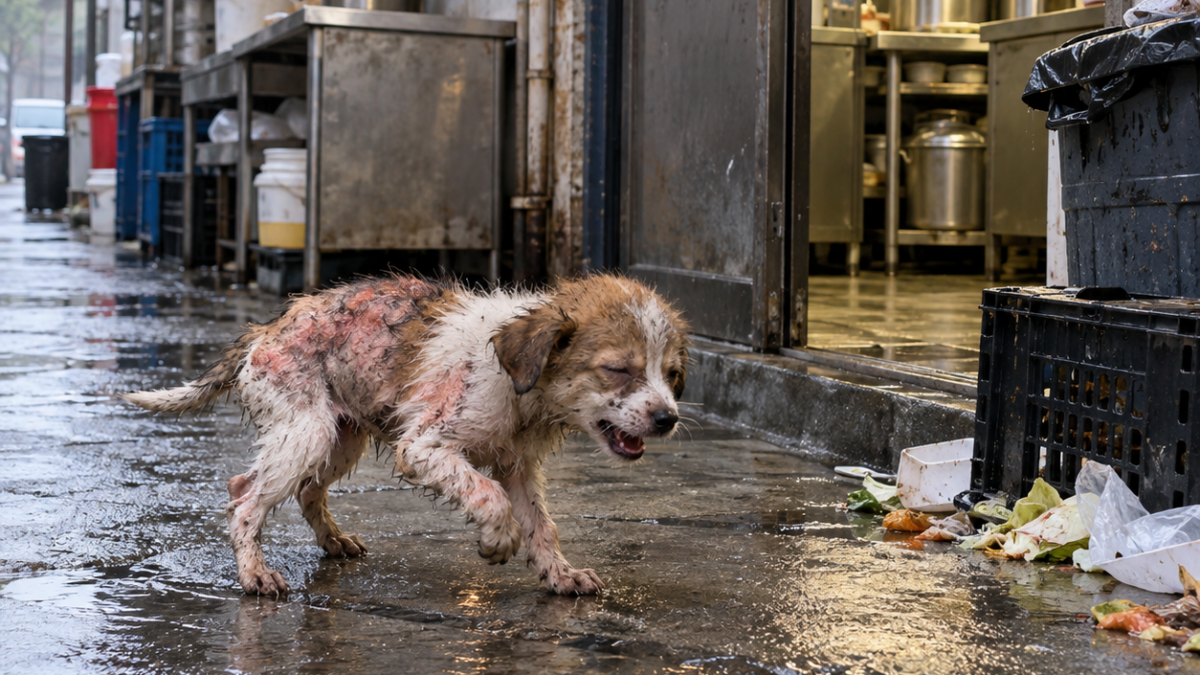
For a long time after Arizona died, I could not stop thinking about the first time I saw her.
She had not looked powerful then.
Nothing about her body suggested strength.
She was thin, depleted, frightened, and obviously exhausted by a life that had demanded too much from her. Anemia and malnutrition had already taken a visible toll. She looked like a dog who should have had nothing left to give.
And yet Texas was still beside her.
That simple fact changed the way I saw everything.
Before I knew the rest of her story, I had seen only a mother and a puppy in terrible condition. Once we learned that Arizona had once had six puppies and that five had died, the bond between her and Texas became almost unbearable to watch.
He was the only one left.
The last puppy.
The last small life she was still protecting.
When I thought back to the way Texas curled against her, his behavior carried a different weight.
He did not just love his mother.
She was his entire world.
Whatever had happened around them, whatever neglect had brought them to that place, whatever hunger and illness they had endured, Arizona had remained the one constant in Texas’s life.
When he was afraid, he pressed into her.
When he wanted comfort, he leaned against her.
When she lay down, he found his way toward her body.
Even while suffering from severe pneumonia and malnutrition, he kept paying attention to her.
He kissed her.
He checked her.
He stayed near.
There was something almost reversed about it.
Arizona was the mother, and naturally she had protected him.
But now Texas seemed to be trying to care for her too.
Of course, he could not treat anemia.
He could not stop an infection.
He could not understand why she was becoming weaker.
He could not call a veterinarian or bring medicine.
All he could do was stay close.
So that was what he did.
Sometimes closeness is the only thing an animal can offer.
For Texas, it seemed to be everything.
I remembered giving them that first small meal.
The food had been simple.
Nothing about it was extraordinary.
But the way they ate made it feel enormous.
They ate with the desperation of animals who did not know when another meal might come.
Their hunger transformed ordinary food into something precious.
I kept thinking about that.
No dog should have to react to a basic meal as though it were a miracle.
Food should have been ordinary.
Water should have been ordinary.
Shelter should have been ordinary.
Care should have been ordinary.
For Arizona and Texas, ordinary things had become rare enough to feel life-changing.
That was one of the hardest truths to accept.
They had not needed luxury.
They had needed the basics.
And even those had not been given consistently.
Arizona’s body told the story.
Anemia.
Malnutrition.
Extreme weakness.
Texas’s body told another part.
Malnutrition.
Severe pneumonia.
Visible ribs.
A body still growing but already forced to fight harder than it should have.
When I watched them eat, I felt relief because I knew at least something was entering their bodies.
But food alone could not undo what had already happened.
They needed medical care.
They needed monitoring.
They needed safety.
They needed time.
And, perhaps most of all, they needed someone to take responsibility for keeping them alive.
Arizona had already carried that responsibility as long as she could.
Now it was our turn.
At first, I focused on the physical problems.
That was natural.
When an animal is medically fragile, you look at the things that can be measured.
How thin is she?
How weak?
Can she stand?
How is the puppy breathing?
How severe is the pneumonia?
Is he eating?
Is his condition improving?
Those questions give you something concrete to hold onto.
Emotion is harder.
There is no simple number for the fear in a puppy’s eyes.
There is no blood test for the exhaustion of a mother who has already lost five babies.
There is no instrument that can measure how desperately one small puppy wants his mother to keep breathing.
Yet those things were present.
They filled the room even when nobody spoke.
Arizona was shy from the beginning.
She did not rush toward us.
She did not behave like a dog who assumed every human hand was safe.
That caution stayed with her.
After what she had lived through, I could not blame her.
Trust had not protected her before.
Why should she offer it immediately now?
We gave her space.
We gave her food.
We let care become something she could experience rather than something we demanded she understand.
Texas was different.
His fear showed openly in his eyes.
There was something heartbreaking about looking at such a young puppy and seeing that much sadness.
Puppies should be curious.
They should be distracted by sounds.
They should tumble over their own feet.
They should investigate everything.
Texas seemed too preoccupied with survival for that kind of innocence.
He watched.
He stayed close to Arizona.
He worried.
Again, I cannot know exactly what he understood.
But his behavior was clear.
He did not want to lose her.
And after learning that five siblings were already gone, I understood why the possibility felt so devastating.
Arizona was all he had.
Perhaps that was also why Arizona had kept going longer than her body seemed capable of.
After two days of care, she managed to stand.
That moment looked small if you did not know where she had started.
For me, it was enormous.
I had watched her weak body.
I knew about the anemia.
I knew about the malnutrition.
I knew how little strength she seemed to possess.
Yet she pushed herself upright.
I stared at her and wondered where that strength came from.
There was no dramatic answer.
There was simply Texas nearby.
Her last puppy.
I could not prove that she stood because of him.
I would never claim to know exactly what motivated her body.
But when I looked at the two of them together, it was impossible not to feel that her bond with him mattered.
She had already lost five.
Maybe she could not save them.
Maybe nothing she did had been enough against whatever conditions they faced.
But Texas was alive.
Texas still needed her.
As long as he remained beside her, Arizona still had a reason to respond when he moved, to lift her head when he cried, to remain present when everything inside her was failing.
That was what I saw.
A mother who looked physically empty but emotionally unwilling to leave her last puppy alone.
The truth about the property made everything harder.
At first, it had looked abandoned.
There was something almost eerie about finding living animals in a place that seemed forgotten.
You look around and wonder who is responsible.
Who left them?
Who knew they were there?
Who was supposed to feed them?
Then we discovered that the property had an owner.
Worse, the owner had wanted to profit from the puppies.
That knowledge changed my sadness into something sharper.
Arizona had not been an invisible stray who simply wandered into trouble.
She and her puppies had belonged to a situation where someone knew of their existence.
Someone expected value from those puppies.
There had originally been six.
Five were dead.
Texas remained.
That fact alone made it impossible to hear the word profit without feeling sick.
They were not objects.
They were living animals.
Arizona had suffered.
The puppies had suffered.
Five had not survived.
Texas was severely ill.
And still, somewhere behind their story, there had been a human calculation about what the puppies might bring.
The owner would have to face what he had done.
I knew that.
But nothing about consequences could restore the five puppies.
Nothing could return Arizona’s lost strength.
Nothing could erase the severe pneumonia from Texas’s small lungs.
Nothing could give them back the days when they had been hungry and helpless.
Accountability mattered.
But healing still had to happen separately.
That was why I tried to keep my focus on Arizona and Texas.
Anger can become consuming.
It can make you stare backward so long that you stop seeing what the animals in front of you need right now.
Arizona did not need me to spend every second imagining what should happen to the owner.
She needed treatment.
Texas needed treatment.
They needed our full attention.
So we kept going.
Texas’s pneumonia was serious.
Watching a puppy with severe pneumonia is frightening because breathing is something you normally never think about.
It happens automatically.
A healthy puppy inhales.
Exhales.
Moves.
Sleeps.
Plays.
When pneumonia becomes severe, every breath reminds you how fragile that automatic process really is.
Texas was already malnourished.
His body had fewer reserves.
He needed strength to recover, but illness was consuming strength at the same time.
It was a cruel balance.
We needed him to eat.
We needed him to rest.
We needed the treatment to work.
And through all of that, he still seemed more concerned with staying near Arizona than with anything else.
Whenever he could, he curled against her.
I watched his small body fit into hers.
There was something painfully natural about it.
The safest place he knew was his mother’s body.
Her smell.
Her warmth.
The rhythm of her breathing.
Even as that breathing weakened, it was still what Texas recognized.
I found myself hoping Arizona could feel him there.
I hoped she understood, in whatever way dogs understand such things, that her last puppy was no longer chained somewhere without help.
He had people around him.
He had food.
He had treatment.
He was being watched.
He was not alone.
Maybe that knowledge mattered to her.
Again, I cannot know.
But I wanted it to.
After two days, when Arizona stood, hope returned sharply.
It is dangerous how quickly hope can expand.
One small improvement and your mind begins building a future around it.
She stood.
Maybe she would gain strength.
Maybe the anemia could be managed.
Maybe nutrition would change everything.
Maybe once Texas’s pneumonia improved, the two of them would recover together.
Maybe we would one day see Arizona walking beside her healthy puppy.
Those thoughts came naturally.
Hope rarely asks permission before it begins.
That was why the next change hurt so much.
Arizona did not continue getting stronger.
Instead, she began weakening again.
At first, I wanted to believe she was simply tired.
Recovery is not a straight line.
A good day can be followed by a difficult one.
An animal can eat well and still need rest.
But this was more than ordinary fatigue.
The infection was getting worse.
Her body had already been compromised by anemia and malnutrition.
Now another force was taking what little strength remained.
Every time I looked at her, she seemed smaller.
Not necessarily in actual size.
In presence.
As though the energy holding her to the world was fading.
Texas seemed to sense something was wrong.
He became nervous.
He stayed beside her.
He did not wander far.
He did not behave like a puppy who had suddenly forgotten his illness and discovered play.
His attention remained with his mother.
That broke me.
There is something terribly helpless about watching an animal stay beside someone he loves while a medical crisis continues that he cannot understand.
Texas could not know the word infection.
He could not know the word anemia.
He could not understand a prognosis.
He only knew Arizona was different.
Maybe she moved less.
Maybe her breathing changed.
Maybe she did not respond in the same way.
Maybe the warmth of her body felt different.
Whatever he noticed, he stayed.
That was his answer.
Then the veterinarian told us we might lose her.
I had known Arizona was sick.
I had seen the deterioration.
Still, hearing those words felt like a door closing.
We might lose her.
It was not certainty.
But it was enough.
My eyes filled immediately.
I tried to control myself.
I wanted to stay focused.
There was still care to give.
There was still Texas.
But grief does not always wait politely until the end.
Sometimes it begins before death.
You begin mourning the possibility while the animal is still breathing.
You notice every small movement more intensely because you are afraid it could be one of the last.
You listen differently.
You look longer.
You hope harder.
That was how those hours felt.
Texas became unusually quiet.
His sadness seemed to deepen.
Again, I cannot say what thoughts were in his mind.
But he stayed close enough that his behavior said more than words could.
He was there.
That was all he could do.
Arizona had done the same for him.
She had been there.
Through hunger.
Through whatever conditions had taken the other five puppies.
Through chains.
Through weakness.
Through anemia.
Through malnutrition.
She had remained his mother.
Now Texas remained beside her.
The direction of care had changed, but the bond had not.
Three days later, we lost Arizona.
Even now, writing those words feels too short for what happened.
Three days.
That was the distance between the veterinarian warning us and the moment her body finally stopped.
Three days in which I kept hoping the warning would prove wrong.
Three days in which Texas stayed near her.
Three days in which Arizona continued until she could not continue anymore.
When she died, Texas was beside her.
He was there in the final second.
That detail is the one I return to most.
Not because it makes the loss easier.
It does not.
But because Arizona was not alone.
And Texas was not somewhere far away wondering where his mother had gone.
They were together.
After everything life had taken from Arizona, she still had her last puppy beside her when she left.
After everything Texas had already lost, he was allowed that final closeness.
I held onto that.
I needed something to hold onto.
Arizona had given birth to six puppies.
Five had already died.
Now she was gone too.
The scale of that loss felt enormous compared with the small body still standing beside us.
Texas was one puppy.
One.
The last.
It would have been easy to look at him and see only tragedy.
I tried not to.
Because Arizona had not kept him alive this long so that his life could become only a memorial to loss.
He was still breathing.
He was still fighting pneumonia.
He was still eating.
His ribs were still visible, but they were beginning to become less prominent.
His treatment was working.
Arizona’s story had ended.
Texas’s had not.
That distinction became important.
There was grief.
But there was also responsibility.
Texas still needed us.
The days immediately after Arizona’s death felt strange.
Her absence seemed physical.
You notice how much space one animal occupies only after that animal is gone.
A place where she had lain was empty.
Texas no longer had the same body to curl against.
There was no mother to kiss.
No familiar chest to press into when frightened.
The room felt different because his world had changed completely.
I watched him and felt helpless in a new way.
Medical problems could be treated.
Pneumonia could be monitored.
Nutrition could be improved.
But how do you explain death to a puppy?
How do you tell him his mother is not coming back?
You do not.
You stay.
You care.
You let the days move.
You allow routines to become new anchors.
That was all we could do.
Texas was more subdued after losing Arizona.
His sadness was obvious to us.
He had always been attached to her.
Now that attachment had nowhere to go.
I tried to imagine what that absence felt like from inside his small world.
Again, I could not truly know.
I could only see the results.
He missed her.
That much seemed clear.
The mother he had depended on from birth was suddenly gone.
He had already lost his five siblings.
Now he had lost her.
If ever there were a moment when a small animal deserved gentleness, it was this one.
So we gave him as much as we could.
Care.
Time.
Treatment.
Quiet.
Company.
Food.
Warmth.
The basics again.
The things Arizona had fought so hard to keep him alive long enough to receive.
I found myself thinking about her every time Texas improved.
When his breathing became easier, I thought of Arizona.
When he ate, I thought of Arizona.
When his ribs became less visible, I thought of Arizona.
When the pneumonia was almost healed, I thought of Arizona.
It felt as though every improvement carried part of her effort forward.
She had protected him until we could take over.
That was the way I came to understand her final gift.
Arizona could not save the other five puppies.
That reality was heartbreaking.
But she kept Texas alive.
She did not abandon him.
She stayed until help arrived.
She used strength she seemed not to possess.
She stood after two days.
She continued even while infection worsened.
Then, once Texas was safe and receiving treatment, her body finally stopped.
I do not know whether Arizona understood that sequence the way I did.
But emotionally, it was impossible not to feel that she had completed the one task she still had left.
Her remaining puppy was safe.
That thought became my greatest comfort.
She had not died while Texas was still chained there.
She had not died while he was starving without medical help.
She had not died while he was alone with severe pneumonia and no one watching him.
She left after he was inside care.
After he had food.
After he had treatment.
After people knew his name.
That mattered.
Texas.
He was no longer simply “the remaining puppy.”
He was Texas.
He was an individual now.
He had a future that belonged to him.
The first visible sign of that future was his body.
His ribs, once so easy to see, gradually became less prominent.
It was not an instant transformation.
Nutrition does not rebuild a starved body overnight.
But slowly, the sharpness softened.
He began looking less fragile.
Every small change reassured me.
The pneumonia also began responding.
What had once been severe gradually improved until it was almost healed.
I cannot describe the relief of watching a puppy breathe and realizing you are less afraid than you were the day before.
At the beginning, every difficult breath can capture your attention.
Later, when the lungs begin working more comfortably, breathing becomes ordinary again.
Ordinary was exactly what I wanted for Texas.
I wanted breathing to be ordinary.
Eating to be ordinary.
Sleeping to be ordinary.
Playing eventually to be ordinary.
I wanted his life to become boring in the best possible way.
No chains.
No starvation.
No severe pneumonia.
No desperate mother using the last of her strength to protect him.
Just a dog living.
That dream began to feel possible.
The veterinarian expected Texas would be able to leave soon.
Those words created a different kind of emotion.
Arizona had not made it out.
Texas would.
There was joy in that.
There was grief inside the joy.
The two could not be separated.
Every step Texas took toward leaving reminded me that Arizona would not be beside him.
But every step also reminded me why her effort mattered.
Her last puppy was going to have the chance she had fought for.
He would leave the medical crisis behind.
He would enter something new.
I hoped that if Arizona could somehow know, she would be at peace with that.
The source of this story says she would soon be reunited with her five puppies and that they would all become beautiful angels.
I held that thought gently, not as something I could prove, but as a way of giving shape to the loss.
Arizona had lost five babies before we met her.
Now perhaps the image of her no longer suffering, no longer weak, no longer chained, offered its own kind of comfort.
Meanwhile, Texas remained here.
Alive.
Recovering.
And that meant we had to keep building forward.
One week later, happiness arrived in a form I had barely dared to imagine during those first days.
A kind woman adopted him.
One week.
It felt both quick and enormous.
So much had changed in such a short stretch of time.
Texas had gone from being a severely ill puppy curled against his dying mother to a puppy healthy enough to begin life in a home.
When the adoption became real, I felt joy immediately.
Then came something else.
It was difficult to say goodbye.
I had watched him suffer.
I had watched him lose Arizona.
I had watched his ribs.
I had watched his breathing.
I had watched his recovery.
You become attached when you witness that much.
Part of you wants to keep the animal close simply because proximity feels like protection.
If I could see Texas, I could know he was safe.
If he was in front of me, I could monitor him.
Letting him leave meant trusting someone else with the life we had fought to preserve.
But that is part of rescue.
The goal is not always to become the final home.
Sometimes your job is to carry an animal far enough that someone else can continue.
Texas needed more than recovery.
He needed a life.
The woman adopting him could give him one.
That mattered more than my difficulty saying goodbye.
So I let the sadness exist alongside the happiness.
Texas was leaving.
That was a good thing.
He was not being abandoned.
He was being chosen.
There is an enormous difference.
He had known what it felt like to be left without enough.
Now someone was saying, in effect, you are mine to care for.
You have a home.
You belong here.
The first days after adoption brought more changes.
Everything was new for Texas.
He had spent so much of his young life under difficult circumstances that normal puppy things were unfamiliar.
His new owner bought him many toys.
The detail made me smile immediately.
Toys.
Such a simple thing.
Most puppies encounter toys before they understand hardship.
Texas had encountered hardship first.
Now, for the first time, he had things whose only purpose was fun.
Nothing to survive.
Nothing to endure.
Nothing to protect.
Just something to play with.
That felt important.
A toy does not treat pneumonia.
It does not reverse malnutrition.
It does not bring a mother back.
But it gives a puppy permission to be a puppy.
Texas needed that.
For so long, his body had been occupied by illness.
His emotional world had been occupied by Arizona.
Now there was room for curiosity.
Play.
Exploration.
Comfort.
His new owner did not stop at one toy.
She gave him many.
That detail made the new life feel generous.
After a beginning defined by scarcity, abundance could begin with something as small and joyful as a pile of toys.
Texas also gained new friends.
That mattered even more.
He had lost his littermates.
He had lost Arizona.
His first family had disappeared around him one life at a time until he was the only puppy remaining.
Now companionship was returning in a new form.
Not as a replacement.
Nothing could replace his mother.
Nothing could make the five siblings part of his present again.
But loss did not mean Texas had to live alone forever.
There could be new bonds.
New company.
New comfort.
That was part of healing too.
Sometimes Texas still missed his mother.
I expected that.
The source tells us he did.
His attachment to Arizona had been too deep simply to vanish because circumstances improved.
There were moments when that longing returned.
When it did, Texas hugged his toys.
That image hit me with unexpected force.
A puppy who once curled into his mother’s body now pressed himself into soft objects when he missed her.
The toys were not Arizona.
Of course they were not.
But they gave him something to hold.
Something to lean against.
Something soft when the old absence became noticeable.
I found that incredibly moving.
Before rescue, comfort had meant his mother.
After losing her, comfort had to take new forms.
A person.
A toy.
A friend.
A bed.
A familiar home.
Healing often works like that.
You do not erase the original source of love.
You allow new sources of love to grow around the empty space.
Texas’s new owner understood that better than words could explain.
Her affection helped soften his longing.
Day after day, Texas became happier.
That was the change I wanted most.
Not merely healthier.
Happier.
There is a difference.
A dog can recover medically and still remain emotionally shut down.
Texas had suffered too much for physical recovery to be the only goal.
He needed joy.
He needed to discover that life contained things beyond losing.
He needed ordinary puppy happiness.
The woman gave him that chance.
Her love did not make him forget Arizona.
I would never want to tell the story that way.
Love is not replacement.
It is addition.
Arizona remained part of who Texas was.
The woman became part of what came next.
Both truths could exist together.
That was why I appreciated the way Texas’s missing his mother was described.
He still missed her sometimes.
And yet the new love eased the ache.
That felt honest.
Grief and happiness can live in the same animal.
Texas could remember and still play.
He could miss Arizona and still enjoy the arms around him now.
He could carry sadness and still become stronger.
None of those things contradicted one another.
As the days passed, his body continued changing.
He gained strength.
The thin puppy with visible ribs began becoming sturdier.
The severe pneumonia that had frightened us so badly moved farther into the past.
His lungs had time to heal.
His body had food.
His environment was safe.
Everything Arizona had wanted for him, even if she could never have described it that way, was finally surrounding him.
Sometimes I imagined what it would have looked like if Arizona had been able to see him there.
Texas with toys.
Texas with friends.
Texas inside a home.
Texas receiving affection.
Texas no longer struggling to breathe.
Texas no longer showing every rib.
The image made me emotional.
I could not change the fact that she was gone.
I could only hope that somehow the life Texas received honored everything she had done.
The source says his mother would be happy to see him grow into a strong dog.
That was how I chose to hold her memory.
Not only as the dog who died.
As the mother who protected a future she would never personally witness.
There is something incredibly powerful about that.
A mother’s work can continue after she is gone through the life of the one she protected.
Texas was that continuation.
Every healthy day he gained was another piece of what Arizona had preserved.
Every meal.
Every toy.
Every new friend.
Every stronger step.
Every moment of happiness.
They all existed because Texas had survived long enough to reach them.
And Texas had survived partly because Arizona had kept him close through conditions that had already taken five others.
I did not need to exaggerate her sacrifice.
The facts were enough.
Six puppies.
Five lost.
One remaining.
A malnourished, anemic mother.
A severely ill puppy.
A chain.
An abandoned-looking property.
A person hoping to profit.
A mother who still protected.
Then three days.
Then silence.
Then Texas alone.
The truth already carried more emotion than anything invented could add.
That was why I kept returning to the simplest details.
Arizona eating that first meal.
Arizona standing after two days.
Texas kissing her.
Texas curling into her.
Texas remaining beside her until the final second.
Those were the moments that defined them for me.
Not dramatic speeches.
Not imagined thoughts.
Actions.
Dogs tell their stories through behavior.
Arizona stayed.
Texas stayed.
That was their language.
After Arizona died, Texas had to learn another language.
The language of beginning again.
At first, survival continued through medicine.
Then survival turned into recovery.
Recovery turned into adoption.
Adoption turned into belonging.
Belonging turned into play.
It happened step by step.
The change from one stage to the next was not always dramatic, but together they formed something extraordinary.
The puppy we once feared losing began experiencing his first toys.
I cannot overstate how beautiful that contrast felt.
Toys are so unimportant compared with medical treatment.
That is exactly why they mattered.
When life is secure enough for unimportant things, you know something fundamental has changed.
Texas could waste time now.
He could play.
He could choose one toy and then another.
He could carry something for no reason.
He could nap afterward.
His days did not have to revolve around illness.
That is what recovery should eventually create.
Not a permanent identity as “the sick puppy.”
Freedom from the crisis.
Texas earned that freedom through no fault or choice of his own.
He should never have needed to fight this hard.
But because he did, every ordinary puppy moment felt precious.
His new friends became part of that ordinary life too.
Companionship had always mattered to him.
At first, companionship meant Arizona.
Then it became the people caring for him.
Now his world grew again.
The presence of others gave him something his early losses had taken away.
A sense of not being alone.
I thought about the five puppies he never got to grow beside.
Again, I refused to invent details about them.
I did not know their personalities.
I did not know how long each survived.
I did not know which looked like Texas or Arizona.
I only knew they were gone.
That absence made Texas’s new friendships more meaningful.
He could not return to the litter he had lost.
But life could still give him connection.
That was enough.
There is a temptation in rescue stories to make healing sound complete.
As though once adoption happens, pain disappears.
Texas’s story did not need that kind of false perfection.
He still missed his mother sometimes.
That was part of him.
He hugged his toys when the longing came.
His new owner’s love helped.
Day by day, happiness grew.
That is a more honest ending than pretending memory vanished.
Texas did not have to forget Arizona in order to live well.
He only needed enough safety that remembering her did not consume everything.
The woman gave him that.
Love softened the sadness.
It did not erase the past.
That distinction mattered to me.
Arizona deserved to remain part of Texas’s story.
She had given too much to become something everyone simply moved beyond.
So when Texas rested with his toys, I liked to think of the comfort as an extension of what Arizona had once given.
She had been the first soft place he knew.
Now life was providing others.
A warm bed.
A toy.
A loving person.
Friends.
Those things did not replace her body.
They allowed Texas to remain open to comfort even after losing it.
That was a victory.
Fear and grief can make an animal withdraw.
Texas did not disappear into them.
He kept moving.
He became happier.
Stronger.
More curious.
His life expanded.
That was the greatest tribute to Arizona I could imagine.
A mother protects a puppy so that the puppy can live.
Texas lived.
I sometimes returned mentally to the moment Arizona stood after two days.
At the time, I had seen it as a sign that she might recover.
Later, after losing her, I saw it differently.
It became a symbol of how stubbornly she had continued.
Where did that strength come from?
I asked myself the same question over and over.
Her body had so little.
Her medical problems were real.
There was no hidden reserve we could magically uncover.
Yet she stood.
Perhaps food helped.
Perhaps treatment helped.
Perhaps the temporary improvement gave her enough energy.
All of those explanations may be true.
Emotionally, though, I could not separate the moment from Texas.
He was there.
Her last puppy.
She rose while he still needed her.
That was the image I kept.
Not because I could prove a mother’s love powered her muscles.
Because the context gave the action meaning.
Arizona had not collapsed completely while Texas remained vulnerable.
She kept trying.
Then once his situation was safer, her infection overwhelmed what was left.
That was the order of events.
The order mattered.
It was one of the reasons her death felt both devastating and strangely peaceful in one small way.
She died after Texas had reached safety.
She died with him beside her.
Those facts could not make the loss good.
Nothing could.
But they prevented the ending from being completely empty.
Arizona knew, at least through what she could see and feel, that Texas was no longer alone outside.
He had people.
He had food.
He had care.
He had somewhere to be.
Maybe that was enough for a tired mother.
I wanted to believe so.
After her death, the medical team’s work with Texas continued.
There was no pause in pneumonia simply because grief had arrived.
His lungs still needed time.
His malnutrition still needed to improve.
His body still needed calories.
That practical reality was helpful in its own way.
Grief can make time feel suspended.
Care forces time forward.
Feed him.
Monitor him.
Let him rest.
Check him again.
One task.
Then another.
Texas needed us to stay in the present.
So we did.
His ribs faded gradually.
The phrase sounds almost poetic, but the change was physical and real.
At first, the ribs stood out beneath his thin body.
Then nutrition began filling him out.
The sharp outline softened.
Each time I noticed that difference, I felt as though we were moving farther from danger.
A body gaining weight is not dramatic.
But for a malnourished puppy, it is one of the most reassuring sights in the world.
His pneumonia also moved toward recovery.
Almost healed.
Those words felt beautiful.
Severe pneumonia had been one of the first facts we learned about him.
Now it was becoming something we could describe in the past tense.
Almost gone.
Almost finished.
He would leave the veterinarian soon.
Texas was crossing a line Arizona never had the chance to cross.
That hurt.
It also filled me with pride.
I wondered whether grief is sometimes like that.
You can be proud and sad in the same breath.
Happy for what survived.
Heartbroken for what did not.
Texas embodied both feelings.
When the kind woman adopted him a week later, those emotions returned.
I was happy.
I did not want to say goodbye.
Both were true.
I had become used to caring for him.
His story had entered my life deeply.
But keeping him with me simply because goodbye was painful would have been selfish.
He had an opportunity.
A real home.
A person ready to love him.
A new beginning.
That was what rescue was supposed to create.
So the farewell had to happen.
I watched him leave with the knowledge that he was moving toward something Arizona could never provide while they were trapped.
A stable home.
Enough food.
Medical follow-up.
Comfort.
Play.
Protection.
Human love.
Those were the things waiting.
Texas might not understand them all at once.
He did not need to.
Life would teach him gradually.
Just as Arizona had once taught him safety through closeness, his new owner would teach him safety through consistency.
One day.
Then another.
Food.
Rest.
Play.
Affection.
Repeat.
Soon the extraordinary would become normal.
That was what I hoped most.
I wanted Texas to stop being surprised by kindness.
I wanted him to expect it.
That is one of the clearest signs that an animal has truly arrived somewhere safe.
At first, a rescued dog may treat every meal as though it could be the last.
Every bed as temporary.
Every gentle hand as uncertain.
Over time, the body learns.
The bowl comes back.
The person comes back.
The bed remains.
The door opens and you are still welcome when you return.
Texas deserved to learn that.
The toys helped.
His new owner filled his world with them.
He had never had toys before.
That detail carried so much innocence that it almost hurt.
A first toy should be a small milestone in puppyhood.
For Texas, it came after starvation, pneumonia, five dead siblings, and the loss of his mother.
The order was unfair.
Still, the toy arrived.
Joy does not always come when it should.
Sometimes it comes late.
It still matters.
Texas played.
He found comfort in the toys.
When he missed Arizona, he hugged them.
That simple behavior connected the past and present in a way I will never forget.
The puppy who once curled into his mother’s body now curled around something soft that belonged entirely to him.
No one could take the significance away from that.
He had something.
His own.
A toy.
A home.
A person.
Friends.
A future.
Arizona had once been his whole world because nothing else was secure.
Now the world was expanding.
That expansion did not diminish her.
It honored her work.
The point of a mother’s protection is not to make the child remain dependent forever.
It is to keep the child alive long enough to grow.
Texas was growing.
Exactly as Arizona had fought for him to do.
I thought about the five puppies often.
The source describes the hope that Arizona would meet them again soon and that they would become beautiful angels.
There was tenderness in that image.
Arizona no longer chained.
No longer malnourished.
No longer anemic.
No longer infected.
No longer watching puppies die around her.
Whatever a person believes about what comes after death, the emotional meaning was clear.
We wanted peace for her.
She had suffered enough.
Texas’s life could continue without requiring Arizona’s suffering to continue in our memory.
We could remember her at rest.
We could remember the strength she had shown.
We could remember the mother rather than only the dying dog.
That was important.
Death can sometimes swallow everything that came before it.
Arizona deserved more than that.
She deserved to be remembered for the way Texas loved her.
For the way he kissed her.
For the way he curled into her.
For the way she somehow stood after two days despite weakness.
For the fact that her last puppy was alive when she died.
Those were the truths I wanted attached to her name.
Not only loss.
Love.
Protection.
Endurance.
Arizona.
A mother.
Texas continued making that memory brighter simply by living.
With every passing day, he seemed happier.
His new owner’s affection softened the moments when he missed his mother.
He grew stronger.
His body filled out.
The thin, sick puppy began turning into the dog Arizona had fought to preserve.
I looked at the changes and felt gratitude.
This was what we had wanted.
Not perfection.
Growth.
Texas did not need to become a symbol of tragedy forever.
He was allowed to become a dog.
A puppy with toys.
A puppy with friends.
A puppy who could run.
A puppy who could sleep safely.
A puppy who could wake up and expect food.
That ordinary identity was the greatest success.
His new owner gave him space to have it.
The more Texas settled into his life, the less his days revolved around what he had lost.
The memory remained.
Sometimes he still missed Arizona.
But there were more things around him now.
More experiences.
More affection.
More reasons to engage with the present.
Grief had to share space with joy.
Joy gradually took more of it.
That was healing.
Not forgetting.
Growing around the loss.
The toys became part of that.
His new friends became part of that.
The woman became part of that.
Every positive experience added another layer to Texas’s world until the abandoned property no longer defined the boundaries of his life.
That mattered deeply to me.
When I first found him, his world had been painfully small.
Arizona.
A chain.
Hunger.
Illness.
The place where they were trapped.
Nothing else seemed reliable.
Later, his world included medical care.
Then recovery.
Then adoption.
Then home.
Then play.
Then friends.
Then a person who loved him.
The expansion was enormous.
And it happened because someone finally interrupted the neglect.
Sometimes rescue is described as saving one animal.
In Texas’s case, it felt more like opening doors one after another.
The first door was physical removal from danger.
The next was treatment.
The next was recovery.
The next was grief.
The next was adoption.
The next was belonging.
At every stage, Texas had to walk through without Arizona eventually.
That was the painful part.
But he did.
He kept moving.
His resilience never looked loud.
He did not become fearless overnight.
He did not stop missing his mother.
He simply continued.
That was enough.
Arizona’s strength had looked similar.
She too had simply continued.
Even when her body was exhausted.
Even after five puppies were gone.
Even while malnourished.
Even while anemic.
Even as infection worsened.
She continued until she could not.
Mother and son shared that quality.
Persistence.
It appeared differently in each of them.
Arizona used hers to keep Texas alive.
Texas used his to build a life after her death.
Together, those two forms of persistence made the story whole.
I realized that if I focused only on Arizona’s death, I would miss the meaning of her life.
If I focused only on Texas’s happy adoption, I would miss what it cost to get him there.
Both parts mattered.
The sorrow and the hope belonged together.
That was why the story stayed with me so strongly.
It was not simply about losing a mother dog.
It was about what she managed to leave behind.
One living puppy.
One chance.
One future.
Texas.
That was enough to turn the ending from complete devastation into something more complicated.
Arizona died.
Texas lived.
Neither fact erased the other.
The woman who adopted Texas became the person carrying that future forward.
I felt grateful to her.
She did not receive a blank-slate puppy.
She received a puppy with a history.
A puppy who had been malnourished.
A puppy who had survived severe pneumonia.
A puppy who had lost his mother.
A puppy who sometimes still missed her.
A puppy who needed tenderness.
She gave him that.
She bought toys.
She surrounded him with comfort.
She helped his sadness ease.
That was exactly the kind of ending I wanted for him.
Not a dramatic transformation performed for anyone watching.
A home.
Love.
Things to play with.
Companionship.
A reason to feel happy when morning came.
Texas began to experience all of it.
The first toys fascinated me because they represented something so different from everything before.
A chain restricts movement.
A toy invites movement.
A chain says stay here because someone decided.
A toy says come play because you want to.
The contrast was enormous.
Texas’s early life had contained too many things done to him.
Now there were things offered to him.
That difference mattered.
He could choose which toy to pick up.
He could carry it.
Leave it.
Return to it.
Curl around it when sad.
Play when happy.
Small choices like those are part of normal life.
Texas finally had them.
The warm home created choices too.
Where to rest.
When to play.
Which friend to approach.
Whether to stay near his new owner.
His world had space.
Arizona had never been able to give him that physically.
She had only been able to give what she had.
Her body.
Her presence.
Protection.
Love.
Now another person could add the rest.
That is how I came to see the adoption.
Not as Texas leaving Arizona behind.
As someone else taking over the work she had started.
Arizona had protected him through survival.
The woman would protect him through growth.
Both mattered.
I imagined Texas growing stronger with each passing month.
The source tells us he would grow into a strong dog.
That future felt believable because the change had already begun.
His ribs were disappearing beneath healthier weight.
His pneumonia was nearly gone.
His happiness was increasing.
His environment supported him.
Everything was finally moving in his favor.
For once, Texas did not have to overcome something every day.
He could simply develop.
That was what puppies are supposed to do.
Eat.
Sleep.
Play.
Grow.
Learn.
Bond.
Explore.
I wanted those ordinary verbs for him.
They sounded more beautiful than any dramatic rescue language.
Texas had already survived enough.
He deserved boring happiness.
I think Arizona would have wanted the same.
When I pictured her now, I tried not to picture only the final three days.
I pictured her with Texas curled into her.
I pictured the way he kissed her.
I pictured her standing after two days.
I pictured her as the center of his small world.
Then I pictured Texas later with toys and friends.
The two images belonged together.
The love began with Arizona.
It continued in another form.
That continuity made the loss easier to carry.
Not easy.
Easier.
There is no version of the story in which losing Arizona stops hurting.
The doctor’s warning still echoes.
“We may lose her.”
The tears still come in the memory.
The three days still end the same way.
Texas still stays beside her until the last second.
Nothing about the later adoption changes those facts.
But later happiness gives the grief somewhere to go.
Instead of remaining only pain, it becomes part of a larger story about what Arizona protected.
That was healing for us too.
The first time I saw Texas’s ribs becoming less visible, I felt an almost parental relief.
This body is staying.
This puppy is gaining.
This life is moving forward.
Medical recovery can be measured in technical ways, but sometimes the visible signs affect you most.
A fuller side.
Brighter eyes.
Easier breathing.
More interest in the world.
Those changes do not require explanation.
You can see them.
Texas was becoming stronger in front of us.
And when happiness arrived through adoption, the transformation extended beyond his body.
His whole life changed.
A puppy who had once been chained in neglect now had a home filled with things chosen for him.
Toys.
Friends.
Affection.
Safety.
No one was waiting to profit from him.
Someone simply loved him.
That distinction is enormous.
To one person, puppies had represented money.
To another, Texas represented a life worth caring for.
The difference between those two attitudes defined his past and future.
I was grateful his future belonged to the second.
He would be cared for because he mattered, not because someone expected something from him.
He would eat because he was hungry.
Receive treatment because he needed it.
Get toys because play made him happy.
Be hugged because affection was welcome.
That was the life Arizona could not secure for herself but had somehow helped secure for him.
Her persistence had bought time.
We used that time.
The doctors used it.
The adopter used it.
Texas turned it into a future.
That chain of care mattered.
No single person could claim the entire rescue.
Arizona began it long before we arrived.
She was the first one keeping Texas alive.
Then we entered.
Then the veterinary team.
Then the woman who adopted him.
Each stage handed Texas forward.
That is how some lives are saved.
Not by one heroic act.
By enough people refusing to be the place where care stops.
Arizona refused first.
She did not give up on Texas.
We refused next.
The veterinarian refused.
The adopter refused.
And Texas lived.
I found that idea comforting.
Especially because the owner who had wanted profit represented the opposite.
A point where responsibility had failed.
The rest of the story became a series of people restoring what that failure had taken.
Food.
Health.
Safety.
Trust.
Home.
Joy.
It did not undo the five puppies who died.
It did not save Arizona.
But it prevented the loss from taking Texas too.
Sometimes rescue cannot repair everything.
It can still save what remains.
Texas was what remained.
That made his life incredibly precious.
Not because he had to carry the memory of six dogs alone.
Because he was alive.
That alone was enough reason to care.
I never wanted him to grow up under the weight of being “the only survivor.”
He was not obligated to live solemnly because the others were gone.
He could be silly.
Playful.
Excited.
He could destroy toys if he wanted.
He could run.
He could nap.
He could enjoy food.
He could become strong.
Happiness would not disrespect Arizona.
Happiness would fulfill what she had protected.
That was the way I came to think about his future.
Every joyful day was not distance from his mother.
It was proof her effort had mattered.
The woman’s love helped make that possible.
When Texas missed Arizona, the woman did not punish the sadness.
She softened it.
That seemed important.
Grief does not need to be corrected.
It needs company.
Texas found company.
The toys he hugged became part of that comfort.
His friends became part.
His new owner became the largest part.
Eventually, happiness had enough support to grow.
Day by day.
That phrase mattered.
Nothing happened instantly.
Texas did not wake one morning completely healed in body and heart.
He changed gradually.
His ribs faded gradually.
The pneumonia improved gradually.
His sadness softened gradually.
His strength increased gradually.
His happiness grew gradually.
That pace made the ending believable.
Healing usually looks like accumulation.
One good meal.
One safe night.
One easier breath.
One playful moment.
One new friend.
One toy held close.
One day with less sadness than the day before.
Repeat enough times and life becomes different.
That was Texas’s recovery.
I imagined Arizona’s last moments often.
I wished I could have told her what was coming.
I wished I could have said, Texas will make it.
His pneumonia will almost completely heal.
His ribs will stop showing so sharply.
He will leave the veterinarian.
A kind woman will adopt him.
She will buy him toys.
He will have friends.
He will still miss you sometimes.
But he will be loved.
He will become happier each day.
He will grow stronger.
He will have a new life.
Of course, I could not give Arizona that explanation.
She died with only what was immediately in front of her.
Texas beside her.
Maybe that was enough.
He was safe in that moment.
For a mother who had lost five puppies, perhaps seeing the sixth alive beside her was the only reassurance left.
That thought has stayed with me.
We often think comfort must come through understanding the whole future.
Animals may experience comfort more simply.
Presence.
Warmth.
Familiar smell.
The body of someone loved nearby.
Texas gave Arizona that in her last second.
Arizona had given it to him countless times before.
They returned the gift to each other.
That makes their final moment one of the saddest and most beautiful parts of the story.
Texas could not save her.
But she did not leave alone.
Arizona could not stay.
But she left Texas in safety.
Both truths mattered.
Three days after the doctor warned us, her body stopped.
One week later, Texas entered a home.
Life can change that quickly.
Grief and hope can sit only days apart.
That was difficult to accept at first.
Part of me felt guilty feeling happy about the adoption while Arizona’s death still felt fresh.
Then I realized the happiness belonged to her story too.
If Texas had remained homeless and frightened, that would not have honored Arizona more.
His safety was exactly what she had spent herself preserving.
Celebrating his future was a way of respecting her.
So I allowed the happiness.
I watched Texas move into the new life and felt proud.
Not proud because I thought we had created him.
Proud because he had survived enough to reach it.
The puppy had endured malnutrition.
Severe pneumonia.
Loss.
He kept going.
His body responded.
His heart remained open enough to form new bonds.
That is not something to take for granted.
Some experiences could have left him permanently withdrawn.
Instead, Texas accepted love.
He accepted toys.
He accepted friendship.
He accepted a home.
Perhaps Arizona had taught him the most important lesson before she died.
Love could be trusted.
Her love had been the reliable thing in his life.
That may have helped him recognize love again when the woman offered it.
I cannot know that for certain.
But emotionally, the connection felt meaningful.
Texas had not learned attachment from humans first.
He had learned it from his mother.
She gave him a foundation.
When another safe person appeared, he was capable of building on it.
That was another legacy Arizona left.
Her body failed.
Her influence did not.
The way Texas sought closeness, the way he missed her, the way he found comfort with toys and people—all of it showed how deeply bonded he was capable of becoming.
That capacity came from somewhere.
Arizona had loved him first.
That was why the final result felt larger than adoption.
Texas had inherited something precious from his mother.
The ability to love deeply.
Now he had somewhere safe to use it.
His new owner would receive that loyalty.
I hoped she understood what it meant.
This was not just a puppy who needed toys.
This was a puppy who had once watched his mother weaken beside him and stayed until the final second.
A puppy who knew attachment intensely.
A puppy whose first definition of safety had been Arizona.
His heart was not empty.
It was full of history.
The woman’s job was not to replace it.
It was to become part of it.
From everything that followed, she did.
Texas became happier.
That was the evidence.
His grief softened.
He had new friends.
He hugged toys when he missed Arizona.
He grew stronger.
These were signs of a life expanding rather than closing.
I was grateful.
Every time I thought of the abandoned property, I contrasted it with the home.
At the property, there had been chains.
At the home, toys.
At the property, hunger.
At the home, food.
At the property, profit had been someone’s concern.
At the home, Texas’s happiness was.
At the property, Arizona had been carrying the burden of keeping one puppy alive.
At the home, an adult human willingly carried responsibility for Texas.
The contrast was complete.
Life had changed entirely for him.
And that was exactly what the source tells us.
A new life opened.
A special puppy stepped into it.
He would grow into a strong dog.
The future no longer looked like a question of survival.
It looked like growth.
That shift was the entire point.
At the beginning, we asked: Will Texas survive the pneumonia?
Later, the question became: What kind of strong dog will he become?
I loved that difference.
One question is rooted in fear.
The other in possibility.
Arizona never got to see that shift.
But she made it possible.
I returned to that truth constantly.
The story belonged to both of them even after she died.
Arizona’s chapter ended early.
Texas carried the next one.
You could see the connection in the way his body changed.
Every pound gained was a rejection of the starvation they had endured.
Every easier breath was a rejection of the illness that threatened him.
Every toy was a rejection of the idea that his life existed for someone else’s profit.
Every friendship was a rejection of isolation.
Every happy day was an answer to the neglect.
Texas did not know he was making statements.
He was simply living.
That simplicity made the result even more powerful.
He did not need to defeat anyone.
He did not need revenge.
He needed a home.
Sometimes survival is the strongest response.
To live well after being failed is enough.
Texas was doing that.
The owner would face what he had done.
That remained part of the story.
But Texas no longer had to carry it.
The consequences belonged to the human responsible.
The future belonged to the puppy.
I was glad those paths separated.
Texas did not need his life defined by legal or moral consequences surrounding someone else.
His job was to heal.
Grow.
Play.
Love.
Those things sounded small compared with accountability, but they were more important for him personally.
A dog does not need justice explained.
A dog needs safety restored.
We did what we could to provide that.
The new owner continued it.
Arizona had begun it.
That chain of protection was enough.
Sometimes I thought about the first look Texas gave me.
Tearful eyes.
A thin body.
A plea I interpreted as asking for help.
Then I thought about him later surrounded by toys.
The distance between those two images felt incredible.
The puppy had not changed into someone else.
He was the same Texas.
Circumstances had changed.
That distinction mattered.
There had never been anything wrong with him as a being.
He had been sick because he lacked care.
He had been thin because he lacked nutrition.
He had been sad because he was suffering and afraid of losing his mother.
Give him treatment, food, safety, and love, and the dog underneath emerged.
That dog was special.
The source says so.
I agreed.
Not because his suffering made him more valuable than another animal.
Because watching him remain gentle and capable of attachment through so much loss was unforgettable.
Texas had every reason to fear closeness after losing Arizona.
Instead, he accepted a new person.
He accepted friends.
He remained emotionally open.
That impressed me.
Perhaps his mother had given him enough security during the worst times that he still believed connection was worth seeking.
Again, I cannot know.
But I loved the possibility.
Arizona’s body may have been weak, but the bond she gave Texas was strong.
Strong enough that he could grieve.
Strong enough that he could later love again.
That was one more way she remained present in his future.
When Texas hugged his toys, I saw both sadness and adaptation.
He missed her.
He found another object to hold.
That is such a small act.
Yet it showed he was learning to soothe himself within the new environment.
His new owner’s love surrounded that process.
He was not grieving alone.
That mattered.
A toy can be held.
A person can respond.
Friends can stay nearby.
Home can create a stable background.
Together, those things make grief easier to carry.
Texas had them.
I could finally stop imagining him alone with loss.
He was supported.
The woman’s decision to adopt him changed not only where he slept but the meaning of the days ahead.
Before adoption, the future remained transitional.
Treatment.
Recovery.
Discharge.
Where next?
After adoption, the answer became clearer.
Home.
That word settled everything.
Texas had somewhere permanent enough for memories to accumulate.
First toy.
First comfortable days.
New friends.
Moments of missing Arizona.
Moments of being comforted.
Stronger body.
More happiness.
Those experiences needed a place.
Home gave them one.
I thought Arizona would have been relieved.
Again, I frame that as hope rather than knowledge.
But what mother would not want safety for the one child she had managed to keep alive?
Texas had that safety.
The source ends with the belief that Arizona would be happy to see him grow strong.
I wanted to preserve that feeling.
Maybe that is the final gift we can give animals we lose.
We cannot bring them back.
We can continue protecting what they loved.
Arizona loved Texas.
We protected Texas.
The adopter protected Texas.
In that sense, care became a way of honoring her.
Every good thing given to him was also respect for the mother who had held on long enough for him to receive it.
That is why I never saw Texas’s adoption as a separate happy story attached after tragedy.
It was the completion of Arizona’s effort.
She had carried him to the edge of safety.
We carried him farther.
The woman carried him home.
That progression was beautiful.
One life helping another.
Then another person stepping in.
No one could do everything.
Together, enough was done.
When I looked back at Arizona standing after two days, I no longer asked only where the strength came from.
I understood that maybe the more important question was what she used the strength for.
She used it to remain.
She stayed present for Texas.
She kept being his mother.
Even when she could not save herself.
That was enough.
We do not need to turn her into something superhuman—or super-canine—to appreciate it.
She was sick.
She was weak.
She had limits.
Those limits finally won.
But before they did, Texas reached safety.
That is the factual core.
It is already extraordinary.
Three days after the warning, she died.
Her final second had Texas beside her.
Then his life continued.
That sequence is the heart of the story.
A mother leaves.
A puppy remains.
Love changes form.
That is what happened.
As Texas grew happier, I noticed how my own memory of Arizona changed.
At first, remembering her meant pain.
I saw the weak body.
I heard the warning.
I felt the tears.
Later, Texas’s progress added something else.
When I thought of Arizona, I could also picture what she had accomplished.
The last puppy was alive.
The last puppy was healthy enough to leave veterinary care.
The last puppy had been adopted.
The last puppy had toys.
The last puppy had friends.
The last puppy was becoming stronger.
That transformed grief.
It did not remove it.
It made it meaningful.
Arizona’s story no longer ended only with death.
It extended through Texas.
That is how some bonds continue.
Not literally through presence.
Through consequence.
Because Arizona kept him alive, Texas could have everything that followed.
I found peace in that.
When Texas eventually grew into the strong dog the source says he would become, I knew I would think of her.
Not as a ghost standing beside him.
Not as something invented.
Simply as the mother whose care existed at the beginning of his survival.
The origin point.
The first protector.
The one who stayed when there was almost nothing else.
Every dog begins somewhere.
Texas began with Arizona.
That would always be true.
His future did not overwrite it.
It rested on it.
The new owner became part of that foundation too.
Her love gave Texas a second layer of security.
Where Arizona had provided maternal protection, the woman provided a home.
Where Arizona had given body warmth, the woman gave beds and toys.
Where Arizona had searched for whatever might keep him alive, the woman could provide food without struggle.
The kinds of care changed.
The purpose remained the same.
Keep Texas safe.
Let Texas live.
That continuity made the adoption feel right.
He had found someone willing to continue the work.
And Texas responded.
He became happier every day.
That is perhaps the clearest measure of whether the new life was good for him.
Happiness increased.
Not fear.
Not withdrawal.
Happiness.
His strength increased too.
The combination told the whole story.
His body healed.
His heart softened.
The puppy who once had only his mother now had a whole environment supporting him.
I was deeply thankful.
There is one image from the beginning and one from the end that I often place beside each other.
At the beginning, Texas is curled into Arizona.
At the end, Texas is holding his toys.
Both are images of a puppy seeking comfort.
The object of comfort changes.
The need does not.
That connection reminds me that healing is not becoming someone who never needs reassurance.
It is finding safe ways to receive it.
Arizona had been Texas’s first safe place.
Later, the toy became one.
The woman became one.
The home became one.
His friends became part of that network.
Texas did not lose the need for closeness.
He gained more places to find it.
That is a good ending.
Not independence through emotional isolation.
Security through connection.
He remained a dog who loved deeply.
That was one of Arizona’s gifts too.
I hope his life continued to be filled with that kind of connection.
The source tells us a beautiful new life had opened for him.
That was enough for me.
I did not need to jump years beyond it.
I did not need to invent adventures.
The present already contained everything that mattered.
Texas was safe.
Loved.
Recovering.
Growing stronger.
Surrounded by toys and new friends.
Missing Arizona sometimes, but comforted by a woman whose love made the longing easier.
That is where his story needed to rest.
A hopeful present.
A future beginning.
Not an epilogue built from guesses.
Just the life in front of him.
I thought about the phrase “only remaining puppy” one last time.
At the beginning, it sounded devastating.
Only.
A word of loss.
Only one left.
Five gone.
By the end, “only remaining puppy” carried another meaning.
One was enough to save.
One life still mattered.
One future could still be protected.
One puppy could still become healthy, loved, and strong.
Rescue is sometimes about refusing to let the word only make a life feel small.
Texas was not “only” anything.
He was Texas.
He mattered completely.
Arizona understood that in the way mothers often do without needing language.
He was the one she still had.
So she protected him.
We understood it next.
Then his adopter did.
One puppy.
One life.
Enough reason for everything.
I wish Arizona could have experienced the comfort she helped create for him.
I wish she could have known a warm home.
Toys would not have mattered much to her in the same way, perhaps, but a soft place, food, safety, and rest certainly would have.
She deserved those things too.
That knowledge remains painful.
Not every rescue ends with everyone surviving.
Sometimes you arrive in time for one and too late for another.
Sometimes medicine cannot reverse everything.
Sometimes love cannot keep a body alive.
That is difficult to accept because care creates the desire to control the outcome.
But care is not control.
We did not choose Arizona’s infection.
We could not command her weakened body to recover.
We could only respond.
Treat.
Stay.
Comfort.
Protect Texas.
And when death came, be there.
That was what we had.
It was not enough to save her.
It was enough to make sure she did not leave her puppy in the same desperate situation where we found them.
That distinction mattered deeply.
Arizona’s death was still tragic.
But Texas was safe.
I kept returning to that sentence because it was the anchor.
Texas was safe.
Safe enough for Arizona to stop fighting, whether consciously or simply because her body could go no further.
Safe enough for us to focus on his pneumonia.
Safe enough to recover.
Safe enough to leave.
Safe enough to be adopted.
Everything flowed from that.
Maybe that is why the title of their story felt so true.
The mama dog breathed her last after her only remaining puppy was safe.
It does not mean she chose the exact second.
It means the order of events carried meaning.
She held on through the danger.
Then she was gone.
Texas remained.
Her last responsibility became ours.
We accepted it.
The woman accepted it next.
And the puppy she had protected entered a life full of things Arizona never had the chance to see.
I like to believe that if love could carry news backward somehow, this is what I would send her:
Texas made it.
He ate.
He gained weight.
His ribs softened beneath a healthier body.
The pneumonia nearly disappeared.
He left the veterinarian.
A kind woman chose him.
She gave him toys.
He had friends.
He still remembered you.
Sometimes he missed you.
When he did, he held his toys close.
Her love helped him feel better.
Every day he became happier.
He grew stronger.
The life you protected opened in front of him.
I cannot give Arizona those words.
I can give them to the memory of her.
That has to be enough.
Texas’s future is the answer.
Not to every injustice.
Not to every loss.
But to the question of whether Arizona’s struggle mattered.
It did.
It mattered every time Texas breathed more easily.
It mattered every time he ate a full meal.
It mattered every time he woke in a safe home.
It mattered every time he played.
It mattered every time someone loved him.
It mattered because he lived.
That is the simplest truth.
The mother who lost five puppies did not lose the sixth.
Not before she knew he had help.
She got him that far.
And now, when I think about Texas growing into a strong dog, I do not imagine his strength beginning in the new home.
It began earlier.
It began curled against Arizona.
It began while he was thin.
It began while his lungs were sick.
It began in the stubborn persistence he inherited from the mother beside him.
The home gave that strength somewhere to flourish.
That was the difference.
Survival became growth.
Arizona had protected survival.
The woman protected growth.
Texas received both.
What a beautiful thing that was.
I no longer saw him only as the sad-eyed puppy asking for help.
That image would always remain, but it had company now.
Texas with a toy.
Texas with friends.
Texas safe.
Texas loved.
Texas happier than the day before.
Those later images became the ones I preferred.
They did not deny the beginning.
They proved the beginning was not the whole story.
That is all any rescue can hope for.
Not to erase what happened.
To make sure something better comes after.
Texas received something better.
Arizona did not.
That imbalance will always hurt.
But perhaps the closest thing to peace is knowing that the life she valued most received what she could not.
Her last puppy had a chance.
Then a home.
Then joy.
And the world became larger for him.
I think about the chain sometimes.
The physical chain they had once been attached to.
It represented restriction.
Powerlessness.
Neglect.
Arizona and Texas could not simply choose a different life while they were trapped.
Someone had to intervene.
Later, Texas had no such chain.
He could move.
Play.
Approach his owner.
Choose a toy.
Meet friends.
Rest where he felt comfortable.
That contrast showed how completely circumstances had changed.
Freedom is not only the absence of a chain.
It is the presence of safety.
Texas eventually had both.
No restraint.
And somewhere safe to go.
That distinction matters.
A stray or abandoned animal can be physically free but still unsafe.
Texas’s adoption gave freedom structure.
A home.
A person.
A routine.
That was what allowed him to become a puppy rather than simply an animal trying to stay alive.
I wished the same had happened sooner for Arizona.
But her story did not allow that ending.
So I honor the one it did allow.
She saved what she could.
Her last puppy.
That is enough to remember her with love instead of only anger.
The anger belongs to the circumstances.
The love belongs to Arizona and Texas.
That is how I separate them now.
When I remember the owner wanting profit, I feel anger.
When I remember Arizona standing after two days, I feel admiration.
When I remember the five puppies who did not survive, I feel grief.
When I remember Texas beside his mother at the end, I feel heartbreak.
When I remember the new owner buying him toys, I feel relief.
All those emotions belong to one story.
None cancels the others.
That complexity makes it real.
Life rarely offers a single emotion at a time.
Arizona and Texas gave us everything.
Love.
Loss.
Fear.
Anger.
Hope.
Grief.
Joy.
And finally, peace.
Not complete peace.
But enough.
Enough to believe Texas’s future could be beautiful.
Enough to believe Arizona’s struggle had meaning.
Enough to say her name without seeing only death.
Arizona.
Mother of six.
Five lost.
One saved.
That is how I remember her.
And Texas.
The last puppy.
The one with severe pneumonia.
The one who curled against her.
The one who stayed until her final second.
The one whose ribs slowly disappeared under healthier weight.
The one whose pneumonia almost completely healed.
The one adopted a week later.
The one who received his first toys.
The one who still missed his mother sometimes.
The one who hugged those toys when he did.
The one who became happier every day.
The one growing stronger.
That is how I remember him.
Together, their story is complete without anything more.
A mother gave everything she had.
A puppy survived.
Love changed hands.
Life continued.
And somewhere inside that simple sequence is the reason I will never forget them.
Arizona could not stay.
Texas could.
So he did.
He stayed.
He healed.
He accepted love.
He moved into a home where his existence meant more than profit.
He learned play.
He learned comfort.
He found new friends.
He carried his mother’s memory without letting grief close the future.
And day by day, the fragile puppy became stronger.
I hope that is the image anyone who hears their story keeps.
Not only Arizona dying.
Not only Texas crying beside her.
But the two of them connected across the entire journey.
Her strength making his future possible.
His future giving her struggle meaning.
The bond did not end simply because her breathing stopped.
Its effect remained.
It remained in Texas.
In his survival.
In the way he sought closeness.
In the way he could love again.
Arizona gave him that much.
Then others gave him the rest.
Food.
Medicine.
A home.
Toys.
Friends.
Affection.
Together, those things built the life waiting for him.
A life no longer measured by how long he could survive without enough.
A life measured by growth.
By play.
By love.
By ordinary days.
That was the future opening in front of Texas.
He was special.
Not because tragedy had touched him.
Because after tragedy, there was still so much life inside him.
And that life was finally surrounded by people willing to protect it.
Arizona’s last remaining puppy was safe.
Then he became healthy.
Then loved.
Then happy.
And as he grew toward the strong dog he was meant to become, I could only hold one final thought close.
His mother would have wanted exactly this for him.