This Puppy Could Only Drag Herself Across the Floor… She Just Needed One Chance. T
“She’s alive,” the investigator said.
I closed my eyes.
For one second, that was enough.
Alive.
The puppy in my arms shifted against my chest, unaware that somewhere across town, the dog who had given birth to her had just been found.
“Where?” I asked.
“Behind the property where the puppy came from.”
My eyes opened.
“Behind the house?”
“In a makeshift enclosure.”
His voice changed.
“She isn’t in good condition.”
I looked down at the puppy.
She had fallen asleep with one front paw hooked over my wrist.
“How bad?”
“Thin. Very thin. No clean water when we arrived. Limited food. She’s had multiple litters, according to neighbors.”
My stomach tightened.
“How old?”
“We don’t know yet.”
“Can you get her out?”
“We’re working on it.”
Working on it.
Another phrase that sounds harmless until someone’s life depends on it.
The investigator continued.
“There may be other records connected to breeding. We need to document everything before we say more.”
I stared through the hospital window.
Cars moved slowly through the parking lot.
Ordinary people carrying coffee.
A man loading groceries.
A woman walking a little white dog in a red sweater.
Inside my arms, this puppy’s whole future had been shaped by choices made before she had taken her first breath.
“What did the mother look like?” I asked.
“Like she hasn’t had enough food for a long time.”
I swallowed.
“And you’re saying that could have affected the puppies before birth?”
“That’s what the veterinarians will have to determine.”
After the call ended, I remained in the hallway.
One of the orthopedic veterinarians, Dr. Brennan, found me there.
He had gray at his temples and the careful expression of someone accustomed to delivering bad news without destroying people.
“You all right?”
“They found her mother.”
He waited.
“She’s severely malnourished.”
His face tightened.
“That matters.”
“How much?”
“It could matter a lot.”
He gestured toward an empty consultation room.
“Come sit.”
I didn’t want to sit.
I sat anyway.
The puppy stayed in my arms.
Dr. Brennan pulled one of the X-rays onto a monitor.
“Developmental abnormalities can have several causes,” he said. “Genetic factors. Intrauterine conditions. Nutrition. Sometimes we never know.”
He pointed to her hips.
“But development doesn’t begin when a puppy is born. If the mother’s body lacks what it needs during pregnancy, the puppies can pay for that deficit.”
I looked at the screen.
White bone against black.
Two tiny hips that had never been given a fair chance to form.
“So someone starved her mother, and she ended up like this.”
He shook his head carefully.
“I wouldn’t say we can prove that yet.”
“But it’s possible.”
“Yes.”
The puppy woke.
She stretched her front legs.
Her back legs remained loose against my arm.
Dr. Brennan watched her.
“She’s very young.”
“That’s supposed to be good, right?”
“For rehabilitation, yes.”
“For walking?”
He hesitated.
I hated hesitation.
“What?”
“Her age gives us opportunities. Growth. Neuroplasticity. Strengthening. Adaptation.”
“You didn’t say walking.”
“No.”
I stared at him.
He held my gaze.
“I don’t want to promise you something her body may not be able to do.”
The puppy yawned.
A ridiculous, tiny yawn.
Then she put her nose under my chin.
I laughed despite myself.
“What do you want me to do with that?”
Dr. Brennan smiled.
“Love her?”
“That part’s already happening.”
“Then start there.”
We named her Basita two days later.
The name had come from a volunteer who said it carried the feeling of hope and gentleness in her family.
I liked the sound.
Soft.
Small.
Basita.
She responded to it almost immediately, though that probably had more to do with the treats in my hand than any attachment to the name.
“Basita.”
Tail wag.
“Basita.”
Tail wag.
“Basita.”
She dragged herself across the blanket, climbed halfway into my lap, and chewed my sleeve.
“Excellent,” I said. “We’re communicating.”
Those first weeks were mostly tests.
Blood work.
Neurological examinations.
Repeated X-rays.
Range-of-motion assessments.
Watching how she moved.
Watching how she rested.
Watching whether she felt touch in her paws.
Watching whether she could bear even a little weight.
She could feel her hind legs.
That was important.
She could move parts of them.
Also important.
But she could not coordinate them well enough to stand.
When she tried, her hips collapsed sideways.
Sometimes her back legs crossed.
Sometimes one foot curled underneath her.
Her front legs became strong from dragging the rest of her body.
Too strong, according to the rehabilitation specialist.
“We don’t want her compensating so much that she damages her shoulders.”
The specialist was Dr. Elena Foster.
She ran a rehabilitation clinic forty minutes from the hospital and had the calm energy of someone who could persuade almost any animal to attempt something difficult.
She placed Basita on a padded mat.
Basita immediately crawled toward me.
Elena blocked her gently.
“No cheating.”
Basita looked offended.
“She knows exactly where she wants to go,” I said.
“Good. Motivation is useful.”
Elena supported Basita’s hips with a sling.
For the first time, Basita’s rear feet touched the floor underneath her body.
She froze.
Her head turned.
Her eyes widened.
“There you go,” Elena whispered.
Basita took one front step.
Her back legs didn’t follow.
Elena adjusted the sling.
“Again.”
Basita tried.
One rear foot scraped forward.
Not a step.
Barely movement.
I gasped.
Elena looked at me.
“Don’t celebrate every millimeter.”
“Why not?”
“Because you’ll exhaust yourself.”
“Too late.”
She smiled.
Basita tried again.
Another scrape.
Then she collapsed into the sling and looked at us as if we had personally ruined her afternoon.
Elena released her.
Basita crawled directly into my lap.
I kissed her forehead.
“You did great.”
Elena made a note.
“We’ll work on supported standing. Hydrotherapy later, maybe. We need to protect those joints while she’s growing.”
“How often?”
“Short sessions. Frequent. Never to the point of pain.”
I nodded.
“Anything else?”
“Tummy time. Positioning. Core strength. Gentle stimulation.”
I wrote everything down.
Elena looked at the notebook.
“You’re going to turn this into a military campaign.”
“Probably.”
“Don’t.”
I looked up.
“She also needs to be a puppy.”
That sentence changed the way I approached everything afterward.
Until then, Basita had become a medical project.
Wake.
Medication.
Exercise.
Vet.
Feed.
Stretch.
Record.
Repeat.
Elena reminded me there had to be room for joy.
So we bought toys.
Basita preferred socks.
We bought a soft orthopedic bed.
Basita slept on the towel beside it.
We bought puzzle feeders.
Basita tried to eat the puzzle.
She loved crinkly toys, hated squeakers, and had a strange obsession with cardboard boxes.
If I left an empty delivery box within reach, she dragged herself inside and sat there like a queen occupying a very poor castle.
At night, she slept in a padded pen beside my bed.
The first few nights, she cried.
Not constantly.
Just enough.
I would lower my hand over the edge.
She would press her nose into my palm.
Then settle.
By the end of the second week, she no longer cried when the lights went out.
She simply waited for my hand.
One night I forgot.
I turned over.
Closed my eyes.
A small growl came from the pen.
I opened one eye.
Basita stared at me.
“Oh.”
I lowered my hand.
Her nose touched it.
She sighed.
“Very demanding.”
Tail thump.
That was how she became mine before I admitted she had.
Not legally.
Not permanently.
Emotionally.
She looked for me when someone entered the room.
She slept better if she could see me.
At the rehabilitation clinic, when an exercise frightened her, she crawled toward my shoes.
Elena noticed.
“She thinks you’re her mother.”
I looked down.
Basita had placed one paw on my foot.
“She should have her real mother.”
Elena’s expression softened.
“Maybe.”
The authorities were still working on that.
Her mother had been removed from the property and placed into protective care pending the investigation.
Her name, according to records, was Bella.
She was estimated to be four or five years old.
She had likely produced several litters.
No consistent veterinary history.
No proof of responsible breeding.
Neighbors said puppies had come and gone from the property for years.
I asked whether Basita had siblings.
Nobody knew.
That answer haunted me.
Not because every mystery needs solving.
Because Basita’s body suggested she may not have been the only puppy affected.
The investigators found records of online sales.
Cash transactions.
Photos of litters advertised as “healthy family puppies.”
No health testing.
No prenatal records.
No nutritional plan.
Bella had simply been bred.
Again.
And again.
And again.
When one litter left, another eventually came.
Basita may have been the puppy who made the neglect visible.
But she was not the first life shaped by it.
That realization made me angry in a way I didn’t know where to put.
So I put it into her exercises.
Support.
Step.
Reward.
Rest.
Again.
At nine weeks old, Basita received her first mobility cart.
It wasn’t new.
The frame had scratches.
One wheel had been replaced.
A faded sticker on the side said TOBY.
I ran my fingers over it.
“Who’s Toby?”
Elena smiled.
“A legend.”
“Of course he is.”
“He was a dachshund mix with a spinal injury. Used that cart during rehab.”
“Did he recover?”
“Enough to stop needing it.”
I looked at the little cart.
“So this is lucky?”
“If you believe in that.”
“I currently believe in anything helpful.”
Basita did not believe in the cart.
She hated it.
The first time we placed her into the harness, she became completely still.
Front legs stiff.
Ears back.
Expression betrayed.
I crouched in front of her.
“Listen, I didn’t build it.”
Elena laughed.
Basita stared at me.
“She’s blaming you.”
“She should blame you. This is your building.”
Elena placed a treat six inches ahead.
Basita leaned.
Nothing happened.
She tried to drag.
The wheels resisted slightly.
Basita turned and bit the harness strap.
“No,” Elena said.
Basita bit it harder.
“Strong objection,” I said.
We ended the session after four minutes.
The next day, five.
Then seven.
On day four, Basita moved one wheel.
Accidentally.
She had been reaching for chicken.
Still counted.
Day five, both wheels moved.
Day six, she went nearly two feet.
Then stopped and looked behind herself, startled that the contraption had followed.
I laughed until my stomach hurt.
By the end of the second week, Basita could cross the room.
Not gracefully.
She veered left.
Bumped into walls.
Got one wheel caught on furniture.
Once she drove directly into my shin.
“Ow.”
She looked delighted.
Elena pointed.
“That’s the most enthusiasm I’ve seen all day.”
“I’ve created a menace.”
“You’ve created mobility.”
That afternoon, Basita discovered speed.
A technician named Mark held a piece of chicken at the end of the hallway.
Basita saw it.
Her ears lifted.
Then she moved.
The cart rattled.
Front paws pumping.
Wheels spinning.
She barreled down the hall.
Mark barely moved his feet in time.
Basita overshot the chicken, turned badly, bumped into a laundry basket, and looked thrilled.
Everyone in the clinic clapped.
Elena shook her head.
“Now you’ve done it.”
For the first time, Basita could choose where to go.
That mattered more than whether the movement looked normal.
She could follow me from room to room.
She could chase a toy.
She could investigate sounds.
She could get into trouble.
That last one became important quickly.
Basita learned how to corner too fast.
How to ram the kitchen cabinet.
How to steal dish towels.
How to chase the cat at our foster partner’s office.
The cat remained unimpressed.
Basita, however, seemed to believe she had finally become an athlete.
Then came the MRI.
Two months had passed.
Basita was growing.
Her legs were longer.
Her chest stronger.
Her personality enormous.
The specialists wanted better imaging of her spine and nervous system to rule out anything treatable that X-rays could not show.
I built too much hope around that scan.
I knew I was doing it.
Couldn’t stop.
Maybe the hips were only part of the problem.
Maybe there was a compressed area.
Maybe something surgical.
Something fixable.
Something we had missed.
The morning of the MRI, Basita had to fast.
She considered this a personal attack.
She followed me through the kitchen in her cart, staring at every movement.
“I can’t feed you.”
Stare.
“Doctor’s orders.”
Stare.
“Take it up with Dr. Brennan.”
She hit my ankle with one wheel.
“Violence won’t help.”
At the hospital, they took her back for sedation.
I hated letting go.
“You’ve done this before,” the technician reminded me.
“I hate it every time.”
“We’ll call you.”
Waiting rooms are designed to make time slow.
I read the same page of a magazine seven times.
Bought coffee.
Didn’t drink it.
Walked outside.
Came back.
Checked my phone every forty seconds.
Finally, Dr. Brennan appeared.
No smile.
My stomach dropped.
“She’s awake.”
“And?”
“Come with me.”
I followed him to the consultation room.
Elena joined by video call.
Images filled the screen.
Dr. Brennan explained them carefully.
No compressive spinal lesion.
No hidden injury.
No surgical target.
No surprise answer.
Her nervous system showed some preserved function, but the structural abnormalities around her hips and hindquarters remained severe.
I tried to keep up.
“So?”
He stopped.
“So the MRI doesn’t give us a pathway to normal walking.”
The room felt very quiet.
“What about abnormal walking?”
He understood the question.
“Possible.”
“Independent?”
“Possible.”
“Likely?”
He hesitated.
There it was again.
That pause.
“No.”
I looked at Elena on the screen.
She looked sad.
Not defeated.
Sad.
“How long do we keep trying?”
“As long as the therapy benefits her more than it burdens her,” Elena said.
I hated that answer because it was reasonable.
I wanted a deadline.
A number.
Ten weeks.
Six months.
One year.
I wanted someone to say work this hard and you will receive this outcome.
Medicine doesn’t negotiate like that.
Basita woke fully an hour later.
She was groggy.
Her hair was flattened oddly along one side.
When she saw me, her tail started moving.
I picked her up.
She immediately put her face against my neck.
I cried into her fur.
She had no idea why.
That evening, she slept deeply from the sedation.
I sat on the floor beside her bed.
The cart leaned against the wall.
For the first time, I looked at it not as a temporary bridge.
Maybe it was her future.
That scared me.
Not because a wheelchair meant a bad life.
I already knew disabled dogs could thrive.
It scared me because I had been secretly treating the cart as evidence that we were on our way somewhere else.
A tool until the miracle happened.
What if the miracle was not walking?
What if the miracle was this?
A puppy asleep after spending the afternoon rolling down a hallway on her own terms.
I wasn’t ready for that thought.
So I postponed it.
The next morning, we trained harder.
Too hard.
I know that now.
Basita did supported stands.
Weight shifts.
Assisted steps.
Core exercises.
Hydrotherapy twice that week.
Electrical stimulation under veterinary guidance.
Massage.
Stretching.
Cart work.
Rest.
Then more.
She tried.
God, she tried.
That’s what made it dangerous.
Basita wanted to please.
If I encouraged her, she kept going.
If I said, “Come on, girl,” she came.
Even when she was tired.
Even when her back legs trembled.
Even when she would have preferred to lie down and chew a cardboard box.
Elena called me out after a session.
“Enough.”
“We have five minutes left.”
“No.”
“She can do another round.”
Elena unclipped the support sling.
“I’m not talking about her.”
I looked at her.
“You’re pushing too hard.”
My face got hot.
“Her window is closing.”
“Says who?”
“Everyone. She’s growing.”
“Yes.”
“If we’re going to get function—”
“Stop.”
I hated her for the word.
She sat on the mat.
Basita crawled into her lap.
Traitor.
Elena scratched Basita’s ear.
“You’ve turned hope into a job.”
I crossed my arms.
“Hope is work.”
“Sometimes.”
“What does that mean?”
“It means you are starting to measure her worth by whether the therapy succeeds.”
“I am not.”
“You don’t mean to.”
“I’m not.”
Elena looked at Basita.
“When did she last have a day with no exercises?”
I opened my mouth.
Closed it.
“Exactly.”
I sat down.
The anger drained.
Left shame behind.
“I just don’t want to miss the chance.”
“I know.”
“What if we stop one day too early?”
“We’re not stopping.”
“What if the one extra session is the one that matters?”
Elena shook her head.
“You can torture yourself with that forever.”
Basita rolled onto her back in Elena’s lap.
She looked ridiculous.
Elena rubbed her belly.
“She doesn’t know she’s a rehabilitation project.”
I stared at her.
“She knows breakfast. Your voice. The cart. Sunlight. Toys. Chicken. Being held.”
Basita sneezed.
Elena smiled.
“She knows this.”
That weekend, Basita took two days off.
No clinic.
No formal exercises beyond gentle stretching.
We went to a park with paved trails.
I strapped her into the cart.
She rolled across fallen leaves.
Chased pigeons unsuccessfully.
Met a three-year-old boy who asked why she had “wheels for legs.”
His mother looked horrified.
“I’m sorry.”
I smiled.
“It’s okay.”
I crouched beside him.
“Her back legs don’t work the same as yours, so the wheels help her run.”
He considered this.
Then looked at Basita.
“Is she a robot?”
“No.”
“Half robot?”
“Maybe five percent.”
He seemed satisfied.
Basita licked his hand.
The boy laughed.
“She likes me.”
“She does.”
He ran back to his mother.
Basita tried to follow.
The wheels bounced over a crack in the pavement.
She kept going.
I watched her.
Not training.
Not measuring.
Just moving.
Elena was right.
Hope had become too narrow.
I had defined it as walking.
Basita had never agreed to that definition.
The investigation into Bella’s neglect concluded around the same time.
Authorities removed her permanently.
She entered a rescue program separate from ours because her case required controlled placement.
I asked whether Basita could see her.
The answer was complicated.
Disease precautions.
Stress.
Legal timing.
Different facilities.
Eventually, though, everyone agreed to a supervised reunion once Bella’s health improved.
I did not tell myself it would be magical.
I failed.
I imagined recognition.
Instant.
Perfect.
Mother and daughter running toward each other.
Well, one running.
One rolling.
Some cinematic understanding.
Real life did something quieter.
Bella arrived wearing a blue harness.
She was larger than Basita, light brown with darker ears.
Healthier now.
Still thin.
Still cautious.
When the handler brought her into the room, Bella stopped.
Basita was on a padded mat without her cart.
She looked up.
Bella looked at her.
Nothing happened.
My heart sank.
Then Basita crawled forward.
Bella’s nose moved.
One step.
Basita moved again.
Bella approached.
They met halfway.
Nose to nose.
Bella sniffed Basita’s face.
Her ears.
Her shoulders.
Then down her back.
When she reached the hind legs, she paused.
Basita licked Bella’s chin.
Bella stepped backward.
Then forward again.
No dramatic cry.
No explosion of joy.
She simply lowered herself beside Basita.
Their bodies touched.
That was enough.
I sat against the wall and cried silently.
Bella’s handler looked at me.
“You okay?”
“No.”
“Good tears?”
“I have no idea anymore.”
For twenty minutes, the two dogs rested together.
Basita chewed Bella’s ear.
Bella tolerated it.
At one point, Basita put her head across Bella’s front leg and fell asleep.
I took one photograph.
Only one.
I didn’t want to turn the moment into documentation.
When it was time to separate them, Bella stood first.
Basita woke.
Bella sniffed her face again.
Then left with the handler.
Basita watched the door.
My heart broke a little.
Then she crawled toward me.
I picked her up.
“You got that.”
I kissed the top of her head.
“You got one afternoon.”
Bella eventually went to an experienced foster home.
Then, months later, an adoptive family.
A quiet couple with an older dog and no interest in breeding anything.
They sent updates occasionally.
Bella gained weight.
Her coat improved.
She learned stairs.
Slept on a couch.
Discovered peanut butter.
I kept the picture of her with Basita on my refrigerator.
Not as proof of some perfect reunion.
As proof that both survived long enough to have one.
Basita continued growing.
Three months.
Four.
Five.
The bigger she got, the more difficult some therapies became.
Supporting her weight required equipment instead of hands.
The cart needed adjustments.
Then a larger frame.
Her front body became powerful.
Her shoulders muscular.
Her hind legs remained thin.
Sometimes she could place a foot correctly for two or three assisted steps.
Then lose it.
Sometimes she surprised us.
During hydrotherapy one afternoon, her right rear leg pushed backward in the water.
Elena shouted.
“I saw that!”
I nearly fell into the pool.
“Do it again!”
Basita did not.
Of course.
For three days, we talked about that movement.
Was it intentional?
Reflex?
Meaningful?
Repeatable?
Nobody knew.
The following week, it happened again.
Then not for two weeks.
Hope became dangerous again.
Every tiny movement could become a prophecy if you wanted it badly enough.
I learned to celebrate without interpreting.
“That was good.”
Not: “She’s going to walk.”
“She moved her foot.”
Not: “The treatment is working.”
“She stood for four seconds.”
Not: “We’re almost there.”
Words mattered.
Especially the ones I said to myself.
At six months old, Basita hit a wall.
Not literally.
Though she did that too.
Medically.
Progress slowed.
Then stopped.
Some days she seemed weaker after therapy.
Her appetite dipped following intense sessions.
She slept longer.
She became less excited when we arrived at the clinic.
That frightened me more than the X-rays had.
Basita used to roll through Elena’s door like she owned the building.
Now she sometimes stopped at the entrance.
One afternoon, she put her front paws down and refused to move.
I crouched.
“Come on.”
Nothing.
“Basita.”
She looked away.
Elena stood behind me.
“Don’t.”
“We have hydrotherapy.”
“She doesn’t want to.”
“She never wants to at first.”
“She used to.”
I looked at her.
Elena’s face was gentle.
That made it worse.
“What are you saying?”
“I’m saying we need to reevaluate.”
My throat tightened.
“We said six months.”
“No. You said six months.”
“We said we’d give everything until then.”
“We have.”
“I can do more.”
“That’s exactly what worries me.”
I stood.
“She isn’t in pain.”
“Not constantly.”
“Her blood work is okay.”
“Yes.”
“So why stop?”
“I didn’t say stop everything.”
“What are you saying?”
“I’m saying the goal has changed.”
I knew where this was going.
I didn’t want to.
Elena continued.
“We have enough information now to believe independent normal walking is extremely unlikely.”
My eyes burned.
“You don’t know that.”
“No.”
“So—”
“But we have to make decisions based on what we know, not what we wish.”
Basita crawled toward the corner.
Away from us.
Elena pointed gently.
“Look at her.”
I did.
Basita had curled beside the wall.
She was tired.
Not dying.
Not miserable.
Just tired of being asked.
Something inside me cracked.
“I promised her.”
“What?”
“That I’d keep trying.”
Elena sat beside me.
“Maybe keeping a promise changes when new information comes.”
I shook my head.
“I can’t be the person who stops before the miracle.”
“What if stopping the exhausting part is the miracle?”
I covered my face.
For months, every specialist had given us a shrinking window.
Every appointment had carried the same pressure.
Now or never.
Push now.
Grow now.
Try now.
And Basita had followed us through all of it.
Because she trusted us.
That trust suddenly felt heavy.
“What would you do?” I asked.
“If she were mine?”
“Yes.”
Elena looked at Basita.
“I’d keep her strong.”
I waited.
“Comfortable. Mobile. Lean. Active. I’d use the cart. Swimming if she enjoys it. Gentle strengthening. Prevent pressure sores. Protect her shoulders. Monitor her bladder and joints.”
“And the aggressive rehab?”
“I’d stop.”
I started crying.
Not quietly.
Not gracefully.
Basita heard me.
She crawled across the mat.
Straight to me.
I lifted her.
She licked my face.
“You’re supposed to be upset too.”
Tail wag.
Elena smiled sadly.
“She’s not mourning the same future you are.”
That sentence saved both of us.
I had been grieving a dog Basita had never been.
A version of her running on four legs.
Climbing stairs.
Jumping onto furniture.
A future I had created from expectation.
Basita wasn’t grieving that dog.
She had never met her.
She knew herself.
Two strong front legs.
Two unreliable back legs.
A cart.
A person who carried her.
A bed near a sunny window.
Chicken.
Cardboard.
Friends.
She wasn’t waiting to become someone else.
I was.
So we stopped.
Not all care.
Never care.
We stopped the relentless effort to make her body conform to a picture we had chosen.
No more sessions that left her exhausted for hours.
No more chasing every experimental possibility simply because it existed.
No more turning each morning into a test.
I expected guilt.
It came.
For weeks.
Every time Basita dragged herself across the floor, I wondered whether another month of aggressive therapy could have changed it.
Every time I lifted her into the cart, a voice whispered:
You quit.
Then Basita would take off down the hallway after a ball.
Or bark at a delivery truck.
Or roll through a pile of leaves.
And another voice slowly grew louder.
Look at her.
So I did.
Without measuring.
Without comparing.
Without asking what she should be.
Basita’s life became bigger after treatment became smaller.
We learned the best routes for her cart.
Pavement over gravel.
Packed dirt over deep sand.
Short grass over tall.
We carried a sling for places with steps.
We installed ramps.
Covered slick floors with runners.
Raised her food slightly for comfort.
Bought protective booties for her back paws because she dragged them sometimes.
She hated the booties.
Passionately.
She could remove one in less than thirty seconds.
“How?”
She stared at me with the bootie in her mouth.
“This is medical equipment.”
Chew.
“Expensive medical equipment.”
Chew.
“You have no respect for healthcare.”
Tail wag.
Eventually we found a style she tolerated.
Mostly.
She learned a command for being lifted.
“Up?”
If she wanted help, she leaned toward me.
If she didn’t, she turned away.
That mattered.
Disabled animals lose enough control over their bodies.
I wanted Basita to have choices wherever possible.
People often tried to help without asking.
At the park, strangers reached for her cart.
I learned to say:
“Please don’t push her.”
One man looked surprised.
“I’m just helping.”
“She can move herself.”
And she could.
That was the point.
The cart wasn’t evidence of helplessness.
It was independence.
Basita became famous locally.
Not internet famous.
Neighborhood famous.
The barista at the drive-through knew her.
The receptionist at the rehab clinic kept treats behind the desk.
Children at the park recognized “the dog with wheels.”
One little girl named Ava met us every Saturday morning for almost a month.
She was seven and wore purple glasses.
The first time she saw Basita, she asked:
“What happened?”
I gave the simple explanation.
“Her hips didn’t grow normally.”
Ava nodded.
“Does it hurt?”
“Not usually.”
“Will she walk?”
“Probably not the way other dogs do.”
Ava thought about that.
Then she said, “But she goes faster than my grandma.”
I laughed so hard I had to sit down.
The next Saturday, Ava brought a sticker.
A silver lightning bolt.
“Can it go on her car?”
“Her cart?”
“Her car.”
I asked Elena whether a sticker would damage anything.
It wouldn’t.
So Basita got a lightning bolt.
After that, the cart became her car.
Basita loved visiting a nearby elementary school’s reading program once she was old enough and cleared for therapy work.
Not as a certified therapy dog at first.
Just as a supervised guest.
Children who struggled with reading sat on cushions and read aloud while Basita rested in her cart or on a padded mat.
She didn’t care if they stumbled over words.
She cared if they had snacks.
One boy named Mason rarely spoke above a whisper.
On his third visit, he read an entire page to Basita.
At the end, he touched her wheel.
“Does she know she’s different?”
His teacher looked at me.
I answered carefully.
“She knows what she can do.”
Mason looked at Basita.
“Maybe that’s better.”
I never forgot that.
Maybe that’s better.
At home, Basita developed a personality that made sympathy nearly impossible.
She stole laundry.
Barked at the vacuum.
Loved watermelon.
Hated rain.
Insisted on sleeping diagonally across my bed once she learned how to use the ramp.
She snored.
She dreamed.
She chased squirrels in the yard with such determination that one squirrel learned to stay on the opposite fence.
Once, Basita got loose from her cart harness while I was adjusting it.
She dragged herself under the dining table and refused to come out.
“Basita.”
Stare.
“I can see you.”
Stare.
“There’s no other exit.”
She turned her face toward the wall.
I sat on the floor.
“Are you protesting?”
Tail thump.
We skipped the walk.
She won.
The authorities eventually closed the case involving the former owners.
There were consequences related to neglect and breeding practices.
Not as severe as some people wanted.
More than nothing.
Bella remained permanently out of their care.
That mattered most to me.
No more litters.
No more pregnancies while malnourished.
No more puppies beginning life already behind.
I received a photograph of Bella one year after her rescue.
She was almost unrecognizable.
Healthy weight.
Shiny coat.
Sitting on a couch between her adopters.
On the floor beside her was a basket of toys.
I showed Basita.
“That’s your mom.”
Basita sniffed the phone.
Then licked the screen.
I laughed.
“I’ll take that as recognition.”
Later that year, we arranged another visit.
Bella entered the yard first.
Basita rolled in wearing her cart.
Bella looked older now.
Stronger.
Calmer.
Basita saw her.
No dramatic pause this time.
She drove straight across the yard.
Bella trotted forward.
They met in the middle.
Basita circled once badly, nearly clipping Bella with a wheel.
Bella jumped aside.
I laughed.
“Sorry, Mom.”
Basita sniffed her.
Then took off toward the grass.
Bella followed.
They spent twenty minutes moving around the yard together.
Not as mother and baby.
As two dogs.
That felt healthier somehow.
Their relationship didn’t have to carry the weight of what happened.
They were alive.
They were safe.
That was enough.
When Basita turned one, I baked her a dog-safe cake.
It leaned sideways.
Rachel said it looked like construction material.
“She’s not judging presentation.”
Basita ate it in twelve seconds.
Bella’s family mailed a toy.
Elena sent a card that read:
TO THE FASTEST DOG ON TWO LEGS AND TWO WHEELS.
Dr. Brennan called.
“You really call physicians for dog birthdays?” I asked.
“Only difficult patients.”
“She was never difficult.”
“You were.”
Fair.
That evening, after everyone left, Basita fell asleep beside me.
One year old.
The puppy whose first owners thought a life without normal walking wasn’t worth beginning.
I looked at her.
Her back legs rested loosely.
Her front paws twitched in sleep.
The silver lightning bolt on her cart reflected light from the kitchen.
I realized something.
Her first owners had made the same mistake I nearly made later.
We had both treated walking as a verdict.
They had seen she couldn’t do it and assumed her future was empty.
I had seen she couldn’t do it and spent months believing her future would become full only if we fixed it.
Different intentions.
Same narrow definition.
Basita had proven all of us wrong.
Her life did not begin when she stood.
She never stood independently for more than seconds.
Her life began when someone decided the answer to disability did not have to be death.
Everything after that was life.
Messy.
Expensive.
Inconvenient.
Funny.
Frustrating.
Beautiful.
Real.
At eighteen months, Basita developed a pressure sore on one rear foot.
Small.
But important.
Disabled-dog care is not inspirational music and sunny park walks.
It is checking skin.
Monitoring urine.
Cleaning accidents.
Replacing worn cart straps.
Watching shoulders for overuse.
Lifting thirty pounds at two in the morning because your dog needs outside.
It is budgeting for equipment.
Knowing which emergency clinic has accessible entrances.
Learning to distinguish stubbornness from discomfort.
The sore healed with treatment and better protection.
But it reminded me that adaptation was not the end of responsibility.
Her life could be full.
It still required work.
I never wanted to romanticize that.
Love did not erase disability.
It made us willing to accommodate it.
Basita eventually grew too heavy for me to carry casually.
I learned better lifting techniques.
Installed another ramp.
Bought a support harness.
My house slowly changed around her.
Rugs appeared everywhere.
Furniture moved.
The back step became a ramp.
A low cabinet became storage for medical supplies.
Visitors learned not to leave shoes on the floor.
Not because Basita needed accessibility.
Because she stole shoes.
Some challenges were less noble.
One spring morning, I found her in the garden eating soil.
“Why?”
She kept eating.
“You have expensive food.”
More soil.
“You have supplements.”
Dig.
“You’ve seen specialists in three cities.”
Dig.
“And this is your choice?”
She looked up with dirt on her nose.
Life with Basita was rarely solemn for long.
That was another thing she taught me.
People encountering disability often make the room serious.
They lower their voices.
Tilt their heads.
Say poor thing.
Basita hated being ignored.
If someone crouched near her and spoke sadly without touching her, she rammed them with the cart.
Once, a woman at the park said:
“Oh, sweetheart, your poor little legs.”
Basita drove over her shoe.
I covered my mouth.
The woman looked startled.
“Did she just—”
“Probably.”
Basita backed up.
“Don’t do it again.”
She did.
The woman laughed.
“Well, I guess she doesn’t want pity.”
“No.”
She wanted chicken.
At two years old, Basita became officially certified for carefully selected therapy visits.
Schools.
Libraries.
A rehabilitation hospital.
That last place almost broke me.
The first visit was to a pediatric rehabilitation wing.
Children were recovering from spinal injuries, orthopedic surgeries, neurological conditions.
Basita rolled down the hallway in her cart wearing a blue bandana.
A teenage girl named Kayla saw her first.
Kayla was in a wheelchair.
She looked at Basita.
Then at me.
Then back at Basita.
“You’ve got to be kidding.”
I smiled.
“What?”
“The dog has wheels.”
“Yes.”
Kayla started laughing.
Basita rolled toward her.
Kayla leaned down.
“Same.”
She pointed at her own chair.
“Girl, same.”
Basita licked her hand.
For the next half hour, they sat together.
Kayla asked questions.
Did Basita ever fall?
Yes.
Get frustrated?
Absolutely.
Need help?
Every day.
Still go places?
Constantly.
Kayla touched the edge of Basita’s cart.
“I hate when people move my chair without asking.”
My chest tightened.
“I don’t let people push Basita’s cart either.”
“Good.”
She smiled.
“She’s got boundaries.”
Basita sneezed.
Kayla looked at her.
“Respect.”
After the visit, I cried in the parking lot.
Not because Basita had become some symbol.
I was careful about that.
She was a dog.
Kayla was a person.
Their experiences were not interchangeable.
But there had been recognition in that room.
Not pity.
Recognition.
A life with equipment was still a life.
Needing help did not erase independence.
Bodies can work differently without making the person—or dog inside them—less present.
Those ideas mattered.
Years passed.
Basita never walked normally.
There was no late miracle.
No surprise surgery.
No morning when she suddenly stood and ran across the yard on four legs.
I am glad, now, that I can say that.
Because her story does not need that ending to be beautiful.
She remained a wheelchair dog.
She remained dependent on ramps, support, protective equipment, checkups, and people willing to adapt.
And she remained one of the happiest dogs I ever knew.
At four years old, she could still outrun me in her cart.
At five, she slowed a little on hills.
At six, we upgraded the wheels again.
At seven, her shoulders began showing mild arthritis from years of compensating.
We adjusted.
Shorter walks.
More swimming.
Better pain management.
At eight, she retired from regular therapy visits.
Not because she was unhappy.
Because she had earned quieter days.
She spent them in the yard.
In the kitchen.
Beside my desk.
Sleeping in sun patches.
Barking at delivery vans.
Waiting for watermelon.
Bella lived nearby for several of those years.
We saw her occasionally.
She aged faster.
Her body had carried too many litters before rescue.
But her final years were soft.
She died in her sleep at her adoptive home, old enough that the veterinarian called it peaceful.
Her family called me that morning.
I sat beside Basita.
“Your mom’s gone.”
Basita looked at me.
I showed her the old photograph.
Bella lying beside her during their first reunion.
Basita sniffed it.
Then rested her chin on my knee.
I cried.
She stayed.
That was all.
No cinematic understanding.
No need.
Bella had given Basita life under terrible conditions.
Then other people had helped both of them keep it.
That was the whole truth.
On Basita’s ninth birthday, Elena came to visit.
She had not treated Basita regularly in years, but they remembered each other.
The moment Elena entered, Basita barked.
Elena laughed.
“That sounds familiar.”
Basita dragged herself toward her without the cart.
Older now.
Slower.
Still determined.
Elena sat on the floor.
Basita put both front paws in her lap.
“You know,” Elena said, “you were supposed to hate me.”
Basita licked her chin.
“Unprofessional.”
We sat drinking coffee.
The old Toby cart had long since been retired.
I kept the silver lightning bolt sticker in a scrapbook.
Elena asked:
“Do you ever think about what would have happened if you kept pushing?”
I knew what she meant.
“Yes.”
“And?”
“I think I would’ve stolen time from her.”
She nodded.
“Me too.”
I looked at Basita asleep between us.
“I thought stopping aggressive treatment meant choosing less.”
“What did it mean?”
“Choosing her.”
Elena smiled.
“That took you long enough.”
“Rude.”
“True.”
Also fair.
Basita made it to eleven.
That surprised everyone.
Large parts of her body had compensated for so long that we always knew aging might be harder.
It was.
Her shoulders became painful.
Her front legs tired faster.
We changed medication.
Added supportive therapies she enjoyed.
Used the cart less on bad days.
Used a stroller on very long outings—not because she couldn’t move, but because she deserved not to work every second.
Ava, the little girl with purple glasses, was nearly grown by then.
She had moved away years earlier.
One afternoon, I received a message from a college student.
It took me a second to recognize the name.
Ava.
She wrote:
I don’t know if you remember me. I put the lightning bolt on Basita’s cart.
I absolutely remembered.
She was studying occupational therapy.
She said meeting Basita had been one small reason she became interested in accessibility.
I sat at the kitchen table reading that message three times.
Basita slept nearby.
I looked at her.
“You influenced a career.”
No response.
“You could at least look impressed.”
Snore.
I wrote Ava back.
Basita still has attitude.
Ava answered:
Good.
At twelve, Basita began having more difficult days.
The veterinarian and I talked openly.
Not about giving up.
About comfort.
It felt different this time.
Years earlier, her first owners had considered ending her life because of what they imagined it would be.
Now we were evaluating the life she was actually living.
Was she eating?
Yes.
Interested in people?
Yes.
Sleeping comfortably?
Mostly.
Pain controlled?
With medication.
Enjoying favorite things?
Watermelon definitely.
Still choosing engagement?
Absolutely.
So we continued.
Not because I was afraid to let go.
Because Basita was still saying yes.
Yes to breakfast.
Yes to sun.
Yes to visitors.
Yes to being carried outside.
Yes to cardboard.
Always cardboard.
When the balance eventually shifted, I promised myself I would listen.
That was the promise I should have made at the beginning.
Not:
I will make you walk.
Not:
I will never stop treatment.
Just:
I will listen to the life you’re living.
Basita taught me that chance and cure are not the same thing.
She had needed one chance.
People had assumed that chance meant a surgery, a miracle, or four working legs.
It didn’t.
The chance she needed was simpler.
Time.
Care.
Food.
Warmth.
Doctors willing to think.
A cart.
A home adjusted to her body instead of demanding her body adjust to the world.
Someone willing to keep her when the outcome changed.
Years after I first saw that midnight video, the clinic that saved her invited us back.
The veterinarian who had persuaded her owners to surrender her still worked there.
His name was Dr. Lewis.
When Basita rolled into the lobby, he stared.
“That’s her?”
I laughed.
“You sound disappointed.”
“No.”
He knelt.
Basita sniffed him.
His eyes filled.
“I haven’t seen her since that night.”
“You remember?”
“Of course I remember.”
He rubbed her chest.
“She was this big.”
He held his hands close together.
“She could barely move.”
Basita tried to climb into his lap.
He laughed.
“Well, apparently boundaries remain an issue.”
I told him about everything.
The MRI.
Rehab.
Toby’s cart.
Bella.
Stopping aggressive treatment.
Therapy visits.
Schools.
Ava.
Eleven years of life.
Dr. Lewis sat back on his heels.
For a moment, he couldn’t speak.
Finally he said:
“They wanted me to euthanize her.”
“I know.”
“I almost did.”
The room went quiet.
He looked at Basita.
“Not because I thought they were right.”
“I know.”
“Because owner surrender wasn’t guaranteed. We were full. Treatment costs… I didn’t know who would take her.”
Basita licked his wrist.
His face crumpled slightly.
“I just asked them for ten minutes.”
“Ten minutes?”
“That’s all.”
He looked at me.
“I told them to get coffee.”
“What happened?”
“They came back and said they didn’t want to deal with it. Signed her over.”
He shook his head.
“Ten minutes.”
I looked at Basita.
Eleven years.
Born from ten minutes.
One veterinarian asking people not to make an irreversible decision immediately.
One video.
One phone call.
One rescue saying yes.
Life can turn on very small hinges.
Before we left, Dr. Lewis asked if he could take a photo.
Basita sat in her cart beside him.
He held one hand against her chest.
She looked away at exactly the wrong moment.
Perfect.
He sent me the picture later with one sentence.
I’M GLAD WE WAITED.
I printed it.
It hangs beside the first screenshot from the video that brought her to me.
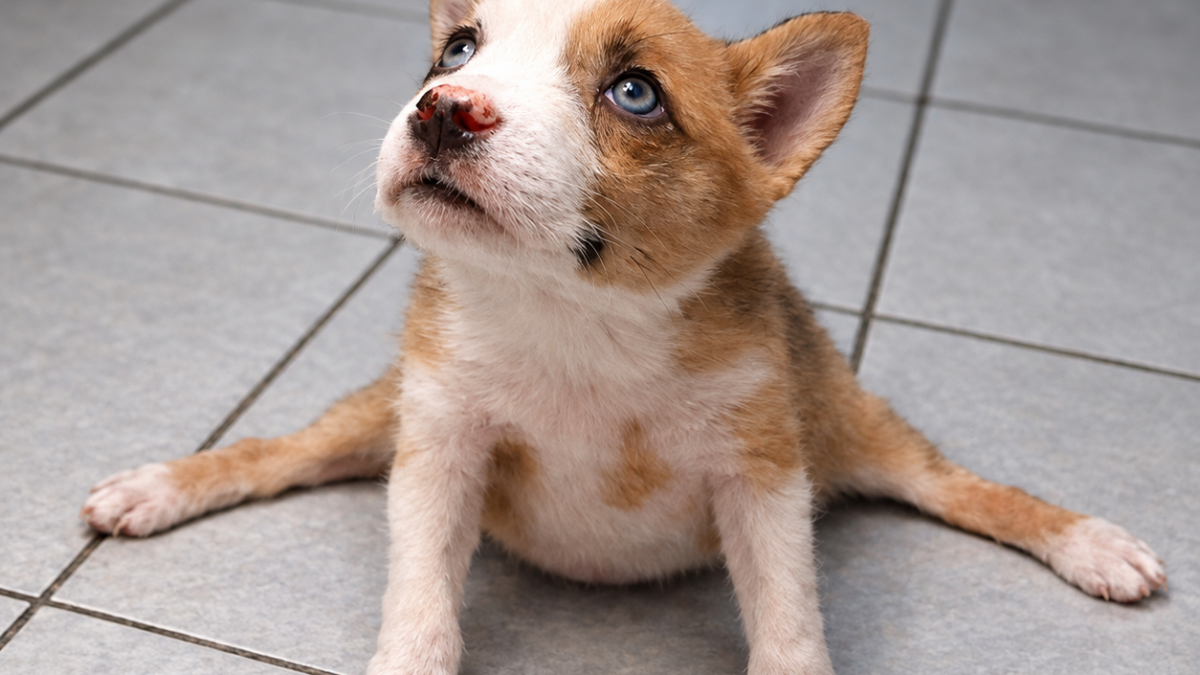
In that screenshot, Basita is eight weeks old.
Terrified.
Dragging herself.
Eyes too big for her face.
In the newer photograph, her muzzle is gray.
Her cart has scratches.
Her ears are relaxed.
Her expression says she has somewhere better to be.
Between those two pictures is an entire life nobody could see at the beginning.
That is why I stopped trusting predictions that confuse limitation with emptiness.
The specialists were right.
Basita never regained normal walking.
The MRI was right.
The X-rays were right.
The medicine was honest.
What had been wrong was the assumption that walking was the only outcome worth saving.
Years later, on a warm afternoon, Basita lay outside beneath the same kind of sun she had loved since puppyhood.
No cart.
She was resting.
A light breeze moved the grass.
I sat beside her with a bowl of watermelon.
She lifted her head immediately.
“Oh, now you’re awake.”
Tail thump.
I offered a piece.
She ate it.
Another.
Then another.
“You have been manipulating me for more than a decade.”
She stared at the bowl.
“I’m talking to you.”
Bowl.
“Fine.”
I gave her another piece.
Her eyes softened.
She rested her head on my leg.
I thought about the beginning.
The clinic floor.
The owners leaving.
The little puppy trying to drag herself after them.
For years, that image had hurt me.
That day, it didn’t.
Because I knew what happened after the door closed.
Warm blankets.
Specialists.
Bad news.
More bad news.
A mother found alive.
A second chance for Bella.
A cart once used by a dog named Toby.
The first accidental wheel movement.
The first hallway race.
The MRI that gave us no miracle.
The decision to stop demanding one.
Parks.
Children.
Libraries.
Hospital halls.
Silver lightning bolts.
Birthdays.
Ramps.
Socks.
Cardboard boxes.
Watermelon.
An entire life.
Basita had asked for one chance without knowing what that meant.
We almost misunderstood the assignment.
We thought we were supposed to fix her.
She only needed us to stay.
That became the heart of everything.
Not walking.
Staying.
Staying after specialists said no cure.
Staying after progress stopped.
Staying when equipment became permanent.
Staying through accidents and skin checks and sore shoulders.
Staying when she was young and adorable.
Staying when her muzzle turned gray.
Staying when carrying her became harder.
Staying long enough to understand that her body had never been the tragedy.
The tragedy would have been ending her story before anyone discovered who she was.
Basita was stubborn.
Funny.
Impatient.
Affectionate.
Bossy.
Brave when she chose to be.
Scared of thunderstorms.
Obsessed with cardboard.
Indifferent to expensive toys.
Rude to the vacuum cleaner.
Gentle with frightened children.
Terrible at corners.
Excellent at getting what she wanted.
None of those things were visible on the X-ray.
No scan could measure them.
No specialist could predict them.
They were waiting inside a two-month-old puppy dragging herself across a clinic floor.
All she needed was enough time to reveal them.
And she got it.
Because one veterinarian said:
“Give me a little time.”
Then someone else said:
“We’ll take her.”
Then doctors said:
“We can try.”
Then, when trying became too much, love said something harder:
“You don’t have to prove anything anymore.”
That may have been the most important sentence of all.
Basita never needed to earn her chance by walking.
She never needed to become an inspirational ending.
She never owed us a miracle.
She only needed the same thing every living creature deserves when possible:
A life judged by the joy, comfort, connection, and dignity it can contain—not by whether the body carrying that life looks like everyone else’s.
The last time I watched Basita cross the yard in her cart at full speed, she was older, slower, and gray around the face.
She saw me holding watermelon.
Suddenly slower disappeared.
She pushed forward.
Wheels rattling.
Ears back.
Eyes fixed on the bowl.
I laughed.
“Basita!”
She kept coming.
“You’re going to hit me.”
She did.
One wheel bumped my shoe.
She looked up.
Waiting.
I handed her a piece.
She ate it.
Then looked at me for another.
That was Basita.
Never waiting for the world to become perfect.
Just finding a way toward the thing she loved.
And because somebody gave her one chance, she had years and years to keep moving forward.