HOA president Brenda Wexler stopped her golf cart in front of my house, looked over my six-foot privacy fence, and found two juvenile emus staring back at her like prehistoric security guards waiting for a password. T
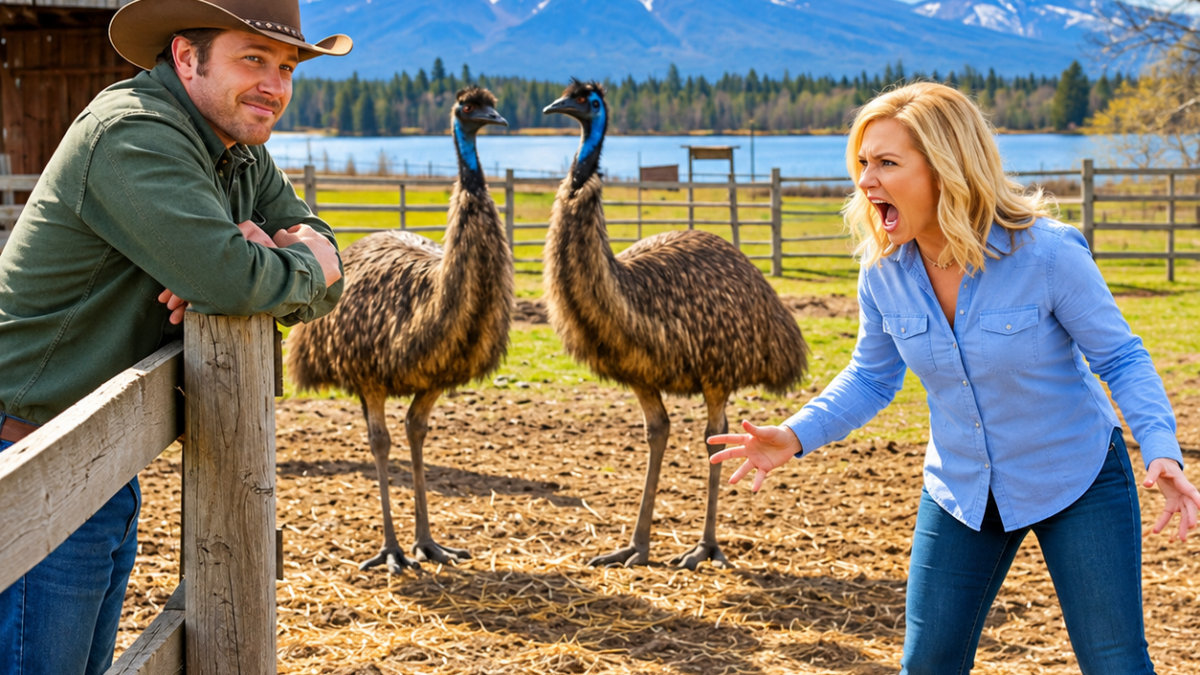
Brenda stared at me.
Then at the fence.
Then at the two long necks rising above it.
Then back at me.
“No.”
I smiled.
“No what?”
“No.”
“That’s not really a complete sentence.”
“You cannot have those.”
“Why?”
“They’re livestock.”
“County reviewed that.”
“They’re poultry.”
“County reviewed that too.”
“They’re dangerous.”
“Animal control inspected yesterday.”
Her jaw tightened.
That was the first moment she realized I had not simply driven to a roadside farm stand and purchased two giant birds on impulse.
Not entirely, anyway.
Brenda stepped off the golf cart.
She wore white sneakers, navy walking pants, and the visor she seemed to believe was part of the HOA presidency oath.
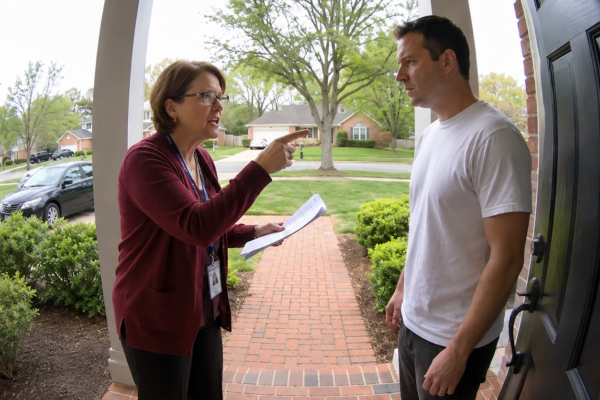
“Show me your paperwork.”
“No.”
Her eyebrows lifted.
“Excuse me?”
“You’re welcome to send me a written request identifying what association provision authorizes you to inspect county animal-registration documents.”
“Leo.”
“Brenda.”
“You know perfectly well I’m responsible for compliance.”
“Then ask properly.”
Zeus boomed again.
Deep.
Resonant.
The sound vibrated through the cedar fence.
Brenda took one involuntary step backward.
I tried not to enjoy that.
Failed.
Hera’s head appeared beside Zeus.
She stared at Brenda.
Emus have a way of looking at people that feels less like curiosity and more like an audit.
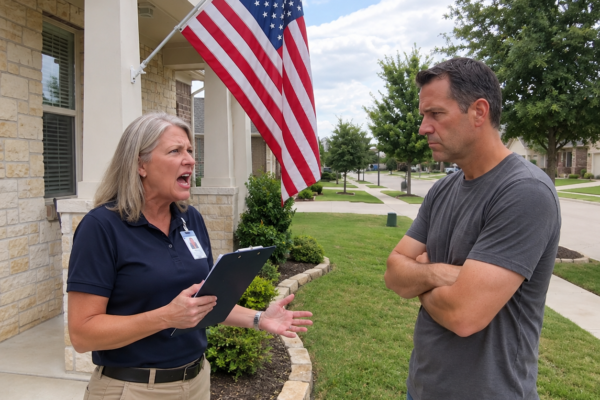
Brenda pointed toward her.
“It’s threatening me.”
“She’s looking at you.”
“That is an aggressive posture.”
“Hera looks at our sprinkler like that.”
“I am not a sprinkler.”
“We agree.”
Khloe opened the front door behind me.
“Leo.”
One word.
Warning.
I straightened.
“Brenda, they’re contained. They’ve been inspected. I’ll respond to anything official from the board.”
“You will hear from us.”
“I assumed.”
She turned toward the golf cart.
Then stopped.
“Guard birds?”
“That’s how they’re listed.”
She looked over her shoulder.
“You expect me to believe those things are protecting your home?”
At that exact moment, a delivery truck turned onto our street.
Zeus immediately moved to the side fence and watched it.
Head high.
Still.
Focused.
Hera followed.
Brenda watched them.
I folded my arms.
“Visual deterrence.”
She narrowed her eyes.
Then drove away.
Khloe waited until the golf cart disappeared.
Then:
“You were unbearable.”
“I was restrained.”
“You compared her to a sprinkler.”
“Technically I differentiated her from one.”
“You enjoyed every second.”
“I enjoyed perhaps seventy percent.”
“Leo.”
“Ninety.”
She shook her head.
Then looked over the fence.
Zeus was pecking at a bright orange bucket.
Hera was standing completely motionless beside the shed.
Khloe sighed.
“I cannot believe these live here.”
“You fed Zeus apple slices this morning.”
“That proves nothing.”
“He followed you around.”
“He wanted the bucket.”
“He loves you.”
“He loves reflective surfaces.”
“Same thing.”
It was not the same thing.
But during the first month, I learned that almost everything I thought I knew about emus was wrong.
They were not oversized chickens.
They were not giant guard dogs with feathers.
They were not backyard ornaments.
They were livestock-adjacent, companion-adjacent, dinosaur-adjacent chaos wrapped around two very different personalities.
Zeus was curious about everything.
Carabiners.
Hose fittings.
My wedding ring.
A wrench left on the patio.
The silver corner of my laptop when I made the mistake of working outside.
If sunlight touched an object, Zeus needed to inspect it with his beak.
Hera was different.
Hera observed.
She would stand thirty feet away while I repaired a fence latch and stare at me until I became self-conscious about my technique.
“Stop judging me.”
Hera blinked.
“I know how gates work.”
Blink.
“Khloe!”
From the porch:
“She agrees with the emu.”
The birds also grew.
Fast.
When Gus delivered them, they were tall enough to make me nervous but still had an adolescent awkwardness.
Within months they seemed to unfold vertically.
Legs.
Neck.
Feathers.
Suddenly I had two creatures capable of looking directly through the kitchen window without stretching.
That changed neighborhood life.
Children walking home from school discovered them first.
The rear greenway ran behind our lot.
Our privacy fence blocked almost everything, but there was a legal wire viewing section near one corner where the old developer had preserved drainage access.
Zeus found it.
So did the children.
“EMU!”
The first time I heard the scream, I ran outside thinking somebody was hurt.
Four kids stood twenty feet from the fence.
Zeus stood twenty feet inside it.
Everybody staring.
“Don’t put fingers through,” I said.
A boy asked:
“Does he bite?”
“He pecks.”
“What’s the difference?”
“You’ll understand if you ignore me.”
All hands went into pockets.
Good.
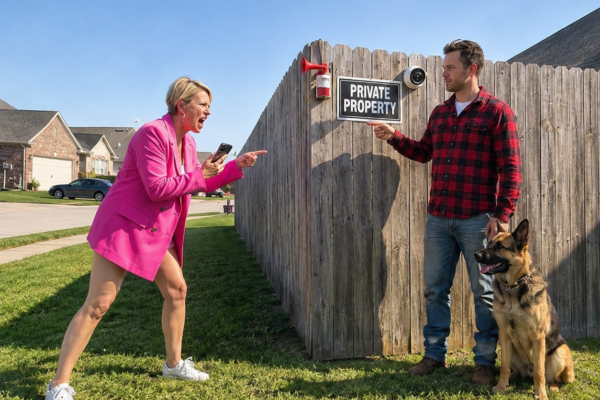
I put up a sign.
PLEASE DO NOT FEED OR TOUCH THE EMUS.
THEY ARE NOT A PETTING ZOO.
YES, THEY ARE REAL.
YES, THEY ARE EMUS.
NO, THEY ARE NOT OSTRICHES.
Khloe added the final line after answering the same question eleven times.
Then came the first HOA letter.
Not a fine.
Request for documentation.
The board wanted proof of lawful registration, veterinary inspection, enclosure compliance, and liability coverage.
That was reasonable.
I sent everything.
County registration.
Animal-control inspection.
Vet statement.
Fence contractor invoice.
Insurance endorsement.
Site plan.
Photographs.
I also sent a cover letter.
Dear Board,
Please find enclosed documentation concerning Zeus and Hera, the Maxwell household’s two registered security/companion emus.
Khloe made me delete “feathered neighborhood watch professionals.”
Compromise.
Three days later, HOA counsel requested clarification from county zoning.
Good.
I liked that.
Rules should be checked.
The county responded that our parcel met the minimum area and enclosure requirements in effect at that time, subject to nuisance and animal-welfare laws.
That did not mean the HOA had to allow emus.
Different issue.
The board’s lawyer, Rebecca Sloan, explained that clearly during the next meeting.
I attended.
So did Khloe.
Brenda sat at the center table with four directors.
Gary Porter, treasurer.
Melissa Wu, secretary.
Raj Patel.
And Thomas Alvarez.
Rebecca sat at one end.
About thirty residents came.
Normally HOA meetings attracted nine people and one complaint about the pool temperature.
Emus improved civic participation.
Brenda opened.
“We are here to address an unusual animal-compliance matter.”
A kid in the back whispered:
“Dinosaurs.”
His mother shushed him.
Brenda continued.
“Mr. Maxwell has claimed two exotic birds qualify under the association’s security-animal provision.”
“Registered security/companion animals,” I corrected.
Khloe squeezed my knee.
Stop helping.
Rebecca spoke.
“The county terminology is not binding on the association.”
Fair.
She continued.
“The association’s prohibition on livestock and poultry does not specifically reference emus or ratites.”
Brenda said:
“They’re obviously livestock.”
Rebecca gave her a patient look.
“Possibly. But our document uses a list and certain undefined categories. The ambiguity is the problem.”
I leaned toward Khloe.
“I love her.”
“You love anyone who says ambiguity.”
True.
Rebecca continued.
“The security-animal clause appears historically intended to permit guard dogs and similar animals.”
I raised my hand.
Brenda ignored me.
“The question is whether the board can reasonably interpret existing language to exclude Mr. Maxwell’s birds or whether an amendment is advisable.”
Gary asked:
“What exactly makes them security animals?”
Every head turned toward me.
I stood.
“Presence.”
Gary blinked.
“Presence?”
“They’re large, alert, territorial about their enclosure, and noticeable.”
Brenda scoffed.
“So is a trampoline.”
“Trampolines don’t watch delivery trucks.”
Thomas Alvarez hid a smile.
Rebecca asked:
“Have the birds been trained for protection?”
“No.”
“Have you represented them to law enforcement or the public as attack animals?”
“No.”
Good question.
Important.
I continued.
“They are not attack animals. I don’t want them confronting anyone. Their security function is deterrence. Nobody should enter the enclosure except us, our veterinarian, or someone we authorize.”
Rebecca nodded.
“Good.”
Brenda looked frustrated.
“Then they aren’t guards.”
Khloe spoke for the first time.
“They don’t need to attack anyone to discourage entry.”
Brenda looked at her.
“You support this?”
Khloe stared.
“That is a complicated question.”
Laughter.
Even Rebecca smiled.
Khloe continued.
“I support lawful keeping of animals Leo is willing to care for properly.”
She looked at me.
“I do not support everything that led us here.”
More laughter.
“Thank you, honey.”
“You’re welcome.”
Then Melissa Wu asked the important question.
“Noise.”
I nodded.
“They boom and drum occasionally.”
“How loud?”
“Noticeable.”
“When?”
“Mostly mornings and evenings. Breeding season may increase vocalization.”
Brenda pounced.
“Nuisance.”
“Maybe.”
She looked surprised.
I continued.
“If they become a nuisance under the actual standard, that’s a legitimate issue.”
Rebecca nodded.
Good again.
“Odor?”
“Managed manure. Bedding composted. Enclosure cleaned.”
“Flies?”
“Monitoring.”
“Escape risk?”
“Six-foot fence, double gate, self-closing hardware.”
“What if they do escape?”
“I call animal control, secure the area, and recover them with trained help. I don’t chase them through the subdivision.”
A man in the back whispered:
“Disappointing.”
Another laugh.
Brenda banged her pen against the table.
“This is not entertainment.”
That was her mistake.
Because by then it was.
Not because the issue was meaningless.
Because Brenda had framed two emus as a constitutional emergency.
Neighbors were fascinated.
The board voted not to fine me while counsel reviewed the language.
Three to two.
Brenda and Gary wanted immediate enforcement.
Melissa, Raj, and Thomas wanted legal review first.
We went home.
No victory speech.
No viral video.
Just birds.
Then county animal control came back.
Not because Brenda called.
Because registration required a follow-up once the birds reached adult size.
Officer Elena Cruz arrived in a county truck.
She had handled large animals for twelve years.
No fear.
No jokes.
She inspected gates.
Fence tension.
Shelter.
Drainage.
Feed storage.
Shade.
Water.
Space.
Emergency access.
Then she watched Zeus approach the fence.
“Curious male.”
“Yes.”
“Breeding behavior yet?”
“Some.”
“Keep visitors back.”
“We do.”
“Hera?”
“More reserved.”
“Good.”
She examined my records.
Then asked:
“Why did you register purpose as property security?”
I told her.
The chicken letter.
The covenant.
The loophole.
She stared at me.
Long time.
Then:
“You bought two emus because an HOA said no chickens.”
“When you say it like that—”
“How else is there to say it?”
Khloe called from the porch:
“Thank you.”
Elena shook her head.
“You understand registration is not some special guard-animal certification.”
“Yes.”
“It does not make them exempt from HOA rules.”
“I know.”
“And if they become a public-safety problem, your joke will stop being funny.”
That landed.
“I know.”
She softened slightly.
“They look well cared for.”
“Thank you.”
“Enclosure is good.”
“Thank you.”
“Keep it that way.”
“I will.”
Then Zeus stole her pen.
Not out of her hand.
From the clipboard she set on the fence rail.
He grabbed the shiny clip.
The pen came with it.
Elena stared.
Zeus backed away.
I closed my eyes.
“Zeus.”
He ran three steps.
“Zeus.”
Hera watched.
Judgment.
Elena began laughing.
Not a polite laugh.
Full laughter.
“Property security?”
“He has disarmed the inspector.”
“Get my pen, Leo.”
It took seven minutes and half an apple.
Elena left with a clean inspection.
Also a slightly chewed pen.
Two weeks later, the mail carrier filed a complaint.
Not against the emus.
Against the neighborhood.
His name was Dave Foster.
He came to our door.
“Leo.”
“What happened?”
“People are parking by your house every afternoon.”
“Why?”
He pointed backward.
A minivan sat near the curb.
Three kids had their faces pressed against the rear window looking toward our fence.
“Oh.”
“Can’t get to your box sometimes.”
“I’ll fix it.”
This mattered.
The birds themselves were contained.
But attention around them was becoming a nuisance.
My responsibility.
I posted no-parking reminders.
Sent neighborhood email.
Asked people not to stop in roadway.
Closed the small viewing section after school hours with an opaque removable screen.
Some people complained.
I didn’t care.
Zeus and Hera were animals.
Not content.
That distinction became important because a teenager named Kyle posted a video.
He filmed from the greenway.
Zeus running along the inside of the fence while Dave’s mail truck passed.
The video made it look as though a giant bird was chasing the mail carrier.
Caption:
OUR HOA BANNED CHICKENS SO THIS GUY GOT JURASSIC PARK SECURITY.
It exploded locally.
Then regionally.
Then beyond anything I wanted.
Messages.
Cars.
Strangers.
One guy drove forty minutes to “see the guard emus.”
I told him to leave.
Another tried to toss grapes over the fence.
I lost my temper.
“DO NOT FEED MY ANIMALS.”
He raised both hands.
“Bro, I saw the video.”
“I don’t care.”
That night I messaged Kyle.
“Can you remove the house location?”
He did.
Immediately.
Good kid.
He also posted:
PLEASE STOP DRIVING TO MY NEIGHBOR’S HOUSE. THEY ARE REAL ANIMALS, NOT A TOURIST ATTRACTION.
That helped.
Brenda noticed something I had been slow to admit.
The emus were creating secondary neighborhood impacts.
Traffic.
Visitors.
Noise from people trying to get reactions.
She sent another notice.
This one was better written.
Not:
REMOVE GIANT BIRDS.
It cited nuisance language.
Documented vehicle congestion.
Two feeding incidents.
One complaint about booming before seven.
Requested corrective action.
I read it.
Khloe read it.
“Well?”
she asked.
“She has a point.”
Khloe put a hand to her chest.
“I want that recorded.”
“She has a point about visitors.”
“And noise?”
“Maybe.”
“What are you going to do?”
“Fix what I can.”
That surprised Brenda.
I wrote back.
Agreed to install additional privacy screening.
Agreed to keep the birds away from the rear greenway fence during early morning.
Moved feeding station toward the house.
Added dense shrub screening approved by the landscape committee.
Posted stronger signs.
Asked county animal control for additional recommendations.
I did not argue.
Brenda called me.
First phone call ever.
“You received the notice?”
“Yes.”
“And?”
“I’m correcting the visitor issue.”
Silence.
“Just like that?”
“Yes.”
“What about the birds?”
“They stay.”
There it was.
“I knew there was a catch.”
“Not a catch.”
“You admit they’re a nuisance.”
“I admit strangers stopping in the street is a nuisance.”
“Because of your emus.”
“Because a video went viral.”
“Because you bought emus.”
“Yes.”
Another silence.
“Leo.”
“Yes?”
“Why are you being reasonable?”
I laughed.
“What did you expect?”
“Forty pages of taxonomy.”
“Already sent those.”
She almost laughed.
Almost.
Then:
“The board is considering an amendment.”
“I assumed.”
“This isn’t personal.”
“It feels extremely two-emus-specific.”
“I’m serious.”
“So am I.”
She sighed.
“Our documents were not written for this.”
“Agreed.”
“That means we need to fix them.”
“Maybe.”
“You think people should be allowed to keep ostriches?”
“Emus.”
“You know what I mean.”
“Yes.”
“And?”
I looked through the back window.
Zeus was staring at a wheelbarrow.
Hera was dust bathing.
“No.”
That answer surprised even me.
“What?”
“I don’t think every lot in Quail Creek should automatically be allowed two emus.”
Silence.
“Then what are we fighting about?”
“Whether you can make a new rule retroactive just because I found the old one first.”
There it was.
Our actual disagreement.
Not chickens.
Not emus.
Process.
She said:
“I’ll see you at the meeting.”
The proposed amendment arrived by certified mail.
Not absurdly:
NO BIRDS OVER TWENTY-FOUR INCHES.
Rebecca Sloan had apparently prevented that.
Instead:
Ratites, large exotic avian species, and nondomestic birds exceeding thirty-five pounds would require board approval and evidence of lawful zoning, adequate lot area, enclosure, insurance, and nuisance mitigation.
Existing animals?
That was the fight.
Brenda wanted ninety days to remove any nonconforming animals.
Rebecca recommended a grandfathering provision if animals were lawful when acquired and remained nuisance-free.
I wanted grandfathering.
Obviously.
The meeting would decide.
Quail Creek suddenly became politically alive.
Not national politics.
Neighborhood politics.
Worse.
People knocked doors.
Emails.
Group chats.
One camp wanted the emus gone.
Their arguments were not insane.
Liability.
Noise.
Property values.
What if they escaped?
What precedent did it set?
Another camp wanted them kept.
Their arguments were also not insane.
They were legal when acquired.
Well contained.
Interesting.
Harmless so far.
Why punish someone after rules changed?
Then there was Fitzwilliam.
Retired history professor.
Seventy-nine.
Garden gnome with an illegal blue hat.
Fitz regarded the dispute as if civilization itself had reached its decisive hour.
He arrived at my house with a legal pad.
“Leo.”
“No.”
“You don’t know what I’m asking.”
“You want to help with the meeting.”
“Yes.”
“No Punic Wars.”
He looked offended.
“The Punic Wars contain valuable lessons regarding asymmetrical strategy.”
“No Hannibal.”
“Scipio?”
“No.”
“Thermopylae?”
“Wrong continent.”
“Coward.”
He came inside anyway.
Khloe liked him.
Traitor.
Fitz helped for a different reason.
He was good at identifying when my arguments became childish.
“Why should the neighborhood grandfather Zeus and Hera?”
he asked.
“Because freedom.”
“Terrible.”
“Because the HOA rule did not prohibit them when acquired.”
“Better.”
“Because retroactive rulemaking is unfair.”
“Better.”
“Because they are objectively magnificent.”
“Emotionally satisfying, legally worthless.”
“Fitz, whose side are you on?”
He slammed his pen down.
“Do not become Brenda.”
Second time someone had told me that.
I listened.
We built a real argument.
I acknowledged the burden.
Two large birds require space and competent care.
Not appropriate for every lot.
The community could regulate future ownership.
Require approval.
Set standards.
Protect against nuisance.
But Zeus and Hera had been acquired after checking county rules, insurance, enclosure needs, and existing HOA language.
They had been inspected.
I had corrected secondary problems.
No escapes.
No injuries.
No property damage outside our lot.
Grandfather them.
Simple.
Khloe read my speech.
“This is disturbingly mature.”
“I contain multitudes.”
“You contain emus.”
Also true.
Brenda prepared too.
Her presentation was called:
EXOTIC ANIMAL POLICY MODERNIZATION.
Not Ratite Risk.
Rebecca’s influence.
The meeting filled the clubhouse.
About eighty homeowners.
No emus.
Important.
I had hired Gus’s niece, Maribel, who worked at his bird farm, to stay at our house during the meeting.
Gates locked.
Birds supervised.
No surprise dinosaur entrance.
Reality does not reward careless animal ownership with perfect comedic timing.
It rewards you with liability.
Brenda began.
She showed photographs.
Not manipulated horror shots.
Real.
Adult emu.
Height.
Weight.
Running speed.
Potential kick injury.
Fence requirements.
Costs if an animal escaped.
She cited county material.
She even quoted Dr. Singh from public animal-care guidance.
I leaned toward Khloe.
“She did homework.”
“Yes.”
“I hate this.”
“You respect this.”
“I hate respecting it.”
Brenda continued.
“Our current documents are ambiguous.”
I almost applauded.
“Our responsibility is not to punish Mr. Maxwell.”
She glanced at me.
“It is to create a rule that makes sense before somebody else decides a camel is a security device.”
A man in back whispered:
“Don’t give Leo ideas.”
Laughter.
I raised both hands.
“No camels.”
Brenda smiled despite herself.
Then she addressed grandfathering.
“I do not support it.”
Room quiet.
“These birds may be responsibly kept today. That does not eliminate future risk. They will become fully mature. Behavior may change.”
Reasonable again.
“If the association decides these animals do not belong here, we should apply that standard equally.”
Then my turn.
I walked up.
No binder.
One page.
“Brenda is right.”
Murmurs.
She looked at me suspiciously.
“Emus are not oversized chickens.”
Laughter.
“They are powerful animals.”
Dr. Singh had drilled that into me.
“They require appropriate fencing, space, veterinary care, and owners who understand what they’re doing.”
I paused.
“I understood less than I thought when I got them.”
Khloe nodded aggressively.
“Thank you, honey.”
More laughter.
“I also got them partly because I was angry.”
That quieted the room.
“Brenda told me no chickens.”
I looked around.
“I read the rule book looking for a way to beat her.”
Brenda folded her arms.
“I found one.”
I looked at her.
“Or I thought I did.”
That surprised her.
“The truth is, the security-animal clause was probably not written with emus in mind.”
Rebecca nodded.
There.
“But I didn’t sneak them in.”
I lifted copies of the county paperwork.
“I checked zoning. Registered them. Added insurance. Upgraded fencing. Got veterinary review. Sent documents to the board.”
I turned toward the homeowners.
“If this community wants a better rule for future animals, write one.”
Pause.
“But if you change the rule after someone lawfully relied on the old one, give them a fair grandfathering standard.”
Brenda listened.
No eye rolling.
No banging gavel.
I continued.
“Not forever regardless of behavior.”
Important.
“If Zeus and Hera escape repeatedly, injure someone, create unreasonable noise, or become a genuine nuisance, enforce the nuisance rule.”
Raj nodded.
“Hold me accountable.”
Then:
“But don’t make me surrender two animals we’ve spent months caring for simply because the document was badly written when I read it.”
I sat down.
No applause at first.
Then some.
Not theatrical.
Good.
Discussion lasted an hour.
That was where the story changed.
Because residents asked better questions than either of us.
A retired attorney named Diane Crawford asked:
“What exactly does grandfathered mean?”
Rebecca answered.
Existing animals could remain for their natural lives, subject to registration, inspection, insurance, containment, and nuisance requirements.
No replacement emus after they died without approval.
No breeding.
That caught me.
“No breeding?”
Rebecca looked at me.
“You have a male and female.”
Right.
The room laughed.
Khloe leaned over.
“You forgot biology.”
“I was focused on bureaucracy.”
Diane continued.
“What if they produce eggs?”
Rebecca looked toward Dr. Singh, who had agreed to attend.
Maya stood.
“Female emus may lay regardless of whether eggs are fertile.”
A teenage boy whispered loudly:
“Giant omelets.”
His mother elbowed him.
Dr. Singh continued.
“If breeding is prohibited, owners must manage male-female access appropriately during breeding season or otherwise prevent incubation and hatching according to veterinary guidance.”
Khloe stared at me.
“This is your life now.”
“Yes.”
Another resident asked about insurance.
Another about fences.
Another about waste.
Another about resale.
“What happens when Leo sells the house?”
Excellent.
Grandfather status ends.
Birds move with us or to an appropriate facility.
No new buyer inherits emu rights automatically.
Good.
Another resident asked:
“What about chickens?”
I turned.
That was where this all began.
Brenda answered before me.
“Still prohibited under current covenants.”
The room groaned.
Even she smiled.
Then Fitz stood.
Oh no.
He cleared his throat.
“I have one observation.”
I looked at Khloe.
She whispered:
“Let him.”
Fitz said:
“Good rules should survive ridiculous facts.”
The room quieted.
“If your rule works only when everyone behaves exactly as the drafters imagined, it is not a strong rule.”
Rebecca’s eyes lifted.
Fitz continued.
“Mr. Maxwell behaved ridiculously.”
“Thank you, Fitz.”
“You’re welcome.”
Laughter.
“But his ridiculous behavior exposed ambiguity.”
He pointed toward Brenda.
“Mrs. Wexler’s enforcement exposed another weakness.”
Brenda raised an eyebrow.
“And tonight, rather than pretending either side is entirely right, we are fixing both.”
He sat.
No Punic Wars.
I was proud.
Vote.
Amendment with grandfathering.
Fifty-eight yes.
Seventeen no.
Five abstentions.
Passed.
Zeus and Hera stayed.
Future emus required approval.
No breeding.
Annual proof of insurance.
Annual county registration.
Fence inspection.
Nuisance review if documented complaints arose.
I signed a written grandfather agreement.
Not because I had lost.
Because agreements are better than assumptions.
Outside the clubhouse, Brenda found me.
“We’re done?”
“With what?”
“This.”
She gestured between us.
“Probably not forever.”
“Leo.”
“Yes.”
“The birds stay.”
“Yes.”
“The amendment passed.”
“Yes.”
“Can we stop now?”
I smiled.
“Yes.”
She nodded.
Then:
“I still think they’re absurd.”
“They are.”
That caught her.
“You admit it?”
“Have you seen Zeus chase his reflection in a wheelbarrow?”
She laughed.
First time.
Actually laughed.
Then she walked away.
That should have been the ending.
It wasn’t.
Because emus do not care about narrative structure.
Three months later, Hera laid an egg.
Khloe found it.
Six in the morning.
She came into the bedroom carrying something the size of a small melon.
“Leo.”
I opened one eye.
“What?”
“This came out of your security system.”
I sat up.
Deep green.
Almost black.
Textured shell.
Heavy.
Beautiful.
“Oh.”
“Oh?”
“That’s incredible.”
“Is it fertile?”
I froze.
Grandfather agreement.
No breeding.
We called Dr. Singh.
She came out that afternoon.
Examined birds.
Reviewed behavior.
Explained reproductive management.
Then inspected egg.
“Could be fertile.”
Khloe looked at me.
“What do we do?”
Maya shrugged.
“Do not incubate it.”
Simple.
We documented it.
Reported to HOA because Rebecca had specifically included reproductive management.
Brenda replied to my email:
THANK YOU FOR YOUR COMPLIANCE.
Then another message arrived thirty seconds later.
I CANNOT BELIEVE I JUST WROTE THAT ABOUT AN EMU EGG.
I laughed until Zeus started drumming.
The egg became a strange symbol in our kitchen for three days.
Not refrigerated with food.
Handled according to veterinary advice.
Eventually we donated it, legally and with guidance, to an agricultural education program that used nonviable and demonstration eggs.
The program sent us a photograph later.
Children holding an empty preserved shell.
Khloe framed it.
“You wanted eggs,” she said.
“I wanted chicken eggs.”
“You should have been more specific.”
Brenda could not have said it better.
Life settled.
The internet forgot us.
Thank God.
Zeus and Hera became adults.
Beautiful in an unsettling way.
Dark feathers.
Long necks.
Strong legs.
Hera’s booming calls deepened.
Zeus developed a habit of sitting near the cedar shelter when we worked outside.
Not guarding.
Companionship.
Maybe.
Khloe became the favorite.
Of course.
She pretended otherwise.
Then one afternoon I watched her sitting in a lawn chair reading specifications while Zeus lay ten feet away.
“You love him.”
“No.”
“He follows you.”
“He follows shiny things.”
“You’re wearing sweatpants.”
“My personality sparkles.”
I stared.
She lowered the paper.
“Never repeat that.”
Too late.
The birds changed me more than I expected.
At first, they were argument props.
Living loopholes.
I had acquired two animals partly to prove Brenda could not tell me what to do.
That embarrassed me later.
Animals should not exist as props in somebody’s feud.
They have needs.
Temperaments.
Stress.
Health.
Responsibility.
When Zeus developed a foot problem the next summer, the joke stopped immediately.
He began favoring his left leg.
Tiny change.
I noticed because I saw him every day.
Dr. Singh came.
Soft-tissue strain.
Probably from slipping during a sudden run after a squirrel crossed outside the fence.
Rest.
Modified enclosure.
Ground traction.
Anti-inflammatory medication prescribed by the vet.
No public viewing.
I spent three weeks worrying.
Brenda heard.
She left a note.
HOPE YOUR RIDICULOUS BIRD FEELS BETTER.
No signature.
Didn’t need one.
Zeus recovered.
After that, I stopped calling them guard birds as often.
Not because the designation changed.
Because I did.
They were Zeus and Hera.
Animals we were responsible for.
The security part was real enough in one sense.
Nobody climbed our fence.
No package thief entered the side yard.
Door-to-door salespeople saw the warning sign:
LARGE BIRDS ON PREMISES.
DO NOT ENTER REAR YARD.
And suddenly respected property boundaries with religious devotion.
But the birds weren’t weapons.
Never were.
They were deterrence because people have excellent instincts about not trespassing where a six-foot animal is staring through cedar slats.
Good enough.
Two years after the amendment, somebody tried again.
Not me.
A homeowner named Derek Collins bought a miniature pig.
Called it an emotional-support animal.
Different legal issue.
Different facts.
Different rules.
He came to me.
“You beat the HOA.”
“No.”
“That’s what people say.”
“People say Zeus is an ostrich.”
“Can you help?”
“Get a lawyer.”
“That’s it?”
“And read the documents.”
“I thought you’d have a loophole.”
I looked at Hera.
Then back at him.
“Loopholes are expensive.”
He laughed.
I didn’t.
“Seriously.”
Feed.
Fence.
Vet.
Insurance.
Registration.
Repairs.
Time.
I had spent far more keeping two emus than eggs from three hens would have cost for the rest of my life.
Malicious compliance had a grocery bill.
Derek eventually worked out a legal accommodation based on his actual circumstances.
No viral feud.
Better.
Brenda started referring homeowners to the formal process instead of personally interpreting every strange request.
Also better.
Gary retired from the board.
Melissa became treasurer.
Raj eventually became president.
Brenda stepped down after seven years.
Not because the emus defeated her.
Because she was tired.
That mattered.
People liked dramatic stories where one showdown destroys a tyrant.
Real governance usually ends with somebody saying:
“I don’t want to answer email anymore.”
At Brenda’s last meeting, residents gave her flowers.
I gave her a small framed photograph.
Zeus and Hera standing behind the fence.
At the bottom:
THANK YOU FOR INSPIRING THE SECURITY UPGRADE.
She stared.
“You are impossible.”
“You’ll miss me.”
“No.”
“You will.”
“I’m moving three blocks away, Leo.”
“Still.”
She smiled.
Then handed me an envelope.
Inside was a photocopy.
My original chicken request.
Across the top she had written in red:
IN HINDSIGHT, THREE HENS WOULD HAVE BEEN EASIER.
I laughed.
“Can I frame this?”
“I assume everything I give you becomes wall art.”
Correct.
Brenda’s replacement as president was Raj Patel.
He had a dangerous preference for clearly drafted language.
Terrible for me.
Wonderful for everyone else.
Under Raj, Quail Creek simplified the animal rules.
No ambiguous “other animals for security purposes.”
Instead:
Domestic dogs and cats under ordinary pet rules.
Poultry prohibited unless covenant amendment approved.
Exotic or nontraditional animals subject to county legality, lot-size standards, board approval, professional containment plan, insurance, and nuisance requirements.
Existing grandfathered animals listed by lot.
Zeus.
Hera.
Lot 42.
There we were.
Official.
No quotation marks around guard birds anymore.
Probably for the best.
Then something happened that made the entire feud feel small.
Fitzwilliam died.
Eighty-two.
Stroke.
Quick.
His daughter called me.
He had left something.
A garden gnome.
Of course.
The one with the blue hat.
She brought it over.
“Dad said you’d know.”
I did.
On the bottom, written in permanent marker:
RULES ARE HISTORY WRITTEN IN ADVANCE.
MAKE THEM WORTH LIVING WITH.
That sounded exactly like Fitz.
Also slightly pompous.
Perfect.
I put the gnome near the patio.
Zeus immediately tried to remove its hat.
“Absolutely not.”
Zeus pecked again.
“Fitz survived fifteen years of HOA complaints for that hat. Show respect.”
Hera stared.
Judging.
We moved the gnome outside the enclosure.
Some artifacts deserve protection from emus.
Years passed.
Khloe and I had a daughter.
Lena.
By then Zeus and Hera were fully integrated into the rhythms of our home.
That did not mean Lena walked among them.
Absolutely not.
Large animals and children require boundaries.
Dr. Singh made that clear before we brought Lena home.
New internal fence.
Separate family play zone.
Locked gate.
No child interaction without an adult physically controlling the situation.
Leo-at-thirty-eight might have complained about overkill.
Leo-at-forty-three built the fence before Maya finished the sentence.
Responsibility changes faster when somebody tiny depends on you.
When Lena was four, she stood at the inner fence beside me.
Zeus approached.
She held my hand.
“That’s Zeus?”
“Yes.”
“He’s big.”
“Yes.”
“Does he guard us?”
I looked at him.
He was attempting to eat a leaf stuck to his own shoulder.
“Sort of.”
“From bad guys?”
“Mostly from reasonable people entering the backyard.”
She considered that.
“Hera guards better.”
“Why?”
“She watches.”
Fair.
Hera watched everything.
Including Lena.
Over time, the birds became less neighborhood spectacle and more local fact.
New residents were warned at closing:
Lot 42 has two lawfully grandfathered emus.
No one cared after the first week.
The greenway sign remained.
DO NOT FEED OR TOUCH.
Parents taught children.
Kids grew up.
The boy who once asked whether Zeus bit became a teenager who watered the birds when we traveled.
Kyle, the one who posted the viral video, apologized years later for exposing our location.
“You were fifteen,” I said.
“I still should’ve thought.”
“Yes.”
He nodded.
“I’m sorry.”
“Accepted.”
He became a wildlife photographer.
Of course he did.
His senior project included a portrait of Hera.
Not dramatic.
Just her standing in winter light.
It was beautiful.
We bought a print.
Brenda bought one too.
She denied it.
Her daughter told me.
The most important change happened in me.
I stopped defining home as the place where nobody could tell me what to do.
That had been my city-refugee fantasy.
My property.
My rules.
My backyard.
My chickens.
Then HOA says no.
Fight.
Emus.
Victory.
Simple.
But houses sit beside houses.
Noise crosses fences.
Water crosses lots.
Animals escape if you fail.
Property values may be overused as a threat, but neighbors do have legitimate interests in what happens around them.
So do owners.
The hard part is drawing the line without pretending one side owns the whole page.
Brenda’s original mistake was believing uniformity automatically created harmony.
Mine was believing individuality automatically justified itself.
Both were lazy.
Good community requires more work.
Clear rules.
Fair process.
Real evidence.
Room for harmless difference.
And sometimes acknowledging that your neighbor has a point even while you desperately wish she didn’t.
The chicken ban remained.
People always ask.
“After everything, they still banned chickens?”
Yes.
Changing the covenant required a much larger membership vote.
There wasn’t enough interest.
For years, Quail Creek allowed two emus and zero chickens.
That may have been the funniest part.
Eventually, Lena became fascinated with eggs.
Of course.
“Daddy.”
“Yes?”
“Why don’t we have chickens?”
I looked at Khloe.
She immediately stood.
“No.”
“I haven’t said anything.”
“I know your face.”
Lena asked:
“What face?”
“Your father has a face when he’s about to create administrative problems.”
“I do not.”
Khloe and Lena both stared.
I surrendered.
Instead, we bought eggs.
Normal.
Store.
Revolutionary maturity.
Then Raj called.
“Leo.”
“No.”
“You have no idea what I’m calling about.”
“Animal rules?”
“Yes.”
“No.”
“Will you listen?”
“Fine.”
A group of residents wanted hens.
Not roosters.
Small numbers.
Coop standards.
Setbacks.
Waste requirements.
They had prepared a covenant amendment.
Raj wanted me on the review committee.
I laughed.
For a full minute.
“Absolutely not.”
“You started this.”
“I started emus.”
“You started the discussion.”
“Worse.”
“Leo.”
“Why me?”
“Because you’ve experienced both sides.”
That stopped me.
Both sides.
I looked outside.
Zeus older now.
Hera beside him.
Lena drawing at patio table.
Khloe reading.
Fitz’s gnome outside the fence.
Brenda’s chicken denial framed in my office.
“Fine.”
Committee met four times.
Brenda attended one as a homeowner.
She walked in.
Saw me.
Stopped.
“Oh, this is perfect.”
“Don’t.”
She sat.
Proposal:
Up to four hens.
No roosters.
Enclosed coop and run.
Setbacks.
Predator-proofing.
Waste management.
No commercial breeding.
Complaint process based on documented nuisance.
Brenda raised her hand.
“Odor enforcement?”
“Covered.”
“Rodent control?”
“Feed storage requirement.”
“Abandoned coops?”
“Removal after use ceases.”
“Noise?”
“Hens still make noise.”
“Then measurable standard?”
We discussed.
Not:
No bird shall make annoying sounds.
Better:
Persistent unreasonable noise evaluated using the same nuisance framework as dogs and other permitted animals.
Brenda nodded.
Then:
“I support it.”
I stared.
“What?”
She looked at me.
“I said I support it.”
“You denied mine.”
“Yes.”
“You highlighted the denial.”
“I remember.”
“You caused two emus.”
“You caused two emus.”
“Shared responsibility.”
“Absolutely not.”
Raj banged his pen.
“Children.”
We passed the recommendation.
Homeowners voted.
Amendment approved.
Years after Brenda denied my request, chickens became legal in Quail Creek.
Four hens.
No roosters.
Permit.
Standards.
Khloe came home after the vote.
Found me sitting at the kitchen table.
“Well?”
“It passed.”
She smiled.
“So.”
“No.”
“You don’t want chickens anymore?”
I looked outside.
Feed bill.
Veterinary schedule.
Fence maintenance.
Two emus.
Child.
Job.
“No.”
Khloe laughed so hard she had to hold the counter.
“You started a neighborhood revolution because you needed fresh eggs.”
“I was younger.”
“And now chickens are finally allowed.”
“Yes.”
“And you don’t want them.”
“I can buy eggs.”
She wiped tears from her eyes.
“I hate you.”
“No, you don’t.”
“No.”
She kissed my forehead.
“I really don’t.”
Our neighbors Melissa and Dan got three hens.
Lena adored them.
She collected eggs when they traveled.
Best arrangement imaginable.
Chicken benefits.
No chicken management.
I had achieved wisdom.
Zeus and Hera aged.
Large birds give you the illusion of permanence because they seem prehistoric.
They are not.
Zeus developed arthritis first.
Maya monitored him.
We changed footing.
Added softer areas.
Moved water closer.
Hera stayed healthier longer.
Then one winter morning Zeus did not stand for breakfast.
Khloe called me outside.
He was lying beneath the shelter.
Alert.
But tired.
Maya came.
We spent hours discussing options.
Not dramatic.
Age.
Pain.
Declining mobility.
Quality of life.
The decision every animal owner eventually hates.
Lena was eleven.
Old enough to understand.
She stood outside the enclosure crying.
“Is he dying?”
I knelt.
“Yes.”
“Can’t the vet fix him?”
“No.”
“Why?”
“Because old isn’t always fixable.”
She looked at Zeus.
Then:
“Was he a good guard bird?”
I laughed while crying.
“The best.”
He wasn’t.
But yes.
Maya helped him go peacefully.
We buried him on private rural property belonging to Gus’s family where regulations allowed it, beneath a cottonwood near the breeder’s old emu pasture.
Gus had died years earlier.
His daughter owned the farm.
She stood with us.
“He caused trouble?”
“Constantly.”
“Dad would’ve liked that.”
“He did.”
Hera changed afterward.
Emus are not humans.
I am careful about projecting grief onto animals.
But she searched.
Called more.
Walked fence line.
Ate less for several days.
Maya monitored.
We spent time near her.
Not pretending we knew what she felt.
Just there.
Eventually she settled.
The HOA updated the grandfather record.
ZEUS — DECEASED.
HERA — ACTIVE.
One line.
Administrative.
I stared at it longer than expected.
Brenda called.
“I heard.”
“Yes.”
“I’m sorry.”
“Thank you.”
“He was the stupid one?”
“The curious one.”
“The one who tried to eat Officer Cruz’s pen?”
“Yes.”
She laughed softly.
“Good bird.”
“Yeah.”
“Good bird.”
Hera lived three more years.
When she died, naturally after a short decline and veterinary care, the grandfather status at Lot 42 ended.
No replacement.
The agreement was clear.
Could I have applied under the new exotic-animal standard?
Probably.
Did I want to?
No.
That surprised everyone.
The backyard felt enormous without them.
Quiet.
For months, I expected to see a long neck rise behind the fence.
Nothing.
Lena missed the booming.
Khloe missed Hera watching her garden.
I missed complaining.
We kept the shelter for a while.
Then dismantled it.
I saved one board.
Also a feather from each bird collected naturally years earlier.
Framed them beside the county registration form.
PURPOSE:
PROPERTY SECURITY / COMPANION RATITES.
Khloe let me display it in the office.
Not living room.
Marriage requires compromise.
Brenda visited once after Hera died.
She stood in the backyard.
“No dinosaurs.”
“No.”
“Strange.”
“Yes.”
She looked at the fence.
“You know what bothers me?”
“What?”
“I got used to them.”
“I know.”
“How?”
“You bought Kyle’s photograph.”
Her head snapped toward me.
“Who told you?”
“Your daughter.”
“Traitor.”
We sat on the patio.
Melissa’s hens clucked faintly from two houses over.
Brenda heard.
“Chickens.”
“Yes.”
“After all that.”
“Three.”
“Quiet.”
“Mostly.”
She shook her head.
“I could’ve just approved your coop.”
I looked at her.
“You could have.”
“You would’ve gotten bored.”
“Eventually.”
“And found another problem.”
“Probably.”
She smiled.
“So maybe this was inevitable.”
“No.”
“No?”
“You definitely caused the emus.”
“Leo.”
I laughed.
Then she did.
The house eventually changed too.
Lena grew.
Khloe became a partner at her engineering firm.
My design work became less frantic.
Quail Creek added trees.
Different door colors.
Native landscaping standards.
Four-hen rule.
Clearer architectural procedures.
Still an HOA.
Still annoying sometimes.
Still capable of sending letters about trash cans.
Not paradise.
But not the copy-paste neighborhood I thought I’d moved into either.
Maybe the houses were never the whole problem.
Maybe I had been looking for personality only in buildings.
It was always in the people.
Fitz with his blue gnome.
Brenda with her binder.
Raj with his spreadsheets.
Elena Cruz laughing over a stolen pen.
Maya telling me not to weaponize livestock.
Khloe loving birds she swore she never wanted.
Lena asking whether Hera guarded better because she watched.
And me.
The idiot who wanted three hens and somehow ended up learning responsibility from two six-foot ratites.
People still tell the story wrong.
“Leo beat the HOA by registering emus as guard birds.”
Not exactly.
I found an ambiguous clause.
I complied with county rules.
The HOA challenged it.
Lawyers interpreted documents.
Homeowners amended them.
My birds were grandfathered under conditions.
Then the community later changed the chicken rule too.
Less exciting.
More true.
The point was never that emus are magically exempt from every poultry or livestock rule.
They are not.
Different jurisdictions classify animals differently.
Different covenants use different language.
Calling an animal a “guard bird” does not create a legal force field.
What mattered was that our actual rules had been drafted carelessly.
That ambiguity created conflict.
Then conflict forced people to write something better.
And the emus?
They stopped being loopholes almost immediately.
Once an animal depends on you, it stops being a clever argument.
It becomes morning feed.
Fresh water.
Fence checks.
Veterinary bills.
Winter shelter.
Summer shade.
A thousand ordinary responsibilities nobody sees in the funny headline.
That is why I never got another pair.
Zeus and Hera were not replaceable props in my HOA story.
They were themselves.
One curious.
One watchful.
Both absurd.
Both loved.
The framed chicken denial still hangs in my office.
Under it is the county registration form.
Under that are two feathers.
And beside them, Brenda’s handwritten note from years later:
IN HINDSIGHT, THREE HENS WOULD HAVE BEEN EASIER.
She was right.
But every time I hear Melissa’s chickens clucking through the fence, I look at those feathers and smile.
Because Quail Creek eventually got its hens.
I eventually got my eggs.
And for one completely ridiculous chapter of suburban history, the safest-looking house on our cul-de-sac was guarded by two enormous birds who had no idea they were ever part of an argument at all.