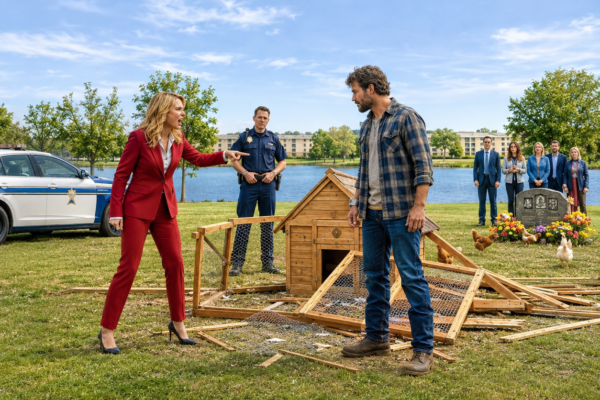
They dammed my water—so when every warning, inspection, and deadline failed, I brought the excavator.
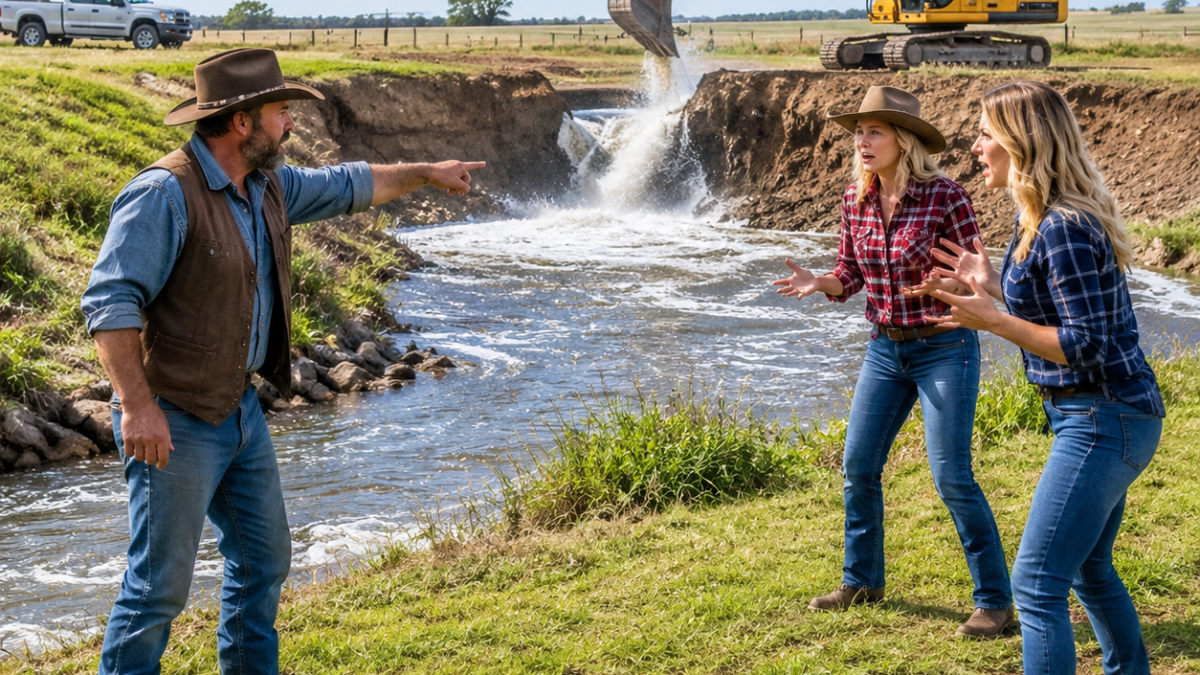
They dammed my water—so when every warning, inspection, and deadline failed, I brought the excavator.
By the time my cattle were crowding half-empty troughs and my lower pasture had started turning brown, the couple upstream was still sitting beside their new pond telling me I needed to “adapt.”
What they didn’t know was that the oldest folder in my desk contained a 1946 water-right record, and the man coming up my driveway the next morning carried the one set of measurements they couldn’t explain away.
I run cattle on a little over two hundred acres in southeastern Oregon, where summer can turn beautiful country unforgiving in a matter of weeks.
The ranch isn’t postcard land.
It’s sagebrush, volcanic rock, wind, dust, stubborn grass, and one narrow creek fed by springs in the hills.
That creek is the reason the place works.
My grandfather understood that.
My father understood it.
And when I bought the operation from my family, the first thing my attorney told me was to keep every water document in one place.
So I did.
Old certificates.
Maps.
Diversion records.
Correspondence.
A priority date going back to 1946.
I never imagined I would need them for a fight with the people living less than a mile upstream.
Caleb and Nora Whitaker bought that parcel in early spring.
They were in their thirties, newly arrived from Portland, friendly enough at first, and full of plans.
Their property had an aging cabin, several acres of meadow, and a stretch of creek running straight through it.
Within weeks, contractors were rebuilding the cabin while Caleb talked about transforming the property into a small “regenerative retreat.”
Honestly, I didn’t care.
People should improve their land.
I just gave him one piece of advice when we met along the fence.
“That creek is allocated,” I told him.
“I have an older downstream right, so before you change anything involving the channel, talk to the watermaster.”
Caleb smiled.
“Absolutely. We’re trying to improve the watershed, not hurt anybody.”
For nearly two months, everything seemed fine.
Then my stock tanks began refilling more slowly.
At first I blamed the heat.
Then the creek itself narrowed.
I rode upstream one afternoon, following the channel until the familiar sound of moving water faded into something that made me stop my horse.
Silence.
Around the next bend, I saw why.
Across the creek stood a compacted earthen berm taller than a pickup cab.
Behind it was a new pond.
Not a puddle.
Not a beaver dam.
A constructed impoundment spreading across the meadow where the creek had once passed through.
Caleb was standing on his deck when I approached.
“You dammed the creek.”
“We slowed it,” he corrected.
“For habitat.”
“You’re cutting my flow.”
“There’s still water moving through.”
“Not enough.”
He leaned on the railing.
“We were told reasonable use was allowed.”
“By who?”
“A consultant.”
“Did you talk to the watermaster?”
His expression changed just slightly.
That was my answer.
I told him my cattle depended on that water and asked him to open whatever outlet he had installed until the situation could be reviewed.
He refused.
Not angrily.
That almost made it worse.
He spoke to me like we were disagreeing over landscaping.
“We’re trying to restore the ecosystem,” he said.
“And eventually everybody downstream benefits.”
I looked at the pond.
Then at the nearly dry channel leaving it.
“My cows don’t drink eventually.”
That night, I pulled the old water folder from my desk.
At 7:40 the next morning, I called the district watermaster’s office.
A man named Dale Mercer arrived that afternoon.
He had gray hair, dusty boots, measuring equipment in the back of his state truck, and no interest in either my anger or Caleb’s philosophy.
He checked my documents.
He checked the recorded water rights.
Then he spent nearly three hours taking readings above the Whitakers’ property, below the dam, and at my diversion.
When he finished, he stood beside my truck studying his notebook.
“How bad?”
Dale looked toward the upstream hills.
“Bad enough that nobody should be arguing about whether you imagined it.”
Then he showed me the numbers.
The flow reaching my place had fallen by roughly two-thirds.
But that wasn’t the part that made him reach for his phone.
During his inspection, Dale had found something beside the new dam that Caleb had never mentioned to me.
A piece of equipment had been installed in the bank.
And according to Dale, it changed the situation completely.
[END OF FACEBOOK CAPTION]
[FIRST COMMENT / FULL STORY CONTINUATION]
It was a steel pipe.
About eight inches across.
It ran through the compacted earth near the base of the berm, disappeared beneath the bank, and reappeared on the far side of the pond beside a valve assembly.
Dale crouched near it without touching anything.
“You see that?”
“I see a pipe.”
“It’s more than a pile of dirt now.”
He stood and brushed dust from his knees.
I was still angry enough that I wanted a simpler answer.
“Meaning?”
“Meaning somebody designed this to control how much water leaves the pond.”
That mattered.
A random obstruction could have been an accident.
A badly placed berm could have been ignorance.
A valve meant somebody intended to regulate the flow.
Dale took photographs.
He measured the pipe.
He photographed the channel below the structure.
Then he walked upstream, checked another point, and returned to his truck.
I stayed out of his way.
That was difficult.
When you watch your grass fading and your cattle waiting around troughs that should refill faster, patience feels a lot like doing nothing.
But Dale had already told me something I needed to hear.
“Don’t touch the dam.”
I had been standing beside my pickup when he said it.
“I wasn’t planning to.”
He looked at me.
Dale had met ranchers before.
“Don’t touch the dam.”
“I heard you.”
“If that structure fails wrong, you can damage property downstream, hurt somebody, or turn a water dispute into something much uglier.”
“I’m not stupid.”
“I didn’t say you were.”
He closed the tailgate on his equipment.
“I’m saying angry people sometimes become temporary engineers.”
That almost made me laugh.
Almost.
By late afternoon, Dale had contacted his office and requested an expedited review.
I asked what that meant.
He gave me the most government answer imaginable.
“It means we’re moving as fast as we can while still doing it correctly.”
“How fast is that?”
“Faster if everyone cooperates.”
I looked uphill.
“And if they don’t?”
He shut the truck door.
“Then paperwork starts getting heavier.”
The next morning, Caleb received notice that the diversion and impoundment were under review.
I know because he appeared at my gate before lunch.
No friendly smile this time.
He parked his SUV in the road and walked up holding a folded sheet of paper.
“You reported us.”
I stayed on my side of the gate.
“I called the watermaster because my water disappeared.”
“You could’ve come back and talked to me.”
“I did talk to you.”
“Once.”
“How many times do I need to ask you not to stop my creek?”
His jaw tightened.
“It’s not your creek.”
That sentence might have started a shouting match a week earlier.
Instead, I surprised myself.
“You’re right.”
He blinked.
“I’m right?”
“You’re right. I don’t own the creek.”
I pointed toward the house.
“But I do hold a recorded right to use water from it, and now the people whose job it is to sort that out are involved.”
Caleb stared at me.
He had expected a simpler argument.
Mine versus yours.
Old rancher versus new neighbor.
He had probably already rehearsed that fight.
This one was harder.
“I have an engineer,” he said.
“Good.”
“He says what we built improves retention.”
“Then Dale can talk to him.”
“We’re creating wetland habitat.”
“Then whoever reviews it can consider that too.”
His voice rose.
“You act like because your family has been here forever, nobody else gets a say.”
That one hit something.
“My family being here has nothing to do with the measurement Dale took yesterday.”
Caleb opened his mouth.
I kept going.
“And I’m not telling you what philosophy you can have. I’m telling you my cattle need water that was reaching this ranch before you built that pond.”
He folded the notice again.
Harder this time.
“Nora and I put almost eighty thousand dollars into that project.”
There it was.
Not ideology.
Money.
A project he had invested in.
A project that had become part of how he saw himself.
I understood that better than I wanted to.
“I’m not asking what it cost,” I said.
“I’m asking whether it was authorized.”
He left without answering.
Two days later, Dale called me.
“Your neighbor sent plans.”
“What kind of plans?”
“Concept drawings. Hydrology notes. Some contractor paperwork.”
“So they did have an engineer?”
“Consultant.”
There was a difference in his tone.
“Is that bad?”
“It means don’t assume anything until we finish reviewing it.”
Dale was careful about everything.
He never called Caleb a liar.
Never told me I had already won.
Never promised some dramatic enforcement action.
That restraint turned out to be useful because the paperwork revealed something more complicated than I expected.
Caleb had not simply woken up and built a dam.
Months before closing on the property, he had spoken with a landscape consultant about water retention.
After the purchase, he had hired a contractor to move earth.
There were drawings for a pond.
There were notes about habitat.
There were emails discussing overflow.
What there was not, according to Dale, was documentation showing that the structure had gone through the water-right review Caleb seemed to believe it had.
His consultant apparently thought someone else was handling that part.
The dirt contractor assumed the owner had obtained whatever approvals were required.
Caleb assumed the consultant had signed off.
Everybody had assumed.
The creek was paying for it.
Within a week, I received a copy of an official notice directing the Whitakers to stop interfering with the established downstream delivery while the matter was reviewed.
The document did not say Caleb was evil.
It did not threaten prison.
It did not order his property seized.
It said, in dry administrative language, that the structure appeared to be impairing an existing right and that corrective action was required.
Dale explained it to me in simpler terms.
“They need to restore adequate passage.”
“Remove the dam?”
“Maybe. Maybe modify it. That’s between them, their professionals, and the agency.”
“How long?”
“They have a compliance deadline.”
I hated that answer.
My pasture did not care about deadlines.
The temperature had already crossed ninety three days that week.
The shallow stock tank on the south pasture was dropping.
I started hauling water.
The first truckload cost enough to make me swear in the cab.
The second made me quiet.
By the fourth, I stopped looking at the total.
My neighbor, Tom Avery, saw one of the delivery trucks pulling out.
Tom ran sheep six miles east and had been around long enough to know when somebody’s day had gone bad.
He leaned on my fence.
“Pump fail?”
“Neighbor built a pond.”
Tom looked toward the hills.
“On your creek?”
“Apparently everybody’s creek until somebody needs to drink from it.”
He scratched his beard.
“You call Dale?”
“Already did.”
“Then let Dale be Dale.”
“That supposed to comfort me?”
“No.”
Tom looked at the truck disappearing down the county road.
“But it might keep you from doing something expensive.”
That became the theme of my summer.
Everybody I trusted telling me not to solve the problem with machinery.
Which is ironic, considering how the story ended.
For the first ten days after the notice, Caleb did nothing visible.
The pond remained full.
The outflow remained thin.
His attorney contacted the state office and disputed whether the structure caused all of the measured reduction.
That argument was not completely ridiculous.
Summer flow naturally changes.
Evaporation matters.
Upstream conditions matter.
Dale knew that.
So he measured again.
He compared historic records.
He checked spring output.
He documented what he could and refused to claim what he could not.
The conclusion remained the same.
The structure was materially reducing water reaching my diversion.
The second time Dale came out, Nora met him at the dam.
I was not invited to that conversation.
Later, I learned she had been the first Whitaker to ask the question Caleb should have asked before the first load of dirt moved.
“What if we open it?”
The problem was that opening the valve alone would not necessarily restore the creek safely.
The pond now held a large volume of water.
Dumping it quickly could erode the channel.
Removing part of the berm without a plan could send sediment downstream.
The solution had become harder because they had waited.
That is one of the ugliest things about stubbornness.
It charges interest.
Caleb hired a water-law attorney.
I hired one too.
Her name was Denise Halpern.
She was in her late fifties, wore rectangular glasses, drove a Subaru with mud on both sides, and did not seem impressed by anybody.
The first time we met, she sat at my kitchen table and read every document before asking me a question.
My old 1946 certificate.
Transfer records.
Maps.
Dale’s measurements.
The Whitakers’ concept plan.
My water-hauling invoices.
Photographs of the pasture.
Then she closed the folder.
“What do you want?”
“My water back.”
“Good.”
“That’s it.”
“Better.”
I waited.
She looked at me.
“Most clients say that and then spend forty minutes explaining how they also want the other person humiliated.”
“I wouldn’t object.”
“That’s different.”
I liked her immediately.
She asked about losses.
I told her what I knew.
Water hauling.
Potential forage loss.
Extra feed if the pasture failed.
Labor.
Possibly livestock impact if things got worse.
She wrote everything down.
Then she pointed at the figures.
“We document actual costs. We do not turn frustration into arithmetic.”
“I wasn’t planning to.”
“Everybody plans to once invoices start arriving.”
Denise contacted Caleb’s attorney.
For a brief moment, I thought the problem might end.
A conference was scheduled.
Dale participated only within the limits of his role.
The Whitakers brought their consultant.
Caleb brought his attorney.
Nora sat beside him with a yellow legal pad.
I sat beside Denise.
Nobody shouted.
That made the meeting feel more serious.
The consultant admitted the pond had been designed primarily as a landscape and habitat feature.
He maintained that a controlled outlet could potentially release water while preserving some storage.
Dale asked whether downstream delivery had been modeled against existing rights.
The consultant paused.
“Not specifically.”
Dale wrote something down.
Caleb shifted in his chair.
Denise asked who had confirmed that the impoundment could be built before the review was complete.
The consultant said he had not given that legal assurance.
Caleb looked at him.
“You told us this kind of project was normal.”
“I said retention projects are common.”
“You said we were fine.”
“I said the design was feasible.”
“That’s not what I heard.”
Nora placed her pen on the table.
“Caleb.”
Just his name.
Quiet.
But the room changed.
For the first time, I saw what their marriage had probably looked like for weeks.
Two people who had begun the project together and were now trying to remember exactly when it became one person’s decision.
The meeting produced a proposal.
Lower the pond gradually.
Open a temporary bypass.
Remove a portion of the berm.
Reestablish the original channel under supervision.
Then, if the Whitakers still wanted a water feature, they could pursue whatever separate process applied to a lawful off-channel project.
It was sensible.
It was technical.
It was cheaper than fighting.
Caleb rejected it.
Not in the room.
He waited until the next day.
His attorney sent the email.
The Whitakers wanted an independent hearing before making irreversible changes.
Denise read the message beside me.
“He’s allowed to challenge the determination.”
“How long?”
She looked at me.
“Too long for your grass.”
That was the moment the conflict changed again.
Until then, I had been irritated.
Then angry.
Then worried.
Now I became afraid.
Not of Caleb.
Of time.
The lower pasture had lost most of its green.
One afternoon I found three cows standing around a trough that had dropped below half.
The float valve was working.
The line was working.
There simply was not enough inflow.
I stood there listening to them breathe.
One pushed her nose into the water and drank slowly.
I ran my hand along her back.
“You don’t care about anybody’s sustainable retreat, do you?”
She flicked her tail at flies.
That night, I moved part of the herd.
I rented additional tanks.
I increased purchased water deliveries.
I bought supplemental hay earlier than I had planned.
The bills accumulated in a metal clip on my desk.
$640.
$1,180.
$790.
Another delivery.
Another feed invoice.
Another week.
My ex-wife used to say I got quieter when I was angriest.
She was right.
By August, I barely talked about Caleb.
I just kept receipts.
Denise noticed.
“That’s healthier than threatening him.”
“I could do both.”
“Don’t.”
“I know.”
The hearing came three weeks later.
Not a grand courtroom.
A county hearing room used for administrative matters, with folding tables, microphones, pitchers of water, and air conditioning cold enough to make everybody wish we had brought jackets.
The irony of water sitting untouched in glass pitchers did not escape me.
The Whitakers’ attorney argued that the pond created legitimate environmental value and that the downstream impact could be mitigated without eliminating it entirely.
Denise did not attack the idea of habitat.
That was important.
She acknowledged it.
Then she separated the idea from the result.
“A beneficial intention does not answer the question before us,” she said. “The question is whether this structure is interfering with an established downstream use and whether that interference can continue while livestock and pasture are suffering measurable harm.”
Dale presented his measurements.
Calm.
Methodical.
No drama.
He explained uncertainty where uncertainty existed.
He explained confidence where the data was strong.
That helped us more than exaggeration ever could.
Caleb’s consultant testified too.
He was not a villain.
He looked miserable.
He explained that he had designed the concept assuming regulatory review would occur before final construction.
Denise asked one question.
“Did you authorize Mr. Whitaker to impound the creek before that review?”
“No.”
Caleb stared at the table.
Nora closed her eyes.
The hearing officer asked whether a temporary solution could restore downstream flow while preserving the Whitakers’ ability to pursue further review later.
Dale said yes.
But it required prompt earthwork.
A controlled drawdown.
Channel stabilization.
Professional oversight.
The decision arrived two days later.
The Whitakers were directed to restore the required flow and submit a removal or modification plan.
If they failed to comply, the matter could proceed to stronger enforcement and court involvement.
There was a deadline.
Again.
I asked Denise what happened if Caleb ignored this one.
“Then we go to court.”
“I thought that’s what we were doing.”
“No. So far you’ve been experiencing the appetizer.”
I put my head in my hands.
She almost smiled.
Caleb did not ignore the order completely.
That would have been easier.
Instead, he did just enough to make everything slower.
He partially opened the outlet.
Flow improved.
Not enough.
He asked for an extension.
He hired another consultant.
He proposed a different design.
He submitted revised drawings.
Every step looked like movement.
The creek remained low.
I ran into him at a feed store near Burns.
He was standing beside a pallet of fencing supplies when he saw me.
For a second, we both considered pretending not to.
Then he walked over.
“You enjoying this?”
I looked at him.
“Enjoying buying water?”
“The lawyers. The hearings. Making us tear apart our property.”
“You think I wanted any of this?”
He laughed once.
“No, you wanted everything your way.”
That made something in me snap.
Not loudly.
I set the mineral blocks I was carrying onto my cart.
“My way?”
People nearby were pretending not to listen.
I lowered my voice.
“I asked you to let the creek flow.”
“We are letting it flow.”
“After being ordered to.”
“We’re trying to find a balance.”
“My cattle aren’t a concept, Caleb.”
His face tightened.
“And our property isn’t just your plumbing.”
There it was.
The whole dispute condensed into one sentence.
He saw a pond on his property.
I saw the same water continuing into mine.
We were both looking at the same creek from opposite ends of a pipe.
“You know what?” I said. “Let the professionals sort it out.”
“I’m trying.”
“No. You’re trying to keep the pond.”
He walked away.
When I got home, Denise had emailed me.
The temporary release was still below the level the watermaster considered adequate.
She recommended filing for emergency relief.
I called her.
“Do it.”
The court filing was narrower than I expected.
Denise did not ask a judge to punish Caleb for being arrogant.
She asked for an enforceable order requiring restoration of the downstream flow and authorizing corrective work if he failed to comply.
The Whitakers opposed it.
Their attorney argued that immediate removal could damage the property and that additional time would allow an engineered solution.
Denise responded with the obvious problem.
Additional time was being paid for by my ranch.
In water deliveries.
Pasture loss.
Feed.
Stress.
The judge assigned to the matter, Eleanor Briggs, was not theatrical.
She did not lecture anyone about ranching.
She did not announce that western water law was sacred.
She read.
A lot.
At the hearing, she asked Dale more questions than either attorney did.
How reliable were the measurements?
How much natural seasonal decline was expected?
Could the pond be drawn down safely?
Was full removal necessary immediately?
What risks existed if a private contractor breached it too fast?
Could downstream flow be restored while preserving the parties’ rights to continue litigating other issues?
Those questions scared me because they were reasonable.
Reasonable questions leave room for outcomes you do not like.
Then she asked Caleb something directly.
“You were notified in June that the structure was interfering with downstream delivery?”
“Yes.”
“And you understood livestock depended on that delivery?”
“Yes.”
“You were then given an opportunity to modify the structure?”
“We were trying to find a solution.”
“That was not my question.”
Caleb swallowed.
“Yes.”
The judge looked back at the file.
“And as of today, adequate downstream flow has not been restored?”
His attorney answered.
“The parties dispute what constitutes adequate—”
Judge Briggs raised one hand.
“I asked Mr. Whitaker.”
Caleb looked toward the table.
“No.”
That was the most important word spoken that morning.
The order came later that week.
It was not the dramatic permission slip people imagine when they hear this story.
It did not say, Rancher may destroy neighbor’s dam with excavator.
It directed the Whitakers to restore specified downstream delivery by a firm deadline.
It required a professionally developed drawdown and channel-restoration plan.
It authorized corrective work to be arranged under defined conditions if they failed to comply, with costs subject to later allocation.
It also required coordination with the appropriate water officials before physical removal.
In other words, if Caleb did nothing, I could not simply jump into an excavator and attack the dam.
I could arrange for qualified people to remove the obstruction under oversight.
That difference mattered.
Denise made me repeat it back to her.
“Qualified people.”
“Yes.”
“Approved plan.”
“Yes.”
“Agency coordination.”
“Yes.”
“No cowboy nonsense.”
I sighed.
“Yes.”
“You sound disappointed.”
“I own cowboy boots.”
“That is not a qualification.”
The deadline was twenty-one days.
Caleb had three weeks to solve a problem he had already spent months refusing to solve.
The first week, an engineer visited.
I watched his truck climb the road.
Good.
The second week, survey flags appeared around the pond.
Better.
On day twelve, a small pump began lowering the water level.
I thought it was finally happening.
Then the pump stopped.
Day fourteen.
Nothing.
Day sixteen.
Nothing.
Denise called their attorney.
Mechanical issue, he said.
Replacement pump coming.
Day eighteen.
Still no pump.
Dale visited.
The water level had barely changed.
Day nineteen, Caleb’s contractor canceled.
Day twenty, Denise received an email asking for another ten-day extension.
She called me.
“What do you want to do?”
I stood beside the creek.
The remaining water moved around my boots in a weak ribbon.
“No.”
“You understand the judge could still grant one if they ask.”
“I understand.”
“But you don’t consent.”
“No.”
She sent the response.
The judge denied the emergency extension but allowed a narrow safety adjustment if the professionals needed it during the actual drawdown.
Day twenty-one ended at midnight.
At 5:48 the next morning, my phone rang.
Tony Reyes.
Tony owned a small excavation company and had worked on irrigation ditches, ranch roads, culverts, ponds, and stream restoration for half the county.
He had been selected after Denise insisted we get multiple bids.
He had also been coordinating with the engineer and Dale.
“You awake?”
“I own cattle.”
“So yes.”
“So yes.”
“We’re mobilizing.”
I sat up.
For months, I had imagined this moment with satisfaction.
Instead, my stomach tightened.
“You have the plan?”
“Printed.”
“Dale?”
“Meeting us.”
“Denise?”
“Already texted me twice.”
“That sounds like her.”
Tony laughed.
“I’m bringing the excavator.”
There it was.
The sentence everybody remembers.
I got dressed.
Jeans.
Boots.
Work shirt.
Coffee I barely tasted.
Before leaving, I opened the old metal file drawer and looked at the water folder.
The paper from 1946 was inside a clear sleeve.
Yellowed.
Ordinary.
No drama in it at all.
Just dates, numbers, names, and a right somebody had bothered to record eighty years earlier.
I shut the drawer.
At 7:30, the first equipment trailer rolled up the county road.
Tony’s excavator sat chained behind his truck.
Not enormous.
A medium track machine, yellow paint dusty from work, bucket curled inward.
Behind him came another pickup carrying pumps, hoses, erosion-control material, and tools.
Dale arrived next.
Then the engineer.
Then Denise, because apparently no legal event in my life could occur without her standing nearby holding a clipboard.
She got out and pointed at me.
“You are not operating anything.”
“I know.”
“I’m serious.”
“I know.”
“You nodded too fast.”
“Denise.”
“Good.”
The plan began with water, not dirt.
The pond had to be lowered slowly.
Pumps moved water downstream through a controlled discharge.
The engineer checked the rate.
Dale checked the channel.
Tony waited.
For hours.
That was the least cinematic part of bringing an excavator to remove a dam.
Mostly, the excavator sat still.
The engine was off.
Birds landed near it.
I drank terrible gas-station coffee.
At 10:15, a white SUV came down the Whitakers’ drive.
Caleb.
Nora beside him.
They stopped near the work area.
Caleb got out first.
“What are you doing?”
Tony looked at Dale.
Dale looked at Denise.
Denise walked forward.
“Corrective work under the court order.”
Caleb laughed.
Not because anything was funny.
“No. We requested an extension.”
“It was not granted.”
“We have a contractor coming.”
“Your compliance deadline expired.”
Nora got out.
She looked at the pond.
The water had already dropped several inches.
Her hands went to her mouth.
“You’re draining it.”
The engineer stepped forward.
“We’re lowering the level before modifying the berm.”
“You can’t.”
His voice stayed calm.
“This is the approved safety sequence.”
Nora looked at me.
I will remember that look for a long time.
Not hatred.
Grief.
They had built something they loved.
Wrongly.
At someone else’s expense.
But they loved it.
That made the moment harder than the version where villains get exactly what they deserve and everybody enjoys watching.
“I’m sorry,” I said.
Caleb turned on me.
“No, you’re not.”
I could have answered a hundred ways.
Instead I looked at the pond.
“I’m sorry it came to this.”
“That’s not the same thing.”
“No.”
He was right.
By noon, enough water had been released for Tony to begin the first stage of earthwork.
The excavator started.
Diesel rumble rolled across the meadow.
Tony tracked slowly toward the edge of the berm.
He did not swing the bucket dramatically.
He did not smash through the center.
He shaved material from a marked section according to the engineer’s plan.
One bucket.
Then another.
Dirt dropped into an approved staging area away from the channel.
Dale watched.
The engineer watched.
Denise documented.
Caleb paced.
Nora sat on a log.
I stood farther back than everyone.
Hours of work reduced the top of the berm.
The opening widened gradually.
Water moved through the temporary control.
Sediment barriers held.
The channel began reappearing.
At one point, Tony stopped.
Everybody leaned forward.
He climbed down from the excavator.
“What?”
The engineer walked over.
Tony pointed into the exposed dirt.
There was another pipe.
Smaller.
Black plastic.
Running sideways through the berm.
Caleb stopped pacing.
The engineer looked at him.
“What is that?”
Caleb said nothing.
Nora stood.
“What is that?”
I watched his face.
For the first time, the confidence disappeared completely.
“It feeds the lower garden.”
Nora stared at him.
“What?”
He rubbed his forehead.
“It was temporary.”
She stepped toward him.
“You told me the garden line came from the well.”
“It mostly does.”
“Mostly?”
Nobody spoke.
This was not some criminal conspiracy.
It was worse in a smaller, more human way.
Caleb had installed a secondary line from the impounded water to irrigate part of their property.
Maybe he had convinced himself it barely mattered.
Maybe he thought he would explain later.
Maybe he had been afraid Nora would tell him to stop.
Whatever the reason, she had not known.
Dale photographed it.
He did not accuse Caleb of anything on the spot.
He simply documented what was there and said it would be included in the ongoing review.
Nora walked away from the work area.
Caleb followed.
She turned on him before he reached the house.
I could not hear everything.
I heard one sentence.
“You made me defend this.”
Then the door closed.
Tony stood beside the excavator.
“Well.”
Denise looked at him.
“You did not hear anything relevant to your work.”
“I suddenly hear nothing.”
By late afternoon, the controlled breach was open enough for the creek to move through the original channel again.
Not a wall of water.
Not some movie flood.
A steady increase.
Brown at first from disturbed sediment.
Then clearer.
The sound came back.
That was the part that got me.
For months, the creek below their place had sounded weak.
Thin.
That evening, standing beside the channel, I heard water moving over rock again.
Not roaring.
Just moving.
I followed it downstream.
Past the willows.
Under the fence crossing.
Toward my ranch.
I drove home ahead of it.
Twenty minutes later, I stood beside the south pasture diversion as the flow strengthened.
The trough line began filling faster.
One cow lifted her head.
Another stepped forward.
I sat on the edge of the tank.
And for the first time since spring, I felt my shoulders drop.
The excavator stayed upstream for two more days.
Removal was not as simple as punching a hole.
Tony reshaped the bank.
The engineer restored the channel grade.
Crews installed temporary erosion control.
Disturbed soil was stabilized.
The remaining pond water was released carefully.
Some portions of the berm were left temporarily until restoration could be completed without causing more damage.
This was not revenge.
It was construction.
Undoing construction, technically.
But still construction.
The invoices reflected that.
Tony’s work.
Engineering.
Pumps.
Erosion control.
Restoration.
Water deliveries on my side.
Feed.
Attorney fees.
Survey work.
By the time Denise stacked everything into categories, I stopped making jokes.
“This is a lot of money.”
“Yes.”
“Who pays?”
“Eventually, we argue about that.”
“I thought the order said corrective costs could be assessed to them.”
“Could.”
I hated that word.
“You lawyers build entire careers on verbs.”
“We prefer adverbs.”
The Whitakers challenged several expenses.
Fair enough.
Some were mine regardless of the dam.
Some losses were difficult to prove precisely.
Denise refused to inflate them.
She removed one hay purchase because we could not cleanly separate drought conditions from reduced creek flow.
I complained.
She ignored me.
“That bill is real.”
“So is the burden of proving causation.”
“I hate your job.”
“Most people do while paying for it.”
The final allocation came months later.
Caleb and Nora were responsible for a substantial portion of the corrective excavation, restoration costs tied directly to the unauthorized structure, and documented emergency water expenses.
Not every dollar.
Not some fantasy award.
But enough that the mistake hurt.
The state process concerning the structure continued separately.
I was not involved in every detail.
I received copies of certain findings because of my downstream right.
The Whitakers were required to complete channel restoration and could not simply rebuild the same impoundment.
If they wanted a future water feature, they would need to pursue a lawful design that did not impair existing uses.
That could have been the ending.
It wasn’t.
The real ending started one cold morning in November.
I was repairing a gate when Nora’s truck pulled up.
She came alone.
I expected paperwork.
Instead, she carried a cardboard box.
“What’s that?”
“Your stuff.”
“My stuff?”
She set the box on the tailgate.
Inside were three metal T-post clips, a pair of fencing pliers, and a red-handled shovel.
I recognized the shovel.
I had left it near their property months earlier during one of Dale’s inspections.
“I forgot I owned that.”
“I found it near the old pond.”
We both looked toward the hills.
The pond no longer existed.
The creek had settled into a narrower restored channel.
Bare soil along the former berm had been seeded.
From a distance, the scar remained obvious.
“You want coffee?” I asked.
Nora hesitated.
Then nodded.
We sat at my kitchen table.
The same table where Denise had first spread out the case.
Nora wrapped both hands around the mug.
For a while, neither of us said anything.
Then she said, “Caleb and I are separating.”
I looked at her.
“I’m sorry.”
“Don’t be. Not because of you.”
“I didn’t think it was.”
She smiled without humor.
“The dam didn’t help.”
I waited.
“We moved out here because we were tired.”
“Of Portland?”
“Of who we were there.”
That answer surprised me.
She looked out the window.
“We had jobs we hated. Rent that kept going up. Friends who talked about leaving the city and never did. Caleb found the property and became obsessed with the idea that we could build something different.”
“The retreat.”
“The retreat.”
She smiled faintly.
“At first, it was exciting. Garden. Solar. Workshops. Native plants. People coming out for weekends. We thought we were going to simplify our lives.”
“And instead?”
“We financed simplicity.”
I laughed before I could stop myself.
She did too.
Then her eyes filled.
“The more expensive it got, the more Caleb needed it to work.”
That explained him better than any legal filing.
Every question became criticism.
Every delay became an enemy.
Every rule became proof that some outdated system was trying to stop him.
The pond was supposed to be the centerpiece.
A place for wildlife.
Reflection.
Photography.
Maybe workshops.
Maybe guests.
“He kept saying once it was finished, people would understand.”
I stared into my coffee.
“I never cared whether people understood the pond.”
“I know.”
“I cared that the creek stopped.”
“I know that now.”
Her voice changed.
Quieter.
“When you came up that first day, Caleb told me you were exaggerating.”
I looked at her.
“He said ranchers downstream always complain about water.”
“That sounds like something he’d say.”
“I believed him.”
She swallowed.
“Then Dale came.”
“And?”
“I started wondering.”
She looked at the table.
“When the first notice arrived, I told Caleb we should open the outlet and deal with the rest later.”
“He said no?”
“He said if we did that, we were admitting we’d done something wrong.”
There it was.
Pride.
Again.
Not evil.
Not a master plan.
One person becoming so invested in being right that fixing the problem started feeling worse than continuing it.
“I’m not telling you this so you’ll forgive him,” Nora said.
“I didn’t think you were.”
“I’m telling you because I defended it too.”
“You did.”
“I knew the creek was low.”
“Yes.”
“And I kept telling myself the officials would figure it out before anything serious happened.”
I did not rescue her from that admission.
She deserved the discomfort.
So did I, in different ways.
After a minute, I said, “You should’ve called me.”
“I know.”
“I probably wouldn’t have been pleasant.”
“I know.”
“But I would’ve talked.”
“I know.”
She nodded.
“I’m sorry.”
Simple.
No speech.
No excuse attached.
I believed her.
“Thank you.”
That was all.
Caleb never apologized that year.
He moved off the property that winter.
Nora stayed long enough to finish the restoration requirements and prepare the place for sale.
The retreat business disappeared from the website before Christmas.
The sign by the highway came down.
The cabin remained.
The meadow remained.
The creek kept moving through both properties, indifferent to everybody’s plans.
In March, a storm hit hard.
Snow in the hills melted fast.
The restored channel carried more water than it had since the excavation.
I drove upstream after receiving permission from Nora to check the boundary section.
Dale met me there.
We stood beside the place where Tony’s excavator had first cut into the berm.
You could still see the old outline.
Barely.
Grass was beginning to take.
Willows along the creek were budding.
Dale nudged a rock with his boot.
“Looks decent.”
“That high praise?”
“From me.”
I watched the water.
“Could we have fixed this sooner?”
Dale glanced at me.
“Yes.”
That hurt.
Then he added, “Could’ve been worse too.”
“How?”
“You could’ve driven an excavator up here the first week.”
I smiled.
“I considered it.”
“I know.”
“How?”
“You asked me three separate times what would happen if somebody accidentally opened the dam.”
“I was curious.”
“You were transparent.”
He walked back toward his truck.
Before leaving, he stopped.
“You handled the important part right.”
“Which part?”
“You called before you dug.”
That stayed with me.
The ranch recovered slowly.
Water coming back did not magically turn brown pasture green overnight.
I reseeded part of the lower field.
We changed grazing rotations.
I kept two of the rented tanks longer than necessary because I no longer liked relying on a single point of failure.
Tom Avery helped me move one.
He looked at the creek.
“So the famous pond is gone.”
“Gone.”
“You miss the excitement?”
“I’d rather get kicked by a horse.”
“That can be arranged.”
Life became ordinary again.
That was the reward nobody puts in a title.
Ordinary water.
Ordinary chores.
Ordinary mornings where you turn a valve and don’t think about lawyers.
The Whitaker property sold the following summer.
The buyer was a woman named Rachel Kim who ran a small veterinary practice in town.
Before closing, she called me.
“I hope this isn’t strange.”
“Depends what you’re about to ask.”
“The sellers disclosed the water dispute.”
That was encouraging.
“I have copies of the recorded rights and restoration documents,” she said.
“Good.”
“I wanted to understand what happened before I buy.”
That was even more encouraging.
We met at the creek.
I showed her the old dam site.
She showed me her survey.
She had already spoken with the watermaster’s office.
I almost hugged her.
Instead, I said, “You’re ahead of where the last owners started.”
She smiled.
“I heard.”
Rachel had plans too.
Everybody does.
She wanted a greenhouse.
A few horses.
Maybe native meadow restoration.
She also wanted a small pond.
My stomach tightened when she said it.
Then she added, “Off-channel. Filled from roof catchment and the well if the well capacity supports it. Nothing from the creek unless I get proper approval.”
I looked at her.
“You’ve done your homework.”
“I’m a veterinarian. I’m terrified of paperwork.”
“That makes you qualified to own rural land.”
We got along.
Not perfectly.
Nobody does.
But when Rachel wanted to replace a fence crossing near the creek, she called before the contractor arrived.
When I repaired my diversion structure, I sent her a message so she wouldn’t mistake temporary turbidity for a problem.
Two phone calls.
That was all it took.
No lawyers.
No hearings.
No excavator.
A year after the dam came out, I received a letter.
No return address I recognized.
Inside was one sheet of paper.
From Caleb.
I sat at the kitchen table before opening it fully.
His handwriting was tighter than I expected.
The letter was not dramatic.
He said he had moved back to the Willamette Valley.
He was working for a company doing energy-efficiency retrofits.
He and Nora had finalized their divorce.
Then he wrote:
I spent a long time thinking you were the person who destroyed what we built.
I stopped reading.
Walked to the sink.
Came back.
The next sentence said:
I understand now that I built something I did not have the right to maintain the way I maintained it, and then I made the cost of admitting that mistake larger every month.
That was Caleb.
Even his apology sounded like a project report.
But it was an apology.
He said the consultant had not lied to him.
He had heard what he wanted to hear.
When questions arose, he chose the interpretation that let him keep going.
When Nora challenged him, he became defensive.
When I challenged him, he made me the enemy because enemies were easier to fight than facts.
I read that paragraph twice.
Near the end, he wrote:
I still believe water retention and habitat restoration matter.
I do too.
I just understand now that doing something beneficial in one place does not give you permission to make someone else absorb the cost.
I folded the letter.
There was no request for forgiveness.
No invitation to be friends.
No dramatic statement about karma.
Just one final line.
I should have opened the valve the first day you asked.
I put the letter in the old water-right folder.
Right behind the 1946 record.
That surprised Denise when she saw it months later.
“You kept his apology with the legal documents?”
“It belongs there.”
“Why?”
“Because it explains the whole case better than half the motions.”
She considered that.
“I hate when clients become philosophical after litigation.”
“Bill me.”
“I might.”
The excavator story still gets told around here.
Not by me most of the time.
Tony tells a version where he supposedly looked me in the eye and said, “Let the river run.”
He did not.
Tom tells a version where Caleb tried to stand in front of the machine.
He did not.
Somebody at the feed store insists the sheriff came and arrested three people.
Nobody was arrested.
Real stories collect nonsense.
The truth is less explosive.
And better.
A neighbor built something he thought was good.
It harmed somebody downstream.
He was warned.
He resisted.
The system moved slower than I wanted but faster than disaster.
Records mattered.
Measurements mattered.
Professional people mattered.
Eventually, an excavator mattered too.
But only at the end.
Only after the notices.
The inspections.
The meetings.
The hearing.
The court order.
The deadline.
The engineer.
The pumps.
The safety plan.
That machine was not the reason I won.
It was what arrived after the arguments were already over.
These days, when I walk the lower pasture in July, I still check the creek more often than I used to.
Old habit.
The cattle drink.
Water moves through the trough system.
Grass bends along the bank.
Upstream, Rachel’s greenhouse catches morning light.
Her little rain-fed pond sits behind the cabin, nowhere near the creek.
Sometimes ducks land on it.
She got her habitat.
I kept my water.
Turns out those things were never mutually exclusive.
They only became enemies when somebody decided his good idea mattered more than the people already downstream.
The old folder still sits in my desk.
The 1946 paper is there.
Dale’s flow reports.
Denise’s invoices.
Photographs of the dam.
Tony’s excavation bill.
Caleb’s letter.
I used to think that folder proved where my rights began.
Now I think it proves something more useful.
A boundary does not always mean no.
Sometimes it simply means not like this.
And every summer, when the creek slips through the pasture exactly where it did before any of us started fighting over it, I remember the morning Tony unloaded that excavator.
The machine was loud.
The lesson wasn’t.
Water can bend around rocks, fences, roots, and fallen trees.
What it cannot do forever is flow through somebody’s pride.