HOA Karen Destroys Veteran’s Mailbox for Refusing to Celebrate Pride Month.h
HOA Karen Destroys Veteran’s Mailbox for Refusing to Celebrate Pride Month
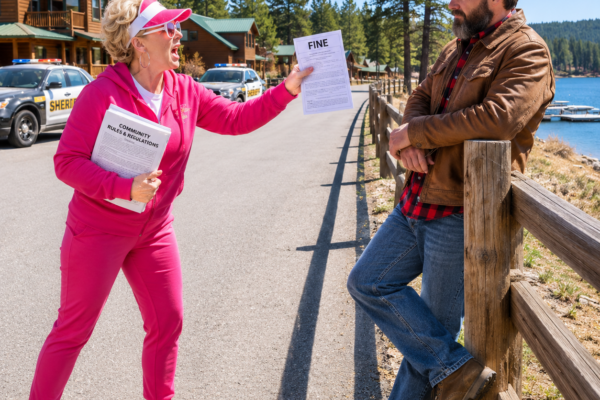
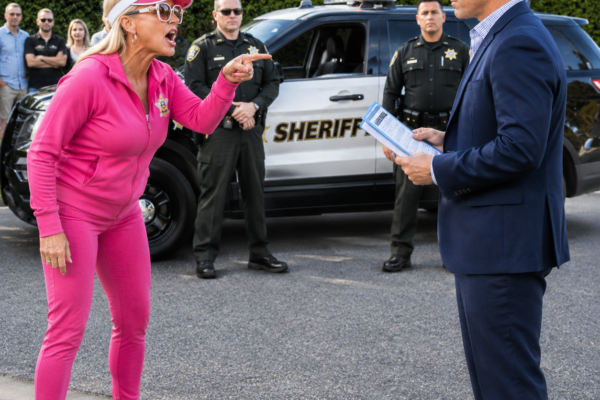
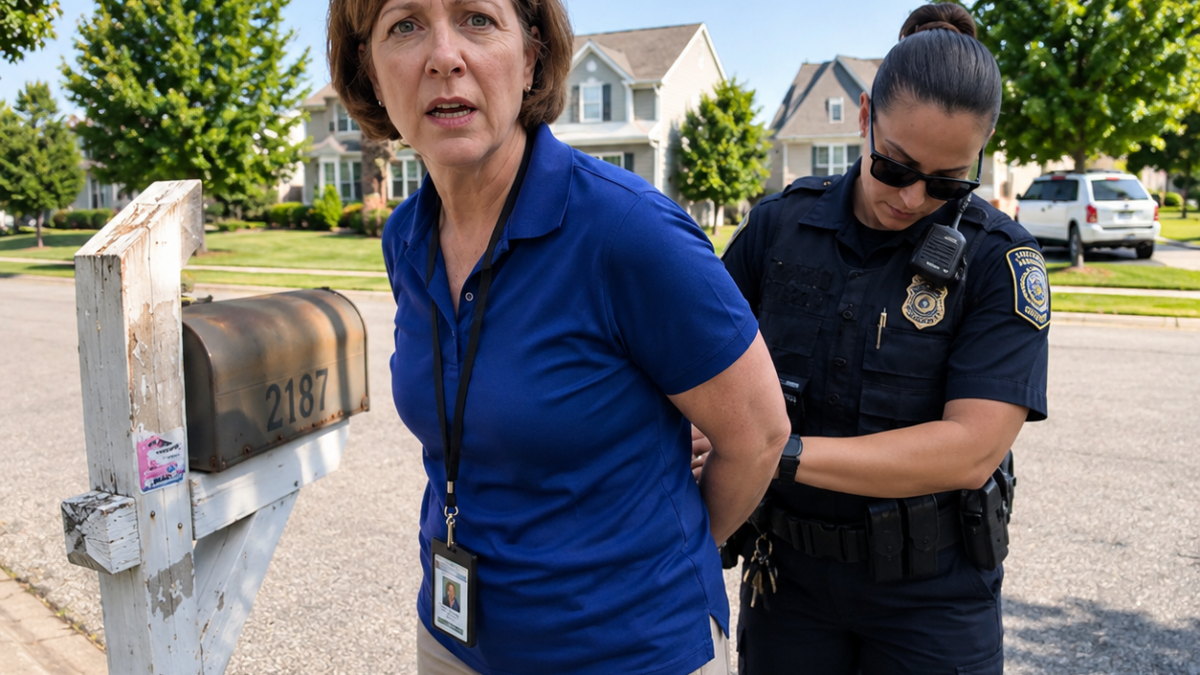
HOA president Barbara Higgins fined a retired Army master sergeant $300 because he declined to decorate his mailbox for Pride Month—then personally repainted it when the fine didn’t change his mind.
What made Barbara’s decision worse was that Arthur Pendleton had never insulted anyone, opposed the celebration, or complained about neighbors who participated. He simply told her, “I don’t decorate my property for campaigns. That applies to this one too.”
What Barbara didn’t know was that her own newsletter called the mailbox initiative voluntary, the HOA rule she cited actually governed holiday-lighting deadlines, and Arthur’s security camera would eventually record her damaging the actual mail receptacle after she had already been warned to stay off his property.
Arthur was fifty-eight and had spent twenty-four years in the Army before retiring to Cedar Creek, Missouri.
He kept a small flagpole in his yard, repaired lawn equipment for neighbors, attended VA appointments on Tuesday mornings, and had managed fifteen years in Cedar Creek without a single serious HOA dispute.
Then Barbara announced her June inclusion campaign.
Residents were invited to add rainbow designs to their mailbox posts.
Many did.
Arthur didn’t.
His neighbor Daniel Reyes, who lived three houses down with his husband, decorated theirs with a bright rainbow sleeve and thought Arthur’s decision was completely unremarkable.
Barbara did not.
Three days after Arthur declined, a violation notice appeared.
FAILURE TO SUPPORT APPROVED COMMUNITY INCLUSION STANDARD — $300.
Arthur checked the cited section.
It had nothing to do with Pride Month.
Nothing to do with mailboxes.
Nothing to do with mandatory community participation.
He appealed.
Barbara doubled the fine.
Then, while Arthur was away, she painted his wooden mailbox post herself.
Arthur repainted it white.
She returned a week later and put a rainbow stripe across the metal mailbox body.
That was when Arthur called attorney David Brooks.
David looked at the photographs and said:
“First, stop calling the mailbox federal property. You bought it. The post is yours too.”
Arthur frowned.
“Then there’s no postal issue?”
David shook his head.
“I didn’t say that. The receptacle is federally protected because it’s used for U.S. Mail. And she has now moved from an HOA dispute into repeated property damage.”
He pointed at the camera footage.
“Don’t confront her. Preserve everything.”
The following Tuesday, Arthur left for his regular VA appointment.
At 9:47 a.m., Barbara’s car stopped across the street.
She got out carrying paint, a scraper, and a screwdriver.
Margaret Vance, Arthur’s seventy-one-year-old neighbor, quietly raised her phone.
And this time, Barbara didn’t stop at the post.
[END OF FACEBOOK CAPTION]
[FIRST COMMENT / FULL STORY CONTINUATION]
Barbara walked directly to the mailbox.
No hesitation.
No looking around to see whether Arthur was home.
That detail mattered later.
She had been to his house enough times to know his Tuesday routine.
Arthur left for the VA clinic at approximately eight-thirty most Tuesday mornings.
Margaret Vance knew it because she occasionally collected packages for him.
Barbara apparently knew it because she had already appeared twice while he was gone.
Margaret stood behind the curtains in her front room with her phone raised.
She had no intention of confronting Barbara.
At seventy-one, Margaret had finally learned one of the few useful lessons age gives you for free:
You do not step into the street to argue with a person carrying tools and righteousness.
You record.
Barbara set a small plastic tray on the grass.
Paint.
Brush.
Scraper.
Screwdriver.
Then she examined Arthur’s mailbox.
Arthur had repainted the wooden support white after the first incident.
The second time Barbara came, she had placed a rainbow stripe across the side of the black metal box itself.
Arthur had removed as much as he could without damaging the finish.
A faint shadow remained.
That apparently bothered Barbara.
She began scraping.
Hard.
The security camera mounted beneath Arthur’s eave caught the sound.
Metal.
Scrape.
Scrape.
Scrape.
Barbara worked at the remaining paint.
Then at the area around Arthur’s house numbers.
The numbers were adhesive reflective digits attached to the side facing the carrier’s approach.
She peeled one partly away.
Then another.
When one wouldn’t release cleanly, she used the screwdriver.
Margaret whispered from behind her window:
“Oh, Barbara.”
The phone kept recording.
Barbara scraped until she had removed enough of the black coating that bright metal showed beneath.
Then she opened the mailbox door.
Arthur’s mail was inside.
Two envelopes.
A grocery circular.
A small prescription shipment in a padded USPS envelope.
Barbara paused.
This was the point where the story could have become much worse.
She did not take the mail.
Did not open it.
Did not remove the prescription.
Instead, she closed the door.
But when she did, the screwdriver caught under the mailbox’s red carrier flag.
The plastic mounting piece snapped.
The flag dropped into the grass.
Barbara stared at it.
For three seconds, she did nothing.
Then she picked it up.
Placed it on top of the mailbox.
And continued painting.
Bright rainbow bands across the side of the black receptacle.
Over the scratched area.
Around the partially damaged address numbers.
She painted the mailbox door too.
The security camera captured the entire thing.
Margaret’s phone caught it from across the street.
Barbara finished.
Stepped back.
Took a photograph.
Then did something Arthur would later say bothered him more than the paint.
She nodded to herself.
Satisfied.
Not furious.
Not impulsive.
Satisfied.
As though she had finally corrected an administrative defect.
Then she packed the brush and scraper into the tray and walked back to her car.
At 10:02, she drove away.
At 10:37, the mail carrier arrived.
His name was Ron Delgado.
Ron had delivered Cedar Creek’s route for nine years.
He slowed at Arthur’s box.
Stopped.
Got out.
Looked at the damaged flag.
Then the scraped address numbers.
The box door no longer closed cleanly because some paint had dried along the lower edge.
Ron tried it twice.
Then looked toward Arthur’s house.
He removed the mail already inside.
Placed the new delivery with it.
Put everything into a plastic USPS hold sleeve.
Then left a temporary service notice at Arthur’s front door stating that the receptacle needed repair before normal delivery could resume.
That notice changed the legal significance of what Barbara had done.
Not because Arthur suddenly became the owner of “federal property.”
He didn’t.
The source story got that wrong.
Arthur owned the mailbox.
USPS rules governed its use as a mail receptacle.
And federal law could protect the receptacle from willful damage.
But the post and support did not magically belong to Washington.
The first incident—painting Arthur’s wooden post—was primarily a private-property and HOA-authority issue.
The later damage to the actual box, especially once it interfered with delivery, was different.
Still, even that did not mean federal agents would arrive in tactical gear.
Arthur learned all of this when he returned from Springfield shortly after eleven.
Margaret was already waiting.
She crossed the street holding her phone.
“You need to see this.”
Arthur looked at the mailbox first.
Then the broken flag.
Then the scraped numbers.
Then the fresh paint.
His face barely changed.
That was something twenty-four years in the Army had taught him.
When everyone else is reacting, collect information.
He took photographs.
Front.
Side.
Door.
Flag.
House numbers.
Paint tray marks in the grass.
Then he checked the porch.
Found Ron’s service notice.
That made him angry.
Not the rainbow.
Not the color.
The fact that Barbara had interfered with a system Arthur depended on.
His VA pharmacy mailed medications.
His bank mailed certain documents because Arthur stubbornly refused to switch everything online.
He still received letters from two men he had served with who apparently believed texting was morally weak.
The mailbox was ordinary.
That was why it mattered.
Arthur turned to Margaret.
“You recorded her?”
“All of it.”
“Don’t send it around.”
Margaret looked offended.
“I’m seventy-one, not fourteen.”
“Fair.”
He called David Brooks.
David listened.
Then said:
“Do not repaint anything yet.”
“I need mail.”
“You can replace the box if needed after we document.”
“Can I take the mail?”
“Ron left it at the post office?”
“Looks like it.”
“Pick it up there.”
“Then call local police.”
“Not postal inspectors?”
“Both may be appropriate.”
“But start with what is happening now.”
“Property damage.”
“Repeated entry.”
“Potential interference with an authorized mail receptacle.”
“Local police can document.”
“We can also submit the video to the Postal Inspection Service.”
Arthur said:
“So this is federal now?”
David sighed.
“Arthur.”
“What?”
“You spent twenty-four years in the Army.”
“Yes.”
“Did everything involving the federal government become a federal criminal case?”
“No.”
“Same principle.”
Then David explained it carefully.
Mailbox vandalism can fall under federal law.
Postal inspectors can investigate.
But they do not personally run surveillance on every damaged residential box in America.
Local police often handle the immediate property crime.
Federal involvement becomes more likely when there is significant damage, theft, repeated tampering, patterns affecting multiple boxes, or interference with mail.
Arthur’s case had repetition and video.
That made reporting reasonable.
It did not guarantee prosecution.
“Good,” Arthur said.
David paused.
“Good?”
“I don’t need federal prison.”
“I need her to stop touching my property.”
That answer told David exactly what kind of client he had.
Arthur called Jefferson County’s non-emergency line.
Officer Elena Ruiz arrived forty minutes later.
She looked at the mailbox.
Then the doorbell video.
Then Margaret’s phone.
Then the earlier footage.
Barbara painting the post.
Barbara painting the mailbox body.
Barbara returning with tools.
Ruiz asked:
“Have you told her not to come onto your property?”
Arthur handed over an email.
After the second incident, David had sent Barbara and Cedar Creek’s management company a written notice.
Arthur Pendleton does not consent to any HOA officer, volunteer, or contractor entering his lot to decorate, alter, inspect, or remove his mailbox, mailbox support, or other personal property except where independently authorized by the governing documents and applicable law.
Barbara had replied:
The Association reserves all rights necessary to enforce community standards.
Ruiz read that twice.
“What standard?”
Arthur handed over the newsletters.
The first one:
CEDAR CREEK PRIDE MONTH — VOLUNTARY COMMUNITY MAILBOX DECORATING INITIATIVE
The word VOLUNTARY appeared in bold.
Then the fine notice.
FAILURE TO COMPLY WITH APPROVED COMMUNITY PARTICIPATION INITIATIVE — PROVISION 5.4
Ruiz asked:
“What is 5.4?”
“Holiday lighting.”
“Pride Month is technically seasonal.”
Arthur looked at her.
She smiled slightly.
“Sorry.”
“Police humor.”
“Bad habit.”
Then she became serious.
“Has anyone threatened you?”
“No.”
“Any confrontation?”
“No.”
“Did you remove her decorations?”
“I repainted my own post.”
“And the mailbox?”
“Cleaned it.”
“Did you damage anything belonging to the HOA?”
“No.”
“Is the mailbox yours?”
“Yes.”
“Receipt?”
Arthur actually had it.
Six years old.
Home improvement store.
David had told him to find anything showing ownership.
Ruiz looked surprised.
“You keep receipts this long?”
“Army.”
“That explains nothing.”
“It explains everything.”
She photographed it.
Then:
“I’ll contact Mrs. Higgins.”
Arthur said:
“Please tell her I don’t want her arrested over paint if she’ll stop.”
Ruiz studied him.
“That decision isn’t entirely yours.”
“I know.”
“But that’s what you want?”
“Yes.”
“For the first time?”
Arthur looked at the broken flag.
“Mostly.”
Officer Ruiz went to Barbara’s house.
Barbara answered in a Cedar Creek polo.
The conversation was captured on body camera.
Later, Arthur’s lawyer obtained it through the case.
Ruiz began simply.
“Mrs. Higgins, did you paint Mr. Pendleton’s mailbox today?”
Barbara did not deny it.
“Yes.”
“Why?”
“He was out of compliance.”
“With what?”
“Our June inclusion standard.”
Ruiz asked:
“Is participation mandatory?”
“It became mandatory after widespread participation.”
That sentence caused problems later.
“Was there a board vote?”
“The board approved the initiative.”
“Mandatory participation?”
Barbara hesitated.
“The initiative was approved.”
“That isn’t the same thing.”
Barbara’s voice cooled.
“This is a homeowners association issue.”
Ruiz nodded.
“It may be.”
“Mr. Pendleton also has video of you scraping and damaging the mailbox.”
“I was correcting his attempt to remove an approved design.”
“Did you break the flag?”
“Accidentally.”
“Did you have permission to be on his property?”
“The HOA has enforcement authority.”
Ruiz asked:
“Show me.”
Barbara produced a binder.
Of course.
Provision 5.4.
Ruiz read.
Holiday lighting installation and removal dates.
Nothing about mailbox painting.
Barbara pointed to another section.
General appearance.
Lots shall be maintained in a neat and harmonious condition consistent with adopted community standards.
Ruiz said:
“Where is the adopted mailbox standard?”
“The Pride initiative is the standard.”
“Where is the vote making it mandatory?”
Barbara’s tone hardened.
“I’m not going to debate board governance with law enforcement.”
Ruiz nodded.
“That part is fine.”
“Then let’s stay with property.”
“Did Mr. Pendleton tell you not to paint his mailbox?”
“He refused compliance.”
“That isn’t what I asked.”
Barbara looked at her.
“Yes.”
“Did his lawyer tell you not to enter and alter it?”
“Yes.”
“And you did anyway?”
“Yes.”
“Because?”
“Because the board has a responsibility to uphold inclusion.”
There.
Ruiz did not argue politics.
Did not tell Barbara Pride Month was good or bad.
That was irrelevant.
She asked:
“Did that responsibility give you permission to damage a privately owned mailbox?”
“I did not damage it.”
“The flag is broken.”
“Minor.”
“Address numbers are scraped.”
“They can be replaced.”
“Mail delivery was interrupted.”
Barbara’s face changed.
“What?”
“The carrier stopped delivery until the box is repaired.”
“I didn’t know that would happen.”
Ruiz answered:
“That’s one reason people generally shouldn’t alter mail receptacles they don’t own.”
Barbara crossed her arms.
“I was trying to bring the neighborhood into compliance.”
Ruiz said:
“I understand your explanation.”
Then:
“You are being given explicit notice now not to enter Mr. Pendleton’s property or alter his mailbox again.”
Barbara frowned.
“Are you arresting me?”
“Not today.”
That decision mattered.
The source version would have federal inspectors arrive two days later and lead Barbara away in handcuffs.
Reality was slower.
The officer completed a report.
Arthur repaired the mailbox.
Not the post.
He replaced the actual metal receptacle because the door and flag assembly had been damaged enough that buying a new one was easier.
Same model.
Black.
Simple.
The wooden post remained white.
USPS resumed delivery the next day.
Arthur submitted a mailbox-vandalism report to the Postal Inspection Service with David’s help.
Video.
Police report.
Photographs.
Carrier notice.
Prior warning.
Two weeks later, Postal Inspector James Carter called.
Not a house raid.
A phone call.
“Mr. Pendleton?”
“Yes.”
“Postal Inspection Service.”
Arthur sat at the kitchen table.
“Okay.”
“I reviewed your report.”
“I want to clarify something at the start.”
Arthur smiled.
“My lawyer already corrected me.”
“The mailbox isn’t federal property.”
“Good.”
Carter continued.
“Your privately purchased receptacle can still be protected under federal law once it is used as an authorized depository for mail.”
“The support post is a different issue.”
“Understood.”
“The footage shows damage to the box itself.”
“Yes.”
“And temporary interruption of delivery.”
“Yes.”
“Any mail opened, removed, or destroyed?”
“No.”
“That’s important.”
“Any threats?”
“No.”
“Other mailboxes affected?”
“Not that I know.”
Carter explained that the Inspection Service would retain the report and coordinate as appropriate.
A federal prosecution was possible in theory.
Not automatic.
The fact pattern also supported local property-damage enforcement.
Arthur asked:
“What do you recommend?”
“Preserve everything.”
“If there’s another active incident, call local police.”
“If mail is stolen or opened, report that immediately.”
Arthur said:
“I’m hoping there isn’t another incident.”
“So am I.”
Then came the HOA hearing.
Arthur had appealed both fines.
The first $300.
Then the increased $600.
Nine hundred dollars total.
Cedar Creek’s board meeting was packed.
Not because everyone cared about mailbox paint.
Because the story had spread.
Some residents framed Arthur as a veteran being forced into political speech.
Others framed him as a man refusing a community show of support for LGBTQ residents.
Both versions annoyed Daniel Reyes.
Daniel lived on Independence Avenue with his husband, Luis.
He had decorated their mailbox voluntarily.
Rainbow sleeve.
Small string of colored pennants.
He liked Pride Month.
He also liked Arthur.
Arthur had rebuilt Daniel’s lawn mower carburetor the previous summer and refused payment.
Daniel sat in the second row wearing a rainbow pin.
Barbara saw him and visibly relaxed.
That turned out to be a mistake.
Board counsel, Rebecca Moore, opened the hearing.
Five directors.
Barbara as president.
Vice president Alan Brooks.
Treasurer Lisa Chen.
Secretary Maya Evans.
Director Daniel Reyes.
Yes.
Daniel was on the board.
That was another reason Barbara had assumed he would support her.
Rebecca asked:
“What is the source of the fine?”
Barbara answered:
“Provision 5.4 combined with the approved inclusion initiative.”
Rebecca opened the declaration.
“Provision 5.4 concerns holiday-lighting schedules.”
“It establishes seasonal exterior-decoration authority.”
“Does it?”
Barbara pointed to broad language.
Rebecca read.
It allowed the board to set dates for temporary exterior holiday lighting and decorations to prevent indefinite displays.
Nothing about compelling a homeowner to install a particular symbol.
Rebecca asked:
“Where is the board resolution making Pride participation mandatory?”
Barbara said:
“The board approved the initiative in May.”
Minutes came up.
Motion:
Cedar Creek will sponsor a voluntary Pride Month mailbox-decorating initiative and community picnic celebrating inclusion. Association funds up to $1,500 approved for optional mailbox sleeves, signage, and event supplies.
Voluntary.
Explicitly.
Alan Brooks looked at Barbara.
“I remember that.”
Barbara said:
“The participation rate changed circumstances.”
Lisa Chen frowned.
“What does that mean?”
“When nearly every household participates, isolated nonparticipation can undermine the message.”
Daniel Reyes finally spoke.
“No.”
Barbara turned.
“What?”
Daniel leaned toward his microphone.
“My mailbox has the biggest rainbow on the street.”
A few people laughed.
He continued.
“I supported the initiative.”
“I still support it.”
“But voluntary does not become mandatory because lots of people say yes.”
Barbara looked genuinely stunned.
Daniel said:
“My marriage does not need Arthur’s mailbox to validate it.”
Silence.
Arthur looked at him.
Daniel continued.
“If someone vandalizes my Pride flag, enforce the rules.”
“If someone harasses my husband, I expect this board to act.”
“If somebody chooses not to decorate his own mailbox, leave him alone.”
Barbara’s face hardened.
“This is about community values.”
Daniel answered:
“Then model them.”
“Don’t fine people into performing them.”
That changed the meeting.
Not because everyone suddenly agreed on Pride Month.
Because the person Barbara thought gave her moral cover had rejected the coercion.
Arthur was called.
Rebecca asked:
“Why did you decline?”
Arthur answered:
“I don’t decorate my mailbox for campaigns.”
“Political?”
“Religious?”
“Patriotic?”
“Charitable?”
“Any of them?”
“I put my street number on it.”
“That’s enough.”
Someone in the audience muttered:
“He has an American flag.”
Arthur heard.
He turned.
“My flag is on my property because I chose it.”
“If the HOA ordered every homeowner to fly one for July, I would vote against that too.”
That surprised several people.
Arthur continued.
“This isn’t about what the rainbow means.”
“It’s about who decides what goes on my property.”
Daniel nodded.
Rebecca asked:
“Did you ever make a negative statement about LGBTQ residents?”
“No.”
“Any complaints about the initiative?”
“No.”
“Did you interfere with anyone else participating?”
“No.”
“Did you say anything to Barbara beyond declining?”
Arthur gave her the email.
Short.
Barbara, thank you for letting me know. I won’t be participating, but I hope the event goes well. Please do not add decorations to my mailbox or property. — Arthur
That was it.
No manifesto.
No insult.
No political argument.
Barbara had built the rest.
The board voted to void the $900 in fines.
Four yes.
Barbara no.
Then Alan made a second motion.
Suspend Barbara’s individual enforcement authority pending review of the mailbox incidents and other discretionary fines.
Again:
Four yes.
Barbara no.
The room stayed quiet.
Arthur preferred that.
No cheering.
Daniel looked exhausted.
After the meeting, he approached Arthur.
“Sorry.”
“For what?”
“My community got dragged into her control problem.”
Arthur shook his head.
“No.”
“Barbara did that.”
Daniel smiled faintly.
Then:
“You really wouldn’t fly a July flag if they required it?”
“I spent twenty-four years in the Army.”
“Yes.”
“That’s why I’d refuse.”
Daniel laughed.
“Fair enough.”
That conversation became the emotional center of the story for Arthur.
Not federal law.
Not Barbara’s eventual consequences.
A gay neighbor and a retired soldier agreeing that respect works better when it is chosen.
The board review began the following week.
Cedar Creek used a management company named Stonebridge Residential.
Property manager Denise Harper had been fielding complaints about Barbara for months.
Not criminal complaints.
Process complaints.
Homeowners receiving notices that management had never sent.
Fines appearing before hearing dates.
“Community standards” referenced without adopted documents.
The audit reviewed the previous eighteen months.
It found 161 enforcement notices.
Most were ordinary.
Trash cans.
Unapproved fences.
Commercial vehicles.
Dead landscaping.
Some valid.
Some not.
Forty-eight monetary fines.
Thirty-six properly supported.
Twelve had problems.
Three had no matching rule.
Five were issued before required cure periods expired.
Four used fine amounts not yet formally adopted.
Total refunds and credits:
$6,425.
Not a massive financial scandal.
A governance problem.
Barbara’s pattern was consistent.
She saw something she believed harmed community appearance or values.
Then she searched for language broad enough to justify acting.
Sometimes the rule actually applied.
Sometimes it didn’t.
When management slowed her down, she sent notices herself.
Stonebridge had warned the board once already.
Email:
Please route formal violation notices through management to ensure correct rule citation, notice periods, and hearing rights.
Barbara replied:
Management cannot become a bottleneck to effective governance.
That sentence ended up in the review.
So did her useful accomplishments.
Because the outside counsel wanted the board to understand why this happened.
Barbara had negotiated a new pool-maintenance contract that saved twelve thousand dollars annually.
She organized cleanup after a severe windstorm.
Got damaged sidewalk sections replaced under developer warranty.
Improved reserve contributions.
Created a welcome committee.
Helped an elderly homeowner arrange yard assistance during chemotherapy.
She was not a cartoon.
That mattered.
People trusted her because she worked.
Then work became permission.
Permission became authority.
Authority became identity.
The Pride initiative happened inside that larger pattern.
Its emotional origin was revealed during Barbara’s interview with outside counsel.
Her daughter, Emily, had come out in college twelve years earlier.
Barbara admitted she had handled it badly.
Not cruelly.
But badly.
Questions.
Silence.
A period where she barely spoke to Emily.
Then guilt.
Repair.
Years later, Emily told her how isolating that period had felt.
Barbara never forgot it.
When a gay couple in a nearby subdivision had a Pride flag stolen the previous summer, Barbara became determined Cedar Creek would visibly demonstrate support.
That impulse was not malicious.
The execution was.
She wanted unanimity because unanimity felt safe.
If every mailbox displayed the same symbol, then no LGBTQ resident could wonder whether neighbors accepted them.
But forced unanimity is not the same thing as acceptance.
Daniel said that during his interview.
“Barbara wanted a photograph of inclusion.”
“She stopped asking whether the people in the photograph still had choices.”
That went into the report.
The third mailbox incident remained separate.
Local prosecutor reviewed the police report.
Postal Inspector Carter provided information regarding the federally protected status of the actual mail receptacle.
No federal arrest.
No federal warrant.
No three counts of “tampering with federal property.”
The U.S. Attorney’s Office ultimately declined a separate federal prosecution.
Limited monetary damage.
No mail stolen.
No broader vandalism pattern.
Local authorities were already addressing the conduct.
Arthur was fine with that.
Barbara was charged locally with misdemeanor property damage and trespass related to the later incident.
Her attorney argued that she believed the HOA authorized entry.
The prosecutor pointed to David’s written notice.
Then Officer Ruiz’s explicit warning.
That weakened the defense.
Barbara entered a diversion agreement.
Restitution for the mailbox replacement.
Attorney consultation costs were addressed separately through the HOA settlement.
Community service.
No further entry onto Arthur’s lot without permission or lawful authority.
No new offenses.
Complete diversion.
Charges dismissed after successful completion.
Some neighbors called that too lenient.
Arthur did not.
He wanted her to stop.
She stopped.
The federal postal issue still mattered in a quieter way.
Cedar Creek adopted a rule that the association would not attach, place, paint, or hang materials on USPS mail receptacles without owner consent and confirmation that the method complied with postal rules.
Why so specific?
Because the original Pride mailbox sleeves had been designed for posts, not the boxes themselves.
Most homeowners had voluntarily placed them on supports.
Barbara’s decision to paint Arthur’s actual box turned a simple property dispute into a potential postal-law problem.
Again:
A good idea did not create unlimited implementation authority.
The board removed Barbara as president.
Four to one.
She voted no.
She remained a director pending membership action.
At the public meeting, Barbara spoke.
No denial.
No dramatic breakdown.
“I believed I was protecting Cedar Creek from becoming a place where inclusion was optional only for the people who needed it least.”
Daniel looked uncomfortable.
Barbara continued.
“I now understand that sentence contains the problem.”
That surprised everyone.
She looked toward Arthur.
“I turned one homeowner’s refusal to decorate into a test of whether he respected his neighbors.”
“That was unfair.”
Arthur did not react.
Barbara continued.
“But I want this community to remember why the initiative began.”
“People here have experienced harassment.”
“Symbols can matter.”
“Visibility can matter.”
Daniel spoke from the board table.
“They can.”
Then:
“Choice matters too.”
No argument.
Both true.
The member recall happened one month later.
64 percent remove.
36 percent retain.
Barbara lost the board seat.
No applause.
Alan Brooks became interim president.
At the next election, Lisa Chen won.
Daniel stayed one more term.
Then declined another because, in his words:
“I have discovered that arguing over mailbox paint is not why I became an accountant.”
Cedar Creek rewrote several policies.
Not a “neutrality mandate” banning Pride.
That would have been another overreaction.
The association could still host voluntary community events.
Pride picnic.
Veterans Day breakfast.
Diwali gathering.
Christmas lights contest.
Lunar New Year potluck.
Juneteenth history program.
Fourth of July bike parade.
The rule became:
Participation in expressive or commemorative activities is voluntary unless the activity involves a legitimate nonexpressive requirement independently authorized by the governing documents.
No fines for declining symbolic displays.
No director may alter a homeowner’s personal decorations—or lack of decorations—without specific authority.
That was the right solution.
Not banning expression.
Protecting choice.
The next June, Cedar Creek held Pride events again.
Smaller mailbox campaign.
Voluntary.
The first line of the flyer:
PARTICIPATION IS OPTIONAL. PLEASE DO NOT DECORATE ANOTHER OWNER’S PROPERTY WITHOUT PERMISSION.
Arthur laughed when he read it.
Daniel texted:
YOU’RE IN THE FINE PRINT.
Arthur replied:
AMERICAN LEGACY.
Daniel:
DRAMATIC.
Arthur:
ARMY RETIRED. ALLOWED.
Daniel invited Arthur to the Pride picnic.
Arthur hesitated.
Not because of Pride.
Because after the whole mess, attending felt like making a political statement people would interpret.
Then Margaret said:
“Arthur, it’s hamburgers.”
Good point.
He went.
Brought potato salad.
Stayed an hour.
Talked mostly about lawn mower engines.
Nobody asked him to wear a rainbow.
Nobody asked him to explain his beliefs.
Daniel’s husband, Luis, handed him a soda.
“Glad you came.”
Arthur said:
“Glad you asked.”
That was how it was supposed to work.
Invitation.
Choice.
Arthur’s mailbox stayed plain black.
White post.
Reflective numbers.
No decorations in June.
In July, still plain.
Veterans Day, plain.
Christmas, plain.
Daniel once teased him:
“You really meant it.”
Arthur said:
“I’m boring consistently.”
True.
The only decoration Arthur ever placed near the mailbox came after Margaret’s husband died.
She had trouble walking down her icy driveway that winter.
Arthur installed a small solar path light near the curb so she could see when collecting mail.
Barbara, had she still been president, might have demanded architectural review.
Lisa approved it in one email.
Progress.
The civil side ended quietly too.
David Brooks negotiated with the HOA’s insurer and counsel.
Arthur did not sue Barbara for emotional distress.
No giant settlement.
Cedar Creek reimbursed his reasonable attorney fees up to an agreed amount because the unsupported fines and enforcement required counsel.
Reimbursed mailbox replacement and repainting costs not covered through restitution.
Issued a written correction.
That statement mattered more to Arthur than the money.
Cedar Creek Community Association confirms that the June mailbox-decorating initiative was voluntary. Mr. Arthur Pendleton was not required to participate, and the fines issued for nonparticipation lacked support in the Association’s governing documents. The Association regrets that Mr. Pendleton’s decision was characterized publicly as noncompliance with community values.
Arthur asked for one revision.
The original draft said:
regrets any misunderstanding.
Arthur crossed out misunderstanding.
David asked:
“Why?”
“Nothing was misunderstood.”
Good point.
They changed it.
No NDA.
No demand that Barbara publicly kneel.
Just correction.
Barbara completed diversion.
Then disappeared from neighborhood governance for almost a year.
Not from Cedar Creek.
She still owned her house.
Her husband still lived there.
She still walked the neighborhood.
Without clipboard.
People had to learn something uncomfortable.
Removing a person from office does not turn them into a ghost.
You still collect mail beside them.
Still pass them at the grocery store.
Still wait behind them at the pool gate.
That can be healthier than exile.
Consequences happened.
Then normal life required coexistence.
Arthur and Barbara did not speak for eleven months.
Then a storm changed that.
March.
Straight-line winds.
Trees down.
Power out.
Arthur’s generator started.
Margaret’s didn’t.
Neither did Barbara’s.
Arthur spent the morning helping neighbors.
Old habit.
He fixed Margaret’s generator first.
Then Daniel’s sump-pump connection.
Barbara stood at the end of her driveway watching.
Arthur almost ignored her.
Then saw her husband, Paul, struggling with a portable generator.
Paul had Parkinson’s.
Mild then.
Hands shaking.
Arthur walked over.
“Need help?”
Barbara looked surprised.
Paul said:
“Yes.”
Arthur fixed a fouled fuel line.
No speech.
No forgiveness ceremony.
When the engine started, Paul smiled.
“Thank you.”
Arthur nodded.
Barbara said:
“You didn’t have to.”
“No.”
That was the point.
Choice.
He walked home.
Two weeks later, Barbara knocked.
Arthur checked the camera before opening.
Old habit.
No paint kit.
He opened.
Barbara held an envelope.
“No HOA business.”
“I assumed.”
She gave him the envelope.
Inside:
A handwritten apology.
Arthur read it while she stood there.
Arthur, I used a cause I care deeply about as justification for controlling your property. You were clear that your decision was not an attack on anyone, and I chose not to believe you because your explanation did not fit the story I had already made about your refusal. I should not have fined you. I should not have entered your property. I should not have touched your mailbox. I am sorry. — Barbara
Arthur folded it.
“Thank you.”
Barbara looked toward the curb.
“The federal part scared me.”
“I figured.”
“I kept thinking they were going to arrest me.”
“They didn’t.”
“I know.”
“David told me the post wasn’t even part of the federal receptacle rule.”
Arthur smiled.
“He enjoyed correcting me too.”
Barbara laughed faintly.
“I really believed the whole mailbox was federal property after people started talking.”
“That rumor got around.”
“Did you start it?”
“No.”
“Margaret?”
Arthur looked toward Margaret’s house.
“Probably.”
Barbara almost smiled.
Then became serious.
“My daughter stopped speaking to me for three months after this.”
Arthur had not known.
“Emily?”
Barbara nodded.
“She said I had turned her life into an excuse to bully someone.”
“That was hard to hear.”
Arthur said nothing.
Barbara continued.
“She was right.”
“Mostly.”
“Mostly?”
Arthur leaned against the doorframe.
“You wanted people here to know they were welcome.”
“That part wasn’t wrong.”
Barbara’s eyes watered.
“No.”
“But you can’t measure welcome by whether every mailbox looks the same.”
She nodded.
“I know.”
“Now.”
“Yes.”
They stood there.
Then Arthur said:
“I don’t need you to agree with me about everything.”
“I know.”
“I just need you to stay off my mailbox.”
Barbara laughed.
“Deal.”
That was the beginning of a more normal relationship.
Not friendship.
At least not then.
Barbara joined no committees for another year.
Eventually Lisa asked her to help with storm preparedness.
Why?
Because Barbara was organized.
Extremely.
Arthur heard and thought:
Here we go.
Then Lisa explained the limits.
Barbara would coordinate volunteer phone trees and emergency-supply lists.
No enforcement authority.
No independent spending.
No property inspections.
Written scope.
Board oversight.
Arthur said:
“That sounds safe.”
It was.
Barbara excelled.
Of course.
The same persistence that had made her difficult as an unchecked president made her useful inside a defined role.
This was one of the harder lessons.
People are not divided into:
Good at power.
Bad at power.
Sometimes people need narrower power.
Barbara could organize thirty volunteers during an ice storm better than anyone in Cedar Creek.
She could not be trusted to decide by herself what symbols belonged on another person’s property.
Both facts stayed true.
Arthur and Daniel became closer after the conflict.
Not best friends.
Different generations.
Different lives.
But they had coffee occasionally.
Daniel once asked Arthur:
“Did you really join the Army at eighteen?”
“Nineteen.”
“Why?”
Arthur thought.
“Needed a job.”
“That’s it?”
“Mostly.”
“No patriotic movie speech?”
“Recruiter had air conditioning.”
Daniel laughed.
Arthur told stories.
Not combat stories.
Food.
Bad barracks.
Maintenance failures.
A sergeant who could identify soldiers by boot noise.
Daniel told Arthur about meeting Luis.
Their first apartment.
Their families.
The things people talk about when they stop representing categories to each other.
One summer Daniel’s rainbow mailbox sleeve tore.
Arthur fixed the bracket.
Daniel took a photograph.
“Careful.”
“What?”
“Internet will think you converted.”
Arthur looked at him.
“To mailbox repair?”
“Exactly.”
They laughed.
That friendship mattered because Barbara had initially reduced both men.
Arthur became:
The veteran refusing Pride.
Daniel became:
The gay board member who should support mandatory participation.
Neither was allowed to be simply himself.
The best outcome of the conflict was not that one side defeated another.
It was that Cedar Creek stopped requiring people to stand in for entire arguments.
Arthur’s military service did not make him automatically right.
Daniel’s marriage did not make him responsible for validating Barbara’s policy.
Barbara’s support for Pride did not make her enforcement lawful.
A voluntary celebration did not become a covenant because the cause was good.
That principle proved useful later.
The following December, a group proposed a mandatory Christmas-lighting display on the entrance streets.
Not religiously framed.
“Community holiday uniformity.”
Arthur attended the board meeting.
Daniel looked at him.
Arthur looked at Daniel.
Both started laughing.
Lisa asked:
“What?”
Daniel said:
“Nothing.”
The proposal became voluntary.
Next July, someone suggested requiring every house to display an American flag for Independence Day.
Arthur was the first person to object.
The proposer was stunned.
“But you’re a veteran.”
“Yes.”
“That’s why.”
Arthur explained:
“If you need a fine to make someone fly the flag, you’ve misunderstood the flag.”
Daniel texted Barbara from the back row:
HE’S CONSISTENT.
Barbara replied:
ANNOYINGLY.
Arthur never saw those messages until years later.
When Daniel showed him, Arthur laughed hard enough to cough.
Cedar Creek’s governance audit became routine.
Annual random sample of enforcement cases.
Correct rule?
Proper notice?
Evidence?
Correct fine?
Hearing opportunity?
Nothing exciting.
One year the audit found management had used an outdated late-fee amount in nine cases.
Refunded.
No scandal.
Another year all sampled cases were fine.
No one posted about that online.
Healthy processes are invisible.
Barbara’s original mailbox fine became part of board training.
Not by name.
The scenario:
A voluntary community initiative receives broad participation. One homeowner declines. May the president impose a fine under general harmony language?
Correct answer:
No, absent actual governing authority.
Second:
May the association decorate private property without consent to achieve participation?
No.
Third:
Does a cause’s popularity create additional enforcement authority?
No.
Fourth:
What if the homeowner’s refusal is motivated by discriminatory animus?
That required more nuance.
Speech.
Conduct.
Harassment.
Fair housing law.
Association rules.
Different questions.
You cannot infer illegal conduct merely from nonparticipation.
But actual harassment or discrimination within the association’s lawful scope should be addressed.
That distinction made the training worthwhile.
Cedar Creek did not respond to Barbara by becoming afraid of inclusion.
It became better at separating expression from enforcement.
Pride events continued.
So did Veterans Day events.
So did holiday events.
Participation stayed voluntary.
Anti-harassment rules became clearer.
That was healthier than choosing one symbolic side.
Arthur’s mailbox lasted seven more years.
Same black metal box.
The one installed after Barbara’s third incident.
Eventually a snowplow clipped the post during an ice storm.
No conspiracy.
County contractor backed too close.
Post leaned.
Mailbox survived.
Arthur called David Brooks.
“Federal case.”
David hung up on him.
Arthur called back.
“Too soon?”
“Eight years and still too soon.”
The county fixed the post.
Arthur kept the mailbox.
By then the black paint had faded.
House numbers replaced twice.
Carrier flag squeaked.
Ordinary wear.
Arthur liked that.
A mailbox becoming old through weather rather than conflict felt almost luxurious.
Margaret Vance moved to assisted living at seventy-eight.
Before leaving, she gave Arthur a small flash drive.
“What’s this?”
“Barbara.”
Arthur groaned.
“The video?”
“Yes.”
“I already have copies.”
“I know.”
“Then why?”
Margaret smiled.
“Because I’m cleaning my computer and I refuse to die with HOA evidence.”
Arthur laughed.
“Margaret.”
“I’m seventy-eight, Arthur.”
“I’m allowed to discuss logistics.”
He took the drive.
Then later deleted it.
Not the official copy.
He still had one archived with legal records.
He did not need six.
That was part of moving on.
David Brooks retired.
At their last meeting, Arthur brought him coffee.
David handed over the closed file.
Three inches thick.
Arthur stared.
“All this over paint.”
“No.”
David said.
“All this over authority.”
Better.
He tapped the first newsletter.
“Voluntary.”
Then the fine.
“Mandatory.”
“That transition is the whole case.”
Arthur asked:
“Did we ever find out who told Barbara the mailbox was federal property?”
David laughed.
“The internet.”
“Fair.”
Then he gave Arthur one final lecture.
“Do not repeat that myth.”
“I know.”
“You own your box.”
“Federal law protects the receptacle.”
“Post is different.”
“I know.”
“You’re going to say it wrong at the diner.”
“Probably.”
“Arthur.”
“Fine.”
Legal accuracy had become another neighborhood joke.
But Arthur took it seriously.
Because the myth had made the story bigger than it needed to be.
People began saying:
“Barbara destroyed federal property three times.”
No.
She painted Arthur’s private post.
Then altered and damaged his mail receptacle.
Federal protection potentially applied to the receptacle.
Local law dealt with most of the conduct.
The federal prosecutor declined a separate case.
That did not make the behavior okay.
It made the story accurate.
Arthur had learned something from the Army.
Exaggeration makes reports weaker.
If the truth is enough, use it.
Years later, Barbara’s daughter Emily visited Cedar Creek with her wife, Claire.
Arthur met them at Daniel and Luis’s backyard barbecue.
Barbara introduced them.
Awkwardly.
“This is Arthur.”
Emily stared.
“The mailbox Arthur?”
Arthur sighed.
“Unfortunately.”
Claire laughed.
“I’ve heard about you for years.”
“I’m sorry.”
Emily said:
“My mother has improved.”
Barbara, standing beside them, said:
“I’m right here.”
Emily ignored her.
“She calls before entering property now.”
Arthur said:
“Revolutionary.”
Barbara rolled her eyes.
The conversation moved on.
Food.
Travel.
Emily’s work.
No ideological showdown.
That mattered too.
Arthur realized Barbara’s daughter had become another symbol in the neighborhood story.
The reason Barbara “went crazy.”
That was unfair.
Emily had not asked her mother to mandate anything.
Had not known about the mailbox campaign until after the fact.
People deserve not to be made responsible for other adults’ overreach simply because their lives were used as justification.
Arthur told Barbara that later.
She said:
“Emily would appreciate you saying that.”
“She shouldn’t have to.”
“Fair.”
Arthur retired from small-engine repair around sixty-seven because his hands started aching.
He still fixed things for friends.
Just fewer.
Cedar Creek changed.
New families.
Old residents moved.
Daniel and Luis eventually bought a house closer to Luis’s parents.
Before moving, Daniel brought Arthur their old rainbow mailbox sleeve.
Arthur stared.
“No.”
“What?”
“Absolutely not.”
“I thought you’d want a souvenir.”
“Why would I want that?”
Daniel laughed.
“History.”
“Take your history.”
Daniel eventually framed it in his own garage.
Underneath he put a label:
VOLUNTARY.
Arthur approved.
Barbara and Paul moved two years later.
Paul’s Parkinson’s had progressed.
Their daughter wanted them closer.
Before the moving truck arrived, Barbara came to Arthur’s house one final time.
Arthur opened the door.
“No paint.”
She smiled.
“No paint.”
She held a small cardboard box.
Inside was a new mailbox flag.
Red plastic.
Same style as the one she had broken years earlier.
Arthur stared.
“You kept this?”
“I bought it during diversion.”
“What?”
“One community-service supervisor told me making restitution should mean replacing what I actually broke.”
“The court already had me pay for the box.”
“But I broke the flag.”
“I bought one.”
“Then never gave it to you.”
“Why?”
She thought.
“Too embarrassed.”
Arthur laughed.
“Barbara.”
“I know.”
His current mailbox flag was fine.
He did not need another.
Still, he took it.
“Thank you.”
She looked toward the road.
“Do you ever regret not just painting the stupid rainbow?”
Arthur thought.
“No.”
“Even after all this?”
“Yes.”
“Why?”
“Because then you would have learned the wrong lesson.”
Barbara nodded.
“I think I would have.”
Arthur added:
“And I would have.”
She looked at him.
“What lesson?”
“That avoiding conflict is always cheaper than having a boundary.”
That was not true either.
Boundaries can be expensive.
Necessary anyway.
Barbara said:
“I’m glad Daniel stayed on the board.”
“Me too.”
“He made me angrier than you did.”
Arthur laughed.
“Why?”
“Because I expected you to oppose me.”
“I expected him to support me.”
“He did support Pride.”
“I know.”
“He just didn’t support you.”
Barbara smiled.
“That took me too long.”
They shook hands.
No hug.
Barbara moved.
The replacement mailbox flag stayed in Arthur’s garage for years.
Eventually his actual flag broke from sun exposure.
Arthur installed Barbara’s.
No ceremony.
No meaning intended.
Then he stepped back.
Red flag.
Black box.
White post.
He laughed.
Life has an ugly sense of humor.
The piece Barbara once broke became the piece she eventually replaced.
No one driving past would know.
That was perfect.
At seventy-two, Arthur sold his house.
Not because of the HOA.
Because the stairs were becoming annoying and his sister lived near Columbia.
The buyers were a young couple named Marcus and Theo Bennett.
Arthur showed them the house.
Garden.
Garage.
HVAC.
Then the mailbox.
Marcus asked:
“Anything special about it?”
Arthur looked at the box.
“No.”
Then:
“Actually.”
He reconsidered.
“The HOA cannot make you decorate it.”
Theo laughed.
“Why would they?”
“Long story.”
At closing, Arthur gave them a folder.
Not the old legal file.
That went with him.
Just Cedar Creek’s current governing documents.
On top, he placed the voluntary-expression policy.
Marcus read:
No owner shall be fined or otherwise sanctioned solely for declining participation in an Association-sponsored expressive, commemorative, charitable, political, religious, patriotic, or social-symbolic activity unless an independently valid covenant obligation applies.
Marcus looked up.
“That is weirdly specific.”
Arthur said:
“Every good rule has a ghost.”
They laughed.
Arthur left Cedar Creek after fifteen-plus years.
The mailbox stayed.
Not because federal law froze it forever.
Because the buyers liked it.
Black.
White post.
Simple.
Arthur drove away.
No dramatic final glance.
He stopped at Daniel’s new place two days later on the way to Columbia.
Daniel asked:
“You miss Cedar Creek?”
“Not yet.”
“Barbara?”
“Absolutely not.”
“Mailbox?”
Arthur thought.
“Maybe.”
Daniel laughed.
Arthur carried one thing from the whole conflict.
Not paint.
Not the old broken flag.
Not Margaret’s video.
The original Pride Month newsletter.
Folded.
Inside his legal file.
Why keep that?
One word.
VOLUNTARY.
It appeared twice.
That document taught him more about governance than the later police report.
Because everything that went wrong began when Barbara decided a voluntary good idea was too important to remain voluntary.
That was the mistake.
Not Pride Month.
Not community celebrations.
Not rainbow mailboxes.
Not Arthur’s refusal.
The mistake was believing a worthy purpose created authority that had never been granted.
It didn’t.
Good causes still need consent where consent is required.
Rules still need adoption.
Fines still need a valid basis.
Private property still belongs to someone.
Mailboxes still cannot be altered because a board officer feels morally certain.
And federal law does not need to be exaggerated to make the point.
Arthur’s mailbox was not magically owned by the United States government.
It was his.
But once used as an authorized receptacle for U.S. Mail, the box itself carried legal protections Barbara had never bothered to understand.
Even that federal angle turned out not to be the most important part.
The most important part was simpler.
Barbara had asked Arthur to participate.
Arthur said no.
That should have been the end.
No fine.
No public shaming.
No paint.
No police report.
No postal complaint.
No recall.
No court diversion.
Just one neighbor choosing differently.
Years later, Arthur explained it to his nephew while they were sorting paperwork.
His nephew asked:
“Wasn’t Barbara trying to do something good?”
“Yes.”
“Then why did it get so bad?”
Arthur thought.
Because that was the real question.
Finally:
“She stopped believing people could be decent unless they proved it the way she wanted.”
His nephew nodded.
Arthur continued.
“And I almost made the opposite mistake.”
“What?”
“I almost decided everyone who supported her campaign supported what she did to me.”
“But they didn’t.”
“No.”
“Daniel didn’t.”
“Margaret didn’t.”
“Most of the board didn’t.”
“Even people who decorated their mailboxes didn’t.”
“That’s why you separate the cause from the conduct.”
His nephew said:
“That sounds like something from the Army.”
Arthur smiled.
“No.”
“That took me longer.”
The old master sergeant had spent his career around uniforms.
Actual uniforms.
He understood why they existed.
Same mission.
Same standard.
Clear authority.
A neighborhood was not a military unit.
That was the absurdity Barbara had missed.
Community does not mean uniformity.
Sometimes the strongest sign of a community is that neighbors can choose different symbols, different celebrations, different beliefs, and still shovel each other’s driveways after a storm.
Arthur never painted a rainbow on his mailbox.
Daniel never stopped displaying one when he wanted.
Barbara eventually learned not to measure either man by that.
And the mailbox?
It stayed plain.
Which was exactly how Arthur wanted it.
Not as a protest.
Not as a statement.
Not as a victory monument.
Just a mailbox.
That was the freedom Barbara had almost made everyone forget.