HOA Karen Phoned Animal Control on My Lake Cabin Said My Guide Dog is “Dangerous.h
HOA Karen Phoned Animal Control on My Lake Cabin Said My Guide Dog is “Dangerous.
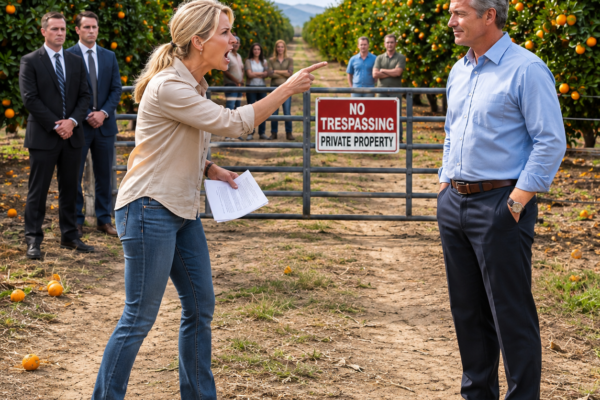
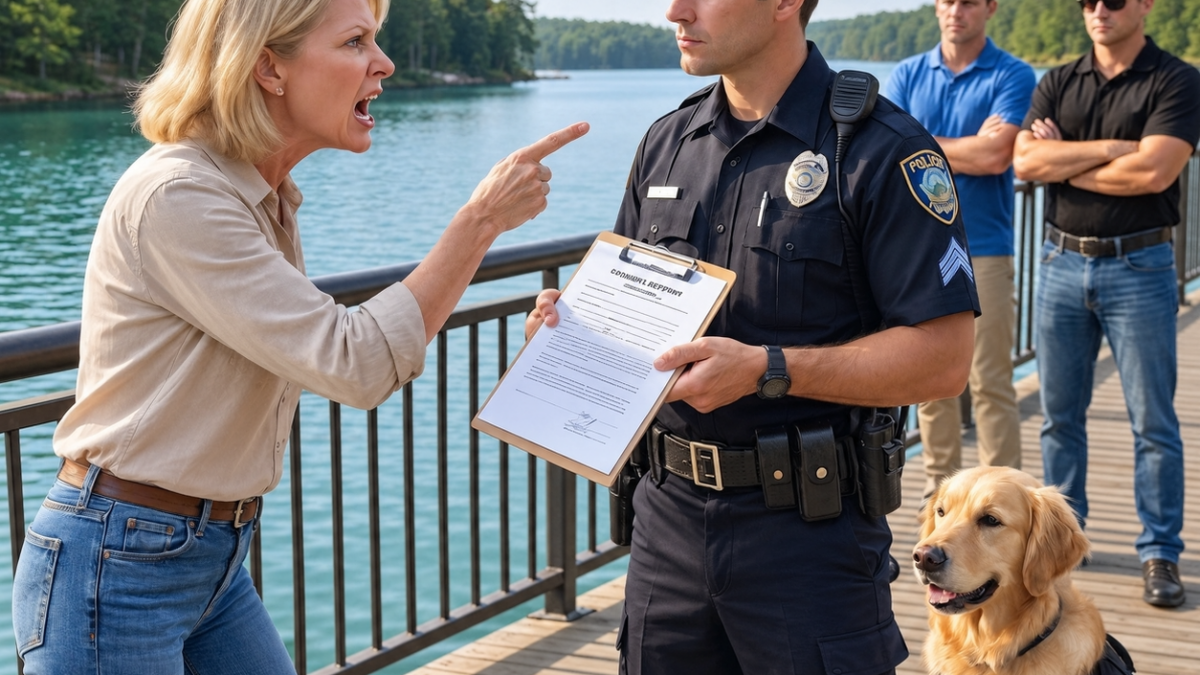
At 6:45 on a perfectly quiet Tuesday morning, two animal-control officers knocked on my lake-cabin door because the HOA president had reported an “unregistered dangerous attack dog.”
Buster, my seventy-pound golden retriever guide dog, responded by dropping a tennis ball at one officer’s boots and rolling onto his back when the other scratched his chest.
The taller officer looked at Buster.
Then at his harness.
Then at me.
“Sir, is this your service animal?”
“Yes.”
My name is Marcus Sterling. I lost most of my functional vision after a car crash five years earlier, and Buster had been guiding me for four of those years.
There was no federal “service-dog ID card” I needed to wave around. What mattered was that Buster was individually trained to guide me, remained under control, had his ordinary county license and vaccinations, and had no history of aggression.
HOA board member Eleanor Vance knew that.
She simply didn’t like him.
Three months earlier, I had inherited my grandmother’s cabin at Whispering Pines Lake.
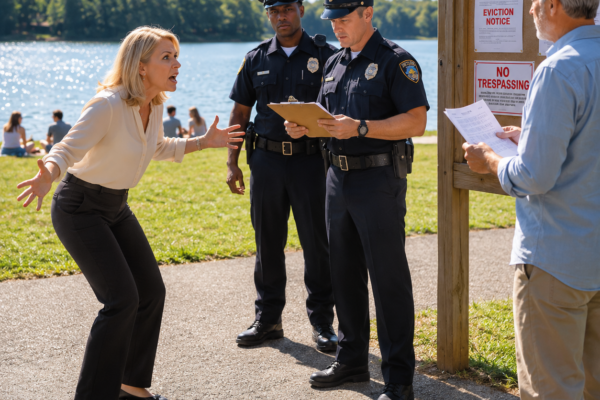
Within forty-eight hours, Eleanor appeared with a clipboard and informed me that “large dogs” required HOA registration and special approval.
I explained that Buster was a guide dog and asked the board to direct any disability-related questions through the association’s manager or attorney.
Instead, Eleanor began documenting him.
She complained when he barked once to alert me someone was at the door.
She photographed him walking in harness.
She described him in meeting minutes as “a potentially aggressive large animal.”
Then she told neighbors he had lunged at her.
He hadn’t.
By the third animal-control complaint, Eleanor had made a fatal mistake.
She claimed Buster had chased children near the playground on a Thursday afternoon.
I had been forty miles away at a medical appointment that entire day.
So had Buster.
My rideshare receipts, clinic check-in record, building security log, and Buster’s GPS-enabled harness tracker all put us in the city.
Animal control closed the complaint.
Then I filed my own.
Not against the whole HOA.
Against the pattern.
I gave the board every notice, photograph, email, meeting statement, and animal-control report.
When the board’s outside attorney finally reviewed the file, he asked Eleanor one question:
“What objective evidence do you have that this dog has ever behaved dangerously?”
She had none.
And that was when the meeting stopped being about Buster.
It became about why an HOA officer had spent three months trying to manufacture a safety problem around a resident’s disability.
[END OF FACEBOOK CAPTION]
[FIRST COMMENT / FULL STORY CONTINUATION]
Eleanor answered the attorney’s question with another question.
“What exactly would you consider objective evidence?”
The board’s outside counsel, Martin Hale, did not react.
He had been brought in because Whispering Pines’ regular management company had finally realized the dispute was no longer about pet registration.
Martin was in his late fifties, soft-spoken, with the particular patience of a man who had spent most of his career listening to homeowners and board members insist the same paragraph meant opposite things.
He said:
“A bite report.”
“An animal-control finding.”
“Veterinary behavioral assessment.”
“Contemporaneous video showing aggressive conduct.”
“Independent witness statements describing specific conduct.”
“Something beyond your conclusion that the dog is dangerous.”
Eleanor folded her arms.
“I witnessed him lunge at me.”
Martin looked at the file.
“Date?”
“Several times.”
“Pick one.”
She hesitated.
“June twelfth.”
I knew that date.
So did Arthur Gallagher, sitting two rows behind me.
His azaleas had become unwilling supporting characters in Eleanor’s version of events.
Martin asked:
“Location?”
“The east walking path near the Gallaghers’ property.”
Arthur raised his hand.
Martin looked toward the board chair.
William Bradley sighed.
“Arthur?”
Arthur stood.
“I was home.”
Eleanor turned.
Arthur continued.
“You told people you jumped into my azaleas to get away from Buster.”
“Yes.”
“You did not.”
“Arthur—”
“I have a fence.”
A few people laughed.
Arthur pointed toward Eleanor.
“My azaleas are behind it.”
That produced more laughter.
William tapped his microphone.
“Please.”
Arthur sat.
Eleanor’s face had gone pink.
Martin returned to the file.
“Was an animal-control report made on June twelfth?”
“No.”
“Medical treatment?”
“No.”
“Photograph of injury?”
“I wasn’t injured because I moved.”
“Any witness?”
“People were around.”
“Names?”
Silence.
Martin nodded.
“Okay.”
He did not say:
Caught you.
He simply moved on.
That was more effective.
My attorney, Rachel Kim, appeared on a laptop at the end of the board table.
Rachel was not a disability-rights specialist by trade.
She handled civil litigation and had referred parts of my situation to a fair-housing attorney for advice once Eleanor’s conduct started affecting my access to the community.
She had told me something important early:
“Do not turn this into a slogan about the ADA.”
I had looked confused.
“Buster is a service dog.”
“Yes.”
“And disability law protects me.”
“Yes.”
“But different federal and state laws apply in different places.”
“Your private residence is not the same legal setting as a restaurant.”
“Your HOA is not automatically the same thing as a public business.”
“Common facilities can raise different questions depending how they’re operated.”
“Housing protections matter here.”
“State law may matter.”
“Association documents matter.”
“So we are going to describe what happened accurately instead of shouting one acronym and hoping everyone gets scared.”
Lawyers ruin good internet stories.
They also prevent you from saying stupid things in writing.
So when Rachel spoke to the board, she did not announce that Eleanor had already committed a federal crime.
She said:
“My client has a documented visual disability.”
“Buster is individually trained to perform guide work related to that disability.”
“The association has been on notice of that since Mr. Sterling moved into the property.”
“Despite that, an association officer has repeatedly characterized the animal as dangerous without documented behavioral evidence, attempted to impose ordinary pet restrictions on disability-related use, and initiated repeated complaints to public agencies.”
“Those facts create serious legal risk.”
Much better.
Much harder to dismiss.
Eleanor said:
“Service animals are not exempt from safety requirements.”
Rachel nodded.
“Correct.”
That surprised her.
Rachel continued.
“A service animal that is actually out of control, dangerous, destructive, or not housebroken does not receive a magical exemption from all rules.”
“Mr. Sterling has never claimed otherwise.”
“Show us the conduct.”
There it was again.
Show us.
Eleanor opened a folder.
Photographs.
Buster lying on my deck.
Buster beside me on the path.
Buster carrying the padded mail pouch I had trained him to bring from the porch box.
Buster sitting while the Thompson children threw a tennis ball.
Buster sleeping under a picnic table during a community cookout.
One photograph showed him yawning.
His mouth open.
Teeth visible.
Eleanor tapped it.
“This is what I mean.”
Martin looked.
“What?”
“The posture.”
Rachel muted herself.
I could tell she was laughing.
William Bradley, technically the HOA president, leaned closer to the photograph.
“He’s yawning.”
Eleanor snapped:
“You cannot know that from a still image.”
Mrs. Thompson called from the audience:
“I took that picture.”
Everyone turned.
She continued.
“He had just woken up.”
Buster, lying beside my chair at that exact moment, sighed dramatically.
People laughed again.
I reached down and touched his shoulder.
That was partly reassurance for him.
Mostly for me.
I am legally blind.
That phrase means different things to different people.
I am not completely without vision.
My central vision is severely impaired.
Contrast is poor.
Bright glare can wipe out detail.
At night, my usable field becomes much narrower.
Faces at distance become indistinct shapes.
Buster helps with:
Obstacle avoidance.
Curbs.
Stairs.
Route work.
Finding doors.
Stopping at changes in elevation.
Guiding around hazards.
Locating familiar destinations.
He does not read emails.
He does not detect migraines.
He does not perform every disability task imaginable because the internet likes superdogs.
He guides.
And he is extremely good at it.
I got him through an accredited guide-dog program four years after my crash rehabilitation began.
There is no federal registry that transforms a dog into a service animal.
No government-issued vest.
No universal certificate.
The program gave me extensive training records, veterinary information, identification materials, and follow-up support.
Those documents were useful.
But Buster’s legal status did not depend on buying an ID card from a website.
That mattered because Eleanor kept telling neighbors:
“Anyone can buy one of those harnesses.”
True.
Anyone can buy a harness.
That did not make Buster fake.
When I first moved to Whispering Pines, I tried explaining that.
My grandmother, Ruth Sterling, had owned the cabin for thirty-two years.
It was two bedrooms.
Cedar siding.
Wide deck.
Stone chimney.
Slightly crooked boathouse.
Nothing luxurious.
But the shoreline was quiet.
My doctor had recommended reducing environmental triggers because post-traumatic migraines had become a second disability layered over the vision loss.
I worked remotely as an audio editor and mixer.
The cabin was perfect.
Buster liked it immediately.
Sun on the deck.
Lake smells.
Squirrels.
Mrs. Thompson’s children.
Eleanor did not.
Or rather, Eleanor did not like uncertainty.
I learned that much later.
At the time, she looked like a woman with a clipboard who had mistaken herself for a regulatory agency.
She arrived before the moving truck was empty.
“Marcus Sterling?”
“Yes.”
“Eleanor Vance.”
She did not say HOA president because she wasn’t.
That was another problem with the source version.
William Bradley was president.
Eleanor chaired compliance and architectural review.
But she was the loudest officer and attended everything, so people often casually called her “the president.”
She rarely corrected them.
That mattered.
She held out a welcome packet.
Then she noticed Buster.
“What breed?”
“Golden retriever.”
“He looks large.”
“He is.”
“Dogs over fifty pounds require registration.”
“Okay.”
“We’ll need breed and vaccination documentation.”
I said:
“He’s my guide dog.”
She looked at me.
Then at Buster’s harness.
“Guide dog?”
“Yes.”
“You’re visually impaired?”
I had sunglasses on.
Cane folded in my backpack.
Buster beside my knee.
“Yes.”
She looked embarrassed for about half a second.
Then recovered.
“We still need to document animals.”
“That’s fine.”
I had no objection to providing ordinary licensing and vaccination records if the association legitimately needed them for general administration.
The problem came when she said:
“We may also need committee approval due to size.”
“No.”
Her eyebrows rose.
“No?”
“He’s not an ordinary pet subject to discretionary breed or size approval.”
“I’ll have to verify that.”
“Please do.”
That should have been a professional exchange.
Then she said:
“He has German Shepherd in him.”
I laughed because I thought she was joking.
She wasn’t.
Buster is golden.
Cream-colored.
Soft ears.
Broad retriever head.
If there is German Shepherd in him, genetics has been hiding it magnificently.
“No.”
“He has the build.”
“He is a golden retriever.”
“I’ve owned dogs.”
“So have I.”
She wrote something on clipboard.
That was our beginning.
The first notice came nine days later.
SERVICE/PET REGISTRATION INCOMPLETE.
It asked for:
Vaccination.
County license.
Breed.
Weight.
Photograph.
Fine.
I sent those.
Then it asked:
Proof of “official service-animal certification.”
I replied:
Please have association counsel identify the legal basis for requiring a specific certification credential. Buster is individually trained as a guide dog. I can provide reasonable documentation relevant to housing accommodation if appropriately requested, but I will not purchase or produce a nonexistent federal service-dog license.
Rachel helped with wording.
The property manager answered:
Thank you. No federal service-animal certification is required. We will update the file.
Good.
Then Eleanor issued another notice through her committee.
Large Animal Safety Review Pending.
Management withdrew it.
Then barking.
Buster barked twice when a delivery driver walked onto the deck instead of using the front path.
Eleanor lived four houses away.
She filed:
Repeated nuisance barking.
No recording.
No duration.
No independent complaint.
Management sent courtesy inquiry.
I replied.
Done.
Then leash.
Buster was in harness beside me on the lakeside trail.
Eleanor photographed from across the road at an angle that made the leash line difficult to see.
She reported:
Unrestrained dog.
I sent a photograph from the Thompson doorbell camera showing the harness handle and leash attached.
Closed.
Then waste handling.
That one was absurd.
She claimed I was conducting a “business-related animal operation” because Buster was a working dog and therefore his waste might fall under different rules.
Management rejected it before sending a violation.
I only learned because a board member later showed me the internal email.
William Bradley had written:
Eleanor, please stop trying to turn dog poop into commercial activity.
I framed that sentence mentally forever.
At that point, I still thought the conflict would burn out.
It didn’t.
The meetings became worse.
Eleanor used compliance-chair reports to discuss:
Canine safety.
Weight limits.
Aggressive breeds.
Children near lake.
Sometimes without naming Buster.
Everyone knew.
One meeting, she said:
“We need to consider whether assistance-animal status can be abused to bypass reasonable community protections.”
I stood.
“What conduct are you talking about?”
William looked tired.
Eleanor answered:
“General risk.”
“From Buster?”
“I am not naming an animal.”
“You have a photograph of him on the screen.”
That ended subtlety.
Mrs. Thompson’s daughter Lily, nine years old, whispered loudly:
“He’s literally asleep.”
He was.
In the photo.
Under my deck chair.
Someone laughed.
Eleanor did not.
Then the alleged lunge.
Her story changed slightly each time.
First:
Buster lunged.
Then:
Buster moved abruptly toward her.
Then:
She perceived an imminent attack.
Then:
She had to leave the path.
I had been there.
Buster had stopped because a fallen branch narrowed the walkway.
He guided me left.
Eleanor approached from opposite direction.
She stepped into grass.
That was it.
No growl.
No lunge.
No tension in leash.
I did not even realize she thought something had happened until the next meeting.
Arthur’s azaleas somehow entered the story later.
That was the point I started documenting everything.
Rachel told me:
“Do not argue every allegation in real time.”
“Why?”
“Because she controls the agenda.”
“So?”
“Build record.”
I hated that phrase.
Build record.
It means:
You will spend your life saving emails no normal person should care about.
I made folders.
Animal control.
HOA notices.
Management.
Board minutes.
Photos.
Witnesses.
Buster’s vet.
Guide program contacts.
Then cameras appeared.
Eleanor installed several cameras on her own property after claiming she needed proof.
Two faced the road.
One captured part of the lake trail.
Another had a field of view reaching toward my deck.
Was that automatically illegal surveillance?
No.
Outdoor cameras often capture neighboring property incidentally.
The issue was placement, purpose, and later use.
She began presenting clips.
Not sinister music.
That part was too silly.
But she did assemble short videos and distribute them to the compliance committee.
Buster walking.
Buster playing fetch.
Buster barking once when another dog approached.
Nothing dangerous.
The camera dispute became a privacy issue separately.
My attorney sent a letter asking that cameras not be aimed into private living areas or used to harass me.
Eleanor adjusted one.
Not all.
Then animal control.
First complaint:
Dangerous dog observed loose near shared shoreline.
Officer came.
Buster was inside.
I produced ordinary county license and vaccination record.
Explained guide work.
Officer took report.
Spoke to Eleanor.
No dangerous-dog finding.
Second complaint:
Dog allegedly chased waterfowl aggressively and frightened residents.
Buster had chased a goose once?
No.
He had watched geese.
Guide dogs are still dogs, but his training made random wildlife chasing a pretty poor hobby.
Animal control came.
Again.
No evidence.
They warned Eleanor that repeated unsupported complaints consumed resources and future reports needed specific facts.
Then Tuesday morning.
Third complaint.
That was the serious one because she gave a specific allegation:
Buster had pursued children near the playground the previous Thursday and Marcus Sterling refused to restrain him.
The officer at my door, Nolan Price, read the report.
I said:
“What time?”
“Approximately two p.m.”
I laughed.
“Why?”
“Buster and I were in Denver.”
That changed things.
Not because Denver automatically proved innocence.
Because I had records.
Medical appointment.
I had undergone a low-vision specialist evaluation.
Check-in:
12:48.
Appointment:
1:15 to 3:20.
Rideshare pickup from clinic:
3:41.
Building security desk had logged Buster because the clinic’s automatic revolving entrance was being repaired and security escorted us through accessible side doors.
My guide-dog school’s optional harness tracker also recorded route data.
Not legally necessary.
But useful.
At two p.m., Buster was lying under an exam-room chair forty miles from Whispering Pines.
Nolan looked at his partner.
Then:
“Okay.”
They did not apologize for existing.
They were doing their job.
They documented contradiction.
Interviewed Mrs. Thompson, whose children were the ones Eleanor claimed Buster had pursued.
Mrs. Thompson said:
“My kids were at summer camp that day.”
Even better.
The report closed.
Animal control supervisor later sent Eleanor a formal notice that unsupported or knowingly false complaints could have consequences under local law and that reports should be limited to actual observed conduct.
No tranquilizer rifles.
No tactical capture team.
Animal control did not arrive expecting to storm my cabin.
They had standard restraint equipment in the vehicle.
That was enough.
The third report was my turning point.
Not because I wanted revenge.
Because I realized Eleanor was no longer reacting to Buster.
She was constructing a record about Buster.
That is different.
An isolated complaint can be fear.
Three escalating complaints after two findings of no problem become a pattern.
Rachel agreed.
She brought in fair-housing attorney Daniel Cho.
Daniel reviewed.
Asked questions.
Did not promise federal government would descend.
He said:
“Start with the association.”
“Give them a chance to correct.”
So I filed a formal grievance.
Not a lawsuit.
Not DOJ first.
A written complaint to the board and management.
Attachments:
Twenty-seven pages.
Every notice.
Every closed complaint.
Meeting excerpts.
Photos.
Camera correspondence.
Animal-control reports.
My accommodation correspondence.
Witness statements.
Clinic records supporting the false playground allegation.
A short statement from the guide-dog program explaining Buster’s training and conduct history.
I did not provide unnecessary medical records.
The board already had enough disability-related information to understand the accommodation.
Daniel was strict about that.
“You do not owe your entire medical file because someone is skeptical.”
Correct.
William Bradley received the complaint.
Called me.
His voice sounded different.
“Marcus.”
“Yes?”
“I did not know there were three animal-control calls.”
“I assumed the board did.”
“No.”
“Eleanor reported that animal control had been consulted regarding ongoing safety concerns.”
“That is technically true.”
“I know.”
He sighed.
“I did not understand the outcomes.”
That was governance failure.
The board had allowed Eleanor to summarize her own enforcement campaign.
No one compared source documents.
Same pattern in so many HOA disputes.
The person doing the work becomes the person describing the work.
Eventually description replaces oversight.
William scheduled special board meeting.
Eleanor was not president.
But she controlled compliance enough that William had let her dominate.
He admitted that later.
“I thought she was annoying but thorough.”
He had not realized thoroughness can be directional.
At the meeting, Daniel joined remotely.
Rachel sat beside me.
Buster under table.
William chaired.
Other directors:
Priya Shah.
Tom Reeves.
Karen Liu.
Eleanor.
Yes.
A Karen named Karen who was completely reasonable.
Life refuses branding.
Martin Hale, outside counsel, attended.
He had all documents.
He asked the question:
“What objective evidence do you have that this dog has ever behaved dangerously?”
That brought us back.
Eleanor’s answer failed.
Then Martin asked another.
“Why did you continue referring to Buster as an ordinary pet subject to size restrictions after management advised you that disability-accommodation rules required different treatment?”
Eleanor said:
“I didn’t believe he was legitimate.”
My stomach tightened.
Martin asked:
“Based on what?”
“The owner works from home.”
“What does that have to do with visual impairment?”
“He navigates independently sometimes.”
Daniel immediately unmuted.
“Visual disability is not measured by whether someone can cross their own kitchen without assistance.”
Martin raised hand.
“Agreed.”
Then he asked Eleanor:
“Do you have evidence Mr. Sterling misrepresented his disability?”
“No.”
“Evidence Buster is not trained to guide?”
“No.”
“Evidence of aggressive behavior?”
She returned to:
General risk.
Large dog.
Children.
Insurance.
Martin looked toward board.
“I think we have enough.”
They entered executive session.
I went outside.
Buster led me to lakeshore.
We sat.
My hands were shaking.
That surprised me.
I had spent months being irritated.
Now that board might actually act, I was scared.
Not of losing.
Of everything becoming real.
Conflict has a strange comfort while unresolved.
You keep preparing.
Once someone says:
Yes, this happened,
you have to feel what it cost.
Rachel sat beside me.
“You okay?”
“No.”
“Good answer.”
“I hate that phrase.”
“What?”
“Hostile environment.”
“I didn’t move here for a federal-law vocabulary lesson.”
She smiled.
“No one does.”
Buster placed his head on my knee.
That helped more.
The board returned after an hour.
William read motions.
First:
Eleanor removed immediately as compliance committee chair.
Unanimous except Eleanor abstained.
Second:
Pending further review, no director or committee member could independently file animal-control or regulatory complaints in the association’s name without board authorization except immediate safety emergencies.
Passed.
Third:
All enforcement relating to Buster closed absent new, independently verifiable conduct.
Passed.
That wording mattered.
Not:
Buster can never be reported.
If Buster actually bit someone someday, nobody needed permission to call animal control.
The board simply refused to let Eleanor recycle old unsupported allegations.
Fourth:
Association counsel and management would review service/assistance-animal policies and revise them consistently with applicable disability and housing law.
Passed.
Fifth:
Camera use by board members for enforcement required policy review and could not be used to surveil private living areas or target individual residents outside legitimate association purpose.
Eleanor’s cameras were personally owned, so the HOA could not simply order every camera removed from her property.
But Martin advised her separately that certain angles and use could create privacy or harassment issues.
She repositioned them within a week.
Sixth:
Independent review of Eleanor’s prior compliance actions.
That was bigger than Buster.
The meeting ended.
No gavel.
No cheering.
Eleanor walked out without looking at me.
William came over.
“I’m sorry.”
I said:
“For what?”
“For letting this go that long.”
That mattered.
Board accountability is rare enough that I remember exact words.
He continued:
“I kept thinking she was difficult but useful.”
“That may still be true.”
He looked surprised.
“She got things done.”
“Yes.”
“That does not mean she was right.”
“No.”
We agreed.
The independent review took six weeks.
Most of Eleanor’s compliance work was valid.
That mattered.
She had enforced:
Trash storage.
Dock maintenance.
Unauthorized fences.
Short-term rental rules.
Parking.
Actual covenants.
She was not inventing a fake government.
The problem appeared when she became personally invested in an issue.
Then enforcement escalated.
The review found:
She had bypassed normal courtesy-notice steps in several cases.
Characterized disputed matters as established violations before appeals.
Used personal cameras for association evidence without clear policy.
Made regulatory complaints in the association’s name without documented board approval.
And in my case, continued targeting Buster after management and counsel had advised service/assistance-animal issues required careful accommodation analysis.
The board asked Eleanor to resign as director.
She refused.
Members petitioned for recall.
That vote came three months later.
Not because real-estate clients abandoned her.
Not because DOJ sent a threatening letter.
Not because everyone suddenly worshiped Buster.
Because the governance review was uncomfortable.
Eleanor had been useful.
She had also become too personally powerful.
At recall meeting, she spoke first.
“I have spent six years protecting this community.”
True.
“I have enforced rules prior boards ignored.”
True.
“I have prevented unsafe docks, illegal rentals, and neglected common areas.”
Also true.
Then:
“I believed the dog presented a risk.”
She looked toward me.
“I was wrong about that.”
That surprised everyone.
Then:
“I was also wrong to treat Mr. Sterling’s disability as something I was entitled to evaluate personally.”
That surprised me more.
She continued.
“I should have accepted the accommodation process once management reviewed it.”
“I did not.”
“I believed the board was being overly cautious.”
There.
Same disease.
Other people’s caution felt like weakness.
She added:
“My concern about large animals around children was sincere.”
“Some residents agreed with me.”
“But sincerity does not turn suspicion into evidence.”
That was a good sentence.
I wondered if Martin wrote it.
Maybe.
The recall vote:
54% remove.
46% retain.
Much closer than the internet version.
Why?
Because many residents thought removal excessive after apology.
Others valued her years of work.
Some believed I could have handled it privately.
Some simply hated recall politics.
She lost.
Barely.
No humiliation.
She remained a homeowner.
That was enough.
My own legal options remained.
Daniel Cho explained:
We could pursue housing-discrimination claims through appropriate administrative or civil channels depending facts and applicable coverage.
We could send demand.
Seek settlement.
File if necessary.
I asked:
“What do you recommend?”
“First decide what you want.”
Same question every good lawyer asks.
I wanted:
Complaints stop.
Accommodation respected.
Costs covered.
Policies fixed.
No cameras deliberately targeting my deck.
No public statements calling Buster dangerous without evidence.
I did not want Eleanor bankrupted.
Did not want $25,000-per-complaint fantasy penalties.
Did not want federal investigators parachuting onto lake.
We mediated.
Association’s insurer involved.
Eleanor had separate counsel for portions.
The settlement was confidential in some details, so I’m not going to invent numbers.
Broadly:
Association covered a meaningful portion of my legal expenses.
Adopted revised disability-accommodation and assistance-animal procedures.
Corrected my account.
Removed unsupported violation history.
Required director training on fair housing, disability accommodation, and anti-harassment procedures.
Eleanor agreed not to make statements presenting Buster as dangerous absent new factual basis.
Camera positioning was adjusted.
No admission of intentional discrimination.
No giant donation ordered by DOJ.
No federal press release.
Boring.
Effective.
Whispering Pines also changed animal rules.
Ordinary pet rules remained.
Licensing.
Waste.
Leashes where applicable.
Nuisance barking.
Aggressive behavior.
But the policy now said disability-related animals would be handled through an individualized accommodation process where required, rather than automatic breed/weight restrictions.
Safety rules could still apply to actual conduct.
That is important.
A guide dog is not above behavior standards.
Buster just happened to behave better than most of us.
One afternoon after everything, a resident’s Labrador actually bit another dog near the beach.
Animal control came.
Documented.
Restrictions followed.
No one cried discrimination.
Why?
Evidence.
Specific conduct.
That contrast helped the neighborhood understand.
The new compliance chair was Karen Liu.
Yes.
HOA Karen was now literally Karen.
She was excellent.
Her first rule:
“We cite behavior, not vibes.”
Best HOA sentence ever.
If a dog barked excessively:
Document duration.
If loose:
Photograph condition.
If aggressive:
Describe conduct.
No:
Looks dangerous.
Seems threatening.
I supported that.
Even when it applied to Buster.
Once Buster barked repeatedly because a raccoon was under the deck.
Seven minutes.
Neighbor complained.
Karen called.
“Marcus, we got a barking report.”
“Fair.”
“It stopped?”
“Yes.”
“Any ongoing issue?”
“No.”
“Closed.”
That was how normal enforcement felt.
Not immunity.
Proportion.
The cameras became less important.
Eleanor moved one to face her driveway.
Another remained on road.
No more deck angle.
I kept my own door camera because vision loss makes visual verification useful.
Buster alerted to visitors.
Life settled.
Then something happened I did not expect.
Eleanor’s husband died.
Heart attack.
Sudden.
I knew him only slightly.
Robert Vance.
Quiet.
Boats.
Woodworking.
He had not participated in the Buster campaign.
At meetings he usually sat in back and read emails.
Mrs. Thompson organized meal deliveries.
She called me.
“You’re Thursday.”
“What?”
“Lasagna.”
“For Eleanor?”
“Yes.”
I stared.
“Why me?”
“Because everyone gets a day.”
“That is not an answer.”
“It is in a neighborhood.”
I made lasagna badly.
Bought better one from Italian place.
Brought it.
Buster stayed home because I did not want the first time he entered Eleanor’s property to be during grief.
I knocked.
Eleanor opened.
She looked smaller.
Not physically.
Grief does that.
I held food.
“Mrs. Thompson drafted me.”
A tired laugh.
“Of course she did.”
She took it.
“Thank you.”
Then:
“Where’s Buster?”
That surprised me.
“Home.”
She nodded.
“I’m sorry.”
Not:
Good.
Just:
I’m sorry.
Three months later, Eleanor stopped me on the lakeside path.
Buster in harness.
She stood well aside.
“Marcus.”
“Yes?”
“Could I meet him?”
I almost asked:
Who are you?
Instead:
“Yes.”
I told Buster:
“Forward.”
Then:
“Stop.”
We stood several feet away.
I explained:
“When he’s working, please don’t distract him unless I release.”
“I know.”
“You didn’t before.”
“I do now.”
Fair.
I gave Buster his release cue.
Eleanor held out hand.
He sniffed.
Then sat.
She touched his shoulder.
Not head.
Good.
He leaned slightly into her hand.
Golden retrievers have no loyalty to political narratives.
She started crying.
That made me uncomfortable.
Not because I lacked sympathy.
Because I did not know what tears meant.
She said:
“He’s just a dog.”
I answered:
“He’s a very good dog.”
“No.”
“I mean…”
She wiped her face.
“I turned him into something else in my head.”
There.
That was the whole conflict.
She continued:
“I was afraid of large dogs as a child.”
I did not know.
A neighbor’s shepherd had knocked her down when she was eight.
No bite.
But terror.
Then years later her grandson had been snapped at by an off-leash dog.
When she saw Buster’s size and harness, something in her decided:
Risk.
Then every neutral action became proof.
Buster walking toward her:
Lunge.
Buster barking:
Aggression.
Buster near children:
Danger.
She used HOA authority to make personal fear objective.
That was wrong.
But finally understandable.
I said:
“You could have told me.”
“I didn’t think it mattered.”
“It mattered more than pretending he had German Shepherd in him.”
She laughed through tears.
“I still think he’s too big.”
“He weighs seventy pounds.”
“Too big.”
Buster rolled onto one hip.
Traitor.
She scratched him.
That became our peace.
Not friendship.
But after that, she stopped crossing the road when we approached.
Sometimes she nodded at Buster.
Eventually:
“Morning, Buster.”
Not me.
Fine.
Her real-estate career did not collapse.
Another correction.
Some people stopped using her.
Some did not care.
She had sold lake homes for twenty years.
A board recall did not erase profession.
She adjusted marketing.
Stopped presenting herself as the unquestioned authority on Whispering Pines governance.
Good.
There was no DOJ letter.
No federal penalty schedule arriving in mailbox.
Daniel had explained complaint options.
I chose settlement and board reform because they addressed what I needed.
Another person could reasonably choose formal administrative filing.
Different cases.
Different remedies.
Do not turn one outcome into universal script.
The Thompson children continued visiting.
Lily grew.
At thirteen, she started volunteering with a local guide-dog puppy-raising organization after meeting Buster.
That was a consequence I loved.
Not because Buster became neighborhood mascot.
He remained working dog.
But Lily learned the difference between:
Service dog at work.
Pet dog.
Puppy in training.
She became strict.
One afternoon a new resident tried to pet Buster without asking.
Lily said:
“Don’t distract him.”
The woman looked offended.
I laughed.
Lily became better compliance officer than Eleanor.
Arthur’s azaleas survived.
That became running joke.
He put up a tiny garden sign:
NO GUIDE DOG ATTACKS RECORDED HERE.
I told him to remove it.
He refused.
Eleanor saw.
Rolled eyes.
Progress.
William Bradley finally retired from board.
He admitted he had been too passive.
At final meeting:
“I thought letting Eleanor handle compliance made me efficient.”
“It made me uninformed.”
Good lesson.
He handed presidency to Mrs. Thompson after election.
She immediately refused to let anyone call her Karen despite her name being Susan.
Her first newsletter had a section:
SERVICE AND ASSISTANCE ANIMALS: WHAT OUR COMMUNITY SHOULD KNOW.
Reviewed by counsel.
It explained:
Do not distract working service animals.
Ask before petting.
Accommodation questions go through management.
Behavior matters.
Assumptions about breed/size are not evidence.
No fake legal promises.
Just useful guidance.
Buster appeared in one photo only because I consented.
Caption:
Buster at work near the lakeside path.
No:
Neighborhood hero.
No infantilizing me.
I appreciated that.
My migraines improved at the cabin.
Not cured.
The lake helped.
Routine helped.
Remote work.
Less traffic noise.
Buster’s consistency.
I eventually built a small acoustic room in the spare bedroom.
Recorded podcasts.
Mixed documentaries.
One client asked why my files contained background audio named:
BUSTER SNORE TAKE 3.
Because Buster slept under desk.
He snored.
Guide dog professionalism ends when asleep.
Years passed.
Buster aged.
That part is harder.
Guide dogs retire.
Everyone knows.
No one believes until it happens.
At nine, his pace slowed.
At ten, arthritis began.
Guide program evaluated.
We transitioned gradually.
I received a successor dog named Atlas.
Black Labrador.
Buster became retired household royalty.
The first day I walked with Atlas through Whispering Pines, Eleanor saw us.
She looked confused.
“Where’s Buster?”
“At home.”
“Is he okay?”
“Retired.”
Her face fell.
“Oh.”
Then she looked at Atlas.
“This one is smaller.”
“Do not start.”
She laughed.
Good.
Buster lived another two years.
Slept in sunlight.
Visited Thompson kids.
Stole sandwich once.
Ignored every HOA rule because retired dogs become anarchists.
When he died, Eleanor brought flowers.
Blue hydrangeas.
She stood on porch.
“I’m sorry.”
“Thank you.”
“He was a good dog.”
“The best.”
Then:
“I wasted so much time being afraid of him.”
I had no comforting answer.
She did not need one.
We stood.
That was enough.
Lily, now in college, sent a photograph of the guide-dog puppy she was raising.
Golden.
Name:
Scout.
Buster’s legacy became another dog learning work.
Not a lawsuit.
That felt right.
Atlas guided me for years afterward.
Eleanor never filed one complaint.
In fact, a new resident once posted on the neighborhood group:
Are large dogs allowed? Saw black Lab near lot 47 and worried about children.
Eleanor replied before anyone else:
That is Marcus’s guide dog. Please do not speculate about danger based only on size. If you observe actual unsafe behavior, report the behavior, not the dog’s appearance.
I read it twice.
Then sent her:
Who hacked your account?
She replied:
Very funny.
That was growth.
The story people tell online prefers annihilation.
HOA Karen attacks blind man.
Guide dog adorable.
Government crushes Karen.
Career destroyed.
Federal fines.
Three votes.
Curtains closing forever.
The real ending is less satisfying if what you want is punishment.
More satisfying if what you want is change.
Eleanor lost her board role.
Paid legal costs through settlement structure.
Completed training.
Stopped the complaints.
Reconsidered her fear.
Met Buster.
Eventually defended Atlas from the same kind of assumption she had once made.
That is consequence working.
If a person remains exactly as bad after punishment, all you achieved was pain.
Sometimes pain is necessary.
But improvement is better.
Whispering Pines changed too.
Policies became clearer.
Animal control stopped getting weaponized for HOA disputes.
Board members had to distinguish personal concerns from association action.
Management kept complete complaint outcomes, not just complaint existence.
That last one was important.
Before:
Eleanor would say:
Animal control has been called three times.
Sounds damning.
After:
Animal control has been called three times, and all three complaints were closed without dangerous-animal finding.
Completely different.
Context matters.
Data without outcomes becomes propaganda.
I use that lesson in audio work oddly enough.
A waveform can show a peak.
It does not tell you whether the peak is music or noise.
Interpretation needs context.
Eleanor had collected peaks.
Photos.
Calls.
Reports.
Then described them as proof.
Board finally listened to the whole track.
Sorry.
Audio-engineer metaphor.
I am allowed one.
Years later, when I sold the cabin, leaving was harder than moving in.
My sight had declined further.
I wanted closer to transit and medical care.
Whispering Pines had been healing.
But independence sometimes means choosing infrastructure.
The buyers were a retired couple.
No dog.
I gave them HOA documents.
They asked:
“Anything we should know?”
I said:
“The board used to have a dog problem.”
They looked confused.
Mrs. Thompson, still nearby, said:
“Long story.”
Good.
I took Buster’s old harness with me.
Not displayed like artifact.
Stored carefully.
Atlas came to new place.
No HOA.
Apartment building later.
Different accommodation process.
No drama.
One afternoon I found the old Whispering Pines newsletter with Buster’s photo.
I ran my fingers over page.
Could barely make out image now.
But I knew it.
Buster standing beside path.
Harness.
Head slightly turned toward me.
Ready.
That is how I remember him.
Not rolling over for animal control.
Not being accused.
Working.
The title still makes me smile:
HOA Karen Phoned Animal Control on My Lake Cabin Said My Guide Dog is “Dangerous
It needs another quotation mark, but that is somebody else’s problem.
The basic story is true.
An HOA officer repeatedly treated my guide dog as a danger without evidence.
She escalated to animal control.
Specific claims contradicted records.
The board finally reviewed the whole pattern.
She lost authority.
Policies changed.
Buster kept doing his job.
But the legal lesson is not:
Say ADA and everyone backs down.
It is more precise.
A service dog can still be subject to legitimate safety and behavior requirements.
A disabled resident does not have to accept stereotypes disguised as safety policy.
Housing providers and associations should handle disability-related animal issues through lawful, individualized processes rather than assumptions.
Public agencies should investigate actual conduct.
And nobody should need a fake internet certificate to prove a trained guide dog is real.
Most of all:
Fear is not evidence.
Eleanor was genuinely afraid.
I believe that now.
Her fear did not authorize her to invent lunges.
It did not make Buster dangerous.
It did not let her convert my disability into a compliance project.
The moment she understood that was not the recall vote.
Not the attorney meeting.
Not animal control.
It was years later, standing on the lakeside path with one hand on Buster’s shoulder.
She said:
“He’s just a dog.”
She did not mean ordinary.
She meant:
He was never the monster I built.
Exactly.
Buster looked at her.
Then at me.
Then sneezed.
Ruined the moment.
Perfect.
The lake moved behind us.
Arthur’s azaleas remained unassaulted.
Mrs. Thompson’s kids shouted from somewhere down the path.
And Eleanor, who had once crossed the road to avoid a golden retriever, scratched him behind the ears while he leaned against her leg.
No federal press conference.
No ruined career.
No victory speech.
Just one person finally touching the animal she had spent months describing as dangerous.
Facts had stopped the harassment.
Policy had stopped the abuse of authority.
But understanding did something paperwork could not.
It made sure she never needed those rules enforced against her again.
That is the ending I prefer.
Because Buster’s job was never to defeat Eleanor.
His job was to guide me safely through a world I could no longer see clearly.
And in the end, somehow, he helped one other person see something more clearly too.