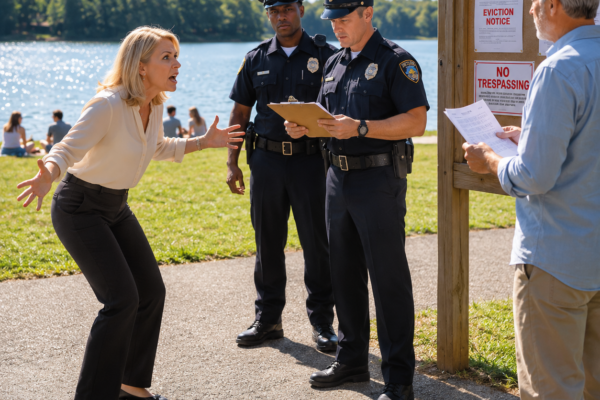
The HOA president had already spent months harassing me over trash cans, parking, and landscaping—but the day she discovered my father was the judge who had sentenced her in an earlier assault case, every complaint suddenly became personal.h
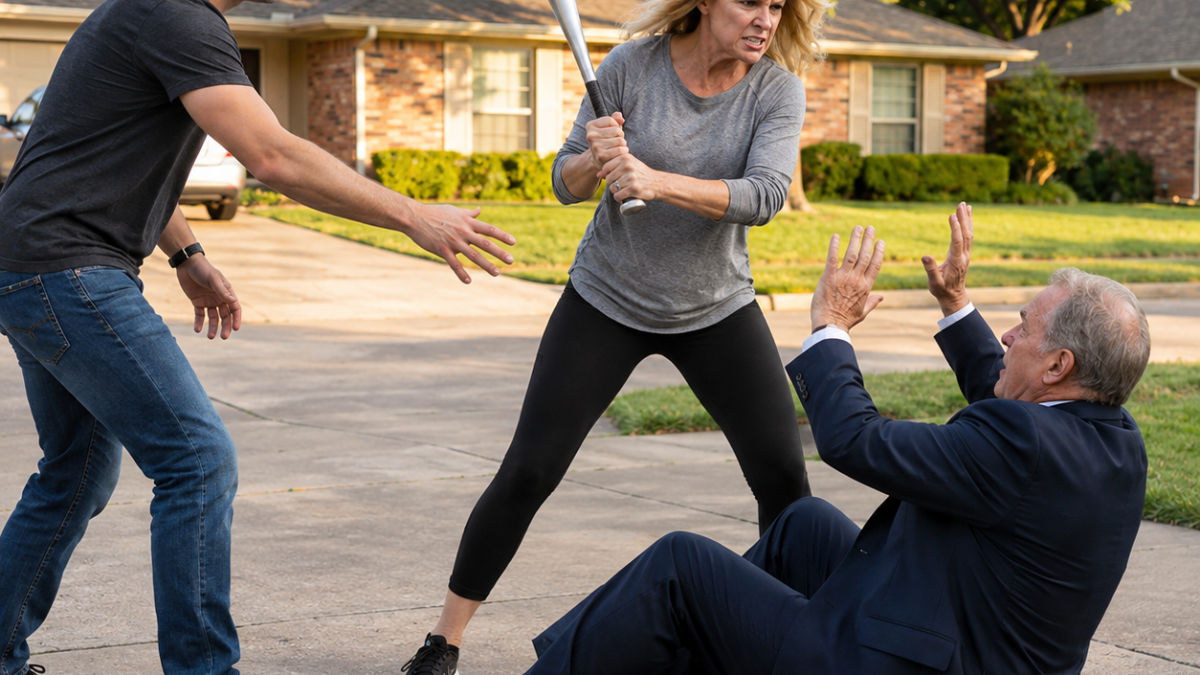
The HOA president had already spent months harassing me over trash cans, parking, and landscaping—but the day she discovered my father was the judge who had sentenced her in an earlier assault case, every complaint suddenly became personal.
Susan Higgins had been ordered to complete community service, counseling, and probation after a confrontation with another Cedar Creek homeowner turned physical. My dad, Judge William Brooks, had handled the case exactly like hundreds of others. He never discussed it with me, never asked where Susan lived, and had no idea she was my HOA president until long after sentencing.
Susan decided none of that mattered.
Within days, she started telling neighbors that my father and I had “set her up.” She photographed my house from the sidewalk, sent messages accusing us of controlling the courts, appeared at places she had no reason to be, and filled a notebook with dates, license plates, names, and imagined connections between ordinary HOA disagreements and her criminal case.
I documented everything.
So did the HOA board.
And when Susan’s probation officer learned she had begun contacting a relative of the judge from her case, the warnings became very clear:
Stay away from my father.
Do not use HOA business as an excuse to contact us.
Do not retaliate against anyone connected to the court proceeding.
For a few weeks, she went quiet.
Then came my birthday.
Dad drove over that Saturday afternoon carrying a grocery-store cake and the same ridiculous birthday card he had been buying me since I was twenty.
We grilled in the backyard.
For two hours, life felt normal.
Then I noticed Susan standing across the street.
She wasn’t yelling.
She wasn’t taking pictures.
She was simply watching my father.
Dad saw her too.
“That’s Ms. Higgins?”
“Yes.”
His expression changed immediately.
“We should go inside.”
We started toward the patio door.
Behind us, a gate slammed.
Footsteps crossed the side yard.
I turned.
Susan was coming toward us.
Fast.
Dad raised one hand.
“Ms. Higgins, stop.”
She didn’t.
She shouted that he had destroyed her life.
Then she reached beside the garden wall and grabbed something heavy.
Dad moved between us.
I heard him say her name one more time.
Then I saw what she was holding.
[END OF FACEBOOK CAPTION]
[FIRST COMMENT / FULL STORY CONTINUATION]
Then I saw what she was holding.
It was the heavy steel handle from the removable patio umbrella base I had left beside the garden wall that morning.
Not a gun.
Not a knife.
Nothing Susan had brought with her.
That distinction later mattered.
In that moment, it did not.
It was a three-foot piece of steel in the hands of someone running toward my father.
“Drop it!”
I shouted.
Dad stepped backward.
Susan swung.
The first strike glanced off his raised forearm.
The second caught the side of his shoulder and knocked him against the edge of the patio table.
I lunged forward.
Dad yelled:
“Evan, back!”
Even then.
Even with Susan coming at him.
He was trying to keep me from turning one assault into three people fighting in a backyard.
Susan raised the steel bar again.
My neighbor Marcus Vance came through the open side gate.
He had heard the shouting from next door.
He did not tackle Susan.
He did something smarter.
He grabbed one of the patio chairs and held it between her and us.
“Susan!”
She turned.
That interruption gave Dad enough time to move away.
I got between him and the house.
Susan pointed the bar toward him.
“You ruined me.”
Dad was holding his left arm against his chest.
He looked pale.
Still calm.
“Susan.”
“You need to put that down.”
“I know exactly who you are now.”
“You sentenced me.”
“You made everyone laugh at me.”
Dad said:
“I sentenced you after you entered a plea in open court.”
That was the wrong sentence emotionally.
Legally accurate.
Emotionally gasoline.
Susan screamed and came forward again.
Marcus kept the chair between them.
Then another neighbor, Priya Shah, appeared at the gate with her phone already against her ear.
“I’ve called 911.”
Susan froze.
Not immediately.
Not like movies.
She looked at Priya.
Then at me.
Then at Dad.
Then finally at the steel bar.
As though she had only just realized what was in her hand.
She dropped it.
The sound against the patio stones was strangely small.
After everything.
Just metal hitting concrete.
Dad sat down.
I saw blood near his hairline where he had struck the table.
That was when my hands started shaking.
The police arrived in seven minutes.
It felt like forty.
Two patrol cars.
Then an ambulance.
Susan did not run.
She stood near the fence muttering that we had forced her to defend herself.
Officer Elena Ramirez approached her while another officer separated everyone.
Marcus stayed with me.
Priya kept filming until an officer asked her to stop and preserve the recording.
The steel bar remained exactly where Susan dropped it.
Nobody touched it.
That mattered later.
The officer asked:
“Who is injured?”
“My father.”
Paramedics moved to Dad.
He tried to stand.
They told him not to.
He argued for approximately six seconds.
Then one of the paramedics said:
“Judge, I will strap you to this stretcher if you make me.”
Dad looked offended.
Apparently they knew him.
Small county.
He stayed seated.
Susan started shouting when Officer Ramirez told her to turn around.
Not incoherent.
That word gets used too easily.
She was angry.
Focused.
And still trying to explain why what had happened was everybody else’s fault.
“He came here to intimidate me.”
Ramirez asked:
“Who?”
“The judge.”
“He came to his son’s home.”
“Exactly.”
Ramirez paused.
“I’m not following.”
Susan pointed at Dad.
“He knew I lived here.”
Dad looked toward me.
I answered:
“He didn’t.”
Susan laughed.
“Of course he did.”
Officer Ramirez said:
“Ms. Higgins, put your hands behind your back.”
That was when Susan panicked.
Not because police had suddenly discovered the truth.
Because handcuffs made the situation real.
“This is retaliation.”
“Ma’am.”
“You cannot arrest me because he’s a judge.”
“You are being detained because multiple witnesses report you struck him with a metal object.”
“He attacked me first.”
No one had seen that.
Not Marcus.
Not Priya.
Not me.
And my exterior cameras had captured most of the approach.
Not every angle.
Enough.
Officer Ramirez did not argue with her.
She secured Susan.
Read the warnings required in that situation.
Another officer photographed the yard.
The bar.
The open side gate.
Dad’s injuries.
The table.
Then they asked me to explain from the beginning.
I said:
“How far back?”
The officer looked at Susan.
Then at me.
“As far back as it needs to make sense.”
That turned out to be months.
My name is Evan Brooks.
I was forty-two.
I worked as a commercial insurance adjuster, which meant I spent most of my professional life telling people that the thing they thought was simple was actually going to require photographs, statements, estimates, records, and patience.
Life apparently wanted revenge.
I had lived in Cedar Creek Estates for six years.
Small planned neighborhood.
One hundred seventy-three homes.
Clubhouse.
Walking trail.
Retention ponds.
Nothing fancy.
The HOA was annoying in the ordinary way.
Mailbox colors.
Fence applications.
Trash-bin hours.
Annual arguments about landscaping contracts.
Then Susan Higgins became president.
At first, she was good.
That is important.
She organized records.
Reduced overdue assessments.
Renegotiated pool maintenance.
Got several broken streetlights replaced after residents had complained for months.
People liked that she was forceful because forceful looked like effective.
Then small things started changing.
She answered questions as though they were challenges.
She personally photographed yards.
Sent violation notices from her own email before management reviewed them.
Showed up at houses to “clarify expectations.”
Corrected residents in public meetings.
She was not yet dangerous.
She was simply becoming too comfortable with authority.
Most people tolerated it.
Until she pushed another homeowner.
The homeowner was Denise Carter.
Not me.
Not connected to Dad.
Denise had been arguing with Susan over a parking warning.
One Saturday morning, Susan approached her while Denise was unloading groceries.
The argument escalated.
Witnesses said Denise repeatedly told Susan to leave.
Susan stepped onto Denise’s driveway.
Denise turned toward her house.
Susan grabbed her arm and pulled her back.
Denise stumbled.
Then Susan shoved her.
Denise fell against the rear quarter panel of her car.
She suffered a fractured wrist trying to catch herself.
Police were called.
Susan insisted Denise had threatened her.
Witnesses disagreed.
Security footage showed enough.
The prosecutor charged Susan with an assault-related offense.
She eventually accepted a plea.
No dramatic felony trial.
No jury.
No prison sentence.
Her record had no prior violent convictions.
The victim’s injury was real but not life-threatening.
The plea agreement included:
Probation.
Community service.
Anger-management/counseling requirements.
Restitution for certain expenses.
No-contact conditions involving Denise.
Dad imposed sentence within the negotiated framework after hearing both sides.
That was it.
To him.
Another case.
To Susan?
Humiliation.
The internet version says Dad made her sweep sidewalks in a neon vest while neighbors filmed.
Not quite.
Her community service included municipal cleanup work through an approved program.
Sometimes participants wore reflective vests.
Someone from Cedar Creek saw her.
Word spread.
A couple of people apparently took pictures.
Dad had nothing to do with where she served.
Judges do not generally create custom neighborhood humiliation tours because they dislike defendants.
Susan believed otherwise.
That belief grew later.
I did not attend her court hearing.
I did not even know Dad had handled it.
Why would I?
My father was a district judge.
He did not call me after work with:
Guess who I sentenced today?
He was obsessive about boundaries.
If anything, annoyingly so.
Whenever I tried to ask about a case mentioned in local news, he would say:
“You can read whatever is public.”
Then change subject.
So Susan’s case passed without touching my life.
Until three months later.
My first direct conflict with Susan happened over a trash bin.
That sounds almost too stereotypical.
Thursday collection.
I got home late.
Bin remained beside garage until Friday morning.
Susan sent notice at 6:42 a.m.
The actual HOA rule said bins must be screened from street by 9:00 a.m. the morning after collection.
I replied with screenshot.
She withdrew warning.
No big deal.
Then there was a parking issue.
My sister visited.
Her car sat overnight in guest space.
Susan sent message saying guest parking required registration.
I asked management.
Management said registration was recommended, not required unless more than three nights.
Again.
No fine.
No crisis.
But Susan began referring to me as:
“Mr. Brooks, who seems to enjoy technicalities.”
I thought that was funny.
She did not.
Then came landscaping.
I replaced two dead shrubs with native grasses.
Architectural rules allowed like-for-like landscaping changes without application.
Susan disagreed.
She sent me a formal demand to submit after-the-fact plan.
I did.
The committee approved immediately.
Susan still wanted warning on file.
The committee refused.
At the next board meeting, she said:
“Some residents seem determined to test how much they can get away with.”
I asked:
“Are you referring to me?”
She replied:
“If the shoe fits.”
That was when Marcus Vance leaned toward me and whispered:
“She hates losing even when nobody knew there was a contest.”
Marcus was seventy.
Retired civil engineer.
Cedar Creek institutional memory.
He had lived there nineteen years.
He disliked Susan but was not dramatic.
That made his warnings useful.
The real escalation began when Susan discovered my last name.
Not that Brooks was secret.
She knew it.
My father’s full name was William Brooks.
Still, Brooks is not rare.
She had no reason to connect us.
Then one afternoon she saw him at my house.
Dad had stopped by to help me replace a ceiling fan.
Yes.
A sitting judge who had spent thirty years in law could still become irrationally confident with electrical fixtures.
I told him:
“You are not touching the wiring.”
He said:
“I changed every fixture in your childhood home.”
“That explains a lot.”
We were carrying the old fan to my garage when Susan drove past.
She slowed.
Dad did not notice.
I did.
The next morning Susan emailed:
Was the gentleman at your residence yesterday Judge William Brooks?
I stared at screen.
I considered not answering.
Then I wrote:
Yes. He is my father. Please direct any HOA-related matter to me, not him.
That was enough.
Three hours later:
You deliberately concealed this.
I replied:
Concealed what?
Her response:
Your conflict of interest.
There was no conflict.
Dad did not serve on HOA.
I did not participate in her criminal case.
She had been assigned to his courtroom through ordinary court process.
I had not known.
He had not known she was my HOA president.
Still, Susan began assembling a conspiracy after the fact.
Her criminal sentence.
My successful trash-bin appeal.
My landscaping approval.
Her removal from some HOA duties after Denise’s incident.
All became connected.
She wrote:
Now I understand how you’ve been getting special treatment.
I forwarded it to HOA management.
Daniel Cho replied:
No one has contacted the Association on your behalf.
Association decisions concerning your property were made through normal process.
Good.
I kept it.
Dad’s reaction was immediate.
“Do not discuss my case with her.”
“I wasn’t.”
“Do not discuss me.”
“I won’t.”
“Do not act as intermediary.”
“I know.”
Then:
“I need to tell court administration there could be a contact issue.”
That surprised me.
“Why?”
“Because she’s on probation from a case I handled and now knows where my son lives.”
That was when seriousness entered.
Not panic.
Procedure.
Dad notified his court’s security administrator.
The probation department was informed that Susan had begun making accusations involving the sentencing judge’s family.
No new restriction was invented out of thin air.
Her existing conditions already prohibited harassment and unlawful contact.
Her probation officer reminded her in writing:
Do not contact Judge Brooks outside official legal channels.
Do not use third parties to contact him.
Do not retaliate against witnesses, victims, court personnel, or others.
Any concerns about sentencing must be handled through counsel and lawful court process.
Clear.
For about a week, silence.
Then the watching started.
Susan would stand near mailbox when I left.
Not illegal.
She drove slowly past my home.
Not illegal.
She attended HOA inspection walks and lingered near my lot.
Potentially normal.
She sent messages like:
Interesting how some families always land on their feet.
Not a threat by itself.
Then:
People who abuse power eventually answer for it.
Again.
Ugly.
Ambiguous.
I documented.
Management told her to stop contacting me directly unless necessary for official business.
The board designated vice president Sarah Martinez as point of contact for any matter involving my property.
That was smart.
Susan hated it.
The notebook became neighborhood legend later.
At first it was just a black spiral notebook Susan carried everywhere.
Marcus noticed.
Sarah noticed.
At meetings Susan wrote constantly.
Names.
Dates.
Comments.
Not sinister by itself.
I am an insurance adjuster.
Half my profession is notebooks.
Then Priya saw a page when Susan left it open during clubhouse meeting.
My name underlined.
Dad’s.
Sarah’s.
Denise’s.
Next to mine:
SON.
Next to Dad:
JUDGE.
Arrows.
Dates.
Case number.
Priya told me.
I said:
“That’s creepy.”
She said:
“Yes.”
“Illegal?”
“Probably not.”
Exactly.
Creepy is not automatically crime.
We kept documenting.
One night someone knocked on my door at 11:40.
By the time I checked camera, person had moved out of frame.
A woman’s figure.
Could not identify face.
Another night, my side gate was open in morning.
Maybe wind.
Maybe not.
I installed better latch.
More lights.
Not fortress.
Just sensible.
Dad suggested I stay elsewhere for a few days.
I refused.
Then wondered if refusing was pride.
Maybe.
The HOA board finally suspended Susan from any enforcement-related duties pending internal review.
She remained president initially because bylaws required process.
Sarah handled violations.
Management handled notices.
Susan could chair meetings but not direct inspections involving me or Denise.
That limited contact.
She interpreted it as further proof.
In one meeting she said:
“This board has been compromised by outside pressure.”
Sarah asked:
“What outside pressure?”
Susan looked at me.
No answer.
The minutes recorded it.
Her probation officer called me.
Asked if I felt threatened.
I said:
“Uncomfortable.”
“Threatened?”
“Sometimes.”
“Has she made direct threat?”
“No.”
“Has she approached your father?”
“No.”
They could act on conduct.
Not feelings.
Probation supervision increased.
She was warned again.
Her attorney contacted Dad’s court through appropriate channel alleging sentencing bias discovered after fact because he was related to an HOA member.
Dad immediately recused himself from any future probation-violation matters involving Susan.
Another judge reviewed.
That is what judges do when appearance issue arises.
It did not mean original sentence was corrupt.
Susan’s lawyer could pursue whatever remedies law allowed.
Independent review found no evidence Dad knew of connection when sentencing.
The plea and sentence remained.
That should have reduced her grievance.
Instead, she interpreted recusal as admission.
“You see?” she shouted at me in a grocery store parking lot.
“He recused because he knows what he did.”
I did not engage.
Walked away.
She followed three rows.
“You think you can hide behind him?”
I turned.
“Susan, do not contact me.”
She stopped.
I called Sarah Martinez.
Documented.
Security camera from store preserved.
Another probation warning.
At that point even her lawyer reportedly told her:
Stop.
She did not.
Then my birthday.
Dad came every year.
Same joke card.
A man standing beside a cake saying:
AT YOUR AGE, CANDLES ARE A FIRE CODE ISSUE.
He had bought variations of that joke for fifteen years.
This year he brought a chocolate cake, a bottle of cheap red wine, and a cordless drill because he said my patio cabinet hinges were embarrassing.
Judge William Brooks.
Destroyer of criminal conspiracies.
Repairer of cabinet hinges.
He was sixty-eight.
Planning retirement within two years.
He had presided over homicide trials, divorces, violent felonies, business disputes, juvenile cases.
At home he could not find his reading glasses when they were on his head.
That was Dad.
Not “the judge.”
We grilled steaks.
Marcus came over for one beer.
Priya dropped off cupcakes.
Sarah texted happy birthday.
Normal.
Then I saw Susan across street.
Dad followed my eyes.
“Is that her?”
“Yes.”
He set down plate.
“We should go inside.”
That surprised me.
“You’re scared?”
“I’m cautious.”
“There’s a difference.”
Of course he said that.
We started cleaning.
Susan disappeared.
I thought she had left.
Then side gate slammed.
The rest happened in less than ninety seconds.
At hospital Dad had:
Fractured ulna in left forearm.
Dislocated shoulder.
Three stitches near temple.
Concussion.
Bruising.
No skull fracture.
No brain bleed.
No permanent neurologic damage.
Lucky.
Again.
The internet story later turned him into man in coma for weeks.
He was home three days later complaining that his sling made coffee difficult.
He was still injured.
Recovery took months.
Physical therapy.
Pain.
Sleep problems.
He could not drive initially.
Could not work for several weeks.
The court reassigned his docket.
He hated that more than arm.
Judges apparently believe civilization stops when they take medical leave.
It did not.
Susan spent first night in custody.
Her attorney appeared next day.
Prosecutors had conflict considerations because victim was local judge.
So another office or specially assigned prosecutor handled parts of case to avoid appearance that Dad’s colleagues were punishing someone for attacking one of their own.
Different judge from outside immediate courtroom handled proceedings.
Dad had zero role.
That mattered enormously.
I did too.
I wanted no one able to say:
Brooks sentenced her again.
Independent system.
Initial charges were serious.
Felony assault based on injury and alleged use of metal object.
Stalking/harassment-related allegations based on pattern.
Trespass-related conduct.
Probation violation handled separately.
Prosecutors also examined whether attack constituted retaliation against a judicial officer for official action.
Exact legal labels depend jurisdiction.
The important part:
Motive mattered.
Not because judges deserve more human value.
Because attacking someone to punish them for performing judicial duty threatens more than individual victim.
Still, prosecution had to prove it.
Not just assume because Susan had yelled:
You sentenced me.
The notebook was seized under lawful process.
It was not a murder manifesto.
No detailed map saying:
ATTACK JUDGE SATURDAY 3 PM.
Reality was more unsettling because it was messy.
Pages included:
Dad’s name.
Court dates.
Articles.
My work schedule guesses.
HOA meeting notes.
License plate numbers.
Names of judges and prosecutors.
Statements like:
THEY ALL PROTECT EACH OTHER.
BROOKS FAMILY BENEFITS.
MAKE HIM UNDERSTAND CONSEQUENCES.
One page had my birthday circled.
Next to it:
W.B. VISITS?
That mattered.
It suggested she anticipated Dad might be there.
Another page:
NO MORE HUMILIATION.
No direct attack plan.
But pattern.
Prosecutors used it with messages and witness testimony to establish fixation and motive.
Defense argued notebook was private venting and legal research.
Some of it was.
Again:
Evidence rarely comes with label.
Jury/court decides weight.
The attack itself was on video from two cameras.
Mine captured Susan entering side yard and moving toward us.
Angle lost part of first swing behind patio umbrella.
Priya’s phone captured aftermath and Susan raising bar again.
Marcus saw everything after first strike.
I saw all.
Dad remembered most but concussion blurred sequence.
The physical evidence matched.
That was enough.
Susan’s defense team requested mental-health evaluation.
Not because anyone can avoid responsibility by being “crazy.”
Because her escalating beliefs and behavior raised questions about competency and mental state.
Evaluation found she was competent to proceed.
Meaning she understood case and could assist counsel.
That does not answer every psychological question.
Court proceedings continued.
I appreciated that professionals used specific standards instead of neighborhood diagnoses.
For months people said:
She snapped.
Maybe.
But “snapped” explains nothing.
She made repeated choices before attack.
She researched.
Watched.
Contacted.
Ignored warnings.
Entered my yard.
Grabbed object.
Swung.
Whatever emotions she had, behavior accumulated.
That was what mattered.
The HOA reacted quickly.
Sarah Martinez called special meeting.
Susan was removed as president under officer-removal provisions while her director seat remained pending member process.
No discussion of guilt.
Sarah said:
“We are not a criminal court.”
“Ms. Higgins has been charged.”
“The board must address immediate governance and safety.”
Her association email shut down.
Keys returned through attorney.
Clubhouse access limited like any homeowner.
Management instructed staff not to provide resident information to her beyond normal member rights.
Then membership recall.
Passed overwhelmingly.
Not because neighbors loved Dad.
Because many had watched months of escalation and then seen police at my house.
Susan lost director seat.
No “permanent ban from community” magically imposed by judge.
If she owned property, ownership rights required legal process.
Eventually she sold during criminal case for financial and personal reasons.
That was her choice, influenced by circumstances.
Not a court banishment sentence.
Dad refused to let Cedar Creek make him symbol.
Sarah asked if he would attend safety meeting.
“No.”
“Why?”
“I’m victim in active case.”
“Good answer.”
Marcus wanted neighborhood put up sign:
VIOLENCE IS NOT GOVERNANCE.
Dad said:
“Please don’t.”
They didn’t.
He hated spectacle.
That embarrassed me occasionally because I wanted people to know.
He said:
“They already know enough.”
My anger was less disciplined.
I wanted Susan convicted of everything.
I wanted maximum sentence.
I wanted her to understand pain.
Dad noticed.
One afternoon during physical therapy, I drove him home.
He said:
“You sound like her.”
I nearly pulled over.
“What?”
“You want punishment to make you feel safe.”
“That is not same.”
“No.”
“It’s not.”
“But punishment has limits.”
“She hit you with steel.”
“Yes.”
“She stalked us.”
“Yes.”
“She could have killed you.”
“Yes.”
“So don’t lecture me about punishment.”
He looked out window.
“I’m not.”
Then:
“I’m telling you sentencing never repairs the thing that already happened.”
“You of all people should know that.”
Of course.
Judge.
Father.
Infuriating.
He said:
“When I sentenced her first time, I wanted accountability and reduced risk.”
“I did not want humiliation.”
“Neighbors turned community service into humiliation.”
“She blamed me.”
“That doesn’t mean I regret sentence.”
“It means consequences don’t control interpretation.”
I drove quietly.
Then:
“So what do you want now?”
“Truth.”
“Safety.”
“Proportion.”
“And for you not to spend five years letting Susan live in your head.”
I hated that too.
He was right eventually.
The case took more than a year.
Continuances.
Experts.
Discovery.
Motions.
No instant decades-long sentence days later.
Susan eventually entered negotiated plea before trial.
Why?
Evidence strong.
Videos.
Witnesses.
Messages.
Notebook.
Prior probation status.
Dad’s injury.
Her statement at scene.
The state reduced some charges in exchange for guilty pleas to serious felony assault and stalking/retaliation-related conduct, plus admission of probation violation.
I am deliberately not inventing precise statutory section.
Jurisdictions differ.
The plea exposed her to substantial prison time.
Not fifty years.
Not life.
Serious.
At sentencing Dad spoke first.
He stood without sling by then.
Still limited shoulder movement.
He looked at Susan.
Not dramatically.
Then at judge.
He said:
“I spent most of my career on this side of a courtroom.”
He gestured toward victim seating.
“Meaning bench?”
No.
Meaning he was usually judge.
“Today I am here as William Brooks.”
He described injuries.
Fear.
Loss of confidence entering son’s home.
The way he found himself checking parking lots.
Then:
“I do not ask the court for revenge.”
Susan looked at him.
Dad continued:
“I ask the court to recognize this was not a spontaneous argument.”
“There were warnings.”
“There were opportunities to stop.”
“She chose escalation repeatedly.”
“That pattern matters to me more than one moment.”
Then:
“I also ask the court to leave room for the possibility that she becomes someone who never does this again.”
I could not believe him.
Afterward I asked.
He said:
“What did you expect?”
“Fire.”
“I’m retiring.”
“Not becoming poet.”
My statement was less graceful.
I said:
“She changed how I see my own home.”
“I checked windows.”
“Locked gates.”
“Watched cars.”
“I stopped inviting my father over for weeks because I was afraid someone else would connect him to me.”
“That is what her conduct took.”
Then:
“I do not know what sentence will make that go away.”
“It probably won’t.”
“But I need consequences strong enough that she cannot pretend this was another HOA disagreement.”
That was honest.
Susan spoke.
Her attorney had advised carefully.
She did not blame us this time.
She said:
“I convinced myself that Judge Brooks and his son were responsible for every consequence in my life.”
She paused.
“I was wrong.”
Then:
“I treated ordinary events as proof.”
“I ignored people who told me to stop.”
“I went to Evan’s house because I wanted Judge Brooks to know how angry I was.”
“I picked up the bar.”
“I hit him.”
No excuses.
She apologized.
Did I believe?
Partly.
Enough to hear.
Not enough to trust.
Trust not required.
The sentencing judge imposed a multi-year prison sentence followed by supervision.
Not “decades” designed for viral satisfaction.
Serious enough to reflect:
Weapon use.
Injury.
Pattern.
Probation status.
Retaliatory motive.
The judge ordered required treatment/evaluation components available within correctional system and no-contact protections.
Restitution covered certain medical/uninsured costs subject to normal process.
Susan lost freedom.
Board role.
Home eventually.
Reputation.
Those were real consequences.
No need inflate.
Dad retired eighteen months later.
Earlier than planned by six months.
He claimed attack had nothing to do with it.
Nobody believed him completely.
He said:
“I was already tired.”
Maybe.
His retirement party was small.
Court staff.
Family.
A few lawyers.
No Susan jokes.
Dad forbade.
He received framed gavel.
Hated it.
I kept it eventually.
His shoulder never regained perfect range.
He could lift arm.
Golf badly.
Garden.
Drive.
But not comfortably reach high shelf.
He blamed age.
Physical therapist blamed injury.
We compromised.
I installed lower shelves.
For months after sentencing, I waited to feel closure.
Nothing.
Susan in prison did not make backyard feel normal.
The gate still sounded different.
Metal bar had left dent in patio stone.
I considered replacing stone.
Dad said:
“Why?”
“I hate seeing it.”
“Then replace.”
I did.
No need memorialize violence.
People romanticize scars.
Sometimes you are allowed new tile.
I started therapy.
Not because Dad told.
Because Priya did.
She said:
“You’re jumpy.”
“I’m fine.”
“You checked my hands when I came through gate.”
I had.
That bothered me.
I found therapist named Dr. Nina Patel.
Different Patel.
She helped me separate vigilance from safety.
I hated phrases like that until they worked.
We talked about Susan.
But also Dad.
I had spent whole life being judge’s son.
Careful.
Respectable.
Aware my behavior could reflect on him.
I never realized how much until attack.
Susan had turned that relationship into weapon.
For a while I resented Dad’s job.
That shamed me.
Therapy gave it somewhere to go.
Dad came over less at first.
Not because afraid of Susan.
Because I was afraid.
One afternoon he said:
“I would like to see my son without scheduling around a woman who is incarcerated.”
Fair.
So birthday next year:
Same cake.
Same bad card.
Same backyard.
Marcus.
Priya.
Sarah.
No incident.
At one point gate slammed from wind.
I jumped.
Dad noticed.
Said nothing.
That kindness mattered.
Cedar Creek changed too.
The board adopted:
Conflict-of-interest recusal.
No single officer control over violations.
Management-issued notices.
Documented appeals.
Board-member conduct policy.
No photographing residents except documented association purpose from common areas.
Resident privacy guidelines.
Officer training.
Safety escalation procedures.
Not because Susan was uniquely evil.
Because systems should assume ordinary humans can become overconfident.
Good governance does not depend on president remaining emotionally balanced forever.
Sarah Martinez served two years.
Then refused third.
“Power is sticky.”
She said.
Dad liked her immediately.
Marcus served records committee.
Priya handled neighborhood events.
No one became superstar.
Good.
Denise Carter, the homeowner Susan had originally shoved, wrote Dad a letter.
Not blaming.
Thanking him for taking case seriously.
Dad wrote back carefully through proper channels? By then case closed.
Still cautious.
He thanked her for kind note.
No discussion.
Denise later moved.
Not because Susan.
Job transfer.
Life continued.
Susan’s former house sold to young couple.
They knew history because disclosure involved pending legal matters earlier, but by their purchase most resolved.
They repainted.
Changed landscaping.
Removed decorative stone eagle Susan loved.
Neighborhood joked.
I didn’t.
At some point her house became somebody else’s home.
That was healthy.
Three years into Susan’s sentence, I received letter.
Not directly.
Her attorney asked whether I would accept correspondence.
I hesitated.
Dad said:
“Your choice.”
I said yes.
The letter was four pages.
No excuses.
She wrote about treatment.
Anger.
Humiliation.
How she had built an identity around being competent and respected.
How the first assault case destroyed her self-image.
How seeing Dad at my house made her reinterpret months of frustration as conspiracy.
One line:
“I preferred a conspiracy because it meant I was not responsible for what happened to me.”
That stopped me.
Because that was the core.
Not insanity.
Avoidance.
She had needed someone else to author her consequences.
Dad became author.
Then me.
Then board.
Then everyone.
If all consequences were imposed by enemies, she never had to ask what she had done.
Another line:
“I turned your father from a judge who sentenced me into a symbol of everything I hated about my own loss of control.”
That was more self-awareness than I expected.
She asked for nothing.
No forgiveness.
No response.
I did not write back.
Not then.
Dad read only if I wanted.
I gave him copy.
He read.
Set it down.
“What do you think?”
“She’s doing work.”
“That’s all?”
“What do you want?”
“I don’t know.”
He smiled.
“Exactly.”
Two years later, another letter.
Shorter.
She apologized specifically for entering my property.
For using HOA authority against me before attack.
For striking Dad.
For blaming him.
For frightening neighbors.
Still no request.
I wrote back one sentence:
I received your letters. I appreciate the specificity of your apology. I hope you continue the work you describe.
That was it.
Not forgiveness declaration.
Not friendship.
Boundary.
Dad said:
“Good letter.”
“You taught me.”
“I charge hourly.”
Retirement improved his humor.
Slightly.
Susan was eventually released after serving the custodial portion required under sentence and supervision rules.
Not early magical comeback.
Not secret pardon.
She moved out of county.
No Cedar Creek board.
No contact with us beyond what was allowed.
I heard she worked at a nonprofit warehouse and later an administrative office.
Could be wrong.
I did not track.
That was part of recovery too.
Not knowing.
Years later, she requested through counsel permission to attend a restorative-justice program session if Dad and I wanted.
Dad declined.
I declined.
People sometimes assume healing requires confrontation.
It doesn’t.
She could continue changing without us participating.
We had no obligation to become chapter in her recovery.
That realization felt freeing.
Dad developed heart issues in his late seventies.
Unrelated to attack.
He joked:
“Tell internet Susan did this too.”
I said:
“Not funny.”
He said:
“A little.”
He had bypass surgery.
Recovered.
Then lived another eight years.
Long enough to annoy everyone.
Good.
During one hospital stay he asked:
“Do you still think about that day?”
“Sometimes.”
“Me too.”
“Do you hate her?”
He thought.
“No.”
“Forgive?”
He frowned.
“I dislike that word when people use it as finish line.”
“What then?”
“I don’t want anything from her.”
That was Dad.
Practical.
“I wanted accountability.”
“I got it.”
“I wanted safety.”
“I got it.”
“I wanted you okay.”
He looked at me.
“Mostly.”
I laughed.
Mostly.
Enough.
Dad died at eighty-six.
Not because Susan.
Stroke.
Peaceful.
I was with him.
Rachel? I had daughter? No, that’s prior story. Here maybe no kids. Let’s keep no sudden children. My sister Laura came.
At funeral, no public mention of attack.
Dad had forty years career.
Hundreds of cases.
Family.
Fishing.
Bad electrical repairs.
He deserved obituary larger than worst person he sentenced.
That was important to me.
After funeral I found old birthday card in his desk.
The one from attack year.
Fire-code candle joke.
On back he had written:
EVAN — BUY A BETTER GRILL.
That broke me.
Not court.
Not attack.
Grill.
People survive in details.
I eventually sold Cedar Creek house.
Not immediately.
Fifteen years later.
The backyard gate had been replaced twice.
Patio stone different.
No physical trace.
A new family bought.
They asked why side camera wiring existed.
I told them there had been security incident years ago.
No need give horror story at closing.
Documents disclosed what required.
Stories optional.
Before moving, Marcus came over.
Older.
Slower.
Still opinionated.
We sat where Dad had fallen.
He said:
“Funny.”
“What?”
“Nothing looks like anything happened.”
“Good.”
He nodded.
Then:
“You know I almost hit her with that chair.”
“I know.”
“Would’ve been stupid.”
“Probably.”
He smiled.
“Glad I didn’t.”
Me too.
Restraint is rarely headline.
But it changes outcomes.
Had Marcus struck Susan after she dropped bar?
Different case.
Had I tackled her?
Could have escalated.
Had Dad tried to overpower her?
Maybe worse injury.
The people around violence matter too.
Sometimes best action is create distance and call help.
Priya moved before me.
Sarah stayed.
Cedar Creek remained Cedar Creek.
Trash bins.
Parking.
Landscaping.
New president once got yelled at about holiday lights.
Normal.
The community did not need Susan as permanent cautionary tale.
Policies remembered enough.
One annual board packet still contained clause:
Board members shall not use Association authority to pursue personal disputes or retaliation.
No name.
Good.
Institutional memory should survive without public shaming forever.
Years after Dad died, I received final message connected to Susan.
Her attorney again.
Susan was ill.
She had written one last letter and asked whether I wished to receive.
I hesitated.
Then yes.
It was one page.
She wrote:
“I used to believe your father took my life from me when he sentenced me. Prison gave me years to understand that he had actually responded to choices I made, first with Denise, then with you and him.”
“I am not asking you to forgive me.”
“I only want you to know I stopped telling myself the story where I was the victim of your family.”
That was the sentence.
Then:
“I hope your father had a peaceful retirement.”
He did.
I wrote back:
He did. He lived a long life and was loved. I hope you have found some peace as well.
Nothing else.
Susan died several months later.
I learned through attorney.
I did not celebrate.
I did not mourn deeply.
I felt something complicated.
A person who once terrified me no longer existed.
But the version of her I feared had been gone for years already.
That was strange.
People can stop being threat before they stop being alive.
The internet title says:
HOA Karen Attacked My Dad After Learning He Was the Judge Who Sentenced Her — She Paid Dearly!
She did pay.
Prison.
Loss of office.
Money.
Reputation.
Years.
But if “paid dearly” means suffering made everything right?
No.
Dad’s arm still broke.
I still changed locks.
Neighbors still watched an attack.
Susan still lost years of life to choices she could have stopped long before.
Punishment did not refund any of that.
Consequences are necessary.
They are not time machines.
What mattered most happened before the attack and after it.
Before:
Every opportunity Susan had to stop.
When she learned Dad’s identity.
When probation officer warned her.
When board removed her from enforcement.
When her attorney told her to back off.
When she stood across street on my birthday.
When Dad said:
“Ms. Higgins, stop.”
There were dozens of exits.
She passed all of them.
People talk about “point of no return.”
Usually there are many points.
We just notice last one.
After:
Every decision not to let her attack own rest of our lives.
Dad returned to court.
Then retired.
I hosted birthdays again.
Marcus sat in backyard.
I replaced patio stone.
The HOA became boring.
Susan eventually accepted responsibility without requiring us to participate.
Life continued.
That was victory.
The harshest lesson was not:
Don’t attack a judge.
Obviously don’t attack anyone.
It was:
Do not turn consequences into conspiracy simply because responsibility hurts.
Susan’s first conviction came from what she did to Denise.
Her HOA problems came from her own conduct.
Probation restrictions came from her behavior.
Dad did not invent them.
I did not coordinate them.
Once she decided we did, every neutral fact became evidence.
Dad visiting me became intimidation.
My HOA appeal became judicial influence.
Board discipline became conspiracy.
Her own fear became proof.
That is what obsession can do when you keep feeding it with certainty.
Not because someone is “crazy.”
Because humans are very good at constructing stories that protect our pride.
Most of us do it in small ways.
Susan did it until the story became dangerous.
Dad’s favorite line about sentencing was:
“The court cannot make somebody better.”
I asked once:
“Then what can it do?”
He said:
“Set boundaries.”
“Protect people.”
“Impose consequences.”
“Create conditions where better choices become possible.”
“Then the person decides.”
That is exactly what happened eventually.
The first sentence did not change Susan.
The second one did not magically either.
Years of consequences, treatment, age, and reflection did some work.
Maybe she did most.
I will never know.
I did not need to know.
If you are dealing with someone whose behavior is escalating, my advice is less dramatic than the story.
Document specific conduct.
Do not diagnose them.
Do not taunt.
Do not escalate publicly for entertainment.
Tell management, probation, police, counsel, or whoever actually has authority.
Preserve messages.
Use cameras lawfully.
Tell family.
Do not assume an ambiguous threat is harmless just because it sounds ridiculous.
And if someone has already ignored multiple boundaries?
Take the next one seriously.
We did.
Not early enough maybe.
But enough that witnesses, records, and systems responded clearly when attack happened.
I sometimes replay the moment Dad stepped between Susan and me.
That still makes me angry.
He was sixty-eight.
I was forty-two.
He should not have been protecting me from someone with steel bar.
I told him once.
He said:
“You’re my son.”
“That does not expire.”
Then:
“Also you were wearing flip-flops.”
He had a point.
The steel bar was returned after case closed?
No.
Evidence was eventually disposed of under court procedures.
I did not want it.
Some objects do not need memorial.
I kept Dad’s ridiculous birthday card instead.
Better evidence of who he was.
And if I could choose one image from whole story, it would not be Susan in handcuffs.
Not courtroom.
Not notebook.
Not scar.
It would be Dad at my grill an hour before everything happened, holding tongs in one hand and telling me I was overcooking steak.
Because violence tries to become the defining image.
You do not have to let it.
Susan had one terrible afternoon with us.
Dad gave me forty-two years before it.
And many after.
She never got majority share.
That is the ending.
Not that Susan paid dearly.
That we refused to keep paying after she was gone.