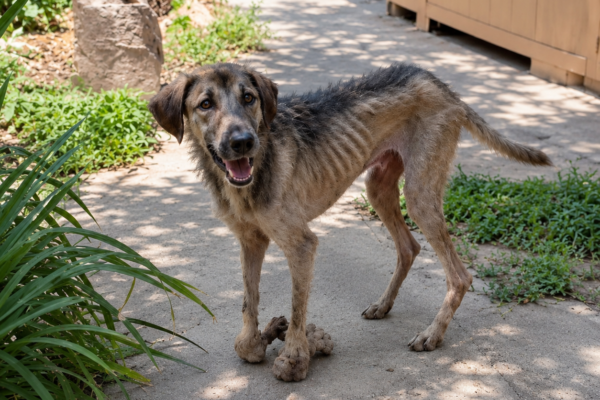
He Crawled Toward His Old Neighbor After Five Years Away—Then the Truth About Those Missing Years Came Out
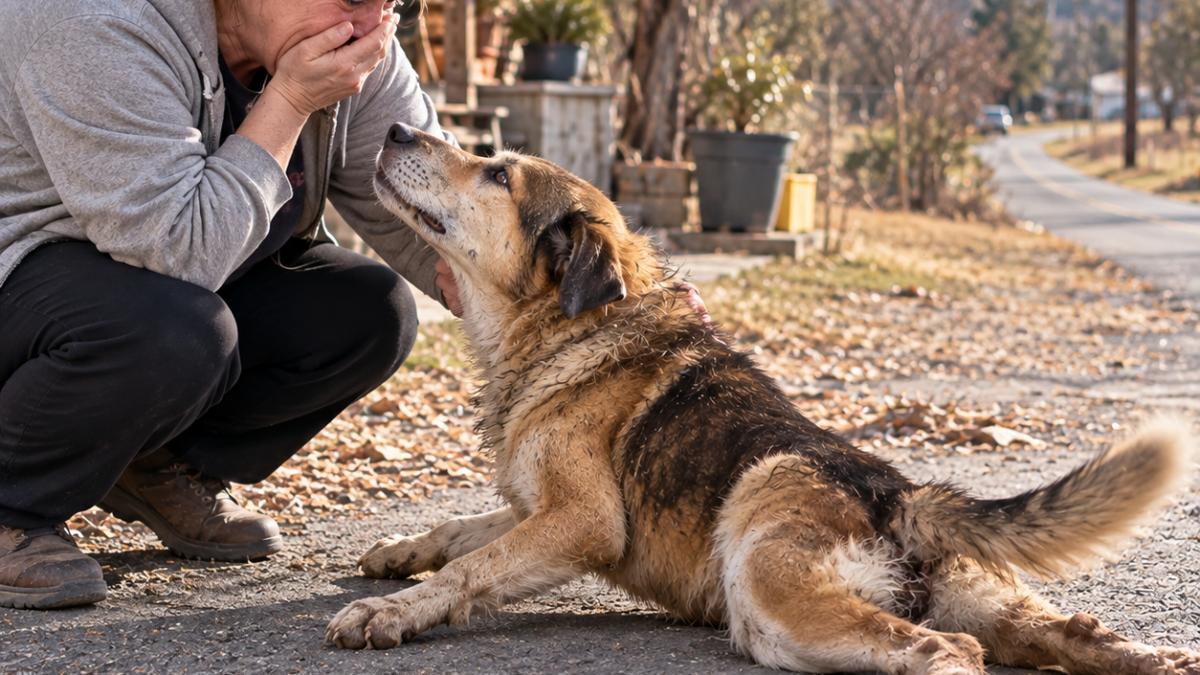
He Crawled Toward His Old Neighbor After Five Years Away—Then the Truth About Those Missing Years Came Out
He crawled toward the woman who had known him five years earlier, wagging his tail as if some part of him still remembered exactly who she was.
The dog she remembered as healthy, intelligent, and playful was now unable to use his back legs, and she burst into tears when she realized it was really him.
But what we learned about where he had been since 2019, and how he had managed to survive, made his condition even harder to accept.
It began when someone sent me a photograph.
The woman who sent it believed she had recognized a dog she had known years earlier, and the moment I saw the picture, I started trying to find him.
He had been gone for five years, since 2019.
Fortunately, we eventually located him hiding in the same area shown in the photograph.
When I first saw him clearly, fear and happiness seemed to exist in his expression at the same time.
He appeared to want to come closer to me, yet no matter how many times I called him, he refused to leave his hiding place.
We finally had to ask for help to get him out.
Even then, he never showed any intention of biting us.
He was frightened, tense, and uncertain, but not aggressive.
The woman who had recognized him was there too.
As soon as we had him safely out, we took him away for help.
Only then did she begin telling us what she remembered about him.
Back in 2019, he had been a beautiful dog who often played with children in the neighborhood.
He was intelligent and affectionate, and the neighbors loved him.
Then one day, he simply stopped appearing.
When people asked, his owner said the dog was sick.
Some neighbors came to visit.
Later, they noticed another dog at the home.
“I sent him to the veterinarian,” the owner told them.
After that, people gradually stopped asking.
Years passed.
The dog became a memory.
Then, five years later, this woman saw him again.
There could no longer be much doubt about his identity when he began crawling toward her and wagging his tail.
She cried when she recognized him.
But the reunion was nothing like anyone would have wanted.
The dog who had once played freely with neighborhood children could no longer walk on his hind legs.
His body had changed.
His personality had changed.
Five years had passed, and something terrible had happened during that missing time.
We brought him to the doctors for a full examination.
The diagnosis was serious.
Red had inflammation affecting the intervertebral discs, and he could no longer move his hind legs.
The infection had damaged his vertebrae so severely that parts of them were almost destroyed.
There was, however, one small sign that kept us from giving up.
He still had sensation in his tail.
He could move it.
At that moment, that tiny movement became our hope.
The doctor advised us to take him to a better-equipped veterinary facility because this was our best chance to save him.
We left that same night.
The drive took two hours.
Even with only a small chance, I could not stop.
Red had already survived five years in a condition none of us yet fully understood.
I was not going to give up on him now.
When we arrived, the clinic was extremely busy, so we had to wait.
Red would sometimes glance toward me.
I could not know what he was thinking.
Maybe he was only checking where I was.
Maybe he had begun to understand that we were trying to help.
But every time his eyes met mine, I felt the weight of everything we still did not know.
**[END OF FACEBOOK OPENING — PART 1]**
The doctors understood immediately that Red’s spinal condition was serious.
There was no attempt to make it sound easier than it was.
His hind legs were not functioning normally. The infection had already caused severe damage around his vertebrae, and when the doctors studied his condition, they could not promise us that he would ever walk again.
That was the hardest part to hear.
Not because I expected an easy answer, but because some part of me had still been holding onto the small movement in his tail as if it could guarantee everything else.
It could not.
The doctors told us that his chances of recovery were low.
They would do everything they could, but they would not give us a promise they could not keep.
I respected that.
False hope would not have helped Red.
What helped was having people willing to try.
His case was treated as a priority because spinal injuries and infections can become very serious, and the team began doing what they could to stabilize him and control the infection.
We stayed.
There was no question about leaving him there alone.
He had already spent too much of his life surviving without anyone beside him.
Whatever happened next, I wanted him to know there would be someone nearby.
At least that was what I wanted my presence to communicate.
I could not explain his diagnosis to him.
I could not tell him why so many strangers were touching him, examining him, moving him, watching him.
I could only remain close.
Sometimes he watched me.
Sometimes he watched the doctors.
Sometimes his expression became guarded when too many people moved around him.
He was clearly uncomfortable with the number of people nearby.
Crowds and activity made him nervous.
That reaction made sense after what we later learned about how he had been living.
For five years, Red’s world had become small.
Hidden places.
Darkness.
Quiet.
Waiting.
Moving at night.
Avoiding attention.
Now suddenly there were bright rooms, unfamiliar voices, hands, equipment, and people walking around him constantly.
Even kindness can feel frightening when an animal has lived without it for too long.
He did not know our intentions.
He could not.
There were moments when he seemed to study every movement we made.
His eyes followed us.
If someone approached, he noticed.
If I moved, he noticed.
He did not relax easily.
There was suspicion in that look.
I remember thinking that he seemed to be asking a question none of us could answer for him with words.
Would we leave too?
Would we be like the person he had trusted before?
I could not say that this was literally what he thought.
But the doubt in his behavior was obvious.
Trust did not come automatically.
Why would it?
We had found him after five years of surviving in a way that would change any animal.
And at that point, we still did not understand how he had survived at all.
That question kept bothering us.
A dog unable to use his hind legs could not simply live the same way a healthy stray dog might.
He could not run.
He could not chase food.
He could not easily escape danger.
He could not move quickly from one place to another.
So how had he stayed alive for five years?
Where had he slept?
Where had he found food?
How had he avoided people?
How had no one realized who he was?
The curiosity became impossible to ignore.
Once Red was under medical care and the immediate treatment had begun, we went back to the area where we had found him.
We wanted to understand.
The place looked different once we knew what to look for.
When we first found Red, the hiding place had simply seemed like somewhere a frightened dog had chosen.
Now it became evidence of a routine.
We learned that he often hid there during the day.
He stayed out of sight when people were around.
Then, at night, he crawled out to search for food.
That was how he had survived.
The thought made my skin go cold.
A healthy dog covering distance at night is one thing.
Red had been dragging a damaged body through the darkness.
He could not use his hind legs normally.
Every movement would have required effort.
Every trip for food would have taken longer.
Every sudden noise could have been dangerous because he could not run away.
Yet he kept doing it.
Night after night.
Day after day.
For years.
I tried to imagine the physical pattern without inventing things we did not know.
He hid during daylight.
He crawled out when darkness made the area quieter.
He searched for something to eat.
Then he returned to hide.
That alone was enough.
I did not need to add dramatic scenes that nobody had witnessed.
The truth already hurt.
Five years.
When I repeated that number to myself, it stopped feeling like a number.
Five years meant seasons passing.
It meant people changing routines.
Children growing older.
Neighbors becoming accustomed to the dog no longer being there.
It meant the memory of the playful dog from 2019 fading little by little while the real dog was still alive somewhere nearby.
The woman who recognized him had remembered a completely different animal.
Back then, Red had played with children.
He had been affectionate.
People liked seeing him.
He was familiar.
He belonged to a neighborhood.
Then he disappeared.
The owner said he was sick.
Later, another dog appeared at the house.
When neighbors asked, the owner told them, “I sent him to the veterinarian.”
That explanation had been enough at the time.
Why would people assume otherwise?
They trusted what they were told.
Eventually, questions stopped.
Life continued.
Red did not.
At least, not in the same way.
He survived.
There is a difference.
When the woman found him again, she was seeing what survival had done.
The dog who crawled toward her was not the same carefree animal she remembered.
His body was damaged.
His hind legs no longer carried him.
His coat and appearance reflected the years outside.
But the greatest change was harder to see in a photograph.
His personality had changed.
The old innocence was gone.
That did not mean there was nothing gentle left in him.
He had not tried to bite us when we removed him from hiding.
He wagged his tail when he recognized the woman.
He still watched people carefully.
There was still something in him reaching toward connection.
But life had made him cautious.
Coldness and indifference had shaped him.
Five years without dependable care had taught him not to assume anyone was coming to help.
That was the part I found hardest.
A wound can be photographed.
An MRI can show damage.
An infection can be treated.
But what image shows five years of learning not to trust?
What test measures the exact moment a friendly dog stops expecting kindness?
There was no scan for that.
We could only watch his behavior.
At the clinic, he seemed uneasy when many people were around.
He followed us with his eyes.
He remained alert even when exhausted.
He seemed confused by affection.
My actions were unfamiliar to him.
If I approached gently, he watched.
If I stayed close, he watched.
If I touched him, he did not immediately understand what the touch meant.
It had been a long time since care was normal.
That realization changed the way I interacted with him.
At first, I wanted to comfort him constantly.
Then I understood that too much attention could also overwhelm him.
He needed gentleness, but he also needed control over his own space.
So we stayed close without forcing closeness.
We spoke softly.
We moved carefully.
We allowed him to observe.
When he looked at me, I did not demand a response.
I simply stayed.
That became our first language.
Presence.
The medical work continued at the same time.
For several days, Red needed fluids.
His body had been surviving under enormous strain, and he needed support while the doctors worked to control the infection.
High doses of antibiotics were also used.
The infection around the vertebrae was serious enough that there was no room for half measures.
Still, his ability to walk remained uncertain.
That uncertainty was almost harder than bad news.
If someone tells you something is impossible, you grieve the answer.
If someone tells you they do not know, you live inside the question.
Every day, I looked for signs.
Every movement mattered.
His tail still moved.
That was our small light.
But his hind legs did not suddenly begin working.
The doctors told us they needed more time to observe.
We had to wait.
Waiting is one of the hardest parts of rescue because it makes you feel useless.
There were medications to give.
Fluids to monitor.
Treatments to continue.
But the question I cared about most could not be answered by effort alone.
Would Red walk again?
No one knew.
So I waited.
And I prayed for him.
I watched the doctors.
I watched Red.
I watched the way he reacted when someone entered the room.
I watched his eyes move.
I watched the small changes in his posture.
I watched for anything that might mean his body was responding.
Some days, hope felt reasonable.
Other days, it felt like something I was inventing because I could not bear the alternative.
Red did not know any of that.
He only knew what was happening around him in the moment.
People were touching him.
Medication was being given.
His body was being handled.
The environment was unfamiliar.
I tried to make one thing familiar.
Me.
I wanted him to learn that when I appeared, nothing bad followed.
That sounds simple.
It was not.
An animal who has lived with indifference does not suddenly trust because one person is kind for a day.
Trust must repeat itself.
The same hands.
The same calm tone.
The same person returning.
Again.
And again.
And again.
Red watched.
At first, he did not give much back.
That was fine.
I was not helping him so that he would reward me.
I only wanted him to stop looking at us as though he expected the kindness to disappear.
During those first weeks, his history stayed in the room with us even when nobody mentioned it.
Every time he hesitated.
Every time he looked suspiciously at a movement.
Every time too many people made him nervous.
Five years was there.
I found myself thinking about 2019.
What would Red have looked like then?
The woman described a beautiful dog who played with neighborhood children.
He was smart.
Affectionate.
People liked him.
I imagined only what her account allowed me to imagine.
A dog who approached children willingly.
A dog whose body worked.
A dog who moved because he wanted to move, not because every meter required dragging himself.
A dog who was part of daily neighborhood life.
Then he vanished.
The contrast was almost unbearable.
When the woman had seen him again and he crawled toward her, the recognition had happened across that whole distance in time.
Five years had changed his body.
They had changed his behavior.
But something remained.
He recognized her.
At least, his behavior strongly suggested recognition.
He crawled toward her.
He wagged his tail.
She recognized him and cried.
That moment told me something important.
The old Red was not entirely gone.
Buried under fear, pain, and caution, there was still a dog capable of remembering someone associated with his earlier life.
That gave me hope for more than his spine.
It gave me hope for his heart.
If recognition could survive five years, perhaps trust could return too.
Not quickly.
Not because we demanded it.
But gradually.
The medical treatment created the time for that.
Each day of antibiotics was another day the infection was being challenged.
Each day of fluids supported a body that had been surviving under difficult conditions.
Each day in a safe place gave Red something his old routine had not offered.
He did not have to crawl out in darkness looking for food.
He did not have to hide until the daylight passed.
He did not have to decide whether a sound meant danger.
Food came to him.
Water came to him.
Treatment came to him.
People stayed.
That difference should have been comforting.
At first, it was simply strange.
Sometimes strange things frighten an animal even when they are good.
Red needed time to learn the pattern.
I could see him noticing.
A bowl appeared.
No one took it away.
Someone approached.
No one hurt him.
He rested.
When he woke, we were still there.
Another day came.
The care continued.
I began to think that repetition might be healing something medicine could not touch.
His suspicion did not disappear, but his body became less rigid around us.
He still watched.
Yet over time, the watching seemed less like preparation for danger and more like curiosity.
The difference was subtle.
If you had only seen him once, you might not notice it.
I noticed because I was there day after day.
Small changes become visible when you know the starting point.
I did not want to exaggerate them.
Red still had serious physical problems.
He still could not walk normally.
His hind legs remained the great question.
The infection had done major damage.
Recovery, if it came, would not happen overnight.
But while we waited for the spine, another part of him was already beginning to move.
Trust.
Then came another issue we could not ignore.
What had happened to him for those five years?
The explanation from his owner did not match what we had found.
Years earlier, the owner had told neighbors that Red was sick.
Then he said he had sent the dog to a veterinarian.
Now Red had been found living outside, disabled, hiding by day and crawling for food at night.
We reported the owner to the authorities.
I will not invent what the legal outcome was because the source did not give us that conclusion.
What mattered at that stage was that the situation had been reported.
The facts we had were serious enough that they needed to be examined by people with the authority to do so.
For me, the emotional reaction was simpler.
I was angry.
I was also horrified.
Thinking about Red living that way for five years sent chills through me.
Not because I wanted revenge.
Because I could not understand how a dog who had once been loved by an entire neighborhood could end up crawling alone through darkness for food.
The image stayed in my mind.
It became especially strong at night.
Sometimes I looked at Red resting and remembered that before we found him, night had meant movement.
Night was when he left hiding.
Night was when he searched.
Now night meant something else.
Medicine.
A safe room.
People nearby.
Rest.
That difference felt enormous.
I wanted him to notice it.
Of course, I could not know exactly what he noticed.
But animals learn patterns.
His pattern was changing.
Gradually, the clinic was becoming less frightening.
Our faces were becoming less unfamiliar.
His body was receiving consistent care.
And while we waited for signs from his legs, Red was learning that he no longer had to solve every problem alone.
The first month passed slowly.
There were days when nothing seemed to change.
Those days tested me.
I would look at him and wonder whether we were asking too much of his body.
The doctors had warned us.
His chances were small.
I remembered that every time hope rose too quickly.
Then I remembered his tail.
It still moved.
That small movement prevented me from giving up.
Doctors are careful for a reason.
They cannot promise what medicine does not guarantee.
I did not need a promise.
I only needed enough possibility to continue.
So we continued.
Red continued too.
That was important.
He ate.
He watched.
He tolerated treatment.
He allowed us to care for him.
He was not the carefree dog of 2019, but he was participating in the present.
That mattered.
I began speaking to him more during quiet moments.
Nothing complicated.
Just my voice.
I did not pretend he understood sentences the way a person would.
Tone was enough.
Consistency was enough.
If he looked nervous, I slowed down.
If he seemed tired, I let him rest.
If he watched me suspiciously, I remained predictable.
There was no shortcut.
We were rebuilding trust from almost nothing.
Sometimes, when he looked directly at me, I felt the same question again.
Will you leave?
I could not answer in words he understood.
So I answered by coming back the next day.
And the next.
And the next.
Two months passed.
By then, Red had become part of our emotional rhythm.
Treatment no longer felt like an emergency phase.
It had become life.
Then something happened that I still struggle to describe without feeling the emotion all over again.
Red stood.
The first time I saw it, I almost did not trust my eyes.
For so long, his back legs had been something we supported, watched, and worried about.
The doctors had told us the chances of recovery were low.
We had prepared ourselves for the possibility that his condition might never improve enough for walking.
Then Red pushed himself up.
He stood.
Not perfectly.
Not with the stability of a healthy dog.
His legs were uncertain.
His balance was not reliable.
But he was upright.
I cried.
I do not know how many times I cried during those months.
Sometimes from sadness.
Sometimes from frustration.
Sometimes from exhaustion.
That day was different.
It was the kind of crying that came from seeing something you had wanted but had been afraid to expect.
Red took steps.
They were not steady.
He did not suddenly become the dog he had been five years earlier.
But he moved on his feet.
That changed everything.
Not because the work was finished.
The work had barely entered another stage.
But because the possibility had become visible.
For weeks, hope had been a moving tail.
Now hope was standing.
Then hope became a step.
Then another.
Each one looked fragile.
Each one looked precious.
Red’s body had remembered something.
Or relearned something.
I could not explain the neurological details beyond what the doctors told us.
What I knew was simple.
The dog who had crawled to survive was beginning to walk.
That image broke something open inside me.
I remembered the woman crying when he crawled toward her.
I remembered dragging him gently from hiding because he would not come out.
I remembered the two-hour drive.
I remembered the doctors refusing to promise anything.
I remembered the days of fluids.
The antibiotics.
The waiting.
The prayer.
Now Red stood in front of me.
His steps were unstable, but they existed.
Sometimes people expect recovery to look beautiful.
Real recovery can look awkward.
A leg placed at the wrong angle.
A body shaking with effort.
A step that almost becomes a fall.
A pause.
Another attempt.
Red’s early walking looked like that.
It was not graceful.
It was magnificent.
He had spent years dragging himself.
Of course walking would feel strange.
His muscles, balance, confidence, and coordination all needed time.
The experts began working with him every day.
They would help teach him how to walk again.
That sentence sounded almost impossible when I first heard it.
Teach him to walk again.
Something he had once done naturally as a young dog now had to become a learned effort.
But Red accepted the work.
Every day became practice.
Standing.
Shifting weight.
Trying to control movement.
Taking steps.
Resting.
Trying again.
The experts guided him.
I watched.
I encouraged him.
Some days looked better than others.
That was normal.
Recovery is rarely a straight line.
There were moments when his body seemed to understand.
Other moments when it seemed to forget.
But the overall direction was forward.
Every day, I could see progress.
Sometimes the progress was so small that I had to compare him with the Red of a week earlier rather than the Red of yesterday.
That helped.
Yesterday could be discouraging.
A week could reveal change.
A month could reveal transformation.
Two months earlier, he could not stand.
Now he was learning to walk.
That was enough to keep everyone going.
There was another change happening at the same time.
Red began treating the place where we cared for him as home.
I noticed it because of something unexpected.
Many times, I encouraged him to go outside.
He refused.
At first, I thought he was simply tired.
Then it happened again.
And again.
The dog who had survived outside for years did not want to leave the place where he was finally safe.
That realization hurt.
The outside world should have meant freedom.
For Red, it may have meant abandonment.
Again, I could not know his thoughts.
But the pattern was clear.
Inside, he had food.
Treatment.
People.
Warmth.
Attention.
Outside had once meant crawling alone in search of food.
Why would he rush toward that?
He seemed to consider this place his home.
The place where people cared for him.
The place where he was loved.
I found myself wondering whether he feared that if he went outside, I might leave him there.
I did not know.
But after what he had lived through, the possibility did not feel unreasonable.
So I did not force him.
If he needed more time before trusting the outdoors again, we had time.
That was one thing I wanted Red to understand through experience.
No one was rushing him away.
No one was trying to get rid of him.
His recovery did not come with a deadline.
Each day, the expert came and worked with him.
The exercises continued.
Red became stronger.
His steps slowly improved.
I watched him carefully.
A little more balance.
A little more control.
A little more confidence.
I remembered the doctors’ first warning.
Low chance.
That phrase had been honest.
But low chance was not zero.
Red lived inside that difference.
He became the reason we had tried.
Around this time, the owner gave his own explanation.
He said that Red had been lost five years earlier and that this was why he had adopted another dog.
That statement did not erase what had already been reported or what neighbors remembered being told.
The owner had previously said Red was sick and had been sent to a veterinarian.
Now he said he had lost him.
He offered to visit Red and apologize.
I did not want that.
“Tell the authorities,” I said.
The matter had already gone beyond a private apology.
Whatever explanation he had needed to be handled through the proper process.
For me, Red’s recovery came first.
I did not want to introduce confusion or stress into the life of a dog who was only beginning to trust again.
He had spent five years surviving.
Now he needed stability.
So we kept our focus where it belonged.
On Red.
The days continued.
His walking exercises continued.
His relationship with us continued.
And slowly, the place he refused to leave began to feel less like a temporary treatment area and more like the first safe home he had known in years.
Then we reached four months.
Four months since the beginning of this new chapter.
Four months of treatment, uncertainty, trust-building, medication, practice, setbacks, small victories, and watching Red change.
By then, he had already done something the doctors had warned us might never happen.
He could stand.
He could walk.
Not perfectly.
But enough to move through the world in a way that had once seemed impossible.
And after all those refusals to go outside, we finally prepared for another important step.
We left the house.
I was more excited than I expected.
It was not an exotic trip.
There was no dramatic destination.
The importance came from Red.
For a dog who had spent so much time hiding and then so much time afraid to leave safety, going outside voluntarily was enormous.
When he saw the sky, his reaction made the entire journey worthwhile.
He seemed happy.
Truly happy.
The sky had not changed.
It was still the same sky that had existed over all the years he had been missing.
But Red had changed.
His circumstances had changed.
Perhaps that was why the familiar world felt new to him.
Everything seemed more beautiful because now he was looking at it from a place of safety.
I watched him.
Four months earlier, the outside world had contained a hiding place.
Now it contained space.
Air.
Distance.
Possibility.
The change was difficult to put into words.
He had been outside during those five years, of course.
But surviving outside and enjoying outside are not the same thing.
Before, he had crawled through darkness looking for food.
Now he was with us.
That difference transformed the entire landscape.
We had arranged a place for him at the shelter.
There was still a long road ahead.
No one pretended recovery was finished.
His steps still required work.
He still needed medication.
His body still carried the consequences of the infection and the years without proper care.
But he was no longer the dog who had first crawled out of hiding.
After a long day, he looked tired.
That tiredness felt different from the exhaustion of survival.
This was the tiredness of effort.
Walking.
Seeing.
Exploring.
Being present in a world he had once avoided.
He needed rest.
So we let him rest.
Tomorrow would bring another part of the journey.
Then another.
Every day, we began walking together.
The area around us was peaceful and wide.
That setting suited him.
There was room.
There was less pressure.
He could move without feeling surrounded.
For a dog who had become nervous around too many people, the quiet mattered.
Healing his body was only part of what we were trying to do.
His spirit needed space too.
Again, I use that word carefully.
I could not measure emotional healing with a medical test.
But I could see when he relaxed.
I could see when he looked less suspicious.
I could see when he allowed himself to enjoy something.
Those things mattered.
The peaceful suburb became part of that process.
We walked slowly.
Red’s pace determined the day.
There was no reason to hurry.
For five years, survival had forced him to move only when necessary.
Now movement could become something else.
Exercise.
Rehabilitation.
Exploration.
Time with someone who stayed beside him.
That change was one of the most meaningful parts of his recovery.
Every walk gave him more experience on his feet.
Every outing strengthened the connection between movement and safety.
Every return showed him that leaving did not mean being abandoned.
We went out.
We came back.
The pattern repeated.
I wanted that repetition to become stronger than the fear.
It took time.
But Red had already shown us what he could do with time.
He had survived five years.
He could spend a little longer learning trust.
The experts continued helping with his walking.
Medication remained part of his care.
The source says he was expected to recover fully soon and become like other dogs again.
I held that hope in the same careful way I had learned to hold all hope around Red.
Not as a promise I could force.
As a direction.
He was improving.
That was true.
His body had already surpassed what many of us had dared to expect.
So we continued.
One day at a time.
There were still moments when I looked at him and saw the dog from the first photograph.
Not physically.
Emotionally.
A shadow of caution.
A quick look when someone moved unexpectedly.
A hesitation.
Those moments reminded me that four months of care could not erase five years instantly.
Nor should we expect it to.
Healing is not forgetting.
Red did not need to become the innocent dog of 2019 again.
That dog had lived a different life.
The dog in front of me carried everything that had happened afterward.
What I wanted was not to return him to the past.
I wanted to give the present enough safety that he could become whoever he was now.
That distinction mattered.
Sometimes rescuers speak about getting an animal “back” to who they were.
But we do not always get to go backward.
Red’s body had changed.
His personality had changed.
His trust had changed.
Recovery meant building from there.
The old Red had played with children.
The new Red had learned caution.
Both were real parts of his story.
The goal was not to erase the caution.
It was to make it less necessary.
That happened gradually.
He began enjoying the walks.
The sky stopped feeling strange.
The open space became familiar.
He looked around more.
His body worked.
His legs carried him.
Not perfectly at first, but enough.
There were days when I almost forgot how impossible this had once seemed.
Then I would remember.
The hiding place.
The crawl.
The paralyzed hind legs.
The nearly destroyed vertebrae.
The doctor saying the chances were small.
And I would look at Red standing in front of me.
That was when emotion returned.
I cried with him many times during the journey.
Of course, Red was not literally crying with me in the human sense every time.
What I mean is that we lived through the difficult moments together.
My tears accompanied his effort.
His struggle gave those tears a reason.
His progress gave them another.
There had been so much pain in the beginning that joy sometimes felt almost shocking.
The first tail movement had given us hope.
The first stand expanded it.
The first steps made it real.
The first time outside changed it again.
Every stage gave us something new to believe in.
That is why I called what he did a miracle.
Not as a medical claim.
I knew the doctors had worked.
I knew the antibiotics mattered.
I knew the fluids mattered.
I knew rehabilitation mattered.
I knew Red’s remaining neurological function mattered.
But emotionally, watching a dog go from crawling for survival to walking beside us felt miraculous.
That was the word in my heart.
The doctors deserved enormous credit.
They did not give us false promises.
They gave Red their effort.
They prioritized his serious condition.
They used the treatment available.
They monitored him when walking remained uncertain.
They continued even when the outcome was unclear.
Their dedication gave his body a chance to respond.
The woman who recognized him deserved my gratitude too.
Without her, the story might have remained hidden.
She saw something familiar in the dog others had passed by.
She sent the photograph.
That single act connected Red’s present to his past.
It led us to him.
And when he crawled toward her, wagging his tail, it confirmed that the years had not erased everything.
I often thought about that moment later.
There was a kind of circle to it.
A neighbor from the life before recognized him in the life after.
Red responded.
Then strangers became caregivers.
Caregivers became familiar.
A shelter became a safe place.
The outside world became something he could enter again.
His life expanded.
That expansion was the opposite of what had happened during the missing years.
During those five years, Red’s world had narrowed.
Hide.
Wait.
Night.
Food.
Survive.
After rescue, the world widened.
Clinic.
People.
Treatment.
Standing.
Walking.
Home.
Outside.
Sky.
Quiet roads.
The change happened slowly enough that I almost missed the size of it.
But when I looked back, it was enormous.
The most difficult part of telling Red’s story is resisting the temptation to fill in the missing years.
Five years is a long time.
Naturally, people want details.
Where exactly did he sleep every night?
Who saw him?
What did he eat?
What happened the day he first lost the use of his legs?
How quickly did the infection worsen?
Did anyone ever try to help him before?
We did not have those answers.
I would not invent them.
What we knew was already enough.
He hid in that area during the day.
At night, he crawled out searching for food.
He lived that way long enough to become a different dog.
That was the truth we had.
And sometimes incomplete truth is more painful than a dramatic story because the empty spaces remain empty.
We cannot go back and watch those years.
We cannot fix each night individually.
We can only respond to the dog who survived them.
That became my focus.
Whenever anger about the past threatened to take over, I looked at Red.
He needed the present more than I needed an explanation.
The authorities could handle the report.
The doctors could handle the medical treatment.
The experts could handle rehabilitation.
My role was simpler.
Stay.
That had been the promise from the beginning.
He would not be alone anymore.
Those words became more important as time passed.
At first, “not alone” meant someone sitting nearby in a clinic.
Later, it meant someone holding steady during exercises.
Then it meant someone walking beside him outside.
Then it meant returning together.
Not alone became a routine.
I think Red learned routines better than promises.
Animals do.
A promise is sound.
A routine is evidence.
We came back.
We fed him.
We gave medication.
We walked.
We rested.
We repeated.
Every repetition told him the same thing.
This time, the care is staying.
That may have been what allowed his personality to soften.
He never became exactly the dog the woman remembered from 2019.
I would not claim that.
But the suspicion in his eyes lessened.
The constant monitoring of our movements became less intense.
He began accepting our presence rather than merely tolerating it.
He allowed happiness into moments.
Those changes were as important to me as the physical ones.
A dog can walk and still be emotionally trapped.
I wanted both kinds of recovery for Red.
His body surprised us first.
His heart took longer.
That was understandable.
The spine responded to medicine and rehabilitation.
Trust responded to consistency.
Both required time.
Both had setbacks.
Both moved forward.
The day Red first truly enjoyed being outside stayed with me.
He looked up.
The open space surrounded him.
There was no hiding place he needed to return to.
No darkness he had to wait for.
He could simply be there.
I watched his body.
Still imperfect.
Still recovering.
Yet upright.
There are moments when a story becomes visible in one image.
For Red, that was one of them.
A dog who had crawled at night now stood under the sky.
Nothing needed to be added.
The truth carried enough emotion.
He was happy.
That mattered more than whether anyone else understood why.
The suburban area around us was peaceful.
Wide enough that he did not feel crowded.
Quiet enough that we could move at his pace.
It became a good place for him to continue healing.
Every walk followed a similar rhythm.
Start slowly.
Let him find balance.
Give him time.
Move forward.
Pause if necessary.
Continue.
At first, I watched his feet constantly.
Then I realized Red was also watching the world.
I did not want my fear to become the entire walk.
So I began looking where he looked.
The road.
The open space.
The sky.
The surroundings.
We were not only doing rehabilitation.
We were living.
That realization changed the walks for me.
They became less like therapy sessions and more like shared time.
Yes, the medical purpose remained.
He still needed exercise.
His legs still needed work.
But the experience had emotional value too.
For years, movement had been tied to finding food.
Now movement could be connected with companionship.
That was a profound change.
I sometimes wondered whether he understood that we always came back after a walk.
At first, he had refused to leave because safety was inside.
Then we showed him another pattern.
Go out.
See the world.
Return.
No abandonment.
Again.
Again.
Again.
Eventually, the fear loosened.
The doorway stopped being a boundary between safety and danger.
It became simply a doorway.
Those are the kinds of changes that do not look dramatic from outside.
To me, they were enormous.
The first time he crossed out willingly, I remembered how many times he had refused.
The first time he seemed relaxed outside, I remembered his suspicion.
The first time he looked tired after an enjoyable day, I remembered the exhaustion of the dog we had found.
Same body.
Different meaning.
That is what care can change.
Red still took medication.
We did not stop simply because he could walk.
Recovery required continuation.
The infection and spinal damage had been too serious to treat casually.
We followed the plan.
Experts continued working with him.
The goal was full recovery.
Everyone hoped he would eventually move like other dogs again.
But even before that happened, his life had already become worth celebrating.
He did not need perfect steps to prove success.
He was safe.
He was improving.
He was loved.
He was no longer alone.
That was enough for each day.
When I thought about the five missing years now, I tried to hold them beside the months after rescue rather than allowing them to swallow the entire story.
Five years were terrible.
But they were not the ending.
Red had another chance.
A new life, the source called it.
That phrase felt accurate.
Not because the old life vanished.
Because the direction changed.
The dog who had survived by hiding could now rest openly.
The dog who searched for food at night could eat without fear.
The dog who crawled could walk.
The dog who distrusted people could begin accepting love.
The dog who had disappeared from the neighborhood had been seen again.
Recognized.
Named.
Cared for.
There was power in being seen.
For five years, Red existed outside the story people believed about him.
Neighbors thought he had gone to a veterinarian.
The owner later said he had been lost.
Meanwhile, Red was somewhere else, surviving.
When the woman recognized him, his reality came back into view.
That is why I remained so grateful to her.
She did not simply see a stray dog.
She remembered.
Memory changed his life.
I wondered how many times people had passed the area where he hid.
Again, I did not know, so I did not create an answer.
But the thought was unavoidable.
Red had made himself nearly invisible because that was how he survived.
Then one person looked closely enough to see the dog he had once been.
That moment started everything.
The photograph reached me.
I went looking.
We found him.
He refused to come out.
We needed help.
He did not bite.
The woman came.
He crawled toward her.
His tail moved.
She cried.
Doctors examined him.
A diagnosis came.
Then came the two-hour drive.
The waiting.
The treatment.
The doubt.
The report to authorities.
The fluids.
The antibiotics.
The months.
Standing.
Walking.
Outside.
Sky.
Each step followed the one before it.
None could be skipped.
Sometimes, when people see a recovery photo, they see only the beginning and the end.
Crawling.
Walking.
But Red’s life was in the middle.
The middle was long.
The middle was repetitive.
Medication.
Observation.
Anxiety.
Exercises.
Rest.
Suspicion.
Small improvements.
More exercises.
The same care again.
That middle made the ending possible.
I wanted to honor it.
Recovery stories can become misleading when they compress months into one dramatic sentence.
Red’s body did not change because one day we wished harder.
It changed because treatment continued.
His infection was addressed.
His physical condition was supported.
His nervous system retained enough function for hope.
Experts worked with him.
He practiced.
Time passed.
That was the real process.
The emotional recovery was similar.
One loving touch did not erase five years.
Consistency did.
A person returning.
A safe room.
A meal.
A walk.
Another return.
Those repetitions accumulated.
Eventually, Red began acting like someone who believed the pattern.
That was one of the happiest things I saw.
He no longer seemed to question every movement we made.
He still had a cautious side.
I suspect some part of that would remain, and I would not pretend otherwise.
But he also had moments of peace.
That mattered.
A dog does not need to become completely unchanged by trauma to have a good life.
He needs enough safety that fear does not control every moment.
Red was moving toward that.
The shelter gave him structure.
The peaceful surroundings gave him room.
The rehabilitation gave him purpose.
The medication gave his body support.
Our presence gave him continuity.
Together, those things formed his new life.
I often thought about how different the word “home” had become for him.
Once, home had been the place associated with his owner.
Then something happened and he was gone.
For years, hiding became a kind of temporary home.
Later, the place where we cared for him became home because it was safe.
He refused to leave it.
Eventually, home expanded again.
It became somewhere he could leave and return to.
That is the healthiest version of home.
Not a place you are afraid to leave.
A place you know will still be there when you come back.
Red had to learn that.
We had to prove it.
Every return mattered.
Sometimes I found myself speaking to him after a walk.
“We’re back.”
The words were mostly for me.
But the routine was for him.
Back.
Food.
Rest.
Medicine.
Familiar people.
The same safety.
Over time, I think his body understood the pattern even if he did not understand the phrase.
He stopped acting as though going outside meant losing everything.
That was freedom.
Not simply being able to walk through a door.
Knowing the door remained open behind you.
The owner’s offer to visit and apologize never became the center of Red’s recovery.
I did not want it to.
The past had already taken enough space.
The matter had been reported.
There were authorities for that.
Red needed the present.
I kept returning to that principle.
Present.
What does he need now?
Medication.
Exercise.
Rest.
Food.
Safety.
Patience.
Those needs were concrete.
Anger was not.
I allowed myself to feel angry, but I did not let anger dictate Red’s environment.
He needed calm.
So we built calm around him.
That choice also helped me.
Focusing on his progress prevented the five-year mystery from consuming everything.
There would always be unanswered questions.
I accepted that.
The answers we did have were enough to act.
The most important fact was standing in front of me.
Red was alive.
Then he was walking.
What more compelling reason did I need to keep going?
Every day of progress felt like a response to the years before.
Not revenge.
Restoration.
Five years of crawling could not be undone.
But today he walked.
Five years of hiding could not be erased.
But today he stood in open space.
Five years without dependable affection could not be removed.
But today someone touched him gently and stayed.
That was the kind of justice I wanted for him.
A life that no longer resembled survival.
I knew the word “miracle” could oversimplify the medical reality.
So whenever I used it, I reminded myself what stood behind it.
Doctors.
Antibiotics.
Fluids.
Rehabilitation.
Time.
Red’s remaining tail sensation.
His own effort.
Care.
A miracle, to me, did not mean those things disappeared.
It meant the outcome still felt astonishing despite knowing how it happened.
There is no contradiction there.
Medicine can explain a recovery and the recovery can still move you deeply.
Red moved me.
He moved everyone who had watched him begin.
The experts who worked with him could see the difference in his steps.
The woman who had found him could compare the dog now with the one she had recognized crawling.
I could compare him with the frightened dog who would not leave hiding.
The change was undeniable.
And yet, Red himself seemed less interested in the story than we were.
He lived forward.
Animals are good at that.
He responded to what was in front of him.
A path.
A person.
Food.
A place to rest.
The next step.
That simplicity became a lesson for me.
I could spend hours thinking about 2019.
Red needed today.
So I stayed with today.
Today his step looked stronger.
Today he seemed less nervous.
Today he went a little farther.
Today he rested well.
Today he accepted affection.
One day at a time built the new life.
There were still difficult days.
The source does not list every setback, and I will not invent them.
But rehabilitation is work.
Red became tired.
He needed rest.
Medication remained necessary.
The road ahead remained long.
We knew that.
Hope did not erase work.
It made work feel worthwhile.
After a long day, seeing him tired but safe felt strangely comforting.
He had used his body.
He had seen the world.
Now he could rest without wondering where the next meal would come from.
That contrast never became ordinary to me.
Every comfortable rest carried the memory of those hidden days.
Sometimes I watched him sleeping and thought about the area where he used to hide.
During daylight, that had been safety.
Darkness had been opportunity.
The rhythm of his entire life had once revolved around avoidance.
Now his days were open.
He could sleep because people protected him.
He could move during daylight.
He could eat before hunger became desperate.
He could exist visibly.
There was dignity in that.
Being cared for allowed him to stop disappearing.
That may be the simplest way to describe his second chance.
He no longer had to disappear to survive.
The wider suburban setting helped.
There was room around him.
Quiet.
Distance from crowds.
The source describes it as peaceful and spacious, suitable for healing his spirit.
That was exactly how it felt.
Red could look around without being overwhelmed.
He could move slowly without pressure.
He could stop when needed.
We could stay beside him.
The environment did not demand speed.
That mattered to a dog relearning movement.
It mattered to a dog relearning trust too.
Every walk became both physical and emotional practice.
Take a step.
Stay calm.
Look around.
Nothing bad happens.
Continue.
Return home.
Repeat tomorrow.
The pattern was almost meditative.
I began enjoying it as much as Red seemed to.
There was something peaceful about measuring progress in steps rather than milestones.
No rush toward some imagined finish line.
Just movement.
The doctors remained optimistic about continued recovery.
We followed their guidance.
Red kept taking medication.
The experts kept training with him.
I kept watching.
At times, I allowed myself to imagine him moving more normally.
But I tried not to live in the future.
The source ends while the journey is still continuing.
That is important.
Red had improved enormously, but the road was not over.
He was expected to keep recovering.
We still had work ahead.
That made the ending more honest.
A second chance does not require everything to be completed.
Sometimes a second chance is simply having a tomorrow worth preparing for.
Red had that.
After long days, he rested to prepare for the next journey.
That image stays with me.
Resting not because he had nowhere to go.
Resting because tomorrow held another walk.
Another exercise.
Another chance to become stronger.
That is a completely different kind of tiredness from the exhaustion of survival.
I loved that difference.
The day I first understood it, I felt emotional all over again.
Five years earlier, he had disappeared from the neighborhood.
Now his days had structure.
Purpose.
Care.
The future had returned.
There is another reason I think his story affected me so deeply.
He remembered the woman.
At least, everything in his behavior suggested that.
That tiny bridge between 2019 and the present prevented his story from feeling completely severed.
The old neighborhood had not vanished from him.
When she appeared, he crawled closer.
His tail moved.
The body that had failed him still found a way to express recognition.
That was where the story began emotionally for me.
Then, months later, the same body was standing under the sky.
Those two images became inseparable.
Crawling toward someone remembered.
Walking beside someone who stayed.
Past and present.
Both forms of trust.
The first came from memory.
The second was built again.
I wondered whether the woman ever pictured him as he was in 2019 after seeing him recover.
A healthy dog playing with children.
I imagined she must have, because she had cried when she first recognized him.
But again, I did not need to invent her private thoughts.
Her tears told enough.
The reunion had hurt because she understood the contrast instantly.
She knew what had been lost.
Later, seeing Red improve gave that grief somewhere to go.
Not backward.
Forward.
We could not return him to 2019.
We could give him 2024 and beyond in the only way the source allows us to say: by continuing his recovery in the present.
The timeline mattered.
Five years gone.
Two months to the first major good news.
Four months to the outdoor trip.
Those markers showed how slowly change happened.
Nothing was instant.
That was another truth worth keeping.
The first weeks were about survival and infection control.
Then came observation.
Then standing.
Then walking.
Then confidence.
Then leaving safety.
Each stage required the previous one.
A dramatic story might skip from rescue to running.
Red’s real story was better because the struggle remained visible.
His steps were unstable.
He needed experts.
He needed daily practice.
He needed medicine.
He needed rest.
That made every improvement earned.
I never wanted to tell his story as though love alone cured him.
Love kept us committed.
Medicine treated his body.
Rehabilitation trained movement.
Time allowed both to work.
All four mattered.
That combination gave Red his chance.
The doctors’ dedication deserved gratitude precisely because the case had been difficult.
They could not promise.
They worked anyway.
That is professionalism I will always remember.
Sometimes the greatest care is not saying, “He will be fine.”
It is saying, “We don’t know, but we will try.”
That was what Red received.
Honest uncertainty.
Then effort.
The result surprised all of us.
He stood.
He walked.
There were moments when I caught myself smiling while watching him do something that would be ordinary for another dog.
Take three steps.
Pause.
Take two more.
For Red, ordinary had become extraordinary.
But I did not want him to feel pressure from our excitement.
So sometimes I celebrated quietly.
A hand on his side.
A soft word.
A smile he could not interpret but perhaps could feel in my tone.
He did not need applause.
He needed confidence.
The experts understood that.
They worked steadily.
No drama.
Repetition.
That steadiness suited Red.
He had already lived too much uncertainty.
Predictability helped.
Same type of exercises.
Same supportive environment.
Same goal.
His body began responding.
His mind seemed to respond to routine too.
He knew what was expected.
He knew the people.
He knew the place.
Confidence grew.
One of the most meaningful changes was seeing him less frightened by movement around him.
At the beginning, he monitored everything.
People made him nervous.
He watched.
He doubted.
Later, familiar people could move around without triggering the same tension.
That change was quiet enough that I almost missed it.
Then one day I realized he was resting while people nearby talked and moved.
He was not tracking every step.
That was trust.
Not complete, perhaps.
But real.
Trust often looks boring from the outside.
A dog sleeping while someone walks past.
A dog not flinching when a door opens.
A dog continuing to eat while a person enters the room.
Those ordinary behaviors can represent enormous healing.
Red gave us those moments gradually.
I treasured them.
They told me the emotional work was succeeding alongside the physical work.
There were times when I wanted to tell him everything.
That he was safe.
That the food would keep coming.
That we would not leave him outside.
That he did not need to hide.
That the people around him were helping.
That the painful years were over.
But words would have been mostly for me.
So instead, I made those ideas concrete.
Safe room.
Regular food.
Return after walks.
Gentle handling.
Medication.
Presence.
That was the only language I could trust him to understand.
Behavior.
Over time, he answered in the same language.
He stopped resisting everything.
He accepted.
He participated.
He walked.
He looked happy outside.
Those were his answers.
I did not need more.
Sometimes I thought about the owner’s statement that he had lost Red five years earlier.
The contradiction with what neighbors remembered being told remained disturbing.
But I did not want to turn Red’s story into an argument.
The authorities had been informed.
That was where that part belonged.
Red’s healing did not depend on my winning a confrontation.
It depended on us continuing care.
So I let the process happen separately.
That choice protected Red from becoming a symbol in someone else’s dispute.
He was not evidence first.
He was a dog first.
A living animal with pain, needs, and hope.
That priority guided us.
We continued walking.
Continued treatment.
Continued rehabilitation.
Continued learning his new personality.
Because he was not the same dog from before.
That was another thing we had to accept.
Loss changes living beings.
Whether human or animal, returning after hardship does not mean returning unchanged.
Red had become cautious.
Observant.
Reserved.
His joy came slowly.
That did not make it less real.
Maybe it made each sign of joy more meaningful.
The day outside was one of those signs.
He looked happy under the sky.
That image became proof that the world could feel beautiful to him again.
I did not need to know what he remembered.
His present reaction was enough.
Sometimes beauty is not in seeing something new.
It is in seeing something familiar after surviving long enough for it to feel new again.
The sky had always been there.
Red had changed enough to see it differently.
Or perhaps his circumstances allowed him to experience it differently.
Either way, I understood the source’s line.
The sky was still the same.
But everything felt more beautiful.
That sentence stayed with me.
Because Red’s recovery was not about changing the entire world.
The world remained the world.
Roads.
Sky.
People.
Homes.
The difference was that Red now occupied it with safety.
That changed what the world meant.
At the shelter, we arranged a place where he could continue this new chapter.
He still had a long journey ahead.
The word “journey” can sound dramatic, but in Red’s case it was literal and emotional at the same time.
There were more steps to practice.
More medication to take.
More trust to build.
More outside time to learn.
More ordinary days to accumulate.
That was the road.
I did not know exactly where it would end.
The source did not tell us beyond the expectation that he would recover completely soon.
So I held the story where it was.
In progress.
Hopeful.
Grounded.
Red was not a finished miracle.
He was a recovering dog.
That felt more respectful.
Every day we walked together.
The peaceful suburb gave us the same background.
Wide spaces.
Quiet.
Enough room for Red to focus.
I began noticing that I no longer watched him with constant fear.
I still paid attention.
But fear had softened into confidence.
I trusted his progress.
I trusted the experts.
I trusted the treatment.
Most of all, I trusted Red to show us when he needed to slow down.
That confidence made our time together feel more normal.
He was not an emergency anymore.
He was Red.
Walking.
That word still had power.
Walking.
I repeated it sometimes in my head.
The dog who could not move his hind legs.
Walking.
The dog with vertebrae severely damaged by infection.
Walking.
The dog whose doctors said the chances were small.
Walking.
Not perfectly.
Still walking.
It was impossible not to feel gratitude.
To the woman.
To the doctors.
To everyone who helped.
But also to Red.
Not gratitude in the sense that he owed us effort.
He did not.
I was grateful simply that his body had responded.
Grateful that he had survived long enough to be found.
Grateful that the tail still moved.
Grateful that the antibiotics helped.
Grateful that the experts had something to work with.
Grateful that hope had not been foolish.
I often returned to the first photograph in my mind.
A picture can freeze suffering in one moment.
But Red refused to remain frozen there.
His story moved.
That is what rescue is supposed to do.
Move the animal from one condition to another.
Not always perfect health.
But greater safety.
Greater comfort.
Greater possibility.
Red moved physically and emotionally.
That was why his story felt complete even though recovery continued.
The direction was established.
He was moving toward life.
At the beginning, everything had been about what happened to him.
By the end, the story became about what he was doing.
Standing.
Walking.
Exploring.
Resting.
Recovering.
The verbs changed.
That shift mattered.
He was no longer only the object of neglect.
He was an active participant in recovery.
Every unstable step belonged to him.
We helped create the conditions.
He moved.
That balance is important.
Rescue stories can accidentally make humans the entire center.
Red’s determination deserved space too.
He had already demonstrated it during the five missing years.
Crawling for food at night was survival.
Later, standing during rehabilitation was recovery.
Different contexts.
Same refusal to stop.
That continuity helped me understand him.
The playful dog of 2019.
The cautious survivor.
The recovering patient.
The walking Red.
They were not separate dogs.
They were versions of the same life shaped by circumstances.
The intelligence and affection neighbors remembered had not disappeared completely.
They had been buried under survival.
As safety returned, pieces of connection returned too.
That was beautiful to watch.
I did not know whether he would ever become as carefree as before.
I stopped needing that outcome.
Carefree was not the goal.
Safe was.
Loved was.
Healthy enough to enjoy life was.
Able to move was.
Those things were happening.
That was enough.
The first time I saw him choose to come outside rather than refuse, I realized how much his definition of safety had expanded.
Inside was still home.
But outside no longer meant loss.
That was emotional progress.
We had taught it through repetition rather than words.
Leave.
Walk.
Return.
The place remains.
The people remain.
That pattern is simple, but for Red it may have been transformative.
Once he trusted return, he could enjoy departure.
That is true for so many forms of healing.
You cannot explore until you believe there is somewhere safe to come back to.
Red finally had that.
I think that was why the sky mattered.
He looked at it from a position of belonging.
Not from hiding.
Not while searching for food.
Beside us.
That difference changed the whole scene.
After a long day, he rested.
I loved seeing that.
Rest without vigilance.
Rest with tomorrow in mind.
The source says he would rest to prepare for a new journey.
That image is where I often want to stop.
A tired dog asleep after walking.
Medication nearby.
People who care for him.
Another day ahead.
No need to invent years.
No need to predict everything.
Just tomorrow.
For Red, tomorrow had once been uncertain in the most basic way.
Would he find food?
Could he drag himself far enough?
Would he remain hidden?
Now tomorrow had structure.
Training.
A walk.
Care.
That was the new life.
A second chance does not always arrive as a dramatic rescue scene.
Sometimes it arrives as a schedule.
A place to sleep.
A person who comes back.
Medicine given on time.
An expert arriving for another session.
Those are ordinary things.
Together, they saved Red.
I think about how quickly neighbors had gradually forgotten him after the owner said he had gone to the veterinarian.
I do not blame them for not knowing what they could not see.
But the story shows how easily absence becomes an assumption.
Someone disappears.
An explanation is given.
People move on.
Meanwhile, reality may be very different.
The woman’s recognition broke that assumption five years later.
She looked again.
That second look mattered.
I remain deeply grateful.
Had she dismissed him as another stray, the story might have remained hidden.
Instead, she sent the photograph.
Recognition became action.
Action became rescue.
Sometimes that is all it takes to change direction.
One person notices.
One person refuses to ignore.
Red’s story started over there.
I also remain grateful to the first doctor who told us to seek better veterinary care.
That recommendation pushed us onto the two-hour drive.
At night.
Uncertain.
With no guarantee.
That drive became another turning point.
We could have accepted the first limitations.
Instead, we followed the chance.
Even a small one.
When I remember waiting at the busy clinic, I remember Red looking toward me.
At the time, I wondered whether the look meant thanks.
I still do not know.
Perhaps it meant nothing so complicated.
Perhaps he was simply checking the location of the person who had brought him there.
But now I understand that checking itself mattered.
He was orienting around us.
We had become part of his environment.
Later, we became part of his safety.
That was the beginning.
The doctors prioritized him because his spinal condition was severe.
They still refused to promise recovery.
That honesty helped me appreciate every improvement.
Had someone guaranteed he would walk, the months might have felt like waiting for an expected outcome.
Instead, every step felt like a gift.
Low chance creates a particular kind of gratitude.
You do not assume.
You notice.
Red taught me to notice.
Tail.
Standing.
One step.
Two.
A little more balance.
Outside.
Sky.
Rest.
Those details became the whole story.
Even the medication acquired emotional weight.
A dose of antibiotics is ordinary medical care.
For Red, it was part of the bridge between crawling and walking.
Fluids are ordinary supportive treatment.
For Red, they stabilized a body exhausted by years of survival.
Rehabilitation is ordinary in many clinics.
For Red, it reopened the world.
The ordinary became extraordinary because of where he started.
I think that is why the journey felt full of tears and sweat, as the source says.
Nothing was easy.
Emotion alone could not carry him.
Physical work mattered.
Caregiver effort mattered.
Medical effort mattered.
Red’s own effort mattered.
The result made all of it worthwhile.
That is the line I return to.
Worth it.
The hours.
The waiting.
The worry.
The two-hour drive.
The days of fluids.
The medication.
The rehabilitation.
The fear that he might never walk.
Worth it.
Because Red stood.
Because Red walked.
Because Red saw the sky and looked happy.
Because he learned that home could mean care.
Because he began trusting that going outside did not mean being abandoned.
Because he had a new chance.
A new life.
Those were not abstract rewards.
They were visible.
I could point to them in his behavior.
He was no longer hiding.
He was no longer crawling at night for survival.
He was no longer entirely suspicious of every person around him.
He was moving through a peaceful place with someone beside him.
That was enough.
I did not need a more dramatic ending.
The source closes while Red is still recovering.
That is exactly where I want to leave him.
Not in the missing years.
Not at the moment of accusation.
Not inside the clinic when the doctors said the chance was small.
Those things mattered, but they were not the final image.
The final image is movement.
Red walking.
Red resting after a long day.
Red continuing his medication.
Red preparing for another day.
Red in a peaceful place that gives his body and his heart room to heal.
The road ahead is still long.
That truth belongs in the ending too.
Hope does not require pretending the road is short.
Sometimes hope is simply being willing to walk the long road because now there is somewhere worth going.
Red had that.
And I had the privilege of walking beside him.
Every day.
One step at a time.
Whenever I looked at him, I still sometimes saw the woman’s tears.
The shock of recognition.
The tail wag.
The crawl.
Those memories did not disappear.
They became the beginning of a different story.
Five years had taken almost everything people remembered about Red’s old life.
But not everything.
Not his ability to recognize kindness.
Not his will to survive.
Not the small movement in his tail.
Not the possibility hidden inside damaged legs.
Those pieces were enough.
We built from them.
The doctors built from them.
Red built from them.
And months later, he was standing under the same sky that had been above him all along.
Only now he was no longer looking at the world from a hiding place.
He had people beside him.
A place waiting for him.
Medicine helping him.
Experts guiding him.
A future measured not in nights of survival, but in days of recovery.
That was the truth at the end of his story as we knew it.
The old questions had not all been answered.
We still did not know every detail of the missing years.
We did not need to invent them.
We knew enough.
We knew what Red had endured.
We knew what his body had survived.
We knew how frightened and suspicious he had become.
We knew how low his chances had seemed.
And we knew what he had done next.
He stood.
He walked.
He trusted.
He went outside.
He looked at the sky.
He began again.
I will always be grateful to the woman who recognized him and sent the photograph.
Without her, we may never have known.
I will always be grateful to the doctors who treated him with seriousness and dedication even when they could not promise success.
I will always be grateful to the experts who returned each day to help him learn to walk again.
And I will always be grateful for the privilege of watching Red change.
Not back into the dog he had been.
Into a dog with a future.
That difference means everything.
His journey cost tears.
It cost effort.
It required patience.
But every bit of it was worth what came back to us.
A dog standing where once he could only crawl.
A tail that had been our only hope now moving behind a body learning to walk.
A frightened survivor slowly becoming a dog who could enjoy the world again.
A hiding place replaced by a shelter.
Darkness replaced by open sky.
Survival replaced by care.
And abandonment replaced, finally, by someone staying beside him.
Red still had a journey ahead.
But this time, he would not have to make it alone.