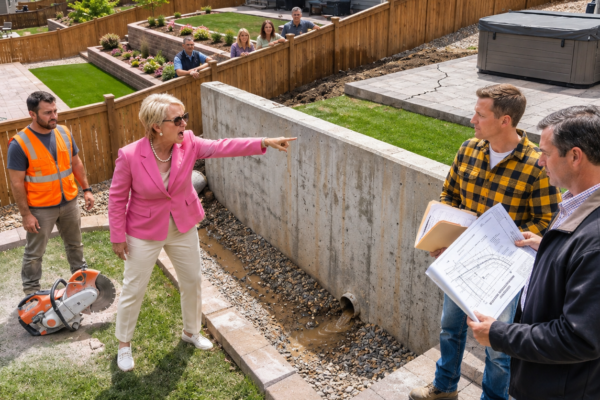
They demolished the only bridge to my property to trap me behind a canyon—so I used the paperwork they ignored to shut down their entire luxury resort project.
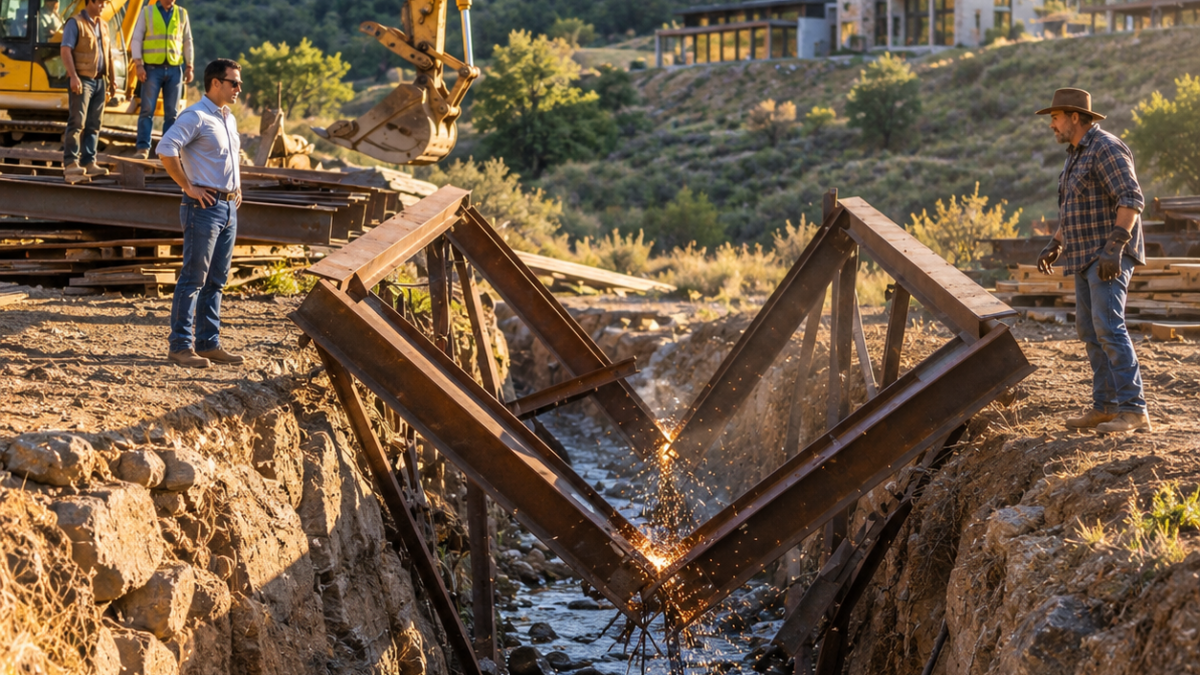
They demolished the only bridge to my property to trap me behind a canyon—so I used the paperwork they ignored to shut down their entire luxury resort project.
The developer thought removing my access would force me to sell forty-two acres he desperately wanted, and by sunset his crew had cut apart a permitted steel bridge I had spent nearly a year building.
What he didn’t know was that the same recorded easement protecting my bridge also appeared inside his resort’s approved site plans in a way that was about to become a much bigger problem than he imagined.
I had owned the land beyond Black Hollow Canyon since 2004.
Forty-two acres of rocky hills, scrub oak, a seasonal creek, and enough silence to make most people uncomfortable after dark.
I loved it.
The problem was access.
An old recorded easement connected my property to the county road, but the creek cut through the route twenty feet below the grade.
So I spent almost a year building a bridge.
Not scrap lumber and wishful thinking.
Engineered steel beams.
Concrete footings.
Stamped plans.
County permits.
Inspections.
Final approval.
I still remember the first time I drove my pickup across it after the inspector signed off.
I crawled over that bridge at five miles an hour even though I had watched almost every bolt go in.
For nearly twenty years, nobody cared about it.
Then Redwood Crest Retreat bought roughly two hundred acres beside me.
Their signs promised “luxury wilderness living.”
Cabins.
Spa buildings.
Private trails.
A restaurant overlooking the canyon.
The project manager was Evan Cole, a polished man in expensive boots who talked about land the way some people talk about furniture.
The first time we met, he was standing beside my bridge with a survey crew.
“What are you measuring?” I asked.
“Future access options.”
“This bridge is private.”
He smiled.
“We’re just gathering information.”
I told him about the easement.
He already knew.
That bothered me.
Two weeks later, I left for town before sunrise to pick up materials.
When I returned near dusk, I rounded the final bend and slammed on the brakes.
The bridge was gone.
Not damaged.
Gone.
Where there had been steel decking and railings that morning, there was now empty air over the creek.
An excavator sat on Redwood Crest’s side.
Pieces of my bridge were stacked on a flatbed.
Fresh torch cuts glowed dark orange at the edges.
I got out slowly.
“What happened to my bridge?”
The equipment operator wouldn’t look at me.
“Site manager ordered removal.”
“Who?”
He finally met my eyes.
“Evan Cole.”
I called him immediately.
Evan answered like we were discussing landscaping.
“Our engineers identified a safety concern,” he said.
“My bridge passed inspection.”
“It doesn’t meet the standards we want near guest areas.”
“You don’t own it.”
There was a pause.
Then his voice hardened.
“You’re free to build another structure that meets current project standards.”
That was when I understood.
This wasn’t about safety.
Redwood Crest had already offered twice to buy my land.
I had declined twice.
My forty-two acres interrupted the clean boundary they wanted around the resort, and my bridge controlled the easiest connection between my parcel and the county road.
Destroy the bridge, make access miserable, make living there expensive, and maybe I would finally sell.
I didn’t yell.
I said, “Call your attorney.”
Then I hung up.
For the next two hours, I photographed everything.
Cut beams.
Excavator tracks.
Company logos.
Torch marks.
Equipment numbers.
The empty span.
Then I drove straight to Margaret Hale, the property attorney who had handled my easement questions years earlier.
She looked through the photographs in silence.
Then I gave her the bridge permits, inspection certificates, recorded easement, and survey.
She read the easement twice.
“Did they give you any written notice?”
“No.”
“County condemnation order?”
“No.”
“Emergency directive?”
“No.”
She closed the folder.
“Then we ask for emergency relief tomorrow morning.”
The judge didn’t order anyone arrested.
He didn’t shut down a resort from the bench.
What he did was simpler.
He temporarily restrained Redwood Crest from interfering with my easement and ordered them to provide immediate safe access while the bridge dispute was litigated.
Outside the courthouse, Margaret stopped me on the steps.
“We’re not finished.”
I thought she meant the bridge.
She didn’t.
She held up a copy of Redwood Crest’s recorded site plan.
“I want you to look at what they labeled as their secondary emergency access.”
Her finger landed directly on the route crossing my bridge.
[END OF FACEBOOK CAPTION]
[FIRST COMMENT / FULL STORY CONTINUATION]
For a few seconds, I didn’t understand what I was looking at.
The courthouse steps were bright enough that I had to shade the page with my hand.
There it was.
A thick black line running from the county road, across the creek, over the exact location of my bridge, then continuing through the edge of Redwood Crest’s property.
Beside it were three words.
SECONDARY EMERGENCY ACCESS.
I looked at Margaret.
“They used my bridge in their plans?”
“Apparently.”
“They just destroyed it.”
“I noticed.”
I looked down again.
The drawing had the kind of clean professional confidence that makes bad information look official.
Property boundaries.
Building pads.
Parking areas.
Utility routes.
Fire lanes.
Emergency access.
And right in the middle of it was something they did not own.
Something they had dismantled with cutting torches less than twenty-four hours earlier.
I felt a strange laugh rise in my throat.
Not amusement.
More like disbelief finally running out of places to go.
“Tell me this is an old conceptual drawing.”
Margaret folded her arms.
“I’d love to.”
“It isn’t?”
“It’s part of the set filed with the county planning department.”
I stared at her.
“Approved?”
“Conditionally approved.”
That word mattered.
I had been around enough construction to know it.
Conditional approval was not the same as permission to do whatever you wanted.
Large projects accumulated conditions the way old barns accumulated nails.
Traffic.
Water.
Fire access.
Drainage.
Wastewater.
Environmental review.
Road improvements.
Grading.
Utility coordination.
A developer could have a beautiful rendering, a signed development agreement, and millions in financing while still being one unresolved condition away from a very expensive delay.
Margaret tapped the paper.
“This doesn’t mean we’ve found some magic button that kills their project.”
“I know.”
“It does mean somebody represented this route as available.”
“Which it isn’t.”
“Not without your easement rights being respected.”
“And now there isn’t even a bridge.”
“Correct.”
I looked back at the drawing.
“Did the county know it was mine?”
“That’s what we find out next.”
She tucked the site plan into her folder.
“Go home.”
I looked at her.
“I currently have no bridge.”
“Then go wherever you’ve been sleeping.”
“I stayed at a motel.”
“Go back to the motel.”
She started walking toward the parking lot.
“What are you doing?”
“Making calls.”
“To whom?”
“The planning department first.”
She opened her car door.
“Then the fire marshal.”
That was when I realized the bridge dispute had just stopped being private.
Not because I wanted revenge.
Because Redwood Crest had tied my access into their development approvals.
And developers can ignore neighbors for a long time.
They have a much harder time ignoring their own plans.
That afternoon, Redwood Crest’s attorney called Margaret.
His name was Colin Reeves.
He was older than the lawyer who had appeared in court that morning, and he sounded much less interested in posturing.
Margaret put him on speaker while I sat across from her desk.
“Mr. Cole tells us your client is refusing reasonable temporary access accommodations,” Colin said.
Margaret looked at me.
I raised an eyebrow.
She said, “What accommodations?”
“We can provide escorted passage through Redwood Crest’s construction entrance until a permanent solution is designed.”
“That route is nearly seven miles from his house.”
“It’s still access.”
“It also requires him to pass through an active construction site controlled by your client.”
“Temporarily.”
Margaret’s voice stayed flat.
“The court order requires safe, practical access consistent with the existing easement pending further order. Your client destroyed the structure that made the easement usable.”
Colin exhaled.
“We’re not going to resolve causation on this call.”
“There isn’t much mystery about who hired the excavator.”
Silence.
Colin changed direction.
“We want to discuss a replacement structure.”
“Good.”
“Redwood Crest is prepared to construct an upgraded bridge.”
I leaned forward.
Margaret asked, “On whose land?”
Another pause.
“Primarily within the existing corridor.”
“Primarily.”
“Margaret.”
“Colin.”
I nearly smiled.
They sounded like two people who had been disagreeing professionally for twenty years.
Colin continued.
“The current design conflicts with our development plan.”
“There is no current design. Your client cut it into pieces.”
“The previous design.”
“My client’s easement predates your project.”
“We understand.”
“Do you?”
Colin went quiet again.
Then he said, “Let’s not make this more adversarial than necessary.”
Margaret looked at me.
I could tell she was enjoying exactly none of this.
“My client came home and discovered his only reasonable access had been dismantled without notice.”
“Yes.”
“You’ve already crossed adversarial.”
That call ended without agreement.
By evening, Redwood Crest had installed temporary steel road plates and a narrow equipment crossing farther upstream so I could reach my property with a pickup.
It was ugly.
It was inconvenient.
It was probably the fastest thing they had built since buying the land.
I drove across it just before dark with one of their safety supervisors walking in front of me.
His name was Mateo.
He was maybe thirty.
Hard hat.
Dust-covered boots.
Tired eyes.
He looked embarrassed by the entire situation.
“You work for them?” I asked once my truck was safely across.
“General contractor.”
“Were you here yesterday?”
He hesitated.
“Yes.”
“Did you know they were removing my bridge?”
He looked toward the canyon.
“I knew a structure was being removed.”
“That answer came from training.”
He smiled faintly.
“Probably.”
“Did you think it belonged to Redwood Crest?”
“That’s what we were told.”
I nodded.
I believed him.
Construction crews work from plans, scopes, and instructions.
The guy driving an excavator usually isn’t doing a title search before starting his shift.
“Who gave the order?”
Mateo looked uncomfortable again.
“You’ll need to ask management.”
“Evan?”
He said nothing.
That was enough.
The next morning, Margaret called at 7:04.
“You awake?”
“I own a construction company. I haven’t slept past six in twenty years.”
“The county wants a meeting.”
“That fast?”
“The planning department already had questions about Redwood Crest.”
“What kind?”
“We don’t know yet.”
“Does Evan know?”
“I assume his phone works.”
The meeting happened that afternoon.
Not in a dramatic hearing room.
Not behind giant oak doors.
Conference Room B in the county administration building.
Beige carpet.
Fluorescent lights.
A speakerphone that looked older than my daughter.
That is where expensive projects often become very vulnerable.
Not in front of cameras.
In boring rooms full of people with binders.
The county had five representatives there.
Planning.
Public works.
Environmental services.
Fire prevention.
Building safety.
Redwood Crest brought Evan, Colin, a civil engineer named Ross Delaney, and two consultants.
Margaret came with me.
The planning director, Sharon Bell, started without ceremony.
“We are not here to adjudicate private title disputes.”
Colin nodded immediately.
“Understood.”
“We are here because a feature represented in your approved site materials as an emergency access route has been removed.”
Evan leaned forward.
“That bridge was unsafe.”
The fire marshal, a broad-shouldered woman named Denise Morgan, looked at him.
“Who determined that?”
“Our engineering team.”
Ross shifted in his chair.
Very slightly.
Denise noticed.
“So you issued a structural assessment?”
Evan looked toward Ross.
Ross cleared his throat.
“We performed a visual review.”
“Written report?”
“We have field notes.”
“Was the bridge posted unsafe?”
“No.”
“County condemnation?”
“No.”
“Load restriction?”
“No.”
“Then what exactly was your emergency?”
Evan’s jaw tightened.
“It interfered with a planned transportation improvement.”
Sharon stopped writing.
“That is different from unsafe.”
Evan turned toward her.
“It was both.”
Margaret didn’t speak.
She didn’t have to.
The county was doing the work.
Denise pulled the site plan closer.
“This drawing identifies that crossing as secondary emergency access for the cabin area.”
Ross said, “Conceptually.”
“It is on the fire-access exhibit.”
“Yes.”
“Your project received conditional fire approval based partly on two points of emergency access.”
Ross nodded.
“That is correct.”
Denise pointed toward the bridge.
“One is here.”
“Yes.”
“And that connection no longer exists.”
“Temporarily.”
“Because your team removed it.”
No answer.
Denise leaned back.
“Then your currently approved fire-access plan no longer reflects field conditions.”
That was the first real crack.
Not a shutdown.
Not yet.
A discrepancy.
In construction, discrepancies have consequences.
Sharon turned to Ross.
“Was this bridge under Redwood Crest ownership when the access exhibit was submitted?”
Ross glanced at Evan.
“I relied on the survey and title information provided by the developer.”
Sharon looked toward Evan.
Evan said, “We believed we had control over the relevant corridor.”
Margaret finally spoke.
“Based on what recorded instrument?”
Colin gave her a look.
Sharon raised a hand.
“Again, private title issues are not what we’re deciding today.”
Then she looked at Evan.
“But if project approval assumed use of property your company does not control, that is our issue.”
Evan sat back.
For the first time since I met him, the polished certainty disappeared.
Only briefly.
Then it returned.
“We can revise the plan.”
“Possibly,” Sharon said.
“Then there’s no reason to halt work.”
Nobody had said halt.
Not yet.
I saw Margaret notice that too.
Denise turned several pages.
“The secondary access is not the only concern.”
Ross looked at her.
“What else?”
“Your eastern fire lane width.”
Ross frowned.
“That was addressed in Revision Four.”
“Revision Four shows twenty feet clear.”
“Yes.”
“Our field inspector measured less than seventeen at two points yesterday.”
Evan looked at Ross.
Ross looked genuinely surprised.
“That section isn’t final.”
Denise nodded.
“Correct. Which is why it should not have been represented as ready for the next phase inspection.”
Colin stepped in.
“We can correct field conditions.”
“Good,” Denise said. “You will.”
Then the public works engineer spoke.
“Drainage basin two is also different from the approved grading plan.”
Ross turned toward him.
“How different?”
“Enough that we’re asking.”
The room changed.
It wasn’t about my bridge anymore.
It was becoming about documentation.
Sharon closed the folder.
“Here is what happens next.”
Everyone listened.
“Redwood Crest will submit a revised access plan reflecting actual legal control and current field conditions.”
She turned to Denise.
“Fire prevention will re-review access before occupancy-related work proceeds in the affected portion.”
Then to public works.
“Drainage and grading discrepancies will be inspected.”
Then to environmental services.
“Creek-related work?”
The environmental representative spoke.
“We need to verify whether equipment entered the regulated setback during bridge removal.”
Evan looked sharply at him.
“The bridge demolition occurred within an existing disturbed corridor.”
“Maybe.”
That word landed hard.
“We’ll inspect.”
Sharon looked at Colin.
“Until these issues are resolved, work may continue only in areas not dependent on the disputed access or identified in existing stop-work notices.”
Colin nodded.
“Understood.”
Evan did not.
“This is ridiculous.”
Sharon looked at him.
“No. This is review.”
“We’re talking about a bridge.”
“No.”
She folded her hands.
“We’re talking about whether the project currently matches the plans on which approvals were based.”
Silence.
That was the moment I began to understand something I had not appreciated when I first saw the empty canyon.
Evan’s biggest mistake wasn’t tearing down my bridge.
It was believing that everything around the bridge belonged to one problem.
It didn’t.
The bridge connected to access.
Access connected to fire review.
The demolition connected to grading.
Grading connected to the creek.
The project schedule connected to all of it.
Big developments are systems.
Pull one piece without understanding the system, and you can create problems far from where you started.
After the meeting, Evan caught me near the elevator.
Margaret was ten feet ahead.
Colin had already gone downstairs.
“You enjoying this?” Evan asked.
I turned.
“No.”
“Come on.”
“I’m serious.”
“You’ve been waiting for this.”
“I met you three weeks ago.”
“You know what I mean.”
I looked at him.
He seemed older than he had when he first walked onto my bridge.
Not old.
Tired.
The kind of tired that comes from watching schedules slip.
“You demolished something you didn’t own.”
His jaw tightened.
“And now you’re using every county office you can find to bury us.”
“I didn’t call most of them.”
“That’s convenient.”
“You put my bridge on your fire-access plan.”
“It was an existing access point.”
“Mine.”
“Adjacent to our property.”
“Mine.”
He stepped closer.
“We offered you three times market value for those forty-two acres.”
“I didn’t want to sell.”
“Everyone has a price.”
“That’s exactly your problem.”
His eyes narrowed.
“What does that mean?”
“You think a price and permission are the same thing.”
For once, he had nothing ready.
The elevator opened.
Margaret stepped inside.
I joined her.
As the doors closed, she said, “You should stop talking to him without me.”
“I know.”
“You’re still going to do it.”
“Probably.”
She sighed.
“I bill by the hour, so continue making poor decisions.”
The first official stop-work notice went up two days later.
It did not shut down the resort.
It covered the creek-side grading zone.
Environmental services found that equipment used during the bridge demolition had disturbed soil beyond the limits shown on the approved plan.
Not a disaster.
Correctable.
But it required stabilization, documentation, and a revised erosion-control plan.
The second notice came from fire prevention.
Cabin construction could continue.
Certain interior work could continue.
But the next phase involving guest facilities could not proceed until compliant emergency access was demonstrated.
The third issue was drainage.
That one was more serious.
Redwood Crest’s grading contractor had changed a slope near the future spa complex to save excavation.
The change redirected runoff toward a basin that had not been designed for the increased flow.
Again, not evil.
Not necessarily even unusual.
Field changes happen constantly.
But significant changes have to be reviewed.
The county ordered engineered revisions before that portion could continue.
Within a week, almost half the visible site looked frozen.
Workers were still there.
Trucks still moved.
But the pace had changed.
The big excavation equipment sat idle more often.
Survey stakes appeared everywhere.
Consultants walked around with clipboards.
Evan called Margaret twice asking to negotiate.
The first proposal was simple.
Redwood Crest would rebuild my bridge in a different location.
I said no.
The new location would have shifted the easement alignment almost two hundred feet and routed my access through the edge of their future guest-arrival area.
That meant every time I drove home, I would pass through their controlled entrance.
Exactly what Evan wanted from the beginning.
The second proposal offered me $600,000 for the easement and bridge rights.
I said no.
Then $850,000.
No.
Margaret looked at me after that meeting.
“You understand that is real money.”
“Yes.”
“You also understand your current bridge probably isn’t worth a tenth of that.”
“Yes.”
“You want me to ask the traditional lawyer question?”
“Go ahead.”
“Are you being stupid?”
“Maybe.”
She leaned back.
“Why won’t you sell?”
I looked through her office window toward the courthouse clock.
Because the truth was more complicated than stubbornness.
My wife, Anna, had died seven years earlier.
Cancer.
Fast enough to make time feel dishonest.
The forty-two acres had been ours.
We bought them before Lily was born.
Back when Anna still worked at the county library and I was taking every construction job I could get.
We camped there before the house was finished.
We planted two sycamores near the creek.
One survived.
One didn’t.
Anna picked the spot for the porch because she wanted the evening sun but hated direct morning light.
The bridge had been our biggest argument.
She thought my first design was too narrow.
She was right.
She thought my budget was fantasy.
Also right.
She brought sandwiches to the site the day the beams were set.
There was a photograph of her sitting on one of them before the deck went down.
Selling the land was not impossible.
But being pushed out was.
I told Margaret that.
She listened.
Then she nodded.
“That is a better reason than spite.”
“I’m glad I passed.”
“You barely passed.”
The court case moved more slowly than the county inspections.
Real litigation usually does.
Redwood Crest complied with the temporary access order by maintaining the temporary crossing.
Then both sides began exchanging documents.
Emails.
Contracts.
Surveys.
Engineering notes.
Demolition instructions.
That was how we learned the bridge removal had not been a spontaneous safety decision.
It had been discussed for weeks.
One internal email from Evan to the project engineer said:
Existing crossing complicates perimeter control. Need removal before guest circulation package is finalized.
Another from the development company’s operations director asked:
Do we have confirmed rights to remove?
The response from Evan:
Title team says corridor issue is being handled. Proceeding is necessary to maintain schedule.
Margaret read that twice.
“Title team says corridor issue is being handled,” she repeated.
“What does that mean?”
“It means we ask the title team.”
The title team turned out to be one outside consultant who had flagged the easement months earlier.
His report was sitting in Redwood Crest’s own file.
Recorded private access easement benefiting neighboring parcel. Developer should obtain agreement before modifying crossing.
There it was.
Not hidden.
Not ambiguous.
One sentence.
A warning.
Ignored.
When Margaret showed it to me, I felt less triumphant than I expected.
Mostly I felt tired.
Evan had known.
Maybe not every legal detail.
Maybe he had convinced himself it could be solved later.
But he had known enough to stop.
He didn’t.
That changed the bridge case.
Redwood Crest’s insurer became involved.
Their lender became involved.
The general contractor became very involved.
And that was when things inside the project began to fracture.
Mateo called me one evening.
I almost didn’t answer because I didn’t recognize the number.
“Mr. Mercer?”
“That’s me.”
“It’s Mateo Ruiz. From Redwood Crest.”
I sat down on the porch.
“What’s going on?”
“I wanted you to know we’re pulling some crews tomorrow.”
“Why?”
“Payment issue.”
“That related to me?”
He laughed without humor.
“Everything is related to everything now.”
“What does that mean?”
“Our last draw didn’t fund.”
A construction loan works in stages.
The lender doesn’t hand a developer every dollar on day one.
Money is released through draws as work progresses.
If inspectors, consultants, or lender representatives decide progress is out of compliance with loan conditions, money can slow down.
And when money slows down, contractors notice immediately.
“Are people getting paid?” I asked.
“Eventually.”
“That’s not a yes.”
“No.”
I leaned against the porch rail.
“Why are you telling me?”
“Because some guys think you’re trying to destroy the job.”
“I’m not.”
“I know.”
“How?”
“You didn’t call the county about the grading.”
“No.”
“You didn’t file the fire report.”
“No.”
“And you told your lawyer we could keep using the temporary crossing for construction access as long as it didn’t block you.”
I looked toward the canyon.
“People need to work.”
“That’s what I figured.”
He was quiet.
Then he said, “Evan’s telling investors the county issues are harassment caused by a hostile landowner.”
I let that sit.
“Of course he is.”
“I thought you should know.”
“Thanks.”
The next morning, thirty workers were gone.
Not fired.
Reassigned.
The site had stopped needing that many hands because too many work fronts were blocked.
Redwood Crest still had legal options.
They could revise the plans.
Fix the drainage.
Rebuild my bridge.
Obtain a negotiated access arrangement.
Redesign the fire route.
Stabilize the creek setback.
None of those problems alone had to kill the resort.
But every solution cost time.
And time was where the project had almost no flexibility.
Tourism developments live and die by opening dates.
Redwood Crest had marketed an opening for the following summer.
Reservations had not opened, but event planners had been approached.
A management company had been retained.
Furniture deposits had been paid.
Specialty equipment was ordered.
Construction interest was accruing.
Every month mattered.
By week four, Evan’s offers changed.
He no longer wanted to buy my land.
He wanted a bridge agreement.
He came to Margaret’s office himself.
No sunglasses.
No polished smile.
Just Evan, Colin, Margaret, and me around a scratched conference table.
He opened with numbers.
“Redwood Crest will reconstruct the bridge at our expense.”
“Good,” I said.
“To current code.”
“Fine.”
“With a widened deck.”
“Why?”
“Emergency access.”
“No.”
He looked at me.
“You’re benefiting from a better bridge.”
“I’m not giving you guest or emergency access through my easement.”
“We need redundancy.”
“You needed redundancy before you submitted the plan.”
His jaw tightened.
Colin stepped in.
“We’re proposing limited emergency use only.”
Margaret asked, “By whom?”
“Resort emergency vehicles.”
“Which ones?”
“Security. Maintenance. Fire response if needed.”
I shook my head.
“No private resort traffic.”
Evan looked directly at me.
“You are enjoying this.”
I leaned forward.
“You keep saying that because you need me to be doing what you would do.”
He went still.
I continued.
“I don’t want your guests on my bridge. I don’t want your security driving past my house. I don’t want your maintenance crews treating my property like the back door to your resort.”
“You live next to a development.”
“I did before you bought it.”
“That’s reality.”
“So is my easement.”
He rubbed his forehead.
Then the first real frustration showed.
“We have one hundred and twenty million dollars committed to this project.”
“That sounds like a lot of reasons to read the title report.”
Colin looked down.
Margaret did not react.
Evan stared at me for a long time.
Then he said, “What do you want?”
“Put my bridge back.”
“We’re offering better.”
“I don’t want better.”
“What do you want?”
“The thing you destroyed.”
His voice rose.
“That is irrational.”
“No. It’s extremely specific.”
He pushed his chair back.
“You want us to spend hundreds of thousands recreating an outdated bridge that doesn’t help anyone.”
“It helps me.”
“It blocks progress.”
“Not my progress.”
That was the end of the meeting.
The bridge reconstruction began eleven days later.
Not because Evan suddenly agreed with me.
Because the court was moving toward a preliminary injunction hearing, and Redwood Crest’s lawyers could see where the evidence was going.
They agreed to rebuild while preserving their legal arguments.
The replacement had to match the approved structural capacity of the original.
Same alignment.
Same easement corridor.
Modern materials where necessary.
No resort-use rights created by the reconstruction.
That last sentence took three pages of agreement language.
I watched the first steel beam arrive on a flatbed at 6:40 one morning.
Mateo was there.
He climbed down from his truck holding coffee.
“Feels familiar?”
“Not yet.”
He looked across the gap.
“We’re going to make it right.”
“I know you will.”
He nodded.
Then he said, “Evan’s not coming out here.”
“Probably smart.”
The crew worked fast.
Redwood Crest had money, materials, and every reason to make the problem disappear.
Within three weeks, the structure was complete enough for inspection.
The county inspector walked it.
Checked records.
Reviewed weld certifications.
Measured rails.
Looked underneath.
Then he signed the final sheet.
I drove across that afternoon.
Slowly.
Five miles an hour.
Exactly like the first time.
Halfway over, I stopped.
Not because anything was wrong.
I looked down at the creek.
Water moved between rocks left dark from the previous night’s rain.
For one second, I could almost see Anna sitting on that old beam twenty years earlier, holding two sandwiches wrapped in foil.
I kept driving.
The bridge was back.
The resort was not.
By then, Redwood Crest had bigger problems.
The county’s re-review of fire access forced them to redesign the eastern entrance.
That required moving a retaining wall.
Moving the wall affected grading.
The grading change required updated drainage calculations.
The revised drainage plan increased the size of a detention basin.
That basin overlapped part of the planned staff parking area.
The parking reduction triggered another site-layout revision.
Meanwhile, the environmental review around the seasonal creek required additional stabilization and monitoring.
Then wastewater entered the story.
Redwood Crest was too far from the municipal sewer system for an easy connection.
Their plan relied on an on-site treatment system and disposal fields.
The preliminary design had been based on soil information from selected test locations.
During detailed review, the health and environmental departments required additional testing because the resort’s projected capacity had increased.
The results were not catastrophic.
But they were inconvenient.
Some areas absorbed wastewater less effectively than the development team had assumed.
The disposal layout had to expand.
The expanded area collided with two proposed cabin clusters.
More redesign.
More time.
More money.
None of this happened because I made a phone call and said, Shut them down.
That is not how development works.
Agencies do not become private revenge departments because your neighbor destroys a bridge.
What happened was more ordinary.
Once one serious inconsistency forced the project back under close review, everyone started checking their own part carefully.
And the closer they looked, the more unresolved details they found.
Some were the developer’s fault.
Some were consultants working too fast.
Some were field conditions.
Some were simply the kind of surprises that happen on difficult land.
But difficult land does not care how expensive your renderings are.
By early fall, the county issued a broader stop-work order covering the main resort complex until several revised plans were approved.
That was the moment the project actually shut down.
I learned about it from Mateo.
He sent me a photograph.
A red notice was posted at the main gate.
WORK SUSPENDED PENDING COMPLIANCE REVIEW.
I stared at the image for a long time.
Then I put my phone down.
Lily was at the kitchen table doing math homework.
She looked up.
“What happened?”
“The resort stopped construction.”
“Because of the bridge?”
“Partly.”
“Did you win?”
Kids love that question.
Adults do too.
We just hide it better.
I sat across from her.
“I got the bridge back.”
“So yes.”
“The resort has other problems.”
“So extra yes.”
I smiled.
“You’re not going into law.”
“I don’t want to.”
“Good.”
“I want to design roller coasters.”
“That somehow worries me more.”
She went back to her fractions.
I picked up the phone again.
The image didn’t feel like victory.
Hundreds of people had expected work from that project.
Carpenters.
Electricians.
Concrete crews.
Hotel staff being recruited.
Landscapers.
Suppliers.
People with no involvement in Evan’s decision.
A stopped development is not a chess piece falling over.
It is paychecks delayed.
Businesses waiting on invoices.
Families changing plans.
That mattered.
The next day I called Mateo.
“How many people are you moving?”
“Most of the field crew.”
“Anybody laid off?”
“Some subcontractors might cut hours.”
I closed my eyes.
“I’m sorry.”
He was quiet.
“You didn’t remove the bridge.”
“I know.”
“You didn’t design the resort.”
“I know.”
“You didn’t approve our schedule.”
“I know.”
“Then stop volunteering for guilt.”
That sounded like something Margaret would say.
I asked, “What happens now?”
“Depends on money.”
That was the real answer.
Redwood Crest’s lender had already frozen the next major construction draw pending a revised budget and schedule.
Their equity investors were asked to contribute more capital.
Some agreed.
One did not.
The resort management company extended deadlines once.
Then again.
Consultant invoices increased.
Interest kept accumulating.
By winter, the project was quiet enough that snow collected on unfinished roofs.
I drove past the entrance once a week.
Not to gloat.
It was on my route to town.
Still, I noticed.
One week, three trucks.
Then two.
Then none.
The giant Redwood Crest sign stayed.
Luxury wilderness living.
Behind it stood plywood, steel studs, wrapped lumber, and silence.
Evan disappeared from day-to-day management around December.
Nobody announced it.
Colin mentioned during a legal call that “project leadership had been restructured.”
Margaret muted the phone.
“That means someone lost a conference-room knife fight.”
I whispered, “Is that a legal term?”
“It should be.”
The bridge lawsuit settled in January.
Redwood Crest paid the reconstruction costs.
They reimbursed my temporary lodging, engineering expenses, and a portion of legal fees.
There was additional compensation for interference with access.
Not millions.
Not fantasy money.
Enough to acknowledge that destroying someone’s only practical access has consequences.
The settlement also permanently confirmed that my easement was private and that resort use required my written permission.
I signed.
Margaret signed.
Colin signed.
Evan did not attend.
I thought that would be the end of my involvement.
Then Redwood Crest’s new development director called.
Her name was Rachel Monroe.
She asked to meet at my property.
I almost said no.
Then curiosity won.
She arrived in a muddy Subaru instead of a luxury SUV.
I liked her slightly more before she even got out.
She walked across the rebuilt bridge and stopped near the barn.
“Nice structure.”
“I’ve heard mixed reviews.”
She smiled.
“I read the file.”
“Then you’ve heard extremely mixed reviews.”
She looked toward the ridge where the unfinished resort buildings were barely visible through the trees.
“I’m trying to figure out whether the project can be salvaged.”
“That sounds expensive.”
“It is.”
“Why talk to me?”
“Because the redesign still needs emergency access.”
“No.”
She nodded.
“I expected that.”
“Then this was quick.”
“I’m not asking to use your bridge.”
That got my attention.
She pulled a rolled plan from her bag.
“We’re looking at a second access road entirely on Redwood Crest property.”
She spread the plan across the hood of my truck.
The proposed route climbed along the northern ridge.
Longer.
More grading.
More expensive.
But it stayed away from my land.
“That should have been Plan A,” I said.
“Yes.”
“You’re allowed to say Evan’s name.”
“I’m aware.”
She studied the drawing.
“He pushed schedule.”
“Clearly.”
“He thought agreements could be obtained after design.”
“That’s one way to describe it.”
She looked at me.
“You don’t like him.”
“I don’t know him well enough to dislike all of him.”
That made her pause.
“You’re more generous than the file suggests.”
“The file was written by lawyers.”
“Fair.”
She rolled the plans back up.
“We may not restart.”
“Why?”
“Capital.”
“How bad?”
“Bad.”
She gave me no numbers.
I didn’t ask.
Then she looked at the bridge.
“For what it’s worth, removing this was insane.”
“Yes.”
“I told the board that.”
“Before or after you got Evan’s job?”
She smiled.
“After.”
“Less brave.”
“Much safer.”
We shook hands.
She left.
Redwood Crest spent another four months trying to refinance.
The county approved some revised plans.
The fire department accepted a concept for the northern emergency road.
The wastewater redesign became technically possible.
The drainage changes were solvable.
That is important.
The project did not fail because the government decided Evan was a bad person.
It failed because every correction consumed money and time the capital structure could no longer absorb.
By spring, the lead lender issued a default notice.
Then came negotiations.
Extensions.
A potential investor.
That investor walked.
The construction company filed claims for unpaid amounts.
Several consultants stopped work.
The property never entered some dramatic overnight foreclosure auction.
Instead, the ownership group negotiated with the lender for months.
Eventually, the development entity transferred control as part of a restructuring.
Rachel called me one last time.
“We’re shutting the site down for the foreseeable future.”
I stood on my porch.
“What does that mean?”
“Security only. Weather protection. No construction.”
“Is Redwood Crest dead?”
“The current version is.”
I looked toward the trees.
Wind moved through the sycamore near the creek.
“Sorry.”
She laughed softly.
“You’re the only neighbor I’ve ever met who says sorry after helping expose the problem.”
“I didn’t want two hundred acres of abandoned framing next door.”
“Nobody did.”
“What happens to the land?”
“Eventually? Sold, refinanced, redesigned. I don’t know.”
“Hopefully to somebody who likes paperwork.”
“That would be revolutionary.”
The resort signs came down two months later.
The buildings stayed.
For a while.
Then a new ownership group bought the property at a reduced price.
Not a luxury wilderness resort.
At least not the original version.
They completed a smaller project years later.
Fewer cabins.
No spa complex by the creek.
No guest road near my property.
A conservation easement protected part of the canyon.
The northern access road became the main emergency route.
My bridge never appeared on their site plan.
Before construction restarted, the new project manager came to my house.
He knocked.
That alone put him ahead of Evan.
His name was Thomas Greene.
He stood on the porch holding a folder.
“I wanted to introduce myself.”
“Good strategy.”
“I’ve heard.”
I invited him inside.
We drank coffee.
He showed me the property plan.
He pointed to the boundary.
“This is your land.”
“Yes.”
“This is your easement.”
“Yes.”
“We have no rights to it.”
“Correct.”
“We don’t want any.”
I looked at him.
“Now you’re showing off.”
He smiled.
“We may need to coordinate drainage inspections near the shared boundary.”
“That’s reasonable.”
“And if we ever need access across your property for anything, we ask.”
“That’s usually how permission works.”
“I’m told there was some confusion before.”
I laughed.
“Something like that.”
That meeting lasted forty minutes.
No lawyers.
No threats.
No six-figure offers.
No excavators.
Just two people looking at the same map and agreeing that lines mean something.
Years have passed since the morning I came home and found empty air where my bridge had been.
The bridge is still there.
Same alignment.
Same creek.
Same view.
The replacement steel has weathered enough now that it no longer looks new.
I prefer it that way.
Lily learned to drive across it.
That was terrifying for completely different reasons.
The first time she did it, she stopped halfway.
“Why are you braking?”
“You always drive slow here.”
“That’s because I’m old.”
“You were thirty-something when you built it.”
“Ancient.”
She rolled her eyes.
Then she looked down through the railing.
“Is this the exact spot?”
“What spot?”
“Where the old bridge was.”
“Yes.”
“And they really cut the whole thing apart?”
“Yes.”
“Because they wanted you to sell?”
“That was part of it.”
She shook her head.
“That’s so stupid.”
“Expensively stupid.”
She eased the truck forward.
At the other end, she parked and looked back.
“Would you ever sell now?”
I thought about Anna.
The porch.
The surviving sycamore.
The creek.
The old photograph of her sitting on a steel beam with sandwiches wrapped in foil.
“Someday maybe.”
Lily frowned.
“Really?”
“Land isn’t a person.”
“No.”
“But people can attach themselves to it.”
She looked back at the bridge.
“That sounds like something old people say.”
“It gets worse every year.”
She laughed.
The strangest part of the whole story is that I never hated Evan as much as people expect me to.
I was furious with him.
I fought him.
I made sure the bridge was rebuilt.
I made sure my easement was protected.
I gave county officials every document they asked for.
But hatred requires a kind of energy I wasn’t willing to keep spending.
From what I heard, Evan went on to work for another development firm.
Not as a project head.
He never contacted me again.
I hope he learned something.
I don’t need to know whether he did.
The land taught me enough.
A bridge can look like steel and concrete.
A property line can look like ink on paper.
A permit can look like bureaucracy.
An easement can look like one sentence buried in a title report.
Until someone decides those things are inconvenient.
Then you find out why they exist.
Boundaries are not disrespectful.
Permission is not weakness.
Process is not something powerful people get to skip because they are in a hurry.
And having money tied up in a project does not make somebody else’s land part of your schedule.
The original Redwood Crest development had architects, investors, consultants, attorneys, contractors, renderings, equipment, and millions of dollars behind it.
I had forty-two rough acres, a recorded easement, a folder of old permits, and a bridge.
They thought that meant I was the easier person to move.
They were wrong.
But the part I remember most isn’t the stop-work notice.
It isn’t the settlement.
It isn’t even the day the resort site went silent.
It’s the evening after the rebuilt bridge passed inspection.
I drove across alone just before sunset.
The canyon was gold.
Wind moved through the trees.
The seasonal creek below was barely more than a ribbon between rocks.
Halfway across, I stopped the truck.
I got out.
Put both hands on the railing.
And stood there.
Years earlier, Anna had stood almost in that same place while the original bridge was being built.
She had looked at the half-finished deck and told me, “You know, someday you’re going to be very glad you did this properly.”
At the time, I thought she meant the engineering.
The bolts.
The concrete.
The permits.
Maybe she did.
But standing there all those years later, I understood it differently.
Doing something properly means more than making it strong.
It means making it legitimate.
Recorded.
Inspected.
Defensible.
Clear enough that when somebody stronger decides your boundary is inconvenient, the boundary survives them.
I stayed there until the sunlight disappeared from the canyon wall.
Then I climbed back into my truck and drove the rest of the way home.
Nobody has touched that bridge since.
And every person who has wanted to cross it has done the one thing Redwood Crest should have done from the beginning.
They asked.