He Excavated My Hillside for His Driveway So I Made Him Rebuild Every Inch of It.h
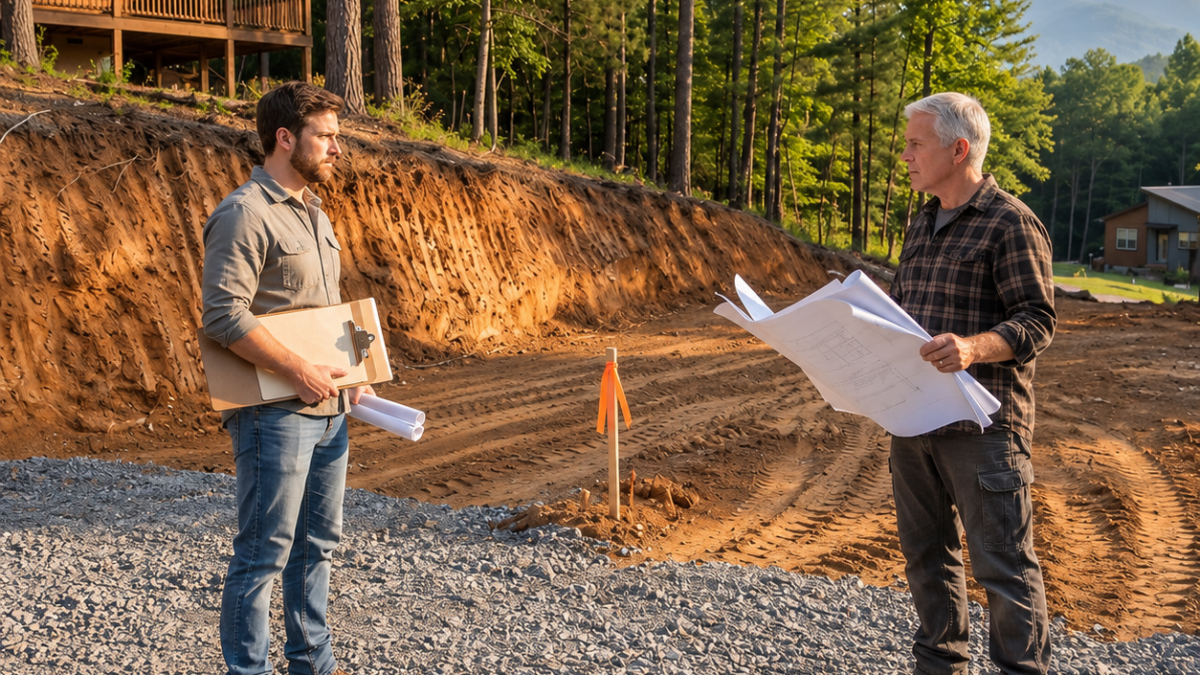
He Excavated My Hillside for His Driveway So I Made Him Rebuild Every Inch of It
I came home after thirteen months overseas expecting dust, weeds, and maybe a broken pipe.
Instead, my neighbor had excavated part of my mountain.
From the road, I knew something was wrong before I even shut off the truck.
The tree line had a rectangular bite missing from it.
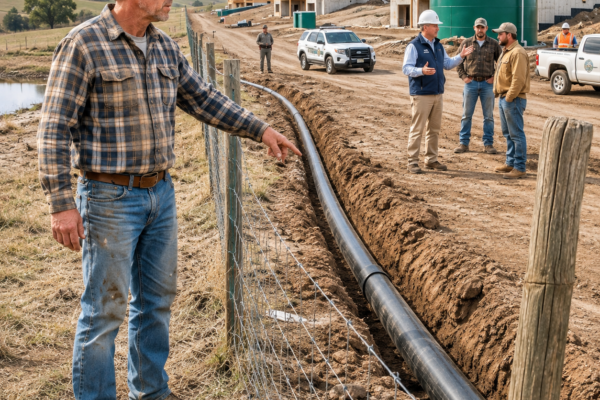
When I walked closer, I found a twelve-foot-wide gravel access lane carved nearly forty feet across the steep side of my Colorado property and tied directly into Thomas Vance’s driveway.
He had cut mature trees.
Removed several feet of soil.
Compacted gravel over the slope.
And from the tire tracks, he had been using it regularly to swing his boat trailer into his garage.
The worst part?
Thomas knew it was mine.
Before I deployed, he had asked whether I ever planned to grade that hillside.
I told him I did—eventually, according to my own drainage and retaining-wall plans.
Apparently he heard:
“Use it while I’m gone.”
I didn’t knock on his door.
I called my attorney.
Arthur Brooks gave me one instruction:
“Don’t touch the road. Don’t confront him. Photograph everything exactly as it sits.”
By sunset, I had side-by-side photos showing the hillside before deployment and after.
Within four days, we had a licensed surveyor, a geotechnical engineer, and county land-use staff on site.
The survey showed the entire cut was on my parcel.
The engineer found something worse than trespass.
Thomas had intercepted the slope’s natural drainage pattern and created a concentrated runoff channel above the area where I eventually planned to build.
County records showed no grading permit, no erosion-control plan, no access easement, and no authorization from me.
Then discovery produced the receipts.
Excavator rental.
Four days.
Thomas’s name.
Gravel deliveries.
Thomas’s company.
Delivery location:
my property.
His lawyer stopped calling it a misunderstanding after that.
Restoring the hillside would require removing every ton of gravel, rebuilding the slope in engineered lifts, restoring drainage, stabilizing the exposed soils, replacing lost vegetation, and monitoring the repair through weather.
Thomas’s first settlement offer was simple:
“Let me keep the driveway and I’ll pay you for an easement.”
My answer was even simpler.
“No.”
Eighteen months earlier, he could have asked.
Instead, he waited until I was overseas and made the decision for me.
So when the remediation crew finally arrived, they didn’t widen his driveway.
They put my hill back.
Every load.
Every contour.
Every drainage path.
Every inch he thought my absence had made available.
[END OF FACEBOOK CAPTION]
[FIRST COMMENT / FULL STORY CONTINUATION]
Arthur did not sound surprised when I called him.
That irritated me.
I had been home from a thirteen-month deployment for less than three hours, and I wanted somebody to react appropriately to the fact that my neighbor had apparently excavated a road into the side of my property.
Arthur Brooks reacted the way he reacted to everything.
Calmly.
“Is anyone operating equipment there now?”
“No.”
“Any immediate collapse?”
“Not that I can see.”
“Water running?”
“No.”
“Then don’t alter anything.”
“He built a driveway on my land.”
“I heard you.”
“I’m thinking maybe I should go ask him what exactly—”
“No.”
That was Arthur.
Not:
Probably not.
Not:
Maybe wait.
No.
“Why?”
“Because right now you have a physical condition you did not create.”
“You have pre-deployment photographs.”
“You have a neighbor who may have made admissions to contractors, suppliers, the county, his insurer, or somebody else.”
“And you are angry.”
“I’m not that angry.”
“You called me from a hillside and said the phrase ‘I’m going to make him put the mountain back.’”
Fair.
“So what do I do?”
“Document.”
“Then sleep.”
“Then call me tomorrow.”
“I just got home.”
“I know.”
“You are not spending your first night back in a property-line argument.”
That last sentence got through.
Deployment changes your sense of time.
For thirteen months, everything at home exists as photographs, messages, satellite imagery, and memory.
You build a mental version of the place and carry it around.
My land had become that for me.
A fixed point.
The slope.
The pines.
The old drainage swale.
The two boulders beside the gate.
The clearing where I wanted a cabin someday.
Then I came home and discovered the fixed point had been altered by somebody who knew I wasn’t there.
That felt more personal than ordinary trespass.
Arthur understood that.
Which was probably why he kept me away from Thomas that first night.
I walked the cut instead.
Slowly.
Photographed everything.
Started at the county road.
My lot sat outside a small Colorado mountain town, high enough that winter stayed longer than people expected and steep enough that every construction decision eventually became a drainage decision.
I had bought 6.8 acres in late 2020.
Not a ranch.
Not a luxury retreat.
Just wooded mountain land with an old two-bedroom house near the lower boundary and enough room above it for something better later.
The parcel climbed sharply west.
Thomas Vance owned the neighboring property downhill and north of me.
His house was newer.
Large garage.
Boat.
Utility trailer.
Side-by-side.
He liked machinery.
So did I.
That had been part of why we got along at first.
I was an Army Reserve logistics officer in civilian life and worked for a regional infrastructure contractor.
Heavy equipment did not intimidate me.
Neither did slopes.
I knew just enough about earthwork to understand when somebody had done more than scrape dirt.
Thomas’s new lane began beside his upper driveway.
It crossed the survey line and climbed diagonally through my slope.
Approximately forty-two feet long.
Between eleven and thirteen feet wide depending where I measured.
At the deepest point, the cut face stood nearly five feet above the new gravel surface.
On the lower edge, fill had been pushed outward and compacted.
Two drainage paths I had spent two summers gradually shaping had been severed.
Three mature trees were gone.
Several smaller ones too.
A culvert had been placed beneath the gravel near Thomas’s side.
No outlet protection.
No proper swale that I could see.
The road looked tidy.
That somehow made me angrier.
If Thomas had made one reckless pass with a skid steer, maybe I could have believed impulse.
This was designed.
Cut.
Graded.
Compacted.
Graveled.
Used.
I found boat-trailer tire marks on the gravel.
The pattern curved exactly the way I remembered his trailer moving before I left.
Thomas’s original driveway ended beside a retaining wall.
To back his boat into the garage, he had to approach uphill, swing wide, reverse, pull forward, reverse again, then line up.
Five minutes on a good day.
Ten if another vehicle was parked.
We had watched him do it once while drinking beer near the property line.
He had laughed.
“One day I’m cutting myself a proper turn.”
I said:
“You’d need half my hill.”
He looked up.
“Eventually you’re grading that side anyway, right?”
“Eventually.”
“Could make it usable.”
“I’ve got drainage drawings.”
“That much planning for dirt?”
“That’s how dirt stays where you put it.”
He laughed.
That conversation came back to me while I stood on the gravel.
At the time, it had meant nothing.
Now every word felt like evidence.
That is dangerous.
Memory changes after conflict.
You start turning old jokes into warning signs.
I made myself stop.
I opened the folder on my phone marked:
PROPERTY — PREDEPLOYMENT.
Before leaving, I had taken photographs from fixed points.
Not because I expected Thomas to excavate anything.
Because I had started planning a small cabin and wanted seasonal records of drainage and vegetation.
One image was almost identical to where I stood.
May 18.
Untouched slope.
Three trees.
Natural grade.
No gravel.
I held the phone up.
Matched ridgeline.
Took new image.
Before.
After.
Again.
Again.
By dark, I had eighty-three photographs and twenty minutes of video.
Then I went inside.
The house smelled closed.
I opened windows.
Turned water back on fully.
Found a dead moth in the kitchen sink.
Unpacked one duffel.
Ate crackers because I had forgotten groceries.
Then sat at the kitchen table and stared at Thomas’s driveway through the window until the light disappeared.
He never came over.
Maybe he had seen my truck.
Maybe he was waiting.
Maybe he did not know I was back.
I slept badly.
Arthur arrived the next morning with coffee.
He lived ninety minutes away.
That alone told me he took the situation seriously.
He walked the site without speaking much.
Then:
“You know exactly where the recorded line is?”
“Yes.”
“Survey monuments?”
“Two corners located.”
“Good.”
“You ever grant Thomas written permission?”
“No.”
“Verbal permission?”
“No.”
“Tell him he could cross?”
“No.”
“Share maintenance?”
“No.”
“Any old road easement?”
“No.”
“Driveway agreement?”
“No.”
Then:
“Did you ever tell him he could use the slope while you were gone?”
“Absolutely not.”
Arthur nodded.
“Good.”
He photographed.
Then said:
“First thing is survey.”
“Second geotechnical.”
“Third county records.”
“Then we decide remedy.”
“I know the remedy.”
“What?”
“Put it back.”
He looked at me.
“That may be the remedy.”
“It is.”
“Ethan—”
“My name is Daniel.”
He blinked.
“Right.”
Arthur had known me eight years.
He had three clients deployed at the time.
I stared.
He smiled.
“See?”
“What?”
“You’re tired.”
I hated that he was right.
My name is Daniel Mercer.
The source version never gave me one.
So there.
Daniel.
Arthur called surveyor Elena Ruiz.
She had done my purchase survey.
Not dramatic.
No secret military connection.
She came two days later.
Thomas finally approached while she worked.
He walked from his driveway.
Hands in jacket pockets.
“Daniel.”
“Thomas.”
“When’d you get back?”
“Monday.”
He looked toward Elena.
“You surveying?”
“Yes.”
“Why?”
I stared.
He knew.
Of course he knew.
But the question gave him room.
I said:
“Because a road appeared.”
He exhaled.
“That.”
That.
Like a grill left on.
“Yes.”
“I was going to talk to you.”
“When?”
“When you got settled.”
“I’m settled.”
Arthur stepped between conversational lanes without literally stepping between us.
“Mr. Vance, I’m Arthur Brooks. I represent Daniel concerning the property.”
Thomas looked at him.
His posture changed.
“Oh.”
Arthur handed him a card.
“Please direct substantive discussion through me for now.”
Thomas ignored the card.
He looked at me.
“You were going to grade it anyway.”
There it was.
Not:
I thought it was mine.
Not:
The contractor made a mistake.
Not:
The survey was wrong.
“You told me you were going to cut that side.”
“I said I had plans.”
“Exactly.”
“My plans.”
“It improved the slope.”
I actually laughed once.
Cold.
“Do not say that to my engineer.”
Thomas looked annoyed.
“You’ve been back two days and already hired an engineer?”
“I’ve been back two days and already found a road.”
Arthur touched my elbow.
Not now.
Thomas said:
“I spent money on that.”
I stared at him.
Then:
“That is an extraordinary thing to say to me.”
He realized it too late.
“I’m saying it wasn’t some half-assed job.”
“That is not helping.”
“No.”
“I mean I used proper base.”
“You should stop.”
Arthur said it gently.
Thomas finally took the card.
“Have your lawyer call mine.”
“Good.”
He walked away.
Elena had heard most of it.
She did not comment.
Surveyors are professionals.
Probably also excellent gossip privately.
She completed field work.
The line was not close.
Thomas’s access lane did not accidentally wander two feet across an uncertain boundary.
The entire improved section on my side ranged from approximately six feet to more than twenty feet inside my parcel.
No ambiguity.
She marked.
Photographed.
Prepared stamped survey exhibit.
Arthur emailed Thomas’s lawyer that evening.
Preservation notice.
No further use.
No additional grading.
No removal of material.
Preserve:
Contracts.
Equipment records.
Texts.
Emails.
Plans.
Invoices.
Photographs.
We did not physically block the lane immediately.
That was deliberate.
If I placed boulders and Thomas damaged them?
More conflict.
If he claimed emergency access?
Complication.
Arthur asked his attorney for written agreement to cease use while dispute was investigated.
They agreed two days later.
Thomas parked his boat outside.
Then came David.
David Sorenson.
Geotechnical engineer.
Sixty-three.
Quiet.
The source described him correctly in spirit.
He wore boots like he had spent his life arguing with mountains.
He started at top.
Walked cut.
Took measurements.
Used hand auger.
Examined exposed soil.
Reviewed my drainage sketches.
Then asked:
“When was this done?”
“I don’t know yet.”
“Roughly?”
“Eight or nine months ago, I think.”
“Any major rain since?”
“Snowmelt.”
“Any failures?”
“Not visible.”
He nodded.
“That’s good.”
Not:
Your mountain is about to collapse.
Good.
I appreciated that.
Then he pointed toward the inside cut.
“This is the issue.”
The road intercepted a shallow natural drainage path that previously spread water over a wider vegetated area.
Thomas’s grading redirected flow toward the lower end.
Gravel itself was not evil.
But the lane created a preferential channel.
The fill edge lacked engineered stabilization.
Several exposed areas showed rilling.
Nothing catastrophic.
Yet.
David said:
“If you wanted a driveway here, it could be built safely.”
“I don’t.”
“Fine.”
“But returning this to a stable slope isn’t as simple as pushing dirt back.”
“What does it take?”
“Remove aggregate.”
“Excavate loose fill.”
“Bench into competent material.”
“Replace soil in controlled lifts.”
“Reconstruct drainage.”
“Surface stabilization.”
“Vegetation.”
“Possibly erosion-control blanket.”
“Monitor.”
“What about the trees?”
“Arborist.”
“How much?”
“I don’t price until I finish investigation.”
Good answer.
He also noticed something I had missed.
One stump had been grubbed completely.
Two others cut below grade.
That meant somebody had intentionally cleared before excavation.
Not an accidental scrape.
County came after that.
Not a fictitious “Department of Environmental and Land Resources.”
Colorado land-use regulation varies by county and municipality.
My property was in an unincorporated county with adopted grading and erosion-control requirements.
Marcus Bell, senior land-use inspector, came with a county engineer.
He asked who performed the work.
“I didn’t.”
“I understand.”
“Any permit number?”
“No.”
He checked county system.
No grading permit.
No driveway modification permit associated with my parcel.
No erosion-control plan.
Thomas had obtained a minor driveway-maintenance permit on his parcel the previous year.
That became significant.
The scope:
Repair and gravel existing private driveway within existing disturbed area.
Not:
Excavate neighbor’s hillside.
Marcus said:
“This work exceeds that approval.”
Not:
I’ve never seen anything like it in eleven years.
Because he had.
Mountain counties see bad grading.
He issued a notice requiring:
No further disturbance.
Temporary erosion controls.
Submission of an engineered remediation plan.
Clarification of responsible contractor/owner.
The notice initially named me as landowner because government notices attach to property.
Arthur immediately responded with evidence I had been deployed and had not authorized work.
County amended its enforcement correspondence to include Thomas and his contractor once identified.
That was important.
I did not want an open violation sitting against my parcel because of somebody else’s work.
The county’s penalties were not thirteen months of automatic daily fines.
That part of the original source was wrong.
Potential penalties existed.
Whether assessed depended on local ordinance, duration after notice, cooperation, and remediation.
Marcus’s priority was stabilization.
He told me:
“We want the hill fixed.”
“Fine amount comes later.”
Reasonable.
The arborist came next.
Three mature ponderosa pines.
One smaller aspen cluster.
You cannot “replace” a mature tree in the way you replace a fence board.
Tree valuation is messy.
Species.
Condition.
Size.
Location.
Replacement feasibility.
The arborist’s report estimated loss and restoration costs, but Arthur warned me:
“Do not fall in love with a headline number.”
“What does that mean?”
“Tree damages can be contested.”
“Restoration has to be reasonable.”
“Your real objective is slope.”
“Yes.”
“Then keep objective.”
That became his theme.
Keep objective.
I wanted my hill back.
Not Thomas ruined.
That distinction would get tested.
The preliminary remediation estimate came to approximately $38,000.
Higher than source.
Then vegetation restoration.
Survey.
Engineering.
Temporary controls.
Professional fees.
Monitoring.
Potential total direct cost:
Around $55,000 before legal fees.
Thomas’s attorney, Elaine Porter, called Arthur.
First proposal:
Keep access lane.
Thomas would purchase a permanent easement.
He would pay:
$15,000.
Assume maintenance.
Install drainage.
Landscape edges.
Arthur called me.
“No.”
“You have not heard details.”
“No.”
“Daniel.”
“He took the land because I was gone.”
“We don’t know motive yet.”
“He built a road.”
“Yes.”
“I am not selling it because the trespass was expensive.”
Arthur paused.
“Good.”
“What?”
“That is a legitimate position.”
“I was expecting you to argue.”
“I wanted to make sure it wasn’t just punishment.”
“It isn’t.”
It partly was.
I knew that.
But mostly:
The slope was where I planned the cabin access and drainage system.
Thomas’s lane would permanently constrain future design.
I had bought acreage precisely so I would not have to negotiate my plans around someone else’s driveway.
So no.
Elaine came back.
$25,000.
No.
$35,000.
No.
Thomas eventually asked for mediation before filing went too far.
By then Arthur had filed a civil action seeking declaratory and injunctive relief, trespass damages, restoration, and related costs.
Not criminal charges.
There was no reason to call excavation automatically criminal.
Intentional trespass can create civil liability.
Criminal statutes depend on facts.
The county handled code issues.
Civil court handled property.
Good.
Discovery produced the paper trail.
Thomas had not personally driven all the equipment.
He owned a small residential construction company.
Mostly decks, additions, remodels.
He rented a compact excavator and skid steer through the business.
A subcontract operator did two days.
Thomas did another two.
Rental contract:
Four days.
His company.
His signature.
Gravel deliveries:
Three loads.
Delivery notes listed my street address because the access point was easier to identify from my parcel.
That looked terrible.
Then texts.
Not a confession saying:
Daniel is overseas, steal his land.
Real people rarely text crimes like screenplay villains.
The operator wrote:
This looks over the line. Neighbor okay with cut?
Thomas responded:
He’s deployed and already plans to grade that bank. I talked to him before he left. Just keep the lane tight and I’ll deal with him when he gets back.
That sentence changed settlement.
I had talked to him.
I had not given permission.
Thomas had converted:
Daniel plans to grade his land someday
into:
Daniel is okay if I grade it now for myself.
Whether he truly believed that or knowingly rationalized mattered morally.
Legally, neither created consent.
Another text:
Need survey?
Thomas:
Pins are obvious. Stay this side of upper cedar.
The upper cedar was not the legal boundary.
It was eight feet inside my property.
He knew pins existed.
He chose a visual reference that gave him more room.
Arthur read the texts.
Then said:
“This is better than anger.”
I stared.
“What does that mean?”
“Evidence is better than anger.”
Always a lawyer.
Thomas’s deposition was months later.
He wore a blue button-down.
No work boots.
No swagger.
Arthur asked:
“Did Mr. Mercer authorize you to construct a driveway across his property?”
“No.”
“Did he authorize excavation?”
“Not specifically.”
“Did he authorize tree removal?”
“No.”
“Did he authorize gravel placement?”
“No.”
“Then why did you do it?”
Thomas looked toward Elaine.
Then back.
“He told me he planned to grade the hill.”
“That isn’t my question.”
“I understood the area would be changed.”
“By him?”
“Yes.”
“For his purposes?”
“Yes.”
“And you chose to change it first for yours?”
Pause.
“Yes.”
That was probably the cleanest sentence in the case.
Arthur asked:
“Why while he was deployed?”
Thomas’s jaw tightened.
“Because I had equipment available.”
“Would you have done it if he were home?”
Elaine objected to form.
Thomas answered anyway.
“Probably not without talking to him.”
There.
Not evil.
Not accident.
Convenience plus absence plus rationalization.
That is how a lot of boundary violations happen.
Someone decides the other person’s use is theoretical.
Their own use is immediate.
Immediate starts to feel more legitimate.
It isn’t.
The county’s enforcement process moved alongside the lawsuit.
Thomas’s company received citations for unpermitted grading beyond its permit scope.
The county required an approved remediation plan.
Potential administrative penalties were negotiated based on prompt corrective action.
Not $6,000 growing forever.
Eventually Thomas paid a civil administrative penalty of several thousand dollars.
Separate from me.
Separate from restoration.
That mattered.
Government penalty was for regulatory violation.
My settlement was for my property.
You do not get government fine as a personal windfall.
People online confuse that constantly.
Then mediation.
Mediation happened in a conference room with bad coffee and no mountain view.
I hated everything about it.
Arthur.
Me.
Thomas.
Elaine.
Mediator named Janet Cole.
Retired district judge.
She began:
“No one is getting thirteen months of life back today.”
Good start.
Thomas looked tired.
I probably did too.
Janet asked me:
“What do you need?”
“My hillside restored.”
“Anything else?”
“Professional fees.”
“Tree loss.”
“Monitoring.”
“Future drainage risk covered.”
“Do you want an easement deal?”
“No.”
“Under any price?”
I thought.
“No.”
Thomas shifted.
Janet asked him:
“What do you need?”
“Certainty.”
That surprised me.
“Meaning?”
“I need to know what this costs.”
There.
Not:
I need my road.
Not anymore.
He knew the road was gone.
He wanted a number.
His business was small.
Litigation affected credit.
Insurance had reserved rights because intentional acts may not be fully covered.
He had money.
Not unlimited.
The source version said he quietly wrote checks for more than sixty thousand and folded instantly.
Reality was slower.
He fought parts.
Tree value.
Engineering scope.
Attorney fees.
Monitoring.
He argued restoration plan was “betterment” because my redesigned drainage would improve beyond original condition.
That was partly fair.
David revised.
Separated:
Restoration.
My planned future improvements.
Thomas would pay only restoration necessary to return function and stability.
If I wanted a premium retaining wall for my future cabin, that was mine.
Good.
The final settlement framework required:
Thomas fund removal of all unauthorized gravel and fill.
Slope reconstruction according to stamped geotechnical remediation plan.
Drainage restored to functionally equivalent pre-disturbance pattern.
Erosion-control measures.
Native revegetation.
Replacement planting where feasible.
Payment of negotiated tree-loss damages.
Survey and engineering fees.
Reasonable portion of my legal fees.
Twelve-month monitoring.
Additional repair if remediation failed specified performance criteria.
No access easement.
No future use.
Recorded boundary acknowledgment.
Thomas’s property and mine remain separate.
The total direct financial impact to Thomas exceeded sixty thousand dollars once county penalties, his own attorneys, restoration, and my reimbursed costs were included.
But I did not receive a sixty-thousand-dollar revenge check.
Most money went where damage went.
Contractors.
Engineers.
Surveyors.
Lawyers.
County.
That is reality.
Destruction is economically stupid because repair money disappears into returning things to zero.
Janet asked:
“Do both sides understand?”
“Yes.”
Thomas said yes too.
Then he looked at me for first time that day.
“I didn’t think it would become this.”
I answered:
“What did you think would happen?”
He rubbed his forehead.
“I thought you’d be pissed.”
“And?”
“I thought maybe I’d pay you something.”
“And keep road.”
“Yes.”
That honesty almost made me laugh.
He had done expected-value math.
Use land.
Owner angry.
Offer money.
Maybe cheaper than asking first because asking first might get no.
I said:
“You were buying leverage with my dirt.”
He shook his head.
“I wasn’t thinking like that.”
“But that’s what you did.”
He did not answer.
The remediation crew arrived in June.
Not Thomas’s original crew.
Independent contractor approved by both sides and county.
That was important.
I did not want Thomas supervising the restoration of the damage he created.
David was engineer of record.
Marcus’s department inspected regulatory steps.
Elena re-marked boundary.
The plan looked almost surgical.
Phase one:
Install temporary erosion and sediment controls below work area.
Phase two:
Remove gravel.
Phase three:
Excavate loose fill to competent material.
Phase four:
Bench slope.
Phase five:
Reconstruct with suitable soil in controlled lifts.
Phase six:
Recreate drainage path.
Phase seven:
Surface stabilization.
Phase eight:
Revegetation.
The gravel removal took two days.
Thomas watched from his deck.
Source got that part right.
He stood there often.
Arms crossed.
Sometimes coffee.
Sometimes phone.
Never interfered.
The excavator bucket peeled back what he had built.
Crushed stone loaded into trucks.
Some went to a recycling yard.
Some, ironically, Thomas bought back from the contractor for use on his own legal driveway extension inside his parcel.
That almost made me laugh.
Day three exposed the cut.
Ugly.
Without gravel, you could see how much soil had moved.
David marked areas to remove.
No one simply filled the trench.
Slope reconstruction is geometry.
Material.
Moisture.
Compaction.
Drainage.
Every lift tested.
Not because my hillside had to become a highway embankment.
Because if you are repairing a steep disturbed slope above future construction, you want evidence it was done properly.
That documentation mattered to me almost as much as the dirt.
I had learned what absence could cost.
I wanted a record no future buyer could misunderstand.
During week one, Thomas came down.
Not onto my property.
Stopped at boundary.
I was with David.
Thomas called:
“Daniel.”
I walked close enough to hear.
“What?”
“Can I ask something?”
“Sure.”
“Are they cutting more than I did?”
I looked at David.
David answered.
“We have to remove loose material before rebuilding.”
Thomas said:
“That’s going to cost me.”
David said:
“That is not a geotechnical question.”
I nearly smiled.
Thomas looked at me.
“I’m serious.”
“So am I.”
He shook his head.
“Fine.”
Then walked away.
That was our entire conversation during the eighteen-day construction window.
Eighteen working days, not eighteen consecutive.
Weather interrupted twice.
One afternoon thunderstorms rolled over ridge.
Work stopped.
Temporary controls held.
I stood under porch watching rain.
Water followed restored swale.
Not perfectly yet.
But away from cut face.
David came the next morning.
Checked.
“Good.”
One word.
It meant more than a courtroom speech.
Fresh seed went down at end.
Native mountain grasses and erosion-control mix.
Not instant forest.
Tree restoration was different.
You cannot put back thirty-year-old pines.
The settlement required planting several nursery trees at practical sizes plus cash for lost value.
I chose not to line them exactly where old ones stood.
David wanted root systems positioned away from critical drainage.
Good.
The hillside looked strange afterward.
Smooth.
Raw.
Too neat.
The source says you could not tell anything happened.
You could.
Of course you could.
Fresh earth is obvious.
Seed blanket.
New saplings.
Survey markers.
But it was stable.
The road was gone.
The line of Thomas’s driveway ended where his property ended.
That was enough.
David’s initial sign-off came after construction.
Final performance review after spring runoff the following year.
That mattered.
A mountain slope is not proven by a clipboard on dry afternoon.
Winter came.
Snow.
Freeze.
Thaw.
Then spring melt.
I watched obsessively.
Probably too much.
Every rain I walked out.
Checked rills.
Swale.
Settlement.
Arthur said:
“You are allowed to stop litigating with the hill.”
“I’m not litigating.”
“You send David photos after every storm.”
“He said monitor.”
“He did not say become weather station.”
Fair.
Spring runoff came heavy.
The drainage held.
One minor erosion patch developed near lower edge.
Contractor repaired under settlement.
Then David issued final letter:
Remediation functioning as intended.
No evidence of slope instability attributable to repaired disturbance.
I printed it.
Put in property binder.
Only then did I feel finished.
Thomas’s driveway remained awkward.
That part of source was satisfying because it was true in spirit.
His original problem did not disappear.
He widened within his own parcel later.
Removed one ornamental retaining-wall wing.
Regraded a legal parking pad.
It helped.
Not perfect.
One Saturday, I saw him backing boat.
Reverse.
Forward.
Reverse.
Stop.
I stood near shed.
He noticed.
For one second, I thought he might think I had come out to gloat.
So I looked away.
That surprised me.
I had imagined this scene for months.
Thomas trapped with his own inconvenient geometry.
Me enjoying cosmic justice.
When it actually happened, it felt small.
He wanted an easier turn.
He had made a terrible decision trying to get it.
The consequences had already landed.
There was nothing noble in savoring each backing maneuver forever.
I went inside.
That was probably when revenge left the story.
The legal case closed.
County closed violation.
My property records cleaned.
Thomas paid.
Hill stable.
Finished.
Neighbors do not become strangers immediately after lawsuits.
They become something more awkward.
People you know too much about.
We nodded occasionally.
No beers.
No borrowing tools.
No:
Can you watch the place?
Trust was gone.
That was consequence no invoice captured.
Before deployment, if Thomas had texted:
Storm came through, I checked your fence.
I would have appreciated.
After:
Any message from him felt like evidence.
That lasted.
Then time did what time does.
Two years.
Three.
The saplings grew.
Grass blended.
Drainage path became less engineered-looking.
I finally built cabin.
Small.
Not dream mansion.
Twenty-eight by thirty-six.
One bedroom plus loft.
Big windows.
Wood stove.
The access road followed the plan I had made before deployment.
It did not use Thomas’s cut.
My road came from lower portion, wrapped gently along contour, and crossed drainage with engineered culvert.
More expensive than Thomas’s shortcut.
Also mine.
During construction, my contractor needed temporary room near boundary.
He asked:
“Can we swing equipment across Vance’s gravel shoulder?”
I said:
“No.”
He asked:
“Can we request permission?”
That stopped me.
Old anger said:
Why ask him for anything?
Adult answer:
Because that is what you wanted him to do.
So I walked to Thomas’s door.
First time in years.
He opened.
Surprised.
“Daniel.”
“Need to ask you something.”
He waited.
“My cabin contractor wants temporary swing space across the lower three feet of your gravel shoulder for two days.”
Thomas looked at me.
Then toward the hill.
“You’re asking?”
“Yes.”
He laughed once.
Not mocking.
Almost sad.
“Yeah.”
“Fine.”
“I’ll have Arthur send a simple temporary license.”
His face changed.
“You need a lawyer for three feet?”
“I need writing for three feet.”
He nodded.
“Fair.”
We signed.
Contractor crossed.
Protected surface.
Restored.
Done.
That was one of the most satisfying parts of the whole story.
Not because I needed Thomas.
Because I proved to myself the lesson applied both directions.
Property boundaries do not mean never cooperate.
They mean ask.
Consent converts trespass into agreement.
Simple.
Thomas came over after cabin finished.
Stood outside.
“You did good.”
“Thanks.”
“Looks like what you described before you left.”
“It is.”
He looked toward slope.
Then:
“I really did think I was helping.”
I stared at him.
“Thomas.”
“I know.”
“No.”
“You thought you were helping yourself.”
He looked down.
Then nodded.
“Yes.”
That was different.
More honest.
He said:
“I saw an unused bank.”
“You saw my bank.”
“I know.”
“You knew I was gone.”
“Yes.”
“Would you have done it if I were standing there?”
“No.”
There.
Years after deposition, same answer.
I said:
“That’s why I never believed the improvement argument.”
He nodded.
“I get it now.”
Then he told me something I had not known.
His wife, Carol, had injured her hip the winter before my deployment.
Boat trailer problem was irritating, but the deeper issue was their upper garage access.
Thomas wanted a gentler path for her car during snow.
He had planned a redesigned driveway.
His engineer told him boundary limited options.
He looked at my slope and saw solution.
Still should have asked.
But human motive was bigger than boat pride.
“Why didn’t you tell me?”
“I thought you’d say no.”
“Yes.”
“Probably.”
He gave a weak smile.
“That was the problem.”
Exactly.
Not that he could not contact me.
He had my email overseas.
We had texted once about a windstorm.
He could have asked.
He chose not to because he anticipated the answer.
A lot of boundary violations begin there.
People call it:
Misunderstanding.
Emergency.
Improvement.
Efficiency.
Shared use.
But underneath:
I thought you might say no, and I wanted yes.
That is not confusion.
That is bypassing consent.
Thomas apologized.
Not dramatic.
“I’m sorry.”
“For the dirt?”
“For deciding your absence made it easier.”
That was the apology I needed.
I accepted.
We did not become friends again.
But the nods became less cold.
Carol eventually walked over with cookies after my cabin passed final inspection.
She said:
“I owe you an apology too.”
I had barely involved her.
“For what?”
“I knew he was grading.”
“You didn’t hire equipment.”
“No.”
“But I knew it crossed the line.”
“Why didn’t you stop him?”
She looked toward their house.
“I told him it was a bad idea.”
“That is not stopping.”
“No.”
She nodded.
“I know.”
I thanked her for saying it.
That was enough.
The source version likes neat endings where Thomas loses sixty-three thousand dollars, rebuilds every inch, then spends eternity struggling with his boat while I watch triumphantly.
Life became more ordinary.
Thomas sold the boat.
Not because of me.
He got tired of maintaining it.
Bought smaller fishing boat.
Easier trailer.
Problem solved for about one percent of what the lawsuit cost.
I joked once:
“Could’ve done that first.”
He stared.
Then laughed.
First real laugh between us in years.
“Don’t.”
Fair.
County changed too.
Marcus used the case in contractor outreach.
Not by name.
Before grading near property lines:
Verify ownership.
Verify permits.
Obtain written permission.
Confirm drainage requirements.
They added clearer guidance for hillside disturbance.
Not a “Daniel Mercer Act.”
No state law.
No dramatic legislation.
Just better county web page and permit checklist.
That is how most useful reform happens.
Quietly.
The rental company also changed its form.
If equipment delivery address differed from renter’s deed address and work involved grading near boundary, they recommended confirming owner authorization.
Not mandatory law.
Risk management.
Good.
Thomas’s operator, Cody, called me once after case.
He had worried about the text:
“Neighbor okay?”
He said:
“I knew enough to ask.”
“Yes.”
“I should’ve stopped when answer wasn’t actually yes.”
“Yes.”
“I don’t want to make that mistake again.”
“Then don’t.”
He didn’t ask forgiveness.
Just lesson.
Good.
My deployment history eventually stopped being central to story.
At first, everyone framed:
Neighbor exploits deployed servicemember.
That angered people.
Understandably.
But Thomas did not use military process against me.
No foreclosure.
No legal service.
No SCRA issue.
My deployment explained absence and opportunity.
The wrong would have been the same if I were caring for sick parent for thirteen months.
Or working overseas as civilian.
Or simply living elsewhere.
Absence is not consent.
Uniform did not create ownership.
Deed did.
That matters.
I was also honest that deployment made my reaction sharper.
Home becomes sacred when you are away.
You imagine its continuity.
Someone altering land during that period feels like tampering with the place you used to mentally return to.
I talked about that with a counselor once.
Not because I was falling apart.
Because I kept walking the slope after it was repaired.
Checking.
Checking again.
She said:
“You’re not checking dirt.”
“What am I checking?”
“That nobody changed home while you weren’t looking.”
Annoying.
Accurate.
Over time I stopped.
The hill existed without my supervision.
Good.
The first spring I went away for two weeks after cabin completed, I almost asked someone to photograph the slope daily.
Didn’t.
Came back.
Nothing happened.
That felt absurdly important.
Trust in place returned.
Thomas eventually sold his house seven years after the excavation.
Carol wanted closer to grandkids.
Before closing, buyer’s surveyor came.
He found recorded boundary acknowledgment from settlement.
Clear.
No confusion.
New owner, Priya Nair, came to my door.
“Hi.”
“Hi.”
“I’m buying the Vance property.”
“Okay.”
“There’s apparently history.”
“That is one word.”
She laughed nervously.
“I wanted to ask about drainage along line.”
Good start.
We walked.
I showed swale.
Survey monuments.
No drama.
She said:
“We’re replacing driveway next year.”
“Fine.”
“I may need temporary access to inspect retaining wall.”
“Ask in writing.”
“I will.”
She did.
I granted two-day survey access.
No lawyer needed beyond a one-page license template I already had.
Easy.
That is the long-term lesson.
Boundaries become easier when both people assume permission matters.
Priya and her husband became good neighbors.
Not best friends.
They had a dog that hated mine.
Still.
They asked.
I asked.
Boring.
Healthy.
The restored trees grew.
Not replacements for originals.
You cannot make thirty years happen faster.
But after a decade, the hillside looked natural again.
One of the new pines leaned slightly because of a snow year.
I considered staking.
Arborist said leave.
I left.
It straightened itself.
Land does not need total control either.
That was another lesson I learned reluctantly.
My original drainage plans changed before cabin build.
David recommended improvements based on what we had learned from remediation.
I paid for those upgrades myself.
Thomas did not.
Fair.
Restoration should not become a way to make someone fund the dream project you already wanted.
That distinction mattered in settlement and in my conscience.
If Thomas damaged a 2005 truck, he owed me what restored my loss—not a 2026 luxury replacement.
Same with land.
We documented precondition.
Restored stability.
Compensated actual loss.
Then I improved beyond that on my dime.
It made the resolution cleaner.
Arthur retired eventually.
At his retirement dinner, I gave him a framed photograph.
Before and after slope.
He stared.
“You know what I remember?”
“What?”
“You calling me three hours after getting home.”
“I was calm.”
“You said you were going to ‘put Thomas under the mountain he stole.’”
“I did not say that.”
“You did.”
“Do you have recording?”
“No.”
“Then inadmissible.”
He laughed.
Then:
“You listened.”
“To what?”
“Don’t confront.”
“Document first.”
“That won the case before we filed it.”
He was right.
My predeployment photographs mattered enormously.
So did not altering site.
So did survey.
So did geotech.
So did county records.
If I had driven my tractor over there and ripped out gravel in anger, I would have destroyed evidence and possibly destabilized slope more.
Self-help would have felt good.
Bad strategy.
I tell people that now.
If a neighbor builds on your land:
Do not automatically destroy it yourself.
Document.
Survey.
Get legal advice.
Assess safety.
Use process.
Especially when excavation, retaining walls, drainage, utilities, or structures are involved.
Land is interconnected.
Undoing a wrong badly can create a new wrong.
Thomas had already demonstrated that.
No need to copy him.
The county’s file eventually closed completely.
Not hidden.
Public record.
If I sell, buyer sees past grading perhaps depending disclosures.
I keep engineering package.
That is not a curse.
It is proof repair was professional.
People fear disclosure.
I prefer records.
Unknown risk is worse.
When I refinanced cabin, appraiser asked about repaired slope.
I handed David’s final letter.
Done.
No value collapse.
No uninsurable mountain.
Reality calmer.
One interviewer online asked:
“Did Thomas’s property lose value because he had to put driveway back?”
No.
His property sold well years later.
It still had a functional driveway.
Just not an illegal shortcut over mine.
Consequences do not have to ruin someone’s entire life to be meaningful.
He lost money.
Time.
Trust.
He paid county penalties.
Legal fees.
Restoration.
He learned.
Then life continued.
That is enough.
I never wanted Carol financially destroyed because her husband made a bad decision.
The settlement was structured so they could pay without forced sale.
Some insurance contribution for covered negligent aspects, some personal/business funds, some payment schedule.
I did not know every allocation.
Not my concern once money arrived as agreed.
No yacht seized.
No lien auction.
No revenge foreclosure.
Just responsibility.
That is more satisfying to me now than catastrophe.
Thomas’s company survived.
He became more cautious.
A contractor I knew later told me Thomas had become obsessive about signed access permissions.
Before entering adjoining land:
Written license.
Survey.
Insurance.
I smiled.
Good.
Mistakes should improve habits.
There is a photo I keep from the day restoration finished.
Not dramatic.
No machinery.
Just dirt, seed blanket, three saplings, survey stakes.
If you did not know story, boring.
On back I wrote:
NO ROAD.
That is all.
Because the victory was absence.
The thing that should not have existed was gone.
Some disputes are not about creating something better.
They are about restoring the baseline.
That can feel anticlimactic.
It is also justice.
My cabin now sits above slope.
At sunset, windows reflect ridgeline.
Drainage swale runs below.
During storms, water does exactly what David designed.
I can hear it sometimes.
A soft rush through grass.
Not across gravel.
The old illegal lane is visible only if you know.
Slight difference in tree ages.
A gentle contour where cut once was.
Priya’s dog runs along her side of line.
Mine barks.
Normal.
One evening, years after Thomas moved, he called.
I had not spoken to him in months.
“Daniel.”
“Thomas.”
“How are you?”
“Fine.”
“Carol’s doing okay?”
“Yes.”
He paused.
“I drove by old place.”
“Okay.”
“Couldn’t see where road was.”
I looked out window.
“You can if you know.”
“Maybe.”
Then:
“I’m glad you made me fix it.”
That surprised me enough I said nothing.
He continued.
“I hated you for a while.”
“Mutual.”
“I thought you were making me spend money to prove a point.”
“I was making you restore it.”
“I know.”
“Now.”
“Yes.”
Then:
“If you had let me buy the easement, I think I would’ve spent years telling myself what I did was basically okay.”
That was insightful.
I said:
“Probably.”
“Thanks for not letting me.”
I laughed.
“That is a strange thank-you.”
“I know.”
We ended call.
No friendship rekindled.
But peace.
The source ends mid-thought:
“No one’s here.”
That is exactly the thought I think Thomas had.
Not maliciously:
Daniel is deployed, therefore property abandoned.
More subtly:
Daniel is gone, so resistance is gone.
Those are not the same thing, but they lead to same behavior.
He had a problem.
My hill offered solution.
I was far away.
He expected to negotiate consequences later.
That is the danger of absence.
People start treating consent as something they can obtain retroactively.
Build first.
Apologize later.
Offer money.
Ask forgiveness.
That works sometimes socially.
It should not become default for property.
Because after a thing exists, pressure changes.
“Why make me remove it?”
“It’s already there.”
“It improves both properties.”
“Removal wastes money.”
Exactly.
That is why permission belongs before construction.
Afterward, the structure itself becomes leverage.
Thomas understood that instinctively.
Maybe not maliciously.
Still.
So I refused easement.
Not because I wanted him poorer.
Because I did not want the lesson to be:
If you can afford restoration costs, you can build first and buy consent later.
No.
Some no’s stay no.
That principle shaped later cabin construction.
When my contractor needed temporary access on Thomas’s side, we asked.
When Priya needed survey access, she asked.
When the county wanted to inspect drainage crossing, they notified.
No one died from permission.
Projects survived.
The world did not collapse.
It turns out asking is cheaper than litigation.
Thomas learned for around sixty thousand dollars.
I learned for thirteen months of stress after deployment.
Arthur learned nothing.
He already knew.
Annoying man.
I still own the property.
I may leave it to my niece.
She loves mountains.
Does not love maintenance.
We have talked.
I showed her binder.
She said:
“Why is this five inches thick?”
“History.”
“Why do I need rental invoices from a dead driveway?”
“Because I’m your uncle.”
She rolled eyes.
I scanned everything.
Reduced paper.
Growth.
The most important documents are simple:
Deed.
Survey.
Boundary acknowledgment.
Engineering remediation report.
Final county closure.
Those prove.
Everything else is story.
I told her:
“If neighbor ever asks to use land, you can say yes.”
“Just put it in writing.”
“If you say no, mean no.”
“If somebody builds anyway, don’t drive an excavator over there at midnight.”
She said:
“Was that seriously an option in your head?”
“No comment.”
She laughed.
Good.
The title still gets shared:
He Excavated My Hillside for His Driveway So I Made Him Rebuild Every Inch of It
That is accurate enough.
Thomas excavated my hillside.
I refused to sell the trespass back to him as an easement.
A legally supervised remediation removed the access lane and restored slope.
He paid the costs allocated to his conduct.
But “every inch” does not mean we recreated each grain of soil exactly where it had been.
Nature does not rewind.
Three mature trees were gone.
You cannot reinstall time.
The goal was functional restoration:
Stable slope.
Drainage.
Vegetation.
Boundary.
No road.
And accountability.
That happened.
The strongest moment was not the settlement.
Not the trucks hauling gravel away.
Not Thomas struggling with his boat.
It was years later when I needed three feet of his shoulder and walked to his door.
I could have told myself:
He owes me.
He used forty feet of mine.
Three feet for two days is nothing.
That is exactly how entitlement starts.
A little equation in your own head.
He took X.
Therefore I deserve Y.
Instead I asked.
He said yes.
We wrote it down.
Crew crossed.
Crew left.
No lawyers beyond a template.
No engineers.
No county notices.
No sixty-thousand-dollar lesson.
Just permission.
That is how easy the whole original problem could have been.
Thomas could have emailed me overseas.
Daniel, I’m struggling with driveway. Could I temporarily or permanently use part of slope? I’ll pay for survey and engineering.
I might have said no.
Probably would have.
That was my right.
He knew that.
So he skipped the question.
Everything after came from that skipped question.
Not the excavator.
Not gravel.
Not trees.
The question.
Or rather, the absence of it.
People talk about boundaries like they are fences.
Survey pins.
Lines.
Walls.
They are really decisions.
Who gets to decide?
On my land, me—subject to law, easements, permits, and other legitimate rights.
On Thomas’s land, Thomas.
Neither of us owned the other person’s convenience.
That is the sentence I wish we had understood before deployment.
The hill is green now.
Pines taller.
Cabin settled.
After heavy rain, water spreads through restored drainage and disappears into grass.
No trailer tracks.
No gravel.
No artificial turn into the neighbor’s drive.
Sometimes I stand there and try to picture the road.
Harder every year.
Good.
Land should not have to remember every argument people have on top of it.
The road is gone.
The lesson stayed.
Empty land is not free land.
A deployed owner is not an absent owner.
A future plan is not present consent.
And if somebody says they are going to improve their property someday, that does not mean you get to improve it for yourself while they are gone.
Thomas learned that one the expensive way.
I learned something too.
You do not protect a boundary by becoming more reckless than the person who crossed it.
You document.
You verify.
You let engineers deal with dirt.
Surveyors deal with lines.
Lawyers deal with claims.
County officials deal with permits.
Then when the work is finished, you let the hill become a hill again.
That was all I wanted when I came home.
Not revenge.
Not a ruined neighbor.
Not a giant check.
My land.
Stable.
Mine.
And in the end, that is exactly what I got back.