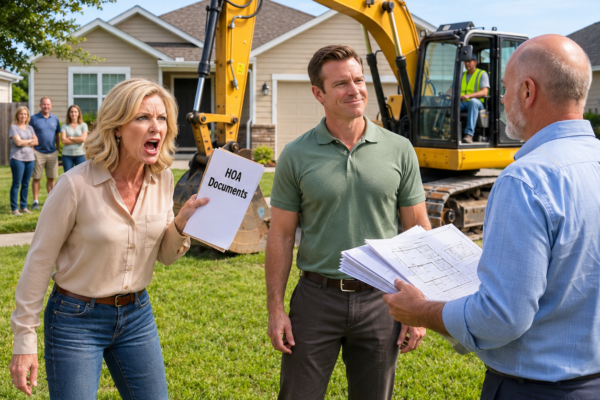
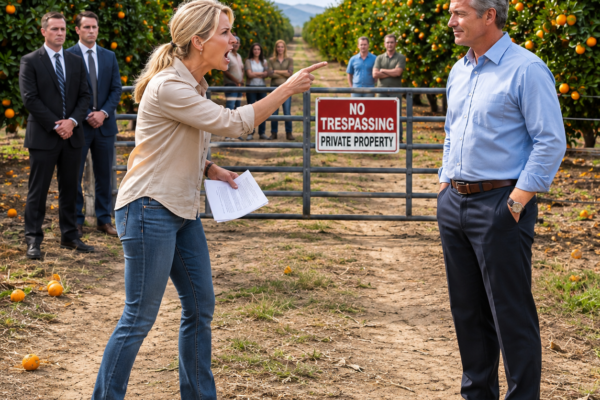
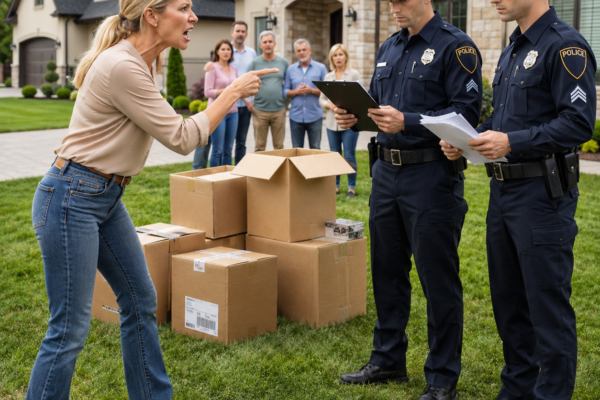
HOA president Brenda Whitmore spent more than $6 million building a landscaped luxury road across my 900-acre Colorado ranch while I was away caring for my brother after a stroke—and when I came home, she actually told me I should be grateful because her project had “increased my property value.”h
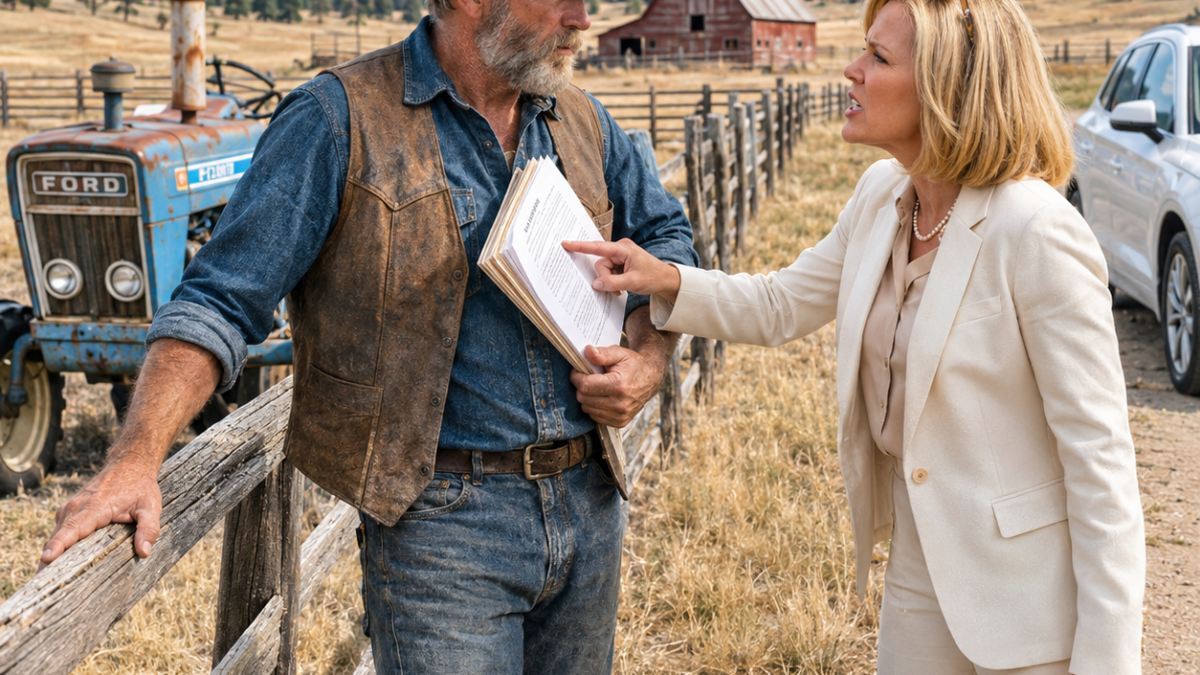
HOA president Brenda Whitmore spent more than $6 million building a landscaped luxury road across my 900-acre Colorado ranch while I was away caring for my brother after a stroke—and when I came home, she actually told me I should be grateful because her project had “increased my property value.”
What Brenda didn’t understand was that a county grading permit wasn’t an easement, an HOA vote wasn’t ownership, and the old document her consultants had relied on was a temporary construction license from the 1990s that had expired before half her neighborhood existed.
My family has owned Kelly Ranch since 1922.
My grandfather bought the first acreage after coming home from war, and my father and uncle spent their lives expanding it into nine hundred acres of rough Colorado foothills, cattle pasture, scrub oak, limestone, and enough wind to make you question your life choices every January.
Along the southern edge ran an old private logging road my grandfather cut in the 1950s.
It connected our ranch directly to the state highway.
When Summit at Briar Ridge was built next door, its residents immediately realized my road could eliminate almost twenty minutes from their drive.
I said no.
Brenda kept asking.
Then demanding.
Then talking about wildfire evacuation and “community necessity.”
I still said no.
That fall, my older brother suffered a massive stroke in Nebraska.
I leased out my winter grazing, hired a ranch hand to check cattle and perimeter fencing, and left Colorado for four and a half months.
When I finally drove home in March, my old iron south gate was gone.
In its place stood two stone columns engraved:
THE SUMMIT AT BRIAR RIDGE — SOUTH PARKWAY
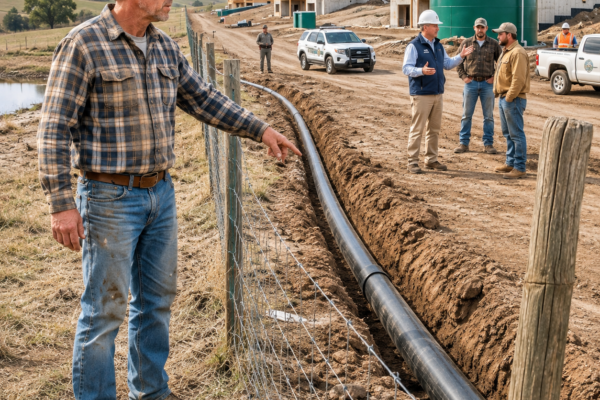
Beyond them was a twenty-four-foot paved road with decorative lighting, drainage structures, ornamental grasses, retaining walls, and fresh asphalt disappearing almost two miles through my ranch.
They had even removed the old cottonwood beside the creek where my grandfather used to hang his saddle.
I drove straight to attorney Greg Alvarez.
Forty-eight hours later, he laid the title documents across his desk.
“No easement,” he said.
“No dedication.”
“No public road.”
Then he handed me the construction permit.
Near the bottom, in small print:
ISSUANCE OF THIS PERMIT DOES NOT ESTABLISH PROPERTY RIGHTS OR AUTHORITY TO ENTER PRIVATE LAND.
I looked at him.
“So who owns the ground under their six-million-dollar road?”
Greg smiled.
“You do.”
“And the road?”
His smile disappeared.
“That part is going to take lawyers, engineers, and probably a judge.”
Then he tapped the HOA’s application.
“But Abby, they have a much bigger problem.”
“What?”
“They certified they had site control.”
[END OF FACEBOOK CAPTION]
[FIRST COMMENT / FULL STORY CONTINUATION]
I stared at the application.
“Site control.”
Greg nodded.
“Ownership, easement, license, lease, something legally sufficient to authorize construction.”
“They had none.”
“Not that I’ve found.”
I leaned back in the chair.
Greg Alvarez had represented my father before me.
He was sixty-eight, broad-shouldered, permanently irritated by printers, and one of those lawyers who could turn a five-word answer into a twenty-minute explanation if he thought you were about to do something stupid.
I was apparently about to do several things stupid.
“So I close it.”
“No.”
“Why not?”
“Because we are not starting with you dragging concrete blocks across a road now being used by one hundred forty-three households.”
“It’s my land.”
“That is the beginning of the analysis.”
“I thought ownership was the analysis.”
“You own the dirt.”
“Wonderful.”
“Now we determine what rights anybody claims over it, whether any temporary rights became something else, what permits were issued, who relied on what, what public-safety interests exist, what improvements are fixtures, what remedies a court is likely to order, and whether there are lenders or insurers involved.”
I stared at him.
“You make being right sound exhausting.”
“It usually is.”
I stood.
“I want the road closed.”
“Eventually, maybe.”
“Greg.”
“Abby.”
My name is Abigail Kelly.
Everybody calls me Abby.
The source version calling me “Mr. Kelly” was one of the least strange things people later got wrong.
I was sixty-one when this happened.
Never married.
No children.
My older brother, Nate, was the last close family I had left.
When his stroke happened in Omaha, there was no debate.
I went.
Kelly Ranch could survive a Colorado winter with hired help.
Nate could not relearn how to feed himself alone.
So I left.
That was the simplest decision in the entire story.
Coming back was the complicated part.
Greg pushed the construction application toward me.
Applicant:
SUMMIT AT BRIAR RIDGE HOMEOWNERS ASSOCIATION
Authorized representative:
Brenda Whitmore, President
Project:
South Parkway Emergency Access and Community Circulation Improvement
Estimated cost:
$6,180,000.
Contractor:
Whitmore Infrastructure Group
I looked at Greg.
“Her husband?”
“Brother-in-law.”
“Of course.”
“Do not get excited yet.”
“I’m not excited.”
“You have the face.”
“What face?”
“The one that thinks you just found corruption.”
“Her brother-in-law built a six-million-dollar road on my ranch.”
“That is a conflict question.”
“It is not automatically corruption.”
I hated that sentence.
Greg continued.
“There were three bids.”
I blinked.
“There were?”
“Yes.”
“Whitmore Infrastructure wasn’t the cheapest.”
“How far off?”
“About six percent.”
“That sounds bad.”
“Maybe.”
“The accepted proposal included more retaining-wall work, street lighting, and accelerated winter mobilization.”
“Were those necessary?”
“We don’t know yet.”
“Did Brenda disclose the relationship?”
“In one board packet.”
“Did she vote?”
“Yes.”
“Did the HOA have a conflict policy?”
“Yes.”
“Did she follow it?”
“Not fully.”
There.
A real issue.
Not a movie crime.
Greg tapped another document.
“Now the survey.”
The road plan had been prepared by Summit Engineering Collaborative.
Different company.
No family relationship we could find.
The title sheet showed a sixty-foot corridor labeled:
HISTORIC SOUTH ACCESS — EXISTING
That label came from a 1994 preliminary development exhibit.
Not a recorded plat.
Not my deed.
Not a county road map.
The original developer had negotiated a temporary construction license with my father.
I remembered it once Greg showed me the document.
I had been in college.
Barely paid attention.
Parker Residential wanted to bring heavy equipment across the south logging road while it built the first phase of what eventually became Summit.
Dad agreed.
Temporary.
One hundred twenty days.
Specific contractor access.
Restore damage.
No public use.
No permanent easement.
No assignment without consent.
It expired when the original road connection was complete.
The license itself was never recorded because it did not create a permanent land interest.
But the developer’s preliminary engineering maps continued to show the route.
Later consultants copied old base drawings.
A dashed line survived.
Then the label:
Historic South Access.
Then:
Existing Access.
By the time Brenda’s engineers were designing the new parkway, a temporary construction path had mutated on paper into something that looked permanent.
Greg said:
“This is how bad records become expensive.”
“Did the engineer check title?”
“Their scope says title verification by owner.”
“Owner meaning HOA.”
“Yes.”
“So Brenda told them there was an easement.”
“The board’s project manager provided a legal summary saying one existed.”
“Who wrote the summary?”
Greg handed me another page.
Not Brenda.
A management consultant named Dale Becker.
He had reviewed the 1994 license and concluded that “historic access rights appear to remain beneficial to the Summit successor property.”
Appear.
That one word was carrying six million dollars on its back.
The HOA attorney had responded by email:
Please obtain a current title opinion before construction. The 1994 instrument appears temporary and may not support permanent resident access.
I stared at Greg.
“They were warned.”
“Yes.”
“Who saw this?”
“Brenda.”
“The vice president.”
“Treasurer.”
“Property manager.”
“Project committee.”
“And then?”
“Someone hired a title company.”
“So they did check.”
Greg’s expression changed.
“They ordered the wrong product.”
I laughed once.
“Of course they did.”
They purchased an ownership-and-encumbrance report for the HOA’s common parcel.
Not my ranch.
It confirmed that Summit owned its entrance land.
It also referenced the old 1994 plan in the document chain.
The project committee apparently interpreted that as confirmation.
It wasn’t.
Nobody obtained a title commitment against the Kelly Ranch parcel.
Nobody asked me.
Nobody asked my ranch manager.
Nobody sent certified notice to the address on my deed.
Why?
That became one of the most important questions later.
Because they absolutely knew who I was.
Brenda had stood on my porch months earlier demanding access.
My mailing address had not changed.
My ranch hand, Miguel Santos, collected mail while I was gone.
He forwarded anything that looked important to Omaha.
No construction notice ever arrived.
The county permit?
Public notice had been posted at the project site.
On my south gate.
Which had been removed during mobilization.
Miguel did not use the southern section regularly in winter.
He checked cattle on the north and west sides.
The road corridor ran through a wooded part of the ranch where my winter herd wasn’t grazing.
He saw construction trucks from a distance.
Called me once.
I remembered the conversation.
“Some Summit crews working near the south line.”
“Drainage?”
“Looks like it.”
“Okay.”
I was sitting in a hospital cafeteria while Nate was learning to use a walker.
I didn’t ask more.
Miguel assumed I had authorized something.
Why wouldn’t he?
There were county permit boards.
Survey stakes.
Professional crews.
Nobody was sneaking around at midnight.
They were building in broad daylight with stamped plans and contractors.
That made the mistake more frightening.
Not less.
Greg said:
“The county did not certify title.”
“Then why did they issue permits?”
“Because land-use and grading permits routinely rely on applicant certifications.”
“County reviews drainage.”
“Driveway geometry.”
“Erosion.”
“Construction standards.”
“Not private title disputes.”
He pointed at the disclaimer again.
THIS PERMIT DOES NOT GRANT OR ESTABLISH PROPERTY RIGHTS.
The county had done some things badly.
An early staff note flagged:
Verify private access rights before release of construction set.
Then a later checklist marked:
Applicant confirmed.
No deed attached.
No easement.
Just certification.
That was a process failure.
But not the county giving away my ranch.
Greg told me:
“Do not turn this into ‘corrupt county employees.’”
“There’s no evidence of that.”
“Sloppy?”
“Maybe.”
“Overreliance on applicant?”
“Yes.”
“Fraud?”
“Not yet.”
Again with the precision.
I drove home that evening using the north ranch road.
I did not use South Parkway.
Not because I accepted their claim.
Because Greg asked me not to alter anything while we documented.
At sunset I walked the new road.
Slowly.
Two miles felt longer on foot.
The first section cut through scrub oak.
Then descended toward Cottonwood Draw.
That was where the old tree had stood.
Not an oak.
A cottonwood.
My grandfather planted it in 1926 according to Dad.
I don’t know if that date was exact.
Families turn approximations into scripture.
But the tree had been huge when I was a child.
One trunk split into three.
A low branch where Dad hung a saddle when he was cleaning tack.
Nate carved his initials there at thirteen.
My grandfather supposedly whipped him for it.
Probably another family myth.
The tree was gone.
Not trimmed.
Removed.
The stump had been ground.
The creek crossing widened.
A concrete box culvert installed.
Retaining walls on both sides.
I stood on new asphalt looking at the place where one of the last physical things tied to my grandfather had been.
That was the first moment I cried.
Not over six million dollars.
Not Brenda.
The tree.
Money could not restore that.
A contractor had planted three young cottonwoods nearby.
Probably mitigation.
They looked insulting.
Thin trunks.
Support stakes.
Plastic irrigation bags.
I hated them.
Then hated myself for hating trees.
They hadn’t done anything.
Farther up, streetlights.
Black powder-coated poles every seventy-five yards.
Shielded downward.
Tasteful.
Expensive.
A center median appeared only in two widened turnout sections, not the whole road.
The source version’s four-lane boulevard was nonsense.
What they had actually built was a twenty-four-foot asphalt road with occasional landscaped split sections, emergency pullouts, drainage, guardrail, two stone entry monuments, conduit for cameras, and enough decorative lighting to make my grandfather rise from the grave just to complain about electricity.
It was objectively well built.
That made me angrier.
If you’re going to trespass, at least have the decency to do a bad job.
The next morning, a white Range Rover came down the road toward me.
Brenda.
Of course.
She stopped beside where I stood.
Window lowered.
“Abby.”
“Brenda.”
“You’re back.”
“Yes.”
She smiled.
Not cruelly.
Proudly.
That complicated my anger more than if she had sneered.
“You’ve seen it.”
“I have.”
“What do you think?”
I looked down at the asphalt.
“You built it on my ranch.”
Her smile tightened.
“We established the historic access.”
“No.”
“The county approved the project.”
“They approved grading.”
“Brenda, there is no easement.”
“That’s not what our consultants told us.”
“Your lawyer told you to verify title.”
A flicker.
So Greg had been right.
She knew the email.
Brenda said:
“Our counsel raised a technical question.”
“That was resolved.”
“How?”
“Through engineering and historical documentation.”
“That is not title.”
She exhaled.
“Abby, you opposed this from the beginning because you dislike Summit.”
“I don’t care about Summit.”
“You’ve complained about development for years.”
“I complained about people cutting my fence.”
“You called our entrance a shopping mall.”
“It has a fountain.”
“That does not answer the point.”
“The point is you paved my land.”
Her hands tightened on the steering wheel.
“Do you understand why we did this?”
“Yes.”
“You wanted a shortcut.”
“That is insulting.”
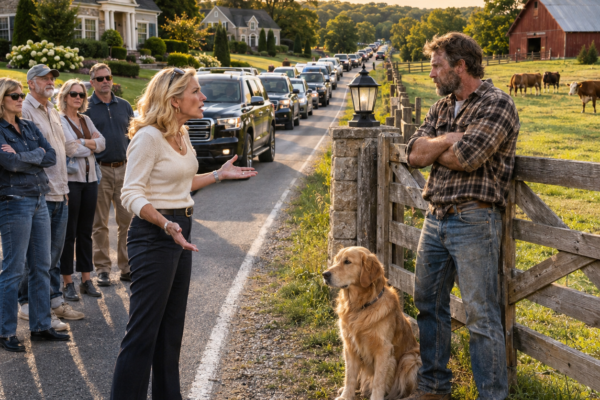
“There are one hundred forty-three households behind one mountain-road entrance.”
“Last year’s wildfire evacuation took thirty-four minutes just to clear the gate queue.”
That was new.
I knew about the fire.
Not the queue time.
Brenda continued.
“County emergency management told us to develop secondary access.”
“Did they tell you to take mine?”
“No.”
“They told us to solve the problem.”
“And you decided my road was the solution.”
“Because it is the solution.”
There it was.
Outcome first.
Rights second.
Brenda looked down the parkway.
“This road could save lives.”
“Then you should have bought an easement.”
“You refused to discuss it.”
“You demanded I open the gate.”
“You never gave us a number.”
“You never asked what number.”
She stared.
That landed.
Then she said:
“What do you want?”
Not apology.
Not:
Did we make a mistake?
“What do you want?”
I looked toward the missing cottonwood.
“My tree back.”
She followed my eyes.
Her expression changed.
For the first time, she looked uncertain.
“The cottonwood?”
“Yes.”
“The arborist marked it for removal because the road grade—”
“I know why.”
“I want it back.”
She had no answer.
Neither did I.
You cannot negotiate with irreversible things.
So I said:
“Greg Alvarez will contact your lawyer.”
Brenda stiffened.
“We have counsel too.”
“Good.”
Then she added:
“For what it’s worth, the project improved your access significantly.”
I stared.
“Do not send me a maintenance bill.”
She looked genuinely surprised.
“How did you—”
“Because you already threatened that before I left.”
She had.
In one email:
If the Association is forced to improve the historic access corridor without ranch participation, equitable cost sharing may be required.
I had ignored it.
Now I said:
“If an invoice arrives, Greg is framing it.”
I walked away.
The first court filing happened three days later.
Not quiet title alone.
Greg filed for:
Declaratory judgment regarding ownership and absence of HOA access rights.
Trespass.
Property damage.
Injunctive relief.
Accounting of construction activities.
Restoration or other equitable remedy.
Damages.
Attorney fees where available.
He did not ask the judge to declare that every streetlight automatically belonged to me because it touched my soil.
Fixture law is more nuanced than Facebook thinks.
Permanent improvements can become part of real property in some contexts.
But wrongful improvement cases involve intent, ownership, good faith, removal feasibility, unjust enrichment, relative hardship, and equitable remedies.
Greg wanted options.
That was smarter than claiming I’d been gifted a six-million-dollar driveway.
The judge granted a temporary restraining order quickly.
Not giving me total victory.
The HOA could not expand construction.
Could not represent the road as public.
Could not open it to general resident traffic pending hearing.
But emergency vehicles could use it if necessary under a temporary court-approved protocol.
That mattered.
Because I was angry at Brenda.
Not at somebody having a heart attack during a wildfire.
The order also allowed necessary work to stabilize drainage and prevent environmental damage.
No one wanted unfinished culverts washing out in spring.
Within twenty-four hours, Summit closed the south gate to residents.
Temporary signs:
EMERGENCY ACCESS ONLY — COURT ORDER
Residents went back to the twenty-minute detour.
The neighborhood exploded.
I expected everyone to hate me.
Some did.
One email somehow found my ranch account:
Hope you’re proud when someone dies because of your ego.
I gave it to Greg.
Did not respond.
Another:
We had no idea the road crossed private land.
Another:
What exactly happened?
I sent everyone to the public court filings.
No social media warfare.
Greg insisted.
“Your facts are strong.”
“Do not weaken them with adjectives.”
The preliminary injunction hearing took two weeks.
Summit’s lawyers argued three main theories.
First:
The 1994 construction license, combined with historic use, created continuing access rights.
Greg dismantled that.
The document expired by its own terms.
No assignment.
No permanent grant.
No recorded easement.
Second:
Prescriptive easement.
That was weak because most historic non-ranch use had been either temporary construction access or permissive.
Dad had occasionally allowed maintenance crews through.
Permission undermines the hostility element needed for prescription.
Also, resident use had not been open and continuous for the required period in the way Summit claimed.
Third:
Equitable easement or relative-hardship relief.
That was the real one.
Summit had spent millions.
The road served a serious emergency-access purpose.
Removing it entirely would be economically wasteful and environmentally disruptive.
The HOA argued a court should require me to accept a compensated easement.
That worried me.
For the first time, there was a path where they could be wrong and still end up with access.
Greg had warned me.
“Courts do not always reward the person who can yell ‘trespass’ loudest.”
Especially when innocent homeowners and public-safety interests become entangled.
But equity also considers behavior.
That hurt Summit.
Because construction had not been an innocent survey error alone.
Their attorney had specifically warned them to verify title.
Brenda’s board proceeded without obtaining my consent.
They knew I had objected previously.
The judge asked Summit’s attorney:
“Why was Ms. Kelly not contacted before a six-million-dollar project was constructed across nearly two miles of her property?”
Long pause.
The attorney answered:
“The association believed it already held access rights.”
The judge:
“Based on what instrument?”
The temporary license.
Historical plans.
Consultant opinion.
No deed.
The judge was not impressed.
Then Greg introduced Brenda’s email from before I left.
Abby, if you refuse to cooperate voluntarily, the board will explore every available historical access basis.
That mattered.
It showed they knew cooperation was absent.
The judge continued the injunction against general resident traffic.
Emergency use remained.
No final decision yet.
Then came discovery.
That is where this story stopped being about one woman and became about a system.
Board minutes.
Emails.
Consulting files.
Lender documents.
Construction contracts.
Insurance.
Survey scopes.
The loan.
Summit had not “drained its entire reserve fund.”
That was an exaggeration.
It used about $1.7 million from reserves and capital-project funds.
Residents approved a $7,500 special assessment the year before, partly marketed as emergency-access improvement.
The remaining project was financed through an association loan and developer contribution tied to the planned south-access enhancement.
Residents knew a road was being built.
They did not know the title problem.
Most believed Summit already owned an access corridor.
That distinction mattered.
The bank did not lend six million dollars blindly.
It relied on:
Board resolutions.
Budget.
Association revenue.
Project plans.
Borrower certification.
And a legal opinion limited to the HOA’s authority to borrow—not title to my ranch.
Everyone had reviewed a different slice.
Nobody owned the whole question.
That is how institutional mistakes become expensive.
One person checks engineering.
Another financing.
Another governance.
Another drainage.
The property right itself sits between the folders.
Brenda was the person who should have forced the pieces together.
She didn’t.
Why?
Discovery answered that too.
A wildfire the previous summer had terrified Summit.
Evacuation traffic backed up.
One elderly resident required ambulance transport while the main road was congested.
No one died.
Still serious.
County emergency planning recommended Summit pursue a second emergency egress.
Pursue.
Not seize.
Brenda became obsessed.
She formed the South Access Committee.
Met engineers.
Lobbied the county.
Sought funding.
Contacted fire officials.
Most of that was responsible.
Then she convinced herself my old road was the only viable solution.
Alternative routes existed.
One crossed a neighboring timber parcel.
More expensive.
One required a small bridge.
One required purchasing three separate easements.
My route was already graded.
Direct.
Obvious.
And I had said no.
Her emails changed after that.
Early:
Need to approach Abby with purchase proposal.
Later:
Abby is unlikely to cooperate. Need confirm historic rights.
Then:
If prior access survives, we should stop treating her consent as necessary.
That sentence hurt Summit badly.
Not criminal.
But clear.
Brenda had moved from:
Let’s buy a right.
To:
Let’s prove we already have one.
Once the desired conclusion formed, every ambiguous document started looking like support.
Confirmation bias with a construction budget.
Her brother-in-law’s paving company was another issue.
He was not an owner of the HOA.
Brenda did not secretly receive kickbacks.
The company was legitimate.
Licensed.
Insured.
Good reputation.
Its bid was within range.
But the conflict process was poor.
Brenda disclosed the relationship in one meeting packet.
Then participated in scoring proposals.
Then voted.
Summit’s written policy required her to abstain.
She said she believed disclosure was enough.
It wasn’t.
Independent review later found no evidence she got money from the contract.
Still a governance failure.
The engineering surveyor?
No brother-in-law.
No fraudster.
He had clearly labeled the linework:
ACCESS CORRIDOR PER CLIENT-PROVIDED HISTORIC DOCUMENTATION — TITLE NOT VERIFIED
That note appeared on sheet C-2.
Tiny.
But there.
No fraudulent survey.
Another viral claim gone.
The county permit staff?
Not bribed.
They had relied on the HOA’s certification of site control.
The internal checklist failure led to retraining later.
No public-corruption case.
What remained was less sensational.
And more damning.
Brenda had repeatedly been told title verification was unresolved.
The board chose to proceed anyway.
Why would other directors allow that?
Because Brenda was competent.
That word again.
She had run three major Summit projects successfully.
Retaining-wall repair.
Water-main replacement.
Clubhouse renovation.
She understood contractors.
Budgets.
Schedules.
She worked full time at being HOA president without being paid.
Other directors had jobs.
Families.
Travel.
When Brenda said:
“Handled,”
people felt relieved.
So they stopped asking:
How?
Treasurer Michael Reynolds later admitted under oath:
“I believed she had confirmed the easement because she spoke as though she had.”
Greg asked:
“Did you see a title opinion?”
“No.”
“Did you ask?”
“No.”
“Why?”
“I trusted her.”
There it was.
Six million dollars of trust.
The environmental impact mattered too.
They had not destroyed three miles of barbed wire.
They removed about six thousand feet of old fencing.
Still substantial.
They reconstructed portions elsewhere.
They cut the cottonwood.
Cleared scrub oak.
Blasted two small rock cuts.
Installed culverts.
Disturbed roughly twenty-three acres including construction limits, staging, drainage, and revegetation.
My ranch did not become an ecological wasteland.
But the disturbance was real.
I hired my own experts.
Land appraiser.
Civil engineer.
Rangeland ecologist.
Arborist.
The arborist valued the lost cottonwood in ways that made Greg warn me not to focus on a single replacement number.
Old trees are difficult.
Replacement-cost formulas can produce unrealistic figures.
The more important damage was sentimental and site-specific.
Courts are bad at pricing grandfathers.
We documented.
Then came the question:
What did I actually want?
At first:
Remove everything.
Every light.
Every curb.
Every stone.
Rip asphalt.
Restore logging road.
Plant the corridor.
Make Summit pay.
Greg listened.
Then:
“Do you want the honest answer?”
“Yes.”
“That is probably not the best remedy.”
I stared.
“Why?”
“Removing two miles of engineered road would create another massive disturbance.”
“Drainage has been rebuilt around it.”
“Cuts made.”
“Culverts placed.”
“Subgrade compacted.”
“You can remove pavement.”
“You cannot unblast limestone.”
“You can regrade.”
“You cannot regrow your cottonwood.”
“So they win.”
“No.”
“That is the childish version of winning.”
I hated him.
He continued.
“You now own a ranch with a high-quality internal road whether you wanted one or not.”
“Your cattle trucks can use it.”
“Fire crews can use it.”
“Ambulance.”
“Hay delivery.”
“Veterinary equipment.”
“Ranch operations.”
“The question is whether Summit gets to use it.”
“No.”
“Maybe emergency use.”
“Maybe not residents.”
“That is where we negotiate.”
I crossed my arms.
“I don’t want their money.”
“You want restoration.”
“Yes.”
“You cannot restore history.”
That hurt.
“Then get what can be restored.”
Fencing.
Vegetation.
Creek buffer.
Private control.
Damages.
Costs.
Gate.
Lighting removal.
No residential traffic.
A written emergency-access arrangement if I was willing.
Future clarity.
I went home angry.
Walked the road again.
At dusk, the decorative lights came on automatically.
Warm pools of light through the scrub oak.
Ridiculous.
Also useful.
My ranch manager, Miguel, joined me.
“You hate it?”
“Yes.”
He looked down the road.
“Hay trucks won’t.”
“Traitor.”
“Winter vet call won’t.”
“Stop.”
“Fire crew won’t.”
I stared.
He smiled.
Then looked toward the cottonwood site.
“That part they can’t fix.”
No.
They couldn’t.
Miguel had worked for us twenty-two years.
He remembered Dad.
Nate.
The tree.
He said:
“Don’t make the road pay for the tree.”
That was a strange sentence.
Good one.
The mediation happened in June.
By then Nate was stable enough in assisted living that I could focus without feeling like every hour spent on property law was stolen from my brother.
Summit sent:
Brenda.
Michael Reynolds.
Acting vice president Lisa Chen.
Their attorney.
Insurance representative.
Bank counsel attended part.
Developer representative.
I brought Greg.
My appraiser.
Miguel for operational questions.
Mediator:
Judge Elaine Porter, retired.
First thing she said:
“No one is getting everything they want.”
Promising.
Summit proposed buying a permanent public-style access easement.
I said no.
They increased the number.
I said no.
Their lawyer asked:
“Is this about compensation?”
“No.”
“Then what?”
“Residents do not get a commuter road across my ranch.”
Brenda spoke.
“It was designed as a secondary access.”
“It has landscaping and decorative lights.”
“Safety and community circulation.”
“Exactly.”
I pointed at her.
“You keep joining those words.”
“Emergency access and commute are not the same thing.”
That became the breakthrough.
Separate uses.
Emergency access?
Maybe.
General daily resident traffic?
No.
The fire district supported emergency redundancy.
It did not require a luxury commuter shortcut.
The county transportation engineer confirmed Summit’s existing main road remained legally adequate for normal traffic.
The second route was desirable for emergency planning, not required for everyday circulation.
So we built the settlement around that.
Not immediately.
Three more sessions.
Numbers.
Engineering.
Insurance.
Arguments.
Eventually:
The road would remain physically in place across Kelly Ranch.
Not because the HOA automatically forfeited it.
Because I agreed to retain the improvement as part of settlement rather than require demolition.
Summit and its contractors would disclaim any ownership or use right except a narrow recorded emergency-access easement.
That easement allowed:
Fire.
EMS.
Law enforcement.
Mandatory evacuation under declared or documented emergency conditions.
Emergency utility response where no practical alternative existed.
No routine resident traffic.
No delivery shortcut.
No landscaping crews.
No HOA officers.
No real-estate tours.
No commute.
The emergency gates would be controlled through Knox-box/fire-district access and an electronic system logged for each opening.
Summit would relocate its stone monument off my ranch.
The words SOUTH PARKWAY disappeared.
The entrance from the highway became:
KELLY RANCH — PRIVATE ROAD
EMERGENCY ACCESS FOR SUMMIT AT BRIAR RIDGE BY RECORDED AGREEMENT
I insisted on the wording.
Greg called it obnoxious.
I called it precise.
Most decorative streetlights would be removed.
Why?
Light pollution.
Maintenance.
I didn’t want two miles of HOA-style boulevard glowing across my ranch.
We kept lighting only at the highway entrance, two major curves, and the creek crossing where safety benefited.
Summit removed the ornamental center islands.
Restored those areas to native grasses.
Rebuilt fencing.
Installed cattle guards where I wanted them.
Revegetated disturbed shoulders with a native seed mix chosen by my rangeland ecologist.
Repaired two spring-fed stock-water lines damaged during construction.
Paid for five years of invasive-weed monitoring.
At Cottonwood Draw, they funded restoration.
Not a replacement fantasy.
Three new cottonwoods.
Willow plantings.
Bank stabilization.
A bench made from salvaged wood recovered from part of the original tree the contractor had stored rather than chipped.
That surprised me.
One foreman had saved several large trunk sections because the wood was beautiful.
I cried when Greg told me.
We used one slab for the bench.
Another I stored in the barn.
Money:
Summit’s insurers and contractors contributed.
The HOA paid.
Whitmore Infrastructure paid through settlement for portions of work done after title uncertainty had been flagged.
Professional-liability insurer for the consultant contributed.
County settled a smaller administrative claim without admitting liability, mostly covering some survey/legal costs tied to its checklist failure.
Total cash damages to me were substantial.
Not six million.
Around $1.35 million before legal expenses and tax considerations.
That covered:
Land disturbance.
Tree loss component.
Fence.
Temporary loss of use.
Restoration.
Professional fees.
Ongoing monitoring.
Settlement consideration.
I did not become rich.
I already owned 900 acres.
Land is valuable.
Ranching is not the same as cash.
Most settlement money went back into land, taxes, legal costs, restoration, and reserves.
The HOA did not go bankrupt.
This is where the original story most needed correction.
Summit still owed money on the project.
The road still had value—just not the value residents expected.
Insurance recoveries and contractor settlements reduced the loss.
The board refinanced part of the association loan.
Owners approved an additional assessment averaging about $3,600 per home spread over two years.
Painful.
Not $24,000 due in ninety days.
Some residents were furious.
Understandably.
They had voted for a project presented as legally secured.
They had paid.
Then lost daily access.
Property values dipped slightly during litigation because buyers hate uncertainty.
Recovered after settlement.
The neighborhood did not become toxic waste.
Houses did not become unsellable.
Life is less satisfying than collapse.
More durable.
Brenda’s position?
That fell apart.
Not instantly.
The board hired independent governance counsel once discovery exposed the title warnings and related-party procurement issue.
Counsel reviewed:
Meeting minutes.
Project authorization.
Conflict disclosures.
Attorney emails.
Consultant reports.
Loan documents.
Permit certifications.
Brenda’s role.
Findings:
The board had valid authority to pursue secondary access.
The board had valid authority to borrow and fund infrastructure subject to its governing documents.
Brenda had disclosed her relationship to Whitmore Infrastructure but failed to recuse as required.
Brenda repeatedly characterized the 1994 license as a continuing easement after counsel warned title was unresolved.
The board’s site-control certification was materially unsupported.
No evidence showed Brenda personally profited from the construction contract.
No evidence showed her brother-in-law bribed officials.
No evidence showed the surveyor knowingly falsified a deed.
No criminal fraud conspiracy.
But substantial governance failures.
The board removed Brenda as president.
Five to one.
She voted no.
She remained a director until the member recall.
Recall:
61 percent remove.
39 retain.
Some residents defended her passionately.
One said:
“She was trying to keep us from burning alive.”
That mattered.
Brenda’s wildfire fear had been real.
Another:
“She should have bought the easement.”
Also true.
One resident said:
“Good intentions do not become site control.”
That sentence made the local paper.
Yes, the local paper eventually covered it.
Not national news.
No documentary.
Headline:
SUMMIT HOA SETTLES RANCH ACCESS DISPUTE; EMERGENCY ROUTE TO REMAIN
Boring.
Accurate.
The county changed its permit intake after the case.
Projects crossing land not owned by the applicant now required clearer evidence of access rights before final permit release.
Not because the county suddenly decided private title was its job.
Because the project showed that unchecked applicant certifications could create enormous downstream problems.
No employee went to prison.
One supervisor received discipline over the incomplete checklist.
Training changed.
The consultant who wrote the “historic rights appear to remain” memo received the professional equivalent of a very unpleasant lesson.
His firm refunded fees and changed its disclaimer process.
No license revocation.
The engineer continued practicing.
Brenda’s brother-in-law, Eric Whitmore, kept his paving company.
He did not get indicted.
He had relied on the HOA’s representation that it controlled the corridor.
But discovery showed he knew title remained under discussion during early mobilization.
That exposed him to civil liability.
His company paid part of the settlement.
Then something unexpected happened five years later.
I hired him.
Not for a road.
A culvert replacement.
Greg almost choked when I told him.
“Why?”
“Lowest qualified bid.”
“Abby.”
“Three bids.”
“Insurance.”
“License.”
“References.”
“Clean contract.”
“Why are you like this?”
Because by then the point had become process.
If Eric’s company could compete fairly, disclose history, and perform the work, banning him forever would turn reform into a blacklist.
He replaced the culvert.
On time.
Under budget.
No drama.
I sent Brenda a photograph afterward.
She had moved by then.
Text:
YOUR BROTHER-IN-LAW FINALLY BUILT SOMETHING ON MY RANCH WITH PERMISSION.
She replied:
MIRACLES HAPPEN.
That was years later.
We were not there yet.
After settlement, Summit closed its internal connection to normal traffic.
Resident side had a locked emergency gate.
Highway side had my ranch gate.
Electronic access for first responders.
The decorative Summit branding disappeared.
For the first time, the road actually looked like something belonging on a ranch.
Still too smooth.
Still too expensive.
But mine to use under the settlement.
That autumn I drove our cattle down it.
Not three hundred head.
Kelly Ranch couldn’t responsibly carry three hundred black Angus on that foothill ground without substantial leased pasture.
We ran around a hundred and twenty cow-calf pairs at the time, season depending.
That day we were moving eighty-seven cows and calves from an upper pasture to winter ground.
Miguel asked:
“Road?”
I smiled.
“Road.”
We closed both ends.
Put riders at side gates.
Cattle walked.
Slowly.
Black bodies on black asphalt.
Hooves clicking.
Calves nervous at the painted edge lines.
We had roughened one section near the grade because smooth pavement can be slippery for livestock.
No vintage streetlights getting knocked over.
No daily manure revenge routine.
No feeding cattle beside Brenda’s patio.
That would have been childish and probably unsafe.
But yes.
The cattle left manure.
They are cattle.
I looked down at the asphalt.
Six million dollars of luxury engineering.
A cow lifted her tail.
Miguel saw my face.
“Don’t.”
“I didn’t say anything.”
“You were going to.”
“Maybe.”
He laughed.
That image gave me more satisfaction than it should have.
Not because I wanted to degrade the road.
Because the road had finally become part of the ranch rather than a symbol of Summit’s claim.
Hay trucks used it.
Vet used it.
Wildfire crew used it twice.
One winter, an ambulance used the emergency agreement to reach Summit after a rockslide blocked part of the main road.
That was the moment I stopped resenting the emergency easement.
A resident had a cardiac event.
Fire district opened the gate.
Ambulance crossed my ranch.
No phone call needed first.
No Brenda.
No board vote.
The system worked.
That mattered.
I had been right to refuse general resident access.
Brenda had been right that secondary emergency access could save time.
Both facts fit.
The legal fight had been about whether one justified stealing the other.
It didn’t.
Years after settlement, the road saved a life.
Probably.
The paramedics would never say it that way.
They would say it reduced response delay.
Good enough.
Nate visited the ranch after recovering enough to travel.
He never regained full use of his left hand.
Walked with a cane.
But he was himself.
We drove the new road together.
He looked out the passenger window.
“This is ugly.”
“Thank you.”
“Dad would’ve hated it.”
“Yes.”
“Granddad would’ve dynamited it.”
“Probably.”
We reached Cottonwood Draw.
Stopped.
I showed him the bench made from the salvaged trunk.
Nate ran his right hand along the grain.
Then found the old carved initials.
Barely visible.
NK
He stared.
“You kept that?”
“The contractor did.”
He sat.
For a while we said nothing.
Then:
“I’m sorry.”
“For what?”
“You were taking care of me while they did this.”
I turned.
“Nate.”
“If I hadn’t—”
“No.”
“Don’t.”
“You had a stroke.”
“You didn’t schedule it to help Brenda pave a road.”
He laughed.
Good.
Then he looked toward the young cottonwoods.
“They’ll get big.”
“Not in my lifetime.”
“Everything isn’t required to finish while you’re watching.”
That sounded like him before the stroke.
I needed that.
The restoration changed my relationship with the road.
At first I wanted the scar erased.
Then I realized the ranch itself was full of scars.
Old quarry cuts.
Fence lines.
Dry irrigation ditches.
Logging tracks.
Burn areas.
Windmill pads.
The land had never been untouched.
My grandfather changed it.
Dad changed it.
I changed it.
The question wasn’t:
Natural versus unnatural.
It was:
Who gets to decide?
Brenda’s project violated that.
Once control returned to me, I could decide what the road became.
That was the actual property-right victory.
Not possessing asphalt.
Decision-making.
I removed decorative elements that served no ranch purpose.
Kept drainage.
Kept strong pavement.
Added pullouts for livestock trucks.
Removed ornamental grasses from medians.
Seeded natives.
Converted one widened entry area into a staging pad for trailers.
Installed a solar-powered gate controller.
The two remaining stone columns on my side?
I considered demolition.
Instead, we removed Summit’s gold lettering.
Miguel suggested carving:
KELLY RANCH
EST. 1922
I almost did.
Then decided it was too polished.
My grandfather would haunt me.
So we bolted a simple steel ranch sign between them.
KELLY RANCH
No gold.
No fountain.
One of the stone columns still had a faint rectangular shadow where SOUTH PARKWAY had been.
I left it.
Not intentionally symbolic.
Removing it would have required resurfacing.
I am cheap in practical ways.
Residents sometimes complained that losing the shortcut increased their commute.
They were right.
It did.
About twelve to eighteen minutes depending on traffic.
Some wanted the HOA to reopen negotiations with me for limited daily access.
The new board asked once.
Properly.
Written proposal.
Annual fee.
Restricted resident-only gate.
No deliveries.
Speed controls.
I said no.
They accepted it.
No lawsuit.
No smear campaign.
No engineered historical-right theory.
That five-minute exchange showed me how unnecessary the whole six-million-dollar mess had been.
Ask.
Answer.
Move on.
One board member later told me they could have bought an easement from the neighboring timber company for less than a quarter of what the road dispute ultimately cost.
They eventually did.
Not a full commuter road.
A one-lane emergency route with gravel surface and a short bridge.
County approved.
It gave Summit redundancy without crossing Kelly Ranch.
Why didn’t Brenda choose that?
Because my route was easier.
There’s that word again.
Easier.
Direct.
Already graded.
No bridge.
One landowner.
Except the landowner said no.
Brenda treated “no” as inefficiency.
The neighbor route treated “no” as a fact.
That was the difference.
Brenda stayed in Summit for about three years after recall.
No bankruptcy.
No forced move.
She remained active.
Landscape committee.
Wildfire preparedness group.
Honestly?
She was excellent at wildfire planning once somebody else controlled property decisions.
Defensible-space days.
Emergency alerts.
Evacuation maps.
Residents loved her again in a smaller role.
That taught me something uncomfortable.
The same persistence that made her dangerous as an unchecked president made her useful inside a defined scope.
Authority changes behavior.
Or reveals it.
I’m still not sure.
She wrote me once asking whether the fire district could use my road for a preparedness drill.
Not the HOA.
Fire district.
Attached request.
Date.
Insurance.
Purpose.
I answered:
Yes.
No problem.
The drill went well.
Brenda sent:
SEE? WE CAN COOPERATE.
I replied:
PERMISSION. AMAZING TECHNOLOGY.
She did not answer for two days.
Then:
I WALKED INTO THAT ONE.
That was when our relationship softened.
Not friendship.
Mutual acknowledgment.
Four years after settlement, Brenda showed up at the ranch.
She had called first.
Another miracle.
We sat at the kitchen table.
Coffee.
She looked around.
“Your house is smaller than I imagined.”
“What did you imagine?”
“A fortress.”
“Why?”
“You sued us.”
“You paved my ranch.”
“Fair.”
She had come to tell me she and her husband were moving to Fort Collins to be closer to their daughter.
Then she surprised me.
“I owe you an apology.”
“You’ve apologized for the title issue.”
“No.”
“I apologized for the process.”
“This is different.”
She looked toward the window.
“I wanted that road too badly.”
“Yes.”
“I was scared after the fire.”
“I know.”
“The evacuation was chaos.”
“I know.”
“One resident called me from her car crying because she couldn’t get out.”
“That changes you.”
“It did.”
She folded her hands.
“Then you said no.”
“Yes.”
“And I heard: Abby doesn’t care if we burn.”
I stared.
“That’s not what I said.”
“I know.”
“Now.”
“Yes.”
She smiled faintly.
“Now.”
She continued.
“Once I decided your refusal was selfish, every document that supported me looked important.”
“And every document that didn’t looked technical.”
That was exactly it.
“The temporary license was one.”
“The attorney email was technical.”
“Your objection was technical.”
“Title was technical.”
“I told myself safety was bigger.”
“But safety did not give you ownership.”
“No.”
She looked at me.
“I should have brought you an appraisal and asked what an emergency easement cost.”
“I might have said yes.”
Her eyes widened.
That was the first time I had told her.
“Really?”
“For emergency use only.”
“You never said that.”
“You never asked that.”
She sat back.
For a moment she looked genuinely sick.
Six million dollars.
Years of litigation.
Recall.
All because the conversation began with:
Open your gate.
Not:
Would you grant emergency access?
Brenda laughed once.
No humor.
“That is brutal.”
“Yes.”
“I would have paid.”
“Probably.”
“The HOA would have approved.”
“Probably.”
She looked toward Cottonwood Draw.
“The tree?”
“No.”
There was no way around that.
Her eyes dropped.
“I signed the clearing package.”
“I know.”
“I didn’t know that tree mattered.”
“You didn’t ask.”
“No.”
She sat quietly.
Then:
“I’m sorry.”
That apology I accepted differently.
Not because she finally suffered enough.
Because it named the irreversible part.
“Thank you.”
We drank coffee.
Then she said:
“The new road is better without the lighting.”
“I kept three.”
“I know.”
“Fire district likes them.”
“Yes.”
“Do you use it every day?”
“Almost.”
“See?”
I stared.
She smiled.
“You were dying to say we improved the ranch.”
“Get out.”
She laughed.
That was probably the closest we ever got to friendship.
When she moved, she mailed me one thing.
A framed copy of the original project rendering.
The absurd version.
Stone arch.
Median.
Decorative grasses.
SUMMIT AT BRIAR RIDGE SOUTH PARKWAY
Across the bottom she wrote:
CHECK THE DEED.
I hung it in Greg’s office.
He objected.
I ignored him.
Years later Greg retired.
He gave it back.
It hangs in my ranch office now.
Not as a trophy.
As a warning.
Plans are not rights.
Permits are not title.
Confidence is not ownership.
The HOA’s reforms survived Brenda.
Related-party contracting.
Title verification before capital projects crossing outside parcels.
Full-board access to counsel opinions.
No president sign-off on site-control certifications without underlying documents.
Major project checklist.
Survey.
Title.
Easement.
Insurance.
Permits.
Neighbor notice.
Emergency-use analysis.
Budget.
Conflict disclosure.
Boring.
Good.
The new board hired a professional manager for capital work.
Not because volunteer boards cannot manage anything.
Because six-million-dollar infrastructure is not a reasonable side hobby.
That may be the broadest lesson.
An HOA president can manage meetings.
Budgets.
Landscaping.
Rule enforcement.
But once you are building roads, retaining walls, drainage networks, and emergency infrastructure across land you do not own?
You need professionals.
And professionals need complete scopes.
The emergency-access agreement with Kelly Ranch remained active.
No routine use.
Logged openings.
In twelve years, Summit used it five times.
Two wildfire evacuations.
One ambulance during rockslide closure.
One law-enforcement emergency.
One utility incident.
Five.
That was enough to justify the easement.
Not enough to justify taking it without asking.
Those numbers gave me peace.
I had not been selfish by refusing a commuter shortcut.
Brenda had not been crazy to worry about emergency access.
The problem was collapsing those two things into one project.
Luxury road plus emergency rhetoric.
Convenience dressed as necessity.
That is how expensive overreach gets sold.
The road also changed ranch operations more than I expected.
Hay deliveries in winter became easier.
No more mud ruts swallowing dual tires.
Veterinarian could reach the south pasture faster.
Wildfire crews staged there one summer.
Insurance premium dropped slightly after access improvement and fuel-reduction work.
My appraiser later said the road did increase certain operational value.
Brenda would have loved that.
I never told her.
She probably knew.
Miguel certainly did.
Every time a truck rolled smoothly across the creek crossing he would say:
“Terrible road.”
I would answer:
“Awful.”
We maintained the joke for years.
The road required maintenance too.
That was another thing the revenge version ignores.
Asphalt is not free once you own it.
Crack sealing.
Snow clearing.
Culverts.
Shoulder repair.
Gate electronics.
We set aside money.
Summit contributed only to maintenance directly tied to its emergency-access easement under the settlement formula.
Everything else?
Mine.
Property rights come with invoices.
One winter, I spent $18,000 repairing a drainage failure.
I called Greg.
“I want to give the road back.”
He said:
“No returns.”
I hung up.
Nate died eleven years after his stroke.
Peacefully.
I was with him.
The ranch road had become ordinary by then.
After the funeral, I drove home from Nebraska.
Ten hours.
Same route as the day I discovered it.
At sunset I turned off the highway.
Stone columns.
Simple Kelly Ranch sign.
Gate opened.
I drove the smooth pavement through the foothills.
Past Cottonwood Draw.
The young trees were no longer young.
Not huge.
But taller than the bench.
One trunk thick enough that I could not wrap both hands around it.
Nate had been right.
Everything didn’t have to finish while I was watching.
I stopped.
Sat on the bench.
The original wood had weathered silver.
His carved initials still there.
I thought about grandfather.
Dad.
Nate.
Brenda.
Six million dollars.
Lawyers.
None of it felt important for a while.
Land outlasts arguments.
Not unchanged.
That is the myth.
Land remembers us through change.
Road cuts.
Fences.
Trees.
Culverts.
Grazing patterns.
But the legal papers matter because they decide who gets to make those changes.
That was what Brenda violated.
Not some sacred idea that ranches must remain frozen in 1922.
She made the decision without the owner.
That is the injury beneath trespass.
Decision stolen.
Settlement gave it back.
Years later, I voluntarily widened one turnout.
Nobody called it destruction of heritage.
Why?
Because I chose.
I planted more cottonwoods.
Chose.
Leased part of the south pasture for conservation grazing study.
Chose.
Allowed Summit fire crews to cross during training.
Chose.
Denied a utility company’s request for a permanent staging yard.
Chose.
Ownership is not doing nothing.
It is deciding.
The last major chapter came when I started estate planning.
No spouse.
No children.
Kelly Ranch could have become another family-property tragedy.
Nieces.
Nephews.
Different interests.
So I created a conservation-minded family trust.
Ranching allowed.
Limited development rights.
Clear access provisions.
South road documented.
Emergency easement recorded.
No ambiguity.
Greg’s successor reviewed.
Survey updated.
Everything indexed.
My niece Claire asked:
“Why so much detail?”
I pointed toward the framed rendering.
She laughed.
“Right.”
I told her the whole story.
Not the viral version.
The actual one.
She said:
“You could have made them remove the road?”
“Maybe.”
“Why didn’t you?”
“Because by the time we understood all the consequences, removing it would have damaged the ranch again.”
“And you got to keep it.”
“By settlement.”
“Not automatically.”
“Correct.”
She smiled.
“You really care about that distinction.”
“Yes.”
“Why?”
“Because if you tell the story wrong, you learn the wrong lesson.”
That is why I rebuilt it this way.
The wrong lesson is:
If someone mistakenly builds something on your land, congratulations, it’s automatically yours and you can lock everyone out tomorrow.
No.
Sometimes removal is ordered.
Sometimes damages.
Sometimes an easement.
Sometimes equitable relief.
Sometimes settlement.
Facts matter.
Good faith matters.
Notice matters.
Public safety matters.
Relative hardship matters.
State law matters.
The right lesson is simpler.
Before you spend millions changing land, prove you have the right to be there.
The other wrong lesson is:
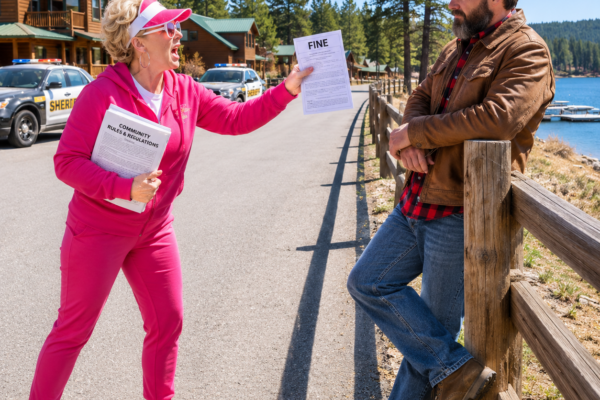
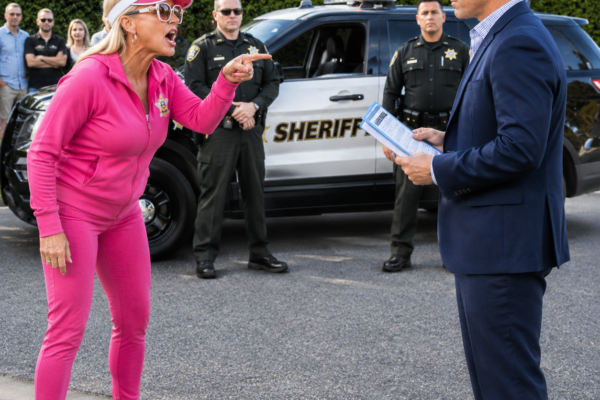
Brenda was an evil rich woman who stole six million dollars to enrich her family.
No.
She was a competent, frightened, stubborn HOA president who wanted a safer and more convenient route, convinced herself an old temporary access right solved the title problem, ignored warnings that complicated her plan, mishandled a family vendor conflict, and dragged an entire community into a disaster.
That is bad enough.
It is also more useful.
Because people like that exist.
People who are often right.
Until they are wrong about something large.
And because they are accustomed to being right, the system stops challenging them.
That is why process matters most when a leader seems competent.
Especially then.
Summit survived.
The ranch survived.
Brenda survived.
The road survived.
The cottonwood didn’t.
I still miss it.
No legal victory fixes everything.
That may be the hardest thing to admit in a satisfying story.
Sometimes you win title.
Damages.
Fees.
Control.
And the thing you loved is still gone.
The bench helped.
New trees helped.
Time helped.
Not replacement.
Continuation.
That was enough.
These days, the road gets called Kelly South Road on county emergency maps.
Not public.
Just an identifier.
The Summit emergency gate has a small red sign:
EMERGENCY ACCESS — NO GENERAL TRAFFIC
No gold lettering.
No ornamental fountain.
No Brenda.
Most new residents have no idea the road was ever supposed to be theirs.
Good.
Systems should work after stories fade.
One autumn afternoon, I was moving cattle when a new Summit homeowner stood behind the emergency gate watching.
He called:
“Is that the famous road?”
I stopped my ATV.
“What famous road?”
“The HOA road.”
I looked at the pavement.
Then at him.
“This is Kelly Ranch.”
He nodded.
“Right.”
“Sorry.”
Then:
“Can we ever use it?”
“In an emergency.”
“Who decides?”
“Fire district, law enforcement, or the agreement.”
He smiled.
“Not the HOA president?”
“No.”
“Good.”
He waved.
I drove on.
That was the whole reform in one conversation.
Visibility is not ownership.
Investment is not title.
A permit is not permission.
Public safety is not a magic phrase that erases a deed.
And convenience is not an easement.
The original title still makes me laugh:
HOA Karen Built a $6M Luxury Road Across My 900-Acre Ranch—Too Bad I Owned Every Inch of It
Emotionally?
Exactly.
Brenda spent six million dollars creating the road she believed Summit deserved.
Then discovered the ground underneath it had never stopped being Kelly land.
Legally?
The satisfying part was slower.
Surveyors.
Title reports.
Injunctions.
Engineers.
Mediation.
Insurers.
Restoration plans.
Settlement.
A recorded emergency easement.
No instant ownership miracle.
No HOA bankruptcy.
No federal fraud raid.
No neighbors losing their homes so I could feel vindicated.
And I am glad.
Because the point was never to destroy Summit.
The point was to stop Summit from confusing its need with my obligation.
They needed emergency access.
We eventually created it.
They wanted a daily shortcut.
I said no.
That answer finally became durable.
As for the six-million-dollar road?
I use it nearly every day.
I hate how much I like it.
My grandfather would probably insult me for the asphalt.
Dad would complain about maintenance costs.
Nate would laugh.
Miguel already does.
And somewhere in Fort Collins, I suspect Brenda tells people:
“I built Abby Kelly the nicest ranch road in Colorado.”
If she does, I hope somebody asks:
“Did she want it?”
That is still the question that matters.
Because ownership was never about whether the road was useful.
It was about who got to decide whether it existed.
Now that decision belongs where it should have from the start.
On the ranch.
With the owner.
And this time, it’s written down.