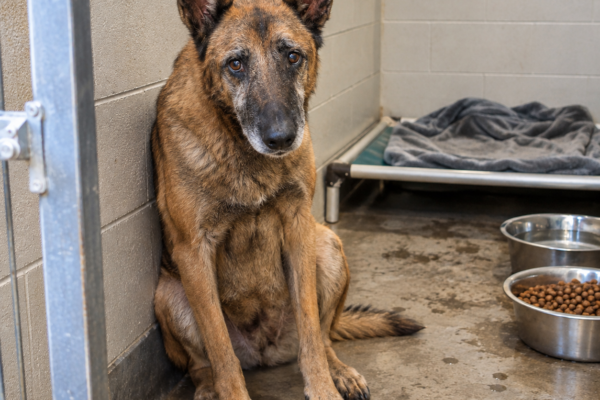
Luke Was Found With a Freshly Stitched Head Wound—Then His MRI Revealed a Heartbreaking Truth
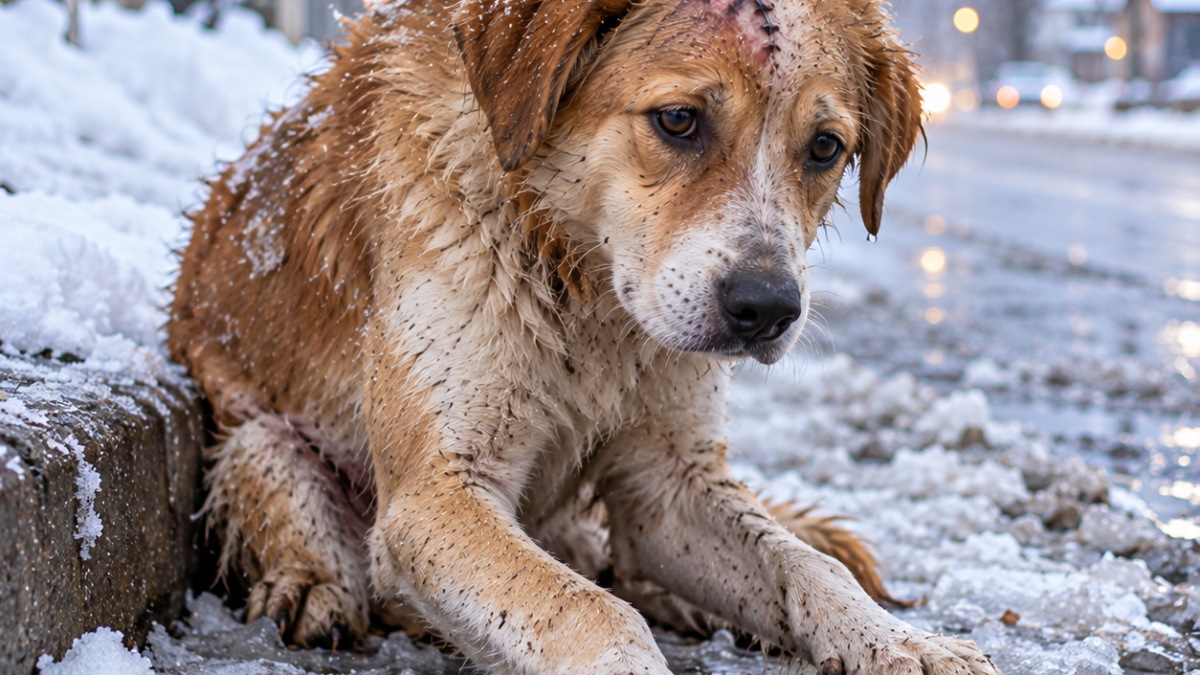
Luke Was Found With a Freshly Stitched Head Wound—Then His MRI Revealed a Heartbreaking Truth
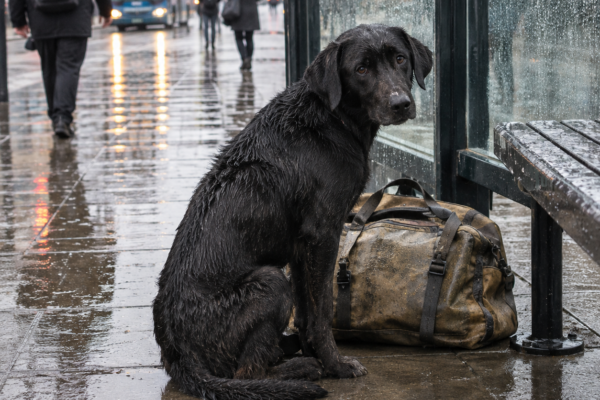
Luke was found exhausted on the corner of a freezing street with a freshly stitched wound on his head, and at first we could not understand who had hurt him or why he had been left there.
Everything changed after the MRI showed that his brain appeared almost completely white and fluid was pressing dangerously against his cerebellum.
We thought we were beginning to understand what had happened to him, but the next few weeks would force me to love him while knowing I might not be able to protect him from what was still hidden inside his body.
When we first saw Luke, he looked too tired even to ask for help.
The cold street around him seemed enormous compared with the small, motionless dog curled near the corner.
Then I noticed the spot of blood on his head.
Without that wound, perhaps someone could have believed he was simply lost, sick, or exhausted.
But the blood changed everything.
Someone had treated the injury recently because the stitches were still very new.
That raised questions we could not answer.
What had happened to Luke?
Who had struck him?
Why had someone stitched the wound and then left him outside in that condition?
We had no proof of exactly what had happened, and I refused to turn suspicion into certainty.
All we knew was that the injury was serious and that Luke had somehow remained alive long enough for us to find him.
At first, even that felt like a miracle.
Then the MRI gave us a frightening picture of what was happening inside his head.
Luke’s brain appeared white on the scan, and fluid was creating pressure around the cerebellum.
There was also evidence of a major impact to his head.
The findings made the fresh stitches even harder to understand.
One possibility was discussed: perhaps someone had learned that Luke was ill and wanted him gone, then stitched the visible wound before abandoning him.
But it remained a hypothesis, not something we could prove.
What we could prove was the condition of the dog in front of us.
His face looked unbearably sad.
His eyes were often closed.
He seemed exhausted by pain and confusion.
Even after we brought him into safety, he avoided my embraces.
Whenever I tried to hold him close, he seemed to pull away as if comfort itself was something he did not yet know how to accept.
Looking at him, I could not stop crying.
I wanted to protect him from everything that had already happened, yet the doctors were telling us that his greatest danger might still be inside his head.
A small procedure was performed first, and thankfully it went well.
That gave us enough stability to take Luke home while we waited for the much more serious operation ahead.
The major surgery would be aimed at dealing with the fluid in his head.
It carried significant risks.
At home, Luke lay quietly in my arms.
Sometimes he was so still that he reminded me of a baby resting peacefully in his mother’s lap.
I held him and hoped he could somehow feel how deeply I loved him.
I hoped love could soften even a small part of the pain he was carrying.
Caring for Luke was not easy.
He needed constant attention, patience, and effort.
Yet strangely, those days became some of the most peaceful days my soul had ever known.
Protecting him gave every hour a purpose.
I felt I had to be strong because Luke was so small and fragile.
Eventually, I took him outside for a walk in a beautiful sweater.
He had not been out in a long time, and everything around him seemed to make him uneasy.
He stayed close to me and kept looking around.
I encouraged him gently to follow.
Those walks were meant to help him feel better.
Even then, one small detail could still make me smile.
Luke hated the pink protective cap he had to wear to protect his head from hard impacts.
He constantly tried to remove it.
After a neurologist adjusted his medication doses, the days continued moving us toward the surgery we feared and hoped for at the same time.
Only a few days remained.
I promised myself that whatever happened, I would treasure every moment we still had together.
**[END OF FACEBOOK OPENING — PART 1]**
Those last few days before the major surgery had a strange quality to them.
Time seemed to move in two directions at once.
Part of me wanted the days to pass quickly because I wanted Luke to receive the treatment he needed. I wanted the pressure inside his head addressed. I wanted the dangerous uncertainty to end. I wanted someone to tell me that the operation had succeeded and that we could finally stop being afraid.
Another part of me wanted time to stop completely.
Every hour that passed brought us closer to the surgery.
And the surgery carried risks we could not pretend away.
I knew that.
The doctors knew that.
I looked at Luke and wondered how much his small body understood about all the movement around him.
Probably not much in the way a person would understand it.
He did not know what an MRI was.
He did not know why people studied images of his brain.
He did not know what the cerebellum was or why fluid pressing against it frightened everyone around him.
He did not know why the wound on his head created so many questions.
He simply lived inside the sensations of his own body.
Pain.
Fatigue.
Hands examining him.
New places.
Medicine.
Rest.
Then me.
I wanted my presence to become the one predictable thing inside all of that confusion.
When Luke lay in my arms at home, I often watched his breathing.
There was something deeply vulnerable about the way his body became still against me.
He was not a large dog who could create distance with strength.
He was small.
Fragile.
So quiet sometimes that I instinctively held him a little more carefully.
I kept thinking of a baby lying peacefully in his mother’s lap.
That was what he looked like to me.
Not because Luke had become helpless in every way, but because there was an innocence in those moments that made me want to shield him from everything.
I hoped he could feel my love.
There was no medical reason to believe love could remove fluid from his head.
Love could not change an MRI.
Love could not undo the impact that had injured him.
Love could not guarantee the outcome of surgery.
I knew all of that.
Still, when I held him, I wished desperately that love could at least change the experience of being sick.
I hoped it could make the fear smaller.
I hoped the warmth of my arms could make the pain feel less lonely.
I hoped that even if Luke could not understand why his body hurt, he could understand one simple thing.
He was not alone anymore.
That mattered to me almost as much as treatment.
When we had found him on that cold street corner, he had been alone with whatever was happening inside his head.
That image stayed with me.
A small dog.
Cold pavement.
A fresh wound.
A spot of blood.
Eyes closed.
A face that looked overwhelmingly sad.
People passed through the world while Luke remained there, carrying a condition nobody could see without medical imaging.
The outside wound had attracted our attention.
The inside problem was far more dangerous.
I sometimes wondered what would have happened if the blood had not been visible.
Would someone have stopped?
Would we have understood the urgency quickly enough?
There was no answer.
I did not allow myself to remain inside those questions for long.
Luke was with us now.
That was the only useful fact.
At first, his avoidance of my embraces hurt me more than I wanted to admit.
My instinct was to hold him.
His instinct sometimes seemed to be to avoid that closeness.
I had to remind myself that affection could not be demanded simply because I meant well.
Luke had been through something serious.
The wound on his head was fresh.
The evidence of impact was real.
Whatever had happened before we found him, he had reason to be unsettled.
So I learned to let him decide what closeness felt safe.
If he wanted to rest against me, I held him.
If he avoided an embrace, I did not force him.
Protecting Luke did not mean controlling him.
It meant becoming a place where he did not have to defend himself from more discomfort.
That lesson helped me understand our relationship.
I loved him intensely almost immediately.
But love had to be expressed in a way Luke could tolerate.
Sometimes that meant touching him.
Sometimes it meant simply remaining beside him.
Sometimes it meant letting him lie quietly while I watched.
That stillness became familiar.
And strangely, despite the fear surrounding his condition, those days at home felt peaceful to me.
It did not make sense on the surface.
Caring for Luke was difficult.
His illness was serious.
A dangerous surgery was approaching.
There were medications to manage and appointments to attend.
There was constant awareness that his head needed protection.
There was uncertainty everywhere.
Yet my soul felt quiet when I was caring for him.
Perhaps it was because there was no ambiguity about what mattered.
Luke needed me.
That simplified everything.
Ordinary worries became smaller.
The day had a clear center.
Feed him.
Watch him.
Keep him safe.
Take him where he needed to go.
Hold him when he allowed it.
Encourage him when he was uncertain.
Protect his head.
Wait.
There was peace in having that purpose.
I felt I had to be strong for him.
Not because I believed strength meant never crying.
I cried often.
Looking at Luke could make tears come before I had time to stop them.
Strength meant I kept doing what he needed even when I was frightened.
I could cry and still prepare for the next appointment.
I could feel terrified about surgery and still help him walk.
I could imagine losing him and still behave as though every moment together deserved joy.
That became my definition of strength during those days.
Luke had already survived something extraordinary.
The MRI had shown just how serious the situation was.
His brain appeared white.
Fluid was pressing against the cerebellum.
There had been a major impact to his head.
Those facts were difficult enough.
The fresh stitches added another layer.
Someone had closed the wound.
That meant someone had known he was injured.
It raised questions that refused to disappear.
If someone had taken the time to stitch his head, why had he ended up alone on the street?
Had they known about the deeper neurological problem?
Had they discovered his illness and decided they no longer wanted him?
Had someone deliberately tried to make him disappear?
Those ideas were discussed, but they remained possibilities.
I could not prove them.
I did not want anger to turn suspicion into fact.
Luke deserved honesty as much as he deserved compassion.
So I held onto what we knew.
He had suffered a serious head impact.
He had a freshly stitched wound.
He had been found abandoned on a cold street corner.
His MRI showed dangerous abnormalities.
Those facts were devastating enough.
There was no need to invent a villainous scene that the source could not confirm.
What mattered most now was the dog in my arms.
After the smaller procedure went well, we were allowed to take Luke home and wait for the larger operation.
That first successful procedure gave us a small amount of confidence.
Not certainty.
Just enough hope to move forward.
The major surgery would be different.
It involved the fluid in his head.
The doctors made sure we understood that there were significant risks.
I appreciated their honesty even when I hated hearing it.
False reassurance would not help Luke.
We needed to know what we were facing.
So I carried two truths at the same time.
Luke needed the surgery.
The surgery itself could be dangerous.
There was no way to escape that contradiction.
We could only choose to keep moving.
Before the operation, we still had ordinary days.
I became determined not to waste them by turning every moment into fear.
That was when our walks began to matter so much.
Luke had not been outside for a long time.
When we finally went out together, I dressed him in a beautiful sweater.
He looked so small inside it.
The sweater did not change his medical condition, but it made the outing feel almost normal.
For a few moments, he was not a neurological patient waiting for major surgery.
He was simply Luke going outside with me.
The first walks made him nervous.
His eyes moved around constantly.
He stayed close.
Every unfamiliar sound seemed to catch his attention.
Every change in the environment appeared to make him uncertain.
I could feel how careful he was.
So I did not rush him.
I encouraged him.
A few steps.
A pause.
Another few steps.
Stay close if you need to.
Look around.
Take your time.
I wanted the walk to make him feel better, not turn into another demand.
Sometimes he followed only after I encouraged him.
I was careful not to pull him into anything he feared.
The point was not distance.
The point was experience.
Fresh air.
Movement.
The outside world.
A little normality before surgery.
Those walks became precious.
I learned to notice small things.
The way Luke looked from side to side.
The way he remained near me.
The difference between a moment when he seemed worried and one when his body loosened slightly.
The way the sweater sat around his small frame.
The fact that he was outside at all.
Every detail became something I wanted to remember.
I did not know then how desperately I would later return to those memories.
At the time, I was simply trying to help him feel better.
Then there was the pink cap.
Luke hated it.
Of all the difficult things happening in his life, that small piece of protective equipment became one thing he could actively object to.
The cap was important.
His head needed protection from hard impacts.
Given the condition inside his skull and the recent wound, we could not allow him to hit his head unnecessarily.
So he had to wear it.
Luke disagreed.
He tried to take it off whenever he could.
The first few times, I felt torn between worry and amusement.
I knew why it was necessary.
Luke only seemed to know that something annoying was sitting on his head.
He would work at it with determination.
If he could have argued with me, I imagined the cap would have been the first subject.
I could not give in completely.
His safety mattered too much.
But I also understood his frustration.
He had already endured so many hands near his head.
Stitches.
Examinations.
Imaging.
Medical procedures.
Now, even at home, we placed something else there.
To us, it was protection.
To Luke, it may simply have felt irritating.
So we kept trying.
Eventually, he accepted the hat more.
Acceptance did not mean enthusiasm.
He still looked for ways around it.
One of the funniest moments came when I realized what he was doing during a walk.
Luke began moving in an unusual direction, almost circling.
For a second, I watched without understanding.
Then it became clear.
He seemed to believe that if he went around the right way, perhaps the cap would fall off.
“Luke, where are you going?”
I could not help smiling.
There he was, seriously trying to solve the problem of the pink hat.
The determination in that little maneuver felt wonderfully normal.
He was sick.
He was fragile.
A dangerous surgery was approaching.
But Luke still had preferences.
He still found something annoying enough to resist.
He still had the will to try to outsmart the thing on his head.
That moment gave me joy because it reminded me that illness had not taken his entire personality.
He was not only a patient.
He was Luke.
A dog who hated his pink cap.
I treasure that memory now.
At the time, it seemed small.
Later, small memories became enormous.
We also returned to the neurologist.
The appointment was important.
Luke’s medication doses were adjusted downward.
Every medical visit made me anxious because I had learned how quickly new information could change our plans.
But this appointment was part of preparing him and continuing his care.
I listened carefully.
I watched Luke carefully.
I kept asking myself whether we were doing enough.
That question followed me everywhere.
Enough protection?
Enough rest?
Enough attention?
Enough love?
Enough courage?
There is no measurement for those things.
When someone you love is sick, “enough” can become an impossible standard.
You want to protect them from every bad outcome.
If you cannot, you feel as though you have failed.
I had to remind myself that protection has limits.
I could protect Luke from hitting his head by using the cap.
I could take him to specialists.
I could give medications according to the plan.
I could stay close.
I could prepare him for surgery.
I could love him.
I could not control what surgeons would find once they operated.
That truth frightened me.
The surgery date moved closer.
A few days.
That was all.
I started counting less because counting made me anxious.
Instead, I focused on individual moments.
Luke resting in my arms.
Luke looking around outside.
Luke trying to lose the hat.
Luke walking close beside me.
Luke wearing his sweater.
Luke sleeping.
Luke opening his eyes.
Luke simply being there.
I told myself I would appreciate all of it.
Whatever happened.
That phrase—whatever happened—was difficult to say even silently.
Because I knew what it meant.
There was a possibility that the surgery would not go the way we hoped.
The doctors had already been clear about risk.
I loved Luke enough that imagining loss felt physically painful.
My chest tightened.
My throat hurt.
Sometimes I had to look away from him for a moment because tears came so suddenly.
Then he would be there again.
Alive.
Present.
Needing me now.
I would return to the moment.
That became a discipline.
Do not mourn him while he is still here.
Love him while he is here.
There would be time for whatever came later.
Now belonged to Luke.
I held him more carefully than ever.
Sometimes he lay completely still.
His body relaxed across my arms.
His head rested.
His eyes were closed.
I imagined how much pressure must be inside him.
The MRI image returned to my mind.
The whiteness.
The fluid.
The cerebellum under pressure.
Medical images can be strangely detached.
They turn a living being into shapes and shades.
Black.
White.
Gray.
Measurements.
Structures.
But when I looked from the scan back to Luke, everything became personal again.
That white area was inside this dog.
This dog whose body fit in my arms.
This dog who hated his hat.
This dog who had walked close to me because the outside world made him nervous.
This dog whose face had looked so sad when we first found him.
The scan was not an abstraction.
It was Luke.
That realization made every medical conversation harder.
I wanted to understand enough to make good decisions without allowing the technical language to distance me from him.
The purpose of every test was not knowledge for its own sake.
The purpose was to help Luke.
That helped me keep perspective.
The major operation was meant to address the fluid.
We hoped relieving that problem would give him a better chance.
I held onto that hope.
Not as certainty.
As possibility.
There was no other honest way to move forward.
The night before surgery, every ordinary action felt heavier.
I watched Luke.
I wanted to memorize him.
The shape of his face.
The way he rested.
The feel of his small weight against me.
The expression he made when he wanted the hat off.
The quietness between us.
I hated thinking that any moment could become “the last” of something.
The last walk before surgery.
The last evening at home before surgery.
The last time he slept in my arms before we handed him over to the doctors.
Language changes when fear enters it.
Ordinary moments acquire endings before they have ended.
I tried to resist that.
Tomorrow was surgery.
Tonight was still tonight.
Luke was still here.
So I stayed close.
I wanted him to feel calm.
If I was frightened, I tried not to make my movements frantic.
Dogs notice tension.
Luke already had enough reasons to worry.
I did not want my fear to become one more burden.
I stroked him when he allowed it.
I let him rest when he wanted distance.
I spoke softly.
There was nothing profound to say.
Love does not always need speeches.
Sometimes it is simply staying awake a little longer because you do not want the moment to end.
When morning came, the fear I had been controlling became harder to hide.
This was the day.
The major surgery.
The operation we had been waiting for.
The procedure that carried so much hope and so much risk.
Everything we had done seemed to lead toward this point.
The MRI.
The smaller procedure.
The days at home.
The neurologist.
The adjusted medications.
The protective cap.
The walks.
The waiting.
Now there was nothing left to prepare.
We had to trust the medical team.
That was one of the hardest things.
When you care for a fragile animal every hour, handing him over feels unnatural.
Your entire instinct says: keep him near.
Watch him.
Protect him.
But there are moments when loving an animal means placing him in someone else’s hands because they can do what you cannot.
I could not perform brain surgery.
I could not safely address the fluid.
I could only bring Luke to the people who could try.
So I did.
The separation felt enormous.
Luke disappeared into the surgical process.
I was left outside it.
That waiting was different from every other waiting we had done.
At home, even when I was anxious, I could see him.
At appointments, I could stay near for much of the time.
During surgery, there was a barrier I could not cross.
The doctors worked.
I waited.
There is no way to make that kind of waiting productive.
You cannot think your way into a better outcome.
You cannot love someone so intensely that the operating room changes.
You sit with uncertainty.
You replay memories.
You watch time.
You pray.
You hope.
I did all of those things.
I thought about the cold street corner.
I remembered the first spot of blood.
I remembered asking what had happened.
I remembered how his eyes looked closed and tired.
I remembered his resistance to my hugs.
Then I remembered the moments when he eventually rested in my arms.
I remembered the sweater.
I remembered how worried he was outside.
I remembered encouraging him forward.
I remembered the ridiculous pink cap.
I remembered him circling as if he could somehow make it fall.
“Luke, where are you going?”
The memory made me smile for one second.
Then fear returned.
I wanted more moments like that.
That was all.
More Luke.
More walks.
More cap arguments.
More quiet afternoons.
More weight in my arms.
More opportunities for him to realize that the world could be safe.
I was not asking for something extravagant.
I just wanted him to come back.
Inside the operating room, the doctors discovered something we had not expected.
A large amount of bacteria.
That finding changed everything.
The source does not give the exact organism.
It does not tell us precisely where every bacterial collection was located or how long it had been developing.
I will not invent those details.
What mattered was what happened in that moment.
The surgeons encountered extensive bacterial contamination during the operation.
And suddenly the situation became one they could not overcome.
The doctors were helpless.
Those words still hurt.
Helpless.
Doctors had brought Luke through the earlier procedure.
They had studied his MRI.
They had planned this operation.
We had prepared ourselves to accept surgical risk because we believed the procedure offered him a chance.
Then they went inside and found a problem beyond what they could solve.
No amount of hope outside the operating room could change what they saw.
No amount of love could sterilize what had already happened inside Luke’s body.
The outcome we feared arrived.
Luke did not come back to me.
I remember the moment emotionally more than anything else.
Pain.
Not ordinary sadness.
Not disappointment.
Something that felt as though my heart had actually been torn apart.
There are losses that leave you able to speak immediately.
This was not one of them.
Luke had become such a large part of my inner life in such a short time that the absence felt impossible.
One moment, everything inside me had been organized around protecting him.
The next, there was nothing left to protect.
His medication did not need adjusting anymore.
The pink hat no longer needed to stay on.
There would be no next walk.
No next neurologist appointment.
No next night with him lying in my arms.
No next attempt to encourage him forward.
The routines vanished at once.
That is one of the cruelties of losing someone you have been caring for intensely.
Grief is not only missing the individual.
It is also losing all the actions that connected you.
I had spent my days watching Luke.
Planning around Luke.
Thinking about Luke.
Holding Luke.
Protecting Luke.
Then suddenly I still had all the love, all the instinct, all the readiness to care—but nowhere to place it.
That was devastating.
I thought again about the period when caring for him had made my soul feel peaceful.
At the time, I had been surprised by that feeling.
How could such a frightening situation bring peace?
After he was gone, I understood more clearly.
The peace came from closeness.
Luke had given my love somewhere to go.
Every difficult task became meaningful because it served him.
Even fear had a purpose because it made me attentive.
When Luke died, the tasks disappeared.
The purpose disappeared.
The love remained.
That is grief.
Love with no immediate action left to take.
I could remember.
I could cry.
I could speak his name.
But I could not protect him anymore.
That knowledge hurt more than almost anything.
I wanted to return to the beginning and change it.
Find him sooner.
Understand the head injury faster.
Know about the bacteria before surgery.
Somehow prevent whatever impact caused the damage.
Stop whoever left him there.
These thoughts came despite knowing they were impossible.
Grief rewrites time.
It takes every moment and asks whether something could have been different.
If only.
If only we had found him earlier.
If only the injury had never happened.
If only the infection had not been there.
If only surgery had been possible without that discovery.
If only love were medicine strong enough to cure everything.
But love does not grant that power.
I had to accept the hardest truth.
We had loved Luke deeply and still lost him.
That did not make the love useless.
For a while, my pain tried to convince me otherwise.
What was the point of all those days if the ending was still death?
What was the point of the sweater?
The cap?
The walks?
The careful holding?
The appointments?
The small surgery?
The waiting?
If the major operation ended with Luke leaving us anyway, had anything mattered?
The answer came slowly.
Yes.
It mattered because Luke lived those days.
The ending did not erase them.
When he lay in my arms, he was not lying alone on a cold street.
When he walked beside me, he was not abandoned on a corner.
When he wore the sweater, someone had chosen warmth and care for him.
When I insisted on the ridiculous pink cap, it was because his head mattered to me.
When I took him to the neurologist, it was because his life mattered.
When we accepted the risk of surgery, it was because we were trying to give him more time.
When he died, he died as someone who had been loved.
I could not change the final medical outcome.
I could change the life surrounding it.
We had done that.
Luke had known care.
Perhaps not for as long as I wanted.
But he had known it.
That mattered.
I returned often to his behavior in the beginning.
The way he avoided my embraces.
At first, I had felt rejected.
Later, I understood that I had been asking closeness from a dog whose body and history were already overwhelmed.
By the end of our time together, he could lie peacefully in my arms.
That change meant everything.
I did not interpret it as proof that I had erased his fear.
I had not.
But Luke had become comfortable enough to rest with me.
That was trust in the form I could see.
The thought gave me some comfort after his death.
He had not left this world knowing only the street corner and the injury.
He had known arms that wanted to hold him gently.
He had known someone worried about keeping his head safe.
He had known walks taken for his well-being.
He had known encouragement.
He had known companionship.
Those experiences could not save his body.
They could change the final chapter of his life.
I began to treasure the pink cap even more in memory.
During the days when he wore it, the cap had been an annoyance.
I worried constantly that Luke would remove it.
He kept trying.
I kept putting protection back into place.
It almost became a small contest between us.
Now I would have given anything to have that ordinary problem again.
“Luke, keep your hat on.”
Such a simple concern.
So different from the final one.
I remembered him trying to circle around, convinced somehow that movement would solve the problem and the hat would come off.
“Luke, where are you going?”
At the time I laughed.
Now the memory made me cry and smile together.
Grief does that.
It refuses to separate emotions neatly.
Something can be funny and devastating at once.
The laughter belongs to the moment.
The tears belong to knowing the moment will never repeat.
Both are true.
I held onto that memory because it showed Luke as more than a sick dog.
Illness can dominate a story so completely that personality disappears.
I did not want that to happen to him.
Luke was not only the MRI.
Not only fluid pressure.
Not only brain changes.
Not only the head wound.
Not only the stitches.
Not only bacteria found during surgery.
Luke was also the little dog who disliked his hat.
The dog who stayed close during walks.
The dog who looked around anxiously after being inside for so long.
The dog who rested like a baby in my arms.
The dog whose presence brought strange peace into one of the most stressful periods of my life.
Those were all parts of him.
The medical facts explained why we lost him.
They did not define who he had been to me.
That distinction helped me mourn him with more tenderness.
I thought again about the cold street.
The source of his suffering before rescue remained partly unknown.
We had evidence of a major blow to the head.
We had fresh stitches.
We had a dog abandoned afterward.
We had the frightening possibility that someone had discovered his illness and decided they wanted him gone.
But we did not have proof of that motive.
For a while after Luke died, anger made me want certainty.
I wanted someone to blame.
Someone specific.
Someone whose action could hold all of the pain.
But the truth remained incomplete.
I had to respect that.
What happened before we found Luke was tragic enough without turning hypothesis into fact.
Someone had left him in a terrible condition.
That much was obvious.
The wound had been treated recently.
The impact was real.
The abandonment was real.
Those facts were enough to break my heart.
I did not need a story about revenge or punishment.
Luke’s life had already contained too much violence.
I wanted his memory centered on care.
That felt more faithful to what he had become to me.
When I thought of his face during those first days, I remembered sadness.
His eyes often stayed closed.
He looked exhausted.
There is something difficult about seeing an animal whose expression seems older than his body.
Pain changes the face.
Fatigue changes it.
Confusion changes it.
Luke seemed to carry all three.
Later, during our walks, there were moments when that expression changed.
Concern remained.
He was nervous.
But curiosity appeared too.
He looked around.
He noticed.
He followed.
That mattered.
The outside world was not only frightening.
It was something he could still engage with.
I hoped the walks made him feel better as we intended.
I could not know exactly what they felt like to him.
But I knew he participated.
I knew he moved close beside me.
I knew I could encourage him.
Those facts became precious.
After his death, I replayed one particular image.
Luke in his sweater.
Pink protective cap on his head.
Small body close to me.
Such a strange combination of vulnerability and ordinary life.
Anyone looking at us might have seen a dog wearing cute clothes.
I saw layers.
The sweater meant he was finally outside again.
The cap meant his head had to be protected.
The closeness meant he was still worried.
My presence meant he did not have to be worried alone.
Every piece told part of the story.
I had wanted those walks to continue.
I imagined them after surgery.
Not far into the future.
Just another day.
Luke recovering.
Maybe still annoyed by his hat.
Maybe gradually more comfortable outside.
I never allowed myself elaborate plans because I knew the surgery was risky.
But hope creates pictures even when you try to control it.
A second walk.
A third.
Luke becoming less nervous.
A day when his head no longer required the same protection.
A day when we could stop thinking constantly about fluid and pressure.
Those images never became reality.
The major surgery became our final medical chapter.
During it, the bacterial problem was discovered.
The doctors could not overcome what they found.
Luke died.
There is no way to rewrite that into a happy ending without betraying him.
I would not try.
His ending hurt.
It remains heartbreaking.
But heartbreak does not mean the story was meaningless.
In some ways, the pain reflects exactly how much Luke came to matter.
If I had never loved him, losing him would not have torn me open.
That is the terrible price of attachment.
I would still choose it.
If I could return to the day we found him knowing exactly how the story would end, I would still bring him home.
I would still take him to the doctors.
I would still hold him.
I would still put that hated pink cap on his head.
I would still walk beside him.
I would still encourage him.
I would still let him lie in my arms.
I would still go through the surgery knowing how afraid I would be.
Because the alternative would be leaving Luke alone.
And that was never acceptable.
The outcome did not erase the value of trying.
Sometimes rescue does not mean saving a life for years.
Sometimes it means giving safety for days or weeks.
Sometimes it means making sure an animal does not face the end alone.
Sometimes it means replacing abandonment with love, even when medicine cannot create the future everyone wants.
Luke taught me that in the hardest possible way.
I had wanted a recovery story.
Instead, I received a love story with grief at the end.
That distinction took time to accept.
The medical journey remained important.
The MRI had changed everything.
Before it, the blood on Luke’s head raised concern.
After it, we understood that his condition was much deeper.
His brain appeared white.
Fluid pressed against the cerebellum.
There had been major head impact.
Those findings directed everything that followed.
They explained why a neurologist was involved.
They explained why medications mattered.
They explained the need for the protective cap.
They explained why the major surgery carried so much weight.
Nothing in that chain of care was unnecessary.
We had responded to the information available.
The smaller procedure had succeeded.
That success gave us a brief period of hope.
Then the major operation revealed a hidden danger.
Medicine had taken us as far as it could.
The doctors’ helplessness was painful because we often imagine doctors as the final defense.
When they cannot help, reality feels especially cruel.
But helplessness is not failure when the condition has moved beyond what treatment can solve.
That understanding came later.
At the time, I only felt loss.
I wanted someone to fix it.
I wanted another option.
Another doctor.
Another technique.
Another chance.
There was none.
Luke was gone.
My mind resisted the finality.
I still expected to see him in familiar places.
The habits of caregiving remained in my body.
I would think about whether he needed something before remembering he no longer did.
Those moments were sharp.
Grief hides inside routine.
A place where he rested.
A sweater.
The pink cap.
The memory of preparing for an appointment.
Everything became a doorway back to him.
Sometimes I walked through willingly.
Sometimes the memories arrived without permission.
The cap was especially difficult.
An object that had once been frustrating became sacred simply because Luke had worn it.
I remembered his determination to escape it.
I could see the movement in my mind.
That little attempt to outsmart us.
For a moment, I would laugh.
Then I would remember there would be no next time.
Tears followed.
Eventually, I stopped seeing those tears as something I had to control.
Luke had been worth crying for.
There was no shame in that.
I had cried when I first saw him.
I cried while caring for him.
I cried when the doctors explained risks.
I cried when he died.
The tears traced the entire relationship.
At first they came from seeing suffering.
Later they came from fear.
At the end they came from love with nowhere to go.
I allowed them.
Luke had spent enough time with pain hidden inside his body.
I did not want to hide what his loss did to me.
One of the thoughts that hurt most was how short our time together felt.
When love becomes intense quickly, the calendar seems unfair.
You feel as though the relationship must have lasted longer because it filled so much emotional space.
With Luke, every day was dense.
Medical care compresses time.
An ordinary week can contain several major decisions.
An appointment.
A procedure.
A medication change.
A new concern.
A walk.
A quiet night.
A surgery scheduled.
Fear discussed.
Hope rebuilt.
By the time Luke died, it felt as though I had loved him for far longer than the actual time we shared.
Perhaps that was why the loss felt enormous.
The relationship was measured less by duration than by intensity.
Luke depended on me.
I depended on his presence in ways I had not understood until it disappeared.
He gave me a purpose that quieted everything else.
I had described those days as the time when my soul felt most at peace.
After he was gone, that peace shattered.
The contrast was brutal.
During the hardest medical period, I had peace because Luke was there.
After the medical struggle ended, I had pain because Luke was not.
That seemed backwards.
But love often creates contradictions.
Caring can be exhausting and peaceful.
Loss can remove responsibility and create unbearable emptiness.
I would have chosen the exhaustion forever if it meant keeping him.
But that choice was not mine.
The bacteria discovered during surgery had already changed the outcome.
I knew I had to stop arguing with a past that could not be altered.
Instead, I began to ask a different question.
What did Luke have during the time we were together?
The answer brought some comfort.
He had warmth.
He had a home.
He had medical care.
He had someone who watched him.
He had someone who loved him enough to worry constantly.
He had outdoor walks.
He had a sweater.
He had the hated pink cap.
He had my arms.
He had a person calling his name.
Those things mattered.
Especially the last.
When Luke had been found on the street, he was simply an exhausted dog with a wound.
Later, he was Luke.
Naming creates intimacy.
“Luke, where are you going?”
That sentence existed because he had become someone specific in my life.
Not “the dog.”
Luke.
I missed saying his name.
Even that hurt.
A name becomes part of daily rhythm.
You say it when calling.
When correcting.
When comforting.
When laughing.
Then one day, there is no practical reason to say it.
You say it anyway.
Because memory still needs a name.
Luke.
I said it often after he was gone.
Sometimes quietly.
Sometimes through tears.
The sound made him feel close for a moment.
I thought about his head wound too.
The stitches had been so new when we found him.
That detail remained one of the most disturbing.
Fresh stitches imply recent intervention.
Someone had seen the injury.
Someone had closed it.
Then Luke had still ended up on the street.
The contradiction never made sense to me.
Care and abandonment sitting side by side.
A wound treated.
A dog left.
Perhaps that was why I became so determined that our care would be different.
We would not perform one medical act and disappear.
We would stay.
Through the small procedure.
Through home care.
Through the neurologist.
Through the surgery.
Through whatever came.
We did stay.
Even though the ending hurt, that promise was kept.
Luke did not face the journey as an anonymous abandoned animal.
He had people.
He had me.
That mattered.
I returned in memory to the first successful procedure.
At the time, it felt like a victory.
Everything had gone well.
We could go home.
We could wait for the larger surgery.
That period became a gift I did not recognize fully until later.
If the smaller procedure had failed, perhaps we would never have had those days at home.
No quiet moments in my arms.
No sweater walk.
No hat struggle.
No neurologist visit afterward.
No little attempt to circle the cap off.
The fact that the smaller procedure succeeded created time.
Not as much as I wanted.
But time.
I became grateful for that.
Grief gradually taught me to stop judging moments only by whether they led to survival.
A good moment is still good even if tragedy follows later.
Luke lying peacefully in my lap does not become meaningless because he died.
The walk does not disappear.
The laughter over his hat does not become false.
Love does not retroactively fail because medicine fails.
Those truths helped me carry him differently.
At first, memory was almost entirely painful.
Eventually, certain memories warmed me before they hurt.
Luke in the sweater.
Warmth first.
Then sadness.
Luke circling.
Smile first.
Then tears.
Luke asleep in my arms.
Peace first.
Then absence.
This order mattered.
It meant grief was making room for gratitude.
Not replacing pain.
Sharing space with it.
I did not want to reach a point where Luke’s name stopped hurting completely.
That would feel strange.
I only wanted the pain to stop erasing the beauty.
Slowly, it did.
The final surgery remained difficult to think about.
I knew why we had agreed to it.
The fluid had to be addressed.
The risks were known.
We wanted to give Luke a chance.
There was no dishonesty in that decision.
Still, after he died, the mind naturally asks whether going forward was wrong.
What if we had not operated?
Would he have had another day?
Another week?
These questions haunted me.
But the original medical problem did not disappear simply because surgery was dangerous.
Luke’s condition was serious.
The fluid pressure was serious.
We had sought specialist care precisely because doing nothing was not a simple, safe alternative.
The decision had been made in hope, not recklessness.
Remembering that was important.
We had not chosen surgery because we wanted drama.
We chose it because Luke needed help.
The terrible discovery of bacteria was not something we had known beforehand.
We could only act on the information available before the operation.
That understanding helped loosen some of the guilt.
Grief searches for responsibility.
Sometimes it points at yourself simply because you were the person who made decisions.
But loving Luke meant making decisions.
Avoiding every risk would not have protected him from his disease.
So we moved forward.
I wished the outcome had been different.
I did not regret trying.
That distinction became central to healing.
The doctors had tried too.
Their helplessness inside the operation did not erase their effort.
They had wanted to help Luke.
They encountered something overwhelming.
I imagined how difficult that must have been even for professionals.
But I did not add conversations or reactions the source did not give.
What I knew was simple.
A large amount of bacteria was found.
The doctors could not save him.
Luke died.
Those facts formed the heartbreaking end of our medical journey.
Everything after that belonged to mourning.
I had thought the surgery was the hardest thing I would face with Luke.
I was wrong.
The hardest thing was returning to a world where he was no longer in it.
The house looked the same.
Objects stayed where they were.
The outside streets continued.
Life around me behaved as though nothing enormous had happened.
That felt almost insulting.
How could the world continue normally when Luke was gone?
People still moved.
Days still changed.
Morning still arrived.
But my internal world had been altered.
That is why the final phrase came to mean so much to me.
“The whole world changes when someone is gone.”
It was not literally that streets changed shape or the sky changed color.
The world changed because the person—or in this case, the little dog—through whom I experienced part of it was missing.
A walk was no longer just a walk.
It reminded me of Luke.
A pink hat was no longer a silly object.
It reminded me of Luke.
Holding something small against my chest could remind me of his weight.
A veterinary appointment could bring back the neurologist.
A cold street could bring back the first corner.
The physical world stayed.
My relationship to it changed.
That is what absence does.
It changes meaning.
Luke’s sweater became more than clothing.
The cap became more than protection.
The MRI became more than an image.
My arms became the place where I remembered him resting.
Even silence changed.
When Luke had been sick, silence sometimes meant peace.
After he died, silence meant absence.
That transition hurt deeply.
I wished I could return to the kind of silence we had shared.
Luke sleeping.
Me watching him.
No need for words.
Just two beings in the same room.
That memory became one of the gentlest.
There was no drama in it.
No doctors.
No questions about who had hurt him.
No speculation about abandonment.
Just rest.
I hoped Luke had felt safe in those moments.
I could not know exactly what he felt.
But his stillness suggested comfort.
That was enough.
I wanted his final days remembered through those quiet experiences too.
It would be easy to tell only the shocking parts.
The head wound.
The MRI.
The suspected abandonment.
The surgery.
The bacteria.
Death.
Those details are dramatic.
But Luke’s life with me existed in between them.
That is where the emotional truth lived.
In the intervals.
At home.
On walks.
During the ridiculous hat struggle.
In my arms.
The extraordinary events explain why the story ended.
The ordinary moments explain why the ending hurt.
Without ordinary moments, there is no bond.
Luke created those moments quickly.
I loved him.
That fact became simple.
No justification required.
I did not love him because he was a tragic case.
I did not love him because his MRI was unusual.
I did not love him because someone may have tried to get rid of him.
I loved him because he was Luke.
Small.
Fragile.
Sometimes distant.
Sometimes peaceful.
Nervous outside.
Stubborn about the hat.
Close beside me.
Those details made him real.
After his death, I was careful not to turn him into only a symbol of cruelty.
Whatever happened before we found him was terrible.
But if I told his story only through that suffering, I would give the unknown person who hurt or abandoned him too much power.
Luke deserved the center.
So I remembered his resistance to hugs.
His gradual trust.
His walk.
His cap.
His quietness.
His presence.
The person who harmed him, whoever that was, did not get the final word.
The bacteria did not get the entire story either.
Death was the ending.
It was not the whole life.
That distinction helped me breathe.
I thought about the beginning again.
We found him exhausted.
If he had died there before anyone noticed, I would never have known him.
That idea hurt in a different way.
Instead, our paths crossed.
He entered my arms.
He entered my routine.
He entered my heart.
Then he left.
The time was brief.
The impact was not.
Some beings do not need years to change you.
Luke did it quickly.
The responsibility I felt toward him revealed something about myself too.
I could endure more than I thought when love required it.
Appointments.
Fear.
Uncertainty.
Constant care.
Sleep interrupted by worry.
Tears.
All of it seemed manageable while Luke needed me.
I had thought I was being strong for him.
Perhaps he was giving me strength too.
Again, I do not mean that in a mystical sense.
His needs organized me.
They gave my effort direction.
When you know exactly who you are protecting, you can tolerate a great deal.
Luke made that clear.
After he was gone, I missed even the difficult work.
That surprised me.
I missed checking on him.
I missed worrying about the cap.
I missed encouraging him to move.
I missed carrying the weight of responsibility because responsibility had kept us connected.
This is another thing grief does.
It makes you nostalgic for what once exhausted you.
You would gladly repeat every stressful day if it meant having the loved one back.
I would have.
Without hesitation.
I would have accepted every appointment again.
Every uncertain result.
Every restless night.
Every attempt to take off the hat.
Every nervous walk.
I would have carried him through all of it.
But the story had reached its end.
I could not reopen it.
I could only honor it.
Honoring Luke meant refusing to change the ending just because it hurt.
He did not survive the major surgery.
That was true.
There was no later recovery.
No miraculous awakening.
No future anniversary.
No years of healthy life that the source never gave us.
His journey ended there.
I owed him honesty.
Sometimes the deepest respect we can show a painful story is to let it remain painful.
Not every rescue ends with adoption photos and long years.
Some end in loss.
That does not mean the rescue was pointless.
Luke was worth rescuing even though he died.
That belief became important to me.
Animals do not need to guarantee successful outcomes to deserve effort.
If we help only those we know we can save, we abandon the ones who need compassion most.
Luke’s condition was dangerous.
We knew surgery was risky.
We tried anyway because his life had value before we knew the outcome.
That value did not disappear when the outcome became tragic.
I repeated that to myself many times.
His life mattered.
Our time mattered.
The care mattered.
Love mattered.
The ending was heartbreaking, but it did not cancel everything before it.
Eventually, I could think about the neurologist appointment without my chest tightening as much.
The reduced medication doses had been one more step in his care.
At the time, every adjustment felt important.
Now the specifics blended into the larger memory of trying.
We were constantly trying.
Trying to understand his brain.
Trying to protect his head.
Trying to make him comfortable.
Trying to prepare for surgery.
Trying to give him little experiences outside illness.
That effort had been sincere.
There was comfort in sincerity.
No one had ignored Luke after we found him.
No one had looked at the MRI and decided he was too difficult.
We pursued care.
That mattered.
The cap symbolized it perfectly.
Luke hated it.
We insisted because protection mattered.
Love is not always giving someone what they want.
Sometimes it is doing the annoying thing because safety requires it.
Luke wanted that hat off.
I wanted his head protected.
So the hat stayed.
Until he found another clever way to work at it.
That memory still made me smile.
I imagined his seriousness.
He did not know he was being funny.
He had a problem.
Pink cap.
Solution: move until it falls.
Simple.
That little determination humanized the entire medical journey for me.
Luke was not passive.
He had preferences.
He reacted.
He tried things.
Even inside illness, he remained himself.
I wished more people could have known that version.
Perhaps they would understand why losing him felt like losing much more than a rescue case.
Luke had personality.
His life had texture.
That is what statistics and diagnoses cannot show.
A medical chart might list neurological findings.
It cannot list the exact emotional meaning of a dog curling into your arms.
An MRI can show fluid.
It cannot show trust.
A surgeon can describe bacteria.
That does not describe the way Luke looked in his sweater.
Medicine tells one part of the story.
Relationship tells another.
Both were true.
I needed both to remember him fully.
The medical part explained the fight.
The relationship explained the grief.
I thought about his closed eyes from the first days.
Later, when he lay peacefully with me, his eyes sometimes closed too.
Same physical action.
Completely different meaning in my heart.
At first, closed eyes looked like exhaustion and pain.
Later, closed eyes could look like rest.
That difference mattered.
It showed what safety could change even when illness remained.
We could not cure him at home.
But we could change the environment around his suffering.
Cold street to warm arms.
Abandonment to companionship.
Uncertainty alone to uncertainty shared.
Those changes were real.
I found comfort there.
Perhaps Luke’s final days were not the life I wanted for him.
They were still better than dying unnoticed on that corner.
That sentence was painful, but true.
I would always wish for more.
More days.
More health.
More walks.
More time.
But more was not available.
So I learned to value what existed.
This is not resignation.
It is respect for reality.
Luke had a short period of love.
That period mattered because he experienced it while alive.
Love offered after death cannot replace care before it.
We had given care before.
I was grateful.
I thought about my hope that he could feel how much I loved him.
I will never receive an answer.
Luke cannot tell me.
But I remember the way he eventually rested in my arms.
The way he stayed close during walks.
The way we could share quietness.
Those behaviors are enough for me to believe he knew I was safe in the ways a dog can know.
I do not need to claim he understood the scale of my devotion.
He only needed to feel the result.
Gentle hands.
Warmth.
Protection.
Presence.
If he understood those things, then my love reached him.
That gives me peace.
The possibility that someone had wanted him gone because of illness still disturbed me.
Illness is exactly when an animal needs people most.
A sick dog becomes more dependent.
More expensive perhaps.
More complicated.
More time-consuming.
But dependence is not a reason to discard a life.
Luke taught me the opposite.
His need drew me closer.
The more fragile he became, the stronger my desire to protect him.
That is why the idea of someone abandoning him after realizing he was sick felt so cruel.
Still, I kept the language careful.
It was a hypothesis.
We did not know.
The fresh stitches and the circumstances raised the question.
They did not answer it.
Luke’s story deserved that distinction.
Facts are enough.
There had been trauma.
There was a stitched wound.
He was abandoned.
His brain was severely affected.
Anything beyond that about motive remained uncertain.
I allowed uncertainty to remain.
Grief did not need a complete criminal explanation to be valid.
My pain came from losing Luke.
That was certain.
Over time, I stopped thinking as much about the unknown person and thought more about the known dog.
Luke.
That shift helped.
Anger keeps you tied to what hurt.
Love keeps you tied to who mattered.
I preferred the second bond.
So I remembered him walking beside me.
I remembered how cautious he was.
I remembered encouraging him.
I remembered thinking walks would help him feel better.
I remembered the way his body looked in the sweater.
I remembered his hat antics.
Those memories felt alive.
The unknown past felt dark and static.
Luke’s present with me had movement.
That was where I wanted to live emotionally.
The fact that he did not get a long future made those memories even more valuable.
I did not add imaginary years.
I did not picture an old Luke sleeping in sunlight many years later.
That would comfort me, but it would not be true to his story.
His actual life deserved enough respect that I did not need to rewrite it for emotional convenience.
He died.
I missed him.
The world changed.
Those facts hurt.
They were also real.
The final words—“The whole world changes when someone is gone”—became the clearest description of what happened inside me.
Before Luke, a pink cap meant nothing.
After Luke, it could break my heart.
Before Luke, a cold street corner was just part of a city.
After Luke, it carried the image of a small exhausted dog.
Before Luke, a dog walking nervously close to someone might have been an ordinary sight.
After Luke, I understood how much courage could exist in a few careful steps.
Loss changes perception.
That is how the world changes.
Not through geography.
Through meaning.
Luke changed meaning around me.
That was his lasting presence.
I did not need to create a memorial scene or future anniversary to prove he mattered.
He mattered already.
His absence proved it.
I kept returning to the phrase “the greatest loss of my life.”
That was how it felt.
Some people might wonder how a dog known for a relatively short time could become such a profound loss.
Love does not always follow duration.
Sometimes vulnerability accelerates attachment.
Luke needed so much so quickly.
My heart moved toward him at the same speed.
I watched his life closely.
I learned his reactions.
I built days around him.
There was little emotional distance.
Then he was gone.
The drop from constant closeness to complete absence was enormous.
That is why the grief felt so large.
I did not apologize for it.
There is no correct scale for mourning.
Luke occupied the space he occupied.
When that space emptied, pain followed.
Simple.
I wanted people to remember that animals can create bonds this deep.
Not because every relationship is identical.
Because Luke’s was.
He became family in feeling before we had time to build years of history.
His small body carried enormous emotional weight.
That is part of why the final surgery broke me.
I had invested hope into it.
Not blind certainty.
Hope.
I knew risk.
But hope imagines return.
You send someone into surgery because you imagine seeing them again afterward.
You imagine relief.
A tired face.
A recovery period.
More care.
Perhaps another annoying cap.
You do not imagine the doctors coming back helpless.
You do not imagine bacteria ending the possibility.
Even when death is technically part of the risk, the heart treats it as abstract until it happens.
Then abstraction becomes absence.
That transformation is brutal.
I remember thinking that if I loved him enough, perhaps the story would bend toward mercy.
That is not how biology works.
Love cannot negotiate with bacteria.
It cannot reduce intracranial pressure through desire.
It cannot reverse trauma by force of feeling.
The adult part of me knew this.
The grieving part still protested.
Surely this much love should count for something.
It did.
Just not in the way I wanted.
Love did not save Luke’s body.
It changed his experience before death.
That became the answer.
I had wanted cure.
I was able to provide companionship.
I had wanted years.
I was given days.
I had wanted a happy ending.
I received moments of peace.
Those are smaller gifts than I asked for.
They are still gifts.
Luke’s story taught me to stop measuring care only by survival.
Sometimes medicine reaches a limit.
Compassion should not.
When the doctors became helpless medically, our love for Luke did not suddenly become irrelevant.
If anything, it became the only part we could still carry.
That is what remained after the operation.
Love.
Memory.
Grief.
His name.
Those things were not enough to keep him alive.
They were enough to keep his life meaningful.
I thought back to the first time he avoided my embrace.
At the beginning, I had wanted instant closeness because I was overwhelmed with pity and affection.
Luke taught me patience.
He did not owe me trust because I rescued him.
He did not owe me comfort because I was sad.
His body belonged to him.
If he wanted distance, I had to honor that.
When he later lay peacefully in my arms, the moment meant more because I had not forced it.
He had come to tolerate and perhaps accept that closeness.
That trust was earned slowly.
I cherished it.
The peaceful way he rested against me became one of the memories I used against the worst image of surgery.
Whenever my mind returned to the doctors’ helplessness, I deliberately remembered Luke at home.
Not to deny the ending.
To balance it.
He was more than his final moments.
He had been held.
He had known peace.
That mattered.
I did the same with the MRI image.
Instead of letting the white brain scan dominate, I remembered the sweater.
Instead of the fluid pressure, the walk.
Instead of the head wound, the cap he wanted off.
Memory became an act of choosing the whole story.
Pain naturally focuses on the ending.
Love asks you to remember everything.
I tried.
There were days when I failed.
The loss was too fresh.
All I could see was the operating room in my imagination and the fact that Luke was gone.
Other days, the funny moments returned.
The pink cap helped most.
It was such a ridiculous contrast to the seriousness around us.
A critically ill dog engaged in a tiny battle against an accessory designed to protect him.
That image reminded me that life continues to contain humor even beside fear.
I was grateful we had laughed.
If I had spent every minute crying because surgery was coming, I would have missed part of Luke.
He deserved laughter too.
He deserved to be seen as cute, stubborn, and clever—not only tragic.
That realization changed how I spoke about him.
Yes, Luke’s story was heartbreaking.
But it was not joyless.
There were peaceful moments.
Funny moments.
Tender moments.
Those were real.
The ending does not erase the middle.
I repeated that often.
The ending does not erase the middle.
Luke’s death did not undo the afternoon walk.
It did not undo his rest in my lap.
It did not undo the moment I called after him.
It did not undo the days when caring for him brought peace to my soul.
Those events remain part of his life.
Therefore, the life was not only suffering.
That mattered greatly to me.
I also stopped thinking of the smaller procedure merely as a step toward failed surgery.
It had succeeded in its own right.
The source says everything went well.
That was true.
It gave us a chance to go home.
It contributed to the time we shared.
Not every successful medical act has to lead to complete cure to have value.
That perspective helped me see the care team with more gratitude.
They did what they could at each stage.
The final result was tragic.
The process still contained competent effort.
I did not want grief to turn every previous success into failure.
Luke deserved a fair telling.
I wanted his story to remain close to what actually happened.
Found exhausted.
Blood on his head.
MRI.
Severe findings.
Questions.
A possible explanation but no certainty.
Fresh stitches.
Sad face.
Closed eyes.
Avoidance of hugs.
A small procedure that went well.
Home.
Waiting.
Love.
Walks.
Sweater.
Pink protective cap.
Neurologist.
Lower medication doses.
A few days until major surgery.
Fear.
Commitment to treasure every moment.
Surgery.
Bacteria.
Doctors unable to save him.
Death.
Grief.
Those were the bones of the story.
Everything emotional grew around them.
I did not need to add another disease.
Another character.
Another dramatic confrontation.
The truth already carried enough weight.
That became important because grief tempts storytelling toward exaggeration.
You want the world to understand how much it hurt, so you reach for bigger words and bigger events.
But Luke did not need embellishment.
A small dog dying after we had fought so hard for him was enough.
The quiet truth was devastating.
I trusted it.
I remembered his face.
That was enough.
Sometimes I imagined what someone would have seen if they met us on one of those walks without knowing anything else.
A person walking a little dog.
Cute sweater.
Pink cap.
Dog staying close.
Perhaps nothing remarkable.
They would not see the MRI in his head.
They would not know about the fluid.
They would not know the cap protected him because a strong impact could be dangerous.
They would not know major surgery waited only days away.
They would not know I was memorizing the moment because I was afraid of losing him.
That thought changed how I looked at strangers after Luke.
Every ordinary scene may contain invisible fear.
A person smiling beside a dog may be carrying terrible uncertainty.
A cute hat may be medical protection.
A slow walk may be recovery.
Luke taught me to respect what cannot be seen.
His greatest danger had been hidden inside his skull.
His relationship with me was also largely invisible to anyone passing by.
But both were real.
I grew more patient because of him.
Not only with animals.
With uncertainty itself.
We did not know what had happened before rescue.
We did not know whether surgery would work.
We did not know about the bacteria.
Life forced us to move without complete information.
That is difficult for people who want control.
I wanted control desperately.
Luke’s case gave me very little.
The only thing I could control reliably was how I treated him.
So I focused there.
Gentleness.
Consistency.
Protection.
Love.
Those choices were mine.
The outcome was not.
Accepting that distinction took time.
It remains one of the hardest lessons Luke left me.
You can do everything with care and still lose someone.
That does not mean you should care less.
It means care is valuable independent of control.
Luke deserved my whole heart even though I could not guarantee his survival.
Perhaps especially because I could not.
Fragility makes presence urgent.
I had understood that instinctively when I promised to appreciate every moment before surgery.
After he died, that promise became precious.
I had tried.
I had noticed.
I had not treated those days as merely a hallway leading to treatment.
We had lived inside them.
We walked.
We rested.
We laughed at the hat.
That mattered.
If every pre-surgery day had been spent only waiting for the future, his death would have made the time feel empty.
Instead, the days contained life.
I was grateful.
I began to understand why the peace I felt while caring for Luke had been so profound.
Presence removes the illusion of endless time.
When you know the future is uncertain, the current moment becomes vivid.
Luke forced me into that awareness.
He did not have to do anything.
His condition did it.
I stopped assuming tomorrow.
Today mattered.
This walk mattered.
This rest mattered.
This embrace mattered.
The cap struggle mattered.
That attention made life richer even as fear made it harder.
It was one of Luke’s paradoxes.
He brought me pain and peace simultaneously.
After he died, the pain remained.
The peace took longer to return.
Eventually, memory brought some back.
Not the same peace as holding him.
A quieter one.
The knowledge that we had not abandoned him.
He had already been abandoned once.
We did not repeat that.
That fact became deeply comforting.
Whatever happened before, however he ended up on that corner with fresh stitches, his last chapter was different.
He was not discarded by us when the diagnosis became difficult.
We took him home.
We managed the difficult care.
We went to the neurologist.
We prepared for major surgery.
We stayed committed.
He died during an attempt to help him.
That difference mattered.
Luke’s life did not end because everyone walked away.
It ended despite people trying to save him.
That is tragic.
It is also loving.
I preferred that truth to the alternative.
I thought sometimes about how his face might have looked if surgery succeeded and pressure eased.
Would his expression have changed?
Would he have become more playful?
Would the outside world have stopped making him so worried?
Those questions were natural, but they belonged to an imagined future.
I let them go.
I did not want fantasy to replace memory.
The Luke I knew was enough.
Sad-faced sometimes.
Eyes closed.
Nervous.
Hat-hating.
Quiet.
Fragile.
Loved.
That was the dog I wanted to remember.
Real.
Not perfected by hindsight.
Real love accepts the actual being, not the version we wish illness had allowed.
Luke was enough as he was.
I wished his body had been healthier.
I did not wish he had been someone else.
That distinction made grief gentler.
There was no unfinished requirement for Luke to become worthy of love.
He already was.
The surgery had been about giving him more life, not making him deserve it.
His worth was never dependent on recovery.
That is why the ending, though tragic, did not make him a failed rescue.
He was not a failed dog.
The doctors were not automatically failures.
I was not a failure.
The disease and infection simply reached a point we could not overcome.
Language matters.
Calling the story a failure would dishonor the care.
Luke received love.
That was success inside tragedy.
I held onto that.
The quote at the end of our journey remained with me.
“The whole world changes when someone is gone.”
At first, it sounded like grief speaking in absolutes.
Later, I understood its precision.
When Luke was alive, my day bent around him.
When he died, the day straightened out abruptly.
There was empty time.
That empty time changed the whole structure of life.
No medication schedule.
No protective cap.
No walk planned around his fear.
No neurological appointment.
No surgery to anticipate.
The absence of tasks became the shape of absence itself.
The world did change.
Not because Luke had been physically large.
Because he had occupied attention.
Love.
Routine.
Hope.
He had taken up space inside me.
When he left, the space remained.
That is what grief lives in.
Eventually, the space stopped feeling only empty.
Memory entered it.
That was how healing began.
Instead of only thinking, “Luke is not here,” I could think, “Luke was here.”
That grammatical change mattered more than I expected.
Not here.
Was here.
One is absence.
The other is history.
Luke had existed in my life.
He had rested in my arms.
He had walked beside me.
He had annoyed me with his hat rebellion.
He had made me cry.
He had given me peace.
Those things could not be taken away by death.
They belonged permanently to my story.
I found gratitude there.
Pain remained.
But gratitude made it bearable.
If I had avoided loving Luke because losing him was possible, I would have avoided both the pain and everything beautiful.
I would not choose that.
The beautiful part was worth the cost.
Even knowing the cost now.
That realization was perhaps the clearest proof of how much he meant.
I would do it again.
Not the injury.
Not the illness.
Not the surgery outcome.
I would choose Luke again.
I would choose to bring him home.
Choose the difficult care.
Choose the worry.
Choose the sweater.
Choose the cap.
Choose the neurologist.
Choose the days in my arms.
Choose the final attempt to save him.
Because those choices gave Luke love.
And they gave me Luke.
For however brief a time.
The cold street corner became the first page.
The operating room became the last.
Between them, we built something.
That something was not cured disease.
It was relationship.
No MRI can display that.
No medical record can measure it.
But it existed.
And after Luke died, it became the reason the loss felt so large.
I sometimes wished there had been a different final image.
Luke recovering.
Luke opening his eyes after surgery.
Luke coming home.
But wishes do not rewrite truth.
His final chapter ended with doctors discovering extensive bacteria during the operation and being unable to save him.
My heart broke.
That is the ending.
I will not soften it by pretending otherwise.
What I can do is place that ending inside the full story rather than allowing it to consume everything.
Luke was found.
Luke was cared for.
Luke was loved.
Luke lived moments of peace.
Luke walked outside.
Luke resisted his cap.
Luke rested in my arms.
Luke went into surgery surrounded by hope.
Then we lost him.
That is a complete story, even though it is not the ending I wanted.
The last thing I wanted Luke’s story to become was a reason to look away from suffering because helping might hurt.
If anything, our time together convinced me of the opposite.
Love is not made worthless by grief.
Care is not wasted because death comes.
A fragile life remains valuable even when it cannot be extended as long as we hope.
Luke’s life had value.
The fact that I still felt his absence proved how deeply.
In the quiet after everything ended, I spoke to him in my heart the way I had spoken when he was beside me.
No complicated words.
No explanation.
Just love.
I thought about his tiny body in my arms.
I thought about that peaceful stillness.
I thought about the first day when his sad face made tears impossible to hold back.
I thought about the last day when those tears returned with a force I had never known.
The journey had come full circle emotionally.
I cried when I met him.
I cried when I lost him.
Between those tears, there had been love.
That was what I wanted to remember most.
Not the person who may have wanted him gone.
Not the blow.
Not the stitches.
Not the scan.
Not even the bacteria.
Luke.
Just Luke.
The little dog who became the center of my days.
The dog I wanted desperately to protect.
The dog who made difficult care feel peaceful.
The dog who stayed close on walks because the world made him nervous.
The dog who hated his pink cap.
The dog who tried to make it fall off.
The dog I called after.
“Luke, where are you going?”
I can still hear the feeling behind that question.
At the time, I meant the direction of his little steps.
After he died, the words gained another meaning I never wanted them to have.
Where are you going?
Why can’t you stay?
But some questions have no answer that heals.
The only answer was absence.
I had to learn to live beside it.
Luke’s journey was over.
Mine continued.
That felt unfair at first.
Then I realized continuing did not mean leaving him behind.
Memory is a form of carrying.
I could carry the lesson without inventing a future for him.
I could carry the love.
I could carry the small moments.
I could carry his name.
That was enough.
I did not need a dramatic memorial or an imagined reunion.
His actual story deserved to stand on its own.
A dog found exhausted on a cold street.
A fresh wound.
A frightening MRI.
A caregiver who fell completely in love.
A few precious days at home.
A sweater.
A protective pink cap.
A neurologist.
A risky surgery.
An unexpected bacterial crisis.
A goodbye.
That was Luke.
There are stories where the ending brings relief.
This one brought grief.
There are stories where rescue means years of happiness afterward.
This one meant giving Luke love before time ran out.
There are stories where doctors find the solution.
This one reached a place where they could do no more.
That does not make Luke’s story less worth telling.
It makes it honest.
Sometimes the most painful stories are the ones that remind us how fragile love can be.
We do not control how long someone stays.
We control how we meet them while they are here.
I met Luke with tears.
Then I met his fear with patience.
His illness with care.
His vulnerability with protection.
His uncertainty with presence.
And finally, his loss with grief.
I wish I could have offered him one more thing.
More time.
That was the only gift I could not give.
Everything else I had, I gave him.
My effort.
My attention.
My strength.
My arms.
My hope.
My love.
Luke left anyway.
And that remains one of the hardest truths I have ever had to accept.
Our journey ended in that operating room.
The future I had hoped for ended with it.
But the love did not.
It stayed.
It changed shape.
From caregiving to memory.
From holding him physically to carrying him inside me.
From calling his name across a room to saying it quietly when no one answered.
That is what remained.
Luke.
My fragile little boy.
My patient.
My companion.
The small soul I had tried so hard to protect.
I could not protect him from everything.
But I could make sure he was loved before he left.
And I did.
Rest in peace, Luke.
“The whole world changes when someone is gone.”