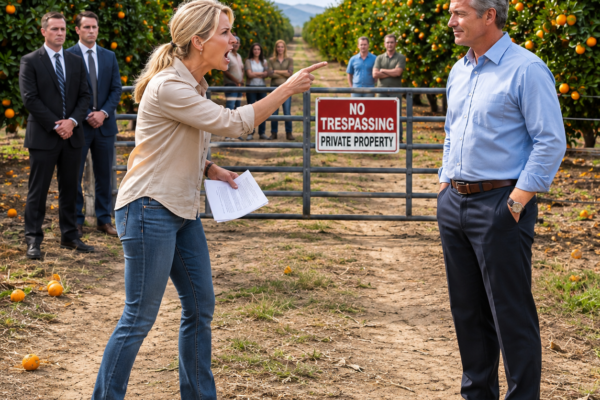
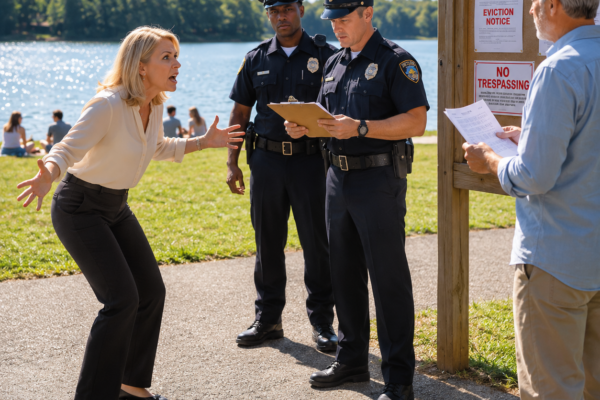
The president of Whispering Pines HOA sold forty-five new “private lakefront lots” for millions of dollars while I was sitting across the water in the cabin my grandfather built, and the buyers didn’t discover the problem until the first one tried to install a cedar dock and learned his two-million-dollar property stopped thirty feet short of the lake.h
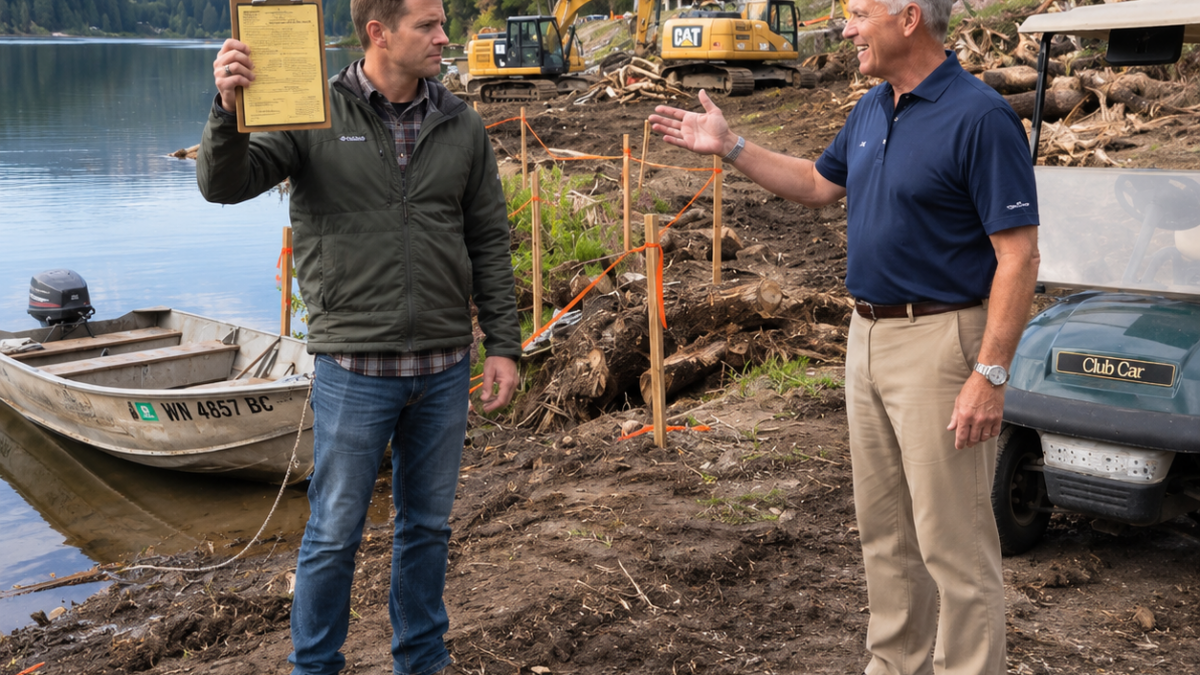
The president of Whispering Pines HOA sold forty-five new “private lakefront lots” for millions of dollars while I was sitting across the water in the cabin my grandfather built, and the buyers didn’t discover the problem until the first one tried to install a cedar dock and learned his two-million-dollar property stopped thirty feet short of the lake.
Rashawn Wells had spent three years treating my family’s place like an embarrassing holdout beside his luxury Washington development, and because the HOA owned the wooded hillside above the north shore, he convinced himself it could sell the slope, promise private water access, and sort out the inconvenient strip of land between those lots and Lake Garrison later.
What Rashawn never understood was that when my father sold the surrounding acreage decades earlier, he specifically kept the seventy-acre lakebed, our family cabin, and a continuous thirty-foot shoreline buffer measured outward from the ordinary high-water line—meaning the HOA could own every tree on the hill and still not own a single foot of actual shore.
My name is Tolliver Boyd.
For twenty years, Whispering Pines residents looked at Lake Garrison from their decks but understood the water was private.
Then Rashawn decided that was “wasted value.”
One April morning I heard excavators across the lake.
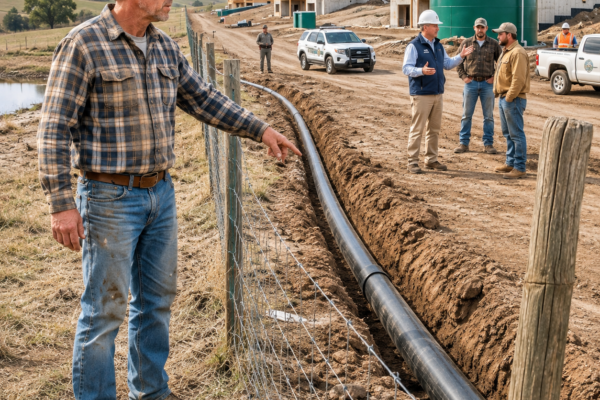
By the time I reached the north shore in my aluminum skiff, crews had already cut a road through Douglas firs and planted forty-five survey stakes along the hillside.
Rashawn arrived in a golf cart and told me the HOA had “annexed” the shoreline through an old maintenance clause.
“You don’t own this anymore, Tolliver.”
I looked at the freshly cut trees.
Then at the stakes.
Then at him.
I didn’t argue.
I went home and called a property attorney.
The title search took less than a week.
The HOA really did own most of the hillside.
That was the bad news.
The good news was that every proposed “lakefront” lot ended at the exact same legal line:
thirty feet before the water.
The HOA had already closed all forty-five sales.
Purchase contracts promised direct shoreline access.
Several buyers had paid premiums for private docks.
One had already ordered a $94,000 cedar-and-steel pier.
My lawyer set the deed in front of me and said, “Tolliver, they didn’t sell your shore.”
I asked, “Then what did they sell?”
She looked across the table.
“Forty-five very expensive houses with a view of property they don’t own.”
[END OF FACEBOOK CAPTION]
[FIRST COMMENT / FULL STORY CONTINUATION]
Her name was Dana Porter.
She had represented my family twice before.
Once when a timber company accidentally crossed a logging boundary near the west ridge.
Once when the county widened a road and discovered a drainage easement nobody had looked at since 1978.
Dana was fifty-four, wore plain dark suits, and had a habit of reading every page before saying anything useful.
I trusted that more than somebody who promised victory in the first ten minutes.
She spread the documents across her conference table.
My grandfather’s 1965 deed.
My father’s 1998 sale to Evergreen Valley Development.
The subdivision plat.
The later deed transferring Whispering Pines’ common hillside to the homeowners association.
The lake maintenance agreement.
And, most important, the exception and reservation attached to my father’s sale.
Dana tapped it.
“Your family kept the lakebed.”
“Yes.”
“And this perimeter strip.”
“Yes.”
“Thirty feet upland from the ordinary high-water line as established by the survey attached to the deed.”
“Correct.”
“Not thirty feet from wherever the water happens to be on a dry August day.”
“No.”
“Not thirty feet from the current tax-map shoreline.”
“No.”
“The surveyed high-water line.”
“Yes.”
She nodded.
“That matters.”
I looked at the subdivision plan Rashawn had been using.
His map showed forty-five wedge-shaped lots descending the north hillside toward Lake Garrison.
Every lot was colored blue at the bottom.
A marketing legend called that blue band:
PRIVATE SHORELINE FRONTAGE.
Dana set my father’s deed beside it.
The legal descriptions of the new lots did not actually include that blue band.
They stopped at the boundary of the HOA’s hillside tract.
Thirty feet uphill from the water.
Sometimes more, depending on the slope.
I said:
“How did forty-five people close without anybody noticing?”
“They probably noticed the legal descriptions.”
“That doesn’t make sense.”
“It may.”
She pointed at the purchase packet for Lot 1.
I had obtained it from county recording records and one sales brochure the HOA had mailed its own residents.
The deed conveyed a correctly described lot.
The problem was elsewhere.
The sales contract promised:
Direct private access to Lake Garrison through perpetual community shoreline rights administered by Whispering Pines Homeowners Association.
The brochure promised:
PRIVATE DOCK ELIGIBILITY.
And:
UNRESTRICTED LAKE ACCESS FOR NORTH SHORE OWNERS.
Dana said:
“The deed itself may be accurate.”
“So the title company isn’t automatically the villain.”
“Correct.”
“The question is what rights the HOA claimed it could grant over your buffer and lake.”
“They don’t have any.”
She lifted another document.
“They have this.”
The 1998 lake maintenance agreement.
My father had granted the developer a limited easement allowing access to portions of the shoreline for:
wildfire mitigation.
dam inspection.
erosion control.
removal of hazardous trees.
utility maintenance where specified.
Emergency response.
That was it.
No swimming.
No docks.
No beaches.
No private paths from homes.
No boat launch.
No right to sell recreational access.
Dana said:
“Rashawn appears to be treating a maintenance easement as though it is a general lake-access easement.”
“Can he do that?”
“No.”
“Then we stop construction.”
“Yes.”
She did not smile.
I noticed.
“What?”
“We need to move carefully.”
“Why?”
“Because there are forty-five buyers now.”
“So?”
“So most of them probably did not conspire with Rashawn.”
I knew that.
Intellectually.
Emotionally, it was harder.
I had just watched excavators tear through trees my father had intentionally preserved as a buffer around the lake.
Some were on the HOA hillside.
They had a right to clear those subject to permits.
But some equipment had come down onto my thirty-foot strip.
Fresh tracks.
Two trees cut.
Survey stakes placed.
I wanted everybody out.
Dana said:
“We distinguish buyers from seller.”
“The HOA created the promises.”
“The buyers relied on them.”
“Your rights do not disappear because they relied.”
“But the remedy matters.”
I leaned back.
“What do you recommend?”
“Emergency injunction against further entry onto your buffer.”
“No dock construction.”
“No grading on your land.”
“No shoreline paths.”
“No new representations that the HOA owns or controls recreational access.”
“Then we litigate title and easement scope.”
“That’s it?”
“That is enough.”
It was.
The first hearing came nine days later.
Whispering Pines hired a firm from Seattle.
Not the cartoon kind with three identical men in navy suits.
One attorney.
Claire Monroe.
Sharp.
Prepared.
She did not argue that the HOA owned my lakebed.
That surprised me.
Instead, she argued that the 1998 maintenance agreement, subdivision history, and decades of association involvement created broader shoreline rights than the text appeared to say.
Dana asked:
“Where?”
Claire said:
“The association has maintained the northern shoreline for decades.”
“Maintenance is expressly granted.”
“Yes.”
“Where is recreation?”
“The agreement should be interpreted in context.”
“Where is dock construction?”
“Not expressly stated.”
“Where is the right to convey access to third-party purchasers?”
Claire paused.
“It is part of the association’s position that the development history supports those rights.”
Judge Miriam Chen looked down from the bench.
“Counsel, is there any recorded instrument granting recreational lake access to the association?”
Claire said:
“Not in those words, Your Honor.”
That was the hearing.
Not literally.
There were two hours of survey testimony and title documents.
But that answer carried most of the weight.
Judge Chen issued a temporary order that afternoon.
No construction or entry on the Boyd shoreline strip except emergency or activities expressly allowed under the maintenance easement.
No docks.
No paths.
No utility trenching through my buffer.
No representing to buyers that lake access had been judicially established.
The buyers could continue building their homes on their own lots.
The HOA could continue road and utility work on land it actually owned.
The case was not a shutdown of the whole North Shore.
It was a line.
That was what I wanted.
Rashawn called me that night.
I almost answered.
Dana had told me not to.
So I let voicemail take it.
His message was thirty-seven seconds.
“Tolliver, this has gotten unnecessarily adversarial. The association has invested significant funds and made binding commitments based on a longstanding understanding of the lake agreement. We should sit down like adults before lawyers turn this into a disaster for everybody.”
I played it twice.
The second time I noticed the sentence.
A disaster for everybody.
Not:
I was wrong.
Not:
we may have sold rights we do not own.
Everybody.
I forwarded it to Dana.
She replied:
DO NOT CALL HIM.
I wrote:
I WASN’T GOING TO.
She sent:
ALL CAPS MAKES ME TRUST YOU LESS.
I put the phone down.
The first buyer I met was Greg Mitchell.
He owned Lot 1.
The transcript version of him would have made it easy to hate him.
Reality was less convenient.
Greg was forty-eight.
Made money in software security.
Yes, his house cost more than anything I could imagine paying.
Yes, he had ordered a ninety-four-thousand-dollar dock.
But our first real conversation did not start with him screaming at me from a patio.
It started because he called Dana.
His lawyer wanted permission for Greg and his wife, Susan, to inspect the disputed strip in person.
Dana asked me.
I said yes.
On conditions.
No contractors.
No survey stakes.
No work.
Stay with us.
They came on a Thursday afternoon.
Greg wore jeans.
Susan wore hiking shoes.
No champagne.
No attitude.
We met near Lot 1 and walked downhill.
Their new house was framed.
Glass had not arrived yet.
It sat high enough that the lake filled the view.
Beautiful.
No point pretending otherwise.
At the bottom of their lot, the grade flattened.
Then the Boyd strip began.
A row of temporary orange survey flags showed the line.
From there to the water:
roughly thirty feet of moss, grass, fern, salal, and scattered trees.
Greg stopped.
“This is yours.”
“Yes.”
“All the way around?”
“Yes.”
Susan looked at Dana.
“And the lake?”
“Mr. Boyd owns the lakebed parcel.”
She was careful.
“The water itself is subject to Washington water law and other public regulation, but as a practical property matter, the association did not acquire recreational access rights simply by owning the slope.”
Greg looked sick.
“Our closing package said direct access.”
“I know.”
“Private dock eligibility.”
“I know.”
He turned toward his house.
“We paid a four-hundred-thousand-dollar lakefront premium.”
I said nothing.
What was I supposed to say?
Sorry?
He had not taken my land.
He had bought a promise somebody else made.
Susan asked:
“Did you know they were selling these lots?”
“Not until construction started.”
“That’s impossible.”
“Why?”
“We were told the shoreline agreement had been negotiated with the Boyd family years ago.”
That was new.
Dana looked at her.
“Who told you that?”
“Rashawn.”
“Written?”
Susan pulled out her phone.
“Yes.”
The email said:
All shoreline and lake-access matters have been resolved through longstanding agreements with the Boyd ownership interest. North Shore purchasers will have full private access consistent with community rules.
Dana’s face did not change.
Mine did.
Greg saw.
“You didn’t agree.”
“No.”
“Ever?”
“No.”
Susan sat on a fallen log.
For the first time, I stopped seeing forty-five buyers as one block.
She was furious.
Not at me.
At the man who had sold certainty he did not possess.
Greg said:
“So what happens now?”
Dana answered before I could.
“The court decides the legal rights.”
“And if you win?”
“Your lot remains yours.”
“Your home remains yours.”
“But you may not have direct lake access through Mr. Boyd’s property.”
Greg looked toward water.
Twenty-six yards away.
Maybe thirty.
Close enough to throw a rock.
Legally unreachable.
That kind of distance can feel cruel.
He asked:
“Can we negotiate?”
I said:
“Maybe.”
Dana looked at me.
Not a warning.
Just surprise.
I continued.
“But not while Rashawn is pretending he already owns the answer.”
Greg nodded.
“Fair.”
That conversation changed everything.
Within a week, thirty-two buyers formed the North Shore Purchasers Committee.
Not a mob.
A legal coordination group.
They hired their own counsel, Marissa Lee.
That made the case more complicated but also more honest.
There were now three distinct interests.
Me.
The HOA.
The buyers.
Four if you counted the title insurer.
Five if you counted the original developer’s successor.
Six if you counted the county permit office.
Property litigation multiplies people quickly.
Marissa’s first letter to Dana was professional.
The buyers did not claim my land.
They asked to participate in settlement discussions because any ruling would affect the value and use of their homes.
Reasonable.
She also demanded documents from Whispering Pines.
Marketing materials.
Board minutes.
Legal opinions.
Survey reports.
Sales revenue records.
That demand created the first crack inside the HOA.
Rashawn had told residents the North Shore project was a financial rescue.
Whispering Pines had rising insurance premiums.
Road replacement due.
A failing pool retaining wall.
The board owned sixty-two wooded acres along the north hillside as common property inherited from the developer.
Rashawn proposed subdividing and selling it.
Member approval required sixty-seven percent.
He got seventy-four.
That vote was valid.
The HOA was allowed to sell its hillside.
That part of the story mattered.
Rashawn had not simply stolen common land and secretly sold it.
Owners approved the disposition.
The problem was how he marketed what was being sold.
At the member meeting, slides called the project:
THE NORTH SHORE LAKEFRONT RESERVE.
One slide said:
45 PREMIUM WATERFRONT HOMESITES.
Another:
DIRECT PRIVATE LAKE ACCESS.
A homeowner named Elaine Foster had asked:
“Do we own the shoreline?”
Rashawn answered:
“The association controls lake access through recorded rights established when the development was created.”
Nobody pushed further.
Why would they?
The president sounded certain.
Board counsel at the time was a small local firm.
Their written memo was more cautious.
Dana obtained it in discovery months later.
The memo said:
The Association owns the upland North Shore tract but does not appear to own the Boyd shoreline buffer or lakebed. The 1998 maintenance easement should not be relied upon as authority for private recreational access, docks, or conveyance of shoreline rights without further agreement from the Boyd owner.
There it was.
Dated eleven months before the first lot sale.
Addressed to:
Rashawn Wells, President.
Brenda Carmichael, Treasurer.
The full board.
That changed the case.
Not criminally overnight.
No handcuffs.
But the difference between mistake and knowing risk became harder to ignore.
Board minutes from the next month included:
President Wells reported that shoreline-access concerns were “being handled separately” and should not delay subdivision approvals.
No recorded agreement with me followed.
Instead Rashawn hired a development consultant.
The consultant prepared a new “shoreline amenity plan.”
It showed:
individual paths from each lot crossing the thirty-foot strip.
private docks.
small beaches.
Kayak launches.
The plan contained a note:
SUBJECT TO FINAL SHORELINE RIGHTS CONFIRMATION.
The glossy brochure removed that note.
Who removed it?
That became another fight.
The marketing agency said Rashawn approved final copy.
Rashawn said the project team simplified language for buyers.
Brenda said she assumed legal had cleared access.
Legal said it had not.
Nobody wanted to own the sentence.
Meanwhile, the lake remained quiet.
Mostly.
No docks.
No construction on my strip.
The forty-five houses kept going up.
I could see them through trees.
Modern glass.
Timber.
Stone.
Some half-built.
Some nearing occupancy.
The case could have become a war that destroyed all of them financially.
Dana kept asking me:
“What do you actually want?”
At first, the answer was easy.
“My shore.”
“You already have that.”
“Then I want them off it.”
“The injunction does that.”
“What do you want permanently?”
I did not know.
I could insist on no access.
The deed allowed it.
The buyers would have beautiful homes above a private shoreline strip they could not cross.
They could look at Lake Garrison but not touch it without my permission.
Some people loved that outcome when they heard the facts.
Serves them right.
But serves who?
Greg and Susan had not written the brochure.
A pediatric surgeon from Bellevue on Lot 14 had not ignored my deed.
The retired airline pilot on Lot 27 had not cut my trees.
Several buyers were angry enough to rescind if they could.
Punishing them for Rashawn’s decision would not restore the Douglas firs.
Still, I did not want forty-five private docks.
That would transform the lake completely.
My grandfather had protected the shore for a reason.
The buffer was not a technicality.
It kept:
erosion down.
wildlife movement intact.
fertilizer runoff away.
boat traffic controlled.
Noise limited.
The lake quiet.
If I granted every buyer a direct path and dock, Lake Garrison would become exactly what my father had avoided.
Dana said:
“So the answer is not zero access or unlimited access.”
“Maybe.”
“What would your father have done?”
That annoyed me.
“Don’t use dead people against me.”
“I am not.”
“You are.”
“Fine.”
She closed the folder.
“What would you do if Rashawn did not exist?”
That was better.
I looked out her office window.
Seattle rain.
No lake.
“If the buyers had come to me first?”
“Yes.”
“I might have allowed a shared marina.”
“How many slips?”
“I don’t know.”
“A trail?”
“Maybe.”
“Swimming?”
“Maybe at one beach.”
“Private docks?”
“No.”
“Forty-five shoreline cuts?”
“No.”
“Then that is your negotiating position.”
It became one.
A real one.
Not revenge.
The court appointed a mediator named Samuel Kirk.
Retired judge.
He looked like somebody’s patient grandfather until someone wasted his time.
First mediation lasted ten hours.
Rashawn attended for the HOA.
Brenda.
Claire Monroe.
Greg and Susan for purchaser committee.
Marissa Lee.
Dana.
Me.
Insurance representatives.
The title company.
The original closing escrow firm.
Samuel started by drawing three columns on a whiteboard.
BOYD RIGHTS.
HOA RIGHTS.
BUYER EXPECTATIONS.
He asked:
“Does anyone dispute Mr. Boyd owns the thirty-foot shoreline strip?”
Claire said:
“The association reserves arguments about historical use.”
Samuel looked at her.
“Does anyone dispute record title?”
“No.”
“Good.”
He wrote:
BOYD — RECORD TITLE.
“Does anyone dispute the HOA sold forty-five lots it owned?”
No.
He wrote:
HOA — UPLAND LOTS VALIDLY SOLD.
“Does anyone dispute buyers were promised lake access?”
Rashawn started:
“The materials used the term—”
Samuel raised one hand.
“Were they promised access?”
Claire answered.
“Yes.”
He wrote:
BUYERS — PROMISED ACCESS NOT CURRENTLY ESTABLISHED.
Then he turned around.
“That is the dispute.”
It looked almost simple.
Ten hours proved otherwise.
Money.
Rescission rights.
Diminished value.
Insurance coverage.
Sales proceeds.
Potential buyer refunds.
Shoreline access.
Environmental review.
Docks.
Trail maintenance.
Liability.
Privacy near my cabin.
Boat launch.
Parking.
Who pays.
Who controls.
What happens if I sell.
What happens if buyers sell.
Forty-five different households.
Rashawn wanted one thing badly.
A broad perpetual access easement for all forty-five lots.
I said no.
He offered money.
Three million.
No.
Five.
No.
He asked:
“What number?”
I said:
“It isn’t a number problem.”
He looked genuinely confused.
That was revealing.
Samuel asked:
“What is it?”
I explained.
Forty-five individual docks would destroy the shoreline.
Forty-five paths.
Forty-five places where homeowners would think the thirty-foot strip was functionally theirs.
No.
I would consider one community access point on the north shore.
Maybe two.
A shared marina with limited slips.
A swimming area.
Kayak storage.
Trail restrictions.
Native vegetation.
No lawn extending to water.
No fertilizer.
No private fences.
No exclusive dock extensions.
Rashawn said:
“That makes these properties less valuable.”
I looked at him.
“Than what you promised?”
“Yes.”
“You shouldn’t have promised it.”
The room went silent.
Samuel said:
“Let’s take a break.”
Outside, Greg found me near the elevators.
He said:
“I think your plan is reasonable.”
I looked at him.
“You ordered a private dock.”
“I also ordered it because Rashawn told me I could.”
“Would you accept a slip at a shared marina?”
“If I have legal access?”
“Yes.”
“Then yes.”
“What about your four-hundred-thousand-dollar premium?”
He laughed without humor.
“That’s between me and the people who sold it.”
There.
That became the buyer position.
Not everyone agreed.
Some had specifically bought for private waterfront.
Lot 8 owner wanted rescission.
Lot 19 wanted damages.
Lot 33 wanted the HOA to buy back his property.
Lot 41 said he would accept lake-view status if refunded his premium.
You cannot solve forty-five households with one emotion.
The second mediation focused on money.
By then Whispering Pines had approximately thirty-one million dollars in gross lot-sale proceeds.
Not seventy-two.
Some had already been spent on:
roads.
utilities.
retaining walls.
grading.
engineering.
sales costs.
taxes.
association reserve contributions.
Loan repayment.
The HOA still held significant proceeds in restricted accounts.
That mattered.
The organization was not bankrupt.
Not yet.
Its insurer disputed coverage for intentional misrepresentation but covered defense.
The title insurer said the deeds were accurate and the problem was the HOA’s separate access representations.
That was largely true.
Some buyers had title endorsements referencing no separate lake rights.
Their attorneys argued the overall closing package created confusion.
Messy.
No villain with a fake title officer needed.
Rashawn had made enough trouble by overselling a maintenance easement.
The board turned on him when the legal memo surfaced.
Denise Calder, vice president, called an emergency meeting.
Owners packed clubhouse.
I did not attend.
I watched nothing.
Dana went only to preserve our client interests if they discussed settlement.
The board removed Rashawn as president by a 4-1 vote.
He remained a director until owners recalled him six weeks later.
Brenda resigned as treasurer before the recall vote.
She said she had relied on Rashawn and counsel summaries.
But the memo had been addressed to her too.
Her credibility suffered.
No criminal charges.
No police cars.
No federal indictment.
The county prosecutor reviewed a complaint from several buyers and referred them to civil counsel because the core dispute involved contract representations and land rights.
Could facts have supported criminal fraud?
Maybe if prosecutors proved intentional deception beyond reasonable doubt.
They did not pursue it.
Civil liability was enough.
Some residents were furious.
They wanted handcuffs.
I did not care.
I wanted the shoreline fixed and promises corrected.
Rashawn’s personal exposure came through the buyers’ fraud and fiduciary-duty claims and the HOA’s own suit against former officers.
He had directors-and-officers insurance.
The carrier reserved rights.
Eventually he contributed personally to settlement along with insurers.
Not millions.
Enough to hurt.
Enough to matter.
The main settlement took eight months.
The final structure was more complicated than revenge and much more durable.
First:
My title to the lakebed and thirty-foot perimeter strip was confirmed by stipulated judgment.
Survey monumented.
Recorded.
No future ambiguity.
Second:
Whispering Pines acknowledged the 1998 maintenance easement did not grant general recreational access.
That sentence alone would have prevented everything.
Third:
The forty-five North Shore deeds remained valid.
Nobody lost their home.
Fourth:
Buyers received options.
Some could rescind their purchases under negotiated terms if they had not substantially completed construction.
A few did.
Most stayed.
Those who stayed received monetary credits or settlements reflecting the difference between promised private shoreline rights and actual community access.
Amounts varied.
No identical checks.
Fifth:
I granted a carefully limited recreational easement to a newly created North Shore Lake Association.
Not Whispering Pines.
Separate entity.
Why?
I did not want the same HOA president who regulated paint colors controlling my shoreline.
The new association had one purpose:
manage the granted lake-access facilities and environmental obligations.
Membership attached only to the forty-five North Shore lots.
Its authority over the lots themselves was minimal.
It could collect lake-facility expenses.
Insurance.
Maintenance.
That was it.
No lawn rules.
No house colors.
No parking fines.
Sixth:
the easement allowed one shared access trail.
One small north-shore beach.
One kayak launch.
One community marina.
Twenty-four slips.
Not forty-five.
Slip use rotated under rules.
Non-motorized craft could be stored in designated racks.
Motorboats used existing launch on my south side only by reservation during specified hours?
No.
I did not want forty-five vehicles near my cabin.
Instead we constructed a separate small north-side launch ramp within a location I agreed to convey? That would require crossing buffer. Better: a community launch facility on easement site, professionally engineered.
One launch.
One marina.
No private docks.
No private paths.
No cutting vegetation without approval.
No fertilizer within buffer.
No retaining walls.
No shoreline lighting beyond low safety lights.
No wake zone near the entire perimeter.
Seventh:
I retained ownership.
The easement was limited.
If Lake Association failed to maintain insurance or repeatedly violated environmental conditions, enforcement mechanisms existed.
Not instant revocation.
Notice.
Cure.
Mediation.
Court.
Adult documents.
Eighth:
Whispering Pines paid for restoration of the two trees cut from my strip and revegetation where equipment had crossed.
The trees could not be replaced with hundred-year-old Douglas firs.
They were not that old, thankfully.
Two mature but replaceable trees.
We planted natives.
Restored soil.
No pretending money recreates time.
Ninth:
Rashawn and former board leadership had no role in the new lake association.
That was not my demand.
The buyers demanded it.
I did not object.
Judge Chen reviewed the stipulated judgment.
She asked me directly:
“Mr. Boyd, you understand this easement will burden your shoreline property permanently?”
“Yes.”
“Your successors will be bound?”
“Yes.”
“You have had independent counsel?”
“Yes.”
“You are doing this voluntarily?”
I looked across courtroom.
Greg.
Susan.
Marissa.
Denise.
Rashawn was not there.
“Yes.”
Judge Chen nodded.
“Then the court will approve.”
That was the moment the legal dispute ended.
Not with Rashawn in handcuffs.
With a document everybody finally read.
Construction of the shared marina started the following spring.
This time, I was involved.
That felt strange.
The first excavator arrived on the north shore.
Same kind of yellow machine that had triggered everything.
I stood beside Dana.
She looked at me.
“You okay?”
“No.”
“Want to stop?”
“No.”
The operator had:
survey.
permit.
easement plan.
environmental conditions.
My written approval.
Everything Rashawn should have obtained.
I said:
“Proceed.”
He did.
One path.
Not forty-five.
The beach was small.
The marina used helical piles to minimize shoreline disturbance.
Twenty-four slips.
Kayak racks set uphill.
Native vegetation restored around.
No giant lawn.
No private patios on my strip.
Greg got one of the first slips under lottery.
He joked:
“Only cost me two years of litigation.”
I said:
“And a dock you never installed.”
He grimaced.
The ninety-four-thousand-dollar dock order had been canceled with a restocking penalty.
He recovered most.
The lumber supplier sold material elsewhere.
No abandoned cedar monument.
Susan became the first president of the North Shore Lake Association.
That surprised me.
She had been furious early.
She also became practical.
At the first meeting she said:
“We exist to manage access, not personalities.”
I liked that.
She insisted meeting minutes cite easement sections.
I liked that more.
The buyers changed too.
Not all.
Some still resented me.
Lot 8 sold after rescission and left.
Lot 19 settled then barely spoke to anyone.
Lot 33 became one of the loudest marina critics despite insisting on lake access for a year.
People are people.
But most learned.
Greg stopped calling his home “waterfront.”
He called it “lake-view with deeded access.”
Accurate.
That phrase appeared in resale listings.
The first resale agent called me to verify wording.
I said:
“Read the recorded easement.”
She did.
Good.
Whispering Pines survived.
Another important point.
The HOA did not go bankrupt.
It paid heavily.
Buyer settlements.
Legal fees.
Shoreline facility contribution.
Insurance deductibles.
Its North Shore profit shrank dramatically.
But the original community remained.
Roads.
Gates.
Pool.
Landscaping.
Reserves.
Denise Calder became president.
She was a retired aerospace project manager.
First thing she did:
create a property-rights register.
Every common parcel.
Every easement.
Every license.
Every restriction.
Linked to recorded instrument.
No more marketing maps as law.
Second:
major property sales required independent title counsel not reporting to president alone.
Third:
sales brochures required legal review for property-right claims.
Fourth:
no director could summarize an easement from memory at an owner meeting.
That one made everybody laugh.
It stayed.
The North Shore project had begun as Rashawn’s triumph.
It became the most expensive training course Whispering Pines ever purchased.
Rashawn sold his house two years later.
He did not flee the state.
He moved to Bellevue.
Still worked as a restructuring consultant.
His civil case with buyers and HOA settled under confidential terms except amounts recorded where required.
No lifetime ban.
No criminal record.
No orange jumpsuit.
For a while that annoyed some people.
Then life moved.
One afternoon before he moved, he called Dana asking if I would meet.
She asked me.
I said yes.
At my cabin.
Not his office.
He arrived in the silver Mercedes.
Older.
Thinner.
No golf polo.
A dark sweater.
He stopped at the edge of my driveway.
Did not walk toward shore without asking.
That was new.
“May I?”
I nodded.
We sat on the porch.
Lake Garrison was flat.
The north houses reflected faintly across water.
The shared marina visible but not intrusive.
Rashawn looked at it.
“So that’s what you agreed to.”
“Yes.”
“It looks good.”
“It works.”
He nodded.
Silence.
Then:
“I thought you’d never give them anything.”
“I wasn’t going to give you anything.”
He looked at me.
“That’s fair.”
I waited.
He said:
“I was wrong about the maintenance easement.”
“Yes.”
“I thought the lawyers were being conservative.”
“They were being lawyers.”
“I thought if we sold the lots and created enough value, we could negotiate the shoreline later.”
There.
The truth.
“You thought completed houses would pressure me.”
“Yes.”
He did not soften it.
“I assumed you would take money.”
“How much?”
“At first?”
“Yes.”
“Maybe two million.”
I laughed.
Not because amount low.
Because the logic.
“You valued my consent after you sold it.”
He looked down.
“Yes.”
“That was your mistake.”
“One of them.”
He rubbed his hands together.
“I also thought you were stubborn because you didn’t like Whispering Pines.”
“I didn’t care about Whispering Pines.”
“You hated the board.”
“I hated your letters.”
“Fair.”
“You kept trying to make my cabin answer to rules it wasn’t under.”
“I thought exemptions created inconsistency.”
“My property predates your development.”
“I know.”
“You knew then.”
“I knew technically.”
There it was.
Technically.
One of the most dangerous words in property conflict.
He continued.
“I had spent my career taking underperforming assets and finding value.”
“The hillside looked like an underperforming asset.”
“Yes.”
“The shoreline looked like another.”
“It wasn’t yours.”
“I understand that now.”
I looked at him.
“Do you?”
“Yes.”
He sounded tired.
“Because the hard part wasn’t the deed.”
“What was?”
“Accepting that there could be value I wasn’t entitled to capture.”
That was more self-awareness than I expected.
We sat.
Then Rashawn said:
“I owe you an apology.”
I did not help him.
“I used the HOA’s authority as leverage against property outside its jurisdiction.”
“I told buyers access was settled when it wasn’t.”
“I knew counsel had warned us.”
“I thought I could close the gap afterward.”
“I was wrong.”
“I’m sorry.”
I believed him.
Not because he looked broken.
He didn’t.
Because he described decision, not personality.
I said:
“Thank you.”
He looked toward the north shore.
“Do you regret granting access?”
I thought.
“No.”
“Would you have done it before?”
“Maybe.”
“If we asked?”
“Maybe.”
He laughed once.
“That’s painful.”
“It should be.”
Then:
“Would you have agreed to forty-five private docks?”
“No.”
“Never?”
“Never.”
“That makes me feel slightly better.”
“Why?”
“Because at least one part of my original plan was impossible either way.”
We both laughed.
Not friends.
But no longer litigants.
Before leaving he stood beside the old Bronco.
“You still drive this thing?”
“Yes.”
“It’s older than half the houses.”
“Works.”
He nodded.
“Take care, Tolliver.”
“You too.”
That was the last time we spoke.
The lake association matured.
The buyers who stayed stopped feeling like victims eventually.
They became neighbors.
Not my HOA neighbors.
Lake neighbors.
Different relationship.
Greg invited me to a barbecue.
I declined first.
Susan called.
“You’re being weird.”
“I’m not.”
“You’ve known us three years.”
“Through litigation.”
“Exactly. Come eat.”
I did.
Lot 1’s house was beautiful finished.
Wood.
Glass.
Stone.
The patio stopped at property line.
A small gravel path crossed my buffer under easement.
No fence.
No attempt to claim.
Greg handed me beer.
He pointed at lake.
“You know what’s funny?”
“What?”
“I like the shared marina better.”
“Why?”
“No private dock maintenance.”
“Cheaper?”
“Much.”
“Less stuff in view?”
“Yes.”
He shook his head.
“I could have saved ninety grand by reading the deed.”
“You could’ve saved more by reading the contract.”
“Don’t ruin dinner.”
Susan said:
“He’s right.”
They fought pleasantly.
Good.
My family cabin stayed separate from Whispering Pines.
No dues.
No architectural rules.
I repainted trim dark green.
Nobody fined.
The Bronco stayed.
Grass occasionally got long.
One summer Denise sent me a letter.
My stomach tightened automatically.
Then I opened.
It was not violation.
She asked if the HOA could coordinate wildfire fuel reduction on a narrow maintenance easement section near north shore.
That was allowed.
She cited:
Section 4.2 of the 1998 agreement.
Attached plan.
Contractor insurance.
Dates.
I called.
“Who wrote this?”
“I did.”
“It is irritatingly correct.”
“Thank you.”
I approved.
That was how the agreement should work.
No power struggle.
Defined rights.
One year later, the lake association wanted additional four marina slips.
Twenty-four was tight.
They submitted:
environmental review.
boat-use data.
shoreline impact assessment.
Insurance.
Plan.
I said no.
Why?
The footprint would widen into a shallow spawning area.
Their consultant agreed impact avoidable elsewhere but more expensive.
They appealed through mediation clause.
We met.
Moved kayak racks.
Reconfigured existing slips.
Added two, not four.
No lawsuit.
That was governance.
Not winning.
The shoreline itself became healthier.
The North Shore Lake Association funded invasive-plant removal.
No fertilizers.
Native buffer restoration.
Stormwater filtration uphill.
Buyers had paid for lake access.
Now they had incentive to protect it.
My father might have appreciated that.
I often thought about him.
He had sold four hundred acres because taxes and maintenance were too much.
Some relatives criticized.
He kept lake and cabin because those mattered.
People assume family land decisions are romantic.
Often they are financial.
He made compromise.
That compromise created the exact boundary Rashawn later hated.
Thirty feet.
Why thirty?
Fire access?
Shore protection?
Privacy?
All three, according to his notes.
I found an old folder after case.
A letter from my father to attorney in 1997.
I want enough ground around water that whoever buys hills can’t turn lake into forty private backyards.
I read that sentence twice.
Then a third time.
He had predicted the problem.
Not Rashawn.
The incentive.
Private lake.
Expensive homes.
Of course somebody would eventually want to connect them.
Dad’s buffer made that impossible without asking.
That was the whole point.
I took the letter to Dana.
She read.
“Would’ve been useful three years ago.”
“Legally?”
“No.”
“Emotionally.”
I laughed.
“Why?”
“Because you spent six months wondering whether you were being unreasonable.”
She was right.
I had.
Especially after meeting buyers.
It is hard to hold a line when innocent people lose value on the other side.
Dad had already answered:
Require them to ask.
Not never.
Ask.
Negotiate.
Control shoreline intentionally.
That is what we ultimately did.
The 45 lots did not become worthless.
Far from it.
They sold originally at premium.
After correction, some appraisals dropped because private-dock rights vanished.
Then values stabilized.
Shared legal lake access still mattered.
Some later sold for more than original purchase because market rose.
Greg’s place eventually sold for $2.6 million.
He texted me:
NOT SO LANDLOCKED AFTER ALL.
I wrote:
THANKS TO MY EASEMENT.
He replied:
YOU ARE INSUFFERABLE.
He moved to Oregon for family.
Susan cried leaving lake.
They donated two kayaks to association.
New owners read every document.
Good.
The phrase “lakefront” disappeared from North Shore listings.
“Lake-view.”
“Deeded community access.”
“Shared marina.”
Accurate language.
Beauty does not need exaggeration.
Whispering Pines also changed leadership culture.
Denise served three years.
Then stepped down.
A man named Andre Patel became president.
First meeting I attended? I did not attend HOA meetings because not member.
But he invited me once to discuss lake agreement.
He introduced himself:
“I am president of the association you don’t belong to.”
I liked him immediately.
He said:
“I brought the deeds.”
Even better.
We worked well.
He never asked me to join.
Never mailed lawn notice.
One summer his daughter kayaked too close to my cabin dock.
I waved.
She apologized.
No crisis.
Ordinary neighbor life finally arrived.
Dana retired at sixty-three.
I took her to lunch.
She brought binder.
I said:
“If that is another easement, I’m leaving.”
“It is your final indexed file.”
“Of course.”
She had organized:
1965 deed.
1998 sale.
lakebed parcel.
shoreline survey.
maintenance easement.
court order.
North Shore recreational easement.
marina permits.
settlement.
Everything.
I said:
“You know I have digital copies.”
“You have folders with coffee stains.”
“That is archival character.”
“It is negligence.”
I accepted binder.
Then asked:
“If we had refused all access, would we have won?”
“Probably on title.”
“Not what I asked.”
She thought.
“Legally, you had a strong right to exclude recreational access absent agreement.”
“Would it have been better?”
“That is not a legal question.”
“I know.”
She smiled.
“No.”
That surprised me.
“Why?”
“Because permanent conflict with forty-five innocent homeowners would have consumed your life.”
“They weren’t all innocent.”
“Enough were.”
“And you cared about lake more than punishing seller.”
“Yes.”
“So you created structure that protects lake and gives them what can reasonably be given.”
She sipped tea.
“That’s what property law is for when people use it well.”
“Not revenge?”
“Rarely.”
Disappointing profession.
She stood to leave.
Then:
“Rashawn’s biggest mistake was not reading the deed.”
“I thought it was selling before he negotiated.”
“That came after not reading the deed carefully enough to respect what it meant.”
Fair.
The thirty-foot buffer remained mine until I put it into Boyd Lake Trust.
I created the trust in my sixties.
Why?
Succession.
No children? Let’s give Tolliver a daughter? The source didn’t mention. Better use niece or nephew to avoid late surprise.
My niece Caroline loved cabin.
Her mother—my younger sister—had died years earlier.
Caroline grew up swimming there.
I named her successor trustee.
The trust owned:
cabin parcel.
lakebed.
shoreline buffer.
Rights under access agreements.
The trust instrument required:
protect water quality.
honor recorded easements.
no private dock proliferation without environmental review.
no sale of shoreline strip separately from lakebed except extraordinary circumstances.
maintain public-safety cooperation.
Could she revoke North Shore access because annoyed?
No.
Recorded easement.
Good.
I wanted limits on my family too.
That surprised me.
When you spend years insisting an HOA president needs boundaries, you start noticing everybody needs them.
Including owners.
Including yourself.
Caroline read trust.
“So I inherit a lake with forty-five people having rights.”
“Yes.”
“Can I charge them more?”
“Only expenses allowed under agreement.”
“Can I close marina?”
“Not unless conditions in easement occur and process followed.”
“Can I ban jet skis?”
“Lake rules already restrict certain high-wake craft.”
“Can I change them?”
“Through process.”
She sighed.
“What exactly do I own?”
I laughed.
“Welcome to property law.”
Ownership is never the cartoon version.
Taxes.
Easements.
Environmental law.
Water regulations.
Emergency access.
Neighbor rights.
Contracts.
You own a bundle.
Not universe.
Rashawn confused HOA administration with ownership.
I could have confused lake ownership with absolute power.
The documents prevented both.
That became my favorite part.
Years later, a windstorm knocked down a cedar across the North Shore trail.
Who removes it?
Tree rooted on my strip.
Trail used by easement holders.
Agreement said lake association maintains access trail, but dangerous trees required coordination.
Susan was gone.
New president called Caroline.
Caroline called me.
I said:
“Read Section 7.”
She said:
“I did.”
“What does it say?”
“Association can remove fallen obstruction within trail corridor after notice.”
“Then why are you calling me?”
“Because I wanted to be polite.”
That made me smile.
“Go ahead.”
Tree removed.
No lawyers.
That is institutional success.
The lake changed physically over years.
More activity on north shore.
Not ruined.
Different.
Kayaks.
Small boats.
Kids at beach.
Twenty-four marina slips meant some waitlists.
People complained.
Then learned rotation.
The no-wake zone kept shore calm.
I could sit on porch and still hear loons some evenings.
That was my measure.
Not absolute silence.
Enough wildness left.
The old aluminum skiff finally died.
Transom rot.
I replaced with modest center-console.
Caroline said:
“You can afford better.”
“I don’t need better.”
“You own a lake.”
“Stop saying that.”
She laughed.
Rashawn had once driven silver Mercedes.
I drove old Bronco until transmission quit.
Rebuilt.
Then eventually sold to a kid who loved vintage trucks.
That hurt more than expected.
I watched it leave.
The cabin remained.
Modernized slowly.
Roof.
Insulation.
Heat pump.
I did not turn it into mansion.
The contrast with North Shore houses softened as trees grew.
From water, you saw glass homes nestled into hillside.
Then my cabin low among firs.
Both could exist.
That was the whole point.
One afternoon a new North Shore owner named Maya Chen paddled over.
She stopped offshore.
“Mr. Boyd?”
“Tolliver.”
“Can I land?”
“Sure.”
Permission.
Still mattered.
She pulled kayak onto my dock.
She was maybe thirty-five.
Owned Lot 22.
Bought resale.
She said:
“I read the whole easement.”
“Then you’re overqualified for the neighborhood.”
She laughed.
“I wanted to thank you.”
“For what?”
“The buffer.”
That surprised me.
She was an ecologist.
She said:
“The shoreline vegetation is why the lake still looks like this.”
I looked.
Ferns.
Willow.
Douglas fir.
Native shrubs.
Some open beach.
No endless lawns.
She said:
“Whoever kept this strip continuous did something smart.”
“My father.”
“You maintained it.”
“Mostly.”
She nodded toward North Shore.
“I bought there because it isn’t all private docks.”
I laughed.
“Rashawn would hate that.”
“Who?”
That stopped me.
She did not know.
Good.
History had become infrastructure instead of personality.
Exactly what I wanted.
I told her only:
“Old dispute.”
She shrugged.
“Every lake has one.”
Probably.
When Rashawn died? No need maybe. Could have later life. Maybe he lived. We can have final letter from him or chance encounter. We already had porch apology. Enough. We don’t need death. But established user likes aftermath years/months. Could include later obituary? maybe not.
Brenda Carmichael eventually apologized too.
Not to me directly at first.
She sent letter through Dana.
She said she should have insisted the board pause after counsel memo.
She had been treasurer.
Focused on numbers.
North Shore sales would fund reserves for decades.
That temptation made legal uncertainty feel like a minor problem.
She wrote:
I kept asking whether the project worked financially and stopped asking whether the rights being sold were actually ours.
That line stayed with me.
Organizations can become unethical without one person waking up evil.
Finance says revenue.
Marketing says opportunity.
Operations says timeline.
Law says caution.
Leadership says proceed.
Each individual step looks manageable.
Then somebody sells forty-five promises nobody owns.
That is how systems fail.
Not always through conspiracy.
Through momentum.
I accepted her apology.
We never became friends.
Fine.
The settlement money?
I did not get five million.
I did not want to sell the strip.
Whispering Pines paid my legal fees in substantial part, restoration costs, survey work, and consideration for granting the North Shore easement.
That consideration was significant.
Because the easement had real value.
I used part to establish the Boyd Lake Trust endowment for shoreline maintenance.
Part repaired cabin.
Part invested.
No private equity empire.
No buying forty-five homes for twelve cents on dollar.
The buyers kept their property.
The HOA stayed.
The lake stayed.
I stayed.
That was enough.
Some people later asked:
“Why grant easement after they tried taking it?”
Because “they” changed meaning.
Rashawn tried leveraging me.
The buyers mostly did not.
And a recorded limited easement gave me more long-term control over shoreline impacts than decades of hostile trespass fights would.
The agreement turned uncertain expectations into defined rights.
Defined rights make good neighbors.
My grandfather said fences did.
Same principle.
The invisible fence is often a deed.
One winter the lake froze partially.
Not solid enough for walking.
North Shore association sent safety notice to members.
Caroline forwarded.
It cited county guidance.
No power trip.
Good.
A teenager ignored and walked near edge.
His father pulled him back.
No incident.
Later they proposed winter dock bubbler rules.
We reviewed.
Adopted.
Life.
Governance.
No drama.
The most serious later conflict involved wakesurf boats.
New owners wanted them.
Shoreline erosion concerns.
Instead of one side yelling, the lake association hired engineer.
Wave-energy study.
Depth.
Shore profile.
Result:
wake-enhancing operation would significantly increase erosion in narrow basin.
Rule prohibited wake surfing and large artificial-wake modes.
A buyer threatened lawsuit.
Read easement.
Dropped.
That rule would have been impossible in Rashawn’s marketing world of “unrestricted lake access.”
Unrestricted rights are usually advertising.
Real communities need limits.
That includes private property.
The North Shore became better because the rights were narrower than promised.
I sometimes thought about telling Rashawn that.
Then remembered he already knew.
He had seen marina.
He had apologized.
No need keep case alive.
At seventy, I still spend mornings on porch.
Caroline handles more trust business.
The lake association has its fifth president.
I know names.
Not personalities as deeply.
Good.
The recorded shoreline strip remains continuous.
Thirty feet.
Sometimes wider naturally because bank curves.
Survey monument markers set back to avoid erosion.
No one questions.
Realtors know.
Title companies know.
Closing packets include separate cover page:
NOTICE: NORTH SHORE LOTS DO NOT OWN INDIVIDUAL SHORELINE. LAKE ACCESS IS GOVERNED BY RECORDED RECREATIONAL EASEMENT.
Bold.
Sign.
Initial.
Impossible to miss.
That may be best outcome of all.
No future Greg standing on patio thinking his deed reaches water.
No future Tolliver waking to excavators wondering who authorized what.
Clarity is boring until you have lived without it.
Caroline wants someday to convert cabin into year-round family retreat.
I said fine.
No rentals.
She agreed.
Trust allows limited.
We might add small guesthouse? Need permitting. We discussed.
She asked:
“Do I need lake association approval?”
“No.”
“Whispering Pines?”
“No.”
“County?”
“Yes.”
“Trust?”
“Yes.”
“Environmental setback?”
“Yes.”
She laughed.
“I thought being outside HOA meant freedom.”
“It means different paperwork.”
True.
One day she found Rashawn’s original letter about my grass.
She read.
“Six inches exceeds neighborhood aesthetic standard.”
My grass had been eight.
She stared.
“You weren’t even in HOA.”
“No.”
“Why did he send it?”
“Hope.”
She laughed.
“Did you respond?”
I had.
On back:
PLEASE IDENTIFY RECORDED COVENANT BINDING MY PARCEL.
No reply.
That letter belongs in binder now.
Not because funny.
Because pattern.
Small unsupported authority often precedes big unsupported authority.
Grass.
Bronco.
Then lake access.
People practice overreach in increments.
So do institutions.
The cure is same at every size:
Show the document.
I taught Caroline that.
She teaches her son now.
My grandnephew, Evan.
He is twelve.
He loves fishing.
One evening he asked:
“Uncle Tolliver, is the whole lake ours?”
I started to answer legally.
Caroline cut in.
“Don’t.”
I smiled.
“Our family owns the lakebed and shore property.”
“People on north side have rights to use parts of it.”
“So they own some?”
“They own rights.”
“Same thing?”
“No.”
He looked at Caroline.
“This is boring.”
“Yes,” she said.
“Can I fish?”
“Yes.”
He ran.
Perfect.
I watched him from dock.
One of North Shore kids was fishing from shared pier.
They waved.
Evan waved back.
Two children using same lake under rights that had once nearly torn adults apart.
That was better symbolism than any courthouse.
There is one place on north shore where Rashawn’s first bulldozer tracks disturbed the buffer.
We restored.
Trees grew.
One young Douglas fir now maybe thirty feet tall.
Not original.
Still.
I check whenever I pass by boat.
The orange survey stakes are long gone.
The marina sits east of that point.
Trail crosses through.
Everything legal.
Everything recorded.
No one remembers where Rashawn stood in golf cart except me.
That memory is fading too.
Good.
I do not want one man’s arrogance permanently attached to beautiful land.
Lake deserves larger history.
Grandfather.
Father.
Birds.
Storms.
Fires.
Children.
Neighbors.
Not lawsuits.
The title people use for what happened sounds ruthless:
HOA President Sold 45 Lakefront Lots Behind My Back—Then Buyers Discovered I Owned the Shore.
That part is true.
He sold lots as lakefront.
The buyers discovered the actual shore belonged to me.
But the most important thing happened afterward.
I could have used that discovery to make forty-five households miserable.
Instead, after the truth was on the table, we built an agreement that gave them lawful access without giving away what my father intended to protect.
That choice took longer than revenge.
Cost more patience.
Produced fewer dramatic endings.
It also worked.
Whispering Pines still exists.
North Shore homes still stand.
I still own the shoreline through the family trust.
The buyers know exactly what they bought.
The lake is healthier than it would have been with forty-five docks.
And nobody has to guess what a maintenance easement means anymore.
One evening last fall, I sat on the porch with Caroline.
Sun dropping behind west ridge.
The North Shore houses lit one by one.
Marina lights low.
Reflections across water.
She asked:
“Do you ever wish Dad had just sold all of it?”
My father.
Her grandfather.
“No.”
“Even after everything?”
“No.”
She thought.
“Do you wish he had written the reservation more clearly?”
I laughed.
“He wrote it perfectly clearly.”
“Fair.”
“The problem wasn’t the deed.”
“What was?”
“People believing the deed would eventually become inconvenient enough to stop mattering.”
She nodded.
“That’s pretty much Rashawn.”
“Yes.”
Then Evan came running from dock.
“Fish!”
We got up.
He had caught a trout too small to keep.
I helped remove hook.
He released.
The fish vanished into dark water.
Ripples spread.
Toward our cabin.
Toward the marina.
Toward forty-five houses built on land that stops thirty feet before the lake.
The water did not care about the deeds beneath it.
People had to.
That was the lesson.
Not that I owned something others did not.
Not that Rashawn lost.
Not that buyers paid too much.
The lesson was that a promise is only as strong as the right behind it.
Rashawn sold forty-five families a shoreline he never possessed.
A survey corrected him.
A court confirmed it.
A settlement gave those families something real instead.
And every evening when I look across Lake Garrison now, I can see the line my father drew without seeing a fence at all.
Thirty feet of trees and native grass.
Continuous.
Quiet.
Still ours.
Still doing exactly what he intended.
Making sure nobody reaches the water without first remembering to ask.