A retired Army soldier walked into court wearing a worn field jacket and scuffed boots, and the bank manager who had once told him he smelled and that “people like you” did not belong in her branch laughed loudly enough for half the courtroom to hear.
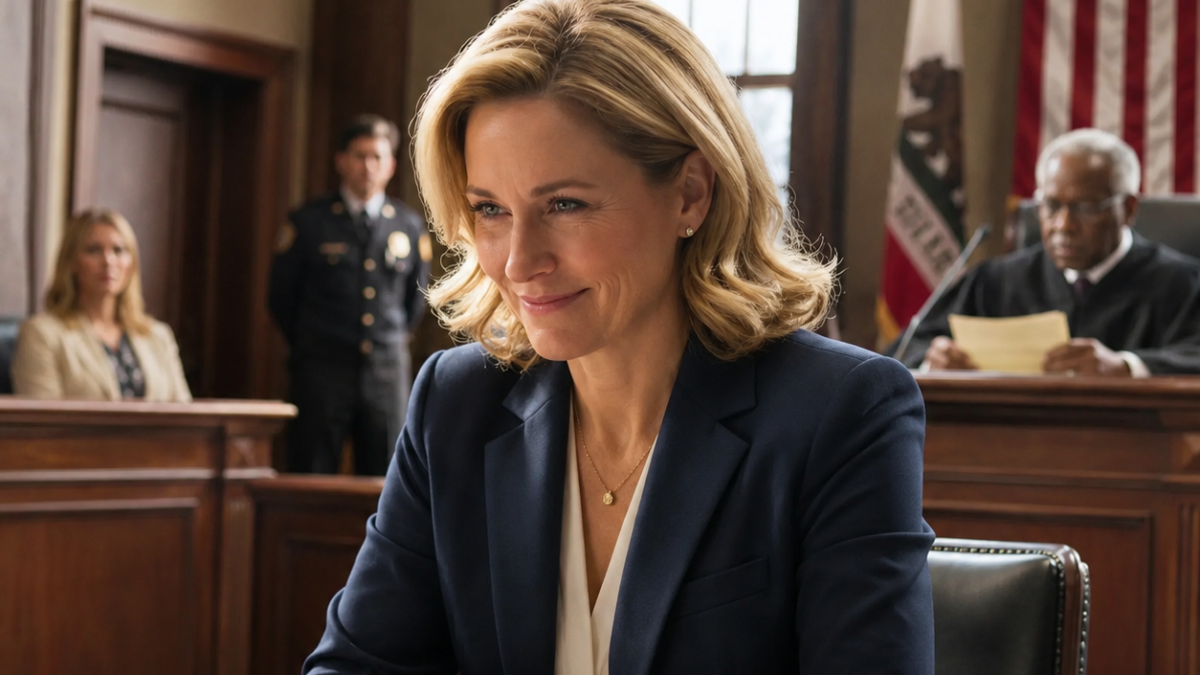
A retired Army soldier walked into court wearing a worn field jacket and scuffed boots, and the bank manager who had once told him he smelled and that “people like you” did not belong in her branch laughed loudly enough for half the courtroom to hear.
She believed Daniel Reeves was just a homeless-looking man trying to turn an embarrassing banking incident into a discrimination case, but the security footage showed he had never raised his voice, never caused a disturbance, and had simply tried to deposit the military disability check he was carrying in a single envelope.
Then Daniel’s attorney handed the judge one final sworn statement, and when the name Michael Whitmore was read aloud, the same woman who had mocked Daniel learned that her own husband was alive because the “disgusting” man standing across the courtroom had once run into a burning convoy to pull him out.
Daniel Reeves had served seventeen years in the Army.
He worked logistics and supply routes, the kind of job most people barely notice until fuel, ammunition, food, or equipment fails to arrive where it is needed.
Three years before the trial, Daniel had been riding in the third vehicle of a convoy overseas when an explosion flipped a fuel truck and turned the road into fire, smoke, shouting, and ammunition cooking off in the heat.
Daniel moved before he had time to think.
He dragged one injured soldier out.
Then another.
Then a third.
Someone yelled for him to stop, but Daniel went back again.
The next blast lifted him off the ground and threw him nearly twenty feet.
He survived with spinal damage and nerve damage that followed him home long after the convoy disappeared from everyone else’s view.
The Army gave him medals, a handshake, and eventually a medical discharge.
Civilian life did not become easier.
Some days he could not stand for long.
Other days he could not sit.
Sleep came in broken pieces.
Jobs that called themselves veteran-friendly became less friendly when pain made Daniel unreliable by ordinary workplace standards.
Bills kept coming anyway.
He lost his apartment.
Then his phone.
Eventually he slept in his car behind a grocery store until one morning he woke up and discovered the car had been towed.
That left him on a sidewalk holding one envelope containing a military disability check that was supposed to help him start again.
He walked several blocks to a bank.
The teller looked at the check, looked at Daniel, hesitated, and called the branch manager.
Claire Whitmore approached in polished heels and looked Daniel up and down before she looked at the check.
“Sir, I’m going to have to ask you to step outside.”
Daniel told her he only wanted to deposit the check.
Claire said he was making customers uncomfortable.
Daniel looked around.
Nobody had complained.
He had not raised his voice or touched anyone.
Then Claire lowered her voice just enough to sound controlled while still allowing nearby customers to hear.
“Sir, you smell.”
A moment later she added, “This isn’t a place for people like you.”
Daniel folded the check, put it back in the envelope, and left without creating the scene everyone seemed to expect.
The next day, instead of trying another bank, he walked into a legal-aid office and met Rachel Torres.
Rachel listened to the entire story and said only, “That shouldn’t have happened.”
By the time the case reached court, the bank described Daniel as disruptive and said Claire had acted to preserve a safe, comfortable environment.
The judge asked one simple question.
“What exactly did Mr. Reeves do that was disruptive?”
The bank’s attorney pointed to his appearance and the unease it supposedly created.
Daniel stood when the judge addressed him.
“Did you raise your voice, refuse to comply, or cause a disturbance?”
“No, ma’am.”
Rachel then picked up a remote.
The security footage appeared behind her.
It showed Daniel entering quietly, approaching the teller, and doing exactly what he said he had done.
Then the audio played.
“You’re making our customers uncomfortable.”
“Sir, you smell.”
“This isn’t a place for people like you.”
Claire stopped smiling.
Rachel waited until the courtroom had gone completely silent.
Then she handed the clerk one final folder.
The judge opened it, read the first page twice, and looked directly at Claire.
“Ms. Whitmore, are you familiar with the name Michael Whitmore?”
Claire’s face changed.
“That’s my husband.”
The judge lifted the sworn statement.
Three years earlier, Michael Whitmore had been trapped inside a burning vehicle after an explosion struck his convoy.
A soldier had gone back through the fire and pulled him out.
The judge lowered the paper.
“That soldier was Mr. Daniel Reeves.”
And Claire suddenly understood who she had been laughing at.
[END OF FACEBOOK CAPTION]
[FIRST COMMENT / FULL STORY CONTINUATION]
Claire did not say anything.
For the first time that morning, she looked as though the words in the courtroom had reached somewhere her attorney could not protect.
Her shoulders dropped slightly.
The hand that had rested so confidently on the table pulled back into her lap.
Daniel remained where he was.
He did not smile.
He did not look toward the spectators to see whether anyone had noticed her reaction.
He did not appear satisfied.
He simply stood there in the same worn field jacket, shoulders square despite the pain that had followed him into the courtroom.
The judge looked back down at Michael Whitmore’s sworn statement.
The courtroom remained silent.
Not the tense silence from earlier, when people were waiting to see whether Rachel could prove what had happened inside the bank.
This silence felt different.
There was nothing left to anticipate.
The connection had already landed.
The woman who had looked Daniel up and down and decided he did not belong in her bank was married to a man Daniel had once risked his own life to save.
Claire finally turned toward him.
Daniel did not meet her eyes immediately.
His attention remained on the judge.
That detail mattered.
He had not come there for Claire’s reaction.
He had come because what happened inside the bank had become larger than a humiliating afternoon.
Rachel had understood that from the first time he sat across from her in the legal-aid office.
She had understood what Daniel himself had struggled to name.
He had spent years being told to endure discomfort without complaint.
Pain.
Rehabilitation.
Forms.
Waiting rooms.
Job applications.
Questions about what he could still do.
Questions about what he could no longer do.
Sleeping in a car.
Losing the car.
Walking into a bank looking like a man who had reached the edge of what he could carry.
Then being told his very presence made other people uncomfortable.
Daniel could have walked away from that too.
Instead, the next morning, he walked into Rachel’s office.
That decision was why they were all sitting there now.
The judge continued reading.
Michael’s statement described the convoy incident three years earlier.
Not in the language Daniel would have used.
Michael had experienced it from inside the vehicle.
One second, movement.
The next, impact.
Heat.
Smoke.
Disorientation.
The vehicle damaged badly enough that getting out on his own was no longer possible.
Daniel had been outside.
Then inside.
Then pulling.
Michael remembered being dragged toward daylight.
The statement did not turn Daniel into a movie hero.
It did not need to.
The facts were enough.
Daniel had gone toward the burning vehicle while other people were being warned away.
He had already pulled men from danger.
He had already gone back more than once.
And on another trip toward the wreckage, the blast that later damaged Daniel’s spine and nerves threw him roughly twenty feet.
The courtroom had already heard pieces of Daniel’s military history.
They knew he had served seventeen years.
They knew he had been medically discharged.
They knew he lived with injuries that affected his ability to work.
But the sworn statement changed the emotional geometry of the room.
Until that moment, Claire had treated Daniel’s past as background.
A veteran.
A disabled man.
A person who had fallen into homelessness.
Categories.
Now the past had entered her own home.
Michael Whitmore was not an anonymous soldier from a report.
He was her husband.
And Daniel was not an abstract veteran she could praise in theory while judging in person.
He was the reason Michael had survived that day.
The judge lowered the document.
“So let me understand the sequence clearly.”
Claire’s attorney straightened.
The judge looked toward Daniel first.
“Mr. Reeves served seventeen years in the United States Army.”
Rachel nodded.
“Yes, Your Honor.”
“He suffered injuries during the convoy incident described in this statement.”
“Yes.”
“Those injuries included spinal and nerve damage.”
“Yes.”
“He was later medically discharged.”
“Yes.”
“And three years after the incident, he entered the defendant’s bank attempting to deposit a military disability check.”
Rachel nodded again.
“Yes.”
The judge looked toward the bank’s table.
“And the branch manager asked him to leave.”
Claire’s attorney answered.
“Yes, Your Honor, but our position remains that the decision was made because of customer concerns and the overall circumstances in the branch.”
The judge’s expression did not change.
“What customer concerns?”
The attorney paused.
There it was again.
The question that had already weakened their case before the footage appeared.
The bank’s filings had used careful language.
Disruptive presence.
Customer discomfort.
Safety concerns.
Professional environment.
Words polished smooth enough to sound reasonable until someone asked what Daniel had actually done.
The attorney said, “Staff perceived that several customers were uneasy.”
“Did any customer complain?”
Another pause.
“Not formally.”
“Did Mr. Reeves threaten anyone?”
“No.”
“Raise his voice?”
“No.”
“Refuse a lawful instruction?”
“He left when asked.”
“Touch another customer?”
“No.”
“Damage property?”
“No.”
“Attempt to take money that did not belong to him?”
“No.”
“Present fraudulent identification?”
“No allegation of that, Your Honor.”
“Was the check fraudulent?”
“No.”
The judge looked down at her notes.
“So the conduct you described as disruptive consisted primarily of his appearance and condition.”
The attorney shifted.
“Our position is that Ms. Whitmore was responsible for maintaining an environment in which customers felt comfortable.”
The judge looked at Claire.
“And her method of doing that included telling Mr. Reeves that he smelled and that the bank was not a place for ‘people like you.’”
No one spoke.
The security recording had made denial impossible.
Rachel had not needed to exaggerate it.
The audio existed.
Claire’s voice existed.
The words existed.
Daniel remembered the original moment differently than the courtroom experienced it.
In the bank, the sentence had come quickly.
“Sir, you smell.”
Then:
“This isn’t a place for people like you.”
At the time, the words had not felt dramatic.
They had felt ordinary in the worst way.
A person with authority deciding what someone else represented.
Daniel had heard other versions before.
Employers asking whether his injuries would become a problem.
Landlords asking questions that sounded polite but carried judgment.
People noticing the worn clothing before noticing him.
Customers tightening around their belongings when he passed.
None of those moments had come with a judge watching.
None had come with a security recording.
Most disappeared the moment they happened.
That was why the footage mattered.
It had preserved one moment that otherwise would have become an argument between two memories.
Claire’s memory.
Daniel’s memory.
The bank’s polished explanation.
The recording did not care about any of them.
It showed Daniel walking in.
Waiting.
Speaking calmly.
Leaving when ordered.
It captured Claire’s words.
That was why Rachel had let the footage play almost without commentary.
The best evidence needed less help.
The judge turned back toward Claire.
“Ms. Whitmore.”
Claire looked up.
“Your Honor.”
“Did you know Mr. Reeves was a veteran when he entered the bank?”
“No.”
“Did you know he was disabled?”
“I did not know the details.”
“Did you know the check was a military disability payment?”
Claire hesitated.
“I saw the check.”
“That was not my question.”
Another pause.
“Yes.”
The judge nodded slowly.
“Did you know he had saved your husband’s life?”
Claire’s voice changed.
“No.”
It was quieter than anything she had said all day.
The judge leaned back.
That answer was important too.
Claire had not recognized Daniel.
She had not deliberately humiliated the man who saved Michael because she knew who he was.
That would have been a different kind of cruelty.
The point was almost worse in another way.
She had not known.
She had believed none of that mattered.
She had looked at a stranger in worn clothing and decided that was enough information.
The judge said:
“That is precisely why this court is not going to evaluate Mr. Reeves’s right to dignity based on whether he happened to have performed an extraordinary act of courage.”
Rachel looked toward Daniel.
Daniel’s face barely changed.
The judge continued.
“Mr. Reeves did not need to have saved your husband to deserve lawful and respectful treatment.”
That sentence changed something in the room.
The Michael Whitmore statement was powerful.
Everyone felt it.
But the judge refused to let it become the reason Daniel mattered.
Daniel had not walked into the bank wearing a sign listing seventeen years of service.
He had not carried his medals.
He had not told Claire about the convoy.
He had not asked for gratitude.
He had walked in with a check.
That should have been enough.
The judge looked at Claire again.
“The fact that Mr. Reeves once risked his life to save a member of your family makes the irony of your conduct impossible to ignore.”
She paused.
“But it does not create his right to be treated like a human being.”
The courtroom remained still.
Daniel finally looked toward Claire.
Her eyes were wet now.
She looked away first.
Rachel did not press the moment.
She had more evidence, but she understood when evidence had already done its work.
She returned to counsel table.
Daniel sat slowly.
His back had begun hurting before the hearing started.
Standing made it worse.
Sitting too long made it worse in another way.
There was no comfortable position.
That had become one of the cruel little realities of his life after the blast.
People saw him shift in chairs and assumed impatience.
Saw him stand unexpectedly and assumed restlessness.
Saw him lean against a wall and assumed laziness.
Pain had altered the way he occupied space, and strangers kept assigning character to the result.
He lowered himself carefully.
Rachel whispered:
“You okay?”
Daniel nodded.
He always nodded.
Rachel had learned that “okay” from Daniel usually meant “still functioning.”
She did not ask again.
The bank’s attorney requested a short recess.
The judge granted it.
Claire stood quickly and left with counsel.
Daniel stayed seated.
The room slowly filled with whispers.
Rachel gathered the documents into careful stacks.
Daniel looked toward the blank screen where the bank footage had played.
For a few seconds, he was back there.
Polished floor.
Glass entrance.
Air-conditioning.
The envelope in his hand.
The teller looking at him for a second too long.
Claire approaching before she had even examined the check carefully.
He remembered the moment she said:
“You’re making our customers uncomfortable.”
He had looked around because he genuinely wanted to know who she meant.
No one had said anything to him.
No one had asked him to move.
No one had complained within his hearing.
People were simply watching.
Then Claire said he smelled.
Daniel had known he probably did.
He had spent the night sleeping badly.
He had lost access to the small collection of belongings that had been inside his towed car.
He did not need someone to tell him he looked rough.
He knew.
What hurt was the certainty with which she turned that condition into a reason he should disappear.
He had spent seventeen years making sure other people had what they needed to keep moving.
Fuel.
Supplies.
Routes.
Timing.
Coordination.
The work was invisible when it went right.
After the blast, invisibility had become something else.
In civilian life, people saw only the parts that had gone wrong.
The jacket.
The boots.
The tired face.
The smell.
Not the years before.
Not the reasons.
Not the pain.
Daniel had never expected strangers to know his history.
He had only expected a bank to process a check.
Rachel closed the last folder.
“You want water?”
“Yeah.”
She handed him a bottle.
He took a small drink.
Then said:
“How did you get Michael’s statement?”
Rachel looked at him.
“You never asked.”
“I’m asking now.”
She sat beside him.
“During discovery, we identified Claire’s husband from ordinary background information relevant to her testimony.”
Daniel waited.
Rachel continued.
“When his name came up, it matched the name in your convoy records.”
Daniel’s expression tightened.
“Those records weren’t supposed to become a show.”
“They didn’t.”
“You contacted him.”
“Yes.”
Daniel looked toward the courtroom doors.
“What did he say?”
“At first?”
“Yes.”
“He didn’t know the bank case had anything to do with you.”
Daniel nodded.
Rachel said:
“When I explained who you were, he went quiet for a long time.”
Daniel did not respond.
“He agreed to provide a sworn statement describing what happened overseas.”
“Why?”
Rachel looked at him as if the answer should have been obvious.
“Because it was true.”
Daniel rubbed his thumb over the edge of the water bottle.
“I didn’t save him so he could testify for me later.”
“I know.”
“I didn’t save any of them for this.”
“I know.”
Rachel’s voice remained soft.
“That’s why the statement matters.”
Daniel looked away.
Rachel understood that hero stories made him uncomfortable.
He had corrected her the first time she described the convoy rescue as bravery.
“Training,” he had said.
Rachel had argued.
“Training doesn’t make you go back four times.”
Daniel had answered:
“Training tells you what to do when you don’t have time to think.”
He had never accepted the version where he stood in flames thinking noble thoughts.
There had been no speech inside his head.
No calculation about medals.
Men were trapped.
He moved.
That was all.
The blast afterward had taken whatever clean ending people wanted to place on the story and complicated it.
He came home injured.
Medical discharge.
Pain.
Employment problems.
Bills.
Homelessness.
Heroism had not paid rent.
That was why the bank incident struck Rachel so deeply when she first heard it.
Society loved the word veteran.
It loved ceremonies.
Flags.
Applause.
Discounts.
Public gratitude.
But Daniel had discovered how quickly those abstractions disappeared when a veteran showed up looking poor, exhausted, and inconvenient.
Rachel had not wanted to make the case about patriotism.
Daniel did not want that either.
They wanted the bank judged for what happened inside the branch.
The Michael statement was not meant to transform Daniel from an undeserving poor man into a deserving hero.
It exposed the danger of making judgments before knowing anything at all.
The bailiff announced that recess was ending.
Claire returned.
Her face had changed.
Not dramatically.
She had composed herself.
But the courtroom no longer seemed to fit her as comfortably.
She sat beside her attorney.
The judge returned.
Everyone rose.
Daniel rose more slowly than most.
Then sat.
The hearing continued.
Rachel called Daniel to testify in more detail.
He walked to the witness stand.
Every step deliberate.
He was sworn.
Rachel stood several feet away.
“Mr. Reeves, why did you enter the bank that morning?”
“To deposit a check.”
“What kind of check?”
“Military disability.”
“Did you have an account there?”
Daniel answered according to the record of his attempt to use the bank’s services, without trying to embellish anything.
Rachel kept the questions narrow.
“What happened when you reached the teller?”
“She looked at the check and called somebody.”
“Who approached?”
“Ms. Whitmore.”
“What did she say?”
“She asked me to step outside.”
“Why?”
“She said customers were uncomfortable.”
“Did you see anyone complain?”
“No.”
“Did anyone speak to you before Ms. Whitmore approached?”
“No.”
“Did you threaten anyone?”
“No.”
“Were you carrying a weapon?”
“No.”
“Did you shout?”
“No.”
“Did you refuse to leave?”
“No.”
Rachel paused.
“How did you respond?”
“I took the check and left.”
“Why didn’t you argue?”
Daniel looked toward the judge.
Then back toward Rachel.
“Didn’t seem like arguing would change anything.”
“Were you embarrassed?”
The question hung there.
Daniel hated it.
He could talk about explosions more easily than humiliation.
Explosions had physics.
Embarrassment crawled inside.
He said:
“Yes.”
Rachel waited.
Daniel added:
“I knew what I looked like.”
Nobody moved.
“I didn’t need her to tell me.”
Rachel’s face softened, but she did not interrupt.
Daniel continued.
“My car had been towed.”
He swallowed.
“I’d been sleeping in it.”
He looked toward his hands.
“The check was supposed to help me get started again.”
His voice remained controlled.
“I just wanted to deposit it.”
Rachel asked:
“What did you do after leaving?”
“I walked.”
“Where?”
“Didn’t really know at first.”
“How did you feel?”
Daniel took a breath.
“Tired.”
That answer was more truthful than anything dramatic.
Not destroyed.
Not enraged.
Tired.
Tired of pain.
Tired of paperwork.
Tired of being looked at like a problem.
Tired of calculating where he might sleep.
Tired of trying to explain injuries people could not see.
Tired enough that Claire’s words almost felt like confirmation of something he had begun believing himself.
Rachel asked:
“Why did you go to legal aid the next morning?”
Daniel looked at her.
“Because I kept hearing what she said.”
“What part?”
“This isn’t a place for people like you.”
Rachel nodded.
“What did you think she meant?”
Daniel paused.
“I don’t know exactly.”
That answer mattered.
He did not claim to know Claire’s mind.
He continued.
“But I knew what it felt like.”
Rachel asked:
“What did it feel like?”
Daniel looked out toward the courtroom.
“Like the check mattered less than the jacket.”
No one laughed.
Claire looked down.
Rachel had no further questions.
The bank’s attorney stood.
His cross-examination began carefully.
“Mr. Reeves, you acknowledge that your appearance that morning was disheveled.”
“Yes.”
“You had been sleeping in your vehicle.”
“Yes.”
“You had not had normal access to bathing facilities.”
Daniel hesitated.
“Yes.”
“So when Ms. Whitmore said that there was an odor, she may have been describing something objectively true.”
Rachel shifted slightly.
Daniel answered before she objected.
“Could’ve been.”
The attorney nodded as though he had gained ground.
“And a branch manager is responsible for customer comfort.”
“I suppose.”
“So isn’t it possible that Ms. Whitmore was responding to a legitimate concern about the environment in the branch rather than discriminating against you?”
Daniel looked at him.
“She told me people like me didn’t belong there.”
The attorney paused.
“That statement is on the recording.”
“Yes.”
“My question is about the manager’s underlying responsibility.”
Daniel answered:
“I wasn’t asking her to let me sleep in the bank.”
A few people shifted.
The judge looked toward the spectators.
No laughter followed.
Daniel continued.
“I was trying to deposit a check.”
The attorney adjusted his notes.
“Mr. Reeves, did Ms. Whitmore physically force you out?”
“No.”
“Did security touch you?”
“No.”
“Did anyone threaten you with violence?”
“No.”
“So you left voluntarily.”
“She told me to leave.”
“And you complied.”
“Yes.”
The attorney continued for several minutes.
Daniel answered only what he knew.
He did not give speeches.
That made him difficult to shake.
When he did not understand a question, he said so.
When the attorney suggested he had interpreted Claire’s words through the stress of his personal circumstances, Daniel said:
“Maybe stress affected me.”
Then added:
“The recording still says what it says.”
Rachel looked down to hide the smallest hint of a smile.
The cross-examination ended.
Daniel stepped down carefully.
The judge watched him return to counsel table.
Then Rachel called attention back to Michael Whitmore’s statement.
The bank objected to portions.
The judge ruled on what she would consider.
No theatrics.
No surprise witness walking through the courtroom doors.
Michael’s sworn words were enough for the point Rachel was making.
The statement described the convoy.
The damaged vehicle.
The fire.
Daniel’s actions.
The rescue.
It also explained that Michael later learned Daniel had suffered serious injuries during the same incident.
He had known Daniel’s name.
What he had not known was where Daniel’s life had gone afterward.
That was the part that unsettled Daniel most.
People from that day remembered him as the man moving through fire.
Three years later, Claire saw him as a man who smelled.
Both images belonged to the same person.
Nothing magical had happened between them.
Life had.
The judge asked Rachel why Michael’s testimony was legally relevant to a discrimination case arising from a bank interaction.
Rachel did not say:
Because it proves Daniel is a hero.
She said:
“It is relevant in limited part because the defense has repeatedly characterized Mr. Reeves’s appearance and circumstances as evidence supporting its judgment about his presence, while Ms. Whitmore’s own closest family connection demonstrates how profoundly unreliable those appearance-based assumptions were.”
The judge considered that.
Rachel continued.
“But our case does not depend on Mr. Reeves having saved anyone.”
She looked toward Daniel.
“It depends on what the bank did to the man who walked through its doors that morning.”
The judge nodded.
That was the argument.
Daniel’s military history explained how he got there.
It did not purchase his dignity.
The security video proved what happened.
The bank’s own language showed how it tried to justify the decision later.
Rachel introduced internal notes from the incident report already part of the case.
The descriptions focused heavily on Daniel’s appearance.
Worn clothing.
Strong odor.
Unkempt condition.
Possible customer concern.
But no specific disruptive behavior.
No threat.
No refusal.
No fraudulent transaction.
No security incident beyond the fact that security had been asked to stand nearby.
That gap mattered.
The bank had tried to turn discomfort into misconduct after the fact.
The video showed the difference.
Rachel returned again to the teller’s hesitation.
She did not attack the young teller personally.
The teller had not insulted Daniel.
She had called the manager.
That was what employees often did when uncertain.
The decision that mattered came next.
Claire approached.
Looked at Daniel.
Asked him to leave before any actual disturbance occurred.
Then said the words no policy language could clean up afterward.
Sir, you smell.
This isn’t a place for people like you.
The judge asked the bank whether its written procedures instructed staff to remove customers solely for odor or worn clothing.
The attorney acknowledged there was no policy written that way.
There were general provisions about safety, disruption, and maintaining the branch environment.
Rachel asked whether the bank had documented any attempt to offer Daniel another way to complete the transaction.
A private office.
A different counter.
A short wait.
Assistance.
Nothing.
The response had been removal.
That was the core.
The courtroom broke for lunch.
Daniel did not eat much.
Rachel bought sandwiches.
He managed half of one.
His back had tightened badly by then.
He stood near a hallway window because sitting had become worse.
Rachel joined him.
“You need anything?”
“No.”
“You’re pale.”
“Pain.”
“Do we need to ask for time?”
“No.”
“You don’t get a medal for hurting quietly.”
Daniel looked at her.
“That supposed to be funny?”
“No.”
“Good.”
She waited.
Then said:
“You can sit in the conference room and lie flat for twenty minutes.”
He hesitated.
“Court doesn’t care if you lie down during recess.”
That was enough.
Daniel spent part of lunch on the floor of a small attorney conference room with his knees bent because it reduced pressure on his back.
The man who had been discussed all morning like a symbol was still a body hurting in real time.
Rachel sat at the table and reviewed notes.
Neither spoke for several minutes.
Then Daniel said:
“Did Michael know about Claire?”
Rachel looked up.
“What do you mean?”
“Before he gave the statement.”
“He knew the case involved her.”
Daniel stared at the ceiling.
“What did he say?”
Rachel chose her words carefully.
“He said the truth about what happened overseas didn’t change because he loved his wife.”
Daniel closed his eyes.
That answer stayed with him.
Rachel continued.
“He did not provide opinions about her conduct in the bank.”
“Good.”
“He described what he personally experienced.”
“Better.”
Daniel did not want to be inserted between a husband and wife.
He had not asked for that.
But truth had created the connection.
Not Rachel.
Not Daniel.
The fact existed whether anyone liked it.
Three years earlier, Daniel pulled Michael from a burning vehicle.
Three years later, Michael’s wife told Daniel he did not belong in her bank.
Nobody could make those facts less uncomfortable by ignoring them.
After lunch, closing arguments began.
The bank emphasized policy.
Claire’s responsibility.
The absence of physical injury inside the branch.
The fact that Daniel had complied and left.
The possibility that customer discomfort was genuine even if undocumented.
The attorney argued that Claire’s phrasing had been regrettable but did not transform every bad interaction into unlawful discrimination.
Rachel listened.
Then stood.
She began with something quieter.
“This case is not about whether Ms. Whitmore used polite enough words.”
She walked toward the evidence display.
“It is about whether the reason given after the fact matches what happened in the room.”
She played a short portion of the video again.
Daniel entering.
The teller.
Claire.
No disturbance.
Then she stopped before the cruelest audio.
The judge had heard it.
Everyone had.
Rachel said:
“The bank uses the word safety.”
She let that sit.
“Where is the unsafe act?”
No answer was expected.
“The bank uses the word disruption.”
She looked toward the still image of Daniel standing at the counter.
“Where is the disruption?”
Then:
“The bank uses the word customer comfort.”
Rachel turned toward the judge.
“But discomfort with another human being’s appearance is not the same thing as misconduct by that human being.”
Claire’s attorney wrote something.
Rachel continued.
“Mr. Reeves came in carrying a legitimate check.”
“He spoke calmly.”
“He complied.”
“He left.”
“What happened before he left was not a neutral application of behavior-based policy.”
Rachel looked toward Claire.
“It was a judgment about who appeared acceptable enough to remain.”
She did not mention Michael until the end.
When she did, her tone did not rise.
“Michael Whitmore’s statement does not make Mr. Reeves more worthy of protection.”
She paused.
“It simply exposes the terrible luck of Ms. Whitmore’s assumption.”
Rachel looked toward Daniel.
“She judged a man she did not know.”
Then toward the judge.
“And in this extraordinary case, we happen to know exactly how wrong that judgment was.”
She returned to her table.
Daniel looked down.
For the first time that day, he felt something close to fear.
Not fear of losing money.
He had lived without money.
Fear that the court might still reduce everything to a misunderstanding.
That had happened before in smaller ways.
Someone says something cruel.
Then explains intent.
Maybe they were stressed.
Maybe they meant something else.
Maybe you took it personally.
The person with less power is asked to accept the explanation because conflict makes everyone uncomfortable.
Daniel had spent years becoming very good at absorbing discomfort so other people did not have to.
He did not want to do it again.
The judge began speaking.
She reviewed the evidence.
Not dramatically.
The security video.
The audio.
The bank’s incident descriptions.
The absence of documented disruptive behavior.
Daniel’s compliance.
Claire’s language.
The credibility of the witnesses.
The relevant evidence concerning Daniel’s circumstances.
The court’s job was not to decide whether Daniel was admirable.
It was to decide what happened and whether the bank’s conduct crossed the legal line presented in the case.
When the ruling came, it was firm.
Discrimination.
Damages.
Six figures.
A formal public apology from the bank.
Claire stopped moving.
Daniel did too.
The number did not immediately register.
Six figures.
Money larger than anything he had possessed in years.
Enough to change the practical problems surrounding him.
But Daniel’s first response was not calculation.
He exhaled.
Just once.
Long.
Like he had been holding something inside since the bank doors closed behind him.
Rachel touched his forearm lightly.
“We got it.”
Daniel nodded.
His eyes stayed on the bench.
The judge was not finished.
She addressed the bank directly.
Financial damages mattered, she said, but so did institutional responsibility.
The bank could not present the incident publicly as a generic misunderstanding while the recording showed something more specific.
The required apology had to acknowledge the treatment Daniel received.
No vague statement regretting that someone “felt offended.”
No rewriting him into a disruptive customer who simply interpreted policy badly.
The bank had to own the interaction.
Claire’s attorney asked several procedural questions.
Rachel responded where necessary.
Daniel barely heard them.
The courtroom that had felt enormous that morning suddenly felt too small.
People were looking at him.
That was uncomfortable in a different way.
Before, some had seen the jacket.
Now they saw the story.
He was not sure he liked either.
He wanted to leave.
The judge looked toward him before concluding.
“Mr. Reeves.”
Daniel raised his eyes.
“What happened to you in that branch should not have required a military record to be taken seriously.”
Daniel swallowed.
“Yes, ma’am.”
The judge continued.
“Your conduct in this courtroom has been measured.”
She paused.
“I hope the result allows you to move forward.”
Daniel nodded.
“Thank you.”
That was all.
No standing ovation.
No gavel slammed in rage.
No courtroom erupting.
The ruling did not need theater.
Claire remained seated after the judge left.
Her attorney leaned toward her.
She said something Daniel could not hear.
Rachel began packing.
Daniel stood slowly.
He wanted to walk out before reporters reached him.
Too late.
The story had already escaped the courtroom.
Someone had heard enough.
Someone had contacted someone else.
Outside the courthouse, cameras were waiting.
Microphones.
Reporters.
People turning a private humiliation into public news.
Daniel stopped just inside the doors.
Rachel looked through the glass.
“You don’t have to say anything.”
Daniel nodded.
“You can leave another way.”
He looked down the hallway.
Then back at the entrance.
“No.”
“You sure?”
“No.”
Rachel almost smiled.
Daniel adjusted the collar of his old jacket.
Not because he wanted to look better.
Because it was crooked.
Then he pushed the door open.
Noise hit him immediately.
“Mr. Reeves.”
“Daniel.”
“Can we get a statement?”
“What do you think of the ruling?”
“How do you feel about the damages?”
“Have you spoken to Michael Whitmore?”
“Do you expect the bank to appeal?”
Daniel stopped.
Rachel stayed slightly behind him.
A reporter near the front asked the simplest question.
“Mr. Reeves, what are you going to do now?”
Daniel looked at her.
Then at the cameras.
The answer everyone wanted was probably something large.
Help veterans.
Fight discrimination.
Start an organization.
Use the money for something noble enough to fit the story they had already created.
Daniel thought about the previous night.
Where he had slept.
How many nights he had spent arranging his body inside a car because lying flat hurt differently than sitting.
How many mornings began with finding a bathroom before finding food.
How long it had been since a locked door had belonged to a place where he was allowed to stay.
So he told the truth.
“I think…”
He paused.
“I’m just going to sleep indoors tonight.”
The reporters went quiet.
Daniel did not add anything.
There was nothing to add.
The line carried more of his life than any victory speech could.
He walked past the cameras.
Rachel followed.
Behind them, reporters started talking again.
But Daniel had already given the only statement he wanted to give.
The clip spread quickly.
Millions of views within days.
Some people shared the courtroom footage.
Others shared the courthouse answer.
People argued about Claire.
About the bank.
About veterans.
About homelessness.
About whether appearance-based judgment was something society admitted openly or practiced quietly.
Some called the ruling justice.
Some said money could not undo what happened.
Some focused on the impossible coincidence that Claire’s husband was the soldier Daniel had saved.
Others pointed to the judge’s reminder that the coincidence should not have been necessary.
Daniel should not have needed a heroic past to be treated decently.
That part mattered most.
The internet loved the twist.
A bank manager humiliates a homeless veteran.
Court reveals he saved her husband.
It fit perfectly into a headline.
But Daniel’s life did not become simple because strangers understood the irony.
Pain remained.
The spinal damage remained.
The nerve damage remained.
Seventeen years of military service did not return his old body.
The months of slipping through civilian life did not vanish.
What changed first was smaller.
The truth had been recorded somewhere outside Daniel’s own memory.
Someone had listened.
Someone had believed him.
A court had looked at the same footage and refused to call what happened normal.
For a man whose life had become a series of losses almost nobody witnessed, that mattered.
Three years earlier, the explosion had divided Daniel’s life into before and after.
Before, his body obeyed him more easily.
Before, work gave his days structure.
Before, he knew where he belonged.
After came rehabilitation.
Pain.
Discharge.
Applications.
Bills.
The apartment.
The phone.
The car.
Each loss smaller than an explosion.
Together, they had changed the landscape of his life just as completely.
The disability check had represented an attempt to rebuild.
Not wealth.
A beginning.
Enough for a cheap room.
Food.
Maybe enough breathing space to decide what came next.
That was why the bank interaction became impossible for him to dismiss.
He had walked inside at one of the lowest points of his life carrying proof that something was still coming to him from the institution he had served.
Claire looked at the person instead of the transaction and decided he was the thing that did not belong.
The legal-aid office had been the opposite experience.
Rachel had not asked him to prove he was respectable before she listened.
She had not asked what medals he earned.
She had not asked who he saved.
She asked what happened.
Then she listened until he finished.
The first time Daniel described Claire’s words, he had stared at the floor.
Rachel did not interrupt.
When he stopped, she waited long enough that Daniel finally looked up.
“That shouldn’t have happened.”
Five words.
No promise.
No speech.
No guarantee of winning.
Just recognition.
Daniel had almost cried then.
He had not.
He had spent too many years learning how not to.
Rachel had begun with evidence.
Did the bank have cameras?
Probably.
Were they preserved?
They needed to be.
Was there an incident report?
Get it.
Were there witnesses?
Maybe.
Was Daniel’s check legitimate?
Document it.
Was there any reason security had been called?
Find out.
She built the case from facts.
Not pity.
That was why Daniel trusted her.
He did not want to stand in court asking anyone to feel sorry for him.
He wanted the bank’s story compared with reality.
The video gave them that.
The first time Rachel watched the complete recording, she played it twice.
Daniel sat beside her.
The first viewing made him feel sick.
He had remembered Claire’s tone.
The recording made it colder.
The second viewing made him angry.
Not because the words changed.
Because he saw himself.
Quiet.
Almost apologetic.
A man doing everything possible to make his existence easy for everyone else in the room.
Rachel paused at the moment Claire said:
“This isn’t a place for people like you.”
Daniel looked away.
Rachel asked:
“You want to stop?”
“No.”
“You sure?”
“Play it.”
They watched Daniel pick up the envelope.
Fold it.
Leave.
Rachel said:
“You did nothing wrong in that room.”
Daniel answered:
“I smelled.”
Rachel looked at him.
“That is not misconduct.”
He said nothing.
She continued.
“You looked poor.”
Nothing.
“You looked exhausted.”
Nothing.
“You were still a customer trying to complete a lawful transaction.”
Daniel finally said:
“People don’t like being around that.”
Rachel understood what he meant.
Poverty.
Pain.
Visible decline.
People often react as though misfortune can spread by proximity.
But discomfort was not proof Daniel had done anything.
That became the spine of the case.
When Michael Whitmore’s name surfaced, Rachel almost did not believe it.
She checked.
Then checked again.
Daniel Reeves.
Convoy incident.
Michael Whitmore.
The dates aligned.
The statement eventually confirmed what records already suggested.
Rachel did not tell Daniel immediately because she wanted the evidence secured before turning it into an emotional revelation.
When she finally explained, Daniel’s first reaction was not amazement.
It was discomfort.
“You don’t need that.”
Rachel said:
“I may.”
“The video is enough.”
“The video proves the bank interaction.”
“That’s the case.”
“Yes.”
Daniel looked at her.
“So why bring Michael into it?”
Rachel answered carefully.
“Because the defense has made your appearance central to its justification.”
Daniel shook his head.
“Still feels cheap.”
Rachel understood.
Using a rescue to make Daniel sympathetic could become another form of judging his worth through biography.
So she used Michael’s statement narrowly.
Not to argue:
Daniel is a hero, therefore Claire was wrong.
But to show how absurdly incomplete Claire’s assumptions had been.
The judge understood that distinction.
It became one of the strongest moments of the hearing.
Daniel did not have to be heroic.
But because he was, the prejudice became impossible for Claire to escape emotionally.
Her own husband was living proof that a man’s value could not be read from his jacket.
That was the truth everyone remembered.
The deeper truth was the judge’s correction.
Even if Daniel had never served.
Even if he had never run into fire.
Even if he had never rescued Michael.
Even if his life contained nothing anyone considered extraordinary.
He still should have been allowed to stand at a bank counter without being told that people like him did not belong.
That was the part Daniel carried with him after the cameras stopped.
The public apology came later as required.
The bank acknowledged the treatment Daniel had received.
The institution could no longer hide completely behind phrases about customer comfort.
The words Claire used had been recorded.
The court had ruled.
The bank had to respond to what actually happened.
Daniel read the apology once.
Then put it aside.
He did not frame it.
He did not need it on a wall.
The damages were real.
Six figures.
Enough to give him options he had not possessed the morning he entered the bank.
But he understood something people watching the story online sometimes missed.
Money could repair conditions.
Not time.
It could buy shelter.
Food.
Medical stability.
Transportation.
A chance to breathe.
It could not make the sentence disappear.
“This isn’t a place for people like you.”
Maybe it did not need to disappear.
Maybe healing did not require pretending people never said cruel things.
Maybe it required reaching a point where those words stopped defining the room Daniel believed he was allowed to enter.
The story continued circulating.
People wrote long posts about justice.
Veterans shared it.
People who had experienced homelessness shared it.
Bank employees argued about what staff should have done differently.
Others focused on the security footage and said Daniel had been lucky there was a recording.
That thought stayed with Rachel too.
What if the camera angle had failed?
What if the audio had not existed?
What if the branch deleted the footage before it was preserved?
What if there had been no legal-aid attorney willing to listen?
What if Daniel had simply gone somewhere else?
Most humiliation produces no case.
Most cruel sentences are not preserved.
That was why the question at the end of the original story mattered.
Was it justice?
Or was it a moment when truth happened to be visible?
Daniel never claimed to know.
He knew only his own case.
He knew a camera existed.
Rachel found it.
The audio existed.
Michael’s statement existed.
The judge listened.
That combination changed the outcome.
For every person whose story became evidence, Daniel knew there were others whose stories remained memory.
He had been one of them many times before.
The job interview where someone’s expression changed when he described his limitations.
The apartment conversation that ended after questions about income.
The strangers who moved away from him.
No recording.
No courtroom.
Life simply continued.
That was why the bank case felt larger to the public than it felt to Daniel.
To the public, it was a dramatic reversal.
To Daniel, it was one day when something that usually vanished happened to leave a trail.
Claire became the center of public anger for a while.
Daniel did not enjoy that as much as strangers expected him to.
What she had done was wrong.
The court said so.
He did not need her life destroyed to understand the judgment.
He thought about Michael.
A man whose hand had once grabbed his gear in smoke and fire because Daniel was the nearest solid thing left.
Daniel remembered fragments of that day more than a clean sequence.
Heat.
Noise.
Weight.
Oil under his boots.
Someone shouting.
A hand gripping him.
Then the blast.
People later told him about the twenty feet.
He remembered impact more than distance.
Pain arrived after the strange quiet inside his head.
Then everything became treatment.
Reports.
Recovery.
Medals.
Forms.
Eventually discharge.
Michael’s survival had been enough.
Daniel had never expected their lives to intersect again.
Certainly not through Claire.
He hoped Michael understood that.
Rachel told him Michael’s statement had been factual.
Respectful.
No attack on his wife.
That made Daniel feel better.
The truth did not require Michael to choose a side publicly between gratitude and marriage.
He could tell what happened overseas.
The court could decide what it meant in the case.
That was enough.
Claire’s reaction in court became one of the most replayed parts of the story.
People froze frames of her face.
Daniel hated that.
A single expression can become another kind of judgment.
He knew too much about being reduced to one visible moment.
Claire had done something cruel.
Daniel did not want to pretend that gave strangers complete knowledge of everything she was.
That did not excuse her.
It simply made him cautious.
One bank interaction had nearly reduced Daniel to “the man who smells.”
He did not want his victory to depend on reducing Claire to a single label in return.
The judge had already done what needed doing.
She separated conduct from worth.
That lesson applied to everyone.
Daniel’s old field jacket became symbolic online too.
People wrote about it as though it contained seventeen years of service in the seams.
Daniel thought that was ridiculous.
It was just a jacket.
Old.
Warm enough.
Worn because buying another had not been a priority.
The boots were scuffed because he wore them.
His posture was steady because seventeen years of habit did not disappear when everything else did.
Strangers saw dignity afterward because they knew the story.
Before knowing it, some saw poverty.
Same jacket.
Same man.
Different information.
That contradiction was the entire case in miniature.
People often think respect is something information earns.
Find out he is a veteran, respect him.
Find out he is injured, become sympathetic.
Find out he saved a life, admire him.
Daniel had come to believe the sequence should run the other way.
Respect first.
Then learn whatever there is to learn.
Maybe the person turns out extraordinary.
Maybe ordinary.
Neither should determine whether they belong at the counter.
The courthouse statement became the piece Daniel could not escape.
“I’m just going to sleep indoors tonight.”
People quoted it everywhere.
He had not planned it.
That was why it worked.
He had been asked what he would do next.
His mind went to the most immediate need.
A door.
A bed.
A room.
Privacy.
The ordinary things people with stable lives barely notice.
For Daniel, indoors had become a goal.
The line reminded people that the case had never been only about insult.
It had happened at the moment he was trying to climb out of homelessness.
He had carried the disability check into the bank because he needed it.
The check was not symbolic.
It was survival.
The damages would eventually change what was possible.
The public apology changed the record.
The ruling changed how the incident could be described.
But that night, Daniel still wanted something smaller.
Sleep.
Inside.
Without worrying that someone would tow the place where he woke up.
That honesty landed harder than any prepared speech Rachel could have written for him.
She told him later:
“You couldn’t have said anything better.”
Daniel answered:
“I wasn’t trying to.”
“I know.”
That was why.
In the days after the ruling, strangers tried to turn Daniel into a lesson.
He resisted.
People asked what message he had for banks.
For America.
For employers.
For veterans.
For people experiencing homelessness.
Daniel did not want to become spokesman for everyone who had ever been judged.
He had one story.
His.
Seventeen years in the Army.
A convoy.
An explosion.
Spinal damage.
Nerve damage.
Medical discharge.
Work becoming harder.
Bills.
Apartment lost.
Phone lost.
Car towed.
Disability check.
Bank.
Claire.
Rachel.
Court.
That was enough to carry.
He did not need to carry everybody else too.
But he understood why people connected themselves to what happened.
Many had their own version of a room where someone decided what they were before hearing them speak.
Maybe not as dramatic.
Maybe no judge afterward.
But familiar.
That was why the clip moved so quickly.
It was not only the extraordinary coincidence with Michael.
It was the ordinary cruelty before it.
People recognized that faster than heroism.
The bank lobby had looked controlled.
Clean.
Professional.
Safe.
Daniel had looked like disorder entering it.
That visual contrast allowed Claire to tell herself a story.
He did not fit.
Therefore he was a problem.
The security footage destroyed the second step.
He did not fit the aesthetic.
But he had not created a problem.
The distinction should have been simple.
It was not.
Rachel kept thinking about the young teller too.
The teller had frozen.
Called a manager.
She became almost invisible in the public story.
But Rachel saw something important there.
Institutions are not only made from dramatic decisions.
They are made from small moments when people decide whether uncertainty becomes suspicion.
The teller did not insult Daniel.
She deferred upward.
Claire made the decision.
Then security moved closer.
Then other customers watched.
Then phones appeared.
Within minutes, an ordinary transaction had become an event centered around the assumption that Daniel was the source of discomfort.
Nobody needed to shout.
That was what Rachel had meant when she told him:
“Discrimination doesn’t always shout.”
Sometimes it smiled.
Sometimes it used policy language.
Sometimes it asked someone to leave while insisting nothing personal was happening.
That quietness made it harder to challenge.
The recording gave the quietness a voice.
Sir, you smell.
This isn’t a place for people like you.
The bank could not turn those sentences back into neutral procedure.
The judge would not let it.
Daniel remembered the laugh in court too.
Claire’s laugh at the beginning.
Sharp.
Too loud.
Nobody joined.
That moment had almost made him leave emotionally before the case truly started.
He had heard laughter before.
People joking about the jacket.
The smell.
The homeless man in a place built for money.
Claire’s laugh had carried that same old message.
You are ridiculous for asking to be taken seriously.
Then the hearing unfolded.
Video.
Audio.
Michael.
The laugh disappeared.
Daniel did not think:
Good.
Now she hurts.
He thought:
Now she knows.
There was a difference.
Knowing did not erase what she did.
But the case had forced knowledge into a place where assumption had been easier.
That was one kind of justice.
Not revenge.
Exposure.
Claire had to see Daniel beyond the image she created in seconds.
The courtroom had to see him too.
Then the judge went one step further and reminded everyone that knowing the heroic version of Daniel was not required.
That was the part Daniel respected most.
The judge could have ended with:
You insulted the man who saved your husband.
That would have made a perfect dramatic story.
Instead, she made the harder point.
You insulted a man.
The rescue made the irony sharper.
It did not create the wrong.
Months of hardship had taught Daniel how dangerous it was when dignity became conditional.
Conditional on employment.
Conditional on clean clothes.
Conditional on housing.
Conditional on military service.
Conditional on having done something impressive enough to make strangers regret dismissing you.
He had done something impressive.
That was luck, in the context of the courtroom.
What if he had not?
Would “people like you” become acceptable then?
No.
The judgment said no.
That mattered more than any viral headline.
Rachel kept Daniel’s case file for the required period.
The footage.
The pleadings.
The sworn statement.
The ruling.
Daniel kept fewer things.
He had learned to travel light because losing possessions hurt less when you did not have many.
But he kept one copy of the judgment.
Not displayed.
Folded inside a folder with military paperwork.
The documents that defined transitions in his life had accumulated that way.
Enlistment.
Service.
Injury.
Discharge.
Disability.
Court.
Paper following flesh.
Sometimes helping.
Sometimes failing.
Always there.
He found the irony almost funny.
After the convoy, they gave him paperwork.
After homelessness, another check.
After humiliation, a judgment.
Human lives reduced to forms so institutions could recognize what bodies already knew.
Still, paperwork mattered.
The disability check had mattered.
The court order mattered.
Rachel’s filings mattered.
Maybe bureaucracy was not the enemy.
Maybe the problem was forgetting the person beneath it.
That had been Claire’s mistake.
Daniel eventually stopped watching the viral clips.
At first, he saw them because people sent links.
Then strangers recognized him occasionally.
That unsettled him.
He had spent months becoming socially invisible.
Suddenly people knew his face.
Recognition felt kinder than suspicion, but it was still attention.
One person approached him and thanked him for his service.
Daniel nodded.
Another said:
“You’re the guy from the bank.”
Daniel said:
“Yeah.”
Someone else asked whether Claire had apologized personally.
Daniel did not answer.
The formal public apology belonged to the bank’s obligation.
Whatever Claire felt privately was hers.
Daniel did not need access to it.
That boundary helped him move forward.
He had gone to court to correct what happened.
Not to own Claire’s remorse.
Whether she understood completely was no longer something Daniel could control.
Michael’s statement remained the strange thread connecting their lives.
Daniel wondered once whether he should contact him.
He did not.
Not immediately.
There was too much weight.
Gratitude.
Marriage.
Court.
War.
Daniel had already learned that some connections are real without needing to become relationships.
Michael survived.
That was the point of the rescue.
The statement served its purpose.
Anything beyond that could wait or never happen.
Daniel was tired of forcing meaning onto things.
The public wanted a reunion.
A handshake.
Two veterans embracing outside the courthouse.
Claire crying.
Daniel forgiving her.
A perfect ending.
Life did not provide one in the source.
And maybe that was better.
The strongest moment remained what actually happened.
A sworn statement.
A name.
A judge reading the connection.
Claire understanding.
Daniel standing there.
Nothing needed decorating.
The six-figure damages were substantial enough to give Daniel room to rebuild, but the original story never turned that rebuilding into a fantasy.
No mansion.
No foundation.
No overnight transformation.
That would have missed the point.
Daniel’s problems had accumulated slowly.
Recovery would too.
One room.
One meal.
One medical appointment.
One repaired piece of life after another.
The public saw a verdict.
Daniel saw possibility.
That distinction mattered.
For someone who had slept in a car, stability was not glamorous.
It was a key.
A door.
A place to put boots where they would still be in the morning.
A shower without planning around public facilities.
A bed where changing position at night did not mean hitting a steering wheel or door.
Space to manage pain privately.
Those were luxuries only because he had gone without them.
The courthouse reporter had accidentally asked the perfect question.
What are you going to do now?
Sleep indoors.
Everything else could come later.
Rachel understood that the case did not repair Daniel.
Law does not do that.
It can assign responsibility.
Order damages.
Require an apology.
Create a public record.
It cannot reverse a blast.
Cannot restore seventeen years into a body that moved differently now.
Cannot erase months of homelessness.
Cannot make every future employer understand nerve damage.
Cannot guarantee nobody will judge an old jacket again.
The court did what courts could do.
That was enough.
The rest belonged to life.
Claire became quieter in the public story after the ruling.
Most people knew her only through the bank video and courtroom revelation.
The source did not tell us what she did years later.
No redemption arc appeared.
No dramatic ruin.
No second trial.
No public campaign.
That absence mattered too.
Not every person who causes harm becomes a permanent villain in someone else’s story.
Sometimes they simply leave the frame.
Daniel did not need to know whether Claire changed.
He needed to decide whether he would.
The case could have turned him bitter.
He had reasons.
War had hurt him.
Civilian life had failed him in places.
The bank humiliated him.
People laughed.
But Rachel had also listened.
Michael had told the truth.
The judge had looked past polished language.
A reporter had asked a real question.
Millions of strangers had seen what happened.
Human beings were not one thing.
Neither was the system.
Some parts pushed him down.
Others caught him.
That complexity made simple anger harder to maintain.
Daniel could live with that.
He had lived with more complicated things.
The convoy memory never became clean.
People wanted to describe four trips into fire as courage.
Daniel remembered confusion.
One man half-conscious.
Another heavier than expected.
Someone screaming.
Boots slipping.
Heat.
Rounds cooking off.
A voice yelling for him to stop.
Then moving again.
The blast.
Twenty feet.
Impact.
Pain.
Those details did not organize themselves into inspiration.
They remained fragments.
The fact that Michael had been one of the men inside those fragments did not make the memory easier.
It made the courtroom stranger.
Daniel had once acted because a person needed help.
Years later, that action returned in a place where Daniel was the person needing someone to stand beside him.
Rachel did that.
Different danger.
Same basic principle.
Do not stand still when someone is being hurt if you can do something.
Rachel had no fire to run into.
She had paperwork.
Discovery requests.
Video preservation.
Arguments.
Listening.
Sometimes rescue looks ordinary.
Daniel understood that better after court.
The legal-aid office had not looked impressive from outside.
That was why he almost walked past it.
He had expected another place where forms mattered more than people.
Instead, Rachel listened.
The woman behind a modest desk did what the polished bank branch had failed to do.
She saw the person first.
That contrast stayed with him more than the six figures.
A place does not become dignified because the floor shines.
People create dignity by how they treat whoever walks through the door.
The bank had forgotten that.
The legal-aid office had not.
Daniel’s story continued online until newer stories replaced it.
That is what public attention does.
It burns hot.
Then moves.
Millions of views become yesterday’s number.
Comment sections slow.
Reporters stop calling.
The courthouse steps become ordinary again.
That fading was probably good for Daniel.
He did not need to remain content.
He needed a life.
The quiet after attention felt different from the quiet after he lost everything.
Before, silence had meant nobody knew where he was.
Now it could mean privacy.
There is a difference between being unseen and being allowed to rest.
Daniel had spent too long in the first kind.
He wanted the second.
The question people kept asking remained.
Was this justice?
Daniel never gave a final public answer.
Maybe because justice was too large a word.
A ruling was justice of one kind.
Damages were justice of another.
The apology mattered.
Claire being confronted with Michael’s statement mattered.
But none of those events returned Daniel to the morning before the convoy explosion.
None returned the apartment.
None erased the night he woke to find his car gone.
None removed Claire’s voice from memory.
Justice did not mean making history unhappen.
It meant refusing to let what happened be renamed into something easier for the people responsible.
The bank had called him disruptive.
The video said otherwise.
The bank had called the decision procedure.
The audio said more.
Claire had treated appearance like evidence.
Michael’s statement exposed the danger of that.
The judge put the facts into an official record.
Daniel could live with that definition.
Truth preserved.
Responsibility assigned.
A path forward opened.
Not perfection.
Enough.
The other question was harder.
How many Daniels walk into rooms every day without a camera catching what happens?
Rachel thought about that after the case.
Daniel did too.
A person can be rejected for a thousand reasons nobody writes down.
A manager can call something policy.
A customer can say nothing because they need the service.
A person already struggling may decide the fight costs more energy than they have.
Daniel nearly did.
He had walked out quietly.
The lawsuit began only because the words followed him.
This isn’t a place for people like you.
The sentence would not leave.
Maybe that was the difference.
Pain sometimes becomes ordinary enough that people stop challenging it.
That sentence was specific enough to stay sharp.
Daniel went to legal aid.
Rachel listened.
The camera had audio.
Truth got lucky enough to be seen.
That was why the original story ended with a question rather than a perfect conclusion.
Because Daniel’s case could not answer for everyone.
It could only demonstrate what becomes possible when evidence survives.
The courtroom itself returned to ordinary cases the next day.
The clerks came back.
The judge heard something else.
The bench did not remain a monument to Daniel Reeves.
The bank opened again.
Customers walked across the same polished floor.
Transactions happened.
Claire’s words remained in the record, but life around them moved.
That ordinariness made the ruling more important, not less.
Institutions do not change only through dramatic days.
They change when the next ordinary person walks in and the people behind the counter remember where the line is.
Daniel would never know whether another exhausted man entered that branch later.
He would never know whether a teller hesitated and then chose differently.
He would never know whether Claire’s case appeared in training or conversations.
The source did not promise any of that.
It only gave us the moment.
Sometimes one moment has to be enough.
Daniel did know one thing.
The next time he entered a bank, he did not want to carry his military history like identification.
He did not want to explain seventeen years before being allowed to stand there.
He wanted to be a customer.
That was the whole point.
He wanted ordinary life back.
Not a hero’s life.
Not a victim’s life.
Ordinary.
A room.
A bank account.
Food.
Sleep.
Medical care.
Maybe work that fit what his body could still do.
People who knew him without needing the convoy story.
The right to wear an old jacket without it becoming evidence against him.
Those were modest ambitions.
After everything, modest sounded good.
Rachel once asked him, after the worst of the publicity slowed:
“You regret filing?”
Daniel thought about it.
“No.”
“Regret the attention?”
“Yes.”
She laughed.
“That sounds like you.”
He asked:
“You?”
“Do I regret it?”
“Yes.”
“No.”
“Even with all the calls?”
“Yes.”
Daniel nodded.
Then said:
“You were right.”
Rachel stared.
“Can I record that?”
“No.”
“What was I right about?”
Daniel looked toward the legal-aid office window.
“That it shouldn’t have happened.”
Rachel’s expression softened.
“No.”
“It shouldn’t have.”
That was as close as they came to summarizing the case between them.
No grand lesson.
No slogan.
Something wrong happened.
Someone listened.
Evidence proved it.
The court responded.
Daniel moved forward.
The worn field jacket stayed.
He did not throw it away after the verdict.
That would have given Claire’s first judgment too much power.
Maybe someday he would replace it because it wore out.
Not because a courtroom taught him to dress like someone worthy of being heard.
The scuffed boots stayed too.
They had carried him through worse places than a bank lobby.
There was something fitting about that.
The same boots people had seen and judged were the boots he wore when the judge ruled in his favor.
Nothing about Daniel’s appearance needed to transform for truth to become visible.
Only the room’s understanding did.
And that was why the laughter at the beginning disappeared so completely.
Claire had laughed because she thought she understood what she was looking at.
By the end, everyone in the courtroom understood how little anyone can know from one glance.
Daniel Reeves had been a logistics soldier for seventeen years.
He had run toward a burning convoy.
He had pulled men from danger.
He had been thrown nearly twenty feet by a blast.
He had lived with spinal and nerve damage.
He had been medically discharged.
He had lost work.
His apartment.
His phone.
His car.
He had slept behind a grocery store.
He had carried a military disability check into a bank hoping to begin again.
And none of those details were visible when Claire looked at him.
That was the point.
A person’s invisible history does not exist to excuse their current appearance.
It exists whether you know it or not.
The safest assumption is not that everyone secretly saved your husband.
The safest assumption is that everybody standing in front of you is already a human being.
That was the lesson the judge left hanging in the room after the Michael Whitmore statement.
Daniel did not need to say it.
Rachel did not need to say it.
The evidence already had.
The source of the convoy history, the injuries, the bank interaction, the recorded statements, Michael Whitmore’s sworn connection, and the court’s ruling all came directly from the documented story Daniel brought into that courtroom.
By the time public attention moved on, Daniel’s answer outside the courthouse remained the line people remembered most.
Not the six figures.
Not Claire’s face.
Not even the astonishing revelation about Michael.
Just:
“I’m just going to sleep indoors tonight.”
Because beneath everything else, that sentence told the truth about where Daniel’s life had fallen.
And it told the truth about what the judgment meant.
Not a perfect ending.
A floor beneath him again.
A door he could close.
A little room between survival and whatever came next.
The Army had once trained Daniel to keep supplies moving because entire operations failed when basic things did not arrive.
Fuel.
Food.
Equipment.
Routes.
Years later, Daniel’s own life had narrowed down to equally basic things.
Shelter.
Rest.
Dignity.
A place to stand without being told he made other people uncomfortable.
The courtroom could not give him back everything.
But it could stop one lie from becoming the official version of what happened.
Daniel had not been disruptive.
He had not threatened anyone.
He had not walked into the bank asking for charity.
He had walked in carrying a legitimate disability check.
Claire Whitmore had looked at him before she looked at the facts.
Rachel Torres did the opposite.
So did the judge.
And in the end, that difference changed everything.
The man Claire had dismissed as someone who did not belong turned out to be the soldier who had once carried her husband out of fire.
But Daniel’s real victory was simpler than that coincidence.
For once, he did not have to prove his worth by saving somebody.
He only had to prove the truth.
And this time, the truth had a camera.