I watched HOA president Deborah Sterling pry open the rear door to my basement storage room during a violent Colorado storm, slip inside with a blue crowbar, and start digging through boxes of private documents she had spent nine months trying to prove contained evidence against me.
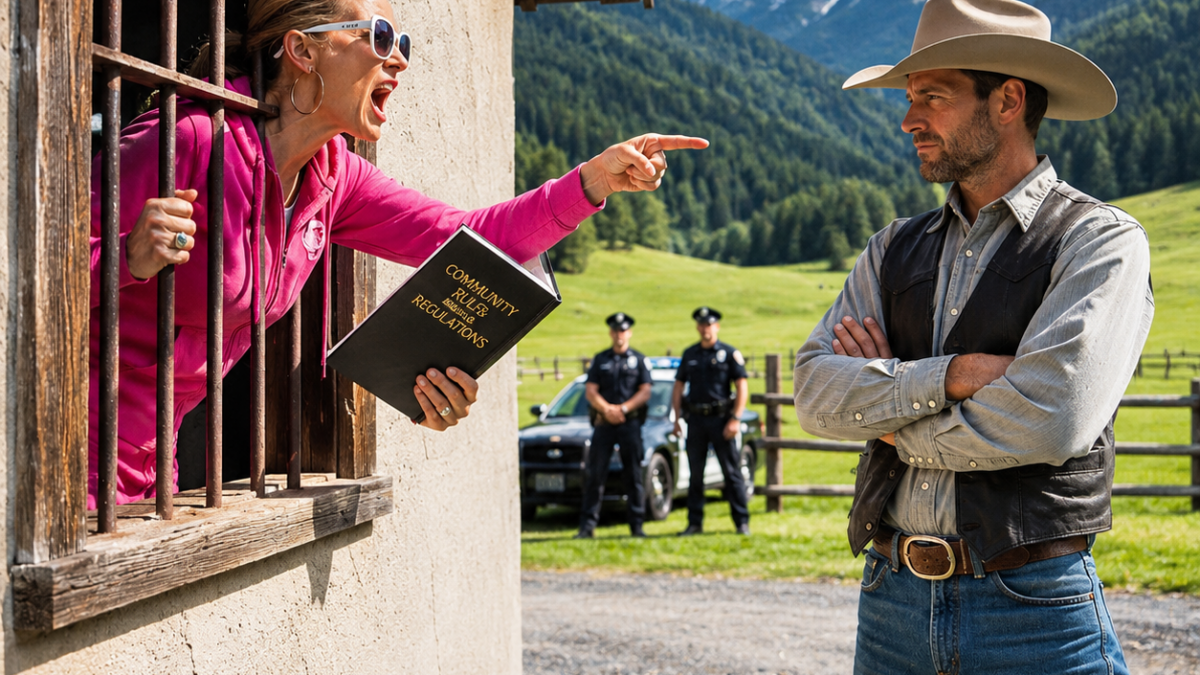
I watched HOA president Deborah Sterling pry open the rear door to my basement storage room during a violent Colorado storm, slip inside with a blue crowbar, and start digging through boxes of private documents she had spent nine months trying to prove contained evidence against me.
Instead of confronting her, I remotely locked the interior fire door leading from the basement corridor into the rest of my house, called the sheriff, preserved every camera angle, and made sure the only person Deborah could blame for being caught inside my property was the woman recorded forcing her way into it.
What Deborah did not know was that my cloud cameras had already captured her crossing the property line, defeating the exterior latch, photographing architectural plans, and searching labeled document bins—and the HOA’s own emails would later show she had been planning an unauthorized “inspection” because I had publicly proven several of her favorite neighborhood restrictions did not exist in our recorded covenants.
My name is Ethan Vance, and I work as a real-estate legal consultant.
After fifteen years dealing with deeds, easements, covenants, surveys, and people who believe confidence can substitute for authority, I built my house in Aspen Ridge Estates to be almost painfully documented.
Every approval.
Every setback.
Every drawing.
Every recorded restriction.
That became important nine months after I moved in.
At a community meeting, Deborah displayed slides claiming the original deed restrictions required traditional exterior colors, specific window proportions, and architectural standards my modern steel-and-glass home supposedly violated.
I had read the recorded documents before buying the lot and again before construction.
Those provisions were not there.
I calmly cited the actual instrument and section.
Deborah’s expression changed.
Then the violation letters began.
Prairie grass allegedly too tall.
Mailbox patina supposedly wrong.
Landscaping “incompatible.”
She posted photographs of my property online with red arrows and lectures about neighborhood standards.
Three other families who had been fighting similar invented rules contacted me.
I helped them request the actual governing documents.
Two of Deborah’s proposals failed at later votes.
From then on, she treated me like the reason her authority had limits.
A retired professor named Eleanor eventually told me she had seen Deborah on the public trail behind my house photographing the lower rear wall.
I installed cloud-backed cameras covering the basement service entrance.
For three months, they recorded almost nothing.
Then came the storm.
At 9:14 p.m., my phone alerted me to movement behind the house.
The camera showed a person in a dark rain jacket crouched at the basement storage entrance.
At 9:16, she produced a small blue crowbar.
At 9:17, the door opened.
Her hood fell back.
Deborah Sterling.
The footage showed her crossing onto my property, forcing the exterior door, entering the reinforced storage room, and immediately opening bins containing architectural plans and compliance records.
I did not go downstairs.
I did not threaten her.
I did not lock the exterior door she had forced.
I did one thing deliberately.
I activated the secure interior fire door between that basement corridor and the occupied portion of my house, preventing anyone downstairs from reaching the stairs leading to my family space.
Then I called the sheriff.
“Someone has forced entry into a secured basement room on my property.”
“I have live video.”
“The suspect is still inside.”
“The exterior storm door may be difficult to reopen because the weather seal engaged.”
“I am not confronting her.”
The dispatcher told me to remain upstairs, preserve the footage, and wait for deputies.
Because flash flooding had slowed emergency response, they estimated more than an hour.
I watched Deborah photograph my plans, search storage bins, and eventually return to the door she had entered.
Only then did she realize the storm-rated latch had reset after closing.
She pulled.
Kicked.
Looked for a release.
Then stared directly into the camera.
I could see panic beginning.
I called dispatch again and told them exactly what was happening.
They upgraded the response because the intruder could not immediately exit.
I refused to go downstairs alone.
Forty-three minutes later, headlights appeared through the rain.
Deputy Carlos Reyes watched the footage from the beginning before touching the basement door.
He saw the crowbar.
The property-line crossing.
The forced entry.
The document search.
Then he asked me one question.
“Did you invite her inside?”
“No.”
He nodded.
“Then let’s open it.”
When Deborah stumbled out and saw the deputy, she pointed at me and shouted, “Arrest him—he trapped me in there.”
Reyes looked at the crowbar sealed inside an evidence bag.
Then at the video still showing her forcing my door.
“Ma’am,” he said, “we’re going to start with why you were inside his basement.”
And for the first time in nine months, Deborah had no HOA rule she could hide behind.
[END OF FACEBOOK CAPTION]
[FIRST COMMENT / FULL STORY CONTINUATION]
Deborah’s answer came instantly.
“I was conducting an inspection.”
Deputy Reyes did not react.
Rain ran off the edge of his hat.
The basement security light threw a hard white glow across the wet concrete behind her.
“Inspection of what?”
“The property.”
“Whose property?”
She looked at me.
“Mr. Vance’s.”
“Did Mr. Vance ask you to inspect his basement tonight?”
“No.”
“Did he give you permission to enter?”
“I don’t require individual permission when association interests are involved.”
Reyes glanced at me.
Then back at her.
“What association authority allows you to force open a locked basement door with a crowbar?”
Deborah’s mouth tightened.
“It wasn’t locked.”
The deputy looked at the blue crowbar his partner had just lifted from inside the room with gloved hands.
“It appears you brought a tool.”
“It was stuck.”
“You said it wasn’t locked.”
“It wasn’t functioning properly.”
Reyes closed his notebook.
“Ma’am, I need you to stop explaining for a second.”
That was the first moment Deborah looked genuinely uncertain.
She had spent months in HOA meetings controlling the order of discussion.
She decided when homeowners spoke.
When motions were recognized.
Which complaints were “relevant.”
Which questions had supposedly already been answered.
Deputy Reyes did not care about any of that.
He said:
“You’re not being asked whether you believed you had a good reason.”
“I’m asking whether the homeowner gave you permission to enter a secured structure.”
“No.”
“Okay.”
His partner, Deputy Nia Foster, came up the basement path carrying a small evidence bag containing the crowbar.
“Door jamb has fresh damage.”
Reyes nodded.
Then he looked at Deborah.
“You’re being detained while we investigate an unlawful entry complaint.”
Her face changed.
“I want him arrested.”
Reyes said:
“For what?”
“False imprisonment.”
“He electronically blocked the house.”
I answered before I could stop myself.
“The interior fire door.”
Reyes held up one hand.
“Mr. Vance, let me handle this.”
Good advice.
I shut up.
Deborah continued.
“He knew I was downstairs.”
“He intentionally prevented me from entering the rest of the house.”
Reyes stared at her.
“You entered the basement without permission?”
“That is not the point.”
“It is currently a significant point.”
“He locked me in.”
“No,” I said.
Reyes looked at me.
I stopped again.
Deborah raised her voice.
“I could not get out.”
Reyes asked:
“Did Mr. Vance close the exterior door after you entered?”
“No.”
“Did he barricade it?”
“No.”
“Did he force you into the room?”
“No.”
“Did he know the exterior latch might reset?”
“He must have.”
Reyes looked at me.
This time the question was mine.
“Did you?”
“I knew the storm seal sometimes resets when the door closes under pressure.”
“Can you remotely unlock that exterior door?”
“No.”
“Could you have gone downstairs and opened it manually?”
“Yes.”
“Why didn’t you?”
“Because she had forced entry with a crowbar, was inside a secured storage area containing my documents, and I didn’t know if she had anything else.”
“Did dispatch tell you to remain upstairs?”
“Yes.”
“Do you have that call recorded through dispatch?”
“You do.”
He nodded.
That mattered.
A lot.
The original version of this story people later repeated made it sound like I watched Deborah trapped for more than three hours because I wanted to teach her a lesson.
I did not.
That would have transformed a clean burglary complaint into a dangerous argument over unlawful detention.
The real timeline was forty-three minutes from my first emergency call to deputies arriving at the house.
Long enough for Deborah to become frightened.
Not long enough for me to start enjoying the situation.
The difference matters.
At 9:18 p.m., I had called.
At 9:23, dispatch instructed me not to confront the intruder.
At 9:31, I updated them that the exterior door appeared stuck after Deborah tried to exit.
At 9:34, the call priority changed.
At 10:01, deputies entered my driveway.
At 10:07, we opened the door.
Those timestamps later became more valuable than anything I said about my intentions.
Documentation does not need charisma.
It needs time.
Deborah still demanded I be arrested.
Deputy Foster asked her:
“What did you expect to find in the storage room?”
Deborah said:
“Association compliance documentation.”
“Why?”
“Mr. Vance has repeatedly claimed his home complies with the declaration.”
Foster looked confused.
“So you entered his basement to verify that?”
“As president, I have a responsibility to protect the community.”
“Do the governing documents authorize interior inspections?”
Deborah paused.
“They authorize enforcement.”
“That wasn’t my question.”
No answer.
Reyes asked me if I wanted to make a formal complaint.
“Yes.”
“For the entry?”
“Yes.”
“For the door damage?”
“Yes.”
“For anything missing?”
“Not that I know yet.”
“Do not inventory it tonight.”
“Why?”
“Because we’ll photograph what’s there before anyone starts moving things.”
Again.
Good advice.
Deborah said:
“This is insane.”
Reyes turned.
“You forced a private door during a storm and entered a basement with a crowbar.”
“I suggest you stop talking until you speak with counsel.”
That was about as close as he came to giving legal advice.
He did not read Miranda rights theatrically in my yard while thunder cracked overhead.
He did not announce five felony charges on the spot.
He detained Deborah.
Photographed her shoes.
Photographed the wet trail.
Collected the crowbar.
Documented the door.
Took statements.
Then transported her to the sheriff’s office for further investigation.
Whether formal charges would be filed would be a prosecutor’s decision.
That was how it actually worked.
Before leaving, Deputy Reyes gave me a case number.
“Do not post the video.”
I frowned.
“I wasn’t planning to.”
“Good.”
“Your attorney will like you more.”
“I am an attorney.”
“Then you know attorneys are terrible clients.”
He had me there.
I did not sleep.
Not because Deborah was in custody.
Because the adrenaline had nowhere to go.
At midnight I sat at the same desk where I had spent months answering her violation letters.
Laptop open.
Coffee cold.
Storm easing.
I built a timeline.
Not an angry narrative.
Facts.
7:42 p.m.
Received Deborah Sterling email referencing unresolved standards issue.
9:14 p.m.
Rear camera motion alert.
9:15 p.m.
Subject crossed posted private boundary.
9:16 p.m.
Subject used blue pry bar at basement service door.
9:17 p.m.
Subject entered storage room.
9:18 p.m.
Homeowner contacted sheriff’s dispatch.
9:20 p.m.
Interior fire door secured from occupied portion of residence.
9:23 p.m.
Dispatch instructed homeowner to avoid contact.
9:31 p.m.
Homeowner notified dispatch suspect appeared unable to reopen exterior storm door.
9:34 p.m.
Response priority updated.
10:01 p.m.
Deputies arrived.
10:07 p.m.
Exterior door opened with deputies present.
10:09 p.m.
Suspect detained.
Then:
Evidence preserved.
Camera files copied to external storage.
Cloud originals left untouched.
Door damage photographed.
No property inventory pending law enforcement documentation.
I emailed the document to myself.
Then to my professional archive.
Then to my attorney.
Yes.
Lawyers have attorneys.
Mine was Rachel Kim.
She handled litigation that crossed from real-estate work into personal matters.
At 12:28 a.m., she responded.
YOU HAVE GOT TO BE KIDDING ME.
Then:
DO NOT CONTACT HOA.
DO NOT POST VIDEO.
DO NOT ANSWER DEBORAH.
CALL ME AT 8.
I smiled.
Professionalism.
The next morning Aspen Ridge woke up faster than I did.
Somebody had seen the patrol cars.
Someone else had seen Deborah’s SUV still parked near the public trail.
By 7:30, neighborhood group chat was full of speculation.
DUI.
Medical emergency.
Burglary.
Domestic dispute.
Secret board inspection.
One homeowner messaged me directly.
Ethan, is Deborah okay?
I replied:
There was an incident on my property last night.
Law enforcement is handling it.
I am not discussing details yet.
That was it.
At 8:03, Rachel called.
“Start from the beginning.”
“Which beginning?”
“Why does your HOA president believe she can search your basement?”
So I told her everything.
Nine months.
The meeting.
Fake restrictions.
Violation letters.
Online photographs.
Eleanor seeing Deborah on the public trail.
Three families.
Board votes.
The latest email:
I will find a way to make you understand, Mr. Vance, whether you choose to respect standards or not.
Rachel stopped me.
“Forward that.”
I did.
“Now the camera footage.”
Sent.
She watched silently.
Then:
“She used the crowbar before she entered.”
“Yes.”
“She went directly to architectural records?”
“Yes.”
“Interesting.”
“That’s what I thought.”
“Do not call it interesting publicly.”
“Why?”
“Because prosecutors dislike witnesses auditioning for television.”
Fair.
“What do we do about the HOA?”
“Nothing today.”
“Nothing?”
“Deborah committed the alleged act.”
“The HOA may or may not have authorized anything.”
“Do not assume the association sent her.”
That mattered.
I had been ready to treat Deborah and Aspen Ridge as one thing.
Rachel stopped me.
“We need board minutes.”
“Emails.”
“Inspection policies.”
“Any executive-session authorization.”
“Any communication about your basement.”
“If she acted alone, that is different from board-sanctioned conduct.”
Again.
Precision.
At 9:40, Vice President Alan Mercer called me.
I let it go to voicemail.
Message:
Ethan, this is Alan.
I heard there was some kind of incident with Deborah last night.
Please call me.
I want to understand what happened before rumors get out of control.
Rachel listened.
“You can return that.”
“What do I say?”
“The truth.”
“Short.”
I called.
Alan answered immediately.
“Ethan.”
“Alan.”
“Is Deborah in jail?”
“I don’t know her current status.”
“Did she break into your house?”
“She entered a secured basement storage area without my permission.”
“With a crowbar?”
“Yes.”
Silence.
Then:
“Why?”
“I was hoping the board could tell me.”
Another silence.
“What do you mean?”
“Was she conducting HOA business?”
“No.”
Too fast.
Rachel, on speaker beside me, wrote on a pad:
ASK BOARD AUTHORIZATION.
I said:
“Did the board authorize any inspection of my property last night?”
“No.”
“Any interior inspection?”
“No.”
“Any document retrieval?”
“Absolutely not.”
“Any investigation involving my architectural plans?”
Alan hesitated.
“There has been discussion about whether your original plans match what was approved.”
“Who raised it?”
“Deborah.”
“Board vote?”
“No.”
“Committee assignment?”
“No.”
“Counsel opinion?”
“No.”
Rachel underlined something.
I asked:
“Did the board know she was planning to come onto my property?”
“No.”
Alan sounded sick.
“Ethan, I swear to you, no.”
I believed him.
Maybe.
Belief would wait for records.
Alan continued.
“She told us she was going to request updated architectural documentation from you.”
“I never received a request.”
He exhaled.
“Jesus.”
Rachel wrote:
NO COMMENT RE CHARGES.
Alan asked:
“What happens now?”
“I don’t know.”
“Law enforcement is handling the entry.”
“My attorney is reviewing the governance issues.”
He sounded startled.
“Attorney?”
“Yes.”
“Right.”
Then:
“Can we call an emergency meeting?”
“That’s your decision.”
“Would you attend?”
“Depends on timing.”
“Would you provide the video?”
Rachel shook her head.
“Not yet.”
I said:
“Not until law enforcement tells me releasing it won’t compromise anything.”
Good.
Alan accepted.
At 10:15, the sheriff’s office called.
Deborah had been released after processing.
No-contact instruction pending review.
The district attorney would decide charges after receiving the completed report.
The preliminary investigation involved suspected criminal trespass, unlawful entry, and criminal mischief related to the damaged door.
Burglary was being reviewed because intent matters.
Entering unlawfully is not automatically burglary just because a building is involved.
Prosecutors needed evidence she intended to commit a crime once inside.
Searching and photographing private documents might support certain theories.
Or not.
Again:
Facts first.
I appreciated the restraint.
By noon, Rachel had sent Aspen Ridge a preservation letter.
Not accusation.
Preservation.
All communications relating to:
Ethan Vance.
Vance property.
Architectural compliance.
Exterior or interior inspection.
Basement storage.
Rear property access.
Surveillance.
Photographs.
Deborah Sterling’s November 18 activities.
Board authorization.
Enforcement strategy.
Communications with association counsel.
That letter changed the neighborhood faster than police lights.
Alan called again.
“Our lawyer says we need independent counsel.”
“Probably.”
“Why independent?”
“Because Deborah is still president.”
“She won’t be for long.”
Rachel looked at me.
I said nothing.
That was their process.
Not mine.
The board called an emergency meeting for Saturday.
Not a membership vote yet.
Board only.
Deborah attended remotely through counsel.
She claimed she had been performing an investigation authorized by the president’s general enforcement powers.
Alan disagreed.
Treasurer Denise Lowell disagreed.
Secretary Mark Patel disagreed.
Two architectural committee members denied requesting the visit.
Association counsel, Richard Cole, produced a legal opinion from four months earlier.
That opinion became important.
Deborah had asked whether the HOA could conduct inspections of property interiors when exterior compliance could not be confirmed.
Richard had written:
No.
The declaration grants exterior review and certain access rights for common infrastructure where specifically applicable.
It does not grant the association a general right to enter private residences or secured accessory spaces without owner consent, emergency authority, or court order.
Deborah had received it.
She replied:
Then we need another way to verify hidden noncompliance.
Richard answered:
Request documentation.
If refused, pursue normal enforcement procedures.
Do not enter private property outside any granted access right.
She knew.
That changed things.
The board voted four to one to suspend Deborah from exercising presidential authority pending formal removal proceedings.
Deborah voted against.
Of course.
Alan became acting president.
He called me afterward.
“I have the legal opinion.”
“So does my attorney.”
“Of course she does.”
He sounded exhausted.
“Ethan, I’m sorry.”
“Thank you.”
“I should have pushed back sooner.”
“Against what?”
“The posts.”
“Fake restrictions.”
“The way she treated people.”
“I told myself she was difficult but effective.”
That phrase.
Difficult but effective.
It excuses a lot.
Alan continued.
“She got things done.”
“Until she got into my basement.”
“Yes.”
I did not let him off easily.
“You all knew she was using rules that weren’t recorded.”
“We knew there were disputes.”
“I showed you the records.”
“Yes.”
“You voted down two proposals because they weren’t enforceable.”
“Yes.”
“And nobody asked why the president kept sending violation letters anyway?”
Silence.
That was the real governance failure.
Not that the board authorized a break-in.
They had not.
They tolerated a style of leadership built around:
Pressure first.
Authority later.
Most of the time that produced annoying letters.
Eventually it produced a crowbar.
The district attorney’s office called me five days later.
Assistant DA Molly Grant.
She asked:
“Did you ever give Deborah permission to enter the basement?”
“No.”
“Any standing HOA access agreement?”
“No.”
“Emergency?”
“No.”
“Was anything taken?”
“Not that we found.”
“Photographed?”
“Yes.”
“Which documents?”
“Architectural plans.”
“Recorded restrictions.”
“Construction approvals.”
“Personal property records in nearby bins, though I don’t know what images she captured.”
“Did she open containers?”
“Yes.”
“Video?”
“Yes.”
“Any audio?”
Interior camera had audio.
We reviewed.
Deborah muttered to herself while searching.
Most unintelligible.
One line clear:
“There has to be something.”
Molly replayed it.
“That helps.”
“With what?”
“Intent.”
She did not explain further.
Good prosecutor.
Later footage showed Deborah opening a red file box labeled:
CITY APPROVALS — ORIGINALS.
She pulled pages.
Photographed.
Then:
“Damn it.”
Another box:
ARCHITECTURAL REVIEW.
More photos.
Then:
“He thinks he’s so perfect.”
That was relevant.
She was not checking for a gas leak.
She was hunting for evidence to support an enforcement fight.
Molly still did not promise burglary charges.
“We charge what we can prove.”
I liked her.
The HOA records produced more.
Deborah had emailed herself from the association account three days before the intrusion.
Subject:
VANCE DOCUMENTATION.
Message:
If architectural file is incomplete, physical records may establish discrepancies not visible from exterior.
No recipients.
Draft note.
Then a text to an architectural committee member:
I’m going to resolve the Vance problem myself.
Committee member replied:
Please do not involve me.
Counsel said we cannot inspect inside.
That text was ugly.
Another homeowner, Patricia Gomez, came forward.
Deborah had once walked into her fenced backyard without permission to photograph a pergola.
Patricia confronted her.
Deborah left.
No police.
Another family, the Lawsons, said Deborah stood on their porch looking through a front window during a landscaping dispute.
Eleanor had seen Deborah behind my house twice.
Pattern.
Not necessarily stalking in the criminal sense.
But relevant to HOA governance and intent.
Rachel told me:
“Do not inflate.”
“I know.”
“Say unauthorized monitoring.”
“Not stalking unless prosecutor says so.”
“I know.”
“You like the word.”
“I do.”
“Stop.”
Lawyers are terrible fun.
The membership meeting happened twelve days after the break-in.
Aspen Ridge’s bylaws required notice before removing a director elected by members.
Deborah had been suspended as president by the board, but removal from her director seat required membership action.
Notice went out.
Special meeting.
Community center.
One hundred fourteen eligible households.
Ninety-three represented in person or by valid proxy.
The room was packed.
Deborah attended with counsel.
I sat with Rachel.
Alan opened.
No speech.
He read the agenda.
Then association counsel explained what members could and could not decide.
Not guilt.
Not criminal charges.
Governance.
Did members have confidence in Deborah continuing as director?
That was the question.
Deborah spoke first.
She called the incident:
“A misunderstanding caused by a defective door and an overly aggressive homeowner.”
People murmured.
Her lawyer touched her arm.
She continued anyway.
“I entered a structure I believed subject to association inspection.”
Someone shouted:
“With a crowbar?”
Alan asked for order.
Deborah said:
“The tool was used because the latch malfunctioned.”
Rachel whispered:
“She’s going to bury herself.”
I said:
“Already has experience.”
Deborah continued.
“For months, Mr. Vance has undermined enforcement.”
“He has encouraged residents to challenge standards.”
“He portrays every attempt at community maintenance as tyranny.”
Then she pointed toward me.
“He knew I was trapped.”
“He chose not to release me.”
Rachel wrote:
DO NOT REACT.
I smiled.
Barely.
Alan said:
“Mr. Vance will have an opportunity to respond.”
My turn came twenty minutes later.
I stood.
No PowerPoint.
No dramatic music.
Just three documents.
The actual recorded covenant section.
Association counsel’s legal opinion saying no interior entry.
The sheriff’s incident timeline.
I said:
“This is not a referendum on whether you like my house.”
“It is not a referendum on whether Deborah likes me.”
“It is not even a referendum on the criminal case.”
“The question is whether someone entrusted with association authority can be trusted to respect the limits of that authority.”
Then I read Richard Cole’s opinion:
Do not enter private property outside any granted access right.
I looked at Deborah.
“You received that four months before November 18.”
Her lawyer objected.
Not court.
Alan said:
“This is an association meeting.”
A few people laughed.
I continued.
“The camera footage shows Deborah crossing my boundary, using a pry tool on a secured basement door, entering, opening private document containers, and photographing records.”
“I did secure the interior door leading into the occupied portion of my home after I saw an intruder downstairs.”
“I called law enforcement immediately.”
“I did not remotely lock the exterior door.”
“The storm latch reset when it closed.”
“When I realized she could not reopen it, I updated dispatch.”
“I followed their instruction not to confront her.”
“Deputies arrived forty-three minutes after the first call.”
Then:
“I will not show the full video tonight because the criminal matter remains pending.”
“But the association’s attorney has reviewed it.”
Richard Cole stood.
“I have.”
Alan asked:
“Does it reflect what Ethan just described?”
Richard looked toward Deborah’s lawyer.
Then:
“Yes.”
That ended the meeting.
Not literally.
There were another ninety minutes of questions.
But emotionally?
Done.
One homeowner asked Deborah:
“Why didn’t you just request the documents?”
She answered:
“He would have refused.”
I said from my chair:
“You never asked.”
She snapped:
“I knew what you would do.”
That sentence probably cost her the remaining undecided votes.
She had punished a refusal that had never happened.
The final vote:
81 for removal.
11 against.
1 abstention.
Not 78 to 9 like the source.
Different turnout.
Same conclusion.
Deborah Sterling was no longer a director.
No longer president.
No HOA authority.
Alan announced the result.
Deborah stood.
Gathered her papers.
Walked out.
No screaming.
No overturned chair.
That was almost worse.
She looked small.
Not physically.
Institutionally.
A title had disappeared.
Just like that.
The next morning, Aspen Ridge’s website removed her name.
Alan became interim president.
First formal action:
Temporary freeze on all contested architectural enforcement initiated under Deborah until independent review.
Second:
Engage outside counsel to compare recorded covenants against internal rulebooks.
Third:
Review all fines issued during Deborah’s presidency.
That opened another door.
For years, Aspen Ridge had maintained an internal “standards manual.”
Some parts were legitimate board-adopted rules authorized by the declaration.
Others were proposed policies.
Some had never been adopted.
Deborah treated all of them as enforceable.
Prairie grass rule?
Valid.
Four-inch limit.
I was compliant.
Mailbox patina restriction?
Not valid.
There was a general harmony standard, but no approved bronze shade.
Window-to-wall ratio?
Not in recorded restrictions.
Facade palette Deborah showed?
Draft guideline from a committee workshop.
Never adopted.
Fence stain chart?
Valid under a properly passed rule.
Solar panel placement rule?
Outdated and partly preempted by state law.
Holiday-light cutoff?
Valid.
People were shocked by the mixture.
Not:
Everything Deborah did was fake.
Worse.
Some rules were real.
Some were not.
That made intimidation easier.
Most homeowners cannot memorize which paragraph came from:
Declaration.
Bylaws.
Board resolution.
Architectural guideline.
Committee draft.
Newsletter.
President’s preference.
Deborah counted on blur.
The independent review created a matrix.
Authority source.
Adoption date.
Current status.
Enforcement process.
Public.
Searchable.
Beautiful.
I told Alan:
“This should have existed ten years ago.”
He said:
“You want to build it?”
“No.”
“You started this.”
“I caught someone in my basement.”
“Same thing.”
I declined.
I did help review.
Unpaid.
Rachel mocked me.
“You’re doing HOA work.”
“I’m doing document cleanup.”
“You’re volunteering for an HOA.”
“Say that again and I’ll fire you.”
“You don’t employ me.”
“Exactly.”
The district attorney filed charges against Deborah roughly a month after the incident.
Not every charge I imagined.
Criminal trespass.
Criminal mischief for door damage.
And a burglary-related count based on unlawful entry with alleged intent to commit an offense involving unauthorized taking or copying of private records.
Her defense challenged that count.
Could photographing documents constitute the intended crime required?
Complicated.
Prosecutors negotiated.
Deborah eventually accepted a plea to criminal trespass and criminal mischief.
The burglary count was dismissed as part of the agreement.
Six months unsupervised probation.
Restitution for door repairs.
Fine and court costs.
No-contact order covering my residence.
Mandatory compliance with association-property boundaries as part of the order.
No anger-management theater because the court was not diagnosing her personality.
That detail from the source was unnecessary.
The plea hearing was almost boring.
Judge asked:
“Did you knowingly enter property belonging to Mr. Vance without permission?”
Deborah said:
“Yes.”
“Did you damage the secured door during entry?”
“Yes.”
“Were you acting under lawful authority to force entry?”
Long pause.
“No.”
That was the sentence I had waited nine months to hear.
Not:
I’m sorry.
Not:
I was wrong about Ethan.
Just:
No lawful authority.
Enough.
I did not speak at sentencing.
Molly asked if I wanted to.
“No.”
“Victim-impact statement?”
“No.”
“Restitution?”
“Yes.”
That surprised her.
I said:
“The door costs money.”
She smiled.
“Fair.”
The repair cost $2,840.
Storm-rated hardware.
Frame.
Sensor.
Labor.
Deborah paid under restitution.
I also fixed the interior emergency release system.
That had been the source’s most dangerous fact.
In reality, my emergency release had not been broken.
It functioned.
But the exterior storm latch had jammed after the forced entry damaged its alignment.
If the internal release had been broken and I knew it, my obligations would have changed dramatically.
That distinction mattered enough that I had an engineer inspect the system.
Why?
Because Deborah’s lawyer accused me of designing a trap.
Rachel told me:
“Get an expert.”
The door manufacturer sent a technician.
Report:
System designed for storm sealing.
No trap functionality.
Interior emergency release operational.
Exterior latch deformation consistent with pry damage.
Door automatically re-engaged after closure.
Failure to reopen from inside resulted from distorted latch alignment caused by forced entry, not deliberate remote locking.
That report killed Deborah’s false-imprisonment threat.
Also humbled me.
I had believed the storm pressure contributed more.
It did somewhat.
But the main cause was the damage she created with the crowbar.
Physics has no political affiliation.
The interior fire door was separate.
I had intentionally locked that.
Why?
Because it separated the basement service corridor from the occupied house.
If Deborah had gotten out of the storage room into the corridor, she still could not come upstairs.
That was reasonable containment after detecting an unlawful intruder.
Sheriff agreed.
Prosecutor agreed.
No charges against me.
No civil false-imprisonment claim survived beyond a threatening letter.
Her attorney sent one.
Rachel responded with:
Video.
Dispatch timestamps.
Manufacturer report.
Sheriff instructions.
Deborah’s entry footage.
No lawsuit followed.
That was satisfying.
Not because I wanted to destroy her.
Because restraint protected me.
If I had waited three hours before calling?
Different.
If I had remotely disabled a working emergency exit?
Different.
If I had gone downstairs and taunted her through the door?
Different.
If I had posted livestream footage while she panicked?
Very different.
The line between evidence and cruelty can be thin when someone who harmed you suddenly becomes vulnerable.
That was the part I thought about most.
I hated Deborah.
Not permanent hatred.
But that night?
Yes.
Nine months of letters.
Photographs.
Public insults.
Pressure.
Three families calling me because she made them feel helpless.
Then I saw her sitting on the basement floor frightened.
A part of me wanted her to sit there longer.
That part existed.
I am not proud of it.
I did not obey it.
That distinction is character.
Not never having the impulse.
Choosing what happens next.
The HOA’s governance review found something that bothered me more than Deborah’s individual behavior.
People had complained before.
Eleanor wrote once.
Patricia Gomez twice.
The Lawsons.
A family named Robinson.
Board minutes contained phrases like:
Concerns regarding president’s enforcement tone.
Resident alleges unannounced property entry.
Request president avoid personal photography.
Potential overreach.
Every concern became:
Communication issue.
Personality conflict.
Enforcement misunderstanding.
Nobody wanted escalation.
So they normalized it.
Until normalization became trespass.
Alan admitted that at the next annual meeting.
He stood in front of everyone.
“No one on this board authorized what occurred at the Vance residence.”
“But we did fail to address patterns that should have been investigated earlier.”
That was leadership.
Not pretending innocence.
He continued.
“We repeatedly treated complaints about process as complaints about personality.”
“We should not have.”
Aspen Ridge adopted policies.
No individual director could conduct property inspections alone.
Any inspection beyond public view required owner consent, specific covenant authority, emergency authority, or legal process.
No director could enter fenced or secured areas unless expressly authorized.
No interior entry.
No private photography through windows.
Complaints logged.
Enforcement notices cite exact authority.
Draft guidelines marked DRAFT.
Board president no unilateral fine authority.
Architectural committee decisions in writing.
Appeal process.
Record access.
Again.
Boring.
The HOA did not dissolve.
It got less interesting.
That was success.
Three families contacted me after Deborah’s removal.
Patricia.
The Lawsons.
Robinsons.
They wanted to sue.
Class action.
Emotional damages.
Years of harassment.
Rachel listened.
Then told them:
“Different claims have different evidence.”
“Do not assume Ethan’s case proves yours.”
They hated that.
Truth.
Patricia had evidence Deborah entered her backyard.
Potential trespass.
Lawsons had window photographs but taken from common sidewalk.
Creepy.
Maybe lawful depending on facts.
Robinsons had fines based on invalid guidelines.
Strong administrative dispute.
They pursued separate remedies.
Aspen Ridge refunded several improperly assessed fines.
Not all.
Where rules were real, violations remained.
That also built trust.
If the new board had canceled everything Deborah ever touched, it would have created new unfairness.
One homeowner had actually ignored repeated drainage requirements and flooded a neighbor’s yard.
Real violation.
Still valid.
Power was not the problem.
Unbounded power was.
Eleanor became something of a neighborhood celebrity.
She hated it.
Retired professor.
Seventy-six.
Small.
Sharp.
At the annual picnic, someone introduced her as:
“The woman who spotted Deborah spying.”
Eleanor said:
“I saw a lady with a camera.”
“That is not espionage.”
Then she looked at me.
“You dramatize.”
“I didn’t say anything.”
“Your face dramatizes.”
Fair.
She had saved me more than she knew.
Without her warning, I might never have installed the rear camera.
Without video, Deborah’s story could have become:
HOA president enters open basement during storm.
Homeowner traps her.
No crowbar.
No clear property crossing.
No document search.
Words versus words.
Cameras changed that.
But I refused to turn the property into surveillance fortress.
The rear camera stayed.
Front entry.
Driveway.
No cameras aimed at neighbors.
No audio recording outside areas where lawful and necessary.
I practiced the same limit I demanded from others.
Privacy works both directions.
The vault, as I called it jokingly, went back to being boring.
Twelve by twenty.
Reinforced storage.
Plans.
Emergency supplies.
Water.
Medical kit.
Camping gear.
No secret weapons.
No gold bars.
No bodies.
Neighbors were disappointed.
At one meeting, a man asked:
“What was she even looking for?”
I said:
“Evidence I built illegally.”
“Did she find any?”
“She found the approvals.”
People laughed.
That was the irony.
Deborah risked criminal charges to photograph evidence proving I complied.
The city-stamped plans.
Architectural approval.
Engineering.
Recorded restrictions.
She had built a narrative:
Ethan Vance gets away with violations because he is a lawyer.
Reality:
I knew the rules because I was a lawyer.
That difference made her furious.
People who rely on ambiguity dislike people who ask for citations.
One of the three families I had helped was the Parkers.
They had received repeated notices over a backyard greenhouse.
Deborah claimed it violated a prohibition on detached structures.
The declaration actually exempted structures under a certain size if not visible from the street.
Their greenhouse qualified.
After the governance review, the fine ledger was cleared.
Mrs. Parker brought me banana bread.
I said:
“This is not legal tender.”
She said:
“Eat it.”
Good counsel.
Another family had been fined because their front door was “too saturated” a blue.
No actual color standard existed beyond maintaining exterior harmony with approved palette procedures.
The architectural committee had approved the paint before installation.
Deborah fined them anyway.
Refund.
The husband showed up at my house with a bottle of bourbon.
Rachel said:
“Now that may be legal tender.”
I did not ask.
The cleanup took months.
Longer than Deborah’s criminal case.
Systems accumulate clutter slowly.
Rules.
Notes.
Informal customs.
Old PDFs.
President emails.
The new board hired a professional management company.
Deborah had resisted one because she said local control mattered.
Translation:
Professional managers ask what document authorizes the fine.
The new manager, Susan Lee, drove everyone crazy in a healthier way.
Every enforcement letter included:
Covenant section.
Rule adoption date.
Evidence.
Response deadline.
Appeal contact.
If no authority?
No letter.
Revolutionary.
I received one six months later.
My prairie grass.
Too tall.
I measured.
Four and three-quarter inches after heavy rain.
The valid limit was four.
I laughed.
Susan’s notice cited the exact rule.
Photograph.
Measurement.
Correction period.
I cut the grass.
Alan called.
“I hear you got a violation.”
“Yes.”
“You fighting?”
“No.”
He sounded almost disappointed.
“Why?”
“Because it’s valid.”
There was a pause.
Then he laughed.
“You are the most annoying person I know.”
“Standards.”
“Exactly.”
That story spread.
Good.
I did not oppose HOAs because I wanted no rules.
I opposed invented rules.
There is a difference.
The no-contact order involving Deborah lasted one year.
She still lived in Aspen Ridge.
That made life awkward.
Five hundred feet from my house, as the source dramatized, would have been impractical given neighborhood roads and community facilities.
The actual order prohibited direct contact, entry onto my property, and harassment.
Reasonable.
If she drove past on the public road?
Allowed.
If we both went to the grocery store?
Not automatic violation.
If she came to my gate?
Problem.
She did not.
For months I saw her SUV occasionally.
Never stopped.
Never slowed.
No camera.
No letters.
Nothing.
She resigned from committees.
Stopped attending meetings.
Eventually put her house on the market.
People assumed the HOA forced her out.
No.
She sold voluntarily.
Her husband had wanted to move closer to Denver.
At least that was the story.
Could be both.
The week before closing, Deborah sent a letter through her attorney.
Rachel called.
“Want to read it?”
“No.”
“You should.”
“Why?”
“It’s an apology.”
I laughed.
“Now I definitely don’t.”
She sent it anyway.
I opened it two days later.
Mr. Vance,
I have had substantial time to consider my conduct on November 18 and the months preceding it.
I believed I was protecting a community I had spent years serving.
That belief does not excuse entering your property without authorization.
I crossed a boundary I had no right to cross.
I also understand that my enforcement approach caused other residents to feel targeted rather than represented.
I am sorry for the intrusion, the damage to your property, and the escalation that followed.
Deborah Sterling
No excuses after first paragraph.
Pretty good.
I read it twice.
Then filed it.
No response.
Rachel asked:
“Nothing?”
“Nothing.”
“You could acknowledge.”
“I could.”
“Will you?”
“No.”
“Why?”
“I don’t owe her closure.”
True.
Also maybe stubborn.
Both.
A year later, I found the letter while reorganizing files.
I wrote:
Received.
Thank you.
Sent through counsel.
Rachel replied with one word:
Growth.
I considered firing her again.
Aspen Ridge changed under Alan.
He refused to run for permanent president.
Said one emergency year was enough.
Denise Lowell won.
She was boring.
Excellent.
Meetings ended in ninety minutes.
Budgets.
Road maintenance.
Landscaping.
Architectural appeals.
No speeches about community purity.
No red arrows on Facebook.
Property values did not collapse.
Colonial farmhouses did not rise from the earth to replace modern homes.
Civilization continued.
My house remained steel and glass.
Some people still hated it.
They were allowed.
Taste is not authority.
I eventually redesigned one landscaping section.
Not because Deborah complained.
Because she had accidentally been right about one thing.
Drainage.
My original minimalist gravel bed concentrated runoff near the side walkway during extreme storms.
Not an HOA violation under her fake rule.
Still a practical problem.
City engineer recommended changes.
I changed it.
That taught me something uncomfortable.
An unreasonable person can occasionally notice a real issue.
Being wrong about authority does not make every observation wrong.
Important.
Otherwise resistance becomes identity.
I did not want to become the homeowner who automatically opposed every HOA request because Deborah once abused power.
That would let her govern me after leaving.
No.
I evaluated each thing.
Valid?
Do it.
Invalid?
Challenge it.
Ambiguous?
Ask.
Personal preference?
Ignore politely.
Life improved.
Deputy Reyes came back once.
Not professionally.
Neighborhood holiday toy drive.
His wife had a friend in Aspen Ridge.
He recognized me.
“Basement guy.”
“That’s how I’m remembered?”
“Could be worse.”
“Deborah?”
He raised an eyebrow.
“Not discussing former cases.”
Fair.
I thanked him.
“For what?”
“Not making the situation worse.”
He shrugged.
“You called instead of going downstairs.”
“That helped.”
Then he said something I kept.
“People think calling police means giving up control.”
“Sometimes it’s how you stop needing control.”
Good line.
I asked if he practiced it.
He denied.
I believed him less than he believed Deborah’s inspection theory.
The manufacturer eventually replaced the damaged storm door.
I upgraded the latch.
Not titanium fantasy bolts.
Real commercial-grade multipoint lock.
Emergency interior release.
Battery backup.
Manual override.
Sensor alarm.
A small placard inside:
EMERGENCY EXIT — PUSH BAR.
No ambiguity.
The new camera angle covered both approach and door.
Cloud retention ninety days.
Not forever.
Data should not outlive its purpose either.
My document archive moved farther inside.
Sensitive files locked.
Because even though the break-in ended well legally, it exposed a flaw.
I stored too many original documents in accessible bins.
A crowbar should not reach deeds.
Lesson.
Security is not paranoia when evidence already proved a vulnerability.
It becomes paranoia when every person becomes Deborah.
I worked hard not to do that.
For months, every motion alert raised my pulse.
Raccoon.
Deer.
Delivery person.
Eleanor returning a book.
My body did not care.
Alert meant:
Someone at the basement.
That eased.
Slowly.
One evening motion notification arrived.
I opened video.
A fox.
It stared directly into the camera.
I laughed.
The camera became spider watcher again.
Good.
The criminal case officially closed after Deborah completed probation and restitution.
Molly Grant called.
“Just letting you know.”
“Thank you.”
“No violations.”
“Good.”
“Door paid?”
“Yes.”
“Anything else?”
“No.”
“You sure?”
I thought.
“Yes.”
That was closure from the system.
Not emotional.
Administrative.
Case closed.
One PDF.
I downloaded it.
Saved.
Then went outside.
No celebration.
No champagne.
Cut prairie grass because it was approaching four inches.
I wish that detail were invented.
It is too perfect.
Eleanor saw me.
“You’ve become obedient.”
“I’ve become compliant.”
“Worse.”
She kept walking.
The most important consequence happened quietly.
Aspen Ridge stopped treating governance like personality.
Before Deborah:
Rules were what Deborah said they were.
After:
Rules were documents.
Votes.
Records.
Processes.
Appeals.
That sounds obvious.
It was not.
Organizations become human-shaped.
A strong president fills gaps.
At first convenient.
Then habit.
Then dependency.
Then nobody remembers which powers belong to the office and which belong to the person.
Deborah believed she was Aspen Ridge.
That was why she said things like:
My community.
My standards.
My responsibility.
She stopped seeing the board as one participant in a legal structure.
She saw herself as the structure.
The basement was simply the final expression.
If Ethan refuses to show me what I need, I will go find it.
From her perspective, probably logical.
That is what makes abuse of authority dangerous.
It often feels like responsibility to the person doing it.
Alan once asked me:
“Do you think she planned to steal anything?”
“No.”
“What do you think she wanted?”
“Proof.”
“Of what?”
“That she was right.”
He nodded.
“Worse than theft.”
Sometimes.
A thief wants property.
A zealot wants validation.
Harder to satisfy.
The new board adopted a statement of authority at the front of its handbook.
Not legal poetry.
Simple.
The Association possesses only powers granted by law and the governing documents.
No officer, director, committee member, manager, or volunteer may expand those powers by custom, preference, or personal interpretation.
I loved it.
Denise said:
“You wrote that.”
“No.”
“You edited fourteen versions.”
“Different.”
She put my name nowhere.
Perfect.
Three years later, a dispute arose over solar panels.
New homeowner wanted panels visible from the street.
Old guideline restricted them.
State law had changed.
The architectural committee wanted denial.
Manager Susan said:
“Legal review first.”
Counsel said parts of the old rule could not be enforced as written.
Board revised.
Panels approved with reasonable design conditions.
No war.
No basement.
No crowbar.
Progress.
The homeowner never knew why Aspen Ridge had become cautious.
Good.
Institutional learning should not require everyone to relive the disaster.
My consulting work changed too.
I began adding a question when reviewing community-association disputes for clients:
Show me the authority chain.
Not:
What does the president say?
Not:
What has the HOA always done?
Authority chain.
Recorded declaration.
Bylaws.
Amendments.
Board resolution.
Rule adoption.
Notice.
Enforcement.
Appeal.
If a link is missing, ask why.
Deborah taught me that.
I would never tell her.
Maybe I just did.
The title people use for the story remains dramatic.
I Spotted Karen Slipping Into My Basement Pantry—So I Blocked the Exit & Called Cops.
Accurate enough.
Basement pantry was really a reinforced storage room.
I did block the interior route into the house.
I called the sheriff immediately.
The exterior door jammed because she damaged the latch forcing entry.
Police opened it.
She was detained.
Later pleaded to trespass and property damage.
HOA removed her.
No one spent three hours suffering because I decided to teach a lesson.
That version would make me less sympathetic because it should.
If you have control over someone’s freedom and no immediate danger prevents release, morality and law change quickly.
I am glad I called when I did.
The temptation to wait was real.
That is the part I am least comfortable admitting.
I watched Deborah search my files.
Saw her frustration.
Then saw fear.
For maybe ten seconds, I thought:
Now you understand.
That thought felt good.
Too good.
Then dispatch answered.
That call protected both of us.
Her physically.
Me legally and morally.
Sometimes the smartest move in a conflict is transferring authority to someone who is not angry.
That night, it was Deputy Reyes.
In court, Judge.
In the HOA, members.
In governance, documents.
Every time I stopped needing to be the person who personally delivered consequences, the outcome improved.
That was the real lesson.
Years later, I still own the house.
Prairie grass.
Bronze mailbox.
Steel.
Glass.
The mailbox developed more patina.
Nobody has fined me.
Eleanor says it looks terrible.
I tell her she sounds like Deborah.
She threatens to hit me with a book.
Healthy neighborhood conflict.
The basement room holds fewer documents now.
Mostly emergency supplies.
Water.
First aid.
Camping gear.
Some archived plans.
The new door closes with a deep mechanical click.
Every time, I remember November 18.
Rain.
Camera alert.
Purple shoes.
Blue crowbar.
That white hallway light.
I do not remember Deborah sitting on the floor.
Not first.
I remember my hand hovering over the phone.
Because that was the decision.
Not whether she deserved consequences.
She did.
Not whether I could have waited longer.
I could have.
The decision was what kind of person I wanted to be once I finally had power over someone who had abused power over me.
I called.
Everything after that belonged to process.
That is why I can still stand in that basement without feeling like it became a revenge chamber.
It is just a storage room.
Again.
And that may be the best ending possible.
Deborah spent nine months trying to prove my house violated Aspen Ridge’s rules.
In the end, the only person who crossed the clearest line on my property was her.
The camera proved it.
The sheriff documented it.
The court recorded it.
The homeowners acted on it.
And once all the shouting disappeared, the lesson left behind was simpler than any HOA handbook.
A title does not give you permission to cross somebody else’s locked door.