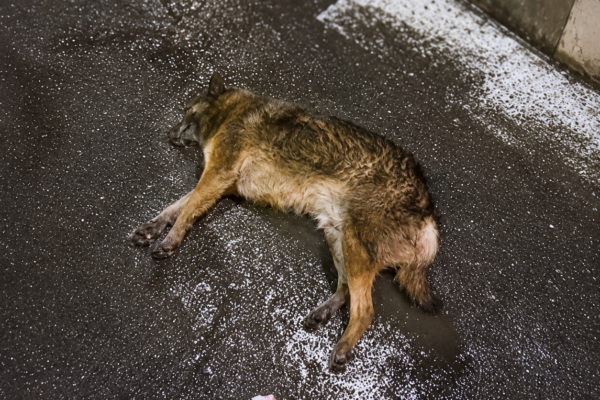
Shivering, soaked, and unable to walk, the old dog looked at me from the roadside as though her eyes were asking one simple question: “Can you take me home?
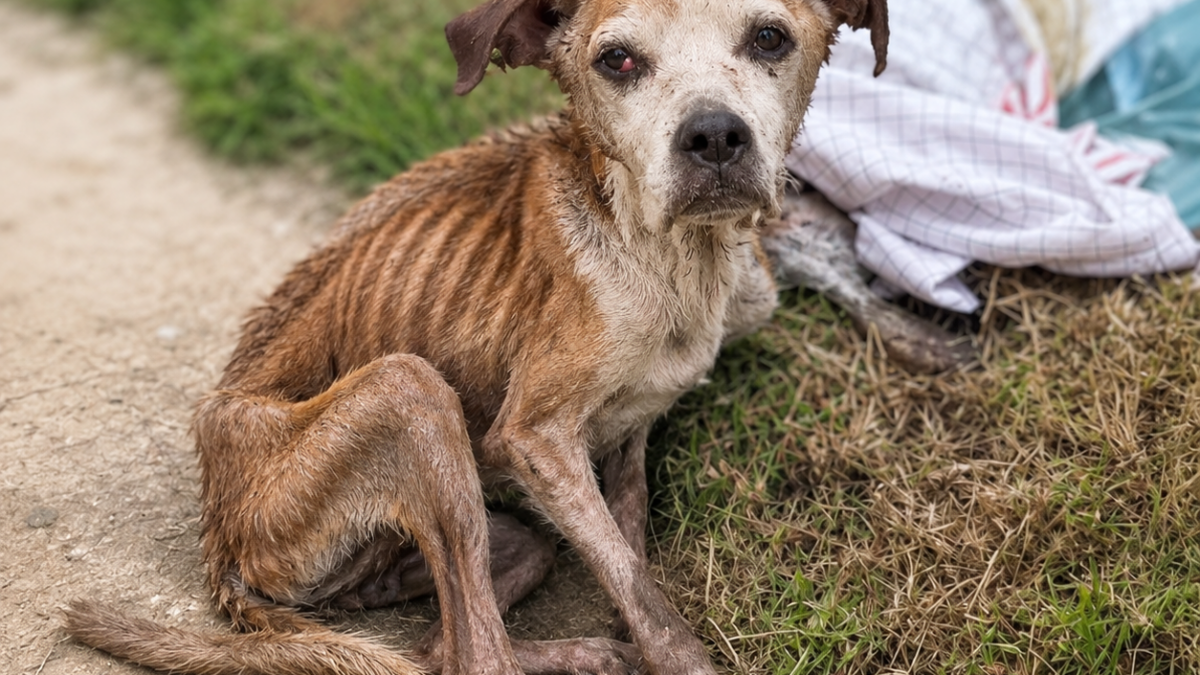
Shivering, soaked, and unable to walk, the old dog looked at me from the roadside as though her eyes were asking one simple question: “Can you take me home?”
People told us she had been lying there for three days — hungry, cold, covered in mud after the rain, and physically incapable of getting herself somewhere safer.
But when we finally cleaned her up, we discovered something on her front leg that made us wonder whether her age and illness were exactly why someone had decided to leave her behind.
A massive tumor hung from the leg.
At first, we feared the worst.
We rushed her to a veterinarian, where X-rays showed no broken bones, and the doctors confirmed that sensation and reflexes were still present in both legs.
That gave us hope.
But she was old, weak, and the operation to remove such a large mass would be risky.
The doctors wanted rehabilitation first.
Three training sessions every week.
Massage.
Physical therapy.
Slow work to strengthen a body that had been neglected for far too long.
And then something happened that I will never forget.
The old dog who had been abandoned because she could not even walk began getting back onto her feet.
For the first time since we had found her, I saw something brighter in her face.
She was still sick.
The tumor was still there.
A major operation still waited ahead.
But she was moving again.
When surgery day finally came, she looked at me with an expression I interpreted almost like reassurance, even though I was the one terrified of what might happen.
The first three days afterward were painful.
We stayed close.
Then the stitches began healing beautifully.
Finally, the pathology result came back.
The tumor was benign.
Not cancer.
Removing it did not instantly restore her mobility, and our work was far from finished.
But for the first time, this old girl had something she had been denied on the roadside:
time.
And we were going to make sure the rest of it belonged to her.
[END OF FACEBOOK CAPTION]
[FIRST COMMENT / FULL STORY CONTINUATION]
They told us the old dog had been beside the road for three days.
Three days.
That number was the first thing that stayed with me.
Not three hours.
Not a single rainy night.
Three days in the same place, unable to simply stand up and leave.
By the time we arrived, the rain had already done its work.
Her coat was soaked.
Mud covered the thin body beneath it.
Cold had settled into her deeply enough that she was trembling.
She looked old in a way that went beyond gray hair.
There was exhaustion in her posture.
The exhaustion of an animal whose body had been asking for help for much longer than those three days.
She did not bark when we approached.
Did not try to run.
She could not.
She looked at us.
That was all.
I remember her eyes more clearly than almost anything else.
There are times when people say a dog “asked” for help with her eyes, and I try to be careful with that language.
Dogs do not form human sentences in their heads that we can hear.
But sometimes their expression creates an unmistakable emotional impression.
Standing there, looking at this wet, trembling old dog, I felt as though she were asking:
Can you take me somewhere else?
Anywhere else?
Somewhere warm?
I moved closer.
She remained still.
Her body was filthy from the rain and mud.
The fur clung to her shape, and that made her thinness easier to see.
She had been hungry.
You could tell.
Her condition did not look like something that had begun three days earlier.
Three days may have been how long she had been beside that road.
Neglect had been happening longer.
I crouched slowly.
“It’s okay.”
My voice sounded almost foolish against the reality in front of us.
Nothing was okay.
She was cold.
Hungry.
Old.
Unable to walk.
But sometimes the first promise you can offer is not that everything is okay.
It is only that someone has finally arrived.
She let us touch her.
That surprised me a little.
A dog who has been abandoned while sick can be frightened, defensive, confused.
Pain changes behavior.
Fear changes behavior.
But she was gentle.
Very gentle.
She seemed to understand, at least from our movements, that we were not there to hurt her.
We lifted her carefully.
That was when I understood the problem with her mobility was serious.
She was not simply weak from hunger.
She could not get herself up and walk normally.
Her body did not cooperate.
I felt the weight of her in my arms and thought about the road.
If nobody had come, what was she supposed to do?
She could not simply decide to leave.
That detail disturbed me more the longer I thought about it.
An animal abandoned while healthy at least has the possibility of moving toward water, food, shelter, people.
This dog did not.
Someone had left an elderly, sick dog in a place from which she could not rescue herself.
Whether the person who left her understood the full extent of her condition, I cannot prove.
But the outcome was the same.
She was there.
Immobile.
Waiting.
Cold.
We did not spend time trying to investigate the roadside before helping her.
There would be time for questions.
Her body needed warmth.
We took her home.
The first thing was cleaning.
Not because appearance mattered.
Because mud was everywhere.
Her thin coat and skin were coated after the rain.
Dirt had dried and then become wet again.
We wanted to see the body underneath.
We wanted her warm.
We wanted her comfortable enough to eat.
The bath water became dirty almost immediately.
I supported her because she could not stand securely.
She tolerated the bath with remarkable patience.
No fighting.
No snapping.
No frantic attempt to climb away.
She looked tired more than anything.
Every so often she turned her head toward me.
I kept one hand on her body so she would know exactly where I was.
“Almost done.”
Warm water ran through the mud.
Slowly, the color of her coat became clearer.
So did her shape.
Thin.
Too thin.
The kind of thinness that makes you wonder how many meals were missed before anyone noticed.
When she was finally clean enough and wrapped warmly, we gave her food.
I expected hesitation because some sick animals are too stressed to eat immediately.
She ate.
Not wildly.
But with the focus of a dog who needed it.
Watching an abandoned animal eat in safety for the first time produces a strange mixture of relief and anger.
Relief because the animal is eating.
Anger because something so basic had been missing.
Food should not feel like rescue.
It should be routine.
For this old dog, routine had failed.
We gave her time.
Water.
Food.
Warmth.
Then we began examining her more carefully.
That was when the front leg became impossible to ignore.
A huge mass.
A tumor.
Large enough to change the shape of the limb.
I stared.
For several seconds, nobody needed to say anything.
The same question appeared in all of us.
Was this why she had been abandoned?
We did not know.
And I want to be precise about that.
We never received a confession.
No one came forward and said, “I left her because of the tumor.”
But when an old dog with a major visible medical problem is found abandoned and unable to walk, the question is unavoidable.
Did someone decide her illness had become too inconvenient?
Too expensive?
Too frightening?
Too much work?
The thought made me sick.
Age is not betrayal.
Illness is not betrayal.
A dog does not become disposable because her body changes.
Yet there she was.
I looked at the mass again.
We needed a veterinarian.
Cleaning and feeding her were only first aid.
Something much larger was happening.
At the clinic, the examination began.
The doctors looked at the tumor.
Then her inability to walk.
Those two things might be connected.
Or there might be another problem.
We needed images.
X-rays were taken.
Waiting for medical images has a strange emotional rhythm.
Before the image, you imagine everything.
Broken bones.
Spinal damage.
Cancer spreading.
Old injuries.
You want an answer.
Then you fear the answer.
The doctor returned.
No fractures.
That was the first piece of good news.
No broken bones explaining her immobility.
I felt relief, but only briefly.
If there were no fractures, then why couldn’t she walk?
The neurological examination offered another important detail.
Sensation was still present.
Reflexes in both legs were still there.
That mattered.
The pathways were not completely silent.
The doctors saw enough potential to recommend rehabilitation.
That word changed the direction of the story.
Rehabilitation.
Not surrender.
Not “she is old, there is nothing to do.”
Work.
Training.
Physical therapy.
Strength.
Possibility.
But there was still the tumor.
A major operation would be required to remove it.
And because she was elderly, surgery carried significant risk.
Age alone does not automatically make surgery impossible.
But age changes what doctors consider.
Reserve.
Recovery.
Anesthesia.
Overall condition.
Her body was already thin and weakened.
The doctors wanted her stronger first.
The plan was clear.
Rehabilitation before surgery.
Three training sessions every week.
The goal was not to turn her into a young dog.
It was to improve her condition enough that surgery could be safer and recovery could be better.
That sounded reasonable.
Emotionally, it was still difficult.
We had found her unable to walk.
Now, before we could even remove the huge tumor, we had to ask her old body to work.
To rebuild.
To try.
I wondered whether she had enough strength.
Then I looked at her.
She was eating.
She was calm with us.
Her reflexes were there.
The doctors believed rehabilitation was worth attempting.
So we began.
Three sessions each week.
That schedule quickly became the center of our lives with her.
Rehabilitation is not dramatic from the outside.
There is no single heroic moment.
No instant transformation.
It is repetition.
Help the body shift.
Support weight.
Encourage movement.
Massage.
Stretch within safe limits.
Rest.
Try again.
The first sessions were difficult.
She was old.
Weak.
Her muscles had not been functioning normally.
The tumor added weight and discomfort to a front leg already being asked to help support her.
Sometimes she looked exhausted after only a small effort.
That was hard to watch.
I had to remind myself:
A small effort is still effort.
If you judge recovery only by distance, you miss the beginning.
Maybe she held herself differently for a few seconds.
Maybe she tolerated weight a little longer.
Maybe a paw landed more deliberately.
These things mattered.
The doctors and rehabilitation staff watched her responses.
We followed instructions.
At home, we continued gentle support.
Massage became part of routine.
My hands learned the shape of her muscles.
Where she seemed comfortable.
Where she tensed.
How long was enough.
The old dog who had spent three days in the mud was now receiving three rehabilitation sessions every week.
That contrast stayed with me.
Neglect says:
You are too much work.
Care says:
We will keep showing up.
Three times a week.
Again.
Again.
Again.
I began thinking about old age differently.
What happens when we become inconvenient?
Humans fear that too.
We fear needing help.
Losing independence.
Becoming expensive.
Becoming slow.
What if the people around us decide our needs are too much?
Standing beside this old dog, those thoughts became difficult to avoid.
She had reached the stage of life when help mattered most.
And someone had left.
That was the heartbreak.
Not simply that she was abandoned.
That she was abandoned at the exact point when self-reliance had become impossible.
She could not walk away.
Could not find another home herself.
Could not call anyone.
Could not explain where she came from.
Dependence made the abandonment crueler.
It also made every act of care afterward more meaningful.
We could not change what happened before.
We could answer it.
Food.
Bath.
Clinic.
Rehabilitation.
Presence.
She became sad often.
That was how she looked to us.
Her face carried a heaviness.
I was careful not to turn every quiet expression into human grief.
She was old and uncomfortable.
Fatigue can look like sadness.
Pain can.
But there were days when her withdrawn posture seemed deeper than physical discomfort.
She had gone from whatever life she once knew to a roadside, then into our care, clinics, handling, exercises.
Everything familiar was gone.
Even kindness can be stressful when it comes from strangers.
So we gave her time.
I sat near her without always touching.
Talked softly.
Allowed her to rest.
When she wanted contact, I gave it.
When she seemed tired, I let her sleep.
She needed rehabilitation.
She also needed dignity.
Not every minute had to become work.
Some minutes could simply be warm.
That mattered.
Gradually, her body began answering.
Not dramatically at first.
Tiny changes.
She supported herself better.
Her movements became more intentional.
The legs that still had sensation began contributing more.
The rehabilitation staff saw improvement.
So did we.
I became afraid to celebrate too soon.
Caregiving teaches superstition even when you know better.
You think:
If I say she is improving, something will go wrong.
Of course improvement does not depend on whether we say it.
Still, I kept hope quiet.
Then came the day I saw her up.
Really up.
Not perfectly.
Not with the effortless confidence of a healthy young dog.
But standing.
Then moving.
A step.
Another.
I felt something explode inside my chest.
She was walking.
The old dog we had lifted from the roadside because she could not carry herself was moving under her own effort.
I called her gently.
She looked toward me.
Another step.
I laughed.
Then cried.
Maybe both at once.
I had never seen her look like that.
Her face seemed brighter.
She seemed almost surprised by her own movement.
Again, that is my human interpretation.
What I know is her posture changed.
Her engagement increased.
She moved more willingly.
And I had never seen her appear so happy.
There are moments in rehabilitation where progress stops being a measurement and becomes freedom.
This was one.
A few steps can be freedom if you have been unable to take any.
I watched her and thought about the roadside.
Three days.
Mud.
Rain.
Trembling.
Unable to leave.
Now movement.
Not complete recovery.
But choice.
She could move toward something.
Away from something.
That is autonomy.
People underestimate how emotionally important that can be.
The tumor was still there.
We had not solved the biggest visible medical problem.
But rehabilitation was doing what the doctors hoped.
She was becoming stronger.
Her body was more prepared for the operation.
And emotionally, seeing her walk changed me.
Before that, surgery had felt like a frightening necessity.
Now it felt like the next step toward something already beginning.
She had shown us what she could do.
We had to give her the best chance to continue.
The schedule remained.
Three sessions.
Week after week.
We did not stop simply because she had taken steps.
Early improvement can disappear if you assume the work is finished.
Muscles need continued conditioning.
Movement patterns need reinforcement.
Strength needs time.
We kept going.
She grew more comfortable.
Sometimes she seemed tired of us.
I could not blame her.
Imagine being old and having humans constantly encourage you to move when you would rather lie somewhere soft.
But we balanced effort with rest.
Her body mattered.
So did her comfort.
We wanted surgery to be safer.
That was the purpose.
Eventually, the doctors believed she was ready.
Ready is a strange word before major surgery.
It does not mean risk disappears.
It means the risk is acceptable enough to proceed.
I did not feel ready.
I looked at the tumor and wanted it gone.
I looked at her age and wanted to postpone forever.
Both feelings lived in me at once.
Do it.
Don’t do it.
Help her.
Protect her.
The doctors had considered the medical factors.
Our job was to trust them.
The day before surgery, I spent more time beside her.
I did not say dramatic goodbyes.
That felt wrong.
She was going for treatment, not leaving us forever.
Still, fear makes ordinary moments feel precious.
I watched her eat.
Rest.
Shift position.
Every small thing looked important.
On surgery day, she seemed uneasy.
That was my impression.
Veterinary clinics have smells and sounds animals learn quickly.
She had already been through appointments and rehabilitation.
Now the atmosphere around us was different too.
We were nervous.
Dogs read bodies.
Voice.
Movement.
Maybe she felt that.
She looked at me.
And then something about her face made me smile despite myself.
It looked almost like reassurance.
That is how I remember it.
As though she were the one telling me:
It’s all right.
Of course she did not know what an operation meant in the human way.
I was the one assigning meaning.
But in that moment, her calm eyes steadied me.
I touched her gently.
“We’ll be here.”
That was the promise I could make.
Not that surgery would be easy.
Not that nothing could go wrong.
We would be there.
She went with the veterinary team.
Then came waiting.
I hate waiting during surgery.
There is nothing useful to do.
Every other stage of rescue gives you tasks.
Drive.
Feed.
Clean.
Massage.
Call.
Prepare.
During surgery, the useful work belongs to someone else.
You sit with your fear.
I tried to think about her progress instead of worst possibilities.
The first time she stood.
The first steps.
The way her face changed.
Her body had already fought back once.
Now doctors were doing the part we could not.
The tumor needed removal.
Time passed.
Slowly.
Then we received the news.
The operation had been completed.
She had made it through.
Relief came first.
Before pathology.
Before recovery.
Before anything else.
She was alive.
That mattered.
The tumor was gone.
The large weight we had stared at from the beginning was no longer attached to her body.
But surgery has consequences even when successful.
The first three days afterward were painful.
There is no point pretending otherwise.
Major surgery hurts.
She was uncomfortable.
Tired.
Her body needed recovery.
Those days were hard.
We stayed with her as much as possible.
Not constantly touching.
Sometimes presence is enough.
Sit.
Watch.
Speak softly.
Help when needed.
Let sleep come.
Pain medication and professional care did their work.
Our role was companionship.
There were moments she looked at me and I had the strange feeling she was telling the story of what she had endured.
Again, I know that is projection.
But when an old dog looks directly at you after surgery, exhausted and vulnerable, it is difficult not to imagine a lifetime behind the eyes.
Where had she lived?
Who had cared for her when she was young?
Was she once someone’s puppy?
Did someone once celebrate her the way people celebrate new dogs?
When did illness begin?
When did the tumor appear?
How long had movement been difficult?
How long had someone watched her decline?
Why did the road become the answer?
We did not know.
She could not tell us.
Her body carried evidence of neglect, but not a written history.
So I stopped trying to invent one.
The truth we had was enough.
She had been found old, sick, unable to walk, hungry, wet, and cold.
Now she had received rehabilitation.
Walked again.
Survived surgery.
That was our part of the story.
The first three postoperative days passed.
Then pain gradually became less dominant.
The incision looked good.
Stitches held.
Healing progressed.
Every clean, healthy day around the surgical site felt like a victory.
No complication.
No sudden crisis.
Just healing.
I began to relax.
Then came the pathology result.
We had been waiting for it almost as anxiously as surgery.
The word everyone fears when they hear “tumor” is cancer.
Was it malignant?
Had it spread?
Had we removed one visible problem while something worse continued elsewhere?
The answer arrived.
Benign.
The tumor was benign.
Not cancer.
I repeated it.
“Not cancer?”
No.
Benign.
I cannot describe how much lighter the room felt.
There are pieces of good news that do not fix everything but completely change the future.
This was one.
The tumor had been large.
It had caused enormous concern.
Removing it required major surgery.
But it was not cancer.
That meant the story was not being chased by a malignant diagnosis.
It meant time.
The source puts it simply:
She had time ahead.
That was how it felt.
No one could promise how much.
She was old.
Age itself carries uncertainty.
But we no longer had to imagine a cancer clock controlling every decision.
Time.
What a gift.
I looked at her.
The old dog who had been treated as though her remaining life were not worth the trouble now had time.
We intended to respect it.
Discharge day finally arrived.
Leaving the veterinary clinic felt different from the earlier visits.
The first time we had gone there, we carried questions.
Why can’t she walk?
What is the tumor?
Can surgery be done?
Now we left with answers.
No fractures.
Sensation intact.
Rehabilitation helped.
Tumor removed.
Benign.
Incision healing.
Medication prescribed.
But not everything was solved.
That is important.
Removing the tumor did not make her instantly walk perfectly.
Bodies do not always behave like mechanical devices where you remove one obstacle and function returns immediately.
She had been weak.
Old.
Immobilized.
Then operated on.
Muscles still needed work.
Coordination still needed work.
Recovery required time.
So when we brought her home, the rehabilitation continued.
Massage.
Physical therapy.
Training.
The same slow work as before.
In some ways, surgery had taken us backward temporarily.
Pain.
Rest.
Reduced movement.
Then rebuilding again.
I reminded myself of what she had already accomplished.
She had regained walking once.
She could improve again.
But I did not demand speed.
That would have been unfair.
Healing is not a race.
We massaged her regularly.
Gentle hands.
Consistent routine.
We followed veterinary instructions.
Medication came on schedule.
Training continued.
Some days were better.
Some slower.
The old dog never seemed to give up.
That was how she appeared to us.
If a movement was difficult, she tried again later.
If she tired, she rested.
Then another day came.
Her body kept participating.
I admired that.
Not because she consciously decided to become an inspirational story.
She was simply living.
But persistence is visible even when it has no speech.
Day after day, she improved.
A little more strength.
A little more confidence.
A little more movement.
We saw happiness appear more often.
The heaviness in her face that had defined the roadside days became less constant.
She began looking toward people rather than only enduring care.
She became more interested in what was around her.
Food tasted like something to enjoy, not simply something desperately needed.
Touch became comfort.
Movement became possibility.
Her new life started feeling almost unreal compared with the first day.
The source calls it a dream.
I understand why.
There is something dreamlike about watching an animal go from mud and cold into care.
Not because rescue is magical.
It is not.
Every improvement has work behind it.
But contrast can feel unreal.
Roadside.
Warm bed.
Starvation.
Regular meals.
Immobility.
Rehabilitation.
Huge tumor.
Surgery.
Fear of cancer.
Benign result.
Abandonment.
People staying.
When enough opposites accumulate, the present can feel like a different universe.
But it was the same dog.
That matters.
We did not create a new animal.
We changed the conditions around her.
Her body responded where it could.
Her personality had room to emerge.
Her old age remained.
Her history remained.
But suffering was no longer the only thing happening.
That is what care can do.
It makes room.
As she continued recovering, she gained weight.
Slowly.
The thin outline softened.
Her coat looked better.
Her face changed.
Nutrition shows itself in many places.
Muscle.
Skin.
Energy.
Posture.
Even expression can seem different when a body is no longer starving.
I looked at photographs from the first day and then at her in front of me.
The difference was difficult to believe.
The roadside dog had looked almost erased.
Now she had presence.
That is the word I keep returning to.
Presence.
She occupied space comfortably.
She expected meals.
She accepted affection.
She knew the rhythm of care.
And then came another change.
A family wanted her.
An old dog.
A dog with medical history.
A dog who had needed rehabilitation and major surgery.
A dog whose body might continue requiring attention.
A family chose her.
That meant more to me than I can explain.
Puppies are often easier to place.
Young dogs attract people quickly.
Old dogs can wait.
People worry about time.
Veterinary costs.
Mobility.
Loss.
All understandable.
But for the dog already old, those concerns can become another form of invisibility.
She had already experienced what happens when age and illness make someone look away.
I desperately wanted the next people to look directly at her reality and still say yes.
They did.
The source does not give us their names.
I will not invent them.
It tells us what matters.
A family adopted her.
They loved her.
They cared for her.
Everyone in the household gave her attention.
That was enough.
The first time I understood she truly had a family waiting, I felt relief mixed with sadness.
Relief because she deserved permanency.
Sadness because caring for an animal through crisis creates attachment.
You do not bathe mud from an old body, hold her through rehabilitation, sit beside her after surgery, and remain emotionally untouched.
I loved her.
That did not mean she had to remain mine.
Rescue sometimes requires letting the animal go to the next good place.
The goal is not to collect everyone you save.
It is to build a bridge.
The family would become the other side.
We made sure they understood her.
The age.
The medical history.
The surgery.
The need for continued care.
Her mobility challenges.
No hiding.
A forever home built on incomplete information is fragile.
They needed the whole dog.
Not the beautiful after-picture only.
They accepted the whole dog.
That is real adoption.
Not choosing only the healthy parts.
Choosing the ongoing responsibility too.
When she went with them, I watched carefully.
She had already been abandoned once.
Transition needed gentleness.
Her new family gave it.
No rush.
No demand that she immediately behave as though she had always lived there.
They cared.
Fed.
Helped.
Allowed time.
And Margarita adapted.
Margarita.
That is her name.
The source gives it near the end, and somehow that feels right.
At the beginning she was “the old dog by the road.”
Then “the dog with the tumor.”
Then “the patient.”
Then “the dog in rehabilitation.”
But eventually she was simply Margarita.
Names help separate an animal from the crisis that introduced her.
Margarita was more than a tumor.
More than an old body.
More than the road.
She had preferences.
Habits.
Ways of looking at people.
Ways of asking for attention.
A life.
Her family saw that.
They loved her.
She gained more weight.
The thinness that had frightened us became less obvious.
Her appearance changed so much that people who knew only the first image might have struggled to recognize her.
Beautiful.
That is the word the source uses.
Very beautiful.
I agree.
Not because youth returned.
It did not.
She remained old.
Beauty did not require becoming younger.
She became beautiful in the way a cared-for elderly dog becomes beautiful.
Coat cleaner.
Body nourished.
Eyes calmer.
Posture more secure.
The visible evidence that someone is looking after her.
That kind of beauty means more to me than perfect fur.
It is the beauty of belonging.
Margarita’s family did not treat her remaining years as a burden they had accepted nobly.
They treated her as family.
That difference matters.
Pity is not enough for an old dog.
She needed ordinary inclusion.
Meals.
Care.
Touch.
Rest.
A place.
People who noticed when she needed help.
The source says she received love and care from everyone.
I hold onto that.
Everyone.
The dog once left alone by a road now had multiple people paying attention.
That reversal is almost too perfect.
No one there.
Then everyone here.
I thought about the three roadside days often.
They never completely left me.
Sometimes when Margarita was comfortable, I would remember her wet coat.
When she ate well, I remembered hunger.
When someone supported her during movement, I remembered she had been unable to leave the road.
When her family touched her gently, I remembered the question we asked when we first saw the tumor.
Was this why they left you?
We still did not know.
That question remained unanswered.
And eventually, it mattered less.
Not because abandonment should be excused.
Because Margarita’s present deserved more space than the unknown person who failed her.
I did not want her final identity to be “the dog someone abandoned because she was sick.”
She was Margarita.
Loved.
Recovering.
Adopted.
Enjoying life.
The person who left her had already taken enough.
They did not deserve ownership of the ending.
Her new family did.
Margarita did.
That shift in perspective helped me.
Rescue anger can become addictive.
You replay.
Judge.
Imagine confronting someone.
It can feel like loyalty to the animal.
Sometimes it is useful when accountability is possible.
But when there is no person to confront and no fact beyond abandonment, anger can occupy space that could hold joy.
Margarita had joy now.
I wanted to look at it.
She enjoyed her new life fully.
That is what the source tells us.
I imagine only what the facts support.
She was loved.
Cared for.
Gaining weight.
Becoming healthier and more beautiful.
Enjoying life.
No need to invent vacations.
Birthdays.
Years later.
Special ceremonies.
The ordinary fact is strong enough.
An old dog who once could not move was enjoying being alive.
That is a complete ending.
Still, the word “miracle” appears in the source.
Everything felt like a miracle.
And the name of that miracle was love.
I understand the emotion.
But I also want to honor the concrete work hidden inside that word.
Love did not remove the tumor by itself.
A surgeon did.
Love did not provide X-rays.
A veterinary team did.
Love did not make rehabilitation happen without effort.
Three sessions every week did.
Massage did.
Physical therapy did.
Nutrition did.
Medication did.
Time did.
What love did was make people continue all those things.
Love turned care into consistency.
That is a miracle I can believe in.
Not magic.
Commitment.
Someone keeps the appointment.
Someone prepares the food.
Someone pays attention to the stitches.
Someone massages the weak muscles.
Someone gives the medication.
Someone helps an old dog stand again.
Again.
Again.
Again.
That is love with hands.
Margarita received it.
And her body answered where it could.
This is why I dislike saying love “healed her heart” as though sadness were a disease with a simple cure.
What I can say is her behavior changed as safety became consistent.
She appeared happier.
More engaged.
Less withdrawn.
The old sadness we thought we saw in her face was no longer the dominant expression.
Care changed what her days felt like.
That is enough.
Psychological healing can be described through behavior without pretending we know every thought.
Margarita rested.
Accepted affection.
Moved.
Ate.
Engaged.
These are observable.
They tell a beautiful story.
Her rehabilitation also changed our understanding of age.
At first, “old” had sounded like a limitation.
The doctor said surgery was risky because she was elderly.
True.
The muscles were weak.
True.
Recovery would take time.
True.
But old did not mean finished.
That distinction became one of the strongest lessons.
She could still improve.
Still learn new movement patterns.
Still gain weight.
Still form a new bond.
Still be adopted.
Still enjoy life.
Age reduces some possibilities.
It does not remove value.
Margarita made that undeniable.
I thought again about my earlier question:
What if we were abandoned when we became old?
The thought had frightened me during rehabilitation.
Later, Margarita offered another side of the question.
What if we are cared for?
What if age is met with patience rather than rejection?
What if weakness is answered with support?
What if people adjust instead of leave?
That is the world Margarita finally received.
A better world.
Not because her body became young.
Because humans around her became reliable.
That is a different kind of rescue.
You cannot rescue someone from age.
You can rescue them from abandonment during age.
Important distinction.
Her wrinkles, slow movements, and medical history did not need fixing as moral problems.
Only the suffering that could be treated needed treatment.
The rest needed acceptance.
Her family gave both.
Treatment where possible.
Acceptance where necessary.
That is mature care.
I wish every old animal had it.
But Margarita’s story is not about every animal.
It is about her.
One old dog.
One road.
Three days.
Rain.
Mud.
A huge tumor.
No fractures.
Reflexes remaining.
Three rehabilitation sessions each week.
Steps.
Surgery.
Three painful postoperative days.
Healing stitches.
Benign pathology.
Medication.
Massage.
Physical therapy.
Adoption.
Weight gain.
Love.
That sequence is enough.
When you line it up, the change feels enormous.
When you live it day by day, it feels slow.
That is another truth about rescue.
Transformation is often visible only in hindsight.
During rehabilitation, progress felt tiny.
During postoperative recovery, each day felt long.
When I looked back later, the distance was astonishing.
Roadside to family.
Immobile to moving again.
Tumor to healed incision.
Starvation to weight gain.
Fear to comfort.
Slow processes create dramatic before-and-after images.
But the middle should not be forgotten.
The middle is where the work happened.
I think of those three weekly rehabilitation sessions as the real spine of the story.
Without them, surgery might have been riskier.
Her strength might not have improved.
We might not have seen her stand again before the operation.
Those sessions were repetitive and difficult.
No viral moment.
They mattered enormously.
This is why I respect rehabilitation so much.
It asks for patience from everyone.
The animal.
Caregiver.
Therapist.
You cannot force a weak old body to become strong overnight.
You support.
Encourage.
Measure.
Adjust.
Wait.
That process taught me something about hope.
Hope is often mistaken for optimism.
“I know everything will be fine.”
We did not know that.
Surgery was risky.
We did not know pathology would be benign.
We did not know how much walking would return.
Real hope sounded different.
“We will do today’s session.”
“We will give today’s meal.”
“We will make tomorrow’s appointment.”
Hope became schedule.
That is more durable.
Margarita did not need us predicting miracles.
She needed us showing up.
We did.
Then good things happened.
That feels truer.
Her first regained steps remain my favorite moment because nobody could guarantee them.
The reflexes and sensation gave reason to try.
Rehabilitation created opportunity.
Then the body responded.
Watching an old dog move after seeing her immobile is difficult to describe without sounding sentimental.
But sometimes sentiment is simply accurate.
I cried.
I was happy.
She seemed happy.
The room changed.
That is what happened.
No need to exaggerate speed.
She did not suddenly sprint.
Walking itself was enough.
A dog does not need to run for movement to represent freedom.
One step can be enough.
After surgery, when mobility still required work, I remembered that.
The tumor was gone, but the body did not instantly return to the preoperative improvement.
That could have been discouraging.
Instead, we knew the path.
Rehabilitation had helped before.
Continue.
Massage.
Therapy.
Training.
Patience.
The fact that removal did not immediately restore walking did not mean surgery had failed.
The surgery had another purpose too.
Remove the large mass.
Protect her health.
Determine pathology.
It succeeded.
Recovery then required its own timeline.
Understanding that prevented disappointment.
Care is easier when expectations are realistic.
We did not demand a cinematic recovery.
Margarita gave us a real one.
Slow.
Uneven.
Beautiful.
I also think about the pathology report as a second rescue.
First, physically from the road.
Then emotionally from the fear of cancer.
For days, the word sat in the background.
Tumor.
Old dog.
Large mass.
People hear those words and imagine the worst.
Benign changed the horizon.
No cancer.
It did not make her young.
It did not guarantee years.
But it removed one enormous threat.
That is why “she has time” felt so powerful.
Time is not measured only in years.
For an old dog, a few comfortable months can be precious.
A good season.
A series of ordinary days.
We did not know how much Margarita would receive.
We knew it was hers.
That was enough.
And her family did not need an exact quantity before loving her.
That matters.
People sometimes avoid seniors because anticipated grief feels unbearable.
I understand.
Loving an old dog means knowing goodbye may come sooner than with a puppy.
But avoiding love does not create immortality.
It only creates an old dog without a home.
Margarita’s adopters accepted uncertainty.
They chose presence.
I admired them.
Again, the source does not tell me their thoughts.
I infer only from action.
They adopted her.
Cared.
Loved.
That is evidence enough.
They were willing to invest in a life already underway.
That is beautiful.
Margarita responded with weight gain and visible improvement.
Her body did what bodies often do when basic needs become reliable.
Food becomes tissue.
Rest becomes recovery.
Reduced stress allows energy elsewhere.
Medical care addresses disease.
The transformation looked miraculous.
The mechanisms were ordinary.
That is the wonder.
Ordinary care, repeated consistently, can produce extraordinary contrast.
I think we underestimate that because we prefer one dramatic intervention.
Sometimes the dramatic intervention is necessary—her surgery certainly was.
But the lasting change came from hundreds of ordinary acts around it.
That is why the source’s phrase “the name of this miracle is love” works emotionally.
Love is the umbrella over the ordinary acts.
Not a replacement for medicine.
The reason the medicine keeps happening.
I would tell Margarita’s story that way every time.
No false claim.
No diminished emotion.
She was loved enough for people to keep doing the work.
That changed her life.
If I return mentally to the road, I remember how passive her body seemed.
Not passive by choice.
Limited.
She could look.
Tremble.
Breathe.
Wait.
That was almost all.
At home later, she had choices.
Move a little.
Rest here or there.
Approach a person.
Eat.
Engage.
Choice is one of the quiet gifts of mobility.
When a dog cannot walk, the environment happens to her.
Someone moves her.
Someone places food.
Someone decides where she rests.
As movement returns, agency returns.
Even partial mobility changes the relationship with space.
I loved seeing Margarita regain some agency.
She could choose a direction.
That gave dignity.
Her family continued supporting the limitations that remained.
That balance—help without controlling everything—is subtle.
Good caregivers learn it.
Assist when needed.
Allow independence where possible.
The rehabilitation process itself encouraged that.
Do not carry when the dog can safely try.
Do not force when the body needs rest.
Observe.
Adjust.
Margarita’s old body taught patience.
Young dogs often recover with impatient energy.
Old dogs teach another rhythm.
Slow.
Deliberate.
You cannot bully time.
I became more respectful of that rhythm.
Even when she was adopted and gaining weight, I did not imagine her racing around like a puppy.
That would be the wrong happy ending.
Her happiness fit her age.
Comfort.
Affection.
Movement within ability.
Security.
Good food.
People.
That is enough.
Happiness should match the individual, not our fantasy.
A senior dog does not need puppy behavior to prove life is good.
Margarita enjoyed her life fully in the way available to her.
That is the source’s endpoint.
I trust it.
Sometimes she looked beautiful simply resting.
A body no longer shivering.
Fur dry.
Eyes calm.
That image may be less dramatic than running.
To me, it is more meaningful.
The first time we saw her, rest beside the road was not safety.
It was helplessness.
Later, rest in a home was choice.
Same posture can mean opposite things depending on context.
That fascinates me.
A dog lying down by a road because she cannot move.
A dog lying down in a home because she feels comfortable.
The body may look similar in a photograph.
The life underneath is completely different.
Context is everything.
Margarita moved from helpless stillness to peaceful stillness.
That is a beautiful transformation.
I also remember how good she was during that first bath.
The source says she seemed to know she was receiving help.
I cannot know what she understood.
But she cooperated.
Allowed handling.
That gentleness remained throughout care.
It made us love her faster.
An animal can be difficult and still deserve rescue, of course.
Temperament should never determine worth.
But Margarita’s patience had emotional impact.
She seemed to accept help almost with relief.
Again, interpretation.
Still, the observable behavior was calm cooperation.
Perhaps she was simply too exhausted to resist.
That possibility makes the first day even sadder.
Later, when strength returned and she still accepted us, we knew gentleness was part of her.
I sometimes wondered what kind of companion she had been when younger.
Unknown.
I leave it there.
No invented childhood.
No imagined owner.
The mystery belongs to the past.
Her personality in front of us was enough.
Gentle.
Persistent.
Increasingly happy.
That is who we knew.
The question of why she was abandoned continued to bother me, especially because of the tumor.
Visible medical problems can frighten people.
Veterinary care can be expensive.
Some owners panic.
But abandonment on a roadside is not a treatment plan.
If someone cannot care for an animal, there are better choices than leaving an immobile old dog exposed to weather.
That anger remained.
I tried to turn it into better care rather than endless condemnation.
Margarita did not benefit from my rage.
She benefited from appointments.
That became my rule.
Feel what you feel.
Then do something useful.
Massage.
Feed.
Call veterinarian.
Prepare medication.
Useful.
Anger can provide energy, but care must direct it.
Margarita taught that too.
Three postoperative days of pain tested this.
I hated seeing her uncomfortable.
Nothing useful came from wishing surgery had been unnecessary.
It was necessary.
So we stayed.
Monitored.
Comforted.
Followed pain-management instructions.
Waited for day four.
Then five.
Each day moved her farther from the operation.
The stitches healed.
Progress.
This is what care looks like when you cannot remove discomfort instantly.
You accompany.
Presence cannot eliminate pain.
It can prevent isolation inside pain.
That matters.
Margarita was not left alone when she needed help most this time.
That contrast with abandonment is central.
Previously:
Need increases.
Someone leaves.
Now:
Need increases.
We stay.
That is the emotional repair.
Not erasing what happened.
Answering differently.
I think animals learn reliability through repeated experiences.
Margarita experienced care over and over.
Bath.
Food.
Clinic.
Rehabilitation.
Surgery.
Recovery.
Medication.
Adoption.
New family continuing.
At some point, the world becomes more predictable.
Hands help.
Food arrives.
Pain is treated.
People return.
That predictability is a form of safety.
Her happier behavior reflected it.
Again, no need to claim she consciously compared past and present.
Her nervous system responded to consistency.
Enough.
Her family continued what we began.
That makes adoption a continuation, not a handoff into uncertainty.
I loved that.
A rescue story can fail after adoption if support disappears.
Margarita’s did not.
She gained weight.
Received care.
Enjoyed life.
The family confirmed the direction remained positive.
That gives the ending stability.
No need for more.
I sometimes think the most important phrase in her story is not “benign tumor.”
Not “walked again.”
Not even “adopted.”
It is:
She was cared for by everyone.
Because abandonment is the experience of nobody taking responsibility.
Family is the opposite.
Responsibility becomes shared.
One person notices medication.
Another offers affection.
Someone helps her move.
Someone prepares food.
The exact roles are not given in the source, so I do not invent.
But “everyone” means she was no longer dependent on a single fragile point.
Care surrounded her.
That is security.
The roadside had none.
The family had plenty.
I love that contrast.
Margarita’s beauty later was not only physical.
It was relational.
A dog looks different when she belongs.
Not magically.
Body language.
Rest.
Eye contact.
Weight.
Coat.
All can change.
People often say rescue dogs “glow” later.
There are practical reasons.
Better nutrition.
Health.
Grooming.
Less stress.
But emotionally, “glow” captures the contrast.
Margarita looked like herself with suffering reduced.
That is beautiful.
The huge tumor had drawn the eye first.
Later, people could see the dog before the disease.
This is an important goal of medical care.
Move pathology out of the center.
Let personality return to view.
Margarita achieved that.
Eventually, I could think of her without seeing the mass first.
I saw her face.
That is healing in memory too.
Caregivers need recovery from crisis images.
At first, every time I thought “Margarita,” I saw mud and shaking.
Later, I saw home.
The mind updates.
Good.
I wanted the family image to become stronger than the roadside one.
It did.
That is the version I keep now.
Not to deny suffering.
To honor what followed.
When I tell her story, I still begin honestly.
Three days.
Cold.
Rain.
Unable to walk.
Tumor.
These facts matter.
But I do not leave her there for emotional effect.
The story moves.
Rehabilitation.
Surgery.
Benign.
Home.
Because animals deserve full narratives.
Suffering attracts attention.
Recovery deserves equal space.
Margarita’s life after rescue is not a footnote.
It is the reason rescue mattered.
That principle guides how I tell every story now.
Do not use an animal’s worst day as the entire identity.
Show what care allowed.
Margarita’s worst day was not her final form.
That is hope grounded in evidence.
I return to the phrase “she never gave up.”
Strictly, I cannot know an animal’s abstract decision to give up.
What I saw was continued participation.
She kept trying movement.
Engaged with therapy.
Ate.
Recovered.
Those behaviors looked like persistence.
I call it that.
Not motivational mythology.
Observable continuation.
That is enough to inspire.
An old body can continue.
We sometimes assume age means no adaptability.
Wrong.
Margarita adapted to us.
To rehabilitation.
To surgery.
To home.
To family.
Her life changed dramatically late.
That alone challenges the idea that change belongs only to youth.
Seniors can have new chapters.
Not endless chapters.
Real ones.
Margarita’s was real.
Her adoption especially proves it.
A family did not say:
She is too old to begin with us.
They said yes.
That yes may have been the most important medical intervention nobody can chart.
Because medicine can extend or improve life.
A home gives the improved life somewhere to happen.
Without home, recovery remains incomplete socially.
Margarita got both.
Treatment.
Belonging.
That is comprehensive rescue.
I am grateful.
I think about the doctors who initially said rehabilitation first.
It would have been easy emotionally to demand immediate tumor removal.
It was huge.
Visible.
We wanted it gone.
But medicine required preparation.
Strength first.
This taught patience with clinical judgment.
What looks most urgent to the eye is not always what should happen first.
The doctors were considering her whole body.
Old age.
Mobility.
Surgical risk.
They built capacity before major intervention.
The result was a successful operation.
That sequence matters.
Rescue urgency should not override veterinary planning.
We trusted expertise.
Good.
It is tempting in emotional cases to rush.
Sometimes rushing creates more risk.
Margarita benefited from deliberate preparation.
Three rehabilitation sessions each week.
Then surgery.
That order belongs in the story for a reason.
It shows recovery was planned.
Not miraculous.
I respect that.
The first regained walking before surgery may seem contradictory to the later statement that tumor removal did not immediately help her walk.
It is not if you understand recovery as variable.
Rehabilitation helped her regain some walking ability before surgery.
Then major surgery temporarily stressed the body.
Removing the mass did not instantly create complete or stable mobility.
She still needed training afterward.
That is what we observed.
Progress can move forward, then slow, then forward again.
Not a straight line.
Important.
Readers often expect linear recovery.
Real bodies fluctuate.
Margarita’s did.
We did not interpret every setback as failure.
That mindset allowed continuation.
If she had a weak day, rest.
Next session.
If post-op movement was difficult, support.
Massage.
Medication.
Time.
No panic.
The overall trend improved.
That is what mattered.
This approach also protected Margarita emotionally from our disappointment.
Animals read frustration.
If we became upset every time she struggled, therapy could become stressful.
We celebrated effort.
Not perfection.
That is good rehabilitation psychology even without turning it into formal theory.
She deserved encouragement.
I think she felt our positive tone.
Again, not understanding words exactly.
Tone.
Body language.
Gentleness.
The environment mattered.
Over time, therapy became less frightening.
Routine.
Another example of consistency.
Margarita’s case was built from consistency.
I keep returning because it is true.
The miracle’s name may be love.
Love’s form was consistency.
I like that sentence.
When I imagine her family now within the source endpoint, I do not see dramatic scenes.
I see a dog enjoying her life.
That is enough.
Maybe eating.
Resting.
Receiving petting.
Moving as able.
No need to invent a garden, couch, children, holidays.
The source does not give them.
Her happiness does not require scenery.
Family.
Love.
Care.
Weight gain.
Beauty.
Enjoyment.
These are the final facts.
I stay with them.
The ending should feel satisfying because the core conflict was abandonment during vulnerability.
The resolution is care during vulnerability.
Perfect symmetry.
She remained old.
She may remain physically limited.
But she was no longer alone when limited.
That is the answer.
You do not need youth for a happy ending.
You need safety.
Belonging.
Support.
Margarita got them.
I remember asking myself early:
What if we were abandoned when we grew old?
By the end, another question felt more useful.
What if someone stayed?
Margarita showed the difference.
Roadside versus family.
That is the entire emotional distance.
Not miles.
Relationship.
Someone leaves.
Someone stays.
Everything changes.
Her new family stayed.
The source calls what happened a miracle.
If a miracle means an old dog everyone might have dismissed receiving another chance, then yes.
A miracle.
But I know the steps.
People arrived.
Lifted her.
Bathed her.
Fed her.
Veterinarian examined.
X-rays.
Rehabilitation.
Three sessions a week.
Surgery.
Three painful days.
Stitches healing.
Benign pathology.
Medication.
Massage.
Physical therapy.
Adoption.
Family care.
Weight gain.
None of those are magic individually.
Together, they created something that felt like it.
This is why good rescue stories matter to me.
They show how ordinary competence and compassion can combine into extraordinary outcomes.
No single hero.
A chain of care.
Margarita benefited from every link.
I am only one voice telling it.
Her doctors had their part.
Rehabilitation had its part.
Family had the final ongoing part.
The old dog herself participated by eating, moving, recovering.
A network.
That is more honest than saying one person saved her.
We all carried a piece.
Then family carried the future.
I like that.
When I look at pictures from the beginning and end, I sometimes think about how close we came to never knowing Margarita as anything but a roadside dog.
If nobody had stopped, that image might have been the whole story.
I do not dwell on hypothetical death.
The source does not say she was moments from dying.
I will not exaggerate.
But her situation was dangerous.
Cold.
Hunger.
Immobility.
Medical problem.
Three days exposed.
Intervention mattered.
Because it happened, we got to see more.
That is the gift of rescue.
The unknown future becomes available.
We did not know the tumor was benign until we acted.
We did not know she could walk again until we tried rehabilitation.
We did not know a family would love her until she had a chance to meet one.
Possibility requires survival long enough to discover it.
Margarita got that chance.
I am grateful.
Her name now carries a completely different feeling for me than “the old dog.”
Margarita sounds soft.
Personal.
Known.
The road was anonymous.
Home gave identity.
Again, she may have had a name before.
We do not know.
I do not invent.
The source calls her Margarita in her new life.
That is the name I use.
Names can mark chapter changes.
This one does.
Margarita after surgery.
Margarita in family.
Margarita enjoying life.
Good.
I do not need to know what name someone used when they failed her.
The new name is enough.
There are evenings when rescue stories return to me unexpectedly.
Rain can do it.
Seeing an older dog move slowly.
A mass on an animal’s body.
A rehabilitation video.
Margarita appears.
But not always as sadness.
Sometimes as proof.
Proof that senior care can work.
Proof that benign pathology can sit behind terrifying appearance.
Proof that walking can improve.
Proof that families adopt older dogs.
These are useful memories.
Not guarantees.
Evidence of possibility.
That is how I hold her story now.
If another old dog arrives unable to walk, I do not say, “Margarita did it, so this one will too.”
Every case differs.
But I also do not assume hopelessness.
Evaluate.
Image.
Check reflexes.
Listen to doctors.
Try what is appropriate.
Margarita taught humility in both directions.
Do not promise.
Do not dismiss.
Assess.
That is responsible hope.
I value it.
The source’s last line is simple:
Margarita enjoys her new life to the fullest.
I want to end exactly there emotionally.
Not by projecting far ahead.
No old-age final goodbye.
No death.
No anniversary of rescue.
No reunion with rescuer years later.
The present is enough.
An old dog is alive inside a loving family.
That is a satisfying ending because age makes the present precious.
We do not need future proof.
Today counts.
She eats.
She receives care.
She has gained weight.
She is beautiful.
She is loved.
Today counts.
I think people sometimes ruin senior rescue stories by rushing toward the ending everyone fears.
“How long did she live?”
That is not always the most important question.
How did she live once someone cared?
Margarita’s answer is beautiful.
Loved.
Cared for.
Enjoying.
That is enough.
Length is not the only measure of success.
Quality matters.
Belonging matters.
The roadside gave her neither.
Her family gave both.
That is the final contrast.
If I could return to the first moment and speak to the trembling dog, I would not promise everything.
I would not say:
You will walk perfectly.
You will never hurt again.
You will live many years.
I cannot know those things.
I would say something smaller.
“We are taking you with us.”
That promise was true.
Then later:
“We’ll take you to the doctor.”
True.
“We’ll come back for the next rehabilitation session.”
True.
“We’ll stay through surgery.”
True.
“We’ll give the medicine.”
True.
“You have a family.”
True.
A life rebuilt from promises small enough to keep.
That is more valuable than one impossible promise.
Margarita’s new life was built that way.
One kept promise after another.
Maybe that is what trust actually is.
Not believing someone who says forever.
Experiencing them return today.
Then tomorrow.
Then again.
She experienced that.
The family continued it.
I think that is why happiness became visible.
The world became reliable.
An old dog no longer had to wonder whether weakness meant abandonment.
In her new home, weakness meant help.
That reversal is the heart of the story.
The tumor that may have made someone see burden became something her caregivers treated.
Her age that may have made someone see an ending became a reason to make the present comfortable.
Her inability to walk that left her trapped by the road became a problem people worked on three times a week.
The same facts.
Different human response.
That difference determines so much.
Margarita did not need a different body to become worthy.
She needed different people.
She found them.
First rescuers.
Doctors.
Then family.
That is why I can look back without only anger.
Human beings failed her.
Human beings also helped her.
Both truths belong.
The first explains the road.
The second explains the ending.
I choose to give the ending more space.
Not to excuse failure.
To honor care.
The family deserves that.
Margarita deserves that most.
She is not still lying in rain in my mind.
She is not forever shivering.
She is not forever the old dog who could not move.
She moved forward.
So should the story.
I remember the mud.
Then I remember the bath.
I remember hunger.
Then meals.
I remember immobility.
Then the first steps.
I remember the huge tumor.
Then the healed incision.
I remember fear of cancer.
Then benign.
I remember the clinic.
Then home.
I remember abandonment.
Then family.
That sequence is the answer.
No single image gets the last word.
The last word belongs to life after rescue.
Margarita gained weight.
Her body filled out.
Her appearance softened.
She became beautiful in the way health and care make an old animal beautiful.
Not younger.
Not transformed into something she was not.
Just cared for.
Loved.
Seen.
She had people around her.
No roadside.
No three-day wait in rain.
No need to drag herself anywhere.
If she needed help, help came.
That is what home meant for her.
I wish I could tell you every unanswered question found an answer.
They did not.
We never learned with certainty whether the tumor was the reason she had been abandoned.
We never received the complete story of the life before the road.
We did not need to invent it.
The facts we had were enough.
Someone left an old, sick dog where she could not walk away.
Then other people chose not to leave.
Sometimes that is the full moral structure.
Leave.
Stay.
Margarita knew both.
Her final chapter belonged to the second.
And perhaps that is why the word “love” feels earned here.
Not because love was spoken often.
Because it stayed.
Through the rehabilitation appointments.
Through surgical fear.
Through the first painful days.
Through medication.
Through massage.
Through weak steps.
Through adoption.
Through the ordinary care afterward.
Love remained when care became work.
That is the kind of love old animals need.
Not the excitement of a puppy for one afternoon.
Commitment when the body is slow.
Margarita received it.
The family saw her not as a sad project but as one of them.
That is the best ending I can imagine without inventing anything.
She did not have to become easy.
She did not have to become young.
She did not have to repay anyone.
She simply had to live.
And she did.
She lived inside care.
Enjoyed what was given.
Responded with the quiet transformation we could see in her body and face.
The old dog beside the road had looked as though the world had already finished with her.
It had not.
There was still rehabilitation.
Still surgery.
Still good news.
Still a family.
Still weight to gain.
Still beauty to reveal.
Still affection to receive.
Still time.
That word again.
Time.
The benign result gave us permission to imagine it.
Her family gave that time meaning.
And Margarita, our old girl, used it the simplest way possible.
She lived.
She rested.
She recovered.
She accepted love.
She enjoyed her new life.
The road had once been the place where someone left her when she needed help most.
Home became the place where people stayed for exactly the same reason.
And in the end, that difference changed everything.