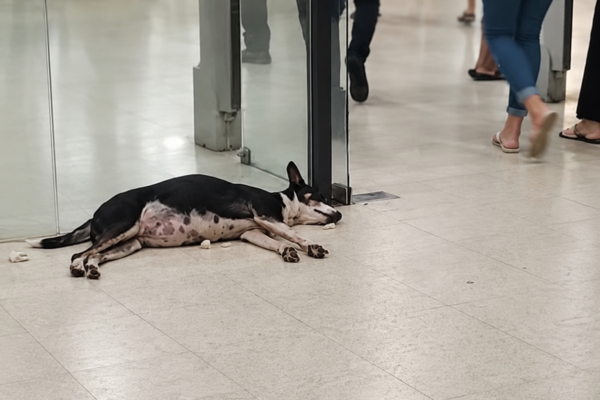
A two-month-old puppy was found shivering, struggling to breathe, and unable to stand — but the most horrifying clue was a tiny hole the doctors discovered near his spine.
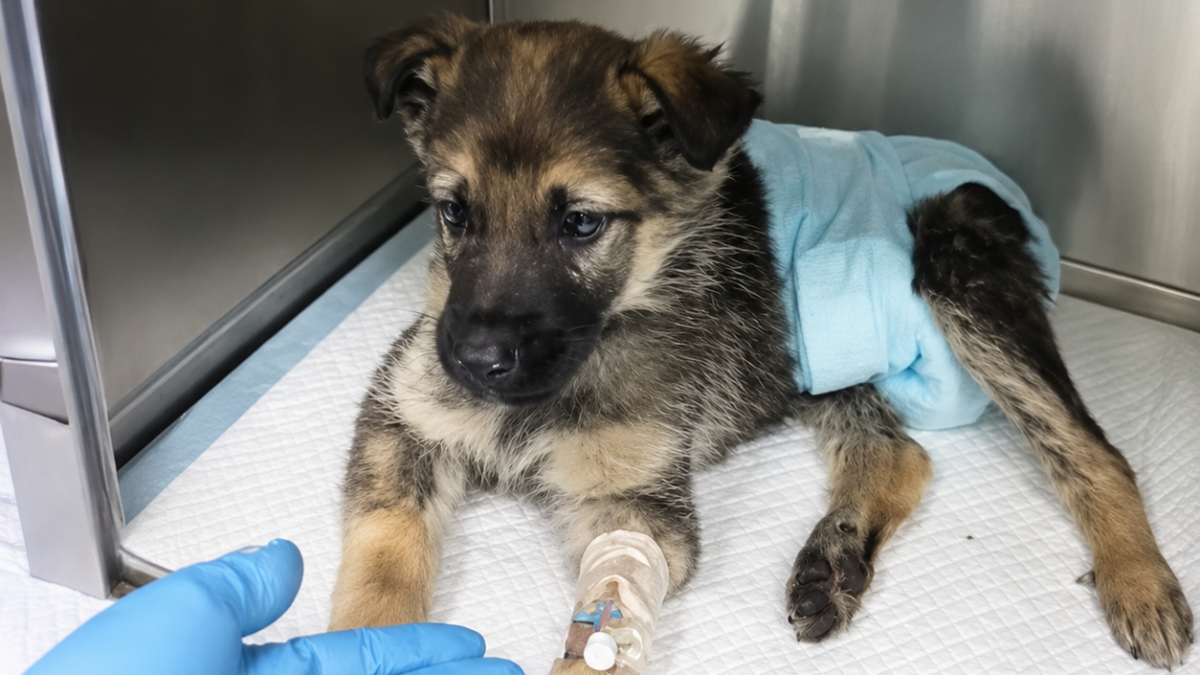
A two-month-old puppy was found shivering, struggling to breathe, and unable to stand — but the most horrifying clue was a tiny hole the doctors discovered near his spine.
At first, we believed he had been hit by a car or suffered some terrible accident, until the X-rays showed an abscess near the esophagus, an abnormal opening and injury around the spinal area, and damage the veterinarian believed was more consistent with a sharp object than a bullet.
Four months later, after learning to move through the world despite paralysis, Sava would face another devastating medical crisis — and we still would not know who had hurt him in the first place.
When we found him, people were standing around taking photographs and making noise while he trembled on the ground.
He could not eat.
He could barely drink.
Every breath looked difficult.
Worst of all, his little body would not support him.
We rushed him away, hoping the problem was something doctors could explain simply.
Instead, they found an area of shaved fur and a small puncture.
There was no bullet.
Nothing they could remove and say, “This caused everything.”
The veterinarian believed the wound appeared to have been made by something sharp.
Whatever had happened had damaged his spine badly enough to leave him paralyzed.
I looked at the tiny puppy on the examination table and broke down.
“He’s only a puppy,” I cried. “An innocent puppy.”
We reported the case to authorities.
They told us to wait.
So while they searched for answers, we focused on the one thing still in front of us: keeping Sava alive.
He grew.
He became curious.
He learned to move astonishingly fast despite his disability.
He watched other dogs run and repeatedly tried to chase them.
But his damaged hind legs began creating new problems, and we protected them with special clothing and gauze.
Then one day, Sava began struggling to breathe again.
We rushed him back to the hospital.
What the doctors discovered this time would change his life all over again.
[END OF FACEBOOK CAPTION]
[FIRST COMMENT / FULL STORY CONTINUATION]
When we first saw him, people were standing around.
That is one of the details I remember most clearly.
Not because there were many people.
Because of what they were doing.
Some were taking photographs.
Others were talking loudly.
There was movement around a tiny puppy who was already overwhelmed by whatever was happening inside his body.
He was trembling.
Not the small shiver of a puppy waking from sleep.
His whole body seemed cold and exhausted.
His breathing was difficult enough that I noticed it from a distance.
Each breath looked like work.
He was so young that my first instinct was to look around for his mother.
Nothing.
No dog came.
No one stepped forward to say he belonged to them.
The puppy lay there while strangers turned his suffering into something to look at.
I felt irritation rise immediately.
Not because photographs are always wrong.
Sometimes photographs help rescuers document a condition.
Sometimes they help locate an animal.
Sometimes sharing a photograph is how help arrives.
But there is a moment when observing has to become doing.
This puppy had reached that moment.
We moved through the people and got close.
The first thing I wanted was quiet.
Less noise.
Less stimulation.
A little space around him.
He looked impossibly small.
Later, we would name him Sava.
At that moment, he was simply a frightened puppy whose body was failing him.
I touched him carefully.
He did not try to run.
He could not.
His legs did not support him.
That was when fear replaced irritation.
“Can he stand?”
No.
We tried to reposition him gently.
His body moved.
The legs did not cooperate the way they should.
He could not rise.
Could not take a normal step.
He was approximately two months old.
At two months, puppies should be discovering movement with ridiculous enthusiasm.
They should trip over themselves because they are trying to run faster than their bodies know how.
They should chase objects that make no sense.
They should fall, get up, and fall again because the world is too interesting to approach slowly.
This puppy did not have that.
He had trembling.
Difficulty breathing.
Weakness.
Paralysis.
I remember thinking:
Accident.
That was the simplest explanation.
Maybe a car.
Maybe a fall.
Maybe something heavy had struck him.
Puppies get injured in terrible ways because they are small, inexperienced, and vulnerable.
An accident would have been awful.
But it would have been understandable.
We could take him to a veterinarian.
Identify the damage.
Treat what could be treated.
The story would at least have a shape.
Then I tried offering him a small amount of water.
He struggled.
Food was no easier.
That frightened me more.
A puppy this young cannot go indefinitely without eating and drinking normally.
His body was already dealing with enough.
We needed a veterinarian immediately.
We took him.
The journey felt longer than it was.
Every few minutes I checked his breathing.
He looked so fragile that I was afraid even moving him might make something worse.
But leaving him where he was would have been worse.
At the clinic, the staff began examining him.
Breathing first.
General condition.
Neurological response.
Then the body.
That was when someone noticed the shaved area.
It was small enough that it could have been missed if nobody looked carefully.
The fur there had been removed or was absent.
Near it was a tiny opening.
A puncture.
I stared at it.
“What is that?”
No one answered immediately.
The doctors needed images.
They took X-rays.
Until that point, part of me still expected the accident explanation.
A fracture.
Dislocation.
Something we could point to.
Instead, the images gave us a more disturbing picture.
There was an abscess in the area near the esophagus.
There was also a small abnormal opening and an injury around the spinal region.
The spinal damage explained why Sava could not stand and walk normally.
The doctors diagnosed a spinal disorder associated with the injury.
He was paralyzed.
I heard the word and looked at his age again.
Two months.
The idea that normal walking might be beyond him before he had even had a proper chance to run felt unbearable.
Then came the question everyone was thinking.
What caused the hole?
Was it a bullet?
That possibility was examined.
The veterinarian could not find a bullet.
There was no projectile sitting inside the body waiting to be removed.
The appearance seemed more consistent with an injury caused by something sharp.
A tool.
An object.
Something that had punctured.
The doctor could not give us a complete reconstruction of what had happened.
And I do not want to pretend we ever obtained one.
We did not.
But the possibility that someone might have done this deliberately was difficult to escape.
The location.
The shaved area.
The puncture.
The spinal damage.
None of it felt like a simple story.
I looked at Sava on the examination table.
Tiny body.
Young face.
Eyes trying to understand an unfamiliar room.
And something inside me broke.
“He’s just a puppy,” I cried.
“An innocent puppy.”
The words were useless medically.
They did not close the wound.
They did not repair the spine.
They did not give the doctor an answer.
But I could not stop myself.
Two months.
What could a two-month-old puppy possibly have done to deserve pain?
Nothing.
Puppies do not deserve punishment for being puppies.
They chew.
Cry.
Make messes.
Get underfoot.
Need attention.
None of that justifies cruelty.
I had to step away for a moment because anger was becoming stronger than thought.
Rescue work does that.
You arrive because an animal needs help.
Then the evidence creates questions.
Who?
Why?
How long?
Why did no one intervene sooner?
Those questions can swallow you if you let them.
Sava did not need my anger.
He needed care.
So I went back.
The doctors treated what they could.
The abscess.
The wound.
His breathing.
His hydration and nutrition.
His neurological condition.
We spoke honestly about the paralysis.
There was no promise that he would suddenly get up and walk like other puppies.
No dramatic “give us three days.”
His spine had been injured.
We had to build a life around that fact.
That was difficult to accept.
When people hear the word rescue, they often imagine a straight line.
Find animal.
Treat injury.
Animal becomes normal.
Happy ending.
Real rescue is often more complicated.
Sometimes the injury remains.
Sometimes a body adapts instead of returning to what it was.
Sometimes the happy ending has to be redesigned.
For Sava, that redesign began immediately.
He would need help moving.
Protection for the parts of his body he could not use normally.
Close monitoring.
Different expectations.
And still, he was a puppy.
That mattered.
Disability did not remove curiosity.
It did not remove personality.
It did not remove his right to explore.
The first days were dominated by medical concerns.
I watched his breathing.
His ability to eat.
His response to treatment.
I watched for pain.
For fever.
For signs that the abscess was worsening.
I tried not to think too far ahead.
If you look at the entire future of a disabled puppy while still standing in an emergency room, the scale of responsibility can become overwhelming.
So we worked smaller.
Today.
Get through today.
Then tomorrow.
Once Sava was stable enough, we reported the case to the authorities.
We gave them what information we had.
The condition in which he was found.
The puncture.
The doctor’s concerns.
The possibility of intentional injury.
We wanted answers.
I wanted them badly.
I wanted someone to tell me exactly who had done this.
I wanted an explanation even though I knew no explanation could make the injury acceptable.
The authorities told us to wait.
They would investigate.
That was all we could do on that side.
Wait.
I hate that word in cruelty cases.
Waiting feels passive.
Meanwhile, the animal keeps living with the consequences.
But investigation requires evidence.
Names.
Witnesses.
Records.
You cannot manufacture those because you are angry.
So we waited for them.
And we worked on Sava.
At first, he was shy.
That made sense.
Humans had become associated with frightening things.
Even if we never discovered exactly what happened, his body had learned that the world could hurt.
I moved slowly around him.
Hands where he could see them.
No unnecessary restraint.
Food offered gently.
Water.
Rest.
The basic language of care.
Sava watched everything.
Puppies are built for curiosity.
His fear fought with that instinct constantly.
Something moved across the room.
His eyes followed.
A dog passed.
He looked.
A bag made a sound.
Head turned.
The world kept inviting him.
That gave me hope.
Not hope that the spine would magically repair itself.
Hope that Sava still wanted to participate.
There is a difference.
A disabled dog can have a rich life if pain is managed, medical needs are addressed, mobility is supported, and the animal remains engaged.
Sava was engaged.
Very much so.
As the weeks passed, he grew.
That may sound obvious.
Puppies grow.
But growth felt almost surprising because our first image of him had been so fragile.
His weight changed.
His body became larger.
His face lost some of that tiny-baby look.
His chest broadened.
His personality came forward.
Every few days I would look at him and think:
When did you become this big?
Growth also created new challenges.
A tiny paralyzed puppy can be lifted easily.
A larger young dog requires more planning.
His body weight increased while the spinal problem remained.
That meant we had to adjust how we supported him.
But Sava did something remarkable.
He learned.
He learned how to move himself with astonishing speed despite the disability.
The source describes him becoming fast on his hind legs even though the spinal injury and later problems clearly affected that part of his body.
I cannot resolve every mechanical detail beyond what we observed.
What I can say honestly is this:
Sava adapted.
He discovered ways to propel himself through space far more efficiently than I expected.
At first, every movement looked difficult.
Later, he could surprise you.
You would turn.
Sava was somewhere else.
The puppy who once lay unable to stand had become a determined little traveler.
Not walking normally.
Not cured.
Adapted.
That distinction matters.
His confidence grew with his mobility.
At first, he looked at new things cautiously.
Later, he approached.
Sniffed.
Investigated.
He became agile in the way available to him.
I watched his personality change from shy to confident and felt proud.
Not because disability had disappeared.
Because it had stopped defining every second.
Sava had things to do.
Places to sniff.
Dogs to watch.
People to investigate.
Life became larger than the injury.
That was exactly what I wanted.
Four months passed.
Four months.
During all that time, the authorities gave us no real answer about who had caused the original injury.
We asked.
Wait.
That was what we kept hearing.
No confirmed person.
No explanation.
No clear owner emerging to take responsibility.
The question remained open.
Who was the mysterious person behind what happened to him?
Why would anyone hurt a puppy?
Was the injury deliberate exactly as it appeared?
We had medical suspicion.
We did not have a complete legal answer.
I tried not to let the lack of accountability dominate Sava’s daily life.
He did not know an investigation existed.
He did not wake each morning wondering whether authorities had called.
He woke curious.
That became a lesson for me.
There are some things you pursue because they matter.
Justice matters.
Accountability matters.
But you cannot make the animal wait emotionally for justice before allowing happiness.
Sava’s life had to move now.
So while the investigation went nowhere, he grew.
And he watched other dogs run.
That was the part that hurt me in a different way.
Sava had never run through a grassy field the way a healthy puppy does.
Never had that full-body freedom.
No back legs pushing with effortless rhythm.
No sudden sprint after a friend.
No reckless puppy race with no destination.
He saw other dogs do it.
That mattered to me because his curiosity was so strong.
Whenever another dog moved quickly, Sava wanted to follow.
He tried.
Again and again.
Sometimes he would chase in his own adapted way.
Sometimes the difference between his body and theirs became painfully obvious.
A friend would accelerate.
Sava could not match it.
The other dog would reach the far side.
Sava remained behind.
I would see him pause.
Look.
And there were moments when his eyes seemed sad to me.
I am careful with that.
I cannot know whether Sava thought, I am different.
The source interprets his behavior that way.
What I can say is he repeatedly attempted to follow other dogs and could not move in the same manner.
After some of those attempts, his expression and posture changed enough that I felt the difference with him.
I wanted to fix it.
That is one of the most painful instincts in caregiving.
Wanting to give the animal the one thing medicine cannot return.
“Run,” I wanted to tell his body.
Just once.
Let him feel grass under all four feet.
Let him chase without thinking.
Let him be two months old again before the injury.
Impossible wishes.
We cannot negotiate with the past.
Sava’s spine did not care how unfair I found it.
So instead of wishing forever, we focused on comfort and access.
If he could not explore like the other dogs, we could still let him explore.
If he could not move in the same way, we could make movement safer.
If he needed protection, we would protect.
Sava remained childlike in curiosity.
He sniffed everything.
Examined objects.
Moved toward unfamiliar sounds.
Sometimes I put special pants on him to protect his body from friction.
When a dog drags or moves abnormally, skin can rub against floors and surfaces repeatedly.
What seems like a small scrape can become a serious wound because the same area is exposed again and again.
The pants reduced some of that contact.
At first Sava seemed puzzled by them.
He looked down.
Shifted.
Tried to understand what had changed.
Then curiosity won and he went back to investigating the world.
That was Sava.
Problem appears.
Pause.
Adapt.
Continue.
I admired him for it.
But his hind legs began becoming more concerning.
The spinal injury had already compromised them.
Now the constant friction and reduced normal use created additional problems.
We protected the legs carefully.
Wrapped vulnerable areas.
Used gauze.
Checked skin.
Adjusted.
Then Sava began chewing.
That behavior worried me.
He chewed at the affected leg repeatedly despite the bandaging.
We tried to prevent it.
Rewrapped.
Protected.
Watched.
Still he found opportunities.
Dogs with severe spinal injuries can develop complicated problems involving sensation, discomfort, abnormal nerve signaling, or self-trauma.
The source itself says such problems are often seen in spinal-cord dogs but does not give a precise neurological explanation.
Neither will I.
What I know is Sava kept chewing.
And we could not simply tell him why he needed to stop.
Eventually, the leg developed a swollen wound.
I saw it and felt that old fear return.
Another problem.
Another consequence.
Another part of his body we had tried desperately to protect.
We cleaned and treated it.
Changed protective methods.
Monitored closely.
Sava remained active in his own way.
That almost made it harder.
He wanted to move.
Movement created friction.
His body did not provide normal feedback or protection.
His curiosity was stronger than caution.
How do you tell a puppy that exploring can injure him?
You do not.
You adapt the environment.
You supervise.
You protect.
Then you hope.
We did everything we could to make him comfortable.
Soft surfaces.
Protective clothing.
Dressings.
Regular checks.
If a spot looked red, we acted early.
If a bandage shifted, we fixed it.
It became routine.
Sava’s special care did not feel dramatic after a while.
That is what happens with chronic needs.
At first, every task feels medical.
Then it becomes life.
Put on the pants.
Check the leg.
Clean.
Wrap.
Feed.
Play.
Rest.
Repeat.
Love often looks like repetitive maintenance.
No one posts dramatic photographs of rewrapping the same leg for the fiftieth time.
But that is where quality of life is built.
I learned to appreciate the boring parts.
If care becomes boring, it means we have survived the emergency long enough for routine to form.
That is good.
Sava seemed happy much of the time.
Again, I judge from behavior.
Curious.
Interested in food.
Interested in other dogs.
Moving around.
Engaging.
The original shy puppy became a confident young dog.
His body was different.
His personality was not diminished by it.
That was one of the things I loved most.
People sometimes look at a disabled animal and see only tragedy.
Sava certainly had tragedy in his history.
But if you spent a full day with him, you also saw comedy.
Curiosity.
Stubbornness.
Energy.
A puppy insisting on being involved.
Disability is part of an animal.
Not the entire animal.
Sava reminded me daily.
Then came the breathing problem again.
It happened after we had already settled into the long-term challenges.
Maybe that is why it frightened me so much.
I had started to believe we understood his body.
Spinal injury.
Protect the legs.
Monitor skin.
Support movement.
Manage daily life.
Then his breathing changed.
He struggled.
The effort was obvious.
My mind jumped back to the first rescue day.
Tiny puppy.
Hard breaths.
I felt as though the past had returned.
We did not wait.
Sava was hospitalized.
Emergency care began.
The staff gave first aid and ran the necessary tests.
Bloodwork.
Evaluation.
Monitoring.
We waited again.
There is that word.
Wait.
Except this time, the waiting was not for authorities.
It was for doctors.
A very different kind of waiting.
One had felt helpless because people were searching for blame.
This felt helpless because we were searching for a cause inside Sava’s body.
The initial concern included acute kidney failure.
That possibility scared us.
Kidneys are essential.
When they fail, problems accumulate quickly.
But some of the findings did not fit the simple explanation we first feared.
There was no electrolyte deficiency matching what we expected.
His blood pressure was not elevated.
The doctors kept looking.
They did not stop at the first theory.
That mattered.
A diagnosis must fit the patient, not only the first guess.
Eventually, they found the deeper problem.
The formal diagnosis devastated me.
End-stage kidney failure.
I had to ask them to repeat it.
End-stage.
Sava.
The puppy who had survived the spinal injury.
The dog who had grown through four months of unanswered investigation.
The little explorer who learned to move around despite paralysis.
Now this.
I looked at him and felt anger at the unfairness of accumulation.
One terrible thing would have been enough.
Why did this dog keep receiving more?
There is no answer to that question.
Life does not distribute suffering according to fairness.
Still, caregivers ask.
We ask because love makes every new diagnosis feel personal.
Sava was already living with consequences from the spinal trauma.
His hind leg was worsening.
The doctors now had to think about his kidneys and the damaged limb at the same time.
Surgery had to be planned.
Carefully.
His condition was too serious for casual timing.
The doctors explained that one of the hind legs also needed to be amputated.
The wound and deterioration had progressed to the point where leaving it would create the risk of necrosis.
Dead tissue.
Infection.
More danger.
I heard “amputation” and looked at the same legs we had spent months trying to protect.
We had wrapped them.
Covered them.
Checked them.
Bought special pants.
Tried everything we could to keep friction from destroying the skin.
And now one had to go.
That felt like failure emotionally even though medically it was not.
Sometimes removing a damaged limb is the act that protects the rest of the body.
Intellectually, I understood.
Emotionally, I thought:
We tried so hard.
The veterinarian reminded us what mattered.
Sava’s safety.
Not preserving a limb at all costs.
A limb that had become a source of danger was no longer serving him.
We had a few days to prepare.
Those days were heavy.
I watched Sava more closely than usual.
He did not know surgery was coming.
He behaved like himself.
Curious.
Restless.
Interested.
I sometimes envy animals that absence of future knowledge.
Humans can suffer an operation repeatedly before it happens.
What if?
What if?
What if?
Sava had the present.
Food.
Attention.
Movement.
Rest.
I tried to borrow that.
Prepare what can be prepared.
Do not manufacture tomorrow’s pain today.
The doctors evaluated him carefully because his health was concerning.
End-stage kidney failure made everything more complicated.
He needed surgery, but he also needed to be safe enough to survive it.
The team planned.
We followed instructions.
I kept thinking about how different his life could have been.
That thought came more strongly during those days.
He could have been a normal puppy.
Running.
Four healthy legs.
No hospital.
No bandages.
No neurological damage.
No questions about a sharp object.
No kidney diagnosis.
Maybe a family.
Grass.
Games.
The ordinary life that most dogs never realize is a privilege.
Sava should have had that.
But wishing could not give it to him.
So I made another promise internally.
If his life could not be ordinary, it could still be good.
We would give him every good thing we reasonably could.
Comfort.
Food he enjoyed.
Friends.
Safe exploration.
Medical care.
Affection.
A home.
No more human failure if we could prevent it.
The surgery day arrived.
I was afraid.
I will not pretend otherwise.
Any surgery carries risk.
Sava’s medical condition made my fear stronger.
The fact that a limb would be removed made the procedure emotionally difficult even when it was medically necessary.
We handed him over to the team.
I watched him disappear toward the treatment area.
Then we waited.
Again.
Waiting rooms compress time strangely.
Five minutes can feel like an hour when the animal you love is behind a door.
I tried to distract myself.
Failed.
Walked.
Sat.
Checked my phone though there was nothing on it.
Stood again.
Every time someone wearing medical scrubs appeared, my heart reacted.
Not for us.
Wait.
I thought about Sava’s first X-ray.
The puncture.
The abscess.
The words “sharp object.”
I thought about the four months.
His special pants.
The leg wound.
The breathing crisis.
How had such a young life accumulated so much medical history?
Then I stopped.
The operation was happening now.
Stay here.
Eventually, we received the news.
The surgery had gone successfully.
Safely.
I closed my eyes.
Relief can be physically painful when you have been tense for long enough.
My shoulders dropped.
I realized how hard I had been holding my jaw.
Successful.
Safe.
Those were the only words I needed.
Sava had made it through.
The leg was gone.
That reality would take time to absorb.
But the source of necrosis risk had been addressed.
The surgery was behind him.
Now recovery.
When I first saw him after the operation, I felt a mixture I had trouble naming.
Sadness.
Relief.
Tenderness.
Pride, even though he had not chosen any of this.
His body looked changed again.
First paralysis had changed his movement.
Now amputation changed his shape.
But when Sava became fully alert, something familiar remained.
His eyes.
The same curiosity.
The same life.
That helped.
Bodies can change dramatically.
Identity can remain.
We focused on pain control, wound care, and the doctor’s instructions.
No rushing.
No proving how tough he was.
Recovery first.
He slept.
Woke.
Accepted food as allowed.
Watched movement around him.
The clinic staff monitored carefully.
Little by little, his condition stabilized.
The doctors told us he was recovering very well.
Very well.
I held onto that.
After everything, good recovery felt like a luxury.
Soon, we were told he would be able to leave the veterinary hospital and return home.
Home.
That word had not always been part of Sava’s story.
At two months, he had been found trembling among strangers.
Now he had somewhere to return after surgery.
That alone changed the emotional meaning of recovery.
The veterinarian gave us medication to continue at home.
We listened closely.
Dose.
Timing.
Monitoring.
What to watch.
When to call.
His kidney condition remained serious.
Surgery had not magically erased every medical problem.
The spinal injury remained.
The amputation remained.
We were not taking home a cured dog.
We were taking home Sava.
That distinction was important.
A dog can go home while still requiring care.
Home is not the place you go only after becoming perfect.
Home is where care continues.
Sava adjusted to the next version of his life surprisingly quickly.
That had become one of his talents.
Adapt.
He had already learned to move with paralysis.
Already learned to live with protective clothing.
Already learned that veterinary clinics, bandages, and strange routines were part of his world.
Now one limb was gone.
He adjusted again.
I watched him calculate movement.
Shift weight.
Try.
Pause.
Try again.
No self-pity.
Animals do not seem to build identity around lost possibilities in the same narrative way we do.
Sava had a body.
That body worked this way today.
He used what he had.
That was enough.
I tried to do the same emotionally.
Stop comparing him every hour with the imaginary healthy puppy he could have been.
See this Sava.
The one here.
He is alive.
He is curious.
He is recovering.
He is home.
Those are not small things.
His friend remained part of his world too.
The source describes Sava as if he told his friend everything he had been through.
Of course, no literal story was spoken.
But watching the dogs together made us imagine it.
Sava would settle near his companion.
The other dog would sniff him.
Observe the changed body.
Then normal dog life resumed.
That normality comforted me.
Dogs do not hold formal meetings about disability.
They negotiate the body in front of them.
Can you play?
Can you move?
Can I sniff you?
Okay.
Continue.
Sava’s friend did not see a tragic symbol.
Just Sava.
I wanted us humans to learn the same.
We called him brave.
A wonderful boy.
Those words came easily.
But I tried to remember bravery was our interpretation.
Sava had no alternative but to live inside what happened.
Still, there was something inspiring about how much life remained in him.
He had arrived at approximately two months old.
Cold.
Breathing hard.
Unable to stand.
Now he was older.
Larger.
More experienced than any young dog should be.
One leg gone.
Spinal injury still part of him.
Kidney failure part of his medical reality.
And yet he remained interested in the world.
That interested me more than any heroic label.
Curiosity survived.
That was Sava’s strongest trait.
It pulled him forward again and again.
After returning home, we rebuilt routine.
Medication.
Food prepared according to his medical needs.
Water.
Wound checks.
Rest.
Movement adapted to his body.
The special protective strategies changed because his body had changed.
We paid attention.
He learned.
The house learned him.
That is what permanent care looks like.
Not one dramatic rescue.
Mutual adaptation.
We moved things to make access easier.
We watched surfaces.
We prevented unnecessary friction.
We made sure the surgical area healed cleanly.
We monitored breathing.
Any change could matter now.
At first, I checked him almost obsessively.
Is he breathing normally?
Did he eat?
Did he drink?
Does the incision look right?
Is he too tired?
Is he uncomfortable?
Caregivers can become anxious after repeated crises.
Every quiet moment can look suspicious.
I had to teach myself to distinguish monitoring from fear.
Look carefully.
Then let him live.
Sava did not need a person hovering over him so intensely that home felt like another hospital.
He needed safety with freedom.
We worked toward that balance.
His appetite helped.
Curiosity helped.
He still wanted to know what everyone was doing.
If something moved in another room, Sava noticed.
If food appeared, he noticed faster.
If another dog went somewhere interesting, he tried to follow.
The amputation had not removed his desire to participate.
I began laughing again.
That was a sign I had relaxed.
For a while, every interaction with Sava had felt medically loaded.
Then one day he did something ridiculous while trying to reach an interesting smell, and I laughed before remembering I was supposed to be worried.
Good.
He was becoming a dog in my mind again.
Not a diagnosis.
That was healthy for both of us.
The authorities, however, still had no answer.
Months had passed.
No one had identified the person responsible for the original injury.
We had reported everything.
Waited.
Asked.
Nothing.
The mystery remained.
At some point, I had to decide how much of Sava’s future I was willing to sacrifice to searching for a past we could not prove.
We also had no useful path to finding an owner who could explain what had happened or safely take responsibility.
Eventually, we made the decision to stop searching for his previous owner.
That was not the same as saying the original harm did not matter.
It mattered.
It will always matter in the sense that Sava carries the consequences.
But there comes a point when an unanswered question can become another cage.
Who did this?
Why?
Where are they?
What was his life before?
Those questions can keep the rescuer emotionally trapped in the moment of injury.
Sava was no longer there.
He was home.
He was recovering.
His future needed more attention than the mystery.
So we let the unanswered parts remain unanswered.
The authorities had not found the person behind it.
We could not force evidence to appear.
We chose to stop searching for an owner.
And we chose Sava.
That decision felt like closing a door.
Not dramatically.
Quietly.
The past would no longer determine whether he belonged.
He belonged.
That was enough.
Sometimes people imagine closure requires a confession.
A punishment.
A complete explanation.
Those things can matter greatly.
But animals cannot postpone life until humans complete the story.
Sava needed closure of another kind.
No more being passed around.
No more uncertainty about where he would live.
No more waiting for someone from before.
His life could begin from the point we actually had.
Home.
Care.
Peace.
That was the future we could control.
I thought back to the crowd around him on the first day.
People taking pictures.
Noise.
A puppy trembling.
That image had once defined Sava for me.
Now it did not.
When I thought of him, I saw other things too.
The first time curiosity overcame fear.
The speed he learned despite paralysis.
The way he tried to chase another dog.
The special pants.
The stubborn chewing at the leg.
The hospital.
The surgery.
The recovery.
His friend.
Home.
A life becomes larger than its worst photograph when you stay long enough to see what follows.
That is one of rescue’s greatest privileges.
The public may see the first image.
Rescuers see the weeks after.
The boring meals.
The medication.
The frustrating setbacks.
The new problems.
The tiny improvements.
That long view changes the story.
Sava was not “the tortured puppy.”
He was Sava.
A dog with medical complexity.
A dog with a difficult history.
A dog who liked to investigate.
A dog who wanted to follow friends.
A dog who adapted.
That identity mattered.
I did not want him to spend the rest of his life being introduced through the person who may have hurt him.
Why give that unknown person permanent ownership of the story?
No.
The injury is part.
Not center forever.
Sava’s new life would be centered on what we could give him.
Peace.
Happiness.
Protection.
Good care.
That was the promise.
Not “nothing bad will ever happen.”
We had already learned bodies can produce new crises unexpectedly.
His kidneys had proven that.
The promise was different.
Whatever happens, you will not face it alone.
That is a promise humans can actually keep.
We kept it.
The kidney diagnosis remained serious.
I will not soften “end-stage” into something minor.
It was a frightening reality.
The doctors gave us medication.
Monitoring mattered.
We followed instructions.
Sava’s good recovery from surgery did not mean the kidneys had magically returned to normal.
His life still required medical awareness.
That made every comfortable day more valuable.
Not because I spent it anticipating death.
Because comfort was real and present.
Eat.
Explore.
Rest.
Interact.
Those are good days.
A life does not have to be medically perfect to contain good days.
Sava taught me that.
Disabled dogs often make humans confront our own assumptions about quality of life.
We look at missing mobility and imagine only loss.
Sava did know limitations.
He could not run like the other dogs.
His body suffered secondary problems.
We must not romanticize that.
But limitations and joy existed together.
He could be frustrated and curious.
Disabled and confident.
Medically fragile and playful.
Those are not contradictions.
Life is complex enough to hold all of them.
That helped me stop pitying him constantly.
Pity can become another way of reducing an animal.
Sava needed compassion.
Care.
Adaptation.
Not someone staring at him every day thinking, Poor thing.
He was more than poor thing.
He was trouble sometimes.
Stubborn.
Interested in places we did not want him going.
Quick enough in his adapted movement to create work for us.
Those ordinary annoyances delighted me.
They meant personality was winning space.
When he did something inconvenient, I sometimes smiled before correcting the situation.
There you are.
A dog.
Not a tragedy.
Good.
The amputation changed some practical routines.
We remained careful about balance.
Skin contact.
Pressure.
Any place his body dragged or leaned differently.
His remaining limbs now carried different loads.
The source does not give detailed rehabilitation protocols, so I do not invent them.
We simply watched.
Protected.
Followed veterinary advice.
Sava adapted.
That is the truth.
The surgical wound healed well.
Medication continued.
He was home.
The investigation stopped yielding anything.
And slowly, the story moved out of crisis.
I had waited for that.
Not a triumphant finish.
A quieter one.
A morning when no emergency phone call was needed.
An afternoon when Sava explored and then slept.
A day when medication was simply medication.
A week without a new disaster.
Those are victories in medically complicated rescue.
People may not celebrate them online.
I do.
Boring days are gifts.
Sava had enough dramatic days.
He deserved boring.
I wanted his future to become so ordinary that nobody needed to photograph him suffering again.
That thought brought me back to the beginning.
The people around him.
Phones.
Noise.
I do not know who among them had already called for help.
Perhaps someone had.
I do not condemn every person present.
But the image remains a reminder.
Suffering is not a spectacle.
If you can help safely, help.
If you cannot, connect to someone who can.
Then create space.
A frightened puppy does not need an audience.
Sava needed transport.
Veterinary care.
Quiet.
He finally received them.
That is where his real story began for us.
The first diagnosis had felt like the end of normal life.
Paralyzed.
Normal walking far away.
Then Sava taught us adaptation.
The later diagnosis had felt like another ending.
End-stage renal failure.
Amputation.
Again, he continued.
I became cautious with the word “end.”
Medicine uses stages for good reasons.
But emotionally, a diagnosis is not automatically the last page.
It tells you what body you are working with now.
Sava still had mornings.
Food.
Friends.
Home.
So we lived them.
That does not mean ignoring prognosis.
It means prognosis and presence can coexist.
We listened to doctors.
And we listened to Sava’s behavior.
If he was comfortable.
Interested.
Eating.
Engaging.
Those things mattered.
If that changed, we would respond.
That is responsible care.
Not denial.
Not despair.
Attention.
The source ends when Sava’s new life has just begun.
I like that endpoint.
It does not force us to predict.
We do not know every future medical turn.
We do not invent one.
We leave him where he actually is in the source.
Recovered well from surgery.
Home.
Medication provided.
Adjusting.
Still with his friend.
Loved.
No owner being searched for anymore.
No culprit identified.
A new life beginning.
That is enough.
Before I arrive there, though, I want to remember one thing about the four months between rescue and crisis.
Sava grew.
That fact can get lost beneath all the diagnoses.
He grew.
The tiny puppy became larger.
Weight changed.
Body changed.
His face changed.
Growth means time passed.
Time means we had him long enough for childhood to unfold.
Not the childhood he should have had.
But a childhood.
He learned the world.
Sniffed.
Looked.
Followed.
Tried.
Failed.
Tried again.
That matters.
Someone may have injured him at two months.
They did not get to take every month after.
That thought gave me comfort.
The original act had enormous consequences.
But it did not stop all development.
Sava still became more Sava.
Confidence appeared.
Skill appeared.
Preferences appeared.
The world kept entering him.
That is resilience in the simplest sense.
Development continuing after injury.
I do not need to call it heroic.
It is beautiful enough.
His attempts to chase friends still hurt me when I remember them.
But they also reveal desire.
A dog with no interest in life would not repeatedly try.
Sava wanted the grass.
Wanted the other dog.
Wanted movement.
That desire became our guide.
How do we give him as much access as his body safely allows?
That is better than focusing only on what he cannot do.
Disability care works from possibility.
Not denial of limitation.
Possibility within it.
Sava taught us to look for those possibilities every day.
Can he get there safely?
Can we protect this skin?
Can we adapt this surface?
Can he explore with help?
Can he participate?
Often the answer was yes, in some modified form.
That was enough to make a life.
When one leg had to be amputated, the same principle returned.
What can he do now?
Not:
What did he lose compared with an imaginary perfect dog?
The latter question produces grief.
The first produces care.
We chose care.
Sava had already shown he could adapt.
We trusted that history.
He did not disappoint.
Back home, he found his rhythm again.
Perhaps different.
Still his.
We watched him near his friend and joked that he was explaining everything that had happened at the hospital.
Of course, dogs do not exchange medical narratives.
The humor helped us.
We had spent so much time frightened that laughter felt necessary.
Sava would look at the other dog.
The other dog would sniff.
I would say:
“Go ahead, tell him how much trouble you gave us.”
Sava would ignore me.
Normal family humor.
Another sign the crisis had moved behind us.
Laughter belongs in rescue too.
If we only cry, burnout wins.
The dogs give us ridiculous moments amid serious ones.
We take them.
Sava had earned the right to be funny.
I allowed myself to enjoy him.
The unknown person who injured him did not deserve all our emotion.
Sava deserved joy.
That reframing helped me stop checking my phone for authority updates constantly.
Four months had already given us nothing.
Eventually, no new information came.
We accepted reality.
No culprit identified.
No satisfying answer.
That remains frustrating.
I will not pretend forgiveness.
I will not say it no longer matters.
It matters because prevention matters.
Accountability matters.
But Sava’s life cannot be held hostage by my frustration.
So I place the unanswered question where it belongs.
In the past.
Unresolved.
Then return to him.
Home.
That is the present.
People sometimes ask how rescuers can move on without answers.
We do not always move on cleanly.
Some cases leave anger.
But animals force forward motion because they need breakfast.
Medication.
Bandages.
Walks or mobility time.
You cannot spend every morning raging at an unknown person when a living dog is waiting for care.
Routine pulls you back to useful action.
Sava did that for me.
Who did this?
No answer.
What does Sava need now?
Answer available.
Do that.
This philosophy kept me sane.
Useful question over unanswerable question.
Again.
Again.
The unknown shrinks.
The care grows.
I think that is how Sava’s story eventually changed tone.
At first:
What happened?
Then:
How do we help?
Later:
How do we help him live well?
Finally:
This is his life now.
Those are stages of rescue.
Shock.
Treatment.
Adaptation.
Belonging.
The source ends in belonging.
Perfect.
No need for an artificial miracle.
Sava does not suddenly regain normal legs.
The missing limb does not return.
Kidney failure does not vanish.
The person responsible is not discovered at the last second.
Reality remains imperfect.
Yet the ending is hopeful.
That is more powerful than a neat fantasy.
A good life can begin before every problem is solved.
Sava proves it.
He still carries physical consequences.
Still requires care.
Still has an unknown past.
And yet:
New life.
Peace.
Happiness.
Home.
Those are real.
I think of the phrase “he deserves a new life full of peace and happiness.”
Deserve is easy to say.
The challenge is building it.
Peace is not an emotion we can hand to a dog.
We create conditions.
No one hurts him.
Medical needs addressed.
Environment predictable.
Food.
Water.
Rest.
Friendly company.
Less unnecessary stress.
Protection from friction.
Medication.
Those conditions allow peace.
Happiness similarly comes through opportunities.
Sniff.
Explore.
Interact.
Eat.
Rest.
Be included.
Sava responded.
So we kept building.
That is what “new life” meant practically.
Not a single adoption photograph.
Daily infrastructure.
The best rescue endings are often invisible after a while.
If Sava becomes simply another dog in a home, taking medicine and getting annoyed when someone blocks him from an interesting smell, then success has become ordinary.
I want that for him.
The source lets me hope without inventing future details.
I stay there.
At the beginning.
One thing is certain.
The first two months of his life do not get to define all of it.
They happened.
They damaged him.
We acknowledge.
But time continued.
Four months of growth followed.
Then surgery.
Recovery.
Home.
More life.
That is the arc.
From being acted upon to being cared for.
From spectacle to individual.
From unknown puppy to Sava.
Names matter.
When we named him, he stopped being only “that paralyzed puppy.”
He became someone we addressed.
“Sava.”
Food.
“Sava.”
Medicine.
“Sava.”
Come here.
“Sava.”
What are you doing?
A name organizes relationship.
The unknown person may have treated him like an object.
We would not.
He had a name.
Needs.
Preferences.
History.
Future.
That is dignity.
I sometimes say his name and remember the first examination table.
Tiny.
Cold.
Then look at him now.
Larger.
Changed.
Still here.
That phrase is enough to make me emotional.
Still here.
After the puncture.
The spinal injury.
The breathing problems.
The kidney diagnosis.
The surgery.
The amputation.
Still here.
Not because of magic.
Because his body kept working where it could.
Doctors intervened.
Care continued.
Timing helped.
He endured.
All those factors.
That is survival.
Complex.
No need to reduce it to “love saved him.”
Love mattered because it motivated the care.
Medicine mattered because bodies need medicine.
Surgery mattered.
Monitoring mattered.
Sava’s own physiology mattered.
Everything together.
That is honest.
I respect the doctors for continuing to look when the first kidney theory did not fit perfectly.
No electrolyte deficiency.
No elevated blood pressure.
They did not force the data into the expected diagnosis.
They investigated until they identified end-stage renal failure.
That thoroughness shaped decisions.
I keep this detail because medical stories should respect uncertainty.
First thought can be wrong.
Testing matters.
Sava benefited from careful evaluation.
No miracle intuition.
Work.
That is the kind of competence worth honoring.
The successful surgery also belonged to that work.
Planning.
Preparation.
Execution.
Then recovery.
The source gives no names.
I do not add them.
But the veterinary team mattered.
Without them, compassion alone would not be enough.
A good rescue network requires professional care.
Sava’s story demonstrates it repeatedly.
X-ray.
Diagnosis.
Hospitalization.
Tests.
Surgery.
Medication.
Each stage depended on expertise.
I remain grateful.
And then expertise hands the animal back to home care.
That handoff matters.
Medication means nothing if not given.
Protective instructions mean nothing if ignored.
We accepted the responsibility.
That is where rescue becomes long-term commitment.
Sava needed people who would follow through after the clinic lights disappeared.
He got that.
Good.
I think about his special pants with affection now.
At the time, they were purely practical.
Protect against rubbing.
Later, they became part of his visual identity for us.
A little dog moving through the room in protective clothing, nose down, investigating.
He did not care whether it looked unusual.
Humans care too much about appearances.
Dogs care about function.
Can I move?
Can I smell?
Can I reach that?
Fine.
This practicality is another reason disabled animals can surprise people.
We imagine embarrassment.
They often simply adapt.
Again, not universal.
Pain and frustration are real.
But Sava’s behavior showed adaptation.
I trusted that rather than projecting human shame.
He was different from other dogs physically.
He still wanted their company.
Good.
Difference did not isolate him completely.
We protected without separating unnecessarily.
That was important.
A disabled dog still needs social life if temperament allows.
His friend gave that.
The source does not tell the friend’s name.
I do not invent.
Just friend.
Enough.
Their interactions helped Sava remain part of a dog world, not only a medical project among humans.
I liked that.
He could sniff.
Follow.
Try to chase.
Rest nearby.
Ordinary dog communication.
That mattered.
After surgery, seeing him with that friend reassured me again.
The body had changed.
The relationship adjusted.
Dogs are good at renegotiating physical reality.
No ceremony.
Just sniff.
Observe.
Continue.
Humans could learn.
I found myself less afraid of Sava’s changed appearance after watching his friend accept it immediately.
If the dog did not treat him as tragic, maybe I could stop too.
Compassion without pity.
That became my goal.
Protect his dignity.
He is not “poor Sava” every minute.
He is Sava.
Sometimes poor.
Sometimes funny.
Sometimes difficult.
Sometimes sleepy.
Whole.
I want this story to leave him whole.
Not reduced to the sharp object.
That unknown act opens the story.
It should not own the ending.
The ending belongs to Sava’s adaptation and the people who stayed.
That is why stopping the search for his previous owner mattered symbolically.
We were no longer waiting for someone from before to explain who Sava was.
We knew enough.
He was ours to care for.
His life did not require old ownership to become legitimate.
The source says we decided to stop looking for his owner because he deserved peace and happiness.
That is the closure.
No confrontation.
No justice scene.
No return.
Just letting go of an unanswered past.
I respect that ending.
Sometimes peace begins where explanation ends.
Not always.
But here.
We had asked enough.
Four months.
Authorities no answer.
Medical crises still demanding attention.
Sava’s energy better spent on life.
Our energy too.
So we moved forward.
I imagined the first grassy field he wanted but could not run across.
I stopped imagining a healthy alternate Sava.
Instead, I focused on making the spaces he could access interesting.
Different smells.
Safe surfaces.
Company.
He did not need the exact life I had imagined to have a meaningful one.
That realization relieved me.
Caregivers sometimes mourn an animal’s hypothetical life so intensely that they miss the actual life.
I was in danger of that.
Sava corrected me by being curious.
He kept insisting on now.
What is this smell?
Who is that dog?
Where are you going?
Food?
Now.
Good.
I followed.
His curiosity anchored us both in the present.
That may be the most beautiful thing he gave me.
Not a lesson about overcoming everything.
Some things were not overcome.
A lesson about living with what remains.
That is more mature.
No false triumph.
Sava did not defeat paralysis.
He adapted to paralysis.
He did not undo amputation.
He adapted.
The kidney disease remained serious.
We managed.
The mystery remained unsolved.
We let it remain.
Life continued.
That is resilience without fantasy.
I prefer it.
When I look back at the first rescue scene, the tiny puppy breathing hard and unable to stand seems almost like a different animal.
But he is not.
Same Sava.
The confident young dog grew out of that body.
The thread is continuous.
That is why I do not say he became a completely different dog.
Care revealed more of him.
Growth revealed more.
Safety revealed more.
But the curiosity was there early.
Even when frightened, his eyes followed.
Maybe that was the first hint.
He wanted to know the world.
The world had treated him badly.
He wanted to know it anyway.
That moves me.
If I use the word brave, that is why.
Not because he smiled through suffering.
Because engagement survived.
He kept looking outward.
That is enough bravery for me.
The final clinic visit after surgery—really, the transition out of hospitalization—felt like another beginning.
Medication in hand.
Instructions understood.
Sava ready to leave.
Veterinary hospitals are essential, but no one wants to live there forever.
The moment an animal can recover at home is meaningful.
Home has familiar smells.
People.
Routine.
Less clinical stress.
Sava returned.
Settled.
Adapted.
That is where the source places us.
Not at the end of his life.
At the beginning of his new one.
I will not take it farther.
No invented future adoption if home already ours.
No years later.
No death.
No miraculous cure.
No reunion with an old owner.
None of that belongs.
The story ends with choice.
We stopped searching behind us.
We looked ahead.
Sava’s past still contained a hole we could not fill.
A literal injury and a narrative one.
Who?
Why?
Unknown.
But not every hole must be filled for a life to continue.
Some remain.
You build around them.
His body did.
So did we.
The puppy who once could not stand had learned how to move through his world.
The shy puppy had become confident.
The dog who watched others run had still found ways to explore.
The injured leg had become dangerous and was removed.
He survived the operation.
He recovered well.
The doctors sent medication home.
He returned to familiar people.
His friend remained nearby.
And for the first time since we had found him surrounded by noise and cameras, Sava’s life no longer felt like a public emergency.
It felt private.
Protected.
Ours to care for.
His to live.
That was exactly what I wanted.
No crowd.
No mystery demanding immediate answers.
No people staring.
Just Sava.
Home.
If he wanted to spend ten minutes sniffing the same corner, he could.
If he wanted to follow his friend, he could try.
If he needed rest, no one demanded movement.
If he needed medication, it came.
If his body required adaptation, we adapted.
That is peace in practical form.
I sometimes touched his head and thought about the first words I had shouted.
“He’s just a puppy.”
At the time, the sentence came from horror.
Now I heard something else in it.
Yes.
He was a puppy.
Which meant his story should not have ended at the first injury.
There was growing still to do.
Learning.
Attachment.
Curiosity.
Life.
Someone may have tried to reduce his world before it had even begun.
They failed in one important sense.
Sava still had a future.
Not the future he should have had.
But a real one.
Good enough to protect fiercely.
That is where I leave him.
Not running perfectly through the field.
I will not invent that.
Not with four healthy legs.
Not with a solved case.
Not with every medical problem gone.
I leave him truthfully.
Sava, older than the trembling two-month-old we first carried away.
Larger.
More confident.
One leg amputated.
Spinal injury still part of his body.
Kidney disease requiring care.
Medication waiting at home.
A friend nearby.
People who understand him.
No longer being searched for by an unknown previous owner.
No longer defined by the person authorities could not identify.
Safe enough to begin again.
His life did not become beautiful because the suffering had somehow been necessary.
It was never necessary.
It was cruel and unfair.
His life became beautiful because after the suffering, people chose care.
Again.
And again.
And again.
That is the only kind of miracle I trust in stories like Sava’s.
Not a body suddenly returning to the way it should have been.
People showing up consistently for the body that remained.
Sava had that now.
The cameras were gone.
The crowd was gone.
The hospital crisis was behind him for the moment.
The unanswered questions were placed where they belonged.
Behind us.
And Sava, who had spent the earliest part of his life being hurt, examined, wrapped, protected, hospitalized, and operated on, finally had something much simpler in front of him.
A home.
A peaceful place to recover.
A chance to be curious.
A chance to be a dog.
His new life had only just begun.