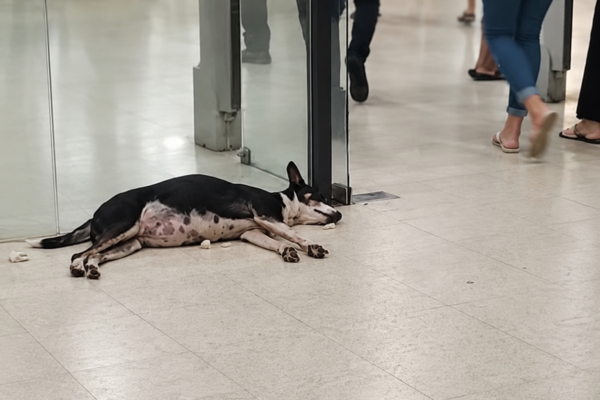
Someone taped a cardboard box shut, left it in a scrapyard, and walked away while a frightened dog was still trapped inside.
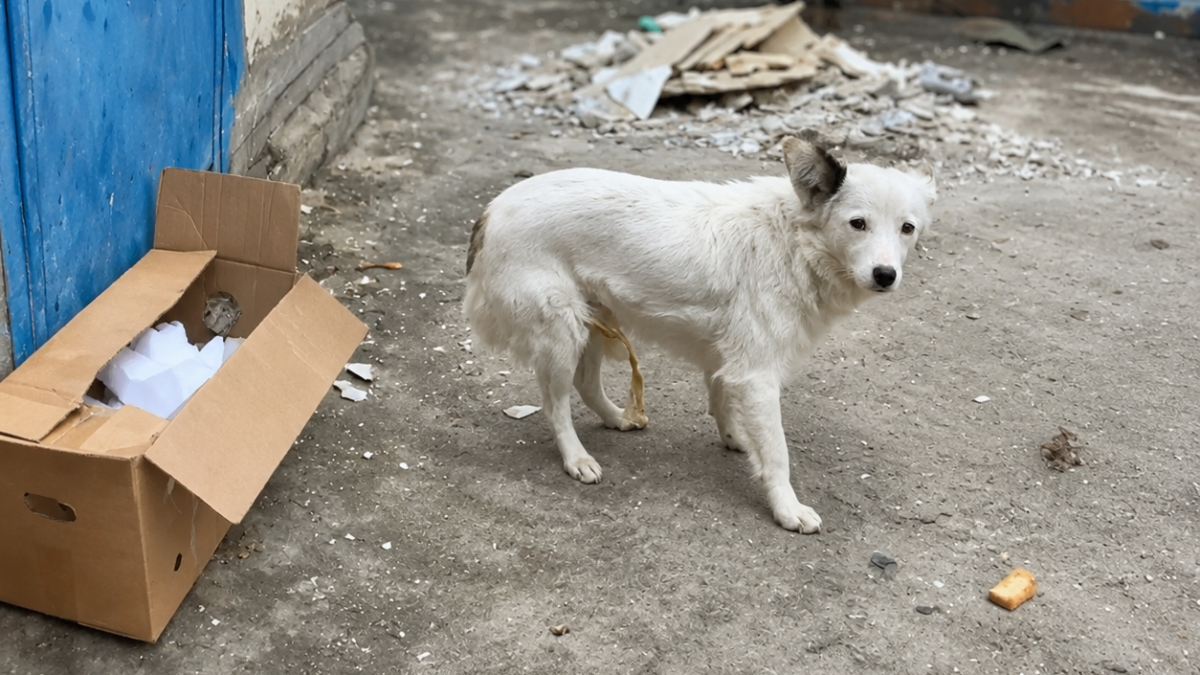
Someone taped a cardboard box shut, left it in a scrapyard, and walked away while a frightened dog was still trapped inside.
When scrap collectors opened the box, she burst out in panic with tape still stuck to one of her legs, then ran through the streets desperately searching for the person she believed would take her home.
What none of us knew yet was that Georgette was doing all of that while carrying fresh fractures in her pelvis and femur—injuries so severe that doctors would soon spend four hours trying to repair them.
It took me two days to find her.
When I finally did, she was waiting beside a road, scanning every direction like a lost child.
She would run a short distance, stop, look back, then continue, as though every street might contain the way home.
When I tried to take her away, she became angry and resisted. She did not want rescue.
She wanted to stay there and wait.
At the hospital, the truth became even harder to understand.
Her pelvis and femur were fractured, and the injuries were still fresh. Doctors told us the pattern did not look like a simple accident, though we still did not know exactly what had happened.
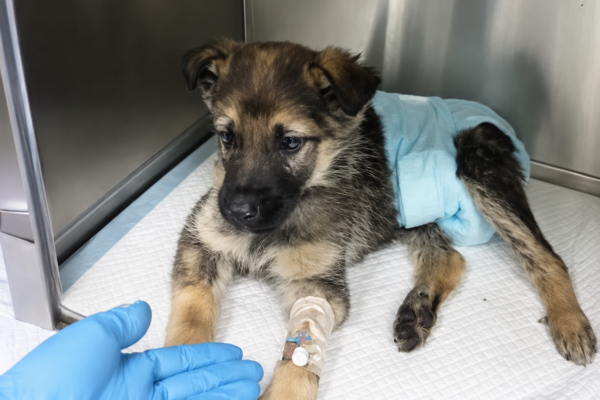
After a difficult four-hour surgery, Georgette woke in terrible pain.
Then came another setback: the first metal fixation had not been positioned correctly, and days later she still could not walk as expected.
She needed another operation.
For a while, it felt as if every time we reached for hope, something else went wrong.
But Georgette kept going.
She stood.
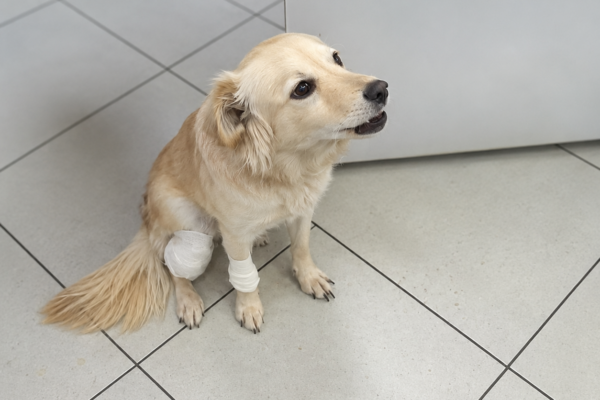
Then she walked again.
She slowly began trusting me, playing with other dogs, eating the meals I cooked at home, and discovering simple comforts she seemed unfamiliar with—warm baths, a soft bed, gentle hands, friends who stayed.
Authorities searched for the person who had left her, but there were no cameras around the scrapyard and every lead eventually disappeared.
We never got the answers we wanted.
Georgette got something better.
A life in which she no longer had to keep looking down the road for someone who had already chosen to leave.
[END OF FACEBOOK CAPTION]
[FIRST COMMENT / FULL STORY CONTINUATION]
The cardboard box did not look unusual.
That was part of what made the story so disturbing.
It was the kind of box anyone might see near a scrapyard and ignore.
Old cardboard.
Tape.
Something discarded among other discarded things.
The scrapyard was already full of objects people no longer wanted.
Metal.
Broken parts.
Containers.
Pieces of things that once belonged somewhere else.
So another box did not attract much attention at first.
Then someone noticed that it had been sealed.
Not simply folded shut.
Taped.
The scrap collectors opened it.
And a dog came out.
She did not climb out slowly.
She escaped.
Terrified.
Disoriented.
As though the moment there was finally an opening, every instinct in her body told her to run.
There was still adhesive tape stuck to one of her legs.
That detail stayed in my mind when I first heard about her.
Tape still attached.
Evidence of the box traveling with her after the box itself was gone.
The people who opened it had no idea where she belonged.
The dog did not stay long enough for anyone to ask.
She ran.
Not randomly, or at least it did not look random to the people watching.
She searched.
Her head moved.
Her body moved with urgency.
She looked toward the road.
Toward passing people.
Toward directions that meant nothing to us.
The scene was heartbreaking because she did not appear to understand the one fact that seemed obvious to everyone else.
She had been left.
She had not been accidentally separated and temporarily misplaced.
Someone had closed her inside a cardboard box and placed that box in a scrapyard.
But Georgette did not know that.
At least, her behavior did not suggest she understood it.
She behaved like a dog whose person must still be somewhere nearby.
Maybe beyond the next road.
Maybe around the next corner.
Maybe coming back.
She kept searching.
That was when people began trying to find help.
By the time I became involved, she had already disappeared from the scrapyard.
A frightened dog in an unfamiliar area can cover more ground than people expect.
She had a head start.
And I did not yet know what I would later learn about her body.
I only knew there was a dog who had escaped from a taped cardboard box and was now somewhere outside, confused and alone.
I started looking.
The first day passed without finding her.
We checked the places where someone said she had been seen.
Edges of roads.
Open lots.
Places where a frightened dog might stop before moving again.
Nothing.
I kept imagining her wandering farther away.
Every hour created more possibilities.
Maybe she crossed a road.
Maybe someone else had picked her up.
Maybe she was hiding.
Maybe she was injured.
I did not know.
The second day, I kept searching.
Then I finally saw her.
She was near the side of a road.
Waiting.
That is the word I remember.
Waiting.
She was not lying peacefully.
She was not exploring like a curious stray.
There was desperation in the way she moved.
She would go a short distance.
Stop.
Look.
Then move again.
Every pause seemed connected to the same question.
Where is home?
Where is the person I know?
Which direction?
Dogs do not think in the same sentences we do, so I cannot claim those exact words existed in her mind.
But she was clearly searching for something familiar.
She looked down roads.
She checked directions.
She moved as if she expected recognition.
She reminded me of a lost child trying to retrace a route she does not fully understand.
And there was something else.
She did not immediately welcome me.
Why would she?
I was not the person she was looking for.
From her perspective, I was another stranger interrupting the search.
I drove behind her carefully, trying to stay close enough not to lose her again.
I wanted to get her somewhere safe without turning the road into a chase.
Eventually, things went smoothly enough for us to take her.
But she was angry.
That surprised some people.
They expected a rescued dog to understand relief.
Georgette did not.
She resisted leaving.
She wanted to remain on that street.
Waiting.
Searching.
Whatever she associated with that area mattered more to her in that moment than my intention to help.
I wished I could explain.
I wished I could tell her:
The person you are looking for may not be coming back.
The box was not an accident.
Staying here will not repair what happened.
But there was no way to make her understand.
So we did the only thing we could.
We took her somewhere safe even though she did not want to go.
Sometimes rescue begins with gratitude.
Sometimes it begins with anger.
Georgette’s began with anger.
She wanted the road.
We wanted answers.
The hospital was the next stop.
At first, our concern centered on the obvious emotional distress.
Then the doctors began examining her body.
Everything changed.
Georgette struggled emotionally inside the hospital.
She had already lost control of the world around her.
Box.
Scrapyard.
Escape.
Road.
Strangers.
Now a clinical room with unfamiliar people touching her.
To examine her safely, the doctors had to manage her fear carefully.
She was overwhelmed.
I stayed close.
The goal was not to frighten her further.
But we needed to know what was wrong.
The tests came back.
We were shocked.
Her pelvis was fractured.
So was her femur.
The injuries were still fresh.
They had not healed.
They had not been there for months and slowly stabilized.
These were recent fractures.
I remember looking at her after hearing that and replaying everything I had seen.
The road.
The running.
The stopping.
The searching.
She had been doing all of that with a broken pelvis and a broken femur.
That fact changed how I understood every step.
What I had taken for desperation alone had also been physical endurance.
She was moving while injured.
Badly injured.
I looked at her legs again.
How?
How had she managed to keep going?
How had she run away from the scrapyard?
How had she searched roads?
Pain should have made movement difficult.
Yet she had moved because whatever was pulling her forward was stronger than the instinct to stay still.
She had been trying to find home.
Trying to find the person associated with home.
And the person she was searching for was, as far as we understood, the same person connected to her abandonment.
That realization was painful.
Loyalty is not always rewarded fairly.
The dog does not know that.
She simply searches.
The doctors studied the fractures.
We asked how an injury like this might have happened.
Their answer made the situation even more troubling.
The pattern did not look like a straightforward accident.
They did not tell us a complete story.
They could not.
Medical imaging can show damage.
It cannot identify a person.
It cannot tell us motive.
It cannot recreate every second.
But the doctors did not believe what they saw fit neatly with an ordinary accidental injury.
That gave us another question.
Had someone hurt Georgette deliberately?
Had something sharp or forceful been involved?
Later, the investigation would raise suspicion around a sharp object or tool, but at that stage we did not have enough evidence to state exactly what happened.
So we kept the distinction clear.
The fractures were real.
Fresh.
Serious.
The exact cause was not yet proven.
What mattered immediately was treatment.
Georgette needed surgery.
A major one.
The first operation lasted four hours.
Four hours feels very long when an animal you barely know has already become emotionally important.
You look at the clock.
You try not to imagine complications.
You tell yourself that the surgeons are working.
You wait.
Then wait more.
The surgery was difficult.
Her injuries were not simple.
Pelvis.
Femur.
Stability had to be restored.
Everything needed to be aligned and fixed as well as possible.
Finally, the doctors came out.
The operation had been successful.
Those words gave us relief.
Not complete relief.
The beginning of it.
Successful surgery does not mean the animal wakes comfortable.
Recovery is its own stage.
Georgette was placed in a cast or supportive fixation as part of the treatment.
She needed rest.
She needed time.
And when the anesthesia wore off, the pain arrived.
She suffered badly.
There is no reason to soften that part.
She had undergone a major orthopedic procedure after living with fresh fractures.
When anesthesia faded, her body knew exactly how much had happened.
She cried.
She struggled.
The sight was difficult.
We stayed beside her.
Encouraged her.
Spoke softly.
Made sure the medical team knew what we were seeing.
Pain management was part of the plan, but even properly treated surgical recovery can be hard.
I remember wishing I could explain why we had done this.
Why the hospital hurt when our intention was to help.
Why strangers had moved her bones.
Why she woke with new discomfort after already carrying so much.
But animals experience treatment from inside the moment.
They do not know the future result.
So we stayed.
That was the only explanation we could offer that she might understand eventually.
Presence.
Again.
Still here.
You hurt.
Still here.
You are scared.
Still here.
The first days after surgery were filled with monitoring.
Rest.
Medication.
Food.
Checking the surgical area.
Watching her expression.
Watching whether she tried to use the leg.
She was brave.
I use that word carefully.
Georgette did not volunteer for any of this.
She endured because there was no alternative.
Still, there was something remarkable about the way she kept responding to life around her.
Even hurt.
Even confused.
She watched us.
Listened.
Tried.
We asked the doctors again about the fracture pattern.
They repeated that it did not look like a simple accident.
That did not give us a culprit.
But it gave us reason to report the case.
So we contacted the authorities.
We needed someone to investigate how a dog with fresh pelvic and femoral fractures ended up taped inside a cardboard box at a scrapyard.
The sequence mattered.
Severe injury.
Box.
Tape.
Abandonment.
Someone had made choices.
We wanted to know who.
At the same time, Georgette’s own recovery became the priority.
An investigation could take time.
Bones cannot wait for human answers.
Then our optimism began slipping.
Several days passed.
Georgette still was not walking the way the doctors had hoped.
At first, we told ourselves:
Give it time.
She had just had major surgery.
The body needs rest.
Pain can make an animal avoid using a limb.
Swelling.
Fear.
All of that can slow movement.
But concern grew.
Something was not right.
The doctors reassessed.
Then we got the news no one wanted.
The first metal fixation had not been positioned correctly.
The structure intended to stabilize the injury needed correction.
I felt sick.
Georgette had already gone through a four-hour surgery.
Already awakened in pain.
Already begun recovery.
Now she needed another procedure.
There is a particular kind of discouragement that comes when a treatment meant to solve a problem creates another problem to solve.
We had wanted a straight road forward.
Instead, the path bent backward.
The doctors explained what needed to happen.
Corrective surgery.
Reposition the fixation.
Give her a better chance to heal and move.
We agreed.
There was no useful option in pretending everything was fine.
Georgette deserved a proper correction.
Still, emotionally, it was difficult.
That period felt dark.
She had not truly been happy since the day she was found.
That was how it seemed to us.
First abandonment.
Then searching.
Then hospital.
Then fracture diagnosis.
Then surgery.
Then pain.
Then inadequate progress.
Now another operation.
How much could one dog absorb before the world started making sense again?
We encouraged each other because we had to.
People caring for an injured animal can become emotionally exhausted too.
You need someone to say:
Continue.
One more day.
One more treatment.
One more decision.
Not because optimism is guaranteed.
Because the animal still needs you to function.
We promised Georgette, in our own minds if not in words she could understand, that we would fix what we could.
Her past was not something we could repair.
Her bones were.
So we focused there.
The corrective surgery was performed.
The doctors handled it carefully.
The goal was to restore the fixation without putting Georgette through more unnecessary suffering.
Afterward, we were told she should begin feeling better within a few days.
Again, hope.
But this time hope felt cautious.
We had already learned not to celebrate too early.
So we watched.
In the meantime, I began preparing food for her myself.
That became one of the most ordinary and comforting parts of those days.
Hospital care can make life feel mechanical.
Medication times.
Dressings.
Appointments.
Measurements.
Food brought from home felt different.
I made meals carefully.
Not elaborate fantasy dishes.
Just nourishing food she enjoyed.
I watched for appetite.
When she ate, I felt relief.
Appetite meant engagement.
Strength.
Something in her still reaching toward ordinary life.
She liked what I prepared.
That made me happier than it should have.
Maybe because so much else was out of my control.
I could not force the bone to heal overnight.
I could prepare a meal.
I could make sure she had something she wanted.
That mattered.
The doctors prescribed the treatment she needed.
We followed it.
Medication.
Rest.
Monitoring.
Rehabilitation as appropriate.
Then one day, Georgette stood.
Not perfectly.
Not confidently.
But she got up.
My heart jumped.
After everything, simply seeing her body upright felt extraordinary.
Then came walking.
Slow.
Careful.
She was able to move again.
I was so happy I almost forgot to breathe.
But immediately I noticed another problem.
She still would not use the painful leg normally.
She avoided placing weight on it.
That frightened us.
Had something gone wrong again?
Was the fixation failing?
Was the bone deteriorating?
Was there another complication?
We did not want to guess.
So we took her back for more X-rays.
Another hospital visit.
Another round of anxiety.
The images came.
And this time, good news.
There was no danger of bone dissolution.
No alarming sign that the bone was breaking down in the way we feared.
The doctors were reassured.
What Georgette needed now was patience.
Care.
Time.
The leg had been through trauma and repeated surgery.
Her reluctance to trust it made sense.
We could not demand normal movement immediately.
So we slowed ourselves down.
That was harder than it sounds.
Once you see improvement, you want more.
You want the limp gone.
You want running.
You want the entire story resolved.
Bodies do not follow storytelling pace.
Healing requires its own schedule.
We learned to follow hers.
During that period, something else began changing.
Georgette’s world started expanding beyond injury.
She met other dogs.
Maybe it was the first time she had seen so many dogs around her in one safe environment.
We could not know her full previous life.
But she watched them with interest.
Some were larger.
Some more confident.
They moved freely around her.
Nobody seemed concerned about the cardboard box.
Nobody knew she had spent days searching.
Dogs do not ask for a detailed history before deciding whether someone might be a friend.
That normality helped.
At first, Georgette was cautious.
Understandably.
She had been through too much.
But over time, she began trusting me more.
That happened gradually.
There was no one dramatic instant when she decided:
You are safe.
It appeared in small behavior.
She stayed closer.
Accepted care more easily.
Relaxed during ordinary moments.
Looked toward me instead of away.
Eventually, she began playing with the other dogs.
That was one of the happiest changes.
Play is different from medical improvement.
An X-ray can tell you what bone is doing.
Play tells you something about the life around the bone.
Georgette chased.
Moved.
Interacted.
Her body was still recovering, but her world was no longer limited to pain.
I watched her with her friends and felt the first real sense that the dog we rescued from the road was changing emotionally.
Her longing for home gradually became less obvious.
Again, I do not say she forgot her former family immediately.
Dogs can remain deeply attached to familiar people and places.
That is exactly what made her roadside searching so painful.
But over time, the constant orientation toward the past softened.
She was participating in the place where she was now.
Eating.
Resting.
Playing.
Trusting.
That mattered.
Some dogs separated from their families stop eating.
Some become withdrawn.
Georgette had her own way of showing loss.
She had searched while physically injured.
Then eventually, she began accepting the life around her.
I did not ask her to forget.
I only wanted the present to become safe enough that she did not have to live entirely inside the search.
The authorities continued investigating.
We told them everything we knew.
Scrapyard.
Taped cardboard box.
Fresh fractures.
The doctors’ concern that the injuries did not resemble a simple accident.
Later, information suggested that some kind of sharp object or tool might have been involved in the injury.
But this remained something we wanted confirmed through proper investigation.
We did not want anger to become certainty without evidence.
We wanted the person responsible found.
Then we could ask.
What happened?
Why was she injured?
Why was she boxed?
Why there?
Why abandon her instead of seeking treatment?
We wanted answers badly.
Georgette could not give them.
So the investigation carried the questions for her.
While authorities looked, we kept caring for the dog in front of us.
Eventually, Georgette was well enough to leave veterinary care.
That was another major transition.
The hospital had been necessary.
But necessary places are not always comfortable places.
Leaving felt like freedom.
She came home with me.
My home was small.
I remember thinking about that.
Small house.
Big responsibility.
I did not have a huge property.
No grand setup.
But I had room for Georgette.
More importantly, I had decided that if she was going to stay with me, the size of the house mattered less than what happened inside it.
Safety.
Food.
Rest.
Attention.
Love.
She moved into that little home.
And I began seeing a different Georgette.
The hospital version had been defined by treatment.
The roadside version by searching.
At home, she could finally become ordinary.
The first changes were physical.
She gained weight.
Her body filled out.
She looked healthier.
The thinness and stress of the earlier period eased.
Her movement improved.
Her coat looked better.
Her posture changed.
But what affected me most was not weight.
It was happiness.
Her face became softer.
Her eyes carried less desperation.
She learned household routines.
She learned what it meant for someone to prepare food because they wanted her to eat.
She learned that hands approaching did not always mean examination or pain.
She learned rest.
She learned baths.
The baths surprised me.
She seemed unfamiliar even with simple care.
When I first bathed her, I expected tension.
Instead, she gradually relaxed.
Warm water.
A place where nobody was forcing her to go anywhere.
The sensation seemed to calm her.
She soaked.
Stayed.
The soap created little bubbles.
She became interested in them.
The tiny popping bubbles fascinated her.
That detail made me smile.
A dog who had survived a cardboard box and orthopedic surgery now watching soap bubbles.
That is recovery in one image.
Not dramatic.
Completely ordinary.
And therefore beautiful.
She seemed to enjoy the warmth.
I took my time.
No rush.
The goal was not simply cleanliness.
It was another experience where care happened without pain.
When I looked into her eyes during those moments, I sometimes felt as if she wanted to thank me.
I know that is my interpretation.
Dogs do not deliver formal gratitude.
But trust was visible.
She allowed closeness.
She gave affection.
She looked for me.
That was enough.
Most important of all, she gave me her trust.
And love.
Those two things changed my sense of responsibility.
At first, I had been the person who found her.
Then the person helping with treatment.
Somewhere along the way, I became the person she relied on.
That carries weight.
I could not treat it casually.
If a dog has already been left once, the person who becomes safe afterward should understand what that safety means.
I began feeling that I needed to protect her beyond the immediate recovery.
Not only make sure the fracture healed.
Make sure her life remained stable.
I wanted to love her.
Protect her.
Give her the ordinary things that had apparently not been secure before.
That became the new responsibility.
We returned to the veterinarian for another check.
By then, hospital visits felt different.
Georgette knew me.
She had survived enough examinations to understand, at least behaviorally, that she would come home again.
The doctors checked her.
Her health was good.
There was no new problem.
Those words felt like closing a difficult door.
Not closing the whole past.
Nothing could erase it.
But medically, the worst period was over.
We had reached the point where care was no longer organized around crisis.
No major fracture emergency.
No corrective surgery waiting.
No immediate fear that the bone was deteriorating.
We had officially come through the hardest days.
I looked at Georgette and finally allowed myself to breathe.
Her name was Georgette.
Beautiful.
Gentle.
That was who she had become in my daily life.
Not “the dog from the box.”
Not “the fractured dog.”
Georgette.
A name creates a different kind of relationship.
The box was something that happened to her.
It was not who she was.
The fracture was something her body endured.
It was not her identity.
Her life was opening into another chapter.
A better one.
She had a warm bed.
Food she liked.
Friends who genuinely enjoyed being with her.
A home where nobody sealed her into anything and disappeared.
A person who knew her medical history and still wanted her there.
That was enough.
The authorities, meanwhile, had not stopped immediately.
They spoke again with the scrap collector.
They tried to understand the area.
One problem was obvious.
There were no security cameras nearby.
That scrapyard had been an effective place for someone who did not want to be seen.
A person could carry a cardboard box into the area without attracting much attention.
Boxes belonged there.
Trash belonged there.
Scrap belonged there.
Someone could look like they were simply discarding something.
That possibility made me angry.
It suggested planning.
The location had not necessarily been random.
Again, we had to be careful.
We could not prove every part of the person’s thought process.
But the lack of cameras and the ordinary appearance of someone carrying a box made identification extremely difficult.
No clear footage.
No face.
No license plate.
No witness who could confidently identify the owner.
The trail stopped.
Information about Georgette’s previous owner led nowhere.
Every route ended in uncertainty.
Eventually, we made the decision to stop searching.
That was painful.
I did not want to.
Part of me felt stopping meant letting someone escape accountability.
But investigations require evidence.
You cannot manufacture it through determination.
We had followed what existed.
There was nothing useful left.
The unanswered questions remained.
Who taped the box?
Who left it?
Was that person also responsible for the fractures?
Exactly how were the fractures caused?
Why did the doctors believe the pattern was not a simple accident?
Was a sharp object involved as later suspected?
Why not seek help?
Why leave Georgette in a place where no one might notice quickly?
Why let her believe she still had a home to return to?
No answers.
Perhaps we would never have them.
That is one of the hardest realities in rescue.
Sometimes the animal survives, and the mystery does not.
People want a clean ending.
A culprit found.
A confession.
A reason.
Real life often refuses.
Georgette’s case refused.
So I had to decide what mattered more.
The unanswered past?
Or the living dog beside me?
The answer became obvious.
Georgette.
The investigation had done what it could.
Now my responsibility was not to spend every day emotionally chasing a person we could not find.
My responsibility was the dog who had already spent too much time chasing someone who did not come back.
I did not want her new life organized around the old owner any more than her roadside search had been.
So we stopped.
Not because what happened did not matter.
Because Georgette mattered more.
I have thoughts about cause and consequence.
The source of her story says that what we give eventually returns to us.
Maybe people call that karma.
Maybe they call it justice.
I cannot promise the universe handles every case.
I have seen too much to claim that every cruel person is visibly punished and every kind person rewarded.
Life is not always so neat.
What I do know is that actions create consequences for living beings.
Someone placed Georgette in a box.
She ran terrified through unfamiliar streets.
That was a consequence.
Someone failed to protect her injuries.
She needed major surgery.
That was a consequence.
Doctors repaired her bones.
She stood again.
That was a consequence.
We fed her.
She gained weight.
That was a consequence.
We stayed.
She learned trust.
That was a consequence.
Those are enough for me.
I do not need cosmic certainty.
I can see what care does.
Georgette changed.
Slowly.
Then unmistakably.
The dog who once ran from the scrapyard searching for an owner began running for different reasons.
Play.
Excitement.
Friends.
The dog who resisted being taken from the road began choosing to remain close to me.
The dog who had been sealed inside cardboard stretched out in a warm bed.
The dog who knew fresh fractures and surgery learned the pleasure of warm water and soap bubbles.
Those transformations mattered more than the missing culprit.
Over time, even the box stopped being the first thing I thought about when I looked at her.
That was progress for me too.
At first, every expression made me remember abandonment.
Every limp reminded me of injury.
Every quiet moment made me wonder whether she missed the person who left her.
Eventually, I started seeing only Georgette.
A dog.
My dog in every practical and emotional sense of daily life, though the source does not describe formal adoption paperwork and I do not need it to.
She lived with me.
I cared for her.
I accepted responsibility.
She trusted me.
That was enough to define the relationship.
She became playful.
Her big round eyes no longer looked only toward roads.
They looked at friends.
Food.
Me.
Whatever interesting thing was happening nearby.
She enjoyed life.
That was the change I wanted most.
The source says she forgot what happened.
I would phrase it more carefully.
I cannot know whether a dog literally forgets trauma.
Perhaps memories remain.
Perhaps smells or sounds can still bring something back.
What I could see was that the past stopped controlling her daily behavior.
That is enough.
She was not searching anymore.
Not living at the edge of the road.
Not trying to trace a path home.
She had a home now.
The new life may have felt like a dream compared with what came before.
That is how it felt to me.
I do not need to turn her into a fairy-tale princess to make the ending beautiful.
She was real.
Her happiness was real.
That was better than fantasy.
Still, there was something fairy-tale-like about the contrast.
A sealed cardboard box at a scrapyard.
Then warm water.
A bed.
Friends.
Food.
A small home filled with affection.
Not a castle.
Not magic.
Just care.
Maybe real fairy tales should end that way.
Not with perfection.
With safety.
I often think back to those two days of searching.
At the time, I did not know her name.
I did not know her injuries.
I did not know whether I would find her.
I was simply looking for a frightened dog.
If I had seen the X-rays then, I might have searched with even more panic.
She was moving on fresh fractures.
Every extra step could have hurt.
Yet perhaps knowing would not have changed anything.
We were already trying as hard as we could.
When I finally saw her on the road, my relief was mixed with frustration because she would not simply come with me happily.
Now I understand that moment with more compassion.
She did not know me.
She did not know the box meant abandonment.
As far as she understood, I was taking her farther from the person she loved.
Of course she was angry.
Of course she wanted to remain.
The rescue was correct even though it felt wrong to her.
That is a difficult truth.
Helping an animal sometimes means tolerating being misunderstood.
You cannot always wait for trust before emergency care.
Sometimes you take the dog.
Then earn trust later.
That is what happened.
Georgette’s trust came after treatment.
After meals.
After staying.
After pain.
After corrections.
After many ordinary days.
It was not automatic.
That made it precious.
I remember the first surgery as a turning point physically, but the second operation may have been more difficult emotionally.
By the second one, we knew how painful recovery could be.
Ignorance sometimes protects you during the first crisis.
You think:
Surgery will fix it.
Then you learn how complicated “fix” can be.
The first metal structure was wrong.
She still would not walk.
We had to go back.
That second decision required a different kind of courage.
Not optimism.
Persistence.
We already knew this would be hard.
We did it anyway.
That distinction matters.
The source says we encouraged each other.
We did.
There were moments when I needed someone else to say:
She can get through this.
There were moments someone else needed me to say it.
Caregiving can become communal that way.
No one person holds all the hope every day.
You pass it around.
Georgette did not know we were doing that.
She simply needed us to keep functioning.
So we did.
The corrective surgery worked.
The subsequent check reassured us.
Then patience.
That final stage was less dramatic but just as important.
People understand surgery as intervention.
They sometimes underestimate the weeks of gentle care afterward.
Bones do not heal because the dramatic part is over.
They need time.
The dog needs controlled movement.
Food.
Rest.
Monitoring.
Humans need restraint.
You cannot rush because you are tired of waiting.
Georgette had to relearn confidence in the injured leg too.
She hesitated to use it.
Why wouldn’t she?
Pain teaches avoidance.
Her body had learned that placing weight there could hurt.
Even when the structure improved, confidence did not appear instantly.
So we gave time.
And the leg slowly became part of normal movement again.
That felt like another kind of trust.
Not trust in me.
Trust in her own body.
The source does not describe that concept explicitly, so I keep it as my interpretation.
What I saw was gradual use.
That was enough.
The other dogs played an important role simply by being there.
I do not claim they medically rehabilitated her.
They were friends.
They offered social life.
A dog does not need to discuss healing.
Another dog runs.
You want to follow.
Another dog rests.
You rest nearby.
That kind of normal interaction helped Georgette become a dog again instead of a permanent patient.
I loved watching that transition.
At the hospital, every person looked at her injury.
At home, her friends did not care about the medical story.
They cared whether she would play.
That normality mattered.
Eventually, Georgette seemed happy among them.
Her eyes changed.
Not scientifically measurable.
Emotionally obvious.
She was present.
The road no longer pulled at her every minute.
That was when I began feeling the deepest relief.
Bones can heal while a heart still waits.
Georgette needed both kinds of recovery.
I could not measure the second with X-rays.
I watched behavior.
The search faded.
The play increased.
Trust grew.
Good.
That was enough.
The warm baths became one of our favorite routines.
I still remember the first time she truly relaxed in the water.
At the beginning, she seemed uncertain.
Then the warmth settled around her.
Her body softened.
She stayed.
The bubbles formed.
Popped.
She watched.
There was something almost childlike in her curiosity.
The dog who had once been surrounded by tape and cardboard now surrounded by harmless soap bubbles.
That contrast always moved me.
I did not need to say it aloud.
I just watched her.
Sometimes happiness is easiest to recognize when it is small.
No dramatic tail-chasing.
No huge celebration.
A dog enjoying warm water.
That was enough.
Her appetite improved too.
She gained weight.
Her body no longer looked like a collection of injuries.
Strength returned.
I continued preparing food.
Sometimes I thought about how different it felt from the hospital meals.
At home, cooking became part of belonging.
I knew what she liked.
She knew food would come.
Predictability builds security.
Again, I avoid claiming complicated internal psychology as fact.
But behaviorally, routine helped.
She settled into the home.
Food.
Rest.
Friends.
Bath.
Vet checks.
Me.
A small world.
Reliable.
That is what she needed.
When the veterinarian finally told us her health was good, I felt as though a long period ended.
Not everything in life suddenly became perfect.
But the chapter of urgent medical crisis closed.
No fracture emergency.
No surgical correction waiting.
No new bad X-ray.
Her body was stable.
That allowed us to focus entirely on living.
I think the phrase “a new chapter” fits here because the source gives it and because the contrast is real.
Before:
Survive.
Now:
Live.
That is the chapter change.
Georgette had a bed.
I loved seeing her in it.
A bed seems trivial until you remember the cardboard box.
One is a place someone put her because they wanted her gone.
The other is a place someone prepared because they wanted her to stay.
Same basic function—a contained space large enough for a dog—but completely different meaning.
The box was sealed.
The bed was open.
She could leave whenever she wanted.
That choice mattered.
She curled there because she chose.
I found that beautiful.
Food was the same.
Before, we did not know what care she had received.
Now meals were predictable.
Friends were the same.
Before, the source of her separation was unknown.
Now she had companions who remained.
These ordinary things formed the new life.
No need for dramatic luxury.
She did not need a mansion.
My small house was enough.
Love makes size less important.
Not magically—animals need proper space and care—but emotionally, safety can exist in a modest place.
Georgette proved that.
The investigation ending remained the one dark unresolved thread.
For a while, I thought about restarting it.
Maybe someone new would remember.
Maybe another angle.
Maybe an overlooked camera farther away.
But the authorities had already checked.
The scrap collector had been contacted.
The location gave us almost nothing.
The person had chosen a place where carrying a box looked normal.
That fact stayed painful.
It suggested someone understood the environment.
No cameras.
Low attention.
Trash and boxes ordinary.
Could pretend to be discarding waste.
A dog hidden inside.
Then gone.
It was cruelly efficient.
But without a face, a vehicle, a witness, or identifying evidence, suspicion could not become a person.
Eventually, we accepted the dead end.
Questions remained.
I learned to let them remain.
That is hard for people who rescue.
We like solutions.
Find dog.
Treat dog.
Find culprit.
Resolve.
But reality can stop before the last step.
You have to decide whether incomplete justice makes the entire story incomplete.
I decided no.
Georgette’s recovery completed the part I could control.
The culprit question remained open.
That was frustrating.
But Georgette did not need me to solve every mystery in order to be happy.
She needed care.
She got it.
That became my peace.
I sometimes wondered whether she remembered the scrapyard.
Again, impossible to know.
I never took her back there.
No need.
I did not test her with the old road.
Recovery is not a performance.
She did not need to prove she had moved on by revisiting pain.
Her present told us enough.
She played.
She ate.
She slept.
She trusted.
That was sufficient.
I did not need a cinematic scene where she walked past the scrapyard and did not look.
That did not happen in the source.
Real healing can remain quieter.
Home was enough.
The source says Georgette became the main character of a fairy tale.
I understand the affection behind that.
But I think her real life is stronger than a fairy tale.
Fairy tales often erase difficulty once the happy ending arrives.
Georgette’s happy life was built through surgery.
Correction.
Pain.
Patience.
Investigation.
Trust.
Meals.
Baths.
Those details matter.
The beauty came from reality.
Not magic.
If I call it a dream, I mean that the contrast felt almost unreal.
A dog who had been taped inside a cardboard box now sleeping safely.
A dog who searched roads with fresh fractures now playing.
That is dreamlike enough.
No castle required.
Sometimes I looked at her big round eyes and thought about the first road.
How she had stopped after each short run.
Looked.
Then moved again.
The motion of searching.
Now those same eyes could rest.
That is the emotional difference.
No scanning for the old owner.
No desperate pause.
She had someone.
I was there.
Her friends were there.
Home was around her.
That gave me a sense of responsibility I took seriously.
The source says I realized I needed to carry more responsibility.
Yes.
Because trust creates responsibility.
If an animal gives you trust after abandonment, you cannot treat it lightly.
You become part of what safety means.
That is a privilege.
Also work.
Daily work.
Vet care when needed.
Food.
Attention.
Protection.
None of it dramatic.
All of it important.
I accepted it.
Georgette had already experienced what happens when someone walks away.
I wanted her new pattern to be the opposite.
People stay.
Food returns.
Bed remains.
Friends remain.
Warm water returns.
The door opens, and she is still wanted.
That is how a new life becomes believable.
Not through one rescue day.
Through repetition.
I learned that.
The first rescue was taking her from the road.
The deeper rescue was everything after.
The first surgery.
The second surgery.
Meals.
Patience.
Home.
Those days turned rescue into life.
I think this is true of many animals, but I keep it specific to Georgette.
She did not need one heroic moment.
She needed a series of ordinary ones.
That is why I remember cooking for her.
Some people might overlook that detail.
But home-prepared food during recovery represented control over something good.
I could not answer who hurt her.
I could decide what she ate tonight.
That mattered.
I could not guarantee perfect healing.
I could follow the prescription.
I could not force her to trust.
I could stay.
Small controllable acts.
They built the outcome.
This lesson helped me when the investigation failed.
I could not control evidence.
So I returned to what I could control.
Georgette’s day.
That is enough.
There were moments when anger returned.
Especially when I thought about the box being sealed.
Why tape it shut?
Why remove her ability to escape before leaving?
Why a scrapyard?
Why not a shelter door?
Why not ask for help?
Those questions can consume you.
Then Georgette would nudge something.
Play with a friend.
Look at me.
And I would come back.
The present dog is more important than the imagined offender.
That became my rule.
Not because accountability is unimportant.
Because obsession with someone absent can steal energy from someone present.
Georgette had already lost enough energy searching for an absent person.
I did not want to repeat her mistake in a different form.
So I let authorities own the investigation while it existed.
When it ended, I let it end.
Hard.
Necessary.
The source says our questions may remain unanswered forever.
That is probably true.
But unanswered does not mean meaningless.
The story still has meaning.
Someone abandoned.
Others responded.
That is enough to choose what kind of person we want to be.
I do not need the previous owner’s explanation to know my own responsibility.
Georgette deserves care.
Simple.
I think about the scrap collectors with gratitude too.
They opened the box.
That first action mattered.
If they had ignored it, we do not know what would have happened.
I do not invent disaster.
We simply know opening the box gave Georgette a chance to escape.
They found a dog where they expected scrap.
That is the beginning of rescue even before I entered.
Many stories have unnamed people at the first link.
This one does too.
Collectors.
Witnesses.
People who told others.
Then me.
Doctors.
Authorities.
Friends.
A chain.
No single hero.
Georgette’s life improved because multiple people did the next responsible thing.
Open box.
Report dog.
Search.
Capture safely.
Examine.
Operate.
Correct.
Care.
Investigate.
Provide home.
That sequence matters.
Rescue is often logistics before emotion.
The emotion arrives while doing the logistics.
I think of the four-hour surgery again.
That was one link.
Surgeons working while we waited.
No one dramatic outside.
Just professional concentration inside.
Later, the corrective operation.
Again.
Medicine often looks repetitive.
But every careful technical decision created the possibility of Georgette’s current life.
I respect that.
Love alone would not have aligned a broken femur.
Doctors did.
Love got her there and kept her through recovery.
Both are necessary.
I never want stories like this to imply affection replaces medicine.
It does not.
Warm baths do not fix pelvic fractures.
Food does not reposition metal.
Friendship does not replace X-rays.
But after medicine stabilizes the body, affection makes life worth returning to.
That is where love mattered.
Georgette needed both.
She received both.
That balance is important.
When the X-ray later showed no danger of bone dissolution, I felt enormous relief because it gave us permission to move from fear into patience.
Before imaging, patience can feel irresponsible if you are ignoring a complication.
After imaging, patience becomes treatment.
That distinction matters.
We checked.
Then waited.
Good.
Responsible.
I wish every part of the story had that clarity.
The cause of the injury never did.
I had to accept the difference.
Medical uncertainty reduced through tests.
Investigative uncertainty remained.
Some questions are answerable.
Some are not.
Maturity is knowing which category you are in.
Georgette’s life improved regardless.
I began thinking of her less as “rescued” and more as “home.”
That language shift happened quietly.
At first:
How is the rescued dog?
Then:
How is Georgette?
Then no question because she was in the next room.
That is belonging.
The rescue label fades.
I think that is healthy.
Animals should not have to perform gratitude forever because of their past.
Georgette was allowed to become normal.
If she wanted food, she wanted food.
If she did not want a bath one day, that would be normal too, though the source says she enjoyed them.
If she wanted to play.
Sleep.
Ignore me.
All allowed.
Family means freedom from being a permanent symbol.
She became family.
That is enough.
Her friends helped with that.
They did not know her as a social media story.
They knew her as the dog beside them.
Playmate.
Companion.
That was better.
Sometimes I think animals give each other a form of normality humans cannot provide because we know too much.
I looked at Georgette and saw the X-ray.
The dogs looked at her and saw Georgette.
That simplicity helped me let go too.
She did not need pity every day.
She needed joy.
So I stopped watching her through the lens of tragedy whenever possible.
I watched her play.
That is a more respectful gaze.
The source says love and friendship healed her.
I would phrase it carefully.
Medical treatment healed her fractures.
Time and rehabilitation restored movement.
Love and friendship helped her feel safe, engaged, and happy again.
That is precise.
Both kinds of healing matter.
We do not have to blur them.
Georgette’s body and emotional life recovered together but through different mechanisms.
Doctors handled the bone.
Home handled belonging.
Beautiful division of labor.
I like that.
The warm bed symbolizes belonging better than any speech.
She could lie down.
No one taped the opening.
No one carried it away.
She woke in the same safe place.
Morning after morning.
That repetition is powerful.
The first cardboard box had been temporary confinement.
The bed became voluntary rest.
Opposites.
I still smile when I think of her stretching there.
The source does not describe exact sleeping positions, so I do not invent them.
I simply know she had the bed.
Enough.
Food, too.
Delicious food.
Prepared.
Served.
Reliable.
The opposite of uncertainty.
Friends, too.
Love.
Protection.
These are the source’s final gifts.
We preserve them.
No need for future milestones.
No birthday.
No years later.
No old age scene.
The story ends in present happiness.
That is exactly where it should.
Georgette had already had enough pain.
Do not borrow future pain for drama.
Leave her alive.
Leave her well.
Leave the chapter open.
I think that is one of the most respectful choices in animal storytelling.
Not every story needs a final goodbye.
Especially when the source does not give one.
Georgette’s current life is the ending.
A new chapter open.
That is enough.
Sometimes I wonder what her former owner would think if they saw her now.
I stop.
That question gives them too much space.
Georgette does not need their reaction.
Her value is not proven by making someone regret leaving her.
She is valuable because she exists.
Her happiness does not need to become revenge.
That is another reason I do not dwell on karma.
Care is not revenge.
It is care.
Better.
Cleaner.
The person who left her may never know what she became.
Fine.
We know.
Georgette knows the life she is living in the only way that matters.
She experiences it.
That is enough.
The investigation’s dead end also protected us from inventing a villain with a face.
We had anger but no identity.
That can feel unsatisfying narratively.
It is honest.
A person can remain unknown.
The story still works.
Maybe stronger.
Because the focus remains on the dog, not punishment.
I learned to live with that.
I think about the taped leg from the first day.
The adhesive still stuck there after she escaped.
Such a small physical detail.
Later, after surgery, there was medical material around her leg for completely different reasons.
Tape and fixation can be used for harm or healing depending on context.
Again, I do not want to force symbolism too much.
But the contrast occurred to me.
One material used to contain.
Another used to support.
Human hands can do both.
That is the moral choice.
We used ours to support.
That is all I can control.
The source later says Georgette seemed to offer sincere thanks through her eyes.
I experienced something like that.
Not a literal “thank you.”
Trust.
The willingness to look at me softly.
To stay.
To accept affection.
To return affection.
For someone who had spent days looking for a different person, choosing closeness with me felt meaningful.
I did not need gratitude.
But I received trust.
That was more important.
Gratitude can imply debt.
Trust implies relationship.
Georgette owed me nothing.
I was simply glad she felt safe enough to give that.
I gave responsibility back.
Protect.
Care.
Stay.
That was the exchange.
This story began with someone closing a box.
It changed because other people kept opening things.
The box.
A search.
A hospital door.
A surgical plan.
A home.
A life.
Again, I know that sounds poetic.
But it is also literal.
Opening became the opposite action of abandonment.
Georgette’s world widened each time.
Scrapyard to road.
Road to clinic.
Clinic to home.
Home to friends.
Eventually, the whole world did not feel like a place she had to search for one person.
It became somewhere she could live.
That is the arc.
I am grateful I witnessed it.
There were days I thought we were failing.
Especially after the first fixation problem.
That memory keeps me humble.
A good outcome can pass through bad moments.
Do not judge the entire journey by one setback.
The incorrect metal structure felt catastrophic then.
It required another operation.
We fixed it.
Then later, standing.
Walking.
Health.
Had we given up in the middle, the ending would have been different.
Persistence mattered.
But again, persistence was guided by doctors.
Not stubborn denial.
Important.
We corrected a known problem because professionals said it could be corrected.
That is responsible perseverance.
I hold that distinction.
Sometimes people use rescue stories to say “never give up” without nuance.
There are medical situations where letting go is humane.
Georgette’s was not one.
She had treatable fractures.
So we continued.
That is the accurate lesson.
Follow the medical reality.
Her body had a path forward.
We took it.
When the doctors finally said her health was good, that path reached stable ground.
I cannot describe the relief without sounding repetitive.
Maybe repetition is appropriate.
Relief came in layers.
Found her.
Relief.
Surgery succeeded.
Relief.
Correction succeeded.
Relief.
X-ray good.
Relief.
Walking.
Relief.
Vet check normal.
Relief.
Each one released a different fear.
By the end, there was space left for happiness.
That is how recovery often feels.
Not one explosion of joy.
A series of fears disappearing.
The last one gone enough that you notice joy was waiting underneath.
Georgette’s happiness filled that space.
I watched her play.
I watched her enjoy simple care.
And I finally stopped bracing for the next emergency.
That may be when the difficult days officially ended for me too.
No more constant readiness.
Just life.
The small house became peaceful.
Georgette’s bed.
Her food.
Friends.
Me.
I liked that simplicity.
The source says she changed a lot.
Yes.
But I think I changed too.
I became more comfortable with unanswered questions.
More respectful of slow recovery.
More aware that animals can remain loyal to people who have failed them.
More cautious about assuming rescue will be welcomed immediately.
More grateful for ordinary health.
Georgette taught all of that without trying.
Her behavior forced me to see.
The roadside anger especially stayed with me.
I had thought help should look like relief.
It does not always.
A dog can resist salvation because she does not know she needs it.
That sounds dramatic, but in practical terms it is simple.
She wanted familiarity.
Even if the familiar person had abandoned her.
Humans do similar things sometimes.
We should not judge.
Attachment is powerful.
Georgette’s love for her old life was not stupidity.
It was loyalty without information.
She did not know.
Then new information came through experience.
This person feeds me.
Stays.
Treats pain.
Provides bed.
Friends.
Warmth.
Over time, the new life became familiar.
That is how attachment shifted.
Not through explanation.
Through repetition.
I think that is beautiful.
No betrayal of the old family required.
Just adaptation.
We do not know whether she remembered them.
She no longer needed them to function.
That is enough.
The source says homesickness faded.
Exactly.
Faded.
Not erased.
Fading is gradual.
That word respects memory better.
I use it.
Her longing faded as safety increased.
That is the emotional recovery.
When I think of the first time she played happily with the other dogs, I see that as one of the first signs.
Play requires attention to now.
A dog cannot search a road and chase a friend at the same time.
For those moments, she was here.
With us.
That mattered.
The more “here” moments accumulated, the less power “there” had.
Eventually, home moved.
Not geographically only.
Emotionally.
The place where she belonged became the place where she was loved.
That is my interpretation, but it fits her behavior.
Georgette moved into the little house with me.
Then lived.
Simple.
I do not need formal adoption language.
The relationship is clear.
I accepted responsibility.
She gave trust.
That is home enough.
Sometimes paperwork follows, sometimes the story does not mention it.
We do not invent.
Good.
I think about the authorities calling the collector near the end.
That detail gave me brief renewed hope.
Maybe someone had seen the person.
Maybe a description.
Maybe something.
Then nothing.
No cameras.
No clear identifying information.
The location had been chosen well for anonymity.
Whether deliberately because of surveillance gaps or simply because it was convenient cannot be proven completely.
The source says the owner deliberately chose the area.
I frame that as the investigators’ conclusion or suspicion based on circumstances, not omniscient fact.
They believed the location made concealment easy.
Someone carrying a cardboard box looked ordinary there.
That was the problem.
Then dead end.
We stopped.
I remember the moment of accepting that.
Not dramatic.
Just a tired recognition.
There will be no answer today.
Maybe ever.
Then I looked at Georgette.
She was okay.
That softened the defeat.
Unsolved does not mean unsuccessful.
The rescue succeeded.
The investigation did not.
Both can be true.
That nuance matters.
I did not want the failed investigation to stain the whole outcome.
Georgette did not care whether we got a confession.
She cared about life.
We had delivered that.
Good.
Sometimes justice is partial.
Take the part you can achieve.
I still believe actions matter.
Not because the universe guarantees visible repayment.
Because behavior shapes other lives.
What you give enters someone else’s experience.
Cruelty enters as fear.
Care enters as safety.
That is enough cause and consequence for me.
Georgette was living proof.
Her body once carried fractures.
Later carried strength.
Her mind once carried frantic searching.
Later carried enough security to play.
Those changes came from what people did.
Actions matter.
That is the lesson.
I hope whoever left her someday understands that.
But hope is all.
No need to know.
Georgette’s happiness does not depend on their moral growth.
Thank goodness.
Her life belongs to her now.
That feels like freedom.
Not legal freedom language.
Emotional freedom from waiting for someone who is not coming.
That is enough.
She can enjoy water.
Food.
Friends.
Me.
The day.
Simple.
I love that.
I often return to the image of her stopping after each short run on the road.
Run.
Stop.
Look.
Run.
Stop.
Look.
Now imagine the opposite.
Play.
Stop.
Look at a friend.
Continue.
The same ability to pause and scan, but no desperation.
That is the contrast I hold.
Again, I do not invent a specific mirrored scene.
It is simply how I think about the change.
Her attention shifted from absence to presence.
That is healing.
Maybe the most important kind.
At first, she did not know she had been abandoned.
Later, she did not need to understand every detail.
She only needed to know she was no longer abandoned.
That knowledge came through daily life.
I find that deeply moving.
Humans want explanations.
Dogs may be able to heal without them if the environment becomes safe.
We were the ones who needed answers about the fracture.
Georgette needed care.
We did our best on both.
Only one succeeded fully.
The care.
Good.
That is enough.
When the source says “everything past became a long nightmare replaced by a beautiful dream,” I take it as emotional language, not literal forgetting.
The nightmare is no longer current.
That is true.
The dream is ordinary life.
Also true.
I like keeping the imagery grounded.
A bed is dreamy after a box.
Warm water after pain.
Friends after isolation.
Food after uncertainty.
No fantasy required.
Real comfort can feel magical.
Georgette’s story proves it.
Her big round eyes were now part of a happy face.
That is where I leave the visual.
Not the ulcer? There was no ulcer. Important to keep sources separate. Not another dog’s illness. Georgette’s injuries were orthopedic.
I stay with her facts.
Fresh fractures.
Surgeries.
Recovery.
Trust.
Home.
That discipline matters.
Every animal deserves their own story.
Georgette’s is strong enough.
If I had to summarize the entire journey in one contrast, it would not be box to bed.
It would be searching to staying.
At the beginning, Georgette was always moving toward somewhere else.
Looking for the old owner.
Resisting the people trying to take her away.
Home existed behind her.
At the end, she stayed.
Not because anyone trapped her.
Because the place she was in had become safe.
Voluntary staying.
That is powerful.
A sealed box is forced staying.
A loving home is chosen staying.
Same verb.
Completely different meaning.
I like that.
It captures the transformation without exaggeration.
She stays because she wants to.
That is home.
I think about my own role too.
At first, I was pursuing her by car.
Trying not to lose her.
Later, I did not need to follow.
She was with me.
That change felt good.
No chase.
No capture.
Relationship.
Again, gradual.
Worth everything.
The painful hospital days sometimes seem far away now.
But I do not erase them.
They explain why I appreciate the healthy check so much.
A vet saying “everything looks good” can sound ordinary.
For Georgette, it was a declaration that the hardest chapter had closed.
No emergency.
No correction.
No bad X-ray.
Good health.
Those words were the medical happy ending.
The home was the emotional one.
Both complete.
The authorities’ failure remained outside those endings.
That is fine.
A story can have unresolved facts and still have resolved well-being.
That is real life.
I think readers sometimes want every thread tied.
But sometimes the most honest ending has one loose thread.
Who did it?
We do not know.
And one strong knot.
Georgette is safe.
That is enough structure.
I would rather leave one honest question than fill it with fiction.
The source already gives us the correct uncertainty.
We honor it.
No name for the old owner.
No invented confrontation.
No legal punishment.
No dramatic confession.
Good.
Georgette does not need them for closure.
She has her own closure.
Life.
I imagine—carefully—that the first few nights in my little home must have felt strange.
The source only says she moved home with me and changed a lot, so I do not invent detailed night behavior.
What we know is enough.
She adapted.
Gained weight.
Got healthier.
Happiness filled her heart, in the source’s emotional language.
She enjoyed bathing.
She trusted.
That is plenty.
No need to create crying at night or sleeping at the door.
Restraint protects truth.
The emotional depth comes from what actually happened.
I think that is the best kind of storytelling.
The dog itself provides enough.
Georgette had an extraordinary capacity to move despite pain.
That fact still astonishes me.
Broken pelvis.
Broken femur.
Fresh.
Yet walking.
Running enough to search.
Doctors noted that when found, she could still move.
That tells us how much she endured.
I do not romanticize pain tolerance.
A dog moving does not mean she is not suffering.
This is important.
Her ability to walk could have misled someone into underestimating the injuries.
Thank goodness we did imaging.
Behavior alone did not reveal severity.
That is another lesson.
Animals may keep moving through serious pain.
Medical evaluation matters.
Her case proves it.
If we had simply thought, “She can walk, therefore she is fine,” we would have missed major fractures.
So the hospital was necessary even though she hated it.
Another example of rescue not always feeling kind in the moment.
Tests.
Restraint.
Surgery.
Pain.
All necessary to prevent worse outcomes.
Care can be uncomfortable.
The difference from harm is purpose, technique, monitoring, and benefit.
Georgette eventually experienced the benefit.
She walked.
That validated the difficult days.
I think about the first surgery’s metal structure being wrong.
It would be easy to turn that into anger toward the doctors.
The source does not.
It simply says it was placed improperly and needed correction.
We stay there.
Medicine can have complications.
Errors or technical problems happen.
The important part is recognition and correction.
They did not hide it.
They reassessed.
Operated again.
Then improvement.
That is the source.
No need to invent negligence or blame.
Good.
Accuracy again.
The second surgery was described as gentle and without pain—likely meaning handled carefully with pain control. We can frame it as performed carefully and with measures to minimize pain, not literally impossible to feel any pain ever.
That is responsible.
The doctor said she’d feel better within days.
She did improve.
Fine.
I also keep the repeated line in source about pain after anesthesia only once.
No need to duplicate.
Deduplication improves flow.
Same with fractures and investigation.
We can repeat emotionally but not mechanically.
The story is long enough through scene depth.
I wish Georgette could know how many people cared about her eventually.
Maybe she does in the only way dogs know care.
Hands.
Food.
Presence.
Friends.
No need for numbers.
Her world became populated by safety.
That is enough.
The source says she may have seen many dogs for the first time.
We cannot know that as fact.
So I say maybe.
She seemed unfamiliar with some basic care too.
Baths.
Warm water.
This suggests her old life may have lacked routine care, but again not proof.
We frame as observation.
She behaved as though some comforts were new.
That is enough.
No invented history.
No abuse details beyond known fractures and abandonment.
Strong.
I think one reason her story affects me is the mismatch between what she felt and what happened.
She loved or depended on the old owner enough to search.
That person, or someone connected to her former life, left her in a box.
The emotional asymmetry is painful.
Dogs can be loyal to people who do not return loyalty.
We cannot fix the past.
We can offer a new relationship where care is reciprocal.
That is what I tried.
She gave trust.
I gave protection.
Balanced.
That feels right.
The old relationship was search without response.
The new one was presence with response.
That is the correction.
I never asked Georgette to hate her previous owner.
That would make no sense.
Animals do not need our moral narratives.
We only need to make the current relationship safe.
Good.
I think this is why her homesickness fading mattered so much.
Not because she “realized” the old owner was bad.
We do not know.
Because the current life became sufficient.
That is healthier storytelling.
No revenge psychology.
Just adaptation.
Beautiful.
The meals, baths, friends, bed—these were not rewards for forgetting.
They were simply her life.
Eventually the old search became unnecessary.
That is enough.
When I decided we should stop the search for the owner, I felt guilt.
I had promised myself answers.
Then evidence ran out.
Stopping can feel like betrayal of the injured animal.
But I realized Georgette did not need me spending months chasing an impossible lead if it took attention from her care.
Authorities had reached the same practical wall.
No cameras.
No identifiable person.
We accepted.
The questions remain.
I can still ask them in my mind.
But they no longer control the story.
That is perhaps my version of healing too.
Let the unknown exist.
Choose the known.
Georgette is safe.
Known.
Healthy.
Known.
Loved.
Known.
Those truths outweigh unknown motive.
I return there.
The source’s ending thanks viewers for joining.
Persistent instructions say no CTA.
So I do not ask anyone to follow, share, comment, or join.
The story stands on its own.
Georgette does not need engagement bait.
Her life is enough.
No moral instruction to the audience either.
We can end with image and meaning.
That is stronger.
Maybe the final image should be her bed.
Or bath.
Or playing.
The source ends with fairy-tale imagery.
I think the best grounded final image is Georgette enjoying life in the small home, surrounded by friends.
Big round eyes.
No road.
No box.
That is satisfying.
Maybe she is lying in her warm bed after play.
We can say generally, not invent exact moment.
Home.
That is enough.
I think back to the cardboard box one last time.
The tape.
The collectors.
The sudden escape.
At the time, every movement Georgette made pointed backward.
Find owner.
Find home.
Find familiar road.
Now every part of her life points nowhere urgently.
That is peace.
No need to find.
Already found.
That is the transformation.
I found her after two days.
But maybe, emotionally, she found something later too.
Not me specifically as destiny.
A place where staying was safe.
That is enough.
The source says a new chapter opened for the better.
Yes.
We leave it open.
No future scenes.
No aging.
No ending beyond the present.
Georgette is healthy now.
She has gained weight.
She moves.
She plays.
She trusts.
She has a warm bed.
Delicious food.
Friends who love her.
A small home where she is protected.
The authorities did not find the person responsible.
The questions remain unanswered.
But Georgette no longer lives inside those questions.
Neither do I.
Her past was a nightmare.
Her present is gentle.
That is enough.
When I look into those big round eyes now, I do not see a dog asking where her owner went.
I see Georgette.
A beautiful, gentle girl who survived what her body should never have had to endure.
A girl who crossed roads with fresh fractures because she still believed home was somewhere ahead.
A girl who went through one four-hour surgery, then another corrective operation.
A girl who hesitated to trust her painful leg.
Then stood.
Walked.
Played.
A girl who once fought to remain on a street because she wanted to wait for someone who had left.
Now she does not need to wait.
The people who love her are already here.
The friends who play with her are already here.
Her bed is already here.
Her food is already here.
Warm water.
Soap bubbles.
Safety.
Already here.
That is the difference between the life she lost and the life she has now.
One required searching.
The other lets her rest.
And after everything Georgette endured, rest may be one of the most beautiful things we could ever give her.
She was once sealed inside a box and treated like something disposable.
Now she lives in a home where her presence matters.
She was once injured and still forced herself to move toward someone who would not come.
Now she can move because she wants to.
She was once surrounded by unanswered questions.
Now she is surrounded by care.
We may never know who left her.
We may never know every detail of how those fractures happened.
We may never hear the explanation we once wanted so badly.
But I no longer believe Georgette’s life needs that explanation in order to be complete.
The person who abandoned her does not get to own the ending.
Georgette does.
And her ending, for now, is not an ending at all.
It is a beginning.
A small house.
A warm bed.
Good food.
Friends.
A body that has healed.
A heart that no longer has to search every road.
And a beautiful dog named Georgette finally learning that sometimes home is not the place you keep trying to return to.
Sometimes home is the place where someone stays.