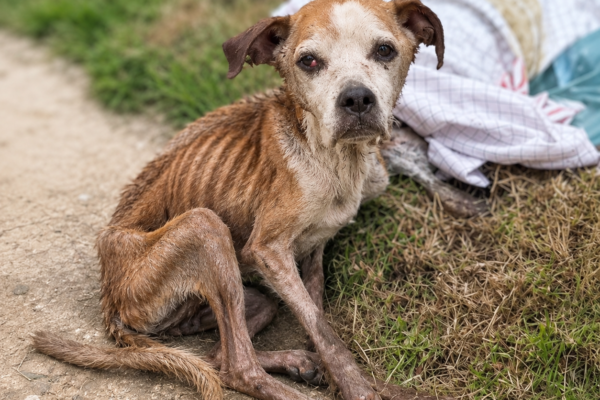
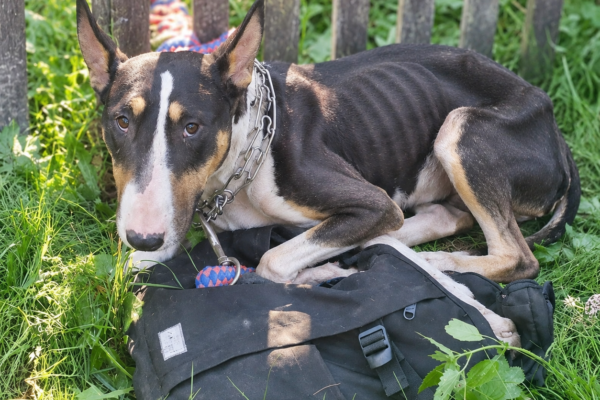
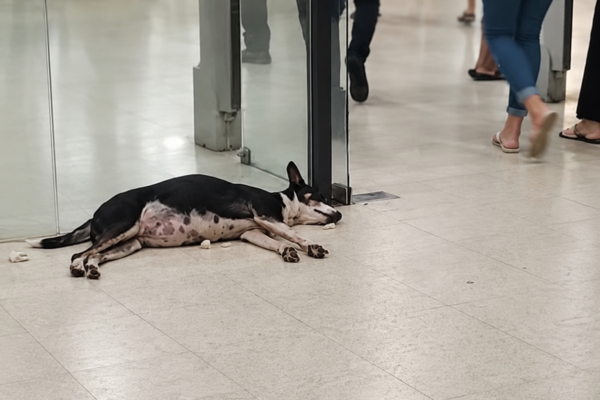
When the neighbors opened the door, the old dog was inside panting for help, so thin that every rib stood out beneath his skin.
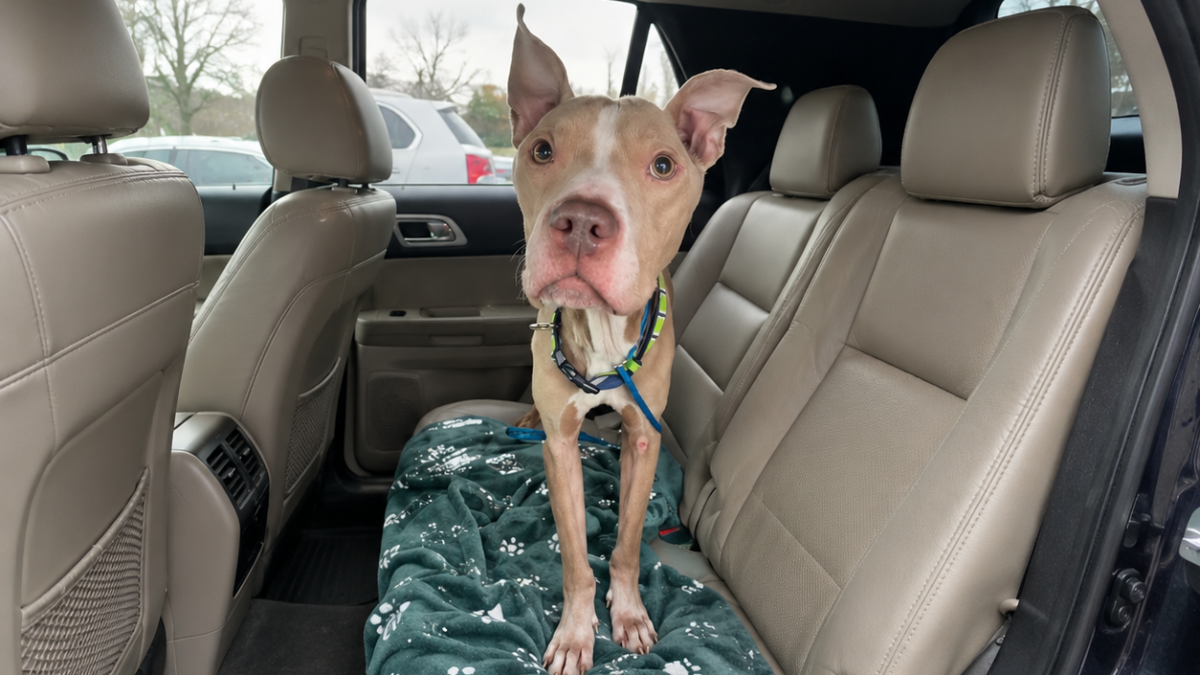
When the neighbors opened the door, the old dog was inside panting for help, so thin that every rib stood out beneath his skin.
His owners were away on a multi-day vacation, while he had been left behind with open wounds on his legs, almost no strength, and a loyalty so stubborn that even when we came to rescue him, he kept looking back at the house instead of coming willingly with us.
What happened over the next month made it painfully clear that Ken had not simply missed a few meals while someone was away.
He was reported at only about 25 pounds, and the weight figures we were initially given did not even make sense beside the condition of his body. The numbers mattered less than what we could see: an elderly dog who looked starved, exhausted, and deeply attached to the very place where he had been neglected.
We tried calling the owners.
No answer.
When I opened the car, Ken hesitated and kept looking back. Leaving that house seemed to hurt him almost as much as staying there had.
For the first three days in our home, he barely wanted anything except food and a way back out.
He slept.
He ate.
He watched.
Everything around him felt unfamiliar.
So we stopped trying to force him into a new life and began moving his food bowl a little farther from his bed each day.
One small step became another.
Ken walked farther.
He drank outside.
He explored.
Then hurried back to his safe place.
After a week, that tiny act felt enormous.
After two weeks, he was walking daily, exploring confidently, and beginning to understand that this place was not temporary.
Then authorities finally reached his owners.
They claimed they had left enough food and water and suggested Ken must have eaten too much during the first few days.
But the condition of his body and the recently healed wounds on his legs raised far more serious questions.
By the end of one month, Ken had gained 30 pounds.
And the saddest dog who had looked back at an empty house was no longer waiting for anyone to return.
[END OF FACEBOOK CAPTION]
[FIRST COMMENT / FULL STORY CONTINUATION]
Have you ever seen a dog so thin that you stop thinking about numbers?
That was my first reaction when I saw Ken.
People often ask how much a severely underweight dog weighs.
They want a number because numbers make suffering measurable.
Twenty pounds.
Twenty-five.
Thirty.
But sometimes the body tells the story more clearly than a scale ever could.
Ken’s ribs were not hidden beneath muscle or a healthy layer of fat.
They stood out.
One after another.
His spine was visible.
His hips looked too sharp.
The shape of him made you want to look away and keep looking at the same time.
He was an older dog.
That mattered.
A young dog can sometimes bounce back from hardship with astonishing speed.
An elderly dog has less to spare.
Less muscle.
Less reserve.
More history in every joint.
When an old dog becomes that thin, the question is not only:
When did he last eat?
It is:
How long has his body been losing ground?
The neighbors were the ones who first realized something was seriously wrong.
They knew the people who lived in the house were away.
Traveling.
On vacation for several days.
At first, perhaps nothing seemed unusual about a quiet house.
People go away.
Lights stay off.
Cars disappear.
Curtains remain closed.
But then the neighbors heard and saw enough to become concerned.
Ken was inside.
Panting.
Calling for help in whatever way a dog can.
They opened the door.
And there he was.
Weak.
Thin.
Desperate.
The source described him as calling for help.
That is exactly how the scene felt.
Not because he could say what he needed.
Because every part of his condition made the need obvious.
He needed water.
Food.
Medical attention.
Someone.
The neighbors did not see a dog simply resting while his owners traveled.
They saw a dog whose body had already been pushed far beyond ordinary hunger.
His ribs stood out.
His strength was poor.
There were wounds on his legs.
Some open.
Others looked recent enough that healing was still part of the story.
And still, when people approached, Ken remained gentle.
That would become one of the things that stayed with me most.
He had every reason to be distressed.
Every reason to be frantic.
Every reason, perhaps, to react defensively when strangers entered the only home he knew.
He did not.
He was tired.
Sad.
But gentle.
When I heard about him, we tried to contact the owners.
Again.
And again.
Nothing useful came back.
No answer that solved the immediate problem.
No one arriving at the door.
The people who had left on vacation were somewhere else while Ken was still there.
I found myself thinking about the contrast.
Hotel room.
Clean sheets.
Meals.
Rest.
A trip.
Meanwhile, an elderly dog inside their home was hungry enough for strangers to intervene.
I had to stop myself from building too many scenes in my head.
I did not know where they were sleeping.
I did not know what they were eating.
I did not know exactly what they had told themselves before they left.
But I knew Ken’s condition.
That was enough.
The dog was suffering.
The owners were absent.
We could not reach them.
So Ken had to leave.
That sounds simple.
It was not.
You would think a dog in that condition would rush toward anyone offering escape.
Food.
Water.
A car ride somewhere safe.
But Ken did not understand the situation the way we did.
He did not look around the house and think:
I have been neglected here. I should go with these people.
Dogs do not make moral summaries of their lives.
Ken knew this place.
This doorway.
This smell.
This floor.
This was home.
Whatever had happened inside it, whatever had failed him there, it was still the center of his familiar world.
When we led him toward the car, he kept looking back.
That image is the part I remember most clearly.
An old dog.
Too thin.
Legs marked by wounds.
Being taken away from a place where he had been left hungry.
And still looking back.
Sad.
As if leaving were another loss.
I opened the car.
Ken hesitated.
He wanted the door open, but not necessarily because he understood the car would take him somewhere better.
He seemed caught between movement and return.
A dog can be physically rescued before he is emotionally ready to leave.
That was Ken.
I wanted to tell him:
You do not have to protect this place.
You do not have to wait here.
You do not have to keep believing someone will walk through that door and fix what happened.
But there was no way to explain.
So I kept the car open.
Let him take the moment.
Then we left.
Ken looked back one last time.
The house became smaller behind us.
I wondered if he thought we were only taking him away temporarily.
Perhaps he expected to return that evening.
Perhaps he expected his owners to appear.
I cannot know.
What I know is that the sadness on him did not disappear when the distance did.
We brought him to our place.
Safety had changed.
His mind had not caught up.
The first day was mostly food and sleep.
That became the pattern.
Eat.
Sleep.
Wake.
Look around.
Want to leave.
Ken was not interested in celebrating rescue.
He was exhausted.
His body had been living in shortage.
When a dog has been hungry for too long, food becomes the clearest language you can offer.
A full bowl says something immediate.
Not about love.
Not yet.
Just:
You can eat.
There will be more.
Ken responded to that.
Food made him feel better in a way almost nothing else did.
He ate with the focus of a dog whose body needed every bite.
Then he slept.
Sleep, too, seemed less like relaxation and more like recovery.
His body was tired.
His mind was tired.
The new place asked too much of him.
Different smells.
Different rooms.
Different sounds.
Different people.
Everything unfamiliar.
He was an old dog trying to understand a life that had changed without his permission.
By the third day, the pattern had become clear.
He was still sad.
Still oriented toward leaving.
If there was an open path, he noticed it.
If we approached a door, he became attentive.
The desire to return to the old house had not disappeared.
Three days with us were not enough to erase years of familiarity.
I did not blame him.
That is important.
It would have been easy to feel insulted.
We had food.
Safety.
Attention.
Why did he still want to go back?
But relationships do not work like that.
You cannot replace history with three good meals.
Ken did not owe us immediate attachment.
He had an old life.
Whatever its failures, it was known.
Our home was a strange new world.
Old dogs can struggle with abrupt changes.
A younger dog may race through a new room and investigate every corner.
Ken often withdrew.
He seemed to fold inward.
His safe place became his bed.
He spent most of his time eating and sleeping.
When we let him out to explore, he moved carefully.
Everything appeared unfamiliar.
A hallway.
A doorway.
A new water bowl.
Different footsteps.
Different voices.
A yard that did not smell like his.
I think people sometimes underestimate how much geography matters to dogs.
Home is not a concept built only from walls.
It is scent.
Routine.
Repeated paths.
Where the bowl appears.
Where morning light comes through.
Which door opens.
Where the human sits.
Ken had lost all of that in one day.
Even if the old environment had failed him, it was still an environment he understood.
Our place offered safety but not familiarity.
Not yet.
So we gave him time.
At first, we tried encouragement.
Come out.
Look.
Explore.
Nothing aggressive.
Nothing forceful.
But Ken preferred the bed.
Then we noticed something.
Food could persuade him farther than words could.
That gave us an idea.
We started moving the bowl.
Not far.
A little.
If Ken wanted to eat, he had to leave the bed by a small amount.
He did.
The next time, a little farther.
He hesitated.
Then followed.
No big celebration.
No cheering that would make the old dog wonder why everyone had suddenly become loud.
We simply let him eat.
Again.
Farther.
The bowl became a gentle reason to explore.
Not a trick.
An invitation.
Food already represented something good.
Now it could help connect good things to new places.
One day the bowl was farther out than usual.
Ken stood.
Looked.
Walked toward it.
A few steps.
Then more.
He ate.
Afterward, instead of immediately retreating, he looked around.
A small thing.
But with Ken, small things mattered.
Another day, he went outside.
The sunlight touched him.
He drank water.
Looked around the yard.
For a moment, I thought:
Here he is.
The dog who might live here.
He moved a little farther.
Maybe smelled something.
Maybe listened.
His posture was more open.
Then, almost as if he suddenly remembered he had left his safe place, he turned and hurried back toward the bed.
The moment lasted only a short time.
Still, I was thrilled.
A week earlier, Ken barely wanted to leave the place where he slept.
Now he had gone outside.
Drank.
Explored.
Then returned on his own.
That was progress.
Real progress.
Not because he had become confident.
Because he had become curious enough to tolerate uncertainty for a little while.
We celebrated privately.
Ken did not need our expectations hanging over him.
He needed the next ordinary day.
By then, we had begun calling him Ken.
The name came with a meaning we liked.
Warrior.
I did not choose it because I wanted to romanticize his suffering.
Being starved is not heroic.
Being neglected does not make pain noble.
But Ken had endured.
He remained gentle.
He had survived long enough for someone to open the door.
“Warrior” felt like recognition of that endurance.
Ken.
Simple.
Strong.
The name stayed.
Over the next days, his body and his behavior began changing together.
Food did its work.
Rest did its work.
Safety did its work.
His mental state improved enough that more of his personality came through.
At first, sadness had covered almost everything.
He was the old dog in the bed.
The dog looking toward exits.
The dog who seemed to want the old house more than anything we could offer.
Then other traits appeared.
Gentleness was the first.
Even hungry, Ken was not aggressive with us.
Even confused, he did not lash out.
That calmness was remarkable.
It also made me angry when I thought about what he had endured.
A dog this gentle had been left to deteriorate.
How?
Why?
Those questions kept returning.
But I tried not to let my anger become part of Ken’s environment.
He had enough emotional tension already.
Around him, we kept things calm.
Food.
Rest.
Short exploration.
Daily routine.
The first week became the foundation.
Then the second.
After about two weeks, I looked at Ken and realized he was no longer the same dog who arrived.
Not cured of every sadness.
Not physically restored yet.
But confident.
Actually confident.
He moved through the house without treating every unfamiliar corner like a threat.
He went outside willingly.
He had begun treating the yard as part of his world.
Daily walks became a habit.
That mattered enormously.
At first, even leaving the sleeping place had required motivation.
Now Ken expected movement.
The leash meant something.
The door opened and he went.
Walking served more than exercise.
It gave him a map.
This neighborhood.
This path.
These smells.
This return.
Every walk ended back at the same safe place.
That repetition taught something important.
You leave.
You come back.
The new home does not disappear while you are outside.
Ken learned the rhythm.
His old house had been the place he wanted to return to.
Slowly, our place became the return point.
That shift was not announced.
There was no one morning where Ken woke and clearly decided:
This is home now.
Home formed through routine.
The bed stayed.
The bowl appeared.
The same people were there.
The walk returned to the same door.
Two weeks of repetition made a difference.
Ken became an important part of our household.
I say that carefully because he did not have to “earn” his place through improvement.
He belonged from the day he arrived.
But emotionally, by two weeks, the relationship felt mutual in a way it had not at first.
He noticed us.
Followed.
Participated.
His personality became easier to see.
He had preferences.
Patterns.
A gentleness that made people soften around him.
And his body was beginning to change visibly.
He gained weight.
Fifteen pounds.
That number shocked me.
When a severely underweight dog begins gaining, the change can transform everything.
The sharpness of the ribs softens.
The hips look less skeletal.
The neck fills out.
The face changes.
Energy improves.
Ken looked more like himself.
Or perhaps more like the dog he might have been if his body had been supported properly all along.
Still, he was not finished.
The source’s weight figures were strange from the beginning.
We had been told he weighed around twenty-five pounds, while another stated “expected” figure had been given as twenty-two to twenty-four pounds, which clearly did not match the reality in front of us or the later target weight.
I stopped trying to make the early number tell the whole story.
His body was the clearer record.
Ken needed far more weight.
Even after gaining fifteen pounds, we still believed another twenty pounds would make him stronger.
Not overweight.
Strong.
Muscle.
Reserve.
Health.
The goal was not simply a bigger number on the scale.
It was a body no longer shaped by deprivation.
Ken kept eating.
We kept watching.
We did not force huge amounts all at once.
Recovery from severe underfeeding needs care.
But the source does not give a detailed veterinary feeding protocol, so I will not invent one.
What matters is that food became consistent and his weight increased.
By then, Ken’s daily walks were established.
He did not need to be lured out with the bowl.
That phase had done its job.
Now he walked because walking belonged to his day.
I loved seeing him outside.
The first time he went out, he seemed ready to retreat after seconds.
Now there was confidence.
He looked around.
Moved with purpose.
The world no longer seemed impossibly strange.
That was the mental recovery.
Not a dramatic personality swap.
Adaptation.
Ken had begun adjusting to the place he would eventually treat as permanent.
I remember thinking:
Soon, he is going to call this home.
Not literally, of course.
But behaviorally.
He would stop orienting himself toward the old place.
The new routine would become his center.
That transition was already happening.
Then the authorities reached the owners.
Until that point, we had tried and failed to contact them ourselves.
Now there would finally be an explanation.
Or at least a chance for one.
They had been away for several days.
A trip.
Vacation.
They told authorities they believed they had left enough food and water.
That was their position.
Then came the sentence that made everyone in our side of the story stare at each other in disbelief.
“Maybe he ate too much in the first few days.”
That was their explanation.
Maybe Ken had consumed the food quickly.
Maybe that was why there was nothing later.
I tried to process it.
This was not a young, healthy dog who had missed one meal.
Ken had been found so thin every rib showed.
He had open wounds on his legs.
There were also scars that looked recently healed.
His condition did not resemble a simple problem beginning during one short vacation.
That was our concern.
The neglect appeared older.
Longer.
The authorities shared that concern.
The owners would have to explain.
How long had Ken been underweight before the trip?
Why did an elderly dog look so emaciated?
Why were there wounds?
What was the history behind the recent scars?
How much food and water had actually been left?
Was anyone supposed to check on him?
These were questions.
Important ones.
We did not have immediate answers.
The source is clear that neglect was considered to have existed for some time.
Ken’s body supported that concern.
Still, I did not invent a specific duration.
Weeks.
Months.
We do not know exactly.
The condition was enough.
Authorities told them they would not have the right to take Ken back.
That changed everything.
Until then, somewhere in the back of my mind, there had been one fear I did not like naming.
What if the owners returned and asked for him?
Ken was beginning to settle.
Beginning to trust.
Beginning to gain weight.
What if someone took him back to the same life?
The authorities’ decision removed that uncertainty.
Ken would not be returned.
The old house was no longer his future.
That gave us permission to stop treating our care as temporary.
He was home.
Not “for now.”
Home.
Ken seemed to arrive at the same conclusion behaviorally before anyone could explain it.
He loved me.
I do not mean that as a sentimental guess based on one look.
His trust became visible.
He sought me.
Relaxed with me.
Allowed routine.
His life oriented toward our home.
The dog who had once looked back at the old house now looked for us.
That was the change.
Trust.
A loyal dog deserves someone worthy of that loyalty.
Ken’s old situation had failed him.
We wanted the new one to be different.
His gentleness melted everyone.
People who met him expected perhaps a dog made difficult by hunger and neglect.
Instead, they found calm.
Kindness.
An older boy who seemed to absorb affection quietly.
That made his story spread through our own small circle emotionally.
Not fame.
Not public attention.
Just people seeing him and caring.
Ken had survived without becoming hard.
That moved everyone.
Within one month, his physical transformation became extraordinary.
Thirty pounds gained.
Thirty.
When I compared the dog in front of me with the dog the neighbors had found panting inside that house, it almost seemed impossible.
His body had filled out.
The ribs no longer defined his shape.
He looked stronger.
More muscular.
Healthier color returned to him.
The source describes him as looking pinker, which I understood as healthier skin and appearance rather than the gray, depleted look of severe underweight.
His muscles became visible in the right way.
Not bone.
Strength.
The old dog was still old.
Weight gain did not make him young.
But proper care allowed age to look like age instead of starvation.
That distinction mattered.
People sometimes see an extremely thin old dog and assume frailty is inevitable.
Ken showed how much of what we had first seen was not simply age.
It was deprivation.
Feed him.
Rest him.
Care for wounds.
Walk him.
Suddenly, the “old dog” looked like an older dog who still had plenty of life.
That was the whole point.
He deserved the chance to be old comfortably.
Not old and starving.
Summer came to feel like something endless around him.
That is the emotional language of the source.
Ken enjoyed the warm days with us.
Walks.
Outside time.
A body now strong enough to enjoy movement.
People who saw him admired how beautiful he had become.
Again, I do not need to turn that into public fame.
It was simple.
Someone sees Ken.
Notices his strong body.
Kind expression.
Says something good.
For a dog who had once been overlooked inside a closed house, being noticed with affection felt meaningful.
Love had given him a second chance.
I use that phrase carefully.
Love did not replace food.
Food mattered.
Love did not replace medical care for the wounds.
Care mattered.
Love did not make authorities investigate.
People did.
But love was the reason those practical things continued every day.
Second chances are built from actions.
Ken’s was.
The authorities continued reviewing what had happened.
By then, they had spoken with the owners.
Looked at the dog’s condition.
Considered the timing.
Eventually, they reached a conclusion about the neglect itself.
They believed it had been intentional.
That is stronger than simple carelessness.
I remember how uncomfortable that conclusion felt.
Because intentional neglect raises a different question.
Why?
And there, certainty stopped again.
Some people speculated the owners simply did not want Ken anymore.
Maybe they hoped he would disappear.
Maybe leaving insufficient care during the trip was part of that.
Those were theories.
Not official conclusions.
The source is explicit about that distinction.
Authorities did not formally conclude that the owners wanted the dog to vanish.
We did not have proof of that motive.
So I did not accept speculation as fact.
What we had was enough.
Authorities believed the neglect was deliberate.
Ken was in terrible condition.
He had been left alone.
That was established in the case narrative.
The specific intention behind it remained uncertain.
The wounds on his legs created another unresolved question.
Some scars had healed only recently.
Where did they come from?
The owners denied causing them.
We had no proof that they had.
That is important.
Anger makes it easy to connect every injury to the person you already distrust.
Evidence matters.
Ken could not tell us.
The scars existed.
The owners denied responsibility.
No proof identified the cause.
So that question stayed open.
I hated that.
Part of me wanted a complete explanation.
Every scar matched to an event.
Every event matched to a person.
Every person held responsible.
Real life rarely gives that kind of neat file.
Instead, we had fragments.
Neglect.
Vacation.
Insufficient condition.
Wounds.
Denials.
Authority findings.
Unproven theories.
We could have spent months emotionally circling the same missing answers.
Eventually, we chose not to.
We put it behind us.
Not the responsibility.
Not the lessons.
The obsession.
There is a difference.
Ken did not need us building his new home around anger at his old one.
He needed joy.
So we moved forward.
That decision was easier because Ken had already moved forward behaviorally.
He did not spend his days at the door trying to return anymore.
Daily walks.
Meals.
Rest.
Attention.
Home.
He had chosen the present in the way dogs do.
By participating in it.
We followed his example.
The dog who had been found panting and asking for help became the dog who went out every day because walking was part of his routine.
The dog who seemed emotionally collapsed became the dog whose personality was clear.
The dog who looked backward became the dog whose life pointed forward.
That is why I named the chapter new.
Not because the old life disappeared.
Because it stopped being the only context.
Ken officially entered a new chapter.
That phrase sounds dramatic.
The actual life was wonderfully ordinary.
Wake up.
Eat.
Walk.
Rest.
Look around.
Stay near me.
Another meal.
Another day.
That ordinary rhythm is what neglected animals often need most.
Predictability.
No surprise hunger.
No locked house without enough care.
No wondering whether anyone is coming.
Ken knew the bowl would return.
The walk would return.
I would return.
That was enough.
His presence changed my life too.
The source says having him beside me made life more meaningful.
That is true to the relationship.
Before Ken, my days did not have his routine.
Afterward, his needs became part of my time.
But it was not only responsibility.
There was companionship.
His gentleness.
His trust.
The quiet satisfaction of watching him recover.
Meaning often comes from being needed by someone you love.
Ken gave me that.
I did not need to turn it into a dramatic personal rescue narrative.
My life was not described as broken before him.
He simply added something.
Purpose.
Connection.
The feeling that another living creature’s good day partly depended on me.
That matters.
Sometimes he would look at me with an expression so soft that I thought about the first day.
The backward glance.
I wondered what he would do if placed near the old house now.
Then I stopped.
He did not need that test.
Healing is not proven by returning someone to the place that hurt them.
Ken’s present behavior was enough.
He belonged here.
We did not need to reopen the question.
That discipline mattered.
Stories often want a final confrontation with the past.
A dog walks past the old owner.
Doesn’t look.
Chooses rescuer.
That makes a satisfying dramatic scene.
It did not happen here.
We do not invent it.
The real ending is quieter.
Ken stayed.
That is enough.
When I think of his loyalty, I remember how calm he remained even while hungry.
How gentle.
How he apparently waited for his owners to return rather than becoming destructive or aggressive.
Again, I do not want to romanticize starvation.
He should never have had to prove loyalty through suffering.
But his behavior was remarkable.
The source says no person could remain calm in such a situation.
Dogs are different.
Ken endured.
He waited.
Perhaps he trusted the old routine so deeply that he believed someone would return and everything would resume.
That is one interpretation.
Whatever the exact internal reason, he did not turn his fear outward.
He remained calm.
That made the neglect harder to accept.
A faithful old dog waited.
The humans did not meet that loyalty with the same care.
We wanted to.
That became our answer.
Not revenge.
Reciprocity.
Ken gives trust.
We give care.
Simple.
I began noticing how differently he slept once he settled fully.
The source does not give exact sleeping positions, so I will not invent them.
But the overall change was clear.
At first, most of his day was eating and sleeping because he was depleted and emotionally withdrawn.
Later, sleep became one part of an active routine.
That difference matters.
Exhaustion sleep and comfortable rest can look similar from across a room.
Context tells you more.
Ken now walked.
Explored.
Interacted.
Then slept.
That is normal.
Before, he seemed to retreat from the world.
Now he returned to it between rests.
That was health.
Physical and emotional.
The first three days had frightened me because sadness seemed so deep.
By two weeks, confidence.
By one month, transformation.
Those time markers help because they show how quickly a safe routine can begin changing a dog while still respecting that adaptation takes time.
Three days is not enough to judge.
A week showed tiny progress.
Two weeks showed confidence.
A month showed a different body.
That sequence feels honest.
No overnight miracle.
No instant “he knew he was safe.”
Slow.
Observable.
That is the right way to tell it.
The bowl moving farther from the bed became one of my favorite memories because it was such a simple intervention.
No expensive equipment.
No dramatic training.
Just using something Ken already valued to invite one more step.
Food there.
Walk there.
Good.
Next time farther.
Then outside.
Then water.
Then back.
The first time he rushed back to bed after briefly exploring, I could have called it failure.
Instead, I learned to call it enough.
He went out.
That is the success.
He came back because the bed still felt safest.
Fine.
Tomorrow we try again.
That attitude changed everything.
Progress should be measured against yesterday, not against an imaginary fully healed dog.
Ken taught me that.
If I had demanded that he act “happy” immediately, I would have misunderstood him.
Sadness after displacement is not disobedience.
Fear is not ingratitude.
Retreat is not rejection.
An older dog can need time.
We gave it.
That is why his later confidence felt real.
Not performed.
Not pressured.
He had built it.
I think about the neighbors too.
Without them opening the door, what happens?
I do not know.
I will not invent tragedy.
What I know is that they noticed.
They cared enough to intervene.
That is the first act in the chain.
Sometimes animal rescue begins because someone pays attention to something that could easily be dismissed.
A quiet house.
A panting dog.
A sound.
A condition that does not look right.
They opened the door.
That mattered.
Ken’s second chance started there.
Then we tried to reach owners.
Then we took him.
Then authorities became involved.
Many steps.
No single heroic moment.
That is how real rescue often works.
A chain of people doing the next necessary thing.
Ken ended up safe because the chain did not break.
I am grateful.
When people later admired his appearance, I wished they could have seen the beginning—not because I wanted to shock them, but because the transformation showed what sustained care can do.
Thirty pounds.
Muscle.
Confidence.
A daily walking habit.
Those outcomes were not luck alone.
They were the result of consistent food, time, and safety.
But I also reminded myself that not every neglected dog recovers this fast or fully.
Ken’s story is his.
We do not turn it into a promise.
We celebrate it.
That is enough.
The recently healed scars on his legs never gave us their complete story.
I stopped staring at them eventually.
At first, every mark felt like evidence demanding explanation.
Later, they became simply part of his body.
That change was healthy for me.
Ken did not need me looking at him only as a victim.
He needed me to see the dog in front of me.
Strong.
Gentle.
Older.
Loved.
Scars included.
The past remained visible without controlling my view.
That is one of the deepest forms of moving forward.
You do not erase.
You stop allowing one part to dominate.
Ken’s body became more than ribs and scars.
It became muscle.
Warmth.
Movement.
A dog walking beside me.
That was a better visual.
The authorities’ conclusion about intentional neglect remained important because it validated what Ken’s body had suggested.
This was not simply an unfortunate miscalculation during a short trip.
At least, that was their conclusion.
Still, I kept the difference between official conclusion and rumor clear.
People said maybe the owners did not want him.
Maybe they hoped he would disappear.
No official conclusion supported that specific motive.
So I did not repeat it as truth.
Likewise the scars.
Questions.
No proof.
We chose not to build our life around accusations we could not substantiate.
Ken deserved a home, not a permanent courtroom inside our conversations.
That became the reason to close the file emotionally.
Authorities would handle what they could.
We would handle Ken.
Different responsibilities.
The owners would have to explain themselves to authorities.
We did not need to become investigators beyond that.
There was relief in separating roles.
Rescuers can become consumed by the desire to punish.
I understand why.
You see a starving dog and anger feels like love’s twin.
But punishment does not feed Ken.
Anger does not add weight.
It does not teach him the new route home.
So we put energy where it could change his life.
That was the better use.
By one month, the result was visible.
Ken had gained thirty pounds.
The figure felt almost impossible.
Thirty pounds of recovery.
Again, weight alone is not everything.
But on a dog who arrived skeletal, it represented food actually becoming body.
Meals becoming tissue.
Rest becoming strength.
Care becoming visible.
He looked more muscular.
Healthier.
More alive.
His whole outline changed.
I sometimes compared photographs mentally.
The early Ken.
The month-later Ken.
If I had not been there, I might have wondered whether they were the same dog.
They were.
Same eyes.
Same gentle temperament.
Different condition.
That distinction matters because the real Ken was always inside the thin body.
Care did not create his worth.
It revealed what starvation had hidden.
I loved him at twenty-five-ish pounds.
I loved him after thirty gained.
His value stayed the same.
His comfort improved.
That is the goal.
Sometimes before-and-after stories accidentally imply the “after” animal is more deserving.
No.
The before animal deserved the care that produced after.
Ken is a good reminder.
He was worthy while skeletal.
That is why we acted.
The beautiful strong dog later was not a reward for becoming worthy.
He was the result of someone finally treating worth as real.
I think about the phrase “endless summer” from the source.
It captures the mood of his new life.
Not literally endless.
Seasons change.
But the warm stretch felt generous.
Ken outside.
Walks.
A body stronger every week.
People saying how beautiful he looked.
No urgent hunger.
No closed house.
For an old dog, that kind of calm season can feel like luxury.
I let the phrase remain emotional.
He enjoyed summer with me.
That is enough.
No need to invent beaches, trips, or adventures.
The ordinary days were beautiful.
He had already experienced enough instability.
Adventure was not the goal.
Home was.
The biggest change came when I realized Ken was no longer trying to leave.
At first, doors represented escape toward the old place.
Later, doors represented walks.
Then return.
That is a profound behavioral shift.
An open door no longer meant:
Maybe I can go home.
It meant:
We are going out together.
Then we come back here.
That is how a place becomes home.
Not through declarations.
Through return.
Ken returned.
Repeatedly.
Soon, he expected to.
The new house was not a temporary shelter in his mind anymore, at least behaviorally.
It had become center.
The source says he considered it his permanent home.
I saw why.
His trust was complete.
He loved me.
I loved him.
That made the authorities’ decision that he would not go back feel even more important.
Permanence matters after abandonment.
A dog can relax differently when the pattern stops changing.
Again, I cannot claim he understood legal status.
He understood routine.
Routine stayed.
That was enough.
I think about the first car ride.
Ken wanted the car door open yet looked back at everything sadly.
Maybe he believed leaving meant losing the last connection to his people.
Later, car rides—if they occurred—would have had different meaning, but the source does not describe them, so I do not invent.
We leave the first ride as a singular painful image.
The dog who did not know rescue was rescue.
That is powerful enough.
I learned not to expect gratitude from animals in crisis.
Ken did not thank us by jumping happily into the car.
Good.
He was honest.
Sad.
Attached.
Confused.
We respected that.
The relationship later became stronger because we did not force a sentimental beginning onto him.
He was allowed to mourn the old home even if we believed it had failed him.
That is important.
You do not heal attachment by insulting it.
Ken had loved or trusted those people.
That was part of him.
We did not need to say they were terrible in front of him.
We just needed to behave differently.
Food.
Care.
Presence.
Eventually, experience did the convincing.
That is more powerful than words.
I sometimes thought of the owners’ explanation again.
“Maybe he ate too much in the first few days.”
The sentence stayed irritating.
Because it placed responsibility subtly back on the dog.
As if Ken’s hunger itself caused the problem.
But even if a dog eats available food quickly, planning for an elderly animal during a multi-day trip requires more than leaving a pile and assuming.
That is my interpretation as a caregiver, not a legal conclusion beyond the source.
Authorities considered the neglect intentional later.
That made the explanation even harder to accept.
But I did not need to argue with them personally.
Their explanation belonged in the record.
Ken’s body had already answered more clearly.
He was severely underweight.
That did not happen because he was “too hungry” during one vacation alone, according to the concern raised in the source.
Longer neglect was suspected.
The wounds supported the picture of inadequate care.
That was enough.
The exact timeline remained uncertain.
I did not invent.
Accuracy matters even when anger wants certainty.
I think Ken taught me that too.
Stay with what is real.
He is hungry.
Feed.
He is wounded.
Treat.
He is sad.
Give time.
He is gaining.
Continue.
Those facts are actionable.
Speculation is not.
The rescue improved because we focused on actionable truths.
That is a useful lesson far beyond this story.
At first, I wanted to know why.
Later, I cared more about what next.
What next?
Breakfast.
What next?
A short walk.
What next?
Rest.
What next?
Another day.
That sequence built Ken’s life.
Why remained with authorities.
What next belonged to us.
We became good at what next.
Ken did too.
Perhaps that is how he moved forward emotionally.
Not by understanding the past, but by experiencing the next safe thing.
Again, my interpretation.
His behavior showed increasing confidence.
That is enough.
By the time he had gained thirty pounds, “sad dog on the bed” felt like an old description.
Still part of the story.
No longer current identity.
Ken was the warrior.
I smiled at the name more then.
Not because he fought.
Because he recovered.
There are different kinds of strength.
His was quiet.
Eat.
Sleep.
Try.
Walk.
Trust.
That is strength too.
He never needed to become loud or dramatic.
His gentleness remained.
Maybe that was the strongest thing about him.
Neglect had not made him harsh.
I respected that deeply.
The source says no one could remain calm in his situation.
Humans probably would not.
Ken did.
Dogs can endure in ways that make us uncomfortable.
We should not use their endurance as permission to neglect them.
The fact that he stayed calm does not reduce the seriousness.
It increases our responsibility to notice.
Quiet suffering is still suffering.
That is one of the lessons I carry.
A dog does not need to destroy furniture, bark endlessly, or become aggressive before his needs count.
Ken waited.
That was enough evidence of loyalty, not evidence he was okay.
The neighbors saw beyond the calm.
Good.
They acted.
I am grateful.
The wounds on his legs improved with care.
The source does not provide detailed medical treatment, so I keep it simple.
They healed.
Some scars remained.
Again, not every mark needs a story.
We know they existed.
No proof of cause.
Fine.
As Ken gained weight, the legs looked less fragile too.
He moved more comfortably.
Daily walking strengthened the normal rhythm of his body.
I liked seeing his gait become part of routine rather than a sign of weakness.
The old dog was using his life.
That is the phrase I keep returning to.
Using his life.
Not merely surviving.
He deserved that.
When people praised him, I sometimes wanted to tell them the whole story immediately.
Look at him now.
You should have seen him.
Then I realized Ken did not need every stranger to know.
He was allowed to be simply beautiful.
Not every compliment had to become a rescue lecture.
That was another sign of recovery.
His past did not need to enter every room before him.
Sometimes someone could just say:
What a beautiful dog.
And I could say:
Thank you.
That was enough.
Dignity includes being more than your worst experience.
Ken deserved that.
I think about the authorities’ final conclusion only when necessary now.
Intentional neglect.
Serious words.
They belong in the factual history.
But they do not belong in every present moment.
Ken’s current life is joy.
We chose that deliberately.
The source says we moved forward with happiness and joy only.
Of course real life still has ordinary frustrations.
But emotionally, yes.
We stopped centering the old owners.
Stopped discussing theories about whether they wanted Ken gone.
Stopped asking who caused every scar.
Those questions had reached their limit.
Ken’s new chapter needed space.
We gave it.
He did not spend the summer listening to us argue about the past.
He spent it living.
That is the better use of time.
Sometimes justice is keeping an animal safe from returning.
Authorities ensured that.
Then care becomes the continuation of justice.
Every good day says:
What happened before does not get to repeat.
That is powerful.
No need for revenge.
Prevention is enough.
Ken will not be returned.
Good.
That fact gave me peace.
I think it gave the household stability too.
No uncertainty about whether we were temporary.
We could love without preparing for separation.
Again, Ken probably did not understand the legal side.
But humans do.
Our emotional security affects the environment.
Once I knew he was staying, I stopped holding a small protective distance.
This is Ken’s home.
Full stop.
That certainty changes how you plan.
Food.
Space.
Routine.
Future vet care.
Everything.
Permanence became practical.
That is love too.
Not only feeling.
Planning for the animal to remain.
Ken was now part of every ordinary decision.
That is family.
I like that the source calls him an important part of the house rather than simply “a rescued dog.”
Yes.
He became part of structure.
Morning.
Walk.
Meals.
Presence.
His absence would have been noticeable.
That is belonging.
The old house had left him behind physically.
Our home built itself around his presence.
Opposite experiences.
That contrast is enough.
I do not need to invent a grand adoption ceremony.
No paperwork scene.
No birthday.
No social media post.
Home formed through routine.
That is honest.
I remember looking at him one month after rescue and thinking how misleading first impressions can be.
The first Ken looked almost like a dog already disappearing.
So thin.
So sad.
So tired.
If someone had only seen that photograph, they might have thought age had nearly finished him.
One month of proper care proved otherwise.
There was life.
Muscle.
Confidence.
The body had been deprived, not finished.
This distinction is important with older animals.
Never confuse neglect with natural aging.
Ken was old.
But starvation had exaggerated every sign of age.
Once nourished, the older dog emerged from the neglected one.
Still slower than a young dog perhaps.
Still older.
But strong.
That is beautiful.
He deserved to age as himself.
Not as a body stripped down by lack of care.
I think that is the real second chance.
Not becoming young.
Becoming properly old.
With food.
Love.
Walks.
Safety.
That is enough.
The phrase “warrior” then felt even more fitting.
Not because he defeated age.
He did not need to.
Because he reached a place where age could be peaceful.
The battle was never against being old.
It was against what had been done to him.
And now, finally, he did not have to fight much at all.
He could rest.
That is the best reward for a warrior.
Peace.
The source ends with a farewell to viewers.
I do not need that.
Ken’s story can end on him.
No CTA.
No “see you next time.”
The full story belongs to his life.
So I ask myself:
What is the most faithful final image?
Not the authorities.
Not the owners.
Not the scars.
Ken.
Walking.
Healthy.
Thirty pounds heavier.
Gentle.
At home.
Maybe looking at me.
Maybe simply existing beside me.
The source says his presence gives my life more meaning.
That is the right emotional note.
We move forward together.
No dramatic promise of forever.
Just present belonging.
I think back one last time to the house where neighbors found him.
The door opened.
Ken panting.
Every rib visible.
He had been waiting.
Perhaps for his owners.
Perhaps for anyone.
Then he left reluctantly, looking back.
That backward glance once felt like the most heartbreaking part.
Now it carries a different meaning for me.
It shows how loyal he was.
How deeply attached.
How hard it was to leave even a place that had failed him.
That loyalty deserved a better destination.
He found one.
The first three days, he still wanted to leave us.
That is okay.
By one week, he explored.
By two weeks, confident.
By one month, transformed.
That is the arc.
Not instant.
Not magical.
Built.
Food bowl by food bowl.
Walk by walk.
Day by day.
That is how home formed.
The old home was where Ken had been left.
The new home became where he was expected.
That difference is everything.
Expectation changes a place.
At the old house, nobody had been there when he needed them.
At ours, someone noticed if he did not eat.
Someone knew his walk time.
Someone watched his weight.
Someone cared about wounds.
Someone celebrated when confidence appeared.
Someone stayed.
That is home.
Ken did not need to understand the word.
He lived the meaning.
I wish every abandoned dog could have that transition.
But this is Ken’s story.
We do not generalize into promises.
We stay with him.
He is here.
He is loved.
He is safe.
The authorities handled what they could.
The owners cannot take him back.
The questions about motive and scars remain partly unanswered.
Fine.
We accept.
Ken’s life no longer waits for answers.
Neither does mine.
We have better things to do.
Walk.
Eat.
Rest.
Enjoy summer.
Live.
When I look at him now, the ribs are not the first thing I see.
They are no longer visible the way they were.
I see strength.
The recent scars are not the first thing I see.
I see an older dog moving through a life that finally supports him.
The sadness is not the first thing I see.
I see trust.
That change in what I notice tells me how far we have come.
At the beginning, suffering dominated the visual.
Now personality does.
That is success.
Ken is gentle.
Loyal.
Brave in the quiet sense.
He does not know authorities reached conclusions.
He does not know people debated the owners’ motives.
He does not know anyone said the neglect was intentional.
He does not need to.
Those are human responsibilities.
Ken’s responsibility is simply to live the life he has now.
And he does.
Beautifully.
He walks every day.
He eats.
He rests.
He stays close.
He trusts.
Sometimes that is all I need to see to remember why we chose to put the past behind us.
A good life is not built by constantly reopening the worst chapter.
You acknowledge it.
Protect against repetition.
Then allow joy.
We allowed joy.
Ken accepted it.
That is the ending.
No revenge.
No dramatic return to the old house.
No confrontation with the owners.
No invented apology.
No final punishment scene.
Just a dog who once looked back and now no longer needs to.
Because the place in front of him finally became better than the place behind him.
He has entered a new chapter.
Officially.
A chapter where food does not disappear for days.
Where an open door means a walk, not abandonment.
Where scars are history, not prediction.
Where an old dog is allowed to be old without being discarded.
Where gentleness is met with gentleness.
Where loyalty finally receives loyalty in return.
And where home is no longer the place Ken keeps trying to get back to.
Home is the place he already is.