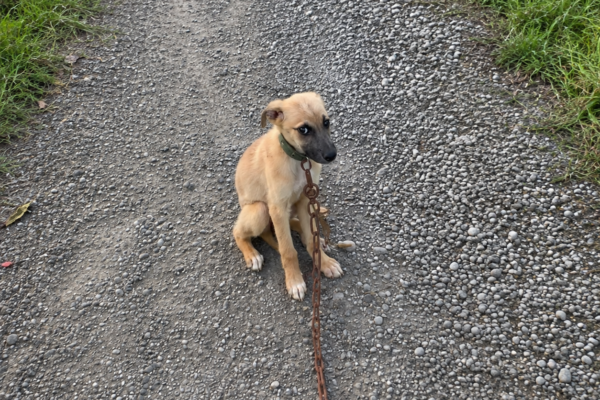
They Saw a Deformed Stray Dog and Looked Away—Then One Woman Saw the Life He Was Still Fighting to Live.h
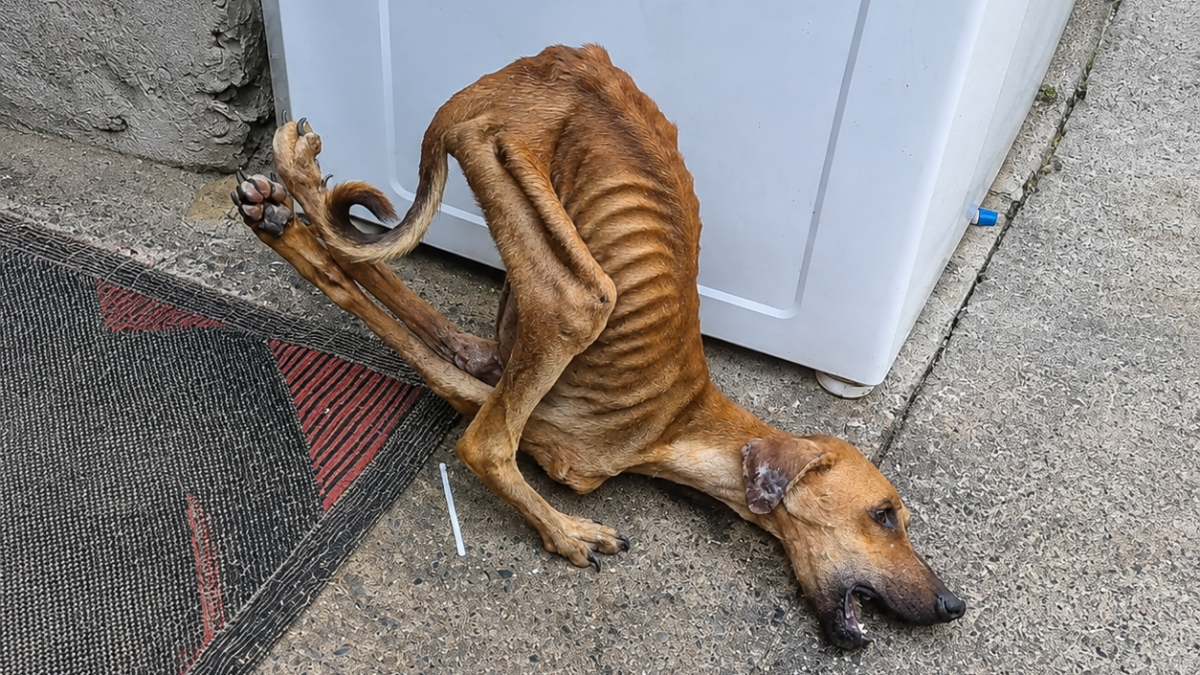
For most dogs, walking is so natural that no one thinks about it.
Four paws meet the ground.
The body shifts forward.
One step becomes another.
A dog follows a smell, turns toward a sound, trots toward someone familiar, or suddenly breaks into a run simply because the world feels exciting.
There is no decision in it.
No careful calculation.
No visible struggle.
For Kangu, movement had never been that simple.
His front legs were severely deformed, and the difference shaped almost everything about the way his small body moved through the world.
Every attempt to go forward required effort.
Every ordinary distance asked more of him than it asked of other dogs.
What another dog could cross without thinking, Kangu had to negotiate with a body that did not cooperate in the usual way.
He had no choice about that body.
He had been born into it.
He had learned to live inside it.
And yet the world around him had not always responded with kindness.
People saw the unusual angle of his legs.
They saw the awkward way he moved.
They saw what was different before they saw anything else.
The source of his story describes the looks he received as contemptuous and disgusted.
For a dog, those words are human interpretations.
Kangu could not have understood every thought behind every face that turned toward him.
He could not have known why one person stared and another looked away.
But animals understand tone.
They understand distance.
They understand when hands reach toward them and when bodies move away.
They understand whether a voice is soft or sharp.
They understand, in their own way, whether they are being welcomed.
Kangu had spent too much of his life without that welcome.
His difference was visible.
His hunger was visible too.
By the time Thaislane found him, he was terribly hungry.
His body was weak.
The lack of food had taken its toll slowly, the way hunger often does.
Strength does not disappear all at once.
It fades.
Energy becomes harder to find.
The body begins saving what little it has.
Movement, already difficult for Kangu because of his legs, becomes even more exhausting.
A healthy dog with ordinary limbs can struggle when deprived of food.
For Kangu, whose body already demanded extra effort from every step, hunger made that effort heavier.
He was not simply a dog walking differently.
He was a hungry stray trying to keep moving with a body that had never made movement easy.
That was the dog Thaislane saw.
She could have noticed only the deformation.
She could have seen the strange position of his front legs and stopped there.
Others had looked at him and apparently allowed that difference to become the whole story.
Thaislane did something else.
She came closer.
That decision changed everything.
There is an enormous difference between looking at an animal and truly seeing him.
Looking notices shape.
Seeing notices need.
Looking sees the front legs.
Seeing sees the hunger.
Looking sees awkward movement.
Seeing sees the effort behind it.
Looking asks, “What is wrong with this dog?”
Seeing asks, “What does this dog need?”
Thaislane saw what Kangu needed.
Food.
Care.
Medical attention.
Gentleness.
And perhaps most importantly, someone who would not recoil from him.
She carried him.
For a dog who had struggled so much to move on his own, being lifted from the ground must have been a strange sensation.
Suddenly, the burden of movement was no longer entirely his.
Someone else’s arms were holding his weight.
Someone else was deciding that he did not have to fight his way forward by himself.
Thaislane brought him to her car.
The details of what Kangu understood in that moment can never be known.
He did not know her plans.
He did not know where the car would take him.
He could not know that the person carrying him intended to change his life.
What he could experience was immediate.
He was being held.
He was not being pushed away.
He was not being left where she found him.
The unfamiliar person beside him was staying close.
Then the car moved.
Kangu was taken to a clinic.
For Thaislane, the destination had a purpose.
She wanted him cared for.
She wanted his wounds treated.
She wanted to begin repairing what could be repaired.
Kangu could not understand the purpose in advance.
A clinic would have been another unfamiliar environment.
New smells.
New surfaces.
Different sounds.
Strange hands.
Perhaps the instinct to be cautious.
Perhaps the exhaustion that comes when the body is too weak to resist every unfamiliar thing.
But Thaislane stayed close.
That mattered.
She treated his wounds.
She held him.
She gave him attention.
If Kangu had spent much of his life being regarded as strange, this new kind of attention must have felt entirely different.
There is attention that isolates.
A stare that makes difference feel larger.
And there is attention that comforts.
A hand that stays.
A voice that softens.
A person who notices pain and tries to relieve it.
Kangu was receiving the second kind now.
The source describes his reaction as though all of this love and attention felt like a beautiful, endless dream.
That image makes sense.
For a dog who had known hunger and rejection, care could have seemed almost impossible to trust at first.
The body remembers hardship even when circumstances suddenly change.
A dog can be placed in safety and still remain cautious.
Food can be set down and the animal may still hesitate.
A gentle hand can approach and the animal may still tense.
Not because kindness has failed, but because trust takes time to catch up with reality.
Kangu’s reality was changing faster than he could have expected.
He had been hungry.
Now someone was preparing to feed him.
He had been wounded.
Now someone was treating those wounds.
He had struggled alone.
Now someone was holding him close.
His front legs had made him different in the eyes of the world.
Thaislane seemed determined to make sure they did not make him less loved.
That distinction became the foundation of everything that followed.
She did not need Kangu to look like other dogs before she loved him.
She did not require his body to become ordinary.
She did not wait for him to move more smoothly.
She loved the dog who was already there.
The hungry one.
The weak one.
The dog with deformed front legs.
The dog who had every reason to be cautious about sudden kindness.
She took that dog in and began caring for him.
Food was one of the first necessities.
Kangu was badly in need of it.
Thaislane began giving him nutritious, delicious food.
It was not a dramatic part of the rescue in the way a medical emergency might have been, but for Kangu, it was essential.
Food rebuilt what hunger had been taking from him.
Meal by meal, the body had a chance to recover.
Weakness could begin easing.
The energy required for movement could slowly return.
The difference was not instant.
Healing rarely is.
One meal cannot erase prolonged hunger.
One night of safety cannot erase every memory of uncertainty.
One gentle touch cannot create complete trust.
But repetition changes things.
Another meal.
Another quiet moment.
Another time Thaislane reached for him without hurting him.
Another day in which he was not abandoned.
Another day in which his body was cared for.
Kangu did not need to understand the concept of a second chance.
He only needed to live through it.
And that was what he began doing.
His wounds started healing gradually.
The word “gradually” matters.
His story was not a magical transformation in which everything difficult vanished overnight.
His front legs remained deformed.
His body did not suddenly become like every other dog’s.
The point was never to erase what made Kangu different.
The point was to make sure difference no longer meant suffering alone.
Day after day, his wounds improved.
Day after day, food strengthened him.
Day after day, the world around him became a little more dependable.
Thaislane remained there.
The repetition of her presence began to matter as much as the food.
A dog learns people through patterns.
Who comes near?
Who leaves?
Who provides comfort?
Who makes the frightening things less frightening?
Who appears when the dog is vulnerable?
Kangu had an answer now.
Thaislane.
She was there when he was weak.
She was there while his wounds were treated.
She was there while he learned what regular care felt like.
She was there while his body regained strength.
Somewhere inside that ordinary repetition, Kangu began changing emotionally too.
The source says that he began to regain the smile and joy he had lacked since birth.
No one can know exactly what a dog thinks about his own life.
But joy in dogs has a language all its own.
A brighter expression.
More willingness to engage.
Curiosity.
Excitement.
The body loosening rather than remaining tense.
A dog beginning to seek out the person who has made safety possible.
Kangu’s behavior showed that something inside him was opening.
The weak, hungry stray was becoming a dog who could enjoy things.
That may sound simple until we remember where he had started.
Joy requires energy.
It also requires enough security to notice something beyond survival.
A hungry animal thinks first about hunger.
An injured animal is forced to pay attention to discomfort.
An animal who feels unsafe watches the world closely because danger might return.
Thaislane was slowly removing those burdens.
Food addressed the hunger.
Treatment addressed the wounds.
Her presence addressed the loneliness.
Her love gave Kangu room for something he had been missing.
Fun.
Affection.
Comfort.
Pleasure.
The ordinary happiness of being a dog.
She treated him with extraordinary care.
The source calls it the most beautiful and best care in the world.
To Kangu, that may well have been how it felt.
The person who had found him at his weakest was not simply helping him recover and then stepping away.
She was becoming his family.
Kangu became her beloved, pampered son.
That description captures the emotional shift perfectly.
At first, Thaislane had been his rescuer.
Then she became his caregiver.
Eventually, she became something closer to a mother in the language of the story.
He was not just an animal she had helped.
He was hers.
And she was his.
That kind of belonging reveals itself in small things.
Thaislane took Kangu on walks.
For another dog, a walk might have been routine.
For Kangu, movement itself was complicated.
His deformed front legs meant that walking did not become easy simply because he was healthier.
The hunger could improve.
The wounds could heal.
His emotional state could brighten.
But the structure of his body remained.
So the walks carried a different meaning.
They were not about pretending Kangu had no limitations.
They were about refusing to let those limitations exclude him from experiencing the world.
He could go outside.
He could be with Thaislane.
He could encounter new smells.
He could feel fresh air.
He could be included.
The value was not in how far he went.
The value was in being given the chance to go.
Thaislane stayed with him.
That was enough to turn movement into companionship.
She also bought him clothes.
It is one of the lighter details in a story that began with hunger and physical struggle.
Kangu, once a stray dog who drew looks because his body seemed unusual, was now being dressed and pampered.
There is something almost beautifully defiant about that change.
The same dog whose appearance had once been treated as a reason for contempt was now being treated as someone worth fussing over.
Worth dressing.
Worth spoiling.
Worth taking pictures of in memory, perhaps, though the source does not tell us about pictures and there is no need to invent them.
The important fact is simpler.
Thaislane delighted in Kangu.
She did not merely tolerate him.
She enjoyed caring for him.
That distinction changes the emotional temperature of his entire life.
Kangu was not living with someone who saw him as a burden.
He was living with someone who wanted to give him things.
Clothes.
Walks.
Attention.
Time.
Even ice cream.
The ice cream is a small detail, but it says a lot.
There is no survival necessity in it.
Kangu did not need ice cream to recover from starvation.
He did not need it to heal wounds.
It was a treat.
Something given simply for pleasure.
That matters because it shows how far his life had traveled from pure survival.
At first, food had been medicine in the broadest sense.
Nutrition helped his weakened body recover.
Later, food could also become joy.
A special treat.
A moment shared with the person who loved him.
Kangu’s life had gained room for unnecessary happiness.
That is one of the clearest signs that rescue has become home.
Survival asks, “What do I need?”
Love sometimes asks, “What would make you happy?”
Thaislane seemed to ask Kangu that second question often.
She spent most of her time with him.
Again, the source does not give an exact schedule, and one is not necessary.
What matters is that her presence became a central part of his new life.
Kangu grew deeply attached to her.
He rarely wanted to leave her side.
That attachment did not appear from nowhere.
It was built from everything that came before.
The day she found him.
The car ride.
The clinic.
The treatment.
The food.
The gentle handling.
The repeated attention.
The walks.
The clothing.
The treats.
The hours spent together.
To Kangu, Thaislane was becoming associated with almost every good change in his world.
Safety had her presence.
Food came with her care.
Comfort came through her hands.
New experiences happened beside her.
It is little wonder that he wanted to remain close.
A dog who has lived without reliable care can become intensely connected to the person who finally provides it.
Kangu did not need a human explanation for loyalty.
He simply stayed.
When Thaislane moved, his attention followed.
When she was nearby, the world was familiar.
She had become his point of safety.
There is something especially tender about that because Kangu’s body had made independence difficult.
He physically struggled to move.
That might have made him seem vulnerable in the eyes of anyone who believed a dog’s value depended on physical ability.
Thaislane responded by building a life around what he could enjoy instead of constantly measuring what he could not do.
She did not make love conditional on mobility.
She did not wait for some future version of Kangu.
She loved the present one.
The dog who walked awkwardly.
The dog who needed help.
The dog whose legs were visibly different.
The dog who still wanted affection, treats, companionship, and fun.
For a long time, Kangu’s body had been the first thing people saw.
With Thaislane, his body became only one part of him.
There was also his attachment.
His personality.
His joy returning.
His desire to stay close.
The way he responded to being spoiled.
The happiness he could still experience.
That change in perspective may have been as important as any physical improvement.
Kangu did not need to become ordinary to become worthy.
He had always been worthy.
He simply needed someone to behave as though that truth mattered.
Thaislane did.
Still, his mobility remained limited.
This could not be solved by love alone.
Love could make Kangu happy.
It could make him safe.
It could give him food.
It could help wounds heal.
It could surround him with affection.
But affection could not straighten his front legs.
No amount of being spoiled could change the mechanics of his body.
Walking continued to demand effort.
Kangu could enjoy outings, but moving smoothly remained difficult.
Thaislane saw that too.
Love that pays attention eventually notices where help can make life easier.
She had already learned not to define him by his legs.
Now she looked for a way to support him because of them.
And eventually came the moment that would open another part of Kangu’s life.
He received his first wheelchair.
The source does not give technical details about the device, so there is no reason to invent them.
What matters is what the wheelchair changed.
Until then, Kangu’s front-leg deformity had shaped every attempt at movement.
His desire might have been greater than his body’s ability to cooperate.
He could want to follow Thaislane quickly.
He could want to move toward something interesting.
He could want to play.
Yet every forward motion carried the same physical limitation.
The wheelchair changed that relationship.
For the first time, Kangu had support that allowed him to move much more smoothly.
Think about what that meant from his perspective.
He had never known ordinary movement.
There was no “before” in which running had been easy and then later taken away.
Difficulty had always been part of his experience.
His body had taught him one way of moving from the beginning.
Effort.
Adjustment.
Compensation.
Slow progress.
Then suddenly, there was another possibility.
He could move with help.
Not because his body had become different.
Because someone had adapted the world around his body.
That distinction is beautiful.
Kangu did not have to change to deserve freedom.
The tool changed.
The support changed.
The possibilities changed.
Thaislane had spent so much time giving him what he needed emotionally.
Now she gave him something that addressed the physical challenge directly.
His first wheelchair.
A new way forward.
At first, the device itself must have been unfamiliar.
Anything attached around the body requires adjustment.
Kangu could not understand its purpose before experiencing it.
He could not look at the wheelchair and think, “This will help me run.”
He had to discover what it allowed.
That discovery is one of the happiest moments in the source.
Kangu could finally run smoothly.
He could finally have fun.
Those words carry enormous weight because “finally” means there had been a long before.
A before filled with struggle.
A before where movement cost too much.
A before where the simple joy of running had been restricted by a body he did not choose.
Then came this new moment.
The wheels moved.
Kangu moved with them.
Forward.
More easily.
More freely.
The world changed not because the ground had changed but because his relationship to it had.
For perhaps the first time, momentum could feel exciting instead of exhausting.
A dog who had been forced to think through every movement could experience speed.
There is an instinctive joy in dogs when their bodies allow them to move toward what interests them.
A scent.
A person.
A patch of open space.
A moment of play.
Kangu now had access to that joy in a way he had never had before.
The source describes him at that moment as the happiest dog in the world.
It is not a scientific measurement.
It is an emotional description of what his joy looked like.
And when we compare it with the dog Thaislane had first found, the phrase does not feel excessive.
He had been terribly hungry.
Weak.
Wounded.
Moving with great difficulty.
Receiving looks of contempt and disgust.
Now he was loved.
Fed.
Cared for.
Pampered.
Dressed.
Taken on outings.
Given treats.
Surrounded by attention.
And finally moving with a new freedom.
No wonder the moment appeared almost unbelievable.
The source says he seemed unable to believe he was living the best moments of his life.
Again, no one can know the exact thoughts in a dog’s mind.
But wonder has a visible form.
Excitement can be seen.
Joy can be felt in movement itself.
Kangu’s whole body could participate in something that had once been difficult.
The wheelchair was not simply equipment.
It was access.
Access to play.
Access to easier movement.
Access to a kind of independence his own legs had made difficult.
Access to the simple dog-like pleasure of going somewhere because he wanted to.
That is why the moment feels so powerful.
Nothing about Kangu’s body had become less worthy before the wheelchair.
The device did not make him more complete as a living being.
He was already complete.
What it gave him was opportunity.
There is a profound difference.
Thaislane had never treated his deformity as a reason to give him less life.
The wheelchair was one more expression of that belief.
If his front legs could not carry him easily, she would help him move another way.
If the world was built for dogs whose bodies worked differently from his, then she would find a way to adapt the experience.
Kangu did not have to apologize for needing support.
He simply got to use it.
Then he got to run.
Perhaps that is the purest emotional reversal in his story.
At the beginning, movement had revealed his hardship.
At the end, movement revealed his joy.
The same dog.
The same front legs.
A completely different life.
Before Thaislane, his awkward movement may have drawn uncomfortable stares.
With her, movement became something to celebrate.
Before, his body marked him as different.
Now, the wheelchair transformed difference into freedom.
Before, every step looked like a reminder of what he could not do easily.
Now, each smooth movement showed what became possible when someone cared enough to help.
Kangu had spent his life adapting himself to a difficult world.
Thaislane began adapting the world to Kangu.
That is love in practical form.
It does not stand at a distance and feel sorry.
It observes.
It learns.
It asks what might help.
Then it acts.
She had done that from the beginning.
When Kangu was hungry, she fed him.
When he had wounds, she treated them.
When he needed comfort, she held him.
When he needed belonging, she made him her son.
When he needed joy, she gave him walks, clothes, treats, and time.
When movement remained difficult, she gave him a wheelchair.
Each action answered a real need already present in the source of his story.
Nothing about her care was abstract.
It was tangible.
Kangu could experience it.
He could taste it in food.
Feel it in gentle touch.
Recognize it in repeated companionship.
And finally move through it on wheels.
His broken little heart, as the source describes it, finally healed.
That does not mean every hard memory vanished.
Animals do not provide us with narrated histories of what they remember.
It simply means Kangu had changed.
The dog whose emotional life had once been shaped by hardship was now overflowing with visible joy.
He had someone.
That changed everything.
A body can survive on food.
But a life becomes richer through connection.
Kangu had both now.
Nutrition restored his strength.
Thaislane restored his sense of belonging.
The wheelchair expanded his mobility.
Together, those changes created the life that had once seemed impossible for him.
A life where he was not merely tolerated.
A life where he was cherished.
There is a difference between being allowed to exist and being celebrated.
Kangu had moved from the first into the second.
Thaislane celebrated him.
The clothes are evidence of that.
The treats are evidence.
The time she gave him.
The way she kept him close.
The wheelchair.
The fact that he became her pampered son.
She did not act as though rescuing him had earned her permission to ignore him afterward.
She kept choosing him.
The first choice happened when she saw the hungry stray and refused to walk past.
Then she chose him again at the clinic.
Again while feeding him.
Again during recovery.
Again on walks.
Again through every expression of affection.
Rescue became repetition.
Repetition became trust.
Trust became family.
That arc is what makes Kangu’s story so emotionally satisfying.
He was not simply taken out of one bad situation.
He was brought into a new life.
The source describes many beautiful memories.
It does not list every one of them, and there is no reason to invent specific episodes.
The known memories are already enough.
The first car ride toward care.
The clinic.
Being held close.
Meals that strengthened him.
Wounds healing.
Walks with Thaislane.
Clothes bought specially for him.
Ice cream.
Time together.
His growing attachment.
His first wheelchair.
The first experience of moving smoothly.
The joy that followed.
These are the memories the story gives us.
Each one marks a stage.
At first, Kangu received what he needed to survive.
Then he received what helped him heal.
Then he received what made life enjoyable.
Finally, he received what gave him greater freedom.
It is difficult to ask for a more complete transformation without inventing a different story.
Kangu remained Kangu.
His front legs remained different.
The circumstances surrounding those legs changed.
That may be the most important lesson inside his story.
Often, suffering is blamed on the body.
Kangu struggled because his legs were deformed, yes.
But some of his suffering also came from the way the world responded to him.
Looks of contempt.
Disgust.
Being treated as less worthy because he moved differently.
Thaislane could not rewrite the structure of his body.
She could rewrite the response around it.
Where others stared, she approached.
Where others saw deformity, she saw a dog.
Where others may have thought first about difficulty, she thought about care.
That shift was enough to alter Kangu’s entire emotional world.
He did not need everyone.
He needed someone.
One person willing to stay can make an enormous difference to a vulnerable animal.
Thaislane became that person.
She could not erase the hardship that came before.
She could make sure it was not the only kind of life Kangu ever knew.
And that is exactly what she did.
There is something almost painful about imagining how quickly Kangu became attached to her.
Not because the attachment was unhealthy, but because it reveals how much her presence meant.
He rarely left her side.
Dogs choose closeness for many reasons.
Comfort.
Affection.
Habit.
Security.
Kangu’s history made that closeness especially meaningful.
The person beside him was the person who had changed every part of his daily life.
When she was there, good things happened.
He was fed.
Touched gently.
Taken somewhere.
Given a treat.
Dressed.
Cared for.
Helped.
He did not need to understand rescue as a concept.
He understood Thaislane.
Her smell.
Her voice.
Her movement.
Her presence.
These became familiar.
What had once been a world of uncertain faces now had a center.
Thaislane.
A dog who had struggled to move now had someone worth following.
And eventually, he had the wheelchair that made following easier.
That image contains so much of the story in a single idea.
Kangu wanted to stay beside her.
His body had made staying beside anyone physically difficult.
Thaislane gave him a tool that allowed his love and his mobility to meet.
He could move.
He could follow.
He could play.
He could experience the world at a pace closer to the excitement he felt.
The chair did not create his attachment.
It gave that attachment more freedom of expression.
Imagine wanting to hurry toward the person you love but being limited by your own legs.
Kangu had lived inside some version of that frustration.
Then suddenly, the wheels made forward motion smoother.
The distance between him and Thaislane could close more easily.
That is why the wheelchair feels larger than a piece of equipment.
It changed what Kangu could do with his joy.
He had always been capable of feeling affection.
Now he could act on excitement with greater ease.
He could move through space with a freedom he had lacked.
The dog who had been judged for the way he walked could finally move in a way that looked almost like celebration.
His joy became physical.
Movement itself became happiness.
There are no exact measurements of that happiness in the source.
No speed.
No distance.
No number of steps.
And none are needed.
The emotional truth is enough.
Kangu could finally run smoothly.
For a dog who had struggled to walk all his life, that sentence contains a whole world.
Finally.
The word asks us to remember every difficult step before it.
Every moment his front legs failed to move like other dogs’ legs.
Every time his body slowed him.
Every time someone saw that difference and responded badly.
Then the wheelchair.
Then motion.
Then freedom.
Then joy.
Kangu did not have to become a different dog to reach that moment.
He had to meet the right person.
That is the part of the story that stays with the heart.
Kangu’s difference had never been his sin, despite the language used at the beginning of the source.
There was nothing wrong in simply being born with a body unlike other dogs.
He had not chosen his legs.
He had not done anything to deserve hunger.
He had not earned contempt.
The cruelty existed in the response around him, not in his existence.
Thaislane seemed to understand that instinctively.
She never required him to justify his life.
She saw need and responded with care.
That is why her kindness feels so direct.
There was no complicated philosophy.
A hungry dog needed food.
A wounded dog needed treatment.
A frightened dog needed gentleness.
A disabled dog needed support.
A lonely dog needed love.
Thaislane supplied each one.
Kangu’s transformation followed.
The weakness from hunger began to fade.
The wounds healed gradually.
The joy returned.
His attachment deepened.
Then mobility expanded.
It is a complete arc built from ordinary acts of care.
That may be why stories like Kangu’s connect so deeply with people.
They remind us that tenderness is not always dramatic.
Sometimes it is a bowl of nutritious food.
Sometimes it is holding a frightened animal.
Sometimes it is taking a dog for a walk even when walking looks different for him.
Sometimes it is buying a ridiculous little outfit because it makes caring for him feel joyful.
Sometimes it is sharing a treat.
Sometimes it is spending hours together.
Sometimes it is researching nothing more complicated than the question: What would make his life easier?
And sometimes the answer is wheels.
Kangu received his first wheelchair.
With it came something Thaislane could not give him with her hands alone.
Speed.
Smoothness.
Independence.
The chance to discover movement on new terms.
That day did not erase the dog he had been.
It honored everything he had survived.
He was still the hungry stray Thaislane once carried.
He was still the dog whose front legs were severely deformed.
He was still the dog who had struggled through every step.
But now those facts belonged to a larger story.
They were no longer the ending.
The ending was joy.
That difference matters.
Kangu’s story could easily have been told only as tragedy.
A deformed stray.
Hungry.
Weak.
Wounded.
Rejected.
That would have been true, but incomplete.
Thaislane entered before tragedy could become the final definition.
She did not deny what Kangu had suffered.
She made room for what he could still experience.
Love.
Pleasure.
Belonging.
Freedom.
The second half of his story became as real as the first.
For every look that had once made him seem unwanted, there was now Thaislane looking at him with affection.
For every difficult step, there was now a wheelchair helping him move.
For hunger, food.
For isolation, companionship.
For being pushed to the edges of attention, being treated like a pampered son.
That is not erasing the past.
It is answering it.
Thaislane answered cruelty with gentleness.
She answered neglect with attention.
She answered physical limitation with support.
Kangu responded the only way he knew how.
He attached himself to her.
He stayed close.
He accepted the love.
He began to enjoy life.
There is no need to give him a human speech of gratitude.
His behavior was the gratitude.
The trust in his closeness.
The joy in his movement.
The way he remained beside Thaislane.
The way his spirit returned.
Those things said enough.
Perhaps the most beautiful part of his story is that Thaislane did not seem to need gratitude anyway.
She simply loved him.
A rescuer who expects nothing from an animal except the chance to care for him gives the animal something rare: freedom from debt.
Kangu did not owe her a performance.
He did not have to become inspirational.
He did not have to prove himself unusually brave.
He did not have to overcome his disability so completely that it disappeared.
He only had to live.
Eat.
Heal.
Rest.
Play.
Stay close if he wanted.
Use his wheelchair.
Enjoy himself.
Be Kangu.
That was enough.
This is where the word “son” becomes especially touching.
When Thaislane began thinking of Kangu as her beloved, pampered son, she placed him inside the language of family.
Family does not ask a member to earn belonging each morning.
Belonging is already there.
Kangu’s body could have good days and hard ones.
His movement could be awkward.
He could need help.
None of that threatened his place with her.
He was not a temporary rescue project waiting for completion.
He was family.
The wheelchair reinforced that permanence.
People rarely invest in making life easier for someone they plan to abandon.
Support is a promise in physical form.
It says, “I expect you to be here.”
It says, “Your future matters.”
It says, “Your comfort matters enough for me to adapt.”
Kangu could not read those sentences.
But he could experience their meaning.
When the wheels began carrying him, the promise became movement.
He was not being left behind.
He was being helped forward.
And that forward motion gave him access to happiness he had never known in the same way.
The source says overwhelming joy entered him.
That phrase is intentionally emotional.
The visible change must have been striking enough to inspire it.
Kangu, once weakened by hunger, now moved with excitement.
Kangu, once burdened by every step, now had smoother motion.
Kangu, once looked at as though his body were a problem, now had someone actively solving problems around him.
The world had become different because one person refused to see him as less.
It is easy to focus on the wheelchair as the climax, but Kangu could not have reached that moment emotionally without everything before it.
The wheels mattered because trust already existed.
Because Thaislane was there.
Because she had shown him again and again that unfamiliar experiences with her could lead to good things.
The clinic had been unfamiliar.
Care came from it.
The car had been unfamiliar.
It carried him toward help.
The home had been new.
It became safety.
The clothes may have been unfamiliar.
They became part of being spoiled.
The wheelchair was another new experience.
By then, Kangu had learned something important.
Thaislane stayed.
Whatever came, she stayed.
That trust would have made every adjustment easier.
He could encounter new things with his safe person nearby.
This is how love changes fear.
Not by preventing every unfamiliar moment.
By making sure the animal does not face it alone.
Kangu’s first days with Thaislane had required him to accept care from someone he barely knew.
Later, he sought her out.
That reversal is the evidence of success.
She did not simply rescue his body.
She became someone his heart trusted.
And when trust takes root, an animal begins giving back affection in its own language.
Following.
Waiting nearby.
Choosing closeness.
Relaxing in someone’s presence.
Kangu never wanted to leave her side.
The dog who had once been pushed away now did the opposite.
He moved toward someone.
Because someone had finally invited him to stay.
That contrast deserves to be felt slowly.
For a long time, difference had created distance.
People saw his legs and stepped emotionally away.
Then Thaislane saw the same legs and stepped closer.
Distance became closeness.
Kangu responded by closing that distance again and again.
He stayed beside her.
He attached himself to her.
He followed her as well as his body allowed.
Eventually, the wheelchair helped him follow more freely.
Everything in the story moves from separation toward connection.
That is why the ending feels complete.
Kangu does not need an additional miracle.
He already has the one that matters.
He is loved exactly as he is.
His body remains different.
The emotional meaning of that difference has changed.
It is no longer a reason for abandonment.
It is simply part of the dog Thaislane loves.
There are many dogs whose stories become centered around what humans believe needs fixing.
Kangu’s story offers a gentler idea.
Some things need treatment.
His wounds needed treatment.
His hunger needed nutrition.
His mobility needed support.
But Kangu himself did not need to be fixed into someone worthy of affection.
He was worthy from the beginning.
Thaislane’s care made that visible.
She did not manufacture his value.
She recognized it.
That recognition changed how everything else unfolded.
The wheelchair did not transform Kangu into a dog who deserved happiness.
It allowed a dog who already deserved happiness to experience more of it.
The food did not make him worthy of attention.
It strengthened a dog who already deserved care.
The clothes did not make him lovable.
They were evidence that someone already loved him.
The ice cream did not reward him for overcoming anything.
It was simply a pleasure given to a beloved companion.
This distinction keeps the story from becoming a tale about worth earned through struggle.
Kangu never had to earn anything.
He needed someone to stop punishing him for being different.
Thaislane did.
Then she went much further.
She celebrated him.
There is a moment in almost every rescue where the animal’s old identity begins loosening.
At first, the story revolves around what happened to him.
The stray.
The hungry dog.
The wounded dog.
The deformed dog.
Then enough life accumulates afterward that those labels no longer feel complete.
For Kangu, that change happened through ordinary happiness.
He became the dog who went on walks.
The dog who had clothes.
The dog who got ice cream.
The dog who stayed beside Thaislane.
The dog who had wheels.
The dog who ran.
The beloved son.
Those new descriptions did not erase the old ones.
They outgrew them.
That is the best kind of rescue.
Not one where the past is forgotten, but one where the future becomes larger.
Kangu’s future opened through care.
Each day gave him more evidence that his life did not have to remain small.
His body might move differently.
His life did not have to be less joyful.
That is an important distinction.
Disability is not the same thing as absence of happiness.
Kangu’s front legs remained deformed, but his new life became full.
That fullness came from adaptation and affection.
He could still experience the world.
He could still form a deep bond.
He could still enjoy food.
He could still be pampered.
He could still move.
He could still run with support.
He could still become, in the eyes of the person who loved him, the most precious dog in the world.
The source calls him the happiest dog in the world in the moment he finally runs smoothly.
No one needs to interpret that literally.
It is enough to understand the emotional meaning.
His happiness seemed enormous.
So enormous that it made the hardship before it feel temporarily distant.
There is something almost childlike in that joy.
Movement for the sake of movement.
No destination required.
No important task.
Just the delight of being able to go.
Dogs are masters of that kind of happiness.
A patch of open ground can become a celebration.
A familiar person can become a reason to hurry.
A breeze can carry a thousand interesting smells.
Mobility gives access to all of it.
Kangu had always been curious and alive inside.
His legs had limited the expression.
The wheelchair gave the excitement somewhere to go.
Forward.
Smoothly.
Freely enough to feel like running.
For Thaislane, watching him must have carried its own emotion, though the source does not describe her thoughts.
It would be reasonable only to observe what her actions had already shown.
She cared deeply about his happiness.
The woman who had fed him, treated him, dressed him, walked with him, given him treats, and spent so much time at his side had clearly wanted more than basic survival for Kangu.
The wheelchair was another act in that same pattern.
She wanted him to enjoy life.
Seeing him able to move with joy was therefore a natural continuation of everything she had worked toward.
But the moment belonged to Kangu.
His body finally moved in a way that matched the happiness inside him.
The dog who had once been slowed by every step now discovered momentum.
That image becomes the perfect answer to the way his story began.
At first, his body was the reason people dismissed him.
Now his body, supported rather than judged, became the source of one of his greatest joys.
Nothing changed about his right to love.
Only the circumstances changed enough to let that love become visible in motion.
Kangu ran.
He had fun.
He lived.
And Thaislane remained beside him.
The bond between them was now inseparable from every part of his new world.
Kangu’s attachment was not based on one dramatic rescue moment.
It had been built through time.
That is important because trust based on consistency is stronger than excitement based on novelty.
Thaislane had proven herself over and over.
She did not disappear when the first crisis ended.
She did not stop caring once his wounds looked better.
She did not decide that food was enough.
She kept adding quality to his life.
That is how a rescuer becomes family.
Staying beyond the moment of rescue.
Kangu’s story would have been meaningful if Thaislane had simply taken him off the street and gotten him treated.
She went further.
She gave him belonging.
Then she gave belonging texture.
Walks.
Clothes.
Ice cream.
Time.
Affection.
Mobility.
These were not grand public gestures.
They were private ways of saying, day after day, “You matter here.”
Kangu responded in the simplest possible way.
He stayed close.
Perhaps that is the central image after all.
Not the deformity.
Not the wheelchair.
Kangu beside Thaislane.
The dog who had once been unwanted choosing not to leave the person who wanted him.
The meaning lives in that closeness.
Kangu’s front legs could make a journey across a room difficult.
Love gave him a reason to make the journey anyway.
Then the wheelchair helped close the distance.
Thaislane became the place he wanted to reach.
What more complete proof of trust could there be?
The world had once taught him that difference could create rejection.
Thaislane taught him something else.
Difference could also invite care from the right person.
Not pity.
Care.
Pity looks down.
Care kneels beside.
Pity notices suffering and feels sad.
Care does something.
Thaislane did something.
Again and again.
That is why Kangu’s story feels less like a story about deformity and more like a story about response.
His body was one fact.
Human behavior around that body was another.
The first could not easily be changed.
The second could.
Thaislane changed it completely.
She replaced rejection with welcome.
Weakness with nourishment.
Neglect with attention.
Isolation with companionship.
Difficulty with support.
The difference was not abstract.
Kangu’s entire daily experience changed because of it.
He woke in a world where someone cared whether he was comfortable.
He moved through a world where someone helped him when movement was hard.
He ate in a world where hunger was answered.
He rested in a world where he belonged.
A dog does not need philosophical language for that to matter.
The nervous system understands safety through repetition.
The body begins to relax.
The eyes soften.
Curiosity returns.
The heart, to use the emotional language of the source, begins to heal.
Kangu’s broken little heart finally healed.
Not in one dramatic instant.
Through accumulation.
A thousand small messages of safety contained inside ordinary acts.
The same person again.
The same gentle attention.
The same willingness to care.
The same refusal to abandon him.
Eventually the old question—”Will I be pushed away?”—no longer needed to dominate his behavior.
He had his answer.
Not here.
Not with Thaislane.
That certainty made joy possible.
It also gave the wheelchair moment its emotional force.
Kangu was not simply testing equipment.
He was living inside the result of being loved long enough for someone to imagine a better way for him to move.
The wheels represented thought.
Attention.
Planning.
A desire to help.
They were another form of Thaislane seeing him accurately.
Not seeing only what was wrong.
Seeing what was possible.
Kangu had always wanted to move.
His body had simply made movement difficult.
Thaislane recognized the desire behind the limitation.
The wheelchair met that desire.
And suddenly, what had seemed impossible became available.
Running smoothly.
Having fun.
Feeling the world pass differently around him.
That is the kind of moment rescue stories should earn through truth rather than exaggeration.
Nothing needs to explode.
No one needs to make a speech.
No crowd needs to gather.
A dog moves.
That is enough.
Because we know how hard movement had been.
The joy is built into the contrast.
Kangu’s first smooth run is meaningful precisely because there is no need for spectacle.
The dog himself is the celebration.
Every turn of the wheels says something about the distance he has traveled from that hungry beginning.
Not geographical distance.
Emotional distance.
From being looked at with disgust to being looked at with love.
From dragging himself through difficult steps to moving with support.
From weakness to nourishment.
From stray to son.
From alone to attached.
From survival to joy.
Those are the distances that matter.
Thaislane crossed them with him.
She did not carry Kangu every step forever.
Instead, she helped him reach a point where he could move in a new way.
That is a beautiful evolution in care.
At first, her arms physically carried him.
Later, her support took a different form.
The wheelchair carried some of the burden.
The goal was never dependency for its own sake.
It was access.
Kangu’s attachment remained, but his movement gained freedom.
That combination—connection and independence—is perhaps the best possible gift she could have given him.
He could stay close because he loved her.
Not simply because he had no other choice.
He could move because he wanted to.
The chair opened space around him.
And in that space, Kangu found play.
Fun.
Joy.
A dog’s life.
The source says he was living the best moments of his life.
There is no need to stretch beyond that point into imagined years later.
The present is enough.
Kangu is loved.
He has Thaislane.
He has care.
He has mobility.
He has memories.
He has joy.
That is where the story belongs.
In the life he is finally getting to experience.
Not in some invented future.
Not in tragedy added for emotional effect.
The most moving ending is the one already given.
Kangu is happy now.
For a dog whose beginning was shaped by rejection, happiness itself is the resolution.
He does not need to prove anything else.
The word “different” once carried pain in his story.
Different legs.
Different walk.
Different body.
Different enough that people reacted badly.
Thaislane gave the word another meaning.
Different did not have to mean lesser.
Kangu could be different and adored.
Different and stylish in his little clothes.
Different and spoiled with treats.
Different and deeply attached.
Different and mobile with wheels.
Different and joyful.
The body did not have to become ordinary for the life to become beautiful.
That idea sits quietly at the center of everything Thaislane did.
She never waited for Kangu to resemble another dog before giving him what another dog deserved.
She gave it immediately.
Food.
Medical attention.
Affection.
Time.
A home in her heart.
The rest grew from there.
And perhaps this is why Kangu’s return to joy feels so powerful.
It was not dependent on erasing his deformity.
His healing was emotional and physical where healing was possible.
His wounds healed.
His hunger improved.
His strength returned.
His mobility gained assistance.
His legs remained part of him.
His life expanded around them.
That is a more honest kind of hope than pretending every difference disappears.
Kangu’s story does not ask the impossible.
It asks for compassion.
Adaptation.
Patience.
Those things changed everything.
For the people who once looked at him with discomfort, Kangu’s body may have seemed like the central fact.
For Thaislane, love became the central fact.
That change in emphasis created a new identity for him.
He became beloved.
That word contains safety.
It contains value.
It contains permanence.
A beloved dog is not easily discarded.
A beloved dog receives consideration.
A beloved dog is included.
A beloved dog gets ridiculous outfits and special treats.
A beloved dog gets help moving.
Kangu had become all of that.
Not because his body was transformed into something more acceptable.
Because someone transformed the way he was treated.
That is the kind of rescue that goes beyond saving a life.
It restores dignity, even if dignity is a human word applied to an animal.
Kangu was allowed to exist without being reduced to his physical difference.
He was allowed to be playful.
Needy.
Attached.
Pampered.
Happy.
His disability remained visible, but it stopped swallowing the rest of his identity.
Thaislane saw beyond it.
And because she did, Kangu’s own life expanded beyond it too.
The wheelchair is perhaps the clearest symbol of that expansion.
Wheels on either side.
A support system around the body.
Suddenly, the ground no longer feels like an opponent.
Kangu can move with assistance rather than struggle against every step.
He can discover what other dogs seem to know instinctively.
Movement can be fun.
Not merely necessary.
Fun.
That word carries so much innocence.
Kangu finally had fun moving.
After everything, he deserved exactly that.
Not a grand destiny.
Just fun.
That ordinary happiness is the reward.
Perhaps Thaislane’s greatest gift was not that she turned Kangu into some symbol of courage.
It was that she allowed him to stop needing to be courageous all the time.
A stray dog with deformed legs must constantly adapt.
Hunger demands endurance.
Wounds demand endurance.
Rejection demands endurance.
Walking itself demands endurance.
Then care arrives.
And suddenly, the animal can rest from survival.
He can become silly.
Spoiled.
Excited.
Clingy.
Joyful.
He can want ice cream.
He can wear clothes.
He can run simply because it feels good.
That is what rescue should give when possible.
Not another test of strength.
Relief from having to be strong every minute.
Kangu found that relief with Thaislane.
His life stopped being a constant negotiation with hardship.
It became a relationship.
A routine.
A collection of small pleasures.
The past remained part of the story, but it no longer controlled the tone.
The tone became warm.
That warmth came from Thaislane’s consistency.
She did not love him as an idea.
She loved him in action.
There is an important difference.
Anyone can say that animals with disabilities deserve care.
Thaislane did the care.
She lifted him.
Drove him.
Treated wounds.
Fed him.
Spent time.
Took walks.
Bought things.
Found mobility support.
Her love had verbs.
That is why it changed Kangu’s life.
Kangu’s love had verbs too.
Follow.
Stay.
Attach.
Run toward.
Remain beside.
The bond between them was made of movement in both directions.
Thaislane moved toward Kangu when others had moved away.
Kangu then spent his new life moving toward Thaislane.
At first with difficulty.
Later with wheels.
There is almost a perfect symmetry in that.
She closed the first distance.
Then she helped him close every distance after.
The hungry stray was no longer alone on one side of human indifference.
He had crossed into belonging.
And when the wheelchair came, his body finally gained a physical way to express that same emotional movement.
Toward life.
Toward play.
Toward the person he loved.
The source describes many beautiful memories.
They do not need to be expanded into fictional scenes to feel real.
A memory can be as simple as the first time Kangu accepted a full meal without fear.
The source does not explicitly state that exact moment, so we cannot claim it happened in a particular way.
But we know he was fed.
We know he recovered.
That is enough.
A memory can be the feeling of holding him after treatment.
We know Thaislane held him.
A memory can be an ordinary walk.
We know she took him on walks.
A memory can be the sight of Kangu dressed in one of the clothes she bought.
A memory can be sharing the simple pleasure of ice cream.
A memory can be watching him remain close because he did not want to leave her side.
And, most powerfully, a memory can be the first wheelchair.
The first smooth movement.
The first run.
These confirmed moments are enough to fill the heart.
There is no reason to invent an anniversary.
No need to imagine Kangu years later.
No need to add tragedy.
His present joy is already emotionally complete.
That choice matters especially in animal storytelling.
Too often, people assume a story must end in loss to feel profound.
Kangu proves otherwise.
A happy ending can be powerful precisely because hardship does not win.
The dog survives.
The dog is loved.
The dog gets the help he needs.
The dog experiences joy.
That is not less emotional.
It is the emotion rescue is trying to create.
Relief.
Gratitude.
Warmth.
Hope.
Kangu’s life now carries all four.
Relief, because hunger and neglect are behind him.
Gratitude, in the human sense of appreciating the person who stepped in.
Warmth, because of the bond between them.
Hope, because support changed what his body could experience.
Nothing about that requires another twist.
The story can end where Kangu’s smile begins.
Thaislane had already done what mattered most.
She looked at a dog other people judged and refused to judge him the same way.
That single refusal became a chain of kindness.
Approach.
Carry.
Drive.
Treat.
Feed.
Hold.
Love.
Walk.
Spoil.
Support.
Those actions formed the bridge between two lives.
Kangu’s old life and his new one.
He crossed that bridge not by changing who he was, but by being allowed to stay exactly himself while someone helped with what hurt.
That is perhaps the deepest tenderness in the story.
He was never required to apologize for his body.
His legs were not a moral failure.
His awkward movement was not a defect of character.
His need for assistance did not make him less deserving.
Thaislane treated those truths as obvious.
And Kangu flourished.
The joy that had seemed absent since birth began returning.
A smile, in the emotional language of the story.
A brighter spirit.
A dog who had been emotionally closed by hardship opening again.
It happened because the environment around him became safe.
Not perfect in the sense that all difficulty vanished.
Perfect in the sense that love stopped asking him to face difficulty alone.
That is a much more meaningful kind of perfection.
Kangu still had deformed front legs.
But he had a wheelchair.
He still moved differently.
But he could run.
He still needed care.
But he had someone who wanted to give it.
He was still physically unusual.
But he was no longer treated as unwanted.
What had once seemed like a life defined by limitations became a life defined by adaptation.
There is dignity in adaptation.
It says the world is capable of meeting someone where they are.
Thaislane did that for Kangu.
She met him where he was.
Literally, when she found him as a stray.
Emotionally, when he did not understand all the new love.
Physically, when his legs made movement difficult.
She kept meeting him there.
Then she helped him go farther.
The wheelchair became the most visible example.
Kangu did not need to drag himself toward the world anymore.
The world had finally offered him something back.
Support.
And with support, his happiness became almost explosive.
The happiest dog in the world.
That phrase feels like the opposite of the opening.
At first, he had been among the most vulnerable.
At the climax, he appears among the happiest.
The distance between those two descriptions is Thaislane.
Not because she performed magic.
Because she cared consistently.
There is something reassuring in that.
Most acts of love are not magical.
They are repetitive.
They require showing up.
Feeding.
Cleaning.
Holding.
Watching.
Adjusting.
Trying again.
Kangu’s transformation came from those kinds of actions.
The kind anyone might overlook because they seem too ordinary.
But ordinary kindness, repeated, can create extraordinary change.
Kangu’s body tells us that change did not have to mean physical perfection.
His life became beautiful without his deformity disappearing.
That is important.
He did not become inspirational because he conquered his body.
He became joyful because his body was supported.
That difference respects him more deeply.
It allows Kangu to be a dog rather than a lesson.
He does not exist to teach people how brave disabled animals are.
He exists because he is alive.
His happiness matters because it is his happiness.
Thaislane seemed to understand that.
She gave him what helped him enjoy being alive.
Nothing more complicated was necessary.
That is why the ice cream belongs in the story right beside the clinic.
Medical care kept him healthy.
Treats made him happy.
Both matter in a life.
Survival and pleasure.
Necessity and indulgence.
Thaislane provided both.
The clothes belong beside the wheelchair for the same reason.
One item is playful.
The other practical.
Together they show that Kangu was not reduced to a patient.
He was a companion.
A son.
Someone to fuss over and someone to support.
That fullness is what makes his new life feel real.
He was not permanently trapped inside the identity of “rescued dog.”
He became simply Kangu.
Beloved Kangu.
Pampered Kangu.
Kangu who stayed beside Thaislane.
Kangu who could finally run.
That progression is the story’s greatest victory.
The word “stray” falls away.
The word “deformed” becomes less important.
The word “beloved” takes over.
Thaislane gave him that change not through language but through treatment.
The way someone is treated eventually shapes the story people tell about them.
Kangu had been treated as strange.
Thaislane treated him as precious.
That new treatment created new memories.
Beautiful ones.
Enough of them that the ugly beginning no longer gets the final word.
The final word belongs to joy.
Kangu moving smoothly.
Kangu having fun.
Kangu beside the person he loves.
Kangu living what seems to him like a dream.
The dream is not complicated.
To be fed.
To be safe.
To be included.
To be helped.
To be wanted.
For a dog who had known the opposite, that was everything.
His broken little heart finally healed because the world around him stopped breaking it again.
That line may be the simplest way to understand the change.
Healing needs safety to continue.
Thaislane gave him that safety.
And then she filled it with affection.
So Kangu’s joy did not have to be temporary.
He could wake into it again.
Spend another day beside her.
Take another walk.
Wear another outfit.
Enjoy another treat.
Move with the help of his chair.
Stay close.
None of those things need dramatic narration to matter.
Their repetition is the beauty.
Kangu’s life had become ordinary in the best possible way.
Ordinary love.
Ordinary care.
Ordinary companionship.
But for him, ordinary had once been out of reach.
That is why every simple pleasure feels enormous.
A dog who has always had a home may treat being loved as the natural state of the universe.
Kangu had learned otherwise.
Then Thaislane taught him a new rule.
Here, you are loved.
Here, you belong.
Here, your body is not a reason to send you away.
Here, if movement is difficult, we find a way to help.
Here, you do not face hunger alone.
Here, you are family.
He could not understand the sentences, but he could understand the life built around them.
And that life transformed him.
The fearful, weak, wounded stray did not disappear because someone told him to be happy.
He changed because happiness became possible.
That is the honest version of healing.
You do not command joy.
You create safety, and joy sometimes returns on its own.
Thaislane created that safety.
Kangu supplied the joy.
By the time he moved in his wheelchair, that joy seemed to fill him completely.
The wheels turned.
His body went forward.
And perhaps for the first time, the way he moved was not the thing making people pity or reject him.
It was the thing making his happiness visible.
That reversal is enough to bring the whole story full circle.
The front legs that had once been the first thing people noticed were still there.
But they no longer controlled his destiny.
Support had changed the outcome.
Love had changed the meaning.
Kangu was still different.
He was no longer alone.
Sometimes that is all a life needs to become beautiful.
Not for every difficulty to vanish.
For someone to stay.
Thaislane stayed.
She saw hunger and fed him.
She saw wounds and treated them.
She saw loneliness and loved him.
She saw limited mobility and found wheels.
She saw Kangu.
Not a deformity.
Not a problem.
Not an inconvenience.
Kangu.
And because she saw him, he finally had the chance to become more than the suffering other people had projected onto his body.
He became happy.
The ending does not need to look beyond that happiness.
There is no need to imagine what happens years from now.
No need to turn joy into sadness just because sad endings often feel dramatic.
Kangu’s present is the victory.
He has Thaislane.
He has care.
He has memories.
He has wheels beneath him.
He has the freedom to move more smoothly.
He has the person whose side he does not want to leave.
And he has something that once seemed painfully far away.
A life that feels good to live.
The little dog who had struggled through every step can finally run.
The stray who had known contempt is now pampered.
The weak dog once hollowed out by hunger is fed and cared for.
The dog whose heart seemed broken has found joy.
Nothing about his front legs had to become ordinary for that miracle to happen.
The miracle was that someone finally treated him as though being different had never made him less worthy.
Thaislane did that.
And Kangu answered with trust.
With attachment.
With joy.
With every smooth movement his wheelchair finally allowed.
So many beautiful memories now stand between him and the life he once knew.
Not invented years.
Not imagined milestones.
The real memories already present in his story.
Being carried.
Being cared for.
Eating until strength returned.
Healing.
Walking beside Thaislane.
Being spoiled with clothes.
Enjoying ice cream.
Staying close.
Receiving his first wheelchair.
Running.
Having fun.
Those are enough.
More than enough.
They form a new life.
A life where Kangu is no longer the dog people turn away from.
He is the dog someone chose.
The dog someone loved.
The dog someone helped forward.
And as the wheels carry him smoothly across the ground, his body finally able to follow the joy inside him, the past loses its grip for a little while.
There is no contempt in that moment.
No hunger.
No loneliness.
No need to explain why he is different.
There is only Kangu.
Moving.
Playing.
Happy.
And somewhere close by is Thaislane, the woman who looked at the dog everyone else noticed for his deformity and decided that what mattered most was his heart.
Kangu never needed the world to make him exactly like other dogs.
He only needed one person to love him enough to help him live fully as himself.
He found that person.
And with her beside him, he finally discovered what it felt like not merely to survive the road ahead, but to race toward it with joy.