They seized my driveway for “community parking,” threatened me with $500-a-day penalties if I blocked strangers from using it, and somehow expected me to believe an old draft map carried more legal weight than the deed to my own house.
They seized my driveway for “community parking,” threatened me with $500-a-day penalties if I blocked strangers from using it, and somehow expected me to believe an old draft map carried more legal weight than the deed to my own house.
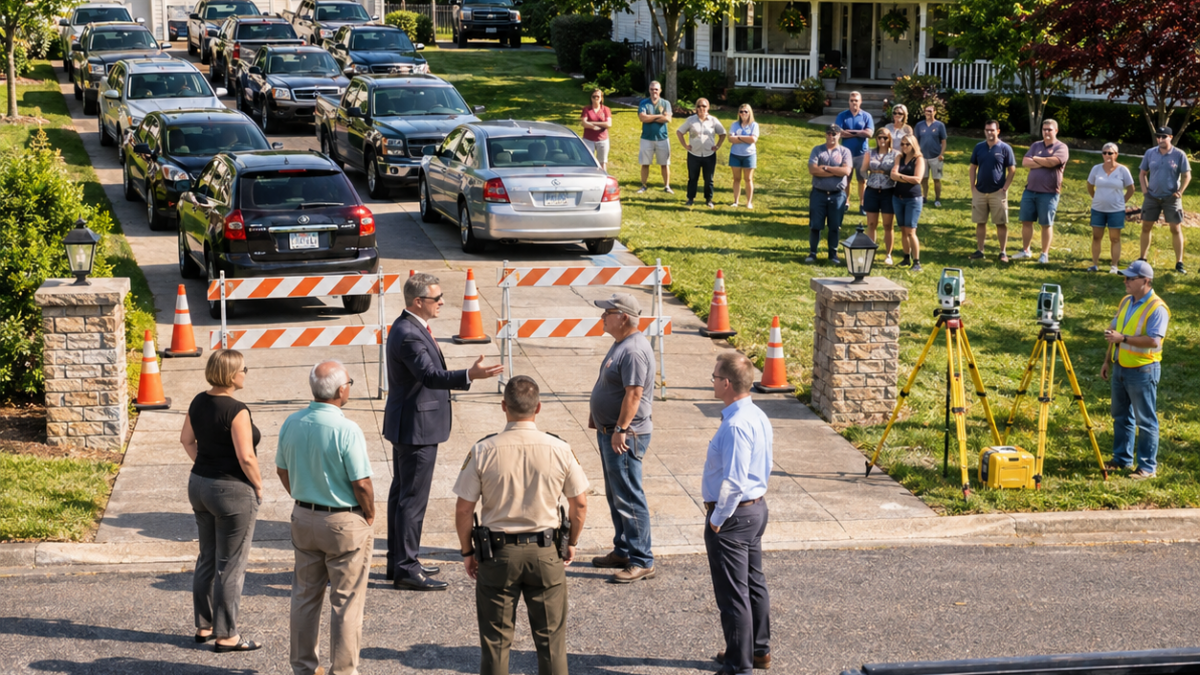
On April 5, I turned onto my street in Brookhaven Ridge, Tennessee, and found six vehicles sitting across my driveway while people walked toward the HOA clubhouse as if parking on my private property had always been part of the neighborhood plan.
What Victoria Caldwell didn’t know was that I had spent twenty-two years as a civil engineer and property surveyor reading exactly the kind of records she was misusing, and the moment I opened the recorded plat, I could see the “community access” she kept talking about had never legally existed.
My name is Michael Turner.
I’m forty-six, and I bought my home in Willow Creek Estates almost a decade ago.
At the March HOA meeting, Victoria stood in front of the clubhouse holding a printed map and announced that my corner-lot driveway was being redesignated as overflow parking for community events.
She called it a “possible access arrangement.”
I asked one simple question.
“Are you claiming ownership or access rights to my driveway?”
Victoria smiled.
“We’re not claiming ownership. We’re recognizing community use.”
A few days later, the official notice arrived.
Beginning April 1, I was ordered not to block the driveway during approved events, not to interfere with vehicles, and warned that refusing could trigger daily $500 fines.
My wife looked at the letter and asked, “Are they really trying to take your driveway?”
“No,” I told her.
“They’re trying to convince themselves they can.”
I pulled my deed, title records, recorded subdivision plat, and every boundary document I had kept since buying the house.
My driveway sat entirely inside my property.
No easement.
No shared-access agreement.
Nothing giving the HOA permission to use it.
The map Victoria relied on was merely a preliminary development draft showing possibilities that were never approved or recorded.
Then April 5 arrived.
One of the strangers parked outside told me, “The HOA said this was approved.”
I walked inside and called a towing company.
Within an hour, all six vehicles were gone.
The next morning, Victoria responded with a $3,500 HOA fine.
That was when I stopped treating this like a parking dispute and started building the fourteen-page property report that would eventually expose something far bigger than my driveway.
[END OF FACEBOOK CAPTION]
[FIRST COMMENT / FULL STORY CONTINUATION]
I put the $3,500 violation notice on my desk beside the deed.
Then I looked at both of them for a long time.
One document represented actual ownership.
The other represented confidence.
That difference was becoming the entire story.
Victoria’s letter looked official.
HOA letterhead.
Formal language.
Violation amount.
References to community operations.
Warnings about further enforcement.
Everything about it was designed to create the feeling that the argument had already been decided.
But twenty-two years working in civil engineering and surveying had taught me something very simple.
Paper only matters when the authority behind it is real.
A beautifully formatted mistake is still a mistake.
I read the fine notice once.
Then again.
Then I put it down.
My wife stood in the doorway.
“So what now?”
I looked at the stack of property records.
“Now we stop arguing with them.”
She frowned.
“That sounds like giving up.”
“No.”
I pulled the recorded plat closer.
“It means we start speaking in documents.”
***
The driveway had never been complicated before Victoria decided it was useful.
Concrete.
Brick edging.
Wide enough for my truck and a couple of additional vehicles when family visited.
Nothing special.
I had maintained it since buying the house.
Repaired cracks.
Cleaned it.
Paid for it.
Used it.
For nearly a decade, nobody in Willow Creek Estates had suggested it belonged to anyone but me.
Then Victoria looked at my corner lot and saw opportunity.
That was how she operated.
She rarely began with something dramatic.
A rule here.
A process there.
Another approval requirement.
Another parking restriction.
Small changes presented as organization.
Most people complained privately and complied publicly.
That is how authority becomes habit.
Not because every rule is abusive.
Most communities need rules.
But when nobody asks where authority ends, a leader can slowly begin confusing administration with ownership.
Victoria had spent years in local government.
She knew how to speak in a way that sounded final.
At HOA meetings, she rarely said:
“I think.”
She said:
“The board has determined.”
Or:
“The community requires.”
Or:
“This is how the policy works.”
Language matters.
People heard certainty and assumed foundation.
That March meeting was the first time her certainty landed directly on my deed.
***
She had stood at the front of the clubhouse with a printed map.
Perfect posture.
Professional clothes.
One hand resting on the table.
The other holding the drawing.
“We have a parking-capacity problem during larger neighborhood events.”
Nobody objected.
That part was true.
The clubhouse parking filled quickly.
Street parking became messy.
People complained.
Then Victoria pointed toward my property.
“Michael’s corner lot gives us a unique opportunity.”
I remember looking around the room.
Maybe there was another Michael.
There wasn’t.
She continued.
“His driveway can accommodate several vehicles, and the original development plans show a possible access arrangement.”
Possible.
That word caught my attention immediately.
Most homeowners would have heard access arrangement.
I heard possible.
In property work, qualifiers matter.
Possible.
Proposed.
Conceptual.
Preliminary.
Future.
Those are not decorative words.
They separate an idea from a legal right.
I raised my hand.
“Victoria.”
She looked at me.
“Are you saying the HOA is claiming ownership or access rights to my driveway?”
Her answer came smoothly.
“We’re not claiming ownership.”
A few people relaxed.
Then she added:
“We’re recognizing community use.”
That was when I knew we had a problem.
Because “community use” sounds harmless until the community decides you no longer control your own driveway.
***
I asked where that right was recorded.
Victoria raised the map.
“The original plans.”
“Recorded plans?”
A slight pause.
“The development documents.”
“Which document?”
That was when the tone changed.
Not because I had shouted.
Because I had asked the kind of question broad authority claims dislike.
Specificity.
Victoria moved on quickly.
She talked about neighborhood needs.
Events.
Fairness.
Shared responsibility.
The conversation shifted away from title and toward community spirit.
That is a useful rhetorical move when the legal answer is weak.
If you object, suddenly you are not defending property.
You are refusing to help neighbors.
I knew better than to fight the emotional frame in the room.
So I went home.
Waited.
And a few days later, the formal notice arrived.
April 1.
Shared parking during approved community events.
Do not block access.
Do not interfere with vehicles.
$500 per day if I refused.
My wife asked the obvious question.
“Are they really trying to take your driveway?”
I laughed because the alternative was probably saying something I would regret.
“No.”
I told her.
“They’re trying to convince themselves they can.”
***
The next morning, I opened the file box.
Deed.
Title work.
Recorded subdivision plat.
Survey.
Closing documents.
Everything.
Most property disputes become harder because people start with memory.
“My realtor told me.”
“The previous owner said.”
“Everybody knows.”
“Someone at the county told us years ago.”
Memory has value.
It does not replace the record.
I spread the documents across the kitchen table.
The first thing I checked was my deed description.
Then the plat.
Then easements.
Then title exceptions.
The answer was immediate.
My driveway sat entirely inside my parcel.
No recorded community easement.
No shared-parking agreement.
No access right.
Nothing.
Then I pulled the map Victoria had used at the meeting.
That was when the mistake became obvious.
It was a preliminary planning document.
A draft from decades earlier.
The kind of drawing developers use while deciding how a subdivision might work.
Possible connections.
Possible access.
Ideas.
Not final rights.
Not recorded easements.
Not ownership.
A draft map is a suggestion.
A recorded deed is what survives closing.
Victoria had taken an old possibility and turned it into a current command.
That was the problem.
***
I could have marched to her house that morning.
Didn’t.
I could have sent a long email explaining every technical difference.
Didn’t.
People like Victoria often do not back down because you give them more information.
Sometimes additional evidence only makes the disagreement feel more personal.
Admitting the error would mean admitting she had announced a property right in front of the neighborhood that did not exist.
For someone whose authority depended heavily on appearing certain, that would be uncomfortable.
I suspected she would double down.
April 5 proved it.
***
I came home that evening and saw the cars before reaching my house.
Six vehicles.
Not one accidentally over a corner.
Six.
Parked across my driveway like an overflow lot.
People were walking toward the clubhouse.
Some carrying food.
Others talking.
Normal event.
Normal guests.
Completely abnormal location.
For a few seconds, I stayed behind the wheel.
Anger and disbelief arrived together.
That combination creates a strange delay.
Your eyes understand before your brain accepts.
Then I got out.
One man was walking away from a vehicle.
“Excuse me.”
He turned.
“Are these vehicles supposed to be here?”
He looked confused.
“Yeah.”
Then pointed vaguely toward the clubhouse.
“The HOA told everyone this was overflow parking.”
“Did anyone ask me?”
His expression changed.
Not defensive.
Uncomfortable.
“We were told it was approved.”
That answer mattered.
Those people were not the enemy.
They believed an authority figure had granted permission.
They had no reason to know my deed.
No reason to know Victoria had based the entire claim on a draft map.
That was what bothered me most.
The HOA had converted its own certainty into other people’s behavior.
Now strangers believed my property was legitimately available because someone with a title had said so.
That is how overreach becomes reality if nobody interrupts it.
I went inside.
Called a towing company.
Then waited.
***
When the first tow truck arrived, neighbors began appearing.
Curtains moved.
Garage doors opened.
A couple stood near the sidewalk.
One person quietly said:
“Michael, are you sure you want to do this?”
“Yes.”
“It’s going to create a huge fight.”
“There’s already a fight.”
Another neighbor said the HOA had approved parking.
I asked:
“Approved under what property right?”
No answer.
The towing operator checked.
Vehicles moved.
One after another.
Some owners came outside confused.
A few angry.
I explained the same thing each time.
“This is private property.”
One woman looked genuinely embarrassed.
“We were told we could park here.”
“I know.”
That was why I never blamed the drivers.
The towing fees and storage charges eventually totaled a little over $1,200.
Harsh?
Maybe.
But if I allowed those six vehicles to remain after receiving a letter declaring my driveway shared space, the practical message would be clear.
Victoria’s claim worked.
Once use begins, people become accustomed to it.
The next event becomes easier.
Then somebody says:
We’ve always parked there.
Then habit starts getting confused with right.
I was not going to create that history.
So the vehicles left.
Within an hour, the driveway was empty again.
Mine.
Just as it had been before.
***
One older neighbor approached me afterward.
He kept his voice low.
“Michael.”
“Yeah?”
“I thought I was the only one.”
I looked at him.
“Only one what?”
“Who thought they were crossing lines.”
That sentence changed my understanding of what I was dealing with.
Until then, the dispute was mine.
My driveway.
My deed.
My fine.
But his face told me something else existed underneath.
People had been uncomfortable.
Maybe for years.
They just did not think speaking would accomplish anything.
That is common in organizations where leadership becomes too strong.
Everyone experiences problems separately.
One person gets a fine.
Another gets an unreasonable notice.
Someone else loses access to something.
Each person assumes their issue is unique.
That isolation protects the authority structure.
Nobody compares notes.
That evening, people started comparing.
***
The $3,500 fine arrived the next morning.
That number was meant to escalate.
It did.
Just not the way Victoria intended.
She thought the fine would increase pressure on me.
Instead, it convinced me informal explanation was over.
I hired an attorney.
Then I began building the report.
Fourteen pages.
Nothing emotional.
No essay about HOA arrogance.
No photographs of Victoria looking smug.
Just evidence.
Recorded subdivision plat.
Deed descriptions.
Boundary survey.
Title information.
Draft planning map.
Comparisons.
Relevant measurements.
Every page answering one narrow question.
What legal right did Willow Creek Estates have to use my driveway?
Answer:
None.
My attorney reviewed the report slowly.
He reached the end.
Then looked up.
“Michael.”
“Yeah?”
“They didn’t just make a mistake.”
I waited.
“They built an entire argument around a document that never gave them the power they claimed.”
Exactly.
That mattered because error and authority are different things.
If Victoria had misunderstood a line and corrected it after seeing the recorded documents, we probably would have ended there.
But she had converted the error into policy.
Notice.
Parking use.
Fines.
Then continued after challenge.
That moved the situation beyond a harmless misunderstanding.
We filed.
Property interference.
Unlawful use of private land.
Damages requested:
$375,000.
That number got attention.
But the bigger discovery came after filing.
***
My attorney started looking beyond the driveway.
Old HOA records.
Event documents.
Parking arrangements.
Complaints.
Vendor records.
Anything that might show how Victoria had developed the theory she used against me.
He called one afternoon.
“Michael, you need to sit down.”
I hate when lawyers say that.
I sat.
“You weren’t first.”
“What?”
“Two other corner-lot homeowners.”
He explained.
Their driveways had been used for community events too.
No recorded permission.
Complaints dismissed.
The circumstances were almost the same.
Then he found another piece.
Outside vendors had paid the HOA for parking access during events.
Thousands of dollars collected.
Using spaces the association did not legally control.
That transformed the case.
This was no longer one president misreading one draft map.
The same behavior had affected multiple owners.
And money had changed hands.
I met the other homeowners soon afterward.
Sarah Mitchell was one.
The first thing I remember was not anger.
Relief.
“I kept thinking maybe I misunderstood the rules.”
She looked exhausted saying it.
“Maybe they really had the right to do this.”
I shook my head.
“That’s exactly why they got away with it.”
Sarah looked at me.
“They counted on people doubting themselves.”
That was it.
Control does not always require force.
Sometimes it only requires convincing people their own understanding is unreliable.
***
By the end of that week, the lawsuit expanded.
Three plaintiffs.
Damages above $700,000.
The scale had changed.
Still, money was not the most important shift.
We contacted state authorities.
Asked them to examine the HOA’s legal status.
That was when the entire structure began opening.
Required annual filings.
Corporate records.
Compliance.
Years of missing reports.
Then the finding nobody expected.
The HOA’s corporate status had been suspended.
Yet Victoria had continued operating as though nothing changed.
Collecting dues.
Issuing fines.
Enforcing decisions.
Threatening homeowners.
Making property-related demands.
Suddenly my driveway looked almost small.
The organization threatening me for refusing to obey its rules had failed to maintain its own legal standing.
There is irony.
Then there is institutional self-destruction.
This was the second.
***
The discovery spread through Willow Creek Estates quickly.
People who had spent years treating Victoria’s letters like commands started asking questions.
Not only about future authority.
Past fines.
Past dues.
Past decisions.
Past notices.
Was this valid?
Was that valid?
What about the parking penalty from last summer?
What about the assessment?
What about the approval they denied?
Once trust collapses, old decisions get reopened.
That is why organizations cannot survive on appearances alone.
Rules need legitimacy.
People will tolerate rules they dislike if they believe the process is legitimate.
When they learn the rule-maker ignored the rules governing itself, resentment multiplies.
Victoria had spent years demanding compliance.
Now residents wanted compliance from her.
Fair.
***
The court proceedings did not feel like the HOA meetings.
That may sound obvious.
But the contrast stayed with me.
At the clubhouse, Victoria controlled the room.
She chose the agenda.
Held the map.
Spoke from the front.
People waited for recognition before speaking.
In court, none of that mattered.
Her clothes were still professional.
Posture still confident.
Voice still controlled.
But confidence was only presentation.
Documents were evidence.
The judge reviewed records.
Corporate status.
Fines.
Authority.
Property claims.
The draft map.
The recorded documents.
The pattern of enforcement.
Victoria could not turn the hearing into a lecture about community cooperation.
The question was legal foundation.
Did the HOA possess the authority it claimed?
The evidence said no.
***
I sat behind my attorney and thought about that first March meeting.
“Possible access arrangement.”
Such a small phrase.
Everything began there.
A preliminary idea on an old drawing.
Never approved.
Never recorded.
Then decades later someone pulled it forward and treated it like a current property right.
That is why records matter.
Drafts can survive.
Old emails survive.
Concept plans survive.
Someone unfamiliar with their status can mistake them for authority.
Professionals learn to ask:
Final?
Recorded?
Executed?
Adopted?
Those words are boring.
They save people from expensive mistakes.
Victoria had skipped them.
Or ignored them.
I never knew which.
By then, it no longer mattered.
***
The judge’s decision canceled the fines.
Violation notices were declared invalid.
The threat that had hung over homeowners began disappearing.
That was the first moment in months I felt my body relax.
Not celebration.
Breathing.
There is a difference.
Legal disputes occupy physical space in your life.
You wake up thinking about them.
Check mail differently.
Notice every HOA envelope.
Rehearse arguments while driving.
Wonder what comes next.
Then one decision removes the uncertainty.
The nervous system notices before the mind celebrates.
I sat there and exhaled.
***
But the courtroom response from residents affected me more.
People looked at one another.
Not cheering.
Understanding.
For years, some had believed fighting the HOA would only make their lives harder.
Victoria had built an environment where questioning her felt risky.
Ask too much?
Maybe your next application gets harder.
Push back?
Maybe another violation appears.
Whether every fear was objectively justified almost did not matter.
People felt it.
That was enough to keep many quiet.
The court decision changed that psychology.
The authority had never been endless.
The paperwork had only made it look that way.
Once people saw the limit, fear shrank quickly.
***
The dissolution process moved forward.
That was not something I had imagined when I first saw six cars in my driveway.
I wanted my property left alone.
Instead, the investigation revealed an HOA whose legal structure had deteriorated badly enough that dissolution followed.
Remaining assets were liquidated.
Funds distributed back to residents.
Restitution checks arrived.
Some homeowners became emotional opening them.
Understandable.
The amounts represented money.
But also acknowledgment.
A person can tolerate losing money more easily than being told the loss was legitimate when it was not.
Restitution says:
Something happened here.
You were not imagining it.
That matters.
***
Victoria faced personal claims as well.
Homeowners believed her actions directly affected their property rights.
Eventually, settlements were reached with multiple residents.
I did not need a dramatic punishment beyond that.
The larger consequence was trust.
Once your neighbors stop believing you are exercising authority for their benefit, the title becomes almost meaningless.
You can disagree and repair.
You can make a bad decision and apologize.
But when people think you intentionally used authority against them, rebuilding trust becomes much harder.
Victoria had spent years building control.
The case revealed how little trust sat underneath it.
Control without trust is fragile.
It looks strong until people stop cooperating.
Then it collapses faster than anyone expects.
***
A few months later, the neighborhood held another community meeting.
Same general group.
Completely different atmosphere.
No stack of violation notices.
No one waiting for Victoria to announce the next rule.
People spoke without looking over their shoulders.
Someone made a joke.
People laughed.
That sounds small.
It wasn’t.
Laughter in a room where people had previously been cautious can tell you an organization has changed.
Neighbors shared stories.
One had dealt with a parking issue.
Another with an approval process.
Someone else with fines.
Stories that once felt isolated suddenly formed a pattern.
One homeowner told me:
“I spent three years thinking I was the only one who thought something was wrong.”
I remembered the older neighbor from the towing night.
Same feeling.
Different person.
“That’s usually how these things continue.”
I told him.
“Everyone thinks they’re alone until somebody finally speaks.”
***
Then came the question of what should replace the HOA.
Some people expected another association.
New board.
New name.
Fresh bylaws.
Try again.
Residents decided otherwise.
They did not want another structure with the same concentration of authority.
Instead, they created voluntary groups.
Neighborhood events.
Helping elderly residents.
Safety coordination.
Things people genuinely wanted.
Cooperation without control.
That phrase became the guiding idea.
No organization claiming another homeowner’s driveway because a draft map looked useful.
No small board making property decisions without accountability.
People could still organize.
Still help.
Still maintain community relationships.
They simply rejected the idea that every shared interest required a powerful enforcement body.
That choice fit Willow Creek after what happened.
Other neighborhoods might choose differently.
Not every HOA is bad.
I still believe that.
Some communities benefit enormously from structured shared responsibility.
The problem was never the letters H-O-A.
The problem was authority without accountability.
***
That distinction matters to me because anger makes generalization easy.
I could have walked away saying:
All HOAs are corrupt.
No.
Too simple.
Rules can work.
Shared maintenance can work.
Standards can preserve value.
Community organization can be useful.
But only when power has a clear source and clear limits.
Once a board begins treating residents like subjects instead of owners, something fundamental has changed.
Victoria did not merely enforce rules.
She began acting as though the title of president gave her a superior claim to everyone’s property choices.
My driveway became the place where that attitude finally met documents it could not talk around.
***
Life eventually returned to normal.
I still use the same driveway.
That is almost funny.
Before everything happened, it was just where I parked.
A practical surface.
Nothing emotionally significant.
Then for months it became evidence.
Conflict.
Symbol.
Community parking.
Towing scene.
Lawsuit origin.
Now it is slowly becoming a driveway again.
That may be the best ending.
I pull in.
Park.
Unload groceries.
Drink coffee.
No one announces community use.
No strangers arrive because a map from decades ago says “possible.”
No $500 daily penalties.
Just my property functioning normally.
Peace is often the restoration of boring things.
***
Still, I see it differently.
Ownership is not only the right to use something.
It carries responsibility.
Maintenance, obviously.
But also protection.
If someone claims authority over your property without foundation and you remain silent because conflict feels unpleasant, you may unintentionally make the next claim easier.
That does not mean fight every neighbor over every inch.
It means know when something important has crossed from inconvenience into control.
My driveway crossed that line when the HOA issued written instructions telling me I could not block strangers from using it.
At that point, silence would have meant accepting the premise.
I could not.
***
The towing remains the decision people debate most.
Six innocent drivers.
Over $1,200 in fees.
Was that too harsh?
I understand the criticism.
The guests had been told parking was approved.
They did not create Victoria’s claim.
They became caught inside it.
If I had simply asked everyone to leave, maybe most would have.
Maybe the issue could have ended differently that night.
That is worth acknowledging.
At the same time, the HOA had already issued formal instructions treating the driveway as shared property.
Allowing the event to continue would have created the exact precedent I was trying to prevent.
I made a hard choice.
I stand by protecting the property.
I can still regret that ordinary guests paid part of the immediate cost.
Those ideas can coexist.
***
The towing also forced neighbors to pay attention.
Not because I planned a public demonstration.
But removal made the dispute visible.
Before, some homeowners thought this was just another technical disagreement.
Then six cars disappeared from an HOA-designated parking area because the actual owner said no.
Suddenly everyone wanted to know:
Whose driveway is it?
That question should have been asked before Victoria ever announced the parking plan.
Better late than never.
***
The $3,500 fine had the opposite effect from what Victoria intended too.
She believed more pressure would create compliance.
Instead, it moved me from personal resistance to professional challenge.
That is another leadership mistake.
Escalation can harden both sides.
Sometimes the best response to pushback is not a bigger penalty.
It is checking whether the original decision was right.
Imagine if Victoria had paused after the towing.
Pulled the final recorded plat.
Called counsel.
Admitted the draft map had no legal force.
Refunded towing costs to the guests.
Apologized.
Could the broader HOA problems still have surfaced later?
Possibly.
But the driveway dispute might have ended in a week.
Instead, she doubled down.
That turned one property question into discovery.
Discovery became investigation.
Investigation exposed everything.
Pride can be extraordinarily expensive.
***
My profession gave me an advantage.
I knew how to read the documents.
I knew the difference between a draft map and a recorded instrument.
Another homeowner might not.
Sarah had spent years wondering whether she misunderstood.
That concerned me.
Property rights should not depend entirely on whether the owner happens to be a surveyor.
Systems should be understandable enough that ordinary homeowners can challenge unsupported claims.
The HOA’s behavior worked partly because its language sounded technical.
People assume technical language must have legal foundation.
Not necessarily.
Ask for the recorded document.
Where is the easement?
Where is the signed agreement?
Where is the deed restriction?
Where is the filed plat?
Specific questions break fog.
***
That became one thing I shared with neighbors afterward.
Not legal advice.
Just a habit.
If somebody claims a right over your property, ask where it is recorded.
Do not rely only on somebody’s title.
President.
Manager.
Committee chair.
Whatever.
Authority is not self-proving.
Good authority can show its source.
That protects both sides.
If the HOA actually held an easement over my driveway, the document would have resolved the matter quickly.
I would not have liked it.
But I would have known.
Because no such document existed, the question should have ended just as quickly in the opposite direction.
Instead, Victoria used confidence to stretch ambiguity.
That is what failed.
***
Her reliance on a preliminary plan was almost a textbook problem.
Development drawings often show things that never happen.
Future roads.
Potential access.
Possible phases.
Concept amenities.
Ideas are part of planning.
If every conceptual line became a legal property right automatically, nobody could safely own land.
The final recorded documents exist precisely to show what actually survived the planning process.
Victoria treated the sketch as though possibility had matured into authority without anyone needing to approve, sign, record, or convey it.
That is not how property rights work.
Twenty-two years in my field made the error obvious.
Apparently nobody expected me to look.
That may have been their biggest mistake.
***
The title says “the deeds shut it down.”
That is true in spirit.
But it was not one magical deed.
It was the entire record.
Deed.
Recorded plat.
Boundary surveys.
Title material.
Comparison to the preliminary map.
Corporate records.
HOA filings.
Vendor parking arrangements.
Other homeowners’ complaints.
Facts accumulated.
One document answered the driveway question.
The rest answered the larger question.
Authority is a chain.
If enough links are missing, a confident letter cannot create them.
***
Victoria’s local-government background may have contributed to how homeowners perceived her.
She sounded official.
She knew meeting language.
Processes.
Notices.
Deadlines.
That experience is not bad.
Used properly, it can help a community.
But formal language can also intimidate people who do not work around it.
A homeowner receives:
Failure to comply will result in daily penalties.
They think:
They must be allowed to do this.
Maybe.
Maybe not.
The correct response is not panic.
Check.
That is what I did.
***
The daily $500 threat looked enormous at first.
Then the underlying right vanished.
A penalty can only stand if the authority imposing it has the legal ability to enforce the relevant rule.
Once the foundation failed, the number became decoration.
That was liberating.
Not because every HOA fine is fake.
Far from it.
Because even official penalties require actual authority.
Never assume form equals legitimacy.
***
The same became true of the $3,500 violation.
At first, it sat on my desk like a threat.
After the ruling, it was simply evidence of overreach.
Context changes documents.
The paper did not change.
Our understanding of authority did.
Interesting.
***
I kept copies.
Of course.
Surveyor habit.
Documentation is memory that does not get tired.
Years later, if somebody asks what happened, I do not need to rely on my emotional version.
Dates.
Letters.
Maps.
Court records.
Better.
Memory turns conflict into mythology surprisingly fast.
Records keep you honest.
***
Residents received restitution after HOA assets were liquidated.
Some checks were not enormous.
The emotional value exceeded the amount.
I watched one neighbor hold an envelope and shake his head.
Not smiling.
Just processing.
For years, he had believed questioning the HOA meant he was difficult.
Now the system itself was acknowledging something had been wrong.
Humans need that sometimes.
Not revenge.
Recognition.
“You were not crazy.”
Powerful.
***
That is why Sarah’s relief stayed with me.
“I kept thinking maybe I misunderstood.”
That sentence is one of the most damaging effects of bad authority.
It makes competent adults distrust their own perception.
Maybe the rule really says that.
Maybe I missed something.
Maybe they can use my property.
Maybe I am the problem.
Some self-questioning is healthy.
It keeps us from becoming arrogant.
But when an institution repeatedly uses uncertainty to expand power, doubt becomes a control mechanism.
The cure is not blind confidence.
It is verification.
Open the records.
That is what freed us.
***
Once people verified, Victoria’s authority shrank quickly.
Not because everybody suddenly became rebellious.
Because they no longer needed fear to interpret the rules.
There is a difference.
A healthy community should not require residents to feel powerless in order to function.
If cooperation disappears the moment punishment disappears, maybe it was never cooperation.
Willow Creek learned that.
After dissolution, voluntary groups still organized events.
Neighbors still helped one another.
Safety concerns still mattered.
The neighborhood did not collapse without a strong enforcement board.
That was instructive.
People wanted community.
They just did not want control disguised as community.
***
The new voluntary groups had no need to claim my driveway.
Funny how easily events can be organized when people ask instead of declare.
If someone needed additional parking, they could request it.
Maybe I would say yes.
Maybe no.
That was all I had wanted from the beginning.
Consent.
Not isolation.
I was not against neighborhood events.
I was against an organization announcing that my property had become theirs to assign.
People often frame property resistance as antisocial.
It does not have to be.
Boundaries can make cooperation more genuine because participation remains voluntary.
***
One year after the HOA disappeared, property values increased.
That surprised some people.
For years, residents had been told strong control preserved values.
Then the organization dissolved and values still rose.
More importantly, people seemed happier.
Less tension.
Fewer arguments.
More ordinary conversation.
Property value is measurable.
Neighborhood atmosphere is harder.
I noticed the second more.
People waved without wondering whether the next interaction involved a violation.
That matters.
A community can become technically orderly while socially miserable.
Rules should support life.
Not dominate it.
***
Some people who had originally thought I was making trouble eventually approached me.
“I thought you were overreacting.”
Fair.
“I’m glad somebody pushed back.”
Also fair.
I never needed them to apologize dramatically.
They had seen six cars towed.
That looked aggressive before they knew the documents.
People form opinions from available information.
Then better information arrived.
They updated.
Good.
That is exactly what I wanted from Victoria and never got.
Updating is strength.
***
I learned that lesson too.
At the beginning, I thought this was one woman using one old map.
Then other homeowners appeared.
Vendor payments.
Corporate-status problems.
The story changed.
I had to update too.
The driveway was no longer the whole problem.
That did not mean my original grievance became unimportant.
It became evidence of something larger.
Professionals should be willing to enlarge or narrow their theory as facts change.
Again, evidence first.
Narrative second.
***
The lawsuit asking $375,000 grew above $700,000 when the other plaintiffs joined.
Large numbers make good headlines.
But money was not what stayed with me.
I remember the empty driveway after the tow.
Sarah’s relief.
The judge canceling invalid fines.
Neighbors laughing in a meeting where they used to be afraid to speak.
Those moments mattered more than damage calculations.
Money remedies losses.
Culture determines whether people feel free afterward.
Both matter.
Different.
***
Victoria settled personal claims.
The organization dissolved.
Trust disappeared.
That was enough consequence.
I never needed her ruined beyond the facts.
No invented prison.
No dramatic public breakdown.
No forced move.
Reality had already taken the thing she valued most.
Authority.
Once residents stopped assuming she was entitled to decide, the presidency meant nothing.
Titles depend partly on collective recognition.
When legal structure and social trust both collapse, the title becomes a word.
That happened.
***
The final community meeting without her control remains one of the clearest contrasts.
People talked normally.
A neighborhood should not need permission to feel like a neighborhood.
That sentence sounds obvious now.
It did not then.
Victoria had made formal meetings feel like courtrooms.
Questions felt risky.
Afterward, people sat in the same room and talked.
No one had to win.
No one issued daily fines.
That was cooperation.
Messier.
Louder.
More human.
Better.
***
I never stopped believing structure can help.
If Willow Creek someday chooses another formal association, that would not automatically be a mistake.
What matters is design.
Clear authority.
Transparency.
Required filings maintained.
Financial records open.
Property rights respected.
Leadership answerable.
Rules applied evenly.
No person should become the organization.
That was Victoria’s deeper failure.
She had fused her opinion with HOA authority so tightly that challenging one felt like challenging the other.
Healthy institutions survive leaders.
Unhealthy ones become personalities.
When the personality fails, everything falls apart.
***
The missed annual reports were a perfect example.
Governance is often boring.
File this.
Renew that.
Hold records.
Follow procedure.
Leaders who enjoy enforcement sometimes neglect administration because administration does not feel powerful.
But legitimacy lives in the boring parts.
You cannot demand homeowners follow every rule while ignoring the rules that keep your own organization legally alive.
That hypocrisy became devastating.
The HOA threatened people over parking while failing basic corporate obligations.
Residents understood the irony instantly.
It was hard to recover from.
***
Rules are strongest when rule-makers accept rules too.
Simple.
***
My driveway eventually stopped feeling like a battleground.
That took time.
The first few community events afterward, I noticed every unfamiliar car.
Habit.
No one parked there without asking.
Then I relaxed.
The property did not need constant defense.
That is what successful protection should create.
If you spend the rest of your life guarding the line, the conflict still owns you.
At some point, trust the result.
I did.
***
My wife joked once:
“Still checking for community parking?”
I looked outside.
Empty driveway.
“Not today.”
We laughed.
That felt good.
Humor meant the event had moved into the past.
***
Before all of this, my professional knowledge lived mostly at work.
Surveys.
Plans.
Boundaries.
Engineering.
I never imagined I would need twenty-two years of that experience to defend the place where I parked after work.
That is how expertise often works.
You accumulate it for one purpose.
Life finds another.
The irony is most homeowners should never need a surveyor’s career to defend a driveway.
A deed should be enough if everyone respects it.
The complexity came from someone insisting the record meant something it did not.
That is why plain access to records matters.
Property law should not become a weapon only professionals can understand.
***
I helped some neighbors read their own documents afterward.
Not as their attorney.
Not creating new disputes.
Just showing them where recorded information differed from drafts, policies, or assumptions.
The goal was not to make everyone suspicious.
It was to make them less dependent on whoever spoke most confidently.
Knowledge distributes power.
That can improve communities.
***
Some residents discovered nothing was wrong with their situations.
Good.
Verification should not be a machine for creating grievances.
Sometimes the answer is:
Yes, the HOA has that authority.
Then respect it.
The point is accuracy.
Not rebellion.
That matters to me.
***
If the recorded documents had shown a legitimate easement over my driveway, I would have hated it.
I also would have had to deal with it honestly.
That is the test of whether you believe in records or only in winning.
I believed in the records before knowing the answer.
They happened to favor me.
Good.
But their value came from being independent of my preference.
***
Victoria treated the preliminary map differently.
She liked the part supporting the parking plan.
So that became enough.
Confirmation bias wears formal clothes too.
Professionals are not immune.
Leaders are not immune.
I am not immune.
The solution is process.
Final documents.
Independent review.
Questions.
Checks.
Exactly the boring mechanisms people complain slow things down.
Sometimes slowness is protection.
***
If Victoria had slowed down before that March announcement, no lawsuit.
No towing.
No dissolution triggered by this dispute.
Maybe the corporate-status problems still would have surfaced eventually.
But the driveway would not have been the spark.
One review.
One call.
One title check.
Again.
Massive consequences often begin where someone decides checking feels unnecessary.
***
Her confidence had social consequences before it had legal consequences.
Residents parked because she said parking was approved.
That should concern anyone with authority.
People act on your statements.
The more official you sound, the more responsibility you carry to be right.
A casual neighbor saying:
“I think you can park there,”
is one thing.
HOA president sending official instructions is another.
Authority magnifies error.
Therefore authority should magnify caution.
Victoria did the opposite.
***
Ryan from another kind of story might have called that responsibility.
Here, I simply call it leadership.
A leader should be the person most willing to verify before imposing consequences.
Not the least.
***
The $500-per-day threat now seems absurd.
At the time, it was stressful.
That is worth remembering.
Hindsight makes bad claims look obviously weak.
Before the documents are tested, they can feel enormous.
People receiving official threats often comply not because they agree, but because they cannot afford uncertainty.
Five hundred dollars a day.
How long can an ordinary homeowner risk that?
Ten days?
Twenty?
Most will surrender earlier.
That financial asymmetry gives organizations enormous practical leverage.
Which makes accuracy and accountability even more important.
If an institution can impose costs simply because someone is too afraid to challenge, abuse becomes easy.
Our case interrupted that.
***
Sarah had lived under that doubt.
Others too.
Once we joined the claims, the power balance changed.
That is another reason collective action mattered.
One homeowner can be dismissed as difficult.
Three with similar evidence become pattern.
Then records showing vendor payments.
Then suspended corporate status.
The narrative could no longer stay personal.
Victoria could not say:
Michael is angry about parking.
The facts had grown beyond me.
That was useful.
***
I did not set out to become the first person willing to speak.
I just wanted to drive into my house without strangers using my property.
That is often how larger change begins.
Someone hits a personal limit.
Then discovers other people have been standing near theirs quietly.
No grand movement.
Just one person asking:
Is this actually allowed?
The answer sometimes affects everyone.
***
That can be frightening.
Once others joined, I felt responsibility not to become the new Victoria.
People started asking what we should do.
I had expertise.
A lawsuit.
Visibility.
It would have been easy to enjoy being the person with answers.
So I tried to stay specific.
Documents.
Facts.
Attorney.
State authorities.
Residents decide what comes next.
Not Michael decides.
That mattered.
If the lesson was supposed to be accountability, replacing one dominant voice with another would have missed it completely.
***
The neighborhood chose voluntary groups.
Their decision.
Good.
I participated where it made sense.
Not as supreme driveway defender.
Just neighbor.
That felt healthy.
***
My driveway remains completely unremarkable physically.
Concrete does not glow because it won a case.
No historical marker.
No plaque.
Thank God.
I did not want tourists.
I wanted access to my house.
The simplicity of the final result is satisfying.
After all the legal complexity, the solution looks like nothing.
A private driveway being used privately.
That is what rights often look like when respected.
Ordinary.
***
Conflict makes ownership visible because somebody challenges it.
Peace makes ownership invisible because nobody needs to discuss it.
I prefer invisible.
***
Every morning, I still drink coffee.
Sometimes outside.
Cars pass.
Kids ride bikes.
Maple trees.
The neighborhood looks like the reason I bought there in the first place.
That matters.
The fight did not permanently poison the place.
Willow Creek Estates remained home.
That is an important distinction.
I fought the misuse of authority, not the existence of my neighbors.
Once the structure changed, the community became easier to enjoy again.
If I had treated everyone who ever parked in my driveway or supported Victoria as permanent enemies, I would have won property and lost home.
No thanks.
People updated.
So did I.
Life continued.
***
One year later, values rose.
People were happier.
But I do not treat that as proof formal associations are always bad.
Markets change for many reasons.
The source gives the increase as part of the outcome.
The larger point is simply that the catastrophe people feared without the HOA did not happen.
The neighborhood did not decay.
People did not stop caring.
Voluntary cooperation covered many real needs.
That challenged the story residents had been told.
Sometimes institutions convince people only the institution prevents chaos.
When it disappears and people still behave like neighbors, everyone learns something.
***
The biggest lesson for me was not anti-HOA.
It was anti-unquestioned authority.
Any organization can drift when people stop asking for the source of power.
HOA.
Company.
Club.
Government office.
Even family.
The question is not:
Do I like the rule?
It is:
Who has the right to make it?
Then:
Was the process followed?
Then:
Is it being applied fairly?
Those questions protect both freedom and order.
Without them, we swing between control and chaos.
Neither useful.
***
Victoria believed the title gave her power.
The title gave her a role.
Power came only from the legal structure supporting that role.
When that structure had serious defects, her confidence could not repair it.
That is the difference between position and legitimacy.
People confuse them constantly.
A title is visible.
Legitimacy is paperwork, process, accountability, consent, law.
Less visible.
More important.
***
The driveway exposed that gap.
She could stand at the clubhouse and declare community use.
She could issue fines.
She could direct parking.
All visible acts of power.
Then we opened the records.
Invisible foundation missing.
Everything above it weakened.
That is why deeds shut it down.
Not because property paperwork is magical.
Because property rights are supposed to be grounded in recorded legal relationships, not somebody’s preferred interpretation of an old sketch.
***
I still keep the preliminary map.
It is useful professionally.
A reminder.
The drawing is not evil.
It was doing what drafts do.
Showing possibilities.
The mistake was human.
Someone decades later asked it to answer a question it had never been designed to answer.
Documents have scope too.
A conceptual plan cannot automatically prove a final easement.
A marketing map cannot prove title.
A tax map may not define a boundary.
A recorded survey has a different role.
Understanding document purpose prevents misuse.
That is my surveyor brain talking.
But it saved my driveway.
***
I teach younger engineers the same thing.
Never fall in love with one drawing.
Check the record.
Check revision.
Check what was actually filed.
A line on paper can move bulldozers, money, property expectations, and people.
Treat it seriously.
Victoria’s map moved six cars into my driveway.
That is enough proof.
***
One homeowner later asked:
“What if you hadn’t been a surveyor?”
I thought about Sarah.
Maybe the HOA gets away with it longer.
That answer bothered me.
Rights should not become privileges for people with technical expertise.
So I told him:
“You don’t need to know everything.”
He waited.
“You need to know enough to ask for the document.”
That is manageable.
If someone claims access:
Where is the easement?
If they claim a restriction:
Where is it recorded or adopted?
If they claim ownership:
Show title.
Then get professional help if necessary.
You do not have to become a surveyor overnight.
You just have to resist the idea that confidence ends the question.
***
That is probably the best advice I can give from the entire mess.
Ask for the paper.
Then read the right paper.
Not every old sheet with lines on it.
The one that actually carries authority.
***
I still think about the six drivers.
Would I tow them again?
Knowing exactly how the story unfolded?
Probably, if the HOA had already formally declared my driveway shared parking and the vehicles remained after the claim was challenged.
But I might communicate more directly first.
Post clear notice.
Try to reach event organizers.
Reduce collateral cost if possible.
Experience should refine action.
Not turn every past choice into sacred doctrine.
The principle remains.
Do not allow unauthorized use to become normalized.
The method can improve.
That is honest.
***
The same with the lawsuit.
Could we have resolved without $375,000 in claimed damages?
Maybe, if Victoria had corrected early.
Once other homeowners and vendor money surfaced, the case became larger than private settlement.
Sometimes formal litigation is exactly what reveals facts informal conversation cannot.
Other times it is expensive escalation.
Context decides.
In our case, discovery exposed the pattern.
That mattered.
***
The state investigation into corporate status was even more consequential.
One loose thread.
That phrase became literal.
Pull driveway claim.
Find draft map misuse.
Find other owners.
Find vendor payments.
Check HOA authority.
Find missing annual reports.
Corporate status suspended.
The entire structure unravels.
That is why organizations need boring compliance.
Small failures accumulate silently.
Then one dispute opens the file.
Suddenly years of neglect become visible at once.
Leadership often thinks risk is the person complaining.
The real risk may be what the complaint causes people to inspect.
Victoria learned that.
***
Transparency would have prevented much of it.
If residents could easily see governing status, finances, parking agreements, vendor arrangements, the problem would have been harder to hide.
Secrecy is not always malicious.
Sometimes it is just habit.
But habit plus unchecked authority creates the same danger.
People stop knowing what the organization is actually entitled to do.
Then titles fill the gap.
Bad.
***
The voluntary groups afterward had less power.
Some people saw that as weakness.
I saw it as appropriate.
Their tasks did not require coercive authority.
Organize an event.
Ask volunteers.
Help an elderly neighbor.
Coordinate safety.
You do not need lien power to arrange a picnic.
Matching authority to purpose prevents unnecessary concentration.
Simple systems are sometimes enough.
***
Would Willow Creek eventually need a more formal structure again?
Maybe.
The source stops with residents choosing voluntary cooperation.
That was their decision after what happened.
No need to predict decades.
The lesson was immediate.
They wanted room to rebuild trust before rebuilding power.
Reasonable.
***
My relationship with the neighbors improved too.
Funny after towing six cars.
Once the facts became public, most understood.
Some still thought towing was harsh.
Fine.
We do not need agreement on every tactic to live beside one another.
Community is not unanimity.
It is disagreement without domination.
That became possible again after Victoria’s system collapsed.
I valued that.
***
One neighbor who had criticized me early said:
“You know, I still think I would’ve asked the drivers to move before towing.”
“Fair.”
“But you were right about the driveway.”
“Thank you.”
That was enough.
No need to convert him to my entire worldview.
Adults can separate principle from method.
Healthy.
***
Victoria’s loss of trust remained the most lasting consequence.
Money can be repaid.
Fines reversed.
Organizations dissolved.
But once people believe a leader used their uncertainty against them, every past decision gets reread.
That is expensive socially.
Leadership depends on a reserve of trust.
Use it carefully.
You do not know when you will need people to believe you for something genuinely important.
If you spend credibility defending a fake parking right, you may find none left later.
That is broader than HOAs.
Every leader should understand it.
***
I hope I do.
Authority in engineering has its own version.
Younger staff may trust my judgment because I have decades of experience.
That does not mean I can skip showing work.
If I become Victoria in an office—“because I said so”—then I learned nothing.
Experience should make explanation easier.
Not unnecessary.
The driveway made me more conscious of that.
Good.
Conflict should improve something.
Otherwise it is just damage.
***
I kept working.
Civil engineering.
Surveying.
Twenty-two years had given me technical confidence.
The case gave me another kind.
Confidence to say:
Show me the authority.
Not aggressively.
Calmly.
That question protects everyone.
If authority is real, good.
We proceed.
If not, stop.
No drama required.
***
The judge’s ruling was not theatrical either.
Facts.
Authority.
No legal foundation.
That phrase carries more weight than any speech I could have given Victoria in the clubhouse.
That is why I never regretted shifting from argument to paperwork.
I could have spent months trying to convince her personally.
Why?
She was not the final authority over the dispute.
Take the facts where they can be evaluated properly.
That is strategic peace.
Not avoidance.
***
After the HOA dissolved, I threw away none of the records.
Surveyor.
Of course not.
Everything filed.
Driveway deed copies.
Court materials.
HOA notices.
Probably more organized than necessary.
My wife laughed.
“You think they’re coming back?”
“No.”
“Then why keep all that?”
“Because paper doesn’t complain about storage.”
She walked away.
Marriage is supportive in different forms.
***
The records are not trophies.
They are history.
If someday a new organization emerges and someone asks what happened, the answer does not need to depend on my memory.
There.
Read.
That prevents mythology.
Maybe future residents will think I was unreasonable.
Maybe they will think I was heroic.
Neither matters.
The documents show what the actual dispute was.
That is enough.
***
I do not tell people Victoria was evil.
The source gives behavior.
I stick to behavior.
She overreached.
Used a preliminary map as authority.
Issued invalid fines.
Continued operating through serious corporate-status problems.
That is plenty.
Inventing motives makes the story weaker.
People can cause enormous harm while believing they are protecting order.
That possibility is more instructive than cartoon villainy.
Always check yourself.
Good intentions do not create jurisdiction.
***
Maybe Victoria genuinely believed more centralized control improved Willow Creek.
Could be.
Still wrong where it crossed property rights.
Intent can explain.
Not erase.
That balance helps me move on.
I do not need to know her internal story.
The legal question was objective enough.
***
My driveway remains fully inside my property.
That sentence now feels satisfying.
No drama.
Just fact.
No recorded easement.
No shared-access agreement.
No community parking right.
The preliminary plan remained preliminary.
Simple.
All the chaos came from pretending simple facts were complicated.
***
That happens often with power.
A clear limit becomes inconvenient.
So someone creates a theory around it.
Community need.
Historical intent.
Possible access.
Shared responsibility.
Words accumulate until the original limit feels negotiable.
Then somebody opens the deed.
Limit returns.
Good.
Boundaries need defenders partly because language is flexible.
Measurements less so.
***
I love language.
I work with plans.
But I trust the line when the question is where the line is.
***
One year after the HOA disappeared, I drove out one morning.
Same driveway.
No community cars.
Maple leaves moving.
A kid rode past on a bike.
Neighbor waved.
For a second, I remembered the first paragraph of the whole mess.
They took my driveway while I was standing on my own property and told me I was the one breaking the rules.
That sounds impossible now.
At the time, it was happening.
That is why people need to remember authority can look real before being tested.
And why testing does not require screaming.
Open the documents.
Ask the question.
Use the right process.
Let facts carry weight.
***
I could have let it go to keep peace.
That is the final moral question people ask.
Wouldn’t peace have been easier than towing cars and filing suit?
Short term?
Absolutely.
Say nothing.
Let six cars sit.
Pay the fine later.
Maybe accept community parking.
Avoid conflict.
Quiet evening.
But that is not peace.
That is surrender purchased with silence.
Real peace needs boundaries both sides recognize.
After the case, the neighborhood became more peaceful precisely because authority was reduced to what people actually agreed to.
Nobody had to guess whether a leader could suddenly claim their property.
That is better peace.
The kind built on clarity.
***
Sometimes keeping peace matters more than proving who is right.
I believe that.
Not every disagreement deserves a war.
But peace cannot require one person to pretend their rights do not exist because another person’s title makes confrontation uncomfortable.
That is not cooperation.
That is submission.
The distinction is everything.
***
I did not fight because I needed Victoria to say Michael was right.
I fought because I wanted the driveway to remain mine in practice, not only on paper.
Then the records showed other people had the same problem.
At that point, standing up stopped being only about me.
Still, the original decision was personal.
I looked at six cars on my property.
A formal HOA notice.
A $500-a-day threat.
And I decided the line mattered.
That was the first step.
Everything else followed.
***
The hardest part of standing up is often the first public moment.
Before anyone else says they agree.
Before Sarah appears.
Before the older neighbor admits he thought the HOA was crossing lines.
Before the lawyer finds vendor records.
Before the state finds missing filings.
Before the judge rules.
At the beginning, you are just the guy towing cars while half the street wonders whether you have lost your mind.
That uncertainty is where most people stop.
I almost understood why.
Nobody likes being first.
First means you do not know yet whether anyone else will stand beside you.
You only know what your records say.
Sometimes that has to be enough.
***
For me, it was.
Twenty-two years reading land documents meant I knew exactly what I was looking at.
The HOA had no driveway right.
That gave me confidence.
Not emotional certainty.
Technical certainty.
Different.
I acted from that.
Then others found their own records.
That is how the larger case grew.
Not from charisma.
From evidence.
I prefer it that way.
***
Eventually, people told me they were glad somebody pushed back.
I appreciated it.
But the best part was that they no longer needed me to keep pushing.
They had learned to ask questions themselves.
That is what real empowerment looks like.
Not one hero forever defending everyone.
People understanding enough to defend their own boundaries.
The neighborhood became healthier once responsibility spread.
***
The voluntary groups worked because people participated voluntarily.
There is something almost embarrassingly obvious about that.
Neighbors who like helping will help.
People who care about events will organize.
Someone checks on elderly residents.
Someone watches safety concerns.
Not every good community action needs a punishment clause.
Sometimes relationships do the work.
Willow Creek had forgotten that.
Then rediscovered it.
***
My driveway became a symbol for me too.
Not of victory over an HOA.
Of responsibility.
If you own something, protect it appropriately.
Know the records.
Maintain it.
Use it fairly.
Do not weaponize ownership against others.
But also do not let somebody else convert your silence into permission.
That balance is adulthood.
Property rights are not only shields.
They create obligations not to become unreasonable yourself.
I try to remember.
***
If the neighborhood asks to use my driveway someday?
Maybe.
Ask me.
That is the difference.
Consent makes community real.
Forced sharing destroys the meaning of sharing.
You cannot order generosity.
Victoria tried.
It failed.
***
The strange thing is I might have said yes to overflow parking occasionally before all this.
With notice.
For a specific event.
If I was home.
If access stayed open.
Neighborly favor.
Possible.
But once the HOA declared a permanent right, the question changed.
They took away the very cooperation they claimed to be promoting.
Entitlement does that.
People become less generous when generosity is treated as obligation.
Simple human behavior.
***
Community leaders should understand that.
Ask first.
People often surprise you.
Take first.
Expect resistance.
***
Victoria chose the second.
The deed chose the answer.
***
I still remember her phrasing.
“We’re not claiming ownership. We’re recognizing community use.”
Elegant sentence.
Legally empty for my driveway.
That is why words need anchors.
“Community use” does not become a property right because it sounds reasonable.
“Possible access arrangement” does not become an easement because it appears on an old map.
“Violation fine” does not become valid because it has a dollar amount.
“HOA president” does not create unlimited jurisdiction because someone won an election.
Every phrase needs foundation.
When foundation is missing, presentation eventually fails.
That was the whole case.
***
The court did not care how polished the phrase sounded.
Neither did the deed.
I like documents for that reason.
They can be frustrating.
Technical.
Dry.
But they force people toward specificity.
Exactly what does this right cover?
Who granted it?
When?
Recorded where?
That precision protects against stories growing beyond facts.
Victoria’s story had grown.
The documents cut it back to size.
***
One day, long after the case, I stood at the end of the driveway with coffee.
No reason.
Just morning.
I looked toward the clubhouse.
Then back toward the house.
For years, I had seen property boundaries professionally.
Lines.
Measurements.
Corners.
Coordinates.
That case made them emotional for the first time.
A line is not merely geometry when somebody crosses it intentionally.
It becomes a statement about who decides.
That is why property disputes escalate so quickly.
People think they are fighting over concrete.
They are often fighting over authority.
The solution still begins with geometry.
Where is the line?
Then law.
What rights cross it?
Then human judgment.
How should neighbors behave within those rights?
Get the sequence right.
Everything becomes easier.
***
Victoria reversed it.
She started with human desire.
We need parking.
Then invented authority.
Community use.
Then reached backward for geometry.
Old draft map.
Wrong order.
That is why it failed.
Start with rights.
Then design within them.
Not the other way around.
That is how engineers are supposed to work too.
Constraints first.
Design second.
You do not design the bridge and then ask whether land exists underneath it.
At least not if you want the bridge to survive.
***
Maybe that is why the whole thing bothered me so much professionally.
It was bad planning disguised as governance.
The HOA saw a parking problem and chose the easiest physical solution.
My driveway.
Then tried to manufacture legal justification afterward.
Exactly backwards.
Good planning asks what resources are actually available.
Then solves inside reality.
Bad planning decides the desired outcome and pressures reality to conform.
The driveway refused.
***
So did the corporate records.
So did the other owners.
So did the court.
Reality accumulated.
Eventually the story collapsed.
***
I do not miss the HOA.
I also do not celebrate its dissolution every morning.
Again, proportion.
It was one chapter.
Willow Creek remains bigger than Victoria.
That matters.
Communities should not be defined forever by their worst governance period.
People recover.
Neighbors continue.
Children grow.
Houses change owners.
The maple trees keep doing what maple trees do.
Life moves.
That is good.
***
One year later, the neighborhood felt lighter.
No violation anxiety.
No power struggles over minor issues.
More direct conversations.
If someone parked badly, a neighbor could knock.
Imagine that.
A conversation.
The thing institutions sometimes replace because process feels cleaner.
Formal systems have a place.
So does ordinary human communication.
Willow Creek had leaned too hard into formal control.
Afterward, people rediscovered knocking on doors.
That is not a bad outcome.
***
I think Victoria believed rules prevented conflict.
Sometimes.
But rules also create conflict when they exceed legitimacy.
A system should reduce friction, not generate endless reasons to monitor one another.
Our old HOA had become too interested in detecting violations.
The new voluntary approach focused more on helping.
Different culture.
One notices what is wrong with neighbors.
The other notices what neighbors need.
Not every community can operate entirely that way.
For ours, after everything, it worked.
***
My wife still brings up the towing occasionally.
“You looked way too calm.”
“I was calm.”
“No, you weren’t.”
She is correct.
Inside I was furious.
Outside I was calculating.
People confuse those.
Calm is not absence of anger.
It is deciding anger does not get control of the next step.
That may be the most important practical skill I used.
Had I yelled at drivers, fought neighbors, or blocked cars physically, the story could have become about my behavior.
Instead, I called a lawful service and documented.
Then hired counsel.
Keep the focus on the actual issue.
That is strategy.
***
The attorney did the same.
No theatrical demand letter.
Professional report.
Records.
Case.
That tone mattered.
Victoria was good at turning disagreement into disrespect toward the board.
We refused that frame.
This was not:
Michael refuses community responsibility.
It was:
Show the property right.
She could not.
Everything else followed.
***
When the state looked at legal status, the HOA’s larger weaknesses became impossible to hide.
That was not something I engineered.
It was what proper investigation found.
Sometimes accountability feels disproportionate because one small complaint triggers a much larger collapse.
But the complaint did not create the hidden problems.
It revealed them.
Important distinction.
My driveway did not suspend the HOA’s corporate status.
Years of missed filings did.
The lawsuit simply caused someone to look.
Organizations should remember that when dismissing small grievances.
The grievance may not be the greatest risk.
The inspection it causes might be.
Best solution?
Keep your house in order.
Then questions are not threatening.
***
A healthy organization should survive scrutiny.
If scrutiny destroys it, blame the defects.
Not the person asking.
That is a principle I carry into work too.
If a junior engineer questions my calculation and the calculation is sound, review strengthens confidence.
If the question reveals error, good.
Better now than after construction.
People who treat questions as attacks make systems fragile.
Victoria did.
The court exposed the fragility.
***
Sarah told me once she wished she had pushed earlier.
I understood.
But I did not tell her she should have.
People make decisions under the pressure they have at the time.
Maybe she lacked technical knowledge.
Money.
Time.
Confidence.
Family stability.
We do not know what somebody risks by challenging an institution.
That is why the first successful challenge can change a community.
It lowers perceived risk for everyone else.
Once my records held up, others knew questions could be survived.
Then more people spoke.
That was the real cascade.
Not lawsuits.
Confidence.
***
And this time confidence was grounded in evidence.
Better kind.
***
I never became president of anything afterward.
No interest.
I had seen enough.
If a voluntary group needed a survey question answered, I helped.
Otherwise, I was happy to be Michael with a driveway.
People sometimes assume those who challenge power want power.
Often we just want the person with power off our driveway.
Simple.
***
That simplicity is why the title still makes me smile.
They seized my driveway for “community parking.”
Then the deeds shut it down.
Sounds like a giant legal war.
At the center was one very basic fact.
They did not own a right to use it.
Everything complicated came from refusing to accept that.
***
The case could have stopped on day one with one recorded-document review.
Instead, it became six tows.
$3,500 fine.
Fourteen-page report.
$375,000 claim.
Then over $700,000 when others joined.
State investigation.
Corporate-status findings.
Court ruling.
Dissolution.
Restitution.
Personal settlements.
Entire neighborhood governance reset.
All because somebody preferred an old draft map to a final record.
That is almost impressive.
In the worst way.
***
Never underestimate how expensive pride can become when attached to authority.
That may be the final technical conclusion.
***
The emotional conclusion is simpler.
People deserve to know they can ask questions.
Sarah did.
The older neighbor did.
The man who had spent three years thinking he was alone did.
Once they spoke, the neighborhood changed.
Silence had made control look unanimous.
It wasn’t.
That is another illusion institutions can create.
No complaints does not always mean satisfaction.
Sometimes it means people think complaining is pointless.
Good leaders should worry about silence, not celebrate it.
Victoria apparently read silence as support.
Wrong.
***
Afterward, meetings became noisier.
More disagreement.
More laughter.
More questions.
Healthier.
Democracy in small communities is messy.
So is neighborliness.
That is fine.
Order should not require quiet fear.
***
My driveway is still there.
I still own it.
That is not the interesting part anymore.
The interesting part is what happened after one person asked for the legal basis of a claim everyone else was expected to accept.
The question opened a door.
Behind it were other owners.
Vendor money.
Missing filings.
Invalid fines.
Years of doubt.
Then accountability.
One question.
Where is the recorded right?
That was enough to begin.
***
So yes, I would challenge them again.
Not because I enjoy conflict.
I don’t.
Not because peace is unimportant.
It matters enormously.
I would challenge because peace built on pretending someone else owns authority over your property is temporary.
Sooner or later, the next claim arrives.
Another parking space.
Another restriction.
Another fine.
Another line crossed.
Boundaries ignored do not usually become more respected with time.
They become easier to ignore.
That is why I stopped it at the driveway.
***
My wife once asked whether I think Victoria ever understood that.
I said I didn’t know.
Still don’t.
Doesn’t matter.
The neighborhood understood.
The court understood.
The records always understood, if you can say that about records.
And now future homeowners have something more important than one president’s interpretation.
They have history.
A reminder that authority must be demonstrated.
Not assumed.
That may prevent the next problem.
Good.
***
Sometimes a driveway really is just concrete.
Mine was for almost a decade.
Then for a few months it became the place where a neighborhood learned the difference between leadership and ownership.
Now it is concrete again.
That is exactly how I want it.
I drive in.
I drive out.
Nobody asks permission except the person who actually owns it.
And every time I pass the spot where those six cars once sat under a “community parking” order that never had legal foundation, I remember the one lesson twenty-two years of surveying should have made obvious from the beginning:
A confident person can point at a map and tell you almost anything.
But when property rights are actually in question, eventually somebody has to open the recorded documents.
And once we did, Victoria’s entire story stopped at the edge of my driveway.