Three months after my uncle died, I drove through the gates of a private luxury community I had never heard of, and the HOA president handed me a $300 fine for bringing my old Ford pickup onto land I had just inherited.
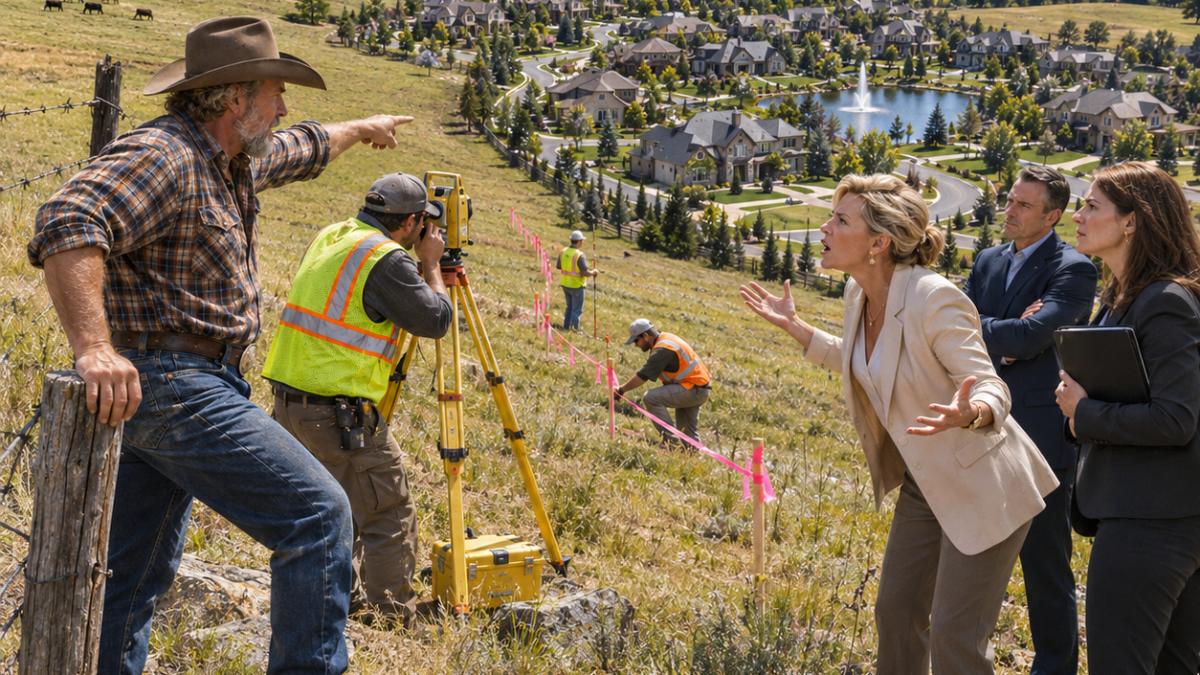
Three months after my uncle died, I drove through the gates of a private luxury community I had never heard of, and the HOA president handed me a $300 fine for bringing my old Ford pickup onto land I had just inherited.
I was surrounded by hundreds of houses, a golf course, tennis courts, landscaped streets, security cameras, and a giant entrance sign reading WILLOW CREEK ESTATES, so when Evelyn Hart told me residents only, I honestly believed for a few minutes that I had somehow driven to the wrong property.
What Evelyn didn’t know was that the old county map in my truck showed the boundary of my uncle Ray’s 1,000 acres running straight through those gates—and less than an hour later, my attorney would discover that the entire neighborhood was sitting on land legally belonging to me.
My name is Daniel Mercer.
Uncle Ray had left me the property in northern Virginia.
The appraisal put its value around $47 million.
I wasn’t prepared for either number.
I expected an old farmhouse, open land, and memories from childhood.
Instead, I found Willow Creek.
Evelyn pulled beside me in a white SUV, looked at my dented truck like it had personally insulted her, and announced that it violated community vehicle standards.
I explained I was Ray Mercer’s nephew.
“I don’t care who your uncle was,” she said.
“If you don’t pay the fine, we’ll have the vehicle removed.”
I folded the notice and drove directly to my attorney.
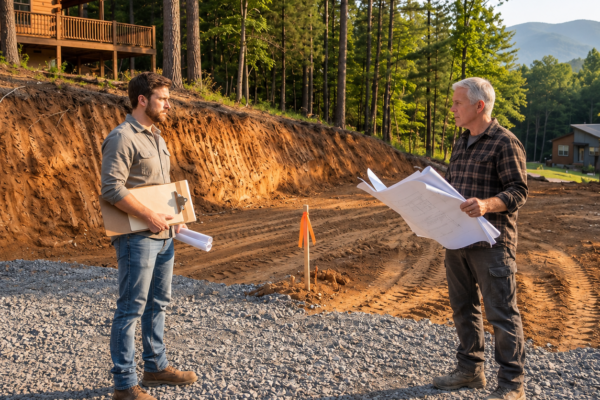
Marcus Bell compared the deed, survey, county map, and old development records for nearly an hour.
Then he turned his computer toward me.
Twenty-six years earlier, the Willow Creek developer had never purchased Uncle Ray’s land.
They had leased it.
The lease had expired eight months before Ray died.
No renewal.
No purchase.
No transfer.
Nothing.
The houses weren’t beside my inheritance.
They were inside it.
So was most of the golf course.
I sat there thinking about Evelyn threatening to tow my truck from what was apparently my own driveway.
Then Marcus asked one question.
“Daniel, what kind of owner do you want to be?”
The next evening, more than a hundred terrified homeowners packed the Willow Creek clubhouse.
I brought the deed.
The surveys.
The expired lease.
Evelyn stood at the front telling everyone it was merely a “property dispute.”
Then Marcus slid the first folder toward me.
I stood up.
Placed the original deed beneath the overhead camera.
And the entire room went silent.
[END OF FACEBOOK CAPTION]
[FIRST COMMENT / FULL STORY CONTINUATION]
“There isn’t much to misunderstand,” I said.
My voice sounded calmer than I felt.
The original deed lay beneath the overhead camera, enlarged on the clubhouse screen behind me.
Old legal description.
Survey references.
Boundary language.
My uncle Ray’s name.
The room was so quiet I could hear someone shifting in a folding chair near the back.
I pointed to the property description.
“This is the land my uncle owned.”
Then to the survey.
“And according to the county records, this is the same land Willow Creek Estates was built on.”
For a second, nobody moved.
Then a man in the second row raised his hand.
He looked maybe sixty.
Gray hair.
Willow Creek polo shirt.
The expression on his face was something between disbelief and fear.
“Are you saying you own my house?”
That was the question I had spent all afternoon preparing for.
Still, hearing it from an actual homeowner made everything heavier.
I looked around the room.
Hundreds of faces.
People who had bought houses.
Raised children.
Paid mortgages.
Planted trees.
Built patios.
Buried pets.
Created lives.
I had inherited land.
They had inherited a problem they never knew existed.
“I own the land underneath it,” I said carefully.
“Your house is a separate issue.”
“And that’s exactly why we’re here tonight.”
A woman near the back started crying.
Not loudly.
Just one hand covering her mouth.
Another homeowner stood.
“Can he evict us?”
Someone else:
“How is this possible?”
Another:
“We have deeds.”
“Who sold us these houses?”
“My bank financed mine.”
“What happens to our mortgages?”
“Are we losing everything?”
The room broke apart into overlapping voices.
Evelyn slapped one hand against the board table.
“Everybody calm down.”
People did not.
She raised her voice.
“This has not been legally established.”
Marcus stood beside me.
He did not raise his voice at all.
“Actually, the underlying land ownership is recorded.”
That quiet sentence worked better than Evelyn’s shouting.
People began settling.
Marcus opened the second folder.
He placed the original development lease beneath the camera.
The document filled the screen.
Twenty-six years earlier.
My uncle Ray.
The development company.
Specific property description.
Fixed term.
Development rights.
Operating rights.
Conditions.
Then Marcus moved to the expiration page.
“This agreement allowed the original developer to build and operate Willow Creek on Mr. Mercer’s uncle’s land for a defined period.”
He paused.
“That period expired eight months before Ray Mercer’s death.”
Evelyn’s face changed.
Not dramatically.
But enough.
“That’s not possible.”
Marcus looked at her.
“It’s in the county record.”
“There had to be an extension.”
“We searched.”
“A renewal.”
“No recorded renewal.”
“A purchase.”
“No.”
“Transfer agreement?”
“No.”
She turned toward the other board members.
No one spoke.
One man looked down at the table.
Another seemed to be reading the lease as though the wording might change if he stared long enough.
Evelyn looked back at me.
For the first time since I met her, she did not tell me what I could or could not do.
She asked:
“So what do you want?”
That question followed me all the way back to the first conversation with Marcus.
“What kind of owner do you want to be?”
I had not slept well.
I had spent half the night imagining possibilities.
Court.
Money.
Possession.
Lease payments.
Lawsuits.
Millions.
The appraisal said the 1,000 acres were worth around $47 million.
That number felt unreal.
I had spent most of my life fixing things around my own house and watching my bank balance carefully.
Now I supposedly owned land under a private community with hundreds of houses, a golf course, tennis courts, roads, landscaping, and all the infrastructure that came with it.
It would have been easy to think only in numbers.
Then I walked into that clubhouse.
Saw the homeowners.
Heard a woman crying because she thought she might lose the house she had lived in for twenty years.
Suddenly the numbers felt smaller.
“I want everybody here to stop pretending this community belongs to the HOA,” I said.
Evelyn shook her head immediately.
“That’s not going to happen.”
I looked at her.
“You might want to sit down.”
She didn’t.
“This is my community.”
“No.”
I kept my voice steady.
“You manage it.”
“You don’t own it.”
The sentence landed harder than I expected.
A whisper moved through the room.
Someone actually said:
“Wow.”
Evelyn’s face reddened.
“You come in here with an old document and suddenly think you control hundreds of families?”
“I didn’t say that.”
“You’re threatening people with eviction.”
“No one has threatened eviction.”
Marcus said it before I could.
Evelyn ignored him.
“This community has operated for decades under established rules.”
“That doesn’t transfer ownership of land.”
“You have no idea how Willow Creek works.”
“That may be true.”
I pulled the $300 violation notice from my pocket.
“But I know how I was introduced to it.”
I unfolded the paper.
Placed it on the table.
“You fined me for driving an old truck onto my own property.”
There was a beat of silence.
Then somebody laughed.
One person.
Then another.
Even a board member covered his mouth.
Evelyn looked furious.
“That violation has nothing to do with land ownership.”
“Maybe not.”
I tapped the notice.
“But it told me something about how this place is being run.”
She crossed her arms.
“And what exactly is that?”
“That you were so busy enforcing your rules that you stopped asking whether you had the authority to enforce them against the person standing in front of you.”
Her jaw tightened.
I put the notice away.
“This isn’t about my truck.”
“And it isn’t about revenge.”
I looked toward the homeowners.
“I spent the afternoon with Marcus working on a proposal.”
The room went quiet again.
I had expected suspicion.
That was reasonable.
If a stranger walked into a clubhouse, announced he owned the ground under your house, and then said he had a proposal, suspicion should probably be your first emotion.
I continued.
“I’m not going to treat three hundred families like trespassers because a development agreement expired.”
A man near the aisle slowly lowered his phone.
“I’m offering every homeowner a new 99-year land lease.”
No one reacted immediately.
They were processing it.
“Your houses stay where they are.”
“Your families stay.”
“You can continue living here.”
“You can transfer your homes under the terms of the new agreements.”
“The land arrangement gets made clear for the next ninety-nine years.”
A woman near the front asked:
“What will it cost?”
That was the other question everybody had been waiting for.
I looked at Marcus.
He nodded.
“We ran the numbers based on the current community assessments, land value, and long-term stability.”
I continued.
“The new land lease and community fees will be structured at roughly half what residents are currently paying each month.”
The silence became absolute.
Then an older man near the window stood.
“Why?”
I looked at him.
“Why what?”
“Why would you do that?”
I knew what he meant.
I could demand more.
That was the assumption.
A man inherits $47 million worth of land.
Why would he not squeeze every dollar out of it?
I looked around.
“Because I didn’t inherit this place so I could make three hundred families homeless.”
The woman who had been crying covered her face again.
Someone began clapping.
One person.
Then another.
Then half the room.
Within seconds, most of the clubhouse was applauding.
I did not know what to do with that.
I had not come for applause.
I had come with three folders and a legal problem.
Yet suddenly people were standing.
Clapping.
Some crying.
Marcus leaned toward me.
“You might want to say something.”
“I have no idea what.”
“Smile.”
So I did.
Awkwardly.
Evelyn did not clap.
She stood with her arms crossed.
Watching.
The applause eventually settled.
She leaned forward.
“You think you can walk in here and rewrite everything because you inherited some land?”
“No.”
“I think the land was already mine.”
The room quieted.
“I’m giving everybody else a way to stay without living under uncertainty.”
“And without being bullied by an association that seems to have forgotten what it was supposed to do.”
Evelyn’s expression hardened.
“This is personal.”
“It isn’t.”
“You’ve been here one day.”
“Then why did you fine me?”
She blinked.
“What?”
“You met me at the gate.”
“I told you I was looking for my uncle’s property.”
“You didn’t ask one question.”
“You didn’t check one record.”
“You handed me a fine because my truck looked wrong.”
“That is not the same issue.”
“No.”
“It’s worse in another way.”
She stared.
“Because it showed me exactly how comfortable you are telling people what they can do before you bother finding out what authority you actually have.”
Someone behind me whispered:
“That’s true.”
Evelyn heard it.
Her shoulders stiffened.
Before she could respond, Marcus touched my arm.
“Daniel.”
His tone had changed.
I looked at him.
He gave me the smallest nod toward the hallway.
“Can we step outside?”
I followed.
The clubhouse door closed behind us.
The sound from inside became muffled.
“What happened?”
Marcus held a document.
He had received information while the meeting was happening.
“I started requesting HOA financial records after we discovered the expired development lease.”
“Why?”
“Because I wanted to understand whether there were obligations or payments connected to the old land arrangement.”
“Okay.”
He handed me the paper.
“Instead, I found this.”
Several payments.
Same consulting company.
Spread across three years.
“What am I looking at?”
“Consulting payments from Willow Creek.”
“How much?”
“Nearly four hundred thousand dollars in the records I’ve reviewed so far.”
I looked at the company name.
Never heard of it.
“What do they do?”
“That’s the problem.”
“What?”
“I can’t find a real office.”
“No employees that I can verify.”
“No obvious operational connection to Willow Creek.”
I looked at him.
“So what?”
“There’s more.”
Marcus pointed to the registration.
“The company is connected to Evelyn’s brother.”
For a second I forgot about the meeting.
The expired lease.
The homeowners.
The truck fine.
Everything.
“Her brother?”
“Yes.”
“You sure?”
“I’m sure about the registration connection.”
“Does that mean anything illegal?”
“Not by itself.”
He looked directly at me.
“Do not jump ahead.”
That was Marcus.
Calm.
Precise.
“I’m not saying fraud.”
“I’m saying there are large payments to a company connected to the HOA president’s family and I want to know what services were provided.”
I looked back through the clubhouse door window.
Evelyn stood at the board table talking to another member.
For the first time that evening, I felt something besides frustration or responsibility.
Concern.
“Do the residents know?”
“I don’t know.”
“Does the board?”
“I don’t know.”
“Can you find out?”
“Yes.”
“How long?”
“Give me forty-eight hours.”
We went back inside.
I said nothing about the financial records.
Neither did Marcus.
That mattered.
A suspicious payment is not guilt.
A family connection is not automatically wrongdoing.
I did not want to turn a property meeting into an accusation based on incomplete information.
We finished answering homeowner questions.
Yes, the expired lease was real.
Yes, Marcus had verified ownership records.
Yes, the proposed 99-year agreements still needed to be drafted carefully.
No, nobody was being evicted.
No, I was not demanding immediate payments.
No, residents did not need to sign anything that night.
I wanted people to review documents.
Talk to their own lawyers if they wished.
Ask questions.
A woman named Carol raised her hand.
“Will the 99 years start now?”
“That’s the proposal.”
“And if I die, my children can still live there?”
“Under the terms of the lease, yes.”
“What if I sell?”
“The interest can transfer subject to the agreement.”
She nodded slowly.
“What happens after ninety-nine years?”
“That is something the documents will address.”
“But most importantly, nobody here needs to solve ninety-nine years tonight.”
That got a small laugh.
People needed one.
The emotional pressure in that room had been enormous.
By the time the meeting ended, almost everyone wanted copies of the proposed framework.
Evelyn left before I did.
She walked past without speaking.
Marcus watched her.
“Do not say anything to her.”
“I wasn’t planning to.”
“Good.”
I drove home in my old Ford.
The same truck that had earned a $300 aesthetic violation less than two days earlier.
I stopped outside Willow Creek’s stone entrance.
The sign looked different now.
WILLOW CREEK ESTATES.
I had assumed those words represented ownership.
Now I understood they represented identity.
Those were different things.
Willow Creek belonged emotionally to the people living there.
Legally, the ground traced back to Uncle Ray.
Administratively, the HOA claimed authority.
Three layers.
All overlapping.
All suddenly colliding.
I thought again about Marcus’s question.
What kind of owner do you want to be?
I still did not have a complete answer.
But I knew what kind I did not want to be.
Evelyn.
The next forty-eight hours changed the story again.
Marcus requested more financial documents.
Board records.
Bank statements.
Consulting invoices.
Reimbursements.
Maintenance contracts.
At first, things looked messy.
Then they started looking consistent in the wrong way.
The consulting company linked to Evelyn’s brother had received nearly $400,000.
Additional payments appeared through related service arrangements.
Some invoices were vague.
Some reimbursements lacked clear support.
Several maintenance contracts looked far more expensive than the services described.
By the second night, the total amount requiring explanation had passed half a million dollars.
Just over $500,000.
I sat at my kitchen table with documents everywhere.
No applause.
No clubhouse.
No dramatic audience.
Just papers.
I kept thinking about Evelyn’s first words to me.
Residents only.
Then the fine.
Then:
If you don’t pay, we’ll remove the vehicle.
At the time, I thought she was simply a woman who enjoyed a little too much HOA power.
Now I was wondering whether the controlling culture around Willow Creek had done something more dangerous.
Maybe people had become so accustomed to fines and rules that nobody asked where the money went.
Again, I was careful.
That was a possibility.
Not proof.
Marcus said the same thing.
“We need to separate bad governance from financial misconduct.”
“So what do we know?”
“We know the consulting company is connected to her brother.”
“Yes.”
“We know payments approach four hundred thousand there.”
“Yes.”
“We know the broader questionable payments we’re reviewing now exceed five hundred thousand.”
“Yes.”
“We know the supporting documentation is weak in several places.”
“Yes.”
“What we do not know yet is the full explanation.”
I rubbed my forehead.
“So what now?”
“Independent review.”
“Not us.”
“Exactly.”
He contacted appropriate financial and legal professionals.
I provided whatever ownership and lease documents related to my land.
The HOA financial records went through their own process.
By the next morning, Evelyn failed to appear for a board meeting.
By noon, she was not answering calls.
By evening, rumors spread through Willow Creek that she had left town.
The neighborhood group chats turned into a mess.
She stole everything.
Nobody knew that.
She ran to Canada.
No evidence.
She had been arrested.
False.
The FBI was coming.
No idea.
She had emptied all HOA accounts.
Unsupported.
I stayed out of it.
Rumors are attractive because they create instant answers where reality is still slow.
I had enough uncertainty already.
The bigger problem had nothing to do with Evelyn’s location.
Hundreds of homeowners still needed certainty.
That became my focus.
Even if every dollar in the HOA books were eventually explained, the land issue remained.
The development lease had expired.
People needed something their children could trust.
So I told Marcus:
“Draft the ninety-nine-year agreements.”
“Individual?”
“As much as necessary.”
“We’ll need parcel details.”
“Do it.”
“We need to define transfer rights.”
“Do it.”
“Community access.”
“Roads.”
“Utilities.”
“Common areas.”
“Do it right.”
Marcus smiled slightly.
“You understand this is going to be a lot of work.”
“I inherited a thousand acres with three hundred houses on it.”
“I stopped expecting a quiet week.”
The following Saturday, residents returned to the clubhouse.
Different atmosphere.
The first meeting had felt like panic.
This one felt like people holding their breath.
A stack of draft agreements sat on the table.
Not final signatures.
Real documents for review.
I stood at the front.
Marcus beside me.
“I promised you certainty.”
I placed one agreement on the table.
“This is the framework.”
“Ninety-nine years.”
“Your home stays.”
“Your family stays.”
“Transfer rights are protected under the lease terms.”
“The cost structure will be lower than what you have been paying under the current HOA system.”
“And the HOA can continue.”
People started whispering.
I raised one hand.
“But its purpose changes.”
The room settled.
“No more surprise fines.”
“No more arbitrary appearance rules.”
“No more treating grown adults like children who need permission to live in their own homes.”
“If the community wants a new rule, residents vote.”
“If the board spends money, residents can see where it goes.”
“If the HOA exists, it exists to serve the people who live here.”
“Not the other way around.”
Carol stood.
Same woman who had asked about the lease the first meeting.
“Are you really going to honor these for ninety-nine years?”
“That is exactly what I’m offering.”
She wiped her eyes.
Sat.
Then a little boy near the back whispered something to his mother.
She laughed.
A few nearby people turned.
I looked at them.
“What?”
The mother raised her hand.
“He wants to know if he can play soccer on the open field now without getting a violation.”
The boy immediately looked embarrassed.
Everybody laughed.
I looked at him.
“If you miss the goal, we’re not sending you a violation notice.”
The room broke into laughter.
Real laughter.
Not nervous.
That moment meant more to me than the applause from the first meeting.
A week earlier, adults had been asking whether they would lose their homes.
Now a child was asking whether he could kick a soccer ball.
That was the direction I wanted.
Back toward normal.
The agreements took time.
Of course they did.
Land this complicated does not become simple because everyone feels better after a meeting.
Homeowners reviewed terms.
Some hired lawyers.
Some asked for revisions.
Some worried about resale.
Some worried about inheritance.
Some wanted clarification about monthly costs.
Others about utilities and roads.
Marcus answered questions until I thought he might start sleeping at his desk.
I attended meetings.
Listened.
Changed some details where the concerns made sense.
Not every homeowner trusted me.
That was fair.
I was still the man who had appeared out of nowhere with a deed.
One homeowner named Robert said:
“How do we know you won’t change the deal later?”
“You shouldn’t rely on my personality.”
He seemed surprised.
I continued.
“That’s why we’re writing it down.”
“Recorded documents.”
“Terms.”
“Rights.”
“Responsibilities.”
“You don’t need to trust Daniel Mercer.”
“You need to be able to trust the agreement.”
Marcus looked at me afterward.
“That was the right answer.”
“It was Uncle Ray’s lesson.”
“What lesson?”
I had not told him about Ray’s letter yet.
Before his death, Uncle Ray had left me a short note.
Nothing sentimental.
Ray was not sentimental.
He wrote about property taxes.
Fence lines.
The old farmhouse.
A few practical things.
Then one sentence I kept rereading.
Land isn’t really about money because land has a way of collecting people’s lives, and anyone lucky enough to inherit it should remember the people living on it.
At first, I had thought he meant farmers.
Family.
Maybe tenants.
I had no idea he meant Willow Creek.
Maybe he did not either.
But the sentence fit.
The land had collected lives.
Three hundred families.
Kids.
Marriages.
Retirements.
Neighbors.
A golf course somebody loved too much.
A clubhouse full of folding chairs.
That changed what ownership meant.
Legally, I could ask what I was entitled to.
Morally, I had to ask what my choices did to people who had done nothing wrong.
That did not mean giving everything away.
It meant separating accountability from destruction.
The homeowners were not the developers who signed the old lease.
They were not responsible for the failure to renew it.
Most had never heard of Uncle Ray.
They had purchased in good faith based on whatever documentation they were shown.
Punishing them would not fix the original mistake.
The new agreements moved forward.
Slowly.
One parcel at a time.
Residents signed after review.
Land rights became clear.
Their homes stayed.
Costs dropped.
Not magically to zero.
Roads still required maintenance.
Common areas still cost money.
The pool needed chemicals.
Landscaping existed.
Insurance mattered.
But the new structure cut out the culture of inflated assessments and constant penalties.
Roughly half the old monthly burden.
People noticed immediately.
One retired couple told me they could finally stop pulling from savings each month.
A young family said they might actually stay instead of moving.
Another homeowner said:
“For the first time, I know what I’m paying for.”
That was exactly what I wanted.
The HOA remained.
Some people thought I should dissolve it entirely.
I did not.
Willow Creek still had common areas.
Shared infrastructure.
The residents needed some form of organization.
The problem was not the existence of the HOA.
The problem was how power had been used.
The new structure changed governance.
Financial records opened.
Rules required resident input.
Fines became limited and transparent.
No more mysterious “community standards” invented because someone disliked a truck.
The first time a new rule was proposed, the debate lasted nearly two hours.
People argued about pool guest limits.
I sat in the back listening.
At one point Marcus whispered:
“You miss Evelyn yet?”
“No.”
The argument continued.
Good.
Messy democracy is healthier than one person deciding everything.
Eventually they voted.
The rule passed with changes.
Nobody threatened anyone.
Nobody got a surprise fine.
That was progress.
The open field became a soccer area almost immediately.
No formal plan.
Kids just started playing.
Adults brought small portable goals.
Someone asked whether they needed approval.
The new board president said:
“Do we have a reason to stop them?”
Nobody did.
So the field stayed.
The boy from the clubhouse saw me one afternoon.
He kicked a ball toward me.
Bad pass.
I trapped it awkwardly.
He yelled:
“No violation?”
I kicked it back.
“Not yet.”
He laughed.
I realized Willow Creek had changed more in a few months than Uncle Ray’s lease had changed in twenty-six years.
Gardens appeared too.
Not wild chaos.
Just variety.
People planted flowers.
Vegetables.
Different shrubs.
Someone painted a front door blue.
Apparently that had once required three forms.
Now the residents had approved broader choices.
The neighborhood did not collapse.
Property values did not evaporate.
People simply looked happier.
That was enough evidence for me.
Meanwhile, the financial investigation continued.
The consulting company tied to Evelyn’s brother remained at the center of the questions.
Payments that had first looked like nearly $400,000 eventually expanded into a larger web of transactions.
The total under review passed half a million dollars.
More than $500,000.
Marcus reminded me repeatedly:
“Investigation.”
“Not final judgment.”
“I know.”
“Say it again.”
“Not final judgment.”
“Good.”
Evelyn had left town before the matter was resolved.
Nobody seemed to know exactly where.
Some residents were furious.
Others wanted to chase her.
I did not.
I had no interest in turning Willow Creek into a revenge committee.
The appropriate people were reviewing financial records.
That was enough.
My interest had shifted.
Recovery.
Not collapse.
I began spending more time on practical questions.
Who maintained the roads?
What access agreements were needed?
How did utilities cross the land?
Which common areas sat where?
How was the golf course operated?
Marcus and I went through old maps.
Some infrastructure agreements existed.
Some needed clarification.
The original developer had left behind an extraordinary tangle.
Uncle Ray had apparently tolerated much of it because the lease was still active and money arrived.
When the lease expired, no one acted quickly enough.
Then Ray died.
Then I arrived.
Some people called it unbelievable.
It felt unbelievable while I was living it.
Still, paperwork said what it said.
A recorded lease can outlive everyone’s assumptions.
That became the lesson I repeated most.
People think physical reality determines ownership.
A neighborhood has been there twenty-six years.
Therefore the HOA must own the land.
Not necessarily.
The stone entrance looks permanent.
The golf course feels permanent.
Roads.
Houses.
Trees.
None of that answers the title question.
Documents do.
That was why Evelyn’s certainty had been almost comical in hindsight.
She looked at Willow Creek and saw authority.
I looked at my old Ford and saw transportation.
Neither of us had looked under the surface at first.
Then the deed did the talking.
I kept the $300 violation notice.
At first, it sat on my desk.
Then in a drawer.
Sometimes I pulled it out.
Vehicle Standards Violation.
Three hundred dollars.
I had never paid it.
No one ever asked me to again.
The new board formally voided it with an apology.
One board member joked:
“We considered reimbursing you.”
“For what?”
“You didn’t pay.”
“Exactly.”
We laughed.
I kept the original anyway.
Not because I was bitter.
Because it marked the strangest introduction to inheritance I could imagine.
Most people inherit land and receive keys.
I inherited a thousand acres and got fined for driving onto them.
Six months after that first morning, I drove through Willow Creek again in the same truck.
Same dent.
Same scratches.
Same mismatched headlight glass.
No one stopped me.
The security guard waved.
I waved back.
I parked near the clubhouse.
Kids ran across the open field.
Soccer.
Two neighbors worked in a shared garden.
Someone had added tomatoes.
A woman walked a dog near the pool.
Nothing dramatic.
I turned off the engine.
Sat there.
For a few minutes, I thought about Ray.
I had never understood why he held onto the land.
Forty-seven million dollars on paper.
He could have sold.
Maybe he had his reasons.
Maybe the lease paid enough.
Maybe family history mattered.
Maybe stubbornness.
Probably all three.
His letter was in my glove compartment that day.
I took it out.
Read the line again.
Land isn’t really about money.
Land has a way of collecting people’s lives.
Anyone lucky enough to inherit it should remember the people living on it.
I looked through the windshield.
Three hundred families.
That was the inheritance.
Not just acreage.
Responsibility.
I could have taken the entire situation to court and demanded every dollar available under whatever legal remedies Marcus could pursue.
I could have made the expired lease the homeowners’ emergency.
Forced them into litigation.
Used the land value as leverage.
Maybe I would have won more money.
Maybe far more.
But money was not the only measure.
Stability had value.
Trust had value.
Knowing a child would not wake up because his parents were afraid they might lose the ground under their house had value.
That did not make me a saint.
The new leases still generated revenue.
The land remained mine.
The agreements protected that.
I did not simply give away $47 million.
I chose a structure I could live with.
Fair rent.
Long-term security.
Lower community costs.
Transparent governance.
Something that might still make sense after I was gone.
That felt like ownership.
The financial questions around Evelyn continued in the background.
Some residents wanted daily updates.
There were none.
Investigations do not work on neighborhood schedules.
Records were reviewed.
Payments traced.
Invoices compared.
People interviewed.
The connection to her family’s consulting company remained documented.
More than half a million dollars was involved across the questionable payment pattern by the time the records were fully assembled.
Evelyn remained gone.
The matter had not reached a final public resolution when I stopped focusing on it.
That was important.
I did not invent an ending because people wanted one.
No dramatic courtroom scene.
No prison sentence I could point to.
No handcuffs.
What existed was a serious investigation and a woman who had left before it was fully resolved.
That was enough fact.
Willow Creek’s recovery did not need her final downfall.
The community moved forward anyway.
That became one of the most important things I learned.
People often think healing requires seeing the person who caused harm suffer.
Sometimes accountability matters.
Of course.
But a community cannot wait for someone else’s punishment before rebuilding.
So Willow Creek rebuilt.
Financial records opened.
A new board operated.
Residents attended meetings.
Lease documents got signed.
Common areas were reviewed.
People learned where the land lines actually ran.
The golf course remained.
That surprised some outsiders.
Why not tear it up?
Because people enjoyed it.
Because it existed.
Because destruction for symbolism would not help anyone.
We worked out the land arrangement.
It stayed.
The tennis courts stayed.
Pool stayed.
Entrance sign stayed.
I did not need every physical trace of the old structure removed.
I needed the legal structure corrected.
That was enough.
One afternoon, I drove the golf course boundary with Marcus.
He pointed toward one fairway.
“You know most of this is on your parcel.”
“I know.”
“Still strange?”
“Extremely.”
A golfer sliced a ball into rough near us.
Marcus ducked.
“Your land just attacked me.”
“Three-hundred-dollar violation.”
He laughed.
The joke never got old.
I did not play golf.
Still don’t.
But I liked seeing residents use the course.
There was something satisfying about realizing ownership could be quiet.
I did not need people reminded every day:
Daniel Mercer owns this ground.
That would be Evelyn’s kind of power.
Visible.
Constant.
Demanding recognition.
I preferred the deed in a file and people living their lives.
The new board asked whether the entrance sign should be changed.
“Why?”
“Because Willow Creek Estates isn’t technically the landowner.”
“So?”
“It feels misleading.”
I looked at the sign.
Stone pillars.
Wood.
Landscaping.
“It’s the name of the community.”
“Keep it.”
That decision surprised them.
Again, identity and ownership were different.
Willow Creek belonged to residents as a community.
The underlying acreage belonged to me.
Both could be true.
The HOA itself changed its role.
No more pretending it owned everything.
It became what it should have been:
A service organization.
Road maintenance.
Pool scheduling.
Shared landscaping.
Community issues.
Financial administration.
Rules residents approved.
Nothing more.
The first annual budget under the new system was almost painfully transparent.
Every line projected on a screen.
Maintenance.
Insurance.
Utilities.
Reserve contribution.
Management.
Legal.
No mysterious consulting category.
A resident asked:
“Can we see vendor contracts?”
“Yes.”
That answer alone seemed to shock people.
One woman actually laughed.
“I didn’t know we were allowed.”
The new treasurer said:
“You’re paying for them.”
That should have always been obvious.
It had not been.
Evelyn’s leadership had trained people to treat records as private board property.
They weren’t.
That culture changed.
Carol became one of the loudest voices for transparency.
She had cried at the first meeting.
At later meetings, she carried a notebook.
Asked questions.
Not aggressive.
Prepared.
One evening she stopped me outside.
“You changed this place.”
“No.”
“You did.”
“I found paperwork.”
She smiled.
“You gave people permission to stop being afraid.”
I did not like that phrasing.
“People never needed my permission.”
“Maybe not legally.”
She pointed toward the clubhouse.
“But sometimes people need somebody else to go first.”
That stayed with me.
I had gone first partly because I was angry about a truck fine.
Not heroic.
Not planned.
I did not wake up intending to reform Willow Creek.
I wanted to find Uncle Ray’s property.
Then Evelyn made herself impossible to ignore.
The irony was perfect.
If she had simply said:
“You’re looking for Ray Mercer’s land?”
“Let me check.”
Maybe we would have discovered the lease problem quietly.
Maybe Marcus and I would have contacted the board.
Maybe the new land agreements would still happen.
Maybe the financial questions would take longer to surface.
Maybe not.
Instead, Evelyn handed me a $300 fine and threatened to tow my truck.
Certainty is expensive when you are wrong.
I thought about that often.
She did not need to know who I was.
She needed only enough humility to ask.
The truck became a symbol inside Willow Creek.
I hated that too.
People waved at it.
Kids recognized it.
Someone joked about putting it on the community newsletter.
“No.”
“Why not?”
“It’s a truck.”
“It started everything.”
“No.”
“Evelyn started everything.”
The truck had done nothing except look old.
That was the point.
I kept driving it because it ran well.
Not as protest.
Not because I wanted to annoy anyone.
I am cheap.
That is the honest explanation.
A $47 million appraisal did not make me suddenly enjoy buying new vehicles.
Marcus said:
“You own a thousand acres and still refuse to replace that headlight assembly.”
“The headlight works.”
“It’s a different color.”
“Light comes out.”
“That’s your standard?”
“Yes.”
He gave up.
Good.
The land itself needed more attention than I expected.
Property taxes.
Environmental issues.
Boundary maintenance.
Old access agreements.
The farmhouse I remembered from childhood was still there, farther from Willow Creek than I initially thought.
Weathered.
Quiet.
Unoccupied.
I visited after the lease documents started settling.
The porch sagged slightly.
Uncle Ray’s old chair remained inside.
Dust everywhere.
I sat there for an hour.
No HOA.
No clubhouse.
No lawyers.
Just family land.
That reminded me the 1,000 acres existed before Willow Creek.
Ray had known the fields.
Roads.
Tree lines.
Then developers arrived.
Houses came.
Golf course.
Families.
The land changed without ceasing to carry the earlier history.
That made me more patient with the idea of change.
Ownership does not mean freezing land in time.
It means deciding responsibly what comes next.
Ray had leased it.
I inherited it.
I created new leases.
Someday someone else would inherit or manage it.
The 99-year terms meant many decisions would outlive me.
That was why Marcus insisted on careful drafting.
“You won’t be around for most of this agreement.”
“Comforting.”
“Legal documents don’t care about your feelings.”
“Also comforting.”
He was right.
The agreement could not depend on me remaining nice.
That was one of the most important parts.
Suppose I became greedy ten years later.
Suppose I died and an heir was greedy.
Suppose ownership transferred.
Residents needed protection independent of my personality.
So the documents did the work.
Recorded rights.
Defined payments.
Transfer provisions.
Access.
Use.
Responsibilities.
Dispute procedures.
Long term.
Boring.
Strong.
A handshake would not have been enough.
Uncle Ray’s original lease had proven how dangerous expired paperwork could become.
The new agreements needed clarity.
I did not want another Daniel Mercer driving through the gate a century later discovering an entire community living under assumptions nobody had checked.
The residents appreciated that.
One man named Thomas said:
“I don’t care whether I trust you.”
“Good.”
He looked surprised.
I smiled.
“You shouldn’t have to.”
“That’s what the contract is for.”
He signed later that week.
The lower cost structure became one of the most popular parts.
People had been paying inflated monthly HOA assessments.
Once we separated actual land costs, common-area expenses, and governance, the total dropped roughly in half.
Residents kept more of their own money.
The HOA budget got smaller.
Some board members initially panicked.
“How can we maintain standards?”
Marcus asked:
“Which standards?”
That became the question.
Do you need premium landscaping replaced every season?
Do you need constant enforcement patrols?
Do you need expensive consultants?
Do you need elaborate entrance projects?
Or do you need safe roads, functioning pool systems, insurance, maintenance, utilities, and reasonable common areas?
Willow Creek learned the difference between appearance and value.
That lesson started with my truck too.
Everything somehow returned to that truck.
The landscaping budget changed.
Not neglected.
Simplified.
Native plants used more.
Fewer decorative replacements.
Residents volunteered for a community garden.
The open field stayed open.
Kids played.
The neighborhood looked slightly less like a brochure.
More like people lived there.
I preferred it.
Some residents did not.
That was okay.
They voted.
Sometimes I disagreed.
That was okay too.
I did not become king because I owned the ground.
That would have defeated everything.
The new governance documents made clear what the HOA controlled and what it did not.
Residents handled community rules.
I handled landowner obligations under the leases.
Marcus handled legal questions.
No one person controlled all three.
Good.
Power works better when separated.
The financial review eventually became a formal investigation.
The consulting payments connected to Evelyn’s brother remained one of the major issues.
Additional transactions increased the total questionable amount beyond half a million dollars.
People asked if I thought Evelyn had stolen it.
My answer stayed the same.
“The investigation will determine what happened.”
“But she left town.”
“That is a fact.”
“Doesn’t that prove something?”
“No.”
“It proves she left.”
They hated that answer.
I had learned from Marcus.
Facts first.
Even when somebody had treated me badly.
Especially then.
The irony was that Evelyn had made judgments before asking questions.
I did not want to mirror her.
If evidence established wrongdoing, let the process say it.
Until then, I knew only what records showed.
Large questionable payments.
Family connection.
Poor documentation.
More than $500,000 under scrutiny.
Serious.
Enough.
No embellishment needed.
As months passed, residents stopped talking about her every day.
That was healthy.
The first few weeks, everything was:
What did Evelyn do?
Where did she go?
Will she come back?
Then life took over.
Pool repairs.
School schedules.
A broken streetlight.
Soccer.
Gardens.
Normality.
The community did not need her story to end before theirs continued.
That became my favorite part.
One Saturday morning, I saw Carol near the clubhouse.
She was helping put up notices for a residents’ vote.
No dramatic board decree.
Actual ballots.
I asked:
“What’s this one?”
“Dog park proposal.”
“Dangerous.”
She laughed.
“People have opinions.”
“How many?”
“All of them.”
Perfect.
Residents argued for three weeks.
Location.
Noise.
Cost.
Fence height.
Eventually approved.
The dog park opened.
Dogs did not destroy civilization.
That was another lesson.
People can govern themselves without constant intimidation.
The first time a homeowner received a violation under the revised system, everyone watched.
Fence maintenance.
Real issue.
The homeowner got notice.
Time to fix.
Appeal available.
He repaired it.
No fine.
No drama.
That was what rules were supposed to look like.
Evelyn’s system had treated punishment as proof of seriousness.
The new system treated correction as the goal.
Massive difference.
I kept thinking about the original $300 fine.
She had never asked:
Can you move the truck?
Are you a guest?
Are you a contractor?
Why are you here?
Instead:
Violation.
Payment.
Threat.
That instinct had scaled into the entire culture.
Identify noncompliance.
Punish.
Do not ask context.
Once that changed, people stopped fearing the HOA.
They started participating.
One evening, residents invited me to a cookout.
I almost declined.
I still felt like an outsider sometimes.
Technically the landowner.
Emotionally not a long-time resident.
Marcus said:
“Go.”
“Why?”
“Because they invited you.”
“What if it’s awkward?”
“You inherited three hundred neighbors.”
“Deal with it.”
I went.
It was awkward for ten minutes.
Then somebody handed me a burger.
Kids ran around.
People asked about Uncle Ray.
I told what I remembered.
Not much.
He was private.
Practical.
Did not talk about money.
Apparently owned more than I understood.
An older resident named Jim said:
“I met him once.”
That surprised me.
“When?”
“Years ago.”
“He came through checking fence lines.”
“What did he say?”
Jim smiled.
“Asked whether people were treating us right.”
I sat there.
That sounded like Ray.
Maybe he had known more about Willow Creek’s culture than I realized.
“Did you tell him?”
“At the time, yes.”
“Things were different.”
Before Evelyn.
Before assessments climbed.
Before rules became constant.
That helped me understand why Ray had not intervened sooner.
The community may once have functioned normally under the lease.
Then culture changed.
Leadership changed.
Ray aged.
The lease expired.
Timing did the rest.
Nothing begins as disaster.
It drifts.
One missed renewal.
One board president with too much confidence.
One layer of paperwork nobody revisits.
Twenty-six years later, a nephew arrives in an old truck and discovers the whole thing.
Life is ridiculous.
The inherited land created financial questions for me too.
The 99-year leases produced long-term income.
Not the maximum possible.
Enough.
I had to build proper accounting.
Tax planning.
Management.
Maintenance reserves.
I could no longer be the ordinary guy who forgot bills on the counter.
Forty-seven million dollars of land carries responsibilities.
I hired professionals.
That was humility too.
Just because I owned something did not mean I knew how to manage it.
Evelyn had confused position with expertise.
I refused.
Marcus remained attorney.
A property manager helped with lease administration.
Accountant handled tax structures.
Residents had contact information.
Everything documented.
Boring again.
Wonderful.
One person asked whether I planned to develop the remaining open acres.
“Not now.”
“Ever?”
“I don’t know.”
That was honest.
Ownership does not require instant decision.
The open areas had value as space.
Fields.
Trees.
Buffer.
Maybe future development.
Maybe conservation.
I did not inherit land to immediately cover every acre with something.
Ray’s letter had made me cautious.
Land collects lives.
If you change it, you change what lives can collect there next.
That sounded sentimental.
Maybe I was becoming Ray.
Six months after the first fine, I returned to the entrance and parked.
Same Ford.
Engine ticking as it cooled.
No security confrontation.
No Evelyn.
A group of kids chased a soccer ball.
One shot went wide and rolled near my truck.
The boy from the clubhouse ran over.
I picked it up.
He pointed at the Ford.
“Is that the truck?”
“What truck?”
“The one that got fined.”
I laughed.
“Yes.”
“Why?”
“Apparently it was ugly.”
He studied it.
“It is kind of ugly.”
I stared at him.
He grinned.
“Are you giving me a violation?”
“Absolutely.”
“How much?”
“Three hundred dollars.”
He ran away laughing.
That may have been my favorite moment of the entire six months.
The fine had lost its power.
It was a joke.
Paper in a drawer.
Nothing more.
I sat in the truck afterward.
Thought about Uncle Ray.
Took his letter from the glove box.
Read it again.
The land had collected lives.
Now it had collected mine too.
I had arrived intending to inspect property.
Instead, I became responsible for a community I had never heard of.
That was inheritance in its strangest form.
Not receiving something.
Receiving obligations attached to it.
People imagine inheritance as gain.
Sometimes it is weight.
What matters is how you carry it.
I could have carried it like leverage.
You’re on my land.
Pay me.
Fight me.
Leave.
Instead, I tried to carry it like stewardship.
Stay.
Pay something fair.
Know your rights.
Know mine.
Build a system that survives us both.
That was not mercy exactly.
It was not charity.
The residents received stability.
I received long-term land income.
Both sides benefited.
Justice does not always need a loser.
That surprised me.
Evelyn’s situation was different.
If the financial investigation established wrongdoing, accountability belonged there.
I did not confuse her with the residents.
That separation saved Willow Creek.
One bad leader should not make three hundred families pay.
One expired lease should not erase twenty-six years of lives.
One inheritance should not turn me into the thing I disliked.
I repeated those ideas whenever money tempted me.
Because yes, money tempted me.
I would be lying if I said otherwise.
Forty-seven million dollars.
Three hundred houses.
Golf course.
Land leases.
At times Marcus would explain what a more aggressive legal strategy might produce.
The numbers were large.
I listened.
Then looked at resident impact.
We chose stability.
That choice became easier each month.
Not because I stopped understanding money.
Because I started understanding value differently.
A secure long-term income stream with happy residents and clear contracts had value.
So did sleeping at night.
So did driving through Willow Creek without seeing fear on people’s faces.
That counted too.
The financial investigation uncovered enough that the old board’s credibility never recovered.
Several board members resigned even though no evidence suggested most were involved in wrongdoing.
Some said they were embarrassed.
One told me:
“I should have asked questions.”
“Yes.”
He looked surprised.
I continued.
“But you’re asking them now.”
That was enough.
He later joined the financial oversight committee as a resident, not officer.
People can learn.
Accountability does not require permanent exile for every mistake.
Passive trust and deliberate misconduct are not the same thing.
Willow Creek became better at making distinctions.
The new financial reports included vendor names.
Amounts.
Project descriptions.
Bids.
Residents could review.
One meeting spent thirty minutes arguing over fertilizer cost.
Marcus whispered:
“You created monsters.”
I smiled.
“Transparent monsters.”
Better.
The first annual budget under the new structure came in below the previous year.
People applauded.
The treasurer looked embarrassed.
“Please don’t applaud a spreadsheet.”
I almost stood and defended spreadsheets.
Decided against it.
The consulting line that had once absorbed huge payments was gone.
No replacement.
The community survived.
That was powerful evidence.
Apparently Willow Creek did not require hundreds of thousands of dollars in mysterious consulting to function.
Who knew?
The golf course budget became clearer too.
Residents who used it understood costs.
Those who did not use it questioned subsidies.
Debate.
Vote.
Compromise.
Healthy friction.
Not everyone was happy.
That is normal.
A community where everybody is always happy is probably hiding something.
I learned that too.
One resident hated the 99-year lease idea even after everyone else accepted.
He wanted outright land purchase rights.
Fair concern.
We discussed.
The source proposal was leases.
I stayed with that structure.
He eventually signed.
Not enthusiastically.
That was okay.
Consent does not need applause.
It needs understanding.
Another homeowner worried about her children inheriting.
Marcus sat with her for an hour.
Reviewed transfer terms.
She signed afterward.
That was how certainty was built.
One question at a time.
Not with speeches.
The initial clubhouse applause had felt wonderful.
The real work came after.
Paper.
Review.
Revisions.
Signatures.
Recording.
Administration.
That is the part stories skip.
I came to respect it.
The strongest justice is often boring paperwork nobody wants to read.
The old lease had been paperwork too.
Ignored until it expired.
The new documents would not be.
We created reminders.
Renewal review timelines.
Not because ninety-nine years concerned me personally.
I will not be around.
Because institutional memory needs systems.
Someone should not discover another expired agreement after decades.
That became Marcus’s obsession.
He created calendar triggers so far into the future they made me uncomfortable.
“You understand we’ll both be dead.”
“Yes.”
“Then who gets the reminder?”
“Future administrators.”
“That is depressing.”
“That is law.”
Fair.
Uncle Ray probably thought twenty-six years sounded long when he signed his lease.
Then it ended.
Time does that.
The $47 million appraisal changed too as agreements settled.
Land value depends on encumbrances.
Long-term leases.
Use.
Income.
The number remained an estimate.
I stopped staring at it.
What mattered more was whether the structure worked.
It did.
Residents stayed.
No mass sales.
No panic.
Costs fell.
Willow Creek stabilized.
That was worth more than whatever headline number an appraisal gave me.
My friends outside the community thought I was crazy.
One said:
“You could’ve squeezed them.”
“Why?”
“Because they’re sitting on your land.”
“They bought houses in good faith.”
“Not your problem.”
Maybe legally, some of it was not.
Morally, it was once I controlled the solution.
That is the uncomfortable part of power.
You can always say:
Not my problem.
But if your choice determines whether something becomes a catastrophe, eventually it is at least partly your responsibility.
Ray’s letter made that impossible to ignore.
Land collects people’s lives.
Once you see that, acreage stops being empty.
Willow Creek no longer looked like encroachment.
It looked like people.
The old farmhouse looked like family.
The open field looked like children playing.
The golf course looked like residents arguing about handicaps.
Ownership gained texture.
One afternoon Carol brought me a folder.
“What’s this?”
“Resident survey.”
“About?”
“The HOA.”
People had rated priorities.
Lower fees.
Transparency.
Road maintenance.
Pool repairs.
More community space.
Fewer appearance restrictions.
Almost nobody cared about policing truck age.
I looked at her.
“Shocking.”
She laughed.
“We’re thinking of removing the vehicle appearance rule entirely.”
“Do it.”
“Resident vote next month.”
Good.
They voted.
The rule changed.
My Ford became officially acceptable by default.
I considered asking for a refund of the $300 I never paid.
Marcus said:
“You need a hobby.”
Maybe.
I started spending more time at the farmhouse.
Fixing things.
That was familiar.
Roof leak.
Broken porch board.
Old window latch.
After months of lawyers and lease agreements, a rotten board was comforting.
You remove it.
Replace it.
Done.
No committee.
No vote.
One day Marcus joined.
He stood in the doorway.
“You inherited forty-seven million dollars and you’re repairing a porch yourself.”
“Why pay someone for something I can do?”
“That sentence is why you still drive the Ford.”
“Correct.”
We worked.
I told him more about Ray.
He listened.
Then said:
“I think you answered my question.”
“What question?”
“What kind of owner you want to be.”
I set down the hammer.
“What kind?”
“The kind who fixes things.”
That sounded too neat.
Still, I liked it.
The source of the financial investigation eventually became less important than its consequences.
Willow Creek adopted rules requiring disclosure of vendor relationships.
Multiple approvals for larger spending.
Open records.
Independent review.
No one wanted another hidden consulting company.
Good.
Whether Evelyn’s actions ultimately resulted in additional legal consequences remained outside my focus.
She was gone.
The investigation continued.
The community had enough information to change.
I did not need a final punishment to make the reform valid.
That was something people sometimes found unsatisfying.
Stories want neat endings.
Life often gives partial ones.
Evelyn left town before the matter was fully resolved.
That was the fact.
I could live with an unfinished chapter.
Willow Creek’s chapter was finished enough.
One evening, I stood near the entrance monument.
Same place Evelyn had stopped me.
Cars passed.
A young security guard nodded.
The old Ford idled.
I looked at the asphalt.
The road.
The landscaped median.
Technically, all inside the 1,000 acres.
Mine.
Yet “mine” had become complicated.
Legally mine.
Functionally shared.
Emotionally theirs.
Administered collectively.
Protected by contract.
That seemed healthier than any single word.
Maybe ownership is less about possession than responsibility.
Ray had understood that.
I was catching up.
I kept Evelyn’s violation notice in my desk.
Every few months I saw it.
Three hundred dollars.
Vehicle standard.
Sometimes I laughed.
Not because she lost.
Because of the scale mismatch.
A woman who thought she had authority over a truck accidentally introduced the landowner to an entire community.
That paper changed hundreds of lives.
Absurd.
If she had never stopped me, I would still have discovered the land eventually.
Probably.
But the tone would have been different.
Maybe slower.
Maybe more legalistic.
Instead, her certainty forced me to ask questions immediately.
Sometimes arrogance accelerates truth.
That does not make arrogance useful.
Just expensive.
Six months after the fine, the truck drove in without issue.
Kids played soccer.
Garden volunteers worked.
Pool operated.
Homeowners had signed or were finalizing long-term agreements.
Financial records open.
Fees lower.
The community had survived the revelation that its legal foundation was not what anyone assumed.
More than survived.
Improved.
I parked.
Turned off engine.
Read Ray’s letter again.
That line.
Land collects people’s lives.
I finally understood why he wrote it.
Inheritance was not receiving 1,000 acres.
It was receiving everything the acres had accumulated.
History.
Contracts.
Mistakes.
Homes.
People.
Responsibility.
I folded the letter.
Put it back.
Then walked toward the clubhouse.
No one stopped me.
No one asked whether my truck met aesthetic standards.
No one handed me a fine.
Carol waved from the garden.
The boy from the soccer field yelled:
“Daniel!”
A ball rolled toward me.
I kicked it back badly.
Very badly.
He shouted:
“Violation!”
Everyone laughed.
I did too.
That was Willow Creek now.
Not perfect.
Not mine in the possessive way Evelyn had imagined community authority.
Just a place where people finally understood the difference between managing land, living on land, and owning the right to control someone else.
The deed gave me ownership.
The 99-year leases gave residents stability.
The new HOA gave them a voice.
And the old $300 fine gave me a reminder I still keep in my desk.
Before telling someone what they can and cannot do, it helps to know whose ground you are standing on.