Two women my parents had never met showed up on their porch demanding to know why they had removed a giant playground from the backyard of the house they had just bought.
Two women my parents had never met showed up on their porch demanding to know why they had removed a giant playground from the backyard of the house they had just bought.
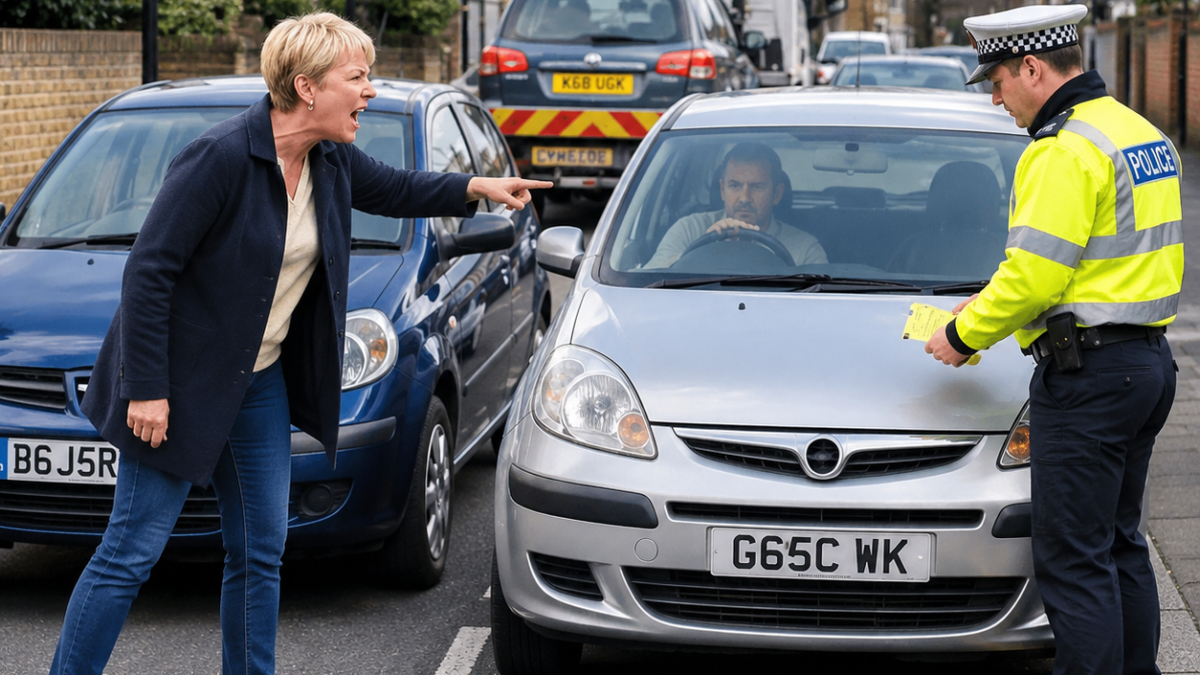
When my mother explained that the play structure sat on their private lot and had already been given to a family friend with two toddlers, the women screamed that it “belonged to the neighborhood,” threatened lawsuits, and actually called the police.
What they didn’t know was that my parents already had approved permits, contractors, and a plan for that yard—and within weeks, the place those women had treated like a free neighborhood daycare would disappear behind a ten-foot wall with something much bigger being built inside.
My parents had downsized into a corner house in a quiet cul-de-sac outside Ridge View after raising three kids in a much larger family home.
The property had an enormous yard, and right in the middle sat a wooden play structure with slides, swings, and climbing walls.
The previous owners didn’t have grandchildren using it.
Years earlier, neighborhood families had helped build it for their children, but it had never become officially shared property.
It simply happened to stand inside that private backyard.
My parents wanted the space for something else.
So they called a family friend with two toddlers.
“If you want it, come get it.”
One weekend later, the entire structure was loaded onto a trailer and gone.
A few weeks after that, children came running through my parents’ side yard looking for the playground.
Then came furious pounding on the front door.
“Where is the playground?”
“We removed it,” my mother said.
“We own the house now.”
“No, you don’t.”
The women insisted the elderly former owners still lived there and accused my mother of being their helper.
When she showed them otherwise, their argument changed.
“The playground belongs to the neighborhood.”
My mother eventually shut the door.
An hour later, police arrived.
She showed the officers the ownership documents.
One officer sighed.
“Yeah, we know those ladies.”
They confirmed my parents were within their rights.
That should have ended everything.
Instead, the women returned days later and demanded that my father, Mark, replace the playground because their children were bored.
Mark looked at the empty backyard.
Then at them.
He didn’t explain what was already happening behind the scenes.
He simply smiled.
Because contractors were coming.
And the first thing they were building was a wall.
[END OF FACEBOOK CAPTION]
[FIRST COMMENT / FULL STORY CONTINUATION]
The digging started a few days later.
My parents had not bought that corner lot because they wanted to become the neighborhood villains.
They had spent most of their adult lives raising three children in a large family house that required more work every year.
Stairs.
Bedrooms nobody used anymore.
A yard designed around kids who had grown up and moved away.
They wanted something simpler.
One floor.
Open windows.
A manageable house.
And one indulgence.
The backyard.
That huge corner lot had been one of the biggest reasons they bought the place.
My father had stood outside during the showing and looked at all that open ground as if he could already see what it would become.
My mother saw a patio.
He saw water.
Neither saw a neighborhood playground.
The play structure had simply been inherited with the property.
It was impressive.
Probably expensive when it was built.
Heavy wooden beams.
Slides.
Swings.
Climbing walls.
Enough equipment for a dozen children.
But it was still personal property sitting on land my parents now owned.
The realtor had explained the history.
Years earlier, several neighborhood families with young children had contributed to building it.
It had become an informal gathering place.
But nobody had recorded an easement.
Nobody had transferred part of the lot.
Nobody had created a community park.
No HOA documents described the backyard as shared recreation space.
The previous owners had simply allowed neighborhood children to use it.
That generosity had lasted long enough that some people apparently stopped remembering it was generosity.
That was the real problem.
Permission had quietly become expectation.
Expectation had become entitlement.
My parents discovered that the moment the playground disappeared.
The first confrontation rattled my mother more than she admitted.
Not because she thought the women were right.
Because nobody expects to buy a house and have strangers show up demanding access to the backyard.
The police visit helped.
She showed the officers the paperwork.
They looked at the property.
Asked questions.
Then made the situation simple.
The yard belonged to my parents.
The playground had not been legally designated as public or community property.
My parents had been entitled to remove it.
If the women returned and caused problems, call again.
One officer made the comment that told us more than anything else.
“Yeah, we know those ladies.”
Apparently my parents were not their first dispute.
That should have reassured us.
Instead, it made my father more cautious.
A few days later, Mark came home and found the same two women standing near the edge of the property.
They were not inside.
Not yet.
They were staring toward the backyard.
One called to him.
“So what are you replacing it with?”
My father stopped.
“Replacing what?”
“The playground.”
He already knew.
He wanted to hear her say it.
“Our kids need something to do.”
Mark looked toward the empty patch where the structure had stood.
Then back at her.
“That sounds like something parents usually handle.”
Her expression hardened.
“You removed something the neighborhood depended on.”
“It was on my property.”
“The children used it for years.”
“I understand.”
“So what are you going to put there?”
He smiled.
“You’ll see.”
That answer irritated them more than an argument would have.
Because there was already something to see.
Survey markings.
Contractor flags.
Permit paperwork.
My parents had been planning the project since before they closed on the house.
The old play structure was simply in the way.
The first major change was privacy.
A tall brick wall began going up along the rear boundary.
Ten feet.
Smooth stone across the top.
Not something a child could casually climb.
Not something an adult could easily grip either.
It was substantial.
Legal.
Permitted.
And because a swimming pool was part of the project, securing the yard was not optional.
My father enjoyed explaining that whenever someone complained.
The two side boundaries received walls too.
Metal gates were installed between my parents’ yard and the neighboring properties.
Those gates could be locked from the inside.
That detail sounds strange until you understand the relationships.
The neighbors on both sides were thrilled.
On one side lived Lynn and Ruth, a retired couple who had apparently spent years watching children from the old playground spill into their yard.
On the other side was a younger family with a teenage son.
When he had been smaller, he used the playground.
By the time he was older, the same two mothers had effectively pushed him out whenever their younger children wanted control of it.
The new gates gave the three households a way to move between their private yards without opening anything toward the street.
It was not a public compound.
It was three sets of neighbors choosing to cooperate.
That difference mattered.
The walls went up.
Then excavators arrived.
The two women became fascinated.
One afternoon, my father was watering the front lawn when the taller woman with the tight ponytail marched up.
“What are you building back there?”
Mark kept watering.
“Personal property.”
“What?”
“On my land.”
“You can’t put up a wall like that.”
“City approved.”
“It’s excessive.”
“Pool code.”
That made her pause.
“Pool?”
My father looked at her.
Realized he had said too much.
Then smiled.
“You’re welcome to check the permits.”
He went back to watering.
She stood there another few seconds.
Then walked away.
By that point, the real project was obvious from inside the property.
The excavation was deep.
Plumbing went in.
Electrical.
Concrete.
Tile.
An in-ground swimming pool took shape exactly where much of the old play structure had stood.
Beside it came a hot tub.
Color-changing lights.
Stone patio.
The kind of backyard my parents had talked about having for years but never built while raising us.
It was not cheap.
But that was the point.
They had worked.
Saved.
Raised their family.
Downsized.
Now they finally had the space and money to build something entirely for themselves.
My mother watched the contractors work almost every day.
She would send me photos.
First the hole.
Then framing.
Then concrete.
Then tile.
Then the lights.
The day the water trucks arrived, she called me.
“It’s happening.”
“You sound twelve.”
“I feel twelve.”
Lynn and Ruth came through the side gate.
The younger neighbors came too.
Everybody stood around watching water rise inside the pool as if none of us had ever seen water before.
Ruth looked toward the wall.
Then toward my mother.
“You have no idea how good this feels.”
“What?”
“We haven’t been able to sit peacefully in our own yard for years.”
My mom frowned.
“Because of the playground?”
“Because of what came with it.”
Ruth explained that the two mothers routinely treated the block like an extension of their own homes.
If one neighbor had an above-ground pool, their children wanted access.
If another had outdoor toys, they wanted access.
If somebody grilled, they appeared.
The old playground had made my parents’ lot the center of that culture.
The previous elderly owners had apparently tolerated it.
Maybe even enjoyed it once.
Over time, tolerance became expectation.
Neighbors who pushed back were called selfish.
People gave in because saying yes was easier than arguing.
My parents had unintentionally broken the system when they removed the play structure.
The two mothers did not just lose swings.
They lost the neighborhood gathering point they had used to pressure everyone else.
That explained the anger.
By early summer, Ridge View became hot and sticky.
The pool was almost ready.
The brick walls hid most of it from the street.
That drove the women crazy.
They knew something existed behind those walls.
They just did not know exactly what.
My father joked that he could feel them prowling around like raccoons looking for a loose trash-can lid.
One evening, he found one of them slowly walking past the side wall.
Looking at the height.
Looking at the gates.
He said nothing.
She said nothing.
The wall said plenty.
The project finished right as summer heat peaked.
Pool.
Hot tub.
Stone patio.
Lighting.
Outdoor furniture.
Everything my parents had planned.
They decided the first real use deserved a party.
Not a neighborhood-wide party.
Their party.
They quietly invited people they actually liked.
Lynn and Ruth.
The family next door.
Several other residents who had been kind to them since moving in.
Friends.
A few children.
Everyone was told the same thing.
Potluck.
Bring something if you want.
Swimsuits welcome.
Children welcome if supervised.
No drama.
Saturday arrived with perfect weather.
Blue sky.
Warm breeze.
My father wore a ridiculous Hawaiian shirt and took over the grill.
By noon, guests were entering through the side gates carrying bowls, trays, burgers, drinks, towels.
Because of the walls, the backyard felt separated from the street.
Music played softly.
Kids splashed.
Adults stretched out in lounge chairs.
The hot tub bubbled.
My mother looked around and said:
“This is exactly what I wanted.”
That should have been the whole story.
Then the smell of barbecue drifted over the wall.
Followed by laughter.
Then splashing.
The two women noticed.
According to the neighbors, they first walked toward another house where people sometimes had gatherings.
Nobody there.
Then they followed the sound.
They stopped outside my parents’ wall.
One apparently pressed her ear against the brick.
That image still makes my father laugh.
Then came the unmistakable sound of children splashing.
A few minutes later, the doorbell started.
Not once.
Repeatedly.
Knocking followed.
Hard.
My father put down his grill tools.
Wiped his hands.
Walked through the house.
Opened the door.
Both women stood there.
Their children behind them.
Some already wearing swimsuits.
Towels in hand.
That part told my father everything.
They had not come to ask what was happening.
They had come prepared to enter.
Both started talking immediately.
“What is this wall?”
“Why weren’t we invited?”
“Our kids heard the pool.”
“This is a community event.”
“You can’t exclude—”
Mark lifted one hand.
They stopped just long enough.
“First, the wall is required because we have a pool.”
One opened her mouth.
He continued.
“Second, you burned the bridge with us a long time ago.”
Her face hardened.
“And third, no, you and your children are not coming inside to use our pool.”
Silence.
The children looked confused.
The mothers did not.
Their faces moved through disbelief into anger almost instantly.
“You can’t do that.”
“I just did.”
“Our children used this property before you moved here.”
“They used a playground the previous owners allowed them to use.”
“It was a neighborhood playground.”
“It was on this lot.”
“You took it away.”
“Yes.”
“You replaced it with a pool.”
“Yes.”
“Then they should get to use the pool.”
My father actually stared at her.
The logic was so complete in her mind that there was nowhere to enter it.
“No.”
She began shouting.
Unfair.
Selfish.
Discrimination.
Community.
Children.
My father stepped back.
“You need to leave.”
One threatened to call the police.
Mark smiled.
“Sure.”
Then he closed the door.
He returned to the backyard.
My mother looked up.
“Who?”
“You know.”
She laughed.
“They coming?”
“No.”
“Police?”
“Probably.”
The party continued.
An hour later, two cruisers arrived.
Same officers.
My father walked out and invited them in.
The situation could not have looked less criminal.
Adults sitting around a pool.
Kids swimming.
Food everywhere.
Soft music.
One guest recognized the officers and waved.
Someone handed one of them a paper plate before he had even finished explaining why they were there.
My mother offered them lunch.
They accepted.
That turned the police response into what my father later described as a therapy session with potato salad.
The officers asked what happened.
My parents explained.
The surrounding neighbors started filling in history.
Years of children being pushed into other people’s yards.
Parents being pressured to entertain them.
People being guilted into access.
Neighbors losing privacy.
The playground becoming an excuse for unsupervised children to move between properties.
Lynn spoke.
Ruth spoke.
The younger family spoke.
Nobody sounded hysterical.
Mostly tired.
The officers listened.
One finally said:
“Yeah.”
He looked at his partner.
“We’ve had complaints involving them before.”
My father nodded.
“So what happens?”
“If they continue coming onto the property or harassing you, document it.”
The officer looked toward the wall.
“Call us if necessary.”
He also mentioned that if the conduct continued, my parents could explore appropriate protective orders through the proper process.
No dramatic arrest.
No handcuffs.
No instant court order.
Just documentation and boundaries.
The officers finished lunch.
Thanked my mother.
Walked out.
The two women were still across the street.
Their children still wearing swimsuits.
Towels still in their hands.
They rushed toward the cruisers.
We could see pieces of the conversation through the gate.
Arms waving.
Pointing.
The officers stayed calm.
Then got into their vehicles.
Drove away.
The women remained standing there.
No police escort into the pool.
No declaration that my parents had to share.
No one forcing the gate open.
Nothing.
For the first time since my parents moved in, the word no stayed no.
That was what changed the street.
Not the pool.
Not the wall.
The boundary.
The old playground had existed long enough that certain families forgot they were guests.
My parents’ arrival reset that.
The property was private.
Generosity could happen.
But it had to be voluntary.
The party continued.
My father returned to the grill.
Someone asked:
“Everything okay?”
“Perfect.”
The kids kept swimming.
Adults laughed.
The two women eventually went home with their children.
No pool.
No barbecue.
No free afternoon of somebody else entertaining them.
That sounds petty when written down.
Maybe it was.
But neighbors who had been pressured for years felt something lift.
Ruth sat beside my mother later that afternoon.
“They finally heard it.”
“Heard what?”
“No.”
My mother looked toward the pool.
Then smiled.
The wall remained after that.
Of course.
It existed for privacy and pool safety, not revenge.
The gates between friendly neighbors stayed.
Sometimes Lynn and Ruth came through.
Sometimes the younger family did.
They knocked or called first.
Simple.
My parents invited people when they wanted company.
Sometimes they wanted nobody.
Also simple.
The two women did not suddenly become friends.
There was no apology.
No dramatic reconciliation.
They just stopped having automatic access.
That was enough.
My parents had not bought the home to fight anybody.
They bought it to live.
Once the conflict faded, that was what they did.
Morning coffee near the patio.
Hot tub in cooler weather.
Grandkids when family visited.
Friends on weekends.
Quiet evenings.
The pool became normal.
That was the victory.
Not watching somebody stand outside angry.
Using the yard without thinking about them.
My mother told me later that the strangest part was how close she had come to doubting herself.
Those women showed up with such certainty.
“It belongs to the neighborhood.”
“Our kids use it.”
“You can’t remove it.”
People say things confidently enough and you start wondering whether maybe there is some obscure rule you missed.
That is why the police visit mattered.
Not because police magically settle every property dispute.
Because my mother had the documents.
The officers looked at them.
The property belonged to my parents.
No shared playground right appeared.
Reality became simple again.
The women’s anger did not change ownership.
The children’s disappointment did not change ownership.
Years of informal use did not automatically create ownership.
And when the play structure was gone, my parents were free to use their backyard according to their own plans and approved permits.
The brick wall became neighborhood legend.
Some people called it the fortress.
My father loved that far too much.
He once considered hanging a tiny sign over the gate:
MARK’S KINGDOM.
My mother stopped him.
Correct decision.
The pool lights changed colors at night.
Blue.
Green.
Purple.
My mother liked blue.
My father liked rotating colors because he had the taste of a teenager whenever electronics were involved.
Neighbors joked that the backyard looked like a resort.
That had been the idea.
My parents had spent decades building a life around children.
School schedules.
Sports.
College.
Weddings.
Then suddenly they had a house designed for two people.
That pool represented something more than luxury.
It was permission to enjoy the years they had worked for.
No one else had a claim on that.
The old playground went to a family that actually needed it.
Two toddlers.
A backyard where it would be used.
My parents never regretted giving it away.
The family sent photographs occasionally.
Kids on the swings.
Slides.
Exactly what the structure was built for.
That made the two women’s complaints feel even stranger.
The playground had not been destroyed.
It had simply moved.
What they lost was access.
That was the real grievance.
My father understood that long before my mother did.
“They don’t care about the structure.”
“What do they care about?”
“Control.”
He was probably right.
The first confrontation had told us that.
They did not begin by asking.
They demanded.
When my mother explained ownership, they denied she owned the house.
When she proved she did, they changed arguments.
The playground belongs to everyone.
When police rejected that, they changed again.
What will you replace it with?
When the pool appeared:
Our kids deserve access.
The conclusion stayed constant.
They deserved something.
Only the reasoning changed.
That pattern is worth noticing.
People who genuinely misunderstand a fact usually change their position when the fact is corrected.
People protecting entitlement change the explanation instead.
My parents stopped debating explanations.
They maintained the boundary.
That worked.
The source story ends that first episode with laughter and barbecue before shifting into a completely separate neighbor-harassment story.
For my parents, the meaningful ending really was that ordinary.
The party ended near sunset.
People collected bowls.
Parents dried children.
Lynn took leftover burgers.
Ruth helped my mother clear plates.
The younger family closed one of the side gates behind them.
My father skimmed leaves from the pool even though almost none were there.
The brick walls turned orange in the evening light.
The street outside became quiet.
No police.
No shouting.
No pounding on the door.
Just my parents standing beside the backyard they had wanted since buying the house.
My mother looked at the empty chairs.
Then at the water.
“You think they’ll come back?”
My father shrugged.
“Maybe.”
“And if they do?”
He looked toward the locked gate.
“They still have to ask.”
That became the rule.
Not just for those women.
Everyone.
Friends asked.
Neighbors asked.
Family called.
Most invitations were gladly given.
But they were invitations.
The difference between a welcoming home and a public facility is consent.
My parents finally had theirs back.
And the biggest irony was that once the playground disappeared, the neighborhood did not fall apart.
Children survived.
Families found other things to do.
The two women had to arrange entertainment for their own kids.
Other neighbors rediscovered their yards.
Lynn and Ruth could sit outside without children appearing unexpectedly.
The family next door relaxed.
Nothing catastrophic happened.
All that outrage had been built around the assumption that one private backyard was responsible for everybody else’s summer.
It wasn’t.
My parents’ house was simply their house.
Their yard was their yard.
And behind that ten-foot wall, the place those women once treated like neighborhood property became exactly what my parents had intended from the beginning.
Home.