The executives at St. Andrew Regional Medical Center thought eliminating my overnight facilities position would save them money, but three weeks after calling me “a dime a dozen,” they were sitting across a boardroom table asking me to come back.
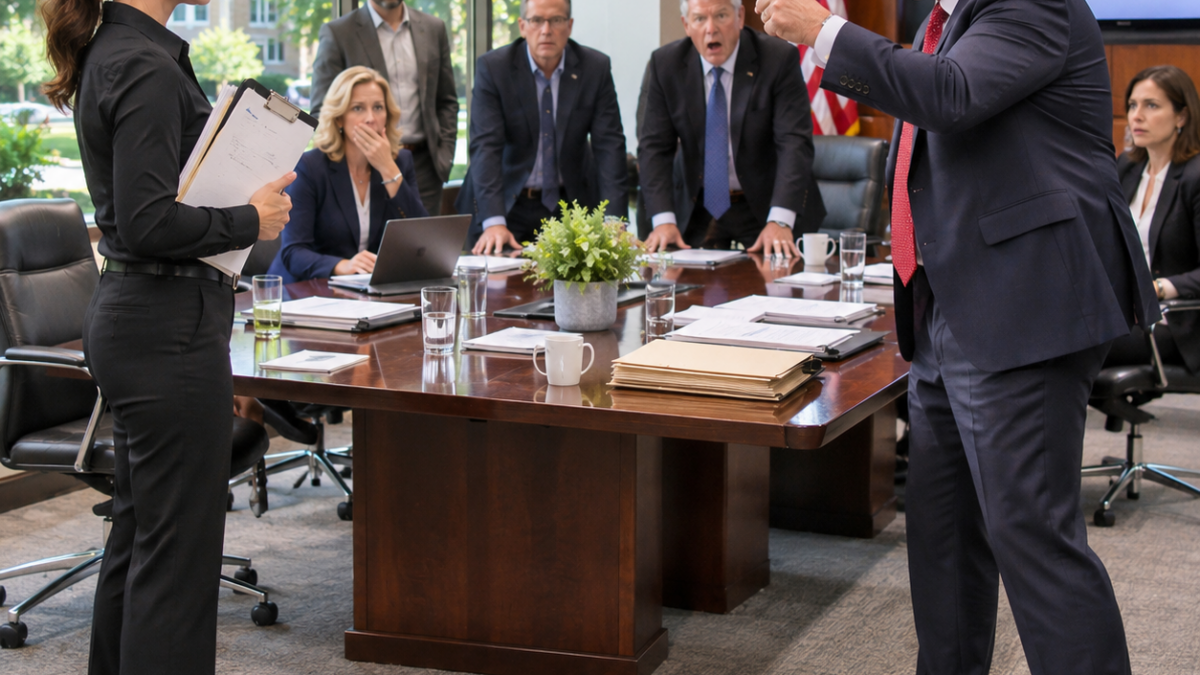
The executives at St. Andrew Regional Medical Center thought eliminating my overnight facilities position would save them money, but three weeks after calling me “a dime a dozen,” they were sitting across a boardroom table asking me to come back.
I had spent almost seventeen years walking those hospital corridors after midnight, quietly keeping emergency generators, medical-gas systems, boilers, electrical panels, and aging equipment alive while most of the people making budget decisions knew me only as the guy pushing a floor machine.
What they didn’t understand was that years earlier the hospital had officially classified my position as critical infrastructure support, and replacing me required something their three new contractors had received only three days of: proper supervised training.
My name is Daniel Mercer.
I’m forty-eight years old.
My wife, Emily, was in the middle of immunotherapy after a long fight with breast cancer, and our health insurance came through my job.
The morning I was fired, a white envelope was taped crooked across my locker.
Effective immediately.
Position eliminated.
Budget restructuring.
My employee badge was already deactivated.
Vice President Richard Collins offered me two weeks of severance if I signed away future claims.
Then I asked about insurance.
“Your benefits end at midnight.”
I told him my wife was still in treatment.
He checked his watch.
“Facilities employees are replaceable, Dan.”
Then he said the four words I would remember for the rest of my life.
“Custodial staff are a dime a dozen.”
I didn’t sign.
As I carried seventeen years of belongings toward the exit, I passed the three contractors hired to replace me.
One asked where the emergency generator room was.
That was when I realized something terrifying.
For nearly two decades, management had never documented half the knowledge they depended on because when something broke, they simply called me.
So before going to sleep that afternoon, I made one phone call.
I told a state inspector the hospital had terminated the only overnight technician responsible for several undocumented emergency systems and replaced him with workers who had received only a few days of orientation.
She asked whether those systems involved emergency power, medical gases, or life-safety equipment.
“Yes,” I said.
Her voice changed.
Four days later, at two in the afternoon, I woke to six text messages from security.
The last one contained only two words.
Generators down.
[END OF FACEBOOK CAPTION]
[FIRST COMMENT / FULL STORY CONTINUATION]
I stared at Pete’s message for several seconds.
Generators down.
Nothing else.
No explanation.
No punctuation.
Pete usually wrote full sentences even when he was annoyed.
If he had reduced the situation to two words, things were bad.
My phone buzzed again.
Emily was sitting across the kitchen table.
She had a blanket around her shoulders even though the house was warm.
Treatment had made her cold all the time.
She watched my face.
“You’re thinking about going in.”
I turned the phone facedown.
“They fired me.”
“I know.”
“They replaced me.”
“I know.”
Neither of us said anything after that.
That silence probably saved me from doing something stupid.
Because every instinct I had built over seventeen years told me that when St. Andrew had a generator problem in the middle of a storm, I went in.
I did not wait to be asked.
I did not check whether it was my scheduled shift.
I did not ask who approved overtime.
Hospitals do not get to pause because a breaker trips.
Patients still need oxygen.
Operating rooms still need power.
Ventilators still need power.
Nurses still need lights.
Pharmacy refrigerators still need temperature control.
My body knew that routine even if my employment record no longer did.
But Emily was right.
They had made the decision.
The hospital had explicitly decided I was non-essential.
Going back without being employed, insured, or authorized would not solve the real problem.
It would only teach management that they could eliminate the position and still call Daniel Mercer whenever the building got scared.
So I left the phone on the table.
That evening, Pete finally got through.
“Dan.”
His voice sounded exhausted.
“What happened?”
“Storm rolled through after midnight.”
“I saw the weather.”
“Commercial power dropped across part of the county.”
“Transfer controller?”
A pause.
“Yeah.”
I closed my eyes.
Every few weeks, the backup generator transfer controller developed the same timing problem.
Officially, the equipment was supposed to synchronize automatically.
In reality, aging systems rarely care what manuals say they are supposed to do.
Years earlier, I had figured out a manual reset sequence.
Seven switches.
Two timed breaker delays.
Pressure verification.
If you knew exactly what you were doing, the entire sequence took about ninety seconds.
The workaround was ugly.
Temporary.
Management had been told repeatedly that the controller needed permanent attention.
But permanent repairs cost money.
So the budget request kept moving.
Next quarter.
Next fiscal year.
Next capital cycle.
Meanwhile, I kept the thing alive.
Pete said:
“The contractor spent almost forty minutes going through manuals.”
“They won’t find it.”
“That’s what Marcus said.”
“Because it isn’t in the manual.”
“They called emergency service.”
“How long?”
“Almost two hours before someone got here.”
I leaned against the kitchen counter.
“What happened inside?”
Pete hesitated.
“Surgeries postponed.”
“ICU went into conservation procedures.”
“Administrators running around like the roof was on fire.”
“Anybody hurt?”
“Not that I know.”
That was the only question that mattered.
The local news called it a temporary power disruption.
Technically true.
Internally, it had been something much worse.
I sat on the couch after Pete hung up.
Emily joined me.
“You knew how to fix it.”
“Yes.”
“In ninety seconds?”
“Usually.”
She looked toward the television.
“Do you feel good about that?”
“No.”
I answered too quickly.
Because I didn’t.
Not even a little.
The executives had insulted me.
Yes.
They had taken away the job that paid for Emily’s insurance.
Yes.
Richard Collins had called people like me replaceable while checking an expensive watch.
Yes.
But the patients inside that hospital had nothing to do with any of it.
I knew those hallways.
I knew the pediatric wing.
I knew the night nurses who drank coffee so strong I could smell it from the service elevator.
I knew which operating-room door stuck in humid weather.
I had watched families sleep in chairs outside intensive care.
I had helped orderlies push beds during emergencies.
I had carried boxes for new parents.
I had stood near families receiving news that changed their lives.
Those were the people paying for management’s mistake.
That made the situation much harder to enjoy.
I did not want St. Andrew to fail.
I wanted St. Andrew to understand why it had nearly failed.
Five days later, Marcus called.
Marcus had been one of the senior maintenance mechanics on day shift for years.
Good man.
Good mechanic.
He knew equipment.
But nobody knew everything.
That was the problem.
“Dan.”
“You sound terrible.”
“They’re killing us.”
“Who?”
“Everybody.”
I almost laughed.
“What happened?”
“The three contractors aren’t bad guys.”
“I know.”
“They’re trying.”
“I know.”
“But they don’t know anything that isn’t written down.”
“That’s because nobody wrote half of it down.”
He exhaled.
“One of them shut down a chilled-water loop yesterday trying to diagnose an alarm.”
I winced.
“Which one?”
“West loop.”
“Please tell me someone caught it.”
“Eventually.”
“Eventually?”
“Yeah.”
I rubbed my forehead.
“What else?”
“Another guy reset Panel C-14 because the label said respiratory support.”
“It hasn’t fed respiratory support since the renovation.”
“Exactly.”
“That panel label has been wrong for six years.”
“I know.”
“They don’t.”
That sentence defined the whole disaster.
They don’t.
Not because they were stupid.
Not because they were lazy.
Because nobody had taught them.
Three days of orientation cannot replace seventeen years of institutional memory.
And management had never bothered converting that memory into documented procedures.
Marcus sounded angry.
Then tired.
“They keep asking us why we didn’t tell them.”
“Tell them what?”
“Everything.”
I laughed once.
No humor.
“Because you don’t know everything.”
“Exactly.”
“Dan, they’re blaming maintenance.”
“Of course they are.”
Organizations rarely blame decisions.
They blame the closest human being.
A budget spreadsheet cannot sit in a disciplinary meeting.
A restructuring plan cannot defend itself.
A leadership decision has no face.
So somebody with grease on his hands gets called careless.
Three days later, Pete called again.
I was mowing the yard.
I almost missed it.
Then I heard alarms through the phone before he even spoke.
“Medical gas.”
I shut the mower off.
“What?”
“They’re evacuating patients.”
My stomach dropped.
“What happened?”
“Central oxygen monitoring.”
I knew immediately.
Years earlier, a firmware update had created an intermittent conflict in the central oxygen-monitoring network.
Every few months the sensors could falsely report pressure loss unless the system was restarted in a very specific sequence.
Not simply shut down.
Restarted.
One control node first.
Then another.
Wait.
Verify line pressure manually.
Bring communication back in order.
If you restarted everything at once, the false alarms remained.
I had shown the sequence to three supervisors over the years.
Every one had eventually retired or transferred.
Management’s position had always been that software problems belonged to the software vendor.
Fine in theory.
Except the vendor’s response time could be four hours.
Patients do not wait four hours because a service contract says so.
“What are they doing?” I asked.
“Vendor’s coming.”
“How long?”
“Four hours.”
I closed my eyes.
“Pete.”
“Yeah?”
“Are the actual line pressures stable?”
“I don’t know.”
“Someone needs to verify physically.”
“I think Marcus is doing that.”
Good.
At least Marcus knew enough to separate a sensor alarm from actual gas pressure.
By sunset, television news showed helicopters lifting critical patients from St. Andrew and transferring them to neighboring hospitals.
Administrators stood outside delivering carefully worded statements.
Technical issue.
Precautionary transfer.
Patient safety remains our highest priority.
All the usual language.
Emily and I watched from the couch.
She did not say anything for a long time.
Then:
“Could you have prevented that?”
I stared at the screen.
“Yes.”
She looked at me.
“Would they have listened if you warned them before they fired you?”
That question hurt more.
I laughed once.
“I warned them for years.”
Not just about oxygen monitoring.
Boilers.
Generator control.
Electrical labels.
Chilled-water valves.
Drainage.
Transfer equipment.
Old components.
Temporary workarounds.
Every hospital has things that operate because experienced people know where the weak points are.
That is normal to a degree.
What should not be normal is allowing those workarounds to become permanent invisible dependencies.
I had participated in that.
Not maliciously.
I was trying to keep the hospital operating.
Every time management postponed a permanent repair, I found another way to keep the system safe.
Every time I did that successfully, the urgency disappeared.
That was part of the lesson I had not yet admitted to myself.
My competence had hidden management’s neglect.
Three days after the medical-gas evacuation, another headline appeared.
East Mechanical Plant.
Boiler pressure problem.
I knew that boiler.
One stubborn bleed valve.
Needed manual adjustment every few weeks.
Permanent replacement required shutting down an entire wing.
Expensive.
Disruptive.
Administration kept delaying it.
So during inspections, I adjusted it.
Again.
Again.
Again.
The new contractors followed the official checklist perfectly.
That was the tragedy.
They did exactly what the documented procedure said.
The documented procedure was incomplete.
Pressure climbed.
The fire marshal temporarily closed two patient wings while independent engineers confirmed the system was safe.
That was when the situation stopped being an internal embarrassment.
Government inspectors arrived.
State health investigators.
Medicare compliance auditors.
Fire-safety officials.
Insurance representatives.
People with clipboards who did not care that the restructuring spreadsheet looked good.
They cared whether life-safety systems had competent staffing.
Every maintenance log I had written over seventeen years suddenly mattered.
Every note.
Every email.
Every request for a permanent repair.
Every warning that a workaround was temporary.
Every budget request someone had denied because the equipment was still functioning.
My attorney, Rebecca Sloan, called Friday afternoon.
She sounded energized.
Lawyers should not sound that happy when your former employer is under investigation.
“Daniel.”
“Hey.”
“Do not call anyone at the hospital.”
“I haven’t.”
“Do not answer questions from them unless I am present.”
“Okay.”
“And do not sign anything.”
“I already didn’t.”
“Good.”
“What happened?”
“They’re reviewing your employment records.”
That surprised me.
“Why?”
“Because you were not terminated as a janitor.”
I frowned.
“That’s exactly what Richard called me.”
“Richard may not have understood your actual classification.”
“What classification?”
She started reading.
Years earlier, following multiple inspections, St. Andrew had formally reclassified my position under critical infrastructure support.
I vaguely remembered the paperwork.
Management had told me it was administrative.
A title alignment.
Nothing that changed my daily responsibilities.
Rebecca continued.
The classification existed because I maintained emergency systems tied to federal accreditation and patient safety.
Emergency power.
Medical gases.
Life-safety equipment.
That designation carried staffing and competency requirements.
“What does that mean for the replacements?”
“It means replacement personnel cannot simply be assigned independent responsibility without demonstrating competency through supervised training.”
I sat up.
“How much training?”
She paused.
“Guess.”
I knew before she said it.
“Ninety days.”
“Exactly.”
I looked toward Emily.
She saw my expression.
“What?”
I held up one finger.
Rebecca continued.
“Your replacements received three days.”
“Yes.”
“That is becoming a very serious issue.”
Suddenly the investigation made more sense.
Equipment fails.
Hospitals know that.
Regulators know that.
Nobody expects machines to operate forever without problems.
The issue was not that a generator controller glitched.
Or sensors produced false alarms.
Or a bleed valve needed adjustment.
The issue was whether leadership knowingly removed the only qualified overnight employee responsible for critical systems without ensuring competent replacements existed.
That changed the story from:
Maintenance trouble after staffing change.
To:
Patient-safety exposure created by an inadequate transition.
Rebecca said:
“They’re also reviewing whether management knew your actual duties.”
“They knew enough to call me every time something broke.”
“That’s not the same as documenting what you did.”
“No.”
“Do you still have copies of your maintenance recommendations?”
“Yes.”
“How many?”
I thought.
“Years.”
“Good.”
The word sounded terrible in context.
The regulatory consequences began piling up.
Emergency engineering contracts.
Regulatory penalties.
Insurance disputes.
Delayed procedures.
Reimbursements tied to disruptions.
Outside consultants.
Audits.
Temporary staffing.
Every attempt to save money had created another bill.
People later reduced the story to a simple number.
They tried to save $52,000.
The resulting damage climbed into millions.
The title people loved was the $2.8 million lesson.
Inside the situation, it did not feel like a neat equation.
It felt like a hospital bleeding money from ten directions because leaders had removed something they did not understand.
Then, on a quiet Tuesday afternoon, my phone rang.
Unknown number.
I answered.
“Mr. Mercer?”
“Yes.”
“This is Michael Harrison, chief executive officer of St. Andrew Regional Medical Center.”
I looked across the room.
Emily stopped what she was doing.
Michael continued.
“I’d appreciate the opportunity to meet with you.”
A pause.
“And discuss how we can make this situation right.”
I looked at Emily.
She already knew.
I said:
“I’ll be there.”
Then:
“But I won’t be coming alone.”
Rebecca smiled when I told her.
“Good.”
The meeting was scheduled for later that week.
We arrived ten minutes early.
Rebecca had a rule.
“The person controlling the room should never be the person running into it.”
I asked:
“Did you invent that?”
“Yes.”
“At least you’re honest.”
We walked through St. Andrew’s main entrance.
I had crossed that lobby thousands of times.
Usually unnoticed.
Sometimes carrying parts.
Sometimes responding to alarms.
Sometimes holding a door for a patient.
This time, the receptionist stood.
“Good afternoon, Mr. Mercer.”
That was new.
I almost looked behind me.
Rebecca noticed.
“Enjoy it.”
“I’d rather not.”
“Fair.”
We took the elevator upstairs.
The boardroom looked almost exactly as it had three weeks earlier.
Long polished table.
Glass.
Coffee.
Water bottles nobody touched.
But the people were different.
Not literally.
Their confidence was gone.
Michael Harrison stood first.
Shook my hand with both of his.
Board members sat around the table.
Chief financial officer.
Outside counsel.
Facilities leadership.
And Richard Collins.
Richard looked older.
Not physically.
Smaller.
That is the only word I can use.
The first time we met after my termination, he had leaned back like the building belonged to him.
Now he sat forward.
Hands together.
No expensive-watch checking.
Michael cleared his throat.
“Daniel, before we discuss anything else, I want to apologize.”
I waited.
“We failed you.”
He paused.
“And more importantly, we failed the people who trusted us to make responsible decisions.”
That mattered.
He said we.
Not:
Richard made a mistake.
Not:
HR mishandled this.
Not:
Facilities failed to communicate.
We.
Leadership.
The organization.
I respected that.
Still, apologies come more easily after regulators calculate consequences.
Rebecca placed a folder on the table.
Inside:
Maintenance recommendations.
Emails requesting permanent repairs.
Warnings.
Budget requests.
Overtime records.
Emergency call logs.
Performance reviews.
Seventeen years of documents showing the hospital had relied on me for much more than custodial work.
Richard looked through several pages.
He seemed genuinely surprised.
That surprised me.
Maybe he had never seen them.
Maybe nobody summarized my actual work before approving the restructuring.
Maybe I had been a salary line on a spreadsheet labeled facilities.
Rebecca slid one performance review toward him.
ESSENTIAL TO FACILITY OPERATIONS.
His signature was not on that one.
Different supervisor.
Different year.
Another.
CRITICAL KNOWLEDGE OF EMERGENCY POWER AND MECHANICAL SYSTEMS.
Another.
REQUIRES CROSS-TRAINING SUCCESSOR DUE TO UNIQUE SYSTEM EXPERTISE.
I had forgotten that sentence.
Rebecca had not.
Richard looked at me.
I said nothing.
The hospital’s attorney eventually opened another folder.
“We’d like to offer a settlement.”
Rebecca took it first.
Read silently.
Page one.
Page two.
Page three.
Then she smiled slightly.
Not triumphantly.
More like somebody whose math had finally reconciled.
She pushed it toward me.
Full back pay from termination.
Retroactive restoration of our family health insurance to the day coverage had been canceled.
A lump-sum settlement large enough to cover what Emily and I had spent and the damage caused by the abrupt loss of benefits.
A five-year employment contract.
Salary considerably higher than before.
Guaranteed annual raises.
Independent authority over facilities training.
Then the most important clause.
No critical-systems employee could be removed, replaced, or materially reassigned without documented transition planning reviewed by qualified personnel.
I read that section twice.
Then looked at Michael.
“Why?”
He answered immediately.
“Because this should have existed before you were fired.”
Nobody said anything.
That may have been the most honest sentence of the entire meeting.
I looked toward Richard.
He shifted.
Then leaned forward.
“Dan.”
I waited.
“I owe you an apology too.”
I said nothing.
“When I said custodial staff were a dime a dozen…”
He stopped.
There was no useful ending to that sentence.
Finally:
“I was wrong.”
I nodded.
“No, Richard.”
He looked confused.
“You were uninformed.”
The room became still.
I continued.
“You didn’t fire me because you hated me.”
“You fired me because you never bothered learning what I actually did.”
He stared at the documents.
I was not trying to humiliate him.
That distinction mattered.
If Richard were simply cruel, the lesson would be easy.
Bad man makes bad decision.
But organizations rarely fail that cleanly.
He looked at title.
Salary.
Budget line.
Custodial overlap.
Then decided three younger contractors could perform the work cheaper.
On paper, maybe that looked efficient.
The failure happened because nobody asked:
What knowledge disappears if Daniel leaves tonight?
That is a different problem.
One that could happen anywhere.
Michael asked:
“If we reach agreement, will you return?”
I looked at Emily’s insurance clause again.
“Yes.”
Rebecca looked at me.
She had already reviewed the terms.
I signed.
Not immediately.
We went through everything.
Every clause.
Every benefit.
Every training authority.
Every protection.
When I finally signed, the room seemed to breathe.
Richard tried to lighten the mood.
“So you’ll train the new guys?”
I smiled.
“Absolutely.”
His shoulders relaxed.
Then I added:
“Training starts Monday.”
“Ninety days minimum.”
“Nobody touches emergency systems alone until they’re ready.”
A few people laughed quietly.
Richard did not.
Then he smiled.
Fair enough.
It was not revenge.
That was the requirement that should have existed all along.
The following Monday, I returned to St. Andrew.
Same parking lot.
Same old pickup.
Same loading dock.
Pete was at security.
He saw me.
Looked at the badge reader.
Then at me.
“Please tell me that thing works now.”
I tapped my restored badge.
Green light.
Pete laughed.
“Welcome back.”
“You still got that vending machine?”
“Unfortunately.”
“Good.”
“Some things need continuity.”
He shook his head.
I walked toward the facilities area.
The three contractors were waiting.
I had met them only briefly on the day I left.
They looked nervous.
I understood why.
Everybody had probably told them the story.
The guy they replaced was back.
The hospital had been fined.
Regulators involved.
Executives embarrassed.
It would have been easy for them to assume I blamed them.
I did not.
The first thing I said was:
“None of this is your fault.”
One of them looked surprised.
“You guys took jobs.”
“You got three days of training.”
“That is not the same thing as being given a fair chance.”
Their names mattered now because I was going to spend three months with them.
They were hardworking.
Curious.
Embarrassed by the failures.
One told me:
“They made it sound like everything was documented.”
I laughed.
“Welcome to St. Andrew.”
We started with emergency power.
Not the workaround.
The whole system.
Where power entered.
What transferred.
Which panels were mislabeled.
Why.
Which renovations changed load paths.
What alarms mattered.
Which ones lied.
What the manual said.
What reality said.
Then we documented both.
The seven-switch generator sequence went into a written emergency procedure.
Every delay timed.
Every verification step.
Every safety limitation.
I recorded a video demonstration.
Then made each contractor perform the sequence under supervision.
Again.
Again.
Again.
Not until they memorized it.
Until they understood why each step existed.
Memorization fails under stress.
Understanding survives.
Next:
Chilled-water loops.
We corrected panel labels.
Every incorrect label I had learned to work around was finally replaced.
That alone irritated me.
Some fixes took minutes.
Years of adapting around them because nobody made documentation a priority.
The medical-gas monitoring conflict became a formal procedure too.
Restart sequence.
Manual pressure confirmation.
Vendor escalation.
Patient-safety notification.
We brought the software vendor in.
Forced permanent review.
No more relying on somebody remembering the order from a conversation six years earlier.
Then the boiler.
That stubborn bleed valve.
Management finally approved replacement.
Imagine that.
After years of:
Too expensive.
Too disruptive.
Suddenly the cost looked small.
Because almost closing wings tends to change capital priorities.
We scheduled shutdown.
Replaced the valve.
Updated maintenance documentation.
Removed the workaround.
That became my new philosophy.
Every workaround had to answer one question:
When does it stop being temporary?
If the answer was:
Daniel knows what to do,
that was no longer acceptable.
For seventeen years, I had become the hospital’s human patch file.
That felt valuable.
It was also dangerous.
If one person carries undocumented knowledge required for patient safety, the organization has failed even if that person is excellent.
That included me.
I told the new team:
“My goal is to make sure nobody needs me.”
One contractor laughed.
“You just got a five-year contract.”
“Exactly.”
“If this place is still dependent on me alone after five years, I failed.”
We built manuals.
Real ones.
Not binder decorations.
Procedures written by people who did the work.
Photographs.
Panel maps.
Valve identification.
Emergency sequences.
Contact lists.
Escalation thresholds.
Video demonstrations.
Training signoffs.
Competency tests.
Shift overlap.
Cross-training.
No more:
Call Dan.
Instead:
Follow procedure.
Then call whoever is qualified if the procedure doesn’t resolve it.
That was a safer hospital.
The executives hated some of the costs.
Good.
Safety costs money.
So does failure.
The $52,000 they thought they were saving looked microscopic compared with the financial damage that followed.
By the time penalties, emergency contracts, disrupted procedures, insurance consequences, outside engineering, and related losses were counted, the number people repeated was about $2.8 million.
But even that number missed something.
Patients transferred.
Families frightened.
Nurses stretched.
Employees blamed.
Confidence damaged.
You cannot put all of that in one spreadsheet.
Emily’s insurance was restored retroactively.
That was the part I cared about most personally.
The first time we received confirmation that her treatment coverage was secure again, she sat at the kitchen table and cried.
Not dramatically.
Quietly.
She had tried so hard to be strong while I was unemployed.
She had watched me call company after company.
She had watched the savings account shrink.
She had watched news reports from the hospital.
All while fighting breast cancer.
I sat beside her.
“We’re okay.”
She nodded.
Then:
“Don’t say that yet.”
Fair.
Cancer teaches you not to declare victory too early.
So we kept moving.
Treatment.
Scans.
Appointments.
Work.
Training.
Normal life rebuilt slowly.
At St. Andrew, the contractors improved fast.
Because ninety days is different from three.
You can teach context.
Not just locations.
One of them, Tyler, became excellent with electrical systems.
Another, Miguel, had strong mechanical instincts.
The third, Aaron, was organized enough to make documentation almost fun.
Almost.
I told them about every mistake I had made over the years too.
That mattered.
Institutional knowledge is not just secret tricks.
It includes failures.
Times I reset the wrong thing.
Times I misdiagnosed alarms.
Times I learned that one valve affected another system nobody expected.
People learn faster when experienced workers stop pretending experience means perfection.
Marcus joined several training sessions.
Day shift and overnight finally started sharing information properly.
We built overlap.
The hospital had unknowingly allowed knowledge silos everywhere.
Daniel knows generators.
Marcus knows chillers.
Susan knows fire doors.
Pete knows security quirks.
That is useful until Susan retires, Marcus gets sick, Pete transfers, or Daniel gets fired because somebody thinks he pushes a floor machine.
So we mapped responsibilities.
Cross-trained.
Documented.
At one point, Rebecca asked me:
“Do you enjoy being back?”
I thought.
“More than I expected.”
“Why?”
“Because I’m finally fixing the actual problem.”
Not the boiler.
Not the generator controller.
The culture.
For years, St. Andrew rewarded quiet improvisation.
If you kept things working, nobody asked how.
That sounds flattering.
It is not sustainable.
A good organization should not depend on invisible heroics every night.
It should make expertise visible before crisis.
That was what we were building.
Six months later, state inspectors returned.
I expected tension.
There was some.
Nobody enjoys regulators revisiting the place after a major compliance failure.
But this time we had records.
Training logs.
Competency signoffs.
Updated manuals.
Corrected labels.
Completed repairs.
Transition procedures.
Inspection results came back with the highest facilities rating St. Andrew had received in years.
When the email arrived, Michael Harrison came downstairs himself.
He found us in the mechanical room.
No suit jacket.
Tie loosened.
“Daniel.”
“Yes?”
He handed me a printed copy.
I read it.
Then gave it to Marcus.
Then the contractors.
Michael said:
“Congratulations.”
I shook my head.
“Not me.”
“The team.”
That mattered.
Because the whole disaster began when leadership acted as if one worker were disposable.
The answer could not be making one worker indispensable again.
The answer was building a team.
Richard Collins resigned before the end of the year.
Quietly.
No announcement beyond the normal executive communication.
People asked me whether I was happy.
No.
I remembered sitting across from him while he told me Emily’s insurance ended at midnight.
I remembered:
Dime a dozen.
I remembered his shrug.
Those things did not disappear.
But losing a career is painful.
Even when someone makes terrible decisions.
I did not need to celebrate.
I hoped he learned something.
That was enough.
Maybe he did.
Maybe he did not.
His story was no longer mine.
Emily continued treatment.
Months after my return, we went to another scan.
Hospitals are strange places when you work in one and also need one.
I could hear mechanical sounds other patients ignored.
Air handler.
Pump vibration.
Elevator motor.
Every noise still registered.
Usually I could not stop myself.
That day, I tried.
We sat in oncology.
Emily held my hand.
The doctor entered.
Pulled up the results.
Then said the words we had been afraid to hope for.
The scans looked clear.
Emily squeezed my hand so hard it hurt.
I barely heard anything after that.
We walked out through St. Andrew’s hallway.
The same hallway I had cleaned hundreds of times.
I noticed something strange.
For once, I was not looking at the floor.
Not checking vents.
Not listening to the building.
I looked at Emily.
That was all.
Outside, she stopped.
“You’re crying.”
“No.”
“You are.”
“Wind.”
“Inside?”
“Very advanced ventilation.”
She laughed.
So did I.
That day mattered more than the settlement.
More than the contract.
More than the inspection score.
More than proving Richard wrong.
Everything else had been noise around the real fear.
Would Emily be okay?
For the first time in a long time, the answer felt hopeful.
People began hearing the hospital story.
Employees told it.
Local reporting filled some gaps.
Numbers became simplified.
Fired worker.
Systems fail.
Hospital pays millions.
Worker returns.
That version made it sound like revenge.
It was not.
I never planned the equipment failures.
I never sabotaged anything.
I never withheld a document I was required to provide.
The procedures were undocumented because the hospital had failed to formalize them over many years.
I made one call to a state inspector because I believed patient safety could be at risk after my termination.
That was all.
Everything that happened next came from the condition of the systems and the decisions management had already made.
People asked:
“Did you know the generator would fail?”
“No.”
“Did you know oxygen monitoring would malfunction?”
“No.”
“Did you expect the boiler problem?”
“No.”
I knew those systems had vulnerabilities.
That is different from knowing exactly when they would fail.
My fear was that removing experienced coverage without proper transition created unnecessary risk.
The failures proved the risk faster than anyone expected.
I wish they had not.
I would have preferred regulators to inspect, management to realize the gap, and nobody ever need evacuation.
But life rarely teaches lessons in the cleanest way.
The hardest realization for me was that I had helped create the dependency.
For years, management postponed documentation because I was available.
I kept solving problems.
That is what workers do.
You want to help.
You take pride in being the person people call.
Then one day, you realize every undocumented workaround makes the organization slightly more dependent on you.
That may feel like job security.
It is actually a hazard.
I told younger employees that constantly.
“If you know something nobody else knows, teach it.”
“But then what makes me valuable?”
“Your ability to solve the next problem.”
Not hoarding the old one.
That became part of the training culture.
Every time someone developed a workaround, we documented it.
Every time equipment changed, manuals updated.
Every renovation required labeling review.
Every retirement triggered knowledge transfer.
Every critical role had a cross-trained backup.
No more invisible single points of failure.
That clause in my contract eventually became policy beyond facilities.
That surprised me.
The hospital began requiring transition planning for other critical operational roles too.
Not because everyone was Daniel Mercer.
Because leadership finally understood the concept.
Institutional knowledge has value.
You can measure salary.
You cannot always measure what an experienced person quietly prevents from happening.
That makes cost-cutting dangerous when the people making cuts do not understand the work.
A spreadsheet can show:
Position cost.
Benefits.
Overtime.
Potential savings.
It rarely shows:
This person knows the only reliable manual sequence for a transfer controller installed fourteen years ago.
Unless someone writes it down.
Now we did.
Pete retired eventually.
Before he left, security documented half the things he had learned too.
He joked:
“Guess I’m not taking my secrets with me.”
“Good.”
“You caused this.”
“Blame Richard.”
“Always.”
His last night, we stood near the vending machine.
Still there.
Somehow.
Pete hit it once.
“Older than both of us.”
“You said they’d replace us before it.”
“They tried.”
We laughed.
Then he hugged me.
I did not expect that.
“Take care of the place, Dan.”
“Go home.”
“You’ve been telling me that for years.”
“Now I mean permanently.”
He left.
The next guard knew the procedures.
That was progress.
Marcus eventually admitted something too.
After my firing, he had been angry at me for not coming back during the first outage.
That surprised me.
“I thought you abandoned us.”
“I was fired.”
“I know.”
“But at three in the morning with alarms going off, logic gets weird.”
“Fair.”
“When I found out your badge had been deactivated and security wasn’t supposed to admit you anyway, I felt stupid.”
“You weren’t.”
He looked at the generator room.
“I just missed knowing you knew what to do.”
That was the dependency again.
We fixed it.
By the end of the training period, Tyler could run the generator reset faster than I could.
He looked proud.
I was proud too.
“That means I’m obsolete now?”
“No.”
“That means we both know it.”
Better.
One day Richard’s old comment came up among the team.
Dime a dozen.
Tyler said:
“Bet he regrets that.”
I answered:
“Probably.”
Miguel asked:
“Did you hate him?”
“No.”
They looked surprised.
“I hated what he did.”
“That’s different.”
“Why?”
“Because if the problem is one bad person, you fire that person and pretend everything is fixed.”
“If the problem is a system that lets executives make decisions without understanding work, you need to change the system.”
The room went quiet.
Aaron said:
“That’s annoyingly reasonable.”
Emily said the same thing about me sometimes.
Maybe I had a brand.
I kept the old termination letter.
Not framed.
Not displayed.
In a file.
Effective immediately.
Position eliminated.
Budget restructuring.
I also kept the five-year contract.
Two documents.
Three weeks apart.
One treated me like a cost.
The other recognized the role the hospital should have understood from the beginning.
Sometimes I looked at both.
Not for ego.
Reminder.
Titles are often lazy summaries.
Janitor.
Technician.
Manager.
Executive.
What matters is function.
What does this person actually protect?
What happens if they disappear tomorrow?
Who knows what they know?
Those are better questions.
The hospital eventually replaced the old transfer controller.
Finally.
The first day the new system passed testing, I stood beside it with Tyler.
He said:
“So no more seven-switch ritual?”
“Hopefully.”
“You sound disappointed.”
“Seventeen years of tradition.”
He laughed.
We archived the old procedure anyway.
Historical reference.
Then moved on.
The medical-gas software received proper vendor remediation.
No more restart workaround.
The boiler bleed valve had already been replaced.
Panel labels corrected.
Chilled-water diagrams updated.
Every problem that had made me “special” slowly disappeared.
I loved that.
Because expertise should move forward.
If your entire value depends on an old broken valve nobody else understands, eventually either the valve or you becomes the problem.
My new job became less about secret fixes and more about preventing secrets.
That was better.
Michael Harrison occasionally joined facilities review meetings.
The first few times everyone stiffened.
CEO downstairs.
Rare.
Then he became part of the process.
He asked questions.
Sometimes basic ones.
Good.
One meeting, he asked:
“How did we not know Daniel was doing all of this?”
No one answered immediately.
Finally Marcus said:
“Because it worked.”
Michael looked at him.
Marcus continued.
“When things work, people upstairs don’t ask why.”
That answer landed.
Michael wrote something down.
I appreciated that.
He did not defend himself.
The board also changed how restructuring decisions were reviewed.
Not every cost-saving idea disappeared.
Hospitals still have budgets.
That reality never changes.
But positions tied to critical operations received functional review.
What does the role do?
What competencies are required?
What transition is needed?
Can responsibilities actually be redistributed safely?
Basic questions.
Expensive lesson.
Simple questions.
The settlement amount helped Emily and me recover financially.
We rebuilt savings.
Paid medical bills.
Stopped staring at every insurance envelope like it contained disaster.
But money did not erase those first nights.
The moment she saw the cardboard box.
The stack of treatment bills.
Canceled streaming services.
No takeout.
Calling employers who heard “budget reduction” and quietly assumed I had underperformed.
That part stayed with me.
Layoffs follow people.
Even when documents say restructuring.
People hear:
Why you?
That question becomes another burden.
My five-year contract helped.
So did the title change.
But I never forgot how quickly decades of work became one sentence taped to a locker.
That changed how I supervised people.
If someone had to be disciplined, I spoke to them.
If a role changed, we explained why.
If people left, we documented knowledge before they walked out.
Human beings deserve more than an envelope on a locker after seventeen years.
That is not just kindness.
It is good operations.
One younger technician asked:
“Why do you care so much about exit interviews?”
I said:
“Because sometimes the person leaving knows where the bodies are buried.”
He froze.
“Metaphorically.”
“Oh.”
“Mostly.”
He laughed.
The hospital became better at listening to quiet workers.
Not perfect.
No organization becomes perfect because one crisis scares executives.
But meetings changed.
When a nurse said a process did not work in real life, people listened.
When maintenance said a repair could not wait another fiscal year, capital planning took it more seriously.
When security said a door system had recurring faults, someone documented it.
Frontline knowledge became harder to dismiss.
That was probably the best outcome.
Not my raise.
Not Richard resigning.
Not the settlement.
The recognition that the people closest to problems often know things reports cannot show.
Emily eventually returned to some of her old routines.
She gardened.
Met friends.
Stopped carrying a sweater everywhere.
Every follow-up scan still frightened us.
Clear once does not erase fear.
But we learned how to live between appointments.
One evening she asked:
“Do you ever think about not going back?”
“To St. Andrew?”
“Yes.”
“Sometimes.”
“Why did you?”
I looked at her.
“Patients.”
She smiled.
“I knew you’d say that.”
“Also the contract.”
“Better.”
“And health insurance.”
“Very romantic.”
I laughed.
Then answered honestly.
“I wanted to fix what happened.”
That was probably the deepest reason.
Walking away would have protected my pride.
Going back let me change the system.
Not everybody should return to an employer that treated them badly.
Sometimes leaving is healthier.
In my case, the settlement created enough authority and protection that returning meant I could solve the problem that had caused the disaster.
That mattered.
The contractors became permanent staff eventually.
Not all in the same roles.
But they stayed.
I was glad.
They had been blamed publicly inside the hospital for failures created by management decisions.
That was unfair.
They needed a fair chance too.
After ninety days, each passed competency requirements.
The day the last signoff was completed, I brought donuts.
Tyler said:
“This is it?”
“This is what?”
“We’re officially allowed to touch things without you watching?”
“Terrifying, isn’t it?”
Miguel smiled.
“You nervous?”
“A little.”
“Good.”
They laughed.
I meant it.
Healthy systems still require respect.
Confidence without humility is how Richard’s decision happened.
Facilities work teaches that constantly.
Electricity does not care about job titles.
Pressure does not care about confidence.
Oxygen does not care about a budget meeting.
Systems obey physics.
Organizations survive by respecting that.
The story people tell now has a satisfying arc.
Hospital fires quiet worker.
Hospital discovers worker was essential.
Hospital loses millions.
Hospital begs him back.
It sounds clean.
Reality was messier.
I was not secretly the only genius keeping St. Andrew alive.
There were talented engineers.
Mechanics.
Nurses.
Contractors.
Managers.
I simply occupied a dangerous concentration point where undocumented knowledge had accumulated for too long.
Firing me exposed that weakness.
The real failure was not underestimating Daniel Mercer as a person.
It was allowing critical infrastructure knowledge to live inside one person at all.
That distinction matters.
Otherwise the lesson becomes:
Never fire the special guy.
The better lesson is:
Never build a system where firing one person creates a patient-safety crisis.
I tell people that whenever they ask.
Some are disappointed.
They want revenge.
I give them process improvement.
Occupational hazard.
A year after the termination, I walked past my old locker.
Same gray door.
No white envelope.
Different employee used it now.
Mine had been moved when my role changed.
I stopped.
Remembered the fluorescent buzz.
The coffee.
Badge in the envelope.
Effective immediately.
Funny how a place can hold a memory without changing at all.
Then Tyler called from down the hall.
“Dan, you coming?”
“Yeah.”
We had a training review.
I walked away.
That felt right.
Not standing there forever.
Just remembering.
Then moving.
The $52,000 savings figure became a cautionary number inside management.
I heard it in a budget meeting once.
An executive said:
“Before we eliminate this role, let’s make sure this isn’t another fifty-two-thousand-dollar decision.”
Everyone looked at me.
I hated that.
But I understood.
Numbers help organizations remember.
So does the $2.8 million estimate attached to the consequences.
Still, I wish they would remember Emily too.
And the ICU conservation procedures.
And the helicopter transfers.
And the closed wings.
Money gets leadership attention.
People are why the lesson matters.
The next time someone proposed reducing facilities coverage, the discussion lasted hours.
What systems?
What training?
What backup?
What transition?
Good.
That was the cost of learning.
Not paralysis.
Due diligence.
Richard’s chair eventually belonged to someone else.
I never knew much about where he went after resigning.
I did not search.
I had no interest in following his life.
I hoped he found another job.
That might surprise people.
But losing work while your family depends on you changes your relationship with employment.
I would not wish that fear on someone casually.
Even Richard.
I wanted him accountable.
Not destroyed.
There is a difference.
Sometimes I imagined what I would say if we met again.
Probably nothing dramatic.
Maybe:
How are you?
That would be enough.
He learned something from me.
I learned something from him too.
Never assume being useful means people understand your value.
Document your work.
Teach others.
Know your classification.
Read severance agreements.
Do not sign away rights because somebody tells you the offer expires.
And if your family’s health insurance depends on a job, understand the transition options before crisis.
Those lessons were not inspirational.
They were practical.
Practical lessons usually cost more.
My attorney Rebecca became almost family.
Emily adored her.
I accused Rebecca of enjoying the hospital’s discomfort too much.
She denied it badly.
One dinner she said:
“You know the best decision you made?”
“Calling the inspector?”
“No.”
“Not signing Richard’s severance agreement.”
I thought about it.
She was right.
Two weeks’ pay had looked enormous that morning.
Emily’s treatment.
No job.
Insurance ending.
Savings shrinking.
Richard knew exactly how desperate the timing made me.
If I had signed quickly, I might have released claims before understanding the critical-infrastructure classification.
I did not refuse because I was brilliant.
My hands were shaking.
I simply knew I should not sign something I had barely read while my life was falling apart.
That hesitation mattered.
People make expensive decisions when rushed.
I tell younger workers that too.
Read.
Wait.
Ask.
Get advice.
Two weeks’ pay is not generous if the paper gives away something worth far more.
Rebecca raised her glass.
“Now you sound like a lawyer.”
“Terrible.”
Emily laughed.
Life became ordinary again.
That may be the best ending.
Not the boardroom.
Not the settlement.
Not the inspection score.
Ordinary.
Emily and I eating dinner without medical bills spread across the table.
Me going to work without wondering whether my badge would flash red.
The new team handling an overnight problem without calling me because the procedure existed.
A boiler behaving because we finally replaced the valve.
Generator transfer functioning correctly because the controller was replaced.
Medical-gas monitoring stable after vendor repair.
Problems becoming boring.
Boring is beautiful in a hospital.
You do not want dramatic facilities stories.
You want lights.
Pressure.
Temperature.
Water.
Air.
Power.
Doors.
Systems doing exactly what nobody notices.
That is success.
One night around two in the morning, I walked the same hallway I had cleaned for years.
Floor machine humming in the distance.
A different employee pushed it now.
I passed a nurse.
She nodded.
I nodded.
No one knew the generator training had been updated that afternoon.
No one needed to.
A child slept in a room nearby.
Parents curled in chairs.
Machines blinked steadily.
That was enough.
I stopped near a mechanical-room door.
Listened.
Everything sounded right.
Then kept walking.
Seventeen years earlier, I thought value meant being the person who knew how to fix everything.
After St. Andrew fired me, I learned something better.
Real value is making sure the place keeps working even when you are gone.
The executives learned too.
They thought they were eliminating a replaceable overnight position.
What they actually eliminated was seventeen years of undocumented institutional knowledge tied to critical infrastructure.
The difference cost them millions.
But the most expensive part was never the money.
It was discovering that the quiet employee everyone walked past had been carrying responsibilities nobody upstairs had bothered to understand.
They called me a dime a dozen.
Three weeks later, they finally learned my name.
And when I returned, I made sure the hospital would never need another Daniel Mercer to become invisible enough to be dangerous.