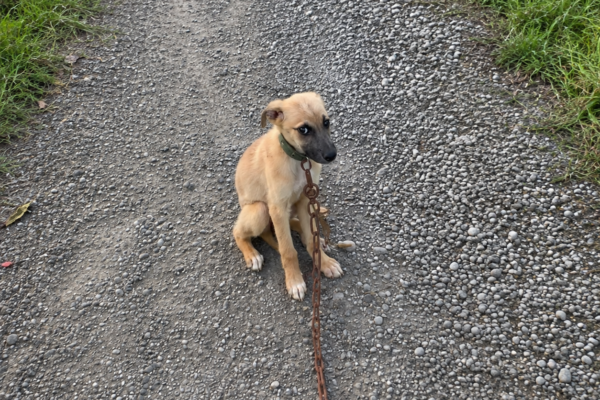
I thought I was just stepping outside barefoot to see why the sky over Winthrop had turned orange, but within seconds I was running toward a house that looked ready to disappear inside the flames.
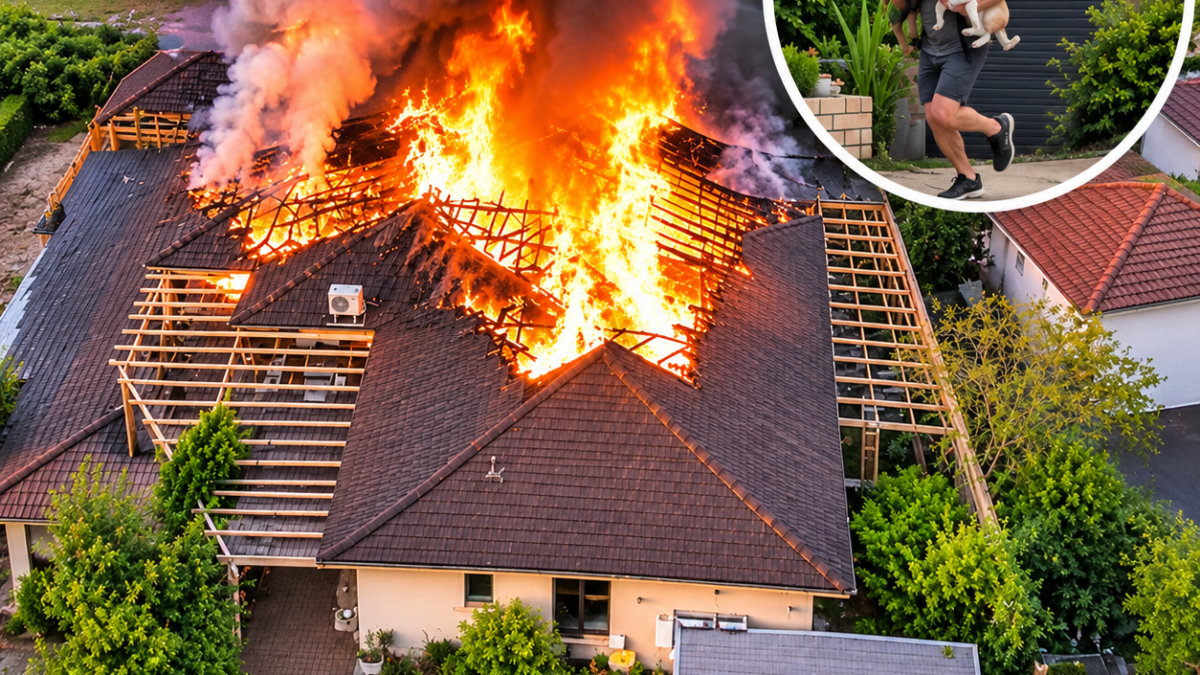
I thought I was just stepping outside barefoot to see why the sky over Winthrop had turned orange, but within seconds I was running toward a house that looked ready to disappear inside the flames.
Fire was roaring above the roofline, smoke was pouring across the property, and somewhere inside were a mother, her child, and two beloved pets who did not have time to wait for anyone to feel brave.
What happened in the next few minutes changed the way I understood fear, because courage turned out to feel nothing like I had imagined.
There are moments when your brain tries to convince you that what you are seeing cannot possibly be real.
That was how it felt when I looked toward the house next door.
The fire had grown with terrifying speed.
Flames were climbing so high that witnesses later described them as reaching roughly 20 meters into the air.
The glow was so intense that the entire area seemed to pulse with orange light.
Smoke rolled through the air in thick waves, swallowing parts of the house and then revealing them again.
I remember looking down for half a second and realizing I had no shoes on.
I had stepped outside barefoot.
Under any normal circumstance, I would have gone back for them.
There was nothing normal about that moment.
I knew people were still inside.
That knowledge pushed everything else out of my head.
I was afraid.
I want to be clear about that.
People sometimes talk about bravery as if brave people do not feel fear.
That was not what happened to me.
My body understood exactly how dangerous the fire was.
I could feel the heat before I was even close.
I could hear the violent crackle of burning material and the heavy roar of flames consuming whatever they could reach.
Every instinct that existed to keep a person alive was telling me not to go closer.
Then another thought became louder.
A mother and her child were in there.
Their two pets were in there too.
I could either stand outside and hope someone else reached them in time, or I could move.
So I moved.
I ran toward the smoke.
The closer I got, the less the house looked like the familiar home that had stood beside mine.
Smoke blurred its edges.
Flames flashed behind it.
The air itself seemed different, heavy and difficult to breathe.
I was not thinking about being heroic.
I was not thinking about what anyone might say afterward.
There was no grand decision.
There was only the terrible understanding that seconds mattered.
Inside that confusion, I focused on one thing at a time.
Find them.
Help them move.
Get them toward safety.
Do not stop.
The mother was trying to protect her child while everything around them had become chaos.
There is a particular kind of fear you see in someone who is not only afraid for themselves.
It is deeper.
It is the fear of a parent who knows another life depends on them.
I will never forget that.
The child was frightened.
The two pets were part of the family too, and leaving them behind was never something anyone wanted to consider.
There was no time for speeches.
No time for complicated plans.
We needed to get out.
Smoke made everything harder.
Heat made every second feel longer.
I kept thinking about the distance between where we were and the safety outside.
A few steps could suddenly feel enormous when the world behind you was burning.
But we kept moving.
Then, little by little, the smoke began to thin.
The outside light became clearer.
Fresh air was somewhere ahead.
And finally, we crossed out of the danger together.
The mother.
Her child.
Both pets.
All of us outside.
For a moment, I could not process that we had actually made it.
Behind us, the fire was still raging.
Firefighters were arriving and throwing themselves into the battle, working to bring the blaze under control and stop it from spreading to other homes.
Neighbors stood stunned by what they had witnessed.
One of them would later say, “I’ve never seen anything like it.”
I understood what they meant.
I had never seen anything like it either.
But as I stood there barefoot, staring at flames that seemed impossibly high, one thought kept returning to me.
We were out.
We were alive.
And only then did I begin to understand how close everything had come to ending differently.
[END OF FACEBOOK CAPTION]
[FIRST COMMENT / FULL STORY CONTINUATION]
I do not remember the exact second when fear finally caught up with me.
During the rescue, fear had been there from the beginning, but it had been pushed somewhere behind everything else.
There had been no room to examine it.
There had been no time to ask myself whether I was making the right decision.
There had only been the fire, the smoke, the people inside, and the instinct to keep moving.
Once we were outside, everything changed.
The mother was standing with her child.
The two pets were safe with them.
For the first time since I had seen the flames, I was able to look at the family together instead of thinking about them as people still trapped inside a burning house.
That was when my legs began to feel different.
The ground under my bare feet suddenly became real again.
The air against my face became real again.
The heat behind us became terrifying in a completely different way.
While I had been moving toward the house, I had been concentrating so hard on reaching the family that I had not allowed myself to truly look at what was happening around me.
Now I could.
The fire was enormous.
It climbed and twisted above the home in a way that made the building seem almost small beneath it.
The flames were reportedly reaching as high as 20 meters.
Standing at a safer distance, I could finally understand why the scene had looked so shocking to everyone around us.
Fire does not move like something alive, but in a moment like that it can feel as though it does.
It searches.
It climbs.
It changes direction.
It consumes one part of a structure and then reaches for another.
It creates its own sound, a constant roar underneath the sharper cracks and crashes that come from whatever is burning.
Even outside, the smoke was difficult to ignore.
It hung in the air and moved across the neighborhood, making the familiar street look strange.
Homes that I had seen countless times seemed different through the haze.
People stood at a distance watching.
Some looked frightened.
Some looked stunned.
Some simply stared at the house because there was nothing else they could do.
I understood that feeling.
When something that violent happens only a few meters from ordinary life, your mind struggles to connect the two realities.
A neighborhood is supposed to be a place where people come home.
It is where children sleep.
It is where families eat together.
It is where pets wait by doors or settle into familiar corners.
It is where people believe, without consciously thinking about it, that the walls around them are protecting them from the outside world.
A serious fire destroys that sense of certainty in seconds.
One moment, a house is part of the landscape you barely notice.
The next, it is surrounded by flames.
And suddenly everyone nearby understands how fragile ordinary life can be.
The firefighters were working hard now.
Their presence changed the scene immediately.
They had the equipment, the training, and the discipline that an emergency like this required.
What I had done had been instinctive.
What they were doing was organized.
They were trying to control a fire powerful enough to threaten not only the house where it had begun but the surrounding properties as well.
That danger mattered.
In a neighborhood, one burning home can become more than one burning home if flames spread.
Everyone nearby knew it.
You could see it in the way people watched.
The firefighters fought the blaze with the urgency of people who understood exactly what could happen if they lost control of it.
I stood there watching them and found myself thinking about how different their courage was from mine.
I had run toward the house because people I knew as neighbors were in danger.
There had been no preparation.
I had simply reacted.
Firefighters choose a life in which running toward danger can become part of the job.
They train for situations that most of us pray we never experience once.
Watching them work, I felt grateful in a way that was difficult to put into words.
The family was out.
That was the most important thing.
But the fire was not finished.
It was still fierce enough to demand everything the crews could give.
I looked at the mother again.
The expression on her face stayed with me.
Relief does not arrive as a perfect emotion after something terrifying.
It mixes with shock.
It mixes with disbelief.
It mixes with the knowledge that the home behind you is still burning even though the people you love are standing beside you.
You can be grateful and devastated at the same time.
You can feel lucky while also watching something important disappear.
That contradiction was written across the entire scene.
The mother had her child with her.
The pets were safe.
Those facts mattered more than anything.
But none of us could pretend that what had just happened was small.
A family had been forced out of its home by fire.
A child had been inside.
Two animals had been inside.
The difference between safety and tragedy had been measured in moments.
That reality settled over me gradually.
I began replaying the decision to run toward the house.
What if I had stopped to put on shoes?
What if I had stood outside trying to understand the situation before moving?
What if I had assumed someone else had already gone inside?
What if everyone watching had thought the same thing?
Those questions were frightening because they had no useful answers.
There are emergencies where hesitation is necessary because rushing in can create more victims.
I understood that.
I also understood that entering a burning home was dangerous.
Nothing about what I had done should make people believe fire is something to underestimate.
But in that moment, with the information I had and the people still inside, I could not stay where I was.
That was the truth.
It had not felt heroic.
It had felt necessary.
Later, people would describe what I had done in much bigger words.
Courage.
Bravery.
Heroism.
Those words made me uncomfortable.
They still do.
Not because I think helping someone is unimportant.
It is important.
But when people hear the word hero, they sometimes imagine someone who is certain.
They imagine a person who understands exactly what to do.
They imagine confidence.
That was not my experience.
I remember fear.
I remember heat.
I remember smoke.
I remember the strange feeling of running barefoot while my mind tried to process the fact that my neighbor’s home was burning.
I remember thinking only a few seconds ahead.
I remember trying not to think about what might happen if the fire changed faster than we could move.
If courage was present, it did not feel like confidence.
It felt like fear that had been given something more important to think about.
Maybe that is what courage often is.
Not the absence of fear.
Not some special quality that separates one kind of person from everyone else.
Maybe courage is simply the moment when another person’s need becomes stronger than your desire to stay safe.
I do not know.
I can only describe what happened to me.
I saw people in danger.
I moved.
The rest happened too quickly for philosophy.
But afterward, there was plenty of time to think.
One of the neighbors said, “I’ve never seen anything like it.
”
That sentence stayed with me because I felt exactly the same way.
I had never seen flames rise like that beside ordinary homes.
I had never watched smoke transform a familiar street.
I had never been close enough to a serious house fire to understand how loud it could be.
Television cannot reproduce the feeling of heat on your skin.
A video cannot fully capture the smell in the air.
A photograph freezes a single instant, but it cannot show how quickly the scene changes.
One second you can see part of the building clearly.
The next, smoke covers it.
One moment a flame seems contained to one section.
Then it reaches higher.
The entire emergency feels unstable.
That instability is what makes it so frightening.
You never feel as though you are looking at one fixed problem.
You are looking at something that is changing while you watch.
The firefighters understood that better than anyone.
They continued working until the blaze was brought under control.
I watched the coordinated effort from outside the danger zone.
The contrast between what they were doing and the chaos that had come before was striking.
There was purpose in their movements.
There were tasks.
There were decisions being made rapidly.
They were not reacting emotionally to the flames.
They were working through them.
I remember feeling a powerful sense of respect.
The family had been rescued, but controlling the fire still mattered enormously.
Every nearby home represented another family.
Another child.
Another set of people who could suddenly find themselves facing the same terror.
Stopping the fire from spreading was not only about protecting property.
It was about preventing another emergency from beginning before the first one had ended.
That was why the firefighters kept fighting.
And that was why everyone around us kept watching.
I found myself looking from the fire to the neighboring homes.
Everything looked so close together.
That closeness is what defines a neighborhood in ordinary times.
You wave across driveways.
You hear a gate close.
You notice lights turning on at night.
You recognize cars.
You become familiar with routines without meaning to.
Sometimes you know your neighbors well.
Sometimes you know them only through small moments.
But when something terrible happens, distance disappears.
The person next door is no longer simply the person who happens to live nearby.
They become someone whose life is unfolding in front of you.
Their fear becomes impossible to ignore.
Their child is no longer an abstract stranger.
Their pets are no longer just animals you occasionally notice.
They are living beings trapped in a dangerous place.
That was how the whole situation felt to me.
There was no question of whose responsibility it was to care.
The emergency made everyone part of the same moment.
The mother would probably remember that day differently from me.
For her, the fire was happening inside her own home.
Her child was beside her.
Her pets were part of what she was trying to protect.
The terror of a parent in that situation is something I can only imagine.
When you are responsible for a child, your own safety becomes only part of the equation.
Every choice carries another life with it.
Every second becomes heavier.
That was one of the things that struck me most strongly while we were getting out.
She was afraid, but the fear was not only for herself.
Her attention kept returning to the people and animals she loved.
That is one of the reasons I cannot separate this story into one “hero” and everyone else.
Yes, I went into the smoke.
Yes, I helped them get out.
But courage was everywhere that day.
It was in a mother trying to protect her child.
It was in firefighters standing in front of a blaze that towered above the house.
It was in people nearby refusing to look away when others needed help.
Emergencies reveal different forms of strength.
Some are dramatic.
Some are quiet.
Some last only a few seconds.
The rescue itself was over quickly compared with everything that followed.
That is another strange thing about frightening events.
The most important decisions often happen in a tiny amount of time.
Then you spend hours, days, or years understanding what those seconds meant.
I had left home without shoes because I had not expected to be gone long.
That detail became one of the things people remembered.
The barefoot neighbor.
The man who ran into smoke.
It sounded almost like something from a story when people repeated it.
To me, it was simply evidence of how suddenly everything had happened.
There had been no preparation.
No equipment.
No plan.
No thought of being noticed.
I saw the fire.
I knew the family was there.
I went.
That was all.
My bare feet became symbolic afterward, but in the moment they were irrelevant.
I did not think about how the ground felt.
I did not think about whether I would step on something.
I did not think about how strange I must have looked.
Those thoughts belong to ordinary life.
Emergencies shrink your world.
The number of things that matter becomes very small.
For me, the list was simple.
The mother.
The child.
The pets.
The exit.
Everything else could wait.
That focus stayed with me long after the flames were under control.
People often talk about possessions after fires.
Homes contain years of memory.
Photographs.
Furniture.
Clothing.
Objects passed down through families.
Things children made.
Things bought for special occasions.
The material loss can be devastating.
I do not minimize any of it.
But standing outside that burning house, the difference between replaceable and irreplaceable became painfully clear.
Walls can be rebuilt.
Objects can sometimes be replaced.
A life cannot.
That was why seeing the family outside mattered so much.
Whatever damage existed behind them, the people themselves were standing there.
The child was there.
The mother was there.
The two pets were there.
The family had come out together.
Nothing about the fire could erase the importance of that.
As the firefighters continued to work, the neighborhood seemed to hold its breath.
People stayed back and watched.
Nobody wanted the flames to spread.
Nobody wanted the wind or some sudden change to create another disaster.
We were all aware that the danger was not over until the professionals said it was over.
That waiting created its own kind of tension.
The rescue had been immediate and physical.
This part was different.
There was nothing most of us could do except remain clear of the crews and hope their work succeeded.
I remember how helpless that felt.
Minutes earlier, action had been possible.
Now action belonged to the firefighters.
All we could do was trust them.
They worked tirelessly to bring the blaze under control.
Slowly, the balance changed.
The fire that had seemed so powerful began to lose ground.
The crews kept at it.
What had looked almost unstoppable began to become something that could be contained.
Relief moved through the people watching, although nobody relaxed completely.
We had all seen how quickly things could change.
Eventually, the immediate threat began to ease.
The fire had not erased what happened, but it was no longer expanding with the same terrifying freedom.
That mattered.
Nearby homes were protected from becoming part of the disaster.
The family had survived the worst moments.
The pets had survived.
Only then could the emotional weight of the day begin to settle.
I wish I could say there was a dramatic moment when everyone cheered.
That is not how I remember it.
Real relief is often quieter than people expect.
It is a long breath.
It is someone finally sitting down.
It is the realization that the worst thing you feared did not happen.
It is looking at another person and not needing to say anything because both of you understand how close the danger came.
That was closer to what I felt.
I did not want attention.
I did not feel like celebrating.
I felt exhausted in a way that seemed larger than the physical effort involved.
My mind was still inside those minutes.
I kept seeing the smoke.
I kept seeing the flames.
I kept thinking about how easily the outcome could have changed.
People began talking about what I had done.
At first, the words seemed to be about someone else.
“Brave.
”
“Fearless.
”
“Hero.
”
Those descriptions were repeated.
I understood why people used them.
From the outside, the story was simple.
A house caught fire.
A neighbor ran in barefoot.
A mother, her child, and two pets were helped to safety.
That is the kind of sequence people understand immediately.
But from inside the experience, it felt much messier.
I had been terrified.
I had not known what would happen.
I had not believed myself invincible.
I had simply reached a point where standing still felt worse than moving forward.
If people wanted to call that courage, I could not stop them.
But I knew the truth inside the word.
Courage can shake.
Courage can hesitate for half a second.
Courage can understand the danger completely.
It can still move.
That lesson stayed with me.
Before that day, I might have imagined bravery as something dramatic and clear.
Afterward, I understood it differently.
Sometimes it is ordinary.
Sometimes it is a person who happened to be next door.
Sometimes it is bare feet on the ground because there was no time to find shoes.
Sometimes it is thick smoke and the knowledge that someone still needs help.
Sometimes it is a parent holding onto a child.
Sometimes it is firefighters entering a situation everyone else is trying to escape.
The extraordinary thing is not always the person.
Sometimes it is the choice.
People later said I had risked my life.
That was true.
I do not pretend otherwise.
A burning house is dangerous.
Smoke is dangerous.
Heat is dangerous.
Fire can change without warning.
I knew enough to understand that going inside carried real risk.
But I also knew that the people inside were already facing that risk.
That distinction mattered to me.
I had the option to stay away.
They did not.
Once I understood that, the decision felt unavoidable.
I have asked myself whether I would make the same choice again.
It is an impossible question because no two emergencies are identical.
I would never encourage someone to enter a burning structure carelessly.
Professional firefighters exist for a reason.
Training matters.
Equipment matters.
Safety matters.
But I also cannot rewrite what I felt in that specific moment.
I saw my neighbors in danger.
I believed I could help.
So I went.
That is the whole truth.
The word “hero” belongs to other people’s interpretation.
The decision belonged to me.
And if there is anything valuable in telling this story, I hope it is not that one person was somehow different from everyone else.
I hope it is the opposite.
I hope people understand that compassion can become action very quickly.
You do not always know what kind of person you will be in a crisis until the crisis arrives.
Most of us move through life assuming emergencies happen somewhere else.
We watch footage.
We read headlines.
We say how terrible something is.
Then we return to our routines.
That illusion disappeared for me in Winthrop.
Danger was not somewhere else.
It was next door.
The people involved were not strangers on a screen.
They were people whose home I could see from mine.
The flames were not distant.
I could feel their heat.
That closeness changed everything.
It also changed the way I thought about neighbors.
The word can sound almost administrative.
A neighbor is simply the person who lives nearby.
But there is more possibility in that relationship than we often recognize.
Neighbors are the people most likely to notice when something is wrong before anyone else does.
They are physically close enough to hear an alarm.
They might see smoke.
They might hear someone calling.
They might be the first people available during the few minutes before professional help arrives.
Most days, none of that matters.
Then one day it can matter more than almost anything.
That is what happened to us.
I was not there because I had special training.
I was there because I lived close enough to see the danger.
Sometimes presence is the first requirement for helping.
The second is deciding not to look away.
There were many things about that day I could not control.
I could not control the fire.
I could not control how quickly it spread.
I could not control the smoke.
I could not control what had already happened before I realized the house was burning.
I could control one thing.
Whether I moved toward the people who needed help.
That choice was small compared with the scale of the fire, but it mattered.
That realization stayed with me long after the emergency ended.
We often underestimate small choices because they do not look dramatic when we make them.
Checking on someone.
Calling for help.
Opening a door.
Reaching for a hand.
Moving instead of freezing.
In ordinary circumstances, those actions may seem simple.
In an emergency, they can become the difference between two completely different outcomes.
The family was fortunate.
I was fortunate.
The pets were fortunate.
We all made it outside.
That is the part of the story I return to most often.
Not the flames.
Not the attention.
Not the labels people gave me.
The fact that we came out.
When I think about the child, I think about the future that continued because that day did not end in tragedy.
When I think about the mother, I think about the unbearable fear of believing your family could be taken from you within minutes.
When I think about the pets, I remember that animals depend on us completely during emergencies.
They do not understand why a familiar home suddenly fills with smoke.
They do not understand evacuation plans or fire behavior.
They know fear.
They know the people they trust.
Helping them out was part of helping the family.
That mattered.
People sometimes treat pets as an afterthought when they tell stories about disasters.
I do not see it that way.
For many families, pets are part of the emotional center of a home.
Their safety matters deeply.
The mother and child were not the only lives that needed to come out.
There were four family members depending on the situation being resolved.
That made the rescue feel complete in a way it would not have if anyone had been left behind.
The sight of all of them outside is still one of the strongest memories I carry.
The house was burning behind us.
Smoke was rising.
Firefighters were working.
Neighbors were staring.
Yet inside that enormous chaos was one simple fact.
The family was together.
That fact became the anchor for everything else.
It is easy to focus on the dramatic image of flames reportedly reaching 20 meters into the sky.
I understand why people remember that.
The scale was shocking.
But height does not tell the emotional story.
The emotional story was happening at ground level.
It was a mother looking at her child.
It was a family checking that both pets were there.
It was neighbors realizing everyone had made it out.
It was firefighters continuing their work so no other family would have to run from another home.
Those were the details that mattered to me.
The higher the flames climbed, the more impossible it seemed that the scene could end without loss of life.
Yet it did.
That is something I will always be grateful for.
Gratitude after danger is complicated.
It does not erase what happened.
It does not restore a damaged home.
It does not make fear disappear.
But it gives you something solid to hold onto.
We were alive.
Everyone who had been inside was now outside.
No sentence was more important than that.
The mother had her child.
The child had their mother.
The pets were with them.
I had made it back out too.
In the middle of devastation, that was our victory.
As the story spread through the community, people focused on the neighbor who ran inside.
I understand why.
Human beings need a figure to attach themselves to when they hear about something frightening.
A hero gives a frightening story shape.
It offers reassurance.
It tells us that even when something terrible happens, someone might step forward.
I appreciate the kindness behind that interpretation.
But I also wish people could see the larger picture.
No rescue exists alone.
The family had to keep moving through fear.
The firefighters had to control the blaze.
Neighbors had to stay alert and make room for emergency crews.
Every person involved was responding to the same crisis in a different way.
My role happened to be the most visible in the first minutes.
That did not make everyone else invisible.
If anything, the day taught me how connected survival can be.
One person notices.
Another acts.
Professionals arrive.
A community responds.
Each step matters.
The fire itself was a reminder of how quickly circumstances can change.
A peaceful neighborhood can become an emergency scene in moments.
A family can go from ordinary routine to fighting for safety without warning.
That awareness stayed with me afterward.
For a while, ordinary things looked different.
The quiet of the street felt more noticeable.
The sight of nearby houses at night felt more meaningful.
I found myself thinking about how much trust exists in everyday life.
We go to sleep assuming the walls will still be there in the morning.
We leave our pets inside assuming we will come back.
Children play in homes without imagining danger.
Parents move through routines because constantly imagining disaster would make normal life impossible.
Most of the time, those assumptions are reasonable.
Then something happens that reminds you they are still assumptions.
I do not believe we should live in fear because of that.
If anything, I reached the opposite conclusion.
Ordinary life deserves appreciation precisely because it is fragile.
A quiet evening is not boring after you have watched a house burn.
A family eating together is not mundane after you have seen one forced out by flames.
A pet sleeping safely indoors is not insignificant after you have worried whether an animal will make it outside.
Perspective arrives in painful ways sometimes.
That fire gave me more perspective than I wanted.
It also gave me a deeper sense of gratitude.
The mother and child survived.
The pets survived.
Nearby homes were protected from the blaze spreading further.
Those are not small outcomes.
They are everything.
I sometimes wonder what the child will remember years from now.
Children can experience moments differently from adults.
Maybe the strongest memory will be the smoke.
Maybe it will be the noise.
Maybe it will be standing outside with their mother afterward.
Maybe it will be the pets being safe.
Maybe the memory will become less sharp with time.
I hope so.
Some memories deserve to soften.
I hope that when the child eventually thinks about that day, the ending is stronger than the beginning.
I hope the story becomes not “our home caught fire” but “we got out.
”
I hope safety becomes the final image.
That is the image I choose to hold onto too.
The fire is dramatic, but the family standing outside is the truth I prefer.
That is the difference between remembering terror and remembering survival.
Both are honest.
Only one gives the memory somewhere to rest.
People asked afterward what had gone through my mind.
The answer always disappointed anyone hoping for something profound.
I was not thinking in complete sentences.
I did not have some cinematic speech in my head.
I was not thinking, “This is my moment.
”
I was thinking about getting people out.
That was it.
The mind becomes very practical under pressure.
Where are they?
Which direction is out?
Can we keep moving?
Are the pets with us?
Is everyone together?
Those were the questions.
Everything else came later.
Later came the shaking.
Later came the replaying.
Later came the realization that people were calling me a hero.
Later came the uncomfortable awareness of how much attention an instinctive decision could receive.
But during the emergency, there was only the next step.
Maybe that is why we sometimes surprise ourselves during crises.
We do not have time to construct an identity.
We act before we can ask what kind of person would act.
Only afterward do we look back and try to explain ourselves.
I cannot explain myself more clearly than this.
They needed help.
I was there.
I went.
That simplicity is important to me.
It protects the story from becoming something it was not.
There was no superhuman courage.
There was no certainty.
There was no belief that I could not be hurt.
There was only a human response to other human beings in danger.
That is why the word “ordinary” means so much when people describe the story.
I was an ordinary neighbor.
That is true.
But ordinary people are capable of extraordinary decisions.
Not because we become different people in an emergency.
Sometimes we simply discover that compassion was stronger inside us than we knew.
I think that possibility exists in more people than we realize.
Of course, courage does not always look like entering danger.
Sometimes courage means knowing when not to enter.
Sometimes it means calling emergency services quickly.
Sometimes it means helping someone move away from a hazardous area.
Sometimes it means warning other neighbors.
Sometimes it means following instructions so professionals can work.
There is no single correct image of bravery.
My situation produced one kind of response.
Another emergency might require something completely different.
What matters is not imitation.
What matters is caring enough to respond wisely and quickly when another person is in danger.
That is the lesson I can live with.
The neighborhood changed after the fire, even if only emotionally.
Once you have stood together watching flames rise above a nearby house, you cannot completely return to the idea that everyone lives separate lives behind separate walls.
We had all witnessed the same thing.
We had all felt the same uncertainty.
We had all watched firefighters fight to stop the blaze from reaching more homes.
That shared experience created a connection no one had planned.
Disaster can do that.
It can expose vulnerability, but it can also expose community.
People who might normally exchange only a wave suddenly understand how much they may depend on one another.
That realization can be frightening.
It can also be comforting.
The fire showed us both sides.
We were vulnerable because danger could arrive without warning.
We were not alone because people were willing to act.
That balance stayed with me.
I do not romanticize the fire.
Nothing about a family’s home burning should be romanticized.
I would erase the entire event if I could.
I would rather the mother, child, and pets had never experienced that fear.
I would rather firefighters had never needed to come.
I would rather no one had ever seen flames reach into the sky over Winthrop.
But since it happened, I can choose what meaning I take from it.
I choose the meaning found in the ending.
People stepped forward.
The family got out.
Firefighters fought the blaze.
Nearby homes were protected.
Lives were saved.
That is not enough to make the fire good.
Nothing could.
But it is enough to remind me that terrible moments can still contain human goodness.
Sometimes we discover the best parts of people under the worst circumstances.
That was what happened there.
When the mother and child emerged, the relief around us was immediate.
When the pets were safe too, the sense of relief deepened.
It was not abstract.
You could feel the emotional pressure change.
Before, everyone watching had been waiting for terrible news.
Afterward, even with the house still burning, we knew the most important outcome had already been achieved.
The people were out.
The animals were out.
Now the professionals could focus on the structure and the threat of spread.
That transition mattered.
It separated a rescue from a potential tragedy.
I kept looking at the family as if I needed to confirm they were still there.
Shock does strange things to perception.
Part of you understands exactly what happened.
Another part keeps checking reality.
They are out.
Yes.
The pets are there.
Yes.
We made it.
Yes.
The house is still burning.
Yes.
Both truths can exist at once.
That ability to hold contradictory emotions is one of the strangest parts of surviving something frightening.
You can feel enormous relief and enormous sadness together.
You can be thankful and shaken.
You can know things could have been worse while also knowing they were already terrible.
Nobody needs to choose only one emotion.
The family had survived.
They had also watched their home burn.
Both mattered.
That understanding kept me from treating the outcome as a simple happy ending.
A satisfying ending does not require pretending damage never happened.
Sometimes the best possible ending is that the people we love are still there to face the damage together.
That was what they had.
Each other.
Their pets.
Their lives.
A future beyond that day.
When I think about the idea of home now, I think less about buildings.
A house matters.
It holds memories.
It provides safety.
Losing or damaging it can be heartbreaking.
But standing outside that fire taught me something I will never forget.
A home is not only the structure.
It is the people inside it.
It is the child.
It is the parent.
It is the animals they love.
When they all stood together outside, something essential had survived even while the building remained in danger.
That thought helped me make sense of the scene.
The fire could damage walls.
It could destroy possessions.
It could blacken the sky with smoke.
But it had not taken the family away from one another.
That was the victory.
Maybe that sounds sentimental.
I do not care anymore.
There are situations where sentiment becomes truth.
Watching a mother stand beside her child after both had escaped a burning house is one of them.
Seeing two beloved pets safe beside them is another.
Those moments strip away the things we pretend matter more than they do.
Status disappears.
Possessions become secondary.
Arguments become irrelevant.
Life becomes the center.
Safety becomes the center.
Love becomes visible because it is what people reach for first.
That is what I saw.
That is what I remember.
The witness who said, “I’ve never seen anything like it,” captured more than the size of the flames.
I think those words described the entire day.
None of us had expected to see a home engulfed in fire.
None of us had expected a rescue to happen in front of us.
None of us had expected firefighters to be working desperately to stop the blaze from reaching neighboring properties.
None of us had expected the ordinary street to become a place people would remember.
Yet that is how life works.
The extraordinary rarely sends a warning.
It arrives inside the ordinary.
A normal day becomes the day you will talk about for years.
A neighbor becomes the person you depend on.
A routine sound becomes an alarm.
A quiet street becomes an emergency scene.
And then, just as suddenly, the crisis begins to pass.
The flames come under control.
The immediate danger decreases.
People begin breathing normally again.
The world looks familiar, but you do not.
You have seen something you cannot unsee.
I saw how quickly fear can arrive.
I also saw how quickly people can respond.
That second lesson matters just as much as the first.
The fire taught us vulnerability.
The rescue taught us responsibility.
The firefighters taught us professionalism and persistence.
The family taught us what it means to keep moving while terrified.
The neighbors taught us what it means to witness and care.
If someone insists on calling me a hero, I will accept the kindness behind the word.
But I will always know what I felt.
I felt scared.
I felt the heat.
I felt the smoke pressing around us.
I felt the urgency of knowing a child and mother needed to get out.
I felt the importance of the pets being safe too.
I felt relief when we reached the outside.
I felt gratitude when firefighters took control of the larger emergency.
Those feelings are more meaningful to me than any label.
They remind me that heroism is not a personality.
It is an action.
Sometimes it is a single action made under pressure.
Then life continues.
You wake up the next day as the same person.
You still have ordinary worries.
You still have ordinary routines.
You are not transformed into someone who never feels afraid.
If anything, I became more aware of fear afterward because I understood what danger could look like.
But I also understood something else.
Fear does not automatically decide what we do.
That knowledge has stayed with me.
When the moment came, fear was present.
Compassion was stronger.
That is the part I hope never changes.
I do not want to be fearless.
Fear can protect us.
Fear can warn us.
Fear can remind us to respect danger.
I want something more realistic.
I want to remain the kind of person who can feel fear and still recognize when another human being needs help.
That is different from fearlessness.
It is more useful.
The story was often described as a fearless act.
I understand the phrase.
From the outside, running barefoot toward a smoke-filled house looks fearless.
From the inside, I can promise you it was not.
Fear was everywhere.
Courage simply moved alongside it.
That is the truth I wish more people understood.
You do not need to wait until fear disappears before you do something important.
Sometimes it never disappears.
Sometimes you act with your heart pounding.
Sometimes your hands shake afterward.
Sometimes you replay the moment and realize how frightened you really were only when everything is over.
That does not make the action less brave.
It makes it human.
The family survived because human beings acted.
Not perfect people.
Not fearless people.
Human beings.
That matters.
It makes the story belong to more than one neighborhood.
It makes it a reminder for anyone who hears it.
We depend on one another more than we like to admit.
Most of the time, independence works.
Then something happens that no person can manage alone.
A fire.
An accident.
A crisis.
A moment when the distance between “my problem” and “your problem” disappears.
That day in Winthrop, the fire belonged to one house.
The danger belonged to everyone nearby.
The responsibility to care belonged to all of us.
I happened to be the person close enough to move first.
The firefighters became the people equipped to finish the fight.
Together, the outcome was different from what it might have been.
I find comfort in that.
Not because I believe every emergency ends well.
We all know that is not true.
But because this one did.
This family got another day.
The child got another night beside their mother.
The pets remained with the people they knew and trusted.
The neighborhood did not lose more homes to the flames.
Those are facts worth holding onto.
When people retell dramatic stories, they often make the ending larger.
They want applause.
They want perfect closure.
They want a sentence that wraps everything up neatly.
Real life rarely provides that kind of ending.
The fire left consequences.
The family had been through something frightening.
The house had been engulfed.
But the ending was still enough.
Everyone was alive.
Sometimes that is the most satisfying ending there can be.
It does not need decoration.
It does not need exaggeration.
It does not need a miracle added afterward.
The rescue itself was enough.
The family standing together was enough.
The firefighters bringing the blaze under control was enough.
The fact that nearby houses were protected was enough.
The fact that four vulnerable lives made it out was enough.
That is why I resist turning the story into something bigger than it was.
The truth already has weight.
A neighbor saw a fire.
A mother, child, and two pets were inside.
He ran in barefoot.
He helped them reach safety.
Firefighters fought the blaze and prevented a wider disaster.
People witnessed it and could hardly believe what they had seen.
That is the story.
And somehow, the simplicity of it makes it more powerful.
Because nothing extraordinary was required before the moment began.
No one woke up expecting to be brave.
No one planned to become part of a story.
The day asked something difficult from ordinary people.
Ordinary people answered.
That is why the memory stays alive.
Even now, when I think about that house, I do not first imagine the flames.
I see the moment after.
I see the family outside.
I see the child with the mother.
I see the pets safe.
I see firefighters working beyond them.
I see neighbors watching in stunned silence.
I see a street that had just learned how close tragedy could come.
And I remember standing there without shoes, finally aware of my own feet again.
That small detail always brings me back to reality.
Bare feet.
Smoke in the air.
A family beside me.
Fire behind us.
It was not a movie.
There was no music.
There was no script.
There was only the breath in our lungs and the unbelievable relief of still being there.
That is the part no headline can fully explain.
Survival feels quiet once it arrives.
The world does not necessarily stop.
Sirens continue.
Firefighters continue working.
Smoke continues drifting.
People continue talking.
But somewhere inside you, a single thought repeats.
We made it.
We made it.
We made it.
I cannot speak for the mother or the child.
I cannot know exactly what they felt afterward.
I can only tell you what I felt.
I felt humbled.
I felt grateful.
I felt frightened by what could have happened.
I felt relieved by what did happen.
And I felt more convinced than ever that kindness matters most when it becomes action.
A good neighbor is not someone who simply smiles across a fence.
A good neighbor is someone who notices.
Someone who cares.
Someone who refuses to believe another person’s emergency is none of their business.
That does not always mean entering danger.
But it means being willing to help in whatever safe and meaningful way the moment demands.
That is the standard I want to remember.
I do not know whether I lived up to some grand definition of heroism.
I know I helped my neighbors.
That is enough for me.
The word “hero” can stay with everyone else.
I will keep the memory.
I will keep the image of the family outside.
I will keep the relief.
And I will keep one lesson above all the others.
In the darkest moments, people are capable of bringing one another toward safety.
Sometimes that light comes from trained firefighters arriving to confront an enormous blaze.
Sometimes it comes from a terrified parent refusing to let go of a child.
Sometimes it comes from neighbors standing together while smoke covers the street.
And sometimes it comes from one ordinary person who stepped outside barefoot, saw a family in danger, and decided that fear would not be the final answer.
The flames in Winthrop were visible from far away.
What happened underneath them was quieter.
A family survived.
Two beloved pets survived.
A neighborhood was spared a wider disaster.
And all of us who witnessed it were reminded that humanity does not always announce itself with grand words.
Sometimes it simply runs toward the people who need help.
That is how I remember that day.
Not as the day I became a hero.
As the day my neighbors needed me.
And I was there.