8 Days Overdue and Left to Suffer: Pregnant Dog Found Crying, Chained to a Fence
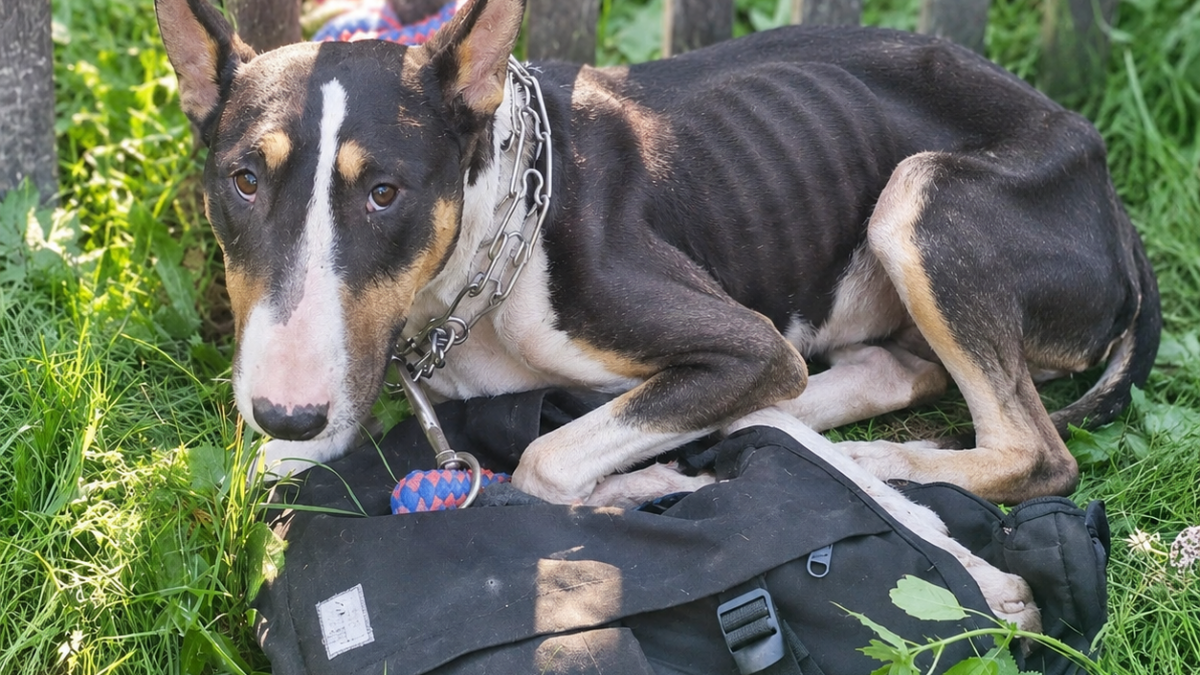
8 Days Overdue and Left to Suffer: Pregnant Dog Found Crying, Chained to a Fence.
A heavily pregnant dog was found chained tightly to a fence, alone and terrified, after apparently spending the night where almost no one would see her.
Her belly was so large that we thought she might give birth at any moment, but the veterinarian soon told us something far more frightening: she was already eight days overdue.
And when the doctors examined her puppies, we began to understand why someone may have panicked and abandoned her—but the truth caught on a nearby camera was even harder to accept.
The dog was only about three years old.
Once the chain came off, her whole body softened.
Within a day, the frightened, defensive dog we first met was running around the temporary home, exploring rooms and greeting us with a friendliness that made her abandonment even more difficult to understand.
She did not appear obviously sick.
Then we took her to the veterinarian.
The doctors examined her, checked the pregnancy, and told us her puppies were not doing well.
She needed blood and heart testing immediately.
If her condition allowed it, an emergency surgery would be necessary to deliver them.
We barely slept that night.
When surgery finally began, puppies were delivered one by one.
There had been nine.
Only seven were alive.
And even those seven were frighteningly weak.
Their mother became fiercely protective after the loss.
She growled at doctors, refused to leave the puppies, and barely tolerated us coming close enough to care for them.
Then authorities reviewed nearby security footage.
At approximately 3:00 a.m., when the road was empty, a young girl could be seen walking the pregnant dog to the fence, securing her there, and leaving.
She initially denied abandoning her.
When shown the video, she finally admitted what she had done.
She said she had been frightened and did not know how to handle so many puppies.
But Neo and her seven surviving babies still had an enormous fight ahead of them.
And over the next month, what began beside a lonely fence slowly became an entirely different story.
[END OF FACEBOOK CAPTION]
[FIRST COMMENT / FULL STORY CONTINUATION]
She was chained so tightly to the fence that the first thing we noticed was not her pregnancy.
It was the fear.
Her body was tense.
Every movement around her seemed to make her more defensive.
She could not create distance from us because the chain decided how far she was allowed to move.
That matters when you approach a frightened dog.
A dog who is afraid but free can retreat.
A dog tied to a fence has only the length of the chain.
If strangers continue approaching after that distance disappears, fear can quickly become defensive behavior.
So we did not rush.
We watched her.
Spoke gently.
Moved carefully.
No sudden hands.
No attempt to crowd her.
The road itself offered no explanation.
We did not know how long she had been there at first.
Perhaps all night.
That possibility became increasingly likely.
No one seemed to have noticed her earlier.
She had been left in a place where a dog could remain for hours before someone stopped.
And because she was tied rather than simply wandering, there was no possibility that she could search for shelter, water, or a safer place on her own.
She was trapped exactly where someone had left her.
Then we looked more closely at her body.
Her abdomen was enormous.
Not simply the rounded belly of a dog who might be pregnant.
She was very heavily pregnant.
So large that our first thought was that labor could begin at any moment.
That changed the urgency immediately.
A frightened dog chained to a fence was already a rescue.
A heavily pregnant dog in the same situation was something else.
We had no idea whether she was in labor.
No idea how long she had been pregnant.
No idea whether she had received veterinary care.
No idea whether the puppies were healthy.
No idea whether she had eaten.
No idea why anyone would leave her like this.
She appeared to be around three years old.
Young enough that she was still very much an adult dog in the prime of life.
Not elderly.
Not visibly debilitated.
Nothing about her immediately suggested that she had been abandoned because she was dying or obviously unable to function.
She was frightened.
Exhausted.
Pregnant.
But alert.
That made the question harder.
Why?
Why tie her to a fence?
Why leave her?
Why not bring her to a shelter?
Why not ask someone for help?
Why choose the middle of the night?
We did not have those answers yet.
The first thing we could change was the chain.
Getting it off required patience because she was so tense.
The closer someone came to the restraint point, the less control she had over the situation.
So we let her smell us.
Let her hear our voices.
Waited through the defensive reactions.
Then, slowly, we freed her.
The change in her body was immediate enough to notice.
Not complete relaxation.
She did not suddenly become a different dog.
But the tension softened.
Her weight shifted.
Her muscles seemed less rigid.
The moment she realized she was no longer fixed to the fence, she had options again.
She could move away from us.
That alone made trust easier.
It is one of the strange truths of frightened animals.
Sometimes giving them more freedom makes them safer around you than holding them still.
When she understood that we were not going to trap her again, she tolerated us better.
Then something else began to emerge beneath the fear.
She was capable of trust.
Only a little at first.
But enough.
We offered her space.
She gave us cautious cooperation.
That was all we needed for the first step.
We arranged a temporary place where she could rest.
The priority was simple.
Get her somewhere quiet.
Let her recover from whatever had happened during the night.
Make sure she had food and water.
Then arrange medical evaluation as soon as possible.
Her belly was so large that we did not want to assume we had time.
At the temporary home, she seemed exhausted.
That was understandable.
Even without knowing exactly how long she had been chained outside, the physical strain of late pregnancy was obvious.
Her body was carrying a litter that appeared ready to arrive.
She needed rest.
So we let her rest.
The first day was mostly about observing.
Was she eating?
Drinking?
Showing obvious signs of distress?
Was labor starting?
Would she settle?
Would she remain defensive now that the chain was gone?
We expected fear to continue.
Instead, by the next day, we saw a very different side of her.
Her emotional state had changed quickly.
She looked happier.
More comfortable.
She moved around the house with curiosity.
She explored.
She greeted us more openly.
She was friendly.
The dog who had seemed so defensive beside the fence now moved through a safe space as though she had been waiting for permission to show us who she really was.
That contrast stayed with me.
At the fence, fear had defined her.
In the house, safety revealed personality.
She moved surprisingly quickly despite her enormous belly.
She investigated rooms.
Followed scents.
Looked around.
There was an energy in her that made the abandonment feel even more confusing.
Nothing obvious about her behavior said she was a hopeless medical case.
She did not appear severely ill.
She was not collapsing.
She was not refusing contact.
If anything, she was remarkably friendly once she understood she was safe.
I kept thinking:
Why would someone abandon a dog like this?
Perhaps there had been a financial crisis.
Perhaps someone panicked.
Perhaps they thought labor was beginning and did not know what to do.
We could imagine a hundred explanations.
But imagining was useless.
The veterinarian would tell us what her body was actually experiencing.
We arranged the appointment.
I hoped the doctors would reassure us.
Maybe she was simply very close to delivery.
Maybe the puppies were fine.
Maybe everything looked worse because we had found her chained and frightened.
Sometimes rescue begins with a scene so upsetting that your mind expects every next piece of information to be equally bad.
I wanted this to be one of the times we were wrong.
We took her to the clinic.
Despite the size of her belly, she moved quickly.
That almost gave me hope.
She still had strength.
She was alert.
She looked around.
She did not appear on the edge of collapse.
But late pregnancy can hide serious problems.
That was why we needed the examination.
The doctors performed the necessary tests.
They examined her carefully.
Then they began evaluating the puppies.
The atmosphere changed.
There are moments in veterinary clinics when you can feel concern before anyone gives you a diagnosis.
A doctor becomes quieter.
A scan takes longer.
Something is checked again.
A question is asked.
You start reading faces.
We had gone in hoping for reassurance.
Instead, we received the truth.
The pregnancy was not progressing normally.
The puppies were not in good condition.
And the mother was overdue.
Not by hours.
Not by one day.
Eight days.
The doctor said she had passed her expected delivery date by eight days.
For a moment, I could not process the number.
Eight days.
We had found her tied to a fence while already far beyond the point when the puppies should have been delivered.
That changed our understanding of the abandonment.
Before the examination, we had wondered why a healthy-looking, friendly three-year-old dog had been left.
Now we saw the pregnancy crisis.
At that point, it seemed possible that whoever owned her had known something was wrong.
Perhaps labor had failed to begin properly.
Perhaps fear about the puppies had grown.
Later, the former owner’s own explanation would give us more context.
But in the clinic, we only knew this:
The mother and her litter were in danger.
There was no time for moral arguments.
No time to sit there asking why someone had not sought help sooner.
The puppies needed to be delivered.
The doctors needed more information about the mother before putting her through surgery.
Blood tests.
Heart evaluation.
We waited for those results.
If they were acceptable, the plan was surgery to deliver the puppies.
That word—surgery—made everything suddenly real.
This was not a dog who could simply go home and give birth peacefully.
Her pregnancy had become an emergency.
The puppies had already spent eight extra days inside.
Their condition concerned the doctors.
The mother had been chained outside overnight instead of being in medical care.
We cried.
Not dramatically.
Not because crying changed anything.
Because the reality was difficult to hold without emotion.
Someone had owned this dog.
Someone had watched her pregnancy progress.
Someone had seen her belly grow.
Someone had reached a point where the expected delivery did not happen.
And instead of bringing her to veterinary care, she had been tied to a fence in the early hours of the morning.
That was the fact we were beginning to confront.
I could not understand it.
The urgency now belonged entirely to the puppies and their mother.
The doctors gave her an injection as part of the care she needed.
They made sure she was fed well first.
Everything had to be done carefully because surgery on a heavily pregnant dog already in a complicated situation carries serious responsibility.
We also reported her condition to the authorities.
The abandonment itself needed investigation.
But the legal questions could wait.
The medical emergency could not.
We brought our worry home with us that night.
I barely slept.
None of us did.
There is a particular kind of anxiety that comes when you know an animal is waiting for a procedure that may determine several lives at once.
This was not one patient in the emotional sense.
It was the mother.
And the puppies inside her.
We did not yet know how many would survive.
We did not know whether surgery would go smoothly.
We did not know what condition the puppies would be in when delivered.
Every possibility seemed to move through my head.
The mother appeared to sense that something around her had changed.
I do not claim she understood our medical concern.
But dogs notice human tension.
Our movements were different.
Our voices quieter.
We watched her more closely.
She seemed unsettled too.
Perhaps she felt the physical discomfort.
Perhaps simply the unfamiliar environment and repeated examinations.
Whatever the reason, the night felt long.
I kept thinking about eight days.
How had she made it this far?
Why had no one acted earlier?
Was there still enough time?
When morning finally came, we were not rested.
But at least the next step had arrived.
The tests gave the medical team enough confidence to proceed.
The important surgery was scheduled.
We brought her in.
There are times when you hand an animal to a veterinary team and realize that your role becomes waiting.
You have done what you can.
Rescued.
Transported.
Authorized treatment.
Reported the situation.
Now the most skilled people in the room must take over.
We waited.
The mother went into surgery.
The puppies were delivered one by one.
Every time another puppy was brought out, hope rose.
Then fear returned.
We knew the litter was supposed to contain nine.
Nine lives.
Nine small bodies.
We wanted all nine.
That is the instinct.
You know medically that some may already be too compromised.
Emotion does not care.
You still want every one.
One puppy.
Then another.
Another.
For moments, joy filled the room.
They were being delivered.
They were here.
Then we understood the full outcome.
There were nine puppies.
Only seven were alive.
Seven.
Two did not make it.
The joy immediately changed.
It did not disappear.
Seven surviving puppies after the crisis was still something to be grateful for.
But gratitude and grief existed at the same time.
We had seven tiny lives.
We had also lost two.
That made the first hours complicated.
People often want rescue stories to have clean emotions.
Happy because puppies were born.
Sad because some died.
Real life does not separate feelings like that.
You can look at seven living puppies and feel relief so strong you almost laugh.
Then remember there should have been nine and cry.
Both are true.
The seven survivors were also very weak.
That prevented us from relaxing.
They had been overdue.
The pregnancy had already concerned the doctors.
Now the puppies were out, but the danger was not over.
Newborn puppies are fragile under normal circumstances.
These seven began life already compromised.
We had no guarantee what the next day would bring.
Or the next hour.
We focused on care.
Constant attention.
No casual assumptions.
No moment where we said:
The surgery is over, so everything is fine now.
It was not fine yet.
The mother needed to recover from surgery.
The puppies needed warmth.
Nutrition.
Monitoring.
They needed to begin growing.
We took their survival seriously because we knew how close the situation had come to a much worse ending.
The mother changed immediately after the puppies arrived.
Before surgery, she had been friendly with us.
Protective instincts transformed her behavior.
She did not want us near the puppies.
That was difficult practically.
We had to care for them.
She did not know that.
From her perspective, she had gone through a frightening sequence.
Chained to a fence.
Rescued by strangers.
Taken to a new home.
Then a veterinary clinic.
Handled.
Examined.
Surgery.
She woke with seven puppies.
Two of the litter were gone.
Now more humans wanted access to the babies.
Why should she trust that?
I understood her suspicion.
It made care more complicated.
But it made emotional sense.
She growled at the doctors.
Not because she had suddenly become a bad dog.
Because she was guarding her surviving puppies.
She kept them close.
She watched every hand.
When someone approached, her body tightened.
She showed us the puppies from a distance but did not easily allow close contact.
Sometimes we had to coax her away briefly so we could provide necessary care and make sure the puppies were feeding adequately.
Even then, she did not want to stay away.
She wanted back.
Immediately.
The slightest separation seemed to make her impatient.
She had already lost two.
Whether she understood that loss exactly as humans do is impossible to say.
But her protective behavior after surgery was intense.
She trusted very little where the puppies were concerned.
So we adapted.
No unnecessary handling.
No crowding.
Do what is required.
Then give them back to her.
Let her see.
Let her remain close.
Safety for the puppies had to include reducing the mother’s stress.
Those early days demanded patience.
We were caring for seven fragile newborns and one mother who did not fully trust the people helping them.
The easiest approach would have been to become frustrated with her.
But she had reasons.
Her entire recent experience had given her reasons.
So we worked around those reasons instead of punishing her for them.
The authorities were investigating too.
We still did not know exactly who had tied her to the fence.
Then a nearby security camera provided the answer.
The footage showed a young girl walking with the dog near the fence.
The time was approximately 3:00 a.m.
That detail mattered.
Three in the morning.
A time when the road was quiet.
Very few people would be passing.
The girl brought the heavily pregnant dog there.
Tied her.
Then left.
Watching the footage was painful because it removed uncertainty.
Before the video, we could still imagine many possibilities.
Maybe the dog had been found by someone who tied her temporarily.
Maybe someone intended to return.
Maybe the chain had another explanation.
The camera showed what happened.
She had been left.
Deliberately.
Authorities were able to identify the owner.
She lived not far away.
At first, she denied abandoning the dog.
That made the situation worse emotionally.
We already had video.
Still, she said it had not happened the way we thought.
Eventually, authorities showed her the footage.
The image at 3:00 a.m.
The road nearly empty.
The dog.
The fence.
Her leaving.
After that, she admitted what she had done.
Her explanation was fear.
She said she had been scared.
She did not know what to do.
She had never cared for so many puppies before.
I could understand fear.
Fear is human.
A dog eight days overdue with a large litter could overwhelm someone inexperienced.
The idea of caring for many newborn puppies could be frightening.
But understanding fear is not the same as accepting the decision that followed.
There were other choices.
Ask for help.
Contact a shelter.
Call a veterinarian.
Tell someone the dog was overdue.
Tell someone you were unable to care for the litter.
Anything but tying a heavily pregnant dog to a fence at three in the morning and walking away.
That was the part I could not reconcile.
The dog trusted her.
Again, I cannot claim what the mother’s internal experience was when the girl left.
But she had lived with this person.
She had depended on her.
And she was abandoned at the moment she needed care most.
That truth remained painful.
Still, our attention had to stay on the family in front of us.
The mother.
Seven puppies.
Growing.
Surviving.
Every day became its own milestone.
At first, we did not let ourselves think very far ahead.
Newborn puppies can change quickly.
So instead of imagining adoption or homes or the future, we watched the next feeding.
The next check.
The next weight.
That is how you care for fragile young animals.
One day at a time.
The mother remained intensely protective.
She barely wanted to leave them.
We tried to encourage her to go outside briefly.
Even ten minutes could be difficult.
She would go.
Then become impatient.
Her whole body seemed oriented back toward the house.
Back toward the puppies.
The moment she had done what she needed to do, she wanted to return.
We did not force long walks.
This was not the time to prove anything.
She had seven babies inside.
That was where she wanted to be.
So ten minutes was enough.
Then back.
She entered quickly.
Counted them in the way mother dogs do through smell and movement.
Settled.
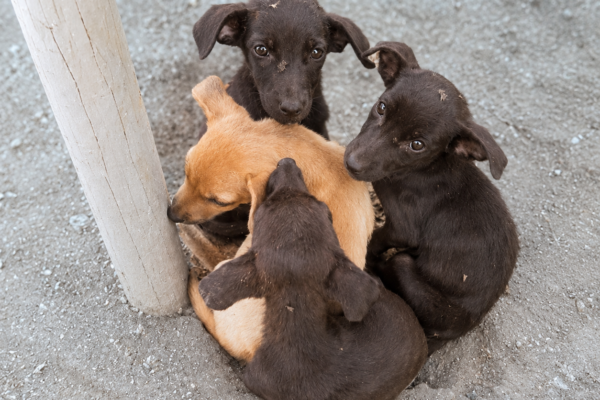
The puppies pressed close.
That image repeated itself over and over.
Seven small bodies.
One tired mother.
All together.
Twelve days passed.
Around day twelve, the puppies began opening their eyes.
Gradually.
Not every eye at once.
Tiny changes.
A slit.
Then more.
For nearly two weeks, their world had been warmth, smell, milk, touch, and their mother’s body.
Now another sense was beginning to join.
Watching that development after everything that happened felt extraordinary.
The puppies the doctors had worried might not survive were opening their eyes.
The number seven no longer felt like a fragile count we were afraid might decrease.
It began to feel like a family.
We still remained cautious.
But hope grew with them.
By then, each puppy weighed roughly 700 to 850 grams.
That number mattered because weight gain is one of the clearest ways to evaluate growth in young puppies.
The veterinarian gave us a good assessment of their progress.
They were growing.
Not perfectly beyond concern.
But well enough that we could breathe a little more easily.
Their bodies filled out.
Their movements became more purposeful.
They became more responsive.
The mother never stopped hovering.
If one puppy moved farther than she liked, she noticed.
If we approached, she watched.
If she had to leave, she returned quickly.
She was an extraordinary mother.
Later, the source gives us her name.
Neo.
And by then, the name felt attached to an image I will always remember.
Neo lying with seven puppies gathered around her.
Protective.
Tired.
Suspicious of us when necessary.
Completely devoted to them.
There is something moving about maternal behavior across species.
I am careful with words like sacred because animals do not experience motherhood through the exact same cultural meanings humans do.
But watching Neo care for those puppies affected everyone around her.
The intensity.
The patience.
The way she tolerated constant nursing even when her body had just survived surgery.
The way she refused to remain away from them.
That devotion looked noble to us.
It made us respect her even more.
At three weeks old, the puppies had changed dramatically.
They no longer looked like fragile newborns barely holding onto life.
They were growing into small dogs.
Rounder.
More active.
More interested in one another.
Their world expanded beyond sleeping and nursing.
They moved more.
Interacted.
Became increasingly recognizable as individuals, even if the source does not provide names for them.
Seven puppies.
Seven personalities beginning to emerge.
Neo remained their center.
If she moved, they noticed.
If she lay down, they gathered.
They wanted to stay near her.
That created another challenge.
Neo did not have enough milk for all seven.
Her body had already been through an overdue pregnancy and surgery.
Now seven growing puppies wanted more nourishment than she could provide.
We could not simply allow them to nurse endlessly and hope it would be enough.
So we supplemented.
Formula.
Then solid food as they became ready.
This required more involvement from us.
Which meant more negotiation with Neo.
She had become somewhat better about our presence, but maternal protectiveness does not disappear simply because humans find it inconvenient.
We moved slowly.
Fed.
Monitored.
Made sure every puppy got what it needed.
The formula helped fill the gap.
Then solid food began to matter more.
Feeding seven puppies is work.
Feeding seven puppies while a protective mother watches every move is even more work.
But by then, the relationship had changed.
Neo had started learning that when we approached, the puppies were not harmed.
Food appeared.
Bodies were checked.
Then the puppies stayed with her.
Repeated safe experiences softened some of the suspicion.
Not all.
We did not expect all.
Trust grows through evidence.
We kept providing it.
The transformation in the puppies became one of the happiest parts of the entire story.
At first, every gram mattered because we feared losing one.
Later, their growth became obvious to the eye.
They grew quickly.
Their bodies became stronger.
Their movements less clumsy.
Their faces changed.
The puppies we had once watched anxiously after surgery began looking healthy enough that we could enjoy them instead of constantly fearing for them.
That emotional transition was important.
Caregivers can become trapped in crisis mode.
When an animal starts life fragile, you continue watching as though the emergency is still happening even after the danger has decreased.
Eventually, you have to allow joy back in.
The puppies helped us.
They behaved like puppies.
That means curiosity.
Movement.
Sleep wherever exhaustion catches them.
Interest in food.
Interest in toys.
Interest in each other.
They became obedient and well-behaved little puppies, as the source describes them.
Of course, “well-behaved” at that age is relative.
They were still babies.
But they were manageable.
Gentle.
Interested in their mother.
They always wanted to be close to her.
That closeness remained the emotional center of their little world.
At one month old, the numbers changed again.
Around 1.5 kilograms each.
Think about that progression.
From weak newborns whose survival was uncertain.
To puppies around 700 to 850 grams during their early growth stage.
Then roughly 1.5 kilograms at one month.
Their bodies were doing exactly what we needed them to do.
Grow.
The veterinary evaluations remained encouraging.
That gave us enough confidence to begin the next developmental step.
Eating more independently.
We separated the puppies from Neo for feeding practice.
Not permanently.
Not emotionally.
Only enough to help them learn that food could come from somewhere other than their mother.
When they were close to her, nursing was the obvious choice.
Why bother with a bowl when mother is right there?
So short separations allowed us to introduce solid food more effectively.
They learned.
Messily.
Enthusiastically.
One puppy might step too close to a bowl.
Another would push in.
Another would become distracted.
Normal puppy behavior.
I loved it.
After weeks of medical worry, mess felt wonderful.
You do not appreciate a puppy getting food on its face until you have watched newborns struggle to survive.
Then every ordinary inconvenience becomes evidence.
They are alive enough to be messy.
Strong enough to push each other.
Hungry enough to complain.
That is good.
We prepared toys too.
Many toys.
This was another sign that the story had entered a new stage.
At first, our supplies were medical.
Food.
Warmth.
Monitoring.
Formula.
Now we were thinking about play.
Development.
Enrichment.
A future.
That shift matters.
When you start buying toys, you have begun believing the puppies will need them.
Hope becomes practical.
Their tiny world filled with objects to investigate.
Soft things.
Things they could mouth.
Things that made the space more than a nursery.
Neo watched everything.
She remained their mother.
The center.
But the puppies were beginning the natural process of needing the wider world.
That process would eventually become the hardest part for her.
Adoption.
The goal of rescue is not to keep every puppy together forever.
The goal is to raise them safely enough to enter loving homes.
Intellectually, we knew that from the beginning.
Emotionally, knowing and doing are different.
The first families came forward.
The first puppies found adopters.
That should have felt like pure success.
And for us, mostly it did.
A puppy who nearly died before birth now had people waiting to bring it home.
What more could we want?
Neo did not understand adoption paperwork.
She understood that a puppy was gone.
Her reaction in the first days was sad.
She searched.
She seemed unsettled.
Again, I avoid claiming an exact human grief narrative.
But her behavior showed the change affected her.
For a mother who had refused to leave the litter even for ten minutes, one puppy disappearing from the group was significant.
We felt that.
The first adoption was not only a happy ending.
It was another transition for Neo.
We tried to give her time.
Then another puppy’s family was arranged.
And another.
The remaining adopters were contacted.
Soon, each puppy would have somewhere to go.
This was what we wanted.
A better life.
Individual attention.
Families who had chosen them.
Food.
Veterinary care.
Homes.
Love.
Everything the original abandonment had put at risk.
The puppies could not all remain in one rescue home indefinitely.
Their world needed to expand.
We told ourselves Neo would gradually adjust.
That the puppies leaving was not abandonment in the same sense she had experienced.
These puppies were being placed carefully.
Not tied to fences.
Not left at three in the morning.
Their departures had destination and responsibility.
That distinction mattered to us even if Neo could not understand it conceptually.
The early days after the first puppies left were emotional.
Her body had spent weeks oriented entirely around them.
Pregnancy.
Surgery.
Nursing.
Guarding.
Then suddenly fewer bodies beside her.
That kind of routine change takes adjustment.
We stayed close to her too.
It would have been easy for all attention to follow the puppies into their new homes.
But Neo still had a story.
She was not merely the mother who produced seven adoptable dogs.
That distinction was especially important given how her original story began.
Someone had abandoned her at the end of pregnancy.
We did not want her value to disappear once the puppies were gone.
She mattered independently.
Neo.
Three years old.
Friendly.
Curious.
Fast-moving despite the enormous belly when we first met.
A dog who had explored the temporary home happily after one night of safety.
A dog who deserved her own family too.
That became part of the goal.
Find homes for the puppies.
And find one for Neo.
Not because she had finished her “job.”
Because she was a dog who deserved a permanent home.
The source ends beautifully there.
But reaching that ending meant remembering who she had been before motherhood became the only thing anyone talked about.
I thought back to the second day after rescue.
Before surgery.
Before we knew the pregnancy was eight days overdue.
Before seven puppies survived.
Neo had run around the house exploring.
Friendly.
Alive.
Interested.
That dog was still there.
Maternal behavior had dominated the following weeks because the puppies needed her.
But eventually, she would have a life beyond nursing.
She could explore again.
Move freely.
Bond with people.
Receive affection without needing to protect seven small bodies at the same time.
I wanted that for her.
The authorities had already dealt with the information about the former owner.
The mystery had been answered.
A young girl.
Living nearby.
Caught on camera.
Three in the morning.
Initial denial.
Then admission.
Fear.
Inexperience.
Not knowing what to do with many puppies.
Those facts were no longer questions hanging over us.
I was glad the truth had come out.
But I also did not want the former owner to occupy the rest of Neo’s story.
She had already influenced enough of it.
Neo’s future should not be defined forever by the person who tied her to a fence.
The puppies’ future should not be defined by being eight days overdue.
Those details explain why rescue mattered.
They should not become permanent identities.
So when adoption plans formed, our attention shifted forward.
Each puppy would become more than “one of the seven.”
Each would have a family.
Neo would become more than “the abandoned pregnant dog.”
That is what successful rescue does.
It moves an animal out of the crisis label.
At first:
Emergency.
Later:
Individual.
Home makes that possible.
As the remaining puppies waited for their families, we tried to let them enjoy every moment together.
They played.
Slept.
Ate.
Climbed over one another.
Returned to Neo.
Then moved away again.
A month-old puppy lives almost completely in the present.
There is no awareness that siblings will soon be living elsewhere.
That is perhaps merciful.
They simply enjoyed the group while it existed.
Neo remained close.
But slowly, the puppies were becoming less physically dependent on her.
Formula and solid food had reduced the burden on her body.
Independent eating training gave them another skill.
Play gave them a world outside nursing.
This developmental separation helped emotionally too.
Not by eliminating Neo’s attachment.
But by making the change gradual.
Motherhood is a process of increasing independence.
The puppies were doing exactly what healthy growing puppies should do.
We encouraged it.
And watched.
There was joy in every new ability.
One ate from a bowl confidently.
Another became obsessed with a toy.
Another fell asleep after play.
Tiny milestones.
Not dramatic enough for headlines.
But important.
I kept thinking back to the night before surgery.
We had barely slept because we did not know whether these puppies would survive.
Now I was watching them compete over food.
That contrast never became ordinary.
You appreciate noise differently after fearing silence.
You appreciate appetite differently after fearing weakness.
You appreciate growth differently after weighing tiny bodies and wondering whether the number would rise.
The puppies gave us that joy.
Unlimited joy, as the source describes it.
Watching their transformation felt like a reward for every anxious hour.
Not because we had earned them.
Because life had continued.
That was enough.
Neo’s transformation also continued quietly.
At first, she had been defensive because of fear.
Then friendly after rescue.
Then intensely protective after surgery.
Now, as the puppies grew, another side of her began to reappear.
Less constant alarm.
More ability to relax.
The source does not give a detailed behavioral timeline beyond saying things gradually improved.
So I do not invent specific tricks, games, or affectionate habits.
What we know is enough.
Things improved.
She tolerated us better around the puppies.
The family became safer.
The puppies grew.
The crisis reduced.
That allowed all of us to breathe.
Sometimes improvement is not one dramatic event.
It is simply the absence of the old problem.
One day you realize Neo no longer reacts as strongly when someone approaches.
One day care becomes easier.
You may not know exactly which repetition changed things.
Trust accumulates.
Same people.
Same careful hands.
Food.
No harm.
Again.
Again.
Eventually suspicion has more evidence against it.
That is how I imagine the improvement worked, grounded in what we observed.
Not a sudden revelation.
Experience.
Neo had every right to be cautious.
We gave her reasons not to remain afraid forever.
That is rescue too.
Not only removing the chain.
Teaching the nervous system the chain is not coming back.
Think about her first scene again.
Tied tightly to a fence.
Unable to retreat.
Defensive because fear had no escape route.
Now compare that with the later home.
Puppies.
Food.
Medical care.
People respecting her warning growls rather than punishing her.
Space.
That difference is enormous.
Freedom changes behavior.
Respect changes behavior.
Safety changes behavior.
Neo showed us that from the first day.
The moment the chain came off, her body softened.
The next day, she explored happily.
That was not a coincidence we could ignore.
The defensive dog at the fence was not the entire dog.
The environment was part of the behavior.
This is why I never like labeling frightened animals too quickly.
Aggressive.
Difficult.
Unfriendly.
Sometimes you are simply seeing a cornered body reacting to circumstances.
Give space.
Then reassess.
Neo became proof.
Her protectiveness around puppies had another context too.
Again, behavior made sense when the situation was understood.
A dog can be friendly with adults and still guard newborns.
That does not make her inconsistent.
It makes her a mother responding to a vulnerable litter.
Context matters.
The doctors understood.
We adapted.
That patience helped preserve trust instead of destroying it.
By the time the puppies were a month old, the most dangerous period felt behind us.
I say “felt” because no young animal is free of risk completely.
But the veterinary assessment was encouraging.
Weights were around 1.5 kilograms.
They were eating.
Playing.
Developing.
Homes were being arranged.
We could finally think beyond the next feeding.
That felt almost luxurious.
For the first time, I allowed myself to look at the group and imagine seven separate futures.
Not detailed inventions.
Simply seven homes.
Seven bowls.
Seven people calling them.
Seven lives.
The original owner had said she was afraid because she did not know how to care for so many puppies.
That fear had been real for her.
But the solution became visible only after she was no longer responsible.
A rescue network.
Veterinarians.
Caregivers.
Adoptive families.
No one person had to do everything alone.
That was perhaps the saddest irony.
Help existed.
If she had asked, perhaps the entire fence scene could have been avoided.
But that choice had already been made.
We could only respond afterward.
I learned not to waste too much energy imagining the alternate path.
What happened, happened.
Neo was found.
The puppies were delivered.
Seven survived.
That was the reality worth investing in.
The first puppy left with a family.
Then another.
Each adoption changed the group.
Fewer bodies.
More space.
Neo noticing.
The remaining siblings adjusting.
Eventually, all seven had families contacted or confirmed.
They would leave.
One by one or according to the arrangements made.
The source does not give exact dates for each adoption, so I do not create them.
What matters is that the placements were happening.
The puppies were wanted.
That is the emotional reversal.
Before birth, their future was so uncertain that they were literally trapped inside an overdue pregnancy while their mother was tied to a fence.
One month later, families were waiting.
A month is such a short time.
Yet it contained almost the entire transformation.
Fence.
Vet.
Diagnosis.
Surgery.
Seven survivors.
Eyes opening.
Weight gain.
Formula.
Solid food.
Toys.
Adopters.
Life can move incredibly quickly around newborn animals.
I kept thinking about that.
At three in the morning, someone had left Neo because the situation felt impossible.
A month later, the impossible situation had become seven growing puppies with homes.
Not because the problem was small.
Because many people shared it.
That is something worth remembering.
Some emergencies overwhelm one person.
Community turns them into manageable tasks.
The veterinarian handles surgery.
Caregivers handle feeding.
Authorities handle investigation.
Families handle lifelong care.
Each person does a part.
The animals benefit.
That is a better model than abandonment.
Neo’s story demonstrates it without needing a lecture.
The contrast is visible.
One person panicked alone.
Many people responded together.
Seven puppies lived.
That does not erase the two lost.
I never wanted to forget them.
There had been nine.
That fact stays.
If we talk only about seven happy adoptions, we risk smoothing over the hardest part.
Two puppies did not survive.
Their absence was part of why Neo’s protectiveness affected me so much.
It was part of why the surgery day never felt completely joyful.
Rescue stories should be allowed to contain incomplete victories.
Seven survived.
Two did not.
The outcome was good and painful.
Both.
This complexity makes the later happiness more honest.
We did not “save all nine.”
We saved what could be saved.
We cared for seven.
Those seven grew.
That is enough to celebrate without rewriting the loss.
Neo also survived the surgery.
That should not be treated as background.
A mother eight days overdue undergoing an emergency delivery is not merely a container for puppies.
Her own life mattered.
She recovered enough to nurse, guard, walk briefly, and care for them.
Her body did enormous work.
Pregnancy.
Overdue stress.
Surgery.
Lactation for seven.
Insufficient milk production requiring supplementation.
Recovery while constantly attentive to puppies.
I admired her.
Again, not romanticizing suffering.
She should never have had to endure the fence.
But once she did, her resilience was visible.
She continued mothering.
Continued eating.
Continued protecting.
Continued adapting.
That made her adoption at the end feel especially meaningful.
She was not left behind after the puppies became the stars of the story.
Someone chose Neo too.
When her adoption happened, happiness seemed to smile on her, as the source puts it.
I like the sentiment.
Because for so much of the story, Neo had been the one giving.
Giving her body to pregnancy.
Giving milk.
Giving warmth.
Giving attention to seven puppies.
The final adoption meant care could turn toward her.
A home for Neo.
Not because she was pregnant.
Not because she had puppies.
Because she was Neo.
That is the ending I wanted.
The source calls her the most wonderful mother dog the narrator knows.
I understand why.
Watching her refuse to leave the puppies even for ten minutes would affect anyone.
Her suspicion made care harder, but it also showed how seriously she took their safety.
Her milk was not enough, but that was not a failure.
Bodies have limits.
She did everything she could within hers.
When we supplemented, we were not replacing her.
We were supporting the job her body could not do alone.
That partnership mattered.
She gave warmth and nursing.
We added formula and solid food.
Together, the puppies grew.
No one needed to interpret insufficient milk as poor motherhood.
Neo had already given enough.
That is an important distinction.
Sometimes rescue narratives accidentally praise an animal only when she can do everything perfectly.
Real care recognizes limitation.
Neo did not have enough milk for seven growing puppies.
So humans stepped in.
That is what support is for.
The result mattered.
Healthy growth.
That was the goal.
I remember their weights because numbers gave us something solid.
700 grams.
850 grams.
Then around 1.5 kilograms.
Growth measurable.
Hope measurable.
Numbers can feel clinical.
In rescue, they can become emotional.
Every gram means the puppy’s body is building.
A small increase can be relief.
A stagnant weight can create fear.
So when the veterinarian gave a good evaluation, we celebrated.
Not loudly around Neo.
But internally.
The babies were doing well.
Those words were precious.
Their eyes were open.
Their bodies stronger.
Their food sources diversified.
The road ahead no longer looked like emergency medicine.
It looked like puppyhood.
That transition made the toys especially meaningful.
Toys are a luxury of safety.
A puppy in immediate danger does not need entertainment first.
A safe growing puppy does.
When the toys appeared, I realized we had crossed another invisible line.
They were no longer only survivors.
They were babies who needed fun.
That is a beautiful stage in any rescue.
The first time you stop asking:
Will they make it?
And start asking:
What will they enjoy?
The questions change.
Life has changed.
Then adoption changes the questions again.
Who will care for them forever?
That became the next responsibility.
Families were contacted.
The first puppies went home.
Neo struggled with the transition.
We expected some adjustment.
We did not force ourselves to view her sadness as proof adoption was wrong.
A mother dog can be affected by puppies leaving even when those placements are good.
The answer is not keeping every puppy forever simply to avoid change.
The answer is making the change responsibly.
Good homes.
Safe departures.
Time for Neo to adjust.
Attention to her after.
That is what we tried to do.
Her own adoption completed the process.
I think about the shape of the entire family at the beginning and end.
Beginning:
One mother.
Nine unborn puppies.
A fence.
A chain.
No caregiver present.
End:
Seven surviving puppies.
Individual families.
Neo with a family too.
The group physically separates.
Yet the outcome is actually greater security.
That seems paradoxical.
At first, togetherness did not mean safety.
They were all inside one body in crisis.
Later, separation into different homes meant each animal received a future.
That is why rescue sometimes requires letting go of the picture that looks most emotionally comforting.
Seven puppies beside their mother forever would look beautiful.
It would not necessarily be the best practical outcome.
Individual adoption gave them room to become dogs beyond the litter.
Neo could become more than a mother.
That is healthy.
A beautiful ending does not always mean keeping everyone physically together.
It means everyone has appropriate care.
This family reached that.
I like that the source calls it a beautiful ending for the family.
Not because the exact original family unit remained unchanged.
Because every surviving member was accounted for.
Wanted.
Going somewhere safe.
That is beautiful.
The young former owner remains part of the story, but only as the explanation for the beginning.
Her confession answered the mystery.
She was frightened.
She did not know what to do.
She had never cared for so many puppies.
I can hold compassion for fear without excusing abandonment.
Human beings make terrible choices when overwhelmed.
That is true.
Accountability still matters.
She initially lied.
Then admitted the truth when shown the camera footage.
The authorities identified her.
Those are the source facts.
Beyond that, I do not need to invent punishment or legal consequences.
The story does not provide them.
The dogs’ outcome matters more.
Too many retellings would add dramatic arrest, fines, courtroom scenes.
Not here.
We stay with what is known.
Authorities investigated.
They found her.
She confessed.
Then the narrative returns to Neo and the puppies.
That is the right focus.
Rescue should center the animals, not invented revenge.
The best response to what happened was already unfolding.
Seven puppies gaining weight.
Neo recovering.
Families waiting.
That future mattered more than imagining punishment.
I also think about the security camera.
A camera can feel cold.
Mechanical.
But in this story, it gave truth.
Without it, the former owner might have continued denying involvement.
The camera fixed the timeline.
Approximately 3:00 a.m.
Dog walked to fence.
Dog tied.
Girl leaves.
The road empty.
Those details answered the question of how Neo got there.
Evidence replaced speculation.
That is important.
We did not have to accuse based only on assumption.
We had a record.
The investigation became more grounded.
Again, facts matter.
Especially in emotional rescue stories.
When suffering is visible, people want someone to blame.
Evidence protects truth.
We waited.
The camera told us.
Then confession confirmed.
That is enough.
The mother herself had already begun teaching us another truth.
Dogs often show their real temperament only after fear reduces.
At the fence:
Defensive.
At the temporary home the next day:
Friendly.
Running.
Exploring.
Same dog.
Different environment.
If someone had seen only the first scene, they might have called her aggressive.
They would have been wrong.
She was afraid.
Later, when guarding puppies, she growled again.
Again, context.
Protective mother.
Not a general personality label.
This matters deeply in animal care.
Behavior is information.
Not identity.
Neo’s story demonstrates it twice.
Fear made her defensive.
Maternal protection made her defensive.
Neither meant she could not become a loving family dog.
The adoption proves people saw beyond those moments.
That is one of the parts I admire most.
Someone chose her after the crisis.
They did not say:
She growled at doctors, so no.
They saw the full dog.
Friendly when safe.
Devoted mother.
Young adult.
Capable of trust.
That is fair evaluation.
Every shelter dog deserves that kind of context.
Neo received it.
I like to imagine—not as a fact, but as an emotional hope—that her new family met the friendly explorer we saw on day two.
But the source does not describe her first day in the adoptive home, so I leave that scene unwritten.
The adoption itself is enough.
She was chosen.
That closes her arc honestly.
No need to fabricate a yard, children, or a bed.
Home exists.
We stop there.
The same restraint applies to the puppies.
We know families adopted them.
We do not know names.
Locations.
Future milestones.
So we let the source end where it ends.
That is satisfying because the central crisis is resolved.
Mother safe.
Seven puppies grown enough for adoption.
Former owner identified.
Neo adopted.
Complete.
No extra years needed.
There is a temptation in emotional stories to keep going until someone grows old.
That would only dilute this ending.
The beauty is immediate.
One month earlier, chain.
Now families.
That is enough.
I think about the title again.
Eight days overdue and left to suffer.
That phrase sounds almost impossible when compared with the ending.
It is important not to let the title turn Neo into suffering only.
She suffered.
Yes.
But she was also vibrant.
Friendly.
Protective.
Strong.
A capable mother.
Adoptable.
Her identity expanded far beyond the crisis.
That is how I prefer to remember rescue animals.
Not by their worst image alone.
The fence is where we met her.
Not where she belongs forever.
Her real arc moved away from it immediately.
Chain removed.
Body softens.
Temporary home.
Exploring.
Vet.
Surgery.
Motherhood.
Trust.
Adoption.
Each step increases her agency.
At the fence, she could not choose where to stand.
At the end, she leaves for a home chosen for her care.
That transformation matters.
The puppies have a similar arc.
Before birth, no agency at all.
In danger inside an overdue pregnancy.
After one month, eating.
Playing.
Moving.
Going to families.
Their bodies become independent enough to leave.
That is developmental success.
Together, mother and litter move from complete crisis into distributed safety.
A remarkable change.
And all of it begins because someone noticed a dog tied to a fence.
Attention again.
So many rescue stories turn on attention.
A passerby could have assumed someone would return.
Could have kept walking.
Instead, help came.
We arrived before the situation worsened further.
That timing mattered.
I cannot say exactly what would have happened if Neo remained longer.
We do not invent.
We know she was already eight days overdue.
That alone tells us delay was dangerous enough.
She needed veterinary care.
We got her there.
Sometimes that is the whole moral.
Do not wait for certainty when obvious suffering is present.
You can ask questions after safety.
That is what we did.
First chain off.
Then rest.
Then doctor.
Then answers.
Correct order.
We did not need to know why she was abandoned before feeding her.
Did not need the owner’s identity before surgery.
Care first.
Investigation parallel.
That practical priority saved time.
I respect it.
The puppies’ survival depended on medical urgency, not narrative closure.
Authorities could continue investigating while veterinarians worked.
Everyone had a role.
This distributed response became another reason the story ended well.
The doctor’s revelation—eight days overdue—was the true medical climax before surgery.
That number transformed the emotional meaning of the fence.
Before:
Abandoned pregnant dog.
After:
Dog in an active reproductive emergency left overnight.
That is much more serious.
It made our sleepless night understandable.
No one could simply say:
She will probably give birth soon.
She should already have given birth.
The clock had passed expected timing by eight days.
And the puppies looked poor.
Urgency.
The surgery was not optional entertainment.
It was the path offered by the medical team.
They waited for blood and heart checks because the mother had to be safe enough.
Then delivered.
Seven.
I keep returning to seven because the number carries both grief and hope.
Seven alive.
Two absent.
If you only say “seven puppies were born,” you miss the nine.
If you only say “two died,” you miss the seven.
Both belong.
Good storytelling preserves both.
That is how rescue feels.
Victory with scars.
Neo’s fierce protectiveness afterward may also have been affected by the physical and emotional chaos around delivery.
Again, we cannot scientifically interpret every growl.
But the timing gives context.
She woke from surgery with fewer puppies than expected.
Strangers handling them.
Her response made sense.
The best thing we could do was respect it while still meeting medical needs.
This is a recurring theme in her story.
Respect choice wherever possible.
At the fence, chain removed.
At home, room to explore.
With puppies, space.
During walks, only ten minutes because she wanted back.
During weaning, gradual separation.
Good care is not domination.
It is structured support.
That allowed Neo to remain herself.
I think that is part of why she improved.
She was not punished for protecting.
We worked with her.
Trust developed.
By the time adoption came, she had experienced enough humane handling to begin another life.
That is meaningful.
I sometimes wonder how she would have behaved if someone had tried to remove all seven puppies from her immediately.
Probably badly.
Why create that stress?
Gradual development gave both mother and puppies time.
Nature and care aligned.
Eyes open around day twelve.
More mobility.
Three weeks, growth.
One month, solid food.
Then adoptions.
The source’s timeline feels believable because it respects development.
We preserve it for that reason.
Day twelve.
Three weeks.
One month.
These are not decorative numbers.
They anchor change.
They show the puppies did not go from surgery to adoption overnight.
There was work between.
Weeks of feeding.
Monitoring.
Weaning.
Growth.
That work matters.
Rescue is often compressed into before-and-after pictures.
Neo’s family reminds us the middle is where life is actually saved.
The first image:
Pregnant dog at fence.
The final image:
Adopted mother and puppies.
Between:
Everything.
The middle deserves attention.
No sleep.
Medical tests.
Injection.
Surgery.
Two losses.
Seven weak survivors.
Protective growling.
Formula.
Weights.
Walks.
Solid food.
Toys.
Adoption calls.
That is the real story.
A month of labor by many people.
Love looks like work there.
Not only emotion.
If you remove the work, the happy ending becomes impossible.
That is why I appreciate every feeding.
Every ten-minute walk Neo reluctantly took.
Every weight check.
Those small actions built adoption readiness.
The source calls watching the puppies change an unlimited happiness.
I understand.
When you invest daily effort, progress becomes personal.
A stranger might see a one-month-old puppy and think:
Cute.
You see:
Alive.
Growing.
Remembering the surgery.
That creates deeper joy.
The same puppy chewing a toy represents survival.
Perspective changes ordinary scenes.
I imagine that is why the caregivers found such joy.
Not because the puppies were extraordinary as animals.
Because their existence had been uncertain.
Then they behaved normally.
Normal became precious.
That is a theme I return to often.
The goal of rescue is normal life.
Not endless crisis.
The puppies reached normal puppyhood.
Neo reached adoption.
That is success.
I think about Neo being sad when the first puppies left.
That detail prevents the ending from becoming too neat.
Transitions hurt even when they are good.
A puppy leaving for a loving home can still disrupt the mother.
We do not deny that.
We support her through it.
Eventually, she learns the new rhythm.
The source says she would understand it was good for them.
I interpret that cautiously.
We cannot know whether Neo conceptualized adoption as beneficial.
What we can say is that she gradually adjusted as the puppies left and her own life continued.
That is enough.
Humans can hold the moral meaning:
The puppies are going somewhere good.
Neo only needs safety during the change.
We provide it.
No need to make her understand our reasons.
Care does not require comprehension.
Only respect.
Her own adoption gives the final adjustment a new direction.
Instead of simply losing puppies one by one and remaining behind, Neo also moves toward a home.
That is crucial.
She is not the exhausted mother discarded after everyone wants the babies.
Too often adult mothers in rescue receive less attention than puppies.
Here, Neo is chosen.
I am glad.
It gives the story fairness.
Puppies are easy to love because they are new and cute.
Neo had the harder face of the story.
The fence.
The growls.
The surgery.
Yet she receives home too.
Beautiful.
Her age—around three—helps us see how much life may still be ahead without inventing years.
She is young enough for a new chapter.
That is all we need to say.
No future timeline required.
New chapter.
Adopted.
Done.
The former owner had viewed the situation as impossible.
The rescue network proved it was difficult, not impossible.
That distinction is worth emphasizing.
Difficulty demands support.
Not abandonment.
Seven puppies required formula because Neo lacked milk.
Hard.
Seven puppies needed solid food training.
Hard.
Protective mother made access difficult.
Hard.
Vet surgery.
Hard.
Adoption coordination.
Hard.
Yet all of these problems had solutions when shared.
This is not an argument that everyone must personally raise a litter they cannot handle.
It is an argument for asking for help.
The young owner had options.
That is why the fence was so tragic.
The rescue itself demonstrates those options existed.
People were willing to help once they knew.
The tragedy was not fear.
The tragedy was hiding the problem at 3 a.m.
That left Neo to suffer.
If anyone reading this ever feels overwhelmed by an animal’s medical or reproductive situation, I hope the emotional takeaway is not shame.
It is contact someone.
Veterinarian.
Shelter.
Rescue.
Authority.
Ask.
Fear grows in secrecy.
Support begins with telling someone.
Neo’s story shows the difference.
Again, I keep this reflection general without turning the piece into a CTA.
The story itself carries the point.
I return to the first day often.
When the chain came off, she relaxed.
That one physical action symbolizes so much without needing exaggeration.
The owner had solved fear by controlling the dog.
Tie her.
Leave her.
We solved danger by removing restraint.
Different approach.
The first gave Neo fewer choices.
The second gave her more.
Her behavior improved.
That contrast is instructive.
Control is not always safety.
Sometimes agency is.
She trusted us more after she could move away.
That may seem paradoxical.
It is not.
Trust has meaning only when withdrawal is possible.
If a dog cannot leave, compliance may simply be helplessness.
Neo was free to move.
She stayed near us anyway.
That is a better foundation.
Later, when she refused to leave puppies, we again respected agency where possible.
The pattern repeated.
No force unless medically necessary.
That likely helped preserve relationship.
Rescue should not become another kind of captivity.
Important.
We took the chain off.
We should also avoid invisible chains of pressure.
Neo’s story reminds me.
The puppies, too, gradually received agency.
At first, their world was Neo’s body.
Then their eyes opened.
Then movement.
Then food.
Then toys.
Then homes.
Development is the expansion of choice.
Beautiful.
The fact that they were overdue could have ended very differently.
Instead, seven reached that expansion.
That is the miracle in practical terms.
We do not need supernatural language.
Surgery.
Care.
Growth.
Enough.
I think about the two puppies lost during surgery.
The source does not name them.
Does not describe exact cause.
We should not either.
Their absence simply remains.
Sometimes respecting loss means not filling it with invented medical detail.
They did not survive.
That is enough.
The seven did.
That is enough too.
The mother continued.
That is perhaps the quiet courage of life.
Not choosing grief as humans conceptualize it.
Biology continuing.
Feed the living.
Warm them.
Protect them.
Neo did.
We did.
Life moved.
This is not forgetting the lost.
It is caring for those still here.
Important.
At twelve days, eyes opened.
I imagine—again careful not to invent specifics—the caregivers may have felt emotional.
The source confirms the event, not every reaction.
But it is natural to interpret it as hopeful.
Each opened eye meant another developmental milestone reached.
The puppies were no longer only surviving because humans were willing them to.
Their bodies were progressing.
That reduced fear.
Then weight gains.
Then play.
Each milestone stacked.
Eventually, risk transformed into confidence.
That is how we knew adoption could begin.
Not because we wanted to free space.
Because they were ready enough.
The vet’s positive growth assessment supported that.
Medical guidance remained part of the process.
Good.
Emotion and medicine aligned.
This is responsible rescue.
I like emphasizing that.
The puppies’ lives were not managed only by feelings.
They were checked.
Weighed.
Assessed.
Nutrition adjusted.
That gave the happy ending credibility.
Neo’s insufficient milk triggered formula and solids.
Evidence led to intervention.
Then weight improved.
Simple care loop.
Observe.
Respond.
Reassess.
This process is what saves fragile animals.
Not luck alone.
The first rescue was luck in one sense—being noticed in time.
After that, structured care mattered.
The source calls Neo the most wonderful mother dog the narrator knows.
I think what makes that line moving is that her motherhood was not idealized.
She growled.
She was difficult about access.
She refused to leave.
She lacked enough milk.
And still she was wonderful.
Why?
Because devotion is not perfection.
She did everything she could.
Humans supplemented what she could not.
That is a realistic, generous view.
I like it.
Mothers do not have to meet every need alone to be good.
Across species, support matters.
Neo’s body had limits.
The care network filled gaps.
The puppies thrived.
That is the model.
It prevents blaming the mother for biological insufficiency.
Important.
When puppies began leaving, Neo’s emotional difficulty was also treated with patience rather than criticism.
Again, no expectation of perfection.
She was allowed to react.
Then adjust.
That respect makes the rescue feel humane.
Not only medically successful.
Emotionally considerate.
Every stage asked:
What does Neo need now?
At fence: freedom.
After rescue: rest.
At vet: surgery.
After surgery: space with puppies.
During nursing: supplementation.
During weaning: gradual change.
After puppies leave: time.
At end: home.
That sequence is the heart of her story.
Everything else supports it.
If I were to summarize her journey in one sentence, I would say:
A dog abandoned at the moment her body was in crisis was finally surrounded by people who responded to each need instead of walking away.
That is the emotional reversal.
From abandonment to responsiveness.
Her puppies experienced the same reversal.
Before birth, ignored by owner.
After rescue, watched constantly.
No moment of neglect allowed.
That phrase appears in the source.
We did not allow a moment of carelessness.
Of course no human care is literally perfect every second.
But emotionally, the statement captures the intensity.
We monitored closely because the puppies were weak.
That commitment mattered.
It contrasts sharply with the fence.
One scene says:
No one wants to deal with this.
The next weeks say:
We will deal with all of it.
That is powerful.
Not glamorous.
Exhausting.
But powerful.
When the first puppies found homes, it confirmed the work had moved beyond survival into future-building.
Adoption is not simply the end of shelter responsibility.
It is transfer.
New family takes over.
I wish every adopter could feel the weight of the work before.
The overnight worry.
The formula.
The weights.
Then they understand the puppy is not only cute.
It carries a story of effort.
That can deepen responsibility.
The source does not describe adopter reactions, so I do not invent them.
We only know families were found and contacted.
Enough.
Neo’s adoption similarly transfers responsibility.
Her new family receives a dog with a history.
Again, no need to speculate how much they know.
The key is they chose her.
That is the endpoint.
I feel relief just saying it.
She was not tied again.
Not abandoned again within the source.
Adopted.
Beautiful.
The source says “happiness smiled” when she was adopted.
That poetic language works because the beginning was so bleak.
I prefer grounding it:
The adoption was the beautiful ending her family needed.
Both can coexist.
Emotion and fact.
Neo was safe.
That is the fact.
Happiness feels like the interpretation.
Good.
I think about the road at 3 a.m.
Empty.
The owner choosing a time when few people would be there.
Then compare with the adoption day.
Again, the source does not describe exact adoption scene.
So I do not invent a car or doorway.
But conceptually:
She is no longer being hidden.
Someone openly chooses her.
That contrast is enough.
Abandonment in darkness.
Adoption in recognition.
Beautiful without fabricated details.
The fence itself also shifts meaning.
At first, object of restraint.
Later, memory.
Nothing more.
A place she once was.
Not her identity.
This is what I want for every rescued animal.
Past becomes location, not prison.
Neo moved beyond it.
The puppies never had to know it directly.
That is another gift.
They were born after rescue.
Their first environment outside the womb was medical care and human attention, not the fence.
That matters.
Their lives began after the turning point.
The owner’s abandonment became part of their prenatal history, not their ongoing world.
Good.
The seven were born into people trying to save them.
That changes everything.
Even though two were lost, the seven survivors began life surrounded by care.
That is why their adoption feels possible so quickly.
They did not have to first unlearn months of neglect.
They grew with support.
Neo absorbed much of the trauma.
The puppies received a better start from birth.
That is one of the quiet successes.
If rescue had come later, there might have been no seven.
Again, we do not speculate beyond source.
But urgency mattered.
The doctors said saving the puppies was urgent.
We responded.
That is enough.
I still return emotionally to the sleepless night before surgery.
There is a sense of being suspended between rescue and outcome.
You have done enough to know the danger.
Not enough to know the ending.
Those nights are the hardest.
At the fence, we had fear without information.
At the vet, fear with information.
Sometimes information makes anxiety worse before it makes decisions better.
Eight days overdue.
Puppies poor condition.
Surgery needed.
Those facts were terrifying.
But they also gave direction.
Without them, we might have waited.
Knowledge creates urgency.
Then action.
This is why veterinary care is central.
A dog can look active and friendly and still be in serious pregnancy trouble.
Neo moved quickly despite her huge belly.
That could have falsely reassured us.
The exam revealed reality.
Always respect what you cannot see.
That is a medical lesson inside the story.
Not general advice beyond this case.
But here, it mattered.
No obvious sickness.
Serious reproductive emergency.
Contrast.
This is another reason abandonment was tragic.
The former owner perhaps saw the problem but chose avoidance rather than evaluation.
We chose evaluation.
Different outcome.
Clear.
I think about Neo’s friendliness the day after rescue.
It says something hopeful about her temperament.
Despite being tied to a fence overnight, she did not become permanently defensive toward humans.
Once safe, she opened.
That is remarkable but should not be turned into “dogs always forgive.”
Different animals respond differently.
Neo did.
That is her story.
We can celebrate without generalizing.
Her trust allowed us to care for her.
Then puppy protection complicated it.
Again, specific.
She was both friendly and protective.
Real animals contain multiple states.
Good storytelling allows that.
Not “aggressive mother” or “sweet dog.”
Neo.
Context-dependent.
That makes her feel real.
The puppies were also described as obedient and well-behaved.
I preserve that but avoid making them unrealistically perfect.
They were babies.
The source’s phrase likely means gentle/manageable.
So we can say they were easy enough to care for as they grew.
No need to invent tricks.
Keeping source level of detail matters.
Same with toys.
Many toys prepared.
No need to list colors or types.
That would be padding.
We can expand emotion around confirmed scenes instead.
That is what I have tried to do.
The mother watching them with toys.
The caregivers realizing crisis had become play.
Grounded.
Good.
At one month, separation for eating training is also important.
Not permanent separation.
Brief, practical.
Puppies near Neo would ask to nurse.
So they were separated long enough to learn solid food.
This is a developmental step, not emotional rupture.
We keep it clear.
Then adoptions.
The source says first puppies found adoptive families, then remaining families were contacted and would welcome them soon.
So not all had physically left at the same moment.
We respect sequence.
First placements.
Neo sad first days.
Remaining placements arranged.
Then beautiful ending for family including Neo adoption.
Good.
No invented exact count of which left first.
No names.
No genders.
Careful.
The title says pregnant dog “found crying.” Source Arabic doesn’t explicitly mention crying in body? The title says left to suffer, pregnant dog found crying, chained. We can honor title but in full story not invent specific crying if source doesn’t say. Good.
Name Neo appears only near end. We use it later. Fine.
One thing I do not want to overstate is causation between overdue pregnancy and abandonment.
The source initially says after vet truth “we understood why owner abandoned her,” but later confession gives fear and lack of experience with many puppies.
So the most faithful interpretation is:
The pregnancy crisis was likely central to her panic, and later she admitted fear and lack of knowledge.
We should not say she abandoned specifically because puppies were sick unless source doesn’t explicitly. Good.
Similarly, “the girl is surely owner” then authorities identify. We can state camera showed young girl, authorities identified her as owner. Fine.
The girl’s age not exact.
We do not assign a number.
No name.
Good.
I also avoid calling her criminal or abusive beyond factual abandonment.
The story itself carries judgment.
No need to exaggerate.
Authorities involvement enough.
This keeps focus on Neo.
The emotional center is motherhood.
The source explicitly reflects on maternal love across species.
We can retain that sentiment carefully.
Watching Neo’s behavior made the caregivers think of maternal love as sacred and noble.
That is their human interpretation.
Fine.
It does not require asserting complex human emotion as biological certainty.
Her behavior supports strong maternal attachment.
Good.
The ending deserves slowing down.
Not because there is a final dramatic twist.
Because success after crisis often feels quiet.
Seven puppies with families.
Neo adopted.
That is the resolution.
Imagine the number change:
Nine expected.
Seven survived.
Then seven homes.
One mother home.
Eight lives safe.
That is the final arithmetic.
Again, no need to count “eight” explicitly if it risks implying same home. But emotionally, eight surviving dogs receive futures.
Beautiful.
Two lost remain part of the story.
We honor them by not pretending nine survived.
Correct.
I think the phrase “beautiful ending for her family” includes loss and hope.
Family changed.
Some members gone.
Survivors distributed.
But everyone alive has a place.
This is as complete as rescue can often make things.
Not perfect.
Good.
That is the kind of ending I trust.
No miracle reversal of two lost puppies.
No owner redemption arc invented.
No years-later reunion.
Simply present success.
Enough.
If I could speak to Neo at the fence—again, as a storytelling reflection, not literal communication—I would not promise that all nine puppies would survive.
That would be false.
I would say:
You are not staying here.
We are going to get you out.
You will rest.
A doctor will see you.
We will find out what is wrong.
We will stay through the answer.
That is the promise rescue can actually keep.
Not outcome.
Presence.
Neo received that.
When the outcome included loss, presence remained.
When she growled, presence remained.
When milk was insufficient, presence became formula.
When puppies left, presence turned toward Neo.
When her own adoption came, presence transferred to a new family.
That is the thread through the story.
People did not disappear when the situation became inconvenient.
That is the direct opposite of the beginning.
Abandonment versus presence.
This is the true conflict.
The chain is only the physical symbol.
By the end, the opposite of a chain is not simply freedom.
It is reliable care.
A free dog with no one can still suffer.
Neo ended with both freedom and home.
That is why the ending satisfies.
The puppies too.
Not merely alive.
Placed.
Care transferred.
Good.
I am cautious with saying “they will be loved forever” because the source does not give future proof.
We can say families were waiting and they would be loved in new homes as the source frames it.
That is enough.
No guarantees beyond source.
Fidelity matters even at happy endings.
Sometimes writers overpromise because it feels emotionally satisfying.
Better to stop at confirmed adoption.
Home chosen.
Present tense.
Perfect.
I also avoid saying Neo fully recovered medically if source does not explicitly provide post-surgical exam details.
She recovered enough to care for puppies and be adopted.
That is what behavior supports.
No extra diagnosis.
Good.
The surgery was for delivery.
We can call it emergency C-section? The Arabic says “عملية جراحية للولادة” surgical delivery. It likely means cesarean, but unless source explicitly, safer to say “surgery to deliver the puppies.” We did.
Good.
No invented medications beyond injection.
No doses.
No names.
Good.
The title says 8 days overdue. Preserved.
Fence. Preserved.
Possibly overnight. Preserved as likely, not certainty.
Owner left at 3 a.m. confirmed by camera.
Age 3. Preserved.
Seven of nine. Preserved.
12 days eyes opening.
700-850g.
3 weeks.
One month 1.5 kg.
Formula + solid food.
Toy.
Adoption.
Neo adopted.
All good.
This is the kind of story where numbers make emotion concrete.
Eight days overdue.
Nine expected.
Seven alive.
Twelve days to opening eyes.
Seven hundred to eight hundred fifty grams.
Three weeks.
One month.
One and a half kilograms.
Numbers become evidence of survival.
I like preserving them.
They prevent the story from floating into vague sentiment.
We can see growth.
We can measure time.
That matters.
At the fence, time had already become dangerous.
Eight days late.
At the nursery, time became healing.
Twelve days.
Three weeks.
One month.
Same concept, different effect.
Before rescue, passing time increased risk.
After rescue, passing time produced growth.
That is a beautiful structural contrast.
No invention needed.
Every day after surgery added weight rather than danger.
Eventually, enough days created readiness for adoption.
That is the transformation in timeline itself.
The countdown turned into development.
I find that moving.
Neo’s own timeline also changes.
One night at fence.
Next day happier.
Two? Actually vet after period unspecified but shortly.
Then surgery.
Twelve days postpartum.
Three weeks.
One month.
Adoption.
Short span.
Her life changed rapidly.
Again, no need to claim she emotionally processed everything.
We can observe.
She adapted.
That is enough.
I wonder how much of her defensive behavior would have disappeared if she had been surrendered properly.
We do not know.
No point.
She experienced what she experienced.
Our responsibility was response.
That remains the central ethic.
Sometimes rescue workers get consumed by “why.”
Why did the owner do this?
Why wait?
Why lie?
Those questions matter for accountability.
But “what now?” matters for the animal.
Neo’s story answers both eventually.
Why, according to owner: fear and inexperience.
What now: surgery, care, homes.
The second is more life-giving.
So I keep it central.
The authorities handled first.
We handled second.
Good division.
The former owner saying she was afraid is one of the few direct windows into her motivation.
We should not add malice beyond action.
She made a harmful decision.
That is enough.
Calling her evil would be simplistic and unsupported.
The abandonment was wrong.
Fear explains, does not excuse.
That balanced framing is stronger.
It also makes the story more believable.
People often cause harm through panic, avoidance, and irresponsibility, not theatrical cruelty.
Recognizing that does not reduce accountability.
It makes prevention more realistic.
Ask for help before panic becomes harm.
Again, no CTA, just story meaning.
Neo’s protective behavior also teaches something about judging animals.
At first, defensive around rescuers.
Then friendly.
Then growling at doctors around puppies.
If someone saw only growling, they might fear her.
Context reveals a loving mother.
This is why single moments should not define whole beings.
That idea echoes the owner’s single worst decision too, though I do not equate animal behavior and human responsibility.
For Neo, context removes blame.
For owner, context explains but does not absolve.
Important distinction.
The dog acted from fear and maternal instinct with limited control.
The human had alternatives.
That difference matters.
I keep the moral center there.
The story’s final joy is not revenge.
It is better choices.
Care.
Adoption.
New homes.
This is healthier.
Neo does not need the owner punished in our imagination to have a good ending.
She needs to be safe.
She is.
That is enough.
The puppies do not need to know their beginning was nearly tragic.
They need food and families.
They have them.
Good.
I think of the first morning after rescue when Neo ran around the house exploring.
That scene becomes even more precious after everything else.
Before we knew the diagnosis, we saw her baseline personality.
Friendly.
Curious.
Energetic.
That memory prevented us from seeing her only as “mother dog” later.
It reminded us she had an individual self waiting after the puppies.
That may be part of why her adoption felt so right.
The exploratory dog gets another environment to know.
Again, source doesn’t describe it, so we stop at possibility.
But knowing her temperament made it easier to believe she could adapt.
She had already adapted once.
Fence to home.
Fear to friendliness within a day.
Strong capacity.
Good.
Her future feels hopeful without invented specifics.
I am glad the source names her at the end.
Neo.
A name associated with newness, perhaps, though we need not interpret etymology.
It simply gives her individuality at the moment the story closes.
Not “the pregnant dog.”
Neo.
A mother.
A survivor.
An adopted dog.
Names transform perspective.
Like all rescue stories, once the animal has a name, we stop speaking only about a case.
We speak about someone specific.
Neo.
I would keep that name at the final moment.
It feels earned narratively even if it was known earlier in reality.
The title is crisis.
The ending is name.
Beautiful.
The puppies remain unnamed because source does not provide names.
That is fine.
Their collective story belongs with Neo until they leave.
After adoption, their individual stories begin beyond the source.
We respect privacy of unknown future.
No extra.
The most responsible ending is:
They have homes.
Neo has home.
Stop.
Exactly.
When I look back over the whole journey, the scene that feels most important may not be the fence or even surgery.
It may be the moment the first puppy opened its eyes.
Because that is where survival became development.
The body is saying:
I am moving forward.
Then the others followed.
Seven pairs of eyes gradually opening.
That image carries hope naturally.
No need for dramatic language.
The puppies were doing what puppies do when alive and growing.
That ordinariness is everything.
At the fence, the future was uncertain.
By day twelve, the future was looking back at us.
That is a poetic interpretation, but grounded.
I like it.
Then 3 weeks.
Then one month.
Time stopped being enemy.
That contrast is powerful.
It also reminds us not to rush emotional storytelling.
The full story needs to feel like weeks, not one montage.
That is why I slow each stage.
The user wants 10,000+ words, but fidelity outranks length.
We can expand through waiting, routine, sensory context, emotional inference—not fabricated events.
That is exactly what Neo’s story supports.
A lot happened.
No need to add more.
The care period itself contains enough texture.
Late-night worry.
Clinic quiet.
Mother growls.
Puppy weights.
Short walks.
Feeding.
Toys.
Adopters.
These are rich.
We remain inside them.
I think about the ten-minute walks.
That detail is beautiful because it shows Neo’s priorities.
She did not want adventure.
She wanted back to puppies.
We coaxed her out.
Then watched the clock.
Ten minutes.
She became impatient.
Pulled attention back toward home.
Then return.
This routine says more about her motherhood than any speech.
Behavior.
She oriented herself entirely around them.
That is why we were affected.
Maternal love looked like impatience on a walk.
Small detail.
Huge meaning.
The puppies also oriented around her.
They loved her and wanted to be close.
Again, human word “love” comes from source framing, supported by their constant proximity.
We can preserve.
That mutual attachment made weaning emotional.
But necessary.
Separation for eating training.
Short enough to learn.
Then return.
Good.
No abrupt removal until adoption.
Gradual.
Responsible.
When first puppies left, Neo’s sadness showed attachment.
Then she adjusted.
Again, no forced anthropomorphism beyond source.
We can say she appeared sad and unsettled.
That is accurate.
Over time, improved.
Good.
One could imagine the caregivers explaining to Neo that puppies were going to better lives. The source says “she will eventually learn that it is good for puppies,” but dogs cannot understand adoption conceptually like humans. Better to phrase as human hope: “We knew the placements were good for the puppies and trusted Neo would gradually adapt.” We did.
This carefulness strengthens.
Maternal behavior remains respected without making her human.
Similarly, the owner calling her beloved dog? Source says “sad to behave this way with the dog who loves her.” We can frame “a dog who had trusted and depended on her.” Better.
Good.
The title says crying; full source didn’t. We can leave title as user provided exactly; fine.
One more subtle detail: “the doctors gave him injection and fed him well first” likely mother. We preserved general.
“Blood and heart tests” maybe heart not cardiac imaging. We said heart evaluation. Good.
“authorities also reported her condition.” We said reported abandonment/condition. Fine.
“no moment of neglect allowed” we paraphrased close monitoring. Good.
“puppies obedient and well-behaved” preserved gently.
“the first puppies found adoptive families” yes.
“remaining puppy families contacted also.” yes.
“Neo adopted, happiness smiled” yes.
We should finish with a strong ending echoing fence vs home, no CTA.
Let’s craft closing paragraphs with emotional resolution. We need maybe word count near 10k? We currently have maybe 7-8k? Need 10k target. We can continue additional ~2500 words, still grounded, exploring source-confirmed moments and motifs. Need not mention meta or word count. Let’s continue.
One month can be short enough to disappear on a calendar.
In Neo’s story, one month contained an entire lifetime’s worth of change.
At the beginning of that month, she was tied to a fence.
At the end, her puppies were eating independently, playing with toys, and leaving for families.
There is something almost difficult to comprehend about that speed.
But young animals develop quickly.
Crisis can turn into growth when the right care arrives at the right time.
That is what we witnessed.
The fence never became less wrong.
The two puppies never returned.
But the seven survivors did not remain trapped inside that beginning.
Neither did Neo.
This is the balance I want to preserve.
A happy ending does not erase the unhappy beginning.
It gives it context.
The suffering happened.
Then people responded.
That matters.
I think about the first day of temporary shelter.
Neo exhausted.
Belly enormous.
We did not yet know the words “eight days overdue.”
Would we have treated her differently if we knew?
Perhaps with more urgency, but we already planned veterinary care.
The uncertainty made us cautious.
Once information arrived, caution became emergency response.
That progression shows why rescuers should not assume appearance tells the whole story.
She looked active the next day.
Moved quickly.
Friendly.
No obvious illness.
Yet inside, a dangerous delay.
The body can hide urgency.
Medical evaluation revealed it.
That saved time.
I do not claim the surgery alone “saved all seven” in a technical causal sense because the source does not provide detailed medical judgment.
But the doctors considered delivery urgent and proceeded.
The surviving puppies were then cared for intensively.
That sequence clearly mattered.
So we can honor medical intervention without overstating.
Good.
The owner may have known something was wrong.
The source suggests we understood the abandonment after diagnosis, but later her confession centers fear.
Perhaps she saw the pregnancy was not resolving.
Perhaps the prospect of nine puppies terrified her.
We do not need to choose between those.
Both could have contributed.
What matters is the confirmed statement:
She was afraid and did not know what to do.
Fear can be a terrible advisor when someone hides instead of asking.
That is all we need.
Neo’s fear, by contrast, made her defensive but not harmful beyond warnings.
She communicated.
We listened.
The difference between fear handled responsibly and fear externalized onto another being becomes visible.
Again, no need to moralize explicitly.
The facts do it.
One of my strongest memories is Neo’s change after the chain came off.
That should stay near the center because it captures the rescue’s philosophy.
Physical restraint removed.
Trust increases.
Often humans think control creates compliance and therefore safety.
But a frightened dog needs choices.
Neo demonstrated.
She was less defensive when she could move.
Then she became friendly.
This matters beyond her specific case, though I keep claims careful.
Her behavior in this story supports it.
The house became a place of decompression.
She rested.
Then explored.
That one day of safety revealed enough personality to make us hope strongly for her own future even before the puppies arrived.
The later adoption fulfills that early hope.
Narratively, nice symmetry.
She enters house as temporary guest.
Ends with permanent family elsewhere.
Good.
No need to invent exact transition.
The puppies also experienced a temporary space becoming developmental home.
They spent their first month there.
Their eyes opened there.
They learned food there.
Toys there.
Then left.
Temporary spaces can matter enormously.
Not every home must be permanent to be life-changing.
Rescue homes, shelters, vet clinics—bridges.
Neo needed bridge.
Puppies needed bridge.
Then permanent families.
This chain of care is the hidden architecture of the story.
I like giving it attention.
It also honors everyone involved without naming individuals source doesn’t name.
Doctors.
Caregivers.
Authorities.
Adopters.
All roles.
No invented characters.
Good.
The doctors were central at two points.
First diagnosis.
Then surgery and growth evaluation.
They also dealt with growling mother.
The source says she didn’t hesitate to growl at doctors.
That is a vivid detail.
We can imagine the practical difficulty of examining puppies under a protective mother’s gaze.
But we should not invent incidents.
So we slow the tension:
A hand approaches.
Neo watches.
Growl.
Doctor pauses.
Care continues carefully.
That is enough.
The scene teaches mutual respect.
Professionals understand a growl as communication.
The source doesn’t say how doctors responded, but the fact care continued without injury suggests cautious handling.
We don’t need more.
Later, growth evaluation good.
This is another nice reversal:
Doctors first bring bad news.
Then later good news.
Clinic becomes associated not only with crisis but progress.
The source itself gives that shift.
We can reflect.
At first, the veterinary visit revealed the worst truth.
Later, the same medical context gave reassurance.
Medicine does not only diagnose bad things.
It also confirms healing.
That matters emotionally.
The caregivers who cried at first could later hear that growth was good.
That is one of the most satisfying moments.
Again, no exact quote from vet beyond source.
Fine.
The authorities similarly move from uncertainty to answers.
First report.
Then camera.
Then identification.
Then confession.
Parallel investigative arc.
While puppies grow, truth about past emerges.
Two storylines.
Medical future and legal past.
They converge without needing extra events.
This gives full story enough richness.
We can note how each answer arrived gradually.
That phrase is in source: “all questions gradually answered; mystery of dog’s life revealed gradually.”
We should preserve that theme.
At first, who left her?
Why?
How long?
Then camera answers who/how.
Vet answers medical crisis.
Owner answers motivation.
Each piece.
No one answer made things easier emotionally.
But clarity replaced speculation.
That matters.
Sometimes rescue teams spend months with no owner information.
Here, camera gave closure quickly enough.
Good.
Yet the final story does not depend on owner.
Once answers came, we turned forward.
That is a healthy structure.
I think of Neo’s short walks again as proof that her world had narrowed by choice rather than chain.
At fence, narrow world imposed.
After puppies, narrow world chosen because she wanted to stay near them.
Same small radius, opposite meaning.
That is interesting.
One is captivity.
One is attachment.
The distinction is agency.
When coaxed outside, she could return.
She knew puppies were there.
She chose to hurry back.
Choice transforms meaning.
This is perhaps the central motif of Neo’s life after rescue.
Choice restored.
She could explore.
Could guard.
Could return.
Later puppies could eat independently.
Families could choose them.
Neo chosen by adopters.
The story moves from forced abandonment to chosen belonging.
Beautiful.
Use that in ending.
The puppies too move from dependence to agency.
At one month, separated from mother briefly so they can learn to eat.
This is not rejection.
It is development.
They become capable of leaving.
Similarly, Neo must learn to exist without constant puppies.
Both sides evolve.
This is motherhood’s natural separation process accelerated by rescue logistics, but source supports gradual adoption.
We can frame carefully.
No psych theory.
Just observed transition.
Neo sad.
Then things improve.
Fine.
I appreciate source ending with Neo adoption because otherwise she could be framed only as tragic mother losing pups.
Adoption gives her own positive closure.
That should be emphasized strongly.
She does not merely survive and watch puppies leave.
She is wanted.
That is the answer to the fence.
Someone once left her where no one would see.
Someone else chose to bring her home.
That is the emotional reversal.
We don’t know who adopted her or exact scene.
No need.
The fact is sufficient.
I would end on that.
Maybe final line:
The chain had once decided where Neo could go. By the end, it was gone, and the only thing waiting for her was a home.
Need avoid implying she physically walked to home if source doesn’t detail. Fine.
We can say:
Her story began with someone leaving her in darkness because they were afraid of what came next. It ended with families stepping forward because they were ready to care for what came next.
This is strong and source-grounded.
We can mention seven puppies and Neo.
Yes.
Continue some more about theme of care, but 10k likely near now maybe 9k. Could add ~1500.
Another thought: source says “maybe there all night and nobody saw her.” Camera says left 3am, confirms. We can later connect. She had indeed been there since 3am until found (not exact find time), so “through part of the night/early morning.” We should not say all night if found after dawn? Source initially says maybe all night. Camera confirms 3am. We can say “the camera later showed she had been there since 3 a.m.” Good.
That made the early speculation real.
She had not wandered into the chain.
She had not been tied for minutes.
She had been left in the darkest, quietest part of morning.
That detail intensifies without invention.
The road empty. Confirmed.
Good.
The owner living nearby makes abandonment even sadder because help may have been geographically close. But don’t infer vet nearby. Fine.
The owner initially lied, perhaps because fear of consequences. We cannot say motive for lie. Just state.
Good.
One subtlety: “girl is owner” maybe could be “young woman”. Arabic “فتاة صغيرة” perhaps young girl. We used young girl. Fine.
No CTA at end.
Need ensure writing block not too huge? Should be okay.
Let’s now finish.
There was also something revealing about the hour on the camera.
Three in the morning.
Before we saw the footage, we had wondered whether Neo might have spent the whole night at the fence.
The recording showed that she had indeed been left during the darkest, quietest part of the morning.
The road was nearly empty.
Very few people would have seen what happened.
That made the choice feel deliberate in a way daylight abandonment might not.
She was not left where immediate help was guaranteed.
She was left where silence could hide the problem.
Yet silence did not keep her hidden forever.
Someone eventually saw.
That is perhaps why I think about attention so much in rescue.
A suffering animal does not become less real because no one is watching.
Neo’s crisis existed at 3:00 a.m.
It existed while the road was empty.
It existed before anyone knew her name.
Help did not create her value.
Help finally responded to it.
That is an important distinction.
The same is true for the puppies.
They mattered before anyone saw them on an examination screen.
Before surgery.
Before adopters.
Their value was not produced by survival.
The two puppies who did not survive were not less valuable.
They simply did not get the future we wanted for them.
The seven who survived carried that opportunity forward.
This perspective keeps rescue from becoming a celebration only of successful outcomes.
Care should be given because life matters, not because we know the ending will be good.
We did not know the ending.
We acted anyway.
That is the right order.
At the time of surgery, adoption was not even part of our thinking.
Seven surviving puppies were not guaranteed.
Neo’s own recovery was not something we took for granted.
We responded to immediate need.
Then the next need.
Eventually, a future appeared.
That is how most meaningful rescue happens.
Not through a detailed master plan.
Through a series of correct next steps.
Remove chain.
Provide rest.
See veterinarian.
Run tests.
Operate.
Feed.
Monitor.
Supplement.
Wean.
Place.
Adopt.
Each step becomes possible because the previous one happened.
Miss one early enough, and the whole story changes.
That is why the first person who stopped matters as much as the final adopter.
Everyone is connected by the chain of care.
I use that phrase intentionally.
Neo began with a physical chain holding her to a fence.
She ended inside another kind of chain—not restraint, but care passed from one person to the next.
Rescuer to veterinarian.
Veterinarian to caregiver.
Caregiver to adopter.
A chain that expands freedom instead of limiting it.
That is the kind of transformation I can believe in.
The puppies were carried through it too.
No one person had to be enough.
Together, the system was enough.
This is also why the former owner’s explanation—“I was afraid and didn’t know what to do”—feels so tragic.
She believed the problem was hers alone.
Or at least she acted as though hiding it was the only option.
But the outcome proved otherwise.
The moment Neo entered a network of help, no single person had to solve everything.
That is what community is for.
The owner could not manage nine puppies?
Others could help.
The mother lacked enough milk for seven?
Formula could help.
The puppies needed homes?
Families could help.
Neo needed her own home?
Someone could help.
Every overwhelming problem became smaller once shared.
That is perhaps the quietest lesson in the whole story.
Fear isolates.
Help distributes.
Neo suffered in isolation.
She recovered through many hands.
Again, no call to action needed.
The story demonstrates it.
I think the first rescue home became special not because it was permanent, but because it was where Neo learned the immediate opposite of abandonment.
Someone was there in the morning.
Food.
A place to lie down.
Then the vet.
Then back.
No one tied her and left.
Her body could begin to predict care.
That matters.
Animals learn patterns.
If the pattern becomes:
People approach, then help.
Doors open, then I return.
Puppies are handled, then given back.
Food arrives.
The nervous system changes.
We saw that in her growing tolerance.
This is not a claim that all trauma disappears through repetition.
Only that Neo’s behavior improved as safe experiences accumulated.
Source supports.
Good.
The puppies likewise learned people as part of survival from day one.
Hands with formula.
Hands preparing food.
Hands arranging toys.
Their relationship with humans began under care rather than abandonment.
That may make future homes easier, though source doesn’t directly say.
We do not need to claim.
We simply note their first month contained repeated human support.
Good enough.
When the first puppies went to adopters, I imagine the caregivers felt pride and sadness, but source specifically says Neo was sad. Keep focus on her.
She had spent almost every minute protecting them.
Then one was gone.
Another soon.
For a mother who resisted ten-minute walks, that is a big shift.
Her sadness in the first days is completely believable as observed behavior.
Then she gradually adjusted.
The phrase “she will eventually learn it is good for the puppies” is human framing.
We can translate into:
We trusted she would gradually adapt while knowing the placements were good for the puppies.
Yes.
This preserves emotional meaning without claiming conceptual understanding.
Eventually, when her own adoption was arranged, the circle closed.
She no longer had to define home as the place containing seven puppies.
A new relationship could become central.
Again, source doesn’t give transition details.
We stop before inventing.
Adopted.
Enough.
At the very end, the source calls her “the most wonderful mother dog I know.”
I would keep that as narrator’s judgment.
It is earned by observed behavior.
She refused to leave.
Protected.
Fed as much as she could.
Allowed supplementation eventually.
Stayed close.
Good.
Then “happiness smiled when she was adopted.”
We can turn into American English naturally:
“And when Neo herself was finally adopted, it felt as though happiness had finally turned toward the mother who had spent the whole story giving everything to everyone else.”
This is poetic but faithful.
Use in final closing.
No extra years.
No claims of permanent health.
Good.
Let’s finish now with a strong grounded ending.
At the fence, Neo had been the animal nobody wanted to deal with.
At the shelter, she became the patient everyone watched.
At home with the puppies, she became the mother no one could stop admiring.
And by the end, she became an adopted dog.
Four ways of seeing the same animal.
Only the first was defined by abandonment.
That is why labels matter.
“Abandoned pregnant dog” describes the emergency.
It should not become her whole identity.
Neo outgrew the label.
So did her puppies.
“Seven weak survivors” became “seven puppies with families.”
That is what progress sounds like in language.
We should let animals move forward in the words we use for them too.
I like that.
The title can hold the pain.
The ending can hold the life.
Both true.
No contradiction.
If I had to choose one final image grounded in the source, it would not be the fence.
It would be Neo after the puppies had grown enough for homes to be arranged.
The mother who once would not leave them even for ten minutes facing the next stage.
A difficult one.
But now the change was happening inside care.
Not abandonment.
Every departure had a destination.
Every puppy had people waiting.
And Neo herself would not be left behind.
That is the difference.
The first separation in the story was someone leaving a dog tied alone at 3:00 a.m.
The last separations were puppies leaving for families who had chosen them.
Separation itself is not always cruelty.
Context is everything.
One removes responsibility.
The other transfers responsibility.
One hides the dog.
The other welcomes the dog.
That contrast gives the ending moral clarity.
Neo’s family did not remain physically together forever.
But care remained continuous.
That is what matters.
The seven puppies went where their needs could be met.
Neo went where hers could be met.
The rescue did not preserve one household.
It created eight safer futures from the survivors.
That is beautiful.
And we can say that without pretending the two lost puppies never existed.
Their absence stays.
A complete story holds both.
In the end, Neo’s greatest transformation was not simply becoming unchained.
It was becoming seen.
Seen as frightened at first.
Then as medically vulnerable.
Then as a protective mother.
Then as a dog deserving a life beyond motherhood.
Being seen accurately at each stage changed what people did.
That is care.
Attention followed by appropriate response.
At the fence, someone saw the fear and loosened pressure.
At the clinic, doctors saw the pregnancy crisis and acted.
With the puppies, caregivers saw weak growth and supplemented nutrition.
During weaning, they saw dependence and taught solid food.
At adoption, families saw individuals and chose them.
Every good outcome began with seeing.
The former owner had seen an overwhelming problem.
The rescuers saw animals with needs.
That difference changed the ending.
Perhaps that is the simplest lesson.
When you look at a crisis, what do you see?
A burden?
Or a set of needs that can be shared?
Neo’s first owner chose the first.
Everyone after chose the second.
Seven puppies lived long enough to grow because of it.
Neo found home because of it.
That is enough meaning.
No additional tragedy required.
No revenge.
No miracle cure.
Just people choosing differently.
When the final adoption happened, I thought about the first chain coming loose.
That moment had physically released Neo.
Adoption released something else.
Uncertainty.
No longer temporary.
No longer only recovering.
Someone wanted her as part of a home.
That is the emotional freedom at the end.
The chain was gone on day one.
Belonging took longer.
Both mattered.
Neo had to survive the middle to reach the second.
She did.
Her seven puppies did too.
That is why the story ends beautifully despite everything.
Not because nothing was lost.
Because what remained was cared for.
At approximately three years old, Neo still had a life beyond the fence.
Beyond surgery.
Beyond motherhood.
The source does not tell us exactly what that life looks like.
That is fine.
Adoption is enough opening.
We do not need to see every room.
The door has opened.
Someone has chosen her.
Stop there.
The puppies likewise begin lives beyond our view.
Families waiting.
That is the respectful boundary of the story.
We deliver them to possibility.
Then let them live.
So when I think about Neo now, I do not want the final image to be a chain around a fence.
I want the first image to remain because it tells us what she survived.
But I want the last image to carry more weight.
Seven puppies who made it through a dangerous start.
Seven families ready to receive them.
And the mother who protected them through every difficult day finally chosen too.
Her story began because someone was afraid of what came next.
It ended because other people were willing to face what came next with her.
That is the difference between abandonment and love.
Fear said:
Leave her.
Love said:
Stay.
Fear chose 3:00 a.m. and an empty road.
Love chose blood tests, heart checks, surgery, sleepless nights, formula, solid food, toys, and homes.
Fear saw too many puppies.
Love saw seven lives worth raising after two were lost.
Fear tied Neo to one place.
Love gave every surviving member of her family somewhere safe to go.
And when Neo herself was finally adopted, it felt as though happiness had finally turned toward the mother who had spent the whole story giving everything she had to her puppies.
She had begun this journey chained to a fence, heavily pregnant and eight days overdue.
She ended it no longer abandoned.
No longer waiting beside a road.
No longer defined only by the puppies she carried.
Neo had a home.
Her seven babies had homes too.
And after everything that family had survived, there could not have been a more beautiful ending.