Dog Left Crying in the Rain After a Hit-and-Run—Then His Owner Refused to Take Him Back
Dog Left Crying in the Rain After a Hit-and-Run—Then His Owner Refused to Take Him Back.
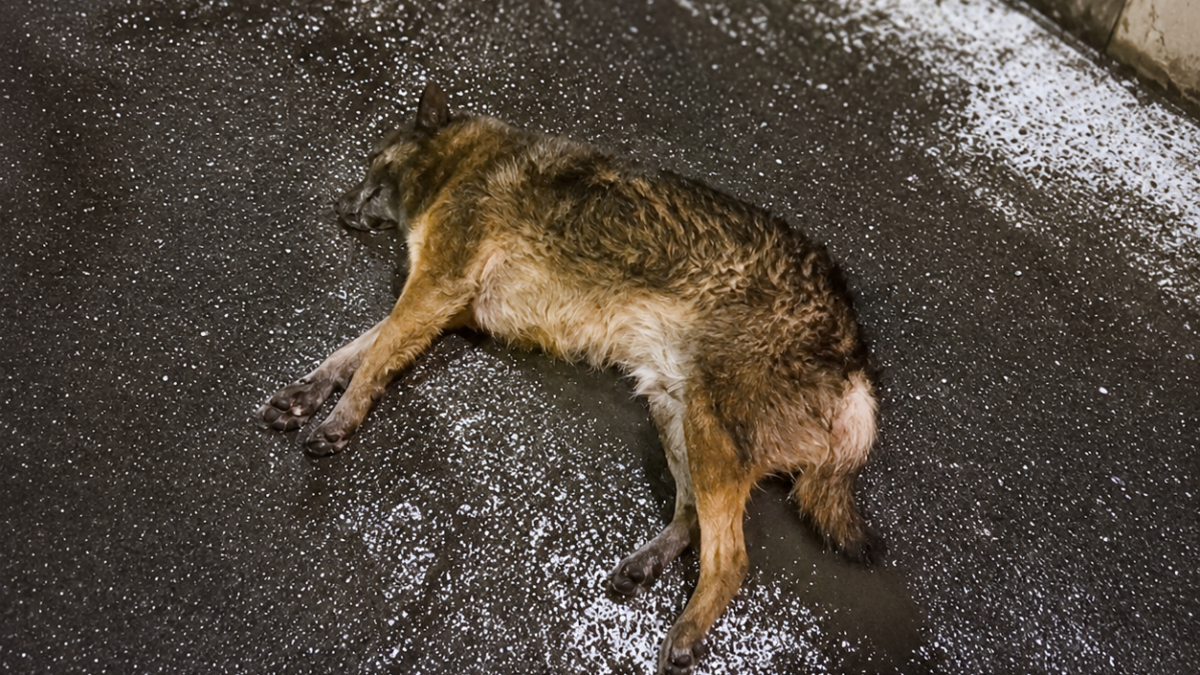
A badly injured dog lay trembling in the rain on a crowded road after the driver who hit him never stopped.
People kept passing while he struggled to breathe, but when we finally reached him, the doctors discovered something that made the entire rescue far more frightening: his spine was broken.
And before Samson’s story was over, he would survive a moment when even a veterinarian thought he was gone, endure a four-hour transfer to another hospital, lose the future we had desperately hoped for—and somehow find joy again anyway.
A crying woman had called us for help.
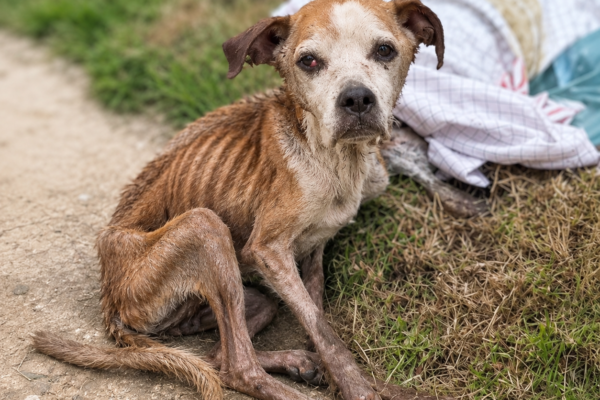
By the time we arrived, Samson was soaked, weak, and barely able to move.
His pelvis was badly affected, fluid was building inside his body, and he had abrasions and serious soft-tissue injuries that made the doctors believe the vehicle may have dragged him before leaving him in the road.
The first veterinary team rushed to stabilize him.
At one point, his condition deteriorated so badly that a doctor thought we had lost him.
They tried everything they could to revive him.
Finally, the immediate crisis passed.
But Samson still could not sleep because of the pain, and nobody could promise that he would ever walk normally again.
Then the first hospital abruptly told us to move him elsewhere.
We drove four hours to another veterinary center, where doctors were waiting for us.
New scans brought one small reason to hope: Samson still had sensation in his hind legs.
Physical rehabilitation might help.
But the doctors warned us that his chance of walking again was extremely small.
We tried anyway.
For three months, we gave rehabilitation everything we had.
Time.
Effort.
Hope.
Tears.
Nothing changed.
Then Samson’s owner heard what had happened and refused responsibility for him.
That decision settled one thing immediately.
Samson would never again have to wonder where he belonged.
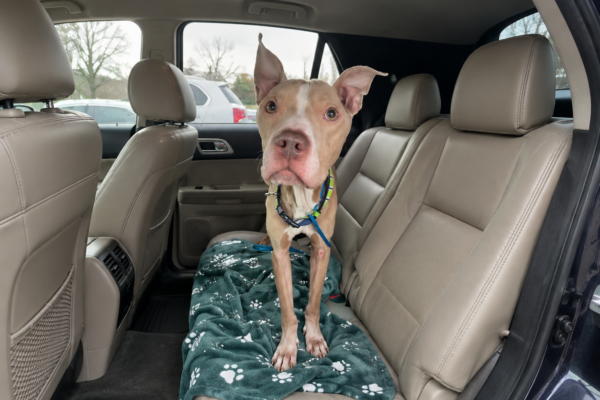
Our home became his permanent home.
And eventually, we learned that saving his life did not have to mean forcing his body to become what it had been before.
[END OF FACEBOOK CAPTION]
[FIRST COMMENT / FULL STORY CONTINUATION]
The call came from a woman who was crying so hard that, at first, it was difficult to understand everything she was trying to say.
There had been an accident.
A dog had been hit.
The driver had not stopped.
It was raining.
The dog was still in the road.
And people were passing him.
Those were the pieces we understood.
That was enough.
We left immediately.
There are rescue calls where you have time to ask questions.
How old is the animal?
Is he aggressive?
Does he belong to someone?
Can he stand?
Is there blood?
Has anyone moved him?
Then there are calls where every additional question feels like a delay.
A dog lying injured on a busy road in the rain belonged to the second category.
We could find the answers when we got there.
First, we had to get there.
The rain did not help.
It turned the road gray and reflective.
Cars threw water behind their tires.
People hurried under umbrellas or pulled jackets over their heads.
Everyone seemed focused on getting somewhere dry.
Somewhere in the middle of all that movement was a dog who could not move himself to safety.
When we reached the area, the road was still busy.
Then I saw him.
At first, he looked smaller than I expected.
Perhaps that was because he was lying so low against the wet pavement.
His coat was soaked.
His body trembled.
His breathing was wrong.
Even from a short distance, I could see the effort in each breath.
In.
Out.
Pause.
Again.
His chest moved as though breathing had become work.
The woman who had called us remained nearby.
Her face was wet from rain and tears.
She kept looking at the dog, then toward the road, as though she still could not believe the vehicle had simply continued.
“He didn’t stop,” she said.
That sentence came out again and again.
“He didn’t stop.”
I looked around.
People continued passing.
Some glanced toward us.
Some toward the dog.
Then kept going.
It is easy to become angry at scenes like that.
Why did no one stop?
Why did no one move him?
Why did no one protect him from the traffic?
But accidents involving badly injured animals are frightening.
People may not know whether touching the dog will worsen an injury.
They may fear being bitten.
They may assume someone else has already called.
So I tried not to turn every passerby into a villain.
One woman had stopped long enough to call.
That mattered.
Now we were there.
The dog was weak.
His entire body shook.
Whether from pain, cold, shock, or all three, we could not know yet.
His eyes moved toward us.
He did not bark.
Did not try to stand.
Did not attempt to escape.
That frightened me more than defensive behavior would have.
Dogs in pain often still try to pull away.
This one could not.
We approached slowly.
He seemed aware of us.
Aware of the road.
Aware of rain striking his body.
But he remained where he was.
His expression looked almost pleading.
Again, I am careful with words like that.
A dog cannot ask for help in human language.
But there are moments when the body communicates enough.
He was weak.
Trembling.
Breathing with difficulty.
Unable to get himself away from danger.
Whatever his eyes meant internally, the situation said everything for him.
He needed help now.
We moved him as carefully as we could.
Every touch mattered because we did not know what was broken.
The last thing we wanted was to take a serious injury and make it worse.
His body felt frighteningly vulnerable.
He stayed quiet.
Too quiet.
I remember the rain still falling as we lifted him.
Water ran from his fur.
The road noise continued around us as though nothing extraordinary was happening.
That contrast bothered me.
For Samson, though we did not yet call him Samson, this was probably one of the most important moments of his life.
For everyone driving past, it was just another wet day.
That is how suffering often exists.
Huge to the one experiencing it.
Invisible or temporary to everyone else.
We got him into the vehicle.
Then we drove.
The first veterinary team knew we were coming.
By the time we arrived, there was no leisurely intake.
No casual waiting.
The dog was in distress.
The doctors began first aid immediately.
They checked his breathing.
His circulation.
His responsiveness.
They examined what they could without causing unnecessary movement.
I stood nearby trying to read their faces.
The room had that focused energy veterinary hospitals develop during emergencies.
Short instructions.
Hands moving quickly.
Equipment being prepared.
One person stabilizing.
Another assessing.
Questions asked without anyone wasting words.
How long ago was the accident?
We did not know exactly.
Did we see the vehicle?
No.
Did the driver stop?
No.
Had the dog moved after impact?
We could not say.
The woman who called had found him already down.
That uncertainty made everything harder.
The doctors could only work with what was in front of them.
And what was in front of them was bad.
The spine was broken.
When those words were said, the room changed for me.
A broken spine.
I had been afraid of fractures.
Internal injuries.
Perhaps a leg.
Perhaps a pelvis.
But the spine carries a different kind of fear.
Because suddenly the question is not only:
Will he survive?
It becomes:
If he survives, what kind of movement will remain?
Will he walk?
Will he feel his legs?
Will he control his body?
Will pain become permanent?
The doctors continued examining him.
His pelvis had also been badly affected.
There was fluid accumulating internally.
He had abrasions.
Soft tissue injuries.
The pattern of damage suggested that the impact had not been simple.
The medical team believed the vehicle may have dragged him for some distance.
That possibility made my stomach tighten.
There was no witness giving us the full sequence.
No driver standing there explaining.
Only the injuries.
The doctors looked at those injuries and tried to reconstruct what might have happened.
They believed the car had likely pulled or dragged him before he was left in the road.
They also believed that stopping immediately and getting him help sooner might have improved his chances.
That thought was difficult to carry.
Because it meant the accident itself may not have been the only tragedy.
Leaving mattered too.
Minutes matter after trauma.
Sometimes seconds.
We could not change the driver’s decision.
All we could do was fight with the time we had left.
Samson lay silent.
His eyes were wet.
The source of those tears could have been pain, irritation, rain still around his face, or some combination.
But emotionally, it looked like suffering made visible.
He did not cry out loudly.
He did not thrash.
He simply lay there.
At one point, I touched him gently where it was safe to do so.
His body felt exhausted.
There is a kind of exhaustion that comes after panic.
The body has spent everything.
Pain remains.
Fear remains.
But energy for reaction is gone.
That was how he seemed.
As though he had already fought to stay alive on the road and now had nothing left except breathing.
I looked at his face and had the terrible thought that his entire life had changed in a few seconds.
Whatever he had been doing before the vehicle struck him, it was ordinary enough that nobody expected catastrophe.
Then impact.
Rain.
Road.
Broken spine.
One moment dividing before from after.
I could not know whether Samson understood that his future had changed.
The source describes him as looking as though he knew.
I would put it more carefully.
His face held pain and stillness, and from our human perspective it was difficult not to feel that something irreversible had entered the room.
The doctors worked.
Time passed strangely.
Emergency rooms do that.
A few minutes can feel enormous.
Then an hour disappears.
At some point, Samson’s condition worsened so severely that one of the doctors believed we might have lost him.
I remember the sudden change.
More movement around him.
More urgency.
Voices becoming sharper.
They tried to revive him.
Everything that could be done in that moment was attempted.
There is nothing useful a rescuer can do while professionals are trying to bring an animal back.
You stand aside.
You hope.
You bargain internally even if you are not religious.
Please.
Not now.
We just got him here.
Give him a chance.
He survived the road.
Do not let this be where it ends.
The dog had not even received a name in our lives yet.
Still, I already felt responsible for seeing him through.
The doctors continued.
And finally, the crisis passed.
He was still alive.
Stable enough for everyone to breathe again.
For a few seconds, relief felt almost like joy.
Then reality returned.
Surviving the immediate crisis did not repair the broken spine.
It did not fix the pelvis.
It did not remove the fluid.
It did not guarantee he would recover.
The doctor was honest.
They did not know what his long-term outcome would be.
That honesty hurt.
But I preferred it to false hope.
We could not make decisions based on promises nobody could keep.
The next hours were difficult.
Samson could not rest properly because pain kept interrupting him.
He would settle for a moment.
Then his body tensed.
His eyes opened.
Sleep never seemed to take him fully.
Pain medication helped, but serious trauma does not always disappear into silence just because medication has been given.
His body had been through something violent.
Every injury seemed to speak at once.
The spine.
The pelvis.
Soft tissue.
Abrasions.
Internal fluid.
He needed time.
He needed monitoring.
He needed medicine.
Most of all, he needed his condition not to deteriorate again.
We stayed close.
There is a strange emotional rhythm in caring for an animal after a life-threatening emergency.
At first, you watch constantly.
Every breath.
Every small movement.
You become afraid of normal quiet because you remember the moment the doctor thought he was gone.
If he sleeps deeply, you check whether the chest is moving.
If the breathing changes, your heart changes with it.
You tell yourself the professionals know what they are doing.
Still, fear keeps inventing possibilities.
That first hospital became a place of waiting.
We were waiting for stability.
Waiting for answers.
Waiting for someone to tell us what could be done.
The doctors kept treating him.
Then something unexpected happened.
Their position changed.
They told us we should transfer Samson to another veterinary hospital.
At first, I did not understand.
We had just fought to stabilize him there.
They knew his injuries.
They had been caring for him.
Why move a dog with a broken spine and severe pelvic trauma through a four-hour journey?
The advice seemed to arrive suddenly.
Things were changing quickly, and I struggled to follow the reasoning.
But the doctors were clear.
Another veterinary team should take over.
We trusted that recommendation.
Whatever confusion I felt, Samson’s needs mattered more than my discomfort.
If another hospital had more experience, equipment, or willingness to manage a case this serious, then that was where we needed to go.
So we prepared for the transfer.
I hated the thought of moving him.
He was already in pain lying still.
A four-hour drive meant vibration.
Turns.
Stops.
The unavoidable movement of the road.
We did everything possible to keep him supported and comfortable.
Then we left.
Four hours.
I remember almost every kind of road surface from that trip.
Smooth stretches that let me breathe.
Rough patches that made me look toward Samson immediately.
Every bump felt personal.
We drove as carefully as we could without turning a four-hour transfer into an even longer delay.
Samson remained in pain.
That was obvious.
He was exhausted.
His body had no position that looked truly comfortable.
Sometimes he stayed very still.
Sometimes his breathing changed.
I kept talking to him quietly.
Not because I thought my words could heal his spine.
Because silence felt too empty.
“You’re okay.”
“We’re going.”
“They’re waiting for you.”
“Just a little more.”
Human language again.
Probably meaningless in literal content.
But tone can offer something.
Presence.
I wanted him to know, in whatever way a dog knows, that he had not been left on the road again.
Someone was still beside him.
The rain had changed by then.
The road stretched on.
One hour.
Then another.
I kept thinking about the first veterinary hospital.
Why were they sending us away?
Was Samson worse than they had admitted?
Had they found something new?
Did they believe nothing could be done?
Fear fills gaps quickly.
When information is incomplete, the mind creates its own explanations.
I tried not to let it.
The destination was what mattered.
The other doctors knew we were coming.
That gave me something concrete.
There were people waiting.
Four hours after leaving, we arrived.
The veterinary team was still inside.
Waiting for us.
That alone brought relief.
We were not going to arrive and begin explaining the entire story from the beginning to someone unprepared.
They knew there was a critically injured dog coming.
They were ready.
Samson was moved inside.
The journey had taken something out of him.
He looked drained.
Pain still marked his face and body.
The new doctors began reviewing everything.
Then they started over in the way good medical teams sometimes must.
A previous evaluation matters.
But a new team needs its own picture.
Another ultrasound.
A CT scan.
More assessment.
We waited again.
Later, we learned more about why the first veterinary team had wanted the transfer.
We were told that Samson’s case was more severe than anything that hospital felt prepared to handle and that there had also been concern about taking on a case with such a difficult prognosis and what it might mean for their reputation if the outcome went badly.
That information upset me.
At the time, it felt as though Samson had become too complicated to keep.
I had to work through that anger carefully.
Whatever their motives, the first doctors had stabilized him when he was close to death.
They had provided emergency care.
And they had directed us somewhere that could continue.
Those facts mattered too.
The transfer was painful and confusing.
But it brought us to a team willing to take the next step.
So I tried not to let resentment become the center of Samson’s story.
He already had enough suffering.
The new imaging gave us one small piece of hope.
Samson still had sensation in his hind legs.
That sentence changed the air.
He could feel them.
The doctors tested carefully.
There was still neurological response.
It did not mean he would walk.
Nobody wanted us to misunderstand.
But sensation meant the situation was not completely without possibility.
Physical rehabilitation could be attempted.
There was a chance.
A small one.
The chance of Samson returning to normal walking was extremely low.
The doctors said that honestly.
I appreciated that.
Hope needs truth around it or it becomes dangerous.
We were not being told:
He will walk again if you work hard enough.
We were being told:
There is enough sensation that rehabilitation may be worth trying, but the probability of a normal walking recovery is very small.
That is a very different promise.
It is not really a promise at all.
It is an opening.
We took it.
At that point, every small opening felt enormous.
Samson had already survived the road.
Survived the first crisis.
Survived the transfer.
Still had sensation.
Why would we refuse the chance to try?
The second veterinary team continued caring for him through those days.
They treated the injuries.
Monitored the internal fluid.
Watched his overall stability.
Managed pain.
Tended to the abrasions and soft tissue damage.
The marks on his body reinforced their belief that he may have been dragged after impact.
Some areas looked scraped.
Other tissues had been injured without obvious clean fractures being the only problem.
It was a complicated trauma.
I thought again about the driver.
The source of the story is clear that the driver did not stop.
We never received an explanation.
No apology.
No account of what happened.
Only the consequence.
Samson.
I kept returning to one thought.
If the driver had stopped, help could have begun sooner.
The doctors believed earlier intervention might have given him a better chance.
That thought hurt because it introduced a kind of preventable uncertainty.
Maybe.
Maybe not.
Trauma this severe can have devastating outcomes even with immediate care.
So I refused to tell myself that stopping definitely would have restored his future.
Nobody could know that.
But stopping would have been the humane thing.
It would have shortened the time Samson lay in the road.
That much was certain.
I wished the driver had done at least that.
We could not change it.
So we focused on what could still be changed.
The doctors kept Samson under careful observation.
We visited.
Talked to him.
Touched him gently where touching did not hurt.
Made sure he knew familiar people were nearby.
He was always quiet.
Sad.
Withdrawn.
The source says he did not want to talk, and of course a dog does not speak the way we do.
But the meaning was clear.
He did not engage much.
There was no excitement.
No obvious joy.
He endured.
That is the word I would use.
Endured.
Some animals respond to pain by vocalizing constantly.
Others become inward.
Samson was the second kind.
His eyes followed us.
His body remained subdued.
There were moments when I wished he would bark just to show us some ordinary dog energy.
But he did not owe us that.
His body was busy surviving.
His world had become hospitals, pain, hands, movement he could not control, and uncertainty.
Joy could wait.
The medical team eventually gave us the news we had been waiting for.
He was stable.
Safe enough to leave the hospital setting.
That did not mean healed.
It meant the immediate emergency had passed.
His life was no longer hanging in the same balance it had on the first day.
That was enormous.
The doctors wrote notes for his ongoing care.
They gave instructions.
They wished him recovery.
There was warmth in that goodbye.
People at the hospital had become part of his survival story.
Now responsibility would move again.
This time, to us.
We decided to bring Samson home.
Not to a temporary place if we could avoid it.
Home.
There was another issue we had to face.
He had an owner.
At some point, that person was informed about what had happened.
The injuries.
The prognosis.
The long-term care Samson might need.
The owner refused responsibility for him.
Disowned him.
That was another kind of abandonment.
It did not happen in the rain.
There was no busy road.
No dramatic collision.
But emotionally, it mattered.
Samson had survived being left after the accident only to be rejected by the person who had been responsible for him before.
I could not understand that decision.
Perhaps the owner felt overwhelmed by the care needs.
Perhaps afraid of the cost or disability.
The source does not provide a detailed explanation.
So I will not invent one.
We only know the result.
The owner did not take him back.
That made one decision very easy for us.
Samson would not be passed around as a problem.
Our home would be his permanent home.
From that moment, there was no question.
He would have care for as long as he was with us.
He would be loved.
He would not need to earn his place by walking.
That last thought took longer for me to understand fully.
At first, I still tied hope to recovery.
We all did.
The doctors had given us a narrow opening.
Sensation in the hind legs.
Physical therapy.
Maybe.
So when Samson came home, rehabilitation became part of the plan.
But before rehabilitation, there was adjustment.
Coming home after hospitalization is different for an animal with serious mobility problems.
Every normal part of a house has to be reconsidered.
Where can he rest?
How can we move him without causing pain?
How do we keep his body supported?
How do we make sure he can participate in daily life rather than remaining isolated?
The source does not provide details of equipment or exact caregiving methods, so I will not invent them.
What I can say is that he received special attention and care.
Constantly.
The house changed around his needs.
Our routines changed around his needs.
That is what permanent care means.
Not simply saying:
You live here now.
It means building daily life around what the animal can actually do.
At first, Samson still seemed sad.
He had survived.
But survival did not automatically make him happy.
That is important.
People love rescue stories where the animal reaches a home and immediately becomes joyful.
Sometimes the body arrives before the spirit catches up.
Samson had been through extraordinary pain.
His ability to move had changed.
His old owner had rejected him.
He had been transferred between hospitals.
Now he was in another unfamiliar place.
Safety itself needed to become familiar.
So we gave him time.
Meals.
Medicine.
Quiet attention.
Familiar voices.
The same people appearing again the next morning.
And the next.
Nobody taking him away.
Nobody abandoning him outside.
Nobody deciding he was too difficult.
Slowly, he adapted.
Not dramatically.
Gradually.
That word matters.
He started recognizing the rhythm of the house.
Recognizing us.
Understanding, at least behaviorally, that this place was not another hospital stop.
It was home.
I loved watching those small changes.
A face less tense.
A little more attention when we entered.
More interest in what was happening around him.
Still no miracle.
Still the same injured body.
But more of Samson began to appear through the pain.
We gave him his name.
Samson.
A strong name.
Not because we expected him to perform strength for us.
Because something about surviving everything he had already survived made the name feel right.
Again, strength is not the absence of suffering.
Samson had suffered terribly.
Strength, in his story, was simply that he was still here.
He ate.
Rested.
Allowed care.
Looked toward us.
Began participating in life again.
That was enough.
Then rehabilitation began in earnest.
We knew the odds.
Small.
Very small.
But not zero in the way we had first feared.
He could still feel his hind legs.
That fact became the center of our hope.
Every rehabilitation session carried the same question.
Will today be different?
Will there be movement?
Will a muscle respond?
Will he support weight differently?
Will the signals between spine and legs become strong enough?
We watched everything.
A tiny motion could feel enormous.
A lack of change could ruin the entire day emotionally.
This is the danger of long rehabilitation.
You begin measuring hope in millimeters.
And when millimeters do not appear, disappointment becomes exhausting.
Still, we continued.
Day after day.
Week after week.
The program demanded effort from everyone.
Samson too.
His body had to be positioned, encouraged, exercised according to the plan we had been given.
Again, the source does not specify exact therapy techniques, so I will not invent them.
What matters is the duration and result.
Three months.
Three months of trying.
Three months of effort.
Three months of hoping the small neurological possibility might become visible function.
Three months is long enough for optimism to change shape.
At the beginning:
Maybe.
After a few weeks:
We need more time.
After more weeks:
Progress can be slow.
Then eventually:
How long do we keep asking Samson’s body for something it may not be able to give?
That question became harder than the first medical questions.
Because there was no emergency anymore.
No one was telling us he would die without continuing.
Rehabilitation was about possibility.
Quality of life mattered too.
We had to be honest with ourselves.
Were we continuing because Samson benefited?
Or because we could not let go of the version of the ending we wanted?
I did not want to give up too early.
Neither did anyone else.
We had invested so much.
Not only time.
Emotion.
Hope.
Tears.
Every difficult session became a reason to keep going because stopping might make all previous effort feel wasted.
That is a trap.
Caregivers can fall into it.
If we have fought hard for an outcome, we start believing stopping the fight means betrayal.
But sometimes the goal itself has to change.
Three months passed.
There were no meaningful results.
That was the painful truth.
Despite everything we had tried together, Samson was not returning to walking in the way we had hoped.
The rehabilitation program had not produced the outcome we wanted.
I cried.
More than once.
I had imagined the day Samson would stand again.
I had imagined watching him take a step.
Then another.
I had imagined calling the doctors.
Telling everyone:
He did it.
Perhaps I had imagined it too often.
That imagined future had become a second dog living beside the real Samson in my mind.
The real Samson was right in front of us.
Alive.
Stable.
Learning to enjoy our home.
The imaginary Samson was always about to walk.
At some point, I realized I was comparing one to the other.
That was unfair.
Samson did not fail rehabilitation.
His body had suffered catastrophic trauma.
The spine was broken.
The pelvis severely injured.
Doctors had warned us from the beginning that his chance of returning to walking was extremely small.
They had not lied.
We had tried because a chance existed.
Trying was not wrong.
But continuing forever simply because we hated accepting the result would not necessarily be right either.
So we made the decision.
We stopped the rehabilitation program.
That sentence was painful at first.
Stopped.
It sounded like surrender.
Like defeat.
Like closing a door.
For several days, emotionally, I struggled with that word.
Then I looked at Samson.
The dog did not know he was supposed to represent a failed rehabilitation outcome.
He knew meals.
Our voices.
The places where he rested.
The people who cared for him.
He knew attention.
Touch.
Home.
He had already begun adapting to his life as it actually existed.
Maybe we were the ones who needed to catch up.
So instead of calling it giving up, we called it what it really was.
Changing direction.
We would begin a new page.
Different.
Not the page we had hoped to write three months earlier.
But Samson’s page.
A life built around what he could do rather than constant pressure to become what he had been before.
That shift changed something in the house.
It changed something in me.
For months, almost every interaction had contained a question.
Can he improve?
Can he move more?
Is today the day?
Without meaning to, we had made recovery the center of his identity.
Once rehabilitation stopped, there was space for another question.
Is Samson enjoying his life?
That is a very different measure.
The answer began becoming yes.
His joy returned.
Slowly at first.
Then clearly enough that we could no longer deny it.
He paid more attention to us.
Responded more to the life around him.
The sadness that had seemed fixed in his expression softened.
He still had the same history.
Same injured spine.
Same body.
Nothing magical happened medically when we changed the plan.
What changed was the definition of success.
Before, success meant walking.
Now success meant living well.
Those are not the same thing.
I wish I had understood that sooner.
But perhaps we needed to try rehabilitation first in order to know.
We had been given a small chance.
We took it responsibly.
It did not work.
Then we adapted.
There is dignity in both actions.
Trying.
Then accepting.
Samson deserved both.
I began thinking about the first hospital again.
The doctor had been unsure whether Samson would recover.
At one point they thought he was gone.
If someone had told me then:
He will survive, but three months of rehabilitation will not restore his walking.
Would I still have wanted them to revive him?
Absolutely.
That answer clarified everything.
His life had value independent of walking.
So why had I emotionally treated walking as the final proof that rescue succeeded?
Because movement is visible.
Dramatic.
A dog who cannot walk begins walking again—that is the kind of ending people celebrate instantly.
A dog who cannot walk but learns to enjoy life anyway requires a different kind of attention.
You have to look beyond the miracle people expect.
Samson’s miracle was not that his spine repaired itself into the ending we wanted.
It was that he remained capable of joy after everything.
That is enough.
More than enough.
His permanent home became exactly what we had promised.
A place where care did not depend on recovery.
That was crucial.
Imagine if his owner had taken him back only on the condition that rehabilitation worked.
Imagine if, after three months without progress, someone decided he was too much.
That would have repeated the abandonment.
We refused.
Samson’s place in our home was not a reward for improvement.
It was permanent from the moment his owner rejected him.
Nothing about the rehabilitation result could change that.
That certainty gave me peace.
I hope it gave him security too, in the way dogs experience routine.
We were still there.
That was the message.
After three months.
Still there.
After no walking.
Still there.
When therapy ended.
Still there.
That consistency mattered more than the plan.
Samson began enjoying life.
The source ends simply with that.
“His name is Samson, and he enjoys life.”
There is beauty in how uncomplicated the sentence is.
Not:
Samson became a miracle dog who ran again.
Not:
Samson defeated every diagnosis.
Not:
Samson’s spine healed against all odds.
No.
Samson enjoys life.
A dog can have a disability and enjoy life.
That truth should not be treated as a lesser ending.
In fact, for Samson, it is the honest happy ending.
The first time we saw him, he was lying in rain on a busy road while people passed.
He could barely breathe.
He was in pain.
His spine was broken.
His pelvis damaged.
Fluid building inside.
His body scraped.
He had been hit and left.
Later, his owner refused him.
If you freeze the story there, it is almost unbearable.
But the story did not freeze.
He lived.
The doctors revived him.
Another hospital took his case.
He stabilized.
He came home.
He received three months of rehabilitation.
When rehabilitation did not produce walking, we did not abandon him.
We changed the plan.
Joy came back.
That is the full arc.
Not cure.
Belonging.
That word keeps returning to me.
Belonging.
When Samson lay in the road, nobody seemed to claim responsibility.
The driver left.
People passed.
Later, the owner refused him.
His story could have become one long sequence of people saying:
Not mine.
Not my problem.
Instead, we said:
Ours.
Not ownership in the cold sense.
Responsibility.
He belongs here.
His care belongs to us.
His comfort matters to us.
His bad days matter.
His good days matter.
That one shift changed everything.
I think about the woman who called us.
She may never have known the entire ending.
The source does not say.
So I do not invent a reunion or update.
But her decision to stop and ask for help became part of Samson’s survival.
She was crying.
Overwhelmed.
But she called.
That act mattered.
She could not repair a spine.
She did not need to.
She only needed to make the next connection.
From road to rescue.
Then rescue to veterinarian.
Then another veterinarian.
Then home.
Samson’s life was saved by a chain of people doing different parts.
The woman noticed.
We transported.
Doctors stabilized.
Second doctors assessed.
We cared.
Rehabilitation professionals, within the source’s broad framing, guided treatment.
Then we changed direction.
No single hero.
That is more realistic.
And more beautiful.
The first hospital is complicated in my memory.
I remain grateful for what they did in the emergency.
They gave first aid.
They tried to revive Samson when his condition collapsed.
He survived that moment because people acted.
Then they referred him elsewhere.
Later, we were told concern about such an unusually severe case and the hospital’s reputation played a role.
That was upsetting.
But life rarely gives us perfectly good or perfectly bad characters.
The same team that disappointed us later had helped keep Samson alive earlier.
Both facts can exist.
I choose not to simplify them.
What matters most is that the referral led us to doctors who continued.
Sometimes help includes admitting a case exceeds what you can handle.
Even if other motives are mixed in, the transfer itself may still be the right clinical choice.
We followed the advice.
Samson benefited from another assessment.
That is where we learned sensation remained.
So even a painful transition contributed information.
This is why I try not to judge the entire story while still inside one difficult moment.
Things move.
A four-hour drive that felt cruel in the moment became the bridge to the next team.
A rehabilitation program that failed to restore walking still gave us certainty that we had tried the available chance.
Stopping therapy felt like defeat until we saw it as permission for Samson to live without constant testing.
Meaning changes with time.
Samson taught me that.
I also think about pain.
The source says pain prevented him from sleeping.
That detail may be one of the hardest.
Sleep is one of the body’s simplest refuges.
When pain becomes strong enough to take even sleep away, suffering feels endless.
I remember watching him unable to settle and thinking:
If he can only sleep, maybe tomorrow will be easier.
Eventually, the immediate trauma stabilized.
He did begin having calmer days.
That alone was progress.
Before asking whether he would walk, his body first needed permission to stop fighting for every breath and every minute of rest.
We sometimes skip that in our memory because the walking question seems larger.
But survival began with smaller victories.
Breathing.
Stability.
Pain control.
Sleep.
Food.
Home.
Only then rehabilitation.
That order matters.
A life is not built only from spectacular milestones.
Samson’s first real victory may have been simply making it through the night.
Then another.
The joy at the end rests on all of those quiet victories.
When he finally began showing more happiness, I recognized the importance of ordinary pleasure.
He did not need a perfect body to respond to affection.
Did not need four working legs in the way we had imagined to recognize familiar people.
Did not need rehabilitation success to become part of a household.
The body has limits.
Relationship can exist inside those limits.
That is what we learned.
I stopped looking at him primarily as an injured spine.
He became Samson.
That may sound obvious.
But medical crises can reduce an animal to a problem without anyone intending it.
“The spinal case.”
“The dog who was hit.”
“The rehab dog.”
Labels help organize care.
They can also shrink identity.
Samson was more than what the car had done to him.
He had preferences.
Moods.
Ways of responding to us.
Quiet days.
Better days.
He could be sad.
Then interested.
Then content.
His emotional life continued.
That was the point.
Once I saw that clearly, ending rehabilitation felt less like taking something away.
We were giving ordinary life back.
No more every day being judged by whether the hind legs changed.
No more disappointment attached to his body.
We could simply be with him.
Care for him.
Enjoy him.
Let him enjoy us.
There is freedom in accepting reality without calling it hopelessness.
That distinction changed me.
Hope is often misunderstood as refusing to accept bad news.
Samson taught me another version.
Hope can change its object.
At first:
I hope he lives.
Then:
I hope he walks.
Later:
I hope he is comfortable.
I hope he feels safe.
I hope he enjoys today.
Those later hopes were not smaller.
They were more appropriate.
And they were achievable.
Samson began meeting them.
That is why the ending is happy.
Not because we got everything we asked for.
Because we learned what mattered most.
His owner had apparently looked at the prognosis and refused him.
We looked at the same prognosis and made him permanent.
I do not know what was inside the owner’s mind.
I will not invent cruelty beyond the decision.
But the contrast is stark.
One person heard the news and stepped away.
We heard it and moved closer.
Samson could not control either response.
That is what makes dependence on humans so serious.
Dogs do not choose who takes responsibility for them at the beginning of life.
They live inside our choices.
The least we can do is make those choices worthy.
Samson’s first owner failed him at the moment he most needed continuity.
We could not undo that.
We could make sure it did not happen again.
So we did.
Permanent.
That word mattered.
Not foster until he walked.
Not care until someone easier appeared.
Permanent.
His home.
I think that certainty was part of what allowed joy to return.
Again, I cannot claim a dog conceptually understood legal permanence.
But routines become evidence.
The same people.
Same home.
No transfers.
No owner refusing him at the door.
Stability has behavioral meaning.
He adapted.
That is confirmed.
Gradually.
Adaptation is a kind of trust.
The environment stops feeling temporary.
You begin responding to it rather than enduring it.
Samson did.
I remember his early sadness after coming home.
His expression often remained heavy.
He did not engage much.
It was difficult not to compare him to healthy dogs.
A dog who runs to the door.
A dog who jumps for food.
A dog who follows someone from room to room.
Those comparisons were unfair.
Samson’s body did not permit the same behaviors.
We had to learn his language instead.
Interest might look like turning his head.
Comfort might look like a softer body.
Happiness might be quieter.
That was an important adjustment for us.
If you measure every dog by the behavior of an able-bodied dog, you may miss happiness when it appears differently.
Samson’s joy did not need to look like running.
That should have been obvious.
It took time to feel obvious.
Once we learned, we saw more of him.
That is another reason the story’s final sentence matters.
“He enjoys life.”
No requirement for a specific display.
Enjoyment adapted to his body.
Good.
I think about the words “start a new page in a different way.”
That phrase captures the turning point better than any medical description.
For three months, our page had one title:
Rehabilitation.
Then we turned it.
Not because the previous page was wasted.
It had served its purpose.
We explored the possibility.
We learned the limits.
Now another page.
Life.
That is not surrender.
It is narrative honesty.
A book cannot remain on the same chapter simply because you wanted a different ending there.
You keep going.
Samson did.
So did we.
His joy returned after we stopped asking his body to prove anything.
That fact affected me deeply.
I wondered whether our own tension during rehabilitation had made the home feel constantly clinical.
Again, I cannot know exactly.
But I know our emotional atmosphere changed when the program stopped.
We became less focused on outcomes.
More present.
Maybe Samson noticed.
Dogs notice tone.
Routine.
Frustration.
Relief.
At minimum, we noticed.
And that improved our relationship with the present.
The house stopped feeling like a rehabilitation center.
It became simply home.
That was good for everyone.
The source does not specify exactly how Samson moved around after rehabilitation ended.
So I do not add a wheelchair or cart, even though many dogs with spinal injuries use them.
That is not our fact to invent.
We know only that the old program stopped and a different kind of life began.
His joy came back.
That is enough.
We do not need a device to make the ending visible.
We have Samson’s emotional improvement.
The final line gives us that.
Respecting what is unknown protects the truth.
The same applies to his exact prognosis.
“Chance of walking was extremely small.”
Not zero.
Three months produced no results.
We do not know whether any later neurological change occurred.
The source ends before that.
So we stop.
No years later.
No miracle months after rehab.
No decline.
Present.
Samson enjoys life.
That is where he deserves to remain in the story.
I sometimes think about how different the story might sound if told only through medical facts.
Hit by vehicle.
Spinal fracture.
Pelvic trauma.
Internal fluid.
Abrasions.
Soft tissue injury.
Resuscitated after critical deterioration.
Transferred four hours.
Hind-limb sensation preserved.
Poor ambulatory prognosis.
Three months rehabilitation without result.
That version is accurate but incomplete.
It leaves out the woman crying in the rain.
The road.
The driver’s absence.
The owner’s refusal.
The home.
The emotional adjustment.
Joy.
Medical facts describe what happened to Samson’s body.
They do not describe what happened to his life.
The full story needs both.
His body changed permanently.
His life did not end there.
That is perhaps the central truth.
Disability is not the same as the end of a meaningful life.
Samson forced us to confront that without ever making a speech.
He simply continued living.
At first, we were the ones unable to imagine how.
Then he showed us.
Eat.
Rest.
Respond.
Adapt.
Enjoy.
Animals are practical that way.
They live in the body they have today.
Humans spend more time arguing with reality.
I did.
For three months.
Maybe longer emotionally.
I wanted his old body back for him.
He had already begun learning the new one.
There is humility in realizing the animal may be adapting faster than the caregiver.
We think we are helping them accept life.
Sometimes they are waiting for us to stop mourning the life we imagined.
Samson taught me that.
Not intentionally.
Simply by becoming happier once we stopped making walking the center.
I do not romanticize disability.
If Samson could have walked again, we would have welcomed it.
The rehabilitation effort proves that.
Mobility loss creates real challenges.
Care demands are real.
The pain from the original trauma was real.
None of that should be turned into a sentimental claim that injury was somehow a blessing.
It was not.
The accident harmed him.
The driver’s refusal to stop worsened an already terrible situation.
His owner abandoning responsibility hurt him again.
What became beautiful was our response afterward.
Not the injury itself.
This distinction matters.
We can celebrate Samson without thanking the trauma.
He deserved a good life before being hit.
He deserves one after.
Simple.
I never want the happy ending to make someone think the accident was necessary for him to find us.
That kind of storytelling can accidentally romanticize suffering.
No.
I wish the driver had stopped.
I wish Samson had never been injured.
I wish his owner had stood by him.
Those would have been better outcomes.
But once none of those things happened, we chose what could still be good.
That is where hope belongs.
In response.
Not in rewriting harm as destiny.
Samson’s life after injury is meaningful because he is meaningful, not because suffering gave him value.
He already had value.
We finally behaved as though he did.
That is a healthier way to tell rescue stories.
I return mentally to the road.
People walking past.
Rain.
His body still.
If someone had looked at him and thought:
That dog will never be the same.
They would have been right physically.
But if they had meant:
That dog can never have happiness again.
They would have been wrong.
That difference is everything.
We often confuse permanent injury with permanent misery.
Samson’s ending challenges that.
His body did not return to its previous state.
Joy returned anyway.
That is one of the most powerful outcomes I know.
Not because joy cancels disability.
Because it coexists.
Life can still contain good things inside altered circumstances.
Samson became evidence.
Again, one dog’s story is not a guarantee for every case.
Pain, prognosis, and quality of life differ.
But for Samson, the source is clear.
He adapted.
Joy returned.
He enjoys life.
That is his truth.
The doctors at the second hospital had said all we could do was try our best and wait for a miracle.
For three months, we interpreted “miracle” as walking.
Maybe that was too narrow.
The miracle was already happening.
He survived.
He had sensation.
He stabilized.
He came home.
He was wanted.
He found a permanent family after his owner rejected him.
Then he found joy.
That is a different miracle.
One without a dramatic first step.
Perhaps harder to photograph.
No less real.
I like that ending more because it does not require his body to satisfy our expectations before we celebrate him.
Samson is enough as he is.
That lesson took us time.
But once learned, it changed the way I looked at him.
No longer waiting for the “real” happy ending.
We were living it.
That is an important realization for caregivers.
If you postpone joy until the body reaches an uncertain goal, you may miss the life happening now.
Samson had already lost enough time to pain.
We did not want to lose more to our expectations.
So the new page became about living.
I think that is when his name truly became associated with the dog rather than the case.
Samson.
Not “the dog hit in the rain.”
Not “the spinal injury.”
Not “the rehab failure.”
Samson.
He had survived all those descriptions.
Now he could simply be himself.
That is the privilege of home.
Shelters and hospitals often have to identify animals by problem because problems determine care.
Home can identify by relationship.
Our dog.
Samson.
That shift is healing too.
I am grateful to every doctor who helped him.
Even when the story was confusing.
The first team for stabilizing and reviving.
The second for accepting the severe case, scanning him, finding preserved sensation, and giving us honest expectations.
The people who wished him recovery when he left.
Their medical work made the later emotional ending possible.
Without survival, no adaptation.
Without pain control, no joy.
Medicine and love are not competing explanations.
Both mattered.
I dislike stories that say “love saved him” as though professional care were secondary.
Love got Samson to doctors.
Doctors kept him alive.
Love brought him home.
Rehabilitation explored possibility.
Acceptance gave him room to enjoy life.
Every piece.
That is a more accurate rescue story.
The crying woman mattered.
The medical teams mattered.
We mattered.
Samson’s own body mattered.
No single force did everything.
The outcome belonged to the whole chain.
And still, the center remains one dog.
Samson.
That keeps the story from becoming about our virtue.
We did what needed doing.
He was the one living through it.
Sometimes I think about the moment the doctor thought he was gone.
If Samson’s heart or breathing had not responded, the story would have ended there.
Every later scene depends on that moment turning the way it did.
Home.
Three months rehab.
Joy.
All hidden behind a crisis no one knew would pass.
That makes ordinary days with him feel larger.
A dog lying comfortably at home can be a profound sight when you once watched people try to bring him back.
This is why rescuers become emotional over ordinary things.
Because we know the alternate ending that almost happened.
Samson eating.
Samson watching us.
Samson resting.
None of those scenes look dramatic to an outsider.
To us, they are evidence.
He is here.
Still.
That word again.
Still here.
His story contains many moments where someone could have walked away.
The driver did.
The owner did.
The first hospital, in a more complicated way, transferred responsibility when the case exceeded what they wanted to manage.
Then others did not walk away.
That contrast defines the narrative.
Care is partly the refusal to disappear when difficulty increases.
The second hospital waited four hours for us.
That image means a lot to me.
We arrived after a long road, worried and exhausted.
The doctors were still there.
Waiting.
That is the opposite of the road.
Someone expected Samson.
That matters symbolically and practically.
The first scene:
A dog left where nobody stopped.
Later:
A team waiting specifically for him.
Then:
A home waiting to keep him permanently.
His relationship to human attention changes.
From ignored.
To expected.
To belonging.
That is beautiful.
Again, no need to add anything.
The facts create the arc.
I think about the four-hour drive as one of the hardest transitions.
He was already in pain.
Moving him felt cruel even though it was medically advised.
Rescue often contains actions that look uncomfortable in the moment but serve longer-term care.
Transport.
Examinations.
Rehabilitation.
A dog cannot understand why.
That is one of our greatest responsibilities.
If we choose for an animal who cannot consent in human terms, we have to keep asking whether the choice truly serves him.
The transfer did.
It led to assessment and ongoing care.
Rehabilitation was worth trying based on sensation and medical advice.
After three months without progress, continuing became less clearly beneficial.
So we stopped.
That sequence shows responsible adaptation.
No decision stayed sacred simply because we had made it once.
We reassessed.
That matters.
Care should be flexible.
The animal’s welfare is the goal, not proving our original plan correct.
Samson’s case made that painfully clear.
At first, perseverance was right.
Later, acceptance was right.
Same people.
Different moment.
Good care changes with evidence.
I respect that now.
If we had stopped rehabilitation after one week, we might always have wondered whether we denied him a chance.
If we had continued indefinitely despite no result simply because stopping felt emotionally difficult, we might have turned his life into an endless project.
Three months gave us enough lived evidence to choose differently within the source’s account.
Then we did.
That was not failure.
It was completion of one attempt.
Another life began.
This framing helped heal our own grief.
We had not wasted three months.
We had explored the possibility thoroughly enough to let it go.
That has value.
Samson’s joy afterward confirmed that his life did not depend on the outcome.
He had more paths than we first imagined.
When one closed, another opened.
Not medically miraculous.
Emotionally real.
I think anyone caring for a disabled animal understands this eventually.
You start by asking how to restore normal.
Then perhaps learn to redefine normal.
Samson’s normal became ours.
Not lesser.
Different.
The source’s language says “start a new page in a different way.”
Exactly.
Different.
Not worse by definition.
Not the life we would have chosen for him.
Still capable of goodness.
That distinction honors both grief and joy.
We can mourn what he lost without treating what remains as worthless.
Samson deserved that nuanced love.
I believe he received it.
His happiness returned.
That is the proof available to us.
No more is needed.
The name Samson also began to feel less like a symbol of physical strength and more like a reminder of endurance.
Again, I do not burden him with a heroic narrative.
He did not choose to be inspiring.
He was a dog.
But from our perspective, there was something moving about his willingness to keep engaging with life after so much changed.
Endurance can be ordinary.
Wake up.
Eat.
Accept affection.
Notice the room.
Another day.
That is enough.
Sometimes strength is not standing.
Sometimes it is continuing.
Samson continued.
I have learned to value that more.
The final scene is not a dramatic rehabilitation session.
It is life at home.
That feels right.
A hospital is where survival was fought for.
Home is where survival became worthwhile.
Those are different roles.
We needed both.
The doctors could preserve the body.
They could not create belonging.
That became our responsibility.
Belonging then created space for joy.
I think that is the full equation.
Medicine + care + permanence + acceptance.
Not one ingredient alone.
Samson’s owner refusing him may have unintentionally clarified our role.
There was no longer a question of temporary responsibility.
Nobody was waiting to reclaim him.
That was painful.
Also decisive.
From that moment:
Permanent home.
Sometimes clarity arrives through disappointment.
We would rather the owner had said:
Bring him back. I will care for him.
That did not happen.
So we said yes instead.
Samson’s life needed someone to.
Yes to care.
Yes to long-term responsibility.
Yes even if he never walked.
The final yes mattered more than the earlier no.
That is how I choose to hold the story.
Not centered on rejection.
Centered on what followed.
If I spend all my emotional energy angry at the owner, Samson disappears.
I do not want that.
His joy is more important than their refusal.
The driver also does not deserve to dominate the ending.
The accident begins the story.
It does not own the final line.
Samson does.
That is why I like ending with his name.
His name is Samson.
He enjoys life.
Two simple statements.
They take the story back from everyone who failed him.
Driver.
Owner.
Anyone who passed.
The final identity is not victim.
Samson.
Alive.
Enjoying life.
That is justice of a different kind.
Not legal justice.
Not revenge.
Narrative justice.
His life becomes larger than what was done to him.
I think rescue stories need that.
Suffering draws attention.
But the animal should not remain trapped inside suffering for the reader’s emotion.
We should follow far enough to see who he becomes after.
Samson became a dog with a permanent home.
A dog whose family stopped measuring worth by walking.
A dog whose joy returned.
That is the story.
The rain is the beginning.
Not the definition.
I still remember the wet road.
I always will.
But now when I remember it, another image follows.
Not a specific invented scene.
A feeling.
Samson at home, no longer in immediate crisis.
The contrast is enough.
Then:
Road—nobody responsible.
Home—we are responsible.
Road—pain.
Home—care.
Road—abandoned after impact.
Home—permanent.
Road—future uncertain.
Home—life enjoyed.
Those pairs make the ending complete.
We do not need a medical miracle to complete them.
I wish more people understood that.
Sometimes the happy ending is not “back to normal.”
Sometimes it is “safe in the new normal.”
Samson is one of those stories.
That does not make his ending weaker.
It makes it honest.
I think of the three months of tears.
At the time, each tear felt attached to failure.
Now I see them differently.
We cried because we cared.
Because we wanted more for him.
That desire was not wrong.
We simply had to let love mature beyond desire.
Love first said:
I want you to walk again.
Later it had to say:
Even if you do not, I am still here.
The second sentence is harder.
And more important.
Samson needed the second.
We learned to give it.
That may be the deepest transformation in the story.
Not his body.
Ours.
We changed our definition of what we were trying to save.
At first:
Mobility.
Eventually:
Life worth living.
Much larger.
Samson taught that without words.
He simply became happier once life was allowed to be life again.
I respect that.
If one day someone asked me whether rehabilitation was a mistake, I would say no.
Based on the information we had, sensation remained.
There was a chance.
We tried.
The doctors had told us the walking chance was very small.
We knew.
There was no deception.
Three months later, no result.
Stopping was also not a mistake.
Both decisions belonged to different stages.
Care is not always choosing one philosophy forever.
Fight.
Accept.
Both can be love.
Knowing when to move from one to the other is the hard part.
Samson’s story lives in that transition.
That is why it stayed with me.
The most emotional moment is not necessarily the crash.
Or the resuscitation.
It may be the decision to stop.
Because that is where we had to release the ending we had written in our heads.
Then the real ending had room to appear.
Joy.
That is beautiful.
When I say joy returned, I do not mean Samson forgot everything.
We cannot know his memory.
I do not mean pain vanished forever.
The source does not say that.
I mean his behavior showed renewed enjoyment of life.
That is enough.
We do not need absolute statements.
Happiness can exist alongside ongoing care.
Again, coexistence.
This story is full of it.
Injury and survival.
Poor prognosis and hope.
Effort and acceptance.
Disability and joy.
Abandonment and belonging.
Pairs of truths.
Real life is rarely one thing.
Samson’s story becomes stronger when we hold both sides.
I often think about how close we came to reducing the story to walking.
Imagine if the full narrative ended:
After three months, rehabilitation failed.
That sounds tragic.
But the source does not end there.
One more sentence changes everything.
We decided to stop and start differently.
Joy returned.
That is why endings matter.
A story can change meaning depending on where you stop.
Stop at road: horror.
Stop at diagnosis: fear.
Stop at failed rehab: disappointment.
Stop at joy: resilience.
All are true moments.
Only the last gives the whole arc.
We owe Samson the whole arc.
That is what I want to preserve.
Not false optimism.
Complete truth.
He did not walk as we hoped.
He did enjoy life.
Both.
Good.
There is also something meaningful about the name appearing late in the source.
For much of the story, he is “the dog.”
Patient.
Case.
Victim.
Then:
His name is Samson.
As if, after all the medical struggle, we are finally reminded he is an individual.
I like that.
So I keep his name prominent at the end.
Samson.
He is not the accident.
He is not the broken spine.
He is not the abandoned dog.
Those are things that happened.
Samson is the one they happened to.
And he remains.
That difference is dignity.
I think his permanent home gave him that dignity most of all.
In a hospital, necessity determines everything.
At home, relationship can.
He was no longer only being managed.
He was being loved.
Again, the source’s promise is simple:
He will receive love and care for as long as he is here.
That is a powerful promise because it does not depend on cure.
As long as he is here.
That is all any living being can ask from family.
Presence for the time available.
No one can promise how long.
We can promise how we behave during it.
Samson got that.
I find peace there.
The driver did not stop.
We did.
The owner turned away.
We stayed.
The spine did not recover the way we hoped.
Joy did.
That is the story in four lines.
But the long middle matters because it proves those lines.
Four-hour drive.
Days in hospital.
Three months of rehab.
Adjustment.
Tears.
The final joy was not cheap.
It came after effort and redefinition.
That is what makes it believable.
No sudden emotional miracle.
Gradual.
Like most real healing.
Samson gradually adapted to the new life.
Then gradually, we adapted too.
Parallel healing.
I appreciate that.
We often think only the rescued animal needs adjustment.
Caregivers do too.
A disabled animal changes household expectations.
Schedules.
Emotions.
Goals.
We had to accept a different future.
Once we did, the home became lighter.
That is part of the rescue.
Not just changing his environment.
Changing ourselves enough to love the reality rather than the fantasy.
That is difficult and worthwhile.
Samson made us better at it.
Again, not his responsibility.
A consequence.
Relationships teach.
The most important lesson was simple:
A life does not need to look the way you expected in order to be worth living.
I will not make that a universal medical principle.
Quality-of-life decisions are individual and serious.
But for Samson specifically, his later enjoyment showed us that his life still contained value and pleasure.
That is the only claim needed.
His case had its own evidence.
He was stable.
Safe.
Adapted.
Joyful again.
So our choice made sense for him.
We remained attentive.
Care continued.
The source closes there.
Perfect.
No need to add age.
Breed.
Years later.
Those facts are not given.
No need to invent a wheelchair.
No need to say he eventually walked.
No need to say he never had pain again.
We let the present stand.
Samson enjoys life.
The reader can hold him there.
Alive.
Loved.
Home.
That is enough.
If I could return to the woman crying on the phone, I would tell her:
Stopping mattered.
Calling mattered.
You could not undo the accident.
But because you refused to look away, the dog got a chance.
Again, the source does not tell us that conversation happened.
So it remains only my reflection.
But I think about it.
People often underestimate the value of being the first link.
You do not have to solve everything.
Call.
Wait.
Protect if safe.
That can be enough to connect suffering to help.
Samson’s entire later life depended on someone beginning that chain.
One person noticed while others passed.
Then we arrived.
That is why I resist judging every passerby while still honoring the woman who acted.
Action mattered.
Not moral superiority.
Just action.
The driver also had a chance to be that first link.
They did not take it.
That remains one of the hardest facts.
An accident can happen.
Drivers can make mistakes.
Roads are unpredictable.
But stopping after impact is a choice.
The source makes the refusal clear.
They did not stop.
That is why the title carries coldness.
Not because impact itself proves cruelty.
Because leaving a badly injured animal in rain on a busy road is a second decision.
That one was avoidable.
Samson lived with the consequences.
Still, I refuse to let that driver have the final emotional power.
They left.
Others stayed.
The stay wins the narrative.
That is how I protect the story from becoming only anger.
Anger is justified.
Care is more useful.
We chose care.
The owner refusal creates the same contrast.
Another person leaves responsibility.
We take it.
Twice, Samson is abandoned by humans.
Twice, other humans close the gap.
That repetition could make the story cynical.
Instead, it gives us a choice about which humans define the ending.
We chose the ones who remained.
The woman caller.
Veterinarians.
Caregivers.
Us.
That is fair.
Human beings can fail animals terribly.
Human beings can also organize entire lives around helping them recover.
Both are true.
Samson saw both sides through circumstance.
His happy ending depends on the second.
I think that complexity is more honest than “people are cruel” or “people are wonderful.”
People make choices.
Samson’s story is shaped by a series of them.
Some terrible.
Some compassionate.
At the end, compassionate choices accumulated enough to create home.
That is hope grounded in behavior.
I prefer it.
When rehabilitation stopped, perhaps the biggest compassionate choice was accepting what medicine had already warned.
The chance was very small.
We had wanted to outwork probability.
Sometimes effort changes outcomes.
Sometimes biology keeps its limits.
Samson’s body kept its limits.
We respected them.
That is another form of listening.
Animals cannot tell us:
Please stop making my life a test.
We have to observe.
Assess.
Consult.
Then decide.
The source tells us we decided to stop and his joy returned.
That sequence supports the choice.
Good.
We do not need to justify further.
No guilt.
The page turned.
That is enough.
I imagine some readers may feel sad that Samson did not walk again within the source.
I understand.
I felt it too.
But sadness should not erase the ending.
The goal of rescue is not to produce a body that makes us comfortable.
It is to support the animal’s well-being.
Samson’s well-being improved.
That is success.
Different from cure.
Still success.
Important distinction.
We can grieve the lost mobility and celebrate the life.
Both.
I have repeated that word many times because it is central.
Both.
This story refuses simple emotion.
Rain and home.
Pain and joy.
Loss and belonging.
Trying and stopping.
Both.
Maybe that is why it feels real.
Rescue is not a straight line upward.
There are setbacks.
Changing plans.
Unanswered questions.
Samson’s road literally began with a collision and continued through multiple medical settings.
Then home.
The path twisted.
The ending still became good.
Not perfect.
Good.
Good is enough.
One of the most mature things rescue teaches is to stop demanding perfect endings.
Sometimes perfect is impossible.
The animal can still have a meaningful one.
Samson did.
I look at the phrase “start a new page” and think about a book whose first chapters are damaged.
You do not tear them out.
They remain part of the story.
But they do not control every page after.
Samson’s accident remains.
His owner refusal remains.
Failed rehabilitation remains.
Then another page.
Joy.
That page does not deny the others.
It gives them somewhere to lead.
That is why I am satisfied stopping there.
No epilogue needed.
The present is enough.
Samson is not waiting for a future miracle in the final sentence.
He is already living.
That is crucial.
We are not saying:
Maybe one day he will be happy.
He is happy now.
Maybe one day he will have a home.
He has one.
Maybe one day he will be loved.
He is.
The uncertain future stops dominating.
Present tense takes over.
That is the strongest resolution.
I wish we had known on the first night that present tense would eventually be enough.
We spent so much energy fearing the future.
Will he live?
Will he walk?
Will the owner accept him?
Will rehab work?
Most answers were painful or uncertain.
Then the final question became:
Does he enjoy his life?
Yes.
That yes is larger than it looks.
It redeems none of the harm.
But it validates every effort after.
I am grateful for it.
The doctors who first fought to revive him could not know that ending.
The second team waiting after four hours could not know.
We could not know during month one of rehabilitation.
No one knew.
That is why care must sometimes happen without guarantee.
You do the right thing because the animal deserves the chance, not because success is promised.
Samson deserved the chance.
We gave it.
The form of success changed.
Still success.
If there is one thing I would want someone to remember from his story, it is not the broken spine.
Not even the hit-and-run.
It is this:
When the future you hoped for becomes impossible or unlikely, love does not have to end with the hope.
Love can change shape.
Ours did.
From rescue.
To treatment.
To rehabilitation.
To acceptance.
To companionship.
Same commitment.
Different expression.
That is what permanent care looks like.
Flexible enough to meet reality.
Strong enough to stay.
Samson received it.
And he responded in the only way that mattered.
He came back to life emotionally.
Joy returned.
The dog who had been silent in pain began enjoying his days.
No one needed more proof.
There is something almost peaceful about ending on that.
After all the noise of the beginning.
Rain.
Traffic.
Emergency rooms.
Four-hour road.
Scans.
Rehabilitation.
The ending is quiet.
Samson enjoys life.
Sometimes the best endings are quiet because the crisis is finally over.
No one rushing.
No one resuscitating.
No one waiting for scan results.
No one measuring whether a leg moved.
Just life.
That is what we wanted all along, even before we knew how to define it.
We thought we wanted walking.
What we really wanted was life.
Samson gave us that distinction.
I think of his first breaths when we arrived.
Hard.
Labored.
Every one looked difficult.
Then I think of how much we later worried about his legs.
Breathing had once been the emergency.
Walking later became the dream.
Joy eventually became the goal.
The hierarchy changed.
And perhaps that is why gratitude deepened.
When you have once feared losing a life completely, you learn to value forms of that life you might otherwise overlook.
Samson did not need to meet our original image of a healthy dog to remain precious.
He simply needed to be Samson.
That is the final lesson.
He had been hurt by a vehicle.
That does not define his worth.
He had been rejected by an owner.
That does not define whether he is lovable.
He had not recovered walking after three months.
That does not define whether his life has joy.
External events can change circumstances.
They cannot determine value.
Samson’s permanent home was our way of proving that belief through action.
Not words.
Care.
Every day.
That is enough.
Sometimes I still remember the first road.
Wet pavement.
Rain.
People moving past.
His body unable to get up.
It hurts.
Then I force myself to continue the memory.
Do not stop at the worst frame.
The woman called.
We came.
Doctors acted.
He survived.
Four-hour drive.
Another team waited.
Sensation remained.
Home.
Three months.
A difficult decision.
New page.
Joy.
Samson.
That is the full memory.
Complete it.
Otherwise, suffering gets to own the whole story.
It does not.
Samson owns the ending.
His name is Samson.
He was left injured in the rain after a driver did not stop.
His spine was broken.
His pelvis was badly damaged.
For a moment, even a doctor thought he was gone.
He survived.
He endured four hours on the road to another hospital.
He still had sensation in his hind legs.
We tried rehabilitation for three months.
It did not restore the walking we had hoped for.
His owner refused him.
We did not.
Our home became his permanent home.
And when the plan for his body had to change, our commitment to him did not.
We stopped asking for the miracle we had imagined.
We began paying attention to the life already in front of us.
That was when the sadness began loosening its hold.
That was when Samson’s joy started coming back.
He had already survived enough.
He no longer needed to prove anything.
Not to the doctors.
Not to us.
Not to anyone.
He only needed a place where he could be cared for exactly as he was.
Now he has that place.
His future did not become the future we first prayed for.
It became something different.
A permanent home.
Love.
Care.
Safety.
And a dog named Samson who, after everything that tried to reduce his world to pain, is still here.
Still loved.
And enjoying his life.