The HOA fined me $500 for fishing with my fourteen-year-old daughter on the lake they advertised as a neighborhood amenity, so six weeks later I bought the entire six-acre lake and temporarily closed it to every person who had spent years pretending Brenda Sterling owned it.
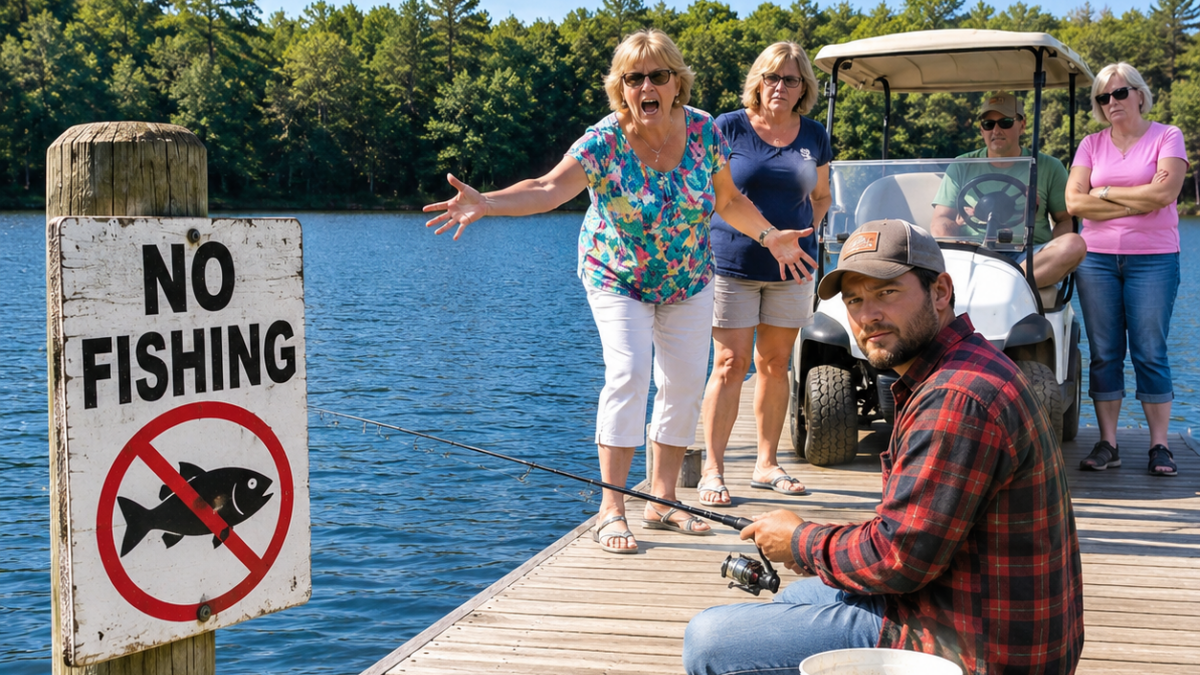
The HOA fined me $500 for fishing with my fourteen-year-old daughter on the lake they advertised as a neighborhood amenity, so six weeks later I bought the entire six-acre lake and temporarily closed it to every person who had spent years pretending Brenda Sterling owned it.
The afternoon I recorded the deed, Brenda was standing on my new shoreline holding a microphone at an HOA celebration, promising residents an “exciting new future” for Cypress Lake while quietly preparing a special assessment to fund the purchase she thought was already hers.
What she didn’t know was that her $300,000 financed offer had lost to my $350,000 cash deal, the recreational agreement she had been using to control residents was nearly expired, and three neighbors had already helped me uncover a pattern of fines, distressed sales, and property acquisitions tied to companies connected to her.
My name is Remy Thorne.
I was forty-two when my wife Laura died from cancer and left me trying to help our daughter Maya survive the kind of grief no teenager should have to understand.
Fishing was one of the last things the three of us had done together.
So when Maya and I moved to Oak Haven Shores, Cypress Lake mattered more than the realtor realized.
One Saturday, Maya caught a little perch and smiled for the first time in weeks.
Then Brenda appeared in white tennis clothes with a clipboard.
“Fishing is prohibited.”
She handed me a $500 violation.
The listing had specifically advertised fishing.
Brenda told me the rule had been amended the previous month and blamed me for not checking my spam.
That night I searched every HOA email I had received.
Nothing.
Then retired attorney Gary Bennett told me the part Brenda apparently hoped new residents would never learn.
The HOA did not own Cypress Lake.
Crestview Development did.
And its recreational-use agreement with Oak Haven expired in two months.
Even more interesting, Crestview was selling assets.
Brenda was already trying to buy the lake.
So I called them first.
Seven days later, I signed an all-cash purchase agreement for the lake and its surrounding shoreline parcel.
I said nothing.
The following Saturday, Brenda raised her champagne glass beside the dock and began announcing Oak Haven’s future.
I walked toward her with my attorney and the recorded closing documents.
She stopped smiling.
“Mr. Thorne, this is a private HOA event.”
I looked at the crowd standing around Cypress Lake.
Then at the deed in my hand.
“No, Brenda.”
I held it up.
“I think we need to talk about whose private event this actually is.”
[END OF FACEBOOK CAPTION]
[FIRST COMMENT / FULL STORY CONTINUATION]
The microphone was still in Brenda’s hand when she realized I was not leaving.
She stared at me.
Then at Gary.
Then at the attorney standing beside us.
His name was Colin Hayes.
Corporate and real-estate law.
Forty-nine.
Calm in the particular way lawyers become calm when somebody else is about to have a very bad afternoon.
Brenda lowered the microphone.
“Remy.”
“Brenda.”
“This gathering is for Oak Haven residents.”
“I am an Oak Haven resident.”
“You were not invited.”
I looked around.
About sixty people stood near the clubhouse lawn.
White folding tables.
Wine.
Cheese trays.
A jazz trio beneath a canvas awning.
Children near the water.
Board members gathered around Brenda.
The event had been advertised as:
THE FUTURE OF CYPRESS LAKE.
That title was why I came.
Not to humiliate her.
At least that was what I told myself.
Colin had advised me not to interrupt unless Brenda made a specific representation about lake ownership or future control.
We had been standing near the parking lot for twelve minutes when she finally did.
She told the crowd:
“After months of careful planning, your board is prepared to secure Cypress Lake permanently for Oak Haven Shores.”
That was not true.
So I walked forward.
Brenda’s eyes moved toward Colin.
“Who is this?”
“My attorney.”
A few people murmured.
She smiled again.
Not because she was relaxed.
Because Brenda Sterling had spent eight years teaching herself that any uncomfortable situation could be defeated by looking as if she had expected it.
She raised the microphone.
“Remy, if this is about your fishing violation, there is an appeal procedure.”
“It isn’t.”
“Then what exactly are you doing?”
I held out the deed.
“Correcting the announcement.”
She did not take it.
Colin did.
He opened the certified copy.
Then said:
“As of Tuesday afternoon, Cypress Lake Holdings LLC acquired the six-acre lake parcel and the defined shoreline tract from Crestview Development.”
Brenda’s face did not change.
Not yet.
She said:
“That transaction cannot affect the HOA’s recreational rights.”
Colin nodded.
“That is a better question.”
He opened another document.
“The current recreational-use agreement remains in effect subject to its actual terms until expiration unless terminated earlier under provisions specified in the agreement.”
Brenda looked at him.
“You just contradicted him.”
“No.”
“I corrected the dramatic version.”
I looked at Colin.
He had promised to do that.
Brenda’s shoulders relaxed slightly.
She believed she had found the opening.
She turned toward the crowd.
“As you can see, nothing has changed.”
Colin said:
“Quite a bit has changed.”
Silence.
He continued.
“Your association does not own the lake.”
“That has never been the case.”
“The current lease gives the association limited recreational access.”
“It also imposes maintenance, insurance, and use obligations.”
“We are reviewing whether certain documented violations permit early termination.”
Brenda’s expression hardened.
“What violations?”
“Unauthorized commercial events.”
“Unapproved shoreline alterations.”
“Failure to provide maintenance records.”
“And inconsistent enforcement of access provisions.”
Her eyes flicked toward me.
There.
Fishing.
The $500 fine suddenly mattered.
Not because fining me automatically breached the lake lease.
The situation was more specific.
The old recreational agreement did not say:
HOA controls all lake activities however it wants.
It allowed residents defined recreational use subject to safety rules.
Crestview retained ownership.
The HOA was responsible for maintaining shoreline access points and insurance.
Brenda’s “no fishing” amendment had never been reviewed with Crestview.
And more importantly, the HOA had continued advertising fishing as an amenity in resale materials after claiming it had been prohibited.
That contradiction was one of several things Colin was examining.
Brenda said:
“This is absurd.”
I said:
“Probably.”
She looked at me.
“Why did you buy it?”
I thought about Maya.
Then answered:
“Because it was for sale.”
That irritated her more than a speech would have.
She stepped closer.
“You knew the association was negotiating.”
“Yes.”
“You interfered.”
“No.”
“I made a better offer.”
Her cheeks flushed.
Crestview had been struggling.
The source version said I offered $350,000 cash against Brenda’s $300,000 financed proposal over eighteen months.
That was essentially what happened.
Crestview wanted liquidity.
I had it.
My first offer was $335,000.
They countered.
I offered $350,000 with a seven-day closing, limited contingencies, clean proof of funds.
Brenda’s proposed structure required extended financing and board approval of future special assessments.
Crestview chose certainty.
Business.
Not magic.
Not revenge.
Although I would be lying if I said revenge never crossed my mind.
A man near the dock raised his hand.
His name was Martin Shaw.
I knew him only by sight.
“Who owns it right now?”
I answered.
“My LLC.”
“Not the HOA?”
“No.”
“Never did?”
“No.”
People started talking.
That was the first crack in Brenda’s control.
Because many residents believed they owned the lake collectively through the HOA.
Not unreasonable.
The brochures called it:
OUR PRIVATE COMMUNITY LAKE.
The website said:
EXCLUSIVE OAK HAVEN WATERFRONT AMENITIES.
The sales office used photographs of families fishing.
Some residents had paid premium prices for lake-adjacent homes.
Yet the underlying parcel remained Crestview’s.
Gary Bennett had discovered that years earlier.
He was seventy-one.
Retired corporate attorney.
Lived three houses from me.
He had one of those faces that always looked as if he had just found an accounting error.
Gary stepped forward.
“Brenda, would you like to explain why residents were never clearly told the lake was leased?”
She looked at him.
“Everyone had access to the governing documents.”
Gary nodded.
“That is not what I asked.”
A few people laughed.
Brenda hated Gary.
I had learned that quickly.
He had spent six years requesting financial records, questioning special assessments, and correcting board minutes.
She called him disruptive.
He called her creative.
Neither meant it kindly.
Brenda said:
“The lake arrangement has always been disclosed.”
Gary answered:
“Page ninety-seven of a resale packet is not the same thing as saying it plainly.”
Then Dr. Elias Vance joined us.
Retired banker.
Sixty-eight.
Gray beard.
Quiet.
He had spent years building spreadsheets on neighborhood sales.
That sounds strange until you understand retired bankers.
They do not stop analyzing.
They simply lose employers.
Elias had shown me something more troubling than the lake.
Homes receiving repeated violations appeared disproportionately likely to sell within eighteen months.
Several sold below neighborhood averages.
Some were later acquired by LLCs connected through registered agents, mailing addresses, or financing relationships to Brenda’s real-estate business network.
Not proof of a crime.
Pattern.
Enough to ask questions.
Elias said:
“Brenda, residents deserve a full explanation of the lake purchase plan before any special assessment.”
She turned toward him.
“There has been no special assessment approved.”
“Draft agenda?”
“Planning documents.”
“Your treasurer circulated numbers.”
“Preliminary.”
Someone in the crowd shouted:
“How much?”
Brenda ignored it.
Another:
“Were you buying the lake personally?”
Her face changed.
“No.”
That answer mattered.
Because Gary believed she was using a separate investment entity.
But belief was not proof.
Colin had warned us:
Do not accuse her publicly of trying to steal the lake.
So I did not.
Instead I said:
“I bought the lake.”
“That’s all anyone needs to know today.”
Brenda stared.
Then:
“What happens to residents?”
That was the question I had been waiting for.
I could have said:
You’re banned.
The title says I banned the entire neighborhood.
For twenty-eight days, in practical terms, I did suspend almost all general recreational access.
But not in the theatrical way people later described.
I said:
“Existing access remains subject to legal review.”
“Until that review is complete, I’m closing the shoreline areas under my direct ownership except for emergency access and previously confirmed rights.”
The crowd erupted.
“What?”
“You can’t do that.”
“My dock?”
“Our kids swim here.”
“Fishing?”
“Kayaks?”
Brenda found her footing.
She raised the microphone.
“Exactly.”
“Mr. Thorne is retaliating against every family because he dislikes one rule.”
That landed.
I could see it.
People looked at me differently.
Colin stepped toward me.
Quietly:
“Don’t improvise.”
Good advice.
I took the microphone only after Brenda offered it with a sarcastic flourish.
“I’m not punishing the neighborhood.”
Boos from somewhere.
Fair.
I continued.
“The existing agreement expires in twenty-eight days.”
“I purchased the land subject to whatever rights lawfully survive until then.”
“My attorney is reviewing those rights.”
“I am also reviewing insurance, water quality, docks, shoreline maintenance, and safety obligations.”
“Until we understand what I actually bought and what liabilities come with it, I’m not pretending business continues unchanged.”
A woman asked:
“So we’re banned?”
“For now, I’m restricting general use on the portions I control.”
“That’s banning us.”
“Temporarily.”
She shook her head.
“Same thing to my kids.”
That stayed with me.
Because she was right.
Property law can sound elegant until a child wants to fish.
Brenda smiled.
She thought she had won the crowd back.
Then Maya appeared.
I had told her to stay home.
She had not.
Fourteen-year-olds interpret instructions creatively.
She stood at the edge of the event beside Gary’s wife.
Fishing cap in her hand.
Brenda saw her.
So did I.
For a moment, the whole strategy felt stupid.
I had bought a lake because my grieving daughter had been fined for fishing.
Now I was telling dozens of children they could not use it.
Maya’s face said the same thing.
I finished quickly.
“I will announce a permanent access proposal within thirty days.”
Then handed the microphone back.
Brenda said:
“You’ll hear from our attorneys.”
Colin answered:
“I hope so.”
We left.
In the parking lot, Maya caught up.
“Dad.”
I stopped.
“What are you doing here?”
“Gary told Mrs. Bennett.”
“That did not answer me.”
She looked toward the lake.
“Are you really kicking everybody out?”
“Temporarily.”
“Why?”
“Because I need to know what rights exist.”
She stared at me.
“That sounds like lawyer words.”
“It is.”
“Are you doing it because of Brenda?”
Partly.
I did not say that.
Maya knew anyway.
She said:
“Mom wouldn’t like this.”
That sentence did more damage than Brenda ever could.
I looked at her.
“Which part?”
“Buying the lake is kind of funny.”
I almost smiled.
“But banning everybody?”
There it was.
I said:
“I’m trying to fix something.”
She shook her head.
“It looks like you’re trying to win.”
Then she walked toward the car.
Fourteen.
Brutal.
Accurate.
That night I did not sleep much.
Laura had been dead nineteen months.
Cancer.
Breast cancer first.
Then liver.
Then bones.
The last summer she still had enough energy to go fishing, we took Maya to a small lake two hours north.
Laura could barely cast.
Maya complained about mosquitoes.
I burned hot dogs on a camp stove.
It was perfect.
Three months later Laura was back in treatment.
Seven months after that she was gone.
Fishing became memory without needing explanation.
That was why Cypress Lake mattered.
When Maya caught that perch, I saw my daughter come back for a few seconds.
Then Brenda arrived with a $500 fine.
I had treated the fine like an attack on Laura.
It wasn’t.
It was a bad HOA rule.
Maybe selectively enforced.
Maybe part of something larger.
But I had attached every ounce of grief I carried to it.
Then bought six acres of water.
Money gives grief strange options.
The next morning, Colin came over.
Gary and Elias too.
Maya stayed upstairs.
Colin put a folder on the table.
“We need to decide what kind of lake owner you intend to be.”
I looked at him.
“That sounds philosophical.”
“It’s liability.”
“Worse.”
He opened the lease.
Crestview’s recreational agreement ran for another twenty-seven days.
The HOA had:
Nonexclusive recreational access.
Dock use.
Swimming.
Nonmotorized boating.
Catch-and-release fishing unless restricted for environmental or safety reasons.
There it was.
Fishing.
The HOA’s blanket ban conflicted with the agreement unless supported by a legitimate environmental or safety basis.
Brenda’s amendment cited:
Aquatic ecosystem preservation.
But no study accompanied it.
Meanwhile, social-media photographs showed Brenda hosting parties with lakeside catering and temporary structures near the water.
Not necessarily a violation.
Hypocrisy perhaps.
More importantly, some shoreline modifications had occurred without Crestview approval.
A retaining edge.
Dock extensions.
Landscape chemicals within the buffer.
Crestview had ignored them because it was trying to liquidate.
Colin said:
“You may have grounds to terminate early.”
“Should I?”
“No.”
That surprised me.
“Why?”
“Because termination today benefits you emotionally more than legally.”
Gary nodded.
“Let the agreement expire.”
“Twenty-seven days.”
“Then negotiate from clean ground.”
Elias asked:
“What about current access?”
Colin looked at me.
“You can impose reasonable temporary safety restrictions on areas you control.”
“But banning everyone simply to make a point creates unnecessary hostility.”
Maya had said the same thing in fewer words.
I said:
“Fine.”
“Reopen.”
Gary smiled.
“Mostly.”
“What does mostly mean?”
“Fishing?”
“Yes.”
“Swimming?”
“Pending insurance review.”
“Kayaks?”
“Maybe designated area.”
“Events?”
“Permit required.”
“Brenda?”
Gary grinned.
“No fishing.”
Colin stared.
“Do not create Brenda-specific rules.”
We reopened recreational access under temporary published conditions.
No HOA fines.
No fishing prohibition.
Catch-and-release.
Daylight hours.
No private commercial events without owner approval.
No chemicals within the shoreline buffer.
No new docks.
Insurance review underway.
The email went to every resident.
Subject:
CYPRESS LAKE INTERIM ACCESS.
Brenda replied to all.
This unilateral action demonstrates why common amenities must remain under accountable community control.
Gary responded privately:
Do not engage.
I did not.
Then the $500 fine arrived.
Officially.
The HOA still demanded payment.
Colin appealed it.
Brenda denied the appeal.
That became useful later.
Not because of the money.
Because the board’s own rule-making process was questionable.
We requested minutes from the meeting where fishing was supposedly banned.
The amendment had been adopted during an executive session.
No published agenda item.
No environmental report.
No resident notice before the change.
Whether that made the amendment invalid depended on the governing documents and state law.
But the process smelled bad.
Then Elias brought his sales data.
He had eight years.
Every property sale in Oak Haven.
Violation histories where homeowners shared records.
Known buyers.
Resale company involvement.
He had identified seventeen households receiving unusually dense enforcement before sale.
Twelve sold below comparative market trends.
Five were acquired by entities with links to people in Brenda’s professional network.
One LLC’s registered agent worked at Oak Haven Realty.
Another shared an address with Brenda’s accountant.
A third had financed purchases through a private fund managed by her brother.
Again:
Links.
Not convictions.
We needed documents.
Gary said:
“We should form a homeowner records committee.”
I laughed.
“Secret resistance was more exciting.”
“We are three old men with spreadsheets.”
“Only one of you is old.”
Elias looked offended.
“Sixty-eight is not old.”
Gary said:
“You ate dinner at four-thirty yesterday.”
“Efficient.”
We started quietly.
Homeowners gave us:
Violation notices.
Appeal denials.
Sales offers.
Closing statements.
Emails.
Some stories were innocent.
A homeowner with eight violations really did have an abandoned car.
Another had an unauthorized shed.
Not every fine was persecution.
That mattered.
The pattern sharpened when we removed ordinary enforcement.
One family, the Marshalls, had received twenty-three notices in nine months.
Fence stain.
Driveway discoloration.
Planter height.
Trash timing.
Mailbox finish.
Holiday lights.
Then Brenda’s brokerage approached them about selling.
They refused.
Violations increased.
They sold six months later.
Buyer:
Lakeside Residential Holdings LLC.
That LLC’s manager:
Carol Benson.
Brenda’s closest board ally.
That was bad.
Carol insisted the purchase was personal investment.
Possible.
Then property was renovated and resold at $118,000 profit.
Nothing automatically illegal about that.
The question was whether HOA enforcement had been used to create distress.
Harder to prove.
Another homeowner had emails from Brenda saying:
If the property is becoming difficult for you to maintain, my office can arrange a simple exit.
Attached:
Below-market offer.
That was more troubling.
Then special assessments.
Elias found an internal draft budget showing an upcoming “lake preservation assessment.”
Total proposed collection:
$525,000.
Far more than the lake purchase price.
Gary said:
“Maybe reserves and improvements.”
“Maybe.”
The draft included:
Acquisition.
Environmental remediation.
Shoreline enhancement.
Legal.
Operating reserve.
Not automatically improper.
But another attachment listed potential acquisition vehicle:
Oak Haven Aquatic Partners LLC.
We searched.
Formed four months earlier.
Manager:
Sterling Family Management.
Brenda’s husband.
There.
Not the HOA.
Not yet proof they intended to steal anything.
Could be a proposed public-private arrangement.
But residents had never been told.
Colin sent a formal records request.
The board stalled.
Then produced partial documents.
Gary filed suit for member inspection rights.
That got their attention.
Meanwhile, my lake ownership became the neighborhood’s favorite controversy.
Some people loved me.
Others hated me.
One anonymous note:
RICH GUY BUYS COMMUNITY LAKE TO PUNISH HOA.
Hard to argue with the headline.
Another:
THANK YOU FOR BRINGING FISHING BACK.
More flattering.
Neither captured the truth.
I was a widower with too much money and too much anger trying to decide what to do with six acres of water.
Maya did not care about governance.
She cared whether we could fish.
So we did.
Every Sunday morning.
Same dock.
No Brenda.
At first Maya barely talked.
Then little things.
School.
A boy she hated.
A teacher she loved.
Laura.
One morning she asked:
“Do you think Mom knew she was going to die?”
I almost dropped the rod.
We talked.
That became the real reason the lake mattered.
Not property value.
Not HOA leverage.
It was where my daughter spoke.
I started understanding that ownership should protect that, not turn it into another battlefield.
A month after closing, the old recreational agreement expired.
I had a decision.
Keep the lake private.
Sell access memberships.
Sell to the HOA.
Transfer it.
Develop it myself.
Brenda wanted an extension.
She requested a meeting.
Colin attended.
Gary too.
Brenda arrived with Carol and HOA counsel, Michael Price.
She said:
“The association is prepared to purchase Cypress Lake for $425,000.”
I looked at Colin.
He remained expressionless.
I said:
“Not interested.”
Brenda continued.
“Residents need certainty.”
“Agreed.”
“Then sell.”
“No.”
“What do you want?”
There was the right question.
I opened my proposal.
Cypress Lake Community Trust.
Not my invention.
Gary’s.
Nonprofit land trust structure with resident governance and conservation restrictions.
Proposal:
I would contribute the lake and shoreline parcel to a newly formed community trust.
Residents would retain recreational access.
Fishing restored subject to ecological rules.
No exclusive luxury villas.
No commercial shoreline development.
Independent water-quality monitoring.
Annual financial disclosure.
No single HOA officer controlling access.
Trust board including homeowners, one conservation representative, and one independent financial member.
The HOA could contribute maintenance funding through a transparent contract.
Brenda read.
Then looked at me.
“This is a takeover.”
“No.”
“I’m giving the lake away.”
“To an entity you designed.”
“Then help design it.”
She stopped.
I continued.
“Conditions.”
“Here we go.”
“Term limits for HOA officers.”
She laughed.
“That is not your decision.”
“Correct.”
“Homeowners decide.”
“But I’m not transferring the lake to any structure controlled indefinitely by the same person.”
She stared.
“Second?”
“Independent ethics and conflict-of-interest policy.”
“Third?”
“Full disclosure of any board member or officer financial interest in property purchases, vendors, or management entities.”
Carol shifted in her chair.
“Fourth?”
“Open financial reporting.”
“Fifth?”
“The fishing fine disappears.”
Brenda leaned back.
“So this was about $500.”
“No.”
“But I want the $500 canceled.”
Michael Price, her attorney, almost smiled.
Brenda did not.
She said:
“You’re using the lake to dictate HOA governance.”
That was the uncomfortable part.
Yes.
At least partly.
I had acquired leverage.
Now I was threatening to use it.
Colin had warned me.
He said:
“If you require unrelated governance changes as the price of access, it can look like coercive control even if your intentions are good.”
So we changed the structure.
I did not say:
Reform the HOA or nobody gets the lake.
Instead:
The trust would be available to all qualifying residents under its own independent rules.
HOA participation optional.
No requirement Brenda resign.
No requirement homeowners vote a certain way.
What ownership allowed me to decide was:
Who receives the property when I donate it.
That was legitimate.
Residents could choose.
If they preferred Brenda’s HOA management, they could negotiate separate access.
But I would not transfer title to the existing HOA.
That distinction mattered.
The trust proposal went directly to homeowners.
Not secretly.
Public meeting.
Every legal document circulated in advance.
Gary presented.
Elias presented financial projections.
A conservation biologist named Dr. Lena Park explained lake health.
She had tested:
Dissolved oxygen.
Nutrient load.
Algae.
Shoreline erosion.
Fish populations.
The lake was not poisoned.
Not dying.
It did need better shoreline management.
Ironically, some of the HOA’s cosmetic landscaping increased runoff.
Brenda’s fishing ban had little scientific basis.
Catch-and-release fishing at reasonable levels was not the environmental crisis she claimed.
Residents listened.
Then the questions became political.
“Why should Remy control the trust?”
“I won’t.”
“How many seats?”
“Seven.”
“How many does Remy appoint?”
“One initial seat.”
“For how long?”
“Two years.”
“Can he sell the lake later?”
“Once donated, no.”
“Can HOA board take over?”
“Not automatically.”
“Can Brenda serve?”
Silence.
Gary answered:
“If elected or appointed under the trust rules and not otherwise disqualified by conflict policy.”
Brenda looked surprised.
I had not banned her from governance.
That mattered to me.
If the solution required making one woman legally invisible, it was not a good system.
Then Martin Shaw asked:
“What about people who paid the fishing fines?”
Good question.
There were more than me.
Eleven households had been fined after the amendment.
Total:
$4,700.
The HOA had collected $3,600.
Some appealed.
Some refused.
I said:
“The trust cannot order the HOA to refund money.”
Gary added:
“But homeowners can request review of whether the amendment was valid.”
That happened.
A special committee formed.
The amendment was eventually rescinded.
Collected fishing fines refunded from HOA operating funds.
Mine came as a check.
$500.
I framed it for exactly three days.
Maya said:
“That’s obnoxious.”
I deposited it.
The trust vote among residents was overwhelmingly supportive.
But the bigger HOA reform fight had begun separately.
Gary’s records suit produced financial documents.
That was where Brenda’s position weakened.
Oak Haven Aquatic Partners LLC existed.
Sterling Family Management owned 60%.
Carol Benson owned 20%.
Another investor 20%.
The proposed structure contemplated purchasing the lake, then leasing recreational access back to the HOA.
Potentially legal.
But the board had discussed using a special assessment to finance initial costs without clearly disclosing that board insiders held the purchasing entity.
That conflict was enormous.
Michael Price, HOA counsel, testified later that he had advised full disclosure before any member vote.
The vote had not occurred yet.
Important.
Brenda had not completed the transaction.
No theft.
No stolen lake.
She had been positioning for a deal that could have benefited her personally.
Residents deserved to know.
When the documents surfaced, Brenda defended it.
She said:
“The LLC was necessary because the HOA could not move quickly enough.”
“My family was assuming financing risk.”
“If the community purchased directly later, everyone would benefit.”
Possible business explanation.
The problem was secrecy.
Elias said at the next meeting:
“If it’s a good deal, disclose it.”
That sentence turned the room.
Carol resigned from the board first.
Not from guilt necessarily.
She said public trust was gone.
Then three homeowners filed ethics complaints under existing bylaws.
Brenda survived the first removal vote by four ballots.
That surprised me.
People still supported her.
Eight years of leadership.
Relationships.
Some residents believed I was using wealth to hijack the neighborhood.
I could understand why.
I had bought the lake out from under the HOA.
I had threatened closure.
I had built a coalition.
I had lawyers.
Money.
Influence.
Power feels different depending on which side you are standing.
Maya noticed.
She asked:
“Are you the Karen now?”
I nearly choked on dinner.
“What?”
“You bought the thing everybody wants.”
“Then you made rules.”
“Then you said you’d give it back if they changed things.”
“I did not say that.”
“Kind of.”
Fourteen-year-olds remain undefeated.
I said:
“I’m trying to build a trust.”
“That sounds like something rich people say.”
I laughed despite myself.
Then:
“What should I do?”
She looked surprised I asked.
“Let people fish.”
“We do.”
“Then stop fighting Brenda every day.”
“I don’t.”
“You talk about her every day.”
That was true.
I had made Brenda part of our home.
Exactly what I did not want.
I changed.
No more strategy talk at dinner.
No Gary visits after seven.
No HOA documents on the kitchen table.
Sunday fishing remained Sunday fishing.
The trust moved forward independently.
That helped.
Then school rumors reached Maya.
The source story describes Brenda’s ally Carol spreading claims that Remy and Maya were troublemakers trying to hurt property values.
In our version, the source was harder to prove.
Several teenagers repeated that Maya’s father was “trying to destroy the neighborhood.”
One parent had posted angry comments online.
Carol had liked them.
Whether she directly spread rumors at school?
We could not establish.
Maya still came home crying.
That was enough for me emotionally.
I wanted to sue everyone.
Colin said:
“No.”
“Why?”
“Because teenagers repeating neighborhood drama is not improved by six adults entering litigation.”
“What do I do?”
“Be her father.”
Annoying.
Correct.
I asked Maya if she wanted to move.
She said:
“No.”
That surprised me.
“Why?”
“Because I like the lake.”
Then:
“And if we leave, Brenda gets to tell everyone we ran away.”
“That is not a healthy reason to stay.”
“Learned from you.”
I deserved that.
We stayed.
The second removal vote happened four months later.
By then:
Conflict documents public.
Fishing amendment rescinded.
Several homeowners demanding audit.
Special-assessment proposal abandoned.
Brenda’s brokerage relationship with distressed sales under review.
The sale pattern itself did not prove wrongdoing.
But one email hurt her.
To a board ally:
Consistent enforcement creates motivation for problem properties to transition.
Transition.
That word appeared repeatedly.
Some properties later passed through related entities.
Independent counsel recommended forensic review.
Brenda resigned before the vote.
Her letter said:
The relentless personalization of legitimate governance disputes has made continued service impossible.
Gary read it.
“Not exactly an apology.”
I said:
“She doesn’t owe me one.”
“Interesting.”
“What?”
“Growth.”
“Shut up.”
The board appointed interim president Melissa Grant.
No relation to anyone else in my life.
Former CPA.
Very boring.
Excellent.
Her first announcement:
“We will not discuss Brenda’s character.”
“We will discuss records.”
I liked her immediately.
Forensic review found several governance failures.
Incomplete conflict disclosures.
Vendor relationships requiring clearer approval.
Inconsistent fine enforcement.
Questionable but not necessarily fraudulent use of management discretion.
Related-party real estate transactions that should have been disclosed.
No proof Brenda had systematically stolen homes.
No hidden vault.
No criminal empire.
That mattered.
The source version had suggested a sweeping scheme to drive residents out and flip their properties.
The actual evidence supported something narrower:
Brenda used aggressive enforcement.
Her professional real-estate network benefited from some distressed sales.
Conflicts were inadequately disclosed.
Certain practices were ethically unacceptable.
Some could support civil claims.
Not every ugly pattern is a felony.
Several homeowners sued.
Some settled.
One transaction involving undisclosed dual representation led to regulatory discipline against Brenda’s real-estate license.
She paid penalties.
Completed additional compliance requirements.
No prison.
No dramatic arrest.
Then the lake incident everyone remembers happened.
Three weeks after Brenda resigned.
2:14 a.m.
My security camera alerted.
Motion near the north shoreline.
Two figures.
One was Brenda.
The other:
Unknown man.
They carried containers.
I called police.
Not because I assumed poison.
Because nobody had permission to access the lake after midnight.
Officer Reyes arrived.
The same officer who had attended the original event at Colin’s suggestion.
He found Brenda near the water.
The containers contained a pond-treatment chemical.
Not toxic waste.
An algaecide.
Brenda said she had been asked by residents to treat visible algae.
Problem:
No authorization.
No environmental instruction.
No right to enter.
The product itself could be lawful if used correctly.
But applying chemicals to a privately owned lake without permission was not.
I declined to turn it into attempted environmental poisoning.
The source version does that.
Evidence did not support it.
I filed a trespass complaint.
Brenda received citation and later entered an agreement requiring no entry onto trust property without authorization.
That was enough.
She moved six months later.
Sold her house at market price.
No foreclosure.
I never bought her mortgage.
That was another piece of the source story I deliberately refused to replicate.
The source had Remy secretly acquiring mortgage notes, including Brenda’s, to gain leverage.
Gary actually floated a version of that idea.
Not seriously.
At least I hope not.
He said:
“You know, several note holders might sell.”
I stared.
“No.”
“Why?”
“Because buying somebody’s debt to influence HOA governance is insane.”
He smiled.
“Good.”
“What?”
“Checking whether grief has turned you into a Bond villain.”
“Go home.”
I had enough power.
Buying the lake already made me uncomfortable.
I did not need people’s mortgages.
The Cypress Lake Community Trust received title eight months after I bought it.
Recorded deed.
Permanent conservation covenant.
No residential development within the defined shoreline buffer.
No commercial villa project.
Public? No.
Community trust.
Residents in good standing with the trust rules had access.
Not HOA standing.
Trust standing.
Annual registration.
Liability waiver.
Environmental rules.
Fishing.
Swimming areas.
Nonmotorized boats.
Dock schedule.
No alcohol at youth events.
No shoreline chemicals without approval.
No private rentals.
No exclusive parties that blocked residents.
Trust board:
Seven seats.
Two homeowner-elected.
One conservation organization.
One fisheries/ecology professional.
One financial member.
One youth/family-program representative.
One founder seat for two years.
Mine.
Then gone.
Gary said:
“You’re giving away a $350,000 lake.”
“Yes.”
“You know you could charge?”
“Yes.”
“You really are grieving.”
Maybe.
I renamed it.
That became controversial.
Laura’s Lake.
Official trust name remained Cypress Lake Conservation Trust.
The physical sign read:
LAURA’S LAKE AT CYPRESS SHORE.
Maya designed it.
Small.
Wood.
No giant memorial.
She said:
“Mom would hate her name on something fancy.”
Correct.
The first community fishing day happened three months later.
Children everywhere.
Maya helped younger kids bait hooks.
Gary taught somebody’s six-year-old how to tie a knot and nearly lost patience after four minutes.
Elias kept a spreadsheet of fish lengths.
Of course.
Melissa, the new HOA president, brought sandwiches.
Officer Reyes stopped by.
No official role.
His son fished.
I stood at the same dock where Brenda had issued the original $500 fine.
Maya leaned beside me.
“Worth it?”
“What?”
“The lake.”
I looked around.
Families.
Kids.
People who had cursed me months earlier.
Brenda absent.
Gary arguing about barbless hooks.
“Maybe.”
She smiled.
“Mom would like this.”
That was better than proud.
Laura did not care about winning.
She cared whether people were okay.
The trust became ordinary over time.
That was its success.
Year one:
Crowds.
Year two:
Still popular.
Year three:
Fishing day became just another neighborhood event.
People stopped talking about who owned the lake.
Perfect.
Ownership is most visible when it is contested.
Good systems make it boring.
I served my two-year founder term.
Then resigned.
Maya was sixteen.
She said:
“Finally.”
“What?”
“You’re just a dad again.”
I did not realize how badly I needed to hear that.
Oak Haven changed.
The HOA did not disappear.
Nor should it have.
Road landscaping.
Entrance maintenance.
Architectural standards.
Community insurance.
Some shared property.
People still complained about dues.
They should.
Money deserves questions.
Melissa instituted:
Annual independent review.
Conflict-of-interest disclosures.
Recorded votes.
Rule amendments circulated thirty days in advance except emergencies.
Fine appeals heard by people not involved in the original decision.
Real-estate conflicts disclosed whenever officers held professional interests.
No private investment entity negotiating community asset purchases without full disclosure.
That last line had a history.
Brenda’s supporters said the reforms were overkill.
Maybe some were.
Systems often overcorrect after scandal.
A later board simplified them.
That is healthy too.
Gary died at seventy-six.
Heart attack.
Quick.
His daughter gave me one box of papers.
Inside:
Oak Haven records.
Of course.
A note on top:
REMEMBER: BORING PAPERWORK IS OFTEN WHERE THE DRAMA ACTUALLY LIVES.
Very Gary.
I laughed and cried at the same time.
The trust named one dock:
Bennett Pier.
He would have hated that.
We did it anyway.
Elias lived longer.
Still keeps spreadsheets.
He is eighty now.
Sends me annual lake statistics.
Fish population.
Trust expenses.
Volunteer hours.
He pretends he is not emotionally attached.
Nobody believes him.
Maya went to college.
Environmental policy.
My fault apparently.
She wrote her admissions essay about fishing with Laura.
Not Brenda.
Not the fine.
Not buying the lake.
Laura.
That mattered.
For years, I had thought the conflict was part of Maya’s grief story.
It wasn’t.
Laura remained the story.
The HOA was noise.
That realization humbled me.
When Maya came home after freshman year, we fished.
She caught nothing.
I caught two.
She accused me of rigging the lake.
I said:
“I used to own it.”
“Exactly.”
“Founder privilege.”
“No founder privileges.”
“Good governance.”
She laughed.
Then serious:
“Do you regret buying it?”
I thought.
“No.”
“Do you regret banning everybody?”
“Yes.”
“Really?”
“Yes.”
“Why?”
“Because you were right.”
She smiled.
“I need that recorded.”
“I regret temporarily restricting access before we understood every right and liability.”
“That is not the same sentence.”
“It is legally safer.”
“Dad.”
I laughed.
Then:
“I was angry.”
“I wanted Brenda to feel powerless.”
“That made innocent people collateral damage for a few days.”
“I would do that part differently.”
Maya nodded.
“That’s fair.”
Then:
“Do you regret fighting her?”
“No.”
Neither.
Growth does not require pretending every conflict was a mistake.
Sometimes boundaries need defending.
Sometimes systems need exposure.
The problem is when defense becomes identity.
Brenda did that.
I nearly did too.
Years later, she sent me a letter.
Through Melissa.
No attorney.
No demand.
Remy,
I have rewritten this several times.
I believed Oak Haven needed strong leadership.
Over time, I stopped distinguishing between leadership and control.
The fishing rule was adopted badly.
I knew residents had been told fishing was an amenity.
I also knew restricting access would make the lake easier to manage during acquisition discussions.
I should have disclosed my family’s interest in the purchase entity before any board discussion.
I did not.
I justified it by telling myself the deal would ultimately benefit the community.
That did not make the secrecy acceptable.
I am sorry for what I said to Maya and for treating both of you as problems rather than neighbors.
Brenda
That was it.
No confession to a criminal empire.
No:
I stole houses.
No:
I poisoned the lake.
The truth was more ordinary.
Control.
Conflict.
Self-interest.
Rationalization.
I wrote back.
Brenda,
I received your letter.
Thank you for acknowledging Maya.
I used the lake purchase to make a point, and I crossed my own line when I initially shut everyone out because I was angry.
The trust was a better answer than either of us owning the community’s access personally.
I hope you’re doing well.
Remy
I did not expect a response.
None came.
Fine.
The neighborhood eventually forgot the details.
New residents heard fragments.
“Some rich guy bought the lake because the HOA fined him.”
True-ish.
“He banned everyone.”
For a while.
“He owned Brenda’s mortgage.”
False.
“She tried to poison the water.”
Not supported.
“She went to jail.”
No.
“The lake is named after his wife.”
Yes.
That was the part I liked.
A child once asked Maya:
“Who’s Laura?”
She said:
“My mom.”
Nothing else.
Perfect.
The trust’s fishing rules stayed simple.
Catch limits according to state regulation.
Barbless hooks encouraged for certain events.
No fishing in designated swimming zone.
Youth day.
Annual ecology survey.
No $500 surprise fines.
If someone violated a rule, trust volunteers usually started with:
“Hey, please don’t do that.”
Revolutionary governance.
One year, a teenager repeatedly fished inside the swimming area.
Warnings.
Then temporary suspension.
His father stormed into a meeting.
“You people are acting like an HOA.”
I almost laughed.
The trust chair said:
“We have rules too.”
Important.
The lesson was never:
Rules bad.
Brenda bad because rules.
Communities need rules.
The question is:
Who adopted them?
Under what authority?
For what purpose?
Are they clear?
Are they consistently enforced?
Can people appeal?
Are conflicts disclosed?
That is the difference between governance and somebody’s mood.
My original $500 fine hangs nowhere.
I did not keep it.
Maya threw it away during a kitchen cleanup.
I asked:
“Why?”
“It’s trash.”
Fair.
The purchase deed stayed in my files.
The trust deed too.
Laura’s old fishing license sits in the same folder.
That is the document I look at.
Not the ownership record.
The lake itself changed.
Shoreline grasses restored.
Less fertilizer runoff.
Native plants.
One dock removed.
Another rebuilt.
The water got clearer in some seasons.
Not magically.
Conservation takes maintenance.
The trust spends money.
Residents contribute modest annual fees.
Sometimes people complain.
Elias sends charts.
Gary would have loved it.
One year, the trust proposed raising annual family access contributions from $60 to $85.
Half the room acted like civilization was collapsing.
I sat in back.
Smiled.
Maya whispered:
“You started this.”
“Sorry.”
Public governance survived.
The fee passed.
No dictatorship.
No one bought the lake in response.
Progress.
I sold my tech holdings long ago.
I did not return to full-time work.
I invested.
Advised occasionally.
Mostly raised Maya.
She became the thing I am proudest of.
Not the lake.
Not defeating Brenda.
Not the trust.
Maya.
At twenty-three, she brought a boyfriend home.
He asked about the lake story.
She said:
“Dad got mad and accidentally became a conservationist.”
I objected.
She ignored me.
Accurate enough.
At twenty-seven, she married.
Wedding?
Not lakeside.
She said:
“I have spent enough important moments around this water.”
Fair.
We held the rehearsal dinner at the clubhouse.
Same place Brenda once ran meetings.
Different board.
Different decade.
After dinner, Maya and I walked to the dock.
She had a small photograph of Laura.
Placed it on the bench.
Not permanent.
Just for us.
She said:
“You know what I remember most from that first fishing day?”
“What?”
“Not Brenda.”
I looked at her.
“The perch.”
Of course.
The fish.
The smile.
The thing before conflict arrived.
That was the whole story in miniature.
We spend years remembering the person who interrupted happiness.
Sometimes healing means remembering the happiness instead.
I sat beside her.
“You really smiled that day.”
“I know.”
“You hadn’t in a while.”
“I know.”
“I bought a lake because of a perch.”
She laughed.
“You bought a lake because you’re insane.”
“Also true.”
Then:
“Dad?”
“Yeah?”
“Thank you for staying.”
That almost broke me.
Not:
Thank you for winning.
Thank you for buying.
Thank you for protecting.
Staying.
After Laura died, moving had felt like running.
Then Oak Haven became difficult enough that leaving felt tempting.
Gary told me Brenda wanted exactly that.
Maybe he was right.
Maybe not.
But staying gave Maya continuity.
School.
Friends.
Lake.
Home.
Sometimes endurance is the quiet part of a story that gets edited out.
Years later, the trust received an unsolicited offer from a luxury developer.
$2.4 million.
Lake parcel plus shoreline.
Huge increase.
The board had to consider it.
Trust restrictions made sale difficult anyway.
Still, people discussed.
Money changes conversations.
One member said:
“We could build a new community center.”
Another:
“Scholarships.”
Another:
“Reduce HOA dues.”
Maya was on the conservation advisory panel by then.
She said:
“Why did we create the trust?”
The room quieted.
Exactly.
The offer was rejected.
Not because development is evil.
Because the trust existed to prevent the lake from becoming somebody’s private financial lever again.
That included my lever.
Brenda’s.
Future board’s.
Everyone’s.
That was the genius of giving it away.
I could not change my mind later.
Neither could a new rich widower.
The lake stopped depending on the personality of whoever held the deed.
That was the real victory.
The source story ends with Remy transferring Cypress Lake into a new community trust and later hosting a community fishing day with Maya, turning the original conflict back toward the shared life around the water.
That is where I would end it too.
Just differently.
Not:
I bought the lake and crushed the HOA.
Not:
Brenda lost everything.
Not:
Money beats bullies.
Money was what allowed me to buy the lake.
But money also made it possible for me to become exactly the kind of person I resented.
One owner.
One decision.
One personal grievance affecting everyone.
The only reason the story turned out well was because people around me kept saying no.
Maya.
Colin.
Gary.
Elias.
Even angry neighbors.
They forced me to decide whether I wanted control or a solution.
Brenda had already chosen control.
I almost copied her.
Instead, eventually, I chose a structure that could survive both of us.
Cypress Lake is still there.
Six acres.
Morning fog.
Perch.
Bass.
Geese that behave as if they hold superior title.
The sign still says:
LAURA’S LAKE AT CYPRESS SHORE.
Underneath:
Managed by Cypress Lake Conservation Trust.
Sometimes I fish.
Sometimes I sit.
Sometimes I watch somebody else’s kid catch their first fish.
Nobody asks who owns the water anymore.
Good.
One spring morning, a new family moved into Oak Haven.
Father.
Mother.
Little girl about eight.
They walked down to the dock.
The father looked uncertain.
He saw me.
“Excuse me.”
“Yes?”
“Are we allowed to fish here?”
For one second, I was back beside fourteen-year-old Maya.
Brenda’s clipboard.
Five hundred dollars.
Laura gone.
Anger everywhere.
Then I smiled.
“Absolutely.”
He relaxed.
“Do we need a permit?”
“State fishing license if required.”
“Trust registration.”
“Rules are posted.”
“Anything else?”
I looked at the little girl.
She held a bright pink rod.
“Yeah.”
“What?”
“Let her catch the first one.”
The girl grinned.
Her father laughed.
They walked onto the dock.
I stayed on shore.
No clipboard.
No deed.
No need to explain who I used to be.
A few minutes later, the girl screamed.
Fish.
Tiny bluegill.
She held it up like treasure.
Everyone on the dock turned.
For a second, the smile on her face looked exactly like Maya’s had all those years ago.
And finally I understood why buying the lake had never been the important part.
The important part was making sure nobody could ever use it to take that smile away again.