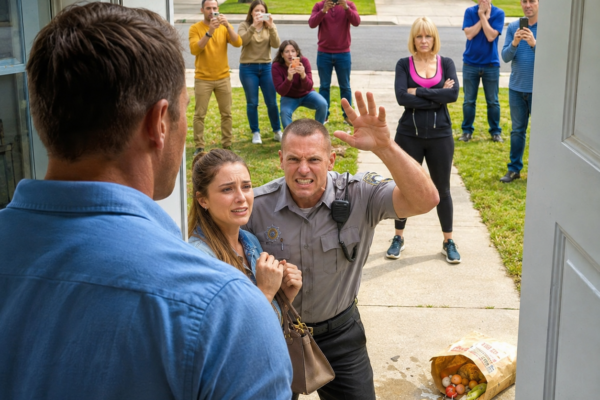
The HOA fined me $5,000 for my “ugly” garden the day before the city was scheduled to decide whether it deserved to be preserved.
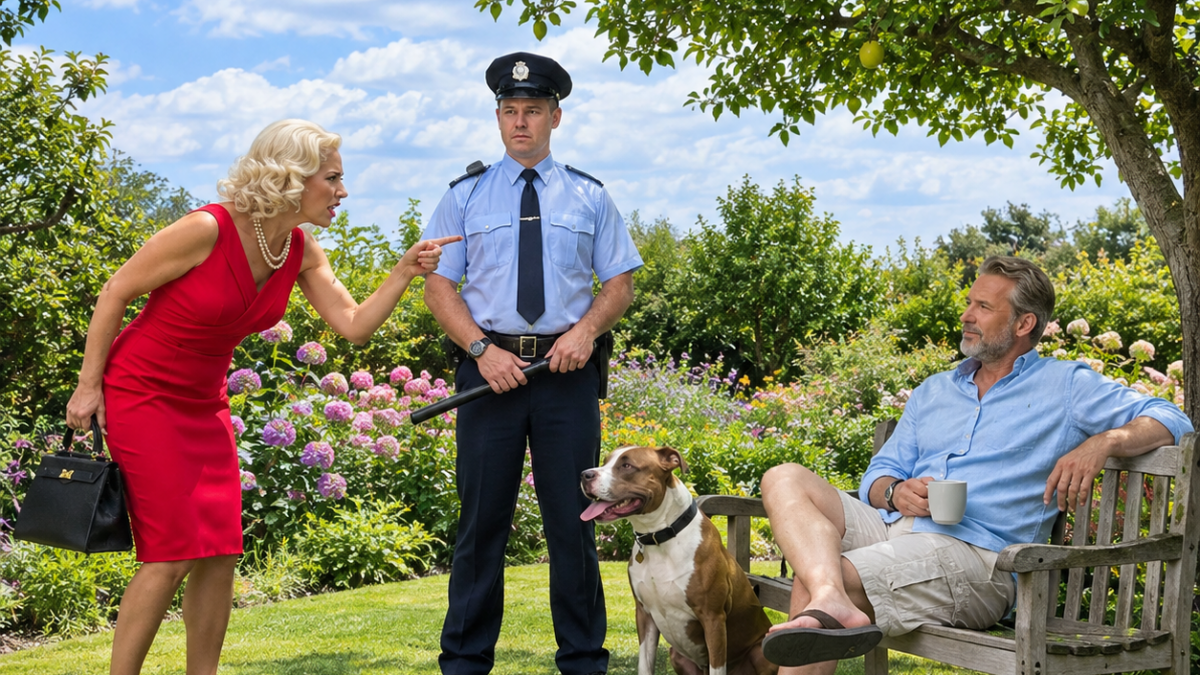
The HOA fined me $5,000 for my “ugly” garden the day before the city was scheduled to decide whether it deserved to be preserved.
I was standing in the wet grass beside my late wife’s roses when the HOA president handed me the violation notice.
She saw an overgrown backyard, but my wife had spent the last months of her life trying to make sure someone would remember what was growing there.
“Five thousand dollars, Marcus,” Delilah Thornfield said, tapping the paper with one polished fingernail. “And if you don’t bring this property into compliance, the fines will continue.”
I looked past her at the lavender bending in the morning breeze.
Sarah had planted it beside the old brick walkway seventeen years earlier. The roses came from my grandmother’s garden, along with the crooked wooden trellis and a stone birdbath that hadn’t held water in years.
Eight months had passed since Sarah died.
I still caught myself setting two coffee mugs on the kitchen counter.
“You’re asking me to tear out everything she loved,” I said.
Delilah glanced toward the street, where two neighbors were pretending not to watch.
“I’m asking you to respect the community.”
Her voice was calm. That almost made it worse.
She pointed out the tall native grasses, the uneven brick edging, and the faded sign Sarah had painted by hand.
THE COMMON TABLE GARDEN — EVERYONE IS WELCOME.
“People don’t want to live next to a property that looks abandoned,” she added.
I folded the notice and slipped it into my shirt pocket.
The truth was, some parts of the garden did need work. Since Sarah’s funeral, I’d let the paths grow narrow and the weeds creep between the stones. Most mornings, simply getting out of bed had taken everything I had.
But beneath that neglected appearance was something Delilah didn’t understand.
For nearly a year, Sarah had been searching old city records, studying photographs, and interviewing elderly residents about this patch of ground.
Two weeks before she died, she’d mailed an application to the city’s Historic Preservation Commission.
I hadn’t understood why it mattered so much then.
That afternoon, I found her research notebook in the kitchen drawer. A yellow sticky note marked a page in her familiar handwriting.
Marcus, if the hearing happens without me, please go. Tell them about the women who started it. It was never just our garden.
I sat at the table until the sunlight disappeared.
Then I ironed the shirt Sarah always said made me look respectable, placed her notebook beside my car keys, and decided I would attend the hearing.
The next morning, when the city clerk called my name, I walked to the front of the council chamber carrying the only thing Sarah had asked me not to leave behind.
[END OF FACEBOOK CAPTION]
[FIRST COMMENT / FULL STORY CONTINUATION]
The microphone was lower than I expected.
I bent toward it, then straightened again, suddenly aware of the people behind me. There were maybe forty of them in the council chamber, some waiting for zoning decisions, others there because a small item on the agenda had caught their attention.
At the back of the room, Delilah Thornfield sat with her arms folded.
She hadn’t come to support me.
I knew that much from the way she’d looked at the folder beneath my arm.
“Please state your name for the record,” the woman at the center of the council table said.
“Marcus Hartwell.”
“And you’re the current owner of the property at 418 Willow Lane?”
“Yes, ma’am.”
“My name is Sylvia Brooks. I chair the Historic Preservation Commission. Before we begin, I want to acknowledge the work your wife contributed to this application.”
My throat tightened.
I hadn’t expected anyone to mention Sarah so directly.
“Thank you,” I managed.
Sylvia opened a thick folder.
“Mrs. Hartwell submitted the original application eleven months ago. Since then, our staff and preservation consultants have reviewed historical records, photographs, maps, and the surviving features of the garden.”
Eleven months.
Sarah had barely been able to climb the stairs eleven months earlier.
I remembered her sitting at the kitchen table with a blanket over her knees, insisting she was only sorting old papers.
I’d thought it was a way to keep her mind off chemotherapy.
Now I understood that she’d been doing something much more deliberate.
Sylvia turned toward the other commissioners.
“Mr. Hartwell, would you tell us what the garden means to your family?”
I opened Sarah’s notebook.
The first page held a photograph of my grandmother Rosalind standing beneath the old oak tree sometime in the 1960s. She wore gardening gloves and a straw hat, her smile so wide it made her eyes disappear.
I’d seen that photograph my entire life.
But beneath it, Sarah had written four names.
Rosalind Hartwell.
Ada Bellamy.
Frances Weller.
Celia Rosen.
I’d never paid much attention to the last three.
“My grandmother raised me in that house,” I began. “When I was a boy, the garden was where she made me work whenever I got into trouble.”
A few people smiled.
“She believed you couldn’t stay angry while pulling weeds. I spent a lot of Saturdays proving her wrong.”
There was a quiet laugh.
It helped me breathe.
“When Sarah and I bought the house from Grandma, we promised we’d take care of the garden. Sarah was better at keeping promises than I was.”
I looked down at the notebook.
“After she got sick, she started asking questions about its history. I thought she just wanted something to do. I didn’t realize she was trying to make sure the garden survived her.”
My voice caught on the final word.
Nobody interrupted.
I turned another page.
“My grandmother used to call it the Common Table Garden. I thought that was just her name for it.”
Helen Ruiz, the city’s preservation officer, stood beside a screen at the front of the room.
She had visited our property twice the previous summer, once while Sarah was still strong enough to walk outside and once after she’d begun using a wheelchair.
I’d barely spoken to her either time.
Now Helen displayed an old black-and-white photograph.
It showed a row of women standing beside baskets of vegetables. Behind them was the same oak tree that shaded our yard.
Except the tree was smaller.
Much smaller.
The photograph was dated 1934.
Helen spoke gently but clearly.
“During the Great Depression, several families in Willowbend organized a neighborhood food-sharing effort on land owned by the Hartwell family. It began informally in 1932 and continued for decades.”
She changed the image.
A handwritten ledger appeared.
“We have documented that Ada Bellamy, Frances Weller, and Celia Rosen coordinated much of that work. They organized planting schedules, distributed food, saved seeds, and helped families who weren’t receiving sufficient assistance through other local programs.”
A commissioner leaned forward.
“Was this an official municipal project?”
“No,” Helen said. “That’s part of its importance. The garden operated through ordinary residents, often women whose contributions were never included in official histories.”
I studied the photograph.
For the first time, I noticed something I’d missed for years.
The women weren’t posing beside a beautiful flower garden.
They were standing beside practical rows of beans, cabbage, and potatoes.
The garden Sarah loved had once helped people eat.
Helen continued.
“Several original features remain, including the brick walkways, irrigation channels, portions of the original planting beds, and the oak tree. The design is unusually well documented through family records and photographs.”
She turned toward me.
“Much of that documentation was located and organized by Sarah Hartwell.”
I gripped the notebook harder.
The last months of Sarah’s life had been measured in appointments, medications, and the distance between her bedroom and the bathroom.
I hadn’t known she was also measuring the distance between forgotten lives and the people who might remember them.
A man in a blue jacket raised his hand during the public-comment period.
“My name’s Nathan Cole. I live on Willow Lane.”
I recognized him immediately.
Nathan was vice president of our homeowners association. A decent enough man, as far as I knew, though he had never challenged Delilah about the letters arriving in my mailbox.
“I respect the history,” he said. “But the property has maintenance problems. The paths are overgrown, and some vegetation extends toward the neighboring fence.”
He glanced at me.
“We’re not against gardens. We just have standards.”
It wasn’t an unreasonable concern.
And I knew it.
The previous month, I’d tripped over a loose brick while carrying a bag of mulch. One section of fencing was almost invisible beneath climbing vines.
If Sarah had been alive, she would have insisted we fix those things.
Sylvia nodded.
“Those are legitimate maintenance questions. Historic designation does not exempt an owner from safety requirements. It does, however, establish which historic features should be preserved and guides how changes should be made.”
Nathan sat down.
Delilah stood before anyone called on her.
“I’m Delilah Thornfield, president of the Willow Lane Homeowners Association.”
Her voice carried easily through the room.
“I’m sure everyone appreciates a touching story, but the city needs to remember that forty-seven other households live with the consequences of this property.”
She placed several photographs on the clerk’s desk.
They were pictures of my garden.
The worst angles she could find.
One showed weeds around the birdbath. Another showed the broken trellis. A third captured the narrow path beneath the oak, where falling leaves had collected after a storm.
“These pictures were taken this week,” she said. “The property is not being maintained responsibly.”
She wasn’t lying about the photographs.
But she was leaving out almost everything else.
“My association recently issued a five-thousand-dollar violation assessment,” she continued. “We’re concerned that historic recognition will encourage the owner to ignore community rules.”
Sylvia studied her calmly.
“The city will not be deciding the validity of an association assessment today.”
“Then you’re ignoring the practical problem.”
“We’re considering whether the property meets the criteria for local historic designation.”
Delilah’s mouth tightened.
A woman near the aisle raised her hand.
She was small, with silver hair pinned neatly behind her ears.
Eleanor Vance.
She had lived across the street longer than I’d been alive.
“I’d like to say something,” Eleanor said.
The clerk brought her a microphone.
Eleanor didn’t look at me.
She looked at the photograph on the screen.
“My mother is the woman standing second from the left.”
The room went quiet.
“That’s Ada Bellamy.”
Helen stopped changing slides.
Eleanor reached into her purse and removed a folded paper.
“My mother washed clothes for families on the north side of town. She worked six days a week. On Sundays, she came to that garden.”
Her hands shook slightly as she unfolded the paper.
“She used to tell me there was always an extra chair at the table. Didn’t matter whether somebody had money. Didn’t matter whether their husband had found work. If you needed a meal, you helped pick beans and you ate.”
Eleanor swallowed.
“People forget things. They forget who carried water and who washed dishes and who planted enough for a neighbor. Your wife didn’t forget.”
She looked at me then.
“Sarah came to my house three times last year. She asked about my mother. She wrote down every word.”
For a moment, the council chamber disappeared.
I was back at our kitchen table, watching Sarah scribble in her notebook while I complained that she should be resting.
She hadn’t argued.
She’d just smiled and asked me to find her another pencil.
Eleanor folded the paper.
“That’s all I wanted to say.”
She returned to her seat.
I wanted to thank her.
I couldn’t speak.
Sylvia waited until Eleanor settled before addressing the room again.
“The preservation commission completed its review last month and recommended approval. Today’s council hearing is the final step in a process that has been underway for nearly a year.”
She turned toward the council members.
“We have also received a funding commitment from the Willowbend Heritage Foundation, contingent upon the property’s designation and completion of a public preservation agreement.”
A second document appeared on the screen.
I blinked.
There were numbers in the center of the page.
Large numbers.
Sylvia continued.
“The foundation has approved a proposed four-hundred-and-twenty-five-thousand-dollar restricted restoration grant. The city has reserved an additional seventy-five thousand dollars in matching preservation funds.”
Someone behind me whispered.
“Half a million?”
Sylvia nodded.
“Five hundred thousand dollars over five years for historically appropriate restoration, documentation, accessibility improvements, and educational use. These are designated project funds, not a payment to the homeowner.”
I stared at the screen.
Five hundred thousand dollars.
For the garden Delilah had called ugly.
For the old bricks I’d nearly thrown away.
For the worn wooden sign Sarah had painted while sitting on the back steps.
The council voted six to one in favor of landmark designation.
I remember the clerk reading the result.
I remember polite applause.
I remember Eleanor pressing a tissue into my hand.
What I don’t remember is standing up.
One moment I was sitting in my chair.
The next, Helen Ruiz was shaking my hand and telling me that Sarah’s work had made the recognition possible.
“Your wife gave us a remarkable head start,” she said.
I looked down at the notebook.
On the inside cover, Sarah had written her name in blue ink.
For the first time in eight months, something good had happened because of the work she’d left behind.
I wished she were there to see it.
Outside City Hall, reporters were already waiting.
Willowbend wasn’t the kind of town where news cameras showed up for garden hearings. Usually the biggest argument at a council meeting concerned parking near the high school.
But half a million dollars had a way of attracting attention.
A young reporter approached me near the steps.
“Mr. Hartwell? I’m Maya Chen with the Willowbend Ledger. Can I ask how you feel about the decision?”
I looked toward the parking lot.
Delilah was walking quickly toward her SUV, phone pressed against her ear.
“Relieved,” I said.
“Do you think this puts an end to your dispute with the HOA?”
“I hope it gives us a better way to talk about the garden.”
Maya glanced at the folded notice visible in my shirt pocket.
“Is that the five-thousand-dollar fine?”
“Yes.”
“Can I see it?”
I hesitated.
Sarah had hated being the center of attention. When she was a teacher, she would quietly buy winter coats for students who needed them, then insist the school counselor take credit.
She wouldn’t have wanted our marriage turned into a public argument.
But she had wanted people to know the garden’s history.
I unfolded the paper and handed it to Maya.
She read it carefully.
“Five thousand dollars for unapproved vegetation and landscape conditions?”
“That’s what it says.”
“Was there a hearing?”
“Not that I was invited to.”
She looked at me.
“Did you appeal?”
“I was going to. But the notice only arrived yesterday.”
Maya photographed the document with my permission.
Then she asked a question nobody had asked me since the funeral.
“What did Sarah hope the garden would become?”
I looked across the street, where a city worker was sweeping leaves from the courthouse steps.
“She wanted people to use it,” I said.
“Use it how?”
“I’m still figuring that out.”
That was the truth.
I had spent eight months trying to keep everything exactly the way Sarah left it.
I wasn’t sure I’d considered what she might have wanted it to become afterward.
When I got home, there were already three unfamiliar cars parked along Willow Lane.
A woman was taking pictures of the garden from the sidewalk.
Two teenagers were trying to see the old sign over the hedge.
I closed the curtains.
Then I sat at the kitchen table with Sarah’s notebook and the city folder.
The first phone call came at 2:16.
It was my daughter.
“Dad?”
Kate’s voice sounded uncertain.
She lived outside Cincinnati, almost two hours away. We hadn’t spoken for more than ten minutes at a time since Sarah died.
“Hey, sweetheart.”
“Are you on the news?”
I shut my eyes.
“Apparently.”
“Because of Mom’s garden?”
“Yes.”
There was a pause.
“Why didn’t you tell me about the hearing?”
I looked at the notebook in front of me.
“I didn’t know how important it was going to be.”
“That’s not what I asked.”
Her voice wasn’t angry yet.
That made it harder.
“I should have told you.”
“Yeah,” she said quietly. “You should have.”
I heard traffic behind her.
Then she spoke again.
“Mom spent months working on that application, and you didn’t think I might want to be there?”
I tried to explain that I’d barely slept, that the fine had arrived the morning before, that everything had happened too quickly.
But the words sounded weak even to me.
Kate listened.
When I finished, she said, “You keep doing this, Dad.”
“Doing what?”
“Deciding what Mom would have wanted without asking anybody else who loved her.”
The kitchen seemed to grow smaller.
“Kate—”
“I know you miss her.”
“I do.”
“So do I.”
Her voice broke.
I waited.
She took a breath.
“Sometimes I feel like you think your grief is the only one that counts.”
I stared at Sarah’s empty chair.
For a long time, neither of us spoke.
Finally, Kate said she would come Friday.
I told her I loved her.
She said she loved me too.
But she didn’t sound certain that was enough.
Sarah and I had been married twenty-nine years.
We met at a hardware store.
I was twenty-two, working weekends while finishing a teaching degree. She came in looking for a specific kind of hinge to repair her mother’s kitchen cabinet.
She knew the measurements.
I didn’t know where we kept the hinges.
That should have told me something about the rest of our marriage.
She was the organized one.
The person who remembered birthdays, checked tire pressure before road trips, and kept a small envelope of cash in the kitchen drawer for emergencies.
I was better with my hands.
I fixed things.
Doors, chairs, leaking faucets, broken picture frames.
When something broke, I wanted to take it apart and put it back together.
Sarah understood early that this was both my strength and my weakness.
“Not everything needs fixing, Marcus,” she told me once after a hard day teaching.
“Then what am I supposed to do?”
“Sit with me.”
It had taken me a long time to learn how.
She taught fourth grade at Willowbend Elementary for twenty-six years. Her classroom walls were covered with maps, children’s artwork, and photographs of places most of her students had never visited.
Every spring, she brought seedlings to school.
Tomatoes in recycled yogurt containers.
Marigolds in paper cups.
Basil in little pots made from newspaper.
She told her students that growing something was a way of practicing patience.
I used to tease her about it.
“You’re teaching ten-year-olds to raise houseplants?”
“I’m teaching them that they can care for something and watch it change.”
She’d say it so seriously that I couldn’t argue.
When Kate was born, Sarah took her into the garden before she could walk.
There are photographs of our daughter sitting in a patch of clover, wearing a yellow sunhat, holding a worm with the intense concentration of a scientist.
Sarah was beside her in every picture, laughing.
My grandmother Rosalind loved those afternoons.
Grandma lived until she was ninety-four.
By the end, her knees had become too stiff for gardening, so Sarah and Kate did most of the work.
I repaired the fence and carried the heavy bags.
Grandma supervised from a lawn chair.
“Not that one,” she’d call whenever somebody reached for the wrong stem.
Sometimes I’d ask why she kept so many things that didn’t look particularly special.
An old rosebush with uneven branches.
A line of purple flowers whose name I could never remember.
A patch of beans that grew along the back fence every summer.
“They have stories,” she’d say.
I always answered the same way.
“Grandma, they’re plants.”
She’d shake her head.
“That’s because you’re looking at the leaves instead of the roots.”
I didn’t understand her then.
Truthfully, I didn’t understand Sarah either.
Not until I was standing in City Hall holding the record of everything they’d tried to preserve.
The Willowbend Ledger published Maya’s article that evening.
The headline read:
HOA FINES WIDOWER $5,000 OVER GARDEN; CITY APPROVES HISTORIC LANDMARK AND $500,000 PRESERVATION PLAN
Below it was a photograph of me in the council chamber holding Sarah’s notebook.
I hated the picture.
My shoulders looked rounded, my hair was uncombed, and I appeared much older than fifty-two.
But beside the article was the old photograph of the women in the garden.
I enlarged it on my phone.
There they were.
Ada.
Frances.
Celia.
And a fourth woman standing behind them, almost hidden by the oak tree.
I didn’t know her name.
The article explained that our garden was one of the last surviving examples of a neighborhood food-sharing space established during the Depression.
It also explained that the $500,000 was restricted preservation funding, not money being deposited into my bank account.
That detail didn’t stop the phone calls.
A distant cousin asked whether I planned to sell the house now that it was “worth half a million more.”
An old coworker wanted to know whether the city could pay for my roof.
A stranger left a message suggesting I start charging admission.
By ten o’clock, my voicemail was full.
I turned the phone off.
Then I went outside.
Sarah’s roses were damp with evening mist.
The little stone marker beneath them bore only her name and two dates.
I’d placed it there after scattering her ashes among the flowers she loved.
I sat on the bench beside the trellis.
“Five hundred thousand dollars,” I said softly.
A moth bumped against the porch light.
“You always did know how to make me feel underprepared.”
I sat there a long time.
Then I noticed something.
Beyond the trellis, near the side fence, a small green flag had been pushed into the soil.
I hadn’t put it there.
I walked over and pulled it out.
A surveyor’s marking.
The orange lettering read:
PROPOSED UTILITY ACCESS — PHASE TWO
There were two more flags beyond the fence.
One stood directly beside the old oak tree.
I looked toward Delilah’s house.
Her upstairs office light was still on.
And for the first time, I wondered whether she had been arguing about more than untidy landscaping.
The next morning, I called Helen Ruiz.
She answered from her office at City Hall.
“Congratulations again, Mr. Hartwell.”
“Please call me Marcus.”
“All right, Marcus.”
“I found survey flags in my garden.”
Her tone changed immediately.
“Where?”
I explained.
She asked me to take photographs before moving anything else.
“I already pulled one out.”
“That’s okay. Just leave the others where they are.”
There was a rustling of paper.
“Did the survey markers identify a company?”
I checked the photographs.
“North Ridge Engineering.”
Helen went quiet.
“That’s interesting.”
“Why?”
“There’s a proposed residential development behind your subdivision. They submitted preliminary access drawings earlier this year.”
I looked through the kitchen window.
Beyond our back fence was an old strip of undeveloped land.
When Kate was little, she’d called it the forest, though it was mostly scrub trees and a drainage ditch.
“What’s that got to do with my garden?”
“I can’t tell you without reviewing the current plan. But one of the alternatives showed an access corridor through the rear portions of several private lots.”
“Through my yard?”
“Possibly. I don’t want to speculate.”
I leaned against the counter.
“Wouldn’t somebody have to ask permission?”
“Yes. Unless there’s already a recorded easement that permits that use. Surveying and construction are different things.”
I looked again at the green flag.
“Sarah never mentioned this.”
“She may not have known about the latest drawings. The preservation application and the development review were moving through separate departments.”
After we hung up, I called the company listed on the survey marker.
A polite receptionist transferred me to a project manager named Owen Mercer.
He explained that North Ridge was conducting preliminary work for a local developer called Stonebridge Residential.
“No construction is authorized on your property,” he assured me.
“Then why are there flags in my flowerbeds?”
“We were marking a potential route based on an older concept drawing.”
“Potential for what?”
“Utility access and emergency vehicle circulation.”
I looked toward the oak.
“How wide?”
He hesitated.
“The concept shows fourteen feet.”
Fourteen feet.
I knew those dimensions.
I’d spent twenty-seven years teaching woodworking before taking early retirement to help Sarah through her illness.
Fourteen feet would swallow the rose beds, the brick walkway, and almost the entire strip beneath the oak.
“Are you planning to buy that land?” I asked.
“The developer would need appropriate property rights before proceeding.”
“Has anybody told the developer the garden’s historic?”
“I understand the designation was approved yesterday. We’ll update the project team.”
He sounded professional.
He also sounded like a man who wanted to end the conversation.
I thanked him and hung up.
Then I searched for Stonebridge Residential.
The company’s website showed neat rows of modern townhomes, wide sidewalks, and young couples smiling beside pristine front doors.
A proposed development called Willow Creek Commons was listed under upcoming projects.
Forty-eight townhomes.
I studied the site plan.
The preferred entrance was from the highway.
But an alternate road, labeled secondary access, ran straight through the southern edge of Willow Lane.
Right where my garden stood.
The project notes listed a local property consultant.
Delilah Thornfield.
I read the name twice.
Then I printed the page.
By Friday morning, my daughter was standing on the front porch with a suitcase.
Kate had Sarah’s brown eyes.
She also had my habit of folding her arms when she was trying not to say something difficult.
“Hi, Dad.”
“Hi, sweetheart.”
We hugged.
It felt awkward at first.
Then she held on longer than I expected.
When she stepped inside, her eyes went immediately to the coat hanging beside the door.
Sarah’s blue raincoat.
I’d left it there after the funeral.
Kate touched the sleeve.
“Still here?”
I nodded.
She didn’t say anything.
That silence hurt more than an argument would have.
I carried her suitcase upstairs.
When I came back, she was standing in the kitchen staring at the two mugs beside the coffee maker.
One said WORLD’S BEST TEACHER.
The other was a plain green mug Sarah had bought me at a yard sale.
“You still make coffee for two?” she asked.
“Sometimes.”
Kate ran her finger along the edge of her mother’s mug.
“Dad.”
I knew what she wanted to say.
I also knew I wasn’t ready to hear it.
“Want breakfast?”
She looked at me for a moment.
“Sure.”
I made scrambled eggs.
They were too salty.
Sarah had always said I seasoned food as if I were trying to punish it.
Kate ate them anyway.
Afterward, she walked to the back door.
“Oh,” she said.
I joined her.
The garden looked especially untidy in the morning light.
The roses had bloomed unevenly. Weeds pushed between the bricks, and a long vine had wrapped itself around the birdbath.
The tall grasses were beginning to bend across the path.
“I know,” I said.
Kate shook her head.
“No. I wasn’t going to say that.”
“What were you going to say?”
“It’s smaller than I remember.”
I looked out.
The garden hadn’t changed size in seventy years.
But Kate had grown up.
She no longer saw it through the eyes of the little girl who used to hide behind the rosebushes and pretend she was exploring a jungle.
“Mom loved it,” she said.
“She did.”
Kate turned.
“But you know she didn’t love it because everything stayed the same.”
I opened my mouth.
She continued.
“Remember when Grandma died and Mom moved the vegetable beds?”
“Grandma would’ve hated that.”
“She would’ve hated it for a week. Then she would’ve helped.”
I smiled despite myself.
Kate pulled out one of the kitchen chairs.
“I need to tell you something.”
I sat opposite her.
She looked at her hands.
“The last time I visited, before Mom died, you told me she was too tired to talk.”
I remembered.
Sarah had been having a difficult week.
She’d hardly eaten. She was sleeping most afternoons, and the pain medication made her confused at times.
Kate had driven down after working a twelve-hour shift at the hospital.
I told her she should go home.
I’d meant to protect them both.
“I thought she needed rest,” I said.
Kate nodded.
“I know.”
“Then why are we talking about it?”
“Because she called me the next morning and cried.”
My stomach tightened.
“What?”
“She said she’d wanted to see me. She thought I’d left because I couldn’t handle watching her get worse.”
I stared at my daughter.
“No.”
Kate’s eyes filled.
“I told her that wasn’t true. But she was so upset, Dad.”
“I didn’t know.”
“You didn’t ask.”
The words landed quietly.
I remembered standing in Sarah’s bedroom that evening, adjusting her pillows and checking her medication schedule.
She’d asked whether Kate was still there.
I’d said no.
She’d turned toward the window.
I thought she was tired.
I had never asked whether she was disappointed.
“I was trying to take care of her,” I whispered.
“I know you were.”
Kate wiped her cheek.
“You took such good care of her that sometimes there wasn’t room for the rest of us.”
For several seconds, I couldn’t answer.
I had spent eight months remembering every difficult decision I made during Sarah’s illness.
The medication.
The appointments.
The nights I slept in a chair beside her bed.
I hadn’t thought about the decisions I’d made for other people.
Or the conversations I’d ended before they could begin.
“I’m sorry,” I said.
Kate nodded.
“I know.”
She reached across the table.
I took her hand.
Neither of us tried to make the moment bigger than it was.
There was still too much between us.
But she didn’t let go.
That afternoon, we began cleaning the garden.
Not restoring it.
Not changing it.
Just cleaning.
Kate found two pairs of gloves in the shed. One pair was mine, stiff with dried mud. The other had belonged to Sarah.
She held them up.
“Can I use these?”
I almost said no.
Then I saw her expression.
“Of course.”
We worked for three hours.
We pulled ordinary weeds from the brick walkway and clipped dead stems from the lavender.
Kate removed a fallen branch beside the fence.
I repaired a loose board on the trellis.
At one point she reached toward a patch of tall purple flowers.
“Those are weeds, right?”
“No,” I said quickly. “They’re ironweed.”
She frowned.
“Since when do you know flower names?”
“Since your mother spent twenty years correcting me.”
Kate laughed.
It was the first easy laugh I’d heard in that kitchen since Sarah died.
We found an old brass watering nozzle beneath the leaves.
A cracked ceramic pot.
Three of Kate’s childhood marbles.
She held the marbles in her palm.
“I wondered where those went.”
I looked at the blue one.
I remembered stepping on it barefoot in 2004.
“You owe me an apology for that one.”
She grinned.
“I was six.”
“And I was in pain.”
She slipped the marbles into her pocket.
As the afternoon faded, Kate uncovered the wooden sign near the entrance.
THE COMMON TABLE GARDEN — EVERYONE IS WELCOME.
She rubbed a thumb over the faded paint.
“Dad, why is the gate locked?”
I looked at the rusted padlock.
“People started walking in after the article.”
“Before the article?”
I didn’t answer.
She glanced toward Sarah’s roses.
“Mom used to leave the gate open every Saturday.”
“That was when she could supervise.”
“People brought tomatoes and helped her weed.”
“I remember.”
“She loved that.”
I looked down at the lock.
Somewhere along the way, I’d begun treating the garden like a room nobody was allowed to enter.
Not because Sarah had asked me to.
Because it was the one place where I could still imagine she might come around the corner carrying a basket.
Kate handed me the sign.
“Maybe that’s something we should talk about.”
I looked at the words Sarah had painted.
Everyone is welcome.
Then I looked at the locked gate.
For the first time, the contradiction was impossible to ignore.
On Saturday morning, Eleanor Vance arrived carrying a tin of oatmeal cookies and a shoebox tied with string.
She was seventy-eight, walked with a cane, and had the kind of directness that came from having outlived most people who expected her to be polite.
“I heard you finally opened the back gate,” she said.
“I took the padlock off.”
“Good. Your grandmother would have appreciated that.”
Kate invited her inside.
Eleanor settled at the kitchen table and pushed the shoebox toward me.
“These belonged to my mother. Sarah borrowed some of them last summer to make copies.”
Inside were photographs, seed envelopes, handwritten recipes, and a small notebook bound in faded green cloth.
The first page was dated March 1932.
I carefully opened it.
Beans planted along south fence. Potatoes in west bed. Six families helping. Mrs. Hartwell providing water.
There were names beside amounts.
Ten pounds of potatoes.
Three jars of beans.
Half a basket of carrots.
The entries continued through the spring and summer.
Some included short notes.
Mrs. Patterson has a new baby. Deliver food to back porch.
Mr. Levin injured at the mill. Send soup and potatoes.
Bellamy children need shoes before school.
I turned the pages slowly.
This wasn’t a garden diary.
It was a record of people taking care of one another.
Eleanor watched me.
“My mother said they never called it charity. People hated feeling like they were begging. So everybody contributed something.”
“What if somebody couldn’t work?” Kate asked.
“They contributed whatever they could. Some people mended clothes. Some watched children. Some just sat at the table and kept somebody else company.”
Eleanor smiled faintly.
“Your grandmother Rosalind used to bring the old women tea. She was only a little girl then, but she took her job very seriously.”
I pictured Grandma as a child, carrying a pitcher of water beneath the oak.
It was a strange feeling.
I’d known her as the woman who made cinnamon toast and worried about my grades.
I had almost never imagined the life she’d lived before me.
Eleanor removed a photograph from the bottom of the box.
“This is the one I wanted you to see.”
It showed a long wooden table beneath the oak tree.
People sat on both sides. Children crowded around the far end.
Their clothes were plain.
The table was covered with bowls, plates, and baskets of vegetables.
A woman near the center was holding a baby.
On the back, someone had written:
Sunday supper, August 1936. Everyone brought something.
Kate studied the faces.
“They look happy.”
“Some of them were having a terrible time,” Eleanor said. “Happiness didn’t mean they weren’t struggling.”
She ran a finger along the photograph’s edge.
“My father had been out of work for almost a year when this was taken. My mother told me that table was the only place she could sit without worrying about what was left in the cupboard.”
I looked from the photograph to our own kitchen table.
For years, Sarah had invited people into our garden.
Teachers.
Neighbors.
Children from her school.
Anyone who wanted to help.
I used to complain when someone left a shovel in the wrong place or tracked mud through the house.
Sarah would laugh and tell me a garden that couldn’t survive a little mess wasn’t much of a garden.
Eleanor pulled a folded letter from the shoebox.
“This one is from your grandmother.”
The date was June 1988.
Grandma had written to Eleanor’s mother after Ada moved into a nursing home.
The handwriting was unmistakable.
Dear Ada,
The roses are blooming again, though not nearly as nicely as when you were here to tell me what I was doing wrong.
I planted the beans along the south fence, just like you asked. Marcus helped for about fifteen minutes before deciding he had more important things to do.
I laughed.
“Sounds right.”
Eleanor smiled.
I continued reading.
I know the neighborhood is changing, and I know some people think the old garden should be replaced with something more modern. But I remember the winters when your family kept us fed.
As long as I can manage it, there will always be a place for people at this table.
I stopped.
The paper trembled in my hands.
Grandma had never told me how much the Bellamy family meant to her.
Or maybe she had.
Maybe I’d simply been too young to listen.
Eleanor reached across the table.
“Sarah understood something important, Marcus.”
I looked up.
“She understood that the garden belonged to your family on paper. But its history belonged to a lot of families.”
That stayed with me long after Eleanor went home.
Monday morning brought a letter from an attorney.
Not mine.
Delilah’s.
It was printed on expensive stationery from a firm in Dayton.
The letter congratulated me on the city’s historic designation before explaining that the designation did not automatically supersede the association’s private covenants.
That much, I suspected, was true.
It also demanded payment of the $5,000 assessment within fifteen business days.
If I failed to pay, the association would consider additional collection remedies permitted by its governing documents.
At the bottom was a handwritten note from Delilah.
Marcus, I’d still prefer to resolve this amicably.
I read it twice.
Then I called Kate.
She was back at work, finishing an overnight shift at the hospital.
“Does she seriously think you’re going to hand her five thousand dollars?” she asked.
“I don’t know what she thinks.”
“You need an attorney.”
“I know.”
“Then call one.”
“Lawyers cost money, Kate.”
“So does losing your house because you ignored a legal problem.”
I rubbed my forehead.
She was right.
That didn’t make it easier.
Sarah’s medical expenses had drained much of our savings, even with insurance. We had a modest retirement account, but I was careful with every dollar.
The house was paid off.
That was our one piece of financial security.
I wasn’t interested in risking it over a dispute I didn’t understand.
Kate gave me the name of a local attorney who had helped one of her coworkers with a property matter.
Priya Shah.
I called her office that afternoon.
She agreed to review the documents.
Priya’s office occupied the second floor of an old brick building above a bakery.
There was no polished marble lobby.
No intimidating receptionist.
Just a narrow staircase, a waiting room with two comfortable chairs, and the smell of cinnamon drifting through the floorboards.
Priya was in her early forties, with dark hair pulled into a loose bun and reading glasses that kept slipping down her nose.
She listened without interrupting as I explained the garden, Sarah’s death, the fine, and the landmark designation.
Then she read every page.
The city paperwork.
The HOA notice.
The association bylaws.
The threatening letter.
She took her time.
At last, she set down her pen.
“Marcus, I want to be careful about something.”
“All right.”
“The historic designation is important, but it doesn’t erase every private agreement affecting your property.”
“I understand.”
“Your association may still be able to enforce reasonable maintenance standards. And the city can require you to preserve certain historic features. Those responsibilities have to be reconciled.”
I nodded.
“But,” she continued, “I see several problems with how this assessment was imposed.”
She turned the notice around.
“There are twenty separate entries here. Some are repeat penalties. Others refer to conditions you weren’t previously notified about.”
“That’s right.”
“Your association’s rules require written notice and an opportunity for a hearing before monetary penalties are finalized.”
“There wasn’t one.”
“Then we’ll ask them to explain that.”
She opened the bylaws.
“There’s also an existing provision allowing naturalized landscaping and gardens with a documented historical purpose, provided they don’t create safety hazards.”
I stared at her.
“That’s in there?”
“Page forty-two.”
I felt foolish.
I’d lived under those rules for more than twenty years.
I had never read page forty-two.
Priya gave me a small smile.
“Most homeowners don’t read every page until something goes wrong.”
She continued studying the documents.
“The association can ask you to clear the sidewalk. It can ask you to repair unsafe structures. But that doesn’t necessarily mean it can demand removal of established plants that the city has just recognized as historically significant.”
“So I don’t have to pay?”
“I’m not going to promise you that today. We can dispute the assessment and request a hearing. I also want to see the board minutes showing how these fines were approved.”
I mentioned the survey flags.
Then I showed her the development proposal and Delilah’s name on the consultant list.
Priya’s expression became more serious.
“Has Delilah disclosed any financial relationship with Stonebridge to the HOA board?”
“I don’t know.”
“That’s something we should find out.”
She wrote a note.
“Do not accuse her publicly without evidence. And don’t remove any more survey markers.”
I looked down.
She noticed.
“You already removed one?”
“Yes.”
“Put it in a bag. Keep the photographs. Don’t touch the others.”
I nodded.
“Marcus, I know you’re angry. But the best thing you can do right now is be accurate. Not louder. Accurate.”
When I left, she handed me a folder containing copies of the documents we’d reviewed.
At the bottom of the folder was a simple checklist.
Repair loose brick near public walkway.
Remove vegetation obstructing sidewalk.
Document garden conditions.
Request HOA hearing.
Request development records.
Keep communication in writing.
I sat in my truck and read it twice.
For the first time since the fine arrived, the problem seemed manageable.
Not easy.
But manageable.
Sarah had been right about me.
Give me something I could fix, and I could usually find a way to begin.
The first preservation survey took place the following Wednesday.
Helen Ruiz arrived with two specialists from the county historical society and a landscape conservator named Dr. Rebecca Ford.
Rebecca wore work boots, carried a clipboard, and immediately crouched beside the stone birdbath.
“Don’t throw this away,” she told me.
“I wasn’t planning to.”
“Good. It’s repairable.”
She ran her hand along the cracked basin.
“Looks like local limestone, probably mid-century. We can confirm from the older photographs.”
She moved through the garden slowly, naming plants I’d never known had names.
Virginia mountain mint.
Switchgrass.
New England aster.
An old variety of climbing rose.
When she reached the south fence, she stopped.
Several rose canes had turned brown.
I noticed them weeks earlier but assumed they’d been damaged by the late summer heat.
Rebecca examined the leaves.
“Do you use herbicide back here?”
“No.”
“Does anyone else maintain this boundary?”
“Sometimes the HOA sends a landscaping crew along the common area outside the fence.”
She took photographs.
“There’s a pattern of damage consistent with chemical drift. I can’t say that’s what happened without more information.”
My jaw tightened.
Sarah had planted those roses from cuttings.
One came from a bush my grandmother had grown for nearly fifty years.
Rebecca continued walking.
“Most of your garden is healthy, Marcus. But some areas really do need attention.”
“I know.”
“These paths have become too narrow. The irrigation system is clogged. That trellis isn’t structurally sound anymore.”
She pointed toward the old brick channel.
“And someone has been filling this with soil. We need to uncover it carefully. It’s part of the original drainage design.”
I looked at the path.
“I thought it was just a ditch.”
She smiled.
“Historic gardens are complicated. They’re living things. If we preserve every weed and every broken board, we aren’t preserving their history. We’re just refusing to maintain them.”
That sentence bothered me.
Not because it was unfair.
Because it was true.
I had been treating the garden like a photograph.
Sarah had treated it like something alive.
Rebecca stood beside the oak and looked up into its branches.
“Can I ask you something personal?”
“Sure.”
“Have you been taking care of this by yourself?”
“Mostly.”
“That’s a lot for one person.”
I looked toward the house.
“Sarah always did more than I realized.”
Rebecca nodded.
“People often don’t notice how much work somebody does until they’re no longer there to do it.”
She didn’t say anything else.
She didn’t need to.
The HOA board meeting was held the following Thursday evening.
I hadn’t been to one in years.
The association used a small community clubhouse with beige walls, folding tables, and chairs that squeaked whenever someone shifted.
Delilah sat at the front beside Nathan Cole and three other board members.
There were seventeen residents in the audience.
I recognized almost all of them.
Mrs. Alvarez from the corner house.
Tom Briggs, who walked his dog past our place every morning.
A young couple who had moved in the previous spring.
People I’d waved to for years without knowing much about their lives.
Priya sat beside me.
She had brought a binder.
I had brought Sarah’s notebook.
Delilah began with routine business.
Pool maintenance.
Snow removal contracts.
A proposed increase in landscaping fees.
Then she reached my case.
“Next, we have an appeal concerning the ongoing exterior maintenance violations at 418 Willow Lane.”
She looked toward me.
“Marcus, would you like to make a statement?”
Priya gently touched my arm.
I stood.
“I want to acknowledge that parts of my garden haven’t been properly maintained,” I began.
Delilah raised an eyebrow.
“I’ve already started clearing the sidewalks and repairing the unsafe areas. I’m working with the city’s preservation staff on a longer-term plan.”
I paused.
“But I don’t agree that the association can fine me five thousand dollars without giving me the hearing required under our own rules.”
A low murmur moved through the room.
Delilah leaned toward her microphone.
“You received multiple warnings.”
“I received letters,” I said. “I wasn’t offered a hearing before the assessment was issued.”
She looked toward Nathan.
“The board discussed this extensively.”
Priya stood.
“Then we’d appreciate copies of the minutes reflecting those discussions and the vote authorizing these penalties.”
Delilah’s expression hardened.
“Are you representing Mr. Hartwell?”
“Yes. Priya Shah.”
“Then all further communications should come through counsel.”
“That’s fine.”
Priya sat down.
Nathan looked uncomfortable.
He was staring at the spreadsheet in front of him.
A woman in the second row raised her hand.
“Can I ask something?”
Delilah sighed.
“Go ahead, Maria.”
Maria Alvarez stood.
“My husband and I have lived on Willow Lane for fourteen years. I don’t love the way Marcus’s yard has looked lately.”
I felt my stomach drop.
“But,” she continued, “I’ve also walked by that garden with my granddaughter. Sarah used to give her flowers. She was always nice to us.”
Maria looked around the room.
“I didn’t know the garden had that history. And I don’t understand why five thousand dollars was necessary.”
Delilah folded her hands.
“Standards apply equally to everyone.”
“Then why did my neighbor get thirty days to move his trash bins,” Maria asked, “while Marcus got charged for twenty separate violations?”
Another resident spoke from the back.
“My fence was broken for six months before anybody said anything.”
Delilah tapped her pen.
“We need to stay focused.”
Nathan cleared his throat.
“I think Maria’s question is fair.”
Delilah turned toward him.
“Nathan.”
He looked at her.
“I’ve been reviewing the fine schedule. I don’t remember a formal vote on this amount.”
For a moment, nobody moved.
Delilah’s face became very still.
“We authorized enforcement.”
“We authorized a notice,” Nathan said carefully. “I’m not sure we authorized the final assessment.”
She leaned back.
“We can clarify the record later.”
Priya raised her hand.
“May I suggest that the board suspend collection while it reviews the documentation?”
Delilah shook her head.
“This association cannot allow every homeowner to challenge enforcement simply because they dislike the result.”
Nathan looked down at the spreadsheet again.
Then he said something I hadn’t expected.
“I move that we pause collection on the Hartwell assessment until the board completes a review.”
Silence.
Another board member, a retired school secretary named Linda Price, seconded the motion.
Delilah stared at them.
“Are you serious?”
Linda didn’t look away.
“Yes.”
The motion passed four to one.
For the first time in ten years, Delilah had lost a public board vote.
Nobody cheered.
It wasn’t that kind of meeting.
But the atmosphere changed.
A few people looked relieved.
A few looked worried.
Delilah gathered her papers without speaking.
As I stood to leave, she approached me.
Her smile was controlled.
“You’ve made this very public, Marcus.”
“I didn’t want a fight.”
“You brought a lawyer to an HOA meeting.”
“Because you sent me a five-thousand-dollar assessment.”
She glanced toward Priya, who was talking to Nathan near the door.
“Do you realize what this is doing to the neighborhood?”
I looked at her.
“What is it doing?”
“Creating uncertainty. The development behind us has been in planning for two years. We finally have a chance to improve the entrance road, fix the drainage problems, and attract new investment.”
“By putting an access road through my wife’s garden?”
Her eyes flickered.
Just once.
“That is one of several possibilities.”
“You’re listed as the development consultant.”
“I’m allowed to have a job, Marcus.”
“Of course you are.”
“Then don’t make it sound like something improper.”
I held her gaze.
“Did you tell the board you were working for the developer?”
She didn’t answer immediately.
Then she said, “You’re confused about what matters here.”
My hands began to shake.
Not dramatically.
Just enough that I tucked them into my pockets.
“Maybe,” I said. “But I think the board deserves to know.”
Delilah looked toward the clubhouse door.
Then she walked away.
I watched her go.
I wanted to feel victorious.
Instead, I felt tired.
The next week, a local television station ran a short segment about the garden.
They filmed the oak, the roses, and the old sign.
They interviewed Eleanor.
They mentioned the $500,000 restoration plan.
They also aired Delilah’s statement that historic preservation should not come at the expense of neighborhood safety.
That was a fair concern, and I wished she’d raised it without trying to force me out.
But the segment created another problem.
People began arriving without permission.
One afternoon, I found a family standing in the middle of the rose beds taking photographs.
They had opened the gate themselves.
The youngest child was holding a flower he’d picked from one of Sarah’s bushes.
I tried to stay calm.
“Those aren’t for picking,” I said.
The child’s mother looked embarrassed.
“We’re sorry. We thought it was a public garden.”
“Not yet.”
“But the sign says everyone’s welcome.”
I looked at Sarah’s faded lettering.
The mother followed my gaze.
“Oh.”
She apologized again.
I told her it was all right.
But after they left, I locked the gate.
That evening, Kate called.
“How’s everything?”
“People keep walking through the yard.”
“Because of the article?”
“Yes.”
“Have you talked to Helen about visitor signs?”
“I shouldn’t need signs. It’s my property.”
Kate was quiet.
“Dad, you agreed the garden should be preserved for the community.”
“I agreed it was historic.”
“Those aren’t exactly the same thing.”
I looked toward the back window.
Sarah’s empty chair sat beside the table.
“Kate, it’s where your mother’s ashes are.”
“I know.”
“Then you understand why I don’t want strangers stepping all over it.”
“I do understand.”
She hesitated.
“But maybe there’s a way to protect her resting place and still let people learn about the garden.”
I was too tired to discuss it.
“Good night, sweetheart.”
She sighed.
“Good night, Dad.”
After hanging up, I stood by the window for a long time.
I could see the gate.
The padlock glinted beneath the porch light.
I’d defended the garden from people who wanted to erase its history.
Now I was beginning to wonder whether I might be preventing it from having a future.
The truth about Delilah’s business arrangement came from Nathan.
He knocked on my door on a rainy Tuesday afternoon.
His hair was damp, and he carried a plain manila folder.
“Marcus? Could we talk?”
I let him in.
He stood awkwardly in the kitchen until I pulled out a chair.
“Coffee?”
“No, thanks.”
He looked around.
“Sarah always made the best lemon bars.”
I nodded.
“She used more butter than she admitted.”
He smiled briefly.
Then he placed the folder on the table.
“I owe you an apology.”
I waited.
“When Delilah started talking about the garden, I believed her. I thought you were neglecting the property and refusing to cooperate.”
“I was neglecting parts of it.”
“That’s true. But the fine was wrong.”
He opened the folder.
“I’ve been going through our meeting records.”
Inside were copies of emails, agendas, and financial reports.
Nathan pointed to one.
“The board authorized an initial violation notice and inspection. We never approved five thousand dollars in penalties.”
I looked at the date.
Three weeks before the letter arrived.
“Then who did?”
“Delilah instructed the management company to issue them as accumulated daily penalties. She said the board had approved expedited enforcement.”
“Had it?”
“No.”
Nathan looked ashamed.
“I should have caught it.”
I turned another page.
There was an invoice from a landscaping company.
Vegetation control, south common boundary.
The date matched the week I’d first noticed damage to Sarah’s roses.
“What’s this?”
“The HOA paid a contractor to spray the growth outside your fence.”
I looked up sharply.
“Did they spray inside my property?”
“Not according to the invoice. But the crew’s supervisor emailed that the weather had been windy and there might have been drift.”
He showed me the message.
One sentence had been highlighted.
Recommend notifying adjacent homeowner and monitoring ornamental plants for possible damage.
I stared at it.
“Did anybody notify me?”
Nathan shook his head.
“Delilah replied that no notification was necessary.”
For a moment, all I could see were the brown rose leaves.
Sarah had taken those cuttings from Grandma’s oldest bush.
She’d kept them alive in little pots on the kitchen windowsill through one entire winter.
I remembered how proud she’d been when the first new leaves appeared.
And now I knew someone had been warned that those plants might be harmed.
“Why?” I asked.
Nathan rubbed his forehead.
“I don’t know.”
Then he took out another document.
It was a proposal from Stonebridge Residential.
Delilah’s consulting firm was named on the first page.
Attached was an email she’d sent to Nathan and two other board members months earlier.
Stonebridge has offered to fund improvements to the drainage system and community entrance if a secondary access arrangement can be secured. We should explore all practical options.
There was nothing inherently improper about the proposal.
Not yet.
Then Nathan showed me a second email.
This one was addressed only to Delilah.
It had been forwarded to him accidentally by a member of the development team.
The southern route remains our preferred alternative. The Hartwell parcel is the principal obstacle. Please advise whether the association’s exterior enforcement process is likely to produce cooperation or a potential sale.
Below it, Delilah had written:
I believe the owner can be persuaded to consider options once the compliance situation is resolved.
I read those words three times.
The kitchen clock ticked loudly.
“Does the board know about this?”
Nathan shook his head.
“Not the full correspondence.”
I leaned back.
I had imagined Delilah’s behavior was personal.
Maybe she disliked me.
Maybe she hated the untidy garden.
Maybe she simply enjoyed telling people what to do.
But the emails suggested something more practical.
She wanted a development deal to move forward.
And my garden was in the way.
Nathan watched my face.
“I didn’t bring these because I want revenge on Delilah,” he said.
“Why did you bring them?”
“Because I signed up to help manage a neighborhood. Not pressure a grieving man into selling his backyard.”
His voice was quiet.
“My wife asked me last night what I would do if somebody treated her father this way.”
He looked down.
“I didn’t have an answer I liked.”
I closed the folder.
“Thank you for coming.”
Nathan nodded.
When he stood, he paused beside Sarah’s coat.
“She was a good person, Marcus.”
I swallowed.
“I know.”
He looked toward the garden.
“She deserved better than the way we’ve handled this.”
After he left, I sat at the table until the coffee went cold.
Then I called Priya.
The following morning, Priya reviewed the documents with me.
She had already requested the HOA’s official records and the relevant development filings.
Nathan’s copies gave us a clearer idea of what to look for, though she cautioned that we still needed to verify them.
“There’s a possible conflict of interest,” she said.
“Possible?”
“Yes. Being a development consultant isn’t necessarily improper. Using HOA enforcement to pressure a homeowner for a private business purpose is a different matter.”
I looked at the email again.
“Can we prove that’s what happened?”
“We have a concerning statement. We need the financial terms, the board disclosures, and the complete correspondence.”
She turned another page.
“The landscaping invoice also matters. If the contractor damaged your plants, there may be a legitimate claim for restoration costs.”
“So we sue everybody?”
Priya looked over her glasses.
“Is that what you want?”
I thought about it.
I pictured Delilah standing in the garden, tapping her fingernail against the violation notice.
I remembered Sarah’s damaged roses.
The public embarrassment.
The letters that arrived while I was barely managing to get through the day.
Part of me wanted to make Delilah suffer every inconvenience she’d created for me.
But I also thought about the neighbors.
Most of them had done nothing wrong.
An expensive lawsuit against the association would affect everyone’s dues.
“I want the fines gone,” I said.
“I want the roses repaired if they can be. And I want her to stop using the HOA against me.”
Priya nodded.
“That’s a reasonable place to start.”
“What about the developer?”
“Stonebridge has the right to propose a project. It doesn’t have the right to take your land without a lawful agreement or other valid authority.”
I leaned forward.
“And the historic designation?”
“It gives the city a role in reviewing changes to the protected features. The developer will have to address that, just as you will.”
I thought about the half-million-dollar grant.
“And the money?”
“Have you signed the preservation agreement yet?”
“No.”
“Then the final terms still matter. The funding is restricted to the project. It doesn’t belong to you personally, and you shouldn’t sign anything until you understand the obligations.”
I exhaled.
“Every time something good happens, somebody hands me a stack of paperwork.”
Priya smiled.
“Welcome to property law.”
For the first time in days, I laughed.
Then I looked down at Sarah’s handwriting in the notebook.
I wished she were sitting beside me.
She would have asked better questions.
She would have remembered every deadline.
She would have found something kind to say about the people making our lives difficult.
I wasn’t nearly as good at that last part.
That weekend, Helen invited Kate and me to a meeting at the library.
The city wanted to discuss the restoration plan before finalizing the grant agreement.
The meeting room was small.
A long table stood beneath a row of windows overlooking Main Street.
Helen had spread photographs and drawings across one end.
Rebecca Ford was there, along with a landscape architect named Daniel Price and a representative from the Willowbend Heritage Foundation.
The drawings showed the garden after restoration.
The old brick paths remained.
The oak was protected.
The roses were preserved and carefully replanted where necessary.
There would be better drainage, safer walkways, and a small interpretive area explaining the Common Table Garden’s history.
A narrow accessible path would enter from the side gate and lead to a shaded seating area.
The old vegetable beds would be restored.
I studied the drawings.
“They’re moving the bench,” I said.
Daniel looked up.
“Which bench?”
“The one beside the roses.”
He checked the plan.
“That bench is in the proposed accessible route. We could relocate it six feet east.”
“No.”
Everyone looked at me.
I felt my face warm.
“That’s where Sarah sat. She watched the garden from that bench.”
Daniel nodded.
“Then let’s discuss alternatives.”
He took a pencil and began sketching.
“We might be able to curve the path around it.”
I leaned over the drawing.
The curve would narrow the planting bed.
“That would remove the lavender.”
“Some of it,” Rebecca said. “We could propagate the plants and reestablish them along the new border.”
I shook my head.
“Sarah planted that lavender.”
Kate touched my arm.
“Dad.”
I looked at her.
She didn’t say anything.
She didn’t have to.
I sat back.
The room was quiet.
Helen spoke gently.
“Marcus, these aren’t final plans. We want your input. But we also need to make the space safe and accessible if it’s going to serve the public.”
I stared at the bench.
It was an ordinary wooden bench I’d built fifteen years earlier.
Sarah and I used to sit there on summer evenings, drinking iced tea and listening to the neighborhood settle.
Toward the end, she had needed help getting out of it.
I remembered supporting her elbow.
The way she’d apologized for being slow.
The way I’d told her she had nothing to apologize for.
And suddenly I didn’t want anybody moving that bench.
Not even six feet.
Kate looked at the plans.
“Could the new path go behind the roses?”
Daniel measured.
“Possibly. We’d need to look at the slope.”
“Would that be more expensive?”
“A little.”
The foundation representative spoke.
“Accessible circulation is an eligible expense. We can evaluate the cost.”
I looked at my daughter.
She gave me a small smile.
“See? We can figure things out.”
I nodded.
But I wasn’t entirely convinced.
The meeting continued.
We discussed irrigation.
Tree care.
Volunteer schedules.
Insurance.
Interpretive signs.
A proposed educational program with local schools.
As the list grew, so did my anxiety.
When Sarah and I cared for the garden, we could make decisions over breakfast.
Now there were consultants, funding requirements, public meetings, and signatures.
I had fought to save the garden.
I hadn’t considered that saving it might mean sharing responsibility for what happened next.
Afterward, Kate and I walked down the library steps together.
“You were pretty hard on Daniel,” she said.
“He wanted to move your mother’s bench.”
“He was trying to solve a problem.”
I stopped beside my truck.
“Everybody keeps telling me what has to change.”
Kate turned toward me.
“Dad, Mom changed that garden every year.”
“Not the important things.”
“What makes something important?”
I opened my mouth.
Nothing came out.
Kate’s voice softened.
“I don’t think you know the difference between protecting her memory and being afraid to move anything she touched.”
The sentence hurt.
I looked away.
She immediately seemed to regret how she’d said it.
“Dad—”
“No,” I said. “It’s all right.”
But it wasn’t.
Not yet.
I got into the truck.
Kate climbed into the passenger seat.
We drove home in silence.
At a red light, I glanced at her.
She was staring out the window with tears on her cheeks.
I wanted to reach across the seat.
Instead, I kept both hands on the wheel.
That was another thing I had to learn.
Some silences needed to be broken before they became habits.
The first real storm of October arrived on a Sunday.
Rain had been falling since breakfast, tapping against the kitchen windows and collecting in the low spots beside the driveway.
By late afternoon, the gutters were overflowing.
I was making soup when someone knocked on the front door.
It was Maria Alvarez.
Her yellow raincoat was soaked.
“Marcus, have you seen the drainage ditch behind the houses?”
“No. Why?”
“Water’s coming over the bank. It’s already in Eleanor’s side yard.”
I grabbed my jacket.
Kate was visiting for the weekend. She came down the stairs when she heard us talking.
“What’s wrong?”
“Water behind the fence.”
We went outside.
The rain was heavier than I’d realized.
At the back of the property, muddy water was pouring through the narrow strip of land beyond our fence.
The ditch had always carried runoff from the higher ground behind the neighborhood.
But now branches and leaves had collected against a concrete culvert near Eleanor’s property.
Water was backing up.
The lowest part of her yard was already flooded.
Eleanor stood on her porch, clutching her phone.
“I’ve called the city,” she shouted. “They said they’re sending someone.”
I looked toward the garden.
The southern planting beds sat just above the drainage channel.
If the water rose another few inches, it would reach the old brick walkway.
Kate followed my eyes.
“Dad, we need to help Eleanor first.”
She was right.
We hurried across the street.
Maria’s husband was carrying boxes from Eleanor’s basement.
I went inside to help.
The basement smelled of damp concrete. Water was pushing beneath the back door and spreading across the floor.
Eleanor had stored decades of photographs and family records on shelves near the furnace.
We moved everything upstairs.
The shoebox she’d brought to my house was only a small part of her collection.
There were albums from the 1940s.
Letters from her parents.
Photographs of weddings, graduations, birthdays, and ordinary Sunday afternoons.
I carried three boxes upstairs and found Eleanor standing at the kitchen doorway.
“Don’t worry about all that old stuff,” she said. “Just get yourselves somewhere dry.”
I set the boxes on the table.
“Your mother’s records aren’t old stuff, Eleanor.”
She looked at me.
Then she nodded.
By the time the city maintenance crew arrived, Nathan had joined us.
So had Tom Briggs and several other neighbors.
The crew needed access to the culvert, but fallen branches blocked the narrow service gate.
Nathan and I helped move the lighter debris while the workers brought equipment through.
Then a familiar voice called from behind us.
“There’s another access point.”
Delilah stood beneath a dark umbrella.
Her hair was wet around her face.
She wore jeans and a raincoat instead of her usual carefully pressed clothes.
One of the city workers turned.
“Where?”
“Behind the old pump station. My father helped build that drainage system. There’s a service gate off the maintenance lane.”
The worker checked his map.
“We have a gate marked, but nobody can find it.”
“It’s behind the blackberry hedge.”
Delilah pointed toward the back corner of the subdivision.
“You’ll need a truck with four-wheel drive.”
The foreman spoke into his radio.
Within minutes, another crew reached the culvert from the opposite side.
The workers cleared the blockage.
Water began moving again.
It didn’t happen instantly.
For a while, we stood in the rain watching the level drop one painful inch at a time.
By seven o’clock, the immediate danger had passed.
Eleanor’s basement was wet, and several gardens had been flooded, but the houses were safe.
My backyard had taken some damage.
The water had displaced a section of the brick edging near the south fence. Soil had washed out beneath the old walkway, exposing part of the original stone drainage channel.
Several of Sarah’s roses had lost branches.
I stood looking at them in the rain.
Kate came up beside me.
“We can fix it,” she said.
I stared at the muddy soil.
For years, that garden had survived storms, droughts, forgotten watering schedules, and my grandmother’s enthusiastic experiments with fertilizers.
It would survive this too.
“I know,” I said.
Kate took my hand.
Behind us, Delilah was speaking with the city foreman.
For a moment, I wanted to thank her.
She had helped.
Whatever else she’d done, she had remembered something useful when the neighborhood needed it.
I walked toward her.
“Delilah.”
She turned.
“Thank you for showing them the access gate.”
She looked surprised.
Then she shrugged.
“I didn’t want Eleanor’s house flooding.”
“Neither did I.”
We stood in the rain for a moment.
She glanced toward my garden.
“I’m sorry about the damage.”
I couldn’t tell whether she meant the storm.
Or something else.
“Thank you,” I said.
She looked away.
Then she walked home.
It wasn’t forgiveness.
It wasn’t even the beginning of friendship.
But it reminded me that people were rarely as simple as the worst thing they’d done.
The following morning, Kate and I walked through the garden with Rebecca Ford.
She examined the damaged brick channel.
“It’s not as bad as it looks,” she said.
I looked at the muddy path.
“It looks pretty bad.”
“The water exposed some of the original construction. We can document it, stabilize the foundation, and use the information in the restoration plan.”
She examined the rosebushes.
“These will need pruning, but most should recover.”
I let out a breath.
Rebecca continued.
“The drainage work may have to become our first priority. We can’t restore everything else until we know the water has somewhere to go.”
Kate glanced at me.
“Sounds like a good plan.”
I looked toward the bench.
Mud had collected beneath one leg.
The paint was peeling.
For a moment, I remembered Sarah sitting there the previous October, wrapped in a blanket.
She had been too tired to stay outside long.
I had brought her a cup of tea.
She’d looked at the garden and said, “Next spring, we should plant beans along the south fence again.”
I’d nodded.
We both knew she probably wouldn’t see another spring.
But we’d discussed the beans anyway.
That was one of the things I missed most.
Not the big conversations.
The small plans.
The things we’d expected to do together.
Rebecca looked at the bench.
“Marcus?”
I turned.
“Yes?”
“We may need to move this temporarily while we stabilize the ground.”
I felt my shoulders tighten.
Then I looked at Kate.
She waited.
I took a slow breath.
“Can you put it back when the work’s finished?”
Rebecca smiled.
“Of course.”
“Then let’s do it.”
Kate slipped her arm through mine.
She didn’t say anything.
And for once, I was glad.
Later that afternoon, we cleaned out the little garden shed.
The storm had pushed water beneath its door, and several cardboard boxes were damp.
Most contained tools, broken pots, and old magazines.
On the highest shelf, beneath a folded tarp, Kate found a small metal tin decorated with faded red flowers.
“Dad, look at this.”
I recognized it immediately.
Sarah’s seed tin.
She’d kept it since we were newly married.
Every winter, she’d spread seed packets across the kitchen table and plan the next year’s garden.
I used to complain that she bought enough seeds to feed the entire county.
She’d answer, “Then we’d better make room for everybody.”
Kate carried the tin inside.
We sat at the kitchen table.
The lid was stiff.
I had to work it loose with the edge of a spoon.
Inside were packets of seeds, some labeled in Sarah’s handwriting.
Grandma’s beans.
Pink hollyhocks.
Marigolds — Kate’s favorites.
Beneath them was a folded envelope.
It had two names written on the front.
Marcus and Kate.
My daughter went still.
“That’s Mom’s handwriting.”
I nodded.
I opened the envelope.
There were two pages.
The first was a note about the garden.
Sarah had written it shortly after learning that her cancer had returned.
Her handwriting was careful, though some of the letters leaned unevenly.
My two favorite people,
I know you’re both going to try to take care of everything when I’m gone.
Marcus, you’ll try to fix every problem before anyone notices there’s a problem. Kate, you’ll try to be strong enough that nobody worries about you.
Please don’t do that to each other.
I stopped.
Kate covered her mouth.
I continued.
I hope the garden stays.
Not because every stone is important or because every flower has to grow in the same place.
I hope it stays because people need places where they’re allowed to show up as they are.
Your grandmother understood that. So did Ada and the women who started the Common Table Garden.
I was lucky enough to help care for it for a while.
Now I’d like someone else to have a turn.
My vision blurred.
I set the paper down.
Kate was crying quietly.
I picked it up again.
Marcus, please don’t make yourself responsible for keeping everything unchanged.
And Kate, please don’t think you have to leave because staying hurts.
You both get to have good days again.
You both get to make new plans.
And if the garden becomes something different from what I imagined, that’s all right.
Things are supposed to grow.
At the bottom, Sarah had added one more sentence.
I love you both more than I know how to say.
I sat very still.
For eight months, I’d been trying to protect the garden from change.
I’d convinced myself that if I kept Sarah’s bench, her roses, her tools, and her old coffee mug in exactly the same places, I could hold on to something that death hadn’t taken.
But Sarah hadn’t asked me to preserve the arrangement of our furniture.
She hadn’t asked me to keep the gate locked.
She’d asked me to keep caring.
And somewhere along the way, I’d confused those things.
Kate reached for the letter.
I handed it to her.
She read it silently.
Then she looked at me.
“Dad?”
“Yes?”
“I’m sorry I stayed away so much.”
I shook my head.
“You were hurting.”
“So were you.”
I stared at the table.
“I should’ve let you see your mother that night.”
Kate closed her eyes.
“I know you were scared.”
“I was.”
“You didn’t have to be in charge of everything.”
I looked at her.
“I didn’t know how to stop.”
She reached across the table.
“Maybe we can learn together.”
I took her hand.
We sat there until the afternoon light began fading.
The seed packets lay scattered between us.
For the first time since Sarah died, I didn’t feel the need to put everything away.
The HOA’s special meeting was scheduled for November 12.
By then, the story had become much bigger than my garden.
Priya had obtained the association’s official records.
The management company confirmed that the $5,000 assessment had been entered at Delilah’s direction without the final board approval required by the association’s own procedures.
The landscaper’s records confirmed that herbicide had been applied along the common boundary on a windy day.
An inspection by an independent horticultural specialist concluded that the damage to several rosebushes was consistent with chemical drift from that application.
Delilah had received the contractor’s warning.
She hadn’t passed it along.
The Stonebridge records showed that her consulting company would receive a substantial fee if the development secured the necessary land access and proceeded to its next stage.
The arrangement wasn’t illegal by itself.
But Delilah had failed to disclose the full financial relationship to the association while participating in decisions involving properties affected by the proposal.
Several board members felt betrayed.
Others felt embarrassed.
Nathan told me he’d spent two nights reviewing old emails because he couldn’t stop wondering what else he’d overlooked.
The board called the special meeting after receiving a petition from homeowners demanding a review of Delilah’s leadership.
I didn’t organize it.
Maria Alvarez did.
She knocked on doors with Nathan and Linda Price.
They didn’t tell people what to believe.
They showed them the records.
By the evening of the meeting, the clubhouse parking lot was full.
People stood along the back wall.
The atmosphere was tense, but quieter than I’d expected.
Priya sat beside me.
Kate was on my other side.
Delilah arrived carrying a folder.
She looked tired.
I wondered whether she’d slept.
Nathan opened the meeting.
He explained the purpose of the session and summarized the independent review.
He didn’t exaggerate.
He didn’t insult Delilah.
He read the findings slowly, giving residents time to understand what had happened.
Then Linda Price spoke.
“The board has determined that the monetary assessment against Mr. Hartwell was not properly authorized and should be rescinded.”
I heard Kate exhale.
Nathan continued.
“We’ve also identified shortcomings in the association’s conflict-of-interest disclosures and enforcement process. Those procedures need to change.”
Delilah raised her hand.
“I would like to respond.”
Nathan nodded.
“Of course.”
She stood.
For a moment, she looked exactly as she had the morning she’d handed me the fine.
Shoulders straight.
Chin lifted.
A woman accustomed to being listened to.
“I’ve served this community for eleven years,” she began. “During that time, I’ve handled complaints, negotiated contracts, managed emergencies, and spent countless unpaid hours doing work most residents never see.”
Nobody challenged that.
It was probably true.
“Our neighborhood has real problems,” she continued. “Drainage. Aging infrastructure. Rising maintenance costs. The Stonebridge project offered a chance to address some of those issues.”
She looked toward me.
“I believed Marcus’s property was deteriorating. And I believed the development could benefit the neighborhood.”
Maria spoke from the second row.
“Then why didn’t you tell us you were being paid by the developer?”
Delilah’s mouth tightened.
“Because my consulting work was separate from my association responsibilities.”
Priya stood.
“With respect, the concern is that the enforcement actions against my client were not separate from the developer’s interest in his property.”
Delilah looked at her.
“I never ordered Marcus to sell.”
“No,” Priya said. “But your correspondence suggests you expected the fines to encourage him to consider doing so.”
The room went quiet.
Delilah looked down at her papers.
For several seconds, she didn’t speak.
Then she said, “I handled it badly.”
It was the first time I’d heard her acknowledge anything.
She continued.
“I should have disclosed the relationship. I should have brought the final assessment back to the board.”
Her voice grew thinner.
“But I was trying to get something done.”
I looked around the room.
Most people weren’t angry because Delilah had wanted improvements.
They were angry because she’d decided the end justified the way she pursued them.
Nathan thanked her for speaking.
Then he read the board’s proposed actions.
The $5,000 assessment would be withdrawn in full.
The association would correct the violation records.
A qualified landscape contractor would assess the damaged plantings, with the association and its contractor addressing responsibility for restoration costs.
Future monetary penalties would require documented notice, an opportunity for a hearing, and recorded board authorization.
Board members and officers would be required to disclose relevant financial interests before participating in affected decisions.
And the association would establish a working group to coordinate reasonable maintenance standards with the city’s historic-preservation requirements.
There was no dramatic applause.
People asked questions.
They discussed costs.
One homeowner worried that the new procedures would make it harder to enforce genuine safety concerns.
Another asked why the board hadn’t acted sooner.
Nathan answered what he could.
He admitted what he couldn’t.
Then Delilah stood again.
“I’ve decided to resign as president,” she said.
There was a soft movement through the room.
She looked at the other board members.
“I’ll provide the records needed for the transition.”
She gathered her papers.
Then she sat down.
The meeting continued without her leading it.
That, more than anything, made the change feel real.
I spoke near the end.
My hands were shaking when I stood.
Not because I was afraid of Delilah.
Because I didn’t know how to talk about what had happened without turning it into a speech about winning.
“My garden did need work,” I said.
A few people looked surprised.
“Some of the paths were unsafe. I let things get out of hand after Sarah died. I want to be clear about that.”
I looked toward Nathan.
“People were entitled to raise those concerns.”
He nodded.
“But I also want people to understand what that garden means.”
I opened Sarah’s notebook.
I didn’t read her private letter.
That belonged to Kate and me.
Instead, I held up the old photograph of the women standing beside the vegetable beds.
“These women fed families during the Depression,” I said. “They helped people who were embarrassed to ask for help. They kept records so nobody would be forgotten.”
I looked around the room.
“Sarah didn’t spend her last months studying the garden because she thought it was prettier than everybody else’s yard.”
I paused.
“She did it because she believed their work mattered.”
Eleanor sat near the front.
Her eyes were wet.
“I don’t want special treatment,” I continued. “I want a fair way to maintain the property without destroying the things the city has recognized as historic.”
I glanced toward Delilah.
“And I don’t want anybody else in this neighborhood to feel like they have to choose between paying an unreasonable fine and leaving a home they love.”
The room was quiet.
I closed the notebook.
“That’s all.”
When I sat down, Kate squeezed my hand.
I was glad she was there.
A month earlier, I’d walked into City Hall alone.
This time, I didn’t have to.
The fine was formally removed from my account the following week.
Priya sent me the confirmation.
There was no balance due.
No collection deadline.
No threatened lien.
The association’s insurer and the landscaping contractor later reached an agreement covering the documented cost of treating and replacing the damaged plants.
The legal expenses connected to the improperly issued fine were resolved through a separate settlement.
Delilah’s failure to disclose her development compensation was referred for professional review under the rules governing her consulting and real estate work.
I didn’t follow every development.
I didn’t need to.
She no longer controlled the HOA.
She no longer had the authority to send someone onto my property and demand that I remove whatever she disliked.
I didn’t get a courtroom confrontation or a dramatic public confession.
What I got was paperwork confirming that the association had corrected its mistake.
After months of threatening letters, that was enough.
Stonebridge Residential revised its development proposal.
The secondary access route through my property was removed from consideration.
The company still pursued a smaller project, using an access arrangement on another part of the site.
Some neighbors supported it.
Others opposed it.
The decision would go through the ordinary planning process.
I attended one of the public hearings.
I asked questions about stormwater management because, after October’s rain, I understood why those details mattered.
I didn’t oppose everything Stonebridge proposed simply because Delilah had been involved.
I had learned how dangerous it was to let resentment do all my thinking.
Winter arrived early that year.
By December, the garden was quiet.
The roses had been pruned.
The native grasses stood golden against the snow.
The brick walkway had been temporarily stabilized, and the city had approved the first phase of restoration work.
The formal preservation agreement took longer than I expected.
There were meetings about public access, maintenance responsibilities, insurance, and which features could be altered.
The $500,000 commitment remained in place, but the money would be released through approved project budgets over five years.
It wasn’t a check with my name on it.
It never had been.
The largest portion would pay for specialized restoration, drainage improvements, accessible paths, and long-term maintenance planning.
Other funds would support historical research, school programs, and documentation.
One afternoon, I heard a man at the grocery store tell his friend that I’d become rich because of the garden.
I almost corrected him.
Then I looked at the box of discounted cereal in my cart and smiled to myself.
If only he knew.
I still watched every dollar.
I still drove the same twelve-year-old truck.
The roof still needed repairs.
But I was no longer facing a five-thousand-dollar bill that should never have existed.
And the garden had a future that didn’t depend entirely on my ability to care for it alone.
That mattered more.
Kate came home for Christmas.
She stayed four days.
We cooked too much food, argued about the proper temperature for baking rolls, and watched an old holiday movie Sarah had loved.
On Christmas Eve, Kate found me standing beside the living room window.
I was holding Sarah’s blue raincoat.
“Dad?”
I turned.
“Hey.”
She came closer.
“You okay?”
I looked down at the coat.
“Your mother wore this on our last trip to Maine.”
Kate smiled.
“The one where it rained the whole time?”
“Every day.”
“She loved that trip.”
“She complained about the weather nonstop.”
Kate laughed.
“That’s how you knew she was having fun.”
I rubbed the sleeve between my fingers.
“I’ve been thinking about what to do with some of her things.”
Kate didn’t rush to answer.
“I don’t want to get rid of everything,” I said.
“You don’t have to.”
“But I don’t think I need to keep all of it exactly where it is.”
She nodded.
We spent the next morning sorting through a few boxes.
Not the whole house.
Just enough.
Kate chose one of Sarah’s scarves, a framed photograph from their last vacation together, and a cookbook filled with handwritten notes.
I kept the raincoat.
But I hung it in the bedroom closet instead of leaving it by the front door.
That evening, I made coffee.
I reached automatically for two mugs.
Then I stopped.
Kate was sitting at the kitchen table looking through photographs.
“Want some?” I asked.
“Sure.”
I took down a third mug.
For a moment, I stood there holding it.
Then I poured coffee for both of us.
Sarah’s old mug stayed on the shelf.
It wasn’t a moment of forgetting her.
It was a moment of remembering that somebody else was still here.
The first volunteers came in March.
Rebecca had helped organize a small group through the historical society.
Nathan brought his teenage son.
Maria brought her granddaughter.
Eleanor came with a folding chair and a thermos of tea.
Kate drove down with a tray of muffins.
There were no television cameras.
No speeches.
Just people carrying gloves, rakes, and paper bags filled with lunch.
The restoration specialists handled the historic brickwork and delicate planting areas.
The rest of us cleared debris, prepared new beds, and organized supplies.
At noon, we ate sandwiches beneath the oak tree.
Eleanor sat beside me.
“You know what my mother would have said?” she asked.
“What?”
“That somebody needs to bring more pickles.”
I laughed.
“Sarah would’ve said the same thing.”
Eleanor watched the volunteers.
“She would’ve liked this.”
I looked around.
Nathan was showing his son how to repair the old wooden fence.
Maria’s granddaughter was carefully labeling seedlings.
Rebecca was explaining to two college students why some plants needed to be moved before drainage work began.
Kate stood beside the garden entrance, talking with Helen about the educational signs.
For a moment, I could almost see Sarah among them.
Not as a ghost.
Just as a memory so familiar that I knew exactly where she would have been.
She would have been helping the youngest child find a place to plant something.
I looked at Eleanor.
“Yeah,” I said. “She would have.”
By late April, the garden was beginning to look like itself again.
But a little different.
The brick paths had been repaired using salvaged original materials wherever possible.
The drainage channel was functioning.
The unsafe trellis had been carefully rebuilt.
A new accessible path curved around the rose beds, leaving Sarah’s bench close to its original place.
The garden wasn’t perfectly symmetrical.
It wasn’t supposed to be.
The vegetable beds followed the general layout shown in photographs from the 1930s.
The old roses climbed beside the fence.
Native flowers grew along the borders.
The stone birdbath had been repaired and placed where Grandma originally kept it.
And near the entrance stood a new interpretive sign.
THE COMMON TABLE GARDEN
Established in 1932 as a community food-sharing garden.
Organized by Ada Bellamy, Frances Weller, and Celia Rosen, with support from the Hartwell family and other Willowbend residents.
Preserved through the stewardship of generations of neighbors, including Rosalind and Sarah Hartwell.
Beneath the words were photographs.
The women beside their baskets.
The long Sunday table.
My grandmother beneath the oak.
And Sarah, smiling in a sunhat, holding a handful of green beans.
I stared at that last photograph for a long time.
Kate stood beside me.
“Do you like it?”
I nodded.
“It’s perfect.”
She looked at me.
“It’s not just about Mom.”
“I know.”
For once, saying that didn’t hurt.
Sarah had never wanted the garden to be a monument to herself.
She’d wanted the people who came before her to be remembered.
And she’d wanted the people who came after her to have something worth caring for.
The official public opening was held on the first Saturday in May.
The weather was cool and sunny.
There were about sixty people when the gates opened.
Some were longtime residents.
Others had read about the garden in the newspaper.
A few had attended Sarah’s school years earlier.
One woman in her thirties approached me carrying a small pot of marigolds.
“Mr. Hartwell?”
“Yes?”
“My name’s Emily Carter. I was in Mrs. Hartwell’s fourth-grade class.”
I smiled.
“That was a while ago.”
She laughed.
“Twenty-one years.”
She held up the pot.
“Your wife gave us marigold seeds at the end of the school year. Mine didn’t survive, but I’ve grown some every summer since.”
My chest tightened.
Emily looked toward the garden.
“She was the first teacher who made me think I was good at something.”
“What did she teach you?”
“That I didn’t have to be the best at everything to be worth encouraging.”
I swallowed.
Emily smiled.
“I’m a teacher now.”
I looked at her.
“Sarah would’ve loved hearing that.”
She offered me the flowers.
“I thought maybe these could go somewhere.”
I took the pot.
“There’s always room for marigolds.”
Together, we found a place near the vegetable beds.
By noon, the garden was full of people.
Children were learning how to plant beans.
A local historian was telling visitors about the food-sharing efforts during the Depression.
Eleanor sat beneath the oak, explaining how her mother had organized the weekly harvests.
Kate helped families find the accessible path.
Nobody stepped on the rose beds.
Nobody picked flowers without permission.
The signs helped.
So did having enough people around to answer questions.
I stood near the gate watching a little boy bend over a seedling.
He looked up at his grandmother.
“Will it grow big?”
“If you take care of it,” she said.
“What if I forget?”
She smiled.
“Then we’ll remember together.”
I had to turn away for a moment.
The words were so close to something Sarah might have said.
I walked over to her bench.
It stood beneath the roses, just where we’d agreed it should be.
The wood had been sanded and sealed.
A small brass plaque was attached to one arm.
It read:
In memory of Sarah Hartwell, who made room for everyone.
I sat down.
The garden smelled of damp soil and spring flowers.
I could hear conversations near the vegetable beds.
A child’s laughter.
The soft scrape of a rake.
The sound of people moving along the old brick path.
For years, I’d believed that keeping Sarah close meant keeping the world outside.
But sitting there, I realized that the part of her I missed most had never been something I could lock away.
It was the way she welcomed people.
The way she noticed who needed help.
The way she made ordinary afternoons feel important.
I touched the brass plaque.
“Look at this, Sarah,” I whispered.
Then I sat quietly and watched her garden fill with life.
A little later, Kate came to find me.
She carried two paper cups of lemonade.
“One for you.”
“Thanks.”
She sat beside me.
We watched a group of children examining the new vegetable beds.
“Mom would’ve been bossing everybody around,” she said.
I laughed.
“She’d have been pretending she wasn’t.”
Kate leaned against my shoulder.
For a while, we didn’t speak.
Then she said, “Dad, I was thinking about taking a position closer to home.”
I turned toward her.
“What?”
“There’s an opening at the hospital in Dayton. It’s a good opportunity.”
“Are you sure?”
“I haven’t decided yet.”
I nodded.
“I don’t want you moving because you’re worried about me.”
She smiled.
“I know.”
“And I don’t want you feeling responsible for this house.”
“I know that too.”
She looked toward the garden.
“But I’d like to be close enough to come over for dinner without planning a whole weekend around it.”
I swallowed.
“That would be nice.”
She took a sip of lemonade.
“Besides, someone has to keep you from putting too much salt in the eggs.”
I laughed.
She laughed too.
And for the first time, talking about the future didn’t feel like betraying Sarah.
It felt like something we were allowed to do.
Near the end of the afternoon, a woman approached the gate.
I recognized her immediately.
Delilah Thornfield.
She stood outside the entrance, holding a small brown paper bag.
She looked uncertain.
I’d never seen her uncertain before.
I walked toward her.
“Hello, Delilah.”
“Marcus.”
She glanced into the garden.
“It looks nice.”
“Thank you.”
For a moment, she studied the repaired paths and the restored rose beds.
“I didn’t realize how much of the old layout was still here.”
I nodded.
“Neither did I.”
She looked down at the bag.
“I found something while cleaning out my father’s garage.”
She handed it to me.
Inside was a small photograph in a yellowed envelope.
It showed a crew of men working near the drainage ditch sometime in the 1970s.
My grandmother stood at the edge of the picture, talking to one of them.
Delilah pointed.
“That’s my father.”
I studied the photograph.
A younger Earl Thornfield stood beside a concrete culvert, holding a survey rod.
“He helped repair the drainage system after a bad storm,” Delilah said. “Your grandmother made the crew lunch every day.”
I smiled faintly.
“That sounds like her.”
Delilah looked toward the oak.
“She used to let me pick strawberries when I was little.”
I hadn’t known that.
“She was kind to me,” Delilah continued. “Even when I wasn’t particularly easy to get along with.”
She paused.
Then she looked at me.
“I owe you an apology, Marcus.”
I didn’t speak.
“I let my work with Stonebridge influence how I handled the association’s enforcement decisions. I convinced myself the development was so important that I didn’t need to examine what I was doing.”
She rubbed her hands together.
“I should have told the board about the money. And I should never have issued those fines the way I did.”
I looked at her.
“What about the roses?”
Her eyes dropped.
“I knew the contractor had warned about possible spray damage. I should have contacted you immediately. I didn’t.”
I waited.
She took a breath.
“I’m sorry.”
There was no audience waiting for a dramatic response.
No camera recording us.
Just two people standing beside an open garden gate.
I looked toward Sarah’s bench.
I thought about the fear I’d lived with.
The damaged plants.
The threatening letters.
The nights I’d lain awake wondering whether I’d lose the place where my wife wanted to be remembered.
I wasn’t ready to pretend those things hadn’t happened.
“Thank you for saying that,” I told her.
She nodded.
“I don’t expect you to forget it.”
“I won’t.”
“I understand.”
She looked at the garden one more time.
“Your wife did something good here.”
I held the photograph carefully.
“Yes,” I said. “She did.”
Delilah turned to leave.
Then she stopped.
“Marcus?”
“Yes?”
“I hope the garden does well.”
I watched her walk down the sidewalk.
I didn’t invite her inside that afternoon.
Maybe someday I would.
Maybe not.
But I no longer needed to spend every morning thinking about what she’d done to us.
I had other things to take care of.
By sunset, most of the visitors had gone.
The volunteers were packing away tools.
Eleanor had gone home with a container of leftover sandwiches.
Nathan was helping Daniel fold tables.
Kate was watering the newly planted marigolds.
I walked toward the old oak tree.
Under its branches stood the restored wooden table.
Not the original one.
That had disappeared decades ago.
But a new table built from reclaimed oak, based on the dimensions in the old photographs.
It had room for twelve people.
Sarah would have called that a good beginning.
I ran my hand over the smooth wood.
Then I looked toward the garden entrance.
The wooden sign had been restored.
Its letters were clear again.
THE COMMON TABLE GARDEN — EVERYONE IS WELCOME.
For nearly a year, I’d seen that sign as another thing Sarah left behind.
Now I understood it as something she was asking us to continue.
The newspaper had called this a half-million-dollar historic landmark.
And yes, the city had officially designated it, and the preservation partners had committed $500,000 to bringing the garden back to life and keeping it healthy for years to come.
But the money wasn’t the thing I thought about that evening.
I thought about Eleanor’s mother carrying beans to a neighbor who couldn’t afford groceries.
I thought about my grandmother teaching a stubborn little boy how to plant seeds.
I thought about Sarah sitting at our kitchen table, writing down stories other people had forgotten.
I thought about Kate coming home.
And I thought about all the ordinary days that had passed beneath that oak tree while nobody outside the neighborhood knew the garden existed.
Those days mattered.
The people mattered.
And for the first time, I didn’t feel frightened by the idea that more days would come without Sarah standing beside me.
Kate called from the path.
“Dad? We’re about ready to go inside.”
I turned.
“Coming.”
She walked toward me.
In her hand was a packet of seeds.
“Found these in Mom’s tin,” she said. “Grandma’s beans.”
I smiled.
“Think they’ll grow?”
“Only one way to find out.”
We walked to the south fence together.
The late sun warmed the newly prepared soil.
Kate knelt and made a small hole.
I placed a seed inside.
She covered it gently.
Then we planted another.
And another.
There was no grand ceremony.
No speech.
Just a father and daughter kneeling in a garden, doing something the women in their family had done for generations.
When we finished, Kate brushed the dirt from her hands.
“What do you think Mom would say?”
I looked around the garden.
The old roses.
The repaired brick paths.
The wooden table.
The empty beds waiting for another season.
Then I looked at my daughter.
“She’d probably tell us we planted them too close together.”
Kate laughed.
I did too.
And the sound didn’t make me feel guilty.
It felt good.
When we finally went inside, I turned off the shed light and checked that the tools were put away.
The garden was safe.
The gate could stay as it was.
Open for the next person who needed a place at the table.
I left it open.