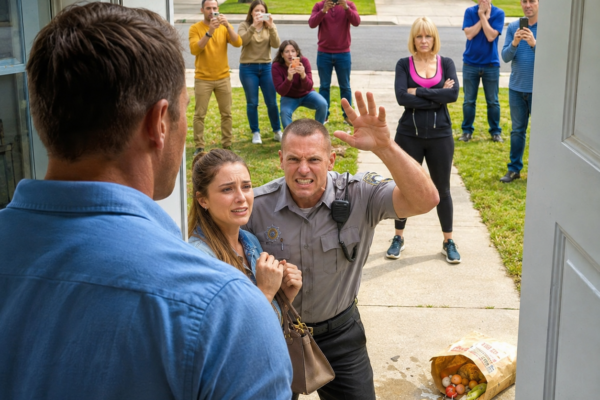
HOA Karen Tried to Evict Me From My Own Ranch—She Had No Idea I’d Spent 15 Years Working on Federal Housing Regulations.
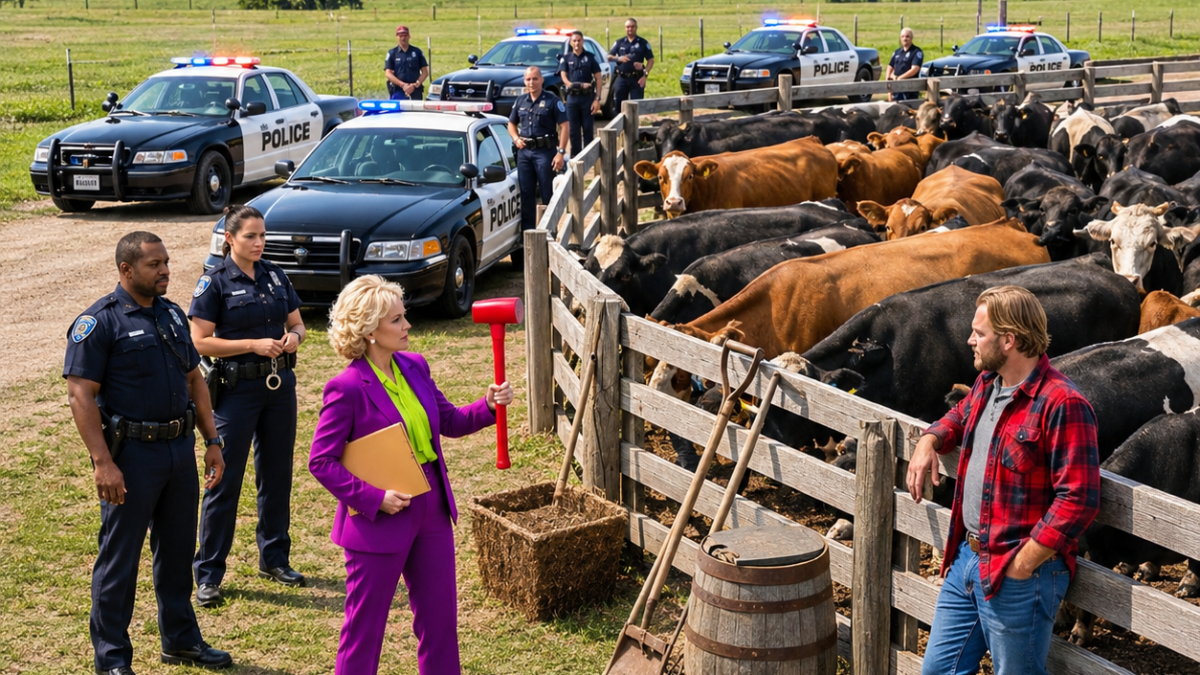
HOA Karen Tried to Evict Me From My Own Ranch—She Had No Idea I’d Spent 15 Years Working on Federal Housing Regulations.
I was standing on my grandfather’s front porch in rural Texas when a woman carrying a clipboard informed me that I had thirty days to remove my cattle and vacate my property.
She spoke with the confidence of someone who had never considered that the man wearing muddy work boots in front of her might know more about housing regulations than she did.
“Thirty days, Mr. Stone,” Karen Whitfield repeated. “After that, we’ll pursue your removal.”
Behind her stood two members of the Whispering Oaks homeowners association, a subdivision built less than a year earlier beside my family’s forty-acre ranch.
I set my coffee on the porch railing.
“You’re asking me to leave my own home?”
“We’re protecting our community’s property values.”
I looked beyond her toward the old red barn my grandfather had built with his own hands.
The Lazy G Ranch had belonged to my family since 1952. Grandpa Joe had raised three children there, survived devastating droughts, and refused every developer who came knocking.
When he passed away, he left the ranch to me.
I’d spent fifteen years working in Washington before returning to Texas, hoping to trade government offices and endless meetings for something that felt like home.
But Karen had other plans.
First came complaints about the smell of my cattle. Then warnings about my chickens, the barn, and even Grandpa’s old tractor.
I’d explained repeatedly that my ranch was not part of her HOA.
She hadn’t listened.
Now she handed me an official-looking envelope containing a demand that I cease agricultural operations and attend a mandatory compliance hearing.
“Your grandfather’s arrangements are no longer relevant,” she said.
That was the first time I felt genuinely angry.
One of the women accompanying her, a gray-haired lady named Beverly, lowered her eyes.
“My grandfather didn’t have arrangements,” I replied. “He had a deed.”
Karen smiled tightly.
“You can present whatever documentation you have at Thursday’s hearing.”
She turned and walked toward her SUV.
I carried the envelope into the kitchen and unfolded the survey map attached to the notice.
Someone had drawn a new boundary around my ranch, placing all forty acres inside the subdivision’s claimed jurisdiction.
I opened Grandpa’s old filing cabinet and began looking for the original survey.
[END OF FACEBOOK CAPTION]
[FIRST COMMENT / FULL STORY CONTINUATION]
The filing cabinet was older than I was.
Its bottom drawer stuck whenever the weather turned damp, and Grandpa had repaired one of the handles with a piece of baling wire rather than buying a replacement.
I pulled the drawer open and found the familiar collection of yellowing envelopes, tax receipts, cattle registration papers, and insurance policies.
Near the back was a thick folder labeled LAND in Grandpa’s handwriting.
Inside, beneath a receipt for a well pump purchased in 1986, I found the survey.
Forty acres.
Four clearly identified boundaries.
A county road along the southern edge.
And not a single reference to Whispering Oaks Estates.
I spread the original survey beside the map Karen had given me.
Her version included my ranch within a shaded area labeled Whispering Oaks Community Expansion District.
The words looked impressive.
The boundary didn’t make sense.
It crossed established property lines, included part of the county road, and swallowed every building on my ranch.
There was no surveyor’s certification.
No recording information.
No reference to a document granting the association authority over my property.
I had seen enough questionable paperwork during my years in Washington to know that an official-looking document and an official document were two very different things.
I photographed both maps and placed them in a folder.
Then I noticed something else.
At the bottom of Karen’s notice was a telephone number for Whitfield Property Compliance Services.
Not the county.
Not a law firm.
Not even the HOA’s management office.
Just a business name I had never heard before.
I called the number.
A recording answered.
“Thank you for contacting Whitfield Property Compliance Services. Our representatives are currently assisting other property owners.”
I recognized Karen’s voice.
I hung up and sat back in Grandpa’s chair.
Outside, my cattle were moving toward the water trough. Charlie, my grandfather’s aging border collie, was asleep beneath the kitchen window.
Nothing about the ranch had changed.
Yet somebody had apparently decided that my ownership of it was negotiable.
I reached for my phone again.
This time, I called my sister.
Claire answered while driving home from her hospital shift.
She was an emergency department nurse in Fort Worth, three years younger than me, and had inherited Grandpa’s habit of asking difficult questions before you’d finished explaining yourself.
“Garrett? Everything okay?”
“Depends on your definition.”
“What happened?”
I told her about Karen’s visit.
For once, she let me finish.
Then she said, “She wants you to move the cows?”
“And potentially vacate the ranch.”
There was a pause.
“Does she own the ranch?”
“No.”
“Does she have a court order?”
“No.”
“Then why are we having this conversation?”
“Because she’s sent an eviction-style notice and claims the property belongs within her association’s jurisdiction.”
Claire sighed.
“Grandpa would’ve taken that envelope straight out to the burn barrel.”
“I thought about it.”
“Don’t. You might need it.”
I smiled.
“We agree on something.”
“Enjoy the moment.”
We had always been close, but Grandpa’s death had put a strain on our relationship that neither of us liked discussing.
He’d left Claire some savings, Grandma’s jewelry, and several pieces of furniture.
He’d left me the ranch.
It wasn’t because he loved me more.
He knew Claire had a career, children, and a life in Fort Worth. He also knew I had spent years talking about coming home.
Still, inheritance has a way of making people examine old relationships through an uncomfortable new lens.
Claire hadn’t challenged the will.
She hadn’t asked for money.
But sometimes, when I talked about the ranch, I heard something in her voice that made me wonder whether she felt left behind.
Now she asked, “Are you going to fight this?”
“Of course.”
“How expensive is it going to get?”
“I don’t know.”
“Garrett.”
“What?”
“You’ve already put a lot of your savings into that place.”
She wasn’t wrong.
The roof needed replacing.
The well pump was approaching the end of its useful life.
Several sections of fence required extensive repairs.
And the cattle operation was modest enough that a bad year could turn my retirement plans into an accounting problem.
I wasn’t wealthy just because the land was valuable.
Land doesn’t pay the feed bill unless you sell it, borrow against it, or make it produce enough income.
Grandpa had understood that better than anyone.
“I’ll be careful,” I said.
Claire was quiet.
Then her voice softened.
“Please don’t lose the ranch because you’re too stubborn to ask for help.”
I looked toward Grandpa’s photograph on the bookshelf.
“I won’t.”
“Promise?”
“I promise.”
After we hung up, I realized I had no idea how difficult that promise might be to keep.
Six months earlier, I had been packing my office in Washington.
Fifteen years of government service fit surprisingly well into four cardboard boxes.
Policy manuals.
Photographs from conferences.
A coffee mug from a congressional briefing.
A plaque recognizing my work on housing accessibility initiatives.
I had joined the Department of Housing and Urban Development in my early thirties and eventually become a senior policy adviser.
My responsibilities involved federal housing policy, fair housing compliance, and the complicated interactions between federal protections, state property laws, and private residential associations.
I’d spent years working with attorneys, analysts, community organizations, housing providers, and homeowners who couldn’t understand why something as basic as having a safe place to live had become so complicated.
Contrary to what some people imagined, there was no single federal official who controlled every HOA in America.
Private associations operated within their own governing documents and applicable laws. State law often determined much of their authority, while federal protections applied in particular circumstances.
Knowing where one kind of authority ended and another began had been a significant part of my job.
It was interesting work.
Important work.
But it had also taken me away from home for longer than I intended.
Grandpa never complained.
Whenever I called, he asked whether Washington was treating me well.
Whenever I visited, he left the porch light on.
The last time we spoke, he was sitting in his recliner with an oxygen tube beneath his nose.
His voice had become thin.
His hands, once strong enough to lift feed sacks without thinking, rested motionless on a blanket.
“How’s the government?” he asked.
“Still there.”
“Figured it would be.”
I laughed.
He looked toward the window.
“You remember the fence along the north pasture?”
“Sure.”
“Needs attention.”
“Grandpa, I’ll take care of it.”
He nodded.
“And that gate by the creek sticks.”
“I know.”
He closed his eyes.
For a while, I thought he’d fallen asleep.
Then he said, “Don’t let the place become a burden.”
I leaned closer.
“It won’t.”
“I mean it, Garrett.”
He opened his eyes.
“Land’s supposed to give you a life. Not take one away.”
At the time, I thought he was talking about the physical work.
Later, I understood that he meant something more.
Grandpa died four days after I returned to Washington.
I was preparing for a meeting when Claire called.
I remember looking at the agenda on my computer while she told me.
I remember shutting the laptop without saving anything.
And I remember thinking about the north fence.
He had asked me to fix it.
I hadn’t.
Three weeks after the funeral, the attorney explained the will.
By summer, I had resigned from my federal position, sold my condominium, and returned to Cedar Falls.
I thought I was leaving complicated housing disputes behind.
Apparently, one had been waiting for me at home.
The following morning, I drove into town.
Cedar Falls had changed since my childhood.
There was a new pharmacy where the hardware store used to be.
A coffee shop occupied the old bank building.
The grocery store had expanded, and several farms along the highway had been replaced by subdivisions with names that sounded like the trees they’d removed.
Whispering Oaks was among the newest.
Its entrance featured two stone pillars, ornamental lighting, and a landscaped sign.
Behind it stood rows of large houses with immaculate lawns.
The homes weren’t the problem.
I understood why people wanted to live there.
Good schools, more space, quiet streets.
The same things that had drawn my grandfather to Cedar Falls decades earlier.
The trouble began when some of those new residents decided that the surrounding countryside should change to match the neighborhood they had purchased.
At the county records office, a clerk named Ellen Porter greeted me.
She’d known Grandpa for years.
“Garrett Stone,” she said. “You finally came home.”
“Trying to.”
She smiled.
“What can I help you with?”
I showed her Karen’s map.
Ellen adjusted her glasses.
“Where’d you get this?”
“The HOA next door.”
She studied it for another moment.
“Is this supposed to be a recorded survey?”
“Apparently.”
“Well, it isn’t one I’ve seen.”
She helped me locate the recorded plat for Whispering Oaks and the declaration establishing its property restrictions.
We compared the subdivision description with my grandfather’s deed.
The ranch was not included.
Not one acre.
Not even the narrow strip beside the entrance road.
I requested certified copies.
Ellen watched the printer work.
“Somebody having trouble understanding boundaries?”
“You could say that.”
She handed me the documents.
“People used to come in here because they couldn’t find their property lines. Nowadays, some of them seem determined to move the lines until they like what they see.”
I thanked her.
Before I left, she asked whether Grandpa’s old tractor still ran.
“Most days.”
She smiled.
“He pulled my husband’s truck out of a ditch with that thing back in 1998.”
I hadn’t heard that story.
“He wouldn’t take a dime,” she added.
“Sounds like him.”
Driving home, I thought about the fact that Grandpa had spent seventy years building something more valuable than a piece of property.
He had built a reputation.
And Karen’s accusation threatened to make people forget what that reputation meant.
Thursday evening arrived.
The compliance hearing was scheduled for seven at the Whispering Oaks clubhouse.
I wore clean jeans, a white shirt, and the boots Grandpa had bought me for Christmas several years earlier.
I considered wearing one of my Washington suits.
Then I decided against it.
I wasn’t going to dress like someone else to prove I deserved to keep my home.
The clubhouse was nicer than most meeting rooms I’d visited during my government career.
Wood-paneled walls.
Leather chairs.
A fireplace that probably had never been used.
At the front stood a long table occupied by seven board members.
Karen sat in the middle.
A single folding chair faced them.
Several residents occupied seats along the back wall.
When I walked inside, conversations stopped.
Karen gestured toward the isolated chair.
“Mr. Stone. Thank you for attending.”
I placed my folder on my lap.
“Of course.”
She turned on a projector.
The first slide displayed a photograph of my ranch beneath the title Agricultural Impacts on Residential Quality of Life.
The photograph had been taken from the subdivision road.
It showed my old barn, several cattle, and a stack of hay beneath a tarp.
Karen spoke about community aesthetics.
She described concerns regarding odors, insects, drainage, and declining property values.
She showed photographs of the tractor.
One picture displayed my chicken coop.
Another showed Grandpa’s manure composting area.
The residents watched silently.
Finally, I raised my hand.
“May I ask a question?”
Karen stopped speaking.
“You’ll have an opportunity after the presentation.”
“I’d prefer to ask before we continue.”
Her expression tightened.
“Very well.”
“Which recorded document makes my property subject to this association?”
She glanced toward the other board members.
“The expansion district is covered by our community development framework.”
“Which document?”
“Our legal advisers are reviewing the applicable provisions.”
“Who are your legal advisers?”
She shuffled her papers.
“Mr. Stone, this isn’t the appropriate time to debate technicalities.”
I looked around the room.
“With respect, whether you have authority over my home isn’t a technicality.”
A man near the end of the table leaned forward.
“Karen, didn’t you tell us the ranch was already covered under the master development plan?”
She looked at him.
“It falls within our anticipated community boundaries.”
I opened my folder.
“Anticipated boundaries and existing legal boundaries are different things.”
I placed the certified subdivision plat on the table.
Then I placed Grandpa’s deed beside it.
“My ranch isn’t part of this HOA. It has never been annexed into the declaration. I haven’t signed an agreement making it subject to your covenants.”
Karen barely glanced at the documents.
“That may reflect an outdated arrangement.”
“These are current county records.”
She folded her arms.
“We’ve consulted professionals.”
I nodded.
“Then I’m sure they’ll be able to identify the recorded document you’re relying on.”
Nobody answered.
I looked at the board members.
“Has anyone here actually seen it?”
A gray-haired woman sitting two seats away from Karen lowered her eyes.
I recognized Beverly from my porch.
The man at the end of the table shook his head.
Another member opened a binder and began flipping through pages.
Karen gave an impatient sigh.
“Mr. Stone, we are not obligated to educate you about every element of association administration.”
I reached into my folder and removed a short professional biography, along with one of my old business cards.
I had deliberately left my former government identification at home.
I no longer worked for HUD, and I wasn’t about to suggest otherwise.
“My name is Garrett Stone,” I said. “Until six months ago, I was a senior policy adviser at the Department of Housing and Urban Development. I spent fifteen years working on federal housing policy, compliance, and questions involving residential governance.”
The man with the binder stopped turning pages.
Beverly raised her head.
Karen stared at me.
I continued.
“I’m here tonight as a private property owner. I don’t have special enforcement authority, and I’m not claiming any. But I do have considerable experience evaluating the kind of documents you’ve presented.”
Someone in the back row whispered something.
Karen forced a smile.
“Well, congratulations on your former career.”
“Thank you.”
“However, federal experience doesn’t automatically make someone an expert on local community standards.”
“I agree.”
She seemed surprised.
“That’s why I went to the county records office.”
I slid the certified plat toward her.
“Your declaration stops at my fence.”
The room became quiet.
Not the uncomfortable silence of people being embarrassed.
The uncertain silence of people realizing they might have made an important decision without understanding what they were doing.
Beverly raised her hand.
“Karen?”
Karen turned slowly.
“Yes?”
“You told us Mr. Stone was refusing to cooperate with an existing legal obligation.”
“He is.”
“But if his property isn’t part of the association…”
Beverly didn’t finish.
Karen reached for her water glass.
“We are still reviewing the broader legal situation.”
The man at the far end of the table spoke again.
“Then why did we send him a thirty-day removal notice?”
That question remained unanswered.
Karen announced that the board would take the matter under advisement.
She ended the meeting eleven minutes later.
As people began gathering their belongings, I returned the documents to my folder.
Beverly approached me near the exit.
“Mr. Stone?”
“Garrett is fine.”
She looked toward the meeting room.
“Would you mind if I spoke to you privately sometime?”
“Not at all.”
She hesitated.
“I think we may have been told things that weren’t true.”
I handed her my personal telephone number.
“Call whenever you’re comfortable.”
She tucked the paper into her purse.
Then she said something I would remember for months.
“I thought we were protecting our homes.”
I looked back at the table where Karen was gathering her presentation materials.
“So did I.”
The first county inspection happened the following Monday.
I was repairing a fence hinge when an official truck pulled into the driveway.
The driver introduced himself as Dale Whitfield.
I’d met him once before, when Karen brought him to photograph the ranch.
He worked in county code enforcement.
He was also her cousin.
“Got a complaint about potentially unsafe agricultural structures,” he said.
I wiped my hands on my jeans.
“What specifically?”
He looked at his clipboard.
“Barn, storage shed, equipment shelter, possibly the chicken enclosure.”
“That’s quite a list.”
“Just doing my job.”
I nodded.
“I understand.”
I showed him the structures.
He photographed the old barn.
He measured the equipment shelter.
He examined the electrical connection to the storage shed.
When he reached Grandpa’s tractor, he stopped.
“Does that thing still work?”
“On days when it feels appreciated.”
He smiled despite himself.
Then he looked down at the clipboard again.
“Some of these buildings may predate our current permitting records.”
“Several do.”
“Do you have original construction documents?”
“Grandpa built the barn in 1961.”
Dale shifted his weight.
“Whatever paperwork you’ve got would help.”
I went inside and brought out old photographs, tax records, and maintenance receipts.
He made copies of several documents.
Before leaving, he said the department would review the complaint and issue its findings.
I thanked him.
Then I asked, “Did Karen file this?”
He hesitated.
“I can’t discuss internal complaint handling.”
“Fair enough.”
He climbed into the truck.
As he drove away, I noticed he looked more uncomfortable than satisfied.
The next day, a representative from a state environmental agency arrived to investigate allegations involving groundwater contamination.
I welcomed him, showed him the manure storage area, provided information about the well, and explained the ranch’s drainage arrangements.
He collected the information needed for his review.
Two days later, a veterinarian working with the relevant animal health authorities came to examine the cattle following a complaint about suspected disease.
Her name was Dr. Elena Martinez.
She was a practical woman in her fifties who had spent most of her career working with livestock.
Charlie immediately decided she was his favorite visitor.
She scratched his ears before putting on her work gloves.
“How many cattle?” she asked.
“Twenty-three.”
“Any recent illnesses?”
“Nothing unusual. I’ve got the veterinary records inside.”
She examined the herd, looked at the feeding arrangements, and reviewed my records.
One of the younger heifers tried to steal a piece of paper from her clipboard.
Dr. Martinez laughed.
“Well, somebody’s got an appetite.”
Afterward, we stood beside the barn.
“Based on what I’ve seen today, I don’t have grounds for the emergency concerns described in the complaint,” she said.
“That’s good.”
She glanced toward the subdivision.
“Is there a disagreement with your neighbors?”
“You might call it that.”
She looked at me thoughtfully.
“We receive complaints from people who genuinely don’t understand agricultural operations. Sometimes education resolves things.”
“I’d be happy to explain what we do here.”
“Good.”
She paused.
“But we’ve also received complaints that appear to come from property disputes. Those can be more difficult.”
I nodded.
“That’s what worries me.”
When she left, I stood beside the gate watching her truck disappear.
Three inspections in four days.
None had identified an immediate danger requiring closure.
But I had lost hours of work.
I had paid for additional veterinary records, taken time away from fence repairs, and spent another evening organizing documents.
The burden was becoming clear.
If someone made enough accusations, a property owner could spend every waking hour defending perfectly ordinary activities.
Even when nothing was wrong.
Especially if he couldn’t afford to take time off.
I’d seen that problem from behind a government desk.
Living through it was different.
Beverly called on Friday.
Her voice was quiet.
“Garrett, would it be all right if I came over?”
“Certainly.”
“Could it be somewhere we won’t be interrupted?”
I looked around the empty kitchen.
“I think we can manage that.”
She arrived shortly before sunset in a silver Honda.
Charlie greeted her at the porch.
She bent to pet him, but her hand was trembling.
“He’s friendly,” I assured her.
“I can tell.”
She smiled weakly.
I brought her inside and poured two cups of coffee.
She sat at the kitchen table holding a canvas tote against her chest.
For several minutes, she spoke about ordinary things.
Her former teaching career.
Her husband, Paul.
Their decision to move from Dallas after his stroke.
The quiet neighborhood they thought they’d found.
Then she set the tote on the floor.
“I need to show you something.”
She removed a folder.
Inside were printed emails, meeting summaries, and copies of correspondence involving Sunset Holdings, the developer responsible for Whispering Oaks.
“How did you get these?” I asked.
“I’m on the board. Karen asked me to help with administrative work.”
She looked down.
“I was a third-grade teacher for thirty-one years. I suppose she thought I’d be good at keeping things organized.”
I opened the first document.
It was an email from a Sunset Holdings representative discussing possible future acquisitions.
My ranch was identified by its parcel number.
The projected development included residential lots, a wider entrance road, and an expanded common recreation area.
I kept reading.
A second email described a consulting arrangement with Whitfield Property Compliance Services.
The language was vague.
Community outreach.
Acquisition facilitation.
Management of neighboring property concerns.
Then I reached an attachment outlining a proposed compensation schedule.
One line stood out.
Successful acquisition of Stone parcel: $50,000 completion bonus.
I put the paper down.
Beverly stared at her coffee.
“I didn’t know about that until last week.”
I read the line again.
“Is Karen the owner of the consulting business?”
“Yes.”
“Was this disclosed to the board?”
“Not that I know of.”
I leaned back.
Suddenly, the complaints about my cattle made more sense.
So did the urgency.
The deadline.
The new boundary on the map.
“Has Sunset Holdings made an offer for my ranch?”
“Karen said they were discussing one.”
I thought about an envelope I’d received several weeks earlier from a real estate acquisition company.
I’d thrown it into the recycling bin without opening it.
Grandpa had received dozens of similar offers over the years.
I looked at Beverly.
“Why are you showing me this?”
She took a breath.
“Because I helped prepare the notice that went to your house.”
I said nothing.
“Karen told me it had been reviewed by an attorney. She said your property was causing serious problems and that you’d ignored legal obligations.”
Her eyes filled.
“I printed it. I put the survey map in the envelope.”
She pressed a hand against her mouth.
“And then I stood on your porch while she told you to leave.”
I remembered the way she had looked at the ground.
“Beverly.”
She shook her head.
“I should’ve asked questions.”
“Yes,” I said gently. “You should have.”
A tear slipped down her cheek.
I handed her a tissue.
“But you’re asking them now.”
She looked at me.
“What if we’re all responsible?”
“For what?”
“For everything she’s done. We voted for things. We approved expenses. We trusted her.”
I closed the folder.
“Then the best thing you can do is find out what actually happened and help correct it.”
She nodded.
“I don’t want to be part of hurting anybody.”
I looked at the documents spread across Grandpa’s table.
“Neither do I.”
We sat quietly for a moment.
Then she reached into the tote again.
“There’s more.”
She handed me the association’s organizational documents.
The developer’s original declaration appeared to cover the subdivision itself.
But the current homeowner board had apparently assumed control before the formal transition process had been completed.
Several documents that Karen had described as finalized were unsigned drafts.
The records Beverly possessed did not clearly establish that the newly organized board had been properly authorized to exercise all the powers Karen claimed.
It didn’t automatically mean every association obligation was invalid.
These things required a careful legal review.
But it was another serious problem.
And the ranch’s exclusion from the recorded declaration made Karen’s claim even weaker.
I explained that distinction to Beverly.
She listened carefully.
“So we might not even have the authority she says we have inside Whispering Oaks?”
“Some of the authority may belong to the developer or another properly constituted entity. A lawyer needs to examine the complete records.”
She sank back into her chair.
“We’ve been collecting money from people.”
“I understand.”
“We’ve been sending fines.”
I waited.
Her voice became almost a whisper.
“What have we done?”
Outside, the cattle were gathering near the barn.
Charlie rested his head on Beverly’s knee.
She absently stroked his fur.
I thought about how much damage could happen when ordinary people trusted someone who sounded certain.
And how difficult it was to admit that trust had been misplaced.
“Let’s start by getting the documents to someone qualified to review them,” I said.
Beverly nodded.
Then she looked at me.
“Will you help us?”
I could have told her that the internal affairs of Whispering Oaks weren’t my problem.
My property wasn’t part of their association.
I owed them nothing.
But Grandpa had spent his life helping people whose problems weren’t technically his responsibility.
I looked at Beverly’s trembling hands.
“Yes,” I said. “I’ll help.”
The attorney I called was Jim Rodriguez.
We had known each other since high school.
He had been the kid who could argue his way out of detention, while I was the kid who usually got detention for helping him.
He now practiced real estate and civil law in a brick office near the courthouse.
When I arrived Monday morning, he pointed at my boots.
“Washington finally let you dress like a human being?”
“Something like that.”
He grinned.
“What’s the trouble?”
I placed the folders on his desk.
For the next hour, he barely spoke.
He examined the deed, the recorded declaration, the notice, and the financial arrangement Beverly had provided.
Eventually, he removed his glasses.
“Well.”
I waited.
“That’s a pretty expensive reason to dislike cows.”
I laughed.
Then he became serious.
“The strongest issue concerning your property is straightforward. I’ve reviewed the recorded documents, and I don’t see a basis for this association to impose its restrictions on your ranch.”
“That’s what I thought.”
“The developer’s expansion plans are another matter. They can propose buying your property. They can plan all sorts of things subject to applicable approvals.”
He tapped Grandpa’s deed.
“They can’t make you sell simply because their business plans would benefit from it.”
“What about the notice?”
“It has no court authority. And the language is troubling.”
I looked toward the courthouse across the street.
“Can we stop the complaints?”
“We can formally demand that Karen stop representing the HOA as having authority over you. If the conduct continues, we can consider appropriate court relief.”
He separated Beverly’s records from mine.
“The internal association problems need their own review. And we have to be careful about whose interests I’m representing.”
He picked up the compensation schedule.
“This could raise serious questions about conflicts of interest and professional conduct.”
“I want the other owners to know.”
“They should. But let’s avoid circulating financial allegations we haven’t verified.”
I nodded.
Jim smiled slightly.
“You still think like a policy adviser.”
“I suppose some habits stick.”
“Good. Keep that one.”
He agreed to represent me in the property dispute and helped Beverly identify independent counsel for the homeowners.
Before I left, he asked whether I’d considered the practical cost of litigation.
“I’ve thought about it.”
“Have you really?”
I looked at the folders.
“No.”
He leaned forward.
“Being right doesn’t make legal bills disappear, Garrett.”
I knew that.
I’d explained it to homeowners countless times.
But hearing it now, when Grandpa’s land was involved, made the words feel different.
Jim continued.
“I’ll do everything I reasonably can to keep this focused. But you need to decide how much money you’re willing to spend before this fight starts making decisions for you.”
I drove home with a formal demand letter in my email and a legal retainer deducted from my savings.
That night, I sat in Grandpa’s recliner and looked at the ranch’s account statements.
There was plenty of value outside my window.
Forty acres.
A house.
Buildings.
Livestock.
Potential mineral income that had always interested investors.
But the number in my bank account was considerably smaller than the number somebody might write on a property valuation.
For the first time, I understood why another family might simply accept a developer’s offer.
Not because they wanted to leave.
Because they couldn’t afford to stay and fight.
The offer came on Wednesday.
A representative from Sunset Holdings arrived in a dark pickup and introduced himself as Martin Hale, the company’s regional acquisitions director.
He was about my age, neatly dressed, and pleasant in the deliberate way of someone accustomed to negotiating expensive transactions.
He asked whether we could speak.
I invited him onto the porch.
He looked across the pasture.
“Beautiful piece of land.”
“Thank you.”
“Your family has been here a long time?”
“Since 1952.”
He nodded appreciatively.
“That’s quite a history.”
I waited.
He opened a leather portfolio.
“We’re interested in discussing a purchase.”
“I’m not selling.”
“Of course. I understand the emotional attachment.”
I didn’t particularly like hearing my home described as an emotional attachment, but I let him continue.
He handed me a written proposal.
The purchase price was $680,000, subject to various conditions.
That included the land, improvements, and whatever mineral interests were specified in the proposed agreement.
It was a substantial amount of money.
It was also significantly below what independent valuations suggested the entire package could be worth.
“That’s an opening figure,” Martin explained. “There’s room for discussion.”
I returned the document.
“No, thank you.”
He studied my face.
“Would you be more comfortable with a delayed closing? We could potentially arrange for you to remain in the house for several months.”
“I’m not interested in selling.”
He glanced toward the barn.
“Ranching isn’t easy these days.”
“Never has been.”
“And the community’s growing.”
“I’ve noticed.”
“Sometimes growth creates difficult situations for existing property owners.”
I looked at him.
“Are you talking about Karen Whitfield?”
His expression changed slightly.
“Karen handles certain community relations matters for us.”
“Does that include threatening to remove people from their own land?”
He closed the portfolio.
“I wouldn’t characterize her responsibilities that way.”
“How would you characterize them?”
“She helps address neighborhood concerns.”
I nodded.
“Does she receive compensation if you acquire my property?”
Martin looked toward the road.
“Individual compensation arrangements are confidential business matters.”
I took another sip of coffee.
“Then I think we’re finished here.”
He stood.
“I’d encourage you to consider the offer carefully. Particularly given the ongoing issues with neighboring residents.”
I looked up.
“Is that a threat?”
“No, sir.”
He smiled.
“It’s an observation.”
I watched him walk to his truck.
When he reached the driver’s door, he turned.
“You’d have enough money to live comfortably somewhere else.”
For a moment, I thought about the expenses waiting on my kitchen table.
The roof.
The well.
The attorney’s fees.
The years of work the ranch would demand from me.
I understood the appeal of the offer.
That was what made his next words particularly unpleasant.
“Sometimes letting go is the smartest thing a person can do.”
I looked at Grandpa’s old porch swing.
“Sometimes,” I replied.
After Martin left, I called Jim and told him about the visit.
Then I placed the written offer in my growing collection of records.
I didn’t throw it away.
Not because I was considering it.
Because I wanted to remember exactly when it had arrived.
The television crew showed up two days later.
I had just finished feeding the cattle when I noticed a news vehicle parked along the county road.
A reporter stood near the subdivision entrance, speaking with Karen.
Several residents were gathered behind her.
One woman held the hand of a little boy wearing a dinosaur T-shirt.
Another carried a printed photograph of my barn.
I walked toward the gate.
The reporter introduced herself as Rachel Bennett from a regional television station.
“Mr. Stone, we’re covering concerns that have been raised about your ranch.”
“What kind of concerns?”
“Potential environmental and health impacts on the neighboring community.”
“Has anyone provided evidence of those impacts?”
She looked at her notes.
“Residents have expressed concerns about possible groundwater contamination and unhealthy conditions.”
I glanced at Karen.
She was speaking animatedly to the cameraman.
“Would you like to see the ranch?” I asked.
Rachel seemed surprised.
“You’d allow us on the property?”
“Of course. Provided we stay clear of the cattle and respect the working areas.”
She looked toward Karen.
Then she nodded.
I showed her the well records, explained where the livestock waste was managed, and introduced her to the veterinarian’s most recent health assessment.
I didn’t claim that a ranch could never create environmental problems.
Any agricultural operation needed responsible management.
I simply told her that the specific emergency allegations being made about mine hadn’t been supported by the inspections completed so far.
Rachel listened.
She asked sensible questions.
At one point, the cameraman filmed Charlie sleeping beside a feed sack.
“He’s your security team?” she asked.
“He’s management. Doesn’t do much actual work.”
She laughed.
When we returned to the road, Karen was waiting.
“Did he show you the contaminated areas?” she asked.
Rachel responded carefully.
“He showed us his records and the facilities.”
Karen shook her head.
“He’s very persuasive. That’s part of the problem.”
Rachel looked at her.
“Have you received any official findings confirming contamination?”
“We’ve had multiple agencies investigate.”
“Have any confirmed contamination?”
Karen’s smile faltered.
“Investigations take time.”
Rachel made a note.
Then she asked about the developer’s interest in buying the ranch.
Karen’s expression changed completely.
“That’s unrelated.”
“Are you working with Sunset Holdings?”
“I provide community relations services.”
“Would your compensation be affected if Mr. Stone sold his land?”
Karen looked at the camera.
“I don’t discuss private business arrangements.”
The reporter nodded.
“All right.”
She didn’t pursue the question aggressively.
She didn’t need to.
Later, Rachel interviewed Pete Jameson, whose property bordered mine on the western side.
Pete was seventy-eight and had known Grandpa since they were young men.
He’d spent most of his life repairing agricultural equipment.
When Rachel asked what he thought of the controversy, Pete leaned against his old truck.
“That ranch was there before most of these houses were dreamed up.”
“Have you noticed unusual conditions recently?”
“Garrett’s a little slow fixing fence gates.”
Rachel smiled.
“Anything else?”
“His coffee’s terrible.”
I laughed from where I stood.
Pete looked directly at the camera.
“But dangerous? No. And if somebody has evidence otherwise, they ought to show it instead of frightening folks.”
Rachel also interviewed Rosa Martinez, who operated the Cedar Falls feed store.
Rosa had supplied Grandpa for decades.
She confirmed that my purchases and livestock care appeared consistent with a small, established cattle operation.
The finished report aired that evening.
It wasn’t a sweeping condemnation of Karen.
It was a balanced report about a disagreement between a longtime agricultural property and a growing residential development.
But it also noted that the official findings available at that point did not support the reported emergency, and that the HOA’s claimed authority over my land was disputed.
For the first time, the public conversation included facts Karen hadn’t chosen herself.
I watched the report from Grandpa’s recliner.
When it ended, Charlie lifted his head.
“Well,” I told him, “we made the news.”
He went back to sleep.
Apparently, he wasn’t impressed.
The next morning, a woman named Lisa Warren knocked on my door.
I recognized her from the television interview.
She had been the mother holding the little boy’s hand.
Now she stood on the porch with a plastic grocery bag containing cookies.
“Mr. Stone?”
“Garrett.”
She looked embarrassed.
“I wanted to apologize.”
I invited her to sit.
She explained that Karen had told several parents the ranch might be contaminating their drinking water.
Her son, Eli, had asthma.
She had become frightened.
“We moved here because we wanted him somewhere healthier,” she said.
I nodded.
“I understand.”
“When Karen started talking about unsafe conditions, I didn’t know enough to question her.”
She looked toward the pasture.
“My husband watched the news report last night. He said we should’ve spoken to you first.”
“That would’ve been fine.”
She held out the cookies.
“I’m sorry.”
I accepted them.
Then I asked, “Would Eli like to see a calf sometime?”
Her expression softened.
“He would love that.”
“Bring him by when you’re comfortable. We’ll keep him safely outside the working pens.”
She smiled.
“Thank you.”
After she left, I stood with the grocery bag in my hands.
It would’ve been easy to dismiss every Whispering Oaks resident as arrogant or foolish.
But Lisa wasn’t either.
She was a mother who had been told something frightening about her child’s safety.
Karen had understood exactly how powerful that fear could be.
The more I learned, the more I realized that many of her strongest supporters weren’t motivated by hostility toward me.
They were trying to protect their families.
Just as I was trying to protect mine.
Beverly returned that afternoon with two other board members.
Jim Patterson was a retired electrician, broad-shouldered and direct.
Maria Santos worked as a paralegal and had purchased her Whispering Oaks home shortly after marrying her husband.
They sat at my kitchen table while Beverly brought out a box of financial records.
Jim shook his head.
“I thought we were paying for landscaping and pool maintenance.”
Beverly looked at him.
“So did I.”
She had been helping reconcile the association’s accounts for months.
But Karen maintained control over certain transactions and provided summaries rather than complete invoices.
When Beverly began comparing the underlying records against the approved budgets, she discovered substantial discrepancies.
Some payments had gone to consultants.
Others had been made to a private investigation company.
There were legal-service charges whose purpose wasn’t clearly documented.
And several payments had been made directly to Whitfield Property Compliance Services.
“How much are we talking about?” I asked.
Beverly opened a spreadsheet.
“One hundred twenty-seven thousand dollars in expenditures I can’t properly reconcile or verify.”
Jim leaned forward.
“You’re telling me she stole a hundred twenty-seven thousand dollars?”
Maria immediately shook her head.
“No. That’s the amount requiring investigation. We don’t know how much was legitimate, poorly documented, unauthorized, or potentially misappropriated.”
Jim looked frustrated.
“That’s still a lot of money.”
“Yes,” Maria said. “Which is why we need an independent accountant.”
Beverly continued.
“There’s another issue.”
She produced a property record for Karen’s residence.
The home was owned by a company affiliated with Sunset Holdings.
Karen was occupying it under a private arrangement.
Maria explained that the arrangement itself wasn’t necessarily improper.
But Karen had repeatedly presented herself to the community as an independent homeowner with no meaningful financial ties to the developer.
The ownership record raised questions about that claim.
Jim rubbed his forehead.
“She told us she’d invested almost a million dollars of her own money here.”
Beverly looked down.
“I remember.”
For a while, we all sat quietly.
The dollar amounts were troubling.
But so was the human reality behind them.
Eighty-seven households had been paying association assessments.
People had budgeted for those payments.
Some had taken extra shifts.
Others had reduced family expenses.
They believed their money was maintaining a community where they planned to spend years of their lives.
Instead, they had no clear explanation for significant expenditures.
Beverly pointed to several invoice descriptions.
“These payments appear to be connected to the complaints against your ranch.”
I stared at the pages.
The homeowners might have been financing the very campaign that had been directed against me.
Some of them hadn’t even known it was happening.
Jim stood and walked toward the window.
“My wife told me not to join the board.”
Maria gave a sad smile.
“Mine would’ve said the same thing.”
He turned around.
“I joined because I thought people like me should volunteer. Help keep things running.”
He looked at Beverly.
“How did we miss this?”
She took off her glasses.
“Because someone told us she had everything under control.”
Nobody argued.
We agreed that the records needed to be preserved and reviewed by professionals.
Maria contacted the homeowners’ independent attorney.
Beverly began identifying which documents were original records and which were summaries or copies.
Jim contacted the remaining board members about scheduling an emergency financial review.
I stayed out of decisions that belonged to the association.
My role was to provide the evidence involving my property and explain the questions my experience had taught me to ask.
That distinction mattered.
I had no intention of replacing Karen’s misuse of authority with my own.
That evening, after everyone left, I contacted an old colleague in Washington.
Her name was Diana Brooks.
We had worked together on several housing policy initiatives.
She was one of the most careful public servants I’d ever met.
“Garrett Stone,” she said when she answered. “I thought you’d disappeared into a cattle pasture.”
“That was the plan.”
“How’s it going?”
“Complicated.”
I explained the situation.
She listened for nearly twenty minutes.
Then she asked, “What are you hoping federal authorities will do?”
“Determine whether any of this falls within their jurisdiction.”
“Good answer.”
I smiled.
“I had a good teacher.”
She reminded me that ordinary HOA authority and many property disputes were primarily questions of state law.
The facts would determine whether any separate fraud allegations involved federal jurisdiction.
She advised me to use established reporting channels rather than sending documents informally to former colleagues.
She also encouraged me to work with my attorney on identifying appropriate state authorities, particularly given the possible real estate licensing and financial issues.
Before hanging up, she said, “Garrett, don’t promise anybody an investigation.”
“I won’t.”
“And don’t let people assume you’re acting on behalf of the department.”
“I’m not.”
“I know. But once people hear where you used to work, they’ll start imagining you can accomplish things that don’t belong to you.”
I looked toward Grandpa’s photograph.
“Somebody already tried that.”
Diana laughed softly.
“Then you understand the problem.”
I thanked her.
Afterward, I worked with Jim to prepare factual submissions for the appropriate agencies.
We included documents, dates, witness information, and clearly identified questions.
We didn’t demand specific charges.
We didn’t claim every accusation was proven.
We asked the people responsible for investigating such matters to determine what the evidence supported.
For someone who had once sat on the receiving end of similar submissions, it felt strange.
I had spent years explaining processes to other people.
Now I was waiting for those processes to work for me.
The first family Beverly identified lived outside a small town several counties away.
Their names were Nora and Daniel Ellis.
They had owned a twenty-six-acre property where Daniel raised goats and repaired farm machinery.
Their land had bordered a proposed residential development.
According to correspondence in Karen’s records, Whitfield Property Compliance Services had worked with a developer involved in that acquisition.
I called Nora with her permission after Beverly made an initial introduction.
She sounded cautious.
“Why are you asking about our old property?”
“Because I’m experiencing something that may be similar to what happened to you.”
She was silent.
I explained the complaints, the proposed acquisition, and the documents we’d discovered.
When I mentioned Karen’s name, Nora interrupted.
“Whitfield?”
“Yes.”
“Oh.”
The single word carried years of exhaustion.
She agreed to meet me.
I drove to their rented house the following Saturday.
It stood beside a busy highway.
There was no pasture.
No barn.
Just a small backyard with a chain-link fence and two plastic chairs.
Daniel greeted me at the door.
He walked with a cane following a back injury.
Nora brought coffee.
Their former property, they explained, had belonged to Daniel’s parents.
When a subdivision was proposed nearby, complaints began about the smell of the goats and the condition of the equipment workshop.
County inspectors visited repeatedly.
Some matters required ordinary repairs.
Others were closed without findings.
Then a private association began demanding changes the Ellises believed it had no authority to require.
They hired an attorney.
Their bills grew.
Daniel’s health worsened.
They were trying to maintain the property while surviving on reduced income.
Eventually, a developer made an offer.
“We knew it was low,” Nora said.
She looked at Daniel.
“But we were tired.”
Daniel stared at the carpet.
“I told her I’d fix everything.”
Nora reached for his hand.
“You did what you could.”
He shook his head.
“My father put that place together piece by piece.”
He looked at me.
“I sold it in twenty minutes.”
Nobody spoke.
On the mantel was a photograph of a farmhouse surrounded by oak trees.
Beside it stood a little girl holding a baby goat.
“That’s our granddaughter,” Nora explained.
“She used to spend every summer with us.”
She looked around the rented house.
“Now she asks when we’re going back.”
I felt an ache in my chest.
I thought about my own ranch.
About how easily I could have become the man sitting across from me.
If my savings had been smaller.
If my health had been worse.
If I hadn’t known which records to request or whom to call.
The difference between us wasn’t courage.
It was circumstance.
“Do you still have any paperwork?” I asked.
Nora nodded.
“Boxes of it.”
She looked uncertain.
“Will it actually do any good?”
“I don’t know what can be recovered or what legal options remain. An attorney needs to review that.”
Daniel looked toward the window.
“We don’t have money for another lawyer.”
“I understand.”
I hesitated.
“Let me help you find someone who can at least review what happened.”
Nora’s eyes filled.
“We’re not trying to get rich.”
“I know.”
“We just wanted to be left alone.”
I understood that better than I could explain.
Before leaving, I looked once more at the photograph of their old farmhouse.
I had started this fight because someone wanted to take my land.
Now I was beginning to see what happened when the same pressure was applied to people who had fewer resources to resist it.
Claire arrived at the ranch the following weekend.
She brought my seventeen-year-old nephew, Ben, and enough groceries to feed us for a week.
She found me at the kitchen table surrounded by documents.
“Good grief, Garrett.”
“What?”
“It looks like your old Washington office exploded.”
Ben leaned over the table.
“Are you investigating somebody?”
“Mostly trying to understand what happened.”
He picked up a photograph of Grandpa.
“Cool.”
Claire took it from him.
“Go check on Charlie.”
Ben disappeared outside.
My sister looked at the paperwork.
“How much?”
I knew exactly what she meant.
I told her what I’d spent on attorneys, additional property documentation, and related expenses.
She closed her eyes.
“That’s a lot of money.”
“I know.”
“Do you?”
“Claire.”
She sat down.
“Don’t get defensive. I’m worried.”
I pushed the folders aside.
“There’s more going on than a fight over the cattle.”
I told her about Beverly, the developer’s compensation arrangement, and the Ellises.
Claire listened.
When I finished, she looked toward Grandpa’s old clock.
“Do you remember when we were kids and he almost lost this place?”
I frowned.
“What?”
“The drought. I was twelve.”
I vaguely remembered a particularly bad summer.
Empty water tanks.
Grandpa selling cattle.
Grandma working extra hours at the school cafeteria.
But I hadn’t known the ranch was at risk.
Claire nodded.
“Grandma told Mom they were behind on several payments.”
“Why didn’t anybody tell me?”
“You were fifteen. They didn’t want us worrying.”
She looked at me.
“Grandpa had to borrow money from our parents. And Pete helped him repair equipment he couldn’t afford to replace.”
I sat back.
“I never knew.”
“He didn’t save this ranch alone, Garrett.”
Her voice was gentle.
“Nobody does everything alone.”
I stared at the pile of documents.
Then Claire said, “I know you loved him.”
I looked up.
“So did I.”
There was something in the way she said it that made me finally ask the question I’d avoided since the will reading.
“Are you upset that he left me the ranch?”
She looked surprised.
Then tired.
“Sometimes.”
I nodded slowly.
“I thought you might be.”
“Not because I want to own cattle or move here. I don’t.”
She smiled sadly.
“It’s just that when he left it to you, everybody started talking like you were the only grandchild who belonged to this place.”
I looked toward the hallway.
“I didn’t mean to make you feel that way.”
“I know.”
She picked up Grandpa’s photograph.
“I changed his bandages, Garrett. I drove here after twelve-hour shifts. I took him to appointments while you were in Washington.”
My throat tightened.
“I know you did.”
“And I never minded. But sometimes I wish he’d said something about that in the will.”
I didn’t know what to say.
She wasn’t asking for the land.
She was asking to be remembered.
I reached across the table.
“I’m sorry, Claire.”
She looked at my hand.
“I should’ve thanked you more,” I continued. “And I should’ve made it clear that this is still your family’s home.”
She wiped her eyes.
“It’s not that simple.”
“No.”
I looked around the kitchen.
“But I can start.”
Later that afternoon, Ben helped me repair the gate near the creek.
Claire sat on the porch reading one of Grandma’s old recipe books.
At dinner, we talked about Grandpa.
Not the heroic version of him people described around town.
The real man.
The one who could be stubborn, forgetful, and occasionally impossible.
The one who once tried to fix a washing machine with tractor parts.
The one who cried when Claire graduated from nursing school.
The one who called me in Washington every year on my birthday, usually before six in the morning.
By the time Claire left Sunday afternoon, I felt lighter.
The legal problems hadn’t changed.
But something important had.
I no longer thought of preserving the ranch as a responsibility Grandpa had placed entirely on my shoulders.
It was a family legacy.
And family meant more than the name printed on a deed.
Karen’s next complaint involved a supposed threat.
Sheriff Bob Morrison arrived at the ranch shortly before noon on a Tuesday.
I’d known Bob since he was a young deputy.
He had attended Grandpa’s funeral and helped direct traffic during the procession.
But when he stepped onto my porch that morning, his expression was professional.
“Garrett, I need to ask you about a report.”
“Come on in.”
He remained standing.
“Karen Whitfield says you threatened her during a telephone conversation last night.”
I looked at him.
“I haven’t called her.”
“Did she call you?”
“No.”
“Any conversation in person?”
“Not since the meeting.”
He nodded.
“She provided a written account of what she says happened.”
I felt anger rise.
Then I remembered the advice I’d given people during my government career.
Answer the question.
Provide the facts.
Don’t let frustration become another problem.
I offered to preserve and share the relevant call records and security footage through the appropriate process.
Bob made notes.
“Anything else going on between you two?”
I explained the developing property dispute and the evidence of the potential financial conflict.
He listened.
“Have you threatened to use your old government connections against her?”
“No.”
“Has anybody acting for you done that?”
“Not to my knowledge.”
He closed his notebook.
“All right. We’ll follow up.”
I looked at him.
“Bob, you know me.”
He met my eyes.
“I do.”
“So you know I wouldn’t—”
He interrupted gently.
“Garrett, knowing you doesn’t mean I get to skip an investigation.”
I stopped.
He continued.
“And knowing her doesn’t mean I get to assume she’s telling the truth.”
I nodded.
“Fair enough.”
He tipped his hat.
“That’s how it’s supposed to work.”
After he left, I sat on the porch for a long time.
I was grateful he hadn’t treated Karen’s accusation as established fact.
I was equally grateful he hadn’t dismissed it simply because he knew my grandfather.
That was the difference between a person using authority properly and someone treating authority as a personal favor.
A week later, Bob informed me that the allegation hadn’t been substantiated.
The evidence available did not support further action against me.
I placed his written notification in my folder.
Then I went outside and finished the work he’d interrupted.
By then, the association’s board had begun to fracture.
Beverly, Maria, and Jim Patterson requested an independent financial review.
Two other directors supported them.
Karen resisted.
According to the meeting minutes, she argued that the proposed review would create unnecessary expense, embarrass the community, and interfere with ongoing development negotiations.
Maria asked why development negotiations were being discussed at all.
Karen told her that the growth of Whispering Oaks required a unified approach.
Jim asked whether homeowners had authorized the use of association funds to pursue the acquisition of neighboring property.
Karen responded that expenditures related to community protection fell within the board’s responsibilities.
Beverly asked for the contracts.
Karen adjourned the meeting.
The directors eventually obtained independent legal guidance.
They learned that the developer-to-owner governance transition needed substantial clarification.
The existing recorded restrictions within Whispering Oaks remained a separate issue from whether Karen’s particular board had been properly constituted.
The confusion did not erase every homeowner’s obligations.
But it did make immediate oversight necessary.
The attorney recommended preserving all association records, restricting disputed expenditures through lawful procedures, and arranging a properly authorized membership meeting.
The homeowners’ group began doing exactly that.
Karen responded with another neighborhood-wide email.
She accused certain board members of undermining the community’s stability and allowing an outside property owner to interfere in internal matters.
My name appeared three times.
I read it once.
Then I forwarded it to Jim.
A few months earlier, I might have written a furious response.
Now I understood that every email didn’t deserve one.
One Thursday evening, I discovered graffiti on the ranch fence.
The words UNSAFE PROPERTY had been painted across two boards near the county road.
I stood beside the fence with a wrench in my hand.
Grandpa had replaced those boards in 2009.
He’d written the date on the inside with a carpenter’s pencil.
I remembered helping him carry the lumber.
I remembered him criticizing the way I held a hammer.
And now somebody had covered his work with an accusation.
I went inside and checked the camera footage.
It showed two people near the fence during the previous night.
One appeared to be a woman.
The other was a man.
The images were not clear enough for me to identify either person confidently.
A vehicle resembling Karen’s SUV was visible farther along the road, but resemblance wasn’t identification.
I saved the original recording.
I photographed the damage.
Then I contacted the sheriff’s office.
Bob sent a deputy to take a report.
Afterward, Pete came over carrying a paint scraper and a small container of stain.
“Figured you might need these.”
I looked at the ruined boards.
“I’m tempted to replace the whole section.”
Pete shook his head.
“Wood’s still good.”
He handed me the scraper.
“Don’t throw away something useful because somebody treated it badly.”
We worked for nearly two hours.
Neither of us said much.
When we finished, the words were gone.
A faint discoloration remained.
Pete stood back.
“Grandpa would’ve approved.”
I smiled.
“He would’ve complained about how long it took.”
“That, too.”
We carried our tools toward the barn.
As we walked, Pete said, “Your grandfather had a terrible fight with a neighboring rancher once.”
“Really?”
“Over water drainage.”
“What happened?”
“They argued for months. Almost stopped speaking entirely.”
I waited.
“Then the other man’s wife got sick. Joe helped him feed his cattle.”
I looked at Pete.
“Did that settle the drainage issue?”
“Eventually.”
He shrugged.
“Your grandfather figured he could disagree with a man and still help his wife.”
I thought about Karen.
About the possibility that she was behind the damage.
About how much I wanted her to face consequences.
Pete put the scraper in his truck.
“Being decent doesn’t mean letting people walk over you,” he said.
“It means not letting them decide what kind of man you become.”
He climbed into the cab.
“See you tomorrow.”
I watched him drive away.
Then I returned to the fence and ran my hand over the old boards.
They were still standing.
That mattered more than the stain.
The men arrived on a Monday morning.
I was in the barn checking a water connection when Charlie began barking.
A gray sedan had stopped outside the house.
Two men wearing dark jackets stood on the porch.
One carried a briefcase.
The other held a document with an official-looking seal.
“Garrett Stone?” the taller man asked.
“That’s me.”
He introduced himself as a representative of an environmental compliance task force.
His companion said they were there to deliver an emergency directive requiring the temporary suspension of agricultural activities.
I looked at the paperwork.
“Which agency issued this?”
He named an organization I didn’t recognize.
“What department is it part of?”
He glanced at his companion.
“We’re working under a coordinated authority.”
I examined the first page without accepting their characterization of it.
The order claimed my livestock presented an immediate danger to neighboring residents.
It demanded that the cattle be relocated within twenty-four hours.
I had received no prior communication from any agency about such an order.
The investigations completed so far hadn’t established the kind of emergency described in the document.
And the men were unable to provide a clear explanation of their authority.
“Before anything happens,” I said, “I’m going to verify this directly with the agency you claim to represent.”
The taller man became impatient.
“Mr. Stone, delaying compliance may result in additional consequences.”
I looked at him.
“Then the issuing agency can explain those consequences when I contact them.”
His companion shifted uneasily.
“We’re only delivering the paperwork.”
“That’s fine.”
I took the document.
“You’re welcome to wait while I make the call.”
Neither man wanted to wait.
They returned to their car and drove away.
I photographed the document, preserved the security footage, and called Jim.
He advised me not to take any action based on the purported order until it had been independently verified.
I contacted the relevant agency through its published contact information.
By early afternoon, officials had confirmed that the purported directive hadn’t been issued by them.
I forwarded the documents to the sheriff’s office and the appropriate authorities.
Then I called Beverly.
“Have you heard anything about an emergency closure order?”
She went silent.
“Garrett.”
“What?”
“Karen sent an email this morning.”
She forwarded it.
The message claimed that federal authorities had finally ordered the cessation of agricultural operations on my property.
It described the supposed order as the result of Karen’s persistent advocacy.
Several residents had already replied with expressions of gratitude.
Others were asking when the livestock would be removed.
I sat down at the kitchen table.
The two men hadn’t merely delivered questionable paperwork.
Somebody was already using their visit as evidence that an official decision had been made.
I contacted Rachel Bennett, the reporter who had covered the earlier dispute.
I provided the documents and the agency’s verification.
She said she would independently confirm the information before reporting anything.
Then I called Claire.
She listened without interrupting.
When I finished, she said, “Please tell me you’re not handling this alone.”
“Jim knows. The sheriff knows.”
“Good.”
She paused.
“Are you scared?”
I looked out the window.
Until that moment, I’d been describing the incident as another strange escalation.
Now I admitted what it had felt like to see unfamiliar men standing on Grandpa’s porch telling me that the ranch had to shut down.
“Yeah,” I said.
“A little.”
Claire exhaled.
“Okay.”
That was all she said.
And somehow, it helped.
That evening, Beverly called again.
“They’re talking about arranging livestock relocation.”
I stood up.
“Who is?”
“Karen. She told some residents that the government directive authorizes temporary removal of the cattle.”
“Did anybody actually read the document?”
“I asked that.”
“What did she say?”
“That we shouldn’t interfere with federal procedures.”
I closed my eyes.
“Beverly, the agency confirmed the directive isn’t genuine.”
“I know.”
Her voice shook.
“I told her that. She accused me of spreading misinformation.”
I contacted the sheriff’s office and explained the possibility that someone might attempt to enter the property or interfere with the animals.
A deputy advised me to keep the gates secured, avoid confrontation, and contact law enforcement immediately if anyone attempted unauthorized entry.
I followed that advice.
Then I sat in the house with Charlie beside me, listening to the wind against the windows.
I had twenty-three cattle in the pasture.
Several were pregnant.
One young calf still depended heavily on its mother.
Moving them wasn’t like moving furniture out of an apartment.
It required proper handling, suitable transportation, and planning.
The thought that someone might interfere with them because of a fabricated document made me angrier than anything else Karen had done.
Shortly after dusk, a vehicle pulled up outside the entrance gate.
My camera showed three people.
Karen was one of them.
A man in work clothes stood beside her.
Another person remained near the vehicle.
I stayed inside the property and called the sheriff’s office.
Through the camera, I watched Karen point toward the gate.
The man examined the latch.
Then he looked back at her.
I could hear voices, but not every word.
Nobody had permission to enter.
A few minutes later, a sheriff’s vehicle arrived.
Then another.
The deputies spoke with the group.
Karen displayed a document and repeatedly gestured toward the pasture.
One deputy examined the paper.
Another asked her to move away from the gate.
I remained near the house until Bob called and asked whether I could meet him outside.
When I reached the driveway, Karen was standing beside her SUV.
She looked furious.
“Tell them,” she demanded.
I stopped several feet away.
“Tell them what?”
“That you’ve received the federal order.”
“I received a document. The agency says it didn’t issue it.”
She shook her head.
“You’re deliberately obstructing enforcement.”
Bob stepped between us.
“Mrs. Whitfield, you’ve been informed that you don’t have authorization to remove these animals.”
She turned toward him.
“You don’t understand the arrangement.”
“Then your attorney can explain it through the appropriate process.”
Karen stared at me.
“You’re doing this because you think you’re smarter than everyone.”
I said nothing.
She continued.
“You could have sold this place months ago.”
There it was.
Not the groundwater.
Not the cattle.
Not the health of her neighbors.
The sale.
Bob looked at her.
“Mrs. Whitfield, we’re going to continue this conversation separately.”
The deputies detained her while they investigated the attempted entry and the suspicious paperwork.
The precise charges would be determined after the evidence was reviewed.
I watched them escort her toward a patrol vehicle.
I didn’t celebrate.
I went directly to the pasture.
The cattle were standing near the water trough, completely unaware of the arguments occurring outside their gate.
I counted them.
All twenty-three.
Then I checked the calf.
Its mother watched me with mild suspicion.
“You’re all right,” I murmured.
I wasn’t sure whether I was speaking to the animal or myself.
For the first time in months, Karen wasn’t directing the conversation.
But the investigation was far from finished.
Authorities still needed to establish who had prepared the false document, what the two men had been told, and whether other people had participated knowingly.
One of the men eventually acknowledged that he’d been hired to deliver what he had been told was an authorized compliance notice.
The other provided additional information about his communications with Karen.
Their accounts required verification.
Investigators compared messages, payment records, and statements.
The earlier vandalism was also examined.
Some evidence supported connections to people working with Karen, although not every allegation surrounding the ranch could be conclusively established.
The authorities didn’t simply accept everything I suspected.
I was glad they didn’t.
I wanted a case based on evidence that would withstand scrutiny.
Not another collection of unsupported accusations.
Meanwhile, Dale Whitfield’s involvement in the county inspections came under internal review.
The county examined whether he had properly disclosed his relationship with Karen and whether the complaints had been handled consistently.
Dale was reassigned while the review proceeded.
He came to my ranch one afternoon several weeks later.
This time, he wasn’t wearing his uniform.
“Can we talk?” he asked.
I nodded.
We sat on the porch.
He looked toward the barn.
“I should’ve disclosed the family connection immediately and requested that somebody else handle the inspection.”
I waited.
“Karen told me there were legitimate concerns. I believed her.”
“Did she ask you to find violations?”
He looked uncomfortable.
“She kept asking whether there was something that would require you to stop operating.”
I studied him.
“What did you tell her?”
“That I couldn’t make findings that weren’t there.”
I remembered his uncertain expression during the inspection.
“Did you report those conversations?”
He shook his head.
“I should have.”
He looked down at his hands.
“She’s my cousin. I’ve known her my whole life.”
I let the silence sit between us.
Then I said, “That was exactly why you shouldn’t have been handling my complaint.”
He nodded.
“I know.”
He explained that he was cooperating with the county review.
His employment consequences hadn’t been decided.
He wasn’t asking me to intervene.
He simply wanted to apologize.
I accepted the apology.
But I told him that the county needed to resolve the matter independently.
He agreed.
After he left, I sat watching the road.
I thought about how many decisions in this entire mess had begun with somebody saying yes to a person they trusted.
How often the easiest choice had been to avoid an uncomfortable question.
And how expensive those choices had become for everyone else.
The public meeting took place in early summer.
The homeowners’ independent attorney had arranged a properly noticed gathering to discuss governance, finances, and the future of Whispering Oaks.
It was held at the Cedar Falls Community Center rather than the clubhouse.
Residents filled nearly every chair.
Some brought notebooks.
Others carried copies of their assessment statements.
Several had questions about whether their money could be recovered.
Karen attended with an attorney.
She had been released pending further proceedings.
Her attorney advised her against discussing the pending criminal investigation.
She nevertheless requested an opportunity to address the homeowners about her work with the association.
Beverly sat at the front beside Maria and the interim organizers.
The woman who had once lowered her eyes on my porch now looked directly at the people in the room.
She began by acknowledging her own failures.
“I accepted information without checking it carefully enough,” she said.
Her voice trembled.
“I participated in decisions that affected people whose side of the story I hadn’t heard.”
She looked toward me.
“And I helped prepare a notice that should never have been sent.”
I lowered my head.
She continued.
“I cannot undo that. But I can help make sure the association’s future decisions are based on accurate records, proper authority, and accountable leadership.”
Several homeowners nodded.
Then the independent accountant presented preliminary findings.
The investigation had identified substantial expenditures requiring further explanation.
Some had been reconciled.
Others were unsupported.
A portion appeared to have been used for activities outside the approved community purposes, including efforts connected to neighboring property disputes.
The accountant carefully distinguished established findings from unresolved questions.
A man near the front raised his hand.
“Are we going to lose all our money?”
The accountant explained that recovery efforts were underway but that the final amount remained uncertain.
A woman asked whether the association could continue paying for the pool and landscaping.
The interim organizers explained the temporary arrangements.
People began asking practical questions.
It wasn’t a dramatic courtroom scene.
It was a community trying to figure out whether the organization responsible for maintaining its homes could still function.
Then Karen stood.
“I would like to correct the impression that I acted against the interests of this neighborhood.”
Her attorney whispered something.
She continued.
“I devoted hundreds of hours to protecting our investment. Every decision I made was intended to preserve property values and community quality.”
Beverly looked at her.
“Did you disclose your financial arrangement with Sunset Holdings before we approved spending related to Garrett’s ranch?”
Karen stiffened.
“Those are private contractual matters.”
Maria spoke calmly.
“The question concerns whether the board knew you stood to benefit personally from an acquisition our expenditures might facilitate.”
Karen looked toward her attorney.
He placed a hand on his folder.
She sat down.
There was no answer.
Beverly turned back to the audience.
“That’s one of the reasons the independent review is necessary.”
I had prepared a statement, but when my turn came, I found myself looking at the people in front of me rather than at the paper.
I recognized Lisa Warren and her husband.
Pete sat beside Rosa near the back.
Claire had driven in with Ben.
Nora and Daniel Ellis were there, too.
Jim Rodriguez stood near the wall.
I walked to the microphone.
“My name is Garrett Stone. My ranch borders Whispering Oaks, but it isn’t part of the subdivision.”
I held up a copy of the recorded plat.
“The central issue affecting my property is simple. The association’s recorded restrictions do not include my land.”
I placed the document on the table.
“The complaints about my cattle and buildings have been investigated through the appropriate channels. The available findings haven’t supported an emergency closure.”
I looked toward Karen.
“The order delivered to my home was not genuine. That matter is now being investigated, and I’m going to allow the authorities to do their work.”
Then I looked around the room.
“I spent fifteen years working on housing policy. Some of you may have heard that I’ve been using government authority to get my way.”
A few people exchanged glances.
“That isn’t true. I left government service before I came home. I have no special authority over any of you.”
I paused.
“And I wouldn’t want it.”
The room became still.
“I know what it looks like when people with less money, less experience, or fewer resources are pressured into accepting something unfair.”
I glanced toward Nora.
“Sometimes they give up. Not because they’re wrong, but because they cannot afford to keep explaining why they’re right.”
Nora reached for Daniel’s hand.
I continued.
“My grandfather worked on that land for seventy years. He didn’t expect every neighbor to be a rancher. He didn’t expect Cedar Falls to remain exactly as it was when he arrived.”
I looked toward the Whispering Oaks residents.
“He understood that places change.”
I took a breath.
“But I don’t believe he would have accepted the idea that welcoming new neighbors meant surrendering his home to them.”
Nobody moved.
“I don’t want your houses. I don’t want control of your association. I want to raise my cattle, maintain my property responsibly, and be a good neighbor.”
I looked down at my notes.
“That’s what I wanted before any of this happened. It’s what I still want.”
When I returned to my seat, Claire squeezed my shoulder.
Beverly leaned toward her microphone.
“Thank you, Garrett.”
Then she looked at the room.
“Now let’s talk about how we move forward.”
The governance changes took several weeks.
The developer’s remaining obligations and the homeowners’ association structure were reviewed by attorneys.
The necessary organizational steps were completed, and properly authorized homeowner elections took place.
New leadership was chosen.
Beverly agreed to serve as board chair after repeated encouragement from her neighbors.
Maria helped establish clearer procedures for conflicts of interest and recordkeeping.
Jim Patterson coordinated maintenance planning.
An independent financial professional took responsibility for reviewing the association’s accounts.
Nobody promised that dues would immediately decrease.
Nobody claimed that every past decision could be reversed.
But homeowners could now ask questions without being treated as disloyal.
They could see financial reports.
They could review properly established rules.
They could understand how decisions were made.
And one of the new board’s first formal communications to me was a letter acknowledging that my ranch lay outside the association’s recorded jurisdiction.
It was signed by Beverly.
At the bottom, she added a handwritten note.
Thank you for giving us the opportunity to correct our mistakes.
I placed it in Grandpa’s filing cabinet.
For once, a piece of paperwork from Whispering Oaks made me smile.
The criminal investigation moved much more slowly than the neighborhood changes.
There were interviews, requests for additional records, legal proceedings, and long stretches when nothing visible happened.
Investigators examined Karen’s business relationships and the financial records associated with several rural property acquisitions.
Not every transaction initially questioned was found to be improper.
Not every family had experienced exactly what Nora and Daniel had.
But sufficient evidence emerged to support a substantial case involving fraudulent representations, unauthorized financial transactions, and the campaign to induce certain property owners to sell.
Several people connected to Sunset Holdings were investigated.
The company eventually suspended the planned expansion beside my ranch.
Its financial and legal difficulties grew as additional transactions came under review.
Months later, certain business operations were sold or discontinued.
The company’s executives faced separate proceedings based on their individual conduct.
Karen ultimately entered a guilty plea to several fraud-related offenses.
Her sentencing occurred well over a year after she first appeared on my porch.
I attended with Jim.
Beverly was there.
So were Nora and Daniel.
Karen looked different from the woman who had stood in the clubhouse with a projector and a clipboard.
She wore a simple dark sweater.
Her hair had grown longer.
Her hands rested quietly in her lap.
Through her attorney, she acknowledged responsibility for conduct that had caused financial harm and distress.
The court imposed a substantial prison sentence, followed by supervised release, and ordered restitution in accordance with the established losses.
Recovery would take time.
Some victims might receive only part of what they had lost.
Civil claims and asset recovery proceedings continued separately.
There was no magical return of every dollar.
No instant restoration of every family property.
I was reminded that justice could establish accountability without restoring everything that had existed before the wrongdoing.
When the judge invited victim statements, Nora stood.
She carried a photograph of her former home.
“I understand that nobody can give us back the years we lost,” she said.
Her voice was quiet.
“But I want the court to understand that when we sold that property, we didn’t just lose an investment.”
She looked at the photograph.
“We lost the place where our family gathered. We lost the future we thought we’d have.”
Daniel wiped his eyes.
Nora continued.
“We were made to feel that staying was irresponsible. That we were causing trouble simply by living the way we’d always lived.”
She looked toward Karen.
“I wish somebody had asked whether we were all right.”
The room was silent.
When Nora returned to her seat, Daniel took her hand.
I looked down at the statement I’d prepared.
My losses were real.
The expenses.
The anxiety.
The damaged fence.
The months spent defending my right to stay.
But I still had my home.
I couldn’t stop thinking about that.
Outside the courthouse, Beverly stood beneath a small oak tree.
She was crying.
I approached quietly.
“You okay?”
She wiped her face.
“I thought I’d feel relieved.”
“Do you?”
“Some.”
She looked toward the courthouse doors.
“But I keep thinking about how differently things could’ve gone.”
I understood.
“If I hadn’t taken those papers to your house,” she continued, “maybe you’d still be fighting.”
“Maybe.”
“Or maybe you’d have sold.”
I thought about the $680,000 offer.
The legal expenses.
The sleepless nights.
“Maybe.”
She looked at me.
“How many people don’t have somebody willing to bring them the papers?”
I didn’t have an answer.
Neither did she.
We stood together for a moment.
Then I asked whether she wanted to get lunch.
She nodded.
“Somewhere with good coffee.”
I laughed.
“That rules out my house.”
For the first time that morning, she smiled.
The settlement in my property-related civil dispute came several months later.
It reimbursed a significant portion of my documented expenses and losses.
It wasn’t an amount that would make me wealthy.
After paying the remaining legal fees and necessary ranch repairs, I had a decision to make.
I could put the rest into savings.
That would’ve been sensible.
I had spent years earning that money.
But I kept thinking about the Ellises.
I called Jim.
“What would it cost to give a few families an initial legal consultation and records review?”
He asked what I had in mind.
I told him.
There were rural property owners who didn’t know whether demands against them were legitimate.
People who couldn’t afford a lawyer.
Homeowners who felt intimidated by official-looking notices.
Families facing offers they suspected were unfair but lacked the information to evaluate.
I wanted to help them obtain accurate advice before their problems became overwhelming.
Jim was interested.
He helped me connect with an existing nonprofit legal assistance organization rather than starting an elaborate new organization myself.
I contributed some of my settlement money to support a rural property rights assistance initiative.
Other attorneys volunteered limited consultation time.
Beverly helped develop educational materials about responsible association governance.
We arranged occasional workshops at the community center.
We emphasized that legitimate HOAs had a role in many communities.
We explained that genuine code and environmental concerns should be investigated properly.
And we taught people how to distinguish a private demand from a government order or court-issued document.
We weren’t promising to win every dispute.
We weren’t encouraging people to ignore legitimate obligations.
We were trying to make it easier for ordinary property owners to understand what was happening before they made decisions they couldn’t undo.
The first person I invited to one of our workshops was Nora.
She and Daniel had received some compensation through the recovery proceedings.
Their former property was no longer available to them.
That loss remained.
But they had found a modest house on several acres outside another small town.
Daniel had room for a workshop again.
Their granddaughter had already asked whether they could get goats.
Nora showed me a photograph.
It wasn’t the same farmhouse.
It didn’t have the same oak trees.
But Daniel was standing beside a little shed with a hammer in his hand.
He was smiling.
For the first time since I’d met them, the photograph on Nora’s phone wasn’t from the past.
Life on the ranch gradually settled into a different rhythm.
I replaced the roof.
Repaired the well pump.
Finished the northern fence.
And finally fixed the stubborn gate near the creek.
The work was ordinary, repetitive, and deeply satisfying.
Charlie grew slower.
Some mornings, he preferred sleeping on the porch to following me into the pasture.
I didn’t blame him.
He had spent a lifetime helping Grandpa.
He had earned his retirement.
One Saturday, Beverly brought her husband, Paul, to visit.
Paul walked slowly after his stroke, but his eyes brightened when he saw the cattle.
“I grew up around farms,” he told me.
Beverly looked surprised.
“You never told me that.”
“Sure I did.”
“When?”
He smiled.
“Probably before you started correcting everything I said.”
She laughed.
We spent the afternoon on the porch.
Paul told stories about his childhood.
Beverly asked about the ranch’s history.
Before leaving, she pointed toward the old barn.
“You know, there are children in Whispering Oaks who’ve never seen a cow up close.”
“Is that so?”
She nodded.
“Lisa keeps asking whether Eli can visit.”
I smiled.
“Tell her to bring him.”
That conversation became the beginning of occasional educational visits to the ranch.
With proper arrangements and attention to safety, small groups of neighborhood families came to learn about livestock, water conservation, and agricultural work.
Dr. Martinez volunteered to speak during one visit.
Rosa brought feed samples.
Pete demonstrated several old farm tools.
The children asked wonderfully practical questions.
Why did cows chew so much?
Did chickens know their names?
Why did hay smell different after rain?
Eli wanted to know whether cattle had favorite foods.
Ben helped supervise the activities and discovered he was unusually good at explaining things to younger children.
Claire brought sandwiches.
At the end of one afternoon, I stood beside the barn watching families walk back toward their cars.
Several lived in Whispering Oaks.
Some had once supported Karen’s complaints.
Now their children were waving at my cattle.
It struck me that the development and the ranch had never needed to be enemies.
They needed clear boundaries.
Good communication.
And a willingness to understand what existed on the other side of the fence.
The following Thanksgiving, Claire arrived with Ben and several relatives.
We set a long table beneath the covered portion of the porch.
Grandma’s old dishes came out of the cupboard.
Pete brought a pecan pie.
Rosa delivered enough tamales for everyone to take some home.
Beverly and Paul joined us in the afternoon.
Jim Rodriguez arrived late, claiming his wife had made him stop for extra folding chairs.
The house was louder than it had been in years.
At one point, Claire stood in the kitchen holding Grandma’s recipe book.
“Remember her cornbread dressing?”
“Of course.”
“Grandpa always said nobody made it better.”
I nodded.
She looked around.
“I miss them.”
“Me, too.”
She closed the recipe book.
Then she noticed a new framed photograph on the wall.
It showed the two of us as children sitting on Grandpa’s tractor.
Claire was wearing a ridiculous straw hat.
I had one arm around her shoulders.
Beneath it was a more recent photograph of Ben repairing the creek gate.
She smiled.
“You framed these?”
“Thought they belonged here.”
She looked at me.
I continued.
“I’ve been thinking about what you said last year.”
She lowered the recipe book.
“This place belongs to our family’s history, Claire. I may hold the deed, but that doesn’t mean you stopped belonging here.”
Her eyes filled.
“Thank you.”
I took a small envelope from the counter.
Inside was a new house key.
She looked at it.
Then at me.
“You already know where everything is,” I said.
She laughed through her tears.
“Except where you’ve moved Grandma’s good serving spoons.”
“Second drawer.”
“That’s ridiculous. They belong in the third.”
For a moment, she sounded exactly like Grandma.
We both laughed.
Then she put her arms around me.
And I held on a little longer than usual.
Later that evening, after dinner, Ben asked whether he could drive Grandpa’s old tractor.
“Absolutely not.”
He groaned.
“Uncle Garrett.”
“It’s older than your mother.”
Claire called from the porch.
“Watch it.”
I smiled.
“Fine. Tomorrow. With me supervising.”
Ben grinned.
“Deal.”
We stood near the barn as the sun dropped toward the horizon.
The pasture turned gold.
The cattle moved slowly toward their usual resting area.
Ben leaned against the fence.
“Do you think the ranch will still be here when I’m your age?”
I looked across the forty acres.
“I hope so.”
He glanced at me.
“Are you ever going to sell it?”
“Not planning to.”
“What if somebody offers you a million dollars?”
I thought about the question.
Grandpa probably would’ve answered with something stubborn and definitive.
But I remembered his words from the hospital.
Land was supposed to give you a life.
Not take one away.
“Money matters,” I told Ben. “And people’s circumstances can change. You can’t judge somebody for making a decision they need to make.”
He nodded.
“But as long as I can responsibly keep this place, that’s what I want to do.”
He looked across the pasture.
“I’d like to learn how to take care of it.”
I turned toward him.
“Really?”
“Yeah.”
He shrugged.
“It’s pretty cool out here.”
I laughed.
“Wait until you’re fixing fences in August.”
He smiled.
“I’ll survive.”
I placed a hand on his shoulder.
“That’s what Grandpa used to say.”
That winter, nearly two years after Karen’s first visit, I found one of Grandpa’s old journals inside a wooden box beneath his bed.
The entries were mostly practical.
Rainfall measurements.
Calving dates.
Equipment repairs.
Reminders to buy supplies.
But near the back, on a page dated several years earlier, he had written something different.
It was a short entry about Claire and me visiting for Christmas.
He described how busy our lives had become.
How proud he was of our work.
How much he enjoyed hearing our voices in the house.
At the bottom, he’d written:
The best thing about having a place of your own is knowing there’ll always be somewhere for your people to come home to.
I read the sentence several times.
For so long, I had thought his legacy was the land itself.
The boundaries.
The deed.
The mineral rights.
The barn.
The old tractor.
And those things mattered.
They represented decades of sacrifice.
But Grandpa hadn’t held onto the ranch simply because he wanted to possess forty acres.
He wanted a place where the people he loved could belong.
That was what Karen hadn’t understood when she stood on my porch and called his ownership an outdated arrangement.
She saw land that could be divided into profitable lots.
I saw the kitchen where Grandma taught Claire to bake.
The pasture where Dad taught me to drive.
The barn where Grandpa repaired things that should’ve been replaced years earlier.
The porch where my family gathered after funerals, graduations, weddings, and ordinary Sunday dinners.
Those memories weren’t included in a property appraisal.
They couldn’t be measured in acreage.
And nobody could offer me a purchase price that captured what they meant.
I closed the journal and carried it into the living room.
Then I called Claire.
“Guess what I found.”
“What?”
“One of Grandpa’s journals.”
She became quiet.
“Read me something.”
So I did.
When I finished, neither of us spoke for several seconds.
Finally, she said, “That sounds like him.”
“Yeah.”
“Keep it somewhere safe.”
“I will.”
She paused.
“We’ll come out next weekend.”
I smiled.
“I’ll leave the porch light on.”
The following Saturday, I woke before sunrise.
I made coffee, pulled on my boots, and stepped outside.
The air was cold.
A thin layer of frost covered the pasture.
Charlie followed slowly, his tail moving against the porch railing.
I sat in Grandpa’s old chair and watched daylight spread across the fields.
A truck passed on the county road.
Somewhere beyond the fence, the first lights were coming on in Whispering Oaks.
Beverly would probably be preparing for another board meeting.
Lisa would be getting Eli ready for breakfast.
Pete would already be working on something in his garage.
The ranch and the subdivision remained exactly where they belonged.
Side by side.
Separate properties.
Shared neighbors.
I thought about the woman who had arrived with a thirty-day deadline.
About the inspections, the paperwork, the false order, and the months spent defending my home.
I wouldn’t pretend I was grateful for what happened.
I had lost time, money, and a peace I hadn’t easily found after leaving Washington.
Other families had lost considerably more.
But I was grateful for the people who had helped stop it.
Beverly, who found the courage to question someone she trusted.
Jim, who reminded me that being right required patience as well as conviction.
Nora and Daniel, who showed me the human cost of a fight I might otherwise have understood only through documents.
Claire, who reminded me that preserving a family legacy meant preserving the family, too.
And Grandpa, who had taught me more about responsibility from this porch than I’d ever learned in a conference room.
Around nine, Claire’s car appeared in the driveway.
Ben climbed out carrying a backpack.
Claire waved.
Charlie managed to stand.
I set down my coffee.
“Morning!”
Ben called back.
“Can we start the tractor?”
I laughed.
“Good morning to you, too.”
Claire opened the passenger door and removed a casserole dish.
“Tell me you’ve cleaned the kitchen.”
“Mostly.”
She shook her head.
“Some things never change.”
I walked down the porch steps to help her.
Ben hurried toward the barn.
Charlie followed him as quickly as his old legs allowed.
The house filled with voices.
The kitchen door opened.
Somebody put another pot of coffee on.
And there, on forty acres of Texas land my grandfather had purchased in 1952, another ordinary family morning began.
No courtroom.
No official notices.
No arguments over who had the right to be there.
Just home.
Exactly as Grandpa had intended.