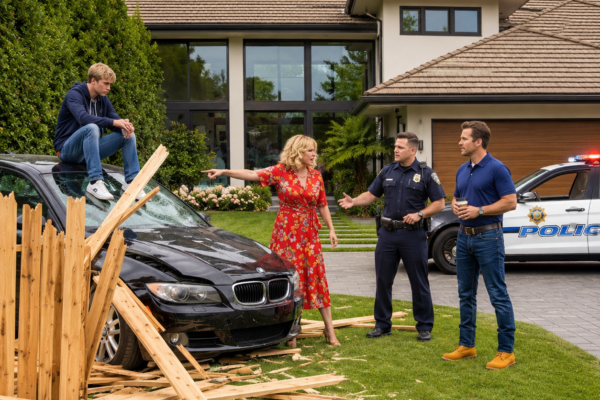
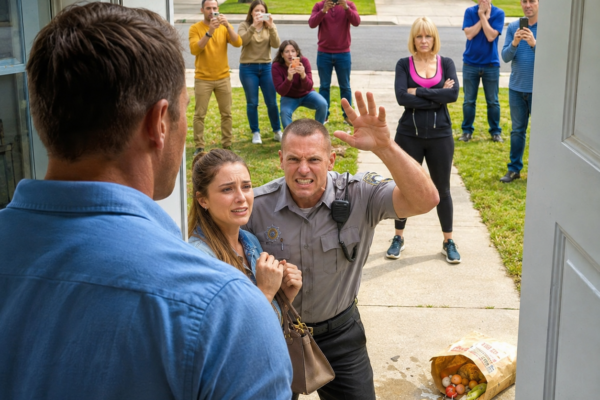
The HOA Karen’s Daughter Stole My ATV and Claimed Her Family Was Untouchable.
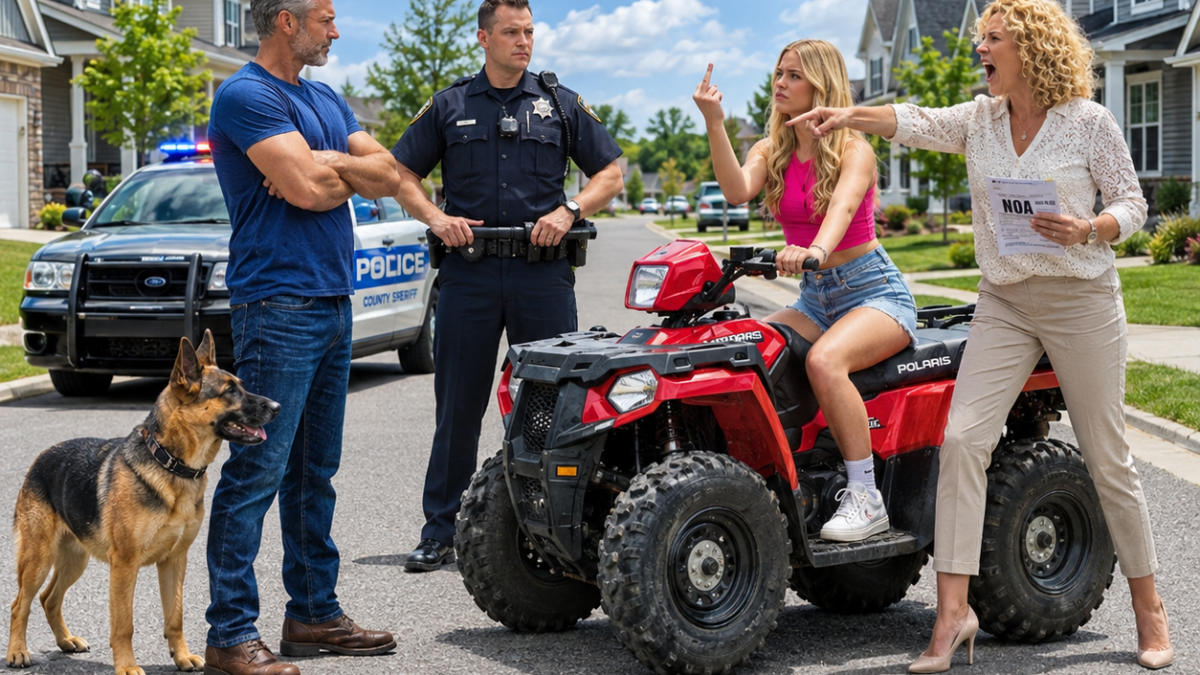
The HOA Karen’s Daughter Stole My ATV and Claimed Her Family Was Untouchable.
I pulled into my driveway on a Saturday morning and found nineteen-year-old Kaylee Hutchinson fastening the last chain around my four-wheeler.
She knew it belonged to me, but what she didn’t understand was why that particular vehicle meant more to me than anything else in my garage.
“Take those chains off,” I said, stepping out of my truck.
Kaylee barely looked up.
“Mom says it violates community standards.”
Her boyfriend stood beside the trailer, studying his phone.
I glanced at the little blue ribbon tied around the ATV’s handlebars. My wife, Sarah, had put it there on our twenty-fifth wedding anniversary, the morning she surprised me with the keys.
Fourteen months later, cancer took her.
I hadn’t been able to untie that ribbon.
“Your mother has no right to take my property,” I said.
Kaylee smiled.
“My mom runs this neighborhood. I’m untouchable.”
Then she climbed into her boyfriend’s truck.
I called the police as the trailer disappeared around the corner.
Across the street, a curtain moved. My elderly neighbor, Harold Chen, stood near his living room window, but he quickly stepped away.
When an officer finally arrived, Brenda Hutchinson was already walking toward us with a folder tucked beneath her arm.
She wore the same pleasant smile she’d used when welcoming Sarah and me to Pinewood Estates.
“I’m afraid Marcus has been struggling with our community guidelines,” she explained.
I showed the officer photographs of the ATV and offered to retrieve the ownership documents from my garage.
Brenda handed him a newly printed association rule.
Somehow, the conversation shifted from my missing property to whether I’d been storing it properly.
The officer took a report but left without arranging its return.
Brenda watched his cruiser disappear.
“Perhaps next time you’ll cooperate,” she said.
That evening, I sat alone in my workshop, staring at the empty space where Sarah’s gift belonged.
Her photograph stood beside my toolbox. She was wearing muddy jeans, laughing after our first trail ride together.
I was still looking at it when someone knocked on the side door.
It was Harold.
He carried a worn brown envelope and kept glancing toward the street.
“I’m sorry I didn’t come outside this morning,” he said.
I pulled out a chair for him.
He remained standing.
“Marcus, your ATV isn’t the first thing this family has taken from somebody.”
[END OF FACEBOOK CAPTION]
[FIRST COMMENT / FULL STORY CONTINUATION]
Harold placed the envelope on my workbench.
For a moment, he seemed unsure what to do with his hands. He took off his glasses, cleaned them with the corner of his shirt, then put them back on.
“I’m not talking about another four-wheeler,” he explained. “I’m talking about money. And a few other things that have disappeared around here.”
He opened the envelope.
Inside were copies of association financial statements, handwritten notes, photographs of violation notices, and a letter addressed to a woman named Dorothy Patterson.
I recognized the name.
Dorothy was the elderly widow who lived near the entrance to Pinewood Estates. She sometimes brought me broken lamps to repair and insisted on paying me with homemade banana bread.
Harold handed me her letter.
The association had charged her a substantial removal fee after arranging for a contractor to take away a wooden bench and several flowerpots from the small garden beside her driveway.
The bench had belonged to her husband.
“Did she authorize this?” I asked.
Harold shook his head.
“She came home from her doctor’s appointment and found everything gone.”
I read the notice again.
“And she paid them?”
“She thought they could put a lien on her house if she didn’t.”
I looked toward the empty corner of my garage.
Harold pulled another document from the envelope.
It was an invoice from a company called Hutchinson Property Services.
I recognized the last name immediately.
“Brenda’s family?”
“Her husband, Rick, is connected to the company.”
Harold lowered himself into the chair.
“I spent forty-three years as an accountant, Marcus. Retirement didn’t make me forget how numbers work.”
He pointed toward a column of expenses.
“Some of these payments don’t make sense. Others have no supporting documentation. I’ve been asking questions for almost a year.”
“Why hasn’t anyone done anything?”
He looked embarrassed.
“People have mortgages. Some are trying to sell their homes. Others are retired and worried about special assessments. Brenda knows which buttons to push.”
He glanced at the photograph beside my toolbox.
“Sarah used to ask questions, too.”
That caught me completely off guard.
“What do you mean?”
“About the landscaping contract. She brought it up at a meeting before she got sick.”
I remembered Sarah attending occasional association meetings while I worked late. She rarely complained about them. Usually, she’d come home with some funny story about neighbors arguing over sprinklers or holiday lights.
Harold continued.
“She asked why we were paying more for maintenance when the services were getting worse. Brenda told her the contracts were confidential.”
I sat down across from him.
“Sarah never mentioned that.”
“She probably had more important things on her mind.”
He was right.
Around that time, our lives had begun changing in ways neither of us understood.
Sarah was tired more often.
She had lost weight.
She kept postponing a doctor’s appointment because she thought she was simply working too hard.
Then came the diagnosis, and nothing about landscaping contracts or neighborhood politics mattered anymore.
I looked at Harold’s papers.
“Do you think Brenda sent Kaylee to take the ATV because I’ve been questioning her?”
“I don’t know,” he answered. “But I think you should keep every document she gives you.”
He paused.
“And Marcus?”
“Yeah?”
“Don’t try to handle this alone.”
His voice carried something more than neighborly concern.
For the first time that day, I wondered whether getting Sarah’s ATV back would be the simplest part of the trouble ahead.
My name is Marcus Webb. I was fifty-two years old when Kaylee Hutchinson drove away with my four-wheeler.
I’ve been an electrician since I was nineteen.
My father taught me how to change a receptacle before I was old enough to drive. By twenty-five, I was working on commercial buildings. By thirty-five, I had my own small electrical contracting business outside Austin.
I wasn’t wealthy.
But Sarah and I had built a comfortable life.
We raised two daughters, paid our bills, saved what we could, and occasionally spent money on things that made absolutely no financial sense but made us happy.
Sarah was usually responsible for those purchases.
She loved road trips, roadside diners, garden centers, and antique stores where everything seemed overpriced until she found something she couldn’t leave behind.
I loved her enthusiasm.
Even when I pretended not to.
She could turn a Saturday trip to buy mulch into an all-day adventure that ended with us eating barbecue in a town we’d never heard of.
Our daughters, Emily and Rachel, inherited different parts of her personality.
Emily, the older one, was practical, organized, and determined to have a plan for every situation. Rachel was adventurous, occasionally impulsive, and capable of making friends with complete strangers.
Both lived in the Dallas area.
They had jobs, relationships, and lives of their own.
Sarah and I were proud of them.
When the girls moved out, we sold our larger family home and bought a modest three-bedroom house in Pinewood Estates, a neighborhood of forty-seven homes outside Austin.
Sarah loved the backyard.
There was enough room for raised vegetable beds, a small workshop for me, and a covered patio where we could sit during summer thunderstorms.
“This is where we’re going to get old,” she said on the day we signed the closing documents.
I believed her.
I had no reason not to.
Our twenty-fifth wedding anniversary came the following spring.
We had agreed not to exchange expensive gifts.
At least, I thought we’d agreed.
On Saturday morning, Sarah told me to put on my boots and follow her outside.
A trailer was parked in the driveway.
On it sat a dark green 2019 Polaris Sportsman.
A blue ribbon had been tied around the handlebars.
I stared at it.
“Sarah.”
She grinned.
“Happy anniversary.”
“How much did you spend?”
“That’s a terrible first question.”
“We agreed—”
“You agreed.”
She laughed and pressed the keys into my palm.
I had talked about buying an ATV for years. Somehow, something more important always needed the money.
College tuition.
A replacement air conditioner.
Car repairs.
Medical bills.
Sarah remembered every time I’d mentioned trail riding.
She had been saving a little from each paycheck without telling me.
“I want us to have some fun,” she said.
And we did.
That summer, we rented a small cabin in the Hill Country and spent two days riding trails.
Sarah had never driven an ATV before.
Within twenty minutes, she was better at handling the uneven ground than I was.
She teased me about that for weeks.
I took a photograph of her near the cabin, mud splattered across her jeans, her hair pulled into a crooked ponytail.
She was laughing so hard that her eyes were almost closed.
That was the photograph in my workshop.
Two months after our anniversary, she received her cancer diagnosis.
The following year became a blur of appointments, treatment schedules, medication bottles, hospital parking garages, and conversations neither of us wanted to have.
There were good days.
There were terrible days.
And there were ordinary days that became precious simply because they were ordinary.
Near the end, Sarah asked me to bring the ATV keys into her bedroom.
She turned them over in her hand.
“You’re going to keep riding, aren’t you?”
I couldn’t answer.
“Marcus.”
I looked at her.
“Promise me.”
I took her hand.
“I promise.”
She smiled, though even smiling had become difficult.
“Good. And don’t spend the rest of your life sitting in that garage.”
I tried to laugh.
It came out wrong.
She knew.
She squeezed my fingers.
“There’s still a lot of life left for you.”
Sarah died on a Tuesday morning in early October.
Our daughters were there.
I held her hand until the nurse gently told me I could let go.
For months afterward, I kept expecting to hear her voice from another room.
I’d buy her favorite yogurt without thinking.
I’d reach for my phone when something funny happened at work.
Sometimes I’d wake up and forget she was gone.
Those were the hardest mornings.
People offered advice.
Stay busy.
Get outside.
Spend time with friends.
I understood that they were trying to help.
But grief wasn’t something I could repair with the right tools.
So I worked.
I fixed neighbors’ appliances. I built birdhouses. I repaired cabinet doors and installed ceiling fans for elderly residents who couldn’t afford expensive service calls.
The ATV stayed in my driveway beneath a weather-resistant cover.
Every few weeks, I started it and checked the battery.
But I hadn’t taken a proper trail ride since Sarah died.
I told myself I wasn’t ready.
The truth was that I couldn’t imagine enjoying something she’d bought for us without feeling guilty that she wasn’t there.
Then Kaylee took it.
And suddenly, I was terrified I’d never have the opportunity to keep my promise.
The morning after Harold visited, I called both of my daughters.
Emily answered first.
“Dad, please tell me you’re not going to confront these people.”
“I’m trying to get my property back.”
“Through the police?”
“Yes.”
“Promise?”
I hesitated.
“Marcus Webb,” she said, using the voice she’d inherited from her mother, “I know that silence.”
Despite everything, I smiled.
“I’m not going over there.”
Rachel was less restrained when I called her.
“She took Mom’s four-wheeler?”
“Yes.”
“Just took it?”
“That’s what happened.”
“Oh, absolutely not.”
I could hear her moving around her apartment.
“Rachel, calm down.”
“Don’t tell me to calm down. That’s Mom’s gift.”
“I know.”
The anger disappeared from her voice.
“Are you okay, Dad?”
I looked around my kitchen.
The coffee maker was running. Sarah’s favorite yellow mug was still hanging from a hook beside the cabinet.
“Not particularly.”
Rachel went quiet.
Then she said, “I’ll come down.”
“You don’t have to.”
“I know.”
Both girls arrived that afternoon.
Emily brought groceries and a portable scanner from her office.
Rachel brought lunch and the sort of furious determination that made her resemble Sarah whenever someone had overcharged us for something.
We spent several hours gathering documents.
The original purchase receipt.
The vehicle identification number.
Photographs.
The registration and insurance information.
The incident report number.
Copies of the association’s governing documents.
Emily organized everything into a digital folder.
Rachel printed photographs of the ATV.
At one point, she stopped.
The photograph in her hand showed Sarah sitting on the driver’s seat, holding both thumbs up.
Rachel stared at it.
“I remember this.”
I nodded.
“She sent it to me right after she bought it.”
Rachel smiled.
“She was so excited.”
Then her eyes filled.
I reached across the table.
She took my hand.
Emily looked away, pretending to organize paperwork.
For a little while, the three of us sat together, remembering a woman who would have been absolutely furious about someone stealing a present she’d worked so hard to buy.
Then Emily wiped her eyes.
“Okay,” she said. “Let’s find it.”
The breakthrough came Monday morning.
A man named Tyler James called my phone.
He operated a small towing and vehicle storage business about twenty minutes from Pinewood Estates.
He said someone had brought an ATV to his property over the weekend.
He had been told it was abandoned equipment removed at the direction of a homeowners association.
But when he reviewed the documents, he became uncomfortable.
The association’s representative hadn’t provided anything showing that the actual owner had authorized removal.
He had located my contact information through a document left in a small storage compartment on the ATV.
“I don’t want any part of a stolen-property situation,” he told me.
“Is it still there?”
“Yes.”
“Is it damaged?”
“Not that I can see.”
I closed my eyes.
For the first time in two days, I felt some relief.
Emily insisted on coming with me.
We contacted the sheriff’s office, supplied the ownership documents, and arranged to meet a deputy at the storage facility.
Tyler was waiting beside his office when we arrived.
He wore grease-stained jeans and a faded baseball cap.
“I’m sorry about all this,” he said. “They told my employee it was an authorized removal.”
He led us through a fenced lot.
There, between a damaged utility trailer and an old pickup truck, sat my ATV.
The cover was missing.
There was a fresh scratch along one side.
But the blue ribbon was still tied around the handlebars.
I walked toward it slowly.
Emily stopped behind me.
“Dad?”
I touched the ribbon.
It was dirty and beginning to fray.
But it was there.
I lowered my head.
Tyler and the deputy gave me a moment.
Emily came closer and put her hand on my back.
“We found it,” she whispered.
I nodded.
I couldn’t trust my voice.
Once the ownership issue was documented and the deputy had gathered the relevant information, Tyler released the ATV to me.
He refused to charge a storage fee.
“This shouldn’t have happened in the first place,” he said.
He also provided a copy of the paperwork submitted by Kaylee and her boyfriend, Jake Morrison.
There was an authorization form bearing Brenda’s signature.
It described my ATV as an improperly stored recreational vehicle and requested removal on behalf of the association.
The form contained no signature from me.
No court order.
No authorization from the property owner.
No documented agreement allowing Kaylee to take it.
The deputy photographed the paperwork and added it to the report.
I thanked Tyler.
He shrugged.
“Just doing what I should’ve done.”
That was all I wanted from people.
For them to do what they should.
When we returned home, Rachel stood in the driveway waiting.
She smiled when she saw the ATV on the trailer.
Then she started crying.
Emily climbed out and hugged her.
I stood beside the truck, watching my two daughters hold each other.
It was the happiest I’d felt about something material in my entire life.
But getting the ATV back didn’t mean the matter was resolved.
Someone had taken my property.
Someone had prepared paperwork attempting to justify it.
And someone had apparently believed that holding a position on an HOA board made those actions acceptable.
I wanted the incident investigated.
This time, I had considerably more than my word.
Brenda arrived at my house the following afternoon.
I was installing a new lock on the workshop door when I heard her Mercedes pull into the driveway.
She stepped out wearing sunglasses and carrying a small leather folder.
“Marcus, we need to talk.”
I set down my screwdriver.
“About my stolen ATV?”
Her expression tightened.
“It was not stolen.”
“Your daughter removed it without permission.”
“She misunderstood the scope of the association’s authorization.”
I looked at her.
“She told me you approved it.”
Brenda removed her sunglasses.
“Kaylee is young. She doesn’t always express herself appropriately.”
“She’s nineteen.”
“Exactly.”
“That’s old enough to know not to take someone else’s vehicle.”
Brenda sighed.
“Can we please handle this like reasonable adults?”
I folded my arms.
“What are you proposing?”
She opened the folder.
Inside was a letter stating that the association would waive the outstanding ATV-related fines if I agreed that the removal had resulted from a misunderstanding.
There was also a section acknowledging that I would not pursue further complaints regarding the incident.
I read it twice.
Then I handed it back.
“No.”
Her eyebrows lifted.
“Marcus, this is a generous offer.”
“You don’t get to offer me my own property in exchange for my silence.”
She glanced toward the garage.
“You have the ATV back. I don’t understand what more you want.”
“An accurate police report. And for your daughter to understand that she can’t do this to people.”
Brenda closed the folder.
“Kaylee has a future.”
I looked at her for several seconds.
“So does everybody else’s child.”
She appeared genuinely offended.
“I’m trying to protect my family.”
“And I’m trying to protect mine.”
Brenda stared at me.
Then she said, “Sarah would’ve wanted this handled peacefully.”
The sound of my wife’s name coming from her mouth made something inside me tighten.
I took a breath.
“Don’t speak for Sarah.”
Brenda’s expression changed.
For a moment, I thought she might apologize.
Instead, she put on her sunglasses.
“I hope you’re prepared for the consequences of escalating this.”
She returned to her car.
I watched her leave.
That evening, I wrote down everything I remembered about the conversation.
Not because I was trying to build some dramatic case against her.
Because I was beginning to understand that if I didn’t document what happened, Brenda would eventually tell a different version.
And people might believe her.
The notices began arriving three days later.
The first concerned the height of my grass.
The next accused me of storing construction materials improperly.
Then came a warning about noise from my workshop, supposedly occurring during restricted hours.
I had been repairing a kitchen cabinet at two in the afternoon.
Another notice claimed the brass numbers beside my front door didn’t comply with architectural standards.
They were identical to the numbers on several nearby houses.
Each letter included a deadline.
Some included proposed fines.
All carried Brenda’s signature.
My kitchen table slowly disappeared beneath envelopes.
Emily called every evening to check on me.
Rachel offered to spend another weekend at the house.
I told both of them I was fine.
That wasn’t entirely true.
I had spent the year after Sarah’s death trying to establish a routine.
Get up.
Drink coffee.
Go to work.
Come home.
Make something.
Sleep.
The routine was simple, but it kept me functioning.
Now every sound outside made me glance toward the window.
Every envelope in the mailbox felt like a new problem.
I started waking up earlier because I couldn’t sleep properly.
One morning, while measuring my lawn for photographs, I heard Harold calling from the sidewalk.
“Marcus, what on earth are you doing?”
I held up the ruler.
“Apparently I’m operating an unauthorized grass farm.”
He chuckled.
Then he examined the notice.
“Two hundred dollars?”
“That’s what it says.”
He shook his head.
“Where’s the schedule of fines?”
“I’ve requested it.”
“And the opportunity to contest this?”
“Still waiting.”
Harold took a photograph of the letter.
“You need to keep these in order.”
“I’ve got a folder.”
“Good.”
He looked toward my porch.
“Do you have coffee?”
We spent the next hour comparing my notices with the association’s published rules.
Some complaints involved requirements that did exist.
Others were vague.
Several appeared inconsistent with the procedures described in the governing documents.
Harold encouraged me to consult an attorney instead of relying on our interpretation.
“Numbers are my business,” he said. “Property law isn’t.”
I appreciated that distinction.
Later that week, I contacted a local attorney named Elaine Foster.
She reviewed the documents, explained the available dispute procedures, and sent a letter requesting clarification of the fines and preservation of relevant records.
She also asked the association to provide the recorded amendment Brenda had shown Officer Davidson.
There was no immediate response.
But the daily notices stopped.
For a while.
It was during that period that Rita Gonzalez came to my house.
Rita was forty-six, a payroll administrator and single mother whose son had recently started college.
She had served as the HOA treasurer until six months before the ATV incident.
I knew her mostly through neighborhood gatherings.
She was friendly but reserved.
On the evening she visited, she carried a grocery bag filled with papers.
“I heard Harold talked to you.”
I nodded.
“He did.”
She glanced toward my kitchen.
“Can we sit somewhere?”
I invited her inside.
She placed the bag on the table and began removing folders.
“I kept copies of these when I resigned.”
“Financial records?”
“Statements. Invoices. Meeting minutes. Emails.”
She looked at me.
“Some were provided to the entire board. Others relate to decisions I personally questioned.”
She opened a folder marked POOL MAINTENANCE.
The association was paying eight hundred dollars a month to a company responsible for maintaining our small community pool.
The pool had been closed for several weeks the previous summer because of equipment problems.
Yet the invoices continued.
Rita showed me her email requesting an explanation.
Brenda had replied that the service provider was operating under an annual maintenance agreement.
Rita asked for the agreement.
She never received it.
Next came landscaping.
Then security.
Then administrative expenses.
Rita had identified several vendors that appeared to share mailing addresses or business contacts.
One was Hutchinson Property Services.
Another was a company called Pinewood Community Solutions.
“Whenever I asked a question, Brenda said I was interfering with operations.”
“Didn’t the other board members support you?”
“One did privately.”
“Privately?”
Rita gave a sad smile.
“People can be very supportive when nobody else is listening.”
She showed me a final email.
Brenda had accused her of making unauthorized inquiries and undermining the board’s ability to function.
Shortly afterward, Rita resigned.
“Why?” I asked.
She stared at the documents.
“My son was applying to college. My mother was sick. I was working fifty hours a week.”
She swallowed.
“I couldn’t spend every night fighting with these people.”
I understood.
Sometimes a person has enough trouble simply getting through the day.
Being unable to challenge every unfair situation doesn’t mean they approve of it.
Rita leaned forward.
“When I heard what happened to your ATV, I kept thinking about how many times I’d decided to let things go.”
She looked at me.
“I don’t want to do that anymore.”
I nodded.
“Then let’s see what the documents actually show.”
We called Harold.
He arrived twenty minutes later carrying reading glasses and a notebook.
By midnight, my dining table looked like the back office of a small accounting firm.
For the first time since Sarah died, I didn’t notice how quiet the house was.
There were voices around the table.
Coffee being poured.
Papers rustling.
People working toward something together.
Sarah would have liked that.
Our first examination revealed inconsistencies, but Harold was careful not to jump to conclusions.
He separated expenses into categories.
Legitimate payments with complete documentation.
Payments that needed further explanation.
Payments that appeared inconsistent with the association’s records.
He refused to call any of it theft without supporting evidence.
“An unusual invoice isn’t a criminal conviction,” he reminded us.
Rita agreed.
Over the next two weeks, we reviewed the available records.
We compared annual budgets with actual expenditures.
We looked at business registrations.
We examined meeting minutes for contract approvals.
We found that several contracts had been renewed without recorded discussion.
Some vendors had apparent family connections to Brenda and Rick.
Others lacked detailed descriptions of the work being performed.
The pattern was troubling.
But what disturbed me most was how many homeowners had previously raised concerns.
Their questions were scattered through meeting minutes and emails.
Why had landscaping expenses increased?
Why was the pool maintenance budget so high?
Why were additional assessments necessary when dues had already increased?
Most questions had received the same kind of answer.
The board was handling it.
Residents should trust the process.
The details were complicated.
There was no need for further discussion.
Harold removed his glasses one evening and rubbed his eyes.
“You know what’s remarkable?”
“What?”
“Nobody needed to be a financial expert to recognize that something was wrong.”
He tapped a stack of letters.
“These people were asking perfectly sensible questions.”
Rita looked toward the kitchen window.
“And they were made to feel foolish for asking.”
I remembered Brenda explaining my own driveway to Officer Davidson.
I remembered Kaylee laughing while she secured the chains.
That same confidence seemed to run through everything.
The belief that ordinary people would eventually stop resisting because resistance was inconvenient.
For a while, that belief had served the Hutchinson family well.
But they were beginning to encounter neighbors who were no longer willing to accept vague explanations.
One Thursday afternoon, I came home from a job and found Dorothy Patterson standing near my mailbox.
She held a paper grocery bag.
“Marcus, do you have a minute?”
“Of course.”
She handed me the bag.
Inside was banana bread wrapped in aluminum foil.
Then she pulled an envelope from her purse.
“I heard you’re helping people understand these notices.”
I invited her onto the porch.
We sat beside the small table Sarah had bought at a flea market.
Dorothy handed me the letter.
It concerned flowerpots placed near the front entrance of her house.
She was being instructed to remove them.
“Are they blocking anything?” I asked.
“No.”
“How long have they been there?”
“Oh, probably twelve years.”
She smiled faintly.
“George bought them for me when we retired.”
Her husband had died seven years earlier.
I had met him only once, shortly before his death.
He had been sitting in his driveway restoring an old fishing rod.
Dorothy looked toward the street.
“Brenda says the pots don’t match the neighborhood.”
“Have you asked for the specific rule?”
She lowered her voice.
“Marcus, I don’t want her angry with me.”
There it was again.
Not disagreement.
Fear.
I thought about the wooden bench Harold had mentioned.
“Did they ever return your bench?”
She shook her head.
“George built it.”
Her eyes filled.
“I shouldn’t care so much about an old bench.”
I looked at her.
“I think you have every right to care.”
She opened her purse and took out a photograph.
There was George, wearing overalls, sitting on the bench beside a little girl.
“That’s our granddaughter,” Dorothy explained.
She studied the photograph.
“She used to sit out there with him every Sunday.”
I thought about the blue ribbon on the ATV.
Suddenly, I understood exactly what Dorothy had lost.
Not because the bench was valuable.
Because somebody had taken an ordinary object without understanding the history attached to it.
Or worse, without caring.
I asked Dorothy whether she’d be comfortable allowing Elaine to review her documents.
She thought about it.
Then she nodded.
“But I don’t want to cause trouble.”
“You didn’t cause it.”
She looked unconvinced.
I understood that, too.
After she left, I called Harold.
We added Dorothy’s records to the growing collection.
And I decided that whether we uncovered financial misconduct or simply an association that had forgotten its responsibilities, her missing bench deserved attention.
The neighborhood Facebook group became another source of tension.
I had posted a photograph of my recovered ATV, along with a brief explanation that the ownership issue had been documented and that I was contesting the association’s removal authorization.
I didn’t call Brenda names.
I didn’t accuse anyone of crimes that hadn’t been established.
I simply explained what had happened.
Several neighbors responded.
One said he’d received confusing fines.
Another asked whether anyone had seen the current association contracts.
Rita mentioned that she’d previously requested financial clarification.
Within a few hours, the post disappeared.
My access to the group was removed.
Brenda sent an email saying the association’s discussion page was intended for positive community communication.
Apparently, asking questions about association spending wasn’t considered positive.
Harold suggested starting an independent email list.
It would belong to the participating homeowners, not the association.
Rita created it.
People could join voluntarily, share documents, and discuss concerns without their posts being removed.
We established a few simple expectations.
No personal attacks.
No rumors.
No speculation about people unrelated to the matter.
If someone made a factual claim, they should be prepared to explain where it came from.
It wasn’t exciting.
But it worked.
The email list grew from five households to twelve.
Then seventeen.
Eventually, neighbors who had avoided speaking at association meetings began attending gatherings in Harold’s dining room.
Some brought paperwork.
Others came simply to listen.
One homeowner, Dennis Henderson, arrived with his arms folded and a suspicious expression.
He had openly supported Brenda for years.
“I don’t want this turning into a witch hunt,” he announced.
“Neither do we,” Harold replied.
Dennis looked at the documents spread across the table.
“Brenda says Marcus is angry because he couldn’t park his ATV wherever he wanted.”
I felt irritated.
But I stayed quiet while Rita showed him the ownership records and the removal authorization.
Dennis read them.
Then he asked to see the relevant association rule.
We showed him what we had.
He spent almost twenty minutes comparing everything.
Finally, he leaned back.
“She told me the vehicle was abandoned.”
I looked at him.
“It was parked outside my garage.”
Dennis frowned.
“She said the owner had been warned repeatedly.”
“I’d received one initial violation notice before I challenged it at a meeting.”
He stared at the removal form again.
Something about the situation was beginning to bother him.
Before leaving, Dennis asked whether he could take copies of the financial summaries.
Harold gave him a set.
A week later, Dennis returned.
This time, he brought his wife.
The harassment became more personal in late summer.
I had been working on a lighting installation at a medical office when my phone received a security-camera notification.
The image showed someone approaching my garage.
I opened the recording.
Kaylee was standing beside the door.
She held a can of spray paint.
Within seconds, she had painted a word across the garage door.
SNITCH.
Then she stepped back, took a photograph of her work, and walked away.
I watched the recording twice.
What struck me wasn’t the damage.
It was the casual way she’d done it.
As though my home were an object she was allowed to use for expressing her frustration.
I called the sheriff’s office.
An officer arrived that afternoon and reviewed the footage.
It was Officer Davidson again.
He looked considerably less dismissive this time.
“That’s pretty clear,” he said.
I nodded.
“Yes, it is.”
He took copies of the footage and photographed the garage.
Later, Kaylee and Brenda arrived with an attorney.
The attorney advised Kaylee not to make a statement.
Brenda described the situation as a regrettable expression of frustration.
I stared at her.
“She painted my garage.”
“I understand that.”
“Why are you explaining it to me like she spilled a drink?”
Brenda’s mouth tightened.
Her attorney interrupted.
“Mrs. Hutchinson, I recommend we leave.”
They did.
The matter was documented for further investigation.
There was no dramatic confrontation.
Nobody was taken away that afternoon.
And I was left standing in front of a garage door with red paint across it.
I felt exhausted.
Not angry enough to shout.
Just tired.
I sat on a stool in my workshop, looking at Sarah’s photograph.
“I could use a little help here,” I said aloud.
It was something I sometimes did when the house felt particularly empty.
I knew she wasn’t going to answer.
But speaking to her photograph was easier than admitting how lonely I felt.
A few minutes later, I heard footsteps outside.
Harold appeared carrying a bucket.
Behind him stood Rita, Dorothy, Dennis, and several other neighbors.
Dennis held a paint roller.
“We figured you might need a hand,” he said.
I looked from one person to another.
“Who told everybody?”
Harold smiled.
“Word gets around.”
They helped me clean and repaint the garage door.
Dorothy brought sandwiches.
Rita handled the edges with a small brush.
Dennis worked the roller.
Nobody made speeches.
Nobody discussed revenge.
They simply showed up.
At one point, I went into the kitchen to refill a pitcher of lemonade.
Through the window, I could see my neighbors working together in the driveway.
I had lived in Pinewood Estates for almost three years.
It was the first time since Sarah’s death that I felt truly connected to the place.
When the work was finished, Rita handed me the paintbrush.
“Looks better than before.”
I smiled.
“It does.”
She looked toward the garage.
“Don’t let her make you ashamed of asking questions.”
I nodded.
Then I thanked everyone.
After they left, I stood outside for several minutes, looking at the freshly painted door.
The damage was gone.
But something had changed that afternoon.
Kaylee had tried to embarrass me.
Instead, she’d given my neighbors an opportunity to remind me I wasn’t alone.
A few days later, Rick Hutchinson came to see me.
Until then, I’d had very little contact with Brenda’s husband.
He traveled frequently.
Neighbors described him as a pharmaceutical consultant who worked with distributors and medical businesses.
He was polite at community events, wore expensive watches, and usually left before anyone could ask him to help clean up.
He arrived at my house driving a dark SUV.
I was repairing an outdoor light fixture beside my garage.
“Marcus,” he said.
I climbed down the ladder.
“Rick.”
He extended his hand.
I shook it.
“I wanted to apologize for Kaylee’s behavior.”
I appreciated the words, although his tone sounded rehearsed.
“She shouldn’t have taken the ATV,” he continued. “And the garage was inexcusable.”
“Thank you.”
He nodded.
“She’s been having a difficult year.”
I waited.
“She dropped out of college. She’s trying to figure out what she wants to do. Her mother hasn’t handled everything perfectly.”
He looked toward the street.
“I hope we can put this behind us.”
“That’s up to the people investigating it.”
Rick smiled.
“Of course.”
Then he reached into his jacket and pulled out an envelope.
“I’d like to cover the damage and compensate you for the inconvenience.”
I didn’t take it.
“How much?”
“Enough to make this worthwhile for you.”
“What does that mean?”
He looked mildly uncomfortable.
“It means you’ve experienced some stress, and we’d like to make it right.”
“Without me pursuing the complaints?”
He paused.
“I think everyone would benefit from moving forward.”
I looked at the envelope.
For a brief moment, I thought about accepting compensation for the scratch on the ATV and the damage to my garage.
Those were legitimate expenses.
But Rick wasn’t offering to reimburse documented costs through the appropriate process.
He wanted something in return.
And he wasn’t willing to say it plainly.
“Send any settlement proposal to my attorney,” I told him.
His smile faded.
“You’re involving lawyers in a neighborhood disagreement?”
“I didn’t take anyone’s property.”
He stared at me for several seconds.
Then he put the envelope away.
“Brenda tells me you’ve been looking at association finances.”
“Several homeowners have questions.”
“Some financial arrangements are more complicated than they appear.”
“That’s why we’re requesting the records.”
He gave a small laugh.
“You’re an electrician, Marcus.”
“That’s right.”
“Let the professionals handle complicated financial matters.”
I thought about Harold.
Forty-three years of accounting experience.
I thought about Rita.
Years of payroll and financial administration.
“I intend to.”
Rick studied my expression.
He seemed to realize the conversation wasn’t going the way he’d expected.
He shook my hand again.
“I hope you reconsider.”
After he left, I returned to the light fixture.
My hands were steady.
But I couldn’t stop thinking about the envelope.
A father apologizing for his daughter made sense.
A businessman attempting to discourage questions about unrelated financial records did not.
Harold’s review took a more serious turn in September.
He called me on a Tuesday evening.
“Can you come over?”
“Now?”
“If you have time.”
When I arrived, Rita was already sitting at his dining table.
Harold had placed several business records beside copies of HOA invoices.
He pointed toward a company name.
Meridian Pharmaceutical Solutions.
“That’s Rick’s business,” he said.
I recognized the name from a conversation at a neighborhood barbecue.
Harold continued.
“I’ve been comparing the registered business information with the vendor records available to us.”
Several addresses overlapped.
There were apparent relationships between Rick’s consulting business and companies receiving payments from the association.
Some invoices referred to work that residents couldn’t recall being performed.
One supplier had denied providing equipment described in an invoice.
Another maintenance contractor confirmed that an invoice attributed to his business contained information he did not recognize.
Harold had documented each conversation.
“What does all this mean?” I asked.
He leaned back.
“It means there’s enough here to justify a professional investigation.”
Rita looked uneasy.
“Could it be money laundering?”
Harold considered the question.
“Possibly. But we can’t establish that from these records alone.”
He turned toward me.
“We don’t have access to private bank accounts. We don’t know where all the funds originated or where they ultimately went.”
I appreciated his restraint.
For all our suspicions, none of us possessed the authority or resources to conduct a criminal investigation.
We were homeowners examining documents connected to our own association.
And the documents appeared increasingly questionable.
Elaine reviewed the materials the following week.
She recommended that we preserve the original records, avoid contacting the businesses unnecessarily, and provide the information through appropriate reporting channels.
She also warned us against publishing accusations.
“If investigators need additional information, they’ll obtain it lawfully,” she explained.
“Your role is to provide what you have, not prove everything yourselves.”
That sounded reasonable.
We submitted the records.
Then we waited.
For someone accustomed to fixing problems with his own hands, waiting was difficult.
But I was learning that a complicated problem sometimes required knowing when to step back.
The next development came from a place none of us expected.
Kaylee’s boyfriend, Jake Morrison, was arrested in connection with a controlled-substance investigation.
I learned about it from a short local news report.
The report contained few details.
A twenty-two-year-old man had been taken into custody following an investigation involving suspected distribution of illegal substances.
His name appeared beneath the photograph.
I recognized him immediately.
Jake had been the young man standing beside the trailer when Kaylee took my ATV.
I’d seen him around Pinewood Estates several times.
Usually driving too fast.
Usually appearing bored.
He rarely spoke to neighbors.
I called Elaine.
She advised me not to assume a connection between Jake’s arrest and the association’s financial irregularities.
“Let the investigators determine whether there’s a connection,” she said.
I agreed.
Two days later, I received a call from a federal investigator.
She introduced herself as Special Agent Elena Rodriguez.
She said she was reviewing information concerning certain businesses connected to a broader investigation and wanted to speak with me about records we’d submitted.
We arranged to meet at Elaine’s office.
Agent Rodriguez was in her early forties, with dark hair, a calm voice, and a habit of allowing people to finish speaking before asking another question.
She didn’t resemble anyone from a television crime drama.
There were no dramatic announcements.
No promises.
She brought a notebook, a folder, and a colleague.
She asked how I’d first become involved with the HOA.
I explained the ATV citation.
Then the removal.
Then Harold’s visit.
I described the documents Rita had preserved.
Rodriguez took notes.
When I finished, she asked whether I’d been offered money to withdraw my complaints.
I told her about Rick’s visit.
She asked me to describe the conversation as precisely as I could.
I did.
Then she reviewed several invoices.
“Mr. Webb, are these copies of records supplied to homeowners or association directors?”
“Yes. Harold and Rita organized them. We can explain where each document came from.”
“Good.”
She looked toward Elaine.
“We’ll need to speak with both of them.”
I asked whether Jake’s arrest was related.
Rodriguez didn’t answer directly.
“There is an ongoing investigation involving several individuals and businesses in the region.”
She closed her notebook.
“Some of the names appearing in your records are relevant to that investigation.”
I felt a chill.
“Are you saying our neighborhood has been involved in something criminal?”
“I’m saying the records you’ve provided deserve examination.”
She paused.
“I don’t want you attempting to investigate these individuals further on our behalf.”
I nodded.
“Understood.”
“If anyone contacts you about withdrawing a complaint, preserve the communication and let your attorney know. If you feel unsafe, contact local law enforcement.”
She handed me her business card.
Then she said something that put the situation into perspective.
“Getting accurate information from ordinary people can be extremely helpful. But your personal safety is more important than gathering another piece of evidence.”
I put the card in my wallet.
When I walked out of Elaine’s office, the afternoon sun was bright.
Traffic moved along the road.
People were carrying takeout lunches and walking toward their offices.
Everything looked normal.
Yet I had the unsettling feeling that the neighborhood I’d moved into with Sarah was considerably different from the place we’d believed it to be.
I told my daughters about the meeting that evening.
Emily drove down the following morning.
Rachel arrived after work.
Both were frightened.
Neither tried particularly hard to hide it.
Emily stood in my kitchen with her purse still over her shoulder.
“Dad, why didn’t you tell us there were federal investigators involved sooner?”
“I just met them.”
“Are you in danger?”
“I don’t know.”
Her face changed.
I regretted the answer immediately.
But I wasn’t going to lie.
Rachel sat down.
“You should come stay with me.”
“I’m not leaving the house right now.”
“Why?”
“Because nobody has told me I need to.”
Rachel looked around.
“Mom wouldn’t want you risking your life over this.”
I felt my temper rise.
“I’m not risking my life over an ATV.”
“Then what are you doing?”
The question hung between us.
Emily looked toward her sister.
“Rachel.”
“No, seriously. Dad, what are you trying to accomplish?”
I sat across from them.
“I want the people responsible for taking my property to answer for it. And I want the money belonging to these homeowners accounted for.”
Rachel shook her head.
“You’ve already got the ATV back.”
“I know.”
“Then please don’t turn this into something that takes you away from us, too.”
Her voice broke.
Everything inside me stopped.
I looked at my daughter.
She wasn’t arguing about neighborhood rules.
She was afraid of losing another parent.
Emily reached for Rachel’s hand.
I realized that while I’d spent months grieving Sarah, my daughters had been grieving her, too.
And I’d been so occupied with managing my own pain that I hadn’t always noticed theirs.
I stood and walked around the table.
Rachel hugged me immediately.
“I’m sorry,” I said.
She shook her head against my shoulder.
“I just don’t want anything to happen to you.”
“I know.”
Emily joined us.
For a long time, we stood together in the kitchen.
Later, we talked about practical arrangements.
I agreed to keep them informed about significant developments.
I agreed not to confront Brenda, Rick, or Kaylee.
And if investigators advised me to stay elsewhere temporarily, I would listen.
Rachel finally relaxed.
Emily looked toward the coffee maker.
“Do you have anything to eat?”
I opened the refrigerator.
She examined its contents.
“Dad.”
“What?”
“You have mustard, cheese, and half an onion.”
“There’s bread.”
“That’s not a nutritional strategy.”
Rachel laughed.
For the first time that morning, so did I.
We went grocery shopping together.
And somewhere between choosing tomatoes and arguing about coffee brands, I remembered that my life contained more than the conflict unfolding around me.
I was still their father.
That responsibility mattered more than anything happening in Pinewood Estates.
Rita and Harold met separately with Agent Rodriguez.
Afterward, neither shared details of their interviews beyond what they were comfortable discussing.
We continued working with Elaine on the association issues.
Our objective became clearer.
We wanted an independent review of association finances and a legitimate election.
We wanted the improper fines examined.
We wanted the security and removal procedures clarified.
Any criminal investigation belonged to the authorities.
That separation was important.
It also reduced the pressure on us.
Harold was seventy-three.
He had arthritis in his hands and a heart condition that required regular medical appointments.
He shouldn’t have been spending every night hunched over spreadsheets.
Rita worked full-time and helped care for her mother.
I had a business to run.
We couldn’t allow the Hutchinson family to consume every hour of our lives.
So we organized.
Once a week, interested homeowners met to discuss association concerns.
We shared responsibilities.
Dennis helped verify notices.
Dorothy kept attendance records.
A younger neighbor, Amanda Lewis, created a secure place for participating residents to store copies of documents they were entitled to possess.
Harold reviewed financial summaries.
Rita drafted meeting requests.
And Elaine made sure our formal communications followed the governing documents and applicable procedures.
Nobody needed to become a detective.
We simply needed to become involved homeowners.
One evening, Harold’s wife, Mei, walked into the dining room carrying a tray of tea.
She looked at the papers.
Then she looked at her husband.
“Harold.”
“Yes?”
“You said this meeting would finish at nine.”
He checked his watch.
It was ten-fifteen.
“Oh.”
Mei folded her arms.
“You are retired.”
“I know.”
“Then practice.”
Rita laughed.
Harold smiled sheepishly.
We packed up the documents.
Before I left, Mei handed me a container of leftovers.
“Eat something that isn’t a sandwich,” she instructed.
I thanked her.
Walking home beneath the streetlights, I thought about how Sarah would have loved Mei.
She would have approved of someone making sure I ate properly.
The thought made me smile instead of cry.
That was new.
The next incident at my workshop happened on a Friday evening.
I returned home after visiting a customer and noticed broken glass beneath the side window.
The workshop door was partly open.
I stayed outside and called the sheriff’s office.
When deputies arrived, they checked the building.
Several tools were missing.
A cordless drill set.
A battery charger.
A small electrical testing kit.
A toolbox containing equipment I’d used for years.
The total replacement cost was substantial, though not financially devastating.
What bothered me was that someone had entered the place where I spent most of my evenings.
The place I went when I missed Sarah.
The deputies reviewed the security footage.
Two people had approached the building.
Their faces weren’t clearly visible in every frame, but one appeared consistent with Kaylee’s description.
A distinctive tattoo was visible in part of the recording.
The investigating deputy told me the footage would need to be evaluated alongside other evidence.
I didn’t speculate beyond that.
After they left, I stood inside the workshop.
Drawers had been opened.
Tools were scattered across the floor.
Sarah’s photograph had fallen facedown beside the bench.
I picked it up.
The frame had cracked.
The photograph itself was undamaged.
I sat on the stool and held it.
For several minutes, I didn’t move.
Then I heard a car outside.
It was Emily.
I had called her because we’d agreed I’d keep her informed.
She’d driven down despite having an early meeting the following morning.
She stepped into the workshop, saw the photograph in my hands, and stopped.
“Dad.”
I looked at her.
“They didn’t take it.”
She walked closer.
“What?”
“Your mom’s picture.”
Emily sat beside me.
She looked around the room.
Then she said, “Maybe you should come home with me for a few days.”
I started to object.
But the words didn’t come.
I was tired.
More tired than I’d admitted.
And for the first time, leaving temporarily didn’t feel like surrender.
It felt like accepting help.
“Okay,” I said.
Emily squeezed my shoulder.
We packed a bag.
Harold agreed to check the house from outside and notify authorities if anything unusual happened.
I made arrangements with my employees to handle the following week’s jobs.
Then I locked the front door and went with my daughter.
As we drove away, I looked back at the house.
For months after Sarah died, I’d been afraid to leave it for more than a day.
I worried that the memories would feel less real if I wasn’t surrounded by her things.
But sitting beside Emily, I realized something.
Sarah’s memory wasn’t confined to that house.
It was also sitting in the driver’s seat beside me.
Spending several days with Emily was good for me.
She lived in a small house with her husband, David, and their four-year-old son, Oliver.
Oliver was delighted to have his grandfather staying in the guest room.
He woke me up early.
He demanded pancakes.
He insisted I examine every toy truck in his collection.
By the second morning, he’d persuaded me to repair the wheel on a little red wagon.
As I worked, he watched carefully.
“Grandpa, did Grandma fix things?”
I smiled.
“Grandma was good at lots of things.”
“Like what?”
“Growing tomatoes. Making pancakes. Finding places to visit.”
He thought about that.
“Did she like trucks?”
“She liked taking rides.”
He nodded.
Then he asked, “Can we go on a ride?”
We spent the afternoon walking to a nearby park with the repaired wagon.
Oliver collected leaves.
Emily brought sandwiches.
David pushed him on the swings.
Nothing about the day was extraordinary.
But for several hours, I forgot about invoices, police reports, security cameras, and association notices.
That evening, after Oliver went to bed, Emily and I sat on her back porch.
She handed me a cup of coffee.
“You seem better.”
“I feel better.”
She smiled.
“Good.”
We listened to insects humming near the fence.
Then she said, “You know Mom used to worry about you, right?”
I looked at her.
“When?”
“When she was sick.”
Emily stared at her coffee.
“She was worried you’d stop seeing people.”
I didn’t answer.
“She told me you’d probably spend all your time working because you wouldn’t know what else to do.”
I swallowed.
“Sounds like she knew me.”
Emily nodded.
“She asked me not to let you disappear.”
The words hurt.
But they also felt like a gift.
Sarah had been thinking about my future even while facing the end of hers.
Emily leaned against my shoulder.
“Dad, I don’t want you spending the rest of your life trying to defend her memory by fighting people.”
I looked at my hands.
“That’s not what I want either.”
“Then promise me there’s going to be something good afterward.”
I considered that.
“I promise I’ll try.”
She nodded.
“That’s enough.”
I stayed three more days.
When I returned to Pinewood Estates, I felt different.
Not fearless.
Not suddenly healed.
Just more certain that whatever happened next, I had a life beyond it.
While I was away, the homeowners’ petition gained support.
Rita had reviewed the association’s governing documents and identified the procedure for requesting a special membership meeting.
Elaine helped prepare the necessary paperwork.
The proposed agenda included an independent financial audit, review of the current vendor arrangements, and consideration of board leadership changes.
We needed a specified number of verified property owners to support the request.
Within two weeks, we had considerably more than the minimum.
Brenda responded by questioning the legitimacy of several signatures.
She claimed residents had been misled.
She suggested outsiders were interfering with association business.
Rita contacted each homeowner whose signature had been challenged.
They confirmed that they understood the petition.
Some supplied written statements.
Others called the management representative directly.
Dorothy was among them.
I was standing beside her driveway when she told me she’d signed.
“Are you sure?” I asked.
She smiled.
“I’ve lived here longer than Brenda has.”
“That’s true.”
“And George would be ashamed of me if I let somebody scare me out of asking a question.”
I shook my head.
“I don’t think George would ever be ashamed of you.”
She looked down.
“Well, perhaps I’d be ashamed of myself.”
She took my arm.
“Would you walk with me to Rita’s house?”
We walked together.
Dorothy carried a sealed envelope containing copies of her notices and a statement about the removal of her bench.
She walked slowly because of arthritis in her knees.
But she didn’t hesitate when Rita opened the door.
“I want this included,” she said.
Rita accepted the envelope.
“Of course.”
Dorothy nodded.
Then she turned toward me.
“Now, Marcus, have you eaten lunch?”
I laughed.
Apparently, half the neighborhood had decided that feeding me was part of its responsibilities.
The special meeting was scheduled for a Wednesday evening in late October.
Brenda attempted to portray it as unnecessary.
She circulated a letter warning that an independent audit would be expensive and that leadership changes could destabilize the neighborhood.
There were legitimate concerns about cost.
An audit wasn’t free.
Neither was replacing vendors or correcting financial problems.
But many homeowners believed continued uncertainty was more expensive than finding out the truth.
The community room was packed that Wednesday.
Nearly every household was represented in some form.
Folding chairs filled the room.
People stood near the walls.
Rita had prepared copies of the agenda.
Harold carried a binder containing the financial summaries we were permitted to discuss.
Brenda arrived with two board members and an attorney.
She looked composed.
But the expression on her face changed when she saw how many neighbors had come.
The meeting began with procedural explanations.
Then Brenda spoke.
“For several months, our community has been dealing with unnecessary conflict.”
She glanced toward me.
“A disagreement involving a recreational vehicle has expanded into accusations that are damaging our neighborhood’s reputation.”
I remained seated.
She continued.
“Many of us have volunteered countless hours to maintain property values and provide services.”
Nobody disputed that volunteers worked hard.
But eventually, a homeowner asked whether the financial questions would be addressed.
Brenda referred to the association’s attorney.
He explained that the board could not discuss certain matters under active review.
Harold raised his hand.
“Then can we at least confirm whether the board supports an independent audit?”
Brenda looked at him.
“An audit would be a significant unnecessary expense.”
“What would it cost?”
“We haven’t requested estimates.”
Harold nodded.
“Then how have you determined it’s unnecessary?”
Several people murmured.
Brenda straightened her papers.
“Mr. Chen, I understand that you enjoy accounting. But managing an association involves many considerations.”
Harold didn’t react to the insult.
“That’s why I’m asking for an independent professional review rather than relying on my own assessment.”
The room grew quiet.
Dennis Henderson stood next.
“Could somebody explain the landscaping contract?”
Brenda looked surprised.
Dennis had supported her for years.
“The contract provides necessary maintenance services.”
“Who owns the company?”
Brenda hesitated.
“The company is properly organized.”
“That wasn’t my question.”
He held up a printed business registration.
“Is Rick connected to it?”
The attorney advised Brenda against discussing particular transactions under review.
Dennis sat down.
His wife touched his arm.
I watched Brenda’s expression.
She seemed less angry than bewildered.
She had expected loyalty from certain people.
But loyalty based on incomplete information doesn’t always survive the arrival of documents.
When Dorothy spoke, she did so without raising her voice.
She stood slowly, holding her photograph of George and their granddaughter.
“My name is Dorothy Patterson. I’ve lived in Pinewood Estates for twenty-four years.”
Brenda folded her hands.
Dorothy continued.
“Last year, a contractor removed a bench from my front garden. I wasn’t home. I didn’t authorize it.”
She raised the photograph.
“My husband built that bench.”
The room was silent.
“I was told I had violated an association rule. I was frightened that refusing to pay would cause trouble with my house.”
She looked toward the board.
“I paid the charge. I never received the bench back.”
Brenda began to speak.
Dorothy held up a hand.
“Please let me finish.”
I looked at Harold.
He was staring at the floor.
Dorothy’s voice trembled.
“I know it’s only a bench. But it was mine.”
She swallowed.
“And I would like somebody to explain why I had to pay people to take it away.”
Nobody moved.
The board attorney wrote something on a notepad.
Brenda said the matter could be reviewed.
Dorothy nodded.
“Thank you. That’s all I wanted in the first place.”
She sat down.
Rita reached for her hand.
I felt my throat tighten.
People could argue about accounting categories and contractual interpretations all evening.
But Dorothy had explained the heart of the problem in four words.
It was mine.
Her property.
Her memories.
Her home.
Nobody should have been made to feel that those things mattered less than someone’s position on a neighborhood board.
The vote to authorize an independent review passed.
The homeowners also elected replacements for several board positions according to the applicable procedures.
Brenda challenged some aspects of the meeting.
Those objections would need to be addressed through the proper channels.
But the clear message from the membership was impossible to ignore.
Residents wanted answers.
They wanted leadership that would provide those answers.
And they no longer accepted intimidation as a substitute for explanation.
Rita was elected to the new board.
Harold agreed to assist with financial oversight, although Mei made him promise he wouldn’t turn retirement into a second full-time career.
Dennis volunteered to help review maintenance contracts.
Dorothy joined a small committee examining homeowner complaints.
I declined a formal board position.
Some neighbors were surprised.
“Marcus, you started all this,” one man said.
I shook my head.
“I started by trying to get my ATV back.”
He laughed.
“Fair enough.”
The truth was that I didn’t want to spend the next several years managing association politics.
I wanted to work.
See my daughters.
Take my grandson fishing.
Maybe ride some trails.
I was willing to help when needed.
But I didn’t want conflict to become my identity.
After the meeting, Brenda approached me near the exit.
“You must be pleased.”
I looked at her.
“I’m glad people will get answers.”
She gave a brittle smile.
“You’ve made a lot of enemies.”
I glanced around the room.
Harold was helping Dorothy with her coat.
Rita was collecting documents.
Dennis and his wife were speaking with another homeowner.
“I’ve made some friends, too.”
Brenda stared at me.
Then she walked away.
I thought that would be our last meaningful conversation.
It wasn’t.
The financial review revealed increasingly serious irregularities.
The independent accountant identified substantial expenses that could not be adequately supported by the association’s available records.
Some payments involved contracts with insufficient documentation.
Others involved potential conflicts of interest.
Several invoices appeared inconsistent with services actually provided.
The matter was referred for further investigation.
Meanwhile, Agent Rodriguez and her colleagues continued examining the wider business network.
We received occasional requests for clarification.
Nothing more.
Investigators did not share confidential financial records or operational plans with us.
They did not need us involved in their work beyond explaining the documents we’d supplied.
Months later, through public court filings and testimony, we would learn that Rick’s consulting business had connections to a criminal distribution network involving diverted controlled substances and unlawful financial transactions.
At the time, however, all we knew was that the investigation had expanded.
One afternoon, Agent Rodriguez contacted Elaine and asked whether I could provide the original message Rick had sent after our conversation in my driveway.
The message was brief.
I hope you’ll consider my offer. There’s no reason this needs to become a problem for your family.
I had preserved it.
I provided it through the requested process.
Rodriguez thanked me.
Before the call ended, I asked how long everything might take.
She gave a small sigh.
“Investigations like this can be complicated, Mr. Webb.”
“I figured.”
“There are multiple people, businesses, and transactions involved. We need to establish what each person did, what they knew, and what evidence supports the allegations.”
I nodded, though she couldn’t see me.
“That sounds like a lot of work.”
“It is.”
Then she added, “You don’t need to spend every day thinking about it.”
I looked toward my garage.
“I’ve been trying not to.”
“Good.”
After the call, I walked outside and removed the cover from the ATV.
The engine started normally.
I listened to it run.
Then I turned it off.
Soon, I told myself.
I was going to keep that promise to Sarah.
Soon.
The situation changed dramatically on a cold Thursday morning.
I was preparing breakfast when my phone rang.
It was Harold.
“Marcus, have you seen the news?”
“No.”
“Turn it on.”
I switched on the television.
A local station was reporting that several individuals had been arrested in connection with an investigation involving illegal pharmaceutical distribution and financial offenses.
Rick Hutchinson’s name appeared among those charged.
The report mentioned a network of businesses and suspected unlawful financial transactions.
It did not initially mention Pinewood Estates.
I sat down.
For months, Rick had been the polished businessman who appeared occasionally at neighborhood gatherings.
Now his photograph was on the television beneath a headline describing federal criminal charges.
Harold was still on the phone.
“Are you seeing this?”
“Yeah.”
Neither of us spoke for several seconds.
Then he said, “I suppose the investigation found something.”
“It appears so.”
By afternoon, news of Rick’s arrest had spread throughout the neighborhood.
People gathered near mailboxes.
Some stood in driveways talking quietly.
Rita sent a message reminding homeowners not to speculate about details that hadn’t been publicly established.
Brenda’s Mercedes remained parked outside her house.
The curtains were closed.
Kaylee wasn’t visible.
I felt no excitement.
The allegations were serious.
If they were established, the people harmed by the broader criminal activity extended far beyond our forty-seven homes.
Families.
Patients.
Communities.
People whose suffering had nothing to do with my ATV.
It was a sobering thought.
I turned off the television and went to work.
An elderly customer needed a new circuit installed for her kitchen appliances.
I spent the afternoon doing what I knew how to do.
Checking wiring.
Replacing damaged components.
Making sure everything was safe.
It was comforting to solve a problem whose boundaries I understood.
The following Saturday, Brenda knocked on my front door.
She looked nothing like the woman who had arrived months earlier carrying polished explanations and prepared documents.
Her hair was pulled back loosely.
She wore jeans and a gray sweater.
There were dark circles beneath her eyes.
“Can I talk to you?”
I stepped onto the porch.
“What is it?”
She glanced toward the street.
“Rick’s in custody.”
“I heard.”
“There’s been a terrible misunderstanding.”
I said nothing.
“He has legitimate businesses. He’s worked in pharmaceutical consulting for years.”
I waited.
Brenda looked at me.
“Marcus, I know you’ve been cooperating with investigators.”
“I’ve provided documents when requested.”
“Some of those documents have been taken out of context.”
“Then explain that to your attorney.”
She pressed her lips together.
“You don’t understand what this is doing to my family.”
I felt a familiar anger.
But beneath it was something more complicated.
She was frightened.
Whatever she had done or hadn’t done, her life was falling apart.
I knew what it felt like to wake up and discover that the future you’d imagined was gone.
That didn’t mean I was responsible for rescuing her from the consequences of her choices.
“What do you want from me, Brenda?”
She looked toward the workshop.
“Kaylee could be charged with things she doesn’t understand.”
“She has an attorney.”
“She’s nineteen.”
“You mentioned that before.”
Brenda’s eyes filled.
“She’s my daughter.”
I nodded.
“I know.”
“Wouldn’t you do anything to protect your daughters?”
I thought about Emily and Rachel.
“Yes,” I said.
Brenda seemed relieved.
Then I continued.
“But protecting them wouldn’t mean helping them avoid responsibility for hurting other people.”
Her expression hardened.
“That’s easy for you to say.”
“No,” I answered. “It isn’t.”
She stared at me.
For a moment, neither of us moved.
Then Brenda whispered, “I wish you’d never moved here.”
I looked toward the yard Sarah had loved.
“I don’t.”
Brenda turned away.
She walked to her car without another word.
I remained on the porch after she left.
I didn’t feel victorious.
I felt tired.
And strangely sad.
The annual Pinewood Estates barbecue was scheduled for the first weekend of December.
Under ordinary circumstances, it would have been a simple gathering with hot dogs, hamburgers, games for children, and arguments about whose barbecue sauce was best.
This year, the new board wanted the event to serve a different purpose.
Not a celebration of anyone’s troubles.
An opportunity for neighbors to spend time together without discussing legal disputes.
Rita insisted the gathering remain family-friendly.
“We’ve had enough unpleasantness,” she said.
“We need one afternoon where children can just be children.”
Harold agreed.
Dorothy volunteered to bring cookies.
Dennis offered his large outdoor grill.
I said I’d help with the electrical connections for the food warmers.
The preparations began that morning.
Families carried folding chairs toward the neighborhood park.
Someone hung inexpensive decorations around the pavilion.
Children played near the swings.
The weather was unusually pleasant for December.
I was checking an outdoor outlet when Rita received a call.
She stepped away to answer it.
When she returned, her face looked pale.
“Marcus.”
I set down my tools.
“What happened?”
She glanced toward the entrance.
“There are law enforcement vehicles near Brenda’s house.”
We looked toward the street.
From the park, we could see part of the Hutchinson property.
Several vehicles were parked nearby.
Officers were present.
Neighbors began noticing.
Rita asked everyone to remain in the park and give the authorities room to work.
Nobody needed to interfere.
Nobody needed to turn someone else’s arrest into entertainment.
But people were understandably unsettled.
A few minutes later, my phone rang.
It was Emily.
“Dad, are you at home?”
“I’m at the neighborhood barbecue.”
“Have you seen what’s happening?”
“Yes.”
“Please stay away from it.”
“I will.”
She was quiet.
“Promise?”
“I promise.”
I put the phone away.
Then I noticed Kaylee walking toward the park.
She appeared confused.
She wore leggings, a sweatshirt, and sunglasses despite the cloudy sky.
She looked back toward her house.
Then she spotted me.
Her expression changed.
She approached quickly.
“You.”
I stayed beside the pavilion.
“Kaylee.”
“What did you tell them?”
“Nothing that wasn’t true.”
She shook her head.
“You started this because of a stupid four-wheeler.”
I looked at her.
“It wasn’t stupid to me.”
She rolled her eyes.
“Oh my God. It’s a vehicle.”
I thought about Sarah.
The anniversary.
The ribbon.
The promise.
Then I said, “You didn’t have to understand what it meant to me. You only had to understand that it wasn’t yours.”
Kaylee’s face tightened.
“My mom said we could take it.”
“And you knew I was telling you not to.”
She looked away.
People nearby had stopped talking.
Rita stepped closer.
“Kaylee, this isn’t the place.”
Kaylee ignored her.
“My dad’s in jail because of you.”
“No,” I said quietly. “Your father’s case is about what investigators believe he did.”
Her eyes filled.
For a second, the defiant young woman I’d seen beside the trailer disappeared.
She looked like a frightened nineteen-year-old whose entire world had been collapsing.
Then she said, “I didn’t know it would get this bad.”
I believed that much.
She probably hadn’t.
But not anticipating consequences wasn’t the same thing as not being responsible for your choices.
I didn’t get the opportunity to say anything else.
Two officers approached.
One addressed Kaylee by name and identified himself.
She turned toward them.
Her expression went blank.
“What’s going on?”
They explained that there was a warrant for her arrest.
She looked from one officer to the other.
Then toward the house.
“Where’s my mom?”
The officers told her they would explain the situation through the appropriate process.
Kaylee began crying.
“Call my mom.”
One of the officers spoke calmly.
“Ma’am, please cooperate.”
She looked at me once more.
The confidence she’d displayed in my driveway was gone.
There was no talk of being untouchable.
No laughter.
No threats.
Only fear.
I stepped back while the officers completed their work.
Rita quietly guided several children toward the playground.
Dennis asked the nearby adults to give everyone space.
Nobody applauded.
Nobody cheered.
Kaylee was led away.
And for a long time, the smell of hamburgers cooking beneath the pavilion seemed strangely out of place.
Brenda was also taken into custody that day.
The public allegations against her concerned financial misconduct and her role in transactions being investigated as part of the larger case.
Kaylee faced charges connected to the property incidents and other conduct identified during the investigation.
The accusations against each family member were different.
It was important to remember that.
Being related to someone charged with a serious crime didn’t automatically establish your own guilt.
Investigators and prosecutors would need evidence of each person’s actions.
When the vehicles left, I stood near the edge of the park with Harold.
He removed his glasses and rubbed the bridge of his nose.
“Well,” he said.
“Yeah.”
Neither of us knew what else to say.
Dorothy approached slowly.
She carried a plate of cookies that had gone untouched.
“Is it over?”
Harold looked at her.
“The court proceedings will take time.”
She nodded.
Then she looked toward Brenda’s house.
“I hope her daughter learns something.”
I thought about Kaylee’s face.
“So do I.”
Dorothy sighed.
“She’s awfully young.”
“Yes.”
There was no contradiction between wanting Kaylee held accountable and hoping she might eventually become a better person.
I understood that more clearly than I had months earlier.
When she took the ATV, I’d wanted her to feel exactly how powerless she’d made me feel.
Standing in the park, watching her taken into custody, I no longer wanted that.
I wanted her to understand what she’d done.
There was a difference.
Harold placed his hand on my shoulder.
“Come on. Dennis is burning the hamburgers.”
I almost laughed.
We walked back toward the pavilion.
The barbecue continued quietly.
Children resumed their games.
Neighbors ate lunch.
People talked about the weather, their holiday plans, and whether the community pool would finally be repaired.
Life continued.
And that, more than anything, felt like a relief.
The weeks after the arrests were uncomfortable.
News reporters contacted several residents.
A few asked whether I’d be willing to describe the ATV incident on camera.
I declined most requests.
One reporter wanted to photograph me beside the four-wheeler while discussing how a neighborhood dispute had intersected with a much larger investigation.
I agreed to a short interview after consulting Elaine.
But when the reporter asked whether I felt responsible for taking down an entire criminal operation, I shook my head.
“No.”
She looked surprised.
“Your complaint helped bring attention to the financial records, didn’t it?”
“It helped homeowners start comparing information. Investigators did the criminal investigation.”
I explained that Harold and Rita had been asking questions long before my ATV disappeared.
Dorothy and other residents had experienced problems before I moved in.
I wasn’t some unusually clever man who had single-handedly uncovered everything.
I was a widower who wanted his property returned.
Other people helped.
Professionals did their jobs.
Evidence was examined.
That was the story.
The reporter seemed disappointed that I wouldn’t provide a more dramatic answer.
But I wasn’t interested in making myself the center of something much larger than me.
After the interview, I went inside and called Rachel.
She answered immediately.
“Dad?”
“Just checking in.”
“Everything okay?”
“Yeah.”
She sounded relieved.
“Good.”
Then she said, “Have you taken the ATV out yet?”
I looked through the kitchen window.
“No.”
“Dad.”
“I know.”
She sighed.
“Mom would’ve been giving you such a hard time.”
I smiled.
“She probably would.”
“Then let’s do it.”
“What?”
“Let’s go riding. Emily and David can come. We can rent another ATV.”
I looked at the blue ribbon visible through the garage window.
For a moment, I felt the same hesitation I’d carried for months.
Then I thought about Sarah’s final request.
“Okay,” I said.
Rachel sounded surprised.
“Really?”
“Really.”
We arranged a trip for the following month.
For the first time, I had something on my calendar that had nothing to do with lawyers, association meetings, or repairs.
The criminal cases took considerably longer than many neighbors expected.
There were hearings.
Motions.
Discussions between attorneys.
Requests for additional documents.
Separate proceedings involving different defendants.
I was called to provide testimony regarding the ATV removal and subsequent incidents.
Elaine prepared me for the process.
“Answer the question you’re asked,” she reminded me.
“If you don’t remember something, say so. Don’t guess.”
I appreciated the advice.
When the time came, I described what I’d witnessed.
I explained where I’d parked the vehicle.
What Kaylee had said.
How I’d called the police.
How the ATV had been recovered.
I described the garage vandalism and the recorded footage.
I distinguished between what I personally knew and information other people had provided.
Kaylee’s attorney asked whether I had been angry at the association before the theft.
“Yes,” I answered.
He asked whether I’d challenged several notices.
“Yes.”
He asked whether my emotional attachment to the ATV could have affected my interpretation of events.
I considered the question.
“I was certainly upset,” I said. “But I told her not to take it, and she took it anyway.”
He asked several more questions.
I answered them.
There was nothing cinematic about the courtroom.
The chairs were uncomfortable.
The air conditioning was too cold.
People spoke in measured voices.
Documents were identified and entered into the record.
At one point, I glanced toward Kaylee.
She looked different.
Her hair was darker.
She wore a simple blouse.
She appeared nervous and tired.
I wondered whether she remembered standing in my driveway, laughing.
I certainly did.
But I also remembered something else.
At nineteen, my own daughters had made mistakes.
Nothing like this.
Still, they had been young enough to believe they understood the world better than they actually did.
Kaylee’s age did not excuse her conduct.
It did, however, remind me that her life was not necessarily finished.
She still had choices ahead of her.
Whether she made better ones was up to her.
The broader financial proceedings established that Rick had participated in illegal distribution activities and financial transactions designed to conceal unlawful proceeds.
The association’s contracts represented one part of the wider investigation.
Its small size made the irregularities particularly striking.
For years, residents had believed they were paying for landscaping, pool maintenance, and ordinary administrative services.
Some of their money had instead been diverted through transactions that served private interests.
The completed financial review identified tens of thousands of dollars in unsupported or improperly diverted association expenditures.
Additional financial activity connected to related companies was substantially larger.
The distinction mattered.
Not every dollar connected to the criminal network had passed through our neighborhood.
And not every questionable association payment represented proven criminal proceeds.
But the records helped establish relationships that investigators had been examining.
Rick eventually pleaded guilty to serious federal offenses.
He received a lengthy prison sentence.
Brenda also pleaded guilty to offenses arising from her financial involvement.
Her sentence included imprisonment and restitution obligations.
Kaylee’s case was resolved separately.
She admitted responsibility for the theft and certain subsequent property-related offenses.
Additional conduct was addressed through the applicable proceedings.
She received a custodial sentence followed by supervised conditions.
The court also ordered restitution for documented losses.
Some people in the neighborhood thought she deserved more punishment.
Others thought she deserved less.
I didn’t involve myself in those debates.
I had given truthful testimony.
I had explained the impact of her conduct.
The legal system was responsible for determining the consequences.
After the final hearing concerning my property, I walked out of the courthouse with Elaine.
The sky was overcast.
Cars moved along the street.
Elaine looked at me.
“How are you feeling?”
I considered the question.
“Like I should feel something bigger than I do.”
She smiled slightly.
“That’s common.”
“I thought I’d walk out of there and feel completely different.”
She nodded.
“Sometimes the end of a case is just the beginning of having your normal life back.”
I looked toward the parking lot.
“That sounds pretty good.”
“It usually is.”
We shook hands.
Then I drove home.
There was a leaking faucet in my kitchen.
A workbench project waiting in the garage.
A grandson who wanted to learn how to use a screwdriver.
For the first time in months, those were the problems I wanted to spend my time solving.
Several weeks later, a letter arrived through Elaine’s office.
It was from Kaylee.
Elaine explained that receiving it was optional.
I could decline.
I could read it.
I could have someone else review it first.
I decided to read it.
I sat at the kitchen table after dinner and opened the envelope.
The handwriting was uneven.
The letter began awkwardly.
Mr. Webb, I don’t know how to write this without making it sound like I’m asking you for something.
I continued reading.
Kaylee explained that she’d grown up hearing her mother describe association opponents as difficult people who threatened the neighborhood.
She had heard her parents dismiss complaints.
She had watched people withdraw objections after receiving warnings.
Over time, she’d begun to believe that rules applied differently to her family.
She wrote that taking the ATV had initially seemed funny to her.
Then, after I objected, it became a matter of proving she could get away with it.
She admitted that my distress hadn’t mattered to her.
She’d been more concerned with feeling powerful.
When the ATV was recovered and I continued pursuing the complaint, she felt embarrassed.
The vandalism had been an attempt to make me feel embarrassed, too.
She acknowledged that those feelings did not justify what she’d done.
Then came a paragraph that made me stop.
I didn’t know your wife bought it for you. I heard about that afterward. I want you to know I’m sorry, but I understand that even if it hadn’t belonged to someone you loved, taking it would still have been wrong.
I read that paragraph again.
For months, people had focused on the sentimental importance of the ATV.
And it was important.
But Kaylee had finally identified something more basic.
She shouldn’t have needed to know about Sarah to respect my property.
It should have been enough that it belonged to someone else.
Her letter ended without asking for forgiveness.
She said she hoped to make better decisions in the future.
She knew saying so wasn’t the same as doing it.
I folded the pages.
Then I sat quietly.
Part of me wanted to reject every word.
Another part wanted to believe she meant it.
Ultimately, I decided I didn’t need to determine which feeling was correct.
I could accept that she’d written an apology without taking responsibility for her future.
I could hope she changed without inviting her back into my life.
I put the letter in a folder.
Then I went outside and watered Sarah’s tomato plants.
The association’s recovery was slower and less dramatic than the arrests.
There were financial losses that couldn’t immediately be recovered.
There were legitimate bills that still needed paying.
The community pool required repairs.
Some landscaping equipment needed replacing.
Several contracts had to be renegotiated.
Rita refused to promise residents that dues would magically become inexpensive overnight.
“We need an honest budget,” she explained at one meeting. “Not a budget designed to make everybody happy for thirty days.”
Harold supported her.
They arranged competitive bids.
They provided clear descriptions of services.
They published financial summaries.
They established a process for reviewing vendor conflicts of interest.
Homeowners could examine meeting records and submit questions without being treated as disruptive.
After necessary reserves were considered and several overpriced arrangements were replaced, the association was able to reduce monthly dues.
Not as dramatically as some people hoped.
But enough to make a noticeable difference.
Improper fines were reviewed.
Eligible homeowners received refunds or account credits.
Dorothy’s removal charge was reversed.
When Rita brought her the official confirmation, Dorothy invited her inside for tea.
Then she called me.
“Marcus, would you come over?”
I found Dorothy sitting at her dining table.
The refund notice lay beside a photograph of George’s bench.
“They gave me the money back,” she said.
“That’s good.”
She nodded.
“But they couldn’t find the bench.”
I sat beside her.
“I’m sorry.”
She touched the photograph.
“I knew they probably wouldn’t.”
For a while, we talked about George.
About their granddaughter.
About the afternoons they’d spent sitting outside.
Then Dorothy handed me the picture.
“Do you think somebody could make another one?”
I studied it.
George had built a simple cedar bench with curved armrests and a slatted back.
It was sturdy, practical, and clearly handmade.
“I think so.”
Dorothy smiled.
“I wouldn’t expect it to be exactly the same.”
“No,” I said. “But we could get pretty close.”
She looked hopeful.
“Would you help me find somebody?”
I smiled.
“Actually, Dorothy, I think you already have.”
Building her bench became my winter project.
I bought cedar boards and spread the photograph across my workbench.
Harold came over to examine the dimensions.
He brought a tape measure and began calculating proportions from the image.
“You know,” I told him, “some things don’t require a spreadsheet.”
He looked offended.
“Everything benefits from accurate measurements.”
I laughed.
Dennis helped transport the lumber.
Rita brought coffee.
Dorothy’s granddaughter, now an adult, supplied another photograph showing the original bench from a different angle.
We worked on it over several weekends.
I shaped the armrests.
Harold checked the dimensions.
Dennis helped sand the boards.
Emily brought Oliver down one afternoon.
He insisted on helping.
I gave him a small piece of scrap wood and a sanding block.
He worked on it with tremendous seriousness.
“Grandpa, mine’s smooth.”
I examined it.
“Perfect.”
He beamed.
While we worked, Dorothy occasionally visited.
She never rushed us.
She sat beside the workshop door and told stories about George.
How he’d built furniture despite having no formal woodworking training.
How he’d once accidentally glued a cabinet door shut.
How he’d insisted on repairing their washing machine until she finally called a professional behind his back.
We laughed.
Sometimes she cried.
Sometimes I did, too.
I realized that the bench wasn’t an attempt to replace something irreplaceable.
It was an opportunity to remember.
When it was finished, I applied a protective coating and let it dry.
Then I attached a small brass plaque beneath the seat.
In memory of George Patterson. Built again with love by his neighbors.
We carried it to Dorothy’s garden on a sunny Saturday morning.
She stood beside the flowerpots.
When she saw the bench, she covered her mouth.
“Oh, Marcus.”
I set it down carefully.
“It’s not exactly the same.”
She walked around it.
Then she ran her hand over the curved armrest.
“No,” she whispered.
She sat down.
“But it’s beautiful.”
Her granddaughter knelt beside her.
Dorothy began crying.
I looked away.
Not because I was uncomfortable.
Because I understood.
A new bench couldn’t bring George back.
Just as recovering the ATV couldn’t bring Sarah back.
But sometimes people could help restore a small piece of the life you thought you’d lost.
And that mattered.
Our first trail ride happened on a cool Saturday in early spring.
Emily and David arrived Friday evening.
Rachel arrived later with her boyfriend, Aaron.
We loaded the ATV onto a trailer.
I checked the tires, brakes, and battery.
Emily watched me inspect everything twice.
“Dad, you know we’re going on a recreational ride, not crossing the continent.”
“Safety first.”
She laughed.
“Mom used to say that right before ignoring your advice.”
I smiled.
“She did.”
The following morning, we drove into the Hill Country.
We had arranged to use a designated riding area and rented additional equipment for the group.
Everyone had appropriate safety gear.
Oliver stayed with David’s parents because he was too young for the outing we had planned.
When we arrived, the familiar smell of cedar and dry earth brought back memories.
I stood beside the ATV.
The blue ribbon moved slightly in the breeze.
Rachel came over.
“You okay?”
I nodded.
Then I shook my head.
She smiled sadly.
“Both?”
“Both.”
She took my arm.
“We don’t have to do this today.”
I looked at the trail ahead.
For more than a year, I’d been telling myself that.
Not today.
Maybe next weekend.
Maybe when it didn’t hurt so much.
But waiting for a day when I didn’t miss Sarah meant waiting for something that might never happen.
I fastened my helmet.
“No,” I said. “Let’s go.”
The engine started.
We rode slowly at first.
The trail wound through trees and open stretches of rocky ground.
The sun warmed my shoulders.
I remembered Sarah laughing when she drove through a shallow muddy section during our anniversary trip.
I remembered telling her to slow down.
I remembered her turning toward me and shouting that I worried too much.
The memory hurt.
Then, unexpectedly, it made me laugh.
Rachel glanced toward me.
“What?”
I shook my head.
“Your mother.”
She grinned.
We stopped near a scenic overlook.
Emily took photographs.
David distributed water bottles.
Rachel sat beside me on a large rock.
The valley stretched beneath us.
For a while, nobody spoke.
Then Emily said, “She would’ve loved this.”
I nodded.
“She did.”
Rachel leaned against my shoulder.
I put my arm around her.
For the first time since Sarah died, I understood that enjoying something she loved didn’t mean I was leaving her behind.
It meant I was carrying part of her forward.
We stayed at the overlook until everyone was ready to continue.
Then I climbed back onto the ATV.
And we rode.
The association’s new board faced an unexpected opportunity the following year.
A vacant parcel beside the neighborhood park had been unused for years.
It belonged to the association and had originally been intended for landscaping that was never completed.
Rita suggested turning part of it into a community garden.
The idea came from several residents who wanted a shared project that didn’t involve complaints or elections.
Harold volunteered to help develop a modest budget.
Dennis offered tools.
Dorothy suggested raised beds that elderly residents could use without bending too much.
Mei recommended vegetables that would grow well in the Texas climate.
At one meeting, Rita asked whether the garden could be named in Sarah’s memory.
I looked up.
“What?”
She smiled.
“We’ve been talking about it.”
I glanced toward Harold.
He nodded.
“Sarah liked growing things.”
“She did.”
Dorothy reached for my hand.
“And Marcus has spent the last year helping all of us.”
I felt uncomfortable.
“I don’t need anything named after me.”
Rita laughed.
“Good. We weren’t going to name it after you.”
The room chuckled.
Then she became serious.
“Sarah’s Trails Community Garden. We thought it might be a nice reminder that this neighborhood can be somewhere people grow things together.”
I stared at the proposed sign printed on a sheet of paper.
Sarah’s name.
Beside it, a simple drawing of a winding path and a tomato plant.
I couldn’t answer immediately.
Harold waited.
Finally, I nodded.
“She would’ve liked that.”
The homeowners approved the project.
We kept the costs reasonable.
People donated lumber, soil, plants, and labor.
A local business contributed some gardening supplies.
I installed appropriate outdoor electrical connections for the small covered seating area.
Harold constructed a record of every expense, naturally.
By late spring, the garden was ready.
There were raised beds filled with tomatoes, peppers, herbs, and flowers.
A gravel path wound between them.
Several benches provided seating.
Dorothy chose a plot near the entrance.
Mei planted vegetables she’d grown for years.
Children decorated small wooden markers.
At the center stood a modest sign.
SARAH’S TRAILS COMMUNITY GARDEN
I arrived early on the morning of the opening.
Nobody else was there yet.
The sun was rising.
The plants were wet with morning dew.
I walked along the path.
Then I sat on one of the benches.
For several minutes, I looked at Sarah’s name.
I thought about the day we’d bought the house.
The backyard she’d loved.
The trips we’d planned.
The future we’d imagined.
Not everything had happened the way we wanted.
In fact, very little had.
But something good had grown from the life we’d shared.
Something that would exist even after I was gone.
I reached into my pocket.
I had brought a small photograph of Sarah standing beside her first tomato plants at our old house.
I looked at it.
Then I smiled.
“Not bad, sweetheart.”
A breeze moved through the garden.
I stayed there until the others arrived.
Rita became the HOA board chair the following year.
She was careful about how she accepted the responsibility.
At her first meeting in the role, she distributed a written outline of financial oversight procedures.
She encouraged homeowners to attend meetings.
She explained how records could be requested.
She reminded everyone that disagreements were normal.
And she invited residents who had previously supported Brenda to participate in the new committees.
Some neighbors questioned that decision.
Rita stood by it.
“We’re managing a neighborhood,” she said. “Not rewarding people for having chosen the correct side.”
That impressed me.
Dennis Henderson became one of the board’s most dependable volunteers.
He sometimes admitted feeling embarrassed that he’d defended Brenda.
Harold told him that recognizing a mistake was more useful than spending years apologizing for it.
Mei finally persuaded Harold to limit his accounting work to reasonable hours.
He complied.
Mostly.
Dorothy attended every garden gathering.
She also helped welcome new residents.
Whenever somebody moved in, she brought banana bread and explained where the community garden was.
I continued working as an electrician.
Eventually, I reduced my workload a little.
I hired another qualified employee and transferred some administrative responsibilities to my office manager.
For years, I’d told Sarah I would slow down when things became less busy.
Things never became less busy.
I simply decided to make the time.
I visited Dallas more often.
I attended Oliver’s school events.
I helped Rachel renovate her kitchen.
I joined Harold for occasional breakfasts.
And once or twice a month, I took the ATV out for a ride.
Sometimes other neighbors joined me.
Sometimes I went with my daughters.
Sometimes I simply enjoyed the quiet.
I didn’t need every outing to be meaningful.
Being alive was enough.
Nearly two years after Kaylee took the ATV, I received an update about her circumstances.
She had completed the custodial portion of her sentence and was continuing under supervision.
She had obtained work and begun taking classes.
The information came through an appropriate communication connected to the restitution process.
I didn’t seek further personal details.
I hoped she was doing well.
Truly.
I hoped she was learning to work for things.
To respect other people’s boundaries.
To accept that actions carry consequences even when someone loves you enough to wish they didn’t.
I also hoped Brenda would eventually recognize the harm she’d caused.
Not just to association accounts.
To neighbors who had stopped trusting one another.
To Dorothy.
To Rita.
To Harold.
And to her own daughter.
A parent can teach a child many things without ever sitting down to explain them.
Kaylee had learned something about authority from watching her family.
Perhaps now she would learn something different.
That was all I could wish for her.
The rest belonged to her.
One afternoon, Officer Davidson stopped by my house.
I was working in the garage.
He parked his cruiser near the sidewalk and approached.
“Mr. Webb.”
“Officer.”
He looked toward the ATV.
“Still have it, I see.”
I smiled.
“Still have it.”
He nodded.
Then he shifted his weight.
“I wanted to speak with you about the original report.”
I set down my wrench.
He continued.
“I reviewed how that incident was handled.”
I waited.
“I should have done more to verify the ownership information and removal authorization before treating it as primarily an association dispute.”
I appreciated that he said it plainly.
He didn’t blame dispatch.
He didn’t blame the association.
He didn’t explain that he had been busy.
He simply acknowledged that the initial response should have been better.
“Thank you,” I said.
He nodded.
“I know an apology doesn’t change what happened.”
“No.”
“But I wanted you to hear it from me.”
I studied his expression.
He looked genuinely uncomfortable.
I knew how difficult it could be to admit a professional mistake.
As an electrician, if I overlooked something important, I was expected to correct it.
Not defend it.
I believed the same principle applied here.
“I appreciate you coming by,” I told him.
He smiled slightly.
“Take care, Mr. Webb.”
“You too.”
After he left, I returned to my workbench.
The conversation hadn’t erased my frustration from that Saturday.
But it had answered something that had bothered me for a long time.
Someone who had initially failed to take my complaint seriously had finally acknowledged that it deserved more attention.
That mattered.
The following summer, Emily and Rachel helped me clean out Sarah’s closet.
I’d been postponing it for years.
Not because I needed the space.
Because opening that door still felt like entering a room she’d just stepped out of.
Her dresses hung on one side.
Sweaters on the other.
Shoes were arranged neatly beneath the shelves.
A little box contained scarves she rarely wore.
Rachel picked up a faded blue one.
“Oh, I remember this.”
Emily smiled.
“She wore it to my graduation.”
I sat on the edge of the bed.
The girls sorted things slowly.
Some clothes went into donation boxes.
Others were set aside.
We told stories.
We laughed about Sarah’s habit of buying identical shirts in different colors.
Rachel tried on a ridiculous sunhat and made us laugh.
Then Emily found a small envelope inside an old jacket pocket.
“Dad?”
She handed it to me.
My name was written on the front.
Marcus.
The handwriting was Sarah’s.
I opened it carefully.
Inside was a folded piece of paper.
It wasn’t a dramatic final letter.
It wasn’t a secret she’d hidden for years.
It appeared to be a note she’d started writing around the time of our anniversary.
Perhaps she’d intended to give it to me and forgotten.
It read:
Marcus,
Thank you for working so hard for us. I know you always worry about whether we’ve got enough money, whether the girls are okay, whether everything in the house works.
But I hope you know you don’t have to earn every good thing that happens to you.
Sometimes you’re allowed to enjoy yourself just because you’re here.
I love you.
Now take me somewhere fun.
Sarah.
I read it twice.
Then I handed it to Emily.
She began crying before she’d finished.
Rachel sat beside her.
For a while, the three of us cried together.
Then Rachel wiped her face.
“She really knew you, Dad.”
I laughed through my tears.
“Unfortunately.”
Emily leaned against me.
“Are you listening to her now?”
I looked at the note.
“I’m getting better.”
We finished the closet that afternoon.
Not everything.
Some things I wasn’t ready to donate.
And that was okay.
I kept Sarah’s favorite sweater.
Her gardening hat.
The little blue scarf.
And the note.
That evening, I placed the note beside her photograph in the workshop.
It seemed like exactly where it belonged.
The neighborhood changed in ordinary ways.
New families moved in.
Children grew taller.
People replaced fences, painted houses, and argued occasionally about parking.
There were still association rules.
There were still dues.
There were still meetings that lasted longer than anyone wanted.
But residents no longer seemed afraid to ask what their money paid for.
One evening, a young homeowner stood during an open meeting and questioned an unexpected increase in insurance costs.
Rita explained the reason.
Harold offered to provide the relevant figures.
Another resident asked whether alternative quotes had been obtained.
They had.
The discussion lasted fifteen minutes.
Then everyone moved on to the next agenda item.
I sat near the back, smiling.
Nothing about the exchange was remarkable.
And that was what made it remarkable to me.
A question had been asked.
An answer had been provided.
Nobody was threatened.
Nobody received a mysterious violation notice the following morning.
People simply participated in decisions affecting their homes.
That’s what we had wanted.
Not a neighborhood without rules.
A neighborhood where rules were applied fairly and where authority came with responsibility.
After the meeting, a new resident approached me.
His name was Daniel.
He had moved into Pinewood Estates with his wife and eight-year-old daughter.
“I heard you had some trouble with the old board.”
I shrugged.
“There were some difficult years.”
He nodded.
“Seems pretty friendly here now.”
I looked toward the garden.
“It is.”
Then he asked whether I could help him install a ceiling fan.
I gave him my number.
It felt good to be known as the neighborhood electrician again.
Not the widower involved in a federal investigation.
Not the man whose ATV had been stolen.
Just Marcus.
The guy who could probably fix the ceiling fan.
One September morning, Daniel’s daughter, Lucy, came running toward me while I was working in the community garden.
She held a small basket containing three cherry tomatoes.
“Mr. Webb!”
I turned.
“What’s up?”
“Look what I grew.”
She held out the basket.
I examined the tomatoes.
“Those look excellent.”
She grinned.
“Miss Dorothy said I can take them home.”
“Of course.”
Lucy looked at the sign near the entrance.
“Who’s Sarah?”
I set down my gardening gloves.
“Sarah was my wife.”
“Did she live here?”
“Yes.”
“Did she grow tomatoes?”
“Lots of them.”
Lucy looked at her basket.
“Did she grow these kinds?”
“She sure did.”
She thought about that.
“Is she coming to the garden?”
I smiled gently.
“No, sweetheart. Sarah died a few years ago.”
Lucy’s expression became serious.
“Oh.”
She looked down at the tomatoes.
Then she took one from the basket and offered it to me.
“You can have this one.”
I accepted it.
“Thank you.”
She smiled.
“Maybe I’ll grow more next year.”
“I hope you do.”
She ran toward her father.
I stood there holding a little sun-warmed tomato.
For reasons I couldn’t entirely explain, my eyes filled.
Perhaps because Sarah would have loved that child.
Perhaps because something she’d enjoyed was being passed to another person who had never met her.
Perhaps because grief has a way of appearing in beautiful moments as well as painful ones.
I ate the tomato.
It tasted exactly like summer.
Then I returned to my work.
The anniversary of Sarah’s death arrived quietly that October.
In previous years, I had dreaded the date.
I’d arranged extra work.
I’d stayed in the garage late.
I’d avoided looking at photographs because I knew what would happen.
This year, I took the day off.
I drove to the cemetery in the morning.
I brought flowers.
The grass was freshly cut.
The sky was clear.
I sat beside Sarah’s grave and told her about the girls.
Emily had received a promotion.
Rachel was considering buying a house.
Oliver had started kindergarten and apparently considered himself an expert on dinosaurs.
I told her about Harold and Mei.
About Dorothy’s new bench.
About the tomatoes in the community garden.
Then I told her about the ATV.
Not about Kaylee taking it.
Not about the investigation.
I told her about the rides.
The places we’d visited.
The photograph Emily had taken at the overlook.
I told her Rachel was every bit as adventurous as she’d been.
I laughed.
Then I cried.
Both were allowed.
Before leaving, I touched the edge of the headstone.
“I kept my promise,” I said.
It was the first time I’d been able to say that without feeling as though there was something unfinished.
I drove home.
That afternoon, I washed the ATV.
The blue ribbon around the handlebars had become badly faded.
The fabric was fraying.
I carefully untied it.
For a moment, I held it in my palm.
I’d been afraid to remove it for years.
As if doing so might somehow erase the morning Sarah had placed it there.
But the memory didn’t disappear when the knot came loose.
I could still see her grin.
Still hear her telling me I’d asked the wrong first question.
Still remember how happy she’d been.
I carried the ribbon into the workshop.
I placed it inside a small shadow box beside our anniversary photograph.
Then I hung the frame above my workbench.
The ATV no longer carried the ribbon.
It carried the memories.
Those were never going anywhere.
That evening, Emily and Rachel came down unexpectedly.
They arrived with grocery bags, a birthday cake, and Oliver, who announced that he was spending the night whether I liked it or not.
“My birthday isn’t for another month,” I told Emily.
She grinned.
“It’s not your birthday cake.”
“Then whose is it?”
Rachel set the cake on the kitchen table.
Written across the top in blue frosting were four words.
HERE’S TO MORE ADVENTURES.
I stared at it.
Emily hugged me.
“We thought Mom would approve.”
I swallowed.
“She would.”
Oliver climbed onto a chair.
“Grandpa, can we eat it now?”
I laughed.
“Apparently.”
We made dinner together.
Rachel burned the first batch of garlic bread.
Emily complained that I owned too many identical screwdrivers.
David arrived later and helped set the table.
Oliver told us everything he knew about dinosaurs.
For several hours, the house was full of noise.
Voices.
Laughter.
The sound of dishes being washed.
Children running down the hallway.
At one point, I stepped onto the back porch.
The evening air was cool.
Sarah’s old flower beds were still there.
I’d replanted them that spring.
Small lights illuminated the path.
Beyond the fence, I could hear neighbors talking.
I looked through the kitchen window.
My daughters were standing beside the cake, laughing about something.
Oliver was trying to steal frosting with his finger.
David was pretending not to notice.
For years, I’d thought of our house as the place where Sarah had died.
Then, for a while, it became the place where someone had taken something precious from me.
Standing on the porch that evening, I saw it differently.
It was the place where my family kept returning.
Where neighbors had brought food.
Where Harold had arrived carrying a worn envelope.
Where Dorothy had helped me understand that memories deserved care.
Where I’d learned to accept assistance instead of hiding behind work.
It was still home.
And I was still here.
The next morning, Oliver woke me shortly after seven.
“Grandpa!”
I opened one eye.
“What?”
“Can we make pancakes?”
I smiled.
“Absolutely.”
We went downstairs.
He helped me mix the batter.
Emily made coffee.
Rachel wandered into the kitchen wearing one of Sarah’s old sweaters.
She looked so much like her mother that, for a moment, I couldn’t speak.
Rachel noticed.
“What?”
I shook my head.
“Nothing.”
She looked down at the sweater.
“Is this okay?”
I smiled.
“Of course.”
She walked over and hugged me.
Then she stole a pancake from Oliver’s plate.
He shouted in protest.
Everyone laughed.
After breakfast, we went outside.
The ATV sat beside the garage.
Oliver pointed toward it.
“Grandpa, what’s that?”
“That’s Grandma’s anniversary present to me.”
He walked around it carefully.
“Can I have one when I’m bigger?”
I laughed.
“You’ll have to talk to your parents.”
Emily gave me a warning look.
Rachel grinned.
“Mom would’ve bought him one.”
“Don’t encourage him,” Emily replied.
Oliver looked up at me.
“Did Grandma love you?”
The question was so simple that I almost laughed again.
Instead, I knelt beside him.
“Very much.”
He nodded.
“Do you still love her?”
I looked toward the workshop, where the blue ribbon hung beside her photograph.
“Every day.”
He accepted that answer without needing anything more.
Then he asked if we could go see the tomatoes.
We walked toward the community garden together.
Harold was already there, examining a broken watering hose.
Dorothy sat on a bench beside her granddaughter.
Rita was helping two children plant flowers.
Lucy waved from her raised garden bed.
Oliver ran toward her.
I stopped near the entrance.
Sarah’s name was carved into the little wooden sign.
Flowers grew along the path.
The tomatoes were ripening.
Neighbors talked beneath the covered seating area.
Nothing about the scene resembled the neighborhood I’d known when Kaylee stood in my driveway and told me her family was untouchable.
Back then, people had watched from behind curtains.
Now they came outside.
They asked questions.
They helped each other.
They disagreed without being afraid.
And when someone needed something, they showed up.
I looked back toward my house.
The ATV was parked beside the garage, exactly where it belonged.
There was a scratch on one side from the day it had been taken.
I’d never repaired it.
Not because I wanted a permanent reminder of what Kaylee had done.
I simply didn’t mind the scratch anymore.
The vehicle had been through something.
So had I.
Neither of us needed to look untouched to be worth keeping.
Harold called my name.
“Marcus, do you know anything about fixing a garden hose?”
I laughed.
“Harold, I’m an electrician.”
“Well, you’re here.”
I walked toward him.
Dorothy offered me a cup of coffee.
Oliver ran past holding a tomato.
Emily and Rachel followed him down the path.
For a moment, I imagined Sarah walking beside them, laughing at the sight of me being recruited for another neighborhood repair.
I could almost hear her voice.
Don’t spend your whole life sitting in that garage.
I smiled.
She’d been right.
There was still a lot of life left for me.
And finally, I was living it.